Showing posts with label 1964. Show all posts

Thursday, December 29, 2022

December 29, 1964: "The T.A.M.I. Show"

December 29, 1964: The T.A.M.I. Show is released in movie theaters. It was filmed at the Santa Monica Civic Auditorium on October 28 and 29, 1964.

The Auditorium opened in 1958, and from 1961 to 1967 hosted the Academy Awards -- the Oscars. On May 27, 1972, George Carlin recorded his album Class Clown there, including his bit "Seven Words You Can Never Use On Television." It still stands.

"T.A.M.I." stood for "Teen Age Music International." The show was directed by Steve Binder, who later went on to direct Elvis Presley's 1968 "Comeback Special." It was hosted by Jan Berry and Dean Torrence. Jan & Dean had already had a few hits together.

The various acts were backed up by go-go dancers, including Teri Garr, who became a major actress; and Toni Basil, who become one of America's top choreographers, and had a Number 1 hit in 1982 with "Mickey." Film director John Landis claimed he attended the show with his classmate, future Partridge Family star David Cassidy.

Here's the set list, and the songs they sang at the show. It's one hell of a list, even if you only count what these performers had already done, not what they would later do. An asterisk (*) indicates the performer has been elected to the Rock and Roll Hall of Fame:

1. Jan and Dean, singing "(Here They Come From) All Over the World." The song incorrectly places The Rolling Stones in Liverpool, when they were from London and environs.

2. * Chuck Berry: "Johnny B. Goode," "Maybellene," "Sweet Little Sixteen" and "Nadine."

3. Gerry and the Pacemakers, who actually were from Liverpool: "Don't Let the Sun Catch You Crying," "It's Gonna Be Alright" and "I Like It."

4. * The Miracles, from Motown Records, led by Smokey Robinson: "That's What Love Is Made Of," "You've Really Got a Hold On Me" and "Mickey's Monkey."

5. * Marvin Gaye, from Motown Records: "Stubborn Kind of Fellow," "Pride and Joy," "Can I Get a Witness" and "Hitch Hike."

6. Lesley Gore: "Maybe I Know," "You Don't Own Me," "You Didn't Look Around," "Hey Now," "It's My Party" and its sequel "Judy's Turn to Cry."

A reprise of Jan and Dean: "The Little Old Lady from Pasadena" and "Sidewalk Surfin'" (the 1st hit song about skateboarding).

7. * The Beach Boys: "Surfin' U.S.A.," "I Get Around," "Surfer Girl" and "Dance, Dance, Dance."

8. Billy J. Kramer and The Dakotas: "Little Children," "Bad to Me," "I'll Keep You Satisfied" and "From a Window."

9. * The Supremes, from Motown Records, with Diana Ross singing lead: "When the Lovelight Starts Shining Through His Eyes," "Run, Run, Run," "Baby Love" and "Where Did Our Love Go."

10. The Barbarians, probably the only band ever to come out of Cape Cod. They never had a Top 40 single, not even the song they performed here, "Hey Little Bird."

11. * James Brown and The Famous Flames: "Out of Sight," "Prisoner of Love," "Please, Please, Please" and "Night Train." This performance is often credited with introducing The Godfather of Soul to white audiences. Within a year, his new audience had given him his 2 biggest hits: "Papa's Got a Brand New Bag" and "I Got You (I Feel Good)."

12. * The Rolling Stones: "Around and Around," "Off the Hook," "Time Is On My Side," "It's All Over Now," "I'm Alright" and "Let's Get Together." They were still a few months away from releasing "(I Can't Get No) Satisfaction."

*

December 29, 1964 was a Tuesday. Baseball was out of season. The NFL and the AFL had just wrapped up their seasons. No college football bowl games were played. There was 1 NBA game played that day: The St. Louis Hawks beat the San Francisco Warriors, 122-104 at the Kiel Auditorium in St. Louis. Wilt Chamberlain scored 35 points in a losing effort.

And there was 1 NHL game: The Chicago Black Hawks beat the New York Rangers, 4-2 at the old Madison Square Garden. The Rangers led 2-0 and blew it. Bobby Hull scored 2 goals for the Hawks. 

Tuesday, December 27, 2022

December 27, 1964: The Cleveland Browns' Last Title -- So Far

Jim Brown (32) takes a handoff from Frank Ryan (13)

December 27, 1964: The NFL Championship Game is played, at Cleveland Municipal Stadium. The host Cleveland Browns had been a dominant team from their 1946 inception until 1957, and were back after a rebuild.

Controversially, that rebuild involved Art Modell buying the team, and firing the founding head coach and general manager, Paul Brown. Blanton Collier was put in charge, and he revamped the team, including installing Frank Ryan at quarterback. Ryan was working on a doctorate in mathematics, and would later teach at the university level.

Collier also gave Jim Brown a bit more leeway. In 1963, Collier's 1st season, Brown rushed for 1,863 yards, an NFL record that stood for another 10 years. In 1964, he ran for 1,446. The Browns had another Hall-of-Fame running back in Leroy Kelly. Paul Warfield, a rookie receiver, would also go to Canton. So would guard Gene Hickerson. And so would their one holdover from their 1950s titlists, placekicker Lou Groza.

The Browns went 10-3-1. The St. Louis Cardinals tied them 33-33 at Cleveland Municipal Stadium, and beat them 28-19 in St. Louis. The Browns also lost 23-7 at home to the Pittsburgh Steelers, and 28-21 to the Green Bay Packers in Milwaukee. The losses in Milwaukee and St. Louis were both late in the season. But a 52-20 demolition of the Giants at Yankee Stadium in the final regular-season game gave them the Eastern Division title by half a game over the Cardinals, who went 9-3-2.

They would host the NFL Championship Game against the Baltimore Colts, who were favored, having gone 12-2. With Johnny Unitas quarterbacking several holdovers from their 1958 and '59 NFL Champions, they lost their opener away tot he Minnesota Vikings, and their next-to-last game at home to the Detroit Lions. But they won the rest of their games. They did not play the Browns in the regular season. Despite the Browns having the home field, the Colts were favored by 7 points.
There was no scoring in the 1st half. The Browns began the 3rd quarter with the wind at their backs, and Groza's kickoff went beyond the end zone. The Browns' defense held the Colts, and Tom Gilburg had to punt into the wind. The Browns took over in Colt territory, but could only get a 43-yard field goal from Groza.

That seemed to break the ice, though: The Colts could do nothing on their ensuing drive, and an 18-yard run by Brown was followed by an 18-yard touchdown pass from Ryan to Gary Collins, and the Browns were up, 10-0.

The Colts could not recover. Tony Lorick ran Groza's kickoff out of the end zone, and was tackled at his own 11. A clipping penalty forced another punt into the wind, and the Browns got the ball back at the Colt 39. Another pass from Ryan to Collins made it 17-0. Unitas got the Colts into Browns territory on the next drive, but the usually reliable Lenny Moore fumbled a handoff, and the Browns recovered. The 3rd quarter closed with a 23-yard run by Jim Brown.

Never before had a single quarter so turned around an NFL championship game, and none would again for 23 years, until the 2nd quarter of Super Bowl XXII, when Denver led 10-0 at the start, and Washington led 35-10 at the end.

The Colts held the Browns to another Groza field goal, and it was 20-0. Unitas looked to have gotten the Colts to the Brown 15, by a wide-open Jimmy Orr dropped the pass, and the Colts had to punt. This time, they had the wind, but it made no difference, and a 3rd Ryan-to-Collins touchdown made the final score 27-0. Collins -- no relation to the actor and game-show host of the same name -- thus became the 1st player ever to catch 3 touchdown passes in an NFL title game.

In spite of the performances of Ryan, Brown and Collins, the Browns' defense was as much of a story. They held Unitas to 95 passing yards, and the team as a whole to 92 rushing yards.

This game had 5 officials: A referee, an umpire, a head linesman, a back judge and a field judge. And their penalty flags were white. The next season, a line judge was added, and penalty flags were changed to yellow, to show up better on color television. In 1978, the side judge brought the on-field officials' complement to their current 7.

This would prove to be Jim Brown's only title. The next season, the Browns got back into the NFL Championship Game, but lost to the Green Bay Packers. Jim then retired to focus on acting and civil rights activism. The Browns would reach the NFL Championship Game again in 1968, but lost to the Colts; and again in 1969, but lost to the Vikings. They reached the AFC Championship Game in the seasons of 1986, 1987 and 1989, but lost all 3. They have never won another NFL title, not since this game, which could be retroactively labeled "Super Bowl -II."

The Colts lost Super Bowl III to close the 1968-69 season, but won Super Bowl V. In 1984, they moved to Indianapolis. In 1995, angry that he couldn't get a new stadium, or at least a better lease at Municipal Stadium, Art Modell moved the Browns -- to Baltimore, where they became the Ravens. You would think that, having had their hearts broken 11 years earlier, Baltimore would have known better. They won Super Bowls XXXV and XLVII.

A new Browns franchise was established for 1999, but they have largely struggled: In their 1st 24 seasons, they've only made the Playoffs twice, winning just 1 game.

Along with the Detroit Lions, the Browns are 1 of 2 teams to have won an NFL Championship, but, through the 2021 season, never reached the Super Bowl. The Browns, the Lions, and the team now known as the Arizona Cardinals are the only 3 teams to have won an NFL Championship, but not won a Super Bowl. (The Cardinals have reached one, but lost it. I should say 4 teams, as the Minnesota Viking won the 1969 NFL Championship, but lost Super Bowl IV.)

The fact that the Browns' titles came before the advent of the Super Bowl means that they get discounted: Even before the distance of time became what it is now, NFL fans had come to regard any title won before the Super Bowl, NFL or AFL, as not a "real" championship.

What's more, the 1964 Browns are often considered, along with the 1963 Chicago Bears, to be an NFL Champion that would have lost to that season's AFL Champions. The day before this game, the AFL Championship Game was played at War Memorial Stadium in Buffalo, New York. The Buffalo Bills beat the San Diego Chargers, 20-7.

The Browns' 1964 NFL Championship would be the last title won by any Northern Ohio team for a long time, and many gut-wrenching close calls would come in the interim. The Browns would have "The Drive" in the 1986 AFC Championship Game, and "The Fumble" in the 1987 edition, before "The Move" and "The Return."

The Cleveland Indians, now known as the Cleveland Guardians, wouldn't even get close to the Playoffs until winning the American League Pennant in 1995, lost that year's World Series, and then lost the 1997 World Series despite leading in the bottom of the 9th inning of Game 7. And they blew a 3-games-to-1 lead in the 2007 AL Championship Series. The Cleveland Cavaliers were a hard-luck team, losing a 1989 NBA Playoff series to the Chicago Bulls on the last play, when Michael Jordan made "The Shot."

Finally, in 2016, the Cavaliers won the NBA Championship, ending Cleveland's overall title drought after 51 1/2 years. LeBron James and Jim Brown posed together with the NBA trophy.

*

December 27, 1964 was a Sunday. Baseball was out of season. There were 3 games in the NBA:

* The New York Knicks lost to the St. Louis Hawks, 99-89 at the old Madison Square Garden.

* The Boston Celtics beat the Detroit Pistons, 112-106 at the Boston Garden. Sam Jones scored 40 points.

* And the Baltimore Bullets beat the Cincinnati Royals, 126-119 at the Baltimore Civic Center (now the CFG Bank Arena). Walt Bellamy and Gus Johnson each scored 32 for the Bullets, while Oscar Robertson scored 48 for the Royals.

And There were 2 games in the NHL. The New York Rangers lost to the Detroit Red Wings, 3-1 at the Olympia Stadium in Detroit. And the Chicago Black Hawks beat the Boston Bruins, 6-2 at the Chicago Stadium. The Montreal Canadiens and the Toronto Maple Leafs were not scheduled.

Monday, December 26, 2022

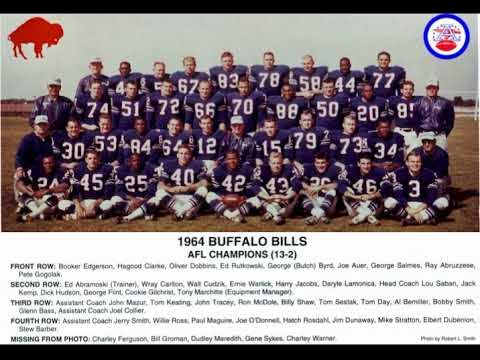
December 26, 1964: The Buffalo Bills Triumphant

December 26, 1964: The American Football League Championship Game is played for the 1964 season.

The season before, the San Diego Chargers, coached by Sid Gillman, had won the title, showing football fans that the AFL wasn't just a pass-happy "basketball league": It could feature good defense, too. The Buffalo Bills, coached by Lou Saban, followed the same path, with a defense led by end Ron McDole, tackle Tom Sestak, and linebacker Mike Stratton.

The Chargers would regret letting quarterback Jack Kemp go, as the Bills had acquired him to run their offense. Protected by a future Hall-of-Famer, guard Billy Shaw, he could hand off to running back Carlton Chester "Cookie" Gilchrist, or pass to receiver Elbert Dubenion.

There was once a common trivia question: Name the men wearing Number 32 who won the Most Valuable Player awards in the American League, the National League, the NFL and the AFL in 1963. But the question was no good: Elston Howard, Sandy Koufax, Jim Brown and Gilchrist won their respective awards, but, while the other 3 players wore 32, Gilchrist wore 34.

The Bills went 12-2 in 1964. They dropped 48 points on the Houston Oilers, and scored at least 30 points in 6 other games. Their only losses were on November 15, 36-28 at home to the Boston Patriots; and on December 6, 16-13 away to the Oakland Raiders.

As it was an even-numbered year, it was the Eastern Division winners' turn to host the AFL Championship Game, and the Bills welcomed the defending Champion Chargers into War Memorial Stadium. Built in 1938, it was already dilapidated, known as "The Old Rockpile." Buffalo native Brock Yates, a screenwriter who created the race upon which the Cannonball Run movies were based, said that it "looks as if whatever war it was a memorial to had been fought within its confines." And it was small: At 40,242 seats, its capacity would prove too small when the AFL and the NFL merged in 1970, so the Bills had to build a larger stadium.
In the 1st quarter, Tobin Rote threw a 26-yard touchdown pass to Dave Kocourek, to put the Chargers up, 7-0. But they never scored again. The Bills' defense was symbolized by Stratton hitting Keith Lincoln midway through the 1st quarter, breaking a rib and knocking him out of the game. It was the most famous defensive play in AFL history.
Pete Gogolak and his brother Charley, natives of Hungary, became pro football's 1st "soccer-style kickers," approaching the placement from the side and hitting the ball with the instep of the foot, rather than the traditional straight-on, hit-with-the-toes style. Pete kicked a field goal late in the 1st quarter, and another in the 2nd. In between, Kemp guided the Bills down to where Wray Carlton could score on a 4-yard run. In the 4th quarter, Kemp scored on a quarterback sneak. The Bills won, 20-7.
The Bills won the AFL Championship again in 1965, again beating the Chargers; then lost the 1966 AFL Championship Game to the Kansas City Chiefs. Saban would leave, then return as head coach, and lead the Bills to the AFC Wild Card Playoff berth in 1974.
Like basketball coach Larry Brown, Saban was known, somewhat unfairly, for never staying in the same place for very long, also serving as head coach for the Boston Patriots, the Denver Broncos, and several college teams. He died in 2009. His son, Nick Saban, in junior high school at the time of the Bills' AFL titles, would win 7 National Championships in the college ranks. Unlike many father & son coaching pairs, they never coached together. Indeed, while Lou was head coach at Army in 1979, Nick was an assistant coach at Navy in 1982.
The Bills had won the last 2 AFL Championships before the AFL Champion was allowed to play the NFL Champion for a World Championship, and had lost the game that would have put them in Super Bowl I. It would take until the 1990 season before they finally got into a Super Bowl. And they got into 4 in a row, something no other franchise has done. And yet, they lost all 4, and only the 1st one was all that close (although they were leading the 4th at the half).
The Bills have become to the NFL what the Chicago Cubs once were to baseball, the sport's "lovable losers" with a history of close calls breaking the hearts of some of the most passionate fans in the sport. From 1964 onward, they have been 1 of the last 2 teams standing 6 times, something only 7 other teams have done.
But the fact that the Bills' titles came before the advent of the Super Bowl means that they get discounted: Even before the distance of time became what it is now, NFL fans had come to regard any title won before the Super Bowl, NFL or AFL, as not a "real" championship.
As it stands, through Christmas 2022, no team based in, or near, Buffalo has ever won a major league sports championship. The NHL's Sabres are 0-for-2 in Stanley Cup Finals, and the NBA's Braves, like the Sabres a 1970 expansion team, moved in 1978. Due to Canadian COVID restrictions, the Toronto Blue Jays had to play some "home games" at Buffalo's Sahlen Field in 2020 and '21. Before that, there hadn't been a Major League Baseball team in Buffalo since the 1914-15 Blues of the Federal League; before that, the Bisons of the National League, who folded after the 1885 season. And none of those teams won a Pennant.
Unless you count soccer as a major league sport in North America, with the 1971 Rochester Lancers and the 2016 Western New York Flash, then the last World Championship won by a team that can be considered "Western New York" remains the 1955 NBA Champion Syracuse Nationals. If you don't count Syracuse as "Western," then it's the 1951 NBA Champion Rochester Royals.
In 1998, Vincent Gallo, a Buffalo native, wrote, directed and starred in the film Buffalo '66.. Despite the title, while there are flashbacks, the film took place mostly in the present day. He played Billy Brown, whose mother was going to go to the 1966 AFL Championship Game at War Memorial Stadium, but went into labor, and she has blamed the son's birth for her missing the game, and her missing the game for the Bills' inability to win a title ever since.

The son grew up to become a compulsive gambler, and when Scott Norwood missed his field goal attempt on the last play of Super Bowl XXV, causing the Bills to lose the game, still the closest they've come since 1965, Billy lost a $10,000 bet. Unable to pay up, his bookmaker forced him to clear his debt by confessing to a crime he did not commit, resulting in 5 years in prison.

When he gets out, he decides he wants to get revenge -- not on the bookie, but on Norwood (known as “Scott Wood” in the film), whom he's convinced took a payoff to miss the kick on purpose, a la the Chicago White Sox throwing the 1919 World Series. Have you ever wanted to kill someone who ruined a sporting event for you? Maybe. Would you ever actually attempt it? No. Billy sets out to attempt it. For the record, nobody has ever credibly accused Norwood of missing that kick on purpose.

UPDATE: The Bills have a Wall of Fame, with these members:
* From the 1960s: Quarterback Jack Kemp, running back Chester "Cookie" Gilchrist, receiver Elbert Dubenion, guards Billy Shaw and Bob Kalsu, defensive tackle Tom Sestak, linebacker Mike Stratton, cornerback Booker Edgerson, safety George Saimes; plus founding owner Ralph Wilson, team executive Pat McGroder, head coach Lou Saban, longtime broadcaster Van Miller and trainer Edward Abramoski. Kalsu only played one season before being drafted, and was the only active NFL player killed in action in the Vietnam War. 
* From the 1970s: Quarterback Joe Ferguson, guard Joe DeLamielleure, cornerback Robert James, and running back O.J. Simpson, whose name has never been removed despite his post-playing infamy; plus Wilson, McGroder, Saban, Miller and Abramoski.
* From the 1980s: Quarterback Jim Kelly, receivers Andre Reed and Steve Tasker, center Kent Hull, guard Jim Ritcher, defensive end Bruce Smith, defensive tackle Fred Smerlas, and linebacker Darryl Talley; plus Wilson, Miller and Abramoski.
* From the 1990s: Kelly, Reed, Tasker, Hull, Ritcher, Smith, running back Thurman Thomas and defensive end Phil Hansen; plus Wilson, Miller, Abramoski, head coach Marv Levy and general manager Bill Polian. The Bils have not yet honored whose main contribution was afterward.
In addition, Bills fans have been honored with induction, as "The 12th Man."
And the Greater Buffalo Sports Hall of Fame has honored Kemp, Gilchrist, Dubenion, Saimes, Sestak, Ferguson, DeLamielleure, Simpson, Smerlas, Kelly, Hull, Ritcher, Reed, Smith, Talley, Tasker, Thomas, Wilson, Levy, Saban, Polian, 1960s linebacker and later NBC broadcaster Paul Maguire, 1970s guard Reggie McKenzie, 1990s linebacker Shane Conlan, 1970s defensive tackle Jeff Yeates, 1990s kicker Steve Christie, and 2000s and 2010s defensive tackler Kyle Williams. Yeates and Williams were honored less for what they did with the Bills, and more because they were Buffalo area native who played in the NFL.
*
December 26, 1964 was a Saturday. The game was scheduled for that day, so as not to conflict with the NFL Championship Game being played the next day. One college bowl game was played: Georgia beat Texas Tech, 7-0 at the Sun Bowl, in the stadium of the same name, in El Paso, Texas.
Baseball was out of season. There were 4 games played in the NBA:

* The New York Knicks beat the Baltimore Bullets, 118-116 at the Baltimore Civic Center (now the CFG Bank Arena).

* The Cincinnati Royals beat the Philadelphia 76ers, 135-125 at the Philadelphia Civic Center. Oscar Robertson scored 38 points.

* The Boston Celtics beat the St. Louis Hawks, 97-84 at the Kiel Auditorium in St. Louis.

* And the Los Angeles Lakers beat the San Francisco Warriors, 129-122 at the Los Angeles Memorial Sports Arena. Jerry West scored 44 points.

The NHL's entire "Original Six" were in action:

* The New York Rangers lost to the Boston Bruins, 2-0 at the old Madison Square Garden.

* The Montreal Canadiens beat the Detroit Red Wings, 6-3 at the Montreal Forum.

* And the Chicago Black Hawks beat the Toronto Maple Leafs, 5-3 at Maple Leaf Gardens in Toronto.

And in English soccer, on this day after Christmas, Boxing Day, Arsenal beat Staffordshire team Stoke City, 3-2 at the Arsenal Stadium, a.k.a. "Highbury," in North London.

Sunday, December 11, 2022

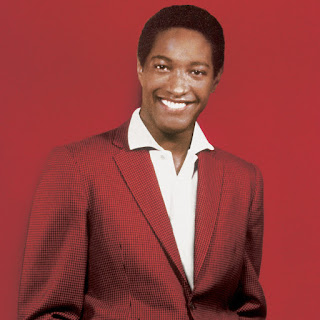
December 11, 1964: The Death of Sam Cooke

December 11, 1964: Sam Cooke dies under mysterious circumstances in Los Angeles.

Born on January 22, 1931 in Clarksdale, Mississippi, as Samuel Cook (no middle name), he was taken to Chicago by his family at age 2. He attended Wendell Phillips Academy, an all-black high school on the South Side, named for a well-known abolitionist. That school had already produced singers Nat "King" Cole and Dinah Washington, comedian George Kirby, Negro League star Ted "Double Duty" Radcliffe, and Pro Football Hall-of-Famer Buddy Young. Actress Marla Gibbs was a classmate of Sam's. The school would later produce jazz bandleader Herbie Hancock and football players Mike Pruitt and Chris Hinton.

In 1950, only 19 years old, Sam was good enough to be asked to replace R.H. Harris as lead singer of The Soul Stirrers, then the country's most popular black gospel group. He infuriated gospel fans by turning secular in 1957, adding an E to the end of his name, and had a Number 1 hit with "You Send Me."

The hits kept coming: "Only Sixteen" in 1959, "Wonderful World" and "Chain Gang" in 1960, "Cupid" in 1961, "Twistin' the Night Away" in 1962, "Another Saturday Night" in 1963, and "Good News" in 1964. Sam wrote, or co-wrote, all of these, some with his brother Charles Cook, with Robert "Bumps" Blackwell producing them. He also had hits with covers of the blues songs "Frankie and Johnny" and "Little Red Rooster."

His concerts became a sensation, including at the Copacabana in New York. Women threw themselves at him. He was married twice, raised his 1st wife's son, had 3 children with his 2nd wife, and is believed to have had 3 other children.

In 1963, he signed a contract with Allen Klein, who would later manage The Rolling Stones and mismanage The Beatles. Cooke had no problem with him, as he negotiated one of the best record-and-royalty deals any star, regardless of race, had ever gotten to that point.

That year, he heard Bob Dylan's song "Blowin' in the Wind," which had verses reflecting the civil rights and antiwar struggles. It stuck in his mind, and made him want to write a similar song. But he was afraid of losing the white fans he'd gained. So he compromised, recording "Blowin' in the Wind," and singing it at his shows. He didn't lose any fans.

On October 8, 1963, he made reservations for himself, his wife Barbara, his brother Charles, and his backing group at the Holiday Inn North in Shreveport, Louisiana, a segregated city. When they got there, the desk clerk, according to a contemporary report, "glanced nervously," and said there were no vacancies.

Sam had a fit. He demanded to see the manager, and refused to leave until he did. Barbara was scared, telling him, "They'll kill you!" He said, "They ain't gonna kill me, because I'm Sam Cooke." He must have forgotten that his fellow Phillips alumnus, Nat "King" Cole, an even bigger star, had been badly beaten onstage at a concert in Birmingham, Alabama in 1956. And that was with thousands of witnesses.

Finally, Sam was convinced to leave. He found a payphone, and called the all-black Castle Motel, and made a reservation there. The police had been tipped off: When the Cooke party got to the Castle, they were arrested for disturbing the peace. It took until 2019 for the City of Shreveport to offer an official apology to the Cooke family.

On January 30, 1964, Sam recorded a new song he'd written, "A Change Is Gonna Come." It had been 7 months since the assassination of Medgar Evers and the removal of George Wallace from the schoolhouse door, 5 months since the March On Washington that featured Martin Luther King's "I Have a Dream" speech, 4 months since the Birmingham church bombing, 3 months since the Shreveport arrest, 2 months since the assassination of John F. Kennedy, and 17 days since Dylan released his civil rights-heavy album The Times They Are A-Changin'. (It had also been 5 days since The Beatles hit Number 1 in America with "I Want to Hold Your Hand," but that had nothing to do with civil rights.)

Klein loved the song, and booked Sam on The Tonight Show Starring Johnny Carson for February 7. It was the 3rd time he'd appeared on the show. He sang "A Change Is Gonna Come." Johnny did not object. Nor did producer Fred de Cordova. Nor did NBC executives. Nor did NBC censors. Nor did NBC's sponsors. In fact, there was very little attention paid to it, mainly because this was the day The Beatles arrived in America, to perform on The Ed Sullivan Show 2 days later. (Sam had appeared on Sullivan, twice in 1957 after his initial burst of success, but hadn't done so since.)

On March 1, Sam's album Ain't That Good News was released, with "A Change Is Gonna Come" on it. But it wasn't yet released as a single. And he got nervous, not singing it in concert after The Tonight Show. On November 16, Sam recorded "Shake," a great dance number, and it was set to be released on December 22, with "A Change Is Gonna Come" as the B-side.

On December 10, 1964... We may never know the full facts. Sam was in Los Angeles, and had dinner with Al Schmitt and Schmitt's wife at Martoni's, an Italian restaurant popular with music industry people like Schmitt. They drank martinis, apparently to excess. They made plans to go to a nightclub named PJ's. The last time Schmitt saw Sam, he was at the bar at Martoni's, talking to a woman Schmitt didn't recognize.

Interviewed in 2020, Schmitt said that he and his wife went to PJ's, "But Sam never showed up. So I went home. I was told later he got there about 15 minutes later, just before closing time, and they wouldn't let him in. He was with this girl."

"This girl," apparently the same one Schmitt saw Sam talking to at the Martoni's bar, was Elisa Boyer, then 22. Sam took her to his cherry-red Ferrari, and drove her to South Central Los Angeles, to the Hacienda Motel, known to the Los Angeles Police Department as a hangout for men cheating on their wives. They checked in at 2:35 AM on December 11, signing the register as Mr. and Mrs. Sam Cooke.

Boyer told the police that Sam pinned her on the bed and began to tear off her clothes, intending to rape her. Then he went to the bathroom to take off his clothes. She then grabbed her clothes, and his as well. She found a phone booth and called the police, saying she'd been kidnapped.

The hotel's manager, Bertha Franklin, told the police that Sam, wearing the one piece of clothing he still had, a sport coat, came at her in a drunken rage, grabbed her, and asked, "Where's the girl?" She said she pushed Cooke away, grabbed a gun, and fired 3 shots. One missed, another went through Sam's heart, another through his lung. He yelled, "Lady, you shot me!" And he fell, dead, at age 33.

The LAPD, notorious for racism at the time (and for a long time after), ruled his death a justifiable homicide.

Nobody who knew Sam believed that. They knew he was a womanizer and, if not an out-and-out alcoholic, certainly a drinker. But he was not by nature a violent man. He was not known to go to "no-tell motels." His sister, Agnes Cooke-Hoskins, said, "My brother was first class all the way. He would not check into a $3-a-night motel. That wasn't his style."

And not only was the Hacienda a known hooker's hangout, but Franklin herself had a criminal record as a madam. The prevailing theory is that Boyer was a prostitute who decided to take Sam's money, and also his clothes so that he couldn't just run out after her.

What's more, at his funeral, singer Etta James noticed that he'd been beaten: "His hands were broken and crushed... They tried to cover it up with makeup, but I could see massive bruises on his head." These injuries were not mentioned in the autopsy report. Some people suspect that he was killed elsewhere, and dumped at the Hacienda, and that Boyer and Franklin were paid off to tell the story they told.

Sam had met Muhammad Ali, football star Jim Brown, and Nation of Islam spokesman Malcolm X at the Hampton House hotel in Miami after Ali won the Heavyweight Championship of the World 10 months earlier, beating Sonny Liston. Ali said, "If Cooke had been Frank Sinatra, the Beatles or Ricky Nelson, the FBI would be investigating."

His body was flown to his hometown in Chicago for one funeral, then back to Los Angeles for another. He was laid to rest at Forest Lawn Memorial Park Cemetery in the L.A. suburb of Glendale, California.

Bertha Franklin had to quit her job at the Hacienda. She died in 1966, at age 57, of a massive heart attack. The Hacienda still stands, under the name Polaris Motel, at 9137 South Figueroa Street, 4 miles (52 blocks) south of the Los Angeles Coliseum, and 7 miles (80 blocks) south of the Crypto.com Arena (formerly the Staples Center).

Sam's Ferrari from that night would figure in another rock star's death. Dennis Wilson, the drummer for the Beach Boys, bought it, and it was parked nearby when he drowned in Marina Del Rey in 1983, 19 years to the month later. In 2007, a Japanese collector bought the car.

On January 11, 1965, exactly 1 month after the murder, as "Shake" was becoming a Top 10 hit and "A Change Is Gonna Come" was struggling to reach the Top 40, Elisa Boyer was arrested for prostitution. Maybe somebody told her to "lay low," and she misunderstood. In 1979, she murdered her boyfriend, and was found guilty, and sentenced to 25 years to life in prison. As of December 11, 2022, at the age of 80, she is still incarcerated. Al Schmitt died in 2021.

In 1986, Sam Cooke was 1 of 10 charter acts inducted into the Rock and Roll Hall of Fame. Had he lived, he would have been 55. In 1989, The Soul Stirrers were elected to the Rock Hall in the "early influences" category, making Sam only the 2nd double inductee. (Clyde McPhatter had been elected as a soloist in 1987 and as one of The Drifters in 1988.)

Sam was played by Paul Mooney in The Buddy Holly Story in 1978, and Leslie Odom Jr. in One Night In Miami in 2020.

*

December 11, 1964 was a Friday. Baseball was out of season. Football was in midweek. And no NHL games were scheduled for that night.

But there were 2 games played in the NBA. The Boston Celtics beat the Philadelphia 76ers, 118-109 at the Philadelphia Civic Center's Convention Hall. And the Detroit Pistons beat the San Francisco Warriors, 104-100 at the Cow Palace, outside San Francisco in Daly City, California, despite 40 points from the Warriors' Wilt Chamberlain.

Friday, December 9, 2022

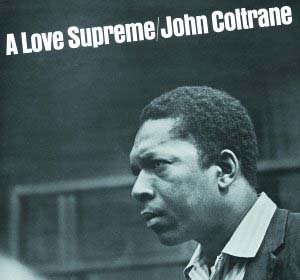
December 9, 1964: John Coltrane Records "A Love Supreme"

December 9, 1964: Jazz saxophonist John Coltrane records his album A Love Supreme. For a man known for his innovation, it is regarded as his greatest work. Or, as a saxophonist not yet born, Joshua Redman, put it in an interview for Ken Burns' miniseries Jazz, "That's one of the first records I can ever remember hearing, and I hope it's the last record I ever hear."

John William Coltrane was born on September 23, 1926 in Hamlet, North Carolina, and grew up there. After graduating from high school, he moved to Philadelphia, in the hope of making it as a musician there. He enlisted in the U.S. Navy toward the end of World War II, serving a full year, and returned to Philadelphia, where he used the G.I. Bill to enroll in the Granoff School of Music.

Originally influenced by saxophonists Lester Young and Johnny Hodges, he became a fan of Coleman Hawkins, Ben Webster and Tab Smith, citing them in a later interview as doing things "that I didn't understand, but that I felt emotionally." A Philadelphia-based pianist, Hasaan Ibn Ali, became an influence on him. The leading saxophonist of the immediate post-World War II years was Charlie Parker, and Coltrane was fortunate enough to work with him, and with Hodges, and the trumpeter with whom Parker developed "bebop," John "Dizzy" Gillespie.

In 1955, trumpeter Miles Davis invited Coltrane to play with him. This lasted for 2 years, before, like so many other jazz musicians had, including Davis, Coltrane fell to heroin addiction. Once past that, he worked with pianist Thelonious Monk for a few months, then rejoined Davis, working with him and Julian "Cannonball" Adderley on Davis' magnum opus, Kind of Blue.

In 1960, Coltrane went solo, and recorded the album Giant Steps on Atlantic Records. The following year, he formed a new quartet, with pianist McCoy Tyner, bass fiddler Jimmy Garrison, and drummer Elvin "The Emperor" Jones.

They recorded My Favorite Things, including the title track, a number from the Broadway show The Sound of Music, which, with extended solos from Coltrane on soprano saxophone and Tyner, became something completely different, something composers Richard Rodgers and Oscar Hammerstein had never imagined. It was a revelation, but not a total shock, as Davis had already done something similar with George & Ira Gershwin's Porgy and Bess.

Shortly thereafter, Impulse! Records (officially, with the exclamation point) bought Coltrane's contract. Label owner Rudy Van Gelder had worked with Davis while Coltrane was with him, and offered Coltrane full creative control at his studio in Englewood Cliffs, Bergen County, New Jersey, across the Hudson River from New York.

This period included a collaboration with Duke Ellington, and albums titled Ballads (all standards, including "All Or Nothing at All") and Impressions. And then, on a single day, December 9, 1964, the John Coltrane Quartet recorded A Love Supreme, in four parts, with Coltrane on tenor saxophone: "Acknowledgement," "Resolution," "Pursuance," and "Psalm."

A critic suggested that the album was intended to represent a struggle for purity, an expression of gratitude, and an acknowledgement that the musician's talent comes from a higher power. Indeed, in 1966, approaching his 40th birthday, Coltrane was asked what his goal was, and he said, "To become a saint."

The choice was taken out of his hands. He developed liver cancer, and died on July 17, 1967, at Huntington Hospital, not far from his home in Dix Hills, Long Island, New York. He had kept the illness quiet, and Miles Davis spoke for most when he said, "Coltrane's death shocked everyone, took everyone by surprise. I knew he hadn't looked too good... But I didn't know he was that sick, or even sick at all."

In 1982, the African Orthodox Church canonized Coltrane as a saint within their faith. His shrine is at St. John Coltrane Church, 2097 Turk Boulevard in San Francisco, even though he had little connection to that city.

His 1st wife, Naima Grubbs, died in 1996; his 2nd wife, pianist Alice MacLeod, continued to record and perform after his death, and lived until 2007. Son John Coltrane Jr. was 17 and already getting some recognition as a musician when he was killed in a car crash in Los Angeles in 1982. Son Ravi Coltrane, also a saxophonist, is better known as a music producer. Son Oranyan Coltrane, born shortly before his father's death, is also a producer, and plays multiple instruments.

As for the rest of his quartet: Garrison died of lung cancer in 1976, only 42; Elvin Jones lived until 2004; and McCoy Tyner was the last survivor, living until 2020, dying from a long-term illness, not COVID, although it was at the start of the COVID pandemic in America. Eric Dolphy, the brilliant flute player who sometimes joined them, had died of complications of diabetes while on tour in West Berlin earlier in 1964, rendering him unable to participate in A Love Supreme.

*

December 9, 1964 was a Wednesday. Baseball was out of season. Football was in midweek. There were 2 games played in the NBA. The New York Knicks beat the Baltimore Bullets, 111-90 at the Baltimore Civic Center (now the CFG Bank Arena). And the Cincinnati Royals beat the Detroit Pistons, 122-114 at Cobo Hall (now Huntington Place) in Detroit.

And there were 2 games played in the NHL. The New York Rangers lost to the Chicago Black Hawks, 6-1 at the old Madison Square Garden. And the Montreal Canadiens beat the Toronto Maple Leafs, 3-2 at Maple Leaf Gardens in Toronto. The Boston Bruins and the Detroit Red Wings were not scheduled.

Tuesday, December 6, 2022

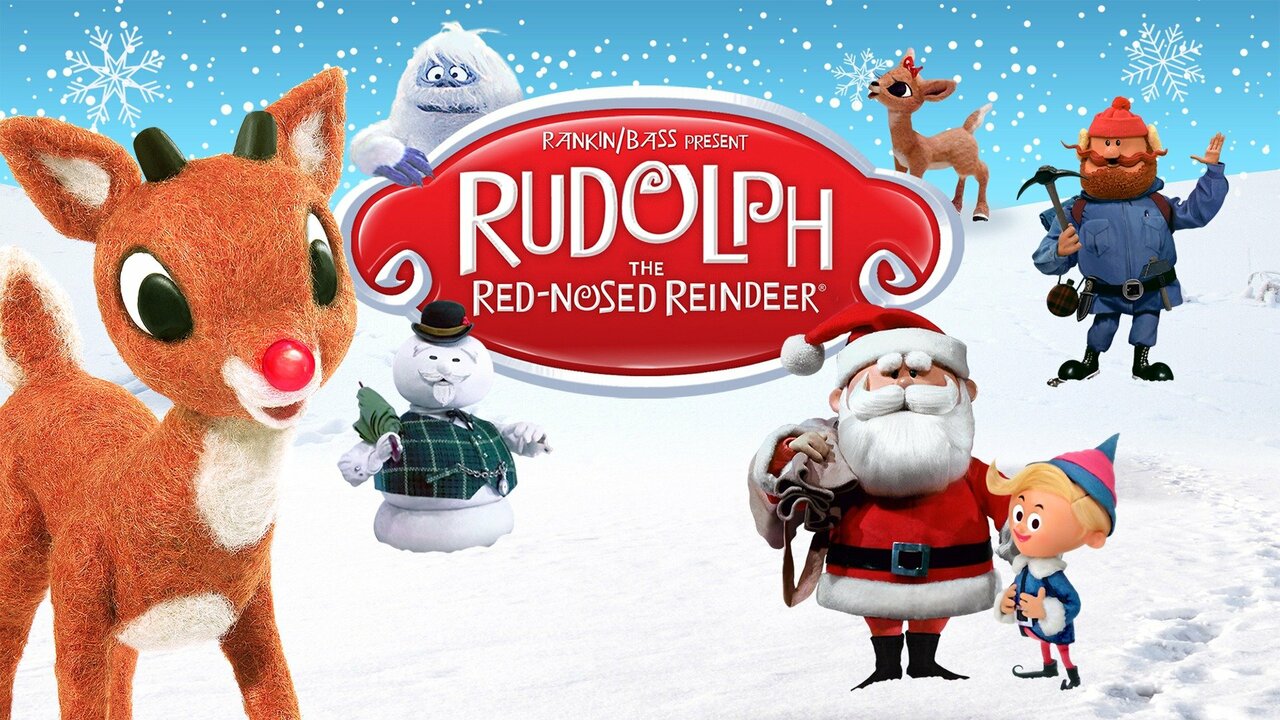
December 6, 1964: The Rankin/Bass Empire Premieres

December 6, 1964: Rudolph the Red-Nosed Reindeer premieres on CBS, the 1st animated holiday special produced by Rankin/Bass Productions, Inc., now known as Rankin/Bass Animated Entertainment.

Arthur Gardner Rankin Jr. was born on July 19, 1924 in Manhattan, and both of his parents were actors. Julius Bass, known professionally as Jules Bass, was born on September 16, 1935 in Philadelphia. In 1955, ABC hired Rankin as an art director, and Bass as a copywriter. Together, they made TV commercials, using animation.

In 1960, they founded Videocraft International, which became Rankin/Bass Productions. In 1964, they made their 1st stop-motion animation special, based on the 1947 Christmas-themed song "Rudolph, the Red-Nosed Reindeer."
Arthur Rankin Jr. (left) and Jules Bass

The story, narrated by Burl Ives as Sam the Snowman (who has a mustache and a goatee, like Ives himself did), follows the song, with some embellishments. In this version, Rudolph is the son of Donner, who is listed here as Santa Claus' lead reindeer, and Donner's wife, whose name is never mentioned. (This was before "the Second Wave of Feminism.") Rudolph, voiced by actress Billie Mae Richards, has the bright red nose from birth. Santa (voiced by Stan Francis) agrees with Donner that the nose has to be hidden. It has been noted that it's not just "all of the other reindeer" who were mean to Rudolph: This is not one of the nicer versions of Big Red.

After running away with Hermey (voice of Paul Soles, a voiceover legend, including the 1st person to play Spider-Man, albeit animated), an Elf who doesn't want to make toys for Santa, and would rather be a dentist, they find adventure with a miner, an abominable snowman, and an island of "misfit toys." Upon returning to the North Pole, they gain new respect. On Christmas Eve, the fog is so thick that Santa and the reindeer can't see through it, but Rudolph, with his nose so bright can guide the sleigh that night. It has occurred to me that neither Santa nor any of the other reindeer ever apologized to Rudolph.

The special is a musical, and it closes with Ives, as Sam, singing a song that became a Christmas classic: "A Holly Jolly Christmas."
The success of this special led to other holiday-themed specials, most of them based around Christmas legends, even though Rankin and Bass were both Jewish. In 1968, they produced The Little Drummer Boy, a stop-motion animation that aired on NBC, narrated by a woman voiced by actress Greer Garson. The drummer boy is voiced by Teddy Eccles, and the Vienna Boys' Choir sings the title song.

That special is not widely remembered today. Their next one is: In 1969, for CBS, they produced, with traditional animation, Frosty the Snowman. Jimmy Durante narrated, and was represented by a lookalike resident of the town where Frosty was "born," complete with big nose.

Comedian Jackie Vernon voiced Frosty. Because the original 1950 song doesn't have an antagonist, aside from the weather, the magic hat that brings Frosty to life previously belonged to Professor Hinkle, an evil magician voiced by Billy De Wolfe. Paul Frees returns, playing a much kindlier Santa than seen in Rudolph.

In 1970, Rankin & Bass returned to stop-motion, for Santa Claus is Comin' To Town. Fred Astaire voiced the narrator, a mailman named S.D. Kluger -- "S.D." for "Special Delivery." He gives the first truly detailed origin story for Santa Claus, although others have been put forth. Mickey Rooney voices Santa from infancy to jolly old elf. Robie Lester voices schoolteacher Miss Jessica, who becomes Mrs. Claus.

In 1971, they produced a special for Easter, Here Comes Peter Cottontail. It was not based on the 1950 song of that title, but on a 1957 novel The Easter Bunny That Overslept. Danny Kaye played narrator Seymor S. Sassafrass. Casey Kasem, star Los Angeles disc jockey, who voiced Shaggy on Scooby-Doo (and would later voice Robin in the Super Friends cartoons), voiced Peter. And the master of horror, Vincent Price, voiced the villain, evil rabbit January Q. Irontail.

In 1974, Mickey Rooney once again played St. Nick, in the stop-motion The Year Without a Santa Claus, premiering on ABC. Santa doesn't feel up to delivering the presents this year. His doctor says it's because not enough people believe in him anymore. So Mrs. Claus, this time voiced by Shirley Booth, sends a pair of Elves named Jingle Bells and Jangle Bells out on the sleigh, pulled by Vixen, the lone female reindeer of the usual crew of 8 (9, when Rudolph is leading the way).

What everyone tends to remember about this special, more so than the outcome (Santa is convinced to go for it, of course), is the antagonists, Snow Miser and Heat Miser, bickering brothers, both sons of Mother Nature. Each of them, true to their alternating song, is "too much."

Rudolph's Shiny New Year premiered on ABC in 1976. Red Skelton voices Father Time, who narrates. Billie Richards returns as Rudolph. Father Time tells his friend Santa that the Baby New Year must be found before the 12th "bong" at midnight on New Year's Eve, or else there will be no new year. As it's snowing, Santa sends Rudolph out to find him. Father Time considers Rudolph a good choice, because he would understand: The Baby, a.k.a. Happy, ran away from home because of his own unusual physical feature, enormous ears.

Rudolph goes to the Archipelago of Last Years (a variation on the Island of Misfit Toys). Each island represents a past year. On 1,000,000 BC Island, they meet a caveman named O.M. (for "One Million," voiced by Morey Amsterdam). He agrees to help Rudolph. So does Sir 1023, a Scottish knight (Frank Gorshin), who leaves his island of the year 1023, where all the fairy tales you've ever heard are real. Also agreeing to help is Sev (short for "1776," who looks like Benjamin Franklin and is voiced by Paul Frees), who leaves his island where every day is the 4th of July.

Other islands are no use: On 4,000 BC Island, all the people there want to do is build pyramids; on 1492 Island, people are too busy discovering things; everybody on 1893 Island is depressed, since there was a depression that year; and 1965 Island is "too noisy," as people are yelling about rock bands and a war. Nevertheless, Happy is found, rescued from a monster bird, and is brought back just in time.

Like Rudolph, Frosty returned in 1976, with Frosty's Winter Wonderland. By this point, Jimmy Durante was too ill to participate, so Andy Griffith was hired to narrate. With a new snowfall, Frosty returned to the town where he was "born," but the kids' love of Frosty makes Jack Frost, the symbol of Winter (Paul Frees), jealous, and he fights Frosty.

Frosty buys him off, by asking him to be the best man at his wedding to a snowwoman named Crystal (as snowflakes are crystals, and she's voiced by Shelley Winters). She came to life with a snow-corsage. The Parson Brown mentioned in the original song can't marry them, as he can only marry humans. So a snow parson is made, and Brown's Bible brings him to life. (Dennis Day voices both parsons.) Frosty and Crystal have to go north again, but promise to return.

Next, in 1977, again with Astaire as S.D. Kluger, was The Easter Bunny Is Comin' to Town. Keep in mind: Peter Cottontail and the Easter Bunny are separate characters, and this special told of a possible origin for the Easter Bunny, voiced by Skip Hinnant, already known to kids as Fargo North, Decoder on PBS' The Electric Company.

On Thanksgiving Weekend 1979 came the Justice League or Avengers of Christmas specials: Rudolph and Frosty's Christmas in July. Returning are Billie Richards as Rudolph, Jackie Vernon as Frosty, Shelley Winters as Crystal, Mickey Rooney as Santa, and Paul Frees as Jack Frost. Frees also plays the villain, a snow wizard named Winterbolt, who wants to reclaim the North Pole from Santa, and plans to discredit Rudolph and Frosty to achieve this.

Red Buttons returns, but as Milton, an ice cream salesman, not as Father Time. Don Messick, the original voice of Scooby-Doo, plays several roles, including taking over as Rudolph's father, Donner. Darlene Conley voices Mrs. Claus. Thurl Ravenscroft, best known as the voice of Kellogg's cereals' Tony the Tiger, but also the singer of "You're a Mean One, Mr. Grinch" from How the Grinch Stole Christmas! (not a Rankin/Bass special), plays the Genie of the Ice Scepter, and Ethel Merman plays Lilly Loraine, owner of the circus where Milton works. The only things that seem to be missing are the Miser Brothers.

Finally, a few days after that special, came Jack Frost, as the Winter sprite got his own special, although this time, he is voiced by Robert Morse instead of Frees. His story is told by Pardon-Me-Pete, a groundhog voiced by Buddy Hackett, who has a vested interest in a longer Winter: More sleep. He and a human girl, voiced by Debra Clinger, fall in love, but, in the end, he loses her to a human boy. The girl's name is Elisa; maybe if her name had been Elsa, it would have worked out, but Jack has to let it go.

In 1987, Rankin and Bass sold their company to Lorimar Productions. Jimmy Durante, the narrator of Frosty, died in 1980. Paul Frees, voice of many characters in these specials, including the original Jack Frost, died in 1986. Jackie Vernon, the voice of Frosty, died in 1987. So did Fred Astaire, the narrator of Santa Claus is Comin' To Town. So did Danny Kaye, the narrator of Here Comes Peter Cottontail. Burl Ives, the narrator of Rudolph the Red-Nosed Reindeer, died in 1995. Red Skelton, the narrator of Rudolph's Shiny New Year, died in 1997.

Billie Mae Richards, the voice of Rudolph, died in 2010. Andy Griffith, the narrator of Frosty's Winter Wonderland, died in 2012. Arthur Rankin died on January 30, 2014, at age 89. Mickey Rooney, twice the voice of Santa in Rankin/Bass specials, also died in 2014. Robert Morse, star of Jack Frost, died in 2022. Jules Bass died on October 25, 2022, at 87.

Still alive as of December 6, 2022 is Skip Hinnant, the '77 voice of the Easter Bunny, but better known for his performance on the PBS kids' show The Electric Company, as characters including Fargo North, Decoder.

*

December 6, 1964 was a Sunday. These NFL games were played that day:

* The New York Giants lost to the Minnesota Vikings, 30-21 at Yankee Stadium.

* The Detroit Lions beat the Baltimore Colts, 31-14 at Memorial Stadium in Baltimore.

* The Pittsburgh Steelers beat the Washington Redskins, 14-7 at District of Columbia Stadium (later Robert F. Kennedy Memorial Stadium) in Washington.

* The football version of the St. Louis Cardinals beat the Cleveland Browns, 28-19 at Busch Stadium (formerly Sportsman's Park) in St. Louis.

* The Philadelphia Eagles beat the Dallas Cowboys, 24-14 at Franklin Field in Philadelphia.

* The San Francisco 49ers beat their arch-rivals, the Los Angeles Rams, 28-7 at Kezar Stadium in San Francisco.

* And the day before, the Green Bay Packers beat the Chicago Bears, 17-3 at Wrigley Field in Chicago.

In the American Football League:

* The New York Jets lost to the San Diego Chargers, 38-3 at Shea Stadium.

* The Boston Patriots beat the Kansas City Chiefs, 31-24 at Kansas City Municipal Stadium.

* The Oakland Raiders beat the Buffalo Bills, 16-13 at Frank Youell Field in Oakland.

* And the Denver Broncos and the Houston Oilers had the week off.

Baseball was out of season. There were 3 games played in the NBA:

* The New York Knicks lost to the St. Louis Hawks, 115-94 at the Kiel Auditorium in St. Louis.

* The Cincinnati Royals beat the Baltimore Bullets, 124-113 at the Baltimore Civic Center (now the CFG Bank Arena).

* And the Los Angeles Lakers beat the Philadelphia 76ers, 109-104 at the Los Angeles Memorial Sports Arena.

And there were 2 games in the NHL:

* The New York Rangers beat the Chicago Black Hawks, 4-1 at the Chicago Stadium.

* The Detroit Red Wings beat the Montreal Canadiens, 4-1 at the Olympia Stadium in Detroit.

* And the Boston Bruins and the Toronto Maple Leafs were not scheduled.

Friday, December 2, 2022

December 2, 1964: Mario Savio's "Bodies Upon the Gears" Speech

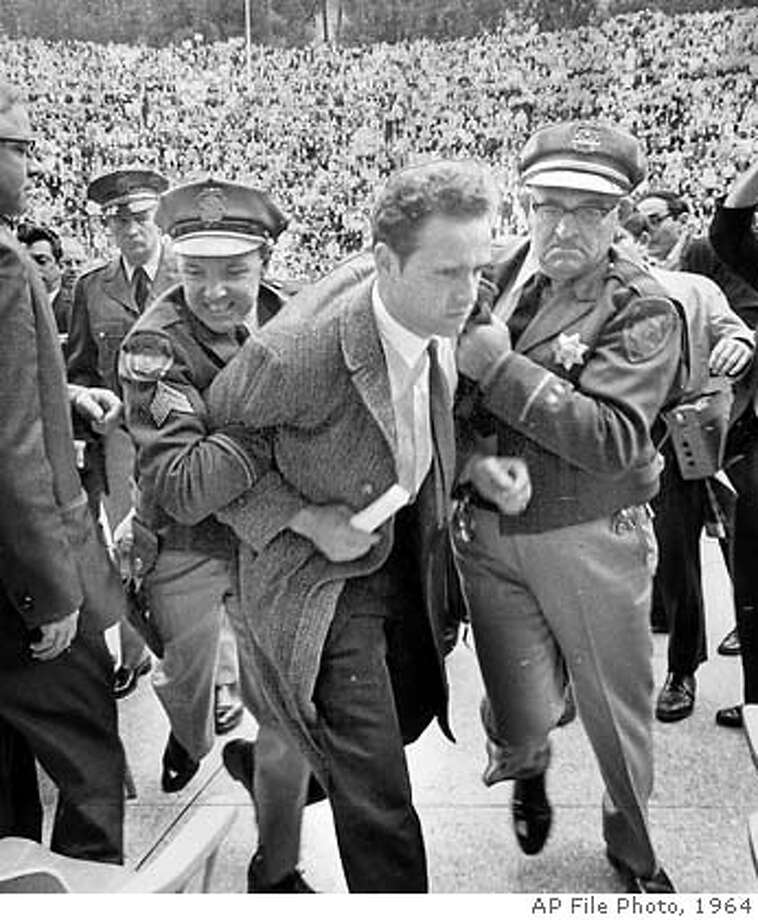
Mario Savio, arrested shortly after his speech

December 2, 1964: The "Free Speech Movement" at the main campus of the University of California, in Berkeley, across the Bay from San Francisco, is galvanized by a speech by graduate student Mario Savio.

This Movement was the first mass act of civil disobedience on an American college campus in the 1960s. Students insisted that the university administration lift the ban of on-campus political activities and acknowledge the students' right to free speech and academic freedom. The Free Speech Movement was influenced by the New Left, and was also related to the Civil Rights Movement and the opposition to the Vietnam War.

Savio, from Queens in New York City, was approaching his 22nd birthday, and had already graduated from Queens College, and worked in the Civil Rights Movement in California and in the Mississippi Freedom Summer, and for anti-poverty program in Mexico.

When he returned to Berkeley after his time in Mississippi, he intended to raise money for the Student Nonviolent Coordinating Committee (SNCC), but found that the university had banned all political activity and fundraising. He told an interviewer that it was a question as to whose side one was on: "Are we on the side of the civil rights movement? Or have we gotten back to the comfort and security of Berkeley, California, and can we forget the sharecroppers whom we worked with just a few weeks back? Well, we couldn't forget."

Savio sounded pretty radical. Even today, he sounds radical. But he sure didn't look radical: Like most of the activist students of the time, his hair wasn't especially long, and tended to wear a jacket, a dress shirt and a tie. He was an activist, but he was no hippie.

Until 1966 or so, when people heard the word "hippie," they thought it meant "jazz musician," like in the 1963 hit by the Philadelphia girl group The Orlons: "Where do all the hippies meet? South Street, South Street." South Street, then as now, was Philly's "Greenwich Village."

The rhetoric between the students and University President Clark Kerr went back and forth. On December 2, Savio took to the steps of Sproul Hall, a new student activity center, where folksinger Joan Baez had recently sung, and, in front of 4,000 people, delivered what became known as the "Operation of the Machine" speech or the "Bodies Upon the Gears" speech:

There's a time when the operation of the machine becomes so odious, makes you so sick at heart, that you can't take part! You can't even passively take part! And you've got to put your bodies upon the gears, and upon the wheels, upon the levers, upon all the apparatus, and you've got to make it stop! And you've got to indicate to the people who run it, to the people who own it, that unless you're free, the machine will be prevented from working at all!

Savio and 800 others were arrested that day. It took until 1967 for the case to be concluded, and he was sentenced to 120 days in jail. At the time, he told reporters that he "would do it again."

But just a few months after his speech, he quit the FSM because "he was disappointed with the growing gap between the leadership of the FSM and the students themselves." As has so often been the case, a revolution was divided even before achieving its goals, and it fell apart.

But Berkeley became not just a center for political activity among leftward (if not necessarily "leftist") college students, but a byword for it. Ronald Reagan won the Governorship of California in 1966 in large part by campaigning against it, promising to reform the University of California System so that the students had less influence. (Some "reform." Unfortunately, he kept his word.) There would be a riot at the student-setup People's Park in Berkeley in 1969.

Appearing on a 1968 episode of Rowan & Martin's Laugh-In, actor Peter Lawford said, "I hear the Governor Reagan is increasingly concerned about earthquakes in California. He's afraid that Berkeley may shift even further to the left."

And in the 1986 film Star Trek IV: The Voyage Home, the Enterprise crew members had to travel back in time to the present day, and Admiral James T. Kirk (played by William Shatner) had to explain why Captain Spock (Leonard Nimoy, wearing a headband so Spock's pointed ears would be hidden and so he wouldn't have to wear the often painful prosthetics) was so weird. His history almost as good as it should have been, Kirk said, "Back in the Sixties, he was a part of the Free Speech Movement at Berkeley. I think he did a little too much LDS." (He meant the drug LSD, not the Church of Jesus Christ of Latter-Day Saints, a.k.a. the Mormons.)

The University's flagship campus is usually called "Cal" for sports purposes, and "Berkeley" for everything else.  Their arch-rivals are Stanford University, across the Bay in Palo Alto, and Stanford has the opposite political reputation, very conservative, in part due to the Hoover Institution, an economic "think tank" named after one of the school's first graduates, the eventual President Herbert Hoover. Naming an economic organization after him was not a good idea.

Savio later became a professor (though not at the college where he protested, unlike a few of the Columbia University protestors later in the decade), married twice, had a son with each wife, and developed heart trouble, which killed him in 1996, only 53 years old. 

*

December 2, 1964 was a Wednesday. Baseball was out of season. Football was in midweek. There were 4 games in the NBA:

* The New York Knicks lost to the Boston Celtics, 116-91 at the Boston Garden.

* The Baltimore Bullets beat the San Francisco Warriors, 120-114 at the Baltimore Civic Center (now the CFG Bank Arena). In defeat, Wilt Chamberlain scored 33 points and grabbed 28 rebounds.

* The Detroit Pistons beat the Cincinnati Royals, 125-115 at Cobo Hall (now Huntington Place) in Detroit. Ray Scott led all scorers on the night with 39 points for the Pistons.

* And the St. Louis Hawks beat the Los Angeles Lakers, 105-102 at the Kiel Auditorium in St. Louis. Elgin Baylor scored 35 points in defeat for the Lakers,

And there was 1 game played in the NHL: The New York Rangers and the Chicago Black Hawks played to a 3-3 tie at the old Madison Square Garden.

Monday, November 28, 2022

November 28, 1964: The Shangri-Las Lead the Pack

Left to right: Betty Weiss, Mary Ann Ganser,
Marge Ganser and Mary Weiss

November 28, 1964: The Shangri-Las hit Number 1 with "Leader of the Pack," making it the most successful "teenage lament" song of all time. The group, out of Cambria Heights, Queens, New York City, was 2 pairs of sisters: Mary and Betty Weiss, and twins Marge and Mary Ann Ganser. Like The Four Seasons, they named themselves after a nearby restaurant.
 
Their 1st hit was "Remember (Walking in the Sand)." You've heard it appropriated for about a gazillion TikTok videos: "Oh no! Oh no! Oh no no no no no…" 
"Leader of the Pack" was the follow-up, and their biggest hit. They had a few other hits, some of them "teenage laments," but "Give Him a Great Big Kiss" was a happy tune, and you can almost hear them snapping their fingers, and their chewing gum.

Betty sang lead on "Leader of the Pack," but, only 18, she got pregnant, and had to leave the group in October 1964, just before the song hit Number 1 and they went on a promotional tour of Britain. So while the lead character is addressed as "Betty," it was Mary who sang lead on tour, and in all the surviving TV clips.
 
Betty rejoined the group in mid-1965, but each of the Ganser twins dropped out at various times, with one replacing the other. Since they were identical twins, most people couldn't tell the difference. Among the acts who opened for them were The Animals, The Young Rascals, Vanilla Fudge, and The Iguanas, whose lead singer became Iggy Pop.
 
They were the original "bad girls of rock and roll." Well, them and The Ronettes. Both groups tended to wear outfits that were too tight for the 1960s. A rumor got around that Mary packed a gun on tour and got busted for it. It worked in their favor, as they had to fend off fewer advances from rotten guys.
 
After the group broke up, Mary Ann Ganser died of a barbiturate overdose (often incorrectly listed as encephalitis) in 1970. She was only 22 years old. The other 3 all got married, moved to Long Island, and had a reunion tour in 1976.

I saw a trio calling themselves The Shangri-Las at an oldies show at Penn's Landing in Philadelphia in 1988, but I got close enough to the stage to see that all 3 singers were in their 30s, and no 2 of the 3 looked like sisters, much less twins. They were not the real thing. The 3 surviving members last performed together in 1989, at the Meadowlands, at a show hosted by legendary New York disc jockey Bruce "Cousin Brucie" Morrow.
 
Marge Ganser worked for the phone company until she was stricken with cancer, and died in 1998, at 50. Mary Weiss became an accountant, and Betty held several jobs. Both Weiss sisters are still alive, but only Mary remains on the oldies circuit.
 
The song was written by Jeff Barry and Ellie Greenwich, one of many hits songs they wrote while married to each other. In 1984, one of the first "jukebox musicals" on Broadway told Ellie's story, and it was titled Leader of the Pack. Ellie died in 2009. George "Shadow" Morton, who produced the song and wrote most of their other hits, died in 2013. As of November 28, 2022, Jeff Barry is still alive.

UPDATE: Mary Weiss died in 2024, leaving Betty as the last survivor.

*

November 28, 1964 was a Saturday. A pair of star athletes, baseball's John Burkett and basketball's Roy Tarpley, were born.

It was the end of college football rivalry week, including USC upsetting Number 1 Notre Dame, 20-17 at the Los Angeles Memorial Coliseum. I have a separate entry for that event. Among the other college football games played that day:

* Army beat Navy, 11-8 at John F. Kennedy Stadium in Philadelphia.

* Boston College beat Holy Cross, 10-8 at Alumni Stadium outside Boston in Chestnut Hill, Massachusetts.

* Georgia beat Georgia Tech, 7-0 at Sanford Stadium in Athens, Georgia.

* Florida beat Miami, 12-10 at Florida Field (now Ben Hill Griffin Stadium) in Gainesville, Florida.

* Vanderbilt beat Tennessee, 7-0 at Dudley Field (now FirstBank Stadium) in Nashville.

* Oklahoma beat Oklahoma State, 21-16 at Lewis Field (now Pickens Stadium) in Stillwater, Oklahoma.

* Texas Christian University (TCU) beat Southern Methodist University (SMU), 17-6 at the Cotton Bowl in Dallas.

* Arizona beat Arizona State, 30-6 at Arizona Stadium in Tucson.

Two days earlier, on Thanksgiving Day, Number 2 Alabama beat Auburn, 21-14 at Legion Field in Birmingham, Alabama, winning 'Bama the Southeastern Conference title; and Number 5 Texas beat Texas A&M, 26-7 at Memorial Stadium in Austin, Texas.

* Idle: Number 3 Arkansas, who had beaten Texas, and won the Southwest Conference title; Number 6 Michigan, who had won the Big Ten Conference title; Number 7 Nebraska, who, despite losing the week before to arch-rival Oklahoma, had won the Big Eight Conference title; Number 8 Louisiana State University (LSU); Number 9 Oregon State, who had won the title in the Athletic Association of Western Universities (AAWU), the league that became the Pacific-Eight (or Pac-8) the next year; Number 10 Ohio State, which had blown the Big 10 title by losing their finale to Michigan; and New Jersey teams Rutgers and Princeton.

And so, at a time when the National Championship was awarded by the Associated Press' sportswriters' poll after the regular season, with Notre Dame's loss, Alabama, coached by Bear Bryant and quarterbacked by Joe Namath, rose to Number 1.

But Texas beat Alabama in the Orange Bowl, and Arkansas beat Nebraska in the Cotton Bowl, to earn a share of the National Championship with Alabama. Michigan beat Oregon State in the Rose Bowl, and LSU beat Syracuse in the Sugar Bowl.

Both the NFL and the AFL played the next day, plus games 2 days earlier, on Thanksgiving. The CFL played its championship game, the Grey Cup, and the BC Lions beat the Hamilton Tiger-Cats, 34-24 at Exhibition Stadium in Toronto. It was the 1st Grey Cup for the Vancouver-based team. I have a separate entry for this event.

Baseball was out of season. There were 4 games in the NBA:

* The New York Knicks beat the St. Louis Hawks, 106-91 at the old Madison Square Garden.

* The Boston Celtics beat the Cincinnati Royals, 129-98 at the Boston Garden.

* The Philadelphia76ers beat the Detroit Pistons, 101-93 at Cobo Hall (now Huntington Place) in Detroit.

* And the San Francisco Warriors beat their arch-rivals, the Los Angeles Lakers, 109-106 at the Civic Auditorium in San Francisco. Just another day at the office for Wilt Chamberlain: 40 points and 30 rebounds, and blocked shots were not recorded. Jerry West led the Lakers with 33 points.

There were 2 games played in the NHL. The New York Rangers beat the Toronto Maple Leafs, 4-1 at Maple Leaf Gardens in Toronto. The Montreal Canadiens beat the Boston Bruins, 2-1 at the Montreal Forum. The Detroit Red Wings and the Chicago Black Hawks were not scheduled.

And in English soccer, Manchester United beat Arsenal, 3-2 at the Arsenal Stadium, a.k.a. Highbury, in North London.

November 28, 1964: A Grey Cup for Vancouver

Joe Kapp

November 28, 1964: The Grey Cup, the championship of the Canadian Football League, is held at the Exhibition Stadium in Toronto. It is a rematch of the previous season's final, when the Hamilton Tiger-Cats beat the BC Lions, 21-10 at Empire Stadium in Vancouver.

That was the 1st time a team from the Province of British Columbia had gotten that far, and the Lions -- their geographic identifier always simply "BC," not "Vancouver," nor "British Columbia," nor even "B.C." -- were determined to avenge the defeat. Coached by Dave Skrien, and led by quarterback Joe Kapp, they had finished the season 11-2-3.

And everything went the Lions' way. Running back Bob Swift had scored a touchdown, but was subsequently injured. Bill Munsey took his place as if nothing had happened. In the 3rd quarter, he scored a touchdown on offense on a handoff from Kapp, running 18 yards; and another on defense, when he picked up a fumble and ran it in 71 yards.

The Lions even scored a touchdown on a bad field goal attempt: Holding Pete Ohler, couldn't get the snap down, had to scramble, and passed to Jim Carphin. Another touchdown was scored by one of the top black players in the CFL, Willie "Will o' the Wisp" Fleming. The Lions won the game, 34-24.

Kapp had quarterbacked the University of California into the 1959 Rose Bowl, but lost. In the 1969 season, he led the Minnesota Vikings into Super Bowl IV, but lost. He remains the only man ever to quarterback teams into the Rose Bowl, the Super Bowl, and the Grey Cup.

The Lions have since won the Grey Cup again in 1985, 1994, 2000, 2006 and 2011. They are easily Vancouver's most successful team: The NHL's Canucks are 0-3 in the Stanley Cup Finals, the NBA's Grizzlies lasted just 6 seasons before moving, and they have only been at the Class A level in minor-league baseball since 2000, having previously won 3 Pennants at the Class AAA level. Even if you count soccer, the NASL's version of the Whitecaps won just 1 title, in 1979; and MLS' version has only gotten as far as the Quarterfinals.

*

November 28, 1964 was a Saturday. This was the end of rivalry week in American college football. In the biggest game of the day, Number 1 Notre Dame were upset by the University of Southern California (USC), 20-17 at the Los Angeles Memorial Coliseum. I have a separate entry for that event.

These other notable college football games were played:

* Rivalry: Army beat Navy, 11-8 at John F. Kennedy Stadium in Philadelphia.

* Rivalry: Boston College beat Holy Cross, 10-8 at Alumni Stadium outside Boston in Chestnut Hill, Massachusetts.

* Rivalry: Georgia beat Georgia Tech, 7-0 at Sanford Stadium in Athens, Georgia.

* Rivalry: Florida beat Miami, 12-10 at Florida Field (now Ben Hill Griffin Stadium) in Gainesville, Florida.

* Rivalry: Vanderbilt beat Tennessee, 7-0 at Dudley Field (now FirstBank Stadium) in Nashville.

* Rivalry: Oklahoma beat Oklahoma State, 21-16 at Lewis Field (now Pickens Stadium) in Stillwater, Oklahoma.

* Rivalry: Texas Christian University (TCU) beat Southern Methodist University (SMU), 17-6 at the Cotton Bowl in Dallas.

* Rivalry: Arizona beat Arizona State, 30-6 at Arizona Stadium in Tucson.

Two days earlier, on Thanksgiving Day:

* Rivalry: Number 2 Alabama beat Auburn, 21-14 at Legion Field in Birmingham, Alabama. 'Bama won the Southeastern Conference title. 

* Rivalry: Number 5 Texas beat Texas A&M, 26-7 at Memorial Stadium in Austin, Texas.

* Idle: Number 3 Arkansas, who had beaten Texas, and won the Southwest Conference title; Number 6 Michigan, who had won the Big Ten Conference title; Number 7 Nebraska, who, despite losing the week before to arch-rival Oklahoma, had won the Big Eight Conference title; Number 8 Louisiana State University (LSU); Number 9 Oregon State, who had won the title in the Athletic Association of Western Universities (AAWU), the league that became the Pacific-Eight (or Pac-8) the next year; Number 10 Ohio State, which had blown the Big 10 title by losing their finale to Michigan; and New Jersey teams Rutgers and Princeton.

And so, at a time when the National Championship was awarded by the Associated Press' sportswriters' poll after the regular season, with Notre Dame's loss, Alabama, coached by Bear Bryant and quarterbacked by Joe Namath, rose to Number 1.

But Texas beat Alabama in the Orange Bowl, and Arkansas beat Nebraska in the Cotton Bowl, to earn a share of the National Championship with Alabama. Michigan beat Oregon State in the Rose Bowl, and LSU beat Syracuse in the Sugar Bowl.

Baseball was out of season. Both the NFL and the AFL played the next day, plus games 2 days earlier, on Thanksgiving. There were 4 games in the NBA:

* The New York Knicks beat the St. Louis Hawks, 106-91 at the old Madison Square Garden.

* The Boston Celtics beat the Cincinnati Royals, 129-98 at the Boston Garden.

* The Philadelphia76ers beat the Detroit Pistons, 101-93 at Cobo Hall (now Huntington Place) in Detroit.

* And the San Francisco Warriors beat their arch-rivals, the Los Angeles Lakers, 109-106 at the Civic Auditorium in San Francisco. Just another day at the office for Wilt Chamberlain: 40 points and 30 rebounds.

There were 2 games played in the NHL. The New York Rangers beat the Toronto Maple Leafs, 4-1 at Maple Leaf Gardens in Toronto. The Montreal Canadiens beat the Boston Bruins, 2-1 at the Montreal Forum. The Detroit Red Wings and the Chicago Black Hawks were not scheduled.

And in English soccer, Manchester United beat Arsenal, 3-2 at the Arsenal Stadium, a.k.a. Highbury, in North London. 

December 31, 1999 & January 1, 2000: The Millennium

December 31, 1999:  The Millennium arrives. The people of planet Earth survived. At a terrible cost. But we hadn't destroyed ourselves. ...