Showing posts with label cold war. Show all posts

Sunday, December 25, 2022

December 25, 1989: Romania Overthrows the Ceaușescus

December 25, 1989: The last domino to fall in this year of revolution in Eastern Europe is Romania. Unlike every other country that overthrew its Communist regime, however, it was not peaceful, and it certainly was not a "bloodless coup." It was closer to the French Revolution of 100 years earlier than to what had happened earlier in the year in Poland, Hungary, Czechoslovakia and East Germany.

Nicolae Ceaușescu was born on January 26, 1918 in Scornicești, Romania, a country then in World War I on the side of the Allies, since it was allied with Russia, which had recently fallen to the Bolsheviks, but had not yet dropped out of the war. It remained a monarchy until World War II, when the right-leaning government allied with the Nazis against the Communist Soviet Union. The Soviets invaded on September 12, 1944, and a "Republic" was proclaimed on December 30, 1947.

Ceaușescu served in the war, and had been a prisoner of the Nazis. In the Republic, he was elected to the Great National Assembly, and became a full member of the Politburo in 1954. He was an ally of Gheorghe Gheorghiu-Dej, who became General Secretary of the Communist Party in 1955, effectively the nation's dictator.

When Gheorghiu-Dej died on March 19, 1965, his successor was not obvious, but Ceaușescu used this to his advantage, since he was liked by Gheorghiu-Dej's other allies and not strenuously opposed by any of them. After 3 days, he emerged as the new leader.

Like Josip Broz Tito of Yugoslavia, both Gheorghiu-Dej and Ceaușescu were "Home Communists," espousing far-left policies domestically, but not actively influencing nearby countries. In 1968, he condemned the Soviet Union's invasion of Czechoslovakia. That caught the attention of Richard Nixon, soon to be elected President of the United States.

On August 2, 1969, Nixon visited Romania, the 1st visit by a President to a Communist country, other than Franklin Roosevelt's meeting with Winston Churchill and Joseph Stalin at the Yalta Conference in 1945. In 1973, Ceaușescu and his wife Elena returned the favor, by visiting America, and meeting with Nixon again.
Left to right: Nicolae and Elena Ceaușescu, Pat and Richard Nixon

But by that point, Ceaușescu had changed, and the West hadn't noticed. In 1971, he visited China, North Vietnam and North Korea. On July 6, 1971, he delivered a speech before the executive committee of the Romanian Communist Party. This quasi-Maoist speech became known as the July Theses, and he announced a crackdown on culture he considered anti-patriotic.

Slowly, but surely, the people began to resist. A coup failed in 1984, and another, which became known as the Brașov Rebellion, failed in 1987. On November 20, 1989, as the Communist Parties of Eastern Europe were falling all around him, Ceaușescu was re-elected, and made a speech denouncing these revolutions.

Revolution broke out in Timișoara, the largest city in the west of the country. Copying the freedom fighters of 1956 in neighboring Hungary, demonstrators cut the Communist symbols out of their national flags, and carried the "liberated" flags through the streets. They were fired upon, and many died, but it didn't stop them.

Ceaușescu left for a state visit to Iran on December 18. Hearing that things had gotten worse in his absence, he figured he'd better get back, or he might be thrown out of power before he could. He returned on the 20th, and, on the 21st, delivered a speech from the balcony of the former Royal Palace in Bucharest, at this time the headquarters of the Central Committee of the Communist Party.

He denounces the demonstrators of Timișoara as "fascist agitators." Just 8 minutes into the speech, many in the crowd of 100,000 began booing him, and chanting, "Timișoara!" His wife, Elena, herself now unpopular, yelled, "Quiet!" They booed her, too: She had become known as "The Ogeress." The first couple had to be taken back inside, for fear of something happening to them.

It did. Hearing on December 22 that Defense Minister Vasile Milea had committed suicide rather than be taken by revolutionaries, the Ceaușescus escaped by helicopter. The Army, which had abandoned him, forced the helicopter down in Târgoviște.

On Christmas Day, December 25, 1989, the Ceaușescus were tried before a court convened in a small room on orders of the National Salvation Front, Romania's provisional government. They faced charges including illegal gathering of wealth and genocide -- this following reports that, under Ceaușescu's orders, the Army had killed 46,000 people in the last week. He denied the court's authority to try him, but they were both found guilty and sentenced to death.

They demanded to be allowed to die together. The soldiers agreed to this, but not to their refusal to be tied up. A committed Communist to the end, Nicolae Ceaușescu's last words were a singing of "The Internationale." They were executed by a firing squad. Nicolae was 71 years old, Elena 73.

The Ceaușescus' dead bodies were displayed on national television, and the images were shown around the world. They had received the same level of mercy that they had given. At least their corpses were not hung upside-down in a public square like Benito Mussolini and his mistress Clara Petacci in Milan in 1945.
But Italy's leading newspaper, the Evening Courier,
had no problem putting the dictator's dead body
on its front page.

They had 3 children. Their elder son, Valentin, became a physicist. Their daughter, known to the country as "Comrade Zoia," became a mathematician. Neither was involved in politics. Their younger son, Nicu, was groomed as his father's heir apparent in government, and was already a county leader by 1987. He was known to be an alcoholic and a rapist -- a sadist like his friend, the heir apparent in Iraq, Uday Hussein -- and was imprisoned after the Revolution. He was released in 1992, for health reasons, and his drinking caught up with him in 1996. He was only 45.  

*

December 25, 1989 was a Monday. This was also the day that former baseball manager Billy Martin was killed in a truck crash. I have a separate entry for this event.

Baseball was out of season. There was 1 college football bowl game that day. Number 22 Michigan State beat Number 25 Hawaii, 33-13, in the Aloha Bowl, on Hawaii's home field, Aloha Stadium in Honolulu.

On ABC Monday Night Football, the Minnesota Vikings beat the Cincinnati Bengals, 29-21 at the Metrodome in Minneapolis.

The NHL does not schedule games for Christmas Day. The NBA does, and there was 1: The Atlanta Hawks beat the Cleveland Cavaliers, 115-104 at The Omni in Atlanta.

Friday, December 2, 2022

December 2, 1948: The "Pumpkin Papers" Condemn Alger Hiss

December 2, 1948: The Hiss-Chambers case breaks wide open, with the release of "The Pumpkin Papers."

Born on April 1, 1901 in Philadelphia as Jay Vivian Chambers, Whittaker Chambers was a little known figure prior to 1948. He was a self-professed former member of the Communist Party. He also admitted to having served as a spy for the Soviet Union. He left the Communist Party in 1938, and offered his services to the FBI as an informant on Communist activities in the United States.

By 1948, he was serving as an editor for Time magazine, then a very conservative publication. At that time, Congress' House Un-American Activities Committee (hereafter abbreviated as "HUAC") was involved in a series of hearings investigating Communist machinations in the United States. Chambers was called as a witness, and he appeared before the Committee on August 3, 1948.

He dropped a bombshell during his testimony: Chambers accused former State Department official Alger Hiss of having been a Communist and a spy during the 1930s. Born on November 11, 1904 in Baltimore, Hiss was one of the most respected men in Washington. He had been heavily involved in America's wartime diplomacy, and attended the Yalta and Potsdam conferences as an American representative. In 1948, he was serving as president of the Carnegie Endowment for International Peace.

Called to testify, Hiss angrily denied the charges, and declared that he did not even know Whittaker Chambers. He later admitted that he knew Chambers, but at the time he had been using a different name: George Crosley. In the weeks that followed Chambers' appearance before HUAC, the two men exchanged charges and countercharges, and their respective stories became more and more muddled. Finally, after Chambers publicly declared that Hiss had been a Communist, "and may be one now," Hiss filed a slander suit.

During the course of that trial, Chambers produced microfilmed copies of classified State Department documents from the 1930s, which he had hidden in hollowed-out pumpkins on his farm in Westminster, Maryland. The "Pumpkin Papers" were used as evidence to support his claim that Hiss had passed the papers to him for delivery to the Soviets.

In the photo at the top of this post, the microfilm is examined by a member of HUAC, a 35-year-old 1st-term Representative from Southern California named Richard Nixon. In addition to Hiss and Chambers, the hearings made Nixon into a national figure. How he could read anything on that microfilm, even with a magnifying glass, never mind whether anything on it is believable, is debatable. Hiss insisted that "forgery by typewriter" was responsible for the text on the microfilm.

But, based on this evidence, Hiss was indicted for perjury, for lying to HUAC and to a federal grand jury about his membership in the Communist Party. The statute of limitations had run out for other charges related to his supposed activities in the 1930s.

After the first trial ended with a hung jury, Hiss was convicted on January 21, 1950, and served 3 years and 8 months in jail. Hiss always maintained his complete innocence. For his part, Chambers remained equally adamant in his accusations about Hiss.

Frankly, it didn't make sense that the general public took Chambers' side. Even his supporters admitted that Chambers was not the most sympathetic of witnesses. Of the two, only he admitted to having ever been a Communist. He wasn't exactly made for television, something that Nixon would later find out would matter. He was also an alcoholic, as were his father and his brother.

And in 1978, a book about the Hiss-Chambers case was published that revealed surviving letters in which Chambers confessed to homosexual activity, stating that he had stopped in 1938, along with leaving the Communist Party, upon his conversion to Christianity. Had that information been revealed in 1948, it would have destroyed Chambers, and, if Hiss were indeed guilty, would likely have gotten away with it.

Instead, the Pumpkin Papers resulted in Hiss' downfall. And because they were revealed a month after Election Day, they did not cost President Harry S Truman a full term, despite his having stood up for Hiss, whom he believed to be innocent. Had they been revealed a month before the election, the Republican nominee for President, Governor Thomas E. Dewey of New York, probably would have won the 3 more States he would have needed to be elected.

Chambers returned to his farm, and wrote his best-selling memoir Witness there. When William F. Buckley Jr. founded the conservative magazine National Review in 1955, among the first people he hired to write for it was Chambers.

Chambers died of long-term heart trouble at his farm, on July 9, 1961, at age 60. He was survived by his wife, artist Esther Shemitz, and their 2 children, daughter Ellen and son John. Esther lived until 1986, Ellen until 2017. As of December 2, 2022, John is still alive, and has a son, David, a college professor who is now the family's main spokesman. The Chambers farm has been designated a National Historical Landmark, although it remains in the family's ownership, and is not open to the public.

Hiss was disbarred upon his conviction. After being released in 1954, he worked as a stationery salesman, and published his own account in 1957, In the Court of Public Opinion. In 1959, he separated from his 1st wife, the former Priscilla Fansler, mother of his son Tony Hiss and a son from a previous marriage, Timothy Hobson. They never divorced, but in 1960, Hiss met a woman named Isabel Johnson, and they began living together. Priscilla died in 1984, and Hiss and Johnson subsequently married.

Unlike Chambers, both Hiss and Nixon, who rose to become the 37th President of the United States, and then a bigger criminal than Hiss was ever alleged to be, outlived most of their enemies. Nixon died in 1994, and Hiss outlived even him, as one of the last surviving figures of the early days of the Cold War, until November 15, 1996, age 92, maintaining his innocence to the end.

Hiss even lived long enough to see many Soviet Union documents declassified by its successor nation, the Russian Federation. Some of these documents "proved" that he was a Soviet agent, with the code name "ALES." Others suggested that it was incredibly unlikely that he was ALES. Former Soviet officials have come forward, saying that Hiss "never had any relationship with Soviet intelligence."

After losing the 1960 Presidential election, Nixon set about writing a book about his political experience thus far. He titled it Six Crises, and listed the Hiss case as one of them, along with what became known as the Checkers Speech, President Eisenhower's 1955 heart attack, his troubled 1958 tour of South America, his 1959 "Kitchen Debate" with Nikita Khrushchev, and his defeat to Kennedy.

*

December 2, 1948 was a Thursday. Author T. Coraghessan Boyle was born.

Baseball was out of season. Football was in midweek. And no games were scheduled in the NHL. There were 3 games played in the Basketball Association of America, the league that would become the NBA the next season:

* The Washington Capitols beat the Providence Steam Rollers, 66-61 at the Rhode Island Arena in Providence.

* The Boston Celtics beat the Philadelphia Warriors, 88-87 at the Philadelphia Arena.

* And the Baltimore Bullets beat the Indianapolis Jets, 90-78 at the Baltimore Coliseum.

Monday, November 21, 2022

November 21, 1962: The Sino-Indian War Ends

November 21, 1962: The Sino-Indian War ends, preventing a conflict between the 2 most populous nations on Earth from expanding into a wider war, possibly even World War III.

During the 1959 Tibetan uprising in southwestern China, India had granted political asylum to Tenzin Gyatso, who, as the 14th Dalai Lama, was the spiritual head of Tibetan Buddhism, and the head of state of Tibet. Previous Chinese leaders had given Tibet varying measures of autonomy. But, since Mao Zedong founded it in 1949, the People's Republic of China has recognized Tibet as part of their country, and the Dalai Lama fled.

Since the '59 uprising, there were violent border skirmishes between China and India. Throughout 1962, there had been diplomatic attempts to reach a settlement, but they failed. On October 20, China invaded India at Ladakh.

Most of the fighting was in the mountains, with neither country using its navy (understandable) or its air force (considerably less understandable, as one or the other using it might have made a difference).

President John F. Kennedy, already dealing with the Cuban Missile Crisis (which the world at large did not know about until October 22), was never going to aid China, because he viewed it as an ally of the Soviet Union. But, surprising the world, the Soviets supported India, selling them MiG fighter jets. Now knowing, for the first time -- perhaps a failure of the CIA and MI6 -- that there was a Sino-Soviet split, the U.S. and Britain announced their neutrality in the conflict.

As JFK and Soviet Premier Nikita Khrushchev settled their conflict peacefully, the one between China and India turned into a stalemate. On November 20, China declared a ceasefire, and withdrew behind their border. Prime Minister Jawaharlal Nehru of India took this as a victory, and left things at that, refusing to punish China with an invasion of their territory.

China claimed to have lost 722 men, and killed 5,000 Indian troops. India claimed to have lost 1,383 men, and killed around the same number of Chinese troops. Despite various tensions, the 2 countries have never fought each other again.

As of November 21, 2022, the 14th Dalai Lama is 87 years old, and still promoting peace and his faith around the world. In 1989, he was awarded the Nobel Peace Prize.

*

November 21, 1962 was a Wednesday. Gospel singer Steven Curtis Chapman was born.

Baseball season was over. Football was in midweek. There were 4 games played in the NBA:

* The New York Knicks beat the Chicago Zephyrs, 137-108 at the Chicago Coliseum. Terry Dischinger scored 37 in defeat for the Zephyrs, who became the Baltimore Bullets the next season, and are now the Washington Wizards.

* The Boston Celtics beat the St. Louis Hawks, 115-106 at the Boston Garden.

* The Syracuse Nationals beat the Detroit Pistons, 122-120 at Cobo Hall (now Huntington Place) in Detroit. The Nats became the Philadelphia 76ers the next season.

* And the Cincinnati Royals beat the San Francisco Warriors, 143-139 at the Cow Palace in the San Francisco suburb of Daly City, California. For the Royals, Oscar Robertson scored 40, and Jack Twyman scored 31. For the Warriors, Wilt Chamberlain scored 61 and had 22 rebounds, while Guy Rodgers scored 26.

November 21, 1945: Dynamo Moscow Kicks Off Sports' Cold War

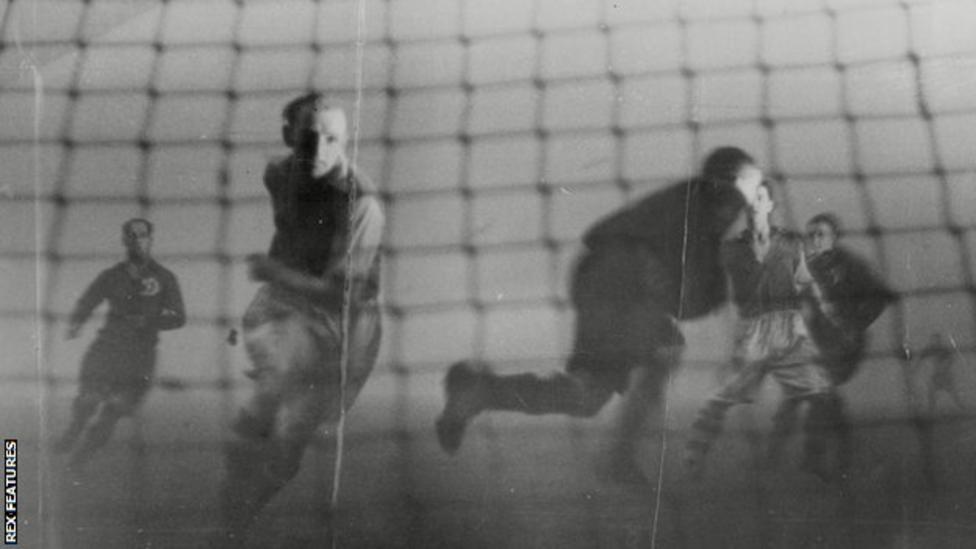
Yes, the fog was that thick.

November 21, 1945: The most-hyped game of the 1st visit of a Soviet soccer team to England, the sport's traditional birthplace, takes place. In hindsight, it can be called the event that kicked of the sports division of the Cold War.

In Communist countries, sports clubs, and the teams they fielded, were sponsored by state-owned industries. The countries' armies sponsored teams named "Central Club of the Army," or "CSKA" in Slavic languages. The national railroads sponsored teams named "Lokomotiv." The auto industry sponsored teams named "Torpedo." The teams most hated by the citizens, but with the most funding from the government and the most favorable decisions from government-appointed officials, were named "Dynamo."

Football Club Dynamo Moscow won the Soviet Top League in 1936, 1937, 1940 and 1945; and were regarded, along with Spartak Moscow, as the best team in the Soviet Union. So when World War II came to an end, Dynamo wanted to test themselves against what was seen as the best competition in the world: The British.

This was the age of radio. Television existed, but it hadn't yet done much to cover sports. Most of what people knew about sports was what they read in newspapers. So there was very little information on Dynamo for the British teams they would be facing, and their fans -- and vice versa: Dynamo knew very little about their opponents.

Interviewed for a 2001 documentary, Dynamo forward Konstantin Beskov said, "Until those games, we only knew that England was the motherland of football, that English football was the best in the world." One of Britain's national newspapers, The Evening Standard, wrote, "Don't expect much from Dynamo. They are only beginners, blue-collars, amateurs." They would regret that dismissive derision.

On Tuesday, November 13, Dynamo visited Chelsea Football Club, at Chelsea's West London stadium, Stamford Bridge. Officially, the crowd was 75,000 people. It was probably much more than that, given English "footie" fans' propensity to jam themselves into those vast "standing terraces." It's a wonder there weren't more disasters like Ibrox in 1971 and Hillsborough in 1989.

Chelsea, prior to the 1960s rarely even a good team, much less a challenge for Dynamo, took a 2-0 lead. Just before the half, Dynamo were awarded a penalty. Leonid Solovyov hit the post with his shot, and the Soviet side went into the locker room embarrassed. Whatever was said to them in the locker room, it worked: They came back to tie the game, 2-2, fell behind 3-2, and then tied it again near the end of the game, to end it 3-3.

Tommy Lawton, the former star of Liverpool team Everton FC who had recently been signed by Chelsea, said, "Dynamo were one of the fastest teams I have ever seen in my life. They flash the ball from man to man in bewildering fashion, often while standing still." Chelsea Captain John Harris said, "At least two of Lawton's kicks were of such a type that no goalkeeper would catch, but Khomich jumped like a tiger and caught them." The Soviet goalie was known as Tiger Khomich from then on.

On Saturday, November 17, Dynamo visited Cardiff City Football Club. England's Football Association, of which City were then 1 of 3 Welsh members, refused to rearrange their schedule to accommodate Dynamo, so City were the only team available, and they were in Division Three, equivalent to Class AA in modern baseball.

Wales, full of coal mines, steel mills and dockworkers, was openly sympathetic to socialism, and welcomed the Soviet team with open arms. But City were completely overwhelmed, as Dynamo beat them, 10-1.

The team with which Dynamo were most familiar, and the team they truly wanted to test themselves against, was Arsenal Football Club, winners of the Football League in 1931, '33, '34, '35 and '38. Dynamo badly wanted to play Arsenal at their North London home, the Arsenal Stadium, nicknamed Highbury for its neighborhood.

Having made trips to the Continent, including an annual home-and-home series on Armistice Day, November 11, with Racing Club de France in London and Paris, Arsenal were happy to make themselves available for this soccer "summit." But they could not do the same for Highbury: It had been commandeered by the British government at the outset of World War II, as an Air Raid Precaution Centre, and had not yet been returned to the club's control. Since 1939, Arsenal had been playing home games at White Hart Lane, the home of their arch-rivals, Tottenham Hotspur, a.k.a. Spurs, 4.7 miles to the north.

A dirty little secret had gotten out: Dynamo had "drafted" 4 star players from other Soviet teams, including Spartak Moscow and CSKA Moscow. So the FA made arrangements for teams to "loan" some players to Arsenal, including Stanley Matthews of Staffordshire team Stoke City, a winger known as "The Wizard of Dribble," and possibly England's best player at the time. Another loanee was Stan Mortensen of Lancashire team Blackpool. With massive hypocrisy, the Soviets complained.

(In 1953, Blackpool, having acquired Matthews, won the FA Cup Final, with Mortensen scoring the only hat trick in the history of the Final, but Matthews had put on such a show that it's still remembered as "The Matthews Final.")

The game was set for Wednesday, November 21, but, as so often happened in those days before environmental regulations were passed, leading to outsiders nicknaming London "The Smoke," a thick fog settled over White Hart Lane. Still, the place was sold out, 54,000 strong, and the FA didn't want to issue refunds, so the game went on. The Soviet officials insisted on a Soviet referee, Nikolay Latyshev, who had accompanied the team. The FA agreed.

Writer George Orwell, who had recently published Animal Farm (Nineteen Eighty-Four was yet to come), was in attendance, and called the match "War minus the shooting." The Soviet players, knowing Matthews was the best player on either side of the pitch, targeted him for rough treatment.

Both goalies, Khomich and Arsenal's Wyn Griffiths, took more physical assaults than shots with the ball. Griffiths sustained a concussion, and had to be replaced for the 2nd half. Harry Brown, goalkeeper for West London team Queens Park Rangers, was in attendance, and, since the Soviets had negotiated for the right to a substitution, something the FA wouldn't allow in League and cup ties until 1966, they allowed Brown to step in for Griffiths.

Dynamo scored first, but Ronnie Rooke equalized shortly thereafter. Shortly before the half, there were 3 goals within a span of 4 minutes: Mortensen put Arsenal up 2-1, then he took another Matthews feed to make it 3-1, and then Beskov put the ball past Griffiths to make it 3-2.

The 2nd half was a travesty. Solovyov scored to tie it up, but multiple witnesses claimed he was blatantly offside. Latyshev let the goal stand. A little later, Arsenal thought they should have been awarded a penalty, but Latyshev denied it. Shortly after that, he sent Arsenal midfielder George Drury off for throwing a punch. No one else claimed to see the punch.

Vsevolod Bobrov, who became one of the Soviet Union's first great hockey players as well, received a Solovyov pass while offside, and scored. The goal was allowed to stand. Rooke was nearly brought down by a rugby-style tackle by Dynamo Captain Mikhail Semichastniy, opening a cut on his forehead, but elbowed him out of the way, giving him a black eye, and driving a 25-yard shot that beat Khomich. But instead of rightly allowing the goal and sending Semichastniy off, Latyshev waved off the goal and called Rooke for a foul.

So instead of what it should have been, 4-2 to The Arsenal, with Arsenal having 11 players on the pitch and Dynamo having 10 at most, it was 4-3 to Dynamo, with Arsenal down to 10 and Dynamo fielding... no one was sure how many. Dynamo took advantage of the fog to put more players on, with some accounts saying it was now 15 against 10.

The match ended 4-3 to Dynamo. The Daily Mail wrote, "It was one of the most exciting games 54,000 people never saw." Unusually for the paper known in modern times as the Daily Fail, it was the truth.

The controversy threatened to cancel the 4th and final game on the tour. But the FA were making too much money to bow to the wishes of the fans, and the finale went on. On Wednesday, November 28, Dynamo were hosted by Rangers Football Club, Scotland's most successful team, at Ibrox Stadium in Glasgow. Despite Bobrov scoring what The Daily Telegraph called "as perfect a goal as has ever been scored at Ibrox," Rangers held on for a 2-2 draw.

Dynamo had finished the tour with 2 wins, 2 draws, and no losses. But all the goodwill they had generated in their games against Chelsea and Cardiff City was thrown away by their actions against Arsenal. The game with Rangers did them no good in the eyes of the British, or European, sporting public.

Dynamo would win the Soviet Top League again in 1949, 1954, 1955, 1957, 1959, 1963 and 1976. But they never won it again. Nor have they won its replacement, the Russian Premier League. They have long since been surpassed as Moscow's top team by Spartak and CSKA, and St. Petersburg team Zenit have also surpassed them among Russia's teams.

Nikolay Latyshev, the referee for the Arsenal-Dynamo match, went on to officiate at the 1962 World Cup Final, which featured a team from what was then a Communist nation, Czechoslovakia. But none of his calls in the game were considered controversial, and Brazil defeated the Czechs.

*

November 21, 1945 was a Wednesday. Actress Goldie Hawn was born on this day.

Baseball was out of season. Football was in midweek. The NBA hadn't been founded yet. Only 1 game was played in the NHL: The Boston Bruins beat the Montreal Canadiens, 3-0 at the Boston Garden.

Friday, November 11, 2022

November 11, 1962: "Seven Days In May" Is Published

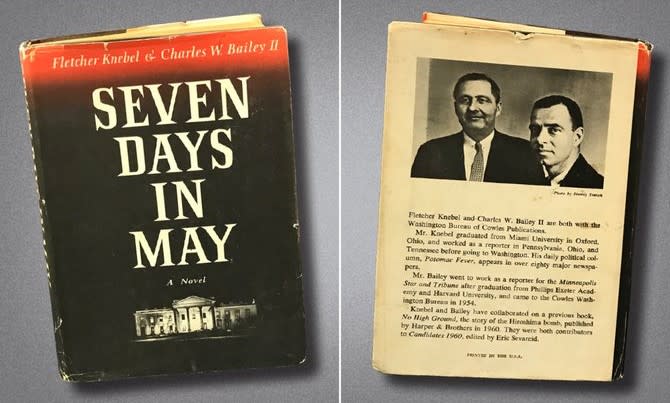
November 11, 1962: Seven Days In May is published, written  by Fletcher Knebel and Charles W. Bailey II. A film based on it premiered on February 12, 1964. Kirk Douglas played the would-be hero, Burt Lancaster the villain, Frederic March the President caught in the middle, and Ava Gardner and Martin Balsam the people who hold the key to stopping a coup. Twilight Zone boss Rod Serling wrote the script.

Douglas, through his production company, and a friend of his, director John Frankenheimer, made the film. Frankenheimer didn't want to work with Lancaster again after clashing with him on The Birdman of Alcatraz, but Douglas insisted -- after beating the blacklist with Spartacus, he had that kind of clout (making him the George Clooney of his day). Oddly, Frankenheimer not only patched up his differences but became close friends with Lancaster, while he and Douglas fell out, and never worked together again.

President Kennedy had read the book, and was eager to see the film made, after the real-life actions of General Edwin Walker, whom Kennedy had forced to resign his commission. Kennedy had the White House staff cooperate with Douglas and Frankenheimer, heading up to Hyannis for a weekend so they could film outside without the Secret Service getting skittish over it. But, in a twist that Knebel and Bailey would have found poignant, JFK didn't live to see the premiere, for -- as the Warren Commission determined -- reasons that had nothing to do with a military coup.

March and Serling died in 1975, Gardner in 1990, Knebel in 1993, Lancaster in 1994, Balsam in 1996, Frankenheimer in 2002, Bailey in 2012, Douglas in 2020 (at the age of 103).

*

November 11, 1962 was a Sunday. Actress Demi Moore was born.

Baseball was out of season. These games were played in the NFL:

* The New York Giants beat the Dallas Cowboyss, 41-10 at the Cotton Bowl in Dallas.

* The Green Bay Packers beat the Philadelphia Eagles, 49-0 at Franklin Field in Philadelphia.

* The Washington Redskins beat the Cleveland Browns, 17-9 at District of Columbia Stadium (later renamed Robert F. Kennedy Stadium) in Washington.

* The Chicago Bears beat the Minnesota Vikings, 31-30 at Wrigley Field in Chicago.

* The Pittsburgh Steelers beat the St. Louis Cardinals, 26-17 at the 1st Busch Stadium, formerly the last Sportsman's Park, in St. Louis.

* The Baltimore Colts beat the Los Angeles Rams, 14-2 at the Los Angeles Memorial Coliseum.

* And the Detroit Lions beat the San Francisco 49ers, 38-24 at Kezar Stadium in San Francisco.

These games were played in the American Football League:

* The New York Titans, who became the Jets the next season, lost to the Dallas Texans, 52-31 at the Polo Grounds.

* The Boston Patriots beat the Denver Broncos, 33-29 at Bears Stadium (later renamed Mile High Stadium) in Denver.

* The Buffalo Bills beat the San Diego Chargers, 40-20 at Balboa Stadium in San Diego.

* And the Houston Oilers beat the Oakland Raiders, 28-20 at Frank Youll Field in Oakland.

There were 3 games in the NBA. This included a doubleheader at the Kiel Auditorium in St. Louis. In the opener, the Boston Celtics beat the New York Knicks, 117-98. In the nightcap, the St. Louis Hawks beat the Detroit Pistons, 117-100 at the Kiel Auditorium in St. Louis.

And the Chicago Zephyrs beat the Los Angeles Lakers, 109-105 at the Los Angeles Memorial Sports Arena. Elgin Baylor scored 42 and Jerry West 30, in defeat. Terry Dischinger scored 30 to lead the Zephyrs, who became the Baltimore Bullets the next season, and are now known as the Washington Wizards.

And there were 2 games in the NHL. The Montreal Canadiens beat the Boston Bruins, 4-2 at the Boston Garden. And the Toronto Maple Leafs beat the Chicago Black Hawks, 5-3 at the Chicago Stadium. The New York Rangers and the Detroit Red Wings were not scheduled.

Thursday, November 10, 2022

November 10, 1982: Leonid Brezhnev "Has a Cold"

November 10, 1982: Soviet Premier Leonid Brezhnev dies of a heart attack in Zarechye, outside Moscow, 3 days after his last public appearance, at a parade commemorating the 65th Anniversary of the Bolshevik Revolution.

His health, like his government, had been failing for years. Soviet media tried to cover up his final illness, by saying that he had a cold. Hosting The Tonight Show, Johnny Carson made a lot of jokes about this, and did so again when Brezhnev’s successor, Yuri Andropov, died just 15 months later; and again when Andropov's successor, Konstantin Chernenko, died 13 months after that. Even President Ronald Reagan said, "How can I make peace with the Russians, when they keep dying on me?"

No one knew it at the time, but Brezhnev’s nearly "absentee boss" governance was the beginning of the end of the Cold War. Over the last 10 years of his dictatorship, roughly from the time he and President Richard Nixon signed their 1972 treaties, the Soviet Union had deteriorated almost as much as his health -- something ignored by fans of Reagan, who wanted us to believe that the Soviet state was never stronger than under its enabler (they alleged), Jimmy Carter.

His funeral was, typical for a totalitarian nation putting its leader to rest, over the top. Clips of it would be used on Saturday Night Live the next year, for the funeral of Buckwheat, assassinated by John David Stutts (both characters played by Eddie Murphy) -- with the Reagans and a sad-looking Princess Diana in attendance.

More notable to me in this photo of Brezhnev than his 5 "Hero of the Soviet Union" medals are his oversize glasses, like Chicago Cubs broadcaster Harry Caray, and singer-actor Dean Martin in his last few years, unable to hide just how bad he was looking.

*

November 10, 1982 was a Wednesday. Actress Heather Matarazzo was born.

Baseball was out of season. Football was in midweek. There were 8 games played in the NBA:

* The New Jersey Nets beat the New York Knicks, 99-90 at the Brendan Byrne Arena at the Meadowlands.

* The Philadelphia 76ers beat the Chicago Bulls, 145-108 at The Spectrum in Philadelphia. Despite the high team point total, the Sixers' highest scorer was Moses Malone with 22 points.

* The Milwaukee Bucks beat the Boston Celtics, 105-101 at the Boston Garden.

* The Detroit Pistons beat the Indiana Pacers, 115-91 at the Silverdome in the Detroit suburb of Pontiac, Michigan.

* The Seattle SuperSonics beat the Dallas Mavericks, 94-91 at the Reunion Arena in Dallas.

* The Utah Jazz beat the Denver Nuggets, 125-119 at the Salt Palace in Salt Lake City. Adrian Dantley led all scorers on the night with 43 points.

* The Phoenix Suns beat the Kansas City Kings, 106-100 at the Arizona Veterans Memorial Coliseum in Phoenix.

* And the Cleveland Cavaliers beat the Golden State Warriors, 132-120 at the Oakland Coliseum Arena. Lloyd "World B." Free scored 38 points in defeat.

And there were 8 games in the NHL:

* The New York Rangers beat the St. Louis Blues, 5-4 at Madison Square Garden.

* The New Jersey Devils, in their 1st season, lost to the Washington Capitals, 3-0 at the Capital Centre in the Washington suburb of Landover, Maryland.

* The Hartford Whalers beat the Quebec Nordiques, 7-5 at the Hartford Civic Center (now the PeoplesBank Arena).

* In an "Original Six" matchup, the Toronto Maple Leafs beat the Detroit Red Wings, 8-2 at Maple Leaf Gardens in Toronto.

* The Buffalo Sabres beat the Philadelphia Flyers, 7-2 at the Buffalo Memorial Auditorium.

* The Pittsburgh Penguins beat the Edmonton Oilers, 5-4 at the Civic Arena in Pittsburgh.

* In another "Original Six" matchup, the Chicago Black Hawks beat the Montreal Canadiens, 6-3 at the Chicago Stadium.

* The Vancouver Canucks beat the Los Angeles Kings, 4-2 at the Pacific Coliseum in Vancouver.

* And the Boston Bruins, the Minnesota North Stars and the Winnipeg Jets were not scheduled.

Wednesday, November 9, 2022

November 9, 1989: The Berlin Wall Comes Down

November 9, 1989: After several weeks of civil unrest, the government of the German Democratic Republic (a.k.a. East Germany) announces that its citizens could visit the Federal Republic of Germany (a.k.a. West Germany) and West Berlin.

This renders the Berlin Wall, the 11-foot-9-inch high, 96-mile long concrete barrier surrounding West Berlin and symbolizing the "Iron Curtain" that had separated Communist Eastern Europe from capitalist Western Europe since its erection began on August 13, 1961, unenforceable and irrelevant. Crowds of East Germans climb over the wall, and through the various checkpoints between East and West Berlin, some taking chisels and sledgehammers to the Wall while the world watches on television.

Speaking in front of the Brandenburg Gate on June 12, 1987, President Ronald Reagan challenged Soviet Premier Mikhail Gorbachev: "Mr. Gorbachev, dear down this wall!" While Gorbachev's reforms within the Soviet Union certainly inspired people, and even governments, throughout Eastern Europe, inspiring Time magazine to name him not just Man of the Year but Man of the Decade, he didn't lift a finger to make the Wall's irrelevance possible.

On Christmas Day, December 25, 1989, in a symbolic gesture of reunification and renewal, Leonard Bernstein conducted a performance of Ludwig van Beethoven's Symphony No. 9 in Berlin, to celebrate the fall of the Berlin Wall. It was his last major performance, as he died on October 14, 1990, at the age of 72.

The official demolition of the Wall began on June 13, 1990, and was officially completed in 1994. There are still pieces left in Berlin, and other pieces were bought and put on display as museum pieces. Some of America's Presidential Libraries, particularly those of Presidents who served during the Cold War, have pieces on display.

The fall of the Berlin Wall paved the way from German reunification, which was formalized on October 3, 1990. The East still hasn't fully caught up with the West, but it's closer now.

Ironically, from a sports perspective, reunification hasn't helped the nation's combined sports teams all that much. While both West Germany and East Germany did very well at the Olympics, the combined team hasn't won more medals than the two separate countries' previous combined totals. Thought that may be due to the East Germans no longer having access to Communist-administered steroids.

And the German national soccer team, while still successful, hasn't been more successful. West Germany won the World Cup in 1954, 1974 and 1990. The combined nation has won it once, in 2014, and did so with a single player born and trained in East Germany: Toni Kroos. Given that a child born in East Germany on the morning of October 3, 1990 would be 32 years old when the 2022 World Cup gets underway, Kroos is likely to be the only East German who ever wins it.

There is one more postscript. One of the buildings in East Germany that was stormed by demonstrators was the Stasi headquarters in Dresden, where a 37-year-old KGB agent was stationed. He called Moscow for permission to defend it, and didn't get it, and had to flee. He felt betrayed by his country's government, and swore revenge. His name was Vladimir Putin.

Just as Hitler barely survived being killed in World War I, Putin had a narrow escape from being captured the night the Wall fell.

November 9 has become Germany's "Day of Destiny": On that date, in 1918, the Kaiser abdicated and the 1st German Republic was proclaimed; in 1923, the Beer Hall Putsch failed; in 1938, Kristallnacht was carried out by the Nazis; and in 1989, the Berlin Wall was rendered legally moot.

*

November 9, 1989 was a Thursday. The baseball season had ended 12 days earlier, when the Oakland Athletics won the World Series against their fellow Bay Area team, the San Francisco Giants. Although Thursday night games are common in the NFL now, they weren't then, and so there was no NFL game on that day.

There were 4 NBA games played, including an intra-metropolitan one and an intra-State one:

* The New York Knicks beat the New Jersey Nets, 107-105 at Madison Square Garden. Charles Oakley led the Knickerbockers with 22 points, and Patrick Ewing scored 20. For the Nets, Chris Morris scored 21 and Dennis Hopson 20.

* The Milwaukee Bucks beat the Seattle SuperSonics, 155-154 at the Bradley Center in Milwaukee, in not 1, not 2, not 3, not 4, but 5 overtimes. Ricky Pierce scored 36 for the Bucks.. For the Sonics, Dale Ellis scored 53, and Xavier McDaniel 37. (There has been a 6-overtime game in NBA history: January 6, 1951, before the institution of the 24-second shot clock: Indianapolis Olympians 75, Rochester Royals 73.)

* The Denver Nuggets beat the Houston Rockets, 128-127 in overtime at The Summit in Houston. (The arena has since been converted into the Central Campus of the Lakewood Church, Dr. Joel Osteen's "megachurch.") Hakeem Olajuwon and Otis Thorpe each scored 33 points in a losing cause, while Danny Schayes led the Nugs with just 21.

* And the Los Angeles Lakers beat the Golden State Warriors, 106-95 at what's now named the Oracle Arena in Oakland. A.C. Green led the Lakers with 24, while Chris Mullen netted 30 for the Dubs.

There were 6 NHL games played, only 1 involving a New York Tri-State Area team: 

* The New York Islanders lost to the Quebec Nordiques, 7-5 at the Nassau Coliseum.

* The Toronto Maple Leafs beat the Philadelphia Flyers, 4-1 at The Spectrum in Philadelphia.

* The Boston Bruins beat the Edmonton Oilers, 6-2 at the Boston Garden. This turned out to be a preview of the Stanley Cup Finals, although the Oilers would win that.

* The Chicago Blackhawks beat the Pittsburgh Penguins, 4-3 at the Chicago Stadium.

* The Minnesota North Stars beat the Detroit Red Wings, 5-1 at the Metropolitan Sports Center in the Minneapolis suburb of Bloomington, Minnesota.

* And the Montreal Canadiens and the St. Louis Blues played to a tie, 1-1 at the St. Louis Arena.

Monday, November 7, 2022

November 7, 1983: Able Archer 83

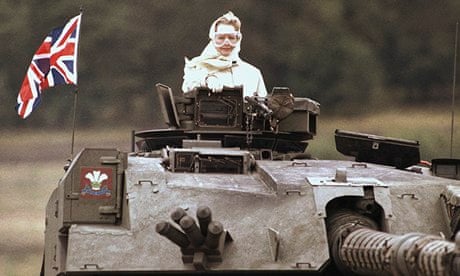
A Welsh tank unit (note the Union Jack and the daffodil logo)
taking part in Able Archer 83

November 7, 1983: Able Archer 83 begins. It is the codename for wargames by the North Atlantic Treaty Organization (NATO), which had been an annual event for a few years. The purpose was to simulate a period of conflict escalation between NATO and the Warsaw Pact, meaning the Soviet Union and their satellite nations in Eastern Europe. It was coordinated from NATO headquarters in Casteau, Belgium.

This came while President Ronald Reagan was placing Pershing II missiles in Western Europe; 8 months after he made a speech declaring the Soviet Union to be "an evil empire"; 67 days after the Soviets shot down Korean Air Lines Flight 007; 42 days after Soviet Lieutenant Colonel Stanislav Petrov figured out that the detection of 2 U.S. nuclear missiles heading for Russia were a false alarm, and refused to give the order to launch a retaliation, thus becoming known (years later, once the world found out) as "The Man Who Saved the World"; and would be followed, 13 days later, with ABC airing the TV-movie The Day After, which imagined a nuclear attack on the U.S.

Able Archer 83 included some steps forward that previous exercises had not. These, on top of everything else that had happened in 1983, led the Soviet government to consider that this was a setup for an actual war. So they placed their military units on the highest possible alert.

Able Archer 83 ended on November 11 -- appropriately enough, the anniversary of the Armistice that ended World War I -- and so the Warsaw Pact forces, seeing that nothing further had happened, were ordered to stand down. This may have been the closest the world came to nuclear war, except for the Cuban Missile Crisis of 1962 and Col. Petrov's moment.

The 1980s -- especially the Autumn of 1983 -- were not "a simpler time." Not even for those of us who were kids at the time.

*

November 7, 1983 was a Monday. Actor Adam DeVine, known for his roles in the Pitch Perfect films and his role as Andy Bailey on the TV show Modern Family, was born on this day. And this was also the day a bomb exploded in the U.S. Senate. Despite the lucky fact that there were no injuries, I have a separate entry for this event.

The baseball season was over. There were no NBA or NHL games scheduled. On ABC Monday Night Football, the Detroit Lions beat the New York Giants, 15-9 at the Silverdome in the Detroit suburb of Pontiac, Michigan.

Sunday, November 6, 2022

November 6, 1984: President Ronald Reagan Is Re-Elected

November 6, 1984: President Ronald Reagan is overwhelmingly re-elected, defeating Walter Mondale, who had been Vice President under Reagan's predecessor as President, Jimmy Carter. Reagan nearly becomes the 1st candidate to pull off a 50-State sweep, coming closer than Richard Nixon did in 1972, as Mondale wins his home State of Minnesota by just 2,996 votes.

Reagan thus breaks Franklin Delano Roosevelt's 1936 record of 523 Electoral Votes, with 525, although it's not quite a higher percentage: FDR got 523 of 531 for 98.5 percent of the EVs, while Reagan got 525 of 538 for 97.6.

Mondale also won the mostly-black District of Columbia, for 3 EVs, but until about 12:00 Midnight, Eastern Time, Minnesota still couldn't be called for him. Or, as comedian Jay Leno put it, "When I went to bed, I only had 3 fewer Electoral Votes than Mondale, and I wasn't even running!"

Mondale also got at least 48 percent of the vote in Massachusetts and Rhode Island; 47 percent in Maryland; and 45 percent in Pennsylvania, Iowa, New York and Wisconsin. Had he won those, instead of losing 525 Electoral Votes to 13, he would have lost 398 to 140, and it wouldn't have looked so bad. But the popular vote was still bad: Reagan won 58.7 percent, Mondale 40.6.

Unemployment was 7.5 percent, higher than the 7.1 percent that it was 4 years earlier when Reagan knocked Carter out of the White House. And there was the Beirut barracks debacle just a year before this election, killing 241 U.S. Marines -- to put it into recent context, 60 "Benghazis" all at once.

And, less than 4 months earlier, Reagan had joked about starting World War III: "We begin bombing in 5 minutes." As a 14-year-old boy, let me tell you: That was terrifying. And, especially in the 2nd debate, Reagan looked like he was already affected by Alzheimer's disease.

So how did Reagan win? By lying: By saying that it was "Morning Again In America," by saying that America was stronger than ever thanks to his defense buildup, by saying that the Communists were in retreat (they weren't), and that he wasn't going to raise taxes but Mondale was. (As Mondale pointed out, Reagan had already raised taxes twice, and would have to do so again -- and, in fact, did.)

But the Republicans ran against "The Carter-Mondale Administration." To this day, they compare every Democratic President, and every Democratic nominee for President, to Carter, even after we've had successful Democratic Presidencies under Bill Clinton and Barack Obama, and Republican Presidents who were much more damaging than Carter in the two George Bushes and Donald Trump -- and, as it turned out, Reagan himself.

Mondale also hurt himself with his selection of a running mate. It is easy to understand his desire to choose the 1st female Vice Presidential nominee: He thought he could take the women's vote away from Reagan. That was probably a bad guess, no matter who he would have chosen. 

But Ferraro, then a Congresswoman from Queens, was the wrong woman for the job. The traditional running-mate role, that of the "attack dog" who says things the Presidential nominee shouldn't, worked against her, especially with her N'Yawk accent. The fact that her husband, Brooklyn real-estate developer John Zaccaro, was viewed ethically compromised (even if he really wasn't, and she wasn't, either) didn't help.

But there was nothing Mondale could have done. Reagan was able to have it both ways. He was able to accentuate the positive: The "Morning In America" ad suggested, with much justification, that things were better than they had been 4 years earlier.

It was something that Americans, besieged by a quarter of a century of Cold War, civil rights struggles, race riots, assassinations, war, recession and terrorism desperately wanted to believe. And Reagan and his packagers were able to convince them it was true. This was all part of the Actor's show. He never played any part as well as he played "President Reagan." In short, to adapt a famous line from a TV commercial: Ronald Reagan wasn't a great President, but he played one on TV.

One thing that helped was the 1984 Olympics in Los Angeles. Granted, the hockey Gold Medal, including the upset of the vastly more talented Soviet team, at the 1980 Winter Olympics didn't help Carter (or Mondale, who was actually at the game with the Soviets and the Gold Medal game with Finland, as several players were from Minnesota). But the boycott of the Summer Olympics, in Moscow, sure hurt Carter – even though it did more to expose the Soviets as "an evil empire" than anything Reagan ever did.

When the Soviets and the East Germans boycotted the 1984 Summer Olympics in Los Angeles, it left the American team almost free rein to win as many medals as it wanted. It became 16 days of unbridled, safe patriotism, a call of, "You're all welcome to visit our country, but our country is the greatest!" It was right up Reagan's alley, and it was right in his Southern California backyard. As the host nation's head of state, he even got to officially declare the Games open. He was great at ceremonial stuff like that, and he reveled in it.

But Reagan and his team were equally good at selling the Cold War. In spite of the sunny image he projected for both himself and America, Reagan was able to make Americans so frightened of the Soviet Union that they'd rather have a senile, lying Republican as President than an honest Democrat of sound mind.

There was nothing Mondale could have done. The only way he could have won would have been if Reagan's Alzheimer's disease had made him look obviously impaired during their debates. People who heard his closing statement in the 2nd debate wondered, but it wasn't obvious enough to swing the election.

In spite of his tremendous victory, it was a personal landslide, a.k.a. a "lonely landslide." The Republicans gained 16 seats in the House of Representatives, hardly what one would expect when the President won by such a wide margin. And the Democrats actually gained 2 seats in the Senate. Notable newly-elected Senators included Republicans Mitch McConnell of Kentucky and Phil Gramm of Texas; and Democrats Al Gore of Tennessee, John Kerry of Massachusetts, Paul Simon of Illinois, Tom Harkin of Iowa, Jay Rockefeller of West Virginia.

Reagan died in 2004, Ferraro in 2011, Bush in 2018, Mondale in 2021.

*

November 6, 1984, like all modern U.S. Election Days, was a Tuesday. The baseball season was over. Football was in midweek. These 5 NBA games were played on the day:

* The New York Knicks lost to the Dallas Mavericks, 107-104 at the Reunion Arena in Dallas. The Knickerbockers got 31 points from Bernard King, who had been the best player in the world over the last year or so. Yes, better than Magic Johnson, Larry Bird, Julius Erving, Moses Malone, and -- don't forget, he was just an overmatched professional rookie at this point -- Michael Jordan.

But Jay Vincent -- a decent but not great player, probably best known today for having several nicknames, the best of which was "The Midnight Creeper" -- led all scorers with 33.

* The Houston Rockets beat the Kansas City Kings, 108-94 at The Summit in Houston. (The arena has since been converted into the Lakewood Church Central Campus, the "megachurch" run by Dr. Joel Osteen, infamously closed off to refugees during Hurricane Harvey in 2017 until he was publicly shamed into opening it.)

* The San Antonio Spurs beat the Seattle SuperSonics, 99-91 at the HemisFair Arena in San Antonio.

* The Denver Nuggets beat the Los Angeles Lakers, 146-130 at The Forum outside Los Angeles in Inglewood, California. Despite all the talent on the floor, especially with this being the Lakers' "Showtime" period, the leading scorer in this game scored just 28: Alex English of the Nuggets.

* And the Portland Trail Blazers beat the Phoenix Suns, 116-99 at the Veterans Memorial Coliseum in Portland.

And 4 games were played in the NHL:

* The New York Islanders beat the St. Louis Blues, 6-3 at the Nassau Coliseum.

* The Quebec Nordiques beat the Winnipeg Jets, 5-3 at the Colisee de Quebec.

* The Pittsburgh Penguins, a terrible team with a rookie named Mario Lemieux, played the defending Stanley Cup Champions, the Edmonton Oilers, to a tie, 3-3 at the Civic Arena in Pittsburgh.

* And in an "Original Six" matchup, the Detroit Red Wings beat the Montreal Canadiens, 4-2 at the Joe Louis Arena in Detroit. 

Saturday, November 5, 2022

November 5, 1956: The Swans That Nearly Started World War III

A Soviet MiG-15

Note: I added this entry in 2024, having heard the story for the first time on an episode of NCIS.

November 5, 1956: With the Suez Crisis and the crushing of the Hungarian Revolution underway, and America electing a President the next day, there is a close call that nearly starts World War III.

The North American Aerospace Defense Command (NORAD) received a number of simultaneous reports, including unidentified aircraft over Turkey, Soviet MiG-15 fighters over Syria, a downed British Canberra medium bomber, and unexpected maneuvers by the Soviet Black Sea Fleet through the Dardanelles (also in Turkey) that appeared to signal a Soviet offensive.

Considering previous Soviet threats to use conventional missiles against Britain and France if they intervened in the Suez Crisis, U.S. forces believed these events could trigger a NATO nuclear strike against the Soviet Union, and went on high alert.

As it turned out, all reports of Soviet action turned out to be erroneous, misinterpreted, or exaggerated. The perceived threat was due to a coincidental combination of harmless events:

* The "unidentified aircraft over Turkey" was a flock of swans.
* The MiGs were a fighter escort for President Shukri al-Quawatli of Syria, returning from a meeting with Premier Nikita Khrushchev in Moscow. A check with the Turkish government proved the flight to have been previously cleared with them.
* The British reported that their bomber had been brought down by mechanical issues.
* And a check of records showed that the Black Sea Fleet's exercises had been previously scheduled.

Had any one of these things, alone, happened, it probably wouldn't have concerned too many people. The fact that they all seemed to be happening at once was nerve-rattling. Over the next few days, things calmed down. The Egyptians won in the Suez, the Soviets won in Hungary, President Dwight D. Eisenhower was re-elected, no new wars -- conventional or otherwise -- got started, and the status quo was restored.

It was the closest call since the Chinese invasion during the Korean War, 6 years earlier. The next close call would be in another 6 years, over missiles in Cuba.

*

November 5, 1956 was a Monday. Baseball season was over. Football was in midweek: There would be no Monday Night Football for another 14 years. And while both leagues' new seasons had gotten underway, there were no games were scheduled in either the NBA or the NHL. So there were no scores on this historic day.

December 31, 1999 & January 1, 2000: The Millennium

December 31, 1999:  The Millennium arrives. The people of planet Earth survived. At a terrible cost. But we hadn't destroyed ourselves. ...