Showing posts with label national league. Show all posts

Thursday, December 22, 2022

December 22, 1915: The Federal League Peace Treaty

December 22, 1915: An agreement is made between the owners of the teams in baseball's Federal League and those of the established major leagues, the American League and the National League. The FL's team owners needed it because they had run out of money. The AL's and NL's team owners needed it because they didn't want to pay higher salaries to keep players from defecting.

First, the FL folds. Then, Charles Weeghman, owner of the FL's Chicago Whales, was allowed to buy the NL's Chicago Cubs. And Phil Ball, owner of the FL's St. Louis Terriers, was allowed to buy the AL's St. Louis Browns.

Weeghman brought his Whales players to the Cubs, and moved the Cubs into his ballpark on the North Side, Weeghman Park. But, in spite of the Cubs winning the 1918 NL Pennant, Weeghman lost everything in World War I, and sold the team, with chewing gum magnate William Wrigley Jr. eventually emerging as sole owner. In 1926, he renamed the team's home Wrigley Field. It is the most significant remaining relic of the Federal League.

Ball also bought his players to the Browns, with less success, mainly because he couldn't get along with established general manager Branch Rickey. Rickey went over to the NL's St. Louis Cardinals, and the rest is history.

The Kansas City Packers franchise had been declared bankrupt and taken over by the league office after the close of the regular season, and the Baltimore Terrapins' owners, including former Baltimore Orioles and Brooklyn Superbas (Dodgers) manager Ned Hanlon, rejected the offer made to them. They had sought to buy and move an existing franchise to their city, but were rebuffed, and sued.

And so, his was the "Federal Baseball Club" that was the plaintiff in this case. He argued that baseball was a monopoly, restricting competition, and thus subject to the Sherman Antitrust Act. It took until 1922 for the U.S. Supreme Court to rule otherwise, granting baseball what has come to be known as its "special exemption" from the Sherman Antitrust Act.

The FL's 1914 Pennant was won by the Indianapolis Hoosiers. But they lost money, and were sold to a group that moved them to Newark, setting up shop in a ballpark across the Passaic River, in Harrison, New Jersey. The Newark Peppers did not repeat, as the Chicago Whales won the 1915 Pennant.

With the folding of the FL, that left Baltimore, Buffalo, Indianapolis, Newark and Kansas City as cities that had had FL teams, but not an AL team or an NL team. Baltimore would return to the majors with a new Orioles in 1954, Kansas City with the A's moving there in 1955. (They moved again in 1967, and were replaced by the Royals in 1969.)

Newark and other New Jersey cities have had minor-league teams since, but, with the exception of 14 games played in Jersey City by the Brooklyn Dodgers in 1956 and 1957, New Jersey has never again hosted a game in Major League Baseball. It has hosted games in the NFL, the NBA, the NHL, and professional soccer. The New York Red Bulls of Major League Soccer play at Red Bull Arena, almost right across the street from where the Peppers played.

Indianapolis has since had an NFL team, an NBA team, and a team in the World Hockey Association, but never in MLB. Buffalo has since had an NFL team, an NBA team, and an NHL team. But it has only returned to MLB for 49 games, played at Sahlen Field by the Toronto Blue Jays during the 2020 and 2021 seasons, due to COVID restrictions.

*

December 22, 1915 was a Thursday. Baseball and football were out of season. Professional basketball barely existed. There were 2 games played in the National Hockey Association, predecessor to the NHL. The Montreal Wanderers beat the Montreal Canadiens, 3-2 at the Montreal Arena. (Both teams played home games there, but, officially, this was a Canadiens' home game.) And the Ottawa Senators beat the Toronto Blue shirts, 7-1 at the Ottawa Arena.

Friday, December 9, 2022

December 10, 1876: New York & Philadelphia Are Kicked Out of the National League

William Hulbert.
I looked for photos of the teams' operators,
William Cammeyer of New York and Al Wright of Philadelphia,
but it appears none of either survive.

December 10, 1876: The teams representing New York, the biggest city in the country, and Philadelphia, the 3rd-biggest, are kicked out of the National League, the only major league in the sport, or in any sport in North America, at the time.

The NL had begun play in 1876, with 8 teams. Going east to west, they were: The Boston Red Caps, the Hartford Dark Blues, the New York Mutuals, the Philadelphia Athletics, the Cincinnati Reds, the Louisville Grays, the Chicago White Stockings and the St. Louis Brown Stockings. (At this point, coming up with a clever name for your team was not necessary.)

The 1st game was played on April 22, at the Jefferson Street Grounds in Philadelphia. Boston beat Philadelphia, 6-5. There was a decent Pennant race, with Chicago finishing 6 games ahead of both Hartford and St. Louis, 15 ahead of Boston (who had won the last 4 titles in the National Association, and would win the next 2 titles in the NL), 22 ahead of Louisville, 26 ahead of New York, and 34 1/2 ahead of Philadelphia.

It was not treated as odd that the top 2 teams were Chicago, owned by NL founder William Hulbert; and Hartford, owned by the NL's President, Morgan Bulkeley, a Hartford banker who would later be elected Mayor of Hartford, and as Connecticut's Governor and U.S. Senator. But it was a bit odd that New York and Philadelphia hadn't done well.

The New York Mutuals had been founded in 1857, and won more games recognized as "official" than any other team in 1863 and 1864. While the Boston Red Stockings (who became the Red Caps, and went through several name changes before settling in 1912 on "Braves") dominated the National Association, the "Mutes" finished 3rd in 1872 and 2nd in 1874.

They played their home games not in Manhattan, but in Brooklyn, which would be a separate city until 1898. Their owner, William Cammeyer, had built the first enclosed baseball facility, the Union Grounds, in the Williamsburg section of Brooklyn, in 1862, and the Mutes continued to play there.

Like the Mutes, the Philadelphia Athletics were considered one of the top teams in baseball's amateur era, before professionalism came in 1869. They had been founded in 1860, won more games than any other team in 1867, and finished 2nd in 1865, 1866 and 1868. In 1871, they won the NA's 1st Pennant.

But the depression that began with the Panic of 1873 hit baseball hard. NA teams couldn't afford to complete their schedules by going on roadtrips. This was a major reason that Hulbert founded the NL: He wanted teams to stick to their schedules, to make the Pennant race more honest. Chicago beat Hartford at home, 7-6, on September 26, to clinch the Pennant. (As early as 1858, the team with the best overall record would be permitted to fly a flag, or "pennant," reading, "CHAMPIONS" at their ballpark, and the name stuck.)

On September 11, 1876, Al Wright, manager of the Athletics, informed the NL office that they could not afford to make their last Western roadtrip, to Chicago and St. Louis. He did, however, have a backup officer: The White Stockings and Brown Stockings could come east, play additional games in Philadelphia, and take a larger than normal portion of the gate receipts, so they could raise enough money to finish their schedule. The NL denied this reasonable suggestion. On September 16, the Mutuals announced that they couldn't afford to make their last roadtrip, either.

And so, on December 10, the NL held its Winter Meetings in Cleveland. After Bulkeley declined to run for re-election, Hulbert was elected President. He immediately moved for the expulsion of the Mutuals and the Athletics from the League. In spite of the role each already had in baseball's relatively short history, the other team owners did Hulbert's bidding.

It would be 1883 before both cities returned to the NL, with the teams that would become known as the New York Giants and the Philadelphia Phillies. By the start of the 1878 season, only 2 of the original 8 teams would be left: Boston and Chicago. But those 2 teams still exist, as the Atlanta Braves and the Chicago Cubs.

*

December 10, 1876 was a Sunday. The NL forbid games on Sundays, but, apparently, they were more than willing to make decisions affecting any and all League teams on the day. Since basketball did not yet exist, hockey barely did, and college football, itself in its early days, did not play on Sundays, there were no scores on this historic day.

Monday, November 7, 2022

November 8, 1894: The Death of King Kelly

November 8, 1894: Michael Joseph Kelly, sometimes (erroneously) called baseball's 1st true superstar, dies in Boston, where he had been scheduled to appear in vaudeville. "King" Kelly had taken a ferry up from New York, and caught pneumonia. Had today's medicine been available then, he would have been fine. Instead, the pneumonia, and the toll of years of alcoholism, killed him at age 36.

The catcher had helped the Chicago White Stockings (Cubs) win National League Pennants in 1880, 1881, 1882, 1885 and 1886. After the 1886 season, he became the 1st player sold for $10,000 (about $308,000 in 2022 money), to the Boston Beaneaters, forerunners of the Braves. Although he didn't lead them to a Pennant, he became nearly as popular among Boston's Irish-Americans as the Heavyweight Champion of the World, John L. Sullivan.

He inspired a rule change: There was a game in Chicago in which he wasn't playing, and a ball was popped up. He ran onto the field, yelling, "Kelly now catching for Chicago!" so that the umpire could hear, and he caught the ball. Since there was no rule against it, the umpire had to rule the batter out. The following season, the rule was changed: No substitutions in mid-play, except for injury. (In other words, a player hit with a pitch and too injured to continue could have a substitute take the base to which he was entitled.)

He is believed to have invented the hook slide, making him the subject of the song "Slide, Kelly, Slide." There are those who believe he was the inspiration for the poem "Casey at the Bat," and he recited it in his vaudeville act, often getting the words wrong.

In 1888, he dictated Play Ball: Stories of the Ball Field to Boston baseball writer Jack Drohan, making him the 1st baseball player to "write an autobiography." Despite his reputation as a braggart and a drunk, research has shown that most of his stories have checked out, and the book is a godsend to people studying baseball in the 1880s.

In 1890, he was a willing participant in the Players' League revolt, and he led the PL's Boston Reds to the Pennant, his 6th league title. It would be his last, as age and his lifestyle caught up with him. He played his last major league game on September 2, 1893, and his last professional game in August 1894.

He might not have been finished, and if he'd taken care of himself, he certainly wouldn't have been. But then, if he had taken better care of himself, he wouldn't have been King Kelly. As great a player as he was, he wasn't very smart when it came to handling himself. He was thus a precursor to many players, including (in differing ways) Mickey Mantle and Manny Ramirez.

He was married, but his only child had died shortly after birth, earlier in 1894. The Baseball Hall of Fame was not established until 1936. When it elected him in 1945, there was no one available to accept his plaque. Had he taken better care of himself, he would then have been 87.

*

November 8, 1894 was a Thursday. The baseball season was over. Saturday had been standardized as the day for college football. And basketball and hockey were still all-amateur. So there were no scores on this historic day.

Sunday, November 6, 2022

November 6, 1893: Pyotr Ilich Tchiakovsky Dies

November 6, 1893: Pyotr Ilich Tchiakovsky dies in St. Petersburg, Russia, 9 days after conducting the premiere of his Symphony No. 6 in B minor, the Pathétique, there.

He was 53 years old, and the cause is in dispute. There was a cholera outbreak, and he may have drunk tainted water. Whether this was an accident or suicide is also unsure. He was also a prodigious consumer of tobacco and alcohol.

He was known as a piano maestro, and his Piano Concerto No. 1, premiered in 1875, is one of the most famous pieces ever composed for the instrument. In 1882, he composed The 1812 Overture, still one of the most familiar pieces of classical music. And less than a year earlier, The Nutcracker had premiered in St. Petersburg on December 18, 1892. It remains one of the most famous ballets ever written, and, because of its Christmastime setting, its Dance of the Sugar Plum Fairy has become one of the most familiar pieces of Christmas music.

But he never seemed to find happiness. His surviving letters contain admissions that he was homosexual, and had entered into a marriage of convenience in 1877 with Antonina Miliukova. She turned out to be a nymphomaniac, and more of an embarrassment to him than his own sexual proclivities. They lived together for less than 3 months.

Given his death so soon after the 6th Symphony premiered, some music historians have suggested that its downcast nature made it a "suicide note." 

*

November 6, 1893 was a Monday. Baseball season was over. Hockey was still all-amateur. And basketball had barely been invented. But there was one score on this tragic, historic day: For the 1st time, Pennsylvania State University and the Western University of Pennsylvania -- the schools that would become known as Penn State and the University of Pittsburgh -- played each other in football. Penn State won, 32-0 at Beaver Field in State College -- not to be confused with their home since 1960, Beaver Stadium.

Sunday, October 23, 2022

October 24, 1884: Providence, World Champions

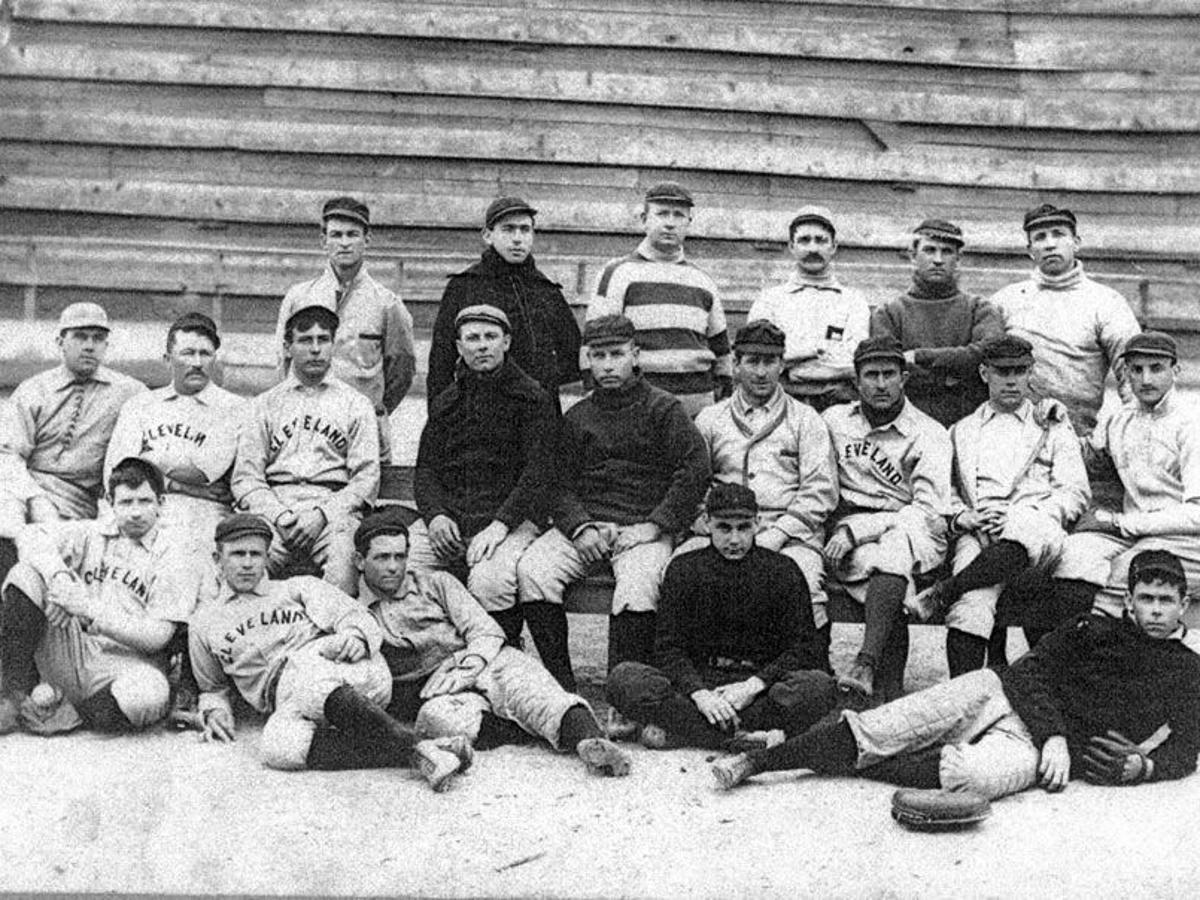
The 1884 Providence Grays. Old Hoss is at the far left,
holding a bat despite his fame coming as a pitcher.

October 24, 1884: The New York Mets lose the World Series. Well, not exactly.

The Providence Grays, Champions of the National League, defeat the New York Metropolitans -- and, yes, this early franchise was called the Mets for short -- 3-1, behind the pitching of future Hall-of-Famer Charlie "Old Hoss" Radbourn, at the Polo Grounds in New York. This gives the Grays the first-ever postseason series between champions of 2 major professional baseball leagues, a series that was officially called the "World's Series."

In those days, pitching was mostly done underhanded, and most teams had as few as 2 pitchers. The Grays had 2: Radbourn and Charlie Sweeney. But they hated each other, and even fought in the clubhouse. Following a drunken incident on July 22, Sweeney left the team.

Radbourn had pitched 76 of the team's last 98 games in 1883, and offered to pitch every game for the rest of the season. Of the remaining 43, he ended up starting 40 and winning 36. His final won-lost record was 60-12 -- or 59-12, depending on whose rules and accounting you go by. (The criteria for which pitcher to credit with a win had yet to be standardized.) Either way, it's an all-time record that was never seriously challenged even before 1893, when the distance from the pitcher's mound to home plate was increased from 50 feet to 60 feet, 6 inches.

A Game 3 was played, for charity, and the Grays won that, too. The Grays had won the NL Pennant in 1879, too, but would go out of business after the 1885 season. Radbourn went on to the Grays' arch-rivals, the Boston Beaneaters (forerunners of the Atlanta Braves), probably because they could pay the most. In an 1886 team photo, he raised his middle finger, and this is believed to be the earliest photographic evidence of anyone "flipping the bird," although the gesture goes back at least as far as ancient Rome.

He stayed in the majors through the 1891 season, retired with a record of 310-194, ran a billiard parlor, and died in 1897, possibly of the effects of syphilis. He was elected to the Baseball Hall of Fame in 1939, but his plaque reads "CHARLIE RADBOURNE," with an extra E on the end. His tombstone in Bloomington, Illinois also puts the extra E on the end.

The last survivor of the 1884 Providence Grays was outfielder Paul Radford, who lived until 1945 -- 61 years, 10 States and 11 Presidents later.

Aside from teams known as the the Providence Steam Rollers in the NFL (1920-1931, 1928 Champions) and the NBA (only the inaugural 1946-47 season), the State of Rhode Island has never had another major league sports team -- the New England Patriots, who play 25 miles from downtown Providence in Foxboro, Massachusetts, don't count.

The Grays had previously won the NL Pennant, and thus became de facto World Champions, in 1879. With a population of about 105,000 in 1884, Providence remains the smallest city ever to be home to the World Champions of baseball. Today, the population is nearly double that, about 191,000, but still much too small to be home to a major league sports team. The Grays' home, the Messer Street Grounds, had a suburban-style housing development built on it.

*

October 24, 1884 was a Friday. No other baseball games were played. No college football games were played, although a few were played the next day. Hockey was still all-amateur and all in Canada. And basketball wouldn't be invented for another 7 years. So, no other scores on this historic day.

Saturday, October 22, 2022

October 23, 1886: The $15,000 Slide

October 23, 1886: The St. Louis Browns, Champions of the American Association, win the World Championship of baseball, by beating the Chicago White Stockings, Champions of the National League, 4-3 in 10 innings at Sportsman's Park in St. Louis. They win the series, 4 games to 2.
Sportsman's Park, as it would have looked in 1886

Although the teams had played each other for the previous season's title, also won by the Browns, this game is the real beginning of the rivalry between the teams now known as the St. Louis Cardinals and the Chicago Cubs, respectively. This is sometimes considered the greatest rivalry in the National League, although more people think of the greatest as the Los Angeles Dodgers vs. the San Francisco Giants.

Pitching his 4th game in 6 days, John Clarkson holds the Browns hitless for 6 innings, as the White Stockings build a 3-0 lead. The Browns tie the game in the 8th, and in the 10th, Clarkson throws a wild pitch, Curt Welch scores "the $15,000 Run" on "the $15,000 Slide."

That figure was estimated in the press. In fact, when the Browns were presented with the entire gate receipts from the series, it comes to $13,920, about $413,000 in 2022 money. Each of the Browns' 12 players gets about $580 ($17,200, exceeding the originally-cited amount).

Despite having future Hall-of-Famers Clarkson, 1st baseman (and manager) Adrian "Cap" Anson and catcher Mike "King" Kelly, and stars 2nd baseman Fred Pfeffer, 3rd baseman Ned Williamson and center fielder George Gore, the White Stockings were beaten.

In addition to center fielder Welch, the Browns stars included pitcher "Parisian" Bob Caruthers, 1st baseman (and manager) Charlie Comiskey (yes, the man who would own the later American League team named the Chicago White Sox), shortstop Bill Gleason, 3rd baseman Walter Arlington "Arlie" Latham, and left fielder James O'Neill, whose nickname "Tip" led to a lot of men who spelled their names "O'Neill" being nicknamed Tip, including 1980s Speaker of the House Thomas P. O'Neill -- but not 1990s Yankee right fielder Paul O'Neill.

Latham, also nicknamed "The Freshest Man On Earth," was the last survivor of the 1886 St. Louis Browns, living until 1952. Welch didn't last nearly as long, drinking himself to death in 1896.

UPDATE: The Cardinals have a team Hall of Fame. However, from their founding period, 1882 until their 1st "real" World Series win in 1926, only Charlie Comiskey has been elected.

*

October 23, 1886 was a Saturday. There were no other baseball games played, hockey was still all-amateur, and basketball wouldn't be invented for another 5 years. But there were college football games played that day:

* The College of New Jersey, later to be renamed Princeton University, hosted the University of Pennsylvania, and won, 55-9. (Rutgers College played 4 games that season, none of them on this day.)

* Lafayette College went to Hoboken, New Jersey to play Stevens Institute, and won, 5-0.

* Harvard University went to Andover, Massachusetts to play Andover College, and won, 86-0.

* Yale University traveled to Williamstown, Massachusetts to play Williams College, and won, 76-0.

* Dartmouth College hosted Massachusetts Institute of Technology (MIT) at Hanover, New Hampshire, and won, 11-6.

* The University of Massachusetts and Amherst College, both located in Amherst, Massachusetts, played each other, and Amherst beat UMass, 13-0.

* Swarthmore College went to Carlisle, Pennsylvania to play Dickinson College, and won, 28-15.

Thursday, October 20, 2022

October 21, 1887: Detroit Wins the World Championship -- For the National League

Charlie Bennett

October 21, 1887: The National League Champion Detroit Wolverines clinch the World Championship with their 8th victory in Game 11 of the series this afternoon, over the American Association Champions, the St. Louis Browns, 13-3 on neutral ground at Oriole Park in Baltimore.

With a rainout yesterday in Washington‚ this morning's rescheduled Game 10 sees the Browns pull off a triple play and win‚ 11-4‚ to delay elimination. But the Wolverines take Game 11 later in the day to clinch.

The Browns were managed by their 1st baseman, Charles Comiskey. Having become the 1st modern-style player at the position, he later became the founding owner of the American League's Chicago White Sox. Other Browns stars included 3rd baseman Walter Arlington "Arlie" Latham; outfielders Dave Foutz, Curt Welch and "Parisian" Bob Caruthers; and pitcher Charles "Silver" King.

But they were no match for the Wolverines, managed by Bill Watkins, a former 3rd baseman who was the greatest athlete ever to come from Brantford, Ontario, Canada -- until Wayne Gretzky came along. He had 4 players who would later be elected to the Baseball Hall of Fame: Center fielder Ned Hanlon, right fielder Sam Thompson, 1st baseman Dan Brouthers and 3rd baseman James "Deacon" White. Pitcher Charlie Getzlen went 29-13.

For this win, the Wolverines became the 1st team to receive the Dauvray Cup, donated by Helen Dauvray, one of the top American stage actresses of the time, who had married New York Giants star John Montgomery Ward 9 days before this game. It would be awarded to the winner of the World's Championship Series until it stopped running after the 1890 season. It was then awarded to the NL Pennant winner through the 1893 season.

By that point, Dauvray and Ward had divorced. In an article in June 1894, a writer for Sporting Life magazine wondered where the Dauvray Cup was, indicating it had already been lost. Unlike its brief successors, the Temple Cup and the Chronicle-Telegraph Cup, both of which have survived and are on display in the Baseball Hall of Fame, the Dauvray Cup's whereabouts remain unknown. Helen Dauvray married a U.S. Navy Admiral, died in 1923, and was buried alongside him in Arlington National Cemetery.
As far as we know, this single photograph
is all that remains of the Dauvray Cup.

I've often wondered if having a named trophy, like the NFL's Vince Lombardi Trophy or the NHL's Stanley Cup, would have made the World Series more meaningful to baseball teams and fans. There would be no trophy for the World Series winner until 1967, and it would not be named until 1985: The Commissioner's Trophy. And who wants to celebrate the Commissioner of Baseball?

*

In spite of their success, the Wolverines ended up losing money for the 1887 season, and fold at the end of the next season. Detroit did not return to major league ball until the American League and the Tigers arrive in 1901, and will not win another World Championship for 48 years.

The Browns won win their 4th straight AA title the next season, but will go 38 years before winning another Pennant. In 1892 they join the NL; by 1901, they will be named the Cardinals.

One more player of note for Detroit: Charlie Bennett was their starting catcher. He helped the Boston Beaneaters, later the Braves, win the NL Pennant in 1891, '92 and '93. In 1894, at age 39, his playing career came to an end when he lost his legs in a train accident in Kansas.

In 1896, the Detroit team of the Western League, which became the Tigers in 1901, opened a new ballpark. It was named Bennett Park in his honor. Wearing prosthetic legs, he caught the ceremonial first ball on Opening Day. He did this every year until 1926, dying early in 1927. He did this through 1911-12, when Bennett Park was torn down and replaced with a new ballpark on the site, named Navin Field for the Tigers' owner. He lived long enough to see Ty Cobb and Harry Heilmann star for Detroit.

In 1938, the ballpark was renamed Briggs Stadium, for the current owner. In 1961, another new owner renamed it Tiger Stadium. The Tigers are a charter American League franchise, and have won its Pennant 11 times, so it's hard to imagine the city being in the National League. But, from 1881 to 1888, it was. And, in 1887, they were National League Champions, and World Champions of baseball.

Detroit is in Michigan, and Michigan is the Wolverine State. The University of Michigan has always called its sports teams the Wolverines. There would be one more professional sports team known as the Detroit Wolverines, playing in the NFL in the 1928 season. Despite going 7-2-1 and finishing 3rd, they never played again: Tim Mara, the founding owner of the New York Giants, bought the Wolverines, and transferred their best players to the Giants. Apparently, at the time, that was within NFL rules.

*

October 21, 1887 was a Friday. There were no other scores on this historic day. 

Sunday, October 16, 2022

October 16, 2014: The Travis Ishikawa Game

October 16, 2014: Game 5 of the National League Championship Series is played at AT&T Park (now named Oracle Park). Joe Panik and Michael Morse hit home runs for the San Francisco Giants, but the St. Louis Cardinals get homers from Matt Adams and Tony Cruz, and the game goes to the bottom of the 9th tied.

The Giants get 2 men on against Michael Wacha, the MVP of the previous year's NLCS, and then Travis Ishikawa -- with considerably less pressure, as the Giants lead the Cards 3 games to 1 -- does what Bobby Thomson did, 63 years earlier and 2,910 miles to the east: He hits a home run that means, "The Giants win the Pennant! The Giants win the Pennant! And they're going crazy! They're going crazy!"

Of course, unlike the Giant Pennant wins of 1951 with Bobby Thomson, and 1962 in far less dramatic fashion, this one was not against the Dodgers, in either New York (Manhattan vs. Brooklyn) or California (San Francisco vs. Los Angeles). But it was still dramatic.

Isikawa's father was a 3rd-generation Japanese-American. His ancestry and this home run made him the 1st player of Asian descent to hit a walkoff home run in an MLB postseason game.

*

October 16, 2014 was a Thursday. The American League Championship Series was decided the night before, when the Kansas City Royals completed a sweep of the Baltimore Orioles.

There was an NFL game that night: The New England Patriots beat the New York Jets, 27-25 at MetLife Stadium in the Meadowlands.

The NBA season started 12 days later. There were 7 games in the NHL:

* The New York Rangers beat the Carolina Hurricanes, 2-1 in a shootout at Madison Square Garden.

* The New York Islanders beat the San Jose Sharks, 4-3 in a shootout at the Nassau Coliseum.

* The New Jersey Devils lost to the Washington Capitals, 6-2 at the Verizon Center (now the Capital One Arena) in Washington.

* The Montreal Canadiens beat the Boston Bruins, 6-4 at the Bell Centre in Montreal.

* The Ottawa Senators beat the Colorado Avalanche, 5-3 at the Canadian Tire Centre in Ottawa.

* The Dallas Stars beat the Pittsburgh Penguins, 3-2 at the Consol Energy Center (now the PPG Paints Arena) in Pittsburgh.

* And the Los Angeles Kings beat the St. Louis Blues, 1-0 in a shootout at the Staples Center (now the Crypto.com Arena) in Los Angeles.

Friday, October 14, 2022

October 15, 1899: The End of Major League Baseball In Louisville

Honus Wagner, as a rookie in 1897

October 15, 1899: The Louisville Colonels beat the Chicago Orphans, 9-5 at the West Side Grounds in Chicago. The former Chicago White Stockings got this name because their longtime 1st baseman and manager, Adrian Anson, known as "Cap" (for "Captain") when he was younger and "Pop" as he got older, had retired, and "they missed their Pop."

The Orphans actually played 2 games against 2 different teams on this day. They also beat the St. Louis Perfectos, 7-0 at the West Side Grounds in Chicago. The Perfectos became the Cardinals in 1900, and the Orphans became the Cubs in 1903.

The Colonels' win over Chicago would be the last game they ever played, as they were absorbed by the Pittsburgh Pirates. Led by manager and left fielder Fred Clarke, and shortstop John "Honus" Wagner, they ended the season on this day in 9th place, at 75-77.

The National League contracted from 12 to 8 teams for the 1900 season. Barney Dreyfuss, owner of the Colonels, bought 
a half-interest in the Pirates. As part of the deal, he negotiated the transfer of the best Louisville players, namely Wagner (himself a Pittsburgh native), Clarke, center fielder Tommy Leach, and pitchers Charles "Deacon" Phillippe and George "Rube" Waddell, to the Pirates.

As a result of this deal, the Pirates won 4 of the next 10 NL Pennants, and were at least in the race for most of the rest. With Wagner becoming the best player in baseball, the Pirates reached but lost the 1st World Series in 1903, and won the World Series in 1909.

The Colonels began in the American Association in 1882, won the Pennant in 1890, and transferred to the NL with the AA's demise after the 1891 season. But most ballparks at the time were made of wood, and their home field, Eclipse Park, burned down on September 27, 1892. It was rebuilt, but burned down again on August 12, 1899, while the team was on the road, and they finished the season on the road.

Given the team's struggles on the field since entering the NL, and the fact that the NL was determined to contract -- the Baltimore Orioles, the Cleveland Spiders and the Washington Senators were also eliminated -- it made more sense for the Colonels to be one of the teams that gave up.

Louisville has since been one of the top minor-league cities of the last 120 years, in terms of both competitiveness and attendance. But it has never returned to the major leagues, nor is it likely to, since the Louisville metropolitan area is home to only 1.4 million people, and the city is just 82 miles from Cincinnati, itself one of MLB's smallest markets. Louisville has been denied a team in every MLB expansion: 1961-62, 1969, 1977, 1993 and 1998.

In a new, Class AAA league called the American Association, the Louisville Colonels won Pennants in 1909, 1916, 1921, 1925, 1926, 1930, 1939, 1940, 1944, 1945, 1946, 1954, 1960, 1961 and 1962. That team was moved, due to stadium issues. A new Louisville Colonels played in the Class AAA International League from 1967 to 1972, winning no Pennants.

On January 6, 1964, Charlie Finley signed a 2-year pact to move the Athletics from Kansas City to Louisville, pending American League approval. He is later denied that approval, and the A's stay put in Kansas City until after the 1967 season, when they moved to Oakland. 

In 1982, the Louisville Redbirds began play in the IL, and won Pennants in 1984, 1985 and 1995. They were renamed the Louisville RiverBats in 1999, and won the Pennant in 2001. The name was shortened to the Louisville Bats in 2002, and, through the 2022 season, they have not won another Pennant, although they have won their Division as recently as 2010.

Charlie Emig, a lefthanded pitcher from Cincinnati, who started 1 game for the Colonels in 1896, was not only the club's last surviving player, but also the last surviving man who had played a Major League Baseball (as we would now call it) game in the 19th Century. He died on October 2, 1975, age 100.

*

October 15, 1899 was a Sunday. There were 2 other baseball games played on this day, a doubleheader at League Park in Cincinnati, between the 2 Ohio teams. The Cincinnati Reds swept the Cleveland Spiders, 16-1 and 19-3.

I have a separate entry for that event, because the Spiders put together the worst season in the history of what's now called Major League Baseball. Their removal from the NL opened the door in 1901 for the AL team that was named the Blues, renamed the Bronchos in 1902, renamed the Naps for Napoleon Lajoie in 1903, renamed the Indians, in 1915, and renamed the Guardians in 2022.

Along with Cleveland and Louisville, the NL also dropped the Baltimore Orioles and the Washington Senators. The American League added teams with those names in 1901.

The Orioles had won the Pennant in 1894, 1895 and 1896, and had nearly done so in 1897. But the era of "syndicate baseball" meant that some of their best men were transferred to the Brooklyn team, including manager Ned Hanlon.

Hanlon's name reminded sportswriters of a circus troupe called Hanlon's Superbas, and so the team formerly known as the Grays and the Bridegrooms was renamed the Superbas. They won the Pennant in 1899, and would do so again in 1900. In 1911, they became the Dodgers.

The AL's Orioles were mismanaged, and the franchise was canceled after the 1902 season. A new team was established for the 1903 season, called the New York Highlanders, and renamed the Yankees in 1913. A minor-league version of the Orioles was established, and replaced in 1954 when the St. Louis Browns moved to Baltimore to take up the old name.

October 15, 1899: The Unceremonious End of the Cleveland Spiders

October 15, 1899: The Cincinnati Reds close out the season with 16-1 and 19-3 victories at League Park in Cincinnati, over the hapless Cleveland Spiders. John "Bid" McPhee‚ usually considered the best 2nd baseman of the 19th Century‚ plays in both games‚ the last of his career, with all 18 being spent with the Reds.

Cleveland finished with 20 wins and 134 losses‚ 84 games behind the Pennant-winning Brooklyn Superbas, and in the cellar, 12th place, by 35 games behind the next-worst team, the Washington Senators. They have a "winning" percentage of .149. And on their last day, they lost by an aggregate score of 35-4. They couldn't even die with dignity.

They also conclude a 36-game road trip (1-35) after setting a mark earlier this year with a 50-game road trip. They lost 24 straight at one point (the 2nd-worst ever, behind the 26 of the 1889 Louisville Colonels, the worst since being the 1961 Phillies with 23), and 40 out of their last 41. 

The reason for the Spiders' futility is that they were bought by the owners of the St. Louis team that would soon be renamed the Cardinals. This system, known as "syndicate baseball," was legal at the time. And, as St. Louis natives, the owners brought all of the good Cleveland players, including pitcher Cy Young – but not Louis Sockalexis, the once-powerful but now injured and alcoholic Penobscot tribesman who has been called "the original Cleveland Indian" – to St. Louis. The result is a Cleveland team that may not even have been, by today's standards, Triple-A quality.

The Spiders, the Baltimore Orioles, the Louisville Colonels and the Washington Nationals were contracted out of the National League within weeks, though this made the American League, and its franchises in Cleveland, Washington and, at least for two years, Baltimore, possible.

In their 13-season history, the Spiders were 827-938, a percentage of .4685. Minus that last season, they were 807-804, .5003. They deserved a better fate: They had on their roster, at one time or another, Hall-of-Famers Cy Young, John Clarkson, Buck Ewing, Bobby Wallace, George Davis and Jesse Burkett, plus Cupid Childs, Chief Zimmer, Patsy Tebeau, Lave Cross, Louis Sockalexis, Lou Criger, Kid Carsey and Jack O'Connor, any one of whom would have been an All-Star had there been an All-Star Game in the 1880s or 1890s.

They never won a Pennant, but finished 2nd in the NL in 1892, 1895 and 1896, and were 81-68 (5th out of 12) in 1898 before the syndicate broke them up. They were not a failed franchise: They got sabotaged.

The last surviving 1899 Cleveland Spider appears to have been right fielder Lewis "Sport" McAllister, who lived until 1962. I say, "appears to have been," because no date of death is known for pitcher Frank Bates, who went 3-19 that season, losing his last 14 decisions. The last record anyone has of him is his World War I draft registration form from 1918, showing him living in Cincinnati. He would have been 85 years old when McAllister died, so it is possible that he was the last survivor. But he does not appear in the 1920 Census. Since he is not listed among those killed in action in the war, he was likely a victim of the 1918-19 Spanish Flu epidemic.

No major league team, in any sport, has been called the Spiders since. The highest-ranking teams with the name, that I can think of, are those of the University of Richmond in Virginia. I don't even know of any soccer (football) teams in other countries with the nickname.

With the Washington Football Team having dropped the name "Redskins," the Cleveland Indians announced that they would follow for the 2022 season. The hope was that they would call themselves the Cleveland Spiders. Instead, they chose to become the Cleveland Guardians.

Two members of the Cleveland Spiders have been honored by the Guardians in their team Hall of Fame: Burkett and Sockalexis.

*

October 15, 1899 was a Sunday. There were 3 other games were played in the National League that day. The Chicago Orphans (they "missed their Pop," Adrian "Cap" or "Pop" Anson) played 2 games, against 2 different teams, at the West Side Grounds in Chicago.

They beat the St. Louis Perfectos, 7-0 at the West Side Grounds in Chicago. The Perfectos would become the Cardinals in 1900, and the Orphans became the Cubs in 1903.

And they lost to the Louisville Colonels, 9-5. This would be the last game the Colonels ever played, as they were absorbed by the Pittsburgh Pirates, including their 2 Hall-of-Famers, shortstop Honus Wagner and left fielder-manager Fred Clarke. I have a separate entry for this event.

Thursday, October 13, 2022

October 14, 1892: Football Pushes Baseball Back

The 1892 Princeton University football team

October 14, 1892: The scheduled game between the Boston Beaneaters and the Washington Senators is postponed, because the Senators' ballpark, Boundary Field, has already been reserved by the Columbia Athletic Club for a football game against The College of New Jersey.
The Beaneaters were the forerunners of the Braves. The Senators went on to fold in 1899, and are not to be confused with any later D.C. team. The Columbia Athletic Club was based in D.C., and is not to be confused with Columbia University in New York City. In 1896, The College of New Jersey was renamed Princeton University, and should not be confused with the current TCNJ, formerly Trenton State College.
As far as I know, this is the 1st time football has ever asserted its authority, whatever that might be, over baseball.
It's just as well: Princeton were a juggernaut that year. They began the season beating Rutgers 30-0 at home, beat Lehigh 16-0 away just 4 days later, beat Lafayette 40-0 at home only 3 days after that, won this game 42-0, beat Navy 28-0 in Annapolis the very next day, beat Lehigh 52-0 at home only 4 days later, beat the New York Athletic Club 40-0 at the Polo Grounds only 2 days later, beat the Crescent Athletic Club 42-0 at Eastern Park in Brooklyn (then the home of the team that would become known as the Dodgers) the very next day, beat the Manhattan Athletic Club 46-0 at home 5 days later, beat Wesleyan University 60-0 at Manhattan Field only 2 days later, and beat the Chicago Athletic Association 12-0 at home only 4 days later. That's 11-0, by an average score of 39-0.
Finally, it all caught up with them. Three days after beating the Chicago A.A., they went to Philadelphia, and lost 6-4 to the University of Pennsylvania at the Germantown Cricket Club. Three days later, they beat the Orange Athletic Club, 23-0 at the Orange Oval in East Orange, New Jersey. Then they had their longest break of the season, 16 days, playing again on Thanksgiving, again at Manhattan Field, next-door to the Polo Grounds and the home of baseball's New York Giants in the 1890 season only, and lost to Yale, 12-0. This finished them at 12-2, and handed the National Championship to Yale.
Boundary Park became the home of the American League's Washington Senators in 1904, after 3 seasons at American League Park. In 1907, it became the 1st major league home field of the Senators' greatest player, Walter Johnson, perhaps the best pitcher in baseball history. On April 14, 1910, President William Howard Taft began the tradition of the President throwing out the ceremonial first ball, at Boundary Field.
The wooden stands were destroyed by fire on March 17, 1911. The clubhouse in the northeast corner and a portion of the open bleachers in left field were saved. A meeting of the directors of the club was held that afternoon to discuss the future of the field. The option to start the season on the old Union League grounds or have Boston or New York host the opening series of the games at their parks were considered.
By Opening Day, April 12, 16,000 temporary stands were up, allowing the team to open the season at home. Piece by piece, a new concrete-and-steel stand went up, and the renamed National Park was declared open on July 24. It hosted Washington baseball for the next 50 years, mostly under the name Griffith Stadium.
*
October 14, 1892 was a Friday. The Beaneaters probably didn't mind much that their game for this day was postponed, because they'd already clinched the National League Pennant. Here's the 3 games that were played as scheduled:
* The New York Giants lost to the Philadelphia Phillies, 3-1 at the Philadelphia Base Ball Grounds. This facility would burn down in 1894, and be rebuilt the next year, eventually becoming known as Baker Bowl.
* The Brooklyn Bridegrooms and the Baltimore Orioles played to a 2-2 tie. Baseball-Reference.com has no indication as to why they did not play until a winner was found. It could have been due to darkness, but that usually didn't happen in those days unless a game went to extra innings, and there's no mention of a number of innings played. There wouldn't be, unless it was anything other than 9. More than that would suggest being called due to darkness; fewer would suggest rain. But neither is mentioned.
* The Cleveland Spiders beat the Louisville Colonels, 16-10 at League Park in Cleveland. Yes, that's a baseball game, not a football game.
* At any rate, the Beaneaters and Senators played a doubleheader the next day, the last day of the regular season. The Beaneaters swept, 7-4 and 4-0.
* The Chicago Colts and the St. Louis Browns were not scheduled. The Browns became the Cardinals in 1900, and the Colts became the Cubs in 1903. These teams, already having faced each other in postseason play in 1885 and 1886, would become arch-rivals in the 20th Century.
* And the Cincinnati Reds and the Pittsburgh Pirates were also not scheduled. They would also form something of a rivalry, though it took until the 1970s to develop.
The Bridegrooms became the Superbas in 1899, and the Dodgers in 1911. The Beaneaters became the the Doves in 1907, the Rustlers in 1911, and the Braves in 1912. The Senators, Orioles, Spiders and Colonels went out of business after the 1899 season.

October 14, 1888: "Roundhay Garden Scene"

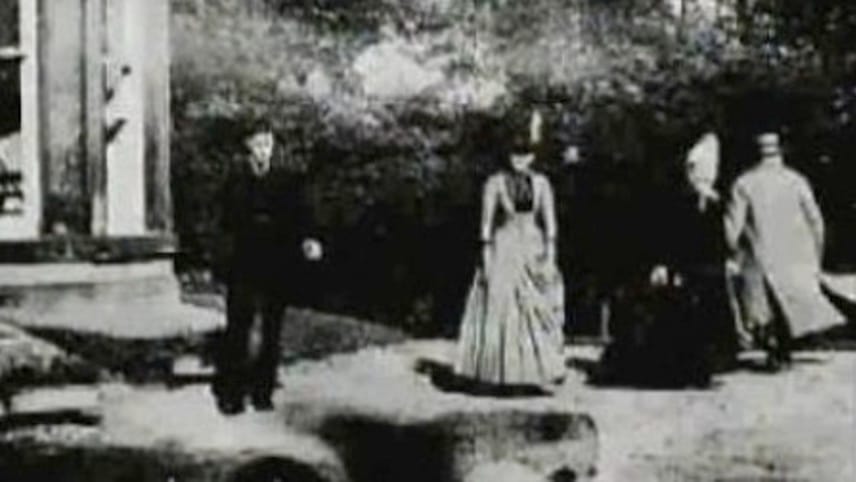
October 14, 1888: The oldest known surviving motion picture is filmed, in the backyard -- or, as the English would call it, the garden -- of a house in the Roundhay section of Leeds, West Yorkshire, England. It is known as Roundhay Garden Scene, is recorded by Frenchman Louis Le Prince, and features his son Adolphe, and his English in-laws, Joseph and Sarah Whitley, who owned the home. It lasts all of 2.11 seconds.
Louis Le Prince

A little over 2 years later, Louis Le Prince disappeared from a Dijon-to-Paris train, and was never seen again. He was 49, and it is suspected that he left the train at some point, and drowned.

*

October 14, 1888 was a Sunday. There was no pro football yet. But despite it being late in the year by today's standards, there were regular-season baseball games, all in the American Association, none in the National League, which then banned Sunday baseball:

* The Brooklyn Bridegrooms beat the Baltimore Orioles, 5-2 at Washington Park in Brooklyn. The Dodgers-to-be had seen several members get married a couple of off-seasons earlier. Both of these teams would join the National League, but the Orioles went out of business after the 1899 season.

* The Philadelphia Athletics beat the Cleveland Blues, 7-3. Since Pennsylvania forbid Sunday sports until 1933, this game was played at the Gloucester Point Grounds, across the Delaware River in Gloucester City, Camden County (not Gloucester County), New Jersey.

These Athletics folded after the 1890 season, and had no connection to the later American League team of the same name. The Blues became the Cleveland Spiders, joined the NL, and, like the Orioles, failed after the 1899 season.

* A doubleheader was split at League Park in Cincinnati. The St. Louis Browns, who would go on to win the AA Pennant, won the 1st game, 6-1. The Cincinnati Red Stockings won the 2nd game, 10-1. Both teams would join the National League, and are still in it today.

These Red Stockings were founded in 1882, and bear no connection to those of 1869-70. So when the modern Reds call themselves "baseball's oldest professional team," they're lying. The Browns became the Cardinals, and bear no direct connection to the later American League Browns.

* The Louisville Colonels swept a doubleheader from the Kansas City Cowboys, at Eclipse Park in Louisville. The hosts won the 1st game, 2-1; and the 2nd game, 9-1. The Colonels would join the NL, but, like Baltimore and Cleveland, fail after the 1899 season. The Cowboys only lasted through 1889.

Sunday, October 9, 2022

October 9, 2022: The Joe Musgrove Game

October 9, 2022: Game 3 of the National League Wild Card Series was held at Citi Field in Queens. It shouldn't have come to this: The New York Mets had new owner Steve Cohen's billions to spend, Max Scherzer to pitch Game 1, Jacob deGrom to pitch Game 2, a lineup loaded with hitters like Francisco Lindor and Pete Alonso, and the home-field advantage in every game; while the San Diego Padres had lost their best player, Fernando Tatís Jr., to a season-ending suspension, and his replacement, Juan Soto, had underwhelmed since they traded for him.

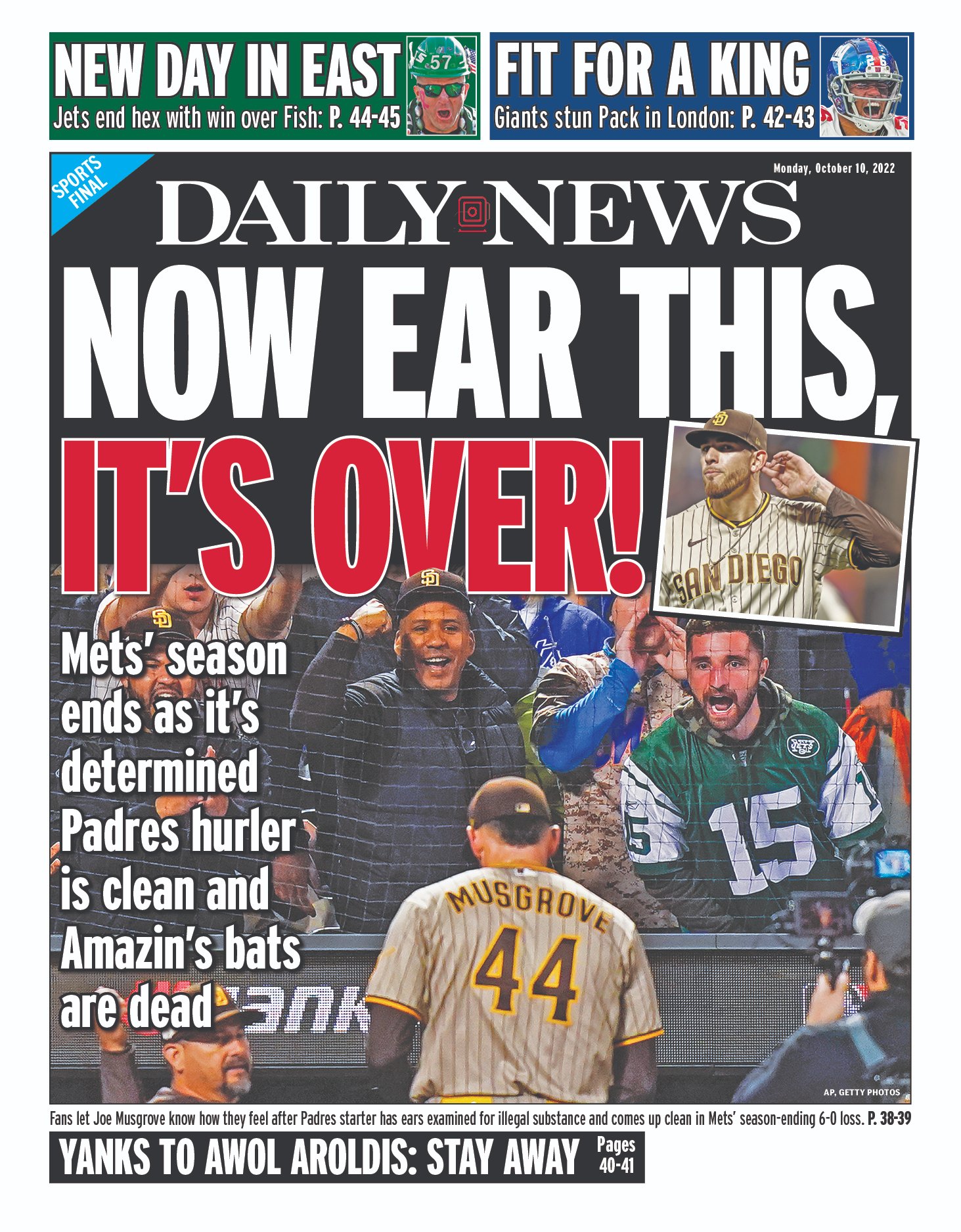
But, being the Mets, the Mets found a way to blow it. Scherzer had nothing in Game 1. The Mets won Game 2. But in Game 3, Joe Musgrove shackled the Mets, who got only 2 baserunners all game long: A single by Pete Alonso to lead off the bottom of the 5th inning, and a walk by Starling Marte to lead off the bottom of the 7th. And the Padres got the hits they needed, and eliminated the Mets, 6-0.

The Mets had won 101 games, but became the 1st 100-or-more-wins team to fail to reach the Division Series, in either League, since that level of the Playoffs was implemented in 1995.

To make matters even more embarrassing: In the 6th inning, Met manager Buck Showalter -- who had previously failed in the Playoffs with the New York Yankees, the Arizona Diamondbacks and the Baltimore Orioles, now in his 7th postseason series, of which he has won only 1 and never won a Pennant -- asked the umpires to check behind Musgrove's ears, for a foreign substance that Showalter thought he was using to "doctor" the baseball. The umps checked. They found nothing illegal. All that did was piss Musgrove off, and make him throw harder. 

From April 7 to September 20, the Mets went 95-55, a 103-59 pace. From September 21 to October 5, they went 6-6, an 81-81 pace. Including the Playoffs: From September 21 to October 9, they went 7-8, a 76-86 pace. In the 6 biggest games they had in this season, 3 at home to the Atlanta Braves to decide the National League Eastern Division title, and 3 at home to the San Diego Padres in the NL Wild Card Series, they went 1-5.

Given hype divided by results, and the fact that cheating was not discovered (thus setting aside the Yankees' 2004-present struggles against the Boston Red Sox and their 2015-present struggles against the Houston Astros), this was the most embarrassing performance in New York baseball since the Mets blew the 1988 National League Championship Series against an apparently inferior Los Angeles Dodgers team.

*

October 9, 2022 was a Sunday. The other NL Wild Card Series had wrapped up the day before, with the Philadelphia Phillies eliminating the St. Louis Cardinals. The American League Wild Card Series had also wrapped up the day before, with the Cleveland Guardians eliminating the Tampa Bay Rays, and the Seattle Mariners eliminating the Toronto Blue Jays.

The NHL season started 2 days later; the NBA season, 7 days after that. These NFL games were played that day:

* The New York Giants beat the Green Bay Packers, 27-22 at Tottenham Hotspur Stadium in London. The G-Men had trailed by as much as 17-3, but came back.

* The New York Jets beat the Miami Dolphins, 40-17 at MetLife Stadium in the Meadowlands. It may have been the most satisfying Jet win since the 2010-11 Playoffs.

* The New England Patriots beat the Detroit Lions, 29-0 at Gillette Stadium in the Boston suburb of Foxborough, Massachusetts.

* The Baltimore Ravens beat the Cincinnati Bengals, 19-17 at M&T Bank Stadium in Baltimore. Justin Tucker won it with a 43-yard field goal on the last play.

* The Tennessee Titans beat the Washington Commanders, 21-17 at FedEx Field (now Northwest Stadium) in the Washington suburb of Landover, Maryland.

* The San Francisco 49ers beat the Carolina Panthers, 37-15 at Bank of America Stadium in Charlotte.

* The Houston Texans beat the Jacksonville Jaguars, 13-6 at TIAA Bank Field (now EverBank Stadium) in Jacksonville.

* The Tampa Bay Buccaneers beat the Atlanta Falcons, 21-15 at Raymond James Stadium in Tampa. This game featured a sack of Tom Brady, a completely legal play for any honest person that saw the instant replay, that was stupidly ruled "roughing the passer." As Michael Wilbon said on ESPN's Pardon the Interruption the next day, "Brother can't touch Tom Brady!"

* The New Orleans Saints beat the Seattle Seahawks, 39-32 at the Superdome in New Orleans.

* The Buffalo Bills beat the Pittsburgh Steelers, 38-3 at the original Highmark Stadium (formerly Rich Stadium and Ralph Wilson Stadium) in the Buffalo suburb of Orchard Park, New York.

* The Los Angeles Chargers beat the Cleveland Browns, 30-28 at FirstEnergy Stadium (now named Huntington Bank Field) in Cleveland.

* The Minnesota Vikings beat the Chicago Bears, 29-22 at U.S. Bank Stadium in Minneapolis.

* The Indianapolis Colts beat the Denver Broncos, 12-9 at Empower Field at Mile High in Denver. It was a game of field goals, won by Chase McLaughlin with a 48-yarder with 5:50 left in overtime.

* The Philadelphia Eagles beat the Arizona Cardinals, 20-17 at State Farm Stadium in the Phoenix suburb of Glendale, Arizona. Cameron Dicker won it with a 23-yard field goal with 1:45 left.

* The Dallas Cowboys beat the Los Angeles Rams, 22-10 at SoFi Stadium outside Los Angeles in Inglewood, California.

* And the next night, on Monday Night Football, the Kansas City Chiefs beat their arch-rivals, the Las Vegas Raiders, 30-29 at Arrowhead Stadium in Kansas City.

October 9, 1988: The End of the Mets Dynasty That Never Was

October 9, 1988: Game 4 of the National League Championship Series at Shea Stadium. The New York Mets lead the Los Angeles Dodgers 2 games to 1. This is the 1st time the Mets have entered postseason play against either of the former National League teams from New York, either the former Brooklyn Dodgers or the New York-turned-San Francisco Giants, whose move to California after the 1957 season made the Mets' creation desirable for so many (if not really necessary.)
Dwight Gooden is one out away from giving the Mets a win in Game 4 of the NLCS. If Gooden had simply gotten through the inning allowing less than 2 runs, the Mets would have won, and been up 3 games to 1. They could have won the Pennant without having to go back to Los Angeles. And if the weak-hitting Dodgers could beat the Oakland Athletics in the World Series, surely the Mets could have. The A's completed a 4-game sweep over the Boston Red Sox the same day, 4-1 at the Oakland Coliseum, winning the American League Pennant.
It would have been the Mets' 2nd World Championship in 3 years, and deepened their status as New York's Number 1 team. Keep in mind, the Yankees hadn't won a Pennant in 7 years and a World Series in 10 years -- by their standards, an eternity.
Maybe that hypothetical glorious Mets team would have been kept together. Maybe Gooden and Strawberry don't fall back into drug problems. (Humor me here.) Maybe the Mets would have found suitable replacements for Keith Hernandez and Gary Carter, both 34 years old, the glue of their 1986 World Champions. Maybe things would have changed so much that the Mets never gave the hearts and minds of New Yorkers and New Jerseyans back to the Yankees, and the Yankees never got into position to take them back.
But here's what actually happened. Gooden fulfilled the cliché that walks can kill you, especially the leadoff variety. He walked John Shelby to lead off the top of the 9th. The next batter was Mike Scioscia, a very good catcher, but not known for his hitting. He hit a home run to tie the game.
The game went to extra innings. Roger McDowell spit the bit (I'm sorry, but the joke was too good to not use), giving up a home run to Kirk Gibson in the 12th inning. Gibson was 1-for-16 in the postseason up until that moment.
Jesse Orosco, who got the clinching outs for the 1986 Pennant and World Series for the Mets, had been traded to the Dodgers, but nearly blew it in the 12th. Dodger manager Tommy Lasorda called Hershiser, who'd won Game 1 and then, given an extra day because of a rainout, pitched 7 innings in Game 3 the day before this, out of the bullpen, to get the last out. He did.
Dodgers 4, Mets 2. Series tied. The Dodgers won the series in Game 7 in Los Angeles.
This was the hinge day in Met history, when it all started to go wrong. It was the 1st major instance of what I've come to call "The Curse of Kevin Mitchell." Maybe, maybe, maybe? Since Scioscia's homer, 34 years ago, "maybes" are pretty much all the Mets have had.
The Mets have frequently used the slogan "The Magic Is Back." October 9, 1988 was the day the magic died.
All that talent, all those runs toward the postseason from 1984 to 1990, and yet, the Mets turned out to be "A Dynasty of One," to borrow the phrase of ESPN Pardon the Interruption co-host Michael Wilbon -- just like the 1985 Chicago Bears, much to the Chicagoan Wilbon's chagrin.
*
October 9, 1988 was a Sunday. In addition to the A's completing the ALCS sweep over the Red Sox, these NFL games were played that day:
* The New York Jets lost to the Cincinnati Bengals, 36-19 at Riverfront Stadium in Cincinnati.

* The Los Angeles Rams beat the Atlanta Falcons, 33-0 at Atlanta-Fulton County Stadium.

* The Buffalo Bills beat the Indianapolis Colts, 34-23 at Rich Stadium (later Ralph Wilson Stadium) in the Buffalo suburb of Orchard Park, New York.

* The Seattle Seahawks beat the Cleveland Browns, 16-10 at Cleveland Municipal Stadium.

* The Chicago Bears beat the Detroit Lions, 24-7 at the Silverdome in the Detroit suburb of Pontiac, Michigan.

* The Green Bay Packers beat the New England Patriots, 45-3 at Milwaukee County Stadium.

* The Minnesota Vikings beat the Tampa Bay Buccaneers, 14-13 at the Metrodome in Minneapolis.

* The Washington Redskins beat their arch-rivals, the Dallas Cowboys, 35-17 at Texas Stadium in the Dallas suburb of Irving, Texas.

* The Houston Oilers beat the Kansas City Chiefs, 7-6 at the Astrodome in Houston.

* The Phoenix Cardinals beat the Pittsburgh Steelers, 31-14 at Sun Devil Stadium in the Phoenix suburb of Tempe, Arizona.

* The New Orleans Saints beat the San Diego Chargers, 23-17 at Jack Murphy Stadium in San Diego.

* The Miami Dolphins beat the Los Angeles Raiders, 24-14 at the Los Angeles Memorial Coliseum.

* The Denver Broncos beat the San Francisco 49ers, 16-13 at Candlestick Park in San Francisco. This was the only game of the weekend to go to overtime, and Rich Karlis won it with a 22-yard field goal.

* The following night, on ABC Monday Night Football, arch-rivals met at Veterans Stadium in Philadelphia. The Philadelphia Eagles beat the New York Giants, 24-13.

December 31, 1999 & January 1, 2000: The Millennium

December 31, 1999:  The Millennium arrives. The people of planet Earth survived. At a terrible cost. But we hadn't destroyed ourselves. ...