Showing posts with label ontario. Show all posts

Tuesday, November 15, 2022

November 15, 1929: The Ambassador Bridge Opens

November 15, 1929: The Ambassador Bridge opens, connecting Detroit, Michigan, in the United States with Windsor, Ontario, Canada, over the Detroit River.

Detroit and Buffalo are the only major American cities on the border with Canada, our northern neighbor. Seattle is 111 miles away, Boston 220, Minneapolis 300, and New York 330. And because of the bend of the Detroit River, Detroit is the only place where you can go from north to south, and go from America to Canada.

The Bridge followed a ferry system, and a rail tunnel that opened in 1910. It was, itself, followed by the Detroit-Windsor Tunnel in 1930.

Since the establishment of the Interstate Highway System, going into Detroit, the road becomes Interstate 75 and Interstate 96. Going into Windsor, it becomes Ontario Highway 3.

The Bridge is privately owned: Even in the Roaring Twenties, neither the State of Michigan, nor the Province of Ontario, nor either country's federal government wanted to fund its construction. So Michigan automakers, including Henry Ford, put up the money.

In 1979, trucking executive Manuel "Matty" Moroun, like entertainer Danny Thomas a Detroit native of Lebanese descent, bought the Bridge, and maintained and operated it through his Detroit International Bridge Company for the rest of his life. It may have been personal: He claimed that his family moved from Windsor to Detroit when construction for the bridge on the Windsor side led to the demolition of the family home.

The Ambassador Bridge is the busiest international border crossing in North America in terms of trade volume, carrying more than 25 percent of all merchandise trade between the United States and Canada by value.

Because the Bridge's duty-free gasoline sales are so lucrative, Moroun fought tooth and nail against all attempts to build an additional bridge. He offered to spend his own money to build a parallel span to the Ambassador, as had been done with many other bridges, including the Delaware Memorial. He went so far as to build a base structure for an approach on the Detroit side.

He sued both the State of Michigan and the Canadian federal government to prevent a new bridge from being approved. For the last few years of his life, he also owned the Michigan Central Station, to keep rail traffic, passenger and freight alike, into and out of Detroit, to a minimum, raising the value of his Bridge.

Moroun died in 2020, clearing the way for the construction of the Gordie Howe International Bridge, which is scheduled to open in 2024. It also cleared the way for Ford Motor Company to buy the Station, and use it for corporate purposes. (UPDATE: The Howe Bridge is now set to open in 2025.)

*

November 15, 1929 was a Friday. Baseball was out of season. Football was in midweek. The NBA hadn't been founded yet. And while the NHL season had just started, no games were scheduled. So there were no scores on this historic day. 

Saturday, November 12, 2022

November 12, 1931: Maple Leaf Gardens Opens

November 12, 1931: Maple Leaf Gardens opens in Toronto, replacing the Mutual Street Arena. It will be home to the Toronto Maple Leafs of the National Hockey League for the next 67 seasons.

The Leafs lost the 1st game there, 2-1 to the Chicago Black Hawks. (That team always spelled "Black Hawks" as 2 words, until 1986, when their original charter was found, and they discovered that it had been written as 1 word, "Blackhawks," and that's how they've officially been listed ever since.) Charlie Conacher, the Leafs' biggest star at the time, scored the arena's 1st goal, but it wasn't enough. The Leafs did, however, go on to win the Stanley Cup that season, clinching on home ice.

They also won the Cup while playing at the Gardens in 1942, 1945, 1947, 1948, 1949, 1951, 1962, 1963, 1964 and 1967 -- clinching on home ice in '42, '47, '49, '51, '63, '64 and '67. In addition, the New York Rangers clinched the Cup by beating the Leafs at the Gardens in 1933 and 1940, the Detroit Red Wings in 1937, and the Montreal Canadiens in 1959 and 1960.

Leafs player Irvine "Ace" Bailey had been injured by Eddie Shore of the Boston Bruins in a game in Boston in 1933, and never played again. On February 12, 1934, the Gardens hosted a benefit game for him: The Leafs against a team of players from all the other teams in the League. When Shore skated over to the Leafs' bench, where Bailey was in street clothes, and shook hands with him, the Gardens erupted in cheers. The Leafs won the game. In 1947, the Leafs beat an All-Star team from the rest of the League again in the 1st official NHL All-Star Game.

The Gardens became known as "The Shrine of Hockey," with CBC, the Canadian Broadcasting Corporation, broadcasting Hockey Night in Canada from the building on most Saturday nights, first on radio, and then, starting in 1952, on television. It helped to make the Gardens -- even more than Parliament Hill in Ottawa or the Montreal Forum -- the most famous building in Canada.

On November 1, 1946, the Gardens hosted the 1st game in the league that would become the National Basketball Association. But the Toronto Huskies lost it to the New York Knicks, and only lasted that 1 season before folding. Pro basketball would return, briefly: From 1971 to 1975, the Buffalo Braves (the team now known as the Los Angeles Clippers) played 16 "home games" there, and the Toronto Raptors played 6 home games there in 1997, '98 and '99 when the SkyDome (now the Rogers Centre) was unavailable.

Also due to a scheduling conflict, the Rangers played their 1950 Stanley Cup Finals games at Maple Leaf Gardens, possibly costing them the Cup, as they lost to the Red Wings. In the World Hockey Association, the Ottawa Nationals had to move their 1973 Playoff games there, and the Toronto Toros played the 1974-75 and 1975-76 seasons there, before being forced to a smaller arena by the onerous rent charged by Leafs owner Harold Ballard, who, because of his presiding over the declines of both the Leafs and the CFL's Toronto Argonauts, became the most hated man in Canada.

Ballard was cheap, he was evil, and he was crooked. Smythe wasn't flat-out evil, but he was imperious, and he was certainly cheap. At one end of the Gardens was a large portrait of Canada's head of state, the British monarch. From 1931 to 1936, this was King George V. For much of 1936, it was King Edward VIII. Then, until 1952, it was King George VI. Finally, it was Queen Elizabeth II.

In 1968, the seating capacity at the Gardens was raised from 13,718 to 16,316. This was done through installing narrower seats, and removing the Queen's portrait so that more seats could be installed. Smythe, who had sold the team to a consortium including his son Stafford Smythe and Ballard, said of the new seats, "Only a young man could sit in them, and only a fat old rich man could afford them."

As for the removal of the portrait of the woman to whom Canadian citizens still paid a share of their taxes (and still do, to this day), Ballard pointed out that, in spite of a visit to the building in 1951, before she became Queen, she didn't pay admission to games: "She doesn't pay me. I pay her. Besides, what the hell position can a queen play?"

Maple Leaf Gardens hosted Game 2 of the 1972 "Summit Series" between Canada and the Soviet Union, a 4-1 win for Canada. It also hosted minor-league hockey: The Toronto Lions of the Ontario Hockey Association, 1931-39; the Toronto Marlboros (or "Marlies") of the OHA and its successor, the Ontario Hockey League, 1931-89; the Toronto Young Rangers of the OHA and the OHL, 1937 to 1948; the Toronto Knob Hill Farms of the Metro Junior A League, in the 1962-63 season; and the Toronto St. Michael's Majors (or "St. Mike's") of the OHL, 1997-2000.

Lacrosse is not considered a major sport in America. In Canada, where it was invented, it is considerably bigger. Canada's National Lacrosse League had the Toronto Tomahawks playing at the Gardens in 1974, and the Toronto Rock in the 1999-2000 season. The Gardens also hosted professional indoor soccer, the "pinball" version of "the beautiful game": The Toronto Blizzard in the 1980-81 and 1981-82 seasons, and the Toronto Shooting Stars in 1996-97.

The Gardens was 1 of 16 buildings to have hosted both Elvis Presley and The Beatles. Because Elvis' manager, Colonel Tom Parker, was an illegal immigrant from the Netherlands, a fact not known during Elvis' lifetime, Elvis could only leave the North American continent to fulfill his U.S. Army obligation from 1958 to 1960. He sang at the Gardens on April 2, 1957. It was the only building to host The Beatles on all 3 of their North American tours: September 7, 1964; August 17, 1965; and August 17, 1966.

It also hosted boxing and "professional wrestling," with Killer Kowalski making that "sport" popular in his native Canada. On March 29, 1966, Muhammad Ali defended the Heavyweight Championship of the World there, defeating Canada's heavyweight champion, George Chuvalo.

Conn Smythe, who had served in the Canadian Army during both World Wars, and enjoyed being called "Major Smythe," resigned from the Gardens' board of directors over the decision to host a fight featuring a man who had already been making statements about how he would refuse to accept being drafted to fight in the Vietnam War. Smythe said of the owners, including his son, that they had "put cash ahead of class."

They could do that because the Leafs were a gold mine. From 1946, when the boys came back from World War II, until 1999, the Leafs never played to an unsold seat. This was in spite of the fact that, after the closing of the dynasty coached and managed by George "Punch" Imlach on May 2, 1967, the Leafs never appeared in another Stanley Cup Finals game at the Gardens -- and still haven't. The building, whose address was 60 Carlton Street, became known as the Carlton Street Cashbox.

The Gardens outlasted the somewhat enlightened despot Smythe, and the tyrant Ballard. It outlasted the Great Depression, World War II, and the high tide of the conflict between the Canadian federal government and Quebec nationalists. It outlasted the League of Nations, the Third Reich, the British Empire and the Warsaw Pact.

It outlasted 20 Mayors of Toronto, 12 Premiers of Ontario (equivalent to the Governor of a State), 10 Prime Ministers of Canada, and 1 Flag of Canada. (The current Maple Leaf Flag replaced the old "Red Ensign" in 1965.) It outlasted Maple Leaf Stadium (home of the minor-league baseball team that gave the NHL Maple Leafs their name), the Mutual Street Arena, the original Varsity Stadium, and Exhibition Stadium.

It outlasted the Montreal Maroons, the New York Americans, the California Golden Seals, the Cleveland Barons, the Atlanta Flames (now the Calgary Flames), the Kansas City Scouts and the Colorado Rockies that they became (now the New Jersey Devils), the Minnesota North Stars (now the Dallas Stars), the Quebec Nordiques (now the Colorado Avalanche), the original version of the Winnipeg Jets (now the Arizona Coyotes), the Hartford Whalers (now the Carolina Hurricanes), and the entire World Hockey Association.

It outlasted the NHL's other "Original Six" arenas, some by plenty: New York replaced "the old Madison Square Garden" with "the new Madison Square Garden" in 1968, Detroit replaced the Olympia Stadium with the Joe Louis Arena in 1979, Chicago replaced the Chicago Stadium with the United Center in 1994, Boston replaced the Boston Garden with the FleetCenter (now the TD Garden) in 1995, and Montreal replaced the Montreal Forum with the Molson Centre (now the Bell Centre) in 1996.

While not home to "Original Six" teams, the Buffalo Memorial Auditorium and the St. Louis Arena were contemporaries, and they were also replaced before 1999. Considerably newer arenas were replaced in Philadelphia, Pittsburgh, Minnesota, Vancouver, Atlanta, Ottawa, Tampa and the San Francisco Bay Area. (And the ones in Minnesota and Atlanta were demolished before the Gardens closed.)

But nothing lasts forever. The ownership group for the NBA's Raptors didn't like playing in the huge SkyDome, and wanted to build their own arena, the Air Canada Centre, next to Toronto's Union Station. Maple Leaf Sports & Entertainment, owners of the Leafs and the Gardens, knew that there was only so much that could be done to modernize the Gardens, and increasing seating capacity, including adding more luxury boxes, was impossible. So they bought the Raptors, and had the plans for the ACC to be altered so that it could host hockey as well. (In 2018, the building was renamed the Scotiabank Arena.)

On February 13, 1999, the Toronto Maple Leafs played their last game at Maple Leaf Gardens. Not only was the opponent the same as in the 1st game in 1931, the Chicago Blackhawks, but a member of each team that played in that 1st game was on hand for a ceremonial puck drop: George "Red" Horner of the Leafs, and Harold "Mush" March of the Hawks. (March died in 2002, Horner in 2005.) As they did in the 1st game, the Hawks won, 6-2. Derek King scored the Leafs' last goal, while Bob Probert, better known for his fighting and his drug abuse, scored the last goal overall.

The Gardens didn't close immediately. It still hosted amateur hockey and professional lacrosse, and the British rock band Oasis gave a concert there in 2000. The last "sporting event" there came in 2004, a re-creation of prizefights of eventual Heavyweight Champion James Braddock for the film Cinderella Man, taking advantage of the Gardens' old-time appearance.

But MLSE didn't want to own a dormant building, and they also didn't want to sell the old arena to anyone who would use it as a competing arena. In 2000, after a massive renovation, the Montreal Forum reopened as a mall, with stores, a movie theater, and other entertainments. It was suggested that the same be done with the Gardens. But a feasibility study showed that it couldn't be done: If the bowls of seating were removed, the exterior walls would collapse.

In 2004, Loblaw Companies, Canada's largest food retailer, bought the Gardens for $12 million. In 2009, they made a deal with Toronto's Ryerson University to renovate the building, to make the playing area a rink with 2,796 seats, while the rest of the building would host retail space.

In 2011, the new Loblaw's store finally opened, with a red dot on the floor marking the original location of centre ice. In 2012, the Mattamy Athletic Centre at the Gardens opened, and has been home to Rynearson's hockey team ever since. From 2013 to 2017, it also hosted the Toronto Predators of the Greater Metro Junior A Hockey League.

*

November 12, 1931 was a Monday. The baseball season was over. There was no Monday Night Football in the NFL until 1970. There was no NBA at all until 1946, with the Gardens hosting the 1st game. But there were 2 other NHL games played that night. The New York Rangers beat the Montreal Canadiens, 4-1 at the Montreal Forum. And the New York Americans beat the Detroit Falcons, 5-2 at the Olympia Stadium in Detroit. The Falcons were renamed the Red Wings the next year.

Thursday, November 3, 2022

November 3, 1930: The Detroit-Windsor Tunnel Opens

The Detroit Entrance

November 3, 1930: The Detroit-Windsor Tunnel opens, connecting Detroit, Michigan, in the United States with Windsor, Ontario, Canada, under the Detroit River. 

Detroit and Buffalo are the only major American cities on the border with Canada, our northern neighbor. Seattle is 111 miles away, Boston 220, Minneapolis 300, and New York 330. And because of the bend of the Detroit River, Detroit is the only place where you can go from north to south, and go from America to Canada.
The Windsor Entrance

The Tunnel followed a ferry system, a rail tunnel that opened in 1910, and the Ambassador Bridge that opened in 1929.

Being a border crossing, with Customs stations at each end, it takes longer to get through than, say, the Lincoln Tunnel in New York. And large trucks are not allowed. For these reasons, many drivers prefer the Ambassador Bridge.

CKLW, 800 on the AM dial, is a Windsor-based radio station, not bound by regulations of America's FCC, so it can have a signal more powerful than the American limit of 50,000 watts. Calling itself "The Big 8," it became the Detroit area's main Top 40 music station in the 1960s, and bought the rights to have the Tunnel rewired, so that its signal could be picked up inside. WJR, Detroit's top news station, later did the same.
The midpoint, with flags

In 2007, Matty Moroun, owner of the Ambassador Bridge, tried to monopolize Detroit-to-Windsor (and back) traffic by buying the Tunnel from the Detroit-Windsor Tunnel Company, LLC. They refused to sell.

*

November 3, 1930 was a Monday. Baseball was out of season. Football was in midweek. The NBA hadn't been founded yet. And the NHL season started 8 days later. So there were no scores on this historic day.

Wednesday, November 2, 2022

November 3, 1869: The Oldest Professional Sports Team In the World

Tiger-Cats 150th Anniversary Logo, 1869-2019

November 3, 1869: The Hamilton Football Club is founded. They play their 1st game on December 18, against the 13th Battalion, now known as the Royal Hamilton Light Infantry, in Hamilton, Ontario, Canada. The final score was not recorded.

The "football" played by this team was what would now be called "rugby union," though it would later evolve into the Canadian version of "gridiron football," with a field 110 yards long and 65 yards wide, compared with the American version, 100 by 53 1/3rd; 12 players on each side instead of 11; and 3 downs to make a new 1st down, instead of 4.

This team is the forerunner of the Hamilton Tigers, who in 1950 merged with the Hamilton Wildcats to become the Hamilton Tiger-Cats. This could, if you choose to define it this way, make the "Ticats" the oldest continuously operating professional sports team in the world.

The distinctions matter. That year, the Cincinnati Red Stockings became the 1st openly professional baseball team, but went out of business after the 1870 season, and the current team named the Cincinnati Reds, while they claim a connection to them, definitively goes back to 1881. The suggestion that the Los Angeles Dodgers date to the Brooklyn Atlantics is also not supported by the facts: The Atlantics were founded in 1855, but folded in 1875, and didn't turn professional until 1870, anyway. Which is key to this team: The Hamilton Tigers remained amateur until 1947.

There are soccer teams in England that claim a longer lineage, including Sheffield Football Club, which was founded in 1857, but they didn't turn professional until 1885, as Britain, and Europe as a whole, resisted professionalism in sports considerably longer than did North America. Germany proved especially resistant: They didn't have professional sports until its national soccer league, the Bundesliga, was founded in 1963.

(If you're a fan of the FX TV series Welcome to Wrexham, Wrexham Association Football Club were founded in 1864, making them the 3rd-oldest professional soccer team in the world, and older than the Tiger-Cats; but they did not turn professional until 1878, more recently than some other British soccer teams.)

On October 18, 1873, Hamilton FC played a new team, the Toronto Argonauts, on the campus of the University of Toronto. The Argos won by a goal and a try to nil -- in modern scoring, 8-0 -- and HFC wore black and yellow for the 1st time, leading to a newspaper calling them the Tigers. This game began a rivalry that still exists today, as the teams' current home fields are just 41 miles apart.

Before the merger, the Tigers won the Grey Cup, the championship of Canadian football, 5 times: In 1913, 1915, 1928, 1929 and 1932. In 1941, the Hamilton Wildcats were formed. With the onset of World War II, the Wildcats were sponsored by the Royal Canadian Air Force, and were renamed the Hamilton Flying Wildcats for the duration of the war. They won the 1943 Grey Cup, although this is officially not counted in the total of the combined team. In 1950, the Tigers and the Wildcats were merged, forming the Hamilton Tiger-Cats, shortened to "Ticats."

Since the merger, they've won 8 Grey Cups: 1953, 1957, 1963, 1965, the Canadian Centennial Cup in 1967, 1972, 1986 and 1999. This is a total of 13. For comparison's sake: The Argonauts have won 18, the Edmonton Elks (formerly the Edmonton Eskimos) 14, the Winnipeg Blue Bombers 12, the Calgary Stampeders 8, the Montreal Alouettes 7, the Vancouver-based BC Lions 6, the Saskatchewan Roughriders 4, and the Ottawa Redblacks 1 (although the history of the defunct Ottawa Rough Riders is usually counted with that of the Redblacks, which would give them 10).
Tiger-Cats players with the 1999 Grey Cup

In spite of their success, the Ticats have gone longer without winning the Grey Cup than any other Canadian Football League team, the only one not to have won it in the 21st Century. They have since lost the Final in 2013, '14, '19 and '21.

The Tigers played at the Hamilton Amateur Athletic Association Grounds from 1869 to 1949. The Wildcats played at Civic Stadium, which opened in 1928, from 1941 to 1949. The merged team played at Civic Stadium starting in 1950. In 1971, the stadium got its 1st artificial turf field, and was renamed Ivor Wynne Stadium, for the former director parks for the City of Hamilton.
On August 8, 1961, the Tiger-Cats defeated the visiting Buffalo Bills, at that time a member of the American Football League and playing 65 miles away, in a preseason exhibition game in Hamilton. The Bills, playing the entire game under Canadian rules, lost 38–21. It was the 1st time in 9 tries that a Canadian professional football team beat an American one -- and remains the last such game played, although the Bills have since played "home games" in Toronto, and preseason games between NFL teams have been played on Canadian soil (or Canadian plastic).

After the 2012 season, Ivor Wynne Stadium was demolished, with a new stadium built on the site, and the Tiger-Cats playing the 2013 season at the University of Guelph's Alumni Stadium. The new Tim Hortons Field opened in 2014. (UPDATE: Tim Hortons' 10-year naming rights ran out in 2024. As of the start of the 2026 CFL season, new naming rights have not yet been sold, and the facility is named Hamilton Stadium.)
The Canadian Football Hall of Fame is part of the complex, in recognition of the Tiger-Cats being the oldest CFL team, and the oldest professional sports team in the world. Of its members, 35 either played or coached for either the Tigers, the Wildcats, or the merged team. Despite this, the Ticats have retired only 2 numbers: 10, for 1957-64 quarterback Bernie Faloney; and 68, for 1958-72 defensive tackle Angelo Mosca, who was also a noted professional wrestler.
By claiming a direct connection to the Hamilton Tigers, the Tiger-Cats are older than any professional sports team in the United States of America. The Chicago White Stockings baseball team was founded in 1870, and has been known as the Chicago Cubs since 1903. The Boston Red Stockings baseball team was founded in 1871, and has gone through several name changes, including 2 moves to other cities. Since 1966, they have been the Atlanta Braves.

*

November 3, 1869 was a Wednesday. Baseball had just become North America's 1st professional sport, and its season was coming to a close. The 1st openly professional team, the Cincinnati Red Stockings, beat the Louisville Baseball Club, 56-0 in Louisville, Kentucky. 

Monday, October 24, 2022

October 24, 1901: Over Niagara Falls In a Barrel

October 24, 1901: Annie Edson Taylor celebrates her 63rd birthday, with a stunt: Going over Niagara Falls in a barrel.

Annie was born on October 24, 1838, in Auburn, New York, 137 miles east of Niagara Falls. During her teaching studies, she met David Taylor. They were married, and had a son who died in infancy. Her husband died soon after. After she was widowed, she spent her working years in between jobs and locales.

Eventually, she ended up in Bay City, Michigan, where she hoped to be a dance instructor. Since there were no dance schools in Bay City at that time, Taylor opened her own. She moved around a bit, failing in various businesses.

By 1900, she had fallen upon hard times. She claimed to be only 42 years old at the time, suggesting that she could make money more easily if she were younger. Having always associated with "the best class of people, the cultured and the refined," Taylor believed that she needed money to hold her place in the world. In the 1900 U.S. Census, she declared her year of birth as 1860, and got away with it.

Hoping to secure her later years financially, she decided she would be the first person to ride over Niagara Falls in a barrel. Niagara Falls -- both the city on the New York side and the city on the Ontario side -- had already become a tourist attraction, with the falls leading to the area becoming known as "The Honeymoon Capital of the World."

Taylor used a custom-made barrel for her trip, constructed of oak and iron and padded with a mattress. Several delays occurred in the launching of the barrel, particularly because no one wanted to be part of a potential suicide. Two days before Taylor's own attempt, a domestic cat was sent over the Horseshoe Falls in her barrel, to test its strength to see if the barrel would break or not. Contrary to rumors at the time, the cat survived the plunge, and, 17 minutes later, after she was found with a bleeding head, posed with Taylor in photographs.

On October 24, 1901, the barrel was put over the side of a rowboat, and Taylor climbed in, along with her lucky heart-shaped pillow. After screwing down the lid, friends used a bicycle tire pump to compress the air in the barrel. The hole used for this was plugged with a cork, and Taylor was set adrift near the American shore, south of Goat Island.

The river currents carried the barrel over the Canadian Horseshoe Falls, which has since been the site for all successful daredevil stunting at Niagara Falls. Rescuers reached her barrel shortly after the plunge. Taylor was discovered to be alive and relatively uninjured, except for a small gash on her head. The trip itself took less than 20 minutes, but it was some time before the barrel was actually opened. Taylor was helped out of the barrel by Carlisle Graham, a friend of hers, who had been the 1st man to run the rapids on a raft.

After the journey, Taylor told the press, "If it was with my dying breath, I would caution anyone against attempting the feat... I would sooner walk up to the mouth of a cannon, knowing it was going to blow me to pieces than make another trip over the Fall."

She briefly earned money speaking about her experience, but was never able to build much wealth. She wrote a memoir, and returned to Niagara Falls to sell it. Her manager, Frank M. Russell, ran away with her barrel, and most of her savings were used towards private detectives hired to find it. It was eventually located in Chicago, only to permanently disappear some time later.

She spent her final years posing for photographs with tourists at her souvenir stand, attempting to earn money from the New York Stock Exchange, briefly talking about taking a second plunge over the cataracts in 1906, attempting to write a novel, re-constructing her 1901 plunge on film (which was never seen), working as a clairvoyant, and providing magnetic therapeutic treatments to local residents.

She died on April 29, 1921, aged 82, in Lockport, New York, near Niagara Falls, and was interred next to Graham, in the "Stunter's Rest" section of Oakwood Cemetery in Niagara Falls, New York.

Others who have attempted stunts in purposely going over Niagara Falls:

* Bobby Leach, 1911, a former circus performer, in a metal barrel, survived with both kneecaps and his jaw broken.
* Charles Stephens, 1920, an Englishman, in a metal barrel, died in the attempt.
* Jean Lussier, 1928, a Canadian, in a ball with a spring frame, survived unharmed.
* George Stathakis, 1930, a Greek, in a metal barrel, landed without injury, but was stuck behind a curtain of water, and suffocated before he could be recovered.
* Red Hill Jr., 1951, son of a famed Niagara Falls lifesaver, in a craft he called "The Thing," which broke up on impact, killing him.
* Nathan Boya, 1961, the 1st African-American to attempt it, in a metal ball he helped design called the "Plunge-O-Sphere," surviving without injury.
* Karel Soucek, 1984, a Czech, in a barrel, surviving, his only injury coming when his wrist bounced up on impact, causing his watch to cut his face.
* David Munday, 1985, an American, doing it again in 1993, making him the 1st person man to succeed twice.
* Steve Trotter, an American, in a barrel, also did it twice, in 1985 and 1995, the 2nd time with Lori Martin, who also survived.
* Peter De Bernardi and Jeffery Petkovich, in 1989, in a reinforced barrel, the 1st 2-person attempt, both survived.
* Jessie Sharp, 1990, made the attempt in a plastic kayak, which was found, but his body never was.
* Robert Overacker, 1995, tried it on a jet ski, but his parachute failed to open, and he was killed.
In addition, 4 men are known to have survived suicide attempts from jumping over the falls. Three of them -- in 2009, 2012 and 2019 -- survived, and so their names were not released. The 1st of them, Kirk Jones in 2003, survived, making him the 1st person to survive any kind of fall over the falls without aid. But he tried again in 2017, and succeeded.
*

October 24, 1901 was a Thursday. Baseball season was over. Football was in midweek. Basketball barely existed. And hockey had not yet turned professional. So there were no scores on this historic day.

Thursday, October 13, 2022

October 13, 1947: The 1st NHL All-Star Game

October 13, 1947: The National Hockey League hosts its 1st official All-Star Game, at Maple Leaf Gardens in Toronto.

There had been 3 unofficial all-star games, all benefits:

* In 1934, also at Maple Leaf Gardens, for Maple Leaf player Irvine "Ace" Bailey, who had suffered a career-ending injury. The Leafs beat a team made up of players from all the other teams in the League.

* In 1937, at the Montreal Forum, for the family of the late Montreal Canadiens superstar Howie Morenz. The Canadiens and the Montreal Maroons combined to face a team from the other teams of the League, which won.

* And in 1939, also at the Forum, for the family of the late Canadiens star Albert "Babe" Siebert. The Maroons having folded in the interim, it was just the Canadiens against the rest of the League. The late 1930s was a rare period when the Canadiens were actually a bad team, and they lost this one.

Unlike what would later be called Major League Baseball, which had its All-Star Game at roughly the midpoint of its season, and the National Football League, which had its Pro Bowl after the season, the NHL decided that its All-Star Game would be at the beginning of its season. Its setup would parallel the Chicago College All-Star Game, which began the football season with the defending NFL Champions and a team of recently graduated college stars playing at Soldier Field in Chicago.

(This game ran from 1934 to 1976. When the National Basketball Association first played an All-Star Game in 1951, it followed the baseball model and did it in midseason.)

And so, the 1st NHL All-Star Game would be the holders of the Stanley Cup, the Maple Leafs, against a team made up of players from the other five of the "Original Six" teams.

The Leafs: 1, goaltender Walter "Turk" Broda; 2, defenseman Bob Goldham; 3, defenseman Wally Stanowski; 4, left wing Harry Watson; 5, right wing Don Metz; 7, center Norman "Bud" Poile; 9, center Ted "Teeder" Kennedy; 10, center and team Captain Syl Apps; 12, right wing Bill Ezinicki; 14, defenseman Vic Lynn; 15, right wing Howie Meeker; 16, left wing Gaye Stewart; 17, left wing Joe Klukay; 19, defenseman Gus Mortson; 20, defenseman Jimmy Thomson; 21, defenseman Bill Barilko, and 22, center Fleming Mackell.

Broda, Watson, Poile, Kennedy, Apps would be elected to the Hockey Hall of Fame, which would eventually give Meeker its Foster Hewitt Award for broadcasters. Head coach Clarence "Hap" Day and general manager Conn Smythe would also be elected. Barilko, famously, would switch to Number 5, and score the goal that won the 1951 Stanley Cup, and then died in a plane crash 4 months later, getting the number retired.

The rest of the League:

* From the Boston Bruins: 1, goaltender Frank Brimsek, a native of Eveleth, Minnesota, and the only non-Canadian in the game; and the entire "Kraut Line": 14, left wing Woody Dumart; 15, center Milt Schmidt; and 17, left wing Bobby Bauer.

* From the Montreal Canadiens: 1, goaltender Bill Durnan (both he and Brimsek wore 1 on the night); 3, defenseman Emile "Butch" Bouchard; 9, right wing Maurice "the Rocket" Richard; and 17, defenseman Ken Reardon. Canadiens head coach Dick Irvin Sr. coached this team as well.

* From the Detroit Red Wings: 2, defenseman Jack Stewart; 4, defenseman Bill Quackenbush; and 11, left wing Ted Lindsay (better known for wearing 7).

* From the Chicago Black Hawks (the name began to be written as one word, "Blackhawks," in 1986): 5, center Max Bentley; 6, right wing Bill Mosienko; and 7, left wing Doug Bentley, Max's brother.

* And from the New York Rangers: 8, right wing Grant Warwick; 10, center Edgar Laprade; and 18, left wing Tony Leswick. Of all the players on this All-Star Team, only Warwick and Leswick have not yet been elected to the Hockey Hall of Fame. Leswick went on to score the Cup-winning goal in overtime of Game 7 for the 1954 Red Wings.
The NHL All-Stars. Top row, left to right:
Frank Brimsek, Woody Dumart, Dick Irvin, Butch Bouchard,
Ken Reardon, NHL President Clarence Campbell,
Jack Stewart and Bill Durnan. Middle row, left to right:
Milt Schmidt, Tony Leswick, Max Bentley, Grant Warwick,
Maurice Richard, Doug Bentley, and Canadiens trainer Ernie Cook.
Bottom row, left to right: Bill Quackenbush, Bill Mosienko,
Bobby Bauer, Ted Lindsay and Edgar Laprade.

The Leafs, as home teams usually did at the time, wore their white sweaters with blue trim. The All-Stars wore red sweaters, with a white and red NHL shield as their team logo.
Richard's sweater (Americans would say "jersey")

Richard and Lindsay had already fought often in regular-season games. Irvin put them on a line together. (This was after Toe Blake's injury broke up the Canadiens' "Punch Line" with Richard and Elmer Lach, but before the formation of the Wings' "Production Line" with Lindsay, Sid Abel and Gordie Howe.) In his memoir, Richard said that he and Lindsay did not speak a word to each other for the course of the game.

Reardon, the Canadiens' main tough guy, was involved in 2 incidents in the 2nd period. First, he laid a dirty cross-check on Goldham, resulting in a cut on Goldham's forehead. Later, he got into a stick-swinging incident with Ezinicki and Mortson.

Watson opened the scoring, at 12:29 of the 1st period. Ezinicki assisted on that goal, and put the Leafs up 2-0 just 1:03 into the 2nd period. Max Bentley got the All-Stars onto the board about 3 minutes later, but Apps made it 3-1 Leafs just 22 seconds after the restart.

Warwick, arguably the least talented player in the entire game, scored midway through the 2nd. Within 1:26 of the start of the 3rd period, Richard scored a spectacular unassisted goal to tie the game, and Doug Bentley scored to put the All-Stars up 4-3. That's how it ended.

The Leafs would end up winning the Cup in 1948, anyway. And again in 1949. And again in 1951, after the Wings won it in 1950. This completed a great run for Toronto: From 1942 to 1951, 10 seasons, they won 6 Cups.

Up until the 1966-67 season, the format remained defending Champions vs. the rest of the League at the beginning of the season. An exception was made for 1951 and 1952, when it was "Team #1" vs. "Team #2." But that season, the last of the "Original Six" lineup, the game was moved to midseason. So there was an NHL All-Star Game in 1965 and 1967, but not in 1966.

The defending Champs vs. the rest of the League format lasted until 1968. Over that stretch, Toronto went 2-4-1, Montreal went 3-4-1, Detroit went 2-0-1, Chicago went 0-1; and neither New York nor Boston won a Cup, so neither were All-Star hosts.

From 1969 to 1997, the format was an East (or Prince of Wales Conference) team against a West (or Clarence Campbell Conference) team. From 1998 to 2002, the format was North America vs. The World -- basically, Canada and the U.S. vs. Europe, as no player from a country outside North America or Europe was named to any roster. North America led this format, 3-2. East vs. West was restored from 2003 to 2009. All told, the East led, 21-9-1.

In 2011, 2012 and 2015, two captains were chosen, and they chose up sides, like it was a kids' game in the street. (The NBA has also tried this for its All-Star Game.) Since 2016, the NHL has made Divisional teams, which doesn't really work since there are now 6 Divisions.

The anomalies were 1979, replaced by a Challenge Cup between an NHL All-Star Team and a Soviet All-Star Team; 1987, replaced by the same format under the name Rendez-Vous '87; 1995 and 2005, canceled due to the team owners locking the players out; 2006, 2010 and 2014, canceled due to NHL players being allowed to play in the Winter Olympics (though this was not done in 1998, 2002, 2018 or 2022); and 2020, canceled due to the COVID-19 epidemic.

Howie Meeker was the last living player from the 1st NHL All-Star Game, living until November 8, 2020, at the age of 97.

*

October 13, 1947 was a Monday. As I said, this game started the NHL season, so there were no other games played in the League that day. The forerunners of the NBA, the Basketball Association of America and the National Basketball League, hadn't started their seasons yet, either. There was no Monday Night Football in those days. And the baseball season had ended a few days earlier, with the New York Yankees having beaten the Brooklyn Dodgers in the World Series.

In fact, the only other major league game on this historic day also took place in Toronto -- and that's if you count the top flight of Canadian football as "major league." It wasn't even the Canadian Football League, as that wouldn't be founded until 1958, although both of the teams involved would be charter members.

The game was in the Interprovincial Rugby Football Union. The game was played at Varsity Stadium, on the campus of the University of Toronto. And Ontario rivals, the Toronto Argonauts and the Hamilton Tigers, played to a 6-6 tie. In 1950, the Tigers would merge with the Hamilton Wildcats, and form the Hamilton Tiger-Cats, or "Ticats," and they maintain their rivalry with the "Argos" to this day.

In fact, they are 2 of the oldest professional sports teams in North America: The Tigers had been founded in 1869, making them older than any team in the "Big Four" North American sports leagues; while the Argos were founded in 1873, making them older than any team except the Ticats, the Chicago Cubs (1870) and the Atlanta Braves (founded as the Boston Red Stockings in 1871).

Also, rock singer Sammy Hagar, the 2nd lead singer of Van Halen, was born on this day.

Wednesday, October 12, 2022

October 12, 1920: Man o' War vs. Sir Barton

Man o' War, with Johnny Loftus aboard

October 12, 1920: The 2 greatest racehorses of their era face each other, although it is not a match race. The same jockey had ridden each of them to their greatest achievements. The horse he chose for this race won.

Man o' War was foaled in 1917 near Lexington, Kentucky, on a farm owned by August Belmont Jr., financier, supplier of the money to build Belmont Park and the first part of the New York Subway system, and the son of the newspaper publisher who founded the Belmont Stakes. Foreshadowing? The foal's father, Fair Play, was a stakes winner who finished 2nd in the 1908 Belmont. His mother, Mahubah, was the daughter of Rock Sand, who won the English Triple Crown.

Shortly after the colt was foaled, August Belmont Jr., despite being 65 years old, volunteered for service in the U.S. Army in World War I. (He served as a quartermaster, playing to his strength. He survived the war, and lived until 1924.) So his wife, the English former stage actress Eleanor Robson, named the colt in honor of her husband: "Man o' War." (She was his much-younger 2nd wife, and lived until 1979, just short of her 100th birthday.) The Belmonts liquidated many of their assets due to the war, and sold Man o' War to Samuel D. Riddle, who had a stable in the Philadelphia suburbs.

Man o' War was tall, strong, and, like a later contender for the title of the greatest racehorse of the 20th Century, Secretariat, had a reddish coat that led to the nickname "Big Red." Trained by Louis Feustel, and ridden by Johnny Loftus, he first raced as a 2-year-old on June 6, 1919. He raced again on June 9, again on June 21, again on June 23, and again on July 5. That's 5 races in 29 days. He won all of them.

Traditionally, in New York State, Belmont Park and Aqueduct Race Course close for the Summer, and everybody goes Upstate to Saratoga Race Course. On August 13, he ran in the Sanford Memorial Stakes, at Saratoga. He got off to a bad start, and lost, by only a neck, to a horse carrying 15 fewer pounds.

The horse's name was Upset, and in the years to come, many people would come to believe that this race was the reason that an expected winner being defeated is called an "upset." In fact, the term had been used in horse racing as far back as 1877. A term that did result from this race is that Saratoga became known as The Graveyard of Champions.

Upset's jockey was Willie Knapp. He had done this before: In 1918, he won the Kentucky Derby aboard Exterminator, who was a 30-1 shot.

In all, Man o' War raced 9 times as a 2-year-old, winning 8 of them. That year, 1919, Sir Barton became the 1st horse to win the Triple Crown: Winning the Kentucky Derby, the Preakness Stakes and the Belmont Stakes. Loftus had ridden Sir Barton, too, but called Man o' War the best horse he ever rode. The Triple Crown would not become a big deal until the 1930s.

Man o' War did not win the Triple Crown, because he did not even enter the Kentucky Derby. Riddle looked at the schedule, saw the Derby being raced on May 8 and the Preakness on May 18. He looked at the map, and saw that the Derby was in Louisville, and the Preakness was in much closer Baltimore. So he decided to save his horse for the Preakness. Man o' War did not race as a 3-year-old until that May 18, and won the Preakness. Just 11 days later, he won the Belmont Stakes.

He ran 2 races at Saratoga that Summer, the Miller Stakes and the Travers Stakes, and won both, with Upset among the defeated horses in the latter (but not entered in the former). His last race was on October 12, 1920, at Kenilworth Park in Windsor, Ontario, Canada, across the Detroit River from Detroit. Running against Sir Barton, with Loftus aboard Man o' War, this could have been a match race instead of in the Kenilworth Park Gold Cup. Instead, there were other horses in the race, and Man o' War beat the Triple Champion by 7 lengths.

He finished his career with 21 races, winning 20. Of those 20 wins, 4 included Upset among the defeated horses. He was retired to stud at Lexington, Kentucky. The Jockey Club credits him with 62 stakes winners from 381 named foals, including 1925 Belmont winner American Flag, 1929 Kentucky Derby winner Clyde Van Dusen, and 1937 Triple Crown winner War Admiral. Seabiscuit, the 1938 Horse of the Year, was a grandson of Man o' War, so when he won his famous match race against War Admiral, he was beating his more successful nephew.

Also among Man o' War's descendants: 5-time Horse of the Year Kelso (also a descendant of 1943 Triple Crown winner Count Fleet), 1966 Horse of the Year Buckpasser, 1968 Horse of the Year Dr. Fager, 1977 Triple Crown winner Seattle Slew, and 2015 Triple Crown winner American Pharoah.

Man o' War died in 1947, at the age of 31, which was then considered to be old for a retired thoroughbred horse. Samuel Riddle died in 1951, Louis Feustel in 1970, and Johnny Loftus in 1976.

In 1950, the Associated Press named Man o' War the greatest racehorse of the 1st half of the 20th Century. Their other honorees: Babe Ruth for baseball, George Mikan for basketball, Howie Morenz for hockey, Jack Dempsey for boxing, Bill Tilden -- despite his recent scandal -- for men's tennis, Suzanne Lenglen for women's tennis; and Jim Thorpe for football and track and field, and as greatest athlete overall.

*

October 12, 1920 was a Tuesday. There was only one score on this historic day. The Cleveland Indians beat the Brooklyn Robins, 3-0 at League Park in Cleveland. This was Game 7 of the World Series, which was a best-5-out-of-9 event from 1919 to 1921. The Indians thus won the Series.

Both starting pitchers would be elected to the Hall of Fame, and both would, after the season, be among the 17 pitchers "grandfathered in" with the ban on the spitball. Stan Coveleski pitched a 5-hit shutout, defeating Burleigh Grimes, who ended up as the last active spitballer, retiring in 1934. The Indians got their runs on a Grimes throwing error in the 5th inning, their player-manager Tris Speaker hitting an RBI triple in the 5th, and Charlie Jamieson's RBI double in the 7th.

It was the 1st World Championship for the Indians, or any Cleveland-based baseball team. The team now known as the Cleveland Guardians have won it only once since, in 1948.

The Brooklyn team was named the Robins after their manager from 1914 to 1931, Wilbert Robinson. After he was fired, they went back to the name they'd used from 1911 to 1913, and had been nicknamed before that: The Brooklyn Dodgers.

Monday, October 3, 2022

October 3, 1984: The Last North American Soccer League Game

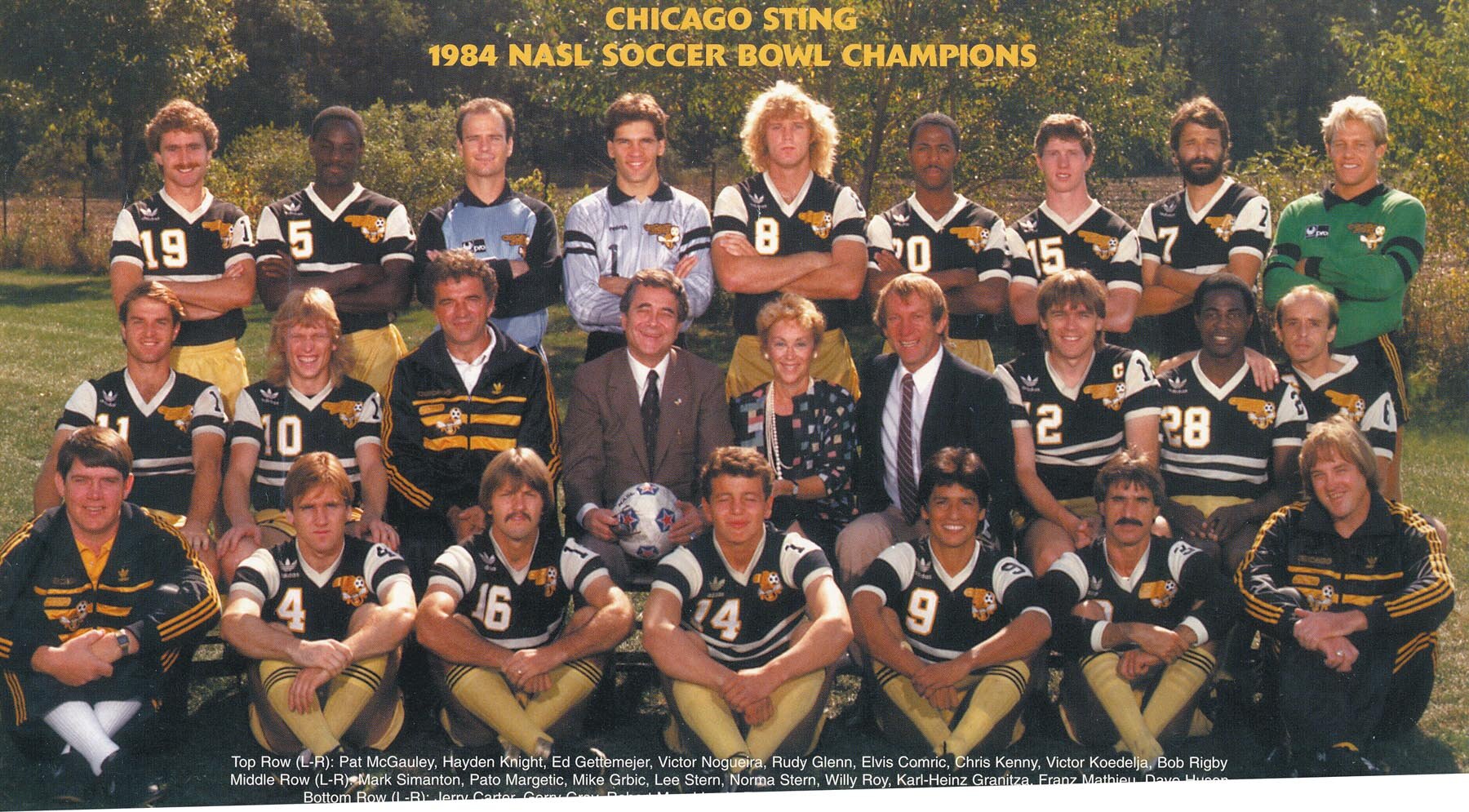
October 3, 1984: Soccer Bowl '84 is played at Varsity Stadium in Toronto. Playing Soccer Bowl '83 in Canada (albeit all the way across the country in Vancouver) didn't help the Toronto Blizzard the year before, and playing on their actual home field doesn't help them now, as they lose 3-2 to the Chicago Sting.

The Blizzard -- who won the North American Soccer League title in 1976, as "Toronto Metros-Croatia" -- trailed 2-0 after 70 minutes, but scored twice in 3 minutes to equalize. But Patricia "Pato" Margetic, the Argentine striker who'd scored the Sting's 2nd goal, scores in the 82nd to win it.

Attendance at the 21,739-seat Varsity Stadium is just 16,842. No one knows it yet, but this is the last game that the original NASL will ever hold.

The Sting, who had also won the title in 1981, had already announced that this would be their last season in the League, as they had already been admitted to the Major Indoor Soccer League -- which played soccer in arenas on hockey rinks covered with artificial turf, with the boards ensuring the ball wouldn't go out of bounds unless it went over the boards, resulting in higher scores. It was exciting, but it was a bastardized version of the sport, something that no one would have called "The Beautiful Game." Instead, it was called "pinball soccer." 

Clive Toye, who built the New York Cosmos' dynasty, and also the Sting's '81 champs, was now running the Blizzard, and made postgame comments that Sting coach Willy Roy and striker Karl-Heinz Granitza -- both Germans, and the latter would later honor his Chicago experience by running a bar in Berlin named State Street -- were "cheats," and that the Sting were "unworthy champions."

During the ensuing off-season, NASL President Howard Samuels died, and Toye was named interim President. Then the Cosmos folded, due to striker/part-owner Giorgio Chinaglia's mismanagement. Without the flagship franchise, the League was doomed, no matter what Toye did, and he did try.

But when the time came to prepare for a 1985 season, only 2 teams -- the Blizzard and the Minnesota (formerly Fort Lauderdale) Strikers -- were still interested in playing, and the League folded, after 17 seasons. North America was without a "first division" in soccer for 11 years, setting the sport in the United States back a generation. The damage was incalculable.

Another league named the North American Soccer League played from 2011 to 2017, but it was never more than a second division, behind Major League Soccer, founded in 1996. The Chicago Fire would win the MLS Cup in 1998; Toronto FC, in 2017.

*

October 3, 1984 was a Wednesday. Singer Ashlee Simpson and actress Jessica Parker Kennedy were born.

Football was in midweek. The NBA and NHL were in their preseasons. But baseball's Playoffs were underway, and Game 2 was played in both the American League Championship Series and the National League Championship Series.

In the AL, the Detroit Tigers beat the Kansas City Royals, 5-3 at Royals Stadium in Kansas City. (It was renamed Kauffman Stadium for owner Ewing Kauffman, shortly before he died in 1993.) For the Tigers, Kirk Gibson hit his 1st postseason home run. It would not be his last. In the top of the 11th inning, Johnny Grubb doubled home 2 runs off Dan Quisenberry to win the game.

In the NL, the Chicago Cubs, playing in their 1st postseason series since the 1945 World Series, beat the San Diego Padres, playing in their 1st postseason series since their founding in 1969. The game, at Wrigley Field in Chicago, ended 4-2 in the Cubs' favor.

The Cubs now needed just 1 more win to win their 1st Pennant in 39 years. It would take them another 32 years to win that Pennant.

The fact that ABC got great ratings for this series in the Chicago area, but lousy ratings everywhere else, led to a decision from the new Commissioner of Baseball, Peter Ueberroth: From now on, all postseason games would have to be played at stadiums that had lights, because the team owners wanted the revenue that came from games on prime-time TV. And Wrigley was the last stadium that didn't have lights.

Ueberroth ruled that, the next time the Cubs made the Playoffs, they would have to play their "home games" at the next-closest stadium in the National League Eastern Division, which they were in. But that would have been Busch Memorial Stadium, home of the St. Louis Cardinals, their arch-rivals. Why not Comiskey Park, home of the crosstown Chicago White Sox? Ueberroth didn't say.

So the process for putting lights up at Wrigley Field began. In 1988, the 1st night game was played there. In 1989, the next time the Cubs won the NL East, they hosted night games in the NLCS. In 1990, they hosted the All-Star Game there, which they also wouldn't have been allowed to do without lights. Game 4 of the 1984 World Series remains the last World Series game to be played entirely in daylight.

Thursday, September 1, 2022

September 1, 1980: Terry Fox Has to End His Marathon of Hope

September 1, 1980: Terry Fox has to end his "Marathon of Hope" outside Thunder Bay, Ontario, because his cancer has spread to his lungs.

The high school basketball star had started in the easternmost city in North America, St. John’s, Newfoundland and Labrador, on April 12, and had intended to go all the way across Canada, intending to finish at Vancouver, hear his home in Port Coquitlam, British Columbia. He had gone 3,339 miles, about halfway through his intended journey.

But it was not to be. The cancer that had already claimed one of his legs returned. Still, he raised $1.7 million for cancer research.  (At the time, the U.S. and Canadian dollars were about equal. In 2020 money, that figure would be a shade over US $6 million.) By the time of his death, on June 28, 1981, only 22 years old, his movement had raised $23 million – nearly matching his goal of $1 for every person in Canada.

There are now statues of Fox in St. John's, at the point where he started running; outside Thunder Bay, at the point where he had to stop running; in the national capital of Ottawa; in Vancouver; and in Victoria, the capital of his home Province of British Columbia.

*

September 1, 1980 was a Monday. These Major League Baseball games were played:

* The New York Yankees beat the Oakland Athletics, 5-0 at Yankee Stadium. Tom Underwood pitched a 4-hit shutout. Reggie Jackson and Oscar Gamble hit home runs.

* The New York Mets lost to the Los Angeles Dodgers, 5-2 at Dodger Stadium in Los Angeles.

* The Boston Red Sox beat the California Angels, 4-3 at Fenway Park in Boston. Rod Carew went 1-for-4 with a walk. Carl Yastrzemski did not play.

* The Baltimore Orioles beat the Seattle Mariners, 5-4 at Memorial Stadium in Baltimore. Ken Singleton hit 2 home runs, and Eddie Murray went 1-for-3 with a walk.

* A doubleheader was split at Three Rivers Stadium in Pittsburgh. The Houston Astros won the 1st game, 10-4. The Pittsburgh Pirates won the 2nd game, 7-5. In the 1st game, Bill Madlock hit 2 home runs for the Pirates, Joe Morgan 1 for the Astros. Willie Stargell didn't play in either game.

* The Chicago White Sox beat the Detroit Tigers, 11-3 at Tiger Stadium in Detroit.

* The Atlanta Braves beat the Chicago Cubs, 5-2 at Wrigley Field in Chicago.

* The Cleveland Indians beat the Minnesota Twins, 5-2 at Metropolitan Stadium in the Minneapolis suburb of Bloomington, Minnesota.

* The Cincinnati Reds beat the St. Louis Cardinals, 8-1 at Busch Memorial Stadium in St. Louis. Johnny Bench went 2-for-4 with 2 RBIs.

* The Milwaukee Brewers beat the Kansas City Royals, 6-1 at Royals Stadium (now Kauffman Stadium) in Kansas City. Robin Yount went 2-for-5. Paul Molitor went 0-for-5. George Brett went 1-for-5 with an RBI.

* The Texas Rangers beat the Toronto Blue Jays, 9-1 at Arlington Stadium in the Dallas suburb of Arlington, Texas.

* The Montreal Expos beat the San Diego Padres, 5-3 at San Diego Stadium (soon to be renamed Jack Murphy Stadium). Dave Winfield went 1-for-4.

* And the Philadelphia Phillies beat the San Francisco Giants, 6-4 at Candlestick Park in San Francisco. Mike Schmidt went 1-for-4 with a walk and an RBI.

Friday, August 5, 2022

August 5, 1959: The 1st Football Game Between U.S. & Canadian Teams

August 5, 1959: For the 1st time, a professional football team from the United States played one from Canada.

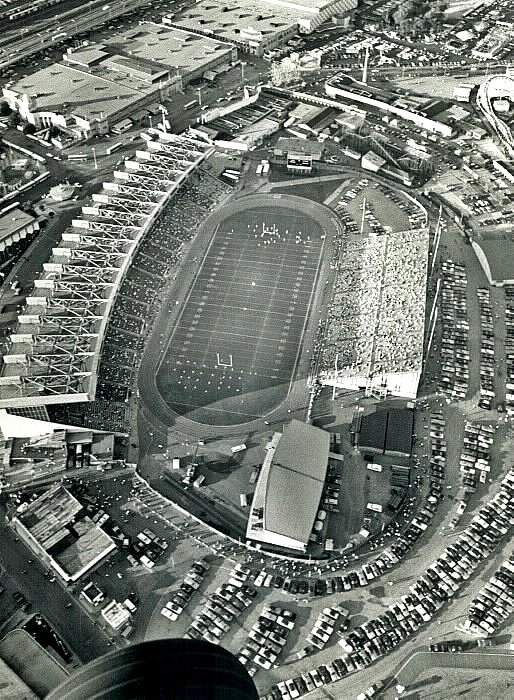
The game was played at the Canadian National Exhibition Stadium (or just "Exhibition Stadium"), the brand-new home of the Toronto Argonauts of the Canadian Football League, and later also the home of baseball's Toronto Blue Jays and soccer's Toronto Blizzard.

The Argos were in a down period in their history: This would be the 4th straight season in which they didn't make the Playoffs, and from 1953 to 1970, they didn't make the Grey Cup Final even once. They would finish 4-10 in CFL play that season.

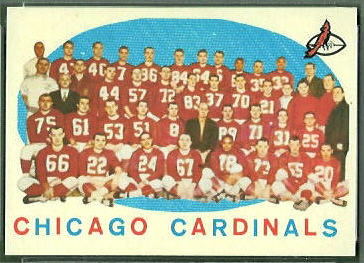
The NFL team was the Chicago Cardinals, and they weren't doing so hot, either. They would finish 2-10. They'd had only 1 winning season since 1949. The team had won the NFL Championship Game in 1947 and gotten back but lost it in 1948, but the death of team owner Charles Bidwill had left the team in the hands of his widow, Violet. She soon remarried, to Walter Wolfner, and neither one of them knew much about running a football team.

This was a week off in the CFL's regular season, and the preseason for the NFL. The rules of the 2 leagues were mixed. The field had the larger dimensions of Canadian football: 110 yards long instead of 100, 25-yard-deep end zones instead of 10, 65 yards wide instead of 53 1/3rd. They used CFL rules on kicks and returns, with no fair catch. They used the NFL's rules of 11 men on a side instead of the CFL's 12, and 4 downs to make a 1st down instead of the CFL's 10.

But the Cardinals had an unfair advantage: Their coach, Frank "Pop" Ivy, had coached in the CFL, with the Edmonton Eskimos (the team now known as the Edmonton Elks). The Argos jumped out to a 13-1 lead -- the Cards having scored a "single," or "rouge," a dead-ball foul that doesn't exist in American football rules -- but it was all Cards after that, as they won, 55-26.

Tired of playing 2nd fiddle in Chicago to the Bears, the Cardinals moved to St. Louis for the 1960 season. In that season, the Argonauts invited the Pittsburgh Steelers to play them. The Steelers won, 43-16. In 1961, the Cardinals came up to Toronto again, and won, 36-7. That same year, the Hamilton Tiger-Cats hosted the AFL's Buffalo Bills, and won a victory for Canada, 38-21. There have been no more games between CFL and U.S. professional teams.

Violet Wolfner died in 1962. Her sons Bill and Charles Jr. won a power struggle with their stepfather for control of the team, and rebuilt. They went 9-3 in 1963, 9-3-2 in 1964 (finishing 2nd in the Western Division), and were usually at least good for as long as they were in St. Louis.

Bill bought Charles Jr. out in 1972, and the Cards won the NFC East in 1974 and 1975. But they mostly struggled in the 1980s, and Bill moved them to the Phoenix area in 1988. In 1993, he changed the name from the Phoenix Cardinals to the Arizona Cardinals. They reached Super Bowl XLIII in 2009, and the NFC Championship Game in 2016.

*

August 5, 1959 was a Wednesday. These baseball games were played that day:

* The New York Yankees beat the Detroit Tigers, 3-0 at Yankee Stadium. Bobby Shantz pitched a 5-hit shutout. Mickey Mantle hit a 2-run home run. Al Kaline went 0-for-4.

* The Boston Red Sox beat the Kansas City Athletics, 17-6 at Fenway Park in Boston. Frank Malzone hit 2 home runs, and Ted Williams went 1-for-3 with an RBI.

* A doubleheader was split at Memorial Stadium in Baltimore. The Chicago White Sox won the opener, 2-0. Barry Latman pitched a 3-hit shutout. The Baltimore Orioles won the nightcap, 7-1. Brooks Robinson went 1-for-7 on the day.

* A doubleheader was split at Griffith Stadium in Washington. The Cleveland Indians won the 1st game, 7-3. The Washington Senators won the 2nd game, 9-0. Tex Clevenger pitched a 7-hit shutout.

* The Philadelphia Phillies beat the Chicago Cubs, 6-4 at Wrigley Field in Chicago. Ernie Banks hit a home run in the losing cause.

* The St. Louis Cardinals beat the Pittsburgh Pirates, 3-0 at Busch Stadium (formerly Sportsman's Park) in St. Louis. Ernie Broglio, later to be traded for Lou Brock, pitched a 4-hit shutout. Stan Musial went 1-for-4. Roberto Clemente went 0-for-4.

* The Los Angeles Dodgers beat the Cincinnati Reds, 6-3 at the Los Angeles Memorial Coliseum. Duke Snider hit 2 home runs. Frank Robinson went 1-for-4 with an RBI.

* And the San Francisco Giants beat the Milwaukee Braves, 4-1 at Seals Stadium in San Francisco. Willie McCovey, on his way to being named National League Rookie of the Year, hit 2 home runs. Willie Mays went 1-for-4 with an RBI. Hank Aaron went 0-for-4, but still went on to win the NL's batting title.

Wednesday, June 1, 2022

June 1, 1927: The Peace Bridge Opens

June 1, 1927: The Peace Bridge opens, connecting Buffalo, New York with Fort Erie, Ontario, at the American-Canadian border. It was constructed as a highway bridge to address pedestrian and motor vehicle traffic which could not be accommodated on the International Railway Bridge that was built in 1873.

Representing Canada, and the British Empire of which it was then a part, at the opening ceremonies were Prime Ministers William Lyon Mackenzie King of Canada and Stanley Baldwin of Britain; Prince of Wales, the future Edward VIII; and his brother, Prince George, Duke of Kent; and Premier Howard Ferguson of Ontario (the equivalent of a State's Governor). Representing the U.S. were Vice President Charles Dawes, Secretary of State Frank Kellogg, and Governor Alfred E. Smith of New York.

The Peace Bridge consists of five arched spans over the Niagara River and a Parker deck-type truss span over the Black Rock Canal on the American side of the river. Going into the U.S., the road is bannered as New York State Route 955B. Going into Canada, it is the Queen Elizabeth Way, named for the wife of King George VI, not their daughter, Queen Elizabeth II. 

*

June 1, 1927 was a Wednesday. This was also the day that 1st Hardy Boys novel was published. I have a separate entry for that event.

These baseball games were played that day:

* The New York Yankees beat the Philadelphia Athletics, 2-1 at Shibe Park in Philadelphia. Joe Dugan singled Ben Paschal home with the winning run in the top of the 9th inning. Myles Thomas outpitched Rube Walberg. Babe Ruth went 0-for-4, and Lou Gehrig went 2-for-3 with a walk. Ty Cobb, running out the string with the A's, went 0-for-4.

* The Brooklyn Dodgers beat the Boston Braves, 6-2 at Braves Field in Boston.

* The Boston Red Sox beat the Washington Senators, 6-1 at Griffith Stadium in Washington.

* The Philadelphia Phillies beat the Pittsburgh Pirates, 7-4 at Forbes Field in Pittsburgh.

* The Cleveland Indians beat the Detroit Tigers, 14-1 at Navin Field (later Briggs Stadium and Tiger Stadium) in Detroit.

* The Cincinnati Reds and the St. Louis Cardinals were rained out at Sportsman's Park in St. Louis. The game was made up as part of a doubleheader on June 25. The Cards won the opener, 2-1. The Reds won the nightcap, 10-7. Grover Cleveland Alexander, 40 years old and still in the wake of his World Series heroics the year before, allowed 4 runs over the last 2 innings. Over the 2 games, Frankie Frisch went 5-for-8 with 2 RBIs.

* And the New York Giants, the Chicago Cubs, the Chicago White Sox and the St. Louis were not scheduled.

Saturday, May 28, 2022

May 28, 1934: The Dionne Quintuplets Are Born

Dr. Roy Dafoe with the Dionne Quintuplets

May 28, 1934: Five live baby girls are born to Elzire and Oliva-Édouard Dionne in Callender, Ontario, about 215 miles north of Toronto. To a world, and in particular a native country, Canada, suffering through the Great Depression, this successful birth of quintuplets, a rarity at the time, was considered a treasure.

The Dionnes were Franco-Ontarians, with French as their only language, at a time when French-Canadians, especially outside largely French-speaking Quebec, were discriminated against; and, within their own community, dominated by the Catholic Church, where any kind of birth control, in this era before the birth control pill, was forbidden.

And so, the Dionnes had already had 6 children, 5 of whom had survived infancy: Ernest, then 9 years old, meaning he was born when Elzire was just 16 (they married when she was 15 and he was 21); Rose Marie, 7; Thérèse, 6; Léo, who died of pneumonia just after birth; Daniel, 3, and Pauline, just 11 months.

In other of birth, they were: Yvonne Édouilda Marie, Annette Lillianne Marie, Cécile Marie Émilda, Ã‰milie Marie Jeanne, and Marie Reine Alma. (Yes, each one had "Marie," the French version of "Mary," in her name. Did I mention that the family was Catholic?)

After the "quints," who made 11, they had 3 more sons, for a total of 14 children: Oliva Jr., Victor, and, giving Elzire something of a break, Claude was not born until 1946, when she was 37.

The Dionne girls were premature. After 4 months with their family, custody was signed over to the Red Cross, who paid for their care and oversaw the building of a hospital for the sisters. Less than a year after this agreement was signed, the Ontario government stepped in and passed the Dionne Quintuplets' Guardianship Act, 1935 which made them wards of the Crown until the age of 18.

The Ontario Provincial government and those around them began to profit by making them a significant tourist attraction. The fuss made over the quints was intense, without consideration to the feelings of the other children.

They starred in 3 feature films, fictionalized versions of their story, as "the Wyatt Quintuplets," with Jean Hersholt (despite his French-sounding name, he was from Denmark) starring as their doctor, John Luke, in all 3: The Country Doctor in 1936, Reunion in 1936, and Five of a Kind in 1938. The last of these starred Claire Trevor and Cesar Romero as radio journalists, competing for the quints' story. Essentially, Hersholt was playing Elzire's obstetrician, Dr. Allan Roy Dafoe, who became the quints' pediatrician until his death in 1943, from complications from cancer, at age 60.

In 1944, Betty Hutton starred in The Miracle of Morgan's Creek, as an American housewife who has 6 baby boys at once: Sextuplets. A newspaper headline made for the film reads, "CANADA DEMANDS A RECOUNT!" (In real life, Hutton had 3 children, all separate births.)

The quintuplets left the family home upon turning 18 years old in 1952, and had little contact with their parents afterwards. There may have been reason for it: In 1995, the 3 surviving quints alleged that their father had abused them. I won't post the details.
The Dionne Quintuplets in 1952

Perhaps the Church would have been disappointed if none of the sisters had become a nun, and one did, Émilie. But she developed seizures, and asked not to be left unattended. On August 6, 1954, at age 19, the nun who was supposed to be watching her thought she was asleep, and went to Mass. Émilie had another seizure, rolled onto her belly and, unable to raise her face from her pillow, accidentally suffocated and died. She was buried at Sacred Heart Cemetery in Corbeil, Ontario, near their hometown of Callender. And then there were four.

Marie, the youngest, married first, and had 2 daughters. Annette married, and had 3 sons. Cécile married, and had 5 children, 1 dying in infancy, and produced the only multiple birth among the quints, twin sons. Annette and Cécile eventually divorced, and Marie separated from her husband. Yvonne never married, or had children.

In 1965, author James Brough wrote a book, in cooperation with the then 4 surviving sisters, titled We Were Five. In 1970, when they were 36, Marie Houle was living alone in an apartment in Montreal, and her sisters were worried after not hearing from her in several days. Her doctor went to her home and found her in bed, Marie having been dead for days. A blood clot was found on her brain, and it was determined that she had died on February 27. She was buried at Cimètiere de Saint-Bruno-de-Montarville, outside Montreal. And then there were three.

Their father, Oliva-Édouard, lived until 1979, age 75; their mother Elzire, until 1986, 77. In 1995, they lost their brother Ernest, 69; their sister Rose Marie, 67; and their brother Daniel, 63.

Left to right: Yvonne, Cécile and Annette in 1995

On November 19, 1997, the McCaughey Septuplets, the world's first known seven-baby birth to survive infancy, were born in Des Moines, Iowa. Memories of the Dionne Quintuplets, the surviving 3 then being 62, were brought up. The survivors wrote an open letter to parents Bobbi and Kenny McCaughey, warning against allowing too much publicity for the children. By that point, the surviving 3 Dionne sisters had reached a $4 million settlement with the Ontario government as compensation for their childhood exploitation.

Yvonne Dionne died on June 23, 2001, at 66, and was buried next to Marie at Sacred Heart in Corbeil. And then there were two.

Brother Victor lived until 2007, at age 79; brother Claude, until 2009, 63; brother Oliva Jr., until 2017, 81; sister Pauline, until 2018, 85; and sister Thérèse, until 2021, 91.

Cécile (left) and Annette, 2017

As of May 28, 2022, their 88th birthday, Annette Allard and Cécile Langlois live together in a house in in North Bay, Ontario. North Bay is the body of water on which Callander sat. The town's name was changed to North Bay, because of the confusion. A museum honoring the Quintuplets' legacy -- allegedly -- is nearby.

UPDATE: Cécile died on July 28, 2025, leaving Annette as the last survivor. She died on December 24, 2025, at the age of 91.

*

May 28, 1934 was a Monday. In America, it was Memorial Day. These baseball games were played:

* The New York Yankees beat the St. Louis Browns, 13-6 at Sportsman's Park in St. Louis. The Bronx Bombers got 2 home runs from Lou Gehrig, who went on to win the Triple Crown that season; and 1 each from Babe Ruth, Tony Lazzeri, and Jack Saltzgaver, filling in at 3rd base for Red Rolfe. Danny MacFayden started, but a 7-run 7th inning made Russ Van Atta the winning pitcher, with Hall-of-Famer Lefty Gomez, normally a starter, getting the save.

* The New York Giants swept a doubleheader from the Pittsburgh Pirates at the Polo Grounds. Travis Jackson won the opener, 3-2, with a home run in the bottom of the 11th inning. The Giants won the nightcap, 1-0, on another home run by Jackson, in the 2nd inning. Carl Hubbell pitched a 5-hit-no-walk shutout. Over the 2 games, manager and 1st baseman Bill Terry went 2-for-8. The Giants swept despite their best hitter, Mel Ott, going 0-for-8, although he did draw a walk in the opener.

* The Brooklyn Dodgers lost to the Cincinnati Reds, 8-1 at Ebbets Field.

* The Boston Braves beat the Chicago Cubs, 5-3 at Braves Field in Boston.

* The St. Louis Cardinals beat the Philadelphia Phillies, 10-0 at Baker Bowl in Philadelphia. Bill Hallahan allowed 7 hits and 5 walks, but kept the shutout. Joe Medwick and Burgess Whitehead each got 3 hits for the Cardinals, who went on to beat the Detroit Tigers in the World Series. However, it wasn't until the next season that they gained their eternal nickname, "The Gashouse Gang."

* The Cleveland Indians beat the Philadelphia Athletics, 6-5 at League Park in Cleveland. Earl Averill doubled Eddie Knickerbocker home with the winning run in the bottom of the 10th inning. Jimmie Foxx hit 2 home runs for the A's.

* The Detroit Tigers beat the Boston Red Sox, 12-6 at Navin Field in Detroit. (It was renamed Briggs Stadium in 1938, and Tiger Stadium in 1961.) Bill Cissell went 4-for-4 with a walk and an RBI for the Sox, but Hank Greenberg took Lefty Grove deep for 2 home runs.

* And the Chicago White Sox beat the Washington Senators, 11-7 at Comiskey Park in Chicago.

December 31, 1999 & January 1, 2000: The Millennium

December 31, 1999:  The Millennium arrives. The people of planet Earth survived. At a terrible cost. But we hadn't destroyed ourselves. ...