Showing posts with label toronto argonauts. Show all posts

Thursday, October 13, 2022

October 13, 1947: The 1st NHL All-Star Game

October 13, 1947: The National Hockey League hosts its 1st official All-Star Game, at Maple Leaf Gardens in Toronto.

There had been 3 unofficial all-star games, all benefits:

* In 1934, also at Maple Leaf Gardens, for Maple Leaf player Irvine "Ace" Bailey, who had suffered a career-ending injury. The Leafs beat a team made up of players from all the other teams in the League.

* In 1937, at the Montreal Forum, for the family of the late Montreal Canadiens superstar Howie Morenz. The Canadiens and the Montreal Maroons combined to face a team from the other teams of the League, which won.

* And in 1939, also at the Forum, for the family of the late Canadiens star Albert "Babe" Siebert. The Maroons having folded in the interim, it was just the Canadiens against the rest of the League. The late 1930s was a rare period when the Canadiens were actually a bad team, and they lost this one.

Unlike what would later be called Major League Baseball, which had its All-Star Game at roughly the midpoint of its season, and the National Football League, which had its Pro Bowl after the season, the NHL decided that its All-Star Game would be at the beginning of its season. Its setup would parallel the Chicago College All-Star Game, which began the football season with the defending NFL Champions and a team of recently graduated college stars playing at Soldier Field in Chicago.

(This game ran from 1934 to 1976. When the National Basketball Association first played an All-Star Game in 1951, it followed the baseball model and did it in midseason.)

And so, the 1st NHL All-Star Game would be the holders of the Stanley Cup, the Maple Leafs, against a team made up of players from the other five of the "Original Six" teams.

The Leafs: 1, goaltender Walter "Turk" Broda; 2, defenseman Bob Goldham; 3, defenseman Wally Stanowski; 4, left wing Harry Watson; 5, right wing Don Metz; 7, center Norman "Bud" Poile; 9, center Ted "Teeder" Kennedy; 10, center and team Captain Syl Apps; 12, right wing Bill Ezinicki; 14, defenseman Vic Lynn; 15, right wing Howie Meeker; 16, left wing Gaye Stewart; 17, left wing Joe Klukay; 19, defenseman Gus Mortson; 20, defenseman Jimmy Thomson; 21, defenseman Bill Barilko, and 22, center Fleming Mackell.

Broda, Watson, Poile, Kennedy, Apps would be elected to the Hockey Hall of Fame, which would eventually give Meeker its Foster Hewitt Award for broadcasters. Head coach Clarence "Hap" Day and general manager Conn Smythe would also be elected. Barilko, famously, would switch to Number 5, and score the goal that won the 1951 Stanley Cup, and then died in a plane crash 4 months later, getting the number retired.

The rest of the League:

* From the Boston Bruins: 1, goaltender Frank Brimsek, a native of Eveleth, Minnesota, and the only non-Canadian in the game; and the entire "Kraut Line": 14, left wing Woody Dumart; 15, center Milt Schmidt; and 17, left wing Bobby Bauer.

* From the Montreal Canadiens: 1, goaltender Bill Durnan (both he and Brimsek wore 1 on the night); 3, defenseman Emile "Butch" Bouchard; 9, right wing Maurice "the Rocket" Richard; and 17, defenseman Ken Reardon. Canadiens head coach Dick Irvin Sr. coached this team as well.

* From the Detroit Red Wings: 2, defenseman Jack Stewart; 4, defenseman Bill Quackenbush; and 11, left wing Ted Lindsay (better known for wearing 7).

* From the Chicago Black Hawks (the name began to be written as one word, "Blackhawks," in 1986): 5, center Max Bentley; 6, right wing Bill Mosienko; and 7, left wing Doug Bentley, Max's brother.

* And from the New York Rangers: 8, right wing Grant Warwick; 10, center Edgar Laprade; and 18, left wing Tony Leswick. Of all the players on this All-Star Team, only Warwick and Leswick have not yet been elected to the Hockey Hall of Fame. Leswick went on to score the Cup-winning goal in overtime of Game 7 for the 1954 Red Wings.
The NHL All-Stars. Top row, left to right:
Frank Brimsek, Woody Dumart, Dick Irvin, Butch Bouchard,
Ken Reardon, NHL President Clarence Campbell,
Jack Stewart and Bill Durnan. Middle row, left to right:
Milt Schmidt, Tony Leswick, Max Bentley, Grant Warwick,
Maurice Richard, Doug Bentley, and Canadiens trainer Ernie Cook.
Bottom row, left to right: Bill Quackenbush, Bill Mosienko,
Bobby Bauer, Ted Lindsay and Edgar Laprade.

The Leafs, as home teams usually did at the time, wore their white sweaters with blue trim. The All-Stars wore red sweaters, with a white and red NHL shield as their team logo.
Richard's sweater (Americans would say "jersey")

Richard and Lindsay had already fought often in regular-season games. Irvin put them on a line together. (This was after Toe Blake's injury broke up the Canadiens' "Punch Line" with Richard and Elmer Lach, but before the formation of the Wings' "Production Line" with Lindsay, Sid Abel and Gordie Howe.) In his memoir, Richard said that he and Lindsay did not speak a word to each other for the course of the game.

Reardon, the Canadiens' main tough guy, was involved in 2 incidents in the 2nd period. First, he laid a dirty cross-check on Goldham, resulting in a cut on Goldham's forehead. Later, he got into a stick-swinging incident with Ezinicki and Mortson.

Watson opened the scoring, at 12:29 of the 1st period. Ezinicki assisted on that goal, and put the Leafs up 2-0 just 1:03 into the 2nd period. Max Bentley got the All-Stars onto the board about 3 minutes later, but Apps made it 3-1 Leafs just 22 seconds after the restart.

Warwick, arguably the least talented player in the entire game, scored midway through the 2nd. Within 1:26 of the start of the 3rd period, Richard scored a spectacular unassisted goal to tie the game, and Doug Bentley scored to put the All-Stars up 4-3. That's how it ended.

The Leafs would end up winning the Cup in 1948, anyway. And again in 1949. And again in 1951, after the Wings won it in 1950. This completed a great run for Toronto: From 1942 to 1951, 10 seasons, they won 6 Cups.

Up until the 1966-67 season, the format remained defending Champions vs. the rest of the League at the beginning of the season. An exception was made for 1951 and 1952, when it was "Team #1" vs. "Team #2." But that season, the last of the "Original Six" lineup, the game was moved to midseason. So there was an NHL All-Star Game in 1965 and 1967, but not in 1966.

The defending Champs vs. the rest of the League format lasted until 1968. Over that stretch, Toronto went 2-4-1, Montreal went 3-4-1, Detroit went 2-0-1, Chicago went 0-1; and neither New York nor Boston won a Cup, so neither were All-Star hosts.

From 1969 to 1997, the format was an East (or Prince of Wales Conference) team against a West (or Clarence Campbell Conference) team. From 1998 to 2002, the format was North America vs. The World -- basically, Canada and the U.S. vs. Europe, as no player from a country outside North America or Europe was named to any roster. North America led this format, 3-2. East vs. West was restored from 2003 to 2009. All told, the East led, 21-9-1.

In 2011, 2012 and 2015, two captains were chosen, and they chose up sides, like it was a kids' game in the street. (The NBA has also tried this for its All-Star Game.) Since 2016, the NHL has made Divisional teams, which doesn't really work since there are now 6 Divisions.

The anomalies were 1979, replaced by a Challenge Cup between an NHL All-Star Team and a Soviet All-Star Team; 1987, replaced by the same format under the name Rendez-Vous '87; 1995 and 2005, canceled due to the team owners locking the players out; 2006, 2010 and 2014, canceled due to NHL players being allowed to play in the Winter Olympics (though this was not done in 1998, 2002, 2018 or 2022); and 2020, canceled due to the COVID-19 epidemic.

Howie Meeker was the last living player from the 1st NHL All-Star Game, living until November 8, 2020, at the age of 97.

*

October 13, 1947 was a Monday. As I said, this game started the NHL season, so there were no other games played in the League that day. The forerunners of the NBA, the Basketball Association of America and the National Basketball League, hadn't started their seasons yet, either. There was no Monday Night Football in those days. And the baseball season had ended a few days earlier, with the New York Yankees having beaten the Brooklyn Dodgers in the World Series.

In fact, the only other major league game on this historic day also took place in Toronto -- and that's if you count the top flight of Canadian football as "major league." It wasn't even the Canadian Football League, as that wouldn't be founded until 1958, although both of the teams involved would be charter members.

The game was in the Interprovincial Rugby Football Union. The game was played at Varsity Stadium, on the campus of the University of Toronto. And Ontario rivals, the Toronto Argonauts and the Hamilton Tigers, played to a 6-6 tie. In 1950, the Tigers would merge with the Hamilton Wildcats, and form the Hamilton Tiger-Cats, or "Ticats," and they maintain their rivalry with the "Argos" to this day.

In fact, they are 2 of the oldest professional sports teams in North America: The Tigers had been founded in 1869, making them older than any team in the "Big Four" North American sports leagues; while the Argos were founded in 1873, making them older than any team except the Ticats, the Chicago Cubs (1870) and the Atlanta Braves (founded as the Boston Red Stockings in 1871).

Also, rock singer Sammy Hagar, the 2nd lead singer of Van Halen, was born on this day.

Friday, October 7, 2022

October 7, 1960: "Spartacus" and "Route 66" Premiere

October 7, 1960: The film Spartacus premieres, a dramatization of the story of the Thracian gladiator who led a slave revolt in Rome in 71 BC. The film was based on the 1951 novel by Howard Fast, was directed by Stanley Kubrick, and was written by Dalton Trumbo, one of the Hollywood Ten. All were selected by the film's star, Kirk Douglas, who wanted to break the Hollywood Blacklist for once and for all. He did.
Among the film's other stars: Jean Simmons, Laurence Olivier, Charles Laughton, Peter Ustinov, Tony Curtis, Nina Foch, John Ireland, Herbert Lom, John Hoyt, and Woody Strode, who had previously broken a different barrier: He was 1 of the 4 black players who broke professional football's color barrier in 1946, before becoming an actor, working mainly in Westerns.
The film is best remembered for a scene near the end, where the Roman commander Crassus (Olivier), having surrounded Spartacus' army, offers a pardon (and return to enslavement) if the men will identify Spartacus, living or dead. But this would mean a return to slavery, and they would rather die. So every surviving man responds by shouting "I'm Spartacus!" (Most people trying to quote the movie get that wrong, saying, "I am Spartacus!")
History suggests that Spartacus died in battle, and no marriage or children have been ascribed to him. The film shows the character crucified, but living long enough for his wife to show him his infant son.
In modern times, Spartacus became an icon for the Communist movement. The most popular sports team in the Soviet Union was the soccer team run by Spartak Moscow, ironically because it turned the Spartacus ideal back on the Communist government, and became "the people's team." It remains the most popular sports team in the Russian Federation. Many other teams in former Soviet countries have the Spartak name.
*
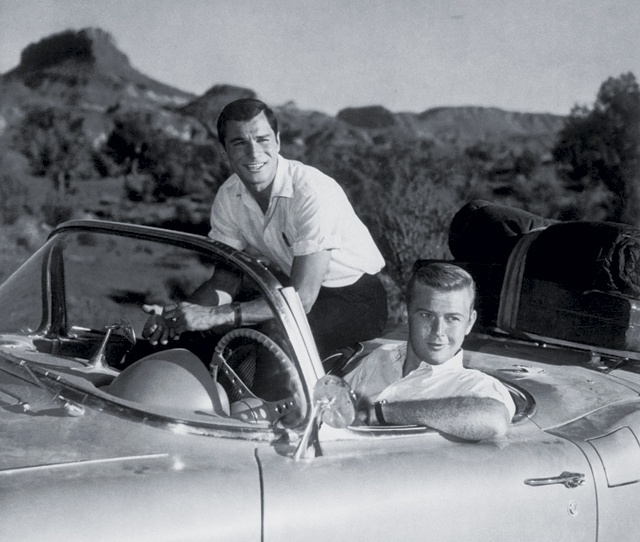
Also on this day, Route 66 premieres on CBS. It stars Martin Milner as Tod Stiles, and George Maharis as Buz Murdock, who travel around the country in a Chevrolet Corvette convertible, helping people wherever they can, because they were no longer needed or wanted where they were.
Maharis (left) and Milner
Tod grew up rich in Rye, Westchester County, New York, the son of a wealthy businessman. When his father died, he learned that his father's company was virtually bankrupt. The only thing his father had to leave him was the Corvette.
In contrast, Buz was a working-class orphan, who worked for the eldery Mr. Stiles in a New York shipyard. He talked Tod into going around the country together in the 'Vette.
U.S. Route 66 was commissioned in 1926. It started on Chicago's Loop, went down through Illinois, crossed the Mississippi River into St. Louis, went southwest across Missouri, briefly across the southeastern corner of Kansas, into Oklahoma through Tulsa to Oklahoma City. Then, it turned west, crossed the Texas Panhandle, and went through New Mexico, Arizona and California, including Los Angeles, before terminating at the Santa Monica Pier.
The federal government decommissioned the highway in 1985, as it had been mostly replaced by Interstate highways that bypassed some of the smaller towns along the route: I-55 in Illinois, I-44 from St. Louis to Oklahoma City, I-40 from there to Barstow, California, and I-15 and I-10 in California. Nevertheless, many of those small towns still call the remaining street "Route 66." For many of those towns, it served as their Main Street, and the road is still remembered as "America's Main Street."
But the show didn't exclusively stick to 66: Many of its adventures took place further east, even showing Tod and Buz working with lobstermen in Maine, and the series finale took place in Florida. 
Maharis came down with hepatitis, and decided to leave the show to focus on his health, saying, "Even if you have $4 million in the bank, you can't buy another liver." This soon proved to be incorrect, as liver transplants were becoming more common.
So, late in the show's 3rd season, with no explanation for what happened to Buz, Tod encountered Lincoln Case, played by Glenn Corbett. (Star Trek fans will recognize his name, as the first actor to play warp-drive inventor Zefram Cochrane.) "Linc" was a former U.S. Army Ranger and prisoner of war in Vietnam. This episode aired on March 22, 1963, so it was the 1st TV series featuring a character who was a Vietnam War veteran, and the earliest pop-culture representation of a Vietnam vet with post-traumatic stress disorder. After a difficult opening encounter, Tod invited Linc to join him on his travels.
Route 66 may have been the 1st regular TV series to have a planned series finale: On March 20, 1964, with the action in Tampa, far from the actual highway for which the show was named, Tod met Margo Tiffin, a commodities trader from Houston, played by Barbara Eden. They got married, and, since Linc was also from Texas, that's where Tod and Linc both ended up.
This show inspired many imitators, including The Fugitive and Run For Your Life in the 1960s, The Incredible Hulk in the 1970s, and Knight Rider and Hot Pursuit in the 1980s.
Despite having to leave the show due to illness, Maharis recovered. As of October 7, 2022, he is still alive, age 93. Milner died in 2015, Corbett in 1993. (UPDATE: Maharis died on May 24, 2023.)

In 1993, NBC tried a reboot, starring James Wilder as Nick Lewis, whose estranged father has recently died. It turns out, his father was Buz Murdock, who left him the Corvette, which suggests that Tod gave it to him at some point between 1964 and 1993. He then picks up Dan Cortese as hitchhiker Arthur Clark, and they start off on their own adventures together. But not many: Fans of the original series hated it, especially the suggestion that the orphaned Buz would gain and then abandon a family; and viewers not old enough to remember the original series didn't like it, either. Only 4 episodes aired.

*

October 7, 1960 was a Friday. So there was neither collegiate nor professional football played. The World Series was in a travel day. The NBA season hadn't started yet. And, while the NHL season had, 2 days earlier, no games were played on this day.

But there was one score, in the Canadian Football League: The Toronto Argonauts beat the Hamilton Tiger-Cats, 24-14 at Varsity Stadium in Toronto.

Friday, September 2, 2022

September 2, 1971: The Tyranny of Harold Ballard

September 2, 1971: Harold Ballard becomes the majority owner of the NHL's Toronto Maple Leafs, and their arena, Maple Leaf Gardens. He is on his way to becoming the most hated man in Canada.

Edwin Harold Ballard was born in Toronto on July 30, 1903 -- just 71 days before Walter O'Malley, who would become the most hated man in American sports. At some point, Ballard reversed his names, and became "Harold Edwin." His father manufactured ice skates, and that would be his entry into hockey. He was assistant manager of the Varsity Grads team from the University of Toronto that represented Canada at the 1928 Winter Olympics in St. Moritz, Switzerland, winning the Gold Medal.

A member of the Toronto National Yacht Club, in 1930, it appointed Ballard manager of their team in the Ontario Hockey Association, the Toronto National Sea Fleas, winning the Allan Cup in 1932. He then became the head coach, and he became hated by hockey players for the first time. In 1934, he became manager of the OHA's West Toronto Nationals, with former Maple Leafs star Clarence "Hap" Day as coach, and they won the Memorial Cup in 1936. In 1940, Day was named Leafs coach, and recommended Ballard to run their top farm team, the Toronto Marlboros, and he led them to the 1950 Allan Cup and the 1955 and 1956 Memorial Cups.

In 1957, Conn Smythe stepped down as Leafs general manager, and a group known as the Silver Seven took control, including Ballard and Smythe's son, Stafford Smythe. In 1961, Conn Smythe sold most of his shares in the company running the team and the arena, Maple Leaf Gardens Ltd., to 3 men: Stafford, Ballard, and the owner of the Toronto Telegram newspaper, John Bassett. But since Ballard gave Stafford most of the money for his share, he essentially had Stafford under his control.

In 1958, the Silver Seven hired George "Punch" Imlach as the Leafs' head coach and general manager. The result was 4 Stanley Cups: 1962, 1963, 1964 and 1967. But Imlach had built a veteran team, in a philosophy that later Washington Redskins coach George Allen would call "The Future Is Now."

With the assent of Ballard, Bassett and Stafford Smythe, and with little choice as the NHL was expanding for 1967-68, Imlach broke the team up, and tried to build a new dynasty. But between the changes in the League and those in the organization, he had little chance, and after an embarrassing Playoff exit in 1969, the last year of his contract was bought out.

Conn Smythe may have been the most patriotic man in Canada, as devoted to the head of state, the monarch of Great Britain, as he was to Parliament in Ottawa. Smythe had ordered a huge portrait of King George VI hung at one end of the Gardens during World War II, kept it there after the war, and replaced it with one of Queen Elizabeth II upon the King's death in 1952. Ballard wanted to increase the Gardens' seating capacity, and did by taking down the Queen's portrait and installing new seats. When asked about it, Ballard mentioned his taxes: "She doesn't pay me. I pay her. Besides, what the hell position can a queen play?"

In fact, he didn't pay her -- not enough, anyway. In 1969, Ballard and Stafford Smythe were charged with tax evasion, and accused of using MLG Ltd. to pay for their personal expenses. Bassett, who had by this time become chairman of the board, received the support of the board of directors in an 8–7 vote to fire Smythe and Ballard.

However, Bassett didn't force Smythe and Ballard to sell their shares, and both men remained on the board. This proved to be a serious strategic blunder, as Smythe and Ballard controlled almost half the company's shares between them. A year later, they staged a proxy war to regain control of the board. Ballard was reappointed executive vice president. Facing an untenable situation, Bassett resigned as chairman and sold his shares to Ballard and Stafford Smythe on September 2, 1971.

Stafford, suffering from cancer, died on October 13. The last time he saw his father, he said, "See, Dad? They were never going to get me." Ballard won a battle with the Smythe family, and bought Stafford's shares, giving him a 60 percent controlling interest in the Gardens.

But while the taxman couldn't get Stafford Smythe, it got Harold Ballard. On October 20, 1972, he was sentenced to 9 years in Canadian federal prison, after being convicted on 47 counts of fraud, theft and tax evasion. He had been acquitted on 2 others. It wasn't exactly a hardship: He was paroled after only 1 year, and said that prison life was like staying in a motel, with color television, golf, and steak dinners.

Upon his release, Ballard began micromanaging the Leafs. They reached the Stanley Cup Semifinals in 1978, with a team with such stars as Darryl Sittler, Lanny McDonald, Börje Salming and goaltender Mike Palmateer. But this was an anomaly, the only time they got to the NHL's round of four, under any name, between 1967 and 1993.

He was petty. He and the Detroit Red Wings' Bruce Norris led the move to include only NHL players on the Team Canada that played the Soviet Union in the 1972 "Summit Series," thus excluding World Hockey Association defectors Bobby Hull and Gerry Cheevers, which (along with Bobby Orr's injury) nearly derailed Canada, and forced them to go the distance to win the series.

In 1973, the WHA moved the Ottawa Nationals to become the Toronto Toros. After playing the 1973-74 season at the University of Toront's Varsity Arena, John F. Bassett, son of the previous part-owner and operating the Leafs with Harold's son Bill Ballard, allowed them to move into Maple Leaf Gardens. But when Ballard got out of prison, he made their presence miserable: Denying them use of the Leafs' locker room, forcing them into a secondary locker room; taking seat cushions off the home bench, telling an arena worker, "Let 'em buy their own cushions!"; and demanding $3,500 per game for use of the arena's lights.

When the contract of the Leafs' biggest remaining star, Dave Keon, ran out in 1975, Ballard refused to re-sign him, because he didn't want to pay for him. But he also didn't want him to play for anyone else, and demanded huge compensation. No other NHL team could sign him. Again, Ballard failed to consider the WHA, and Keon went to the Minnesota Fighting Saints, then, when they folded, the New England Whalers.

When the WHA admitted the Whalers and 3 other teams for the 1979-80 season, they had Keon and Gordie Howe, formerly owned by the Wings and Norris. Norris and Ballard insisted they still owned the NHL rights to Howe and Keon, respectively, and refused to let them play for the Whalers or anyone else. NHL President John Ziegler overruled them, angering them.

Again, Ballard alienated the Leafs' biggest star, Sittler, doing whatever he could to avoid paying him what he was worth. He did it again, after Sittler, with McDonald. Ballard had also brought back Cup-winning coach and GM Punch Imlach, but forced him out quickly, ending what may have been Ballard's only friendship. The Leafs did not finish above .500 in any season in the 1980s. And Ballard did little to improve the deteriorating condition of the Gardens.

Harold Ballard was so cheap. How cheap was he? He wasn't willing to pay the price the Toronto City Council for a liquor license for Maple Leaf Gardens, making it the only "dry" arena in the NHL. The Hamilton City Council asked for a lower price for the Tiger-Cats' Ivor Wynne Stadium, and Ballard paid that. But the Gardens wouldn't sell alcoholic beverages for as long as he owned it.

How cheap was he? In the mid-1970s, the NHL, facing competition from the WHA, passed a rule that players' last names must be on the backs of their jerseys. Ballard refused, citing it as a threat to program sales. After being threatened with a large fine, Ballard "complied" by putting the names in blue letters on the Leafs' blue road jerseys, and in white on their white home jerseys, making them unreadable. After being fined, he backed down, and put the names in the opposite colors.

He also wanted to start a 2nd Canadian Football League team in Toronto, to compete with the Toronto Argonauts, owned by the Bassetts. They refused to back the idea. But they decided to sell the Argos in 1974. Ballard offered $3 million, but was turned down, and the Argos were sold to William R. Hodgson.

Ballard then tried to buy their arch-rivals, the Hamilton Tiger-Cats, and was turned down again. In 1978, Ballard tried to buy the Ticats again, and won. Unlike in the NHL, Ballard was successful in the CFL, as the Ticats reached 3 Grey Cups, losing them all, before winning in 1986. Still, he kept threatening to move them out of Hamilton, Canada's steel city, to Toronto, where (he thought) he could make more money. He sold them in 1989, and they are still in Hamilton today.

In 1976, he tried to get into baseball, leading the group that came within a whisker of getting a deal to buy and move the San Francisco Giants approved. But the deal fell apart, and it was a different group that, later in the year, got the rights to the expansion Toronto Blue Jays.

Due to his mismanagement of 2 historically successful sports teams, Ballard may still be the most hated person in the history of Canadian sports. Still, he was elected to the Hockey Hall of Fame in 1977. He died on April 11, 1990, from various health issues, at age 86, and was missed by almost nobody.

It's no coincidence that, just 3 years after his death, new owner Steve Stavro got the Leafs into the Conference Finals in back-to-back seasons, and made peace with Dave Keon. But the Leafs still haven't been to the Stanley Cup Finals, let alone won them, since 1967. That is on Ballard, as much as on anyone else.

*

September 2, 1971 was a Thursday. These baseball games were played that day:

* The New York Yankees beat the Washington Senators, 11-1 at Yankee Stadium. The Yankees scored 4 runs in the 1st inning, and 7 in the 2nd. Stan Bahnsen went the distance for the win. Felipe Alou hit a home run, Thurman Munson got 3 hits, and Alou, Bobby Murcer, Horace Clarke, Roy White and Danny Cater each got 2.

* The New York Mets beat the Philadelphia Phillies, 3-1 at Veterans Stadium in Philadelphia. 

* The Boston Red Sox beat the Baltimore Orioles, 3-0 at Fenway Park in Boston. Sonny Siebert pitched a 3-hit shutout -- Merv Rettenmund got 2 of the hits, and Davey Johnson got the other -- and hit 2 home runs. Carl Yastrzemski went 0-for-4.

* The Detroit Tigers beat the Cleveland Indians, 7-0 at Tiger Stadium in Detroit. Mickey Lolich pitched a 6-hit shutout. Al Kaline went 1-for-2 with 2 walks.

* The Montreal Expos beat the Chicago Cubs, 9-5 at Wrigley Field in Chicago. Ernie McAnally was the winning pitcher, and hit a home run. Ernie Banks, in his last month as an active player, did not enter the game.

* The Milwaukee Brewers beat the Kansas City Royals, 1-0 at Milwaukee County Stadium. Marty Pattin pitched a 5-hit shutout. He must have been loose, quack. (Ball Four reference.)

* The Houston Astros beat the Los Angeles Dodgers, 9-3 at the Astrodome in Houston.

* And these teams were not scheduled: The California Angels, the Chicago White Sox, the Minnesota Twins, the Oakland Athletics, the Atlanta Braves, the Cincinnati Reds, the Pittsburgh Pirates, the St. Louis Cardinals, the San Diego Padres and the San Francisco Giants. 

Friday, August 5, 2022

August 5, 1959: The 1st Football Game Between U.S. & Canadian Teams

August 5, 1959: For the 1st time, a professional football team from the United States played one from Canada.

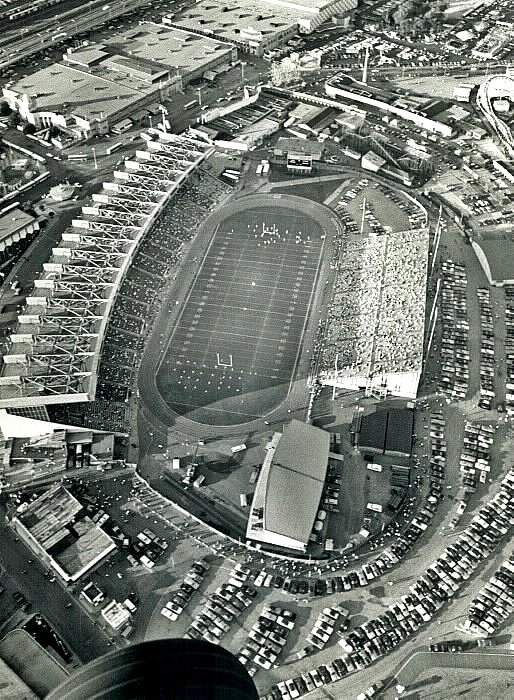
The game was played at the Canadian National Exhibition Stadium (or just "Exhibition Stadium"), the brand-new home of the Toronto Argonauts of the Canadian Football League, and later also the home of baseball's Toronto Blue Jays and soccer's Toronto Blizzard.

The Argos were in a down period in their history: This would be the 4th straight season in which they didn't make the Playoffs, and from 1953 to 1970, they didn't make the Grey Cup Final even once. They would finish 4-10 in CFL play that season.

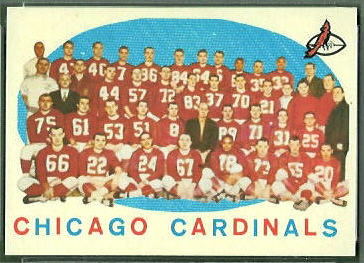
The NFL team was the Chicago Cardinals, and they weren't doing so hot, either. They would finish 2-10. They'd had only 1 winning season since 1949. The team had won the NFL Championship Game in 1947 and gotten back but lost it in 1948, but the death of team owner Charles Bidwill had left the team in the hands of his widow, Violet. She soon remarried, to Walter Wolfner, and neither one of them knew much about running a football team.

This was a week off in the CFL's regular season, and the preseason for the NFL. The rules of the 2 leagues were mixed. The field had the larger dimensions of Canadian football: 110 yards long instead of 100, 25-yard-deep end zones instead of 10, 65 yards wide instead of 53 1/3rd. They used CFL rules on kicks and returns, with no fair catch. They used the NFL's rules of 11 men on a side instead of the CFL's 12, and 4 downs to make a 1st down instead of the CFL's 10.

But the Cardinals had an unfair advantage: Their coach, Frank "Pop" Ivy, had coached in the CFL, with the Edmonton Eskimos (the team now known as the Edmonton Elks). The Argos jumped out to a 13-1 lead -- the Cards having scored a "single," or "rouge," a dead-ball foul that doesn't exist in American football rules -- but it was all Cards after that, as they won, 55-26.

Tired of playing 2nd fiddle in Chicago to the Bears, the Cardinals moved to St. Louis for the 1960 season. In that season, the Argonauts invited the Pittsburgh Steelers to play them. The Steelers won, 43-16. In 1961, the Cardinals came up to Toronto again, and won, 36-7. That same year, the Hamilton Tiger-Cats hosted the AFL's Buffalo Bills, and won a victory for Canada, 38-21. There have been no more games between CFL and U.S. professional teams.

Violet Wolfner died in 1962. Her sons Bill and Charles Jr. won a power struggle with their stepfather for control of the team, and rebuilt. They went 9-3 in 1963, 9-3-2 in 1964 (finishing 2nd in the Western Division), and were usually at least good for as long as they were in St. Louis.

Bill bought Charles Jr. out in 1972, and the Cards won the NFC East in 1974 and 1975. But they mostly struggled in the 1980s, and Bill moved them to the Phoenix area in 1988. In 1993, he changed the name from the Phoenix Cardinals to the Arizona Cardinals. They reached Super Bowl XLIII in 2009, and the NFC Championship Game in 2016.

*

August 5, 1959 was a Wednesday. These baseball games were played that day:

* The New York Yankees beat the Detroit Tigers, 3-0 at Yankee Stadium. Bobby Shantz pitched a 5-hit shutout. Mickey Mantle hit a 2-run home run. Al Kaline went 0-for-4.

* The Boston Red Sox beat the Kansas City Athletics, 17-6 at Fenway Park in Boston. Frank Malzone hit 2 home runs, and Ted Williams went 1-for-3 with an RBI.

* A doubleheader was split at Memorial Stadium in Baltimore. The Chicago White Sox won the opener, 2-0. Barry Latman pitched a 3-hit shutout. The Baltimore Orioles won the nightcap, 7-1. Brooks Robinson went 1-for-7 on the day.

* A doubleheader was split at Griffith Stadium in Washington. The Cleveland Indians won the 1st game, 7-3. The Washington Senators won the 2nd game, 9-0. Tex Clevenger pitched a 7-hit shutout.

* The Philadelphia Phillies beat the Chicago Cubs, 6-4 at Wrigley Field in Chicago. Ernie Banks hit a home run in the losing cause.

* The St. Louis Cardinals beat the Pittsburgh Pirates, 3-0 at Busch Stadium (formerly Sportsman's Park) in St. Louis. Ernie Broglio, later to be traded for Lou Brock, pitched a 4-hit shutout. Stan Musial went 1-for-4. Roberto Clemente went 0-for-4.

* The Los Angeles Dodgers beat the Cincinnati Reds, 6-3 at the Los Angeles Memorial Coliseum. Duke Snider hit 2 home runs. Frank Robinson went 1-for-4 with an RBI.

* And the San Francisco Giants beat the Milwaukee Braves, 4-1 at Seals Stadium in San Francisco. Willie McCovey, on his way to being named National League Rookie of the Year, hit 2 home runs. Willie Mays went 1-for-4 with an RBI. Hank Aaron went 0-for-4, but still went on to win the NL's batting title.

Friday, June 3, 2022

June 3, 1989: The 1st Retractable-Roof Stadium

June 3, 1989: The SkyDome opens in Toronto, next-door to the CN Tower. It is the 1st stadium with a retractable roof.

The last competitive sporting event at Exhibition Stadium in Toronto was held on May 28. The Toronto Blue Jays beat the Chicago White Sox, 7-5. The Jays went on a weeklong roadtrip, and then opened the SkyDome.
Exhibition Stadium

Exhibition Stadium had been home to the Canadian Football League's Toronto Argonauts since 1959, and the Jays since their debut in 1977. It may have been the single worst stadium in Major League Baseball since the debut of concrete and steel stadiums, and football fans didn't like it, either. The 1982 Grey Cup, which the host Argonauts lost to the Edmonton Eskimos (now the Edmonton Elks), became known as the Rain Bowl, and fans chanted, "We want a dome!" In 1989, they got their wish.

Exhibition Stadium was demolished in 1999. In 2007, BMO Field, current home of the Argonauts and soccer’s Toronto FC, was built on the site. The Argonauts moved there in 2016.

In 1992, the Baltimore Orioles opened Oriole Park at Camden Yards, the 1st "retro ballpark," making the SkyDome obsolete before its 3rd anniversary. But not totally: As of the Autumn of 2020, there were 6 teams in Major League Baseball with retractable-roof stadiums: Toronto, Arizona, Seattle, Milwaukee, Miami and Texas; and 11 in the NFL: Houston, Detroit, Seattle, Arizona, Indianapolis, Dallas, Minnesota, Atlanta, Las Vegas, and one for the two Los Angeles teams.
Roof closed

The SkyDome was renamed the Rogers Centre in 2005, following its purchase by broadcast executive Ted Rogers, who had bought the Blue Jays in 2000. In spite of all the great sports figures who have called the building home, he is the only person with a statue outside it, erected after his death in 2008.

The Rogers Centre hosted back-to-back World Series in 1992 and 1993; and the Grey Cup in 1989, 1992, 2007, 2012 and 2016. From 2008 to 2013, the Buffalo Bills played one "home game" a season there. 

*

June 3, 1989 was a Saturday. Football was out of season. The hockey season ended 9 days earlier, with the Calgary Flames beating the Montreal Canadiens. The NBA Playoffs were between the Conference Finals and the Finals, and the Detroit Pistons beat the Los Angeles Lakers.

These games were played in Major League Baseball:

* The Toronto Blue Jays were on their between-stadiums roadtrip, beating the Boston Red Sox, 10-2 at Fenway Park in Boston.

* The New York Yankees lost to the Milwaukee Brewers, 2-0 at Milwaukee County Stadium. Richard Dotson went the distance for the loss, but it took 3 Brewer pitchers to complete the 5-hit shutout: Bill Krueger for 5 innings, Mark Knudson for 3 1/3rd, and Dan Plesac for 2/3rds. Robin Yount, Paul Molitor and Don Mattingly each went 0-for-4. Rickey Henderson went 0-for-2 with 2 walks.

* The New York Mets beat the Pittsburgh Pirates, 9-3 at Shea Stadium. Darryl Strawberry and Howard Johnson hit home runs in support of Ron Darling. Barry Bonds went 1-for-3 with a walk.

* The Montreal Expos beat the Philadelphia Phillies, 7-5 at Veterans Stadium in Philadelphia.

* The San Francisco Giants beat the Atlanta Braves, 4-0 at Atlanta-Fulton County Stadium. Don Robinson only went 3 innings, was replaced by Atlee Hammaker, who went 5, ended up as the winning pitcher, Mike LaCoss pitched the 9th inning, completing the 5-hit shutout.

* The Cincinnati Reds beat the San Diego Padres, 6-2 at Riverfront Stadium in Cincinnati. Tony Gwynn went 3-for-4 with a home run.

* The Baltimore Orioles beat the Detroit Tigers, 4-2 at Tiger Stadium in Detroit. Cal Ripken hit a home run.

* A doubleheader was split at Comiskey Park in Chicago. The Minnesota Twins won the opener, 5-4. The Chicago White Sox won the nightcap, 2-1.

* The St. Louis Cardinals beat their arch-rivals, the Chicago Cubs, 6-5 at Busch Memorial Stadium in St. Louis. Tom Pagnozzi hit a sacrifice fly to bring Ozzie Smith home with the winning run in the bottom of the 10th inning.

* The Houston Astros beat the Los Angeles Dodgers, 5-4 at the Astrodome in Houston. This game went a shocking 22 innings. It gets to the point where pitcher Fernando Valenzuela became the Dodger 1st baseman in the 21st inning. Finally, in the bottom of the 22nd inning, Rafael Ramírez singled Bill Doran home with the winning run.

* The California Angeles beat the Kansas City Royals, 4-3 at Anaheim Stadium (now Angel Stadium of Anaheim). George Brett did not play.

* The Oakland Athletics beat the Cleveland Indians, 7-0 at the Oakland Coliseum. Bob Welch pitched 8 innings of 7-hit shutout ball, and Eric Plunk completed an 8-hit shutout.

* And the Texas Rangers beat the Seattle Mariners, 6-1 at the Kingdome in Seattle. Nolan Ryan allows just 1 hit, a single by Harold Reynolds.

December 31, 1999 & January 1, 2000: The Millennium

December 31, 1999:  The Millennium arrives. The people of planet Earth survived. At a terrible cost. But we hadn't destroyed ourselves. ...