Showing posts with label 1900. Show all posts

Wednesday, December 14, 2022

December 15, 1900: The Rusie-Mathewson Trade

December 15, 1900: The New York Giants trade Amos Rusie to the Cincinnati Reds for Christy Mathewson.

Known as the Hoosier Thunderbolt, for his Indiana origin and the best fastball in the game at the time, Rusie was 28 years old, and had already won 246 games in the major leagues, striking out 1,944 batters, then the all-time record. He had led the National League in strikeouts 5 times, wins twice, and earned run average once. In 1894, he led in all 3, "the Triple Crown of Pitching."

"It took a lot of pitching to strike a man out in those days," Rusie explained years later. "The foul strike rule hadn't come in. A guy had to miss three of 'em clean before he was out."

Not only had he continued to pitch well following the 1893 move of the distance between the pitcher's mound and home plate from 50 feet to 60 feet 6 inches -- some pitchers did not, and dropped off dramatically -- but it didn't seem to have any effect on him at all. Indeed, some observers thought that his speed was the reason for the move: 50 feet was too close for a batter to get out of the way of a pitch that might hit him. Maybe Rusie realized he didn't have to worry as much, and gained some confidence.
Connie Mack, who played in the major leagues from 1886 to 1896, and then managed in them until 1950, saw every great fastball pitcher in that time. He batted against Cy Young, managed Rube Waddell and Lefty Grove, and managed against Walter Johnson and Bob Feller. "Rusie was the fastest, without a doubt," he said. "They looked like peas as they sailed by me. All I saw of them was what I heard when they went into the catcher’s mitt."

So why would the Giants trade the man who, along with Cy Young and Kid Nichols, was probably the best pitcher in baseball at the time, and at what should have been his physical peak? Because he was a headache for them. After the 1895 season, he got into a contract dispute with Giants owner Andrew Freedman. He ended up holding out for the entire 1896 season.

Freedman settled just before the 1897 started, because Rusie threatened to take the National League to court and get the reserve clause overturned. Keeping the reserve clause was more important than the money, because there's one thing a rich person values more than money, and that's control.

Rusie was once again a great pitcher in 1897 and most of 1898. But on August 12, he injured his shoulder making a pickoff throw against the team that would, in 1903, be renamed the Chicago Cubs. "My arm felt dead," he said. "I finished the game throwing floating curves. The following day saw the start of a parade of doctors. Each examined my arm. Each had a different diagnosis. The X-ray was unknown then, so their job wasn't an easy one."

He took a month off, and was fine after that: "For the rest of the season, everything was fine. But the following spring, when I tried to pitch, my arm felt dead." On top of that, he and his wife May split up, and he tried to patch things up with her. Between his arm and his personal issues, he didn't pitch at all in the 1899 and 1900 regular seasons.

So, in spite of his earlier greatness, Rusie was now a liability, from the neck up and from the neck down. So Freedman, having had enough of him, traded him to the Reds. It's not that the Reds didn't know about his issues. The Giants didn't put one over on him. They were willing to take a risk on him coming back, and trading away a 20-year-old pitcher who'd appeared in all of 6 major league games, winning exactly none of them.

That pitcher's name was Christy Mathewson. The Giants had bought his contract the preceding July, from the Norfolk team in the Virginia-North Carolina League. They loaned him back to Norfolk, and then he was chosen by the Reds in the 1900 Rule 5 Draft. They decided they didn't want him, anyway, and traded him back to the Giants.

Over the next 16 years, Mathewson became the best pitcher that baseball had ever seen to that point, winning 373 games against 188 losses, with a career ERA of 2.13, an ERA+ of 136, and a WHIP of 1.058. In 1916, he was traded back to the Reds, along with Bill McKechnie and Edd Roush, for Buck Herzog and Red Killefer. This trade was a bit more even: Mathewson was done, but Roush became a Hall-of-Famer. So do McKechnie, but as a manager. And Herzog helped the Giants win the Pennant in 1917.

Mathewson died of lung problems in 1925. In 1936, he was one of the 1st 5 players elected to the Baseball Hall of Fame.

Having reconciled with May, Rusie tried pitching for the Reds in 1901, but could only manage 3 appearances, 22 innings, and an 0-1 record. He was done at 30. Interviewed late in life, he said, "Even today, I'm often bothered by twinges of pain." He died in 1942. In 1977, he, too, was elected to the Hall of Fame.

Despite their long history, which includes 14 postseason appearances, 10 Pennants and 5 World Series wins, the Reds have only 9 players who are in the Baseball Hall of Fame mainly due to their performance with them. Only 1 is a pitcher, Eppa Rixey, and if the Hall ever had to remove 10 players from its ranks, he might be 1 of them.

*

December 15, 1900 was a Saturday. Baseball was in the off-season. The college football season had ended. Basketball was in its infancy, and while there was hockey, it was all-amateur.

There were scores on this historic day, if you count England's Football League. In one of their games, Leicester Fosse beat Woolwich Arsenal, 1-0 at Filbert Street. Woolwich Arsenal moved from Plumstead, then in Kent but now in Southeast London, to North London, in 1913, and dropped the locality from their name, becoming simply "Arsenal." In 1919, Leicester Fosse changed their named to Leicester City, although they are still nicknamed the Foxes.

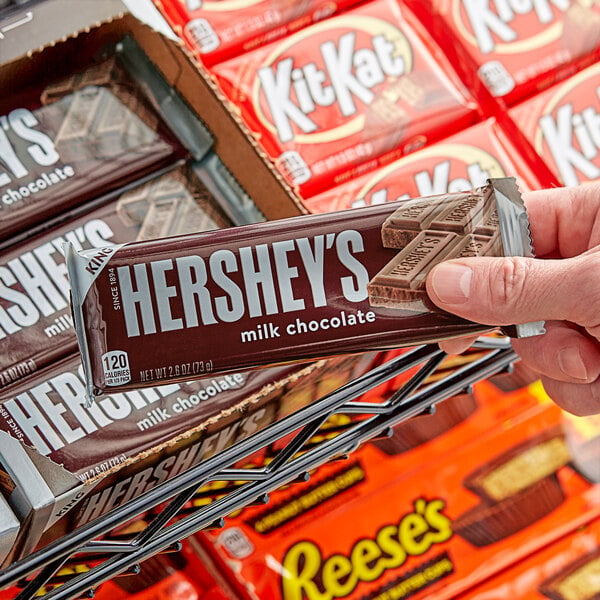
Friday, November 11, 2022

November 11, 1900: The Hershey Bar Is Introduced

November 11, 1900: The Hershey Milk Chocolate Bar -- or, just "The Hershey Bar" for short -- is first sold. Milton Hershey had been making caramel candy, but saw a chocolate-manufacturing machine at the World's Columbia Exposition in Chicago in 1893, started selling chocolate novelties, sold off his caramel company in 1899, and used the profits to invest in the machines to make the Hersey Bar.

It became the most popular candy in the history of the world. It even replaced money among soldiers in World War II. Milton Hershey lived just long enough to see that happen, dying on October 13, 1945, at 88, in the town he founded: Hershey, Pennsylvania, just north of his hometown of Derry, 16 miles east of Harrisburg, and nearly 100 miles west of Philadelphia.

Little tear-shaped candies known as "Hershey's Kisses" debuted in 1907. A bar with almonds was added in 1908, and a "Special Dark" bar made from dark chocolate in 1939.

Hershey introduced Mr. Goodbar in 1925, Hershey's Syrup in 1926, semisweet chocolate chips in 1928, the Krackel bar in 1938. In 1923, Harry Burnett Reese founded a candy company nearby, including Reese's Peanut Butter Cups. In 1963, Hershey bought Reese's out. In 1969, the Peanut Butter Cups became Hershey's best-selling item, and it remains so today. That same year, Hershey bought the rights to make and sell Kit Kat and Rolo.

In 1977, Hershey bought Y&S Candies, makers of Twizzlers. From 1986 to 2001, Hershey owned Luden's cough drops. In 1988, Hershey's made a deal with British candy company Cadbury, to sell their products in the U.S. This meant that they also owned Peter Paul, makers of Almond Joy and Mounds. In 2004, Hershey bought Mauna Loa Macadamia Nuts.

Milton opened Hersheypark, an amusement park, in 1906, and it has grown and expanded since then. An arena was built on the grounds in 1936, and in 1962, it was the site of the game where Wilt Chamberlain scored 100 points for the Philadelphia Warriors against the New York Knicks. It still stands, under the name of the Hersheypark Arena. It was long the home of the Hershey Bears of the American Hockey League, until 2002, when a new arena was built adjacent, now named the Giant Center after a supermarket chain.

*

November 11, 1900 was a Sunday. Baseball was out of season. Basketball barely existed. Hockey was still all-amateur. And no college football games were played. Therefore, there were no scores on this historic day.

Sunday, November 6, 2022

November 6, 1900: McKinley vs. Bryan II

November 6, 1900: President William McKinley is re-elected. As in 1896, he defeats Nebraska Congressman William Jennings Bryan, 51.6 percent of the popular vote to 45.5, and 292 Electoral votes to 156.

Garret Hobart, McKinley's 1st Vice President, had died in office in 1899, so he needed a new one. He chose Governor Theodore Roosevelt of New York, because his svengali, Ohio Republican boss Mark Hanna, though TR was making too much noise as Governor, thinking he'd be silenced as Vice President. He told McKinley he had to live, to keep "that damned cowboy" out of the White House.

Adlai Stevenson, who had been Vice President under Grover Cleveland's 2nd term from 1893 to 1897, had been nominated as Bryan's Vice President. Stevenson's grandson, Adlai Ewing Stevenson II, would be elected Governor of Illinois in 1948, and nominated for President by the Democrats in 1952 and 1956.

McKinley's 1896 promise of "the full dinner pail" to end the depression that began with the Panic of 1893 had worked, and Bryan's 1896 call for "free silver" no longer had the same resonance. Bryan tried to make an issue of the Philippine Campaign, but, as with the Union cause in the Civil War during the election of 1864, the tide turned as the year went on, and people angry at McKinley for the war not going well calmed down. "Imperialism" lost its effectiveness as an argument, and McKinley's popular-vote win over Bryan, and his Electoral Vote win, were each a little bigger than they were in 1896.

In America, the Republican Party's hatred of Communism long predated Senator Joe McCarthy in the early 1950s. In both the 1896 and the 1900 campaign, Roosevelt gave campaign speeches for McKinley, suggesting that Bryan and his populist ideas were comparable to the Paris Commune -- which briefly held power in France in 1871, while TR was 12 years old.

On September 6, 1901, at a World's Fair in Buffalo, McKinley was shot. He died 8 days later, and Theodore Roosevelt was President of the United States. In 1904, Hanna died, and TR won a term of his own.

*

November 6, 1900 was a Tuesday. Baseball season was over. College football was in midweek. Basketball and hockey were still all-amateur. So, no scores on this historic day.

Monday, October 17, 2022

October 18, 1900: The Chronicle-Telegraph Cup Is Awarded

October 18, 1900: The Chronicle-Telegraph Cup is awarded for the first time. As it turned out, it was for the only time.

In 1900, the National League, the only major league in baseball at the time, contracted 4 of its teams out of existence: The Baltimore Orioles, the Cleveland Spiders, the Louisville Colonels and the Washington Senators. Except for Louisville, these cities would soon return to the major leagues.

When the 1900 NL season came to an end, the Brooklyn Superbas had repeated as Champions, winning the Pennant by 4 1/2 games over the Pittsburgh Pirates, 8 over the Philadelphia Phillies, 17 over the Boston Beaneaters, 19 over the St. Louis Cardinals and the Chicago Orphans, 21 1/2 over the Cincinnati Reds, and 23 over the New York Giants.

The Chicago team, formerly known as the White Stockings and, for their youth, as the Colts, had long been led by 1st baseman and manager Adrian Constantine Anson. He was known as "Cap," for "Captain," until he got older, and became known as "Pop." He retired after the 1897 season, and the team became known as the "Orphans," because "they missed their Pop." They were renamed the Chicago Cubs in 1903. The Beaneaters went through a few name changed before becoming the Boston Braves in 1912.

The Superbas were managed by Ned Hanlon, and were named after a popular circus troupe of the era, Hanlon's Superbas. He had managed the Orioles to the NL Pennant in 1894, '95 and '96, and his 1899 and 1900 Superbas had some of the Baltimore players, including Hall-of-Fame outfielders Willie Keeler and Joe Kelley, Hall of Fame shortstop Hughie Jennings, and pitchers William "Brickyard" Kennedy and Jack Dunn.

(Dunn would later return to Baltimore, and manage the minor-league version of the Orioles. He signed a teenage lefthanded pitcher named George Herman Ruth. When he sold Ruth to the Boston Red Sox in 1914, Ruth was explained to his new teammates as "Jack Dunn's baby." This was shortened to "Baby," and then to "Babe.")

But Pittsburgh fans were sure that their team was better than Brooklyn's. A newspaper, the Pittsburgh Chronicle Telegraph, offered to award a trophy to the winner of a best-of-five series between the two teams. And since the series was going to be held entirely at Exposition Park in Allegheny, Pennsylvania, across the Allegheny River from Pittsburgh, the Pirates were favored by gamblers.

(The city was officially "Pittsburg," with no H on the end, until 1911. Even the Pirates' uniforms said, "PITTSBURG," which can be seen on the famous 1909 "T-206" baseball card of their star, Honus Wagner. I'm spelling the name with the H for simplicity's sake. And the bigger city absorbed the smaller city of Allegheny in 1907.) 

The series opened on October 15. The Superbas won Game 1, 5-2, with Joe McGinnity outpitching George "Rube" Waddell. Both men would eventually be elected to the Baseball Hall of Fame, although mainly for what they did later, for different teams. Waddell, perhaps pitching's original "quirky lefthander," was undone by 4 errors by his fielders.

The Pirates' fielding got worse: They made 6 errors, all in the 6th inning, in Game 2, and the Superbas won, 4-2. The Pirates gave hints as to their later heavy-hitting history by winning Game 3, 10-0, and Charles "Deacon" Phillippe pitched a 6-hit shutout, avoiding a sweep.

But that just delayed the inevitable. In Game 4, Sam Leever gave the Pirates both insufficient pitching and insufficient fielding, making an error that led to 3 Brooklyn runs, giving a less-strong McGinnity what he needed to win, 6-1. While Game 1 brought in 18,000 fans, the Pirates' less-than-stellar play in all but Game 3 led to a Game 4 crowd of just 2,335, as the locals decided that it was just an exhibition series, and didn't mean anything.

The Brooklyn team was the champion of the baseball world. It would be 55 years before that would happen again, and 16 years before they even won another National League Pennant. In contrast, the Pirates of Honus Wagner, Fred Clarke and Deacon Phillippe went on to win the next 3 Pennants.

The Chronicle Telegraph awarded the Superbas the Cup. They did not award the Pirates a cup for their Pennant wins the next 3 years, and the Chronicle-Telegraph Cup was never awarded again. At some point, the Baseball Hall of Fame came into possession of the trophy, and they have it on display in their museum.

I've often wondered if baseball history would be different if there was a trophy symbolizing the championship before the current Commissioner's Trophy began to be awarded in 1967, the way hockey had for the Stanley Cup from 1893 onward. But neither the Chronicle-Telegraph Cup, nor the Dauvray Cup that was awarded from 1887 to 1893, nor the Temple Cup that was awarded from 1894 to 1897 managed to stick.

As for the paper: The Morning Chronicle was founded in 1841, and became the Evening Chronicle in 1851. The Pittsburgh Evening Telegraph was founded in 1873. The papers merged in 1884, becoming the Pittsburgh Chronicle Telegraph. While it did not officially have a hyphen in its name, the trophy's name was usually spelled with the hyphen: "Chronicle-Telegraph Cup."

The Pittsburgh Sun and the Pittsburgh Gazette Times were both founded in 1906. In 1927, William Randolph Hearst bought the Sun and the Chronicle Telegraph, merging them into the Pittsburgh Sun-Telegraph, while the Gazette Times merged with the Pittsburgh Post to become the Pittsburgh Post-Gazette, or the PG. In 1960, the Pittsburgh Post-Gazette bought out and phased out the Sun-Telegraph.

In 1992, Pittsburgh newspaper workers went on strike. Scripps-Howard News Service sold the Pittsburgh Press to the Block family, owners the P-G, who folded it and incorporated its assets into the remaining paper. This gave right-wing businessman Richard Mellon Scaife an opening, and expanded his daily paper, based in suburban Greensburg, to become the Pittsburgh Tribune-Review, providing a conservative counterweight to the liberal P-G. In 2018, the P-G shifted its editorial stance from liberal to conservative. In other words, Pittsburgh no longer had a "liberal media."

*

October 18, 1900 was a Thursday. There were no other scores on this day.

Friday, October 14, 2022

October 15, 1900: Symphony Hall Opens In Boston

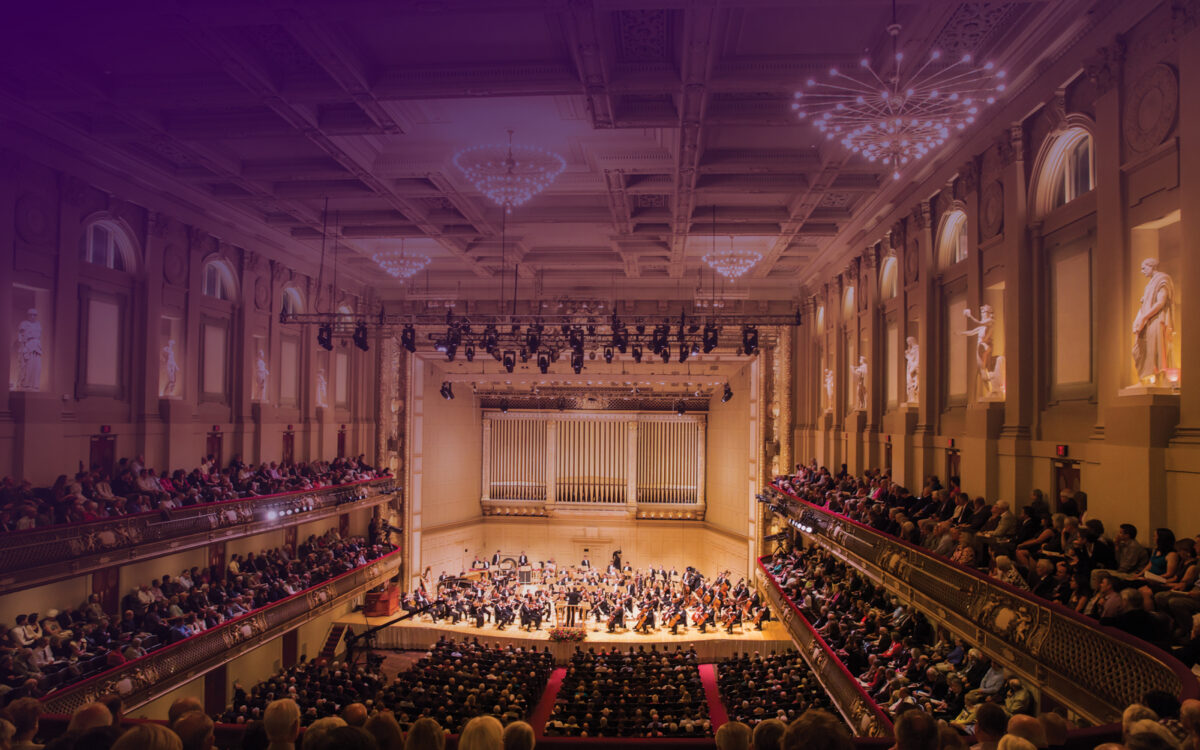
October 15, 1900: Symphony Hall opens, at 301 Massachusetts Avenue in the Back Bay section of Boston. It was designed by American's most prominent architectural firm of the time, McKim, Mead and White. It remains one of America's leading classical concert halls.

It seats 2,625 people, and is located a block east of the New England Conservatory of Music, and half a mile south of Berklee College of Music. It serves as home to the Boston Pops, still one of America's foremost orchestras.
Its organ is a 4,800-pipe Aeolian-Skinner, installed in 1949, and autographed, not by a musical personality, but by famed physician Albert Schweitzer. It was overhauled in 2003, and the entire stage was replaced in 2006.

*

October 15, 1900 was a Monday. Baseball season had just ended. Football was in midweek. And professional basketball and hockey didn't yet exist. So there were no scores on this historic day.

Sunday, October 9, 2022

October 10, 1900: The 1st Red River Showdown

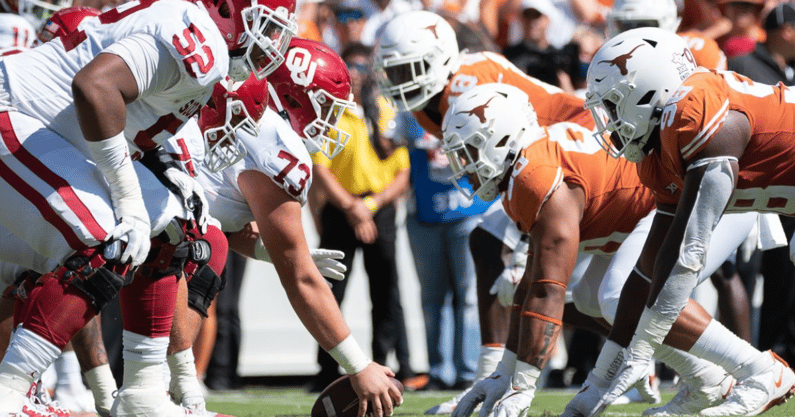
October 10, 1900: The University of Texas and the University of Oklahoma play each other in football for the 1st time, on the Texas campus in Austin. This was 7 years before Oklahoma gained Statehood. Texas wins, 28-2.

The game became an institution, and has several nicknames: The Red River Showdown (the Red River separates the States), the Red River Rivalry, the Red River Classic and the Red River Shootout. It was played in Austin from 1900, 1901, 1902, 1903, 1904, 1907, 1909, 1910, 1911 and 1923; Norman in 1901, 1903 (played twice in those seasons), 1908 and 1922; Oklahoma City in 1905 and 1906; Houston in 1913; and in Dallas every other time, including every season since 1929. A deal has been made to keep the game at the Cotton Bowl through at least 2025.
The fact that it's played in Texas would seem to give the Longhorns an unfair advantage. However, each school gets half the tickets, and it's actually closer to the OU campus in Norman (190 miles) than it is to the UT campus in Austin (197 miles).
As of the 2022 game, Texas' 49-0 win, the biggest blowout in the rivalry's history, Texas leads the rivalry 63-50-5. Oklahoma beat Texas in the 2018 Big 12 Conference Championship Game, which was also played in the Dallas area, but at the Cowboys' new AT&T Stadium in suburban Arlington.
A running joke is that, unlike the Longhorns' rivalries with Texas A&M and Arkansas, and the Sooners' with Oklahoma State and Nebraska, this is a rivalry not for the people but the rich, and that millionaires have bet ranches and oil wells on the outcome, many regretting it.

*

October 10, 1900 was a Wednesday, not a Saturday as is the case for most college football games today. There were other games played that day:

* Columbia and Williams College played to a 0-0 tie at Columbia Field in Manhattan.

* Manhattan College lost to Lafayette College, 11-0 at March Field in Easton, Pennsylvania.

* Princeton beat Penn State, 26-0 at Osborne Field in Princeton, New Jersey.

* Bowdoin College beat Colby College, 68-0 in Brunswick, Maine.

* Harvard beat cross-State Amherst, 18-0 at Soldiers' Field in Boston.

* Yale beat Bates College, 50-0 at Yale Field in New Haven, Connecticut.

* The University of Pennsylvania beat Dickinson College, 35-0 at the original Franklin Field in Philadelphia.

* And Illinois beat Chicago Physicians and Surgeons College, 6-0 at Illinois Field in Champaign, Illinois. CPSC is now part of the University of Illinois system, the University of Illinois College of Medicine.

And there was 1 baseball game played: The Philadelphia Phillies beat the Boston Beaneaters, 5-2 at National League Park in Philadelphia. In 1912, the Boston team of the National League, having gone through several names, settled on "Braves." The following season, the Phillies' ballpark was renamed Baker Bowl.

This was also the birthdate of actress Helen Hayes, known as "The First Lady of the American Theater."

Wednesday, September 7, 2022

September 8, 1900: The Galveston Hurricane

September 8, 1900: A hurricane strikes Galveston, Texas. It turns out to be the worst national disaster in American history.

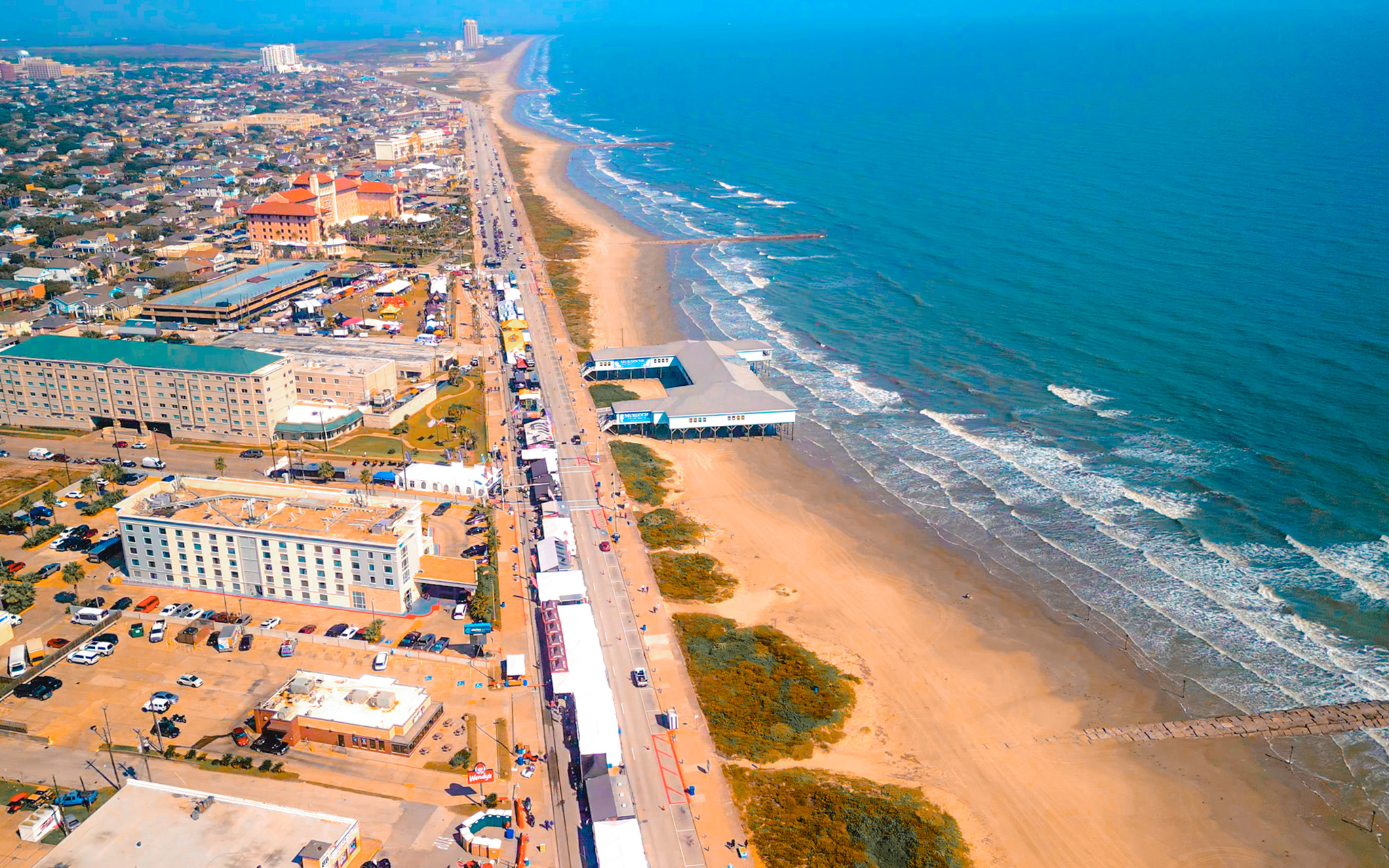
The City of Galveston is on Galveston Island, on the Gulf of Mexico, about 50 miles southeast of Houston. This has made it particularly susceptible to tropical storms. Nevertheless, it is a popular destination for beachgoers, with a large amusement park.

It was even more so in the late 19th Century, a period known as the Golden Era. Some of the largest hotels in the country were there, and Reconstruction even permitted more participation for African-Americans and Mexican-Americans than would be seen in the 20th Century. They even had a successful professional baseball team: The Galveston Sand Crabs won the Texas League Pennant in 1890, 1897 and 1899. At the time, the population was about 37,000.

But on September 4, 1900, a tropical storm was detected, and it headed straight for the Gulf Coast of Texas. The National Weather Service had been established in 1870, and did issue a warning. But hardly anybody took it seriously enough to take the bridges back to the mainland.

By 12:00 Noon on September 8, part of the island was already flooded. By 4:00, wind speeds were up to 125 miles per hour (by definition, a hurricane is a storm with sustained winds of at least 75 MPH), and waves were 15 feet high.

Many of the houses on the island were made of wood, and, with no high ground to protect them, were just plain flattened. At least 6,000 people were killed, making it the deadliest natural disaster in American history. For comparison's sake: In 2005, Hurricane Katrina killed about 1,800; and in 2012, Hurricane Sandy, despite its widespread damage, killed a comparatively low 233.

By 1904, the City of Galveston had completed a permanent concrete seawall along the beachfront. By 1910, the entire city was raised 17 feet behind the wall. It has been hit by hurricanes since, but nothing as deadly as the 1900 hurricane, or Katrina, or Sandy. Today, it is home to about 50,000 people.
It wasn't until 1947 that hurricanes began to be named, using the military phonetic alphabet in use at the time: Able, Baker, Charlie, Dog, and so on. (In 1956, that was changed to Alpha, Bravo, Charlie, Delta, and so on.) In 1955, America adopted the use of girls' names for hurricanes, starting with Alice. In 1979, boys' names began to alternate with girls' names: Ana, Bob, Claudette, David.

*

September 8, 1900 was a Saturday. Most college football teams hadn't yet started their season. Basketball and hockey were still all-amateur. But the entire National League, for the moment the only major league in baseball, was in action:

* The New York Giants lost to the St. Louis Cardinals, 6-5 at the 1890-1911 version of the Polo Grounds.

* A doubleheader was split at the 1898-1912 version of Washington Park in Brooklyn. The Pittsburgh Pirates won the opener, 15-7. The Brooklyn Superbas won the nightcap, 6-5. They were managed by Ned Hanlon, and named for a circus troupe, Hanlon's Superbas. They became the Dodgers in 1911.

* The Cincinnati Reds beat the Boston Beaneaters, 2-1 at the 1894-1914 version of the South End Grounds in Boston. The Beaneaters became the Braves in 1912.

* And the Chicago Orphans beat the Philadelphia Phillies, 5-2 at National League Park (later renamed Baker Bowl) in Philadelphia. Since Cap Anson, also known as "Pop" retired, the Chicago team formerly known as the White Stockings and the Colts were called the Orphans because "they missed their Pop." They became the Cubs in 1903.

Being a Saturday, it was also a matchday in English soccer. Woolwich Arsenal, then playing at the Manor Ground in Plumstead, Southeast London, played Walsall at home, to a 1-1 draw. Walsall are in the West Midlands, outside Birmingham. In 1933, by which point Arsenal were in North London and the best team in England, Walsall famously shocked them in the FA Cup. In 1983, they beat Arsenal in the League Cup.

Sunday, August 14, 2022

August 14, 1900: The Boxer Rebellion

August 14, 1900: The Siege of the International Legations is broken by an "Eight-Nation Alliance." It is a turning point in the Chinese uprising that had become known as the "Boxer Rebellion."

After the Sino-Japanese War of 1895, villagers in North China feared the expansion of foreign spheres of influence, and resented the extension of privileges to Christian missionaries, who used them to shield their followers. In 1898, Northern China experienced several natural disasters, including the Yellow River flooding and droughts, which the uprisers blamed on foreign and Christian influence.

In objection to this influence, the Society of Righteous and Harmonious Fists -- Yìhéquán -- was formed. They were anti-foreign, anti-colonial, and anti-Christian. The use of "fists" in the name led to them being called "Boxers" in English, and to their uprising being called the Boxer Rebellion.

Beginning with the Battle of Senlou Temple on October 18, 1899, the Boxers clashed with troops of the federal government, ruled by the Qing Dynasty, officially led by the Guangxu Emperor, but actually led by his aunt, the Empress Dowager Cixi, widow of the Xianfeng Emperor.

The Boxers spread violence across Shandong and the North China Plain, destroying foreign property such as railroads and attacking or murdering Christian missionaries and Chinese Christians. The events came to a head in June 1900, when Boxer fighters, convinced they were invulnerable to foreign weapons, converged on Beijing with the slogan "Support the Qing government and exterminate the foreigners."

Diplomats, missionaries, soldiers and some Chinese Christians took refuge in the diplomatic Legation Quarter in Peking. China has always called the city "Beijing," meaning "Northern Capital," but this name wasn't widely used in the West until Deng Xiaoping began insisting on it in 1979. Nanjing, meaning "Southern Capital," had previously been called "Nanking" by the West.

An Eight-Nation Alliance of American, Austro-Hungarian, British, French, German, Italian, Japanese and Russian troops moved into China to lift the siege, and on June 17, stormed the Dagu Fort at Tianjin. The Empress Dowager, who had initially been hesitant, now supported the Boxers. On June 21, she issued an Imperial Decree declaring war on the invading powers.

The Alliance, after initially being turned back by the Imperial Chinese military and Boxer militia, brought 20,000 armed troops to China. They defeated the Imperial Army in Tianjin, and arrived in Beijing on August 14, relieving the Siege of the International Legations. Plunder of the capital and the surrounding countryside ensued, along with summary execution of those suspected of being Boxers in retribution.

The Qing dynasty's handling of the Boxer Rebellion further weakened their control over China, and led the dynasty to attempt major governmental reforms in the aftermath. It didn't work, and the Chinese monarchy fell in 1911.

*

August 14, 1900 was a Tuesday. The only major professional sports league in North America at the time was baseball's National League. These games were played:

* The New York Giants were swept in a doubleheader by the Pittsburgh Pirates, 5-0 and 7-1 at Exposition Park in Pittsburgh.

* The Boston Beaneaters swept a doubleheader from the Chicago Orphans, with both games ending 7-6 at West Side Park in Chicago.

The Chicago team, formerly known as the White Stockings and, for their youth, as the Colts, had long been led by 1st baseman and manager Adrian Constantine Anson. He was known as "Cap," for "Captain," until he got older, and became known as "Pop." He retired after the 1897 season, and the team became known as the "Orphans," because "they missed their Pop." They were renamed the Chicago Cubs in 1903. The Beaneaters went through a few name changed before becoming the Boston Braves in 1912.

* The St. Louis Cardinals beat the Philadelphia Phillies, 6-2 at League Park (later renamed Robison Field) in St. Louis.

* And the Brooklyn Superbas and the Cincinnati Reds were rained out at League Park in Cincinnati. The game was made up as part of a doubleheader the next day. Brooklyn won the opener, 3-2. The nightcap was tied, 4-4 after 9 innings, when it was called due to darkness.

The Superbas were managed by Ned Hanlon, and were named after a popular circus troupe of the era, Hanlon's Superbas. They were renamed the Brooklyn Dodgers in 1911. The Reds played in several ballparks on the site of League Park from 1884 to 1970, the last of these being Crosley Field, starting in 1912.

Tuesday, August 9, 2022

August 10, 1900: The 1st Davis Cup

August 10, 1900: The 1st Davis Cup tournament is won, by the hosts, the United States, at the Longwood Cricket Club, outside Boston in Chestnut Hill, Massachusetts.

There were only two teams: The U.S., and Great Britain. It was then known as the International Lawn Tennis Challenge. Although the LCC was, and remains, about a mile south of the campus of Boston College, a Boston-area location was chosen because the challenge was an idea of four tennis players at nearby Harvard University.

Five matches were scheduled, with the winners of three to be declared the winners. Four were to be singles, and one was to be doubles.

The first singles match saw Britain's Ernest Black defeat America's Dwight Davis, the leader of the Harvard team, 6-4 in the 1st set. But Davis, who paid for the entire tournament out of his own pocket, took the next 3, 6-2, 6-4, 6-4, to win. Malcolm Whitman swept the second singles match with Arthur Gore, 6-1, 6-3, 6-2.

The doubles match saw Davis and Holcombe Ward sweep the British pairing of Black and Herbert Roper, 6-4, 6-4, 6-4. The third singles match, between Davis and Gore, was a bit tighter. Davis won the 1st set, 9-7. The 2nd set also turned out to be need tiebreakers, and was at 9-9 when it was declared to be too dark to play further. With the U.S. having won 3 matches already, this match was never completed; and the fourth singles match, between Whitman and Black, was never played.

There was no match in 1901, but the United States retained the trophy in 1902. Britain won the next 4 years. In 1904, Belgium and France accepted invitations. In 1905, "Australasia," a combined team of Australia and New Zealand, competed for the first time. They won it for the first time in 1907, winning 3 straight. There was no challenge to them in 1910, and they won it again in 1911. In 1922, the 2 countries competed as separate teams for the first time.

The tournament was put on hold for World War I, and not held in 1915, '16, '17 or '18. In 1927, France won for the 1st time, and went on to win 6 straight, led by "The Four Musketeers": René Lacoste, Henri Cochet, Jean Borotra and Jacques Brugnon.

Given the distance from Australia to either America or Europe, few non-Oceania performers competed in the Australian Open in the pre-jet era. Lacoste won the French Open 3 times, and Wimbledon and the U.S. Open twice each. He was known as "The Crocodile," and, in 1933, became one of the earliest celebrities to start his own clothing line, with a crocodile as his logo.

Cochet won the French Open 4 times, Wimbledon twice, and the U.S. once. Borotra did compete in the Australian Open, and won it in 1928, and won Wimbledon twice, but only won the French Open once, and lost his only U.S. Open Final. Brugnon never won a major singles title, although he won 10 in doubles, which was his specialty, including in Australia with Borotra.

Dwight Filley Davis was born in St. Louis on July 5, 1879, and his grandfather, Oliver Dwight Filley, and a cousin, Chauncey Ives Filley, both served as that city's Mayor. Only once, at the 1898 U.S. Open, did he reach the Final of what would now be called a Grand Slam event, and he lost it to the aforementioned Malcolm Whitman, one of his Harvard teammates.

In 1899, 1900 and 1901, he and Whitman won doubles at the U.S. Open. In 1900, he received his highest world singles ranking: Number 5. In 1904, when the Olympics were held in his native St. Louis, he only advanced to the 2nd round of singles, and to the quarterfinals of doubles.

From 1911 to 1915, he was St. Louis' Public Parks Commissioner, creating the 1st municipal tennis courts in America. He reached the rank of Colonel in the U.S. Army in World War I, and received the Distinguished Service Cross.

In 1920, he lost the Republican Party's Primary for U.S. Senator from Missouri. President Calvin Coolidge appointed him Assistant Secretary of War in 1923, and he served as full Secretary of War in Coolidge's full term, 1925 to 1929. The next President, Herbert Hoover, appointed him Governor General of the Philippines, serving from 1929 to 1932. He died on November 28, 1945, and was buried at Arlington National Cemetery.
Dwight F. Davis

World War II put the tournament on hold, and it wasn't held in 1940, '41, '42, '43, '44 or '45. When the tournament was resumed in 1946, it was renamed for Dwight Davis: The Davis Cup. It has periodically been expanded, and by 2016, 135 countries competed, making it almost a year-long competition. World Tennis, the common name for the International Tennis Federation (ITF), describe it as "the World Cup of Tennis," but hold it every year, not every 4 years like soccer's World Cup.

Through the 2021 tournament, it has been won by the U.S. 32 times (but none since 2007), Australia 28 (the 1st 6 as "Australasia"), France 10, Great Britain 10 (the 1st 5 as "British Isles"), Sweden 7, Spain 6; 3 each for Russia, Germany (the 1st 2 as "West Germany") and Czechia (the 1st as "Czechoslovakia"); 2 for Croatia; and 1 each for South Africa, Italy, Argentina, Serbia and Switzerland. Reaching the Final, but not winning, have been Romania, India and Belgium 3 times; and once each for Japan, Mexico, Chile and Slovakia (separate from Czechia).

(UPDATE: Canada won their 1st in 2022. Italy won in 2023, '24 and '25. The Netherlands reached their 1st Final in 2024, but lost to Italy.)

The 1st time the U.S. team won with an official Captain was in 1958: Perry Jones. Other winning U.S. Captains have been Bob Kelleher in 1963, Donald Dell in 1968 and '69, Ed Turville in 1970 and '71, Dennis Ralston in 1972, Tony Trabert in 1978 and '79, Arthur Ashe in 1981 and '82, Tom Gorman in 1990 and '92, Tom Gullikson in 1995, and Patrick McEnroe (John's brother) in 2007.

Two players have played on the team winning the Davis Cup 8 times: Roy Emerson of Australia, in 1959, '60, '61, '62, '64, '65, '66 and '67; and Stan Smith of the U.S., in 1968, '69, '70, '71, '72, '78, '79 and '81.

*

August 10, 1900 was a Friday. The only professional sports league active at the moment was baseball's National League, but no games were scheduled. So the tournament that would become the Davis Cup was the only sporting event of consequence on the day. 

Thursday, July 28, 2022

July 29, 1900: King Umberto I of Italy Is Assassinated

July 29, 1900: King Umberto I of Italy is assassinated in Monza. He was 56 years old.

Umberto Ranieri Carlo Emanuele Giovanni Maria Ferdinando Eugenio di Savoia was born on March 14, 1844, in Turin, in what was then the Kingdom of Piedmont-Sardinia. The island of Sardinia is at the geographic opposite end of Italy but "Piedmont" was a name for a part of Italy under control of the royal House of Savoy.

His father was King Victor Emmanuel II, who became King of Italy in 1861. Upon his death on January 9, 1878, the son became King Umberto I, his name translated into English as "Humbert." Because the struggle for the unification of Italy led to a split between the Savoys and Pope Pius IX, it was difficult to find a Catholic bride for the Crown Prince, and, in 1868, he married his first cousin, Margherita Teresa Giovanna. They had 1 son, and, despite Umberto's harsh upbringing and his distaste for his father, he named his son Vittorio Emanuele.

Within 10 months of his accession, he faced his 1st assassination attempt, by a man with a dagger. Umberto saw him in time and, wearing his dress uniform, knocked him away with his sword. The would-be assassin, Giovanni Passannante, was an anarchist, a sign of things to come. He would outlive the King, but spent the rest of his life in a psychiatric institution.

Abroad, the King tried to follow the other European powers in "the Scramble for Africa," by taking Somalia and Eritrea. He also worked with Kaiser Wilhelm I of Germany and Emperor Franz Josef I of Austria to form the Triple Alliance, pledged to go to war with France or Russia if Germany did so against either.

At home, he found it difficult to deal with the rise of organized crime, the Mafia in Sicily and the Camorra in Naples, both desperately poor regions. But even the relatively rich North suffered. There was a bad wheat harvest in 1897, leading to food riots in Milan starting on May 6, 1898. Some of the demonstrators had acquired rifles from the workshops of arms manufacturers.

General Fiorenzo Bava Beccaris ordered his troops to fire on demonstrators, and used the artillery as well. The streets were cleared, and on May 9, the troops used their artillery to breach the walls of a monastery outside Porta Monforte. But instead of protestors, they found a group of beggars who were there to receive alms from the friars.

According to the Italian government, a total of 80 demonstrators and other civilians were killed, as well as two soldiers, while 450 persons were wounded. The opposition in Italy claimed 400 civilian deaths and more than 2,000 wounded. It became known as the Bava Beccaris Massacre, or the Fatti di Maggio (Events of May).

And how did King Umberto punish Bava Beccaris? By appointing him to the Italian Senate, and decorating him with a medal, the Great Official of Savoy Military Order. The anger at this combination of events led to the fall of Prime Minister Antonio Di Rudini nd his government in July, and created a constitutional crisis, strengthening the opposition. The events of May marked a height of popular discontent with government, the military and the monarchy.

On July 29, 1900, King Umberto attended a gymnastics competition at the Royal Villa of Monza. Gaetano Bresci, an anarchist who wanted to avenge the victims of Milan, positioned himself along the road exiting the stadium, to give himself a chance at escape. The excited crowd swept him within 3 meters of the King's car, and blocked his way out. He drew his revolver, and shot Umberto 3 times. The 1st bullet went into the heart, killing the King instantly.

Bresci accepted arrest without resistance, declaring, "I did not kill Umberto. I have killed the King. I killed a principle." His lawyer argued that the idolization of kings had weakened Italy, and that the criminalization of the anarchist movement had directly led to Umberto's assassination. Still, he was tried and convicted in a single day, August 30.

Italy had abolished the death penalty, so he was sentenced to life in prison. He hanged himself in his cell on May 22, 1901. He was 31. The new King, Victor Emmanuel III, called it "perhaps the best thing that could have happened to the unhappy man."

Victor Emmanuel III pretty much let Prime Minister Giovanni Giolitti do as he pleased, which led to some reforms, leading to the industrialization of the backward nation, and universal male suffrage. The King split from the Triple Alliance, and sided with the Triple Entente during World War I.

But the war weakened the country, and there was little that the King could do to stop the rise of Benito Mussolini and his Fascist party. He did not send the Army to stop the March On Rome in 1922. In 1946, after World War II, he abdicated in favor of his son. King Umberto II, "The May King," only reigned for 34 days, as the 1st postwar Italian Parliament abolished the monarchy on June 12, 1946.

Victor Emmanuel III died the next year. Umberto II lived in exile in Portugal until his death in 1983. His son, Vittorio Emanuele, Prince of Naples, is now the head of the House of Savoy, and would be King Victor Emmanuel IV in the incredibly unlikely event that the monarchy were ever to be restored.

Fiorenzo Bava Beccaris lived on until 1924, still a member of the Senate when he died, long enough to be one of the people who talked Victor Emmanuel III into handing power over to Mussolini.

UPDATE: Victor Emmanuel IV died on February 3, 2024. His son, Emanuele Filiberto, born in 1972, is the current would-be King of Italy.

*

July 29, 1900 was a Sunday. As a result, there were no games played in the only professional sports league in North America at the time, baseball's National League.

Monday, July 18, 2022

July 19, 1900: The Paris Métro Opens

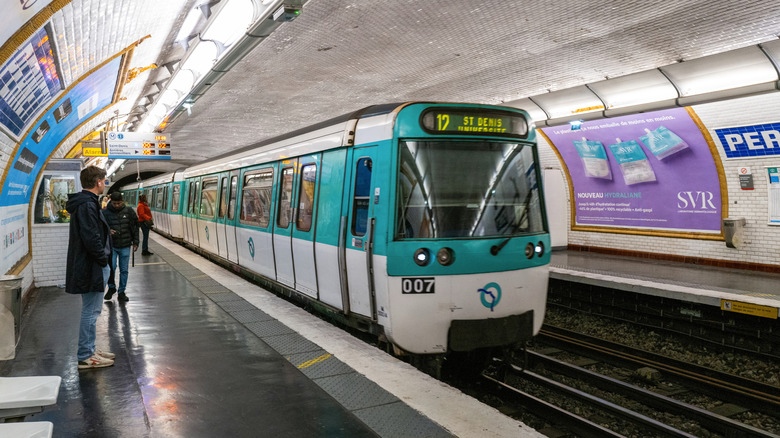
July 19, 1900: The Métropolitain de Paris opens, as the French capital's rapid transit system. Its opening is part of the Exposition Universelle. But, as with the Eiffel Tower in 1889, it not only survived the World's Fair for which it was built, it is still in operation today.

Operated by the Régie autonome des transports parisiens (RATP), and known as the Métro for short, it is known for its uniform architecture, and its historical entrances, influenced by the Art Noveau movement. There are 16 lines, running through 321 stations. It is the 2nd-most-used subway system in Europe -- or 1st, if you don't count Russia, and therefore Moscow.

The Place du Châtelet, bordering the 1st and 4th arrondisements, stands as the system's centerpoint. Oddly, the Eiffel Tower, the city's most popular landmark, is about a 10-minute walk from the nearest station.  

*

July 19, 1900 was a Thursday. The only professional sport in business at the time was baseball, and these 4 games were played in the National League:

* The New York Giants beat the St. Louis Cardinals, 8-3 at the 1891-1911 version of the Polo Grounds. Win Mercer outpitched Cy Young.

* The Brooklyn Superbas, forerunners of the Dodgers, beat the Cincinnati Reds, 12-8 at the 2nd Washington Park in Brooklyn.

* The Boston Beaneaters beat the Chicago Orphans, 5-1 at the 3rd South End Grounds in Boston. The Chicago team, formerly known as the White Stockings and, for their youth, as the Colts, had long been led by 1st baseman and manager Adrian Constantine Anson. He was known as "Cap," for "Captain," until he got older, and became known as "Pop." He retired after the 1897 season, and the team became known as the "Orphans," because "they missed their Pop." They were renamed the Chicago Cubs in 1903. The Beaneaters went through a few name changed before becoming the Boston Braves in 1912.

* And the Philadelphia Phillies beat the Pittsburgh Pirates, 4-3 at National League Park (later renamed Baker Bowl) in Philadelphia.

Thursday, June 30, 2022

June 30, 1900: The Hoboken Docks Fire

June 30, 1900: A fire breaks out on piers owned by Norddeutscher Lloyd (NDL), a German shipping company, on the Hudson River in Hoboken, New Jersey. It kills at least 326 people.

The fire began when cotton bales stored on NDL's southernmost wharf caught fire, and winds carried the flames to nearby barrels of volatile liquids, such as turpentine and oil, which exploded in rapid succession. It burned NDL's Hoboken piers to the waterline, consumed or gutted nearby warehouses, gutted 3 of NDL's major transatlantic liners, and damaged or destroyed nearly two dozen smaller craft. Most of the victims were seamen and other workers, but included women visiting one of the ships.

The piers were at the foot of 3rd and 4th Streets, across the Hudson from West 12th Street in Manhattan, New York City. Pier C Park is on the site today. This is 5 blocks north of where the Hoboken Terminal of the Erie-Lackawanna Railroad was built in 1907, now serving New Jersey Transit and the Port Authority Trans-Hudson (PATH) system. 

NDL survived World War I, and barely survived World War II, with one remaining ship. It rebuilt, restored its place in international commerce, and merged with the Hamburg America Line (HAPAG) in 1970, forming Hapag-Lloyd AG.

*

June 30, 1900 was a Saturday. These games were played in baseball's National League:

* The New York Giants lost to the St. Louis Cardinals, 8-1 at League Park (later renamed Robison Field) in St. Louis.

* The Brooklyn Superbas lost to the Chicago Orphans, 8-1 at West Side Park in Chicago. The Superbas were managed by Ned Hanlon, and were named after a popular circus troupe of the era, Hanlon's Superbas. They were renamed the Brooklyn Dodgers in 1911. The Reds played in several ballparks on the site of League Park from 1884 to 1970, the last of these being Crosley Field, starting in 1912.

The Chicago team, formerly known as the White Stockings and, for their youth, as the Colts, had long been led by 1st baseman and manager Adrian Constantine Anson. He was known as "Cap," for "Captain," until he got older, and became known as "Pop." He retired after the 1897 season, and the team became known as the "Orphans," because "they missed their Pop." They were renamed the Chicago Cubs in 1903.

* The Pittsburgh Pirates beat the Philadelphia Phillies, 5-3 at Exposition Park in Pittsburgh.

* And the Cincinnati Reds beat the Boston Beaneaters, 4-0 at League Park in Cincinnati. The Beaneaters went through a few name changed before becoming the Boston Braves in 1912.

Monday, June 20, 2022

June 21, 1900: Theodore Roosevelt: Political Pawn

A 1900 McKinley-Roosevelt campaign button

June 21, 1900: The Republican National Convention concludes at the Exposition Auditorium, which later became part of the Philadelphia Civic Center. Surprising no one, the Republican Party nominates the incumbent President, William McKinley, for a 2nd term.

But Vice President Garret Hobart had died the year before, leaving the office vacant. So McKinley needed a new running mate.

One of McKinley's nominating speeches was given by Theodore Roosevelt. The son of a wealthy New York glass importer and Republican fundraiser (also named Theodore Roosevelt), he had served as the Minority Leader of the State Assembly, , the President of the New York City Board of Police Commissioners, and the Assistant Secretary of the Navy, before resigning that post and enlisting in the U.S. Army for the Spanish-American War. His heroics at the Battle of San Juan Hill in Cuba in 1898 got him elected Governor of New York 4 months later.

As Governor, he insisted upon the public responsibility of large corporations, publicity as a first remedy for trusts, regulation of railroad rates, mediation of the conflict of capital and labor, conservation of natural resources and protection of the poor. The people of the Empire State loved this.

One person in the State who did not love it was former U.S. Senator Thomas Platt, considered the Republican Party's "boss" in the State. The kind of person who would be easily recognized as a Republican today, he wanted corporations to be able to do as they pleased. He wanted Roosevelt out as Governor, but he would have been easily re-elected in 1900. (The term of the Governor of New York was increased from 2 to 4 years in 1937, in time for the 1938 election.) Platt knew that backing anyone for a Primary campaign against Roosevelt would be futile.

So he began a newspaper campaign in favor of Roosevelt's nomination for the vacant Vice Presidency. Matthew Quay, the Republican boss of Pennsylvania, who had claimed to have stolen the 1888 Presidential election for Benjamin Harrison, and had, like Platt, been an early supporter of McKinley for the 1896 nomination, agreed to support Roosevelt for the nomination. McKinley himself raised no objection.

Who did? Two very important men: Roosevelt himself, who didn't really want the job; and McKinley's campaign manager, the Republican boss of Ohio, Senator Mark Hanna. The idea was that, as Vice President, Roosevelt couldn't do any of his reform stuff. But Hanna knew that the Vice President could become President, and Hanna didn't want Roosevelt to do for the country what he'd been doing for the State of New York.

Hanna told anyone who would listen, "Don't any of you realize that there's only one life between that madman and the Presidency? Platt and Quay are no better than idiots! What harm can he do as Governor of New York compared to the damage he will do as President if McKinley should die?"

But Quay rounded up enough Delegates that Roosevelt was easily nominated. One of the most energetic and self-assured politicians America has ever known was maneuvered out of a job he liked, and placed in the role of a political pawn. Nevertheless, he campaigned hard for McKinley's re-election. After leaving the Convention, Hanna wrote to McKinley, "Your duty to the country is to live for four years from next March."

On November 6, 1900, the McKinley-Roosevelt ticket was elected over the Democratic ticket of William Jennings Bryan, whom McKinley had also defeated in 1896, and Adlai Stevenson, grandson of a man who would twice be the Democratic nominee for President, but lose badly both times.

On March 4, 1901, William McKinley was sworn in for a 2nd term as President, and Theodore Roosevelt was sworn in as Vice President. On September 6, 1901, Mark Hanna's worst fear was realized, as McKinley was shot. On September 14, McKinley died, and Roosevelt was sworn in as the 26th President of the United States. Hanna said, “Now we’ve got that damned cowboy as President!”

Sure enough, TR began enacting progressive policies. That said, he and Hanna got along fairly well. McKinley loyalists hoped that Hanna would oppose Roosevelt for the Republican nomination for a full term as President. But, as it turned out, Hanna didn't live through the full 2nd McKinley term, either: His health began to fail in 1903, and he died of typhoid fever on February 15, 1904, at the age of 66.

*

June 21, 1900 was a Thursday. There were 2 baseball games, both in what was then the only available major league, the National League. The Boston Beaneaters, forerunners of the Braves, beat the New York Giants, 5-1 at the Polo Grounds. And the Brooklyn Superbas, forerunners of the Dodgers, beat the Philadelphia Phillies, 8-6 at National League Park (later renamed Baker Bowl) in Philadelphia.

Saturday, June 4, 2022

June 5, 1900: The Death of Stephen Crane

June 5, 1900: Stephen Crane died of tuberculosis. Already America's top war correspondent, and one of its top authors, he was only 28 years old.

Stephen Crane (no middle name) was born on November 1, 1871 in Newark, New Jersey. He published his 1st novel in 1893: Maggie: A Girl of the Streets. Its themes of poverty, including alcoholism and prostitution, made it incredibly controversial for its time. In 1895, despite having no military experience -- indeed, he was born 6 years after the end of the war depicted in it, the American Civil War -- he published The Red Badge of Courage, and made himself a legend of American letters.

He was soon hired as a foreign correspondent for William Randolph Hearst's New York Journal, covering the Greco-Turkish War of 1897, the Spanish-American War of 1898, and the Boer War. But he developed tuberculosis, and died from it at the world-famous health spa in Badenweiler, Germany on June 5, 1900, only 28 years old.

*

June 5, 1900 was a Tuesday. This was also the day that Carrie Nation claimed to have seen a vision telling her to fight for the prohibition of alcohol. I have a separate entry for that event.

The only major sports league in operation at the time was baseball's National League. There were 4 games played:

* The New York Giants lost to the Cincinnati Reds, 14-8 at the 1890-1911 version of the Polo Grounds.

* The Brooklyn Superbas beat the Chicago Orphans, 5-4 at Washington Park in Brooklyn. Since Cap Anson, also known as "Pop" retired, the Chicago team formerly known as the White Stockings and the Colts were called the Orphans because "they missed their Pop." They became the Cubs in 1903. The Brooklyn team was named the Superbas because their manager was Ned Hanlon, and there was then a famous circus troupe named Hanlon's Superbas. They became the Dodgers in 1911.

* The Boston Beaneaters beat the St. Louis Cardinals, 15-11 at the 1894-1914 version of the South End Grounds in Boston.

* And the Philadelphia Phillies beat the Pittsburgh Pirates, 6-5 at National League Park (later renamed Baker Bowl) in Philadelphia.

June 5, 1900: Carrie Nation's Vision

June 5, 1900: This was the day that Carrie Nation claimed to have seen a vision telling her to fight for the prohibition of alcohol.

Caroline Amelia Moore was born on November 25, 1846 in Garrard County, Kentucky. Her father was a slaveholder. Her mother was institutionalized for mental illness, and the family moved around a lot. During the American Civil War, they were living in Missouri, and Carrie nursed wounded Confederate soldiers.

In 1867, she married a doctor, Charles Gloyd. But he was an alcoholic, and she left him just before the birth of their daughter, Charlien. He died the next year. Calling herself Carrie Gloyd, she became a teacher in Missouri. In 1874, she married the Rev. David A. Nation, who was a minister, an attorney, and a journalist. He was 19 years older than she was, and had been widowed, with a daughter, Lola.

They bought a cotton plantation outside Brazoria, Texas. They moved to Brazoria, where David practiced law. In 1880, they moved to East Columbia, Texas, to operate a hotel. Then David operated a saddle shop, and then they moved to Richmond, Texas, to operate another hotel. All of these ventures failed.

They moved to Kiowa, Kansas, where Carrie began working for the Women's Christian Temperance Union (WCTU). She described what happened to her on June 5, 1900, when she was 53 years old, as follows:

The next morning I was awakened by a voice which seemed to me speaking in my heart, these words, "Go to Kiowa," and my hands were lifted and thrown down and the words, "I'll stand by you." The words, "Go to Kiowa," were spoken in a murmuring, musical tone, low and soft, but "I'll stand by you," was very clear, positive and emphatic. I was impressed with a great inspiration, the interpretation was very plain, it was this: "Take something in your hands, and throw at these places in Kiowa and smash them."

  • She gathered several rocks, calling them "smashers," and proceeded to Dobson's Saloon in Kiowa on June 7. Announcing "Men, I have come to save you from a drunkard's fate," she began to destroy the saloon's stock with her cache of rocks. After she similarly destroyed two other saloons in Kiowa, a tornado hit eastern Kansas, which Nation took as divine approval of her actions.

Carrie Nation continued her saloon destruction, her fame spreading through her growing arrest record. After she led a raid in Wichita, Kansas, David joked that she should use a hatchet next time for maximum damage. Nation replied, "That is the most sensible thing you have said since I married you." And yet, the couple divorced in 1901, having had no children.

Alone or accompanied by hymn-singing women, Nation would march into a bar, and sing and pray while smashing bar fixtures and stock with a hatchet. Between 1900 and 1910, she was arrested at least 32 times for her "hatchetations," as she came to call them. Nation paid her jail fines from lecture-tour fees and sales of stick, pins in the shape of hatchets. The souvenirs were provided by a pharmacist from Topeka, Kansas' State capital. She also conducted women's rights marches in Topeka.

Her anti-alcohol activities became widely known, with the slogan "All Nations Welcome But Carrie" becoming a bar-room staple. She published The Smasher's Mail, a biweekly newsletter, and The Hatchet, a newspaper.

Later in life, she exploited her name by appearing in vaudeville, and traveling to Britain where she appeared in their equivalent, the music halls. A proud woman more given to sermonizing than entertaining, she found these venues uninspiring for her proselytizing. Seeking profits elsewhere, Nation sold photographs of herself, collected lecture fees, and marketed miniature souvenir hatchets. She eventually moved to Eureka Springs, Arkansas, and founded the home known as "Hatchet Hall."

She gave her final speech on January 14, 1911, collapsing mid-way through. She fell into a coma, and was taken to Evergreen Place Hospital in Leavenworth, Kansas, where she eventually died on June 9, 1911. She was 64 years old, but seemed much older. She was buried in Belton Cemetery in Belton, Missouri, outside Kansas City. The WCTU later erected a stone inscribed "Faithful to the Cause of Prohibition, She Hath Done What She Could" and the name "Carry A. Nation."

She did not live to see the ratification of the 18th Amendment, establishing Prohibition, in 1919; or that of the 21st Amendment, repealing the 18th, in 1933. But her name, without the middle initial, lived on, as a symbol of the movement against alcohol. But she also became a watchword for someone who refused to mind their own business and let people have a good time.

Carrie's daughter married and had 5 children. Charlien Gloyd McNabb lived until 1929.

There is an interesting postscript to her story: Her birthplace of Garrard County, Kentucky remains a dry County after all these years.

UPDATE: On November 7, 2023, voters in Garrard County voted to allow the sale of alcohol. I wonder if anyone went to Carrie's grave in Belton, to see if she was turning over in it.

*

June 5, 1900 was a Tuesday. This was also the day that author Stephen Crane died of tuberculosis at the age of 28. I have a separate entry for that event.

The only major sports league in operation at the time was baseball's National League. There were 4 games played:

* The New York Giants lost to the Cincinnati Reds, 14-8 at the 1890-1911 version of the Polo Grounds.

* The Brooklyn Superbas beat the Chicago Orphans, 5-4 at Washington Park in Brooklyn. Since Cap Anson, also known as "Pop" retired, the Chicago team formerly known as the White Stockings and the Colts were called the Orphans because "they missed their Pop." They became the Cubs in 1903. The Brooklyn team was named the Superbas because their manager was Ned Hanlon, and there was then a famous circus troupe named Hanlon's Superbas. They became the Dodgers in 1911.

* The Boston Beaneaters beat the St. Louis Cardinals, 15-11 at the 1894-1914 version of the South End Grounds in Boston.

* And the Philadelphia Phillies beat the Pittsburgh Pirates, 6-5 at National League Park (later renamed Baker Bowl) in Philadelphia.

December 31, 1999 & January 1, 2000: The Millennium

December 31, 1999:  The Millennium arrives. The people of planet Earth survived. At a terrible cost. But we hadn't destroyed ourselves. ...