Showing posts with label south korea. Show all posts

Wednesday, October 26, 2022

October 26, 1979: The Assassination of Park Chung Hee

October 26, 1979: President Park Chung Hee of the Republic of Korea (a.k.a. "South Korea") is assassinated, shot by Kim Jae-gyu, director of the KCIA, the country's intelligence service, after a banquet at an alleged safehouse in the capital of Seoul. He was a few days short of turning 62.

Kim claimed that Park was an obstacle to democracy, and that his act was one of patriotism. He had a point: Park had been President since 1962, and since the nation was established in 1948 under Syngman Rhee, it had, essentially, been a dictatorship. Nevertheless, for his crime, Kim was hanged 7 months later.

Within a few years, South Korea would be a thriving democracy. In 2013, Park's daughter, Park Geun-hye, was elected President, the 1st popularly elected head of state in East Asia. But she was impeached for corruption, and was removed from office on March 10, 2017.

*

October 26, 1979 was a Friday. Baseball season had ended 9 days earlier, when the Pittsburgh Pirates won the World Series over the Baltimore Orioles. Football was in midweek. There were 7 games played in the NBA:

* The New York Knicks lost to the Philadelphia 76ers, 127-116 at The Spectrum in Philadelphia.

* The New Jersey Nets lost to the Atlanta Hawks, 94-90 at the Rutgers Athletic Center (now the Jersey Mike's Arena) in Piscataway, New Jersey.

* The San Antonio Spurs beat the Detroit Pistons, 129-113 at the Silverdome in the Detroit suburb of Pontiac, Michigan. George Gervin scored 41 points.

* The Indiana Pacers beat the Washington Bullets, 118-108 at the Market Square Arena in Indianapolis.

* The Los Angeles Lakers beat the Kansas City Kings, 116-104 at The Forum outside Los Angeles in Inglewood, California. Otis Birdsong scored 35 in defeat for the Kings.

* The Portland Trail Blazers beat the Chicago Bulls, 95-93 at the Portland Memorial Coliseum.

* And the Phoenix Suns beat the Seattle SuperSonics, 92-86 at the Seattle Center Coliseum.

And there were 4 games played in the NHL:

* The New York Islanders beat the Hartford Whalers, 2-1 at the Springfield Civic Center (now the MassMutual Center) in Springfield, Massachusetts.

* The Atlanta Flames beat the Edmonton Oilers, 7-3 at The Omni in Atlanta.

* The Winnipeg Jets beat the Boston Bruins, 3-2 at the Winnipeg Arena.

* And the Toronto Maple Leafs and the Colorado Rockies played to a tie, 2-2 at the McNichols Arena in Denver.

Wednesday, September 21, 2022

September 21, 1953: Operation Moolah

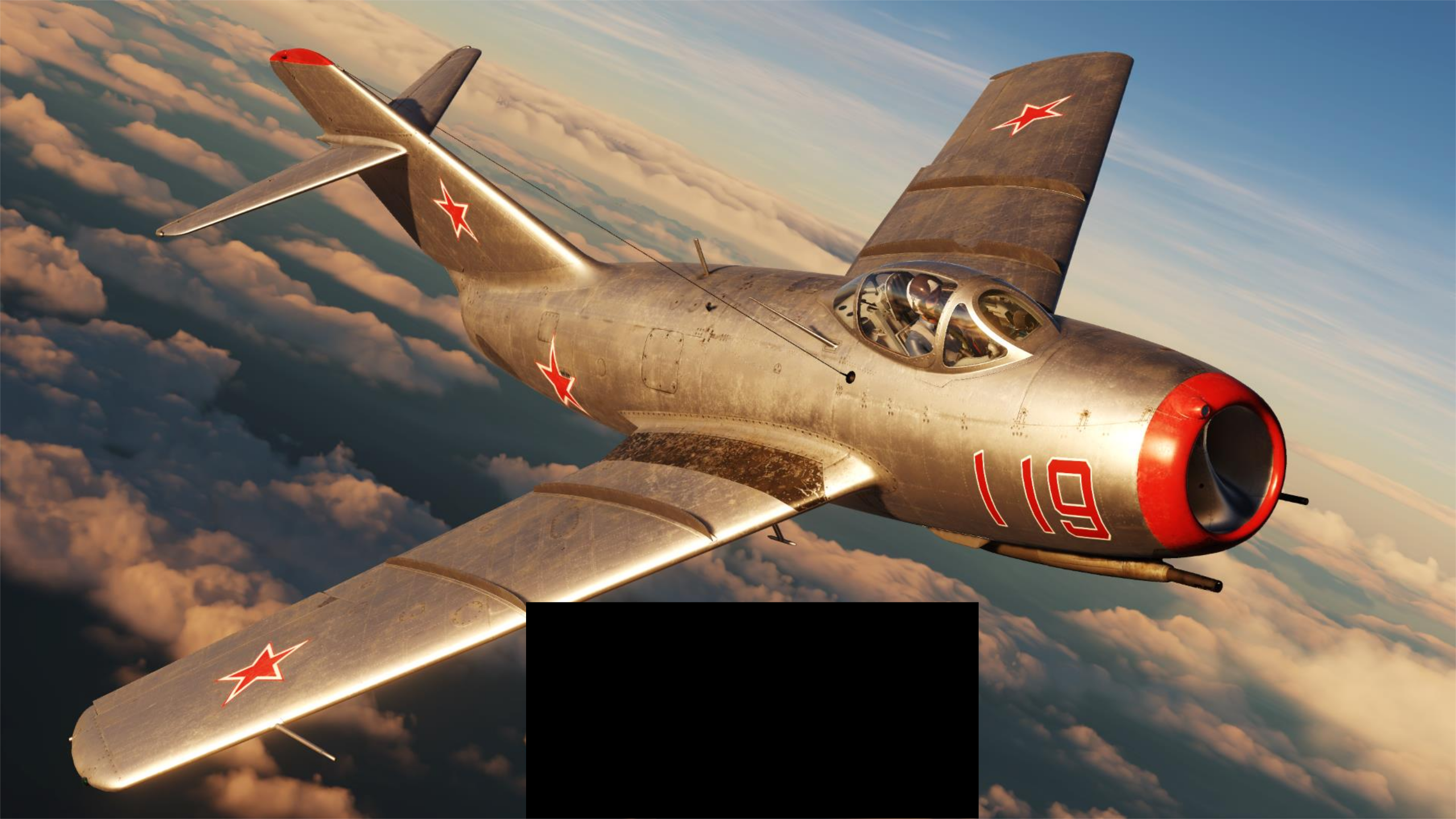
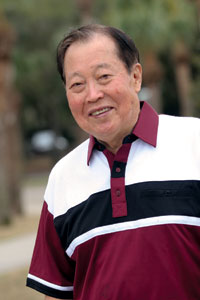
September 21, 1953: No Kum-Sok, a pilot in North Korea's air force, defects, flying his Soviet-made MiG-15 jet into South Korea.

The American government offered him $100,000. He turned the money down. All he wanted was political asylum, to no longer have to live under Communism. He got his wish.

The United States Department of Defense launched "Operation Moolah" on April 27, 1953. The Pentagon offered $50,000 -- double that for the first one to do so -- to any pilot bringing them a Soviet-made MiG-15, fighter jet, because U.S. Air Force pilots, forced to engage in "dogfights" with them, said it was a better plane than their main jet, the F-86 Sabre. (That $50,000 sum works out to about $544,000 in 2022 money.)
The "MiG" was named for its designers:
Artem Mikoyan and Mikhail Gurevich.
Operation Moolah turned out to be something of a damp squib: The Korean War ended in an armistice just 3 months after the operation began, with no takers. What did happen was that MiGs were grounded for several days right after the public bribe campaign began. And when the MiGs started flying again, Americans began blowing them out of the sky at an unprecedented rate.

Two months after the war ended, on September 21, No Kum-Sok showed up in his MiG at Kimpo Air Base, outside the South Korean capital of Seoul, having no knowledge of the financial reward for doing so. He said he'd heard rumors that his loyalty was being investigated, and in a Communist country like North Korea, that is a bad thing. So he flew his MiG-15 and flew the coop, defecting.

Chuck Yeager, the 1st man to break the sound barrier in a plane, flew the captured MiG, and said it was "the most demanding situation I ever faced." The North's aerial victories were not due to the plane being amazing, he said, but that their pilots were well trained in dogfight tactics.

No immigrated to the United States, changed his name to Kenneth Rowe, went to school, and worked as an aeronautical engineer for companies such as Boeing, Grumman, Pan Am, and Lockheed. As of September 21, 2022, he is still alive.
(UPDATE: He died on December 26, 2022, in Daytona Beach, Florida, at the age of 90.)

*

September 21, 1953 was a Monday. Arie Luijendijk, the Dutch auto racer known as "The Flying Dutchman," winner of 2 Indianapolis 500s, was born on that day. 

There was 1 baseball game played: The St. Louis Cardinals beat their arch-rivals, the Chicago Cubs, 4-0 at the first ballpark to be named Busch Stadium, which, until that season, had been the last ballpark to be named Sportsman's Park. Harvey Haddix pitched a 4-hit shutout. Stan Musial went 1-for-4. Rookie Ernie Banks went 1-for-3.

Thursday, September 15, 2022

September 15, 1950: The Incheon Landing

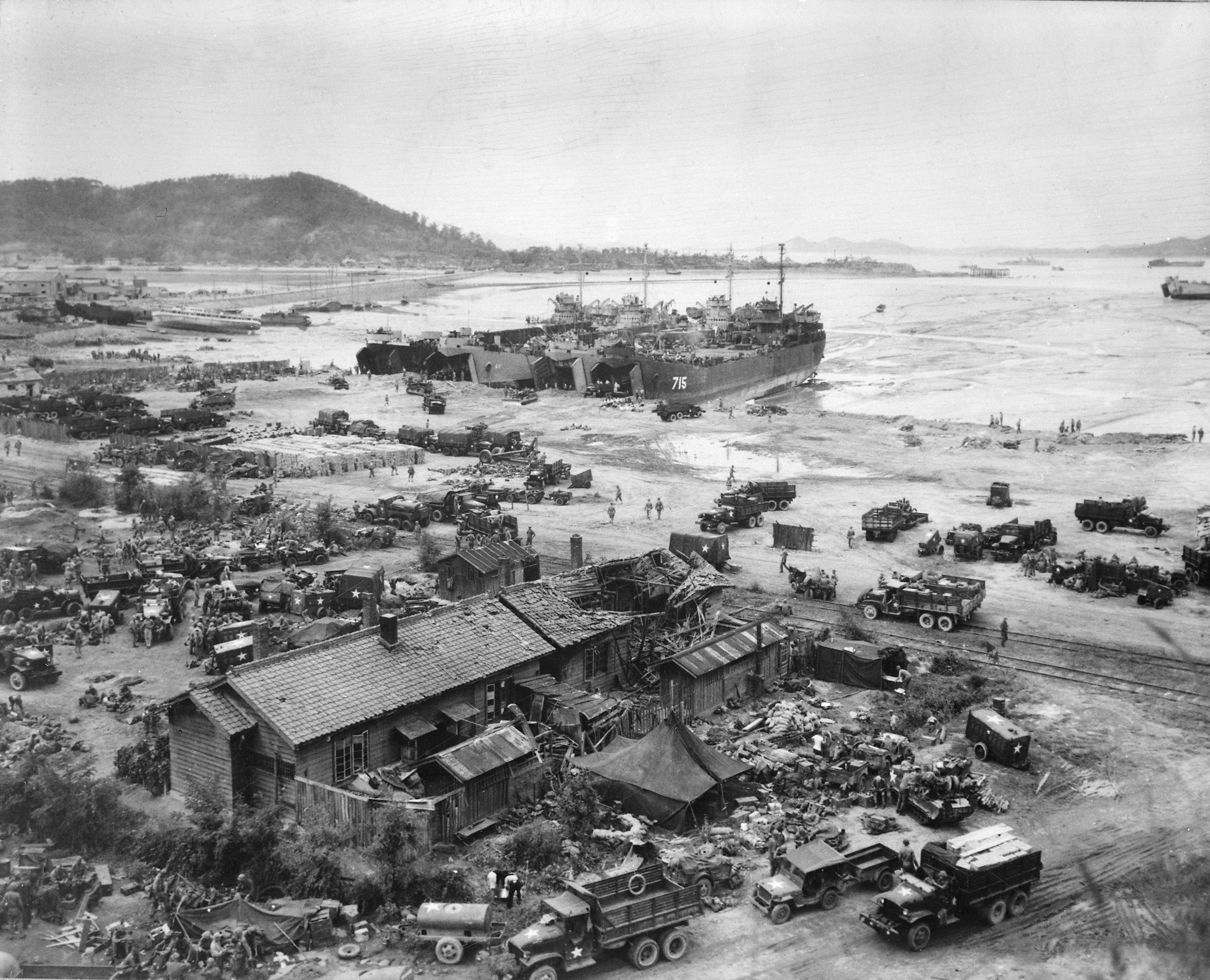
September 15, 1950: General of the Army Douglas MacArthur, supreme commander of United Nations forces, launches what amounts to the Korean War's "D-Day," an amphibious landing of 40,000 infantry from 230 ships.

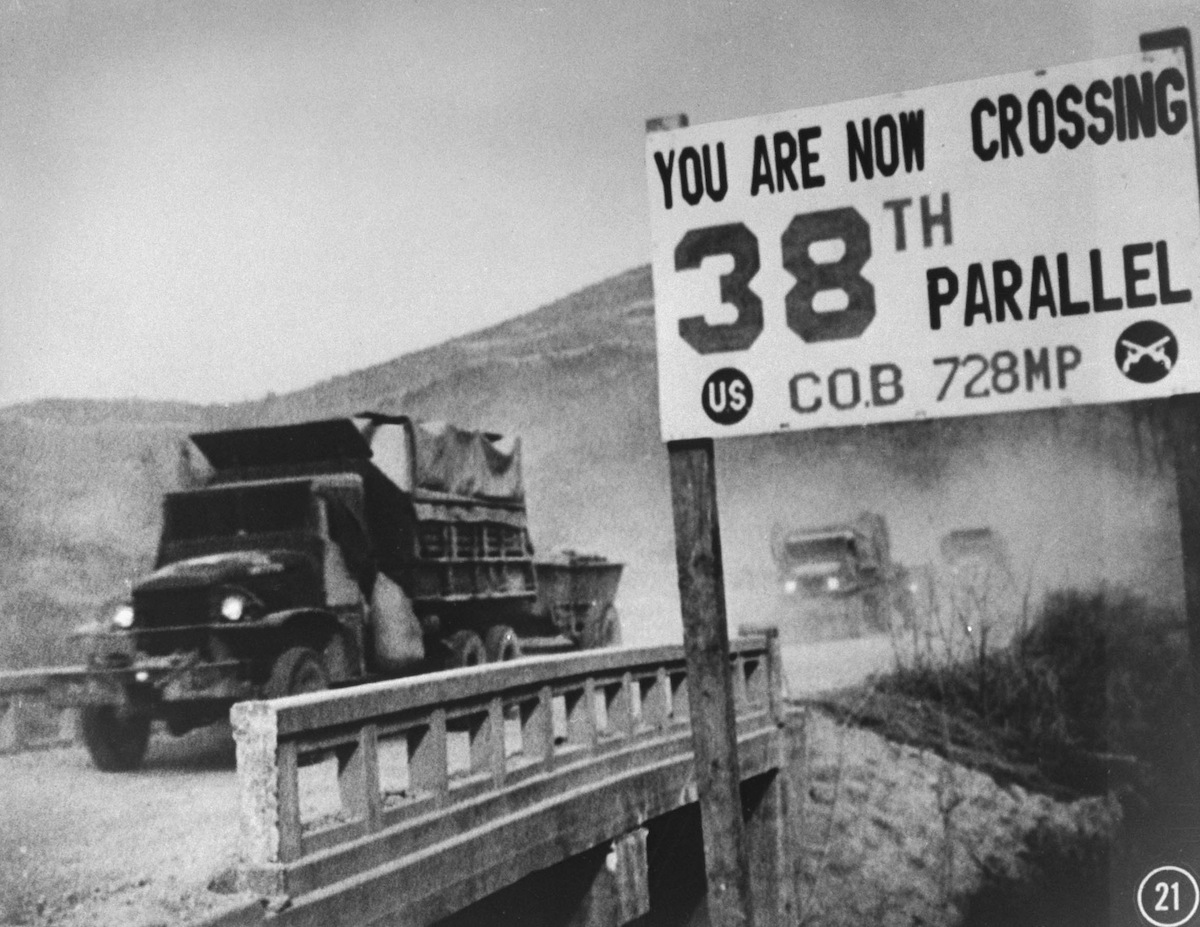
On June 25, troops of the Democratic People's Republic of Korea (a.k.a. North Korea), a Communist nation, and by no means democratic or a republic -- crossed the parallel of 38th degrees north latitude, and invaded the Republic of Korea (a.k.a. South Korea), which was capitalist, but hardly free.

Two days later, President Harry S Truman announced that American and other NATO forces would come to the aid of South Korea. The next day, North Korean troops took the South Korean capital of Seoul. But it was not just NATO troops, but 15 United Nations countries that came to the South's aid.

At first, it looked like that aid might be too late. On August 5, North Korea had South Korean troops backed up into the southeastern corner of the peninsula, centered on the city of Pusan (now usually written in English as "Busan"). They held what became known as the Pusan Perimeter. It was a siege, but the ROK troops were holding on.

There would be no evacuation, the way the Nationalist Chinese had gone to Taiwan the previous year; the American troops had done in the Philippines in 1942, by escaping to Australia; or the British troops had done at Dunkirk in 1940 by retreating to their home island.

It wasn't just a matter of pride: The South Koreans had no place to go. American troops could have evacuated them to the nearest friendly country, but that would be Japan, where "friendly" was a bit of a stretch: That nation had occupied them from 1910 (and had effectively ruled them from 1876) until the end of World War II in 1945 -- just 5 years earlier. And Japan was still in the rebuilding process: Taking on millions of Korean refugees was not part of the plan of their military governor.

That was MacArthur, the 70-year-old 5-star General who had been commander of Allied forces in the Pacific. In spite of his age, there was no one more qualified to lead the mission than "Big Mac." As with D-Day, the invasion of Normandy in France in 1944, the U.S. had a deception operation underway, to convince the enemy that the invasion would be elsewhere -- in this case, at Kunsan, 105 miles to the south. The Communist spy network bought it.

After 5 days of bombing to provide air support, MacArthur, invading with his troops as he had at Leyte Gulf in the Philippines in 1944, gave the green light on September 15. The invasion began at 6:30 AM, local time. As with Normandy, there were invasion points given different code names: Green Beach, Red Beach and Blue Beach. The U.N. lost 224 troops; the North Koreans, 1,350.
MacArthur famously didn't like the photo
of him wading ashore in the Philippines in 1944.
I'm thinking he liked this one much more.

Within 2 days, U.S. forces were able to take Kimpo, Seoul's international airport. Within 2 more, they were able to use it to bring more troops in. By September 22, they had over 53,000 men on the ground. By September 25, Red troops had abandoned the Pusan Perimeter, and were attempting to defend their ill-gotten gains at Seoul. On September 28, they had to abandon that.

In a span of 2 weeks, MacArthur had led, for all intents and purposes, the liberation of South Korea. He wanted more: He wanted to kick the Commies completely off the peninsula. He nearly did it: By November 26, 10 weeks after the Incheon landing, he had them backed up to the Yalu River, which separates the Korean peninsula from mainland China (and, technically, makes Korea not a peninsula but an island).

China then intervened on behalf of its Communist "little brother." Again, U.N. troops were pushed below the 38th parallel. By April 1951, they had gained back most of South Korea's territory, and a line cutting southwest-to-northeast across the peninsula became like the trench warfare of World War I, 35 years earlier.

At the end of the calendar year 1950, Time magazine named its first collective "Men of the Year": "The American Fighting Man." In 2000, on the 50th Anniversary of the war, it published a special issue on the year, calling it "the fulcrum point of the 20th Century," not just the midpoint.

MacArthur wanted to use tactical nuclear weapons against China. Truman told him no, because that would get the Soviet Union involved, and it would be World War III. MacArthur let his objections be known to the Republican leader of the House of Representatives, Joe Martin of Massachusetts. Martin leaked this to the press. Truman found out, and fired MacArthur for subordination, replacing him with 4-star General Matthew Ridgeway, and later replacing him with 4-star General Mark Clark.

The war became a stalemate, lasting 3 years. About 327,000 Americans served in the conflict, and 36,574 were killed, with another 103,000 wounded but surviving.

It's not clear how many of those wounded, but surviving, were treated at Mobile Army Surgical Hospitals, or MASHes, which, due to the 1972-83 CBS TV series M*A*S*H, became popular culture's most familiar story of the Korean War. But, by being close to the front, they were able to save soldiers who surely would have died in the conditions of World War II. But that, and the addition of antibiotics and sulfa in World War II, saved a lot of lives that would have been lost in the conditions of World War I.

Today, Incheon is home to just under 3 million people, making it the 3rd-largest city in South Korea, behind Seoul, with 9.4 million; and Busan, with 3.3 million. Pyongyang, the North Korean capital, has 3.1 million.

*

September 15, 1950 was a Friday. These baseball games were played:

* The New York Yankees lost to the Detroit Tigers, 9-7 at Briggs Stadium (later Tiger Stadium) in Detroit. Johnny Mize hit 3 home runs and had 6 RBIs, but it wasn't enough. Tommy Byrne got knocked out of the box in the 2nd inning, and Allie Reynolds ended up the losing pitcher in relief. The winning pitcher, in relief? Hank Borowy, a former Yankee, from nearby Bloomfield, New Jersey. (Not to be confused with the Detroit suburb of Bloomfield Hills, Michigan.)

* The New York Giants lost to the Chicago Cubs, 4-3 at the Polo Grounds. Hal Jeffcoat singled home Johnny Klippstein with the winning run in the top of the 10th inning.

* The Brooklyn Dodgers lost to the St. Louis Cardinals, 6-2 at Ebbets Field. At first, it looked like the Dodgers had caught a break: Cloyd Boyer, older brother of Ken and Clete, was scheduled to start, but took the mound, and left during his warmups. But George "Red" Munger stepped in, and went the distance. Duke Snider hit a home run for the Dodgers, and Don Newcombe went the distance, singling in his own cause. Jackie Robinson did not play. But Stan Musial went 1-for-4 with a walk, and Albert "Red" Schoendienst went 3-for-5 with 2 RBIs.

* The Boston Braves beat the Pittsburgh Pirates, 7-4 at Braves Field in Boston. Ralph Kiner went 1-for-3 with 2 walks.

* The Philadelphia Phillies swept a doubleheader from the Cincinnati Reds, 2-1 and 8-7 at Shibe Park in Philadelphia. The 2nd game saw the Phils trailing 5-0 after 5 innings, but a double by Granville "Granny" Hamner sent the game to extra innings. And I do mean "extra": They played what amounted to another game, and then some.

The Reds scored 2 runs in the top of the 18th inning, The Phils tied it, with a double by Del Ennis, a single by Dick Sisler, a sacrifice fly by Hamner, and a triple by Stan Lopata. Then they won it in the bottom of the 19th: Eddie Watkus and Richie Ashburn singled, Willie "Puddin' Head" Jones walked to load the bases with nobody out, and Ennis singled Waitkus home. So fans got to have 28 innings for the price of 9, and, if they were root, root, rooting for the home team, won 2 games.

The Phils, known as the "Whiz Kids" for being mostly a young team, were now 7 1/2 games ahead of the Dodgers with 17 games to play. And yet, they had to go to extra innings of the last game of the season to clinch the Pennant, on a 10th-inning home run by Sisler off Newcombe.

* A doubleheader was split at Cleveland Municipal Stadium. The Cleveland Indians won the opener, 4-2. Luke Easter hit a 2-run home run in the bottom of the 9th to win it. The Washington Senators won the nightcap, 4-1.

* The Philadelphia Athletics beat the Chicago White Sox, 4-1 at Comiskey Park in Chicago.

* And the Boston Red Sox beat the St. Louis Browns, 12-9 at Sportsman's Park in St. Louis. Just another day at the office -- or, rather, business trip -- for Ted Williams: The Splendid Splinter went 4-for-6 with a home run and 3 RBIs.

Thursday, September 1, 2022

September 1, 1983: The Soviet Union Shoots Down Korean Air Lines Flight 007

The Boeing 737-230B that later served as KAL007,
at Zurich International Airport in Switzerland, 1980.

September 1, 1983: A particularly chilly moment in the Cold War. Korean Air Lines Flight 007 (or KAL007 for short), a Boeing 737-230B jet plane, having taken off from John F. Kennedy International Airport New York, and refueled in Anchorage, Alaska, is headed for the South Korean capital of Seoul.

It never gets there: It goes off course, crossing the Kamchatka Peninsula, part of the section of eastern Russia known as Siberia, which it was not authorized to do. This is noticed by the Soviet Union Air Defense Forces. It then crosses Sakhalin Island, the largest island under Soviet control. This is also unauthorized. Both crossings were almost certainly mistakes.

But tensions were already high. President Ronald Reagan had been building up America's nuclear missile presence, at home and abroad. Military exercises in the Pacific had gotten the Soviets' attention. They suspected that KAL007 might have been a spy plane. A commander ordered it shot down. A Soviet Su-15 interceptor did so. There were 269 people on board, including Representative Larry McDonald of Georgia. They all died.

The late Summer and the Autumn of 1983 was the most tense time in the Cold War since the Cuban Missile Crisis of October 1962. It also included a false alarm that nearly led the Soviets to launch nuclear missiles on September 26, the military exercise known as Able Archer 83 that fooled the Soviets into thinking NATO was preparing for a first strike in the 2nd week of November, and ABC's broadcast of the TV-movie The Day After on November 20.

Things calmed down after that. Soviet leader Yuri Andropov died in early 1984. His replacement, Konstantin Chernenko, died a year later. Reagan found it much easier to deal with the next leader, Mikhail Gorbachev. His reforms, liberation movements around Eastern Europe, and some of Reagan's policies led to the end of the Soviet Union and the Cold War in 1991.

Gimpo International Airport, frequently mentioned on the TV show M*A*S*H, was replaced as Seoul's main airport in 2001, by Incheon International Airport. Korean Air Lines retired flight number 007. They now use flight numbers 82, 85 and 250 in flights between JFK and Incheon, and technology is such that they no longer need to refuel at Anchorage.

Anatoly Kornukov, the General who ordered the shootdown, was never punished. Indeed, after the fall of the Soviet Union in 1991, he remained a senior figure in the Russian Air Force, serving as its Commander-in-Chief from 1998 until 2002. He died in 2014.
Major Gennadiy Osipovich, the pilot who fired the air-to-air missile that brought KAL007 down, was not told that the plane was a civilian one until 13 years later. As of September 1, 2022, he is still alive.

Country singer Lee Greenwood has said that he wrote the song "God Bless the U.S.A." in response to this incident. It was used so often during the Persian Gulf War of early 1991 that it's easy to forget that it's an older song.

President Reagan announced on September 16, 1983, that the Global Positioning System (GPS) would be made available for civilian use, free of charge, once completed in order to avert similar navigational errors in the future. Perhaps that would have happened eventually, but it was a step forward in the computer revolution.

*

There were baseball games played on this Thursday:

* The New York Yankees lost to the Oakland Athletics, 2-0 at the Oakland Coliseum. Dave Righetti allowed only 2 runs and 4 hits, striking out 10, but was outpitched by Chris Codiroli. Both men pitched complete games. Bill Almon's 2-run double in the 3rd inning made the difference.

Codrioli had a no-hitter going until Don Mattingly led off the 5th inning with a single. The only other Yankee hits were singles by Roy Smalley and Willie Randolph in the 8th. Ken Griffey Sr. drew a walk in that inning, loading the bases with 2 out, but Dave Winfield grounded out to end the threat. Randolph also walked in the 1st, and Graig Nettles did so in the 4th.

* A doubleheader was split at Fenway Park in Boston. The Minnesota Twins beat the Boston Red Sox in the 1st game, 11-0. The Red Sox won the 2nd game, 9-3.

* The Philadelphia Phillies beat the San Francisco Giants, 4-2 at Veterans Stadium in Philadelphia.

* The St. Louis Cardinals beat the Atlanta Braves, 8-3 at Atlanta-Fulton County Stadium.

* The Montreal Expos beat the Los Angeles Dodgers, 8-3 at the Olympic Stadium in Montreal.

* The Toronto Blue Jays beat the Baltimore Orioles, 5-3 at Exhibition Stadium in Toronto.

* The Chicago Cubs beat the Cincinnati Reds, 3-1 at Riverfront Stadium in Cincinnati.

* The Detroit Tigers beat the Texas Rangers, 5-0 at Tiger Stadium.

* The Chicago White Sox beat the Kansas City Royals, 12-0 at Comiskey Park in Chicago.

* The Houston Astros beat the Pittsburgh Pirates, 3-0 at the Astrodome.

* In the American League, the California Angels, the Cleveland Indians, the Milwaukee Brewers and the Seattle Mariners were not scheduled.

* In the National League, the New York Mets and the San Diego Padres were not scheduled.

Also on this day, Spanish soccer star José Antonio Reyes was born. 

Wednesday, July 27, 2022

July 27, 1995: The Korean War Veterans Memorial Is Dedicated

July 27, 1995: The Korean War Veterans Memorial is dedicated in Washington, D.C., memorializing the 36,516 American service personnel who died in that war, from June 25, 1950 to July 27, 1953. (That's the official count of the U.S. Department of Defense.) It is dedicated on the 42nd Anniversary of the Truce of Panmunjom that ended the war. President Bill Clinton and President Kim Young Sam speak at the dedication ceremony.

Long called "the forgotten war," most people who weren't involved, especially those too young to remember it, like myself, knew the Korean War best through the TV show M*A*S*H, which aired on CBS from 1972 to 1983, and, at least early on, was considered an allegory for the Vietnam War, which ended during its 1st season on the air. When the Vietnam Veterans Memorial was dedicated in 1982, it seemed only fair that a memorial to the Korean War join it.

The main part is a triangle intersecting a circle, with a mural, designed by Louis Nelson, images representing the land, sea and air troops. There are 38 soldiers depicted, matching not only the 38 months of the war, but the 38th parallel, the degree of latitude that, until the Truce, was the border between North Korea and South Korea.

Within the walled triangle are 19 statues, of men in combat gear, together called The Column, designed by Frank Gaylord. To the north of The Column is the United Nations Wall, listing the 22 countries of the UN that contributed troops or medical support. And the circle is a 30-foot-diameter Pool of Remembrance.

Unlike the Vietnam Memorial, to a war in which 64 percent more Americans died, the Korean War Memorial did not initially have a display of every soldier, sailor, airman and Marine who died in the war. Work on such a display began in April 2021, and is set to open later this year.

*

July 27, 1995 was a Tuesday. These Major League Baseball games were played that day:

* The New York Yankees beat the Kansas City Royals, 1-0 at Kauffman Stadium in Kansas City. Mike Stanley singled home Dion James with the only run of the game in the top of the 4th inning. Andy Pettitte pitched 7 1/3 innings, but needed Bob Wickman to finish the 8th inning and John Wetteland to pitch the 9th, to finish the 5-hit shutout. Don Mattingly went 0-for-3 with a walk.

* The Montreal Expos beat the St. Louis Cardinals, 2-1 at the Olympic Stadium in Montreal.

* The Texas Rangers beat the Baltimore Orioles, 2-1 at Camden Yards. Cal Ripken went 1-for-4.

* The Chicago White Sox beat the Boston Red Sox, 5-4 at Fenway Park in Boston.

* The Philadelphia Phillies beat the Pittsburgh Pirates, 6-4 at Veterans Stadium in Philadelphia.

* A doubleheader was split at Joe Robbie Stadium (now Hard Rock Stadium) in Miami Gardens, Florida. The San Diego Padres won the opener, 8-2. Tony Gwynn went 1-for-4 with 2 RBIs, then got the nightcap off. The Florida Marlins won it, 8-5.

* The Toronto Blue Jays beat the Minnesota Twins, 9-2 at the SkyDome (now the Rogers Centre) in Toronto. 

* The Oakland Athletics beat the Detroit Tigers, 11-3 at Tiger Stadium in Detroit. Rickey Henderson went 2-for-4 with an RBI and a stolen base. Mark McGwire was injured and did not play.

* The California Angels beat the Milwaukee Brewers, 9-3 at Milwaukee County Stadium.

* The Houston Astros beat the Colorado Rockies, 5-4 at the Astrodome in Houston. Orlando Miller singled home Jeff Bagwell with the winning run in the bottom of the 12th inning.

* The Los Angeles Dodgers beat the Atlanta Braves, 9-4 at Dodger Stadium in Los Angeles.

* The Cincinnati Reds beat the San Francisco Giants, 14-6 at Candlestick Park (then named 3Com Park at Candlestick Point) in San Francisco. Barry Larkin hit 2 home runs and had 5 RBIs. Barry Bonds also hit a home run.

* The Seattle Mariners beat the Cleveland Indians, 11-5 at the Kingdome in Seattle. Mike Blowers hit 2 home runs. Ken Griffey Jr. was injured, and did not play. Manny Ramirez and Dave Winfield hit home runs for the Tribe. In Winfield's case, it was the 465th home run of his career, and the last.

* And the Chicago Cubs and the New York Mets were not scheduled to play.

July 27, 1953: The Korean War Armistice

July 27, 1953: The Korean Armistice Agreement is signed at Panmunjom, just on the South side of the newly-established border between the Republic of Korea, a.k.a. South Korea; and the Democratic People's Republic of Korea, a.k.a. North Korea. It ends the Korean War, which had begun over 3 years earlier, on June 24, 1950.

As stated in the final episode of the TV show M*A*S*H, airing 30 years later, the Armistice was signed at 10:01 AM local time, and the guns fell silent at 10:00 PM, 12 hours later -- 8:00 AM, U.S. Eastern Time.

The signatories were:

* For the United Nations, including the United States and South Korea, Lieutenant General William Kelly Harrison Jr.

* For North Korea, Minister of Foreign Affairs Nam Il.

* For the People's Republic of China, Marshal Peng Dehuai.
Deaths in the war: For the U.S., 36,574; for South Korea, 162,000 military, and nearly 1 million civilians; for North Korea, no one knows for sure, but including civilians, it may be over 1.5 million.

Peng died in 1974, Nam Il in 1976, and Harrison was the last surviving, living until 1987.

*

July 27, 1953 was a Monday. It was the off-season for the NFL, the NBA and the NHL. And Monday is often a travel day in Major League Baseball. As a result, there was only one game played that day.

The Milwaukee Braves beat the New York Giants, 13-0 at Milwaukee County Stadium. It was only 1-0 Braves going into the bottom of the 4th inning, when the Braves scored 8 runs. Eddie Mathews hit 2 home runs. Warren Spahn allowed 7 hits, but kept his shutout.

The best-known players on each team were not in this game. Hank Aaron was still in the minor leagues, on the way up. He debuted on the Braves' next Opening Day, April 13, 1954. And Willie Mays was in the U.S. Army, serving in the Korean War. Fortunately for him, he was kept stationed stateside, and never went into combat, and rejoined the Giants in Spring Training 1954.

In 1970, Aaron became the 1st player to collect 3,000 hits with 500 of them being home runs. He beat Mays to this distinction by 2 months. 

Thursday, June 30, 2022

June 30, 2002: Redemption for Ronaldo

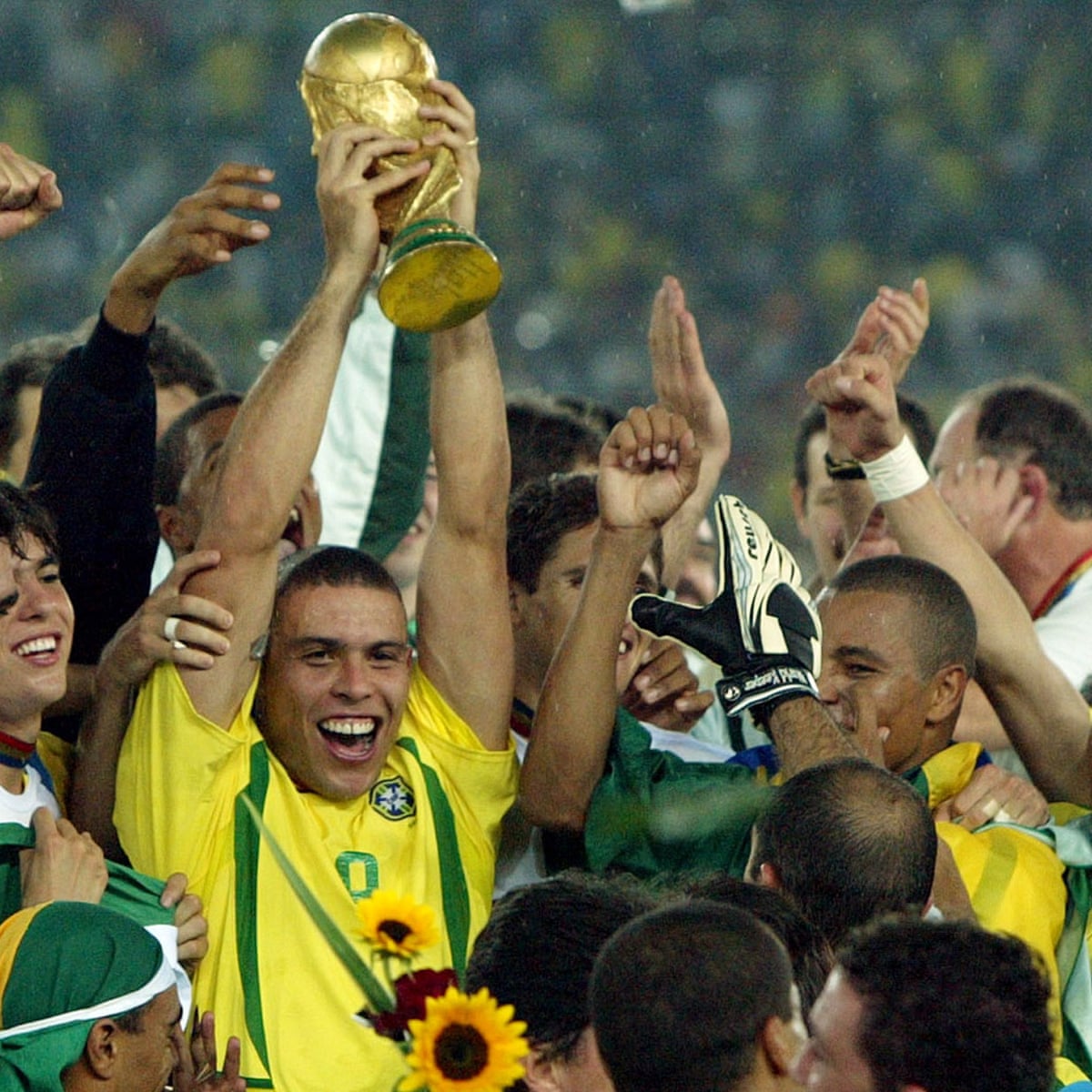
The man was redeemed. His hairstylist was not.

June 30, 2002: The World Cup Final is held at the International Stadium in Yokohama, Japan, about 50 miles south of the national capital of Tokyo. As with the rest of the tournament, with help from ESPN for some games, ABC broadcasts the Final in the U.S.

Brazil, having lost the last Final in 1998, were going for redemption, and a record 5th title. Germany were going for a 4th – or a 1st, if you only count since the country was reunified. There was little doubt that these were the 2 best teams in the world.

But there was some doubt as to how they got to the Final.

For the 1st time, the World Cup's hosting duties were split between 2 countries: Japan and neighboring South Korea. Korea would host Groups A, with Denmark, France, Senegal and Uruguay; B, with Paraguay, Slovenia, South Africa and Spain; C, with Brazil, China, Costa Rica and Turkey; and D, with Poland, Portugal, co-hosts South Korea, and the United States. Japan would host Groups E, with Cameroon, Germany, Ireland and Saudi Arabia; F, with Argentina, England, Nigeria and Sweden; G, with Croatia, Ecuador, Italy and Mexico; and H, with Belgium, co-hosts Japan, Russia and Tunisia. (In each case, the countries are listed alphabetically.)

Denmark won Group A, mainly because Zinedine Zidane, who had led France to victory in the previous tournament, had been injured in qualifying, and could only play in the last Group Stage game, leaving the defending Champions with just a draw with Uruguay and losses to Denmark and to their own former African colony, Senegal.

Brazil easily won Group C, beating Turkey in Ulsan, China in Seogwipo, and Costa Rica in Suwon. Germany won Group E, walloping Saudi Arabia 8-0 in Sapporo, being held to a draw by Ireland in Ibaraki, and beating Cameroon in Shizuoka. Ireland finished 2nd to Germany, despite team Captain Roy Keane, a Manchester United star, leaving their camp before the 1st game, following a dispute with team manager Mick McCarthy. Teammate Niall Quinn, a star for Sunderland, said, "He punished himself more than any of us by not coming back."

Despite neither country having the color in their national flags, both Italy and Japan wear blue shirts in soccer/football. Blue is the color of the House of Savoy, the royal house of Italy at the time of Unification in 1871, and they've kept it despite abolishing the monarchy in 1946. Japan wear blue because of superstition: Their 1st tournament was the 1930 Far Eastern Championship, they wore blue, and won it, and have worn it when receiving first choice of uniform ever since.

In Group F, England drew with Sweden in Saitama; then resumed their rivalry with Argentina by beating them 1-0 in Sapporo, thanks to a rightly-awarded penalty in the 44th minute, taken by David Beckham of Manchester United; and then, having guaranteed advancement, played a meaningless finale against former colony Nigeria in Osaka, and played to a turgid 0-0 draw. (The word "turgid" seems like it was designed to describe a dull 0-0 soccer game.)

Group D provided problems for me. Most fans usually want the host nation to do well, as long as they don't beat the fan's own national side. And most fans usually want their ancestral homeland to do well, as long as they don't beat the country where the fan was born, or at least raised.

But the U.S. had to play both co-host South Korea and my ancestors' home of Poland, as well as Portugal. Had I known then that Portuguese fans from Newark would feed my fandom at the next World Cup, it would have been even more problematic for me. I would have wanted all 4 nations to do well, and that's just not possible. And, after an awful performance in France in 1998, the U.S. needed all the points it could get.

South Korea beat Poland, 2-0 in Busan. The U.S. beat Portugal, 3-2 at Suwon, going 3-0 up in the 36th minute, and almost blowing it. The U.S. drew with South Korea, 1-1 at Daegu, blowing a 1-0 lead in the 78th, but guaranteeing them no worse than 2nd place, and thus advancement. Portugal wiped Poland out, 4-0 at Jeonju, preventing them from advancing. South Korea beat Portugal, 1-0 at Incheon, clinching the Group lead. And, in a meaningless finale, Poland beat the U.S., 3-1 at Daejeon.

*

The Round of 16 saw the U.S. beat arch-rival Mexico, 2-0 an Jeonju, in the famous "Dos a Cero" game; England beat Denmark, 3-0 at Niigata; Ireland fell to Spain, 3-2 on penalties after a 1-1 draw in Suwon; Germany beat Paraguay, 1-0 at Seogwipo; Senegal beat Sweden, 2-1 at Ōita, on a "golden goal" in the 104th minute by Henri Camara; Brazil beat Belgium, 2-0 at Kobe; and Turkey eliminated co-hosts Japan, 1-0 at Rifu.

But the other host nation, South Korea, beat Italy, 2-1 in extra time, to clinch advancement to the Quarterfinals and knock the Azzurri out. The Koreans trailed 1-0 for most of the game, but in the 88th minute, Seol Ki-Hyeon scored. In the 117th minute, Ahn Jung-Hwan scored. It is the greatest victory in the history of South Korean soccer. (Although the North will argue that the greatest victory in the history of Korean soccer is their 1966 win that knocked out… Italy.)

The Italians have argued ever since that the officials were trying to fix the game for the home team. I guess they'd seen too many games fixed in favor of Juventus to think that they could be beaten honestly.

The Quarterfinals saw the U.S. knocked out by Germany, 1-0 at Ulsan, on a 39th minute goal by Bayer Leverkusen (and later Bayern Munich and Chelsea) star Michael Ballack, ending the best American performance at a World Cup since the 1st one in 1930; Turkey beat Senegal, 1-0 in extra time in Osaka, on a golden goal in the 94th minute by İlhan Mansız; and South Korea further feeding Italians' conspiracy theories by playing Spain to a 0-0 drawin Guangju, and then beating them 5-3 on penalties.

At Fukuroi, England took a 1-0 lead over Brazil by a 23rd minute goal by Michael Owen of Liverpool. But Rivaldo scored on the stroke of halftime. And Ronaldinho scored a spectacular lob shot in the 50th minute, beating England and Arsenal goalkeeper David Seaman. A joke developed: A man called his penis "Ronaldinho, because it can lob Seaman from 40 yards."

The Semifinals both ended 1-0: Germany curtailed the conspiracy theories, beating South Korea at Seoul, with Ballack scoring in the 75th minute; and Brazil beat Turkey, 1-0 at Saitama, when Ronaldo scored in the 49th. For both South Korea and Turkey, this remains their best performance.

*

The Final was held in Yokohama, before a crowd of 69,029. It was 70 degrees, with 88 percent humidity, but there was no rain. Each team wore its usual first-choice kit: Brazil were in yellow shirts with blue shorts, Germany in white with black shorts. The referee was Pierluigi Collina, perhaps the best in the world, named world referee of the year 6 times, the one ref in Italy considered un-bribe-able.

This was the 1st time the tournament was ever held in Asia, after 8 times being held in Europe, 4 in South America, and 3 in North America.

Because of the Far East location of the tournament, starting times for the games were difficult for much of the world. For the Final, kickoff was at 8:00 PM Japan time, 12:00 Noon in Germany and most of Europe, 11:00 AM in Britain, 7:00 AM in Brazil, and 6:00 AM U.S. Eastern. "Breakfast at the World Cup."

(UPDATE: Through 2026, it's been 10 in Europe, 5 in South America, 3 in North America, 2 in Asia, 1 in Africa, and, unlike the World Cups of Cricket and Rugby, never yet in Oceania. By Hemisphere: 13 in the Eastern, 8 in the Western; 15 in the Northern, 6 in the Southern.)

From 1950 onward, every World Cup Final except 1978 had included either Brazil or Germany, but they had never previously played each other in any round of a World Cup. Oddly, the streak would end in the next World Cup, in 2006, hosted by Germany.

It was the ultimate clash of styles: The dour, defense-minded Die Mannschaft, with Captain and Bayern goalkeeper Oliver "King" Kahn," Liverpool midfielder Dietmar Hamman, and Kaiserslautern (later Bayern) forward Miroslav Klose; against the attacking Selecão, with Palmeiras goalie Marcos, Captain and AS Roma (and later AC Milan) right back Cafu, São Paulo FC (and later FC Barcelona) centerback Edmílson, Real Madrid left back Roberto Carlos, Arsenal "Double"-winning midfielder Gilberto Silva, Barcelona midfielder Rivaldo, Paris Saint-Germain forward Ronaldo de Assis Moreira (who had to be known as Ronaldinho, because they already had a "Ronaldo"), and, of course, Ronaldo.

Ballack was suspended for the Final, due to yellow card accumulation. Ronaldinho had been suspended for the Semifinal for the same reason, but was eligible to return for the Final. The big question was whether Ronaldo would come through, the way he hadn't in the 1998 Final, for reasons on which people still speculate.

Ronaldo Luís Nazário de Lima, then 25, and a native of Itaguaí, outside Rio de Janeiro but no suburb, was then the biggest star in the game. He had starred for Cruzeiro in Belo Horizonte, Brazil; PSV Eindhoven in the Netherlands; Barcelona in Spain; and Internazionale Milano.

Italy's Serie A, with its tradition of defense-first thinking, symbolized by the catenaccio of both Milan teams of the 1960s, was considered the most difficult European league in which to score, but Ronaldo had utterly conquered it. It was there that he received the nickname that would stick with him: Il Fenomeno (The Phenomenon, or, in his native Portuguese, O Fenômeno). AC Milan and Italy defender Paolo Maldini ranked him with Argentina's Diego Maradona as the 2 best attackers he had ever faced. Ronaldo had become beloved.

But while he'd gotten a winner's medal for the 1994 World Cup in the U.S., he hadn't played; and while he'd starred in 1998, his role in the Final was partly blamed for Brazil's defeat to host France.

He was injured early in the 1999-2000 season, and made it worse in his 1st game back toward the end of the season. Inter physiotherapist Nilton Petrone said, "His knee-cap actually exploded," and called it "the worst football injury I've ever seen." Ronaldo sat out the entire 2000-01 season. It was thought that the career of a genius of the sport might be prematurely over.

After 2 surgeries, he had still missed Brazil's entire World Cup qualifying campaign, which was beset with problems. He was selected for the final team, anyway. Tim Vickery, who covered South American soccer for BBC Sport, said, "Without Ronaldo, Brazil were a shambles, fortunate even to get to the tournament. With him, it was a different story." So every football fan and football journalist on the planet was focused on him.

He had a one-on-one with Kahn in the 18th minute, but missed. Kahn saved a shot from him at the half-hour. Ronaldo missed another shot in 1st half stoppage time. By the 67th minute, Kahn had gotten through 6 and 3/4 games allowing just 1 goal.

But in that 67th minute, Ronaldo won the ball from Hamann in the German half of the pitch. He passed to Rivaldo, who struck a low shot towards goal. Kahn attempted to catch the shot, but he was unable to take it cleanly, and it rebounded into play. Ronaldo, who had followed Rivaldo's shot, put the rebound in the net, ending Khan's clean sheet streak at 427 minutes.

Ronaldo scored again in the 79th, his 8th goal of the tournament, winning him the Golden Boot as its leading scorer. Oliver Bierhoff of AS Monaco and Christian Ziege of Tottenham Hotspur had come on as substitutes for Germany. Bierhoff had a shot in the 83rd minute, and Ziege one in the 93rd, but Marcos saved both, and Brazil were 2-0 winners.

For both Brazil as a team and Ronaldo in particular, the game was a sweet redemption. For Germany, it turned out to be their best performance in a World Cup between 1990 and 2014, but not good enough.

Real Madrid soon signed Ronaldo to join his Brazil teammate Roberto Carlos, and such stars as Zinedine Zidane, Luis Figo, Iker Casillas, Raúl, Guti, Fernando Hierro, Fernando Morientes, Míchel Salgado and Claude Makélélé, and later English stars David Beckham and Steve McManaman, as part of their "Galácticos."

After 5 years with them, which included a disappointing performance by the entire Brazil team at the 2006 World Cup, he played the 2007-08 season with AC Milan. He had played for both Milan teams, and both "Spanish giants," Barcelona and Real Madrid. Somehow, despite having switched sides in 2 of the biggest rivalries in sports on planet Earth, he remains beloved by fans of all 4 teams. He returned to Brazil in 2009, spending 2 seasons with São Paulo team Corinthians, before admitting that his increasing weight had slowed him down too much, and retiring in 2011.

With the arrival of Portuguese star Cristiano Ronaldo, the Brazilian, whose hair has ranged from weirdly styled to completely shaved and several styles in between, became known as "Bald Ronaldo," "Fat Ronaldo," or simply, due to his usual uniform number, "R9," along with "O Fenômeno." He is a reminder to people calling Cristiano "The GOAT," meaning "The Greatest Of All Time," that he is not even the greatest Ronaldo to have played for Real Madrid in the 21st Century.

The 2002 World Cup would be the only one won by Ronaldo or Ronaldinho. Ronaldo won 5 league titles and 3 national cups, but never a continental title. Ronaldinho, never his club teammate (he arrived as AC Milan as Ronaldo left), won 6 league titles, a national cup, and the continental titles of both Europe (the Champions League with Barcelona in 2006) and South America (the Copa Lbertadores with Atlético Mineiro in 2013).

Brazil and Germany would face each other in the 2014 World Cup Semifinal, in Brazil. In one of the most shocking games in the sport's history, Germany won, 7-1. As basketball coach Rick Pitino would have said, Ronaldo wasn't walking through that door. Ronaldinho wasn't walking through that door. Pelé wasn't walking through that door. And if they had, it would have been as slow old men. (Ronaldinho was still playing, but he was 34 and far from his best.)

UPDATE: An article for ESPN.com, published after the 2026 World Cup, ranking all 23 tournaments, rated this one 13th.

*

June 30, 2002 was a Sunday. These Major League Baseball games were played, most of them Interleague:

* The New York Yankees beat the New York Mets, 8-0 at Yankee Stadium. I cared more about this game that I did about the World Cup Final. John Vander Wal and Alfonso Soriano hit home runs, while Derek Jeter went 2-for-4 with a walk. For the Mets, Mo Vaughn and Roberto Alomar, 2 of the franchise's many regrettable too-late acquisitions, both singled, and Vaughn added a double, but those would be the only 3 hits in an Andy Pettitte shutout, while Steve Trachsel didn't get out of the 4th inning.

* The Atlanta Braves, a former Boston team, beat the Boston Red Sox, 7-3 at Fenway Park in Boston. Boston's bullpen and defense completely collapsed in the top of the 10th inning, with 5 hits, an error and a passed ball.

* The Philadelphia Phillies beat the Baltimore Orioles, 8-5 at Camden Yards in Baltimore.

* The Tampa Bay Devil Rays beat Florida's original team, the Florida Marlins, 6-5 at Tropicana Field in St. Petersburg, Florida. The game went to extra innings, and each team scored a run in the 11th. Brent Abernathy singled Steve Cox home with the winning run in the bottom of the 12th.

* The Toronto Blue Jays beat Canada's original team, the Montreal Expos, 7-5 at the SkyDome (now the Rogers Centre) in Toronto.

* The Arizona Diamondbacks beat the Cleveland Indians, 5-2 at Jacobs Field (now Progressive Field) in Cleveland.

* The Pittsburgh Pirates beat the Detroit Tigers, 6-2 at Comerica Park in Detroit.

* The Chicago Cubs beat the Chicago White Sox, 9-2 at the new Comiskey Park (now Rate Field) in Chicago.

* In what had been an American League matchup from 1970 to 1997, the Minnesota Twins beat the Milwaukee Brewers, 4-3 at the Metrodome in Minneapolis.

* In the one intraleague game, the Cincinnati Reds beat the St. Louis Cardinals, 12-8 at Busch Stadium in St. Louis. Ken Griffey Jr. was injured, and did not play. Albert Pujols went 1-for-4 with 2 RBIs. Former Yankee Tino Martinez hit a home run for the Cards.

* The Kansas City Royals beat the San Diego Padres, 13-1 at Kauffman Stadium in Kansas City.

* The Anaheim Angels beat their neighbors, the Los Angeles Dodgers, 5-1 at Edison International Field of Anaheim (now Angel Stadium of Anaheim).

* The Oakland Athletics beat their cross-Bay rivals, the San Francisco Giants, 7-0 at the Network Associates Coliseum (as the Oakland Coliseum was then known). Tim Hudson pitched a 5-hit shutout. The A's hit no home runs, but Scott Hatteberg went 3-for-5 with 3 RBIs. Barry Bonds went 0-for-2 with 2 intentional walks.

* The Colorado Rockies beat the Seattle Mariners, 4-3 at Safeco Field (now T-Mobile Park) in Seattle. Larry Walker went 4-for-5. Ichiro Suzuki went 1-for-3 with 2 walks and a stolen base.

* And the Texas Rangers and their cross-State rivals, the Houston Astros, were rained out at The Ballpark in the Dallas suburb of Arlington, Texas. Labor Day, September 2, was an off-day for both teams, so that's when the game was made up. The Rangers won, 7-2.

Saturday, June 25, 2022

June 25, 1950: The Korean War Begins

June 25, 1950: Troops of the Democratic People's Republic of Korea -- a.k.a. North Korea, a Communist nation, and by no means was it democratic or a republic -- cross the parallel of 38th degrees north latitude, and invade the Republic of Korea -- a.k.a. South Korea, which is capitalist, but hardly free.

Two days later, President Harry S Truman announced that American and other NATO forces would come to the aid of South Korea. The next day, North Korean troops took the South Korean capital of Seoul. A total of 15 United Nations countries came to the South's aid: America, Canada, Britain, France, Belgium, the Netherlands, Luxembourg, Greece, Turkey, Colombia, Ethiopia, South Africa, the Philippines, Thailand, Australia and New Zealand.

On September 15, Korea had its "D-Day," as General of the Army Douglas MacArthur, despite being 70 years old, personally led an amphibious landing at Inchon. Within weeks, not only was Seoul liberated, but the North's troops were backed up to the Yalu River, separating the Korean peninsula from the People's Republic of China.

That country then intervened on behalf of its Communist "little brother." The war became a stalemate, lasting 3 years. Truman ended up relieving MacArthur of duty in April 1951, for disobeying orders, replacing him with Matthew Ridgeway. He commanded UN troops in Korea until May 1952, when he was transferred to command U.S. troops in Europe. He was replaced as UN commander by Mark Clark, who held that role until the Armistice was signed on July 27, 1953.

About 327,000 Americans served in the conflict, and 36,574 were killed, with another 103,000 wounded but surviving.

Kim Il-Sung, the founder of the DPRK, remained in power until his death in 1994. His son, Kim Jong-Il, was then in charge until his own death in 2011. And his son, Kim Jong-Un, is now in charge, and is every bit as bad as his father and his grandfather. The military is well-supplied, but the civilians are poor, and many are starving.

Not that Syngman Rhee, the founder of the ROK, was a saint. South Korea may have been capitalist, but it was hardly democratic. He remained in power until being deposed in 1960, and died in 1965. South Korea's path to democracy has been difficult, including the assassination of President Park Chung-hee over fears he was bringing dictatorship back in 1979; and the impeachment and removal of his daughter, President Park Geun-hye, on corruption charges in 2017.

MacArthur died in 1964, Eisenhower in 1969, Truman in 1972, Clark in 1984, and Ridgeway in 1993. South Korea's leading General, Chung Il-kwon, served as Prime Minister from 1964 to 1970, and lived until 1994. Kim Il-Sung operated as his own commanding General.

Coming between the epic of World War II and the more recent national trauma of the Vietnam War, Korea became "the forgotten war." Even the TV series M*A*S*H, running on CBS from 1972 to 1983, didn't help much, as details were frequently gotten wrong.

A memorial to the American troops of the Korean War opened in 1995 on the National Mall in Washington, across from a counterpart to the Vietnam War, between the Washington Monument and the Lincoln Memorial. Surviving veterans are now age 87 and up.
The Korean War Veterans Memorial, Washington

U.S. forces remain on South Korean soil. These included an engineering unit to which my father was assigned in 1967 and 1968.

*

June 25, 1950 was a Sunday. It was the off-season for the NFL, the NBA and the NHL. But, being a Sunday, not only was a full slate of Major League Baseball games played, but there were some doubleheaders:

* The New York Yankees split a doubleheader with the Detroit Tigers at Briggs Stadium in Detroit, which was renamed Tiger Stadium in 1961. In the opener, Joe DiMaggio and Hank Bauer supported Eddie Lopat with home runs, allowing him to beat Hal Newhouser, and the Yankees won, 8-2. In the nightcap, Tommy Henrich hit a home run, but Vic Raschi allowed a 3-run homer by Hoot Evers in the 8th inning, and the Tigers won, 6-3.

* The New York Giants got swept by the Cincinnati Reds in a doubleheader at the Polo Grounds. The Reds won the 1st game 6-3, and the 2nd game 6-4.

* The Brooklyn Dodgers played only 1 game, and, apparently, it was a football game. They lost to the Pittsburgh Pirates, 16-11 at Ebbets Field. Don Newcombe didn't get out of the 3rd inning for the Brooks, and Vernon Law, winner of the Cy Young Award and the World Series 10 years later, only went 4. Gil Hodges hit a home run for Dem Bums, but Ralph Kiner hit 2 and Ted Beard 1 for the Buccos.

* The Boston Braves beat the St. Louis Cardinals, 4-0 at Braves Field. Vern Bickford pitched a 5-hit shutout.

* A doubleheader was split at Shibe Park in Philadelphia. The Chicago Cubs won the 1st game 11-8, and the Philadelphia Phillies won the 2nd game 2-1.

* A doubleheader was split at Cleveland Municipal Stadium. The Cleveland Indians won the 1st game 7-6, and the Washington Senators won the 2nd game 5-3.

* A doubleheader was split at Comiskey Park in Chicago. The Chicago White Sox won the 1st game 7-6, and the Philadelphia Athletics won the 2nd game 13-4.

* And the Boston Red Sox swept a doubleheader from the St. Louis Browns at Sportsman's Park in St. Louis. The Sox won the 1st game 11-5, and the 2nd game 8-2.

This invasion took place during the World Cup in Brazil. In Group Stage games:

* America lost to Spain, 3-1 at Estádio Vila Capanema in Curitiba.

* England beat Chile, 2-0 at Estádio Maracanã in Rio de Janeiro. 

* Sweden beat Italy, 3-2 at Estádio do Pacaembu in São Paulo.

* And Yugoslavia beat Switerland, 3-0 at Estádio Independência in Belo Horizonte.

December 31, 1999 & January 1, 2000: The Millennium

December 31, 1999:  The Millennium arrives. The people of planet Earth survived. At a terrible cost. But we hadn't destroyed ourselves. ...