Showing posts with label lou johnson. Show all posts

Friday, October 14, 2022

October 14, 1965: The Gutsiest Game 7

October 14, 1965: Game 7 of the World Series, at Metropolitan Stadium in the Minneapolis suburb of Bloomington. So far, every game in this Series has been won by the home team.

The Minnesota Twins stunned Los Angeles Dodger pitchers Don Drysdale in Game 1 and Sandy Koufax in Game 2 in Minnesota. But the Dodgers came back in Los Angeles, winning Game 3 behind Claude Osteen, Game 4 behind Drysdale, and Game 5 behind Koufax. Back in Minnesota, the Twins took Game 6 thanks to a shutout and a home run by Jim "Mudcat" Grant.

Now, he was working on 2 days rest‚ and throwing only fastballs so that his great curveball doesn’t hurt his aching elbow as much as it hurts the Minnesota batters, fighting both the pain and the home-team trend. He was facing Jim Kaat, who beat him in Game 2, before Koufax beat him in Game 5.
Metropolitan Stadium

With 2 outs in the bottom of the 1st inning, Koufax walked American League batting champion Tony Oliva and dangerous slugger Harmon Killebrew, but struck Earl Battey out to end the inning. In the top of the 3rd, Kaat gave up a lead off double to John Roseboro and a walk to Koufax himself, but worked out of the jam.

How dangerous was Killebrew? He went on to hit 573 home runs in his career, 5th all-time at the time he retired. His 393 home runs was the most of any player in the 1960s. In comparison, Hank Aaron hit 375, Willie Mays 350, Frank Robinson 316, Frank Howard 276, and Mickey Mantle 246. And, like Mantle, Howard and Dick Allen, he was known for hitting them tremendous distances.
Harmon Killebrew

Killebrew's nickname was "the Killer." Howard's nickname was "the Monster" in Los Angeles, and "the Capital Punisher" in Washington. A later Philadelphia Phillies slugger named Greg Luzinski was nicknamed "the Bull." Thank God they were all nice guys off the field. (So was Baltimore Orioles slugger John "Boog" Powell, but his nickname didn't suggest any menace.)

Kaat had a no-windup delivery, so he was less prone to fatigue than most pitchers. But he began the top of the 4th by allowing a home run to Lou Johnson, a double to Ron Fairly, and a single to Wes Parker, giving the Dodgers a 2-0 lead. That was enough for Twins manager Sam Mele, who relieved Kaat with Al Worthington, who ended the threat.

Ordinarily, for Koufax, a 2-0 lead meant "game over." But the pain. No curveballs. Just fastballs. The Twins knew what was coming, and still, they had trouble with it. With 1 out in the bottom of the 5th, Frank Quilici hit a double to left. Pinch-hitting for Worthington, Rich Rollins worked Koufax for a walk, and the tying runs were on. But he got 2 groundouts to get out of it.

Mele had to trust his bullpen, and brought Johnny Klippstein in to pitch. Dodger manager Walter Alston decided that Koufax, in his condition, was still better than anyone in his bullpen. He was right, as Koufax got through the 6th, 7th and 8th innings without allowing another baserunner. The Dodgers were 3 outs away from the World Championship.

But to get those last 3 outs, he would have to face Oliva, Killebrew and Battey. If any of them got on, hard-hitting Bob Allison would come up as no worse than the tying run. He got Oliva to ground to 3rd, but Killebrew singled to left. He caught Battey looking. Allison worked him for a 2-ball, 2-strike count. With his 123rd pitch of the game, all of them fastballs, Koufax struck him out swinging.

He had allowed 3 hits and 3 walks, striking out 10. With only a fastball. On the road. Against a team that had won 102 games and scored an average of 4.78 runs per game. In a game that meant everything. Sports Illustrated named him their Sportsman of the Year.

Koufax had refused to pitch in Game 1, because he was Jewish and the game fell on Yom Kippur. The Dodgers lost. And then he lost Game 2, forcing him to pitch on short rest in Game 5 and on shorter rest in Game 7. If the Dodgers had lost the World Series, Koufax would have essentially sacrificed a World Series win for the sake of his religious beliefs.

Maybe his place in the pantheon of sports actually be higher if that had happened -- higher, that is, outside of Los Angeles and Southern California. Would he still have been so admired in the L.A. market? There's no way to know if Dodger fans, already spoiled, would have forgiven him.

They were already spoiled, because this was the Dodgers’ 4th World Championship, their 3rd since moving to Los Angeles, and their 2nd in 3 years. In each of the last 2, Koufax was named the Series' Most Valuable Player. Certainly, this time, he was its most courageous.

Among the players of his generation, Koufax is one of a few that was not only an all-time great, but had a genuine mystique that raised him even higher in the memories of baseball fans, including those who, like me, were too young to ever see him pitch. Those few also include Mickey Mantle, Willie Mays, Hank Aaron, Bob Gibson, Brooks Robinson, Frank Robinson and Roberto Clemente. If you want to extend it by a few years, you can add Carl Yastrzemski and maybe Pete Rose.

But because of the Los Angeles media, and the religious factor, Koufax occupies a truly rare place in the sports fan mind.

It had been a big year for the State of Minnesota, the "Twin Cities" metropolitan area of Minneapolis and St. Paul, and Metropolitan Stadium in particular. On July 13, it hosted baseball's All-Star Game, and a very entertaining one at that. On August 21, it hosted The Beatles. All Spring and Summer long, it hosted a Pennant-winning team for the 1st time. And on October 6, 7, 13 and 14, it hosted the World Series, one that was full of drama and glory on both sides. A nice year. But, for Minnesotans, it fell one win short.

One more note: The basketball team at the University of California at Los Angeles (UCLA) had won the NCAA Tournament earlier in this year. This Dodger World Series win allowed Los Angeles to follow New York (in 1950, CCNY and the Yankees) and Chicago (in 1963, Loyola and the Bears) as the 3rd city to win the NCAA Tournament and a major league sports championship in the same year.

In 1972, the Los Angeles Lakers would win the NBA Championship, with UCLA winning yet another National Championship. L.A. remains the only city to do it twice, let alone in 2 different sports. New York in 1950 and Los Angeles in 1965 remain the only cities to win both the NCAA Tournament and the World Series in the same calendar year.

*

October 14, 1965 was a Thursday. Football was in midweek. The NBA season started the next day. And the NHL season started 9 days later. So there were no other scores on this historic day.

Friday, September 9, 2022

September 9, 1965: Sandy Koufax's Perfect Game

September 9, 1965: The Los Angeles Dodgers host the Chicago Cubs at Dodger Stadium in Los Angeles. In the 1st 152 seasons of what we now call Major League Baseball, no game has ever had fewer hits, both teams combined.

Sandy Koufax started for the Dodgers. He had pitched a no-hitter in each of the last 3 seasons: 1962, 1963 and 1964. He was pitching as well as anybody ever had in the history of baseball.

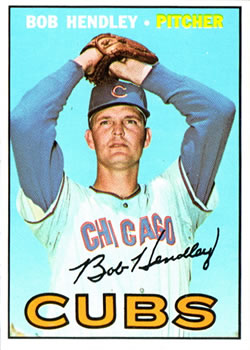
Bob Hendley started for the Cubs. He was not a particularly well-known pitcher. On this night, he pitched the game of his life. Unfortunately for him, it was only the 2nd-best pitched game... in that game.
Neither pitcher allowed a single baserunner until the bottom of the 5th. Cliché Alert: Walks can kill you, especially the leadoff variety. So can errors. Hendley walked Lou Johnson to start the inning. Ron Fairly sacrificed Johnson over to 2nd base. Johnson tried to steal 3rd base. Cub catcher Chris Krug made a bad throw, allowing Johnson to score. Johnson would also get a hit, the Dodgers' only hit: A "Texas Leaguer" double to right field with 2 out in the 7th, but would be stranded.

The Dodgers had 1 run, without a hit contributing to it. That was all Koufax needed: One run. He went to a 3-balls, 2-strikes count on Ernie Banks in the top of the 5th, but struck him out. He went to another full count on Billy Williams in the 7th, but got him to fly out. He struck out the side in the 8th: Ron Santo, Banks, and Byron Browne.

He went into the 9th inning without having allowed a baserunner. Krug led off. He got to a 2-and-2 count, before Koufax struck him out swinging. Joey Amalfitano came up. Koufax struck him out on 3 pitches, the last a swing and a miss.

Cub manager Lou Klein sent Harvey Kuenn up to bad for Hendley, who had pitched 8 innings, allowing 1 run, 1 hit, and 1 walk, striking out 3. Ordinarily, even in that pitching-friendly era of baseball, it would have been enough to win. Not on this night.

Kuenn was 34 years old, and nearing the end of the line. But he was a .303 lifetime hitter, the 1953 American League Rookie of the Year, the 1959 AL batting champion with a .353 average, a 4-time AL leader in hits, a 3-time AL leader in doubles, an All-Star in 8 seasons (including 2 in which there were 2 All-Star Games, so he's sometimes listed as a 10-time All-Star), and, while not really a power hitter, topping off at 12 home runs in 1956, he was certainly capable of driving in runs, topping off at 88 RBIs that same year. He had spent most of his career with the Detroit Tigers, but had helped the San Francisco Giants win the 1962 NL Pennant.

No less than Casey Stengel had said that Kuenn was "one of the most dangerous hitters in baseball. The guy can hurt you a million ways. He has no weakness at the plate that I have ever noticed." However, he was now batting just .217. He had previously made the last out in Koufax's 2nd no-hitter, over the Giants in 1963.

There is no surviving film or videotape of this game, just a recording of Vin Scully's broadcast on radio station KFI, 640 on the AM dial: "It is 9:46 PM. Two and two to Harvey Kuenn. One strike away. Sandy into his windup. Here's the pitch: Swung on and missed, a perfect game!" (Note: That's 9:46 PM Pacific Time, so it was 12:46 AM Eastern Time on September 10.)

The perfect game was also his 4th no-hitter, breaking the record of 3, which had been shared by Larry Corcoran, Cy Young and Bob Feller. Young's 2nd no-hitter was a perfect game.

Koufax threw 113 pitches, 79 of them for strikes. He struck out 14 batters. Home plate umpire Ed Vargo didn't have the chance to make bad calls. His single-game strikeout peak was 18, having done it in 1959 (before he found his control) and 1962. The 14 from this game would be part of a total of 382, a major league record at the time. Nolan Ryan would raise the record to 383 in 1973, a year in which he pitched 2 no-hitters. Koufax's 382 remains a National League record, and a major league record for lefthanded pitchers.

Koufax's 4 no-hitters would be a record until Ryan pitched a 5th in 1981, eventually reaching 7 -- although none of those was a perfect game. In a weird twist of events, Jeff Torborg caught Koufax's last no-hitter, and also caught Ryan's 1st in 1973. That made him the 2nd catcher to catch no-hitters in both leagues, following Gus Triandos. They have since been joined by Darrell Porter, Ron Hassey and Drew Butera.

Torborg also caught Bill Singer's no-hitter for the Dodgers, in 1970, so he was the 1st catcher to catch 3 no-hitters. Jason Varitek now holds the record, with 4.

The Dodgers went on to win the World Series. Koufax would be the story of that Series, in more ways than one.

Harvey Kuenn would go on to manage the Milwaukee Brewers to their 1st Pennant, in 1982. He died in 1988. Ed Vargo died in 2008. Lou Johnson, who got the Dodgers' only hit, died in 2020. Vin Scully died on August 2, 2022. As of September 9, 2022, Sandy Koufax, Jeff Torborg and Bob Hendley are still alive.

UPDATE: Torborg died in 2025.

*

September 9, 1965 was a Thursday. Future basketball star Dan Majerle was born. Hurricane Betsy hit the Gulf of Mexico region, killing 81 people. This was also the day that both the U.S. Department of Housing and Urban Development and Gatorade made their debuts. I have separate entries for those events.

There were only 4 other major league games that night:

* The New York Mets lost to the Cincinnati Reds, 3-2 at Crosley Field in Cincinnati. Rookie Tug McGraw, not yet converted into a reliever, started for the Mets, and allowed 2 runs over 7 innings. The Mets tied the game in the 8th, but Tony Pérez won it with a home run off Gordie Richardson in the bottom of the 9th. Frank Robinson -- as it turned out, in his last month with the Reds -- went 0-for-3 with a walk.

* The Minnesota Twins beat the Chicago White Sox, 10-4 at Comiskey Park in Chicago. Jim Kaat outpitched Joe Horlen. Harmon Killebrew did not play. The Twins were about to win Minnesota's 1st major league Pennant, the franchise's 1st since 1933, when they were the Washington Senators. But they would lose the World Series to the Dodgers.

* The California Angels beat the Kansas City Athletics, 7-2 at Kansas City Municipal Stadium.

* And the San Francisco Giants beat the Houston Astros, 4-0 at Candlestick Park in San Francisco. Juan Marichal, having returned from his suspension after hitting John Roseboro with his bat on August 22, pitched a 4-hit shutout. Tom Haller hit a home run. Willie Mays went 0-for-3.

December 31, 1999 & January 1, 2000: The Millennium

December 31, 1999:  The Millennium arrives. The people of planet Earth survived. At a terrible cost. But we hadn't destroyed ourselves. ...