Showing posts with label native americans. Show all posts

Wednesday, December 28, 2022

December 29, 1890: The Wounded Knee Massacre

December 29, 1890: The Wounded Knee Massacre takes place near the creek and now town of the same name, in southwestern South Dakota. It is the last major action between the U.S. Army and Native Americans, and possibly the worst.

In 1876, the the Lakota Sioux fought the 7th Cavalry, under the command of Lieutenant Colonel George Armstrong Custer (who'd held the temporary, or brevet, rank of Brigadier General in the American Civil War), at the Battle of the Little Bighorn in Montana, and the Cavalry lost more than 1/3rd of its men, including Custer.

One of the chiefs leading the Lakota troops was Sitting Bull. For 5 more years, he managed to avoid capture by U.S. troops, until finally surrendering. He joined William F. "Buffalo Bill" Cody's Wild West Show, but returned to the Standing Rock Reservation in South Dakota, which had gained Statehood along with North Dakota on November 2, 1889.

In response to the many degradations the Natives faced, the "Ghost Dance" movement began, a nationalist movement similar to the later Black Panther Party and the Reconquista movement of Mexican-Americans.

Faced with a nonwhite people expressing pride in themselves and their traditions, white America's government did what it had done so many times, and would continue to do: It overreacted. In the tradition of "Cut off the head, and the body will die," the rebuilt 7th Cavalry went to arrest Sitting Bull. They arrived on December 15, 1890, and he refused to accept arrest, and was shot and killed. Although Native record-keeping made establishing his exact birthdate impossible, he was believed to be 59 years old.

The Cavalry, under the command of Colonel James W. Forsyth, moved on to Wounded Knee, 275 miles to the southwest. Arriving on December 28, they surrounded the Lakota camp. On the morning of the 29th, they went in to take the Lakota men's guns away. A Ghost Dance ritual was being conducted at the time. A man named Black Coyote refused to give up his rifle, citing the large amount of money he'd paid for it. What happened next is in dispute: Either Black Coyote fired, and a soldier grabbed his rifle, they struggled over it, and it went off.

What is not in dispute is what happened after that first gunshot: The Cavalry opened fire, and those few Lakota who still had their weapons returned what fire they could. More than 250 men, women and children were killed. That was nearly as many men as the 7th Cavalry lost at the Little Bighorn, but those were all trained soldiers. To put that in a modern perspective, it's nearly half again as many people as died in the Oklahoma City Bombing of 1995, and 1/8th as many as were killed on 9/11 -- and since the U.S. had about 1/4th as many people in 1890 as it had in 2001, it's proportionately about half as bad as 9/11.

The Cavalry lost 31 men. Twenty men were awarded the Congressional Medal of Honor. There was no honor in what they did.

At the time, the President of the United States was Benjamin Harrison. His grandfather, William Henry Harrison, had been President for one month in 1841, before dying of pneumonia. In 1811, William Henry Harrison defeated Native tribes at the Battle of Tippecanoe in Indiana. In 1813, his troops killed the Native chief Tecumseh at the Battle of the Thames near what's now Stratford, Ontario, Canada. Now, perhaps unwittingly, he had finished his grandfather's work. Of course, white men's attacks on the Native peoples of North America went all the way back to the Spanish settlement of St. Augustine, Florida in 1565, so it's not like "Old Tip" Harrison started it.

Wounded Knee is far from any major city. It's 104 miles southeast of Mount Rushmore, 350 miles northeast of Denver and over 400 miles northwest of Omaha. In fact, the Little Bighorn Battlefield is about 350 miles to the northwest, so it's closer to that than to Denver, the closest major league city.

*

December 29, 1890 was a Monday. Baseball and football seasons were over. Basketball wouldn't be invented for another year. There was a hockey league at the time, the Canadian Amateur Hockey Association, but no games were scheduled for this day. So, there were no scores on this historic day.

Tuesday, November 15, 2022

November 16, 1885: The Hanging of Louis Riel

November 16, 1885: Louis Riel is hanged, ending Canada's North-West Rebellion.

Louis David Riel was born on October 22, 1844 in the Red River Colony, Prince Rupert's Land -- now Winnipeg, Manitoba. He was a leader of the Métis people, descendants of the original European settlers of Canada and its aboriginal peoples, which Canadians call "First Nations."

He led the Red River Rebellion in 1869, and the peace he and the federal government made allowed Manitoba to enter Confederation as a Providence, earning him the title "the Father of Manitoba." But he made the mistake of ordering the execution of Irish-Canadian leader Thomas Scott in 1870, and had to flee to America.

In 1884, the Métis of Saskatchewan called on him to lead their grievances with the federal government. He led a military resistance that became known as the North-West Rebellion. It failed, he was convicted of treason, and executed 
at the North-West Mounted Police barracks in Regina, Saskatchewan on November 16, 1885, at age 41. He is buried at St. Boniface Cathedral in Winnipeg.
Part of the irony of his life is that he is seen as a hero less by the aboriginal population of Canada, and more by the French-speaking one. His removal from the scene guaranteed Anglophone control of Western Canada, and this has been part of the Francophone grievance with Ottawa ever since.
*

November 16, 1885 was a Monday. There were no scores on this historic day: No college football games were scheduled, baseball was out of season, hockey was in its infancy, and basketball hadn't yet been invented.

Sunday, October 2, 2022

October 3, 1873: Chief Kintpuash Is Executed

October 3, 1873: Kintpuash, the Chief of the Modoc tribe of Native Americans, is executed at Fort Klamath, Oregon. He is believed to have been about 36 years old, and is the only Native Chief to be executed for war crimes.

He is believed to have been born in 1837, around Tule Lake, California, near the Oregon State Line. In the Modoc language, "Kintpuash" means "Strikes the water brashly." In 1864, the U.S. government, wanting the fertile land in the area, forcefully removed the Modocs to the Klamath Reservation in southwest Oregon. The act itself was bad enough, but Klamath was already home to the Klamath tribe, their arch-rivals. There was a lot of fighting between them.

In 1865, Kintpuash, by then informally called "Captain Jack" by American colonizers, led a band of Modoc from the reservation back to their home in California. In 1869, the band were rounded up by the U.S. Army, and returned to the Klamath Reservation. Finding conditions had not improved, in April 1870, Kintpuash led the Modoc back to the Tule Lake area.

(He was not the first person in a leadership position in the Americas to be known as "Captain Jack," nor the last. At least one later Native Chief had the nickname. The Billy Joel song of the same title was about drugs, as Billy knew of a heroin dealer with the nickname.)

In 1872, U.S. troops were sent to capture Kintpuash's band, and force them back to the reservation. On November 29, while their surrender was being negotiated at the Lost River in Oregon, fighting broke out between a soldier and one of the Modoc warriors. The brief Battle of Lost River ensued, and Kintpuash was forced to retreat.

They found what is now the Lava Beds National Monument, a natural fortress. His warriors made use of its many caves and trenches in the lava beds for defensive fighting, and women and children could be sheltered. The Army launched an attack on January 17, 1873, but it backfired: They lost 35 men, while the Modoc suffered no casualties.

Kintpuash's advisers, not understanding differences between Modoc and Euro-American culture, suggested that the Army would leave if their warriors killed its leader, Major General Edward Canby. Kintpuash hoped for a peaceful solution that would allow his people to stay in their territory. He was challenged for leadership, and agreed to their plan.

On April 11, 1873, in what was supposed to be a peace conference at Tule Lake, he shot Canby. Another tribesman killed a minister, the Reverend Eleazar Thomas. Two other negotiators were wounded. This -- and the fact that George Armstrong Custer's General status during the Civil War was a brevet rank, and he was a Lieutenant Colonel when he was killed at the Little Bighorn -- made Canby the only U.S. General killed during the Indian Wars. The Kentucky native was 55 years old.

The Modoc fled to the lava beds. The Army brought in over 1,000 reinforcements, and attacked on April 14. The Modoc scattered, thinking they had a better chance of continued resistance if they were separated. But as time passed, Kintpuash's own men realized that it was just a matter of time, and turned him in. He surrendered on June 1, ceremonially laying down his rifle.

He and 3 others -- known as Black Jim, John Schonchin and boston Charley -- were tried by a military court, for the murders of General Canby and Reverend Thomas. They were all convicted, and were hanged on October 3, 1873.

*

October 3, 1873 was a Friday. The only professional team sport in North America at this point was baseball, and, while the National Association season was not over yet, there were no games scheduled for this day. The Boston Red Stockings, the team that would eventually become the Atlanta Braves, would go on to win the Pennant.

Sunday, September 4, 2022

September 5, 1877: The Execution of Crazy Horse

Crazy Horse was never photographed, due to
a Native superstition that photography captured the subject's soul.
A Mormon missionary made this sketch after interviewing
Crazy Horse's sister, and she claimed the depiction was accurate.

September 5, 1877: The Lakota warrior Crazy Horse is executed -- martyred -- at Fort Robinson, Nebraska.

It's not clear how old he was, but, based on the sources available at the time, the likeliest year of his birth was 1840, making him 36 or 37 at the time of his death. He was born to the Lakota branch of the Sioux tribe of Native Americans, near Rapid Creek, in what is now South Dakota. He was born with the name Čháŋ Óhaŋ, meaning ''Among the Trees," indicating that he was "one with nature." Eventually, he was given the same name as his father: Tȟašúŋke Witkó, meaning ''His Horse Is Crazy.'' 

A cousin, Black Elk, described him in the 1932 book Black Elk Speaks: Being the Life Story of a Holy Man of the Oglala Sioux:

He was a queer man and would go about the village without noticing people or saying anything. In his own teepee he would joke, and when he was on the warpath with a small party, he would joke to make his warriors feel good. But around the village, he hardly ever noticed anybody, except little children. All the Lakotas like to dance and sing, but he never joined a dance, and they say nobody ever heard him sing. But everybody liked him, and they would do anything he wanted or go anywhere he said.

(In this case, "queer" meant "strange," not "homosexual." Crazy Horse is known to have married at least once, and fathered at least one child, a daughter. And a story dating to before his marriage reports that a tribesman once caught Crazy Horse with his wife.)

In 1864, after the Third Colorado Cavalry decimated Cheyenne and Arapaho tribesmen in the Sand Creek Massacre, Oglala and Minneconjou bands allied with them against the U.S. military. Crazy Horse was present at the Battle of Platte Bridge (near present-day Casper, Wyoming) and the Battle of Red Buttes (on the North Platte River in Nebraska) in July 1865. Both were Native victories.

On December 21, 1866, he led a group of 10 men who killed 81 men at Fort Phil Kearny, Wyoming, in what became known as the Fetterman Massacre. His reputation grew from there, peaking on June 25, 1876, when his troops crushed the U.S. Army's 7th Cavalry, killing 268 of them, including their commanding officer, Lieutenant Colonel George Custer, at the Battle of the Little Bighorn in Montana.

The U.S. government's reaction was to put an end to the threat by any means necessary. They cut off supply lines, separating the Lakota from the buffalo, their main sources of food and clothing, for the Winter. The idea was to starve and freeze them into surrendering. It worked: Crazy Horse took his men to the Red Cloud Agency, located near Fort Robinson, Nebraska, on May 5, 1877.

On September 5, the Agency received orders that Crazy Horse was to be arrested and taken under the cover of darkness to Division Headquarters. Once there, Crazy Horse struggled with the guard, made up entirely of Natives. He was stabbed with a bayonet by one of the members of the guard. He died that night. His remains were turned over to his elderly parents. His final resting place is not known to the white man.

Historian Ian Frazier wrote of him:

Even the most basic outline of his life shows how great he was, because he remained himself from the moment of his birth to the moment he died; because [though] he may have surrendered... he was never defeated in battle; because, although he was killed, even the Army admitted he was never captured. His dislike of the oncoming civilization was prophetic. Unlike many people all over the world, when he met white men he was not diminished by the encounter.

In response to the carving of Mount Rushmore, near Rapid City, South Dakota, which Natives consider a desecration of one of their holy lands, Korczak Ziolkowski, who had worked on it, designed the Crazy Horse Memorial. He died in 1982, early in the moument's construction. When the head was completed in 1998, it was 87 feet high, compared to the 60-foot-high faces on Rushmore, 17 miles away. 
The Memorial in 2020

When finished, if it ever is, the Memorial will show Crazy Horse on a horse, pointing with his left arm. At last check, the hand, arm, shoulder, hairline, and top of the horse's head were anticipated to be finished by 2037.

*

September 5, 1877 was a  Wednesday. At the time, the only professional sports league in North America was baseball's National League. And no games were played that day.

Saturday, September 3, 2022

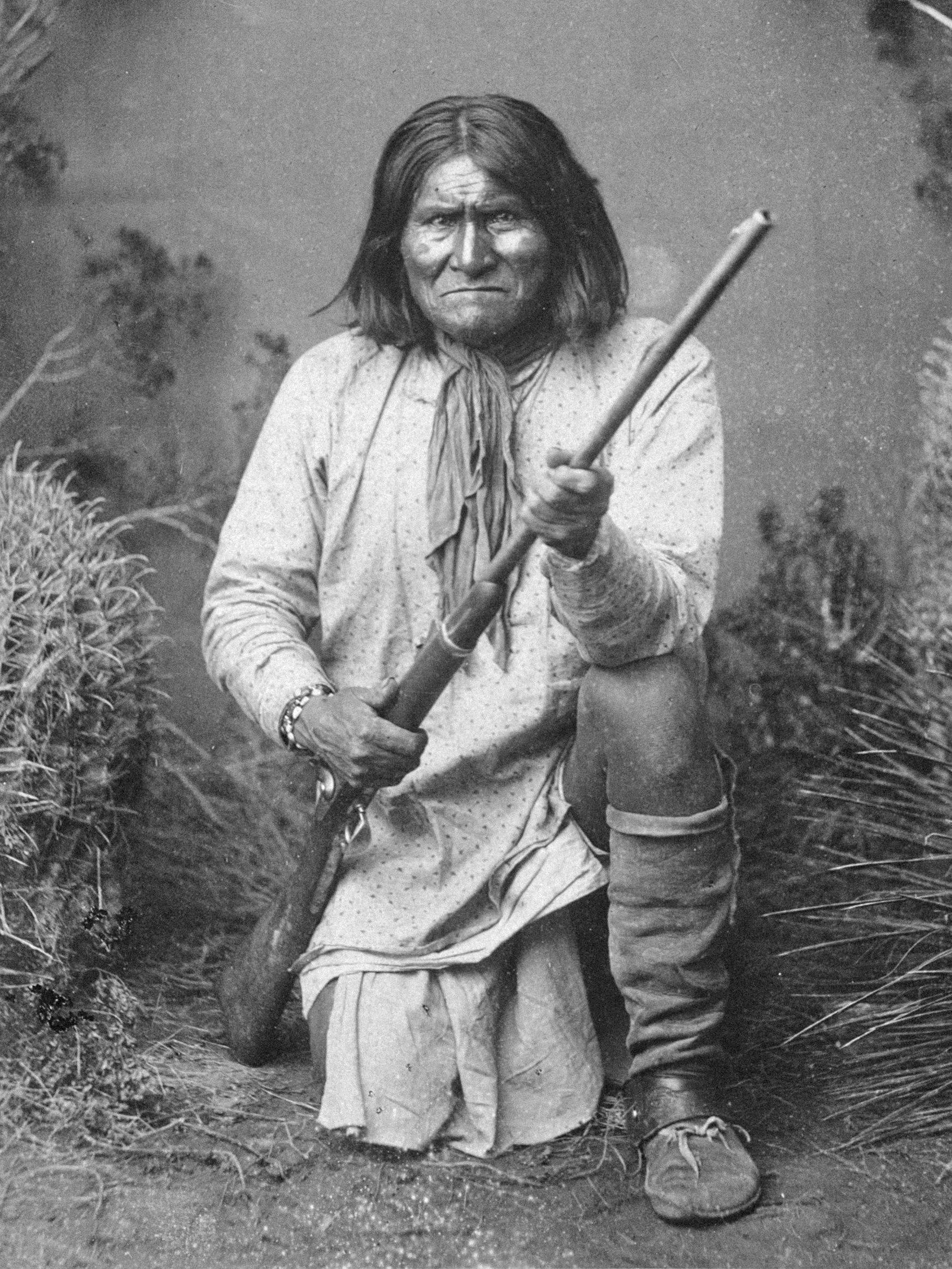
September 4, 1886: Geronimo Surrenders

The best-known image of Geronimo, 1887

September 4, 1886: Geronimo surrenders to the U.S. Army. The last great at-large Native American opponent of "the white man" gives up the fight.

He was born to the Apache tribe on June 16, 1829, in No-doyohn Cañon, Arizona, then a part of Mexico, with the name Goyaałé, meaning "The One Who Yawns." No one should be stuck with what he was called as a baby, but he wouldn't have to be.

In 1851, with the Apaches having to move south following the Mexican-American War, they were attacked by the Mexican Army, and another Apache heard a Mexican soldier that Goyaałé was killing yell, ¡Jerónimo!" invoking his patron saint, St. Jerome, for help. The warrior was known as "Geronimo" from then on.

Reservation life was confining to the free-moving Apache people, and they resented restrictions on their customary way of life. Geronimo led breakouts from the reservations, in attempts to return his people to their previous nomadic lifestyle.

While well-known, Geronimo was not a chief of the Bedonkohe band of the Central Apache, but a shaman. However, since he was a superb leader in raiding and warfare, he frequently led large numbers of 30 to 50 Apache men.

In 1886, after an intense pursuit in northern Mexico by American forces that followed his 3rd 1885 reservation breakout, Geronimo surrendered for the last time, at Skeleton Canyon, Arizona, to Lieutenant Charles B. Gatewood. Geronimo and 27 other Apaches were later sent to join the rest of the Chiricahua tribe.

While holding him as a prisoner, the United States capitalized on Geronimo’s fame among non-Indians by displaying him at various fairs and exhibitions. In 1905, the Indian Office provided Geronimo for use in a parade at the Inauguration of President Theodore Roosevelt. He and Geronimo admired each other, as Geronimo admitted in a memoir published later that year.

He died on February 17, 1909, of pneumonia, at the age of 79, at the Army hospital at Fort Sill, Oklahoma, still a prisoner of war, and was buried at the Fort Sill Indian Agency Cemetery, among the graves of relatives and other Apache prisoners of war. He has living descendants today.

In 1939, Victor Daniels, who claimed to be of Cherokee ancestry, acted under the name Chief Thundercloud, and was the 1st actor to play Tonto in a Lone Ranger film, starred in the film Geronimo: The Story of a Great EnemyInspired by the film, U.S. Army paratroopers, testing the practice of parachuting from planes, began a tradition of shouting "Geronimo!" to show they had no fear of jumping out of an airplane.

Geronimo has also been played by John Doucette in the 1958 ABC movie Tombstone Territory, Chuck Connors in the 1962 film Geronimo!, Enrique Lucero in the 1979 CBS miniseries Mr. Horn, and in 2 films in 1993, both with Native American actors in the role: Geronimo, starring Joseph Runningfox; and Geronimo: An American Legend, starring Wes Studi.

*

September 4, 1886 was a Saturday. The only professional team sport in America at the time was baseball. In the National League:

* The New York Giants lost to the Detroit Wolverines, 7-1 at Recreation Park in Detroit.

* The Chicago White Stockings (forerunners of the Cubs) beat the Washington Nationals, 13-6 at West Side Park in Chicago.

* The St. Louis Maroons beat the Boston Beaneaters (forerunners of the Braves), 12-2 at an early version of Sportsman's Park in St. Louis.

* The Philadelphia Quakers (forerunners of the Phillies) beat the Kansas City Cowboys, 3-0 at Association Park in Kansas City.

And in the American Association:

* The New York Metropolitans, nicknamed the Mets, beat the Baltimore Orioles, 6-2 at the Polo Grounds. Neither of these teams has any connection to the teams using those names today.

* The Brooklyn Grays lost to the Philadelphia Athletics, 15-2 at the original Washington Park in Brooklyn.

* The Pittsburgh Alleghenys (forerunners of the Pirates) beat the Cincinnati Red Stockings (forerunners of the Reds, but not connected to the 1869-70 team of the same name), 1-0 at Recreation Park in Pittsburgh.

* The St. Louis Browns (forerunners of the Cardinals) beat the Louisville Colonels, 11-4 at Eclipse Park in Louisville.

Saturday, July 23, 2022

July 23, 2021: The Cleveland Indians Become the Cleveland Guardians

July 23, 2021: The Cleveland Indians announce that, after 107 seasons, they are changing their name to the Cleveland Guardians.

The franchise began in the American League in 1901, as the Cleveland Blues. They became the Cleveland Bronchos -- pronounced like "Broncos" -- in 1902. That season, they acquired Napoleon Lajoie, one of the greatest all-around players of the era, eventually a member of the 3,000 Hits Club, and a great fielder, too, to be their 2nd baseman and manager. They were renamed the Cleveland Naps in his honor in 1903. He left after the 1914 season, and they were renamed the Indians.

Legend had it that they were named the Indians in honor of Louis Sockalexis, the 1st major league player to identify as a Native American, who had played for the National League's Cleveland Spiders from 1897 to 1899. Another story said they were named the Indians in honor of the Native tribes that lived on the shore of Lake Erie before the white man came.

Neither story was true. Terry Pluto, the longtime Cleveland newspaper columnist who's written several books about the team and its history, and knows more about them than anyone, decisively determined that Lajoie's departure coincided with the Boston Braves winning the World Series, and so, trying to match the Braves' luck, the Cleveland team renamed itself the Indians.

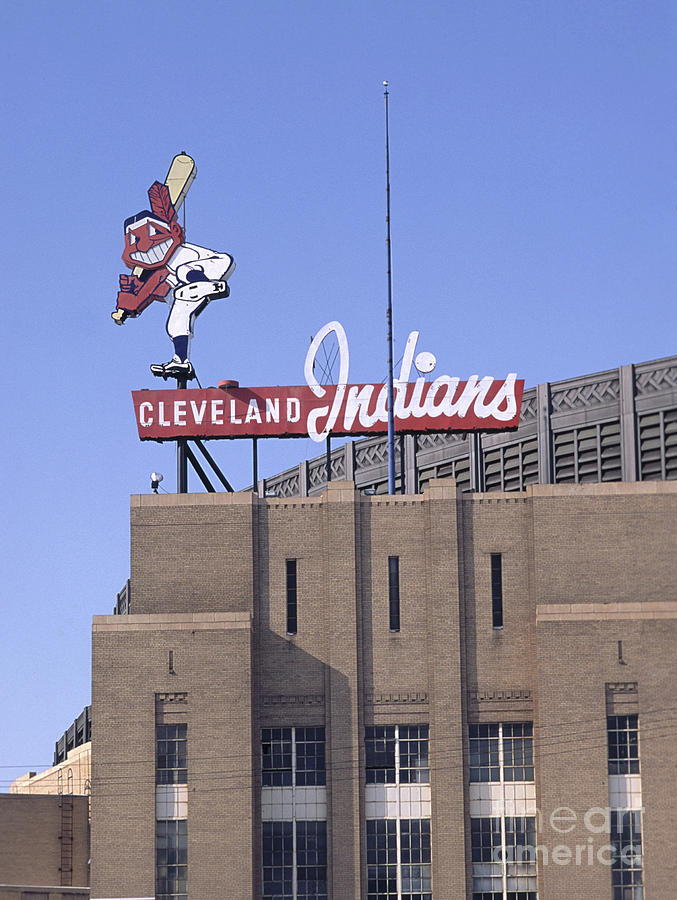
Some "luck": Between them, these 2 teams won only 6 Pennants between 1915 and 1990. And 2 of those 6 were against each other, in 1948. By that point, the Indians had adopted a character known as Chief Wahoo as their mascot. Pluto would later describe the Chief as a "grinning idiot."  
The Chief at Cleveland Municipal Stadium

For years, fans were divided between those who clung to the Chief as a symbol of team "heritage" -- much like people who say that about the Confederate flag -- and those who thought it was disgustingly racist. The Indians moved from Municipal Stadium to Jacobs Field in 1994 (it was renamed Progessive Field in 2007), and won Pennants in 1995, 1997 and 2016, and were more often than not Playoff contenders since the stadium switch.

Nevertheless, after the 2019 season, the Indians removed all references to the Chief, including from their caps, replacing him with a block letter C for Cleveland. In 2020, the NFL's Washington Redskins finally did what they said they would never do, and dropped their Native American name. They played 2 years as "The Washington Football Team" while they selected a new name. On February 2, 2022, they became the Washington Commanders.

With that in mind, Indians management decided it was time to consider alternatives. On July 23, 2021, they announced that, starting with the 2022 season, they would be the Cleveland Guardians. It was exactly 1 year to the day after the Washington Football Team dropped "Redskins."

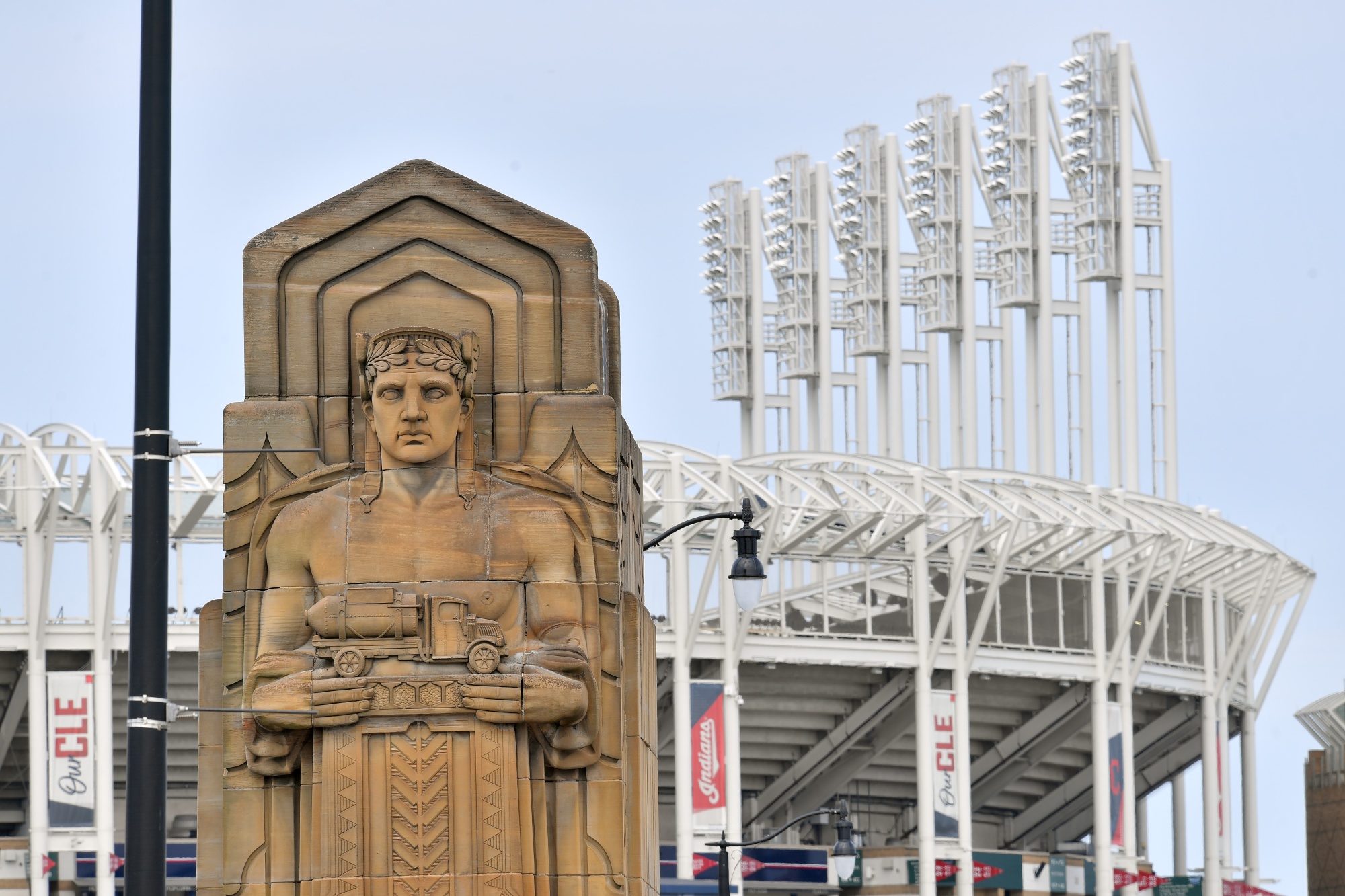
The team's name references "the Guardians of Traffic," 8 monolithic 1932 Art Deco sculptures by Henry Hering on the city's Hope Memorial Bridge, which is adjacent to Progressive Field.
One of the Guardians of Traffic,
with Progressive Field in the background

A minority of fans was furious, throwing out stupid labels like "politics" and "woke." The truth is, not only was the change long overdue, but changing from "Indians" to "Guardians" really didn't even change half the name: It still ended in "-dians."

The 1st game under the name "Cleveland Indians" was on April 14, 1915, a 5-1 win over the Detroit Tigers at Navin Field (eventually named Tiger Stadium) in Detroit. The last game under the name was on October 3, 2021, a 6-0 win over the Texas Rangers at Globe Life Field in Arlington, Texas. And the 1st game under the name "Cleveland Guardians" was on April 7, 2022, a 3-1 loss to the Kansas City Royals at Kauffman Stadium in Kansas City.

For those still upset over the change: "Indians" wasn't the team's original name, either. In fact, of the 16 teams that Major League Baseball had prior to 1961, only the Detroit Tigers are still using their original name. Only 7 of the 30 current teams are using their original names: The Tigers, the Royals, the New York Mets, the San Diego Padres, the Toronto Blue Jays, the Seattle Mariners and the Arizona Diamondbacks.

*

July 23, 2021 was a Friday. These Major League Baseball games were played:

* The name change didn't help the Cleveland franchise that day: They lost to the Tampa Bay Rays, 10-5 at Progressive Field. Since they are the team in question, I have deviated from my usual path of starting with the New York teams, and then going from North to South, East to West, which I now resume:

* The New York Yankees lost to the Boston Red Sox, 6-2 at Fenway Park in Boston. The Red Sox used an "opener game," and were able to defeat Yankee ace Gerrit Cole. Rafael Devers hit 2 home runs.

* The New York Mets beat the Toronto Blue Jays, 3-0 at Citi Field. How many Met pitchers does it take to pitch a 3-hit shutout? This time, 4: Tylor Megill (6 innings, 2 hits, 1 walk, winning pitcher), Seth Lugo (7th inning, 1 hit), Trevor May (a perfect 8th inning) and Edwin Díaz (a perfect 9th, save).

* The Philadelphia Phillies beat the Atlanta Braves, 5-1 at Citizens Bank Park in Philadelphia.

* The Baltimore Orioles beat their neighbors, the Washington Nationals, 6-1 at Oriole Park at Camden Yards in Baltimore.

* The San Diego Padres beat the Miami Marlins, 5-2 at LoanDepot Park in Miami.

* The Houston Astros beat their cross-State rivals, the Texas Rangers, 7-3 at Minute Maid Park (now Daikin Park) in Houston.

* The Cincinnati Reds beat the St. Louis Cardinals, 6-5 at Great American Ball Park in Cincinnati.

* The Chicago Cubs beat the Arizona Diamondbacks, 8-3 at Wrigley Field in Chicago.

* The Milwaukee Brewers beat the Chicago White Sox, 7-1 at American Family Field in Milwaukee.

* The Minnesota Twins beat the Los Angeles Angels, 5-4 in Minneapolis.

* The Kansas City Royals beat the Detroit Tigers, 5-3 in Kauffman Stadium in Kansas City.

* The Colorado Rockies beat the Los Angeles Dodgers, 9-6 at Dodger Stadium in Los Angeles. The Rockies scored 3 runs in the top of the 10th inning, including a home run by Charlie Blackmon.

* The Pittsburgh Pirates beat the San Francisco Giants, 6-4 at Oracle Park in San Francisco.

* And the Seattle Mariners beat the Oakland Athletics, 4-3 at T-Mobile Park in Seattle.

July 23, 2020: The Washington Football Team Drops the Name "Redskins"

July 23, 2020: After years of being called racist over their team name, the NFL's Washington franchise drops the name "Redskins."

In 1932, George Preston Marshall and 3 partners bought a Boston franchise for the NFL. Like most NFL teams at the time, they played in the biggest stadium in town, which was Braves Field. And so, like many (but not all) NFL teams at the time, he named the football team after the baseball team: The Boston Braves.

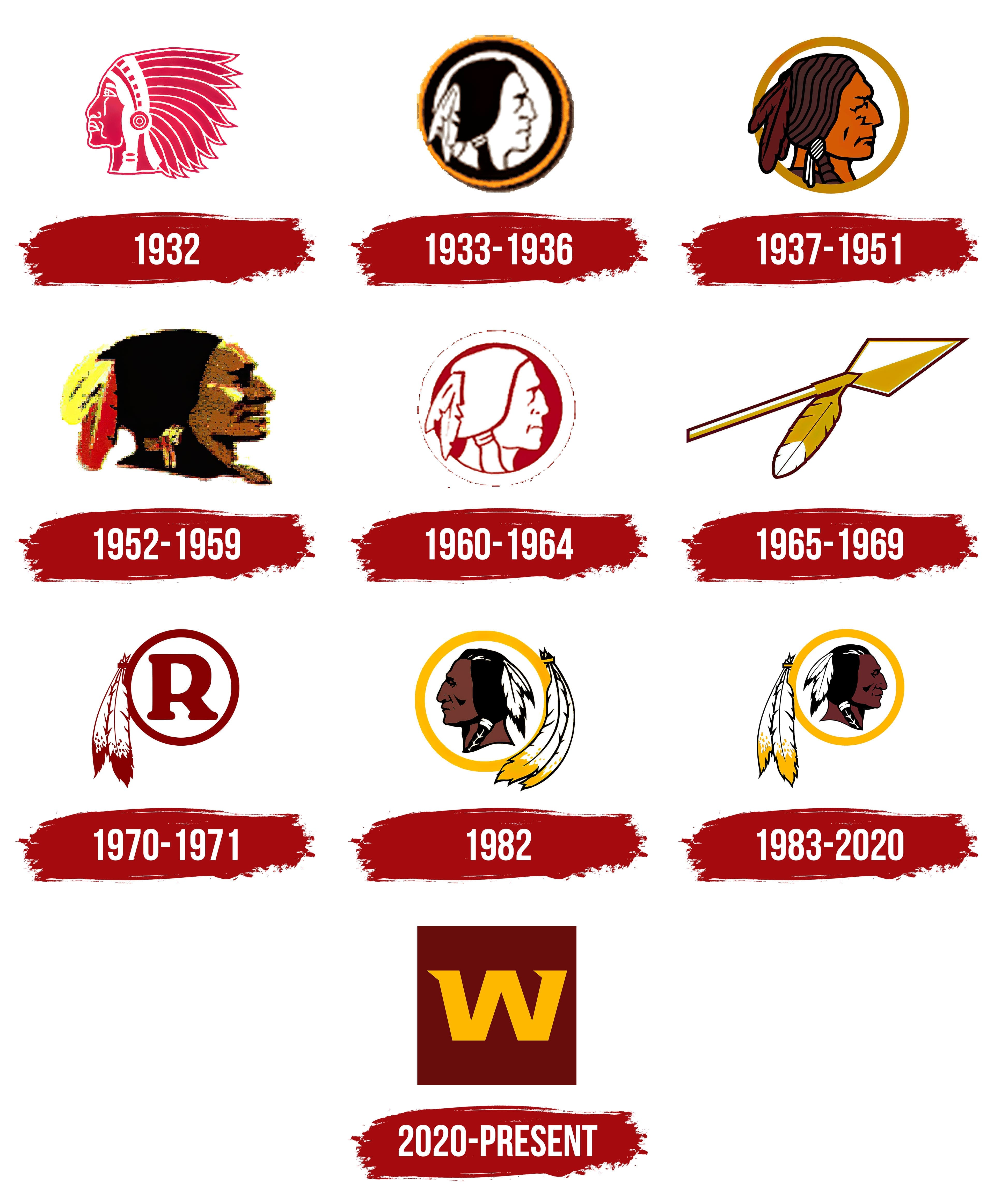
After a bad season, both on the field and at the box office, the other 3 partners wanted out. Marshall bought them out, and, for 1933, moved them to Fenway Park, which had fewer seats, but better transit access. The Boston Red Sox wouldn't allow a team named the Boston Braves playing in their ballpark (different owners had done so in 1914 and 1915), so Marshall changed the name to the Boston Redskins. It was close to "Red Sox," and it allowed Marshall, who valued the color green even more than he valued the color white, to keep the Native American logos. Apparently, as the owner of a chain of laundromats, he knew that buying new stationery was cheaper than buying new uniforms.

But the team never drew fans. At the time, Boston was a good college football town, but people weren't interested in a pro team. In 1936, the Redskins won the NFL Eastern Division, entitling them to host the NFL Championship Game. Marshall was sure he wouldn't get good attendance even for this, so he asked NFL President Joe Carr if he could move the game to the Polo Grounds in New York. Carr gave permission, and 29,545 people came out -- compared to the 61,000 fans that they got for their 7 home games in Boston combined. The Redskins lost to the Green Bay Packers, 21-6.

With the other NFL owners happy to approve it, Marshall moved the team to his hometown for the 1937 season, and the Washington Redskins they would remain through the 2019 season. He drafted Sammy Baugh, who became the 1st rookie quarterback ever to lead a team to an NFL Championship, as the Redskins beat the Chicago Bears. He and Bob Waterfield remains the only two.

The Redskins lost the NFL Championship Game to the Bears in 1940, beat the Bears in it in 1942, lost to the Bears in it in 1943, and lost to the Cleveland Rams in it in 1945. The Rams then followed the Redskins' example, and immediately moved to another city, Los Angeles.

They were the last NFL team to integrate, not doing so until pressure from the federal government finally led them to do so in 1962. So there was a racist element to the team, above and beyond the name of the team. Nevertheless, when they team returned to prominence in the 1970s, black fans in the D.C. area took to them as much as white fans did. This grew when they reached 4 Super Bowls and won 3 of them in a 10-season stretch from 1983 to 1992, including 1 with the 1st black quarterback to do so, Doug Williams, in Super Bowl XXII in 1988.

Marshall capitalized -- pardon the choice of words -- on the popularity of college football by treating the Redskins like a college team, giving them a marching band, a fight song titled "Hail to the Redskins," and big halftime shows. From 1938 to 2019, they played "Hail to the Redskins" after every score and every win.

He also worked with Washington Senators owner Clark Griffith to rent Griffith Stadium out as a home field for D.C.'s 2 major colleges, George Washington University and Georgetown, neither of whom plays major college football anymore. He did not extend the same courtesy to Howard University, "the Black Harvard." And Clark's nephew, Calvin Griffith, also an avowed racist, moved the Senators out of what became a black neighborhood to mostly-white Minnesota in 1961. Ironically, Howard's hospital and medical school now occupy the Griffith Stadium site.

Marshall suffered a stroke in 1963, and was unable to run the team's affairs from then until his death in 1969. Minority owners stepped up, including Washington "superlawyer" Edward Bennett Williams and Toronto-based sportsman Jack Kent Cooke.

Cooke had owned minor-league baseball's Toronto Maple Leafs, and also owned the NBA's Los Angeles Lakers and the NHL's Los Angeles Kings. He sold the L.A. teams because NFL rules prohibit a majority owner from being that of a team in another sport, and he wanted to buy Williams out.

He completed that process in 1983, shortly after the Redskins won Super Bowl XVII. This allowed Williams to become the majority owner of baseball's Baltimore Orioles, who won the World Series in 1983. This made Williams the 1st person to own the titleholders in MLB and the NFL at the same time, even in part. There has never been another.

Marshall had been popular with the other NFL owners, but not with the fans, as D.C. became a majority-black city. Williams and Cooke were popular, and Cooke has been called the sports team owner who was more beloved by his players than any other. The Redskins won 2 more Super Bowls. Still, there were people complaining about how the team's name was racist.

In 1997, just before a stadium in the Maryland suburbs that would bear his name opened, Cooke died. His heirs did the worst thing they could do: They sold the team to Daniel Snyder, who proved to be not just incompetent, but obnoxious. (He also, unlike Marshall, Williams and Cooke, proved that you don't need to use all 3 of your names to own the Washington football team.) He swore he would never change the team's name, and was accused of racism, and of leading a culture of misogyny in the team's front office, for the way women were treated, by him and his officers.

In the 2010s, the Black Lives Matter movement began and gained traction, and other anti-bigotry movements followed. The many scandals of Snyder's ownership piled up, to the point where he began negotiations to sell the team.

Finally, on July 23, 2020, desperate for some good news, he caved in on the most superficial of things: The team would no longer be known as the Washington Redskins. They would play the 2020 and 2021 seasons as "The Washington Football Team," until a new name could be chosen. The team's Indian head logo was replaced with a simple block yellow W.

One year to the day later, on July 23, 2021, baseball's Cleveland Indians announced they were changing their name to the Cleveland Guardians for the 2022 season.

The front-runners for the Washington Football Team's new name were the Warriors, the Wolves, and the Redwolves, which would have allowed them to maintain their familiar burgundy caps with the golden script R. But on February 2, 2022 -- 2/2/22 -- they announced the new name: Washington Commanders. The joke was that "Commanders" would be abbreviated not to "C's," but to "Commies." But it was widely accepted by area fans.

UPDATE: Even more accepted by area fans was the 2023 purchase of the team from Snyder, by Harris Blitzer Sports & Entertainment, led by Josh Harris, a native of nearby Chevy Chase, Maryland. Harris Blitzer had previously bought the NBA's Philadelphia 76ers in 2011, the NHL's New Jersey Devils in 2013, and a minority stake in English soccer team Crystal Palace F.C. in 2015.

They have tried to buy other English soccer teams, including giants Chelsea F.C. and Manchester United, without success. If a deal can be made, they would have to sell Crystal Palace.

*

July 23, 2020 was a Thursday. The only sport in action was baseball, and it was still being affected by postponements due to team personnel contracting COVID-19. There were only 2 games on this day. And one did not go the distance. Interestingly enough, it was in Washington: The New York Yankees were leading the Washington Nationals, 4-1, with 1 out in the top of the 6th inning at Nationals Park, when it was called due to rain. Gerrit Cole was the winning pitcher, Max Scherzer the losing pitcher. Giancarlo Stanton hit a home run.

In the other game, the Los Angeles Dodgers beat their arch-rivals, the San Francisco Giants, 8-1 at Dodger Stadium in Los Angeles. Enrique Hernández went 4-for-5 with a home run and 5 RBIs.

Friday, June 24, 2022

June 25, 1876: The Battle of the Little Bighorn

June 25, 1876: The Battle of the Little Bighorn is fought in the Montana Territory. The 7th Cavalry of the U.S. Army fights several tribes of Native Americans. The tribes win.

The main group of Natives was the Lakota Sioux, led by Sitting Bull and Crazy Horse. The Cavalry was led by Lieutenant Colonel George Armstrong Custer. He had graduated 35th and last in his class at the U.S. Military Academy at West Point in 1861. Because the Civil War was raging, he rose fast, and had the brevet (temporary) rank of Major General. After the war, his questionable actions led the Army to drop him back down to Lieutenant Colonel.
Custer had managed some victories against Natives in the intervening 11 years, and began to believe he was invincible. But on the Little Bighorn River, he found out otherwise. The legend that there were no U.S. Army survivors isn't even close to being true, but of the 700 men under Custer's command, 274, including Custer himself, a 36-year-old Ohioan, died. The Natives lost about half that many, out of around 2,500.

Reports of the battle began to reach the Eastern United States on Centennial Day, July 4, 1876. The anger of "the white man" toward "the red man" was stronger than ever. A year later, Crazy Horse was captured and executed. Sitting Bull, too, would eventually face what the white man would call "justice," in 1890, at Standing Rock, South Dakota, not long before the last major battle with the Natives, called Wounded Knee.
The most familiar photograph of Sitting Bull.
There is no known photograph of Crazy Horse,
due to a Native superstition about a camera "capturing the soul."

The battle was nicknamed Custer's Last Stand, and Custer was seen as a hero. In truth, he was an unearned egomaniac, and deserves to be ridiculed by history.

The site of the battle is now part of the Crow Indian Reservation, in the southeastern part of the State of Montana. The closest city is Billings, 60 miles to the northwest. The closest major league city is Denver, nearly 500 miles south -- unless you consider the Canadian Football League to be a "major league," in which case the closest is Regina, home of the Saskatchewan Roughriders, 460 miles northeast.

In 1960, novelty singer Larry Verne had a Number 1 hit with "Mr. Custer." Even by the standards of that time, in which Westerns dominated television and were still big in movies, it was racist as hell toward Natives. It also perpetuated the myth of the cavalry charge order, "Forward, ho!" No such order has ever existed in the U.S. Army.

*

June 25, 1876 was a Sunday. As a result, even though this was the 1st season of baseball's National League, there were no games, because the NL forbid Sunday ball until 1892. Football was in its infancy, hockey was a newborn sport even at the most mildly organized level, and basketball wouldn't be invented for another 15 years. So there were no scores on this historic day.

Thursday, June 2, 2022

June 2, 1924: The Indian Citizenship Act

June 2, 1924: President Calvin Coolidge signs the Indian Citizenship Act, guaranteeing all the rights of American citizenship to Native Americans born on U.S. soil.

It shouldn't even have been a question. The 14th Amendment to the Constitution of the United States, ratified in 1868, specifically states: "All persons born or naturalized in the United States, and subject to the jurisdiction thereof, are citizens of the United States and of the State wherein they reside." But the part about being "subject to the jurisdiction thereof" put it into question. This language was generally taken to mean members of various tribes that were treated as separate sovereignties: They were citizens of their tribal nations.

The act was proposed by U.S. Representative Homer P. Snyder, Republican of New York, arguing that Native Americans had served in the U.S. armed forces during World War I, and should be eligible for not just all the rights and privileges of U.S. citizens, but specifically for veterans' benefits. Under this Act, Indigenous people did not have to apply for citizenship, nor did they have to give up their tribal citizenship to become U.S. citizens.

Some tribes opposed the bill. The Onondaga Nation of New York State believed acceptance of this act was "treason," because the United States Senate was forcing citizenship on all Indians without their consent.

Nevertheless, the House of Representatives passed it on March 18, 1924, the Senate passed it on May 15, in both cases on a voice vote rather than a roll call, and signed into law by Coolidge on June 2.

In 1927, on the same South Dakota vacation on which he declared, "I do not choose to run for President in 1928," the Lakota Nation presented Coolidge with a war bonnet, sometimes called a headdress. He accepted the gift, but he didn't look comfortable in it. Then again, he didn't look comfortable in anything. Alice Roosevelt Longworth, wife of the Speaker of the House and daughter of a President, once said that Coolidge "looks like he was weaned on a pickle." (As it turned out, Coolidge enjoyed pickles.)

*

June 2, 1924 was a Monday. There were 3 games played that day in what would later be called Major League Baseball:

* The New York Giants beat the Boston Braves, 9-6 at the Polo Grounds. Wilfred "Rosy" Ryan was the winning pitcher, and went 2-for-4 with an RBI in his own cause. George "High Pockets" Kelly went 3-for-5 with a home run and 2 RBIs. Travis Jackson went 3-for-5. Frank Snyder went 3-for-3 with a walk and 4 RBIs. Ross Youngs went 2-for-4 with a walk and an RBI. But Frankie Frisch went 0-for-5. Ryan and Snyder were the only ones of these who did not make the Baseball Hall of Fame.

* The Washington Senators beat the Philadelphia Athletics, 8-3 at Shibe Park in Philadelphia. Walter Johnson went the distance for his 360th career win.

* And the Pittsburgh Pirates beat the St. Louis Cardinals, 6-2 at Forbes Field in Pittsburgh. Max Carey, better known as one of the best baserunners of the era, hit a home run.

Thursday, April 21, 2022

April 22, 1889: The Oklahoma Land Rush

April 22, 1889: The Oklahoma Land Rush is launched, one of the greatest examples of unbridled capitalism in American history -- and yet another screwing of Native Americans.

The Indian Removal Act of 1830 uprooted "The Five Civilized Tribes" -- the Cherokee Chickasaw, Choctaw, Creek and Seminole -- from the Southeastern U.S. to "The Indian Territory," between Kansas and Texas.

President Abraham Lincoln signed the Homestead Act of 1862, which allowed settlers to claim lots of up to 160 acres), provided that they lived on the land and improved it. It had a huge effect upon the American West, and might have been what he would have been best known for had the American Civil War not happened.

With the end of the Civil War, land-hungry people sought land in the West. European Americans pressed their legislators to open the Indian Territory. Certain Native Americans like Elias C. Boudinot encouraged other Native Americans to participate in the effort to welcome westward expansion. From 1870 to 1879, 33 bills were introduced in Congress to open the Territory for settlement.

After years of trying to open Indian Territory, on March 2, 1889, President Grover Cleveland signed the Indian Appropriations Act of 1889, which officially opened the Unassigned Lands to non-native settlers under tenets of the Homestead Act. This was 2 days before his successor, Benjamin Harrison, was inaugurated.

However, under a section in this original Act, those who entered these unassigned lands illegally, before their respective racing times as designated in the President's opening proclamation, would be denied the rights to the lands they claimed. These people were termed "Sooners," with this section of the act being termed as the "sooner clause." But there was growing political pressure to open these unassigned lands to settlement quickly. Thus, later in 1889, an amendment to the Act allowed President Harrison to be involved in this historical bill as well, proclaiming unassigned lands were open for settlement under much less stringent rules.

This led to hundreds of legal contests that were decided, first at local land offices, and eventually by the U.S. Department of the Interior. Arguments included what constituted the "legal time of entry." While some people think that the settlers who entered the territory at the legally appointed time were known as "Boomers," the term actually refers to those who campaigned for the opening of the lands.

The University of Oklahoma's fight song, "Boomer Sooner," derives from these two names. The school "mascot" is a replica of a 19th-century covered wagon, called the Sooner Schooner. (Covered wagons had previously been known as "prairie schooners." When the OU football team scores, the Sooner Schooner is pulled across the field by a pair of ponies named "Boomer" and "Sooner.”

Harrison made the declaration that, on April 22, 1889, at 12:00 Noon, the Unassigned Land in Indian Territory would be open for settlement. At the time of the opening, which was indicated by gunshot, the line of people on horse and in wagons dispersed into a kaleidoscope of motion and dust and oxen and wagons. The chase for land was frenzied and much chaos and disorder ensued. The rush did not last long, and by the end of the day, nearly 2 million acres of land had been claimed. By the end of the year, 62,000 settlers lived in the Unassigned Lands located between the Five Tribes on the east and the Plains Tribes on the west.

The University of Oklahoma was founded on December 19, 1890, just 20 months after the Land Rush. Oklahoma was admitted as the 46th State in the Union on November 16, 1907.

The 1930 novel Cimarron, by Edna Ferber, and the 1931 film based on it, depicted the Land Rush. The film won the Academy Award for Best Picture, and was regarded as the 1st great Western film with sound. But, much like the attitudes that inspired the Land Rush itself, the film doesn't hold up: Steve Evans of DVD Verdict wrote in 2006, "Seen with contemporary eyes, the film is badly dated, slow moving, and pocked with racist caricatures... The recreation of the great 1889 Oklahoma Land Rush remains an exciting spectacle... Unfortunately, the film never manages to top this opening shot."

*

April 22, 1889 was a Monday. These baseball games were played, all in the American Association:

* The Brooklyn Bridegrooms lost to the Baltimore Orioles, 6-4 at the original Oriole Park in Baltimore. The Grooms joined the National League in 1890, the Orioles in 1892, with the folding of the AA. The Orioles folded after the 1899 season. The Brooklyn team became the Dodgers in 1911.

* The Philadelphia Athletics beat the Columbus Solons, 15-6 at the Jefferson Street Grounds in Philadelphia. Both teams folded with the AA after the 1891 season.

* The Cincinnati Reds beat the Kansas City Cowboys, 10-1 at American Park in Cincinnati. The Cowboys folded after this season. The Reds joined the NL in 1892.

* And the St. Louis Browns beat the Louisville Colonels, 13-6 at Eclipse Park in Louisville, Kentucky. Both teams joined the NL in 1892. The Colonels went out of business after the 1899 season, at which point the Browns became the Cardinals.

Monday, February 28, 2022

February 28, 1973: The Wounded Knee Occupation

February 28, 1973: A group of 200 Oglala Sioux members of the American Indian Movement (AIM) seized the town of Wounded Knee, South Dakota, located within the borders of the Pine Ridge Indian Reservation.

The town had been the site of the last major conflict between the U.S. government and Native Americans, in 1890, when the U.S. Army shot and killed 250 Natives in one of the worst massacres, committed by any side, in American history.

The occupation was launched after the Oglala Sioux were unable to remove the Oglala Reservation Chairman, Dick Wilson, whom they accused of corruption since his election the year before. Frank Fools Crow, the senior elder of the Oglala, and AIM leader Russell Means led the occupation. Fools Crow later said, "We called our brothers and AIM to help us because we were being oppressed and terrorized. They answered our call."
Frank Fools Crow

The occupation lasted for 71 days, until an agreement was reached between federal officials and a Lakota delegation, which included Fools Crow. Following the occupation, violence increased on the reservation, with residents reporting attacks by Wilson's henchmen. More than 50 of his opponents allegedly died violently in the next three years. He was finally defeated in the next election, in 1976. He was never tried for any crime, and died in 1990.

Fools Crow continued to lead his people. On September 5, 1975, he accepted an invitation to recite the opening prayer before a session of the U.S. Senate. He delivered it in the Lakota language, and it was translated into English. He died in 1989.

Means retired as AIM leader in 1988, saying the organization had achieved its goals. He continued his activism, and ran for President and for Governor of New Mexico on the ticket of the Libertarian Party. He also became an actor, appearing in films as Native heroes Jim Thorpe and Sitting Bull, and was the voice of Powhatan, Chief of the Virginia tribes and father of the title character, in Disney's animated Pocahontas films, even though they flew in the face of history. He lived until 2012.
Russell Means

Wounded Knee is far from any major city. It's 104 miles southeast of Mount Rushmore, 350 miles northeast of Denver and over 400 miles northwest of Omaha. In fact, the Little Bighorn Battlefield is about 350 miles to the northwest, so it's closer to that than to Denver, the closest major league city.

*

February 28, 1973 was a Wednesday. Hockey star Eric Lindros was born.

Baseball and football were out of season. There were 4 games played in the NBA:

* The Boston Celtics beat the Golden State Warriors, 118-111 at the Boston Garden.

* The Philadelphia 76ers beat the Baltimore Bullets, 102-96 at The Spectrum in Philadelphia. This was a rare win for the Sixers, undergoing the worst season in NBA history: 9-73. Phil Chenier scored 36 in defeat for the Bullets, who moved a few miles down Interstate 95 to the suburbs of Washington, D.C. the next season.

* The Milwaukee Bucks beat the Seattle SuperSonics, 124-110 at the Milwaukee Arena. In 1974, it was renamed the Milwaukee Exposition, Convention Center and Arena, or "The MECCA." Since 2014, it has been named the UW-Panther Arena. Spencer Haywood scored 36 for the Sonics, but it wasn't enough.

* And the Kansas City-Omaha Kings beat the Phoenix Suns, 109-107 at the Arizona Veterans Memorial Coliseum in Phoenix. Nate "Tiny" Archibald of the Kings led all pro scorers on the night, with 41 points.

There were 4 games played in the American Basketball Association:

* The New York Nets beat the Memphis Tams, 115-108 at the Nassau Coliseum.

* The Kentucky Colonels beat the Virginia Squires, 117-97 at Freedom Hall in Louisville.

* The Indiana Pacers beat the San Diego Conquistadors, 109-106 at the Indiana State Fairgrounds Coliseum (now the Corteva Coliseum) in Indianapolis.

* And the Carolina Cougars beat the Denver Rockets, 104-96 at the Auditorium Arena in Denver. The Rockets became the Denver Nuggets for the 1974-75 season.

There were 6 games played in the NHL:

* The New York Rangers and the Chicago Black Hawks played to a tie, 3-3 at Madison Square Garden.

* The Montreal Canadiens beat the Los Angeles Kings, 5-2 at the Montreal Forum.

* The Toronto Maple Leafs beat the Vancouver Canucks, 7-2 at Maple Leaf Gardens in Toronto.

* The Pittsburgh Penguins beat the St. Louis Blues, 4-2 at the Civic Arena in Pittsburgh.

* The Detroit Red Wings beat the Philadelphia Flyers, 6-5 at the Olympia Stadium in Detroit.

* The Minnesota North Stars beat the California Golden Seals, 7-3 at the Metropolitan Sports Center in the Minneapolis suburb of Bloomington, Minnesota.

* And the New York Islanders, the Boston Bruins, the Buffalo Sabres and the Atlanta Flames were not scheduled.

There was 1 game played in the World Hockey Association: The Houston Aeros beat the Alberta Oilers, 3-2 in overtime at the Sam Houston Coliseum in Houston.

Monday, January 3, 2022

January 3, 1959: Alaska Is Admitted As the 49th State

January 3, 1959: Alaska is admitted to the Union as the 49th State. The 1st 48 States are known as the "Contiguous States." But Alaska and Hawaii, the 2 newest States, are separated from them, and neither borders any other State.

Because new States mean new stars added to the American Flag on the following July 4, but Alaska was admitted before that date in 1959, and Hawaii was admitted after it, from July 4, 1959 to July 4, 1960, the United States had a 49-Star Flag. Since my father graduated from high school in 1960, his yearbook has a photograph of a 49-Star Flag. Alaska's State Flag, adopted as a Territorial Flag in a contest in 1927, shows the constellation known as the Big Dipper and Polaris, the North Star.
Count 'em: 49 Stars, in 7 rows of 7

Alaska is in the Pacific Northwest. It had been acquired from Russia as "The Alaska Purchase" on May 15, 1867. There are still places in Alaska with strong Russian heritage, including Sitka, on Chichagof Island. It is one of several places in the State that is not accessible by road, only boat or plane. In the Bering Strait, Little Diomede Island, population 77, belonging to the U.S., and Big Diomede Island, permanent population zero, belonging to Russia, are 2.4 miles apart at their closest point. But they are also a day apart, as the International Date Line cuts between them: Little Diomede is also known as Yesterday Island, and Big Diomede, or Ratmanov Island, is also known as Tomorrow Island.

Alaska is by far the largest State by area, more than twice as large as Texas -- and people in Texas were not happy that they lost their "largest State" status in 1959. But Alaska's great distances and cold temperatures also mean it's the State with the lowest population density. With 733,000 people according to the 2020 Census, they are 48th, ahead of only Vermont and Wyoming.

It also has the largest percentage of Native Americans than any other State, 15.2 percent. (New Mexico with 13 and South Dakota with 11 are the only States that are close in that regard.) However, the term "Eskimo" is now considered offensive, and the ethnic groups upon whom that term was placed now prefer tribal names like Inuit, Aleut, Yupik, and so on.

The State capital of Juneau is on the Pacific Coast, 1,650 miles by road from the Peace Arch at the Washington-British Columbia border crossing; and 848 miles, including having to cross into Canada, through the Province of British Columbia and the Yukon Territory, before re-entering the U.S., to get to the largest city, Anchorage. From Anchorage to Fairbanks, it's 359 miles; to Nome in the west and Barrow, the northernmost point in the United States, forget it: Plane only, 540 and 725 miles, respectively. Because the Aleutian Islands cross the International Date Line, Alaska holds the United States' northernmost, westernmost and easternmost points. (Hawaii has the southernmost.)

The Alaska Highway, a.k.a. the Alaska-Canadian Highway or the ALCAN Highway, was completed in 1942, running from Delta Junction, Alaska, outside Fairbanks, to Dawson Creek, British Columbia (not to be confused with the fictional titular location of the TV show Dawson's Creek). The Alaska Highway should not be confused with the Alaskan Way, which runs for a mile and a half in Seattle. A Constitution was ratified in 1956, and that paved the way for Statehood in 1959.

Alaska has become known for its terribly cold weather, its inaccessibility, but also its natural beauty, and its natural resources, especially oil. The Trans-Alaska Pipeline System began operating in 1977.

Like many Western States, Alaska tends to be conservative, with a libertarian "Leave me alone, government" bent. The highest-ranking Alaska politician in Congress has been Ted Stevens, who was President Pro Tempore of the U.S. Senate from 2003 to 2007. The highest-ranking one in a President's Cabinet has been Walter Hickel, a former Governor who was Secretary of the Interior under Richard Nixon in 1969 and 1970.

At 291,000 people, Anchorage's population, despite being 40 percent of the entire State, is too small to host major league sports, and the distance makes participation in U.S.-based minor sports leagues problematic. There is an Alaska Baseball League, a "collegiate summer league."

The University of Alaska was founded in 1917, in Anchorage. It has campuses in Anchorage (UAA), Fairbanks (UAF) and the Southeast Campus (UAS) in Juneau. It competes in NCAA Division I for ice hockey and gymnastics, and Division II for most other sports. It has no football team, but the Great Alaska Shootout basketball tournament was held every Thanksgiving weekend from 1978 to 2017. It is being revived in 2022 for women only.

*

January 3, 1959 was a Saturday. Baseball was out of season. The college and pro football seasons had ended that week. There were 2 games in the NBA. The New York Knicks beat the Detroit Pistons, 106-102 at the Olympia Stadium in Detroit. And the St. Louis Hawks beat the Boston Celtics, 116-110 at the Kiel Auditorium in St. Louis.

And the NHL's entire "Original Six" were in action:

* The New York Rangers lost to the Montreal Canadiens, 5-1 at the Montreal Forum.

* The Chicago Black Hawks beat the Toronto Maple Leafs, 2-1 at Maple Leaf Gardens in Toronto.

* And the Boston Bruins beat the Detroit Red Wings, 8-2.

And in English soccer, Arsenal, the North London team I would eventually support, went to the West Midlands, and beat Leicester City, 3-2 at Filbert Street in Leicester.

December 31, 1999 & January 1, 2000: The Millennium

December 31, 1999:  The Millennium arrives. The people of planet Earth survived. At a terrible cost. But we hadn't destroyed ourselves. ...