Showing posts with label johnny bench. Show all posts

Tuesday, October 11, 2022

October 11, 1972: Bob Moose's Wild Pitch


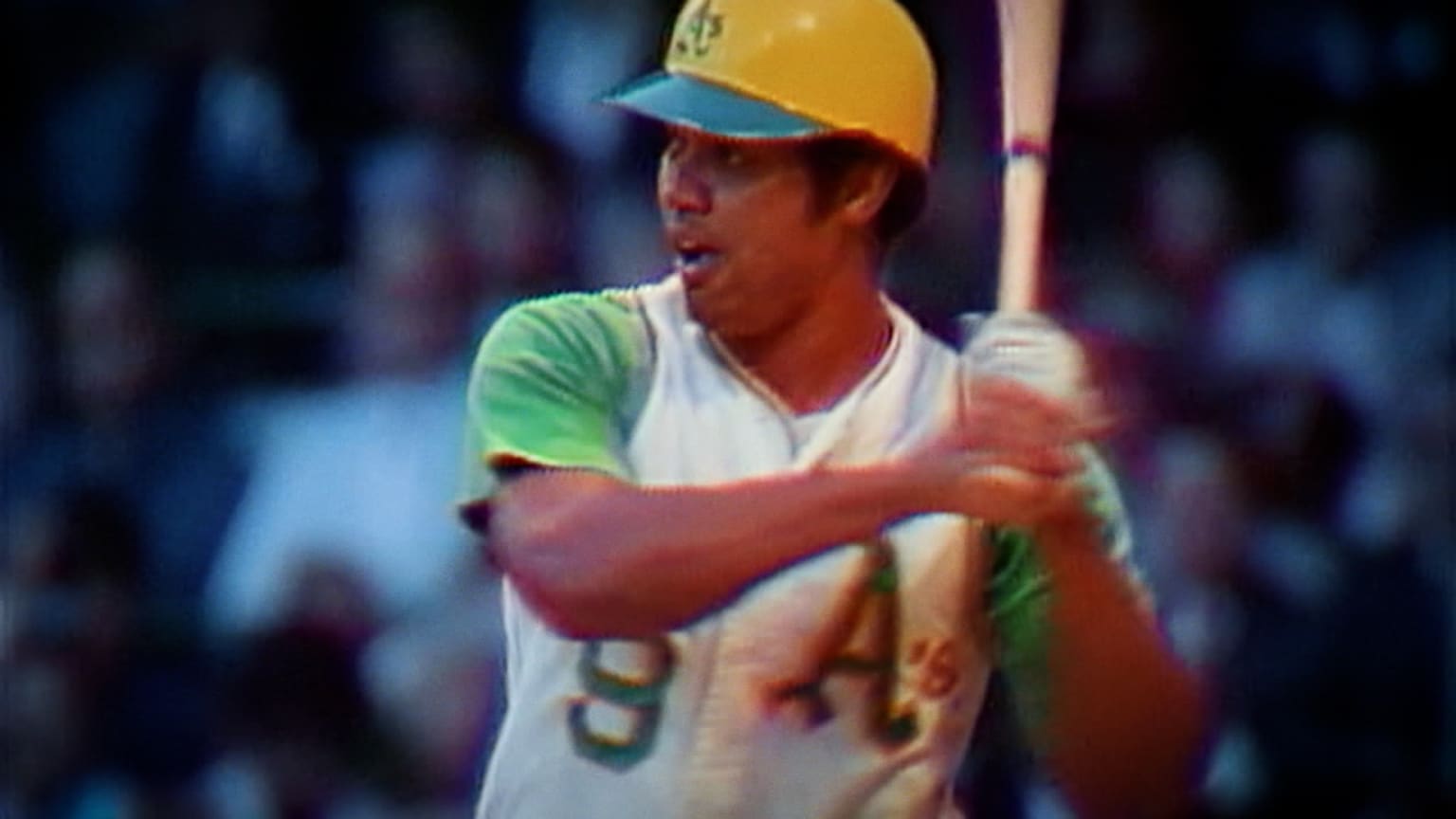
October 11, 1972: The Pittsburgh Pirates, defending World Champions, lead the Cincinnati Reds 3-2 in the bottom of the 9th inning of the deciding Game 5 of the National League Championship Series at Riverfront Stadium in Cincinnati. But Johnny Bench hits a home run off Dave Guisti, over the left-field fence to tie the game‚ over the head of the Pirates' legendary right fielder, Roberto Clemente, who had joined the 3,000 Hit Club just 2 weeks earlier.
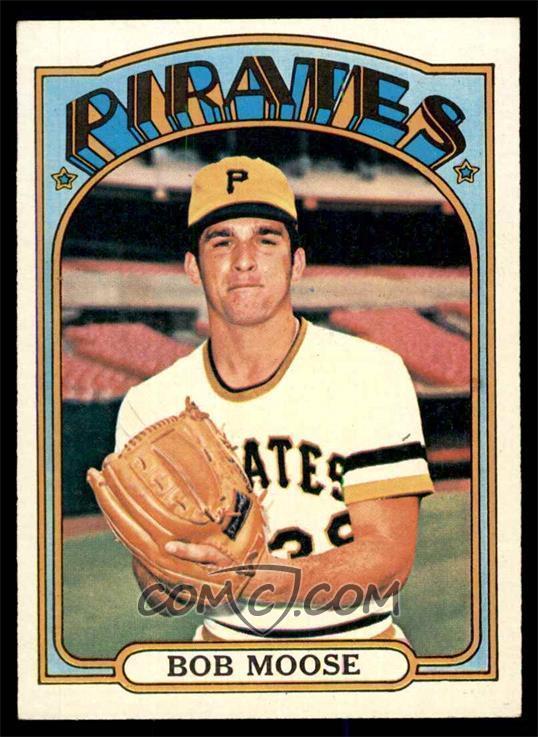
The Big Red Machine collect 2 more singles, and, with Hal McRae at bat, Bob Moose, who had come in to relieve Guisti, throws a wild pitch, and the Reds win, 4-3.
Not since Jack Chesbro in 1904 had a wild pitch decided a Pennant. Not since Johnny Miljus in the 1927 World Series had a wild pitch ended a postseason series. By a weird coincidence, Miljus threw his wild pitch as a Pirate, and Chesbro had also pitched for the Pirates before signing with the Highlanders/Yankees.
The Reds, taking their 2nd Pennant in 3 years, would go on to lose the World Series to the Oakland A's. The Pirates, having won their 3rd straight NL East title but having only 1 Pennant to show for it, would lose something far greater: A plane crash on New Year's Eve would make this game the last one that Clemente would ever play.
There would be more tragedy. Robert Ralph Moose Jr., a native of the Pittsburgh suburb of Export, Pennsylvania, a key figure on the Pirates' 1971 World Series winners, would be killed in a car crash in Ohio while still with the team, on October 9, 1976 -- his 29th birthday.
Still, he is remembered more for one pitch than for his achievements, or for his death. And he deserves better. The lead was already blown. The Pirates wouldn't have gotten that far without him. He went 13-10 that season, with a 2.91 ERA and a 1.150 WHIP. And he was much more reliable as a starter than as a reliever. Pirate manager Danny Murtaugh should have brought in someone else.
The Pirates should have held their home field advantage. They did win Game 3 at Riverfront. But the Reds won Game 2 at Three Rivers Stadium. Had the Pirates simply held at home, there never would have been a Game 4, let alone a Game 5.
And the Reds were better. True, the Pirates had won 96 games to the Reds' 95. They also scored 19 runs in the series, to the Reds' 15. But in the regular season, the Reds outscored the Pirates 707-691. The Reds had already beaten the Pirates in the 1970 NLCS. When the Pirates won the whole thing the next year, the team they had to beat in the NLCS was not the Reds, but the San Francisco Giants.
Overall, in the 1970s, in NLCS play, the Reds were 4-2, and the Pirates were 2-4. In games, the Reds were 14-8, and the Pirates were 9-13. Against each other, the Reds led 6-5.
Hall-of-Famers? The Pirates had Clemente, Bill Mazeroski and Willie Stargell. But the Reds had Bench, Joe Morgan and Tony Perez, not to mention Pete Rose, who would be in the Hall if he hadn't done something stupid as a manager.
With the 1st all-nonwhite starting lineup, and Clemente's triumph, in '71 and Stargell leading the "Family" in '79, the Pirates were a great story. But the Reds were a great team.
*
October 11, 1972 was a Wednesday. Game 4 of the American League Championship Series was played at Tiger Stadium in Detroit. Jim "Catfish" Hunter of the Oakland Athletics and Mickey Lolich of the Detroit Tigers battled into extra innings.
The A's scored 2 runs in the top of the 10th, but, in the bottom of the 10th, singles by Dick McAuliffe and Al Kaline, a walk by Gates Brown, and an error by Gene Tenace gave the Tigers a run. Norm Cash walked, and Jim Northrup singled home the tying and winning runs, giving the Tigers a 4-3 win and a tie in the series. But the A's won the Pennant the next day.
There were 7 games played in the NHL:

* The New York Rangers beat the Vancouver Canucks, 5-3 at Madison Square Garden. Rod Gilbert scored 2 goals.

* The Montreal Canadiens and the Toronto Maple Leafs, arch-rivals, played to a 2-2 tie at Maple Leaf Gardens in Toronto.

* The Buffalo Sabres beat the Los Angeles Kings, 7-3 at the Buffalo Memorial Auditorium.

* The Detroit Red Wings beat the Boston Bruins, 4-3 at the Olympia Stadium in Detroit.

* The Chicago Black Hawks beat the expansion Atlanta Flames, 4-1 at the Chicago Stadium.

* The Minnesota North Stars beat the California Golden Seals, 5-2 at the Metropolitan Sports Center in the Minneapolis suburb of Bloomington, Minnesota.

* The Pittsburgh Penguins beat the St. Louis Blues, 5-2 at the St. Louis Arena.

* And the expansion New York Islanders and the Philadelphia Flyers were not scheduled.

It was opening night for the World Hockey Association. I have a separate entry for this event. The 1st game is played at the Edmonton Gardens, and the Alberta Oilers -- they would switch from the Province's name to the City's the next season -- beat the Ottawa Nationals 7-4. Ron Anderson scores the team's 1st goal.

The Quebec Nordiques, trying to get good publicity, named Montreal Canadiens legend Maurice "the Rocket" Richard as head coach, but they lose their 1st game, 2-0 to the Cleveland Crusaders at the Cleveland Arena. Richard immediately quits, saying he wasn't meant to be a coach. Nords management asks him to stay on long enough to hire a replacement. They win their 2nd game, but the Rocket has had enough, and Maurice Filion is hired.

Football was in midweek. The American Basketball Association began its season the next day. There were 3 NBA games played:

* The Boston Celtics beat the Detroit Pistons, 121-108 at Cobo Hall (now Huntington Place) in Detroit.

* The Seattle SuperSonics beat the Philadelphia 76ers, 105-100 at The Spectrum in Philadelphia.

* And the Los Angeles Lakers beat the Kansas City-Omaha Kings, 129-94 at the Omaha Civic Auditorium in Omaha, Nebraska.

Also on this day, Australian actress Claudia Black was born. She is known for her roles in the science-fiction TV series Farscape and Stargate SG-1.

Tuesday, August 23, 2022

August 23, 1980: "The Baseball Bunch" Premieres

August 23, 1980: The Baseball Bunch premieres on NBC. Cincinnati Reds superstar (and eventual Hall-of-Famer) Johnny Bench hosts this series, a baseball instructional video that airs before the Saturday NBC Game of the Week.

The series featured several kids being taught in various tactics of the game by Bench and guest players, including future Hall-of-Famers George Brett, Gary Carter, Andre Dawson, Rollie Fingers, Goose Gossage, Joe Morgan, Phil Niekro, Jim Rice, Cal Ripken Jr., Mike Schmidt, Tom Seaver, Ted Simmons, Ozzie Smith, Willie Stargell, Bruce Sutter and Don Sutton.

Other guests included retired Hall-of-Famers Ted Williams and Frank Robinson; major league managers Sparky Anderson (eventually elected to the Hall) and Chuck Tanner (not); former catcher and Hall of Fame broadcaster Joe Garagiola; eventual all-time hits leader, but also eventual lifetime banee, Pete Rose; noted umpire Ron Luciano; and New York 1st basemen Keith Hernandez and Don Mattingly.

The episodes were taped in Tucson, Arizona, during Spring Training, meaning easy access for the guest players. Erik Lee, who played one of the kids, using the name Rick, recalled, "Each 30-minute episode took basically a day, so we would start early in the morning and just go all day... We would film for a couple weeks at a time, and (while filming) we would get out of school for a couple weeks at a time. It was glorious."

"Working" along with the kids was Ted Giannoulas, in costume as the San Diego Chicken (billed here as simply "The Chicken"). Late in every episode, appearing by video -- because his team, the Los Angeles Dodgers, then trained in Florida, specifically at Vero Beach -- was Tommy Lasorda, the Hall of Fame manager of the Los Angeles Dodgers, as "The Dugout Wizard," complete with wizard costume.

The series ran until 1985, beyond Bench's retirement as a player in 1983. In his 2007 interview with JustMyShow.com, Giannoulas recalled Major League players also secretly enjoying the show, saying "That was a real highlight, being on that program... During the show's existence, I had professional baseball players tell me that they would sneak a peek at the show and pick up tips, because the information that Johnny and our guests would put on the show was very, very good inside baseball information... So I took that as a real compliment, because it signified how credible and good the advice that Johnny and the players were giving, and that not only were kids picking up good advice, but I can attest that professional ballplayers were also tuned in as well."

*

August 23, 1980 was a Saturday. These Major League Baseball games were played that day:

* The New York Yankees beat the California Angels, 5-2 at Anaheim Stadium (now Angel Stadium of Anaheim). Rudy May outpitched Dave LaRoche. Reggie Jackson went 0-for-3 with 2 walks, but Bob Watson hit a home run. Rod Carew singled as a pinch-hitter.

* The New York Mets lost to the Los Angeles Dodgers, 4-2 at Shea Stadium.

* The Montreal Expos beat the San Diego Padres, 2-0 at the Olympic Stadium in Montreal. Bill Gullickson pitched a shutout, allowing 7 hits, and Willie Montañez had 3 of them. Dave Winfield went 0-for-3 with a walk.

* The San Francisco Giants beat the Philadelphia Phillies, 6-2 at Veterans Stadium in Philadelphia. Mike Schmidt went 1-for-4. Pete Rose went 0-for-3 with a walk.

* The Atlanta Braves beat the St. Louis Cardinals, 7-2 at Atlanta-Fulton County Stadium.

* The Pittsburgh Pirates beat the Cincinnati Reds, 2-1 at Riverfront Stadium in Cincinnati. Willie Stargell did not play. With some irony, given the day, neither did Johnny Bench.

* The Chicago White Sox beat the Toronto Blue Jays, 5-1 at Comiskey Park in Chicago.

* The Detroit Tigers beat the Minnesota Twins, 4-3 at Metropolitan Stadium in the Minneapolis suburb of Bloomington, Minnesota.

* The Kansas City Royals beat the Cleveland Indians, 3-2 at Royals Stadium (now Kauffman Stadium) in Kansas City. George Brett went 0-for-3 with a walk.

* The Texas Rangers beat the Milwaukee Brewers, 7-5 at Arlington Stadium in the Dallas suburb of Arlington, Texas. Robin Yount went 1-for-5, and Paul Molitor did not play.

* The Houston Astros beat the Chicago Cubs, 1-0 at the Astrodome in Houston. The game went through 16 scoreless innings. Enos Cabell led off the bottom of the 17th with a single. Terry Puhl bunted him over to 2nd. With 1st base open, José Cruz was intentionally walked to set up the double play, but the Cubs could only get a foreeout when Denny Walling grounded to 2nd. Joe Niekro, who had come in to pitch for the 16th inning, made himself the winning pitcher by singling Cabell home.

* The Baltimore Orioles beat the Oakland Athletics, 4-2 at the Oakland Coliseum. Dan Graham hit 2 home runs for the O's. Eddie Murray went 0-for-2 with 2 walks. So did rookie Rickey Henderson, and he also stole a base.

* And the Seattle Mariners beat the Boston Red Sox, 3-1 at the Kingdome in Seattle. Carl Yastrzemski went 1-for-3 with a walk.

And in English soccer, North London team Arsenal went to the Midlands, and lost 3-1 to Coventry City.

Also, Rex Grossman, who quarterbacked the Chicago Bears into Super Bowl XLI (but lost it), was born.

Wednesday, July 13, 2022

July 13, 1971: The Shelling of Tiger Stadium

Reggie Jackson

July 13, 1971: Major League Baseball holds its All-Star Game at Tiger Stadium in Detroit. It was a ballpark that strongly favored hitters, but nobody expected the onslaught that came that night.

For the 1st time in All-Star Game history, both starting pitchers were black: For the American League, Vida Blue of the Oakland Athletics; for the National League, Dock Ellis of the Pittsburgh Pirates. The year before, Ellis had pitched a no-hitter, which he later claimed to have done while under the influence of the drug LSD. From September 11, 1970 to August 15, 1971, Blue was 24-4 with an ERA of 1.76. That remains one of the best stretches of starting pitching in the post-1968, 10-Inch Mound Era.

Tiger Stadium was a hitter's park, with a 325-foot right field pole, an overhanging upper deck that made it even closer, and close power alleys on both sides. And, on this night, a strong wind was blowing out to right field.
Tiger Stadium set up for the 1971 All-Star Game.
Note the red, white and blue stars in the outfield.
It got the familiar blue and orange seats in the 1977-78 off-season.

In the top of the 2nd inning, with Ellis' Pirate teammate Willie Stargell on 1st base, Johnny Bench of the Cincinnati Reds, the previous season's (and the next season's) NL Most Valuable Player, hit a 2-run home run to the opposite field, to make the score 2-0 in the NL's favor. In the top of the 3rd, Hank Aaron hit one to the opposite field, also wind-aided. Although he would become the game's all-time home run leader, this was his 1st extra-base hit in an All-Star Game, in his 18th season. It was 3-0 NL.

Luis Aparicio, the former Chicago White Sox shortstop now playing with the Boston Red Sox, singled to lead off the bottom of the 3rd. The AL manager, Earl Weaver of the Baltimore Orioles, sent Reggie Jackson up to pinch-hit for Blue, his Oakland teammate. Reggie was already one of the top sluggers in the game, but nobody expected this: He crushed a drive that looked like it might clear the right-field roof. Instead, it hit the transformer of a light tower. It became Reggie's signature moment -- until the 1977 World Series.
The transformer is the box at the lower right of this light tower.

The AL was not done for the inning. Rod Carew of the Minnesota Twins walked. Bobby Murcer of the New York Yankees popped up. Carl Yastrzemski of the Red Sox hit one against the wind, to left field, and it was held up so that the shortstop, Bud Harrelson of the New York Mets, caught it. That brought up Frank Robinson of the Orioles, and he hit a home run with the wind to right field. The AL led, 4-3.

In the bottom of the 6th, against Ferguson Jenkins of the Chicago Cubs, Al Kaline of the host Detroit Tigers singled, and Harmon Killebrew of the Twins, like Jackson one of the few sluggers with enough power to beat the kind of wind this game had, did so, into the upper deck in left field. That made it 6-3.

In the top of the 8th, Mickey Lolich of the Tigers came in to pitch, to the delight of the home crowd. He gave up an opposite-field home run to Roberto Clemente of the Pirates. That made the score 6-4 AL, but the NL got no closer. Although previous pitchers have been retroactively credited with saves in All-Star Game competition, Lolich was the 1st one to be credited with one after the stat's official recognition in 1969.

Lolich ended up winning more games that season than Blue, going 25-14 to Blue's 24-8. But Blue edged Lolich in the voting of the AL's Cy Young Award, and also won the AL's MVP. For many years, my schoolmates, knowing I was a baseball trivia whiz, tried to trip me up with a trick question: Who was the last switch-hitter to win the MVP? In the AL, it was a pitcher, Blue. But they tended to forget that Pete Rose was a switch-hitter, and had won it in the NL in 1973, so he was the answer.

Since then, in the NL, it's been won by switch-hitters Willie McGee in 1985, Terry Pendleton in 1991, Ken Caminiti in 1996, Chipper Jones in 1999, and Jimmy Rollins in 2007. But Vida Blue remains the last switch-hitter to win the Most Valuable Player award in the American League.

In 1978, pitching for the San Francisco Giants, Blue was selected as the National League's starting pitcher. This made him the 1st pitcher to start the All-Star Game for both Leagues.

On May 15, 1984, playing for the team then known as the California Angels, on an NBC Game of the Week, Reggie Jackson, 38 years old, finally hit a home run over the roof of Tiger Stadium. It was the 485th homer of his career.

The 6 Hall-of-Famers who hit home runs in the 1971 All-Star Game would finish as follows: Hank Aaron, 755; Frank Robinson, 586; Harmon Killebrew 573, Reggie Jackson, 563; Johnny Bench, 389; Roberto Clemente, 240.

Clemente's total doesn't sound like much, but he played most of his home games at Forbes Field in Pittsburgh, whose dimensions were similar to those of the pre-renovation original Yankee Stadium: Close in right field, too far everywhere else. In contrast, Aaron and Clemente were the only ones of this group to collect at least 3,000 hits, and Clemente's .317 lifetime batting average was easily higher than any of the others.

Tiger Stadium was the home of the Detroit Tigers from 1912 to 1999, and the NFL's Detroit Lions from 1938 to 1974. It was named Navin Field from 1912 to 1937, and Briggs Stadium from 1938 to 1960. There were over 30 home runs hit over the right field roof, including 4 by the Tigers' Norm Cash, and 2 by the Yankees' Mickey Mantle, as a switch-hitter batting lefthanded.

But only 4 players hit one over the left-field roof: Harmon Killebrew, Frank Howard, Cecil Fielder and Mark McGwire. Mantle certainly had the power to hit one over the left field roof batting righthanded, having done so twice at Comiskey Park in Chicago and once at Shibe Park in Philadelphia, but he never did that at Tiger Stadium.

Tiger Stadium had also hosted the All-Star Game in 1941 and 1951. Its successor, Comerica Park, hosted its 1st All-Star Game in 2005.

*

July 13, 1971 was a Tuesday, as the day of the All-Star Game usually is. There were no other scores on this historic day.

December 31, 1999 & January 1, 2000: The Millennium

December 31, 1999:  The Millennium arrives. The people of planet Earth survived. At a terrible cost. But we hadn't destroyed ourselves. ...