Showing posts with label new york rangers. Show all posts

Wednesday, December 28, 2022

December 28, 1929: The 1st NHL Game In New Jersey

Boardwalk Hall

When was the 1st National Hockey League game in New Jersey? It was the Devils' opener in 1982, right? Actually, it goes back a lot further than you might think.

December 28, 1929: It was at the end of the Roaring Twenties, just 2 months after the stock market's Crash of 1929. No one had yet realized that the Great Depression had begun. The Shore resort of Atlantic City had just opened a new Convention Hall, a 17,000-seat amphitheater, with the round end of the horseshoe pointing to the beach and a stage at the inland end.

The New York Rangers had begun play in the 1926-27 season. In 1927-28, they won the Stanley Cup. In 1928-29, they reached the Stanley Cup Finals, but lost to the Boston Bruins. For reasons lost to time, they decided to play a "home game" of the 1929-30 season 120 miles away, at Convention Hall.

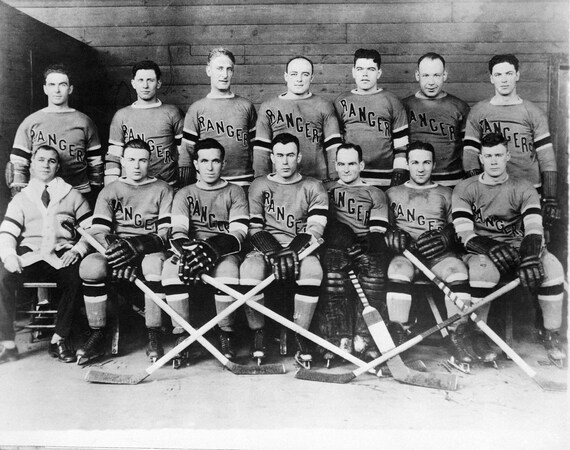
The Rangers were loaded, with a forward line of Frank Boucher centering the brothers Bill and Frederick "Bun" Cook. Their defense was led by Ivan Johnson, known as "Ching" because, in that much less politically correct era, some people, who clearly needed glasses, thought he looked Chinese. Their goalkeeper for this game, and for every game from 1928 to 1933, was John Ross Roach, picked up following a goalkeeping emergency that nearly cost them the '28 Cup.

The Ottawa Senators had won the Cup in 1920, '21, '23 and '27, but were now in decline. They were still led by forwards Frank Nighbor, Frank Finnigan, and the brothers Hector and Wally Kilrea. Their defense still had Frank "King" Clancy and Alex Smith, with Alex Connell in goal.

Boucher opened the scoring at 14:30 of the 1st period. Clancy tied the game at 5:11 of the 2nd. At 9:00, Paul Thompson, later to help the Chicago Black Hawks win the 1934 and '38 Stanley Cups, gave the Rangers the lead. With 2:24 left in regulation, Leroy Goldsworthy (no relation to 1970s hockey star Bill Goldsworthy) gave the Broadway Blueshirts an insurance goal. The Rangers won, 3-1.
Frank Boucher

Two more games would be played at Convention Hall that season. On January 25, 1930, the Chicago Black Hawks beat the Pittsburgh Pirates, 5-2. And on March 15, the Senators returned, and beat the New York Americans, 8-7. The next season, the hockey version of the Pirates became the Philadelphia Quakers, but went out of business after that one season. They played at the Philadelphia Arena, and did not play any games in Atlantic City.

The Rangers reached the Finals again in 1932, and won the Cup in 1933, before rebuilding, and reaching the Finals in 1937 and winning the Cup in 1940. World War II wrecked the franchise, and they have only won the Cup once since, in 1994. They're still better off than the Senators, who went out of business in 1934. A new Ottawa Senators franchise began in 1992, but has only reached the Finals once, in 2007.

Despite the World Hockey Association moving the New York Golden Blades (formerly the New York Raiders) to the Cherry Hill Arena in the Philadelphia suburbs, and renaming them the Jersey Knights, in the middle of the 1973-74 season, after which they folded, there would be no more NHL games in New Jersey for 52 years, until October 5, 1982, when the New Jersey Devils made their regular-season debut, tying the Pittsburgh Penguins, 3-3.

Convention Hall, renamed Boardwalk Hall in 2001, still stands. From 1940 to 1997, and again from 2013 to 2019, it hosted the Miss America Pageant. Within days in August 1964, it hosted both the Democratic National Convention and a concert by The Beatles. It hosted the Liberty Bowl football game in 1964, despite not quite being long enough for a standard football field. It's hosted many concerts, and some big prizefights, the most famous of them being Mike Tyson's 91-second knockout of Michael Spinks in 1988.

*

December 28, 1929 was a Saturday. One other NHL game was played that day: The Boston Bruins beat the Montreal Canadiens, 3-2 at the Montreal Forum. The Bruins had won the Stanley Cup the season before, but the Canadiens would win it this season.

Baseball was out of season. Football season had just ended. The NBA hadn't been founded yet.

One other sports note from this day: The English soccer team I have come to support, Arsenal F.C., went to Yorkshire, and lost to Leeds United, 2-0 at Elland Road. They went on to win their 1st major trophy that season, anyway, the 1930 FA Cup.

Saturday, December 24, 2022

December 24, 1950: The Cleveland Browns Make Their Point

The winning field goal, kicked by Groza, then wearing Number 50.
He would later switch to 76, which the Browns retired for him.
Note the snow on the field.

December 24, 1950: The NFL Championship Game is held at Cleveland Municipal Stadium. The weather was bitterly cold, but the action was hot.

In 1945, the Cleveland Rams had won the NFL Championship, but had low attendance. Team owner Dan Reeves (no relation to the later NFL coach of the same name) moved them to Los Angeles, where they became a runaway success at the box office, and on the field as well. In 1949, they won the NFL Western Division, and reached the NFL Championship Game. But, contrary to the image of sunny Southern California, a rainstorm hit the Los Angeles Memorial Coliseum, and the Rams lost to the Philadelphia Eagles.

They played the 1950 season as if on a benzedrine kick, with the most potent offense the NFL has ever seen. The "Greatest Show On Turf" that the St. Louis version of the Rams had half a century later had noting on this bunch.

Alternating quarterbacks between Bob Waterfield and Norm Van Brocklin, their runners included former Army Heisman Trophy winner Glenn Davis, Verda Thomas Smith (known as V.T. or "Vitamin"), Dick Hoerner, early black star "Deacon" Dan Towler, and one of the earliest NFL players from a "historically black" school, Paul "Tank" Younger of Grambling State University in Louisiana. Waterfield and Van Brocklin could throw to any of them, and to receivers Tom Fears and Elroy Hirsch, who was so fast, he was nicknamed "Crazy Legs."

The Rams went 9-3, and one of the losses was a 56-20 embarrassment against the Eagles. The other 2 losses came against the Chicago Bears. But on October 22, 1950, the Rams answered this question: "What would happen if the best offense in NFL history played the worst defense in NFL history?" The Rams ended up scoring more points per game in a season than any other, and the Baltimore Colts ended up allowing more per game than any other. Result: Rams 70, Colts 27. To this day, it's still the 3rd-highest-scoring single-game performance in NFL history. In addition, they hung 65 point on the Detroit Lions, 51 and 45 on the Green Bay Packers, 45 and 43 on the New York Yanks (not "Yankees"), and 35 on the San Francisco 49ers.

But the Cleveland Browns could match them for firepower. After winning the All-America Football Conference in all 4 seasons of its existence, 1946 to 1949, the Browns were invited to join the NFL from it, as were the 49ers and the Colts. The opening game of the 1950 season was against the defending Champion Eagles, in Philadelphia, and the Browns embarrassed the allegedly superior league's top team, 35-10.

Head coach Paul Brown was an offensive genius, and he built a team to carry out that genius: Quarterback Otto Graham, running back Marion Motley, and ends Mac Speedie and Dante Lavelli were weapons that any team would be lucky to have. Blocking for them were guard Bill Willis and tackles Lou Groza and Mike McCormack. All of these men would join Brown in the Pro Football Hall of Fame.

Motley and Willis were the men who provided the premiering AAFC with its racial integration, as the Rams' Kenny Washington and Woody Strode had done for the NFL. Alas, by 1950, neither Washington nor Strode was still with the Rams, but Younger and Towler were.

The Browns went 10-2, their only losses to the New York Giants, by a total of 10 points. In addition to the 35 they scored on the Eagles, they scored 45 each on the Pittsburgh Steelers and the Washington Redskins, 34 each on the 49ers and the Chicago Cardinals, and 31 on the Colts.

The Rams and the Browns won their respective Divisions, and, as it was the Eastern Division Champion's turn to host the NFL Championship Game, they met in Cleveland on a frigid Christmas Eve on the shore of Lake Erie. It was the team that did make it in Cleveland vs. the one that didn't in spite of bringing the city a title. It was also the 1st game back in Cleveland for the Rams, as the NFL did not yet allow crossover games from one Division to the other, except in the Championship Game.

The Rams wasted no time: On their 1st play from scrimmage, Waterfield passed to Davis, and he went 82 yards for a 7-0 Ram lead. The Browns responded with their own touchdown, but the Rams came back with another, leading 14-7 at the end of the 1st quarter.

The Browns scored a touchdown in the 2nd quarter, but a high snap caused Groza, also the team's main kicker, to miss the extra point. Waterfield, also the Rams' main kicker, attempted a field goal as the half ran out, from only 15 yards, but the stiff wind blasting in off the lake stopped it, and it was 14-13 Los Angeles.

In the 3rd quarter, Graham threw a 39-yard touchdown pass to Lavelli, giving the Browns a 20-14 lead. But the Rams scored 2 touchdowns, and it was 28-20 Rams after 3 quarters. With 10 minutes to go, the Browns faced 3 4th-down conversion attempts, and made them all. Graham threw another touchdown pass, and it was 28-27 Rams.

With 1:49 left, the Browns got the ball on their own 31-yard line. Graham threw for 1st downs, and ran for 2 of them himself. With 28 seconds left, Groza was sent on to attempt a 16-yard field goal. It was perfect, and it was 30-28 Cleveland. The Rams had 1 more chance, but could do nothing with it. The Browns had won, in their 1st season in the League, and, by staying in the city, gave Cleveland its 1st pro football championship defenders since the 1924 Cleveland Bulldogs.

Paul Brown called it the best game he ever saw, and never changed his mind. NFL Commissioner Bert Bell, who had orchestrated the sort-of-merger between the NFL and the AAFC, called the Browns "the greatest team ever to play football." The Browns may have dominated an inferior league, but now, they had won the superior one. They had made their point.

But it is more than that: By being the winning coach, Paul Brown, having coached Ohio State in 1942, became 1st head coach ever to win both a college football National Championship and an NFL Championship. It would take until the Super Bowl era before that happened again: Jimmy Johnson, with 1987 Miami and the 1993 and 1994 Dallas Cowboys; Barry Switzer, 1974, 1975 and 1985 Oklahoma and the 1996 Cowboys; and Pete Carroll, 2003 and 2004 USC and the 2014 Seattle Seahawks.

In 1981, historian John Thorn left his comfort zone, baseball, and published Pro Football's 10 Greatest Games. He included this game.

The same teams faced each other again the following year. But in 1951, at the Coliseum, the Rams beat the Browns for Los Angeles' 1st major league sports championship. They would play each other again in 1955, with the Browns winning in L.A. It would be Graham's last game, as he retired. The Browns had been to the AAFC or NFL Championship Game every year for 10 straight years. After missing in 1956, they made it 11 out of 12 in 1957. They beat the Detroit Lions in 1954, but lost to them in 1952, '53 and '57.

The fact that the Browns', the Lions', and the Chicago (now Arizona) Cardinals' titles came before the advent of the Super Bowl means that they get discounted: Even before the distance of time became what it is now, NFL fans have come to regard any title won before the Super Bowl, NFL or AFL, as not a "real" championship. This is unfair: A title is a title.

UPDATE: The Browns have a Ring of Honor. From their founding era, they have honored head coach Paul Brown, quarterback Otto Graham, running back Marion Motley; receivers Dante Lavelli, Mac Speedie and Bobby Mitchell; center Frank Gatski, guard Bill Willis, tackle and placekicker Lou Groza, tackle Mike McCormack and defensive end Len Ford.

From their 1964 NFL Championship, they have honored running backs Jim Brown and Leroy Kelly, receiver Paul Warfield and guard Gene Hickerson. From the 1980s, they have honored guard Joe DeLamielleure, tight end Ozzie Newsome, and linebacker Clay Matthews Jr. It says something about how the Browns have been run since their re-establishment in 1999 that they have honored just 1 player in that period, offensive tackle Joe Thomas.

Motley, Willis, Lavelli, Groza, Warfield, Hickerson, founding owner Arthur "Mickey" McBride, 1940s running back Tony Adamle, 1950s guard Chuck Noll, 1950s defensive tackle Bob Gain, 1950s linebacker Sam Palumbo (a Cleveland native), 1970s running backs Greg Pruitt and Mike Pruitt (not related to each other), 1970s offensive tackle Doug Dieken, 1980s head coach Sam Rutigliano, 1980s quarterback Bernie Kosar, 1980s running back Kevin Mack, 1980s defensive tackle Bob Golic, 1980s linebacker Tom Cousineau, and 1999-2002 re-establishing owner Al Lerner have been elected to the Greater Cleveland Sports Hall of Fame.

*

December 24, 1950 was a Sunday. It was the end of the football season. No college games were played on this day. Baseball was out of season. No NBA games were played. And only 1 NHL game was played: The New York Rangers beat the Chicago Black Hawks, 6-1 at the old Madison Square Garden. Nick Mickoski had 4 goals and an assist for the Broadway Blueshirts.

Thursday, December 15, 2022

December 15, 1925: New York's 1st NHL Team

"Bullet" Joe Simpson

December 15, 1925: For the 1st time, a National Hockey League game is played in New York City. But the home team is not the New York Rangers. A few hours before the new, later "Old," Madison Square Garden held its 1st boxing card, it hosted a matinee of a brand-new hockey team, the New York Americans. In their 5th game, they lost to the Montreal Canadiens, 3-1.

The NHL began to expand into America the season before, with the Boston Bruins. This expansion continued in 1925-26, with the Americans and the Pittsburgh Pirates, who would also end up failing; then, in 1926-27, with the New York Rangers, the Detroit Red Wings and the Chicago Black Hawks.

The Americans' 1st game was on December 2, against the Pirates, at the Duquesne Gardens in Pittsburgh, and they won, 2-1, with Charlie Langlois scoring the winner, 3:10 into overtime.

The Americans were owned by Bill Dwyer, a bootlegger who was making money during Prohibition, and the hockey team became the toy he spent his money on. If that seems odd, let the record show that another major league sports team debuted in New York City that season: The football version of the New York Giants, and they were founded and owned by Tim Mara, who was a bookmaker at a time when that was legal in New York City.
Bill Dwyer

George "Tex" Rickard, builder and owner of the new version of Madison Square Garden -- eventually to be known as "The Old Garden" -- made so much money on the Americans' rent and concessions that he wanted his own team. The media called them "Tex's Rangers," and they immediately became more successful than the Americans. The Rangers became known as the "classy" team, while the Amerks were the "blue-collar" or "working man's" team.

When Prohibition ended in 1933, Dwyer's hockey ownership was doomed. The League took over ownership of the franchise in 1936, and let its head coach, one of their former players, run it: Norman "Red" Dutton. It didn't change the image of either team: The Rangers were seen as the team of classy people, the Americans the team of the working class, struggling through the Great Depression.

The Americans made the Playoffs for the 1st time in 1929, but lost -- to the Rangers. They didn't make it again until 1936, beating Chicago before losing to the Toronto Maple Leafs in the Semifinals, coming within 5 wins of the Stanley Cup. In 1938, the Americans beat the Rangers in the Quarterfinals, with Lorne Carr scoring in overtime to win the deciding Game 3, before losing to Chicago in the Semifinals, again coming within 5 games of the Cup. They made the Playoffs again in 1939, losing to Toronto; and in 1940, losing to Detroit.

As New York teams would later tend to do, the Americans became a haven for great players looking for one last payday, including Boston Bruins legend Eddie Shore. But they had some Hockey Hall-of-Famers that they could call their own: Center Billy Burch; left wing David "Sweeney" Schriner; defensemen Bullet Joe Simpson and the aforementioned Red Dutton;, and, at 5-foot-3 the shortest player in NHL history, and thus nicknamed "Shrimp," but the winner of the Hart Memorial Trophy as league Most Valuable Player in 1929, and the Vezina Trophy as best goaltender in 1931, Roy Worters.
Roy "Shrimp" Worters

By the 1939-40 season, Canadian players were going off to fight for the British Empire in World War II. The Americans missed the Playoffs in 1941. In 1941-42, still bogged down by lingering debt from the Dwyer era, Dutton had to sell off his best players for cash.
Red Dutton

At his wit's end, Dutton changed the team's name to the Brooklyn Americans. He intended to move the team to Brooklyn, but there was no arena in that borough suitable enough even for temporary use. As result, they continued to play their home games at The Garden, while practicing in Brooklyn. They barely survived the season, finishing dead last for the second year in a row with a record of 16–29–3.

St. Patrick's Day, March 17, 1942, was no lucky day for the New York Americans. New York City's original National Hockey League team loses to the Boston Bruins, 8-3 at the Boston Garden. Since the Amerks did not qualify for the Playoffs, this was their last game of the season. Two days earlier, they had played their last home game, at the old Madison Square Garden, and won, beating the Maple Leafs, 6-3. Murph Chamberlain scored a hat trick.

The Amerks suspended operations for The War's duration. In 1945, a group emerged willing to build a new arena in Brooklyn, and Dutton was ready to resume operations. But in 1946, the year Bill Dwyer died, the NHL reneged on previous promises to reinstate the Amerks, and canceled the franchise.

Legend has it that Dutton blamed the Rangers for canceling the Americans' franchise, and placed a curse on them, saying they would never win the Stanley Cup again for as long as he lived. They had won it in 1928, 1933 and 1940. Dutton died in 1987, and the Rangers had not won the Cup again. But the New York Islanders, founded as an expansion team in 1972, had won 4 straight Cups, from 1980 to 1983.

The Rangers finally won the Cup again in 1994. The New Jersey Devils, founded when the Colorado Rockies moved to the Meadowlands in 1982, won the Cup in 1995, 2000 and 2003. Since the Americans were cut off in 1942, the won-loss records of the New York Tri-State Area's teams in the Stanley Cup Finals -- keeping in mind that it was only the Rangers from 1942 to 1972 -- are 1-4 for the Rangers, 4-1 for the Islanders, and 3-2 for the Devils.

The Americans' records and trademarks are still owned by the NHL. The Islanders have never worn "throwback uniforms" in their style. I don't know if they've ever even asked for permission to wear them.

*

December 15, 1925 was a Tuesday. This was also the day that Louis Mbarick Fall, the former Light Heavyweight Champion boxer known as Battling Siki, was murdered a few blocks downtown from Madison Square Garden. I have a separate entry for that event. And Hockey Hall of Fame executive Sam Pollock was born.

Baseball was out of season. The NBA hadn't been founded yet. The NFL season ended 3 days earlier, with the Chicago Cardinals claiming the title amid controversy.

There was 1 other game in the NHL: The Ottawa Senators beat the Boston Bruins, 2-1 at the Boston Arena, now named the Matthews Arena.

Saturday, December 3, 2022

December 3, 1979: The Riverfront Coliseum Disaster

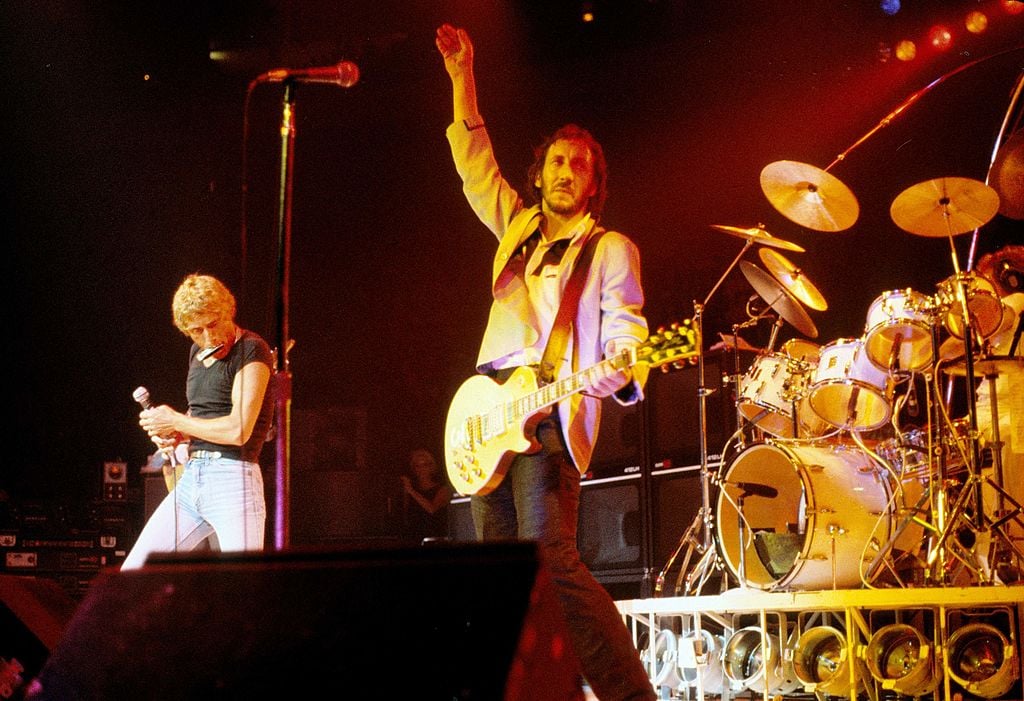
December 3, 1979: Disaster strikes a concert by The Who at the Riverfront Coliseum in Cincinnati.

From 1964 to 1978, The Who were Roger Daltrey on lead vocals, Pete Townshend on lead guitar and doing most of the songwriting, John Entwistle on bass guitar, and Keith Moon on drums. On September 7, 1978, Moon's substance abuse reached its inevitable conclusion, and he died. He was replaced on drums by Kenney Jones, formerly of another renowned British rock band, The Faces.

Officially, The Who were recognized by The Guinness Book of World Records as the loudest musical act of all time. Unofficially, many people considered them the best rock band in the world, especially in the early 1970s, when Moon was still mostly functional and possibly the greatest drummer rock and roll has ever known, Townshend was writing some of his best work, The Beatles had broken up, The Rolling Stones were believing their hype a little too much, and Led Zeppelin were still a bit too far out there for mainstream American audiences.

The Who were among the first acts to destroy their instruments at the end of a performance, which sometimes looked like a riot onstage. But there had never been a riot at any of their shows.

They had played the Monterey Pop Festival outside San Francisco in 1967, and Woodstock outside New York City in 1969. They hadn't invented the concept of, well, the concept album. Nor had they invented the concept of the "rock opera." But they had written the 1st truly successful opera to incorporate rock and roll music, Tommy, in 1969. And they had played it at the Metropolitan Opera House at New York's Lincoln Center in 1970. So they were immensely talented and widely respected: They had beaten both rock's best and rock's haters at their respective own games.

Their 1979 tour was their 1st without Moon. Jones was healthier, smarter, and very good. But a lot of the camaraderie had been lost with Moon. Still, they were giving it their best, and had already had a sellout stand at Madison Square Garden.

The Riverfront Coliseum had been built in 1975, on the Ohio River, nearly adjacent to Riverfront Stadium, home of baseball's Cincinnati Reds and football's Cincinnati Bengals. The Cincinnati Stingers of the World Hockey Association had played at the Coliseum, but stopped when the league folded and they weren't invited into the National Hockey League. The Coliseum was hosting selected basketball games of the University of Cincinnati, and the Cincinnati Kids of the Major Indoor Soccer League. And it hosted rock concerts.
The Riverfront Coliseum, now named
the Heritage Bank Center

The Who were scheduled to play there on December 3, 1979. At 5:00 PM, a crowd had formed outside the gate for General Admission seating. At 7:15, 45 minutes before the curtain was due to go up, someone thought they'd heard The Who playing. It could have been a sound check. Or, it could have been a section of a documentary film about them that had recently been released, The Kids Are Alright. Whatever it was, some fans were sure that the band was already playing their show.

And the crowd outside the gate surged, and pushed toward the doors. This caused some people to get trampled. Many were crushed against each other and asphyxiated. It was a situation similar to the one that would happen at Hillsborough Stadium in Sheffield, England before an FA Cup soccer game 10 years later. There were 11 deaths, and 26 other injuries.

The promoters and the arena operators, desperate to keep the money they were going to make, decided not to tell the band members what had happened. Roger, Pete, John and Kenney played their regular show, not knowing. Only afterward were they told.

This was before the age of social media. News of the similar event that took place at the Astroworld complex in Houston in 2021 swept across the world in minutes. But in 1979, that kind of mechanism for delivering information through mass communication simply wasn't there. Many people didn't even read about it in the newspaper the next morning.

It was only when they saw the network evening news on December 4 that they realized the magnitude of what had happened. The band looked very bad for playing after the tragedy, but that wasn't their fault: They didn't know there was a tragedy. Indeed, of the 18,348 paying ticketholders on the night, most of them weren't in the crowd crush, and they didn't know until the next day, either.

The Who continued their tour. On December 4, at the Buffalo Memorial Auditorium, Daltrey told the crowd, "We lost a lot of family last night. This show's for them."

The families of the victims filed a class-action lawsuit against the band; the promoters, Electric Factory Concerts; and the City of Cincinnati, operators of the arena. The case was eventually settled out of court, with each of the families of the deceased receiving around $150,000 -- about $604,000 in 2022 money.

The City banned "unassigned festival seating" on December 27. This was reflected in an episode of the CBS sitcom WKRP in Cincinnati, set at a radio station that had, in that fictional version of the world, promoted the concert. The episode, "In Concert," aired on February 4, 1980.

The Who announced their farewell tour in 1982. But in 1989, they went back on tour, this time with Zak Starkey, son of Beatles drummer Ringo Starr, on drums. In 2001, with the lineup of Daltrey, Townshend, Entwistle and Starkey, the played The Concert for New York City at Madison Square Garden. It was Entwistle's last performance: He died in his hotel room in Las Vegas, just before their 1st show of a planned 2002 tour. Daltrey and Townshend are still alive, and have occasionally reunited with other musicians making up "The Who."

The Riverfront Coliseum still stands, although it's gone through some name changes. In 1997, it became The Crown; in 1999, the Firstar Center; in 2002, the U.S. Bank Arena; and in 2019, the Heritage Bank Center. It has hosted minor-league hockey, mostly the Cincinnati Cyclones of the ECHL; college and minor-league basketball, indoor soccer, arena football -- and, of course, concerts.

*

December 3, 1979 was a Monday. On ABC Monday Night Football, the Oakland Raiders beat the New Orleans Saints, 42-35 at the Superdome in New Orleans.

There was 1 game played in the NBA that night: The Milwaukee Bucks beat the Utah Jazz, 96-89 at the Salt Palace in Salt Lake City. This was the Jazz' 1st season in Utah, after 5 weak seasons in New Orleans, where their name made a lot more sense.

And there was 1 game played in the NHL, a rematch of the previous season's Stanley Cup Finals: The New York Rangers and the defending Champion Montreal Canadiens played to a 3-3 tie at Madison Square Garden. The Rangers took a 1-0 lead on a goal by Warren Miller, and a 2-1 lead on a goal by Phil Esposito. But Larry Robinson canceled out the Miller goal, and Guy Lafleur and Pierre Larouche gave the Habs a 3-2 lead. But Esposito scored again with 13:37 left in regulation, and it ended 3-3.

And actress Tiffany Haddish was born on this day.

Monday, November 28, 2022

November 28, 1925: The "Old" Madison Square Garden Opens

November 28, 1925: Madison Square Garden, the 3rd building with the name, opens between 49th and 50th Streets, between 8th and 9th Avenues, in Midtown Manhattan, at the northern end of the Theater District. The front entrance is on 8th Avenue, topped by a marquee that will soon be world-famous.
Note: This was also the day that The Grand Ole Opry radio show premiered on Nashville radio station WSM. I have a separate entry for that event.

The 1st Garden was built at the northeast corner of 26th Street and Madison Avenue, catty-corner from Madison Square Park, in 1879. It had no roof. 

It was replaced in 1890 with a Moorish-style building, designed by the renowned architect Stanford White, that not only had a roof, but a tower with a roof garden where shows were hosted, and an apartment for White atop that.

Atop that was a statue of Diana, the Roman goddess of the hunt. This statue, sculpted of gilt copper by Augustus Saint-Gaudens, was nude, and the hoity-toity critics of the day hated it.

One of the nastiest reviews came from a Philadelphia newspaper. Ironically, when the 2nd Garden was demolished, the Diana statue was taken to the Philadelphia Museum of Art (you know, the one whose steps Rocky Balboa ran up), and is still there. A copy now stands in New York's equivalent, the Metropolitan Museum of Art.
For both versions, the bowstring has been lost.
Otherwise, they are intact.

White would take showgirls up to his rooftop apartment, for a pre-movies version of a "casting couch." One was Evelyn Nesbit, whom he then made a star. She left him for a man named Harry Thaw. 

On June 25, 1906, jealous over Evelyn still having feelings for "Stanny," Thaw went to the roof garden during a show, and shot White. Evelyn's star faded: Late in life, she said, "Stanny White died. My fate was worse: I lived."

The New York Life insurance company owned the mortgage on the 2nd Garden, and decided to tear it down to build their new headquarters. George "Tex" Rickard, the top boxing promoter of the era, decided to build his own arena, where he wouldn't have to worry about anybody else's whims. He was lucky that New York Life was willing to sell him the rights to the name "Madison Square Garden": It was already a valuable brand name, which is a big reason why the "new Garden" has never sold naming rights.

When his Garden proved successful, he decided to build 6 copies, all over America. It didn't work out that way: He built the Boston Madison Square Garden in 1928 -- soon, it became simply "The Boston Garden" -- but died early the next year. He had gone to Miami to escape the cold New York weather, and to make a deal on a prizefight featuring up-and-coming heavyweight Jack Sharkey (who would hold the title from mid-1932 to mid-1933), but came down with appendicitis. This was before antibiotics, and he was dead at age 59.

The 1st event at The Garden was a six-day bicycle race. It sounds ridiculous today, but this kind of competition was huge in the "Roaring Twenties," especially in Europe, where it's still popular 100 years later. Teams of 2 men take turns riding for 6 days straight, from 6:00 PM to 2:00 AM, and the winner is the team that completes the most laps.

The 1st prizefight was held on December 8, for the Light Heavyweight Championship of the World. Paul Berlenbach defended the title by winning a unanimous decision over Jack Delaney. The following July, Delaney took the title from Berlenbach in a rematch at Ebbets Field.

Also in 1926, James. A. Farley, Commissioner of the New York State Athletic Commission, got the Madison Square Garden Corporation to allow racially-mixed fights. It was also Farley's insistence that Heavyweight Champion Jack Dempsey fight Harry Wills, the black man who was then ranked the Number 1 contender, or else not fight in the State of New York at all, that led to Dempsey caving in to an audience that didn't want to see such a fight. That led to his epic fights with Gene Tunney being held in Philadelphia and Chicago. Farley went on to become Chairman of the Democratic Party of the State of New York, Chairman of the Democratic National Committee, and the U.S. Postmaster General.

The Garden became known as "The Mecca of Boxing." Heavyweight Joe Louis, light heavyweight Archie Moore, middleweight Sugar Ray Robinson, lightweight Henry Armstrong, and more became internationally-known superstars from their fights at The Garden.

It would also be known as "The Mecca of Basketball," with collegiate doubleheaders starting in 1934. It became a secondary home court for the City's college teams: New York University (NYU), City College of New York (CCNY), Long Island University (LIU), Columbia, Fordham and St. John's.

It also hosted the annual National Invitational Tournament (NIT), starting in 1938. And it hosted what would now be called the NCAA Final Four in 1943, 1944, 1945, 1946, 1947, 1948 and 1950, the last of these won by CCNY, which also won the NIT that year, the only time this "double" was ever achieved. 

The point-shaving scandal the next year crippled college basketball in New York City, and not only led to St. John's, not accused in the scandal, being the only major program that has survived on that level, but the NCAA ruling that teams could no longer compete in both their tournament and the NIT. The Final Four did not return to the New York Tri-State Area until 1996, when it was held at the Meadowlands.

That scandal coincided with the 1st trip to the NBA Finals for the New York Knicks, who debuted at The Garden in 1946. The scandal may have saved the Knicks, and thus may also have saved the NBA: Hoop fans needed something to turn to.

Rickard, who didn't always do things on the up-and-up, offered use of The Garden to Big Bill Dwyer, a bootlegger, who founded a hockey team, the New York Americans. The 1st NHL team in New York debuted on December 15, 1925, losing to the Montreal Canadiens 3-1.

The "Amerks" did so well at the box office that Rickard, noting that New York had 3 Major League Baseball teams, decided that it could support 2 hockey teams. So he founded his own team, and when the media found out, they nicknamed the new team "Tex's Rangers." He decided to go with it, and the New York Rangers debuted at The Garden on November 16, 1926, beating the Montreal Maroons 1-0.

With Rickard's promotional skills, the Rangers proved even more successful than the Americans. World War II knocked the Amerks out, as the manpower drain caused by the American and Canadian military drafts forced them to suspend operations after the 1941-42 season, and they never returned.

But the Rangers, the Knicks, college basketball games, prizefights, circuses, musical performances, ice skating shows, rodeos, and an event that predated even the 1st Garden, the Westminster Kennel Club Dog Show, continued at The Garden through the 1930s, the '40s, and the '50s. Madison Square Garden was right up there with the Empire State Building and Grand Central Terminal as the most famous building in the City.

But poor sight lines, and the need for more space and more dates, proved the arena's undoing. In 1960, the Pennsylvania Railroad, desperate for money, sold the air rights above Pennsylvania Station, between 31st and 33rd Streets and 7th and 8th Avenues, to the Madison Square Garden Corporation. The plan was to build a new station on the site, and a new arena on top of that.

On the afternoon of February 11, 1968, the Rangers played their last game at "the Old Garden," a 3-3 tie with the Detroit Red Wings, which was followed by a final skate with several NHL legends, including the Wings' still-active Gordie Howe. That night, "the New Garden" opened with "The Night of the Century," a salute to the USO, the United Service Organizations, which since 1941 has worked with the armed forces to provide supplies and entertainment. The co-hosts were old film partners and golfing buddies Bob Hope and Bing Crosby.

The last event at the Old Garden was 2 days later, February 13, the Westminster Dog Show. Demolition soon began. The site became a parking lot while various parties haggled over what to build on the site. Finally, in 1989, the 778-foot office and residential tower Worldwide Plaza opened there. The Subway station at 50th Street includes a mural dedicated to the Old Garden.
Worldwide Plaza

*

November 28, 1925 was a Saturday. Baseball season was over. There was no NBA yet. It was the 1st season for the American Basketball League, but that could hardly be called "major league," and I can't find a list of games played there that day. For all I know, there might not have been any.

Three games were played in the NHL. The Pittsburgh Pirates beat the Montreal Canadiens, 1-0 at the Mount Royal Arena in Montreal. The Ottawa Senators beat the Montreal Maroons, 3-2 at the Ottawa Auditorium. And the Boston Bruins beat the Toronto St. Patricks, 3-2 at the Mutual Street Arena. (The St. Patricks became the Toronto Maple Leafs in 1927.)

There were also college football games played that day. Most of them did not involve teams currently in major conferences. But one was the Army-Navy Game, played at the Polo Grounds in Upper Manhattan. Army won, 10-3.

Montana beat Montana State, 28-7 at Montana State's Dornblaser Field in Missoula. Baylor and Rice tied, 7-7 at Rice Field in Houston. And 2 games were played in the Pacific Coast Conference, the league that would eventually evolve into the Pac-12. Washington beat Oregon, 15-14 at Husky Stadium in Seattle. And Washington State beat USC, 17-12 at the Los Angeles Memorial Coliseum.

There was 1 NFL game played on that Saturday. The Frankford Yellow Jackets beat the Green Bay Packers, 13-7 at Frankford Stadium in Northeast Philadelphia. The Jackets won the NFL Championship in 1926, but the Great Depression did them in, and they folded in 1931. The Pennsylvania law banning professional sports on Sunday wasn't repealed until 1933, making the founding and profitability of the Philadelphia Eagles and the Pittsburgh Steelers possible.

The Cleveland Bulldogs were then an NFL team. The Atlantic City Roses were not: They were a semipro team run by the Melrose Athletic Club of Atlantic City, New Jersey. But the Bulldogs played the Roses on this day, winning 12-0 at Bader Field, a minor-league ballpark next to the airport of the same name, where The Sandcastle, later the home of the minor-league Atlantic City Surf, was built.

And in English soccer, Arsenal beat North-East team Sunderland, 2-0 at the Arsenal Stadium, a.k.a. Highbury, in North London.

Wednesday, November 16, 2022

November 16, 1926: The New York Rangers Debut

November 16, 1926: The New York Rangers make their National Hockey League debut. They beat the Montreal Maroons, 1-0 at Madison Square Garden.

The first hockey team in New York was the New York Americans, who debuted in 1925, to fill the gap in the NHL left by the folding of the Ontario-based Hamilton Tigers. They were awful on the ice, but drew a lot of fans to the newly-built third Madison Square Garden, on 8th Avenue between 49th and 50th Streets. (The 1st 2 Gardens were built off the northeastern corner of Madison Square, on Madison Avenue between 26th and 27th Streets -- the 1st in 1879, the 2nd in 1890. The New York Life Building stands on the site now.)

The 3rd Garden, and the corporation that ran its business and events, was owned by George "Tex" Rickard, the nation's foremost boxing promoter. (One of his limited partners was wrestling promoter Jess McMahon, grandfather of WWE boss Vince McMahon.) Tex was so pleased by the profits from "the Amerks" that he applied to the NHL to have a second team at The Garden. Why not? New York had enough baseball fans for 3 teams, and enough football fans for 2 teams; so, surely it had enough hockey fans for 2 teams. He turned out to be wrong about that -- but in a way that benefited him.

The new team was quickly nicknamed "Tex's Rangers" by the media, and Tex went with it, outfitting them in the same colors as the Amerks: Red, white and blue. He hired Lester Patrick, one of the greatest defensemen of the previous era, as head coach and general manager.

Patrick had played for, among other teams, the now-defunct Montreal Wanderers. The Maroons had become the team of Montreal's English-speaking community, and the Canadiens that of its French speakers. There would be a similar divide in New York: The Amerks were the team for blue-collar fans, while the Rangers were billed as "the classiest team in hockey," with some fans coming to The Garden in tuxedos and gowns, as if they were attending the opera or a Broadway opening night. Tex even had the puck dropped at the same time Broadway curtains then went up: 8:45 PM.

The Maroons were defending Stanley Cup Champions, but that didn't faze the Rangers. They were 1 of 4 new teams in the NHL, made possible by the collapse of the Pacific Coast Hockey Association, which made such an expansion possible. The others were the Chicago Blackhawks, the Detroit Cougars (who became the Falcons in 1930 and the Red Wings in 1932), and the Pittsburgh Pirates (who became the Philadelphia Quakers in 1930 and folded due to the Great Depression in 1931).

Patrick had coached and managed in the PCHA. In fact, he and his brother Frank had not only built the Vancouver Millionaires and their British Columbia rivals the Victoria Cougars, they had financed the building of both teams' arenas, and the Cougars' rink was named the Patrick Arena. The Red Wings-to-be were named the Cougars because they were made up of most of the Victoria team, the last team from outside the NHL to win the Stanley Cup, in 1925.

So Lester knew to stock the Rangers with as many players with PCHA experience as he could. His 1st signing, and the Rangers' 1st Captain, was right wing Bill Cook from the Saskatoon Sheiks. He also signed Cook's brother and Saskatoon teammate, left wing Frederick "Bun" Cook. He signed center Frank Boucher from the Vancouver Maroons (formerly the Millionaires). And he signed goaltender Hal Winkler from the Calgary Tigers.

Defenseman Ivan Johnson, known as "Ching" because, in that politically-incorrect time, someone thought he looked Chinese, had starred for teams in Minneapolis. Patrick also signed goaltender Lorne Chabot.

So while the Ranger franchise was brand-new, it had plenty of on-ice experience. And with 1 minute and 23 seconds left in the 2nd period, it was, appropriately enough, Bill Cook who scored the 1st goal in team history. Winkler kept the Maroons at bay, and the Rangers were 1-0 victors. Winkler thus became the 1st goalie to have a shutout in his NHL debut.

But Winkler only played 8 games for the Rangers, before Patrick traded him to the Boston Bruins. It was Chabot who would go on to become the 1st great Ranger goalie, and also the 1st hockey player on the cover of Time magazine, which was founded in 1923.

But Chabot is best known for a game he had to leave early due to an injury. In 1928, at the close of the Rangers' 2nd season, they faced the Maroons in the Stanley Cup Finals. In Game 2, Chabot was struck in the eye by the puck -- no masks in those days -- and had to leave the game. The Rangers had no other goalie. So Patrick 44 years old, 12 years past his last game, and having played in goal only once, took on the post, stopped 18 of 19 shots, and the Rangers won in overtime. With the League allowing the emergency signing of Americans goalie Joe Miller, the Rangers won the Cup.

The Rangers also won the Cup in 1933 and 1940, and also reached the Finals in 1929, 1932 and 1937. Rickard lived to see the first Cup, but fell victim to appendicitis, and, in the days before antibiotics, died in 1929, just 58 years old. He had lived just long enough to see the first of what he planned on being 6 copies of The Garden built around the country. He called it the Boston Madison Square Garden -- which, of course, was soon shortened to just "the Boston Garden." (Maple Leaf Gardens in Toronto, aside from being one of the Original Six teams' arenas, had no connection to Rickard.)

The Rangers' success meant doom for the Americans: In spite of a stirring Playoff win over the Rangers in 1938, the manpower drain of World War II killed them in 1942. The Rangers didn't fare much better, going into a tailspin: A Finals berth in 1950 was an aberration until they got good again in the late 1960s, moving into the 4th and current Madison Square Garden, between 31st and 33rd Streets, and between 7th and 8th Avenue in 1968.

The Rangers reached the Finals in 1972, but that team got old fast, and by 1975, a bitterness had set in that rendered any idea of the Ranger team, or its fans being "classy" a relic. They became one of the dirtiest teams in hockey, reaching the Finals in 1979, but falling short again and again before winning the Cup again in 1994. Since then, they have reached the Finals only once more, in 2014.

UPDATE: Through the 2025-26 season, the Rangers do not have a team Hall of Fame, but they have a lot of players who were elected to the Hockey Hall of Fame. Many of those weren't Rangers for very long. These contributed to at least a Stanley Cup Finals appearance:

* From the 1928 Stanley Cup win: Head coach and general manager Lester Patrick, defenseman Ivan "Ching" Johnson, and the "A Line" of center Frank Boucher, right wing Bill Cook, and his brother, left wing Frederick "Bun" Cook. Although goaltender Lorne Chabot was named to The Hockey News' 1998 list of the 100 Greatest Hockey Players, he has never been elected to the Hall of Fame.

* From the 1933 Stanley Cup win: Patrick, Johnson, Boucher, both Cook brothers, defenseman Earl Seibert, and left wing Albert "Babe" Siebert. Earl and Babe were not related: Note the difference in the spelling of their surnames. Goaltender Andy Aitkenhead has not been elected to the Hockey Hall of Fame.

* From the 1940 Stanley Cup win: Lester Patrick, now only the general manager: Boucher, now the head coach; left wing Lynn Patrick, Lester's son; defensemen Art Coulter and Walter "Babe" Pratt, centers Neil Colville and Clint Smith, and right wing Bryan Hextall.

* From the 1950 Stanley Cup Finals: Boucher, now the GM; goaltender Chuck Rayner, defenseman Allan Stanley, and centers Edgar Laprade and Buddy O'Connor.

Defenseman Murray "Muzz" Patrick, another son of Lester, and Colville's brother, Matthew "Mac" Colville, also played on this Ranger team, but neither has been elected to the Hall of Fame. Nor has goaltender Davey Kerr. Bryan Hextall's sons Bryan Jr. and Denis, grandson Ron all played in the NHL. His granddaughter Leah became a hockey broadcaster. His great-grandson Brett played in the minor leagues, and now works in the Pittsburgh Penguins' front office, under his father, general manager Ron.

* From the 1950s and 1960s, the era in which television allowed Ranger fandom to grow by leaps and bounds, despite the team's struggles: Goaltender Lorne "Gump" Worsley, defensemen Harry Howell and Bill Gadsby, and right wing Andy Bathgate.

* From the 1972 Stanley Cup Finals: Executive William M. Jennings, head coach and general manager Emile Francis, goaltender Eddie Giacomin, defenseman Brad Park, center Jean Ratelle and right wing Rod Gilbert. Left wing Vic Hadfield, from this team, has not been elected to the Hall of Fame, but his Number 11 has been retired, as have the 1 of Giacomin, the 7 of Gilbert, and the 19 of Ratelle.

* From the 1979 Stanley Cup Finals: Jennings, head coach and GM Fred Shero, and center Phil Esposito; and broadcaster Sal Messina.

* From the 1994 Stanley Cup win: General manager Colin Campbell, center Mark Messier; right wing Glenn Anderson (who played only 35 games for the Rangers); defensemen Brian Leetch, Kevin Lowe and Sergei Zubov; and broadcasters Messina, Sam Rosen and John Davidson.

Head coach Mike Keenan has not been elected to the Hall of Fame. Nor have right wing Adam Graves or goaltender Mike Richter, yet the Rangers have retired Graves' Number 9 and Richter's Number 35. In 1996, the Rangers acquired center Wayne Gretzky, who played 3 seasons for them, and his Number 99 has been retired.

* From the 2014 Stanley Cup Finals: Rosen and goaltender Henrik Lundqvist, whose Number 30 has been retired.

Messina, Rosen and Davidson each received the Hall of Fame's award for broadcasters, the Foster Hewitt Memorial Award. Although both were longtime Ranger broadcasters before any of them, neither Win Elliott nor Marv Albert ever received the award. Albert did receive the Curt Gowdy Media Award from the Basketball Hall of Fame for his Knicks broadcasts, also from Madison Square Garden.

The Rangers have an unusual pattern of uniform number retirements. They are willing to honor two players to a number, but not always. Lester Patrick played just 2 games for the Rangers, but 1 was one of the most important games in team history, yet the Number 16 he wore has not been retired, not for him or for anyone else.

Ching Johnson won 2 Cups and wore 3, but it has been retired only for Harry Howell, who never played on a Cup Finalist in New York. Frank Boucher wore 7, and given that he was the best player on 2 Cup-winning teams and the head coach of another, he is arguably the greatest figure in team history behind Lester Patrick. But 7 has been retired only for Rod Gilbert, who is, to be fair, still the team's all-time leading scorer.

Lynn Patrick won a Cup, and is in the Hall of Fame. Andy Bathgate is in the Hall of Fame, but his only Cup came with the Toronto Maple Leafs. Adam Graves won a Cup, but is not yet in the Hall. All 3 men wore 9, but the number is retired for Bathgate and Graves, but not Patrick.

Vic Hadfield appeared in only 1 Cup Finals, and has not been elected to the Hall of Fame, yet got the honor of getting 11 retired along with Mark Messier, the most important Ranger since 1940.

*

November 16, 1926 was a Tuesday. There were 2 other NHL games that night. The Boston Bruins beat the Montreal Canadiens, 4-1 at the Boston Arena -- now the Matthews Arena, home to Boston University. And the Americans beat the Pittsburgh Pirates, 1-0 at the Duquesne Gardens.

Those were the only scores: Baseball was in the off-season, the NFL played on Sundays, and the NBA hadn't been founded yet.

The Rangers first won the Stanley Cup on April 14, 1928, beating the Montreal Maroons, 3 games to 1. Game 2, when Rangers head coach and general manager Lester Patrick, at age 44, became a victorious emergency goaltender, was played on April 7. There were no other games on that day: The NBA hadn't been founded yet, and the baseball season was about to start.

Friday, November 11, 2022

November 11, 1930: Philadelphia's Disastrous 1st NHL Team

Hib Milks

November 11, 1930: For the 1st time, a team represents Philadelphia in the National Hockey League. It doesn't go so well. The rest of the season doesn't get any better.

The Pittsburgh Pirates, named for the city's baseball team, had been founded in 1925, and they made the Playoffs in 1926 and 1928. But the Great Depression hurt them, and in 1930, they moved across Pennsylvania, becoming the Philadelphia Quakers, taking the name of a 19th Century baseball team, and also the University of Pennsylvania's teams.

In their 1st game, at the Philadelphia Arena, they hosted the next-closest NHL team, the New York Rangers. The Rangers won, 3-0, getting a goal in each period: Butch Keeling at 4:37 of the 1st, Gene Carrigan at 13:04 of the 2nd, and Ivan "Ching" Johnson at 6:51 of the 3rd. There is no record of how many shots the Quakers had, but Ranger netminder John Ross Roach turned them all away, for the shutout.

The Quakers became the worst team in NHL history. They lost their 1st 3 games, tied the next, and lost the next, before finally winning in their 6th game, a 2-1 win over the Toronto Maple Leafs, at home on November 25. Then they went on a 15-game losing streak, including going 0-for-December, before beating the Montreal Maroons, 4-3 in overtime on January 10, 1931.

Then they went 0-9-2, before beating the Detroit Falcons, forerunners of the Red Wings, on February 17. This would be their only road win. They lost 6 more, before beating the Falcons in Philadelphia on March 12. They lost their next 2, and closed the season with a 4-4 tie away to the Montreal Canadiens on March 21, 1931. Ironically, the Canadiens were defending Stanley Cup Champions, and would win the Cup again.

In a 44-game season, they won 4, lost 36, and tied 4, for 12 points. Those 4 victories remain the fewest wins in an NHL season. The 4-36-4 record meant that their "winning" percentage, if ties are counted, was .136. That would remain an NHL record low until the 1974-75 expansion season of the Washington Capitals: In an 80-game season, they went 8-67-5, for .131.

The Depression really did the Quakers in: They averaged only 2,500 fans per home game, couldn't afford to acquire good players -- Hibbert "Hib" Milks led them with 12 goals in the 44 games -- and they lost $100,000. The franchise folded, and Philadelphia was doomed to minor-league hockey for the next 37 years.

The Philadelphia Arena opened in 1920, at 46th and Market Streets in West Philadelphia. ABC would build its Philadelphia affiliate's radio and later television studios across the street, broadcasting American Bandstand from there from 1952 to 1964.
The Arena hosted games of the NBA's Philadelphia Warriors and Philadelphia 76ers, but the opening of The Spectrum in 1967, allowing the 76ers and the expansion Flyers to move there, doomed it. It burned down in 1983, and a housing complex is now on the site.

*

November 11, 1930 was a Tuesday. Baseball was out of season. Football was in midweek. The NBA hadn't been founded yet. There were 2 other games in the NHL that night. The New York Americans lost to the Boston Bruins, 1-0 at the Boston Garden. And the Ottawa Senators beat the Montreal Maroons, 2-0 at the Ottawa Auditorium.

And in English soccer, in a benefit game for war veterans on this anniversary of the end of World War I, North London team Arsenal traveled to Paris, and beat Racing Club de France, 7-2. I have a separate entry for this event.

Thursday, November 10, 2022

November 10, 1934: The 1st Father to Coach His Own Son In the NHL

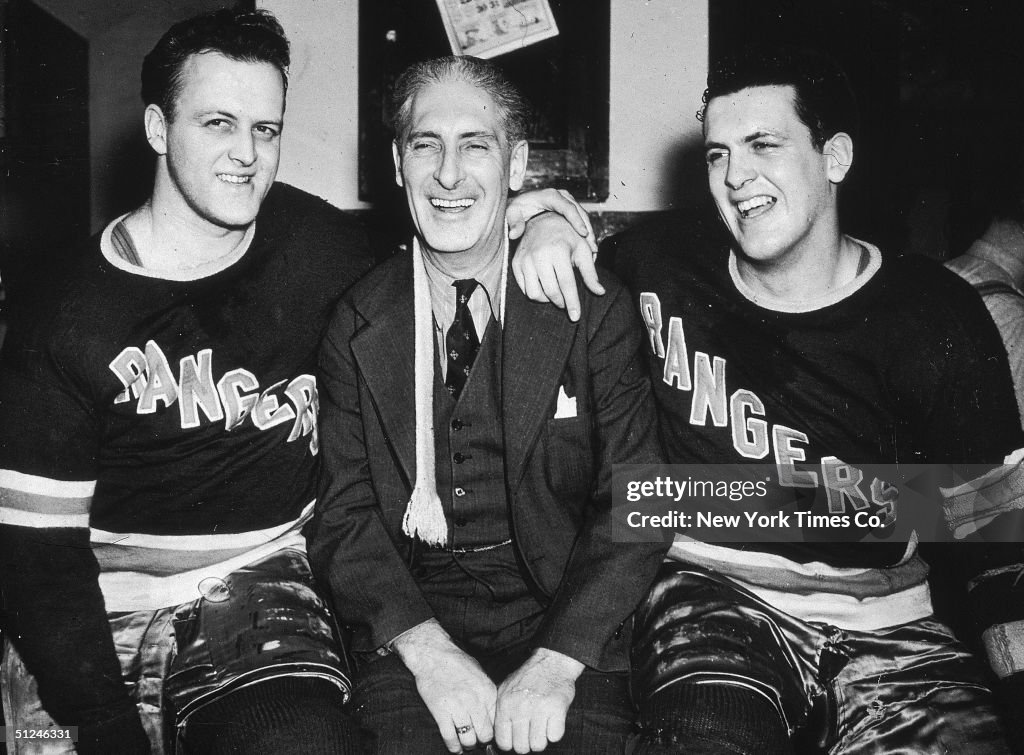
Left to right: Lynn, Lester and Muzz Patrick.
They had just won the 1940 Stanley Cup.

November 10, 1934: The St. Louis Eagles beat the New York Rangers, 4-2 at the St. Louis Arena. It is only the 2nd NHL game played in St. Louis, as the Ottawa Senators had moved there. After the 1934-35 season, the Eagles will fold, the former giants of Ottawa now fully doomed by the Great Depression.

But this game has another significance. Lester Patrick, the head coach and general manager of the Rangers, put Joseph Lynn Patrick, who went by his middle name, into the game. Lynn did not participate in the scoring, and he was not assessed a penalty. This was the 1st game in which a father coached his son in an NHL game.

Born in 1912 in Victoria, British Columbia, Canada, where his father and his uncle Frank were running a team called the Victoria Aristocrats, Lynn, a left wing, struggled at first, leading to the kind of booing from the New York fans that his father had feared.

But he soon won the fans over, and would play for the Rangers through the 1943 season, including winning the 1940 Stanley Cup, before serving in World War II -- in the U.S. Army, not in Canada's. His brother Murray, known as Muzz Patrick, a defenseman, joined him in 1938, and also served overseas. Each brother played 1 more season for the Rangers, in 1945-46.

The Rangers then named Lynn the head coach of their farm team, the New Haven Ramblers, playing 16 games for them while coaching them. He coached the Rangers in the 1948-49 and 1949-50 seasons, getting them into the 1950 Stanley Cup Finals. Offered more money by the Boston Bruins, he coached them until 1955, and remained as their general manager until 1964.

In 1967, he became the 1st head coach and general manager of the expansion St. Louis Blues, who played at the site of his NHL debut, the St. Louis Arena. He quickly handed the coaching duties over to Scotty Bowman, in his 1st NHL head job. He led them into the 1968, 1969 and 1970 Stanley Cup Finals. Patrick briefly served as an interim coach in 1974-75, and again in 1975-76.

On January 26, 1980, Lynn drove away from the St. Louis Arena, suffered a heart attack, and crashed his car. It's not clear whether the heart attack or the crash killed him. He was 67 years old.

Lynn's son, Craig Patrick, played in the NHL and the WHA, mostly for teams that have since moved or folded. In 1980, he was an assistant to Herb Brooks on the U.S. team that won the Gold Medal at the Winter Olympics in Lake Placid, New York.

He also coached the Rangers (twice), and was the GM who built the Pittsburgh Penguins' Stanley Cup winners of 1991 and '92. After serving in the front offices of the Columbus Blue Jackets and the Buffalo Sabres, he is back with the Penguins, as a scout. Glenn Patrick, another son of Lynn, briefly played in the NHL.

Muzz served as Ranger GM from 1954 and 1964, and coached the Rangers on 3 separate occasions over that span. He lived until 1998, age 83. Muzz's son Dick starred in hockey at Dartmouth College, and is a longtime executive with the Washington Capitals, now the team President. His son, Chris Patrick, is the associate general manager. When the Caps won the Stanley Cup in 2018, they became the 6th and 7th members of the family to win the Cup.

The NHL annually awards the Lester Patrick Trophy for service to hockey in America. It was posthumously awarded to Lynn Patrick in 1989. Lester Patrick received it in 2000, and his nephew Dick Patrick received it in 2012. Lester, Frank, Lynn and Craig are in the Hockey Hall of Fame.

Despite his surname, and having played for the Rangers from 1984 to 1994 -- he was traded just before they began the Playoff run that ended with a Cup win -- James Patrick is not related to the Lester Patrick family.

He is, however, a member of a notable Canadian sports family. His father, Stephen, anglicized the surname from the Ukrainian Patrebka, and was an All-Star guard who won 4 Grey Cups with the CFL's Winnipeg Blue Bombers, before serving in the Manitoba legislature. Steve Patrick Jr. was an NHL right wing, including playing with his brother James on the Rangers from 1984 to 1986. And Steve Jr.'s son Nolan has been a center with the Philadelphia Flyers and the Vegas Golden Knights.

*

November 10, 1934 was a Saturday. Julián Javier, the All-Star 2nd baseman who helped the St. Louis Cardinals win 2 World Series, was born on this day.

There was 1 other game in the NHL: The Toronto Maple Leafs beat the Montreal Canadiens, 2-1 at Maple Leaf Gardens. Harvey "Busher" Jackson scored the winning goal, 5:37 into overtime.

Baseball season was over. The NBA hadn't been founded yet. These were among the college football games played that day:

* Minnesota beat Indiana, 30-0 at Memorial Stadium in Minneapolis. Minnesota won the Big Ten Conference title, and were recognized as National Champions.

* Illinois beat arch-rival Northwestern, 14-3 at Dyche Stadium in the Chicago suburb of Evanston, Illinois.

* Kansas State beat Missouri, 29-0 at Memorial Stadium in Manhattan, Kansas. K-State went on to win the title in the Big Six Conference, which became the Big Seven, the Big Eight, and finally the Big Twelve.

* In a Philadelphia vs. Pittsburgh matchup, Temple University beat Carnegie Tech (the school now known as Carnegie-Mellon University), 34-6 at Temple Stadium in Philadelphia. Temple finished the regular season undefeated at 7-0-2.

* Bucknell University beat Washington & Jefferson University, 13-7 at Cameron Stadium in the Pittsburgh suburb of Washington, Pennsylvania.

* The University of Miami lost to Rollins College, 14-0 in Orlando, Florida. Despite their 5-2-1, Miami were invited to play in the 1st-ever Orange Bowl, at Miami Field. Bucknell beat them, 26-0.

* In a major boost for the pride of Southern football, Georgia beat Yale, 14-7 at the Yale Bowl in New Haven, Connecticut.

* Alabama beat Clemson, 40-0 at Denny Stadium (now Bryant-Denny Stadium) in Tuscaloosa, Alabama. Although 'Bama went "only" 7-0 in league play, while Tulane went 8-0, they and Tulane were named Co-Champions by the Southeastern Conference. Since Alabama were undefeated over the full season, 10-0, and Tulane were not, Alabama were invited to play in the Rose Bowl.

* Tulane lost to Colgate, 20-0, before a crowd of 40,000 at Yankee Stadium. Colgate were no slouches, going 7-1 that season, their only loss to Ohio State, which tied Illinois for 2nd in the Big 10 behind Minnesota. At 9-1, Tulane hosted a bowl game at their Tulane Stadium on New Year's Day, inviting undefeated Temple, in what became the 1st Sugar Bowl. Tulane won, 20-14.

* Stanford beat the University of Washington, 24-0 at the original Stanford Stadium in the San Francisco suburb of Palo Alto, California. Stanford won the Pacific Coast Conference title, but went on to lose the Rose Bowl to Alabama, 29-13.

* Army beat Harvard, 27-6 at Harvard Stadium in Boston.

* Navy beat Notre Dame, 10-6 before 54,571 fans at Cleveland Municipal Stadium. Since then, Navy have played Notre Dame 88 times, and have won only 11.

* The University of Pennsylvania beat Penn State, 3-0 at Franklin Field in Philadelphia.

* Among New York City teams: Columbia beat Brown, 39-0 at Baker Field in Manhattan; Fordham beat West Virginia, 27-20 at the Polo Grounds; and in an arch-rivalry, New York University beat City College of New York at Ohio Field in The Bronx: NYU 38, CCNY 13.

* In New Jersey, Princeton beat Lehigh, 54-0 at Palmer Stadium in Princeton; while Princeton's rivals, Rutgers, beat Lehigh's rivals, Lafayette, 27-6 at Neilson Field in New Brunswick.

And in English soccer, the defending Football League Champions, North London team Arsenal, went to Blundell Park in Cleethorpes, Lincolnshire, and played Grimsby Town to a 2-2 draw.

Monday, November 7, 2022

November 7, 1975: "The Trade" Between the Rangers and the Bruins

Phil Esposito

November 7, 1975: The New York Rangers and the Boston Bruins make what quickly became known, and is still known in hockey, as "The Trade."

"The New Madison Square Garden Center" opened in 1968, on top of Penn Station, between 31st and 33rd Streets, and 7th and 8th Avenues. What became known as "the old Garden" was demolished right afterward, and a parking lot was put on the site until construction began on Worldwide Plaza, a skyscraper which opened in 1989.

The Rangers rose back to contention largely thanks to goalie Eddie Giacomin, defenseman Brad Park, and the "GAG Line," which stood for "Goal A Game": Jean Ratelle centering Vic Hadfield and Rod Gilbert. All are still alive; all but Hadfield are in the Hall of Fame, and Hadfield probably should be.

This was a bit of a golden age for New York sports: Between 1968 and 1973, although the Yankees and Giants were mediocre at best, World Championships were won by the Mets, the Jets, and the Knicks twice, with the Mets winning an additional Pennant and the Knicks reaching an additional NBA Finals.

The Rangers were a part of this, reaching the Finals in 1972, before losing in 6 games to the Boston Bruins of Bobby Orr and Phil Esposito.

This was in the NHL's big era of expansion, and the next season, the Islanders debuted, at the Nassau Coliseum in Hempstead. (The mailing address is Uniondale, but it's within the town of Hempstead.) For 2 years, they were terrible, but in 1975, just their 3rd season, they beat the Rangers in the Playoffs.

This was a stunning blow, and it was a transition period in New York sports: The Yankees were playing in Shea Stadium while the original Yankee Stadium was being renovated, the Mets began to decline, the Giants played first at the Yale Bowl in Connecticut and then at Shea while waiting for Giants Stadium to be finished, the Jets fell apart as did Namath's knees, and the Knicks got old and fell apart while watching the Nets win 2 ABA titles.

The hockey shift was the most noticeable of all. The Islanders began a dominant stretch that would eventually see them reach 5 straight Finals, winning 4 straight Cups.

But calendar year 1975 was the Rangers' annus horribilis. Ranger management, having already traded Hadfield, fired Emile Francis as head coach after the Playoff loss to the Isles, ending his tenure in that role after 11 years. He remained general manager a little longer, being relieved of duty the following January.

But before that, he made a few deals, including one in June with the St. Louis Blues that brought in young goalie John Davidson. That left the veteran Gilles Villemure as the odd man out in the net, and he asked to be traded, and was, to Chicago on October 28. Then, on Halloween, October 31, just 4 games into the new season, the Rangers waived the still-popular Giacomin, and he was picked up by the Detroit Red Wings.

As fate would have it, the Wings were the opponents in the Rangers' next home game, and on November 2, Ranger fans, showing that they knew more about hockey than their team's management, chanted, "Ed-die! Ed-die! Ed-die!" The Rangers lost, 6-4. It was probably the only time Ranger fans ever left The Garden happy about a defeat.

Five days later, on November 7, the Broadway Blueshirts made what became known in hockey as The Trade: Sending Park, by then the team Captain, Ratelle, and defenseman Joe Zanussi for Esposito and defenseman Carol Vadnais. None of those players had wanted to be traded. Asked in 2008 how long it took him to get over his anger at the Rangers, Park said, "I'm still ticked!"
To make matters worse, Espo demanded the Number 7 he'd worn in Boston, but Gilbert, who'd worn it for the Rangers since 1962 (like Bobby Hull, he started his career wearing 16), didn't want to give it up. Gilbert was already (and, to this day, remains) the Rangers' all-time leading scorer, and it didn't matter if you were a 2-time Stanley Cup winner; holder (at the time) of the single-season records for goals, assists and points; and a national hero in your homeland: You do not ask a club icon to give up his uniform number.

Gilbert held firm, and the team backed him up, so Espo took Number 77. In the next few years, as age caught up with Gilbert and he retired, Espo would win the fans over, big-time. But he got off to a very rocky start, and, yes, part of it was his fault.

The Rangers missed the Playoffs in that 1975-76 season, and the next. Fans got restless. The top level, the 400 sections, of The Garden had blue seats, and in those cheapest of seats, the passion began to boil over. The seats were blue, the jerseys were blue (although, at this point, home teams wore white in the NHL), the air was blue (smoking was still allowed in sports arenas at the time), and the language was getting bluer than ever.

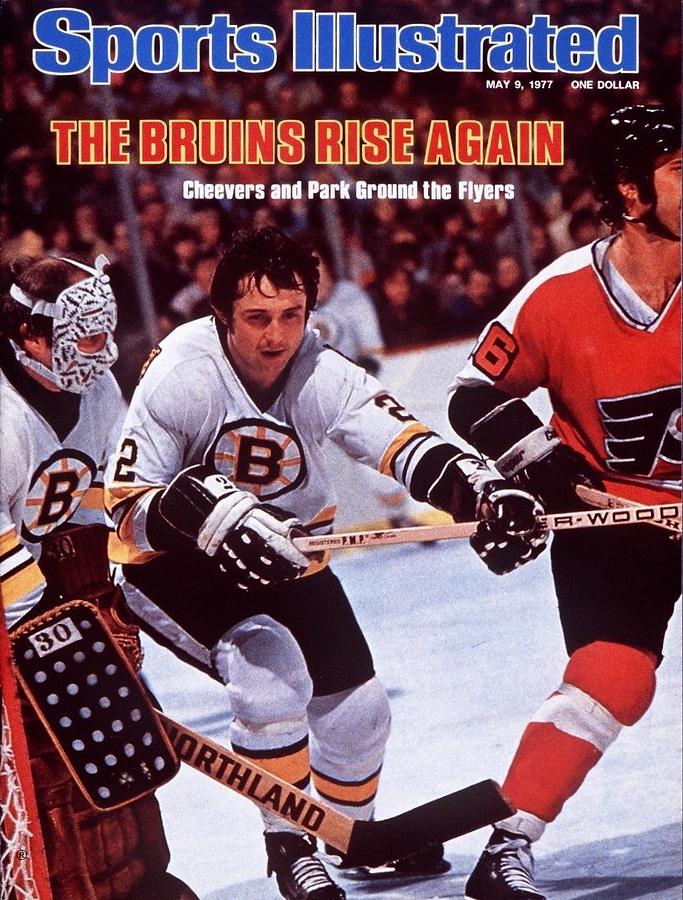
The Rangers made the Playoffs in 1978, and then in 1979, they regained their local icon status, including a thrilling Stanley Cup Semifinal win over the Islanders, delaying the Nassau County club's rise to the top for one more year. Esposito won the fans over, and remains beloved in both New York and Boston. Park and Ratelle won Bruin fans over, helping them reach the Stanley Cup Finals in 1977 and '78, but did not win either time, so they remain respected there, but not loved.

*

November 7, 1975 was a Friday. This was also the day The New Original Wonder Woman premiered on ABC. I have a separate entry for that event.
Baseball season was over. Football was in midweek. There were 3 games played in the NHL that day:
* The New York Rangers lost to the California Golden Seals, 7-5 at the Oakland Coliseum Arena. This was also the day of "The Trade," for which I have a separate entry. Esposito played, and scored 2 goals and had an assist. Vadnais did not appear in the game. 

* The Atlanta Flames beat the Minnesota North Stars, 3-2 at The Omni in Atlanta.

* And the Toronto Maple Leafs and the Kansas City Scouts played to a 3-3 tie at the Kemper Arena (now the Hy-Vee Arena) in Kansas City.

After the 1975-76 season, the Seals became the Cleveland Barons, and the Scouts became the Colorado Rockies. In 1978, the Barons merged with the North Stars. In 1980, the Flames moved to Calgary, In 1982, the Rockies became the New Jersey Devils. And in 1993, the North Stars became the Dallas Stars.

There were 4 games played in the World Hockey Association:

* The Houston Aeros beat the Phoenix Roadrunners, 5-3 at The Summit in Houston. (The arena has since been converted into the Central Campus of the Lakewood Church, Dr. Joel Osteen's "megachurch.")

* The San Diego Mariners beat the Denver Spurs, 3-2 in overtime at the McNichols Sports Arena in Denver.

* The Calgary Cowboys beat the Cleveland Crusaders, 5-2 at the Stampede Corral in Calgary.

* And the Edmonton Oilers beat the Toronto Toros, 5-4 at the Northlands Coliseum in Edmonton.

There were 6 games played in the NBA:
* The New York Knicks lost to the Los Angeles Lakers, 105-97 at The Forum outside Los Angeles in Inglewood, California. Kareem Abdul-Jabbar, acquired by the Lakers from the Milwaukee Bucks the preceding June 16, scored 40 points and grabbed 22 rebounds.
* The Philadelphia 76ers beat the Phoenix Suns, 103-99 at The Spectrum.
* The Cleveland Cavaliers beat the New Orleans Jazz, 94-90 at the Superdome in New Orleans.
* The Detroit Pistons beat the Chicago Bulls, 124-122 at the Chicago Stadium.
* The Milwaukee Bucks beat the Boston Celtics, 104-101 at the Milwaukee Exposition, Convention Center and Arena, or "The MECCA." Since 2014, it has been named the UW-Panther Arena.

* And the Portland Trail Blazers beat the Kansas City Kings, 92-88 at the Portland Memorial Coliseum.
There were 3 games in the American Basketball Association, early in this season, which turned out to be its last:
* The New York Nets beat the Spirits of St. Louis, 118-117 at the St. Louis Arena.
* The Indiana Pacers beat the Virginia Squires, 104-100 at The Scope in Norfolk, Virginia.
* And the Kentucky Colonels beat the San Diego Sails, 104-99 at Freedom Hall in Louisville. The Sails folded 5 days later.

December 31, 1999 & January 1, 2000: The Millennium

December 31, 1999:  The Millennium arrives. The people of planet Earth survived. At a terrible cost. But we hadn't destroyed ourselves. ...