Showing posts with label d.c. united. Show all posts

Sunday, October 30, 2022

October 30, 1998: The Great Chicago Fire... Soccer Team

October 30, 1998: The Chicago Fire beat the Columbus Crew, 2-1 at Soldier Field in Chicago, to win the U.S. Open Cup. Following their win in the MLS Cup Final 5 days earlier, this gives them the American version of the Premier League and the FA Cup: They have "done The Double."

It is only their 1st season.

Chicago Sparta, a team of Czech-Americans, had won the Open Cup in 1938 and 1940; the Chicago Vikings, a Scandinavian team, had won it in 1946; the Chicago Falcons, a Polish team, had won it in 1953; and the Chicago Sting had won the North American Soccer League Championship in 1981 and 1984 (the League's last season).

Despite Soldier Field being one of the venues for the 1994 World Cup, and the city's history as one of America's great multiethnic centers and one of its great sports cities, Chicago did not get a charter franchise in Major League Soccer. The team, officially named Chicago Fire Football Club (to match the "F.C." names of so many British teams) was founded on October 8, 1997, the Anniversary of the Great Chicago Fire in 1871. Their logo, or "badge," as British clubs would call it, matched that of the city's Fire Department.

They began regular-season play on March 21, 1998, beating the Miami Fusion, 2-0 at Lockhart Stadium in the Miami suburb of Fort Lauderdale, Florida. Their 1st home game was also a 2-0 win over a Florida team that would be folded after the 2001 season, the Tampa Bay Mutiny. A crowd of 36,444 attended at Soldier Field.

They lost their next 5 games, but won their next 11. Then they lost their next 5, but won their next 4 of their next 5, before losing their regular-season finale.

The U.S. Open Cup works the same way the FA Cup works in England: It runs concurrent with the League season. As an MLS team, the Fire got a bye into the 3rd Round, and ended up playing another area team, the Chicago Stingers, sort-of named for the former NASL team. They were based in the United Soccer League (USL), then the 2nd tier of U.S. soccer, and hosted the July 6 game in Arlington Heights, Illinois. The Fire didn't have to try too hard to win, and did so, 3-1.

On July 22, the played the San Jose Clash in the Quarterfinals, on neutral ground, at the Cotton Bowl in Dallas. It ended in a 1-1 draw, but the Fire advanced on penalties, 4-3. The Semifinal would be against the Dallas Burn (the team now known as FC Dallas), but it wouldn't be in Dallas or Chicago. Instead, this one was also at neutral ground, at Zephyr Field in Metairie, Louisiana, home of the minor-league baseball team representing New Orleans. The Fire won, 3-2, and advanced to the Final, which they would host.

In the MLS Cup Playoffs, they needed a shootout to beat the Denver-area team, the Colorado Rapids, at home, 3-2 after a 1-1 draw on October 1; then beat them 1-0 away on October 5. In the Western Conference Finals, they beat the Los Angeles Galaxy, 1-0 at the Rose Bowl in Pasadena on October 10; but, on October 16, at Soldier Field, again, they could only manage a 1-1 draw, before winning 2-1 in a shootout.

That set up the MLS Cup Final on October 25, on neutral ground, again at the Rose Bowl, against D.C. United, the Washington-based team that had won the 1st 2 league titles, including "The Double" in 1996. Attendance was listed at 51,350, but that left the old bowl nearly half-empty.

Despite D.C. having such talents as John Harkes, Jeff Agoos, Eddie Pope, Roy Lassiter, Marco Etcheverry and Jamie Moreno, it was the Fire who emerged victorious. Polish striker Jerzy Podbrożny scored in the 29th minute. Colombian midfielder Diego Gutiérrez added another just before the half. Another Pole, Chicago's Captain Piotr Nowak, was named Man of the Match, much to the delight of the large Polish rooting section among the Fire's ultra support, known as Section 8.

Zach Thornton kept a clean sheet in goal. Manager Bob Bradley could also count among his starting lineup Jesse Marsch, later to manage the New York Red Bulls to 2 Supporters' Shields.

Five days later, at home at Soldier Field, the Fire faced the Columbus Crew. The Fire tended to wear white, with red and blue trim, similar to the City flag, but, on this occasion, wore white with black trim. By a weird coincidence, the Crew wore black and gold, which, given the "insect" theme, were the usual colors of the Fire's NASL predecessors, the Chicago Sting.

A much smaller crowd of 18,615 saw the Fire awarded a penalty just before halftime, converted by Podbrożny. Stern John -- apparently, the Trinidadian forward's full birth name -- scored for the Crew in the 53rd minute.

The game went to extra time, and, in the 99th minute -- no "Golden Goal" in this tournament -- Fotios "Frank" Klopas, a Greek forward who came on at the start of extra time, scored the goal that gave the Fire The Double.

The Fire have since won the Open Cup again in 2000, 2003 and 2006, losing the Final in 2004 and 2011; and the Supporters' Shield, the MLS regular-season title, in 2003. But they have never again won the MLS Cup, losing the Final in 2000 for a just-missed-Double and 2003 for a runner-up-Double.

*

October 30, 1998 was a Friday. Baseball season had ended 9 days earlier, when the New York Yankees completed a 4-game World Series sweep over the San Diego Padres. The NBA's team owners had locked the players out, and so the season started late. There were 7 games in the NHL:

* The New York Rangers beat the Carolina Hurricanes, 1-0 at Madison Square Garden.

* The Buffalo Sabres beat their arch-rivals, the Toronto Maple Leafs, 4-1 at the Marine Midland Arena (now the KeyBank Center) in Buffalo.

* The Florida Panthers beat the Chicago Blackhawks, 7-3 at the United Center in Chicago.

* The Dallas Stars and the Mighty Ducks of Anaheim played to a tie, 3-3 at the Reunion Arena in Dallas.

* The Washington Capitals and the Calgary Flames played to a tie, 0-0 at the Saddledome in Calgary.

* The Tampa Bay Lightning beat the Los Angeles Kings, 3-0 at The Forum outside Los Angeles in Inglewood, California.

* And the Pittsburgh Penguins and the Vancouver Canucks played to a tie, 2-2 at General Motors Place (now the Rogers Arena) in Vancouver.

The NFL and the NCAA had no football games scheduled. But in New Jersey high school football, my Alma Mater, East Brunswick, beat South Brunswick, 36-10 at Mike Elko Stadium in South Brunswick.

Wednesday, October 26, 2022

October 26, 1997: The José Mesa Game

October 26, 1997: Game 7 of the World Series is played at Pro Player Stadium (now Hard Rock Stadium) in the Miami suburb of Miami Gardens, Florida. The Cleveland Indians jump out to a 2-0 lead over Florida‚ and are just 2 outs away from winning their 1st World Series in 49 years.

But José Mesa, not for the first time nor for the last, blows the save, and the Marlins claw their way back and tie the score in the bottom of the 9th on a sacrifice fly by Craig Counsell. In the last half of the 11th‚ Édgar Rentería gets his 3rd hit of the game‚ driving home Counsell with the winning run‚ as Florida wins Game 7 by a score of 3-2.
This was, after 1962, only the 2nd World Series where neither team won back-to-back games: The Marlins won Games 1, 3, 5 and 7; the Indians won Games 2, 4 and 6. This was also the Series with the greatest extremes of weather: The 4 games in South Florida were the 4 warmest on record for Series games, while the 3 in Cleveland were 3 of the 4 coldest (the previous coldest, in New York in 1976, remains 3rd), and Game 4 is the only Series game to be played in a snowfall, except for Games 1 and 2 in Chicago in 1906.

The Marlins, in just their 5th season of existence (as opposed to the Indians, in their 97th), thus become the fastest team in baseball history to win a World Series title‚ 3 years quicker than the 1969 Mets. (In 2001, this record would be broken by the 4th-year Arizona Diamondbacks.) Liván Hernández, the pitcher who fled Cuba (and would soon be followed by his brother Orlando "El Duque" Hernández) is named the Most Valuable Player of the Series.

This Series is sweet vindication for:

* Marlins manager Jim Leyland, who lost 3 straight NLCS while managing the Pittsburgh Pirates.

* Bobby Bonilla, who played for Leyland on those Pirates, bad-attituded his way out of his native New York with the Mets, and flopped the year before with the Baltimore Orioles

* Alex Fernandez, who pitched for the talented Chicago White Sox team that fell just short in 1990, lost the ALCS in '93 and was screwed over by the Strike of '94, and was injured and unable to pitch in the postseason, so his teammates put his Number 32 on their caps.

* And for Gary Sheffield, who was already gaining a reputation as a bad apple that nobody wanted to keep around for very long, despite his obvious talent for power hitting, and this remained his only World Series win.

For the Indians, who hadn't won a Series since 1948, went from 1954 to 1995 without winning a Pennant, went from 1959 to 1994 without even being in a Pennant race, stood to be the AL's Wild Card if the standings at the time of the Strike of '94 had held to the end of the season, lost the '95 Series despite winning 100 of 144 games in the regular season, lost the '96 ALDS to an inferior Oriole team, and won just 86 games in this regular season but had defeated the favored Yankees and the Seattle Mariners before this crushing defeat, it is not just a crushing defeat, where they came closer to winning the World Series without doing so than any team ever had except the '86 Red Sox (and now the 2011 Texas Rangers).


No, this loss meant that, like the Red Sox, the Indians now had a reputation of being a choking team. They have never shaken it, despite return trips to the postseason in 1998, '99, 2001 and '07 – blowing a 2-1 lead in the '98 ALCS, 3-1 leads in the '07 ALCS and the '16 World Series, and a 2-0 lead in the '17 ALDS.

The Marlins were immediately broken up, and dropped to a 108-loss team the next year. This was part of the plan: Team owner Wayne Huizenga was going for it in 1997, so it was a now-or-never situation. Dave Rosenbaum wrote a book about it, titled If They Don't Win It's a Shame.

They were sold and rebuilt, and won another World Series in 2013. They were broken up again, moved to the new LoanDepot Park on the site of the Orange Bowl in 2012, renamed the Miami Marlins, were built back into a Playoff team in 2020, and broken up yet again.

The Indians won Division titles in 1995, '96, '97, '98, '99 and 2001, and Pennants in '95 and '97, but not a World Series. They fell 1 game short of a Pennant in 2007, and won the Pennant but against lost Game 7 of the World Series in extra innings in 2016. In 2022, they changed their name to the Cleveland Guardians, and won another Division title.

In 2010, the MLB Network listed this game at 13th on their list of MLB's 20 Greatest Games -- limited in scope, due to the availability of surviving videotape, to 1975 onward.

UPDATE: The Guardians have a team Hall of Fame. From their 1995 and 1997 Pennant winners, they have honored 1st baseman Jim Thome, 2nd baseman Carlos Baerga, shortstop Omar Vizquel, left fielder Albert Belle, center fielder Kenny Lofton, right fielder Manny Ramirez, catcher Sandy Alomar Jr., pitcher Charles Nagy; team owner Richard Jacobs, general manager John Hart, team executives Hank Peters and Dennis Lehman, manager Mike Hargrove, coach Johnny Goryl, longtime clubhouse manager Cy Buynak, longtime trainer Jim Warfield, longtime travel director Mike Seghi (son of former team owner Phil Seghi); broadcasters Herb Score, Mike Hegan, Tom Hamilton and Rick Manning; and famous fan John Adams.

Hargrove and Hegan have also been elected to the Greater Cleveland Sports Hall of Fame. So has outfielder Brian Anderson, mainly because he was a Cleveland native.

From their 2007 team that reached the AL Championship Series, the Guardians have honored pitcher CC Sabathia; while the Greater Cleveland Sports Hall of Fame has honored outfielder Ellis Burks and 1st baseman Travis Hafner.

*

October 26, 1997 was a Sunday. The following NFL games were played:

* The New York Giants beat the Cincinnati Bengals, 29-27 at Giants Stadium in the Meadowlands.

* The Philadelphia Eagles beat the team their fans hate the most, if not their geographic rivals, the Dallas Cowboys, 13-12 at Veterans Stadium in Philadelphia. Rodney Peete won it in the last minute of regulation with an 8-yard touchdown pass to Chad Lewis.

* The Baltimore Ravens beat the Washington Redskins, 20-17 at Jack Kent Cooke Stadium (now Northwest Stadium) in the Washington suburb of Landover, Maryland.

* The Carolina Panthers beat the Atlanta Falcons, 21-12 at Ericsson Stadium (now Bank of America Stadium) in Charlotte, 21-12.

* The Minnesota Vikings beat the Tampa Bay Buccaneers, 10-6 at Tampa Stadium.

* The San Francisco 49ers beat the New Orleans Saints, 23-0 at the Superdome in New Orleans.

* The Denver Broncos beat the Buffalo Bills, 23-20 at Rich Stadium (later Ralph Wilson Stadium) in the Buffalo suburb of Orchard Park, New York. Jason Elam won it with a 33-yard field goal in overtime.

* The Pittsburgh Steelers beat the Jacksonville Jaguars, 23-17 at Three Rivers Stadium in Pittsburgh. Kordell Stewart won it in overtime with a 17-yard touchdown pass to Jerome Bettis: "Slash" to "The Bus."

* The Kansas City Chiefs beat the cross-State St. Louis Rams, 28-20 at the TWA Dome (now The Dome at America's Center) in St. Louis.

* The Tennessee Oilers beat the Arizona Cardinals, 41-14 at Sun Devil Stadium in the Phoenix suburb of Tempe, Arizona.

* The San Diego Chargers beat the Indianapolis Colts, 35-19 at Qualcomm Stadium in San Diego.

* The Seattle Seahawks beat the Oakland Raiders, 45-34 at the Kingdome in Seattle.

* The next night, the Green Bay Packers beat the New England Patriots, 28-10 at Foxboro Stadium in the Boston suburb of Foxborough, Massachusetts.

* Game 7 of the World Series forced a rescheduling, since the Marlins needed Pro Player Stadium. So the Miami Dolphins' home game set for Sunday afternoon, October 26 was moved to Monday night, October 27. They lost to the Chicago Bears, 36-33. Jeff Jaeger won it with a 35-yard field goal in overtime.

* And the New York Jets and the Detroit Lions had a bye week.

The NBA season began 5 days later. There were 5 games in the NHL:

* The New York Rangers and the Mighty Ducks of Anaheim played to a tie, 3-3 at Madison Square Garden.

* The Los Angeles Kings beat the Tampa Bay Lightning, 3-1 at the Ice Palace (now the Benchmark International Arena) in Tampa.

* The Carolina Hurricanes beat the Chicago Blackhawks, 3-2 at the United Center in Chicago.

* The Phoenix Coyotes beat the Buffalo Sabres, 6-1 at the America West Arena (now the Footprint Center) in Phoenix.

* And the Detroit Red Wings beat the Vancouver Canucks, 5-1 at General Motors Place (now the Rogers Arena) in Vancouver.

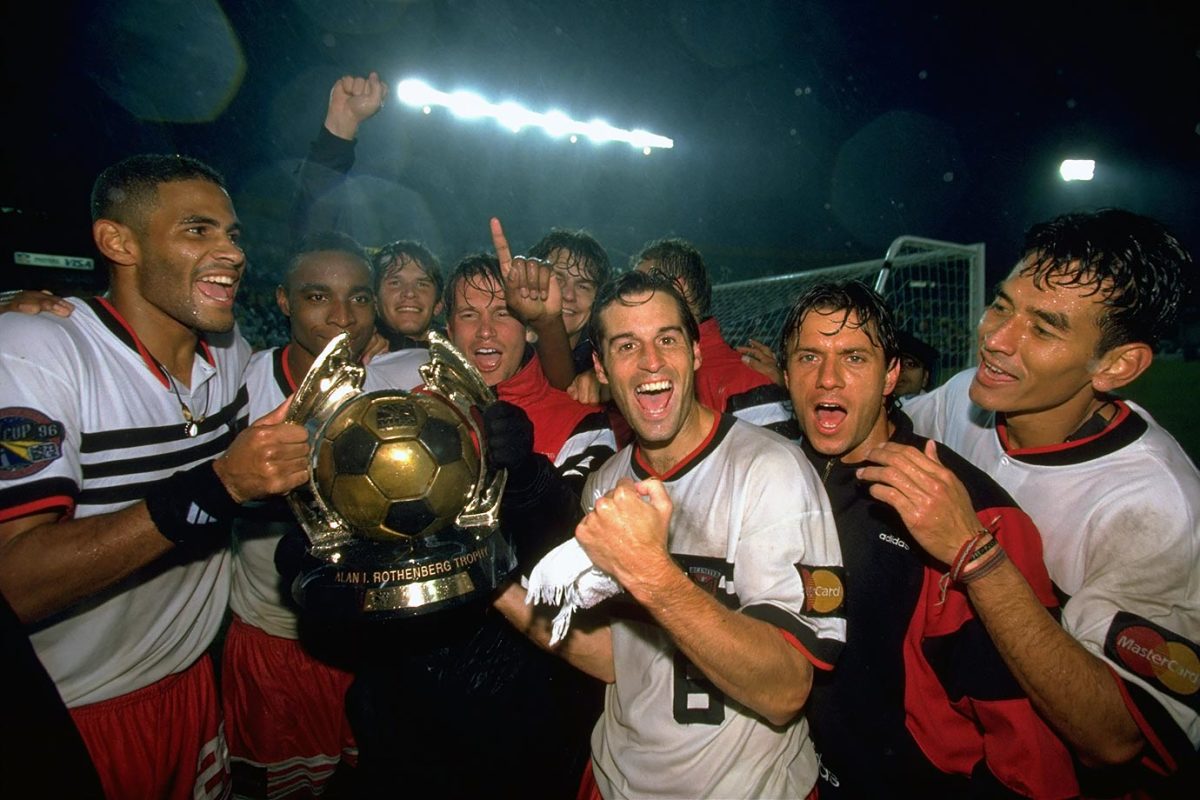
Also on this day, D.C. United won their 2nd MLS Cup, in the league's 2nd season, beating the Denver-based Colorado Rapids, 2-1 on home soil at Robert F. Kennedy Stadium in Washington. Jaime Moreno and Tony Sanneh scored the goals. 

Thursday, October 20, 2022

October 20, 1996: The 1st MLS Cup

October 20, 1996: The 1st Major League Soccer season comes to a climax with the 1st MLS Cup Final, held on neutral ground at Foxboro Stadium in the Boston suburb of Foxborough, Massachusetts, home of the NFL's New England Patriots and MLS' New England Revolution.

MLS was then divided into Eastern and Western Conferences. The Tampa Bay Mutiny ran away with the East, with D.C. United, the league's Washington team, 12 points back. But in the 1st round of the Playoffs, DCU beat the New York Tri-State Area's team, the NY/NJ MetroStars in a shootout.

This started a rivalry known as the Atlantic Cup. Despite Metro's 2005 rebranding as the New York Red Bulls, the chance to jump on the traditional New York vs. New England rivalry from the outset, and the establishments of the Philadelphia Union and New York City F.C., DCU remain the team that Metro/Red Bull fans most want to beat: "The D.C. Scum."

DCU went on to eliminate the Mutiny in the Conference Final. In the West, the Los Angeles Galaxy won by 8 points over the Dallas Burn, and then, in the Playoffs, beat the San Jose Clash and the Kansas City Wiz to make the Final. (Respectively, those teams are now named F.C. Dallas, the Houston Dynamo and Sporting Kansas City.)

Boston and Washington had never previously played in a major league sports final. Due to the NBA and the NHL being split into geographic conferences, it hasn't been possible in those leagues.

It had been possible in Major League Baseball only from 1903, when the World Series began, until 1952, when the Boston Braves moved, and could no longer play the Washington Senators in the World Series. It became possible again with the 2005 arrival of the Washington Nationals, but they have never played the Boston Red Sox in a World Series.

It was, and remains, possible for the Patriots to play the Washington Football Team (who actually started out in Boston, from 1932 to 1936) in the Super Bowl, but it hasn't happened.

Foxboro Stadium, replaced by Gillette Stadium in 2002, seated 61,000, but the stadium operators were surprised that over 40,000 tickets were sold, so they had to open the upper deck. But Hurricane Lili swept through the Northeast, postponing Game 1 of the World Series in New York the night before. A tarp wasn't enough, as the natural grass field got soaked. A postponement was considered, but rejected. Out of 42,368 people who bought tickets, 34,643 showed up, including 7,000 DCU fans who made the trip north.

Dan Calichman, a defender from Huntington, Long Island, New York, who was ordinarily the Galaxy's Captain, had to sit the match out, suspended 1 game due to yellow card accumulation. So another defender, Miami native Robin Fraser, wore the armband on this occasion.

Their lineup also included Mexican goalkeeper Jorge Campos, Ecuadoran forward Eduardo Hurtado, U.S. national team stars Cobi Jones and Chris Armas, and, oddly for an American team, a player from Iran, defender Arah Noamouz. Their manager was German, Lothar Osiander.

DC was managed by Bruce Arena, who had built the great soccer program at the University of Virginia, and would go on to become MLS' greatest manager, winning 5 Cups -- 2 with D.C., 3 with L.A. His Captain was midfielder John Harkes, a native of one of the places that could legitimately be called Soccertown, U.S.A.: Kearny, Hudson County, New Jersey.

Also in the lineup: Mark Simpson, who, oddly for a goalkeeper, wore Number 2; American defenders Eddie Pope and Jeff Agoos; a pair of Bolivians, midfielder Marco Etcheverry and Jaime Moreno; and forward Raúl Díaz Arce, who would go on to become the El Salvador national team's all-time leading scorer.

ABC broadcast the match. In only the 5th minute, Hurtado scored on a header to put L.A. ahead. He celebrated by doing a belly-flop on the soaked grass. It remained 1-0 to L.A. through halftime. In the 56th minute, Armas made it 2-0 to L.A.

With rain coming down and the wind getting worse, it was beginning to look like the Galaxy had the game in the bag. Arena rolled the dice, bringing on American midfielders Tony Sanneh and Shawn Medved as substitutes. It worked: Sanneh headed in an Etcheverry free kick in the 73rd.

In the 78th, Jones tried to put it away for the Galaxy, but hit the crossbar. In the 81st, United were awarded another free kick. Etcheverry took it, and Campos was able to punch it away. But Medved scored on the rebound, and the game was tied.

According to league rules at the time, overtime would be sudden death. The 1st team to score would have a "Golden Goal," and be Champions. In the 94th minute, Etcheverry took a corner, and Pope scored it. D.C. United had won, 3-2. Etcheverry, who assisted on all 3 goals, was named Man of the Match.

D.C. United would win 3 of the 1st 4 MLS Cups, and 4 of the 1st 9. L.A. wouldn't win their 1st until 2002, but have now won 5, and remain the league's leader in titles. Here are the Final records of all MLS teams to have played in the Final:

Los Angeles Galaxy, 5-4
D.C. United, 4-1
Seattle Sounders, 2-2
Houston Dynamo, 2-2
Columbus Crew, 2-1
Sporting Kansas City, 2-1
San Jose Earthquakes, 2-0
Toronto F.C., 1-2
Chicago Fire, 1-2
Portland Timbers, 1-2
Real Salt Lake, 1-1
Colorado Rapids, 1-1
Atlanta United, 1-0
New York City FC, 1-0
F.C. Dallas, 0-1
New York Red Bulls, 0-1
New England Revolution, 0-5

Of the 10 charter MLS teams from 1996, the Tampa Bay Mutiny folded without reaching a Final; among the other 9, only the MetroStars/Red Bulls have failed to win at least 1 Cup.

*

October 20, 1996 was a Sunday. MLS probably shouldn't have scheduled its 1st Final on an NFL gameday, especially since Game 2 of the World Series was also supposed to be played. But the only other real options were the day before, a college football gameday when Game 1 of the World Series was supposed to be played, or wait a week, when it would still conflict with football, either college or pro, and still might conflict with the World Series, either Game 6 or Game 7. Or wait another week, and still conflict with football?

At any rate, because Game 1 of the World Series was delayed by rain, it was played at the same time as the MLS Cup. The defending World Champions, the Atlanta Braves, pounded the New York Yankees, 12-1 at Yankee Stadium. Andy Pettitte was chased by 2 runs in the 2nd inning and 6 runs in the 3rd. Andruw Jones hit 2 home runs, his 1st making him the youngest home run hitter in Series history. John Smoltz was the beneficiary pitcher. The Braves also took Game 2, but the Yankees won the next 4 straight.

These were the NFL games played that day: 

* The New York Giants lost to the Washington Redskins, 31-21 at Robert F. Kennedy Stadium in Washington. This was the 'Skins last season of 36 at RFK, before moving to a new stadium in the Maryland suburbs; and DCU's 1st season of 22 there, before moving to Audi Field in 2018.

* The New York Jets lost to the Buffalo Bills, 25-22 at Giants Stadium. This was the Jets' 1-15 year under head coach Rich Kotite.

* The Philadelphia Eagles beat the Miami Dolphins, 35-28 at Veterans Stadium in Philadelphia.

* The Carolina Panthers beat the New Orleans Saints, 19-7 at Ericsson Stadium in Charlotte. (It's now Bank of America Stadium.)

* The New England Patriots beat the Indianapolis Colts, 27-9 at the RCA Dome in Indianapolis. The Pats being on the road made Foxboro Stadium available.

* The St. Louis Rams beat the Jacksonville Jaguars, 17-14 at the Trans World Dome in St. Louis. (It's now The Dome at America's Center.)

* The Dallas Cowboys beat the Atlanta Falcons, 32-28 at Texas Stadium in the Dallas suburb of Irving, Texas.

* The Houston Oilers beat the Pittsburgh Steelers, 23-13 at the Astrodome. The Oilers would play out this season in Houston, and then move to Tennessee the next year.

* The Denver Broncos beat the Baltimore Ravens, 45-34 at Mile High Stadium in Denver.

* The Arizona Cardinals beat the Tampa Bay Buccaneers, 13-9 at Sun Devil Stadium in the Phoenix suburb of Tempe, Arizona.

* The San Francisco 49ers beat the Cincinnati Bengals, 28-21 at Candlestick Park (then named 3Com Park at Candlestick Point) in San Francisco.

* The next night, on ABC Monday Night Football, the Oakland Raiders beat the San Diego Chargers, 23-14 at Qualcomm Stadium in San Diego.

* And the Chicago Bears, the Dallas Cowboys, the Detroit Lions, the Green Bay Packers, the Kansas City Chiefs, the Minnesota Vikings and the Seattle Seahawks had a bye.

The NBA Season didn't start until November 1. But there were 6 NHL games played on this day:

* The New York Rangers lost to the Tampa Bay Lightning, 6-2 at the Ice Palace in Tampa. This was the 1st regular-season game at the building, now named the Benchmark International Arena.

* The Chicago Blackhawks beat the Los Angeles Kings, 2-1 at the United Center in Chicago.

* The San Jose Sharks beat the St. Louis Blues, 3-2 at the Kiel Center in St. Louis. (It's now the Enterprise Center.)

* The Florida Panthers and the Phoenix Coyotes played to a tie, 1-1 at the AmericaWest Arena in Phoenix.

* In a Battle of Alberta, the Calgary Flames beat the Edmonton Oilers, 6-3 at the Saddledome in Calgary.

* And the Boston Bruins beat the Mighty Ducks of Anaheim, 5-1 at the Arrowhead Pond in the Los Angeles suburb of Anaheim, California.

Saturday, October 1, 2022

October 1, 1961: America's National Stadium

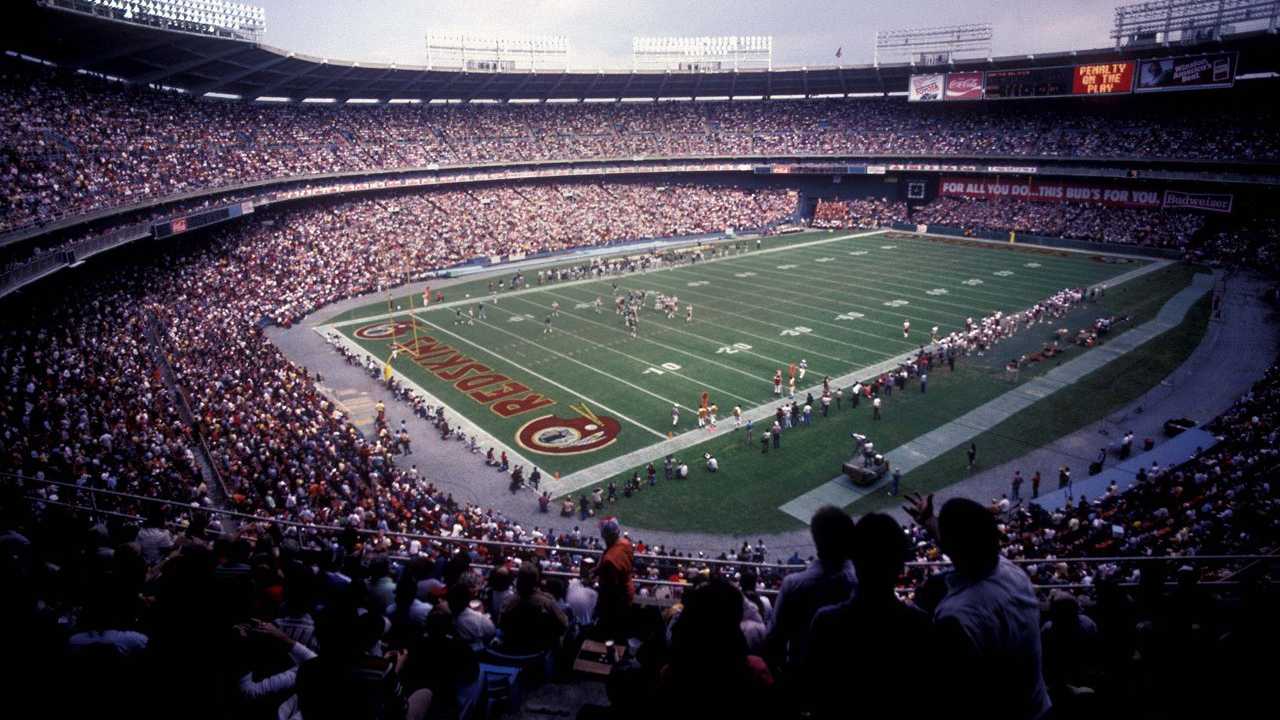
October 1, 1961: District of Columbia Stadium opens in Washington, D.C. The Washington Redskins lose to the New York Giants, 24-21.

As with most major American cities early in the 20th Century, the biggest stadiums were the baseball parks. The biggest stadiums built for football were on the campuses of State universities, which tended to be in or near State capitals, which were not necessarily the biggest city in their State.

In 1916, Representative George Hulbert, a Democrat, proposed the construction of a 50,000-seat "national stadium" -- not in New York City, where the Rochester native had practiced law, but in the nation's capital, Washington, D.C.. The idea was that it would host the 1920 Olympics, the Army-Navy football game, and Davis Cup tennis matches. It wasn't taken seriously.

Later, another Representative from New York, Representative Hamilton Fish III, and D.C.'s Director of Public Buildings and Parks, Ulysses S. Grant III -- the former's grandfather had been Secretary of State under the latter's grandfather -- decided to build a 100,000-seat national stadium, as a memorial to President Theodore Roosevelt, either on the island in the Potomac River that bore TR's name, or on the National Mall, as a bookend to the Lincoln Memorial. In addition to the preceding events, it was thought that Presidential Inaugurations could be held there. But Los Angeles won America's bid to host the 1932 Olympics, and, eventually, the National World War II Memorial became the Lincoln Memorial's bookend.

In 1944, a 9-man National Memorial Stadium Commission was appointed, and a site was chosen for a national stadium, next to the D.C. Armory, which opened in 1941, where East Capitol Street met the Anacostia River. But, with World War II still ongoing, getting Congress to fund a 100,000-seat stadium for the 1948 Olympics was impossible, and the Games were held in London.

In 1956, Representative Charles R. Howell, Democrat of New Jersey (I wasn't born yet, but, had I lived then where I live now, he would have been "my Congressman") proposed legislation funding a national stadium, after the National Capital Planning Commission re-proposed "the East Capitol Site."

Clark Griffith, longtime owner of baseball's Washington Senators, had recently died, leaving the team to his nephew, Calvin Griffith, and he didn't want to play at Griffith Stadium, a 27,000-seat stadium, expandable to only 35,000 for the NFL's Washington Redskins, and in a neighborhood that was growing increasingly black -- to the point where, after the ballpark was demolished, Howard University, the school known as "the Black Harvard," built its hospital on the site. It was thought that a national stadium could not only attract the Olympics and the Army-Navy Game, but save the Senators and Redskins from moving.

This time, Congress passed the District of Columbia Stadium Act, authorizing a 50,000-seat stadium, and President Dwight D. Eisenhower signed it into law on July 29, 1958. It was the 1st stadium built from scratch for both baseball and football -- up the Parkway, Baltimore repurposed the existing Municipal Stadium as Memorial Stadium for both sports in a conversion process from 1950 to 1954 -- and it opened in time for the Redskins to open the 1961 season there. (By a weird coincidence, both that stadium and DC/RFK Stadium would be built across the street from a school named Eastern High School.)

There was a snag, though: The Redskins were the last NFL team that hadn't racially integrated, and the stadium was on federal government property. When John F. Kennedy became President on January 20, 1961, he appointed Representative Stewart Udall of Arizona as Secretary of the Interior, overseeing the site. (Stew's brother, Morris "Mo" Udall, won his seat, and each of them had a son who went on to be elected to the U.S. Senate.) The Secretary told Redskins owner George Preston Marshall, a known racist, that he had to integrate the team, or he couldn't have D.C. Stadium. Marshall caved.

Griffith moved the Senators for the 1961 season, anyway, making them the Minnesota Twins. An expansion franchise was placed at Griffith Stadium for 1961, named the Washington Senators. D.C. Stadium became their home on April 9, 1962, and they beat the Detroit Tigers, 4-1. It hosted the 1962 and 1969 Major League Baseball All-Star Games. JFK threw out the ceremonial first ball at both Opening Day and the All-Star Game in 1962.
JFK is flanked by Vice President Lyndon Johnson
and White House aide Dave Powers. Also identifiable behind him:
Senators Hubert Humphrey, Everett Dirksen and Mike Mansfield;
and White House aide Larry O'Brien, later Chairman of the Democratic Party
(his offices at the Watergate were bugged in 1972) and NBA Commissioner.

On January 18, 1969, having served the entirety of the JFK and Lyndon B. Johnson Administrations, Secretary Udall announced that the stadium had been renamed Robert F. Kennedy Memorial Stadium, for JFK's brother and Attorney General, who had been elected to the Senate in 1964, had run for President in 1968, and, like JFK, had been assassinated. A formal rededication ceremony was held on June 7. (Most people dropped the "Memorial" when talking about it, and called it "RFK Stadium," or even just "RFK.")

On July 1, 1977, the Washington Metropolitan Area Transit Authority opened the Stadium-Armory subway station, serving RFK Stadium and the D.C. Armory on the Blue Line and the Orange Line, with the Silver Line later added. It was a bit of a walk, though: The station was at 19th and A Streets Southeast, a 10-minute walk from the Stadium, whose mailing address was 2400 East Capitol Street Northeast.

Not having subway access hurt the Senators, who left after the 1971 season, and, with a few exceptions such as preseason exhibitions and old-timers' games, baseball did not return until 2005. The Washington Nationals arrived, and remained through the 2007 season, then moved into Nationals Park.

The Redskins played there until 1996, building the NFL's most intimidating home-field advantage, reaching 4 Super Bowls, winning 3. Their last game there was on December 22, 1996, a 37-10 pasting of their arch-rivals, the Dallas Cowboys. Moving out to the far larger stadium in suburban Landover, Maryland turned the 'Skins from the team with the best home-field advantage in the NFL to the worst.
This seat would have been behind home plate
in the stadium's baseball configuration.
You can make out the dugouts.

Unlike most countries, the United States does not have an official "national stadium." RFK is the closest we come to it: Not only is it in the nation's capital, but it has hosted the national soccer team more times than any other venue, 24 times. (The Los Angeles Memorial Coliseum is 2nd, with 20; with the now-demolished Orange Bowl in Miami right behind, with 19.) Which become more amazing when you realize that the 1st such match wasn't until 1977, and the 2nd not until 1991. Why? Interest in the team was too low: RFK Stadium was too big for them until they reached the 1990 World Cup.

In those 24 matches, the U.S. won 15, lost 3, and drew 6. These matches include the 100th Anniversary match of the U.S. Soccer Federation, held on June 2, 2013, a 4-3 U.S. win over Germany. I was there -- it was hot and humid, and it had rained earlier -- and I took this photo.
This seat would have been in center field
in the stadium's baseball configuration.
Again, you can make out the dugouts.
After hosting the Washington Wolves and the Washington Diplomats of the old North American Soccer League, the latter including Dutch superstar Johan Cruyff, in 1996, RFK Stadium became the home of D.C. United, a charter team in Major League Soccer. It continued to be DCU's home through the 2017 season, after which they moved into Audi Field. DCU won the MLS Cup while playing there in 1996, 1997, 1999 and 2004, with the MLS Cup Final being played there in 1997, 2000 and 2007.
The last event at RFK Stadium was on October 22, 2017, a 2–1 D.C. United loss to the New York Red Bulls. It has been announced that RFK Stadium will be demolished in 2021. The 1st of the multi-purpose oval stadiums built in America in the 1960s, '70s and '80s, it is one of the last to still be standing. The only one still in use is the Oakland Coliseum, although the Astrodome is still standing.
In the 2014 film X-Men: Days of Future Past, Erik Lensherr, a.k.a. the supervillain Magneto (played in the flashback sequences by Michael Fassbender, and as an old man by Ian McKellen), ripped the circular stadium off its foundation, levitated it, and moved it across town, surrounding the White House, with the intention of killing President Richard Nixon. He failed. Computer-generated imagery was used to simulate the stadium's appearance in 1973, complete with period-appropriate advertising.
UPDATE: Demolition was delayed until 2025. That year, the District, the NFL, and the renamed Washington Commanders agreed on a deal to built a new stadium on the site, intending to open it in time for the 2030 season.
In "death," RFK Stadium still holds the record for most times hosting the U.S. Men's National Team (USMNT), with 24. The L.A. Coliseum is still 2nd, with 20. But Dignity Health Sports Park, in the Los Angeles suburb of Carson, California, has tied the Orange Bowl for 3rd, with 19. The Landover replacement for RFK Stadium, currently named Northwest Stadium? Only 2.
*
October 1, 1961 was a Sunday. This was also the day that television network CTV went on the air in Canada. I have a separate entry for that event.
These other games were played in the NFL:
* The football version of the St. Louis Cardinals beat the Philadelphia Eagles, 30-27 at Franklin Field in Philadelphia.
* The Baltimore Colts beat the Minnesota Vikings, 34-33 at Memorial Stadium in Baltimore.
* The Cleveland Browns beat the Dallas Cowboys, 25-7 at Cleveland Municipal Staidum.
* The San Francisco 49ers beat the Detroit Lions, 49-0 at Tiger Stadium in Detroit.
* The Green Bay Packers beat their arch-rivals, the Chicago Bears, 24-0 at Green Bay City Stadium (later renamed Lambeau Field).
* And the Los Angeles Rams beat the Pittsburgh Steelers, 24-14 at the Los Angeles Memorial Coliseum.
In the American Football League:
* The New York Titans beat the Boston Patriots, 37-30 at the Polo Grounds. The Titans became the Jets in 1963, and the Patriots became the New England Patriots in 1971.
* The Dallas Texans beat the Houston Oilers, 26-21 at the Cotton Bowl in Dallas. The Texans became the Kansas City Chiefs in 1963, and the Oilers became the Tennessee Titans in 1999.
* The Oakland Raiders beat the Denver Broncos, 33-19 at Candlestick Park in San Francisco. The Raiders wouldn't actually play a game in Oakland until 1962, moved to Los Angeles in 1982, moved back to Oakland in 1995, and moved to Las Vegas in 2020.
* And, the day before, the San Diego Chargers beat the Buffalo Bills, 19-11 at War Memorial Stadium in Buffalo. This was the Chargers' 1st game as a San Diego team, after spending the AFL's founding year of 1960 in Los Angeles. They returned to Los Angeles in 2017.
And it was the last day of baseball's regular season:
* The New York Yankees beat the Boston Red Sox, 1-0 at Yankee Stadium. The only run of the game came in the 4th inning, when Roger Maris hit his record-breaking 61st home run of the season, off Tracy Stallard. Bill Stafford (3 hits over 6 innings), Hal Reniff (a perfect 7th) and Luis Arroyo (1 hit over 2) combined on a 4-hit shutout. I have a separate entry for this game.
* The St. Louis Cardinals beat the Philadelphia Phillies, 2-0 at Connie Mack Stadium in Philadelphia. Bob Gibson pitched a 6-hit shoutout. Stan Musial appeared only as a pinch-hitter, and did not reach base.
* The Pittsburgh Pirates beat the Cincinnati Reds, 3-1 at Forbes Field in Pittsburgh. Roberto Clemente did not play. Frank Robinson went 0-for-2 with a walk. Despite this game, the Reds had dethroned the Pirates as National League Pennant winners, and would face the Yankees in the World Series. The Yankees won in 5 games.
* The Los Angeles Dodgers beat the Chicago Cubs, 8-2 at Wrigley Field in Chicago. Ernie Banks went 1-for-4 with an RBI. Duke Snider drew a walk as a pinch-hitter.
* A doubleheader was split at Milwaukee County Stadium. The San Francisco Giants won the opener, 8-2. The Milwaukee Braves won the nightcap, 3-2. Al Spangler singled Hank Aaron home with the winning run in the bottom of the 10th inning. Over the 2 games, Aaron went 4-for-9, and Willie Mays went 3-for-7 with a home run and 3 RBIs.
* The Detroit Tigers beat the Minnesota Twins, 8-3 at Metropolitan Stadium in the Minneapolis suburb of Bloomington, Minnesota. Norm Cash hit a home run, and Al Kaline had an RBI double as a pinch-hitter. This was the Tigers' 101st win of the year, but the Yankees won 109 to take the American League Pennant.
For the Twins, completing their 1st season after being "the old Washington Senators," Harmon Killebrew went 0-for-3 with a walk, and relief pitcher Pedro Ramos hit a home run, 1 of 3 he hit on the season, and 1 of 15 he hit in a surprisingly powerful career for a pitcher who was mainly a reliever.
* The Kansas City Athletics beat "the new Washington Senators," 3-2 at Kansas City Municipal Stadium.
After providing a venue for the Pacific Coast League's Los Angeles Angels from 1925 through 1957, and the major league expansion team with the same name this season, the West Coast version of Wrigley Field hosts its last professional baseball game. The Halos are defeated by the Cleveland Indians, 8-5 in front of 9,868 fans. Wrigley West will be torn down in 5 years, to make room for an eventual public playground and senior center.
* And the Baltimore Orioles and the Chicago White Sox completed their seasons the day before, against each other, with the O's winning, 4-3 at Memorial Stadium in Baltimore.

Wednesday, April 6, 2022

April 6, 1996: The 1st Major League Soccer Game

April 6, 1996: Major League Soccer debuts, ending North America's 12-year drought without a top-flight soccer league.

MLS had hoped to start a year earlier, within months of the 1994 World Cup on American soil. But, given how other insurgent leagues failed, it was probably for the best that they had an additional year to get their administrative act in order. And the timing was right, after all: They played their season concurrent with baseball, and baseball was in a bad spot at the time, following the Strike of '94. So there was room for another major league sport in fans' hearts.

The 1st game is played at Spartan Stadium in San Jose, California. The San Jose Clash hosted Washington-based D.C. United. The game was scoreless until the 88th minute, when Eric Wynalda scored to win it for the Clash, 1-0.

Previously, the San Francisco Bay Area had been represented by the Oakland Clippers, the one and only champions of the National Professional Soccer League in 1967; the San Francisco Golden Gate Gales, who played in the United Soccer Association that year, the league's only season; the Oakland Stompers in the North American Soccer League in 1978; and the San Jose Earthquakes in the NASL from 1974 until that league folded following the 1984 season.

The Earthquakes then played in the Western Soccer Alliance until it folded in 1988. The Western Soccer League was founded in 1989, with a team named the San Francisco Bay Blackhawks. In 1994, they were renamed the San Jose Clash, and were taken into MLS.

They bought the rights to the Earthquakes name in 1999, and won the MLS Cup in 2001 and 2003. Like so many other Bay Area teams, they developed a rivalry with the Los Angeles team in their league, the L.A. Galaxy, a rivalry that became known as the California Clásico.

After the 2005 season, the team's owners, upset at being unable to get a soccer-specific stadium -- Spartan Stadium, now CEFCU Stadium, was built for San Jose State University football in 1933 -- moved them, and they became the Houston Dynamo. Rubbing further salt in the Bay Area's wounds, the Dynamo won the MLS Cup in the franchise's 1st 2 seasons in Texas.

But Lewis Wolff, then the owner of the Oakland Athletics, bought the rights to an MLS expansion team, and the 3rd edition of the San Jose Earthquakes began play at Spartan Stadium in 2008. In 2015, they opened Avaya Stadium, an 18,000-seat soccer-specific stadium, now named PayPal Park.

Although D.C. United lost the 1st MLS game, they won the 1st MLS Cup in 1996, and the 2nd in 1997, and the 4th in 1999, and the 9th in 2004. They also won the U.S. Open Cup (America's version of the FA Cup) in 1996 (making them the 1st MLS team to win "The Double"), 2008 and 2013; the Supporters' Shield, as regular-season Champions, in 1997, 1999, 2006 and 2007; and the CONCACAF Champions League in 1998.

The next week saw the debuts of these teams:

* On April 13, the lone teams then representing the New York and Los Angeles metropolitan areas played each other. The Los Angeles Galaxy beat the New York/New Jersey MetroStars, 2-1 at the Rose Bowl in the Los Angeles suburb of Pasadena, California. The MetroStars, or "Metro" for short, became the New York Red Bulls in 2005.

* Also on the 13th, the Columbus Crew beat D.C., 4-0 at Ohio Stadium in Columbus.

* Also on the 13th, the Kansas City Wizards (now Sporting Kansas City) beat the Colorado Rapids (Denver's team), 3-0 at Arrowhead Stadium in Kansas City.

* Also on the 13th, the Tampa Bay Mutiny beat the New England Revolution (Boston's team), 3-2 at Tampa Stadium. The Mutiny folded after the 2001 season.

* On April 14, the Dallas Burn played the Clash to a scoreless tie at the Cotton Bowl in Dallas, and then won a shootout, 3-2. The team is now known as F.C. Dallas.

*

April 6, 1996 was a Saturday. It was the off-season for football. However, a new Major League Baseball season had just begun, and a full slate of games was played:

* The New York Yankees lost to the Texas Rangers, 4-2 at the stadium then named The Ballpark at Arlington (now Choctaw Stadium), in the Dallas suburb of Arlington, Texas. Bobby Witt outpitched Jimmy Key, and the Yankees hit no home runs.

* The New York Mets lost to the Pittsburgh Pirates, 5-0 at Shea Stadium. Danny Darwin pitched 6 innings, and combined with 2 relievers on a 6-hit shutout.

* The Cincinnati Reds beat the Philadelphia Phillies, 8-4 at Veterans Stadium in Philadelphia. 

* The Colorado Rockies beat the Montreal Expos, 5-4 at the Olympic Stadium in Montreal.

* The St. Louis Cardinals beat the Atlanta Braves, 3-2 at Atlanta-Fulton County Stadium. Royce Clayton won the game with a sacrifice fly in the top of the 12th inning.

* The team then known as the Florida Marlins beat the San Francisco Giants, 1-0 at Joe Robbie Stadium in the Miami suburb of Miami Gardens, Florida. Terry Pendleton won it with a walkoff home run in the bottom of the 10th.

* The Cleveland Indians beat the Toronto Blue Jays, 5-3 at Jacobs Field in Cleveland. (Now Progressive Field.)

* The Los Angeles Dodgers beat the Chicago Cubs, 3-1 at Wrigley Field in Chicago.

* The Minnesota Twins beat the Baltimore Orioles, 8-3 at the Metrodome in Minneapolis.

* The Kansas City Royals beat the Boston Red Sox, 7-3 at Kauffman Stadium in Kansas City.

* The San Diego Padres beat the Houston Astros, 8-4 at the Astrodome in Houston. Ken Caminiti hit a grand slam in the top of the 13th inning.

* The Chicago White Sox beat the team then known as the California Angels, 8-4 at Anaheim Stadium in the Los Angeles suburb of Anaheim, California. (The team is now the Los Angeles Angels, and the stadium is now named Angel Stadium of Anaheim.)

* The Detroit Tigers beat the Oakland Athletics, 6-1. Since the addition of the "Mount Davis" bleachers to the Oakland Coliseum wasn't yet finished, the A's played their 1st 6 home games of the season, including this one, at Cashman Field in Las Vegas.

* And the Seattle Mariners beat the Milwaukee Brewers, 8-5 at the Kingdome in Seattle.

There were 8 NBA games played that day:

* The New York Knicks beat the Toronto Raptors, 139-106 at the SkyDome in Toronto. (Now the Rogers Centre.) John Starks scored 37 points.

* The New Jersey Nets lost to the Milwaukee Bucks, 109-88 at the Brendan Byrne Arena. Glenn Robinson, a.k.a. "Big Dog," dropped 32 on the Nets.

* The Philadelphia 76ers beat the Atlanta Hawks, 100-99 at The Omni in Atlanta. Vernon Maxwell scored 38 for the Sixers. 

* The Charlotte Hornets beat the Cleveland Cavaliers, 93-89 at the Gund Arena in Cleveland. (It's now the Rocket Arena.)

* The Indiana Pacers beat the Miami Heat, 99-95 at the Market Square Arena in Indianapolis.

* The Dallas Mavericks beat the Los Angeles Clippers, 101-96 at the Reunion Arena in Dallas.

* The Golden State Warriors beat the Minnesota Timberwolves, 111-106 at the Oakland Coliseum Arena.

* And the Portland Trail Blazers beat their arch-rivals, the Seattle SuperSonics, 95-92 at the Rose Garden in Portland. (It's now the Moda Center.)

And there were 9 games played in the NHL:

* The New Jersey Devils beat the Hartford Whalers, 6-3 at the Hartford Civic Center. (It's now the XL Center.) Dave Andreychuk scored 2 goals.

* The New York Islanders beat the Buffalo Sabres, 3-0 at the Nassau Coliseum. Eric Fichaud recorded the shutout for the Isles, over Dominik Hasek.

* The Montreal Canadiens beat the Florida Panthers, 2-1 at the Molson Centre. (It's now the Bell Centre.)

* The Washington Capitals beat the Ottawa Senators, 4-3 at the Corel Centre in the Ottawa suburb of Kanata, Ontario. (It's now the Canadian Tire Centre. The town was absorbed into Ottawa proper in 2001.)

* The Toronto Maple Leafs beat the St. Louis Blues, 5-1 at Maple Leaf Gardens in Toronto.

* The Pittsburgh Penguins beat the Tampa Bay Lightning, 2-1 at the Civic Arena in Pittsburgh.

* The Winnipeg Jets beat the Calgary Flames, 4-3 at the Winnipeg Arena.

* The Colorado Avalanche beat the San Jose Sharks, 5-1 at the McNichols Arena in Denver.

* And the Vancouver Canucks beat the Los Angeles Kings, 4-2 at the Forum in the Los Angeles suburb of Inglewood, California.

Also, Arsenal beat Leeds United, 2-1 at Highbury in North London, on a 90th minute goal by Ian Wright. 

Sunday, April 3, 2022

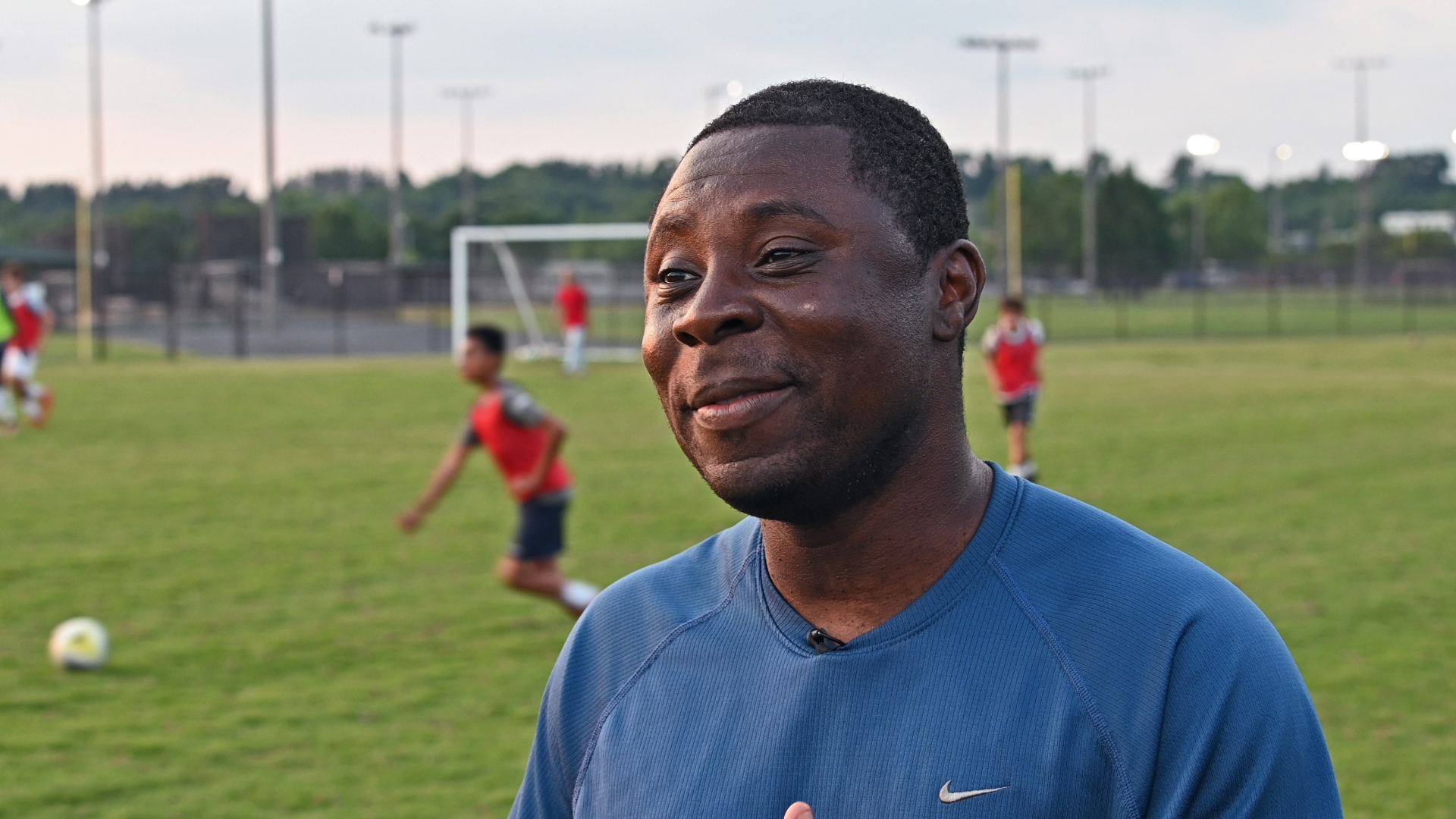
April 3, 2004: The Debut of Freddy Adu

April 3, 2004: D.C. United open the Major League Soccer season, beating the San Jose Earthquakes, 3-1 at Robert F. Kennedy Stadium in Washington. They received goals from Jaime Moreno, Alecko Eskandarian and Ben Olsen.

The game marked the MLS debut of Freddy Adu, a United midfielder who was already being described as "the next Pelé." He was 14 years old.

That is not a misprint: He was fourteen years and nine months old.

Fredua Koranteng Adu was born on June 2, 1989 in Tema, in the African nation of Ghana. By 1997, at age 8, he was playing soccer against men 3 times his age. At that point, his mother won a green card through a lottery, and the family moved to the Washington suburb of Rockville, Maryland.

He was able to attend a private school in nearby Potomac, and play with the U.S. Olympic Development Program, and win an Under-14 tournament against Italian teams like Juventus of Turin and Lazio of Rome. Adu led the tournament in scoring, and was named its Most Valuable Player.

MLS recognized the marketing possibilities, and worked out a deal so that the Dallas Burn, who held the top pick in the 2004 MLS SuperDraft, traded it to D.C. for a player allocation. If he was going to play in the league at all, it had to be for D.C., so he could stay in his same school. At 14, he became the youngest American ever to sign a major league professional contract in any team sport.

In that April 3 game, he entered the game as a 2nd-half substitute, breaking Joe Nuxhall's record (age 15 with the 1944 Cincinnati Reds) as the youngest athlete in the history major league sports in North America. On April 17, he scored his 1st goal, in a 3-2 loss to United's arch-rivals, the New York/New Jersey MetroStars, at Giants Stadium in the Meadowlands.

He played in all 30 of DCU's regular-season games, albeit mostly as a sub, scoring 5 goals with 3 assists, and helped them win the MLS Cup. An optimist would have said he was ready. A pessimist would say that MLS must be a crap league, since its defenders couldn't stop a 14-year-old.

But he didn't get any better. After the 2006 season, he was traded to Real Salt Lake. He was named Captain of the U.S. team at the 2007 FIFA Under-20 World Cup, in which the U.S. reached the Quarterfinals, thanks in part to his performance. (Argentina won it.)

In the Summer of 2007, at age 18, he was bought by one of the defining teams of European soccer, Benfica of Lisbon, Portugal. MLS had lost control of him. But Benfica didn't think he was ready for top-flight European soccer, and kept loaning him out: To AS Monaco in 2008, to Portuguese opponents Belenenses in 2009, to Greek team Aris in 2010, and to Turkish team Çaykur Rizespor in 2011. In 4 seasons under contract at Benfica, he played a grand total of 14 games for them, scoring 2 goals.

He played for the U.S. team in the 2008 Olympics in Beijing, the 2009 Confederations Cup, and the 2009 and 2011 CONCACAF Gold Cups, but not in the 2006, 2010 or 2014 World Cups.

In the Summer of 2011, at 22, he returned to MLS, signing with the Philadelphia Union. For most players, this would be the point in their career where their careers would be just getting warmed up. Instead, he did not impress with the Union. He moved to Brazilian team Bahia in 2013, Serbian team Jagodina in 2014, and Finnish team KuPS in 2015.

He came back to America in 2015, signing with the Tampa Bay Rowdies of the new North American Soccer League. He was released after the 2016 season. He played for Polish team Sandecja Nowy Sącz in 2017, and the Las Vegas Lights in 2018. At 26, he played what remains his last professional game. He spent the next 2 years as a youth coach in Maryland. In 2021, he signed with Swedish team Österlen FF, but never played for them.

Did he burn out, physically or psychologically? Was it too much, too soon? Unless and until he tells his own side of the story, we may never know. As of April 3, 2022, he is 32 years old, and not employed by any soccer team, in any capacity.
UPDATE: On October 26, 2022, he gave an interview to USA Today, saying of his playing career, "It's not something I've given up on. I still want to play, and I love the sport way too much, and I know that I have a lot more to give. So that's why I haven't called it quits yet."

In an interview with a sports website in the African nation of Ghana on April 25, 2023, he said, "The one decision I made that I would have done differently is leaving Benfica after the first year that I was there, and going on loan to Monaco. That was the one decision that started the snowball of me having to go from team to team on loan. It's because I wasn't patient enough to stay at Benfica." Given Benfica's historical reputation for developing talent, he had a point.

*

April 3, 2004 was a Saturday. This was also the day that Citizens Bank Park opened in Philadelphia. I have a separate entry for that event.

These other games were played in MLS:

* The New York/New Jersey MetroStars beat the Columbus Crew, 3-1 at Columbus Crew Stadium in Columbus, Ohio. The MetroStars are now the New York Red Bulls.

* The Kansas City Wizards and the Chicago Fire played to a draw, 1-1 at Arrowhead Stadium in Kansas City. The Wizards are now Sporting Kansas City.

* The Dallas Burn and the Colorado Rapids played to a draw, 1-1 at the Cotton Bowl in Dallas. The Burn are now FC Dallas.

* And the Los Angeles Galaxy beat the New England Revolution, 3-2 at the Rose Bowl in the Los Angeles suburb of Pasadena, California.

And in English soccer, North London team Arsenal, despite going unbeaten in the Premier League season, loses the FA Cup Semifinal to Manchester United, 1-0 at Villa Park in Birmingham, home of Aston Villa. The following day, at United's Old Trafford (also a neutral site), South London team Millwall beat North-East team Sunderland, 1-0. This made the 2nd division side the the 1st team from out of England's 1st division to play in the FA Cup Final since 1982. Man United would win the Final, 3-0. 

The New York Yankees and Tampa Bay Devil Rays had split 2 games in Tokyo; otherwise, the Major League Baseball season hadn't started yet. Football was out of season. There were 5 games played in the NBA:

* The New York Knicks beat the Philadelphia 76ers, 86-75 at the First Union Center(now the Xfinity Mobile Arena) in Philadelphia.

* The Golden State Warriors beat the Cleveland Cavaliers, 103-100 at the Gund Arena (now the Rocket Arena) in Cleveland. Jason Richards scored 35 points for the Warriors.

* The Miami Heat beat the Chicago Bulls, 97-83 at the United Center in Chicago.

* The Dallas Mavericks beat the Phoenix Suns, 124-103 at the American Airlines Center in Dallas. Dirk Nowitzki scored 34 points.

* And the New Orleans Hornets beat the Portland Trail Blazers, 94-81 at the Rose Garden (now the Moda Center) in Portland.

There were 9 games played in the NHL:

* The New York Rangers beat the Washington Capitals, 3-2 at the MCI Center (now the Capital One Arena) in Washington. Bobby Holik scored the winning goal with 3:52 left in overtime.

* The New Jersey Devils beat the Boston Bruins, 5-2 at the FleetCenter (now the TD Garden) in Boston.

* The Montreal Canadiens beat the Buffalo Sabres, 6-3 at the Bell Centre in Montreal.

* The Atlanta Thrashers beat the Tampa Bay Lightning, 4-1 at the St. Pete Times Forum (now the Benchmark International Arena) in Tampa.

* The Toronto Maple Leafs beat the Ottawa Senators, 6-0 at the Corel Centre (now the Canadian Tire Centre) in Ottawa.

* The Columbus Blue Jackets beat the Detroit Red Wings, 4-1 at the Joe Louis Arena in Detroit.

* The St. Louis Blues beat the Nashville Predators, 4-1 at the Gaylord Entertainment Center (now the Bridgestone Arena) in Nashville.

* The Phoenix Coyotes beat the Chicago Blackhawks, 2-1 at the Glendale Arena (now the Desert Diamond Arena) in the Phoenix suburb of Glendale, Arizona. Krys Kolanos scored the winning goal with 2:05 left in overtime.

* And the Vancouver Canucks beat the Edmonton Oilers, 5-2 at General Motors Place (now the Rogers Arena) in Vancouver.

December 31, 1999 & January 1, 2000: The Millennium

December 31, 1999:  The Millennium arrives. The people of planet Earth survived. At a terrible cost. But we hadn't destroyed ourselves. ...