Showing posts with label orange bowl. Show all posts

Friday, December 30, 2022

December 30, 2023: The Longest Losing Streak In NBA History

NOTE: While these entries are dated 2022, I decided to backdate the posting dates of events from 2023 onward to the same date in 2022.

December 30, 2023: The Detroit Pistons beat the Toronto Raptors, 129-127 at the Little Caesars Arena in Detroit. Pascal Siakam scored 35 points for the Raptors, and Dennis Schröder scored 30. Cade Cunningham scored 30 to lead the Pistons.

This ended a 28-game losing streak for the Pistons. It was tied for the longest losing streak in not just NBA history, but the longest in the history of major league sports in North America. It also became the longest single-season losing streak.

The Pistons had lost their 1st game of the 2023-24 season, then won their next 2. But on October 30, they lost away to the Oklahoma City Thunder, 124-112. They eventually fell to 2-29. Of the 28 losses, 11 of them were by 8 points or less.

From March 27 to December 1, 2015, the Philadelphia 76ers lost 28 straight games, but that was over the course of 2 seasons: Their last 18 games of in 2014-15, and their 1st 10 of 2015-16. They broke their own record: From January 31 to March 29, 2014, they lost 26 straight, tying the record set by the Cleveland Cavaliers from December 20, 2010 to February 11, 2011.

In the 1972-73 season, when the Sixers had the worst record in NBA history, 9-73, their longest losing streak was 20 games, from January 9 to February 14, 1973. And, straddling the previous off-season, they lost 19 straight from March 21 to November 11, 1972.

*

December 30, 2023 was a Saturday. These other 5 NBA games were played that day:

* The New York Knicks lost to the Indiana Pacers, 140-126 at the Gainbridge Fieldhouse in Indianapolis.

* The Chicago Bulls beat the Philadelphia 76ers, 105-92 at the United Center in Chicago.

* The Minnesota Timberwolves beat the Los Angeles Lakers, 108-106 at the Target Center in Minneapolis.

* The Utah Jazz beat the Miami Heat, 117-109 at the Delta Center in Salt Lake City.

* And the Dallas Mavericks beat the Golden State Warriors, 132-122 at the Chase Center in San Francisco. Luka Dončić of the Mavericks led all scorers on the day with 39 points.

Baseball was out of season. One game was played in the NFL: The Dallas Cowboys beat the Detroit Lions, 20-19 at AT&T Stadium in the Dallas suburb of Arlington, Texas. The Lions scored a touchdown with less than a minute to go, and seemed to have taken the lead on a tackle-eligible play on the two-point conversion attempt. However, the referee ruled that the unusually-eligible player had not announced to him that the play would be tried. The video replay proved that the referee was a liar, and, through either malice or incompetence, the win was stolen from the Lions.

There were 4 college football bowl games played:

* Number 6 Georgia had lost the Southeastern Conference Championship Game to Alabama. Number 4 Florida State had won the Atlantic Coast Conference Championship, and were undefeated, but were denied a spot in the National Championship Playoff. They did not make their point well: Georgia beat them, 63-3 in the Orange Bowl, at Hard Rock Stadium in Miami Gardens, Florida. It was the biggest blowout in bowl game history.

* Number 11 Mississippi (a.k.a. "Ole Miss") beat Number 10 Penn State, 38-25 in the Peach Bowl, at Mercedes-Benz Stadium in Atlanta.

* Maryland beat Auburn, 31-13 in the Music City Bowl, at Nissan Stadium in Nashville.

* And the University of Wyoming beat the University of Toledo, 16-15 in the Arizona Bowl, at Arizona Stadium, on the University of Arizona campus in Tucson.

And there were 9 games played in the NHL:

* The New York Rangers beat the Tampa Bay Lightning, 5-1 at the Amalie Arena (now the Benchmark International Arena) in Tampa.

* The New Jersey Devils lost to the Boston Bruins, 5-2 at the TD Garden in Boston.

* The Florida Panthers beat the Montreal Canadiens, 4-1 at the Amerant Bank Arena in the Miami suburb of Sunrise, Florida.

* The Nashville Predators beat the Washington Capitals, 3-2 in a shootout at the Capital One Arena in Washington.

* The Carolina Hurricanes beat the Toronto Maple Leafs, 3-2 at the Scotiabank Arena in Toronto.

* The Buffalo Sabres beat the Columbus Blue Jackets, 3-2 at the KeyBank Center in Buffalo. Jeff Skinner scored the winning goal with 3:40 left in overtime.

* The Pittsburgh Penguins beat the St. Louis Blues, 4-2 at the PPG Points Arena in Pittsburgh.

* The Winnipeg Jets beat the Minnesota Wild, 4-2 at the Canada Life Centre in Winnipeg.

* The Edmonton Oilers beat the Los Angeles Kings, 3-2 in a shootout at the Crypto.com Arena in Los Angeles.

Thursday, December 15, 2022

December 15, 1956: Satchel Paige at the Orange Bowl

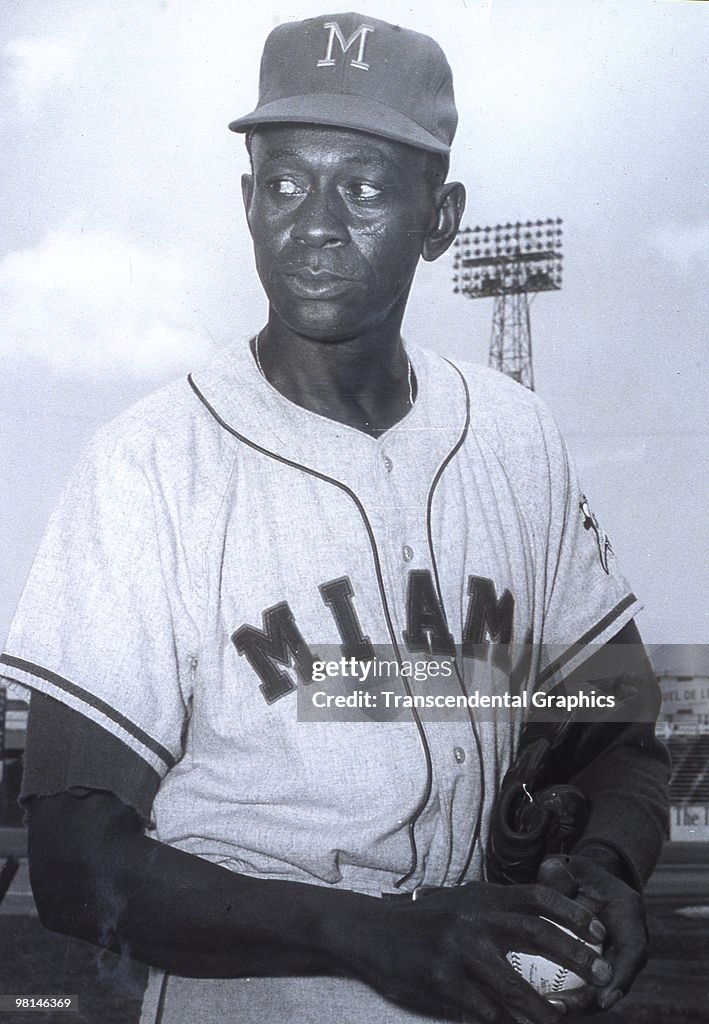
December 15, 1956: A crowd of 57,000 baseball fans packs Burdine Stadium -- renamed the Orange Bowl in 1959 -- in Miami, to see Negro League legend Satchel Paige pitch in a minor league exhibition game. It was the largest crowd to ever watch a minor-league game to that point.

The 50-year-old Paige wore the uniform of the Miami Marlins of the Class AAA International League. He started the game, and pitched into the 8th inning before leaving the game with a 6-2 lead over the Ohio-based Columbus Jets, another IL team. He even knocked in half the Marlins runs with a 3-run double in the 2nd inning.
All the proceeds went to charity, and the pre-game entertainment included jazz legend Cab Calloway. To compensate for the short dimensions in right field, a giant fence was constructed at the wall, much like the one they would construct a year and a half later for the left field wall at the Los Angeles Memorial Coliseum for the newly-arrived Dodgers.

Paige enjoyed a stellar campaign with the Marlins finishing the 1956 season with an 11-4 record and 1.86 ERA, and would pitch 2 more remarkable years in Miami. In 1957, he had a 10-8 record and a 2.42 ERA. The following year, he went 10-10, and his ERA was 2.95.

The Marlins, formerly an early version of the Syracuse Chiefs, debuted in the IL that 1956 season, and remained in it through 1960. Their usual home was Miami Stadium, built in 1949, and later renamed Bobby Maduro Stadium, for a Miami-based baseball executive.

In the 1956, '57 and '58 seasons, they were a farm team of the Philadelphia Phillies; in 1959 and '60, of the Baltimore Orioles. The owners signed a working agreement with the St. Louis Cardinals for 1961, and moved the franchise to San Juan, Puerto Rico; and, in mid-season, to Charleston, West Virginia.

In 1962, a new Miami Marlins debuted in the Class D Florida State League, playing at Miami Stadium, as a Phillies farm team. The entire FSL was promoted to Class A in 1964, and remains so. The Marlins returned to the Orioles' fold in 1966, winning FSL Pennants in 1969, 1970, 1971, 1972 and 1978. They were a San Diego Padres farm team in 1983 and 1984, but declining attendance ended the team.

In 1993, the National League's expansion included the Florida Marlins, playing at the Miami Dolphins' new stadium in suburban Miami Gardens. Miami Stadium was demolished in 2001, and the Orange Bowl in 2008. In 2012, when what is now named LoanDepot Park opened on the site of the Orange Bowl, the Marlins moved in, and restored the Miami Marlins name.

The Orange Bowl's record for the largest crowd in minor-league history stood until July 4, 1981, when the Denver Bears of the Class AAA American Association got 59,691 fans for a game at Mile High Stadium. They broke it again a year later: On July 4, 1982, they got 65,666 fans in, to see them lose to the Omaha Royals, 7-4. That remains the minor-league record.

*

December 15, 1956 was a Saturday. This special exhibition game aside, baseball was out of season. There were no college football games: Even the Orange Bowl, home field to the University of Miami, had wrapped up its season aside from its eponymous New Year's Day bowl game. The previous Saturday, December 8, Miami, then ranked Number 6 in the country, were beaten by the University of Pittsburgh, ranked Number 12, 14-7 at the stadium. On January 1, 1957, in the Orange Bowl game, Number 20 Colorado would beat Clemson, 27-21.

There were 3 games in the NBA:

* The New York Knicks beat the Rochester Royals, 91-76 at the Rochester Community War Memorial (now the Blue Cross Arena) in Rochester, New York.

* The Boston Celtics beat the St. Louis Hawks, 102-99 at the Boston Garden.

* And the Philadelphia Warriors beat the Syracuse Nations, 117-108 at the Onondaga County War Memorial (now the Upstate Medical University Arena) in Syracuse, New York.

The NHL's entire "Original Six" were in action:

* The New York Rangers lost to the Toronto Maple Leafs, 2-1 at Maple Leaf Gardens in Toronto.

* The Montreal Canadiens beat the Boston Bruins, 6-4 at the Montreal Forum.

* And the Detroit Red Wings beat the Chicago Black Hawks, 5-1 at the Olympia Stadium in Detroit.

And in English soccer, North London team Arsenal went to Wales, and beat Cardiff City, 3-2 at Ninian Park in Cardiff.

Saturday, December 10, 2022

December 10, 1937: The Orange Bowl Opens

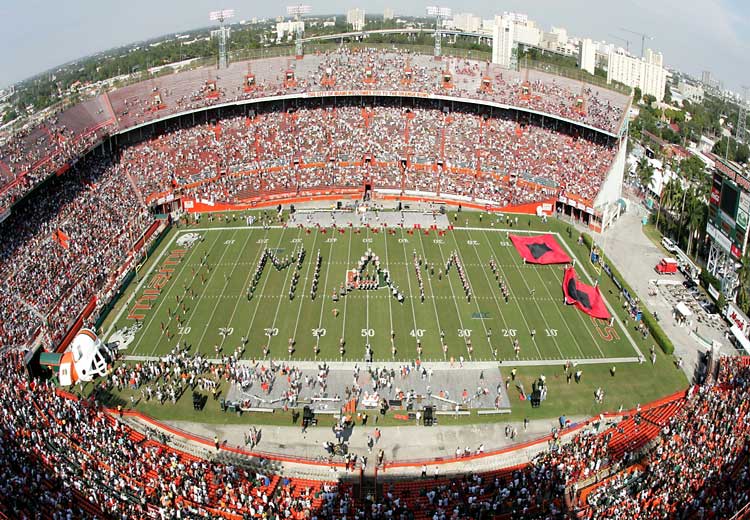
December 10, 1937: Burdine Stadium opens in Miami. It will later be renamed for the annual college football extravaganza it hosted, on or around each New Year's Day: The Orange Bowl.

Roddy Burdine ran Burdine's department store in Miami from 1911 until his death in 1936, and his civic contributions helped Miami to grow into a major city. After his death, the city named the stadium it was building after him.

It was on a large block bounded by Northwest 3rd Street to the south, Northwest 16th Avenue to the west, Northwest 6th Street to the north, and Northwest 14th Avenue to the east, the end of the stadium that formed the open end of the horseshoe. Miami Park had already hosted football games on this site, including the 1st 3 Orange Bowl games in 1935, '36 and '37. On December 10, 1937, the 23,330-seat Burdine Stadium opened with the team that would play there the longest, the University of Miami, losing to the University of Georgia, 26-0.

The stadium was renamed the Orange Bowl in 1959, and was steadily expanded until reaching 76,062 in 1955, and 80,010 in 1968. Modernization included wider seats, which kept the capacity to around 75,000 from 1981 onward. In 1970, the natural grass was torn up, and replaced with an artificial turf called PolyTurf, but it only lasted until 1975.
In 1946, the All-America Football Conference was founded, and with it, the 1st major league sports team in the South, the Miami Seahawks. They were badly underfunded, went just 3-11, and moved before the next season, becoming the Baltimore Colts. Pro football returned in 1966, with the Miami Dolphins. They played there until 1986, then moved into Joe Robbie Stadium in suburban Miami Gardens in 1987.

The Orange Bowl hosted Super Bowl II in 1968: Green Bay Packers 33, Oakland Raiders 14; Super Bowl III in 1969: New York Jets 16, Baltimore Colts 7, in one of the greatest upsets in pro football history; Super Bowl V in 1971: Baltimore Colts 16, Dallas Cowboys 13; Super Bowl X in 1976, Pittsburgh Steelers 21, Dallas Cowboys 17; and Super Bowl XIII in 1979, Steelers 35, Cowboys 31.
Facing east, with palm trees,
and downtown Miami in the background

The Orange Bowl game was first played at Joe Robbie Stadium in 1997, played there again in 1998, moved back to its namesake stadium in 1999, and has been played at the Miami Gardens facility, now named Hard Rock Stadium, from 2000 onward. The University of Miami Hurricanes stayed at the Orange Bowl a bit longer, finally making the move in 2008.

The Hurricanes played in the Orange Bowl game on their home field in 1946, beating Holy Cross; 1951, losing to Clemson; 1984, famously beating Number 1 Nebraska to take a would-be National Championship away from them; 1988, beating Number 1 Oklahoma to win another National Championship; 1989, beating Nebraska again, but only finishing Number 2; 1992, beating Nebraska again, this time as Number 1 and the favorites to win the National Championship; and 1995, again threatening to take the National Championship away from Nebraska, but this time Nebraska redeemed themselves.

(Since the game moved to the suburbs, the Hurricanes have played in it in 2004, beating arch-rival Florida State for the 2nd time that season; and in 2017, losing to Wisconsin.)

And, just as the Hurricanes opened the stadium with a loss, so, too, did they close it with one, on November 10, 2007, losing to the University of Virginia, 48-0. The stadium was demolished in 2008, and the new home of the Miami Marlins, now named LoanDepot Park, opened on the site in 2012.

*

December 10, 1937 was a Friday. Baseball was out of season. The NBA hadn't been founded yet. The NHL season was underway, but no games were scheduled. The NFL Championship Game was played 2 days later, with the Washington Redskins beating the Chicago Bears. And Miami's loss to Georgia was the only college football game played. So it was the only score on this historic day.

Saturday, December 3, 2022

December 3, 1973: The 1st Close-Up Pictures of the Planet Jupiter

December 3, 1973: The probe Pioneer 10 sends photographs of Jupiter, the largest planet in the solar system, back to Earth. These were the first close-up pictures of any of the system's 4 outer "gas giants."

Pioneer 10 was launched from Cape Canaveral, Florida on March 2, 1972, and was intended for a flyby only of Jupiter, no other planets. It was followed a year later by Pioneer 11, which was designed for flybys (flybies? flysby?) of both Jupiter and Saturn, becoming the 1st probe to take close-up photos of the latter.

On the suggestion of astronomer Carl Sagan, each of them carried a 6-by-9-inch gold-anodized aluminum plaque, in case either of them is ever found by intelligent life-forms from another planetary system. The plaques feature the nude figures of a human male and female, along with several symbols that are designed to provide information about the origin of the spacecraft. The plaque is attached to the antenna support struts, where it would be shielded from interstellar dust.
On June 13, 1983, Pioneer 10 crossed the orbit of Neptune, making it the 1st human-made object to leave the Solar System. On April 27, 2002, NASA had its last successful reception of telemetry from Pioneer 10, from a distance of 80.22 AU -- an "astronomical unit" being the distance between the Earth and the Sun, about 93 million miles, so 80.22 AU is about 1.16 billion miles from Earth. A last signal, too weak to learn anything from it, was received on January 23, 2003.

*

December 3, 1973 was a Monday. Actress Holly Marie Combs was born.

Baseball was out of season. There were no games scheduled in the NBA, the ABA, the NHL or the WHA. There was one score on this historic day: On ABC Monday Night Football, the Miami Dolphins beat the Pittsburgh Steelers, 30-26 at the Orange Bowl in Miami.

Friday, December 2, 2022

December 2, 1985: The Chicago Bears' Monday Night Stumble

December 2, 1985: The Miami Dolphins defeat the Chicago Bears, 38-24 at the Orange Bowl. This turns out to be the only game the Bears lose all season long, the one bump on their "Super Bowl Shuffle."

Jim McMahon, the Bears' usual starting quarterback, was injured, and had to be replaced by Steve Fuller, previously the starting quarterback for the Kansas City Chiefs. Until now, that hadn't been a problem.

But Fuller was held to 11 completions in 21 passes for 169 yards, a touchdown and 2 interceptions by the Dolphins' defense, know as the Killer B's for their players with names starting with B: Bob Baumhower, Bob Brudzinski, Doug Betters, Kim Bokamper, and the brothers Glenn and Kyle Blackwood.

Bears coach Mike Ditka, hoping to bring McMahon back the next week, sent him in to save the game, and he couldn't, going 3-for-6 for 42 yards and an interception. Walter Payton rushed for 121 yards, but the rest of the Bears combined ran for only 46.

In contrast, Dan Marino, who so often failed in the postseason, came through for the Dolphins, going 14-for-27 for 270 yards, 3 touchdowns and an interception. His "Mark II" receivers came through for him: Mark Duper had 107 receiving yards, and Mark Clayton had 88.

Revisionist history now says that this loss shook Da Bears out of their complacency, and allowed them to focus on the main thing, winning the Super Bowl, rather than concentrating on going undefeated.

The Dolphins took special pride in ruining the Bears' unbeaten season, as the 1972 Dolphins were then, and still are now, the only team in the NFL's 106-season history to go unbeaten and untied in the regular season and then win the league championship. Then again, neither the Dolphins nor the Bears have won the title since the 1985 season. Indeed, the Dolphins, defending AFC Champions at the time, haven't even been to the Super Bowl since; the Bears, only once.

It remains the most-watched game in Monday Night Football history. Which must have really burned up Howard Cosell: The biggest audience in MNF history, and they weren't listening to him. The announcers were Frank Gifford, Joe Namath and... O.J. Simpson. (If you're not old enough to remember before June 1994 when he was charged with murder, let me tell you: This man was beloved in America.)

*

December 2, 1985 was, as stated, a Monday. So this was the only football game on the day. Baseball was out of season. There was 1 game in the NBA: The Utah Jazz beat the Golden State Warriors, 103-100 at the Salt Palace in Salt Lake City, Utah.

And there were 2 games in the NHL. The New York Rangers got embarrassed by the Pittsburgh Penguins, 6-0 at Madison Square Garden. At least when the Vancouver Canucks got beat 7-0 by the Montreal Canadiens, they could console themselves with the fact that they were on the road, at the Montreal Forum; and, later, also with the fact that the Canadiens went on to win the 1986 Stanley Cup.

Wednesday, November 23, 2022

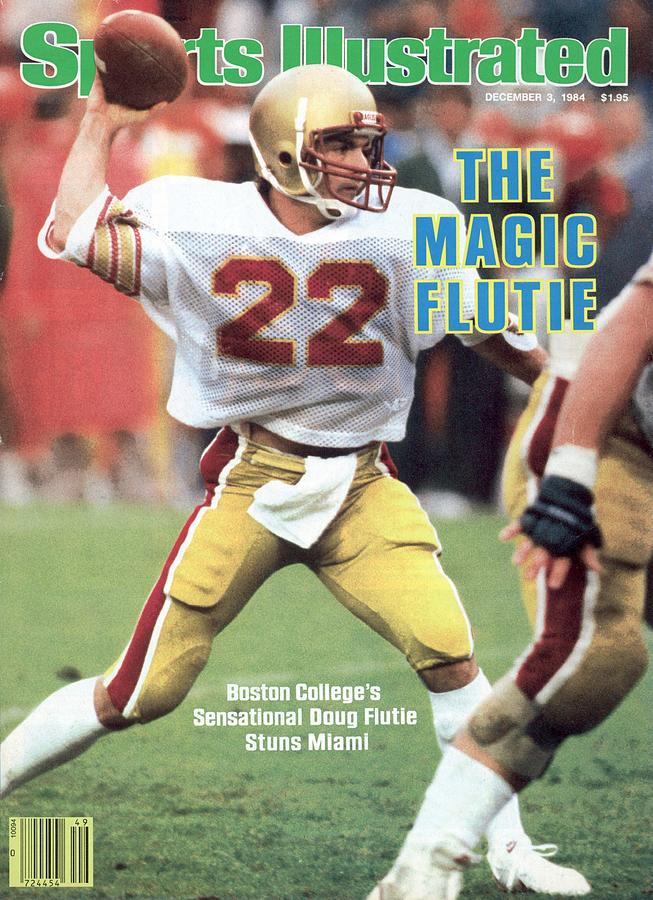
November 23, 1984: Doug Flutie's Miracle In Miami

November 23, 1984: It is the day after Thanksgiving, and this was the early days of retail treating it as "Black Friday," the biggest shopping day of the year, which has come to, traditionally, set the tone for the Christmas season: Either they will make big profits, and be "in the black"; or they will be wearing black for mourning.

Thanksgiving weekend is also a time for football. The day before, many high school games were played, much more so than are played today. I was a sophomore at East Brunswick High School in Central New Jersey, and my Bears came back from a 27-13 deficit to beat Colonia High School of Woodbridge, 33-27, and clinch the Championship of the Middlesex County Athletic Conference and an undefeated regular season. It's often regarded as the greatest football game in the school's history. Unfortunately, we lost the Central Jersey Group IV Final, costing us a "State Championship" and an undefeated full season, something, to this day, we've never had.

There was only one college football game that Thanksgiving Day, a minor rivalry to everyone but those connected to the schools playing: Miami University of Ohio beat the University of Cincinnati, 31-26 at Nippert Stadium in Cincinnati. Miami University, in Oxford, Ohio, was founded in 1809, 8 years before Ohio gained Statehood. In contrast, the University of Miami, in suburban Coral Gables, Florida, wasn't founded until 1925.

In the NFL, both of the traditional home teams won: The Detroit Lions beat the Green Bay Packers, 31-28 at the Silverdome in Pontiac, Michigan; and the Dallas Cowboys beat the New England Patriots, 20-17 at Texas Stadium in Irving.

There was only one college game played on the day after Thanksgiving, on CBS. So anybody who wanted to watch a football game at that point was watching it. At the time, there was a Big East Conference, but they did not sponsor a football competition. If they did, this game would have decided its Championship. The fact that both teams involved have since moved to the Atlantic Coast Conference (ACC) should not attract from what that meant.

The University of Miami were the defending National Champions, having shocked the University of Nebraska in the previous season's Orange Bowl game, in the stadium of the same name, which was the Hurricanes' usual home field.

Bernie Kosar quarterbacked them as a freshman, and now, as a sophomore, had led them to an 8-3 record. They had won the Kickoff Classic at the Meadowlands, beating then-Number 1 Auburn. They beat Number 17 Florida on neutral ground in Tampa. They beat Number 16 Notre Dame away. But they had lost to Number 14 Michigan away, losing the Number 1 ranking in the process. They had lost to Number 15 Florida State at home.

And, in their last game before this one (they had a week off in between), they lost an embarrassing one: They led Maryland 31-0 at the half, and lost, 42-40. For many years thereafter, it was the biggest comeback in NCAA Division I-A (now FBS, the Football Bowl Subdivision) history. The Maryland quarterback was Frank Reich, substituting for the injured Boomer Esiason. In the 1992 NFL Playoffs, subbing for the injured Jim Kelly -- who had played at Miami -- Reich led the Buffalo Bills to what is still the biggest comeback in NFL history, from 35-3 down to beat the Houston Oilers, 41-38 in overtime.

Their opponents for this game would be Boston College. BC had some good teams in the 1930s and '40s, but hadn't done much since. In 1981, they were struggling, losing to the University of Pittsburgh, ranked Number 2 in the country, and coach Jack Bicknell turned to a 5-foot-9 3/4-inch freshman quarterback from nearby Natick, Massachusetts, and said, "Okay, Flutie, see what you can do."

And Doug Flutie went in, and nearly pulled the upset. They ended the season 5-6. The next season, Sports Illustrated noted that Flutie would be the starting quarterback, and whoever was writing the article finished with, "Good luck, Flutie."

Flutie made his own luck, leading BC to an 8-3-1 record. Their non-wins were all against then-ranked teams: A tie away to Number 16 Clemson, and losses away to Number 16 West Virginia, home to Number 8 Penn State, and to Number 18 Auburn in the Citrus Bowl. It was their 1st bowl game in 39 years.

As a junior in 1983, Flutie led them to a 9-3 season, losing at home to Number 12 West Virginia, away to unranked Syracuse, and in the Liberty Bowl to Notre Dame. On October 29, in a game too big for their 32,000-seat on-campus Alumni Stadium, they played defending National Champion (but, at the time, unranked) Penn State at Sullivan Stadium, home of the NFL's New England Patriots (later renamed Foxborough Stadium). Before a crowd of 56,605, and millions more watching on ABC, the Eagles beat the Nittany Lions, 27-17. Flutie, already the classic "local boy makes good," became a national star.

BC were 7-2 going into their game with Miami. They had beaten Number 9 Alabama in Birmingham, but had lost 2 games, away to Number 20 West Virginia and away to Penn State -- by a combined 8 points. BC were ranked Number 10, Miami Number 12. In spite of these rankings, Miami were a 6-point betting favorite. (Keep in mind: In football, home-field advantage is traditionally said to be worth 3 points.) Flutie was the favorite for the Heisman Trophy, although Kosar was also a contender for it. The winning quarterback would get his Heisman vote totals boosted significantly.

The game was played at the Orange Bowl, in a driving rainstorm throughout. It was almost as if there was a real hurricane going on. It kicked off at 2:30 PM Eastern Time, and BC jumped out to a 14-0 lead. Miami scored a touchdown before the 1st quarter ran out, and tied the game with a touchdown early in the 2nd quarter.
BC scored on a run by Flutie, then Miami scored on a Kosar touchdown pass, then BC did so on a touchdown pass from Flutie to his college roommate, Gerard Phelan. At halftime, the score was Boston College 28, Miami 21. So there had already been as much action as in most full games.

In the 3rd quarter, Miami scored another touchdown, and the teams traded field goals. The quarter ended with the game tied, 31-31. BC kicked another field goal to make it 34-31, but Melvin Bratton broke off a 52-yard run to make it 38-34 Miami. It seemed like Miami had the game won. Flutie led a drive that ended with a touchdown, and it was 41-38 BC. But Kosar led a drive that ended with another touchdown run by Bratton, and it was 45-41 Miami.

BC got the ball back with 28 seconds left in regulation, on their own 20 yard line. Flutie got the Eagles to the Hurricanes' 48-yard line. There were 6 seconds left. Time for one more play. A field goal wouldn't have helped, it would have been 65 yards anyway, and the weather and the wet grass would have made it a tricky proposition regardless of how close it was. There was no choice: The play had to result in a touchdown.

Before the play, CBS announcer Brent Musberger said, "One thing is certain: Those brave folks who sat out here in the Orange Bowl, and put up with this terrible weather, saw a whale of a football game, and they should give both teams a rousing ovation when this one is over." His broadcast partner, former Notre Dame coach Ara Parseghian, whose career included a 10-10 tie with Michigan State in 1966, known as "The Game of the Century," followed this with, "This is one of the better ones that I've seen."

Flutie called "55 Flood Tip": No running backs, and all eligible receivers run straight routes to the end zone. He was flushed out of the pocket by the Miami defense, and had to scramble. He had to attempt his 46th pass of the game, on the run, throwing from his own 37-yard line, meaning the ball had to fly at least 63 yards, into a 30-mile-per-hour wind, and through the rain.

Flutie heaved the ball. Since a Roger Staubach to Drew Pearson play in the 1975 NFL Playoffs, such a pass had been known as a "Hail Mary." Some Catholics find the expression offensive. In this case, given that Boston College is a Catholic school -- specifically, Jesuit -- it might have been appropriate.

Three Miami defensive backs blanketed receiver Kelvin Martin. There would be no way he could catch the ball. Phelan was behind them. It would require perfect placement of both man and ball for him to catch it. He did. Boston College 47, Miami 45. Ballgame. No chance to try for an extra point, with everyone running onto the field, and no need for it.

"Caught by Boston College!" Musberger yelled. "I don't believe it! It's a touchdown! The Eagles win it! I don't believe it! Phelan is at the bottom of that pile!" The entire team piled onto Phelan. As Musberger noted, "Jack Bicknell is the only person over there on the sidelines! He couldn't get the headset off fast enough! Doug Flutie has done it! And your heart goes out to Bernie Kosar. He did everything he could."

Kosar had passed for 447 yards, then a school record, with 2 touchdowns. And Bratton had run for 4 touchdowns. It was all for naught, as Flutie passed for 472 yards, becoming the 1st major college quarterback with 10,000 career passing yards. He also threw for 3 touchdowns. Miami punted only once all game; BC, just 3 times.

The game became known as the Miracle in Miami, and if there was any doubt before the game that Flutie would win the Heisman Trophy, that doubt disappeared into Phelan's hands. Ohio State running back Keith Byars finished 2nd. Robbie Bosco, who quarterbacked Brigham Young University to a controversial National Championship, finished 3rd. Kosar was 4th. Jerry Rice of Mississippi Valley State, who went on to become the greatest receiver in football history, finished 9th. Bo Jackson of Auburn, who would win it the next season, did not finish in the Top 10 this season.

Miami went on to lose the Fiesta Bowl to UCLA. Kosar would have a good pro career with the Cleveland Browns, before winning a Super Bowl ring as Troy Aikman's backup on the Dallas Cowboys.

Flutie's last college game was in the Cotton Bowl, and BC beat the University of Houston. But NFL teams passed on him due to his lack of height. This was so dumb. How dumb was it? Well, let's absolve the following teams, because they drafted Hall-of-Famers: The San Francisco 49ers, Rice; the Buffalo Bills, Bruce Smith; and the Minnesota Vikings, Chris Doleman. And, besides, the 49ers had Joe Montana, while the Bills had the rights to Jim Kelly. And several other teams drafted All-Pros. But lots of teams needed a quarterback, and didn't draft Flutie, and struggled for years to come.

Flutie signed with the New Jersey Generals of the United States Football League, and led them to the Playoffs. When the USFL folded, the Chicago Bears signed him, against the wishes of head coach Mike Ditka. Ditka refused to start him over an already-injured Jim McMahon, and the Bears haven't won a Super Bowl since. In 1987, the Bears traded Flutie to his hometown New England Patriots, but they kept him as a backup to Tony Eason, and didn't get too far, and released him after the 1989 season, and got even worse.

Flutie signed with the Vancouver-based BC Lions of the Canadian Football League. In 1992, he was traded to the Calgary Stampeders, and he led them to the CFL Championship, the Grey Cup. He did the same for the Toronto Argonauts in 1996 and '97. All 3 times, he was named the game's Most Valuable Player. He was named the CFL's Most Outstanding Player 6 times in 7 years from 1991 to 1997.

Finally, at the age of 36, the NFL could ignore him no longer. With Kelly having retired after the 1996 season, the Bills signed Flutie, and he led them to the Playoffs, made the Pro Bowl, and was named the NFL Comeback Player of the Year. He got them back into the Playoffs in 1999, but coach Wade Phillips benched him for the Playoff game against the Tennessee Titans, in favor of Rob Johnson. The Bills lost, and didn't make the Playoffs again for 18 years.

Flutie played 4 years for the San Diego Chargers, and closed his career with the Patriots, as a backup to Tom Brady. In his last game, against the Miami Dolphins, on New Year's Day 2006, he did something no NFL player had done since 1941: He converted a dropkick. It was good for a point-after-touchdown, and the Patriots won.

Doug Flutie is not in the Pro Football Hall of Fame. It is, quite specifically, not "The National Football League Hall of Fame." It includes a few players who would not have made it if not for their performances in the All-America Football Conference (1946-49) and the 1960s version of the American Football League, including Billy Shaw, who played 9 seasons for the Bills, all in the AFL, and never played a down in the NFL.

Still, voters for it tend not to consider CFL statistics. There are really only 2 NFL players who are not in the Hall whose qualifications would be noticeably boosted if their CFL tenures were included, and they're both quarterbacks: Joe Theismann and Doug Flutie. Another quarterback, Warren Moon, is the only player in the Hall with significant CFL performance, although Bud Grant won 4 Grey Cups as a coach in Winnipeg before becoming a Hall of Fame coach in Minnesota.

Oddly, for all the exposure BC got from the Flutie years, their Alumni Stadium wasn't expanded to its present 44,500 seats until the 1994 season.

*

November 23, 1984 was a Friday. As I said, this was the only college game played that day. No pro games were played. Baseball was out of season, although future player Justin Turner was born. There were 7 games played in the NBA:

* The New York Knicks beat the Detroit Pistons, 120-97 at the Silverdome in the Detroit suburb of Pontiac, Michigan. Bernard King led all scorers on the day with 45 points.

* The Boston Celtics beat the Washington Bullets, 118-110 at the Boston Garden. Larry Bird scored 29 points. So it was a good day for Boston sports.

* The Golden State Warriors beat the Cleveland Cavaliers, 107-106 at The Coliseum in the Cleveland suburb of Richfield, Ohio.

* The Kansas City Kings beat the Indiana Pacers, 122-105 at the Market Square Arena in Indianapolis.

* The Utah Jazz beat the Houston Rockets, 111-98 at the Salt Palace in Salt Lake City.

* The Philadelphia 76ers beat the Phoenix Suns, 119-107 in overtime at the Arizona Veterans Memorial Coliseum. Julius "Dr. J" Erving had 31 points. Moses Malone had 23 points. A rookie named Charles Barkley came off the bench to score 17 points and grab 19 rebounds.

* And the Chicago Bulls beat the Seattle SuperSonics, 113-94 at the Seattle Center Coliseum. A rookie named Michael Jordan led all scorers in this game with 23 points.

And there were 6 games played in the NHL:

* The New York Islanders beat the Washington Capitals, 5-1 at the Capital Centre in the Washington suburb of Landover, Maryland.

* The Philadelphia Flyers beat the Buffalo Sabres, 4-2 at the Buffalo Memorial Auditorium.

* In an "Original Six" matchup, the Detroit Red Wings beat the Toronto Maple Leafs, 6-5 at the Joe Louis Arena in Detroit.

* The New Jersey Devils lost to the Minnesota North Stars, 5-4 at the Metropolitan Sports Center in the Minneapolis suburb of Bloomington, Minnesota. Craig Hartsburg scored the winning goal with 1:25 left in overtime.

* The St. Louis Blues beat the Calgary Flames, 3-1 at the Saddledome in Calgary.

* And the Winnipeg Jets beat the Vancouver Canucks, 5-1 at the Pacific Coliseum in Vancouver.

Wednesday, November 9, 2022

November 9, 1945: "The House I Live In" Premieres

Still photo from the film

November 9, 1945: The House I Live In premieres, a 10-minute film about tolerance, directed by Mervyn LeRoy, and starring one of the biggest young singers in the country as himself.

The film is written by Albert Maltz. Frank Sinatra, approaching his 30th birthday, having been a star for 5 years, and a year past his launch to superstardom via the fan demonstration known as "The Columbus Day Riot," plays himself. The film begins with a recording session that isn't going well. He takes a break, and steps outside to smoke a cigarette.

In the alley, he sees several boys chasing a smaller boy, and intervenes. It turns out that the bullies are going after the other boy because he's Jewish. It has been just 6 months since V-E Day, when America united to defeat the greatest force of anti-Semitism the world has ever known.

Being Italian and Catholic -- his mother was from Genoa, in the north, and his father was from Sicily, in the south -- Frank certainly knew what it was like to face discrimination. His cinematic portrayal of himself isn't having it, and he lectures the boys, telling them that discrimination based on race and religion is un-American.

He sings the title song, with music by Earl Robinson, who had previously written the labor song "Joe Hill"; and lyrics by Abel Meeropol, the author of Billie Holiday's anti-lynching song "Strange Fruit." They wrote "The House I Live In" for a 1942 music revue, Let Freedom Sing. With the Nazis having been defeated, but with bigotry, both racial and religious, alive and well in America, the message was still needed. Given his popularity with young people at that time, Sinatra was the ideal messenger.

Maltz became one of "The Hollywood Ten," screenwriters who were blacklisted and jailed for refusal to expose fellow Communists before the House Un-American Activities Committee. He wrote the screenplay for The Robe, but it was many years before his name was restored to the official print of the movie. He later wrote the screenplays for Two Mules for Sister Sara and The Execution of Private Slovik, and died in 1985.

Robinson was also blacklisted, but in 1954, he and David Arkin -- father of actor Alan Arkin and grandfather of actor Adam Arkin -- wrote a song in tribute to the Supreme Court's decision in Brown v. Board of Education: "Black and White." Despite being recorded by both Sammy Davis Jr. and Pete Seeger, it took until the 1972 recording by Three Dog Night to become a hit, but it hit Number 1. Robinson lived long enough to see it, and died in 1991.

Meeropol and his wife Anne adopted the sons of the executed Julius and Ethel Rosenberg, Michael and Robert. He died in 1986.

LeRoy had previously directed Little Caesar, I Am a Fugitive from a Chain Gang, Gold Diggers of 1933, Fools for Scandal, Blossoms in the Dust, and Thirty Seconds Over Tokyo. He went on to direct the 1949 version of Little Women, Quo Vadis? Million Dollar Mermaid, Mister Roberts, The Bad Seed, No Time for Sergeants, The FBI Story, and Gypsy. He died in 1987.

Sinatra continued to sing the song. Even after his 1972 heel turn from Democrat to Republican, he sang it at a state dinner at the White House in front of Richard Nixon, and at the 1985 Inaugural Ball of Ronald Reagan.

*

November 9, 1945 was a Friday. Actor Charlie Robinson, who played court clerk Mac Robinson on the 1980s sitcom Night Court, was born on this day.

Baseball was out of season. The NBA hadn't been founded yet. No games were scheduled for the NHL.

There was 1 game in college football. The University of South Carolina and the University of Miami played to a 13-13 tie at Burdine Stadium in Miami, the stadium that would later be renamed the Orange Bowl.

Tuesday, September 6, 2022

September 6, 1946: The 1st Southern Team In the "Major Leagues"

September 6, 1946: The All-America Football Conference, an early "rebel league," debuts. The Cleveland Browns, replacing the Rams, who won the NFL Championship and then moved to Los Angeles because of poor attendance, play their 1st game, at home, at Cleveland Municipal Stadium, and win, 44-0.

Under head coach Paul Brown, in the 4 years that the AAFC played, the Browns went 47-4-3, and won all 4 league championships. They then were admitted into the NFL, and won the Championship in 1950, 1954 and 1955; losing the Championship Game in 1951, 1952 and 1953. Counting their 4 AAFC seasons and their 1st 6 NFL seasons, they went 58-13-1 and reached 10 league title games, winning 7.

But this post isn't about the Browns, or the AAFC. It's about the team the Browns beat in their 1st game: The Miami Seahawks.

Miami... Seahawks? I mean the Miami Dolphins, or the Seattle Seahawks, right? Nope: The Dolphins didn't debut until 1966, in the AFL; and the Seattle team didn't debut until 1976. In fact, there was a minor-league hockey team called the Seattle Sea Hawks from 1936 to 1941.

No, the Miami Seahawks actually existed. And, if you consider the AAFC a "major league," then the Seahawks were the 1st major league team in the American South, the 1st major league team from a State that had seceded from the Union for the American Civil War.

Harvey Hester, a former quarterback at the University of Florida, and briefly the head coach at Wofford College in South Carolina, led a group of fellow Miami businessmen to put together an ownership team.

Their head coach was Jack Meagher, who had played at Notre Dame while Knute Rockne was an assistant coach there. He coached Rice University to an 8-4 season in 1930, Auburn to win the 1938 Orange Bowl, and the Iowa Pre-Flight Team to a 10-1 record under wartime conditions in 1944. His Auburn teams were nicknamed Meagher's Marauders.

The Iowa Pre-Flight Team, established (as were some of the other military-base teams that played college teams during World War II) near a major college campus, in this case the University of Iowa, was, due to the "flight" theme, named for a bird: The Seahawks. Meagher took their name with him, and Hester approved it for the Miami team, which made more sense in Miami than it did in Iowa City. He hadn't yet coached a pro game, but, certainly, he was qualified.

But while they got better after their opening disaster, they were never good. They lost 21-14 away to the San Francisco 4ers, and 30-14 away to the Los Angeles Dons, before playing their 1st home game, losing to the 49ers again, 34-7 at Burdine Stadium, which would be renamed the Orange Bowl in 1959.

On October 11, they got their 1st win, 17-14 over the Buffalo Bisons at Civic Stadium in Buffalo, later renamed War Memorial Stadium. But that would be the highlight of their season. They lost 28-7 to the Chicago Rockets at Soldier Field, 30-7 to the football version of the Brooklyn Dodgers at Ebbets Field, 24-21 to the football version of the New York Yankees at Yankee Stadium, and 20-7 at home to the Rockets.

(Note: When I say, "the football version of... " I only mean that those teams had the same names as their baseball equivalents, and it was convenient for them to play in the same stadiums. It wasn't the baseball teams moonlighting as football teams, a practice that did include Connie Mack's Philadelphia Athletics in a league that lasted just one year, 1902.)

The way the Seahawks' schedule worked out, 7 of their 1st 8 games were on the road, and their last 6 games were at home. On November 18, they beat the Bisons again. They lost 34-21 to the Dons, 34-0 to the Browns, and 31-0 to the Yankees. They closed on December 13, at home, beating the Dodgers, 31-20. 
The Seahawks wore orange and green,
like the University of Miami, and presaging the Dolphins.

They finished 3-11. With the Dodgers and the Bisons, the 2 teams they beat, both finishing 3-10-1, the Seahawks had the worst record in the league. They folded after the season.

Why? Several reasons. This was before the widespread use of air conditioning made life in Florida tolerable. As a result, Miami was, by far, the smallest market in the AAFC, and only Green Bay was smaller in the NFL. The stadium that would become the Orange Bowl only seated 35,000, so even if the Seahawks sold games out, it still might not have been enough to make a profit. It was soon expanded, but that didn't do the Seahawks any good.

The Browns had brought in black players Marion Motley and Bill Willis. The AAFC made it known that black players would be accepted. Despite Florida being a Southern State, there were no incidents when they played in Miami. But the Southern fans wanted no part of that, and the Seahawks simply didn't draw well. Knowing this, Hester knew he couldn't bring black players onto the team, no matter how good they were. So he was stuck with a an all-white team that went 3-11.

Even more telling, Hester needed the other members of his group to buy the team. He was the only owner, in the NFL and the AAFC combined, who was not a millionaire. Paul Brown, who was the Browns' head coach and GM, was not their owner, but stood in for the owners in league meetings until Art Modell bought the team in 1962. He noticed that Hester didn't seem to fit in, operationally or emotionally, with the other team owners, and wouldn't even play poker with them.

Meagher never coached again, and died in 1968. An Auburn fan group took the name "Meagher's Marauders," and annually award a scholarship and dedicate an award to an Auburn football legend. I can find no details of what happened to Hester after the Seahawks folded, only that he lost his life savings with the team, fell deeply into debt, and was not involved in professional sports again.

There wouldn't be another major league (or even "major league") team in a former Confederate State until 1952, when the NFL debuted the Dallas Texans. They failed after 1 season, too. In 1960, the NFL debuted the Dallas Cowboys, and the AFL debuted, with the Dallas Texans, who became the Kansas City Chiefs in 1963, and the Houston Oilers, who became the Tennessee Oilers in 1997 and the Tennessee Titans in 1999. In 1962, Major League Baseball debuted the Houston Colt .45s, who became the Houston Astros in 1965.

And the Miami Dolphins finally brought major league sports back to Florida in 1966. This would be followed by the NFL's Tampa Bay Buccaneers in 1976, the NBA's Miami Heat in 1988 and Orlando Magic in 1989, the NHL's Tampa Bay Lightning in 1992, MLB's Miami Marlins and the NHL's Miami-area Florida Panthers in 1993, the NFL's Jacksonville Jaguars in 1995, and MLB's Tampa Bay Rays in 1998. (The Rays were known as the Tampa Bay Devil Rays until 2007. The Marlins were known as the Florida Marlins until 2011.)

Other Southern cities getting major league teams have included Charlotte and Raleigh in North Carolina, Atlanta in Georgia, Nashville and Memphis in Tennessee, New Orleans in Louisiana, Oklahoma City, and, in addition to Dallas and Houston in Texas, San Antonio.

If you counted the ABA as "major league," not only did Memphis have a team, but the Norfolk area had the Virginia Squires, Louisville had the Kentucky Colonels, and Miami had the Floridians. If you counted the WHA, then there were the Houston Aeros, and the Toronto Toros moved to Alabama, anglicized their name, and became the Birmingham Bulls. A Miami Screaming Eagles was planned for the WHA's start in 1972, but their ownership group fell apart, and the franchise was awarded to Philadelphia instead.

*

September 6, 1946 was a Friday. Basketball player Ron Boone, an ABA All-Star that went on to play 5 seasons in the NBA, was born on this day.

The NFL didn't start its season until September 20. The AAFC tended to split its schedule between Friday nights and Sunday afternoons, to avoid competing with college football, so Seahawks vs. Browns was the only game played on this day. Two other games were played on the Sunday: Yankees 21, 49ers 7, at Kezar Stadium in San Francisco; and Dodgers 27, Bisons 14, at Civic (War Memorial) Stadium in Buffalo.

And these baseball games were played:

* The New York Yankees lost to the Philadelphia Athletics, 4-3 at Shibe Park In Philadelphia. Bob Savage outpitched Clarence Marshall, whose nickname was "Cuddles." How is a team supposed to beat a Savage with Cuddles? Joe DiMaggio went 3-for-4. Sam Chapman hit a home run for the A's.

* The New York Giants beat the Philadelphia Phillies, 16-2 at the Polo Grounds. Ernie Lombardi, who built a Hall of Fame career as a catcher for the Cincinnati Reds, went 3-dor-5 with a home run and 5 RBIs for the Giants in this game. Babe Young (3-for-5) and Jack Graham (2-for-4) also homered.

* The Washington Senators beat the Boston Red Sox, 3-2 at Griffith Stadium in Washington. Stan Spence doubled Buddy Lewis home with the winning run in the bottom of the 11th inning. The season before, the Senators had fallen just 1 game short of the American League Pennant. No Washington baseball team would get that close again for 74 years. The Red Sox were running away with this year's Pennant, and Ted Williams went 1-for-3 with 2 walks before being removed for defensive purposes.

* The Detroit Tigers beat the Cleveland Indians, 9-0 at Briggs Stadium (later renamed Tiger Stadium) in Detroit. Dizzy Trout pitched a 4-hit shutout. Hank Greenberg hit his 31st home run of the season, going on to lead the AL with 44, and in RBIs with 127.

* The St. Louis Cardinals beat the Pittsburgh Pirates, 7-6 at Sportsman's Park in St. Louis. Stan Musial went 2-for-4.
 
* The Brooklyn Dodgers and the Boston Braves jointly agreed to move their game scheduled for this day, at Braves Field in Boston, to part of a Sunday doubleheader on September 22. The Braves won the opener, 4-2. The Dodgers won the nightcap, 8-1.

* And the Chicago Cubs, the Cincinnati Reds, the Chicago White Sox and the St. Louis Browns were not scheduled.

Tuesday, May 31, 2022

May 31, 1972: Arsenal Play In America for the 1st Time

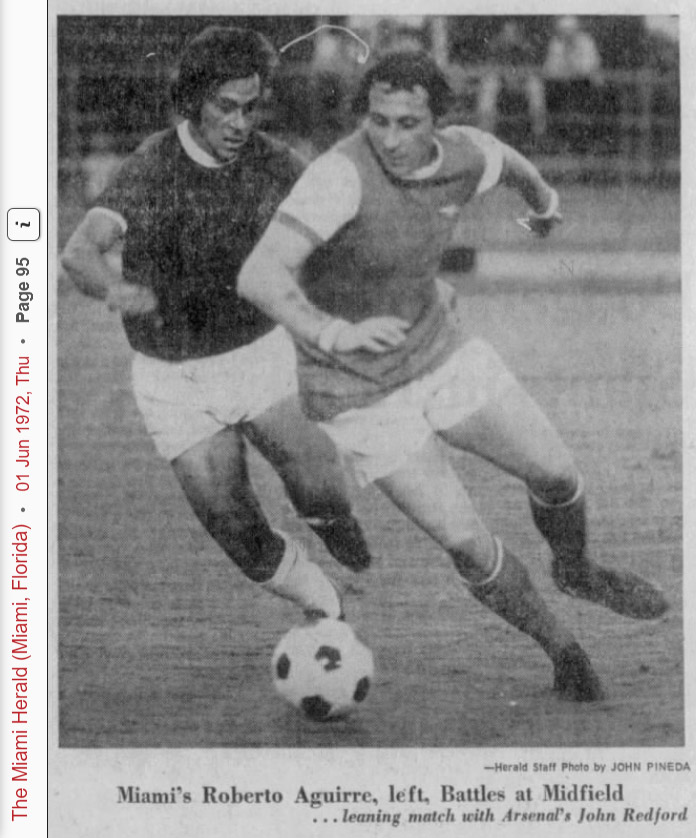
May 31, 1972: North London soccer team Arsenal play in America for the first time, at the Orange Bowl in Miami. Here's the starting lineup for "The Gunners":

1 Goalkeeper (GK) Geoff Barnett (in place of the injured Bob Wilson)
2 Right Back (RB) Pat Rice
3 Left Back (LB) Sammy Nelson (in place of Bob McNab)
4 Midfielder (MF) Peter Storey
5 Centreback (CB) Frank McLintock (sub: 14 John Roberts)
6 CB Peter Simpson
7 MF George Armstrong
8 MF Alan Ball (sub: 12 Eddie Kelly)
9 Forward (FW) John Radford
10 FW Ray Kennedy
11 FW Charlie George.

The Arsenal (the "The" is not official, but it is common) had won the Inter-Cities Fairs Cup in 1970, both England's Football League Division One and its FA Cup ("The Double") in 1971, and had just finished a season in which they finished 5th in the League and lost in the FA Cup Final. The "club" had played all over the world from the 1930s onward, including the continents of Europe, Asia, Africa and South America, but this was their 1st time on North American soil.

They played the Miami Gatos, a North American Soccer League franchise that played from 1972 to 1976, known after that 1st season as the Miami Toros -- the Cats becoming the Bulls.

Arsenal fell behind 2-0, but came back to win, 3-2, with goals by George, Radford and Kennedy. Apparently, things got a little rough on the pitch. Sadly, there seems to be no surviving footage of this match.

Attendance, at the 78,000-seat Orange Bowl: 4,725. I guess there just weren't that many people willing to watch a soccer game in Miami in late Spring, between a soccer team they'd never heard of and... The Arsenal.

Arsenal have since made the following return visits to North America:

* May 23, 1973, Varsity Stadium, Toronto, defeating a team called Toronto Select, 1-0. Charlie George had the goal. Attendance: I can't find a reference.

* May 27, 1973, Police Recreation Field, Devonshire, Bermuda: Arsenal beat Devonshire Colts, 4-0. Goals by George, 2 by Radford, and, in his last appearance for the team, Peter Marinello. Attendance: Not listed. It took them a long time to get back:

* August 6, 1989, Joe Robbie Stadium (now Hard Rock Stadium), Miami Gardens: Arsenal beat Independiente of Avellaneda, Argentina, 2-1. Each team had won its national league that year. This match was for the Zenith Data Systems Challenge Trophy, a phony "world championship." David "Rocky" Rocastle scored from open play in the 1st half, and from a penalty in the 2nd half.

For the 2nd time, Arsenal decided that the best place in America to visit during the Smmer was Miami. Attendance: 10,042, the vast majority of them Hispanics rooting for the South American team. Each team had someone sent off: Independiente, a player; Arsenal, oddly enough, physio Gary Lewin.

At the time, I was 19 years old, but I didn't even know Arsenal existed. Once again, it took Arsenal a long time to get back. When they did, I was ready, and I was there.

* July 26, 2014, Red Bull Arena, Harrison, New Jersey, outside New York: Arsenal lost to the host New York Red Bulls, 1-0. Attendance: A sellout of 25,219, including myself. If the game had been played at the 41,922-seat Citi Field in Flushing, Queens; at the 49,638-seat new Yankee Stadium in The Bronx; or even at the 82,566-seat MetLife Stadium, at the Meadowlands Sports Complex in East Rutherford, New Jersey, it would still have sold out. That's how much of a following The Arsenal had achieved by this point in America, and particularly in the New York Tri-State Area.

Bradley Wright-Phillips, son of Arsenal legend Ian Wright, scored the only goal. Abou Diaby had a goal disallowed for offside -- incorrectly, I thought. (Some things never change: Even in meaningless games on other continents, The Arsenal get screwed over by the officials.) It is ironic that the Arsenal player most known for not playing due to injury has come the closest to scoring in an Arsenal uniform than any player I've ever seen. I have seen Thierry Henry score, and in that very stadium, but for the Red Bulls.

Several Arsenal players who featured in the 2014 World Cup did not make the trip: Germans Per Mertesacker and Mesut Özil; Frenchmen Laurent Koscielny and Olivier Giroud; Englishmen Theo Walcott and Alex Oxlade-Chamberlain; and Chilean Alexis Sánchez.

As a result, the club was short at certain positions. Tomáš Rosický, normally a midfielder, played the 1st 70 minutes up top. Nacho Monreal, normally a left back, was moved to centreback. Gedion Zelalem, only the 3rd American ever to play for Arsenal (after Frank Simek in 2003 and Danny Karbassiyoon in 2004), became the 1st player from a CONCACAF nation to play for Arsenal in a CONCACAF nation, let alone his own.

This game, and the 2012 Emirates Cup 1-1 draw between the clubs, may be as close as we come to Henry, who with only 9 seasons in an Arsenal shirt falls just short of qualifying, ever getting an official testimonial.

* July 28, 2016, Avaya Stadium (now named PayPal Park), San Jose, outside San Francisco: The MLS All-Star Game, and Arsenal beat the MLS All-Stars, 2-1. Joel Campbell and Chuba Akpom were the Arsenal scorers.

Özil, Koscielny and Giroud did not play, because they featured in Euro 2016. (Özil at least made the trip. Mertesacker was injured.) Sánchez did not make the trip, because he featured in the Copa America.

Attendance: Listed as exactly 18,000, which, if true, would be a sellout. Just 2 days later, Liverpool and AC Milan played just a few miles away at Levi's Stadium, the new home of the NFL's San Francisco 49ers, and sold out at 68,500. I have no doubt that Arsenal, never mind the MLS All-Stars, could have sold that out, too.

* July 31, 2016, StubHub Center (now named Dignity Health Sports Park), Carson, California, outside Los Angeles: Arsenal defeated Mexican team Club Deportivo Guadalajara, 3-1. Rob Holding, Oxlade-Chamberlain and Akpom were the Arsenal scorers against the team popularly known as Chivas.

Attendance: 24,000. This may have been the 1st time that a Mexican team has played in California and had their fans outnumbered. Three days earlier, Chelsea beat Liverpool nearby at the Rose Bowl in front of 53,117. Arsenal would have done at least that well.

Arsenal had intended to play in the Florida Cup in Orlando in the Summer of 2021: On July 25 against Internazionale Milano of Italy, and on July 28 against either Everton of Liverpool or Millonarios of Bogotá, Colombia. But they backed out, due to a COVID outbreak among team personnel (not just players).

So, in the Summer of 2022, Arsenal are making it up to their North American fans: They are playing not one, not two, but three matches on U.S. soil. On July 16, they will play Everton at M&T Bank Stadium in Baltimore. On July 20, they will play Orlando City at Exploria Stadium in Orlando. And on July 23, they will play West London team Chelsea F.C. at the much larger Orlando stadium, Camping World Stadium, formerly known as the Tangerine Bowl and the Citrus Bowl.

*

May 31, 1972 was a Wednesday. Football, basketball and hockey were out of season. These Major League Baseball games were played that day:

* The New York Yankees beat the Milwaukee Brewers, 5-4 at Milwaukee County Stadium. Mel Stottlemyre got the win, with Sparky Lyle getting the last 8 outs for the save. Roy White hit a home run.

* The Montreal Expos beat the Pittsburgh Pirates, 3-2 at Jarry Park in Montreal. Willie Stargell went 1-for-3 with a solo home run, but Roberto Clemente went 0-for-4.

* The Detroit Tigers beat the Cleveland Indians, 5-4 at Cleveland Municipal Stadium. Al Kaline only appeared as a pinch-hitter, unsuccessfully. Norm Cash and Mickey Stanley hit home runs. Ed Brinkman won it with a sacrifice fly in the top of the 10th inning.

* The St. Louis Cardinals beat their arch-rivals, the Chicago Cubs, 1-0 at Wrigley Field in Chicago. Lou Brock went 1-for-5 with an RBI. Bob Gibson outpitched fellow Hall-of-Famer Fergie Jenkins.

* The Minnesota Twins beat the Kansas City Royals, 3-2 at Metropolitan Stadium in the Minneapolis suburb of Bloomington, Minnesota. Harmon Killebrew and Rod Carew each went 1-for-4.

* The Atlanta Braves beat the San Diego Padres, 5-4 at Atlanta Stadium. (It was renamed Atlanta-Fulton County Stadium in 1975.) Hank Aaron hit the 648th home run of his career, tying Willie Mays for 2nd on the all-time list. On June 10, he hit his 649th, and set his sights on Babe Ruth's career record of 714.

* The Oakland Athletics beat the Texas Rangers, 5-1 at Arlington Stadium in the Dallas suburb of Arlington, Texas. Catfish Hunter went the distance, and Reggie Jackson hit a home run.

* The Cincinnati Reds beat the Houston Astros, 12-4 at the Astrodome in Houston. George Foster and Johnny Bench hit home runs, Joe Morgan went 3-for-4 with 3 RBIs, and Pete Rose went 2-for-4.

* The California Angels beat the Chicago White Sox, 4-3 at Anaheim Stadium. (It was renamed Edison International Field in 1997, and Angel Stadium of Anaheim in 2004.)

* And the Los Angeles Dodgers beat their arch-rivals, the San Francisco Giants, 5-4 at Candlestick Park in San Francisco. Manny Mota tripled home the winning run in the top of the 10th inning.

* The New York Mets and the Philadelphia Phillies were rained out at Shea Stadium. It was made up was part of a doubleheader on August 1. The Mets won the opener, 3-2, on an RBI single by Cleon Jones in the bottom of the 18th inning. That's right: They went 18 innings, and still had to play a nightcap. Jon Matlack went 8 2/3rds innings, Tug McGraw 6 1/3rd, and Ray Sadecki 3 for the win. Willie Mays only appeared as a pinch-hitter, unsuccessfully.

The Phillies won the nightcap, 4-1. They were a lousy team all season long, but Steve Carlton was pitching this game. He won 27 games that season. When Carlton started, he told his teammates, "It's Win Day." Mays went 1-for-4.

Friday, January 21, 2022

January 21, 1979: A Super Bowl Shows the Shift In American Culture

January 21, 1979: Super Bowl XIII is played at the Orange Bowl in Miami. The Dallas Cowboys, NFC Champions and winners of Super Bowls VI and XII, faced the Pittsburgh Steelers, AFC Champions and winners of Super Bowls IX and X -- and beat the Cowboys themselves in Super Bowl X.

In 2011, Chad Millman and Shawn Coyne published The Ones Who Hit the Hardest: The Steelers, the Cowboys, the '70s, and the Battle for America's Soul. It does a terrific job of telling the cultural histories of both Pittsburgh and Dallas, and the teams that played in those cities, including their meeting in Super Bowl X in 1976, up until their meeting in Super Bowl XIII in 1979. The problem is, the book ends with the postgame of that Super Bowl, and doesn't really explain who won "the battle for America's soul."

Indeed, while the Seventies Steelers are now regarded as one of the greatest football teams of all time, and the Seventies Cowboys are a level below them, looking at America from the Eighties onward, we, as a country, have become much more like Dallas and the Cowboys than we have like Pittsburgh and the Steelers:

* Pittsburgh: Hard-working, patient, team-oriented, letting your performance do the talking, magnanimous in victory, appreciative of the people who got us there.

* Dallas: Materialistic, glitzy, self-indulgent, instant-gratification-seeking, trash-talking, drug-ridden, yet sanctimonious about religion.

It was a good book, but the lack of a true epilogue stops it from being a great book. But it is as good a look at the building of the Steeler dynasty, and as good a look at the 1st 20 years of the Cowboys, that we are likely to get anytime soon.

And while no Super Bowl has yet been called the "Game of Century," the way several college football games have been, it has been called "the ultimate game." Asked about playing in it before Super Bowl VI, Cowboys running back Duane Thomas said, "If it's the ultimate, how come they're playing it again the next year?"

The Cowboys did go into Super Bowl XIII as defending World Champions, and some of them were holdovers from their Super Bowl VI winners. (Thomas was retired by this point.) But the Steelers had also won 2 titles, and had won them more recently. They had gotten more experienced, and yet younger, as some of the veterans from Super Bowls IX and X had been replaced by younger, better players. They were 14-2 in 1978, their best season ever.

The Steelers' quarterback was Terry Bradshaw, who had really struggled before leading them to the title in the 1974 season. As a country boy from Louisiana, he had a reputation for not being very bright, even though he'd already quarterbacked a team to 2 titles.

And Cowboy All-Pro linebacker Thomas "Hollywood" Henderson told the media, "He couldn't spell 'Cat' if you spotted him the 'c' and the 'a.'" Henderson also predicted the Cowboys would win, 31-0.

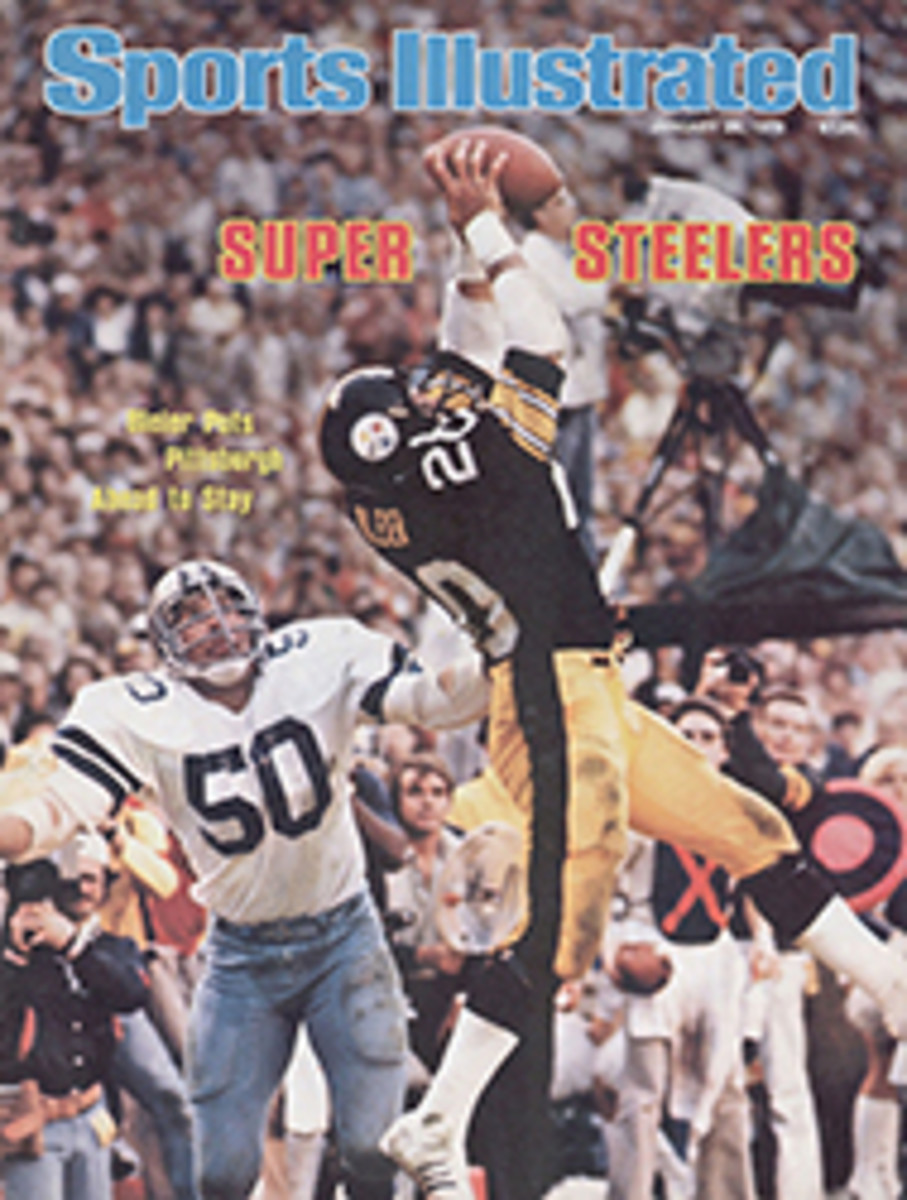
The Steelers began the game as 3 1/2-point favorites. Their offense had Bradshaw, running back Franco Harris, receivers Lynn Swann and John Stallworth, and center Mike Webster. Their "Steel Curtain" defense had tackle Mean Joe Greene, linebackers Jack Lambert and Jack Ham, cornerback Mel Blount, and center Donnie Shell. That's 10 players who ended up in the Pro Football Hall of Fame. And that's not counting All-Pros like running back Rocky Bleier (on the SI cover above), offensive tackle Larry Brown, defensive ends L.C. Greenwood and Dwight "Mad Dog" White, and safety Mike Wagner.

Throw in team owner Art Rooney, administrator and owner-heir-apparent Dan Rooney, scout Bill Nunn and head coach Chuck Noll, and the fact that safety Tony Dungy was later elected as a coach, and that's 15 Hall-of-Famers.

Henderson has not been elected to the Hall of Fame. Nor has safety Charlie Waters. Who among the Cowboys has been? Quarterback Roger Staubach, running back Tony Dorsett, receiver Drew Pearson (though it took a long time to elect him), tight end Jackie Smith, defensive tackle Rayfield Wright, and linebacker Randy White. That's 6. Also, team administrators Tex Schramm and Gil Brandt, head coach Tom Landry, assistant coaches Mike Ditka (from the Pittsburgh area) and Ernie Stautner (elected for his playing for the Steelers in the 1950s). So, 11.

The Cowboys had the 1st drive, but fumbled the ball away. The Steelers took advantage, leading to a 28-yard touchdown pass from Bradshaw to Stallworth. 7-0 Pittsburgh. After a trade of turnovers, Staubach threw a 39-yard touchdown pass to Tony Hill. It was the time all season the Steelers had given up a touchdown in the 1st quarter of a game, and it tied the game at 7-7.

The script continued to go the Cowboys' way, as linebackers Henderson and Mike Hegman blitzed Bradshaw, causing him to do the kind of dumb thing Henderson suggested he was capable of: He collided with Harris, and fumbled. He picked the ball up, but was sacked by Henderson, and Hegman ripped the ball out of his hands, taking it 37 yards for a touchdown. It was 14-7 Dallas.

Bradshaw wasn't fazed. He threw a pass that Stallworth turned into a 75-yard game-tying touchdown. The Steelers forced the Cowboys to punt, but only got a missed field goal out of it. On the Cowboys' next drive, Blount intercepted Staubach. His return and a personal foul by Cowboy tight end Billy Joe DuPree gave the Steelers great field position. With 26 seconds left in the half, Bradshaw threw a 7-yard pass to Bleier, and it was 21-14 Pittsburgh.

That remained the score until, with 2:46 left in the 3rd quarter, the Cowboys had a 3rd and 3 on the Steeler 10, and Staubach faded back to pass. He saw Jackie Smith wide open in the end zone. Smith had played 15 seasons for the St. Louis Cardinals -- the football team that now plays in Arizona, not the baseball team of the same name -- and made 5 Pro Bowls. He had retired after the 1977 season, but accepted an offer from the Cowboys, who were dealing with injuries at his position. He didn't catch a pass all season long, but was praised for his blocking.

In a Playoff game against the Atlanta Falcons, he did catch a touchdown pass from Danny White, who was filling in for an injured Staubach. Although the Cardinals had gone 9-5 in 1963 (his rookie season), 9-3-2 in 1964, 9-4-1 in 1968, 10-4 to win the NFC Eastern Division in 1974, and 11-3 to win the NFC East, that game against the Falcons was the 1st winning postseason game in which he'd ever played.

Now, with less than 18 minutes in regulation to play in a game for the World Championship, and with his team down by 7 points, Jackie Smith was wide open in the end zone, and the target of a pass by one of the greatest quarterbacks who had ever played.

He dropped it. It looked like he slipped, his legs collapsing underneath him, and the pass popped out of his hands. Verne Lundquist, then the Cowboys' main radio announcer, said, "Aw, bless his heart, he's got to be the sickest man in America!"

Had he caught the pass, the Cowboys would have been a successful extra-point attempt from tying the game. Instead, the Cowboys had to settle for a 27-yard field goal by Rafael Septién. The Cowboys were trailing 21-17, the same score by which the Steelers beat them in Super Bowl X.

They could not build momentum on this. Franco Harris added to the Pittsburgh lead with a touchdown run halfway through the 4th quarter. On the ensuing kickoff, Roy Gerela slipped, causing him to squib the kick. This should have been a lucky break for the Cowboys.

Instead, Randy White tried to pick it up at the 24-yard line, but was wearing a cast to protect his broken left hand, and fumbled it. Dennis Winston recovered it, and the Steelers had the ball at the Dallas 18. On the very next play, Bradshaw threw to Swann, and he didn't drop it. That made it 35-17 Pittsburgh with less than 7 minutes to go.

The Cowboys didn't give up. Staubach threw a touchdown pass to DuPree with 2:27 left. They recovered an onside kick, and with 22 seconds on the clock, Staubach threw another touchdown pass, to Butch Johnson.

It was 35-31. Had they gotten the Smith touchdown instead of the Septién field goal, presuming Septién had made all the extra points, it would have been 35-35. But they couldn't recover the last onside kick, and the Steelers had won.

It was Jackie Smith's last game, and the last pass he was ever thrown. He caught 480 passes for 7,980 yards, the latter a record for tight ends that stood until 1990. He still holds the record of most yards per catch for any tight end, 16.1. But it took 11 tries after becoming eligible for the Pro Football Hall of Fame for him to be elected. It certainly looked as though the voters held it against him.

Henderson got the 31 points for the Cowboys right, as the Steel Curtain did not hold. But neither did the Cowboys' "Doomsday Defense." For most of the game, Bradshaw had it his own way. He was named the game's Most Valuable Player. He told the press, "Ask Hollywood how dumb I am now."

It would have been an even better question a year later, as the Steelers trailed the Los Angeles Rams early in the 4th quarter of Super Bowl XIV, and Bradshaw led them back to win, and he was named the MVP again. That made it 4 World Championships in 6 seasons.

It also linked up with the Pittsburgh Pirates' win in the 1979 World Series, in between the Steelers' back-to-back titles. Bradshaw and Pirates Captain Willie Stargell were named Sportsmen of the Year for 1979 by Sports Illustrated.

Henderson's drug problem drove him out of football, just as an elbow injury and clinical depression ended Bradshaw's career. Both men recovered, and can laugh about it all now.

Much like Liverpool Football Club in England, the Steelers had great success in the 1970s, in a city hit hard by industrial decline, where the "football" team meant everything. As with the 1965 Los Angeles Dodgers and the 1968 Detroit Tigers with their World Series wins following race riots, a community in another kind of trouble rallied around a great team, to lift them up, to show a country that had been looking down on them that they were still entitled to some pride.

But by this point, the TV show Dallas had already premiered. Just 2 months after the Steelers beat the Rams in Super Bowl XIV, the show skyrocketed in popularity thanks to the shooting of protagonist J.R. Ewing (played by Larry Hagman). The show seemed to celebrate excess, glamor, and naughty behavior. These were behaviors the Cowboys and their fans seemed to embrace, and it was anti-matter to the Steelers and their fans.

Both teams were on TV all the time, to the point where some people said that CBS stood for "Cowboys Broadcasting System." As a result, both teams developed national followings, including in places where the local team simply wasn't getting the job done in the 1970s, cities like New York (where the Jets crashed after Joe Namath's guaranteed Super Bowl win, and the Giants were mediocre and boring), Philadelphia (to the dismay of hardcore Eagle fans), Chicago (until Ditka returned as their head coach and rebuilt them), and all across the South (aside from the Cowboys and the Miami Dolphins, no team from a former Confederate State played in a Super Bowl until 1999).

The 1980s would not be good to either team, as both got old, and rebuilt to the point where they were good, but not good enough. The Cowboys reached the Conference Championship Game for the seasons of 1980, '81 and '82; the Steelers, that of '84. By the end of the decade, both had completely collapsed. But they rebuilt in the 1990s, and the Cowboys won 3 Super Bowls, finally beating the Steelers in the last of these, Super Bowl XXX, in 1996.

The Cowboys haven't been to a Super Bowl since, and the fact that they've usually been a Playoff team since then has made it more frustrating. The Steelers are also usually a Playoff team, and won Super Bowls XL and XLIII, before losing XLV.

But 10 months after the Steelers completed their Super Bowl run, America voted the Cowboy way, as President Jimmy Carter, an honest, hardworking man with a good attitude, someone who would have been welcome in any Steeler gathering, was soundly rejected at the polls in favor of Ronald Reagan, a former Governor of California known for starring in Westerns.

The Steelers won the game. But it was Dallas, not Pittsburgh, who won the culture war.

In 2019, a poll ranked this game 17th on a list of the 100 Greatest Games of the NFL's 1st 100 years. In 1999, The Sporting News released their list of the 100 Greatest Football Players. Greene was ranked 14th, Lambert 30th, Blount 36th, Bradshaw 44th, Ham 47th, Shell 55th, Webster 75th and Harris 83rd. Swann and Stallworth were not included. In 2010, the NFL Network ranked the 100 Greatest Players. Greene was 13th, Lambert 29th, Blount 44th, Bradshaw 50th, Ham 60th and Webster 68th. Harris, Swann, Stallworth and Shell were omitted.

*

January 21, 1979 was a Sunday. Obviously, there were no other football games that day. Baseball was out of season. There were 5 games played in the NBA:

* The New York Knicks lost to the Milwaukee Bucks, 138-114 at the Milwaukee Exposition, Convention Center and Arena, or "The MECCA." Since 2014, it has been named the UW-Panther Arena.

* The Philadelphia 76ers beat their arch-rivals, the Boston Celtics, 91-87 at the Boston Garden.

* The Cleveland Cavaliers beat the Chicago Bulls, 94-93 at The Coliseum in the Cleveland suburb of Richfield, Ohio.

* The New Orleans Jazz beat the Atlanta Hawks, 108-87 at the Superdome in New Orleans.

* The Los Angeles Lakers beat the Golden State Warriors, 113-107 at The Forum outside Los Angeles in Inglewood, California. In a losing effort, Robert Parish scored 33 points and had 16 rebounds against a Laker defense led by Kareem Abdul-Jabbar. Celtics boss Red Auerbach may nave taken notice.

Only 1 game was played in the NHL that day, a 5-5 tie between the New York Rangers and the Philadelphia Flyers at Madison Square Garden. The Rangers led 5-2 with 12 minutes left to play, but allowed 3 goals in 3 1/2 minutes to blow it.

There were 2 games played in the World Hockey Association, which turned out to be in its last season. The Birmingham Bulls beat the Edmonton Oilers, 4-3 at the Northlands Coliseum. And the Winnipeg Jets beat the Quebec Nordiques, 3-1 at the Winnipeg Arena.

December 31, 1999 & January 1, 2000: The Millennium

December 31, 1999:  The Millennium arrives. The people of planet Earth survived. At a terrible cost. But we hadn't destroyed ourselves. ...