Showing posts with label marvel comics. Show all posts

Monday, December 19, 2022

December 20, 1940: Captain America Debuts

December 20, 1940: Captain America Comics #1, with a publication date of March 1941, is published. It will still be nearly a full year before America enters World War II, but the cover shows the titular superhero giving Chancellor Adolf Hitler of Nazi Germany a right cross. The publisher is Timely Comics, which will become Marvel Comics in 1961.

As created by writer Joe Simon (1913-2011) and artist Jack Kirby (1917-1994), both of them Jewish and with a vested interest in the defeat of the Nazis, Steve Rogers is a young man from Brooklyn, New York City, rejected for service in the U.S. armed forces because he's too skinny and weak. But his persistent patriotism gets him recommended for a new project, the U.S. Army's "super-soldier serum."

It's a success, and now, he is, ironically, the Aryan ideal: A tall, blond, blue-eyed man with great strength and superior reflexes. But the scientist who developed the serum is killed by a Nazi saboteur before he can use the serum, whose formula only he knows, on anyone else. There will be no army of American super-soldiers, just one, and Steve becomes "Captain America."

Under both his real name (with the mere rank of Private) and as Cap, Steve fights the Nazis all through World War II, along with his Army camp's teenage mascot, James Buchanan "Bucky" Barnes, acting, to use an analogy to DC Comics, as Robin to his Batman. They fight Nazi super-soldiers such as the Red Skull and Baron Zemo, and lesser threats. Steve's star-spangled shield, whose design was adjusted from the first issue, becomes an item of offense as well as defense, as he becomes an expert at throwing it.
Cap became Timely's most popular character, and in 1944, he became the 1st character from what would become Marvel to appear in the movies, in a serial where he was portrayed by Dick Purcell. But after World War II, superhero stories declined in popularity, and Cap's appeal faded with the Nazis no longer a threat. The series was discontinued in 1950.
Dick Purcell as Cap

In 1964, Marvel revived the character, making him part of their superhero team The Avengers. They explained his absence by saying that he and Bucky were believed to have died on a mission just before V-E Day, May 8, 1945. Cap ended up frozen in the North Atlantic Ocean, revived by the Avengers, and had to adjust to a modern world, knowing that someone like him was needed again. It would be decades before Marvel explained that Bucky had survived, leaving Cap thinking that he hadn't, thus saddling him with survivor's guilt.

In addition to the Avengers, Cap forms alliances with Rick Jones, formerly sidekick to the Hulk, and who bears a freaky resemblance to Bucky (the first thing Cap noticed about him); and with Sam Wilson, a flying superhero known as the Falcon, who in 1969 became the 1st black American superhero in mainstream comics. (Black Panther debuted in 1966, but, as the king of a fictional African nation, was not American.)

After experimenting with Spider-Man and the Hulk in the late 1970s, CBS aired 2 Captain America TV-movies in 1979, starring Reb Brown with a somewhat different take on the character, one who was not involved in World War II, although his father was, and was heroic enough to be nicknamed "Captain America."
Reb Brown as a motorcyclist Cap,
complete with helmet

In 1990, a feature film was made, with Matt Salinger, son of author J.D. Salinger, playing a Cap that's revived in the present day, stunned to see that the Germans are now America's allies, but that the Red Skull has survived and leads a criminal organization, much like the comics' Hydra but not named as such in the film.
Matt Salinger as Cap

In 2001, Marvel launched the Ultimate Marvel series, with the idea of starting their legendary characters over in the present day, but otherwise getting them back to their roots. The twist with Cap was that he and Bucky started out as the same age, and as friends in Brooklyn, but that Bucky survived the war, and when Cap is thawed out in the present day, Bucky is an old man.

In 2011, the Marvel Cinematic Universe got around to Cap, releasing Captain America: The First Avenger. Chris Evans, who had previously played the Human Torch in 2 Fantastic Four movies, plays a Steve who has Bucky (Sebastian Stan) as a contemporary, and sees Bucky apparently die well before his own apparent sacrifice, but is otherwise the character previously known.
Chris Evans, the definitive Cap

The retcon (introduced in the 1960s) of his romance with British secret agent Peggy Carter, played in the MCU by Hayley Atwell, is played up, to the point where, when The Infinity Saga was finished with Avengers: Endgame, after putting the swiped Infinity Stones back to where and when they belonged, Cap stayed in the past, and lived out his life with Peggy, and, as an old man, handed his shield over to Sam Wilson (Anthony Mackie), who becomes the new Captain America.

There have been occasional DC and Marvel crossovers. One was Amalgam Comics, which imagined DC heroes combined with Marvel heroes. Batman and Wolverine became Darkclaw, Wonder Woman and Storm became Amazon, and so on. Superman and Captain America were merged to become Super-Soldier.

I'd like to believe that each company's stories exist in the other's universe -- so that Superman's hero is Captain America, and vice versa.

*

December 20, 1940 was a Friday. Baseball and football were out of season. The NBA hadn't been founded yet. And the NHL scheduled no games for this date. So there were no scores on this historic day.

Friday, November 4, 2022

November 4, 1977: "The Incredible Hulk" Premieres on CBS

Lou Ferrigno as the Hulk

November 4, 1977: The Incredible Hulk premieres as a 2-hour "backdoor pilot" TV-movie on CBS. Bill Bixby played Dr. David Bruce Banner, and Susan Sullivan played Dr. Elaina Marks, his assistant and love interest, who ended up dying in a laboratory explosion.
Bill Bixby as Banner

Jack Colvin played Jack McGee, a reporter for a national tabloid newspaper, investigating the Hulk, due to the fact that the creature appeared to have caused the explosion, and thus is guilty of the murder of Drs. Banner and Marks.

Since he can't allow the Hulk to be caught, Banner goes on the run, making this the best of many TV shows that followed the pattern of The Fugitive, with Banner and the Hulk serving as the show's "Dr. Kimble" and McGee as its "Lieutenant Gerard," though McGee shows little of Gerard's morality and commitment to justice: He doesn't care whether the Hulk is punished for his crime, as long as he gets his stories.

The series ran for 5 years, and later produced 4 movies, which included the 1st live-action versions of Marvel Comics superheroes Daredevil and Thor.

Marvel boss Stan Lee and artist Jack Kirby created the Hulk in 1962, giving his true identity that of Robert Bruce Banner, a physicist rather than a physician, and usually just called "Bruce." Lee had an acute affinity for alliteration: Spider-Man was Peter Parker, his boss was J. Jonah Jameson, Jameson's partner was Robbie Robertson, and Jameson's secretary was Betty Brant.

Dr. Strange was Stephen Strange. Daredevil was Matthew Murdock. Lee's 1st superhero team was the Fantastic Four, whose members included Reed Richards and his girlfriend, later wife, Susan Storm. Iron Man was Tony Stark, but his girlfriend, later wife, was Pepper Potts. So, "Bruce Banner."

(In 1970, when rival DC Comics created a character that was a parody of Lee, he was named Funky Flashman. Of course, DC had already given Superman stories plenty of characters with the initials L.L., including Lois Lane, Lana Lang and Lex Luthor.)

Series creator Kenneth Johnson, who also created the Six Million Dollar Man spinoff The Bionic Woman, and later created the sci-fi series V (lizard-man aliens, not to be confused with V for Vendetta), had a son named David, and he said that's why Banner was renamed "David."

Lee claimed he'd heard a different reason: The show went with "David" was because they thought "Bruce" was, in their words, "too gay-ish." Ferrigno heard this story as well, calling it "the most absurd, ridiculous thing I've ever heard." After all, Batman was Bruce Wayne, and one of the biggest rock stars of the era was Bruce Springsteen.

Because Ferrigno was hearing-impaired, leading to him having a speech impediment, the show's Hulk never spoke, only grunted and roared. Unlike in the comics, where the Hulk speaks but is grammatically challenged, there is no commentary of "Hulk smash!" or addressing of anybody as "Puny (whatever)!" There is, however, quite a bit of the Hulk smashing things.

Despite all the changes, Lee approved of the series: "The Hulk was done intelligently. It was done by Ken Johnson, who's a brilliant writer/producer/director, and he made it an intelligent, adult show that kids could enjoy. He took a comic book character and made him somewhat plausible. Women liked it, and men liked it, and teenagers liked it... It was beautifully done. He changed it quite a bit from the comic book, but every change he made, made sense."

Earlier in 1977, on April 19, CBS had debuted the 1st TV series about Spider-Man. Unfortunately, at 27, Nicholas Hammond was about 10 years too old for the part. This was followed in 1978 by Dr. Strange, and in 1979 by 2 movies with Captain America. CBS could have had a "Marvel Universe" then.

The problem was, low budgets meant they couldn't use the special effects necessary to depict supervillains, such as Spidey's "rogues gallery" that includes the Green Goblin and Doctor Octopus, Captain America's nemesis the Red Skull, and Hulk enemies such as the Leader and the Abomination. Given the powers shown by the Fantastic Four, they, to say nothing of their opponents like Dr. Doom and Galactus, were out. So, like the 1952-58 Adventures of Superman, it was mostly gangsters -- at least the 1966-68 Batman series could use that hero's themed gangsters as villains -- or, as Knight Rider would later put it, "criminals who operate above the law."

Years later, Susan Sullivan would play Martha Rodgers, mother of the title character on Castle, and a clip from this film would be used to illustrate her acting career.

Ted Cassidy, who played Lurch on the TV version of The Addams Family, did the show's opening narration. He died in 1979, while the show was still on the air, but his narration was kept. Bill Bixby died in 1993, Jack Kirby in 1994, Jack Colvin in 2005, and Stan Lee in 2018. As of November 4, 2022, Lou Ferrigno, Susan Sullivan and Johnson are still alive.
Lou Ferrigno, 2022

Ever since, pretty much every adaptation of the Hulk, including (and especially) parodies, have included the line that Bixby's Banner used on Colvin's McGee in the pilot: "Mr. McGee, don't make me angry. You wouldn't like me when I'm angry."

Among the parodies that used it was a 2016 episode of the YouTube series Epic Rap Battles of History: "Epic" Lloyd Ahlquist played the Mark Ruffalo version of Bruce Banner, while "Nice" Peter Shukoff played the similarly-named 1976 Olympic decathlon Gold Medalist Bruce Jenner. In mid-battle, each changed: Banner became the Hulk, played by bodybuilder and former American Gladiator Mike O'Hearn, and Jenner became Caitlin Jenner, played by Jolie Drake, an actual transgender comedian who performs under the name NoShame.

*

November 4, 1977 was a Friday. This was also the day that 2 major rock albums were released Footloose and Fancy Free by Rod Stewart, and Rocket to Russia by The Ramones. I have a separate entry for this dual event.

Baseball season was over. Football was in midweek. There were 9 games played in the NBA:

* The New York Knicks beat the Seattle SuperSonics, 95-92 at the Seattle Center Coliseum.

* The New Jersey Nets lost to the Philadelphia 76ers, 107-104 at the Rutgers Athletic Center (now the Jersey Mike's Arena) in Piscataway, New Jersey. Bernard King scored 41 points for the Nets, but the Sixers had a better team effort, getting 29 from Doug Collins, 21 from George McGinnis, 17 from Darryl Dawkins, 14 from Lloyd Free (later to rename himself World B. Free), and 11 from the man the 1974 and 1976 ABA Champion Nets had to let go just to be able to afford the NBA's entry fee, Julius "Dr. J" Erving.

* The Denver Nuggets beat the Boston Celtics, 109-107 at the Boston Garden.

* The Washington Bullets beat the Phoenix Suns, 113-96 at the Capital Centre in the Washington suburb of Landover, Maryland.

* The New Orleans Jazz beat the Golden State Warriors, 105-102 at the Superdome in New Orleans.

* The Buffalo Braves beat the Chicago Bulls, 100-92 at the Chicago Stadium.

* The Milwaukee Bucks beat the Houston Rockets, 110-108 at the Milwaukee Exposition, Convention Center and Arena, or "The MECCA." Since 2014, it has been named the UW-Panther Arena.

* The Atlanta Hawks beat the Kansas City Kings, 111-110 at the Kemper Arena (now the Hy-Vee Arena) in Kansas City.

* And the Los Angeles Lakers beat the Indiana Pacers, 111-99 at The Forum outside Los Angeles in Inglewood, California.

There were 2 NHL games played that night. The New York Rangers beat the Vancouver Canucks, 5-1 at the Pacific Coliseum in Vancouver. And the Atlanta Flames beat the Pittsburgh Penguins, 5-2 at The Omni in Atlanta.

And there were 4 games played in the World Hockey Association:

* The New England Whalers beat the Cincinnati Stingers, 4-3 at the Hartford Civic Center (now the PeoplesBank Arena).

* The Winnipeg Jets beat the Birmingham Bulls, 4-2 at the Birmingham-Jefferson Civic Center in Birmingham, Alabama.

* The Quebec Nordiques beat the Houston Aeros, 7-6 at The Summit in Houston. (The arena has since been converted into the Central Campus of the Lakewood Church, Dr. Joel Osteen's "megachurch.")

* And the Edmonton Oilers beat the Indianapolis Racers, 3-1 at the Northlands Coliseum in Edmonton. 

Saturday, October 1, 2022

October 1, 1939: Marvel Comics #1

October 1, 1939: Marvel Mystery Comics #1, produced by Timely Comics, premieres. By 1950, the company would take the name Marvel Comics. The issue now usually referred to as just "Marvel #1" featured Prince Namor of Atlantis, the Sub-Mariner; the original version of the Human Torch, an android; a gun-toting crimefighter called the Angel; and Ka-Zar the Great, a Tarzan ripoff.

In Fantastic Four #4, May 1962, as part of Marvel's attempt to re-establish itself as DC Comics' main rival, and perhaps even its superior, the new Human Torch, Johnny Storm of the titular hero team, finds the long-lost, amnesiac Sub-Mariner, and restores his memory, but with terrible results. Namor is often referred to as comic books' 1st "anti-hero": A man who helps when he feels like it, but also causes great harm.

In X-Men #1, September 1963, a new superhero named the Angel would be introduced, a man with wings who could fly. Aside from the name, and large wealth, this new Angel, Warren Worthington III, has nothing in common with his predecessor, a private detective named Thomas Halloway.

Marvel #1 sold for 10 cents, equivalent to about $2.10 today. If you can find a copy in good condition today, it will set you back about $350,000.

*

October 1, 1939 was a Sunday. It was the last day of baseball's regular season. In other words, if the film The Natural were a true story, the next day would have been the Playoff for the National League Pennant, and Roy Hobbs shooting out the lights with a walkoff home run.

In real life, these games were played:

* The New York Giants beat the Boston Bees, 5-0 at National League Park in Boston. This was during the 1936-40 experiment in changing names, an experiment that failed: Everyone still called the team the Boston Braves and the ballpark Braves Field, so they switched back. Harry Gumbert pitched a 4-hit shutout. Mel Ott, the leading Giant of his generation, did not play in this game.

* The Brooklyn Dodgers beat the Philadelphia Phillies, 3-2 at Ebbets Field.

* A doubleheader was split at Forbes Field in Pittsburgh. The Cincinnati Reds won the opener, 9-1, getting 3 hits each from Billy Werber and Ival Goodman, and 2 hits each from Lonny Frey, Frank McCormick, Harry Craft, Wally Berger and Billy Meyers.

The Pittsburgh Pirates won the nightcap, 8-0. Ken Heintzelman pitched a 4-hit shutout. Paul Waner went 3-for-5 with an RBI, and Maurice Van Robays went 2-for-5 with 3 RBIs.

* A doubleheader was split at Briggs Stadium in Detroit. The Cleveland Indians won the 1st game, 8-3, with Bob Feller as the winning pitcher. The Detroit Tigers won the 2nd game, 1-0, called after 5 innings due to darkness. (Briggs Stadium was the last ballpark in the American League to get lights, in 1948. It was renamed Tiger Stadium in 1961.) Over the 2 games, Lou Boudreau went 2-for-5 with 2 walks and an RBI, while Hank Greenberg went 1-for-7.

* The Chicago Cubs beat their arch-rivals, the St. Louis Cardinals, 2-1 at Wrigley Field in Chicago.

* The St. Louis Browns beat the Chicago White Sox, 4-3 in 10 innings at Sportsman's Park in St. Louis. This season finale might have been the highlight of the Browns' season even without the dramatics, because it put them out of their misery: They finished 43-111.

* The New York Yankees and the Boston Red Sox had each completed their schedule the day before, against each other. The Yankees went on to sweep the Reds in the World Series.

* The Philadelphia Athletics and the Washington Senators had each completed their schedule the day before, against each other.

Tuesday, August 9, 2022

August 9, 1961: The Fantastic Four #1 Starts the Marvel Universe

August 9, 1961: Fantastic Four #1 is published, beginning the modern era of Marvel Comics. A year earlier, DC Comics had begun publishing Justice League of America, and Marvel editor Stan Lee wanted his company to have its own superhero team. Lee and Jack Kirby created them.

Reed Richards is a brilliant scientist, one of the most intelligent men on Earth -- though, as it turns out, frequently not one of the wisest. Benjamin J. Grimm is his best friend, a former football player and a pilot, somewhat based on Kirby himself. Susan Storm is Reed's girlfriend, who eventually becomes his wife, and they go on to have a son named Franklin and a daughter named Valeria. In later rewrites, Susan was also said to be a scientist from the start. Johnny Storm is Sue's brother, a teenage racing enthusiast.

Like many of the Marvel Comics characters that Stan Lee co-created over the next few years, there was a Cold War undercurrent to their story. The 1st issue of the Fantastic Four's comic was written in the wake of Yuri Gagarin becoming the 1st person in space, and Alan Shepard the 1st American in space.

And so, in the Four's origin story, Reed designs and builds a rocket to determine what the threat to space travelers might be. Ben pilots it, and Sue and Johnny are along to observe with Reed. What happens is that their craft is bombarded with "cosmic rays" -- Lee and the other Marvel writers respected science, but they weren't very good at understanding its effects -- and it mutates them.

Sue is the first to change, becoming invisible for a minute before reappearing. Ben turns into a living orange rock with enormous strength -- Sue says, "Reed, darling, run! He's turned into some sort of... thing!" -- and attacks the others. Reed stretches his body to stop them, only realizing what he's doing once he's done it. Johnny then catches fire, and discovers that not only is he not physically burned by it, but he can fly.

When things calm down, they agree to use their newfound powers to help humanity. Sue takes the name "The Invisible Girl." It would not be until 1985, in Fantastic Four #284, well after the "Second Wave of Feminism," not to mention after marriage and a 1st child, that the writers finally changed her superhero code name to "The Invisible Woman."

Reed, his ego as overweening as ever, calls himself "Mr. Fantastic," mainly because DC already had stretchy heroes named Plastic Man and the Elongated Man. Ben, the only one who can't change back, says, "I'm what Susie called me: The Thing." And Johnny, a fan of comic books, takes the name of an earlier comic book hero, who had appeared in the original Marvel comic, Marvel Comics #1 in 1939: An android known as the Human Torch.

Prince Namor, the Sub-Mariner -- a character who preceded DC's Aquaman -- had also appeared in Marvel Comics #1, as what would later be called an anti-hero: Someone not always likable, but willing to do the right thing if it benefits him.

In Fantastic Four #4, Johnny finds Namor, an amnesiac because he has been away from salt water for so long (I've often wondered whether a shower, or even simply washing his hands, would have made a difference), and takes him to the East River, where his memory and powers are restored. But instead of thanking Johnny, he goes straight back to his undersea home of Atlantis, and finds it abandoned due to the irradiation from the surface people's atomic testing, and vows revenge.

But it is in the next issue, Fantastic Four #5, that the Four's greatest enemy was introduced: Victor Von Doom, a.k.a. Doctor Doom, King of the European nation of Latveria and a master of magic. He had been Reed's college roommate, and possessed all of Reed's intelligence and all of his love for science. But he also had all of Reed's ego, and little of Reed's patience, and an experiment went horribly wrong, burning him, and forcing him to hide his face behind a mask, to which he later added a suit of armor. (Ben then replaced Victor as Reed's roommate.)

Not knowing of George Lucas' love of Asian culture and Samurai armor, Stan Lee went to his death believing that the Star Wars character of Darth Vader was a ripoff of Dr. Doom, but he never sued Lucas over it.
Stan Lee

The introduction of the Fantastic Four started what became known as the "Marvel Universe." The heroes that followed all fit Stan Lee's guidelines:

* May 1962: The Incredible Hulk #1. Lee wanted his next major character to have "enormous strength," but he didn't want a straight-ahead hero. He thought of Dr. Jekyll and Mr. Hyde, and used an advanced atomic weapon to turn physicist Bruce Banner into the Hulk. At first, he changed into the Hulk at nightfall, and back to Banner at sunrise. Within 2 years, this was changed to becoming the Hulk when he got angry. And the angrier he got, the stronger he got.

* August 1962 (released June 5): Amazing Fantasy #15. Lee and Steve Ditko, with Jack Kirby drawing the memorable cover, introducing Spider-Man. Lee wanted a superhero that kids could relate to, more than they could the new Human Torch, who was just 1 of 4. Peter Parker was a 15-year-old science nerd who was bitten by a radioactive spider -- there's radioactivity again, with its fear-inducing overtones of nuclear power and the Cold War again -- and he develops the proportionate strength and reflexes of a spider, plus the accompanying reduced vulnerability, a healing factor, and a "spider-sense" that warns him of trouble.

Not until the 2002 Spider-Man film would Spidey's webs be literally shot out of glands in his wrists. That was temporarily written into the comics: "My webs went internal." Most other versions, including the original comics, show Peter adapting the weapon, creating the "web-fluid" and putting it in "web-shooters" on his wrists.

* August 1962: Journey Into Mystery #83. Kirby had previously drawn Thor, the Norse god of thunder, for DC Comics in 1957. Lee said that, after co-creating the Fantastic Four with Kirby and the Hulk with Steve Ditko, he thought the only way to top it would be to write a comic book about God, and he knew he couldn't do that. But then he realized he could write one about a god. Whether he remembered Kirby's earlier Thor, only he knew.

Donald Blake was originally a mortal man, a doctor with a cane (his disability never explained), who finds a walking stick. Striking it on the ground, he transforms into Thor, and the stick becomes Mjolnir, Thor's legendary hammer. Inscribed on the hammer are these words, apparently (for the reader's benefit) in English instead of a Scandinavian language, past or present: "Whosoever holds this hammer, if he be worthy, shall have the power of Thor."

Later, it was retconned that Blake was an identity created by Thor's father, Odin, the king of the Norse gods: As a punishment for opposing him, Odin gave Thor the persona and amnesia, believing himself to have always been Blake.

* September 1962: Tales to Astonish #35. This one introduced Ant-Man. Dr. Hank Pym found a way to shrink to a small size, thus ripping off DC's The Atom; and also a way to control ants, a rewrite of DC's Aquaman and his command of sea creatures. He soon learns to reverse the process, alternating between Ant-Man and Giant-Man.

* March 1963: Tales of Suspense #39. The Cold War rears its head again, as Lee introduces Iron Man. Tony Stark is an industrialist, a brilliant scientist, drawn with a mustache as an obvious homage to Howard Hughes, to the point that, when the character was retconned as having grown up during the Cold War, his father was named Howard Stark.

Surviving being shot in the chest by a Communist agent, but having it severely weaken his heart, led Tony to create the prototype of the Iron Man armor, and use his weaponry to make money for himself and fight the Commies.

* June 1963: Tales to Astonish #44. This one introduced Janet Van Dyne, Dr. Pym's assistant and girlfriend. He designs a shrinkable costume for her, with wings that allow her to fly (which he can't do), and she becomes the Wasp. They are among the few superheroes that have allowed a second generation to really take hold: Their daughter, Hope Van Dyne, taking her mother's maiden name after a falling-out with their father, eventually becomes the 2nd Wasp; and her boyfriend, Scott Lang, becomes the 2nd Ant-Man.

* July 1963: Strange Tales #110. A fan of 1930s pulp magazine hero Mandrake the Magician, Lee wanted a magician character, so he created Doctor Strange. Stephen Strange injures his hands in a car accident, ending his surgical career, so he looks for something to do for the rest of his life. He makes his way to Tibet, then controlled by Communist China (and thus it wouldn't be allowed in the real world -- there's the Cold War again), where he is invited to train in "the mystic arts."

(One of my favorite moments from the Marvel movies came in Spider-Man 2, when Dr. Otto Octavius first becomes Dr. Octopus, but doesn't yet have the name. The Daily Bugle staff is wondering what to call him, and someone suggests, "How about 'Doctor Strange'?" And publisher J. Jonah Jameson says, "Nah, it's been taken." Although that character was never shown in the Tobey Maguire movies, he did interact with Spidey in the later MCU.)

* September 1963: Avengers #1. Lee felt that, as successful as the Fantastic Four had been, it wasn't quite the "superteam" that DC's Justice League had been. So he put Iron Man (the team's funder, so its boss, much like Batman in the Justice League), the Hulk, Thor, Ant-Man and the Wasp together in a team, their 1st mission to stop Thor's adoptive brother Loki, a trickster god with delusions of ruling the Earth.

* March 1964: Avengers #4. The Hulk has gone rogue, and the other Avengers need to stop him. Fortunately, they find Steve Rogers, the 1st superhero created by Kirby, all the way back in 1940, frozen in ice. Injected with a "super-solider formula," Rogers became Captain America, and was thought killed near the end of World War II. His adjustment to the modern era (whether that's the 1960s, the 1980s, or the 21st Century as in current continuity) is difficult, but his heroic instincts always kick in.

In that 1st re-appearance, Cap sees the United Nations Building, and gains a little hope. A policeman sees him, recognizes the costume, and breaks down in tears, because Cap is just the kind of guy we need in these times. The timing couldn't have been better: The country was still shaken by the assassination of President John F. Kennedy on November 22, 1963.

* April 1964: Daredevil #1. Lee wanted a superhero with a disability that was a part of his powers. And before you say that Daredevil is an obvious ripoff of Batman, keep these things in mind: Batman himself is a ripoff of Zorro, who was a ripoff of the Scarlet Pimpernel; and DC had a Doctor Mid-Nite, a hero who could "see in the dark, but not in the light," all the way back in 1941.

Matthew Murdock is a boy who saves a man from being hit by a truck, but a canister containing radioactive material falls off the truck and hits Matt. It blinds him, but it also heightens his other senses to the point where he can do anything better than a sighted person can, including graduate from law school.

When his father, a boxer, is ordered to take a dive (lose a fight on purpose), he refuses, and wins, but is killed for this by a mobster (later retconned as the Kingpin). Matt defends his neighborhood, in courtrooms as a defense attorney by day, and on the streets as Daredevil by night.

* July 1966: Fantastic Four #52. Lee used this issue to introduce the 1st nonwhite superhero in comic books, Black Panther. T'Challa is the King of the African nation of Wakanda, which uses vibranium, a material from a meteorite that landed there centuries ago, to build the most technologically advanced nation on Earth, but also to keep it hidden from the rest of the world. As King, T'Challa undertook the ritual of drinking from a heart-shaped herb, which gives him, more or less, Spider-Man's powers without the webs.

Three times, attempts have been made at a Fantastic Four movie franchise. The 1st, in 1994, was made just so that the film rights to the team wouldn't lapse. The film has never been released, but is available online. Another attempt was made in 2005, released and given mixed reviews, with a sequel in 2007, which didn't do nearly as well, so a 3rd film wasn't made. (Sue Storm was played by Jessica Alba, someone who is definitely better off being visible.) Another reboot came in 2015, and it tanked, leading to the cancellation of the planned sequel. 

In 2022, with the film rights to the Four back in Marvel's hands, John Krasinski played Reed in Doctor Strange in the Multiverse of Madness. Although the other 3 did not appear in it, this appears to be setting up the next attempt. which, as of this writing, is scheduled to be released on November 8, 2024. (UPDATE: What was ultimately titled The Fantastic Four: First Steps was been pushed back to July 21, 2025, and became the most successful FF movie ever.)

A 2015 episode of the YouTube series Epic Rap Battles of History featured "Epic" Lloyd Ahlquist as Stan Lee, against "Nice" Peter Shukoff as Muppets creator Jim Henson, with Zach Sherwin stepping in as Walt Disney, "taking over" the battle the way his company bought out both Marvel and the Muppets franchise.

*

August 9, 1961 was a Wednesday. Comedian and actress Amy Stiller was born. She was the daughter of comedy team Jerry Stiller and Anne Meara, and the brother of comedian and actor Ben Stiller.

These baseball games were played that day:

* The New York Yankees beat the Los Angeles Angels, 2-0 at Yankee Stadium. Jim Coates, normally a reliever, went the distance, pitching a 4-hit shutout. No home runs in this homer-happy season, but Mickey Mantle went 1-for-3 with a walk, and Roger Maris went 0-for-4.

* The Boston Red Sox beat the Minnesota Twins, 5-4 at Fenway Park. Carl Yastrzemski went 0-for-3 with a walk. Harmon Killebrew went 0-for-2 with 3 walks.

* The Kansas City Athletics beat the Baltimore Orioles, 2-1 at Memorial Stadium in Baltimore. Brooks Robinson went 1-for-4.

* The Cincinnati Reds beat the Philadelphia Phillies, 5-0 at Connie Mack Stadium in Philadelphia. Joey Jay pitched a 6-hit shutout. The Reds would go on to win the Pennant, and Jay would win Game 2 of the World Series against the Yankees. This made him the only Reds pitcher to win a World Series game between 1940 and 1970. Frank Robinson went 0-for-4 with a walk, but Elio Chacon, soon to be a 1962 Met, hit a home run.

* The St. Louis Cardinals beat the Pittsburgh Pirates, 4-0 at Forbes Field in Pittsburgh. Curt Simmons went 7 innings, and Ed Bauta 2, for a 7-hit shutout. Stan Musial did not play for the Cardinals. Roberto Clemente went 1-for-4.

* The Cleveland Indians beat the Washington Senators, 3-1 at Cleveland Municipal Stadium.

* The Detroit Tigers beat the Chicago White Sox, 8-2 at Comiskey Park in Chicago. Rocky Colavito  and Al Kaline hit home runs for the Tigers.

* The Los Angeles Dodgers beat the Milwaukee Braves, 8-3 at the Los Angeles Memorial Coliseum. Don Drysdale went the distance, allowing 3 runs, just 1 earned, on 4 hits and 1 walk, striking out 11, and helping his own cause with a home run. Joe Adcock hit 2 home runs for the Braves, but Hank Aaron and Eddie Mathews both went 0-for-4, and Joe Torre went 0-for-3.

* And the San Francisco Giants beat the Chicago Cubs, 6-5 at Candlestick Park in San Francisco. Willie Mays went 1-for-4 with 2 RBIs. Ernie Banks went 2-for-4 with an RBI. Matty Alou won it with a homer in the bottom of the 9th.

Monday, July 11, 2022

July 11, 1966: Marvel Comics Introduces the 1st Black Superhero

Chadwick Boseman as T'Challa

July 11, 1966: Marvel Comics publishes Fantastic Four #52, introducing the character of Black Panther, generally considered to be the 1st black superhero in mainstream comic books.

The name "Black Panther" long predates the character -- and the Black Panther Party, which formed a few weeks later. In World War II, the U.S. Army's segregated 761st Tank Battalion was known as the Black Panthers. And Portugal's Mozambique-born soccer star Eusébio, already world-famous but about to become more so as the World Cup began, was already nicknamed "The Black Panther." (He was also nicknamed "The Black Pearl," as was his fellow Portuguese speaker, Brazilian star Pelé.)

There had been black heroes in comic books before, but no major publisher had dared try it. In 1947, with Jackie Robinson debuting in Major League Baseball and Joe Louis as Heavyweight Champion of the World, All-Negro Comics #1 was published. But it sold so poorly that there was no issue #2.

Marvel, under a previous name, Atlas Comics, had published Jungle Tales, including Waku, Prince of the Bantu, clearly an inspiration for the character to come. But that magazine ran only 7 issues, from September 1954 to September 1955, and, as was all too common at the time, indulged in too many stereotypes. In 1963, Marvel had included Private Gabriel Jones in the World War II-themed book Sgt. Fury and his Howling Commandos.

With the knowledge that the Lone Ranger had been partly inspired by an African-American lawman named Bass Reeves (1838-1910), Dell Comics released Lobo in December 1965. Bearing no resemblance to the later DC character of the same name, which is Spanish for "wolf," this was a gunslinger who bore stylistic resemblances to the protagonists of 2 current TV series: Dr. Richard Kimble of The Fugitive and Captain Jason McCord of the Western Branded: The cover identified him as "Branded for Life: An honest man... blamed for a crime he did not commit!"

On the heads of his defeated foes, would leave a gold coin imprinted with the letter L and the image of a wolf, similar to the Lone Ranger leaving a silver bullet and Zorro using his sword to cut a letter Z on his opponents' shirts.

Lobo #1 was released after the March On Washington, the Civil Rights Act of 1964, the Selma-to-Montgomery March and the Voting Rights Act of 1965 -- but also after the riots in Harlem, North Philadelphia and Watts. It didn't sell well, not even in black neighborhoods. When Marvel released the issue of Fantastic Four with Black Panther, Dell thought to try again, and, in September 1966, released Lobo #2. But that didn't sell well, either, and, except for a brief revival in 2017-18, the character has never appeared again.

A character's in-story origin sometimes gets embellished, but rarely has substantive change. But, as was often the case with Marvel and its boss man, Stan Lee, there is a dispute as to this character's real-world origin. Smilin' Stan said that a black hero was the next step in Marvel's progress.

But Marvel's main artist, Jack Kirby, said, "I came up with the Black Panther because I realized I had no blacks in my strip. I'd never drawn a black. I needed a black. I suddenly discovered that I had a lot of black readers. My first friend was a black! And here I was ignoring them because I was associating with everybody else." Lee's story was backed up by writer Roy Thomas, who later succeeded him as Marvel's editor; while Kirby's story is backed up by documentation, including drawings that predate the issue.

With Black Panther, the in-story origin of the character is not the only thing that matters: There's also the origin story of his homeland, the African nation of Wakanda. At some point in the past, a meteorite landed there. It was made of vibranium, and this fictional material allowed Wakanda to develop technology beyond anything the world had yet seen, including the ability to conceal themselves from the outside world. Their King decided to do this, for fear that the technology could be stolen. (Vibranium would eventually be found elsewhere, and was used to make Captain America's shield.)

In-universe, the title "Black Panther" is a rank of office, chieftain of the Wakandan Panther Clan. As chieftain, the Panther is entitled to consume a special heart-shaped herb which, in addition to his mystical, shamanistic connection with Bast, the Panther Goddess, grants him superhumanly acute senses, strength, speed, agility, stamina, durability, healing, and reflexes. In essence, he has the powers of Spider-Man, without the addition of web-shooters.

In the comics, the King of Wakanda, and thus the Black Panther, is named T'Challa, whose father and predecessor, T'Chaka, was murdered by a rival. Thus, like so many other superheroes, T'Challa is motivated to fight for justice in remembrance of, and to avenge, a parental figure. Just as so many other heroes protect a city -- or, in the case of Daredevil, just one neighborhood -- T'Challa protects an entire country.

In the story that introduced him, he invited the Fantastic Four to Wakanda, and then tested their abilities. The tests passed, he made amends by explaining that he needed to see if they would be worthy allies. They subsequently fought a would-be invader. Black Panther later joined the Avengers, and, for a time, was married to Ororo Munroe, a.k.a. Storm of the X-Men.
T'Challa made his television debut in the 1994-96 Fantastic Four animated series, where he was voiced by Keith David. Djimon Hounsou provided the voice of T'Challa for a 2011 animated series. Chadwick Boseman played the character in 4 live-action Marvel Cinematic Universe films: Captain America: Civil War, in 2016, in which he's on the pro-registration side; Black Panther, in 2018, the 1st superhero film with a black lead that wasn't a comedy (I'm counting Wesley Snipes' Blade films as more horror than superhero films); Avengers: Infinity War, also in 2018, in which he was one of the heroes who was "snapped away" by Thanos; and Avengers: Endgame, in 2019, in which the Hulk snaps him back, and he leads Wakanda's army in the final battle against Thanos.
Boseman, who had previously played black American icons Jackie Robinson, Thurgood Marshall and James Brown, became beloved all over the world for his portrayal of T'Challa. Unbeknownst to the world at large, he was already battling cancer during the filming of Endgame, and died in 2020. So, while the character still lives in comic books, in the MCU, the 2022 sequel Black Panther: Wakanda Forever reveals that their version of T'Challa has died from an incurable illness, and his sister, Shuri, played by Letitia Wright as in the previous film, becomes the new Black Panther.

*

July 11, 1966 was a Monday. There were no baseball games played, as the All-Star Break was underway. The next night, the All-Star Game was held at the new Busch Memorial Stadium in St. Louis, and, under very hot conditions -- Casey Stengel noted of the new facility, "It sure holds the heat well" -- the National League beat the American League, 2-1.

But there was one score on this historic day. Or, rather, one game that ending with neither side scoring: The World Cup got underway in England, with the host country and Uruguay playing to a 0-0 draw at Wembley Stadium in West London.

Saturday, July 2, 2022

July 2, 1963: The X-Men Are Introduced

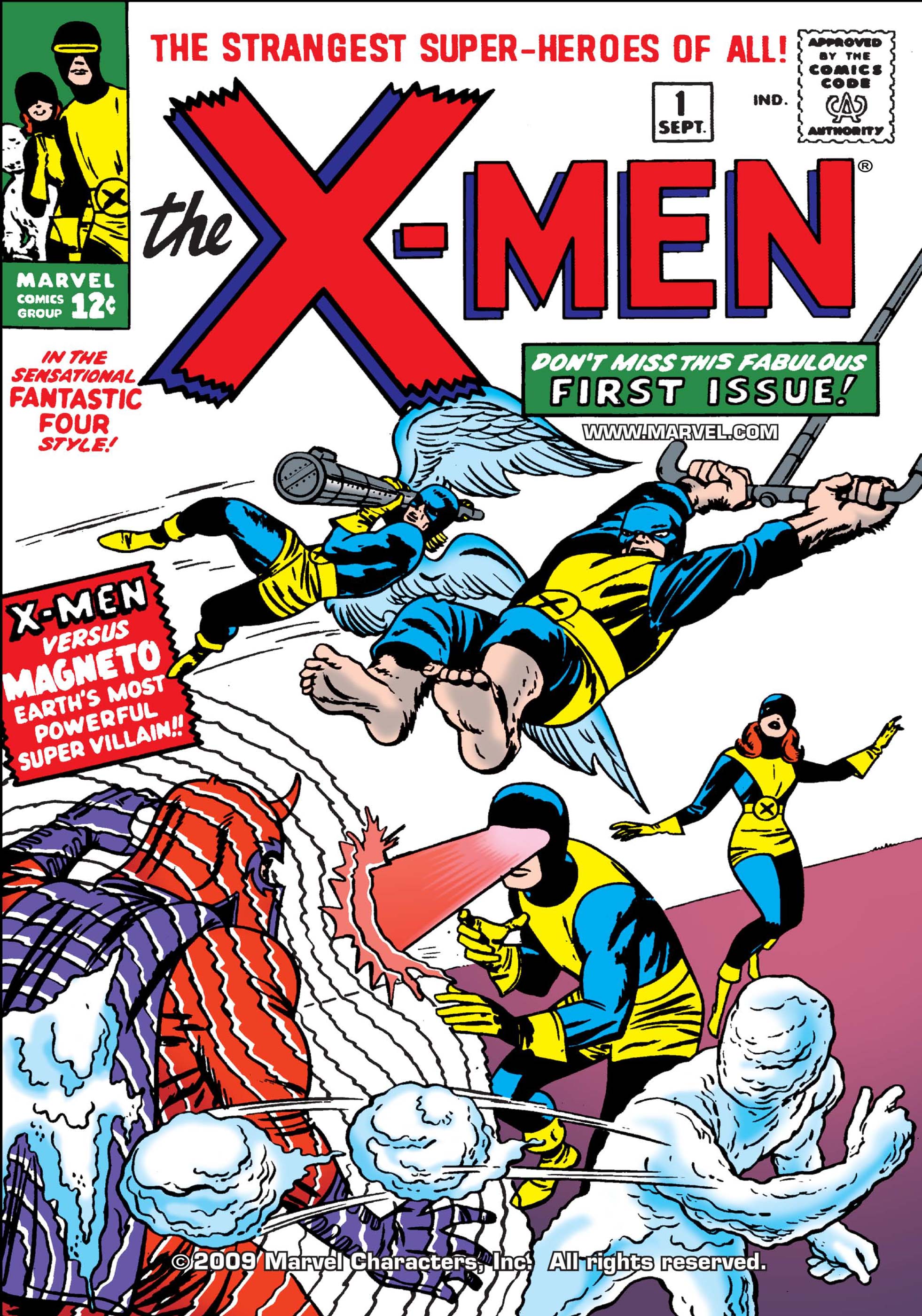
July 2, 1963: X-Men #1, with a date of September 1963, is published by Marvel Comics. The eponymous group eventually become the biggest-selling superhero team in comic books, surpassing Marvel's Avengers and Defenders, and DC's Justice League, Justice Society and Teen Titans.

In 1963, with the success of Spider-Man, the Hulk, and the Fantastic Four, Marvel's writing boss, Stan Lee, wanted to create another group of superheroes. But he did not want to have to write a story, multiple stories, explaining how each of them got their powers.

In 2004, Lee recalled, "I couldn't have everybody bitten by a radioactive spider, or exposed to a gamma ray explosion. And I took the cowardly way out. I said to myself, 'Why don't I just say they're mutants? They are born that way.'"

In a 1987 interview, the group's other creator, Jack Kirby, said:

The X-Men, I did the natural thing there. What would you do with mutants who were just plain boys and girls and certainly not dangerous? You school them. You develop their skills. So I gave them a teacher, Professor X. Of course, it was the natural thing to do, instead of disorienting or alienating people who were different from us, I made the X-Men part of the human race, which they were. Possibly, radiation, if it is beneficial, may create mutants that'll save us instead of doing us harm. I felt that if we train the mutants our way, they'll help us – and not only help us, but achieve a measure of growth in their own sense. And so, we could all live together.

Lee devised the series title after Marvel publisher Martin Goodman turned down the initial name, "The Mutants," stating that readers would not know what a "mutant" was.
Within the Marvel Universe, the X-Men are widely regarded to have been named after their teacher, the telepathic, but confined to a wheelchair, Charles Xavier, a.k.a. Professor X. The original explanation for the name, as provided by Xavier in the 1st issue, is that mutants "possess an extra power... one which ordinary humans do not!! That is why I call my students... X-Men, for EX-tra power!" Smilin' Stan sure did like him some exclamation points! They made his characters more declarative! And more provocative!
Of course, Stan also liked him some adjectives, to give to his heroes! The Fantastic Four! The Incredible Hulk! The Amazing Spider-Man! The Mighty Thor! The Invincible Iron Man! And so, this group were "The Uncanny X-Men!"
(Stan also liked alliteration. "Uncanny X-Men" didn't quite work, but "Fantastic Four" and "Invincible Iron Man" did. So did several secret identities: Mr. Fantastic was Reed Richards, the Invisible Girl was Susan Storm, Spider-Man was Peter Parker, the Hulk was Bruce Banner, Daredevil was Matt Murdock. But only one X-Man had an alliterative name: Cyclops was Scott Summers.)
DC's Doom Patrol, which debuted several months before X-Men, was suspected by its creator, Arnold Drake, and its fans of having had the basic concept copied to a great degree, including a wheelchair-bound leader.
Early X-Men issues introduced the original team:
* Scott Summers, Cyclops, who had heat vision that could only be controlled by being blocked by a visor or special sunglasses.
* Hank McCoy, the Beast, a brilliant scientist but a large man, simian in appearance, with great strength, and the ability to use his feet to climb walls. He was later redrawn as covered in blue fur.
* Warren Worthington III, the Angel, a patrician rich kid who had wings, and could fly.
* Bobby Drake, Iceman, who had powers over ice, in much the same way that fellow teenager Johnny Storm, a.k.a. the Human Torch of the Fantastic Four, had powers over fire. Drake couldn't fly, but he could cast ice in front of him, and "surf" over the air, predating Marvel's character the Silver Surfer by 3 years.
The first issue introduced Jean Grey, originally named Marvel Girl, a telepath like Xavier, but also an empath, and capable of telekinesis. She would form a love triangle with Cyclops and Angel, and later another with Cyclops and Wolverine.
The first issue would introduce Erik Lensherr, a.k.a. Magneto. As his name suggests, he had power based in magnetism. Like Reed Richards and the Fantastic Four's main enemy, Victor Von Doom, a.k.a. Dr. Doom, Professor X and Magneto were best friends turned arch-enemies. Both Xavier and Magneto wanted to reduce unpowered humans' bigotry toward mutants, making them an analogue for the Civil Rights Movement. But their plans were different: Xavier wanted the mutants to help unpowered humans, and earn their trust; Magneto wanted to eliminate the threat by killing them. Their difference was likened to the split between nonviolence apostle Martin Luther King and "by any means necessary" advocate Malcolm X.
Lensherr was the father of Pietro and Wanda Maximoff, a.k.a. the speedster Quicksilver and the magic-powered Scarlet Witch. They would later turn hero, and join the X-Men against their father. All 3 characters would be retconned as Romani, and Lensherr was retconned as a survivor of the Nazi Holocaust.
By the end of the 1960s, the series stopped selling well, and Marvel stopped producing new stories in March 1970, with issue #66. In Giant-Size X-Men #1, in 1975, a new team was introduced, led by Cyclops, and included mutants from around the world. Four in particular proved popular enough to last:
* James Howlett, a.k.a. Logan, a.k.a. Wolverine, the product of a Canadian program to produce a super-soldier, resulting in adamantium claws that could extend from his hands and cut through just about anything, and a healing factor that could allow him to regenerate from anything short of disintegration. He's only 5-foot-3, but arguably the most dangerous man on Earth. As he says, "I'm the best there is at what I do, but what I do isn't very nice." He also likes to smoke cigars and call people "Bub."
* Piotr Rasputin, a.k.a. Colossus, a Russian who is able to transform himself into living steel, making him the strongest member of the team.
* Kurt Wagner, a.k.a. Nightcrawler, a German who looks like the devil but is a devout Catholic, and whose main power is teleportation.
* Ororo Munroe, a.k.a. Storm, a black woman from Kenya, who could control weather. She would eventually marry, but later divorce, the African superhero Black Panther.
The 1980s began with the team's best-known story arc, The Dark Phoenix Saga, which saw Jean Grey, having taken the name Phoenix, manipulated by the illusionist Mastermind, and becoming corrupted with an overwhelming lust for power and destruction as the evil Dark Phoenix.
By the early 1980s, X-Men was Marvel's top-selling comic title. Its sales were such that distributors and retailers began using an "X-Men index", rating each comic book publication by how many orders it garnered compared to that month's issue of X-Men.
A series of X-Men movies began in 2000, starring Patrick Stewart as Xavier. They helped the jumpstart the superhero genre of films.
A 2019 episode of the YouTube series Epic Rap Battles of History featured "Epic" Lloyd Ahlquist playing Wolverine, against rapper Michael Jones, a.k.a. "Wax," as Nightmare On Elm Street villain Freddy Krueger, the connection being that Freddy's long-bladed gardening glove is as sharp as Wolverine's claws, and that both are practically invincible.
*

July 2, 1963 was a Tuesday. These baseball games were played that day:

* The New York Yankees beat the Chicago White Sox, 3-0 at Yankee Stadium. Al Downing allowed just 1 hit, a single to Cam Carreon in the 7th inning. He also walked 6 batters, but struck out 10. Hector Lopez hit a home run. Roger Maris went 1-for-3. Mickey Mantle was injured. Yogi Berra, in his last full season as a player, also did not play.

* The New York Mets lost to the Chicago Cubs, 4-1 at Wrigley Field in Chicago. Ernie Banks went 1-for-3 with a walk for the Cubs. Duke Snider did the same for the Mets.

* The Pittsburgh Pirates beat the Philadelphia Phillies, 3-2 at Connie Mack Stadium in Philadelphia. Roberto Clemente went 1-for-3 with a walk and an RBI.

* The Baltimore Orioles beat the Los Angeles Angels, 4-3 at Memorial Stadium in Baltimore. Brooks Robinson went 1-for-4.

* The Washington Senators beat the Kansas City Athletics, 7-2 at District of Columbia Stadium in Washington. D.C. Stadium was renamed Robert F. Kennedy Memorial Stadium in 1969.

* The Boston Red Sox beat the Cleveland Indians, 6-1 at Cleveland Municipal Stadium. Carl Yastrzemski went 2-for-4 with a walk and 2 RBIs.

* The Minnesota Twins beat the Detroit Tigers, 7-4 at Tiger Stadium in Detroit. Harmon Killebrew went 1-for-4 with a walk. Al Kaline went 2-for-3 with a home run, a walk and an RBI.

* The Cincinnati Reds beat the Houston Colt .45s, 6-4 at Colt Stadium in Houston. Frank Robinson did not play for the Reds, but rookie Pete Rose did, and went 3-for-5. The Colts became the Houston Astros in 1965.

* And the San Francisco Giants beat the Milwaukee Braves, 1-0 at Candlestick Park in San Francisco. Warren Spahn, age 42, and Juan Marichal, 25, kept pitching a dual shutout until the bottom of the 16th inning, when Willie Mays hit a home run off Spahn to win it for the Giants. This has been called the greatest pitcher's duel of all time, and I have a separate entry for the event.

* And the Los Angeles Dodgers beat the St. Louis Cardinals, 1-0 at Dodger Stadium in Los Angeles. Don Drysdale pitched a 5-hit shutout, outpitching Curt Simmons. Stan Musial, in his final season, got a hit as a pinch-hitter.

Sunday, June 5, 2022

June 5, 1962: Spider-Man Debuts

June 5, 1962: Amazing Fantasy #15 is published. It was already set to be the last issue for the magazine, so there was nothing left for its publisher, Marvel Comics, to lose. So they chose to debut a new character: Spider-Man.

Created by Marvel boss and main writer Stan Lee, and artist Steve Ditko, "Spidey" was designed to be a hero that teenagers could relate to without being a child version of an adult hero like Superboy, or a sidekick to an adult hero like Batman's Robin.

Peter Parker was a nerdy, scrawny New York teenager with genius intellect and a love for science. While attending a science fair and seeing an experiment in radioactivity, a spider becomes irradiated, and bites him. The radioactivity gives Peter the proportionate strength and agility of a spider, and a "spider-sense" that acts as a warning system. He designs a substance that acts as a "spider's web," and wrist gadgets that allow him to shoot them and trap criminals.

His parents dead, Peter was raised by his Aunt May and his Uncle Ben. One day, early in his career, Spider-Man is interviewed for a local talk show. As he's leaving a man runs past, and a security guard tells Spidey he should have stopped the man, saying he'd robbed the box office. Spidey said it wasn't his problem.

When Peter gets home, he find out Uncle Ben has been murdered, and the police have the killer surrounded in a building. He goes after him in his Spidey costume, and discovers it's the robber: f Peter had stopped him, Uncle Ben would still be alive. At the end of the issue, Lee wrote, "With great power, there must also come great responsibility!" This was later retconned as advice from Uncle Ben.

Spidey was a hit immediately. It didn't save Amazing Fantasy, but it did lead to his own comic line. The Amazing Spider-Man #1 showed him auditioning to join Marvel's original superhero team, the Fantastic Four. Despite having had many adventures with them, the Avengers, and the X-Men over the decades, Spidey works best alone.

While still in high school, Peter gets a job as a photographer for a New York newspaper, the Daily Bugle. Their publisher, J. Jonah Jameson, is... complicated. On the one hand, he's a crusader to make the City better, having made his name exposing organized crime. On the other hand, he's a nasty boss, bullies his employees, including Peter, and when the city sees Spidey as a hero, "JJJ" prints editorials claiming Spidey is actually a menace who must be stopped, as giving "real heroes" a bad name -- real heroes like his son, John Jameson, an astronaut (who later becomes the unwilling villain Man-Wolf).

Peter's best friend is Harry Osborn, whose father Norman is a brilliant scientist. When an experiment goes wrong, it drives Norman insane, but it also gives him super-strength, and he becomes Spidey's greatest enemy, the Green Goblin. They fight, and the Goblin discovers Peter's dual identity. In their next fight, Peter knocks Norman out, and when Norman recovers, he has no memory of his Goblin identity.

Peter's first girlfriend is a blonde named Gwen Stacy, daughter of a hero cop. Eventually, he starts dating a redheaded aspiring actress named Mary Jane Watson, In 1971, while Peter was dating Mary Jane, daughter of Aunt May's best friend, Stan Lee agreed to work with the federal government to print an anti-drug message in The Amazing Spider-Man #s 96, 97 and 98. The Goblin returns, but, again, loses his memory after Spidey beats him.

By 1973, Spidey was back with Gwen, but in The Amazing Spider-Man #121, the Goblin came back, and killed her. The title of the issue was not revealed until the last page: "The Night Gwen Stacy Died!" Still, despite his vow to kill the Goblin over this, Peter remembered his great responsibility, and didn't do it. Eventually, the Goblin died without his "help." He got back with Mary Jane, but never forgot Gwen.

In 1967, Paul Frees became the voice of Spider-Man in a cartoon series. In 1974, Danny Seagren began playing Spidey on the PBS kids series The Electric Company. From 1977 to 1979, concurrent with their series The Incredible Hulk and 2 movies featuring Captain America, CBS aired The Amazing Spider-Man, with Nicholas Hammond. Despite being good as both Peter and Spidey, he was too old to play a teenage science prodigy, and so played Peter as an adult photographer, and it didn't really work.

In 2002, Tobey Maguire was cast in the 1st of 3 Spider-Man movies, making the character more popular than ever. In 2012 and 2014, Andrew Garfield starred in 2 The Amazing Spider-Man movies. In 2016, with legal issues having been resolved, allowing the character to appear in "The Marvel Cinematic Universe," Tom Holland played Spidey in Captain America: Civil War, leading to his appearances in 3 standalone movies and the Avengers films Infinity War and Endgame.

While DC Comics had explored the idea of a "multiverse" since 1961, Spider-Man was the 1st Marvel hero to have the idea explored. Marvel began its What If series in 1977, starting with "What If Spider-Man Had Joined the Fantastic Four?" It also explored:

* What if someone else besides Spider-Man had been bitten by the radioactive spider?

* What if a spider had been bitten by a radioactive human? (Ew.)

* What if Spider-Man had stopped the burglar who killed his uncle? (As it turned out, not as advantageous as you might have guessed. Marvel later flipped the story, and had Aunt May be the one killed, while a widowed Uncle Ben became "Alfred" to Peter's "Batman.")

* What if Spider-Man had rescued Gwen Stacy?

* What if Spider-Man's clone lived? ("The Clone Saga" was a storyline that most Spidey fans hated.)

* What if the alien costume had possessed Spider-Man? (In other words, what if Spidey had totally given in to the Venom symbiote.)

* What if Kraven The Hunter had killed Spider-Man?

* What if Spider-Man had not married Mary Jane Watson? With a B-story: What if Spider-Man had a son? (Peter had married Mary Jane by this point, but their daughter May died at birth.) Corollary: What if Spider-Man married the Black Cat?

* What if Spider-Man had not lost his cosmic powers? (I don't remember this one at all, so I can't explain it.)

* What if Spider-Man had kept his six arms? (In The Amazing Spider-Man #100, he grew four new arms. This didn't last. But in a later issue, he grew them back, and kept going, until he became more spider than man, and had to be stopped, though not killed, by a merciful Kraven.)

* What if Spider-Man killed the Lizard?

* What if the Punisher had killed Spider-Man?

* What if Spider-Man's parents destroyed his family? 

* What if Spider-Man became a murderer?

* What if Peter Parker had to destroy Spider-Man?

* What if J. Jonah Jameson adopted Spider-Man? (In other words, if, after Uncle Ben's death, Jameson, not yet knowing of Peter's dual identity, adopted him.)

* What if Scarlet Spider had killed Spider-Man?

This led to, among other things, Marvel's "MC2" universe, in which the newborn May Parker survived, and inherited her father's abilities, eventually becoming Spider-Girl. Another universe had the radioactive spider biting Gwen Stacy, and she became Spider-Girl -- or, to fans of the character, "Spider-Gwen" -- when Peter was murdered.

And another had the radioactive spider surviving years after Peter had become Spider-Man, long enough to bite another kid, a black Puerto Rican teenager named Miles Morales, who, after Peter was killed in action, became the new Spider-Man. This led to the Spider-Verse cartoon series, in which Miles meets many versions of Spider-Man, including the one from the main "Marvel Universe," and Spider-Gwen.

It also led to the 2021 live-action MCU film Spider-Man: No Way Home, in which the multiverse begins a dangerous overlap, leading to Holland's Peter having to fight the Green Goblin, Doctor Octopus and the Sandman from the Tobey Maguire Spidey's Earth; and Electro and the Lizard from the Andrew Garfield's Spidey's Earth. These were villains that he had never faced before, and may not even have existed on his Earth. This leads to the Goblin killing Holland's Aunt May (played by Marisa Tomei, way too young to play a character always depicted in the comics as elderly), and his friends bringing the Maguire and Garfield versions of Peter to their Earth, to stop the villains.

Although Bill Bixby's David Banner and Lou Ferrigno's Hulk would interact with versions of Daredevil and Thor in TV-movies in the 1980s, they never interacted with Nicholas Hammond's Spidey. And, despite still being alive at the time, neither Seagren nor Hammond were included in No Way Home. Nor were they included in the Spider-Verse cartoons. And Paul Frees died in 1986, so he was not included in any of those.

On a 1996 episode of Friends, the fact comes up that, unlike most superheroes with the "man" suffix, Spidey's name is hyphenated. Phoebe Buffay (Lisa Kudrow) asks why his name isn't pronounced "SPIGH-der-mun." Chandler Bing (Matthew Perry) explains that it's not his last name, "Spiderman": "He's a Spider... Man. There's Goldman, but there's no Gold-Man."

Phoebe says there should be a Gold-Man. Chandler asks what his powers would be. Phoebe says, "He turns things to gold." Clearly, she'd never heard of the Greek myth of King Midas, whose lust for gold led to the gods giving him that power, which betrays him when he touched his food, and eventually his daughter.

More than Captain America, the Hulk, or anyone else, Spider-Man remains Marvel's most popular hero, rivaling DC's Superman and Batman as the most popular superhero of all.

UPDATE: Danny Seagren died in 2025.

*

June 5, 1962 was a Tuesday. These baseball games were played:

* The Baltimore Orioles beat the Washington Senators, 6-5 at Memorial Stadium in Baltimore. Brooks Robinson went 1-for-4. Hitting a home run for the Orioles was Whitey Herzog, whose 1st managing job would be in 1973, with the Senators franchise, after they moved to become the Texas Rangers.

* The Los Angeles Dodgers swept a doubleheader from the Pittsburgh Pirates, 3-2 and 8-3 at Forbes Field in Pittsburgh. Don Drysdale won the nightcap, with Sandy Koufax pitching the 9th inning for a save. Over the 2 games, Roberto Clemente went 1-for-8.

* The San Francisco Giants beat the Chicago Cubs, 11-4 at Wrigley Field in Chicago. Willie Mays went 1-for-4 with a walk and an RBI. Ernie Banks went 0-for-4.

* The Kansas City Athletics beat the Minnesota Twins, 4-3 at Metropolitan Stadium in the Minneapolis suburb of Bloomington, Minnesota. Harmon Killebrew went 0-for-3 with a walk.

* The St. Louis Cardinals beat the Cincinnati Reds, 10-9 at Busch Stadium (formerly Sportsman's Park) in St. Louis. At age 41, Stan Musial was, again, Stan the Man, hitting a home run in the bottom of the 11th inning. Frank Robinson and Reds starting pitcher Bob Purkey both hit home runs, to no avail.

* The Houston Colt .45s beat the Milwaukee Braves, 7-1 at Colt Stadium in Houston. Hank Aaron went 0-for-4. The Colts were renamed the Houston Astros in 1965.

* The Los Angeles Angels beat the Chicago White Sox, 9-5 at Dodger Stadium in Los Angeles. The Angels groundshared there until 1966, when their Anaheim stadium opened.

* The Boston Red Sox and the Detroit Tigers were rained out at Fenway Park in Boston. The game was made up as part of a doubleheader the next day. The Red Sox won the 1st game, 2-1. Frank Malzone won it with a home run in the bottom of the 9th. Carl Yastrzemski went 0-for-4.

The Tigers won the 2nd game, 3-2. In the top of the 11th inning, Norm Cash scored on a suicide squeeze bunt by Dick Brown. Cash had homered earlier in the game. Jim Bunning went the distance for the win. Yaz went 1-for-5 with an RBI. Al Kaline did not play in either game.

* The New York Mets and the Philadelphia Phillies were rained out at Connie Mack Stadium in Philadelphia. The game was made up as part of a doubleheader on August 28. The Mets won the 1st game, 2-0. Al Jackson pitched a 3-hit shutout. The Phils won the 2nd game, 10-1.

* And the New York Yankees and the Cleveland Indians were rained out at Yankee Stadium. This game was made up as part of a doubleheader on August 29. The Indians swept, 3-2 and 9-5. Roger Maris hit home runs in both games. Mickey Mantle went 2-for-4 with an RBI in the 1st game, but sat out the 2nd. Yogi Berra did not start either game, but pinch-hit in each, hitting a single in the 1st game.

December 31, 1999 & January 1, 2000: The Millennium

December 31, 1999:  The Millennium arrives. The people of planet Earth survived. At a terrible cost. But we hadn't destroyed ourselves. ...