Showing posts with label conn smythe. Show all posts

Saturday, November 12, 2022

November 12, 1931: Maple Leaf Gardens Opens

November 12, 1931: Maple Leaf Gardens opens in Toronto, replacing the Mutual Street Arena. It will be home to the Toronto Maple Leafs of the National Hockey League for the next 67 seasons.

The Leafs lost the 1st game there, 2-1 to the Chicago Black Hawks. (That team always spelled "Black Hawks" as 2 words, until 1986, when their original charter was found, and they discovered that it had been written as 1 word, "Blackhawks," and that's how they've officially been listed ever since.) Charlie Conacher, the Leafs' biggest star at the time, scored the arena's 1st goal, but it wasn't enough. The Leafs did, however, go on to win the Stanley Cup that season, clinching on home ice.

They also won the Cup while playing at the Gardens in 1942, 1945, 1947, 1948, 1949, 1951, 1962, 1963, 1964 and 1967 -- clinching on home ice in '42, '47, '49, '51, '63, '64 and '67. In addition, the New York Rangers clinched the Cup by beating the Leafs at the Gardens in 1933 and 1940, the Detroit Red Wings in 1937, and the Montreal Canadiens in 1959 and 1960.

Leafs player Irvine "Ace" Bailey had been injured by Eddie Shore of the Boston Bruins in a game in Boston in 1933, and never played again. On February 12, 1934, the Gardens hosted a benefit game for him: The Leafs against a team of players from all the other teams in the League. When Shore skated over to the Leafs' bench, where Bailey was in street clothes, and shook hands with him, the Gardens erupted in cheers. The Leafs won the game. In 1947, the Leafs beat an All-Star team from the rest of the League again in the 1st official NHL All-Star Game.

The Gardens became known as "The Shrine of Hockey," with CBC, the Canadian Broadcasting Corporation, broadcasting Hockey Night in Canada from the building on most Saturday nights, first on radio, and then, starting in 1952, on television. It helped to make the Gardens -- even more than Parliament Hill in Ottawa or the Montreal Forum -- the most famous building in Canada.

On November 1, 1946, the Gardens hosted the 1st game in the league that would become the National Basketball Association. But the Toronto Huskies lost it to the New York Knicks, and only lasted that 1 season before folding. Pro basketball would return, briefly: From 1971 to 1975, the Buffalo Braves (the team now known as the Los Angeles Clippers) played 16 "home games" there, and the Toronto Raptors played 6 home games there in 1997, '98 and '99 when the SkyDome (now the Rogers Centre) was unavailable.

Also due to a scheduling conflict, the Rangers played their 1950 Stanley Cup Finals games at Maple Leaf Gardens, possibly costing them the Cup, as they lost to the Red Wings. In the World Hockey Association, the Ottawa Nationals had to move their 1973 Playoff games there, and the Toronto Toros played the 1974-75 and 1975-76 seasons there, before being forced to a smaller arena by the onerous rent charged by Leafs owner Harold Ballard, who, because of his presiding over the declines of both the Leafs and the CFL's Toronto Argonauts, became the most hated man in Canada.

Ballard was cheap, he was evil, and he was crooked. Smythe wasn't flat-out evil, but he was imperious, and he was certainly cheap. At one end of the Gardens was a large portrait of Canada's head of state, the British monarch. From 1931 to 1936, this was King George V. For much of 1936, it was King Edward VIII. Then, until 1952, it was King George VI. Finally, it was Queen Elizabeth II.

In 1968, the seating capacity at the Gardens was raised from 13,718 to 16,316. This was done through installing narrower seats, and removing the Queen's portrait so that more seats could be installed. Smythe, who had sold the team to a consortium including his son Stafford Smythe and Ballard, said of the new seats, "Only a young man could sit in them, and only a fat old rich man could afford them."

As for the removal of the portrait of the woman to whom Canadian citizens still paid a share of their taxes (and still do, to this day), Ballard pointed out that, in spite of a visit to the building in 1951, before she became Queen, she didn't pay admission to games: "She doesn't pay me. I pay her. Besides, what the hell position can a queen play?"

Maple Leaf Gardens hosted Game 2 of the 1972 "Summit Series" between Canada and the Soviet Union, a 4-1 win for Canada. It also hosted minor-league hockey: The Toronto Lions of the Ontario Hockey Association, 1931-39; the Toronto Marlboros (or "Marlies") of the OHA and its successor, the Ontario Hockey League, 1931-89; the Toronto Young Rangers of the OHA and the OHL, 1937 to 1948; the Toronto Knob Hill Farms of the Metro Junior A League, in the 1962-63 season; and the Toronto St. Michael's Majors (or "St. Mike's") of the OHL, 1997-2000.

Lacrosse is not considered a major sport in America. In Canada, where it was invented, it is considerably bigger. Canada's National Lacrosse League had the Toronto Tomahawks playing at the Gardens in 1974, and the Toronto Rock in the 1999-2000 season. The Gardens also hosted professional indoor soccer, the "pinball" version of "the beautiful game": The Toronto Blizzard in the 1980-81 and 1981-82 seasons, and the Toronto Shooting Stars in 1996-97.

The Gardens was 1 of 16 buildings to have hosted both Elvis Presley and The Beatles. Because Elvis' manager, Colonel Tom Parker, was an illegal immigrant from the Netherlands, a fact not known during Elvis' lifetime, Elvis could only leave the North American continent to fulfill his U.S. Army obligation from 1958 to 1960. He sang at the Gardens on April 2, 1957. It was the only building to host The Beatles on all 3 of their North American tours: September 7, 1964; August 17, 1965; and August 17, 1966.

It also hosted boxing and "professional wrestling," with Killer Kowalski making that "sport" popular in his native Canada. On March 29, 1966, Muhammad Ali defended the Heavyweight Championship of the World there, defeating Canada's heavyweight champion, George Chuvalo.

Conn Smythe, who had served in the Canadian Army during both World Wars, and enjoyed being called "Major Smythe," resigned from the Gardens' board of directors over the decision to host a fight featuring a man who had already been making statements about how he would refuse to accept being drafted to fight in the Vietnam War. Smythe said of the owners, including his son, that they had "put cash ahead of class."

They could do that because the Leafs were a gold mine. From 1946, when the boys came back from World War II, until 1999, the Leafs never played to an unsold seat. This was in spite of the fact that, after the closing of the dynasty coached and managed by George "Punch" Imlach on May 2, 1967, the Leafs never appeared in another Stanley Cup Finals game at the Gardens -- and still haven't. The building, whose address was 60 Carlton Street, became known as the Carlton Street Cashbox.

The Gardens outlasted the somewhat enlightened despot Smythe, and the tyrant Ballard. It outlasted the Great Depression, World War II, and the high tide of the conflict between the Canadian federal government and Quebec nationalists. It outlasted the League of Nations, the Third Reich, the British Empire and the Warsaw Pact.

It outlasted 20 Mayors of Toronto, 12 Premiers of Ontario (equivalent to the Governor of a State), 10 Prime Ministers of Canada, and 1 Flag of Canada. (The current Maple Leaf Flag replaced the old "Red Ensign" in 1965.) It outlasted Maple Leaf Stadium (home of the minor-league baseball team that gave the NHL Maple Leafs their name), the Mutual Street Arena, the original Varsity Stadium, and Exhibition Stadium.

It outlasted the Montreal Maroons, the New York Americans, the California Golden Seals, the Cleveland Barons, the Atlanta Flames (now the Calgary Flames), the Kansas City Scouts and the Colorado Rockies that they became (now the New Jersey Devils), the Minnesota North Stars (now the Dallas Stars), the Quebec Nordiques (now the Colorado Avalanche), the original version of the Winnipeg Jets (now the Arizona Coyotes), the Hartford Whalers (now the Carolina Hurricanes), and the entire World Hockey Association.

It outlasted the NHL's other "Original Six" arenas, some by plenty: New York replaced "the old Madison Square Garden" with "the new Madison Square Garden" in 1968, Detroit replaced the Olympia Stadium with the Joe Louis Arena in 1979, Chicago replaced the Chicago Stadium with the United Center in 1994, Boston replaced the Boston Garden with the FleetCenter (now the TD Garden) in 1995, and Montreal replaced the Montreal Forum with the Molson Centre (now the Bell Centre) in 1996.

While not home to "Original Six" teams, the Buffalo Memorial Auditorium and the St. Louis Arena were contemporaries, and they were also replaced before 1999. Considerably newer arenas were replaced in Philadelphia, Pittsburgh, Minnesota, Vancouver, Atlanta, Ottawa, Tampa and the San Francisco Bay Area. (And the ones in Minnesota and Atlanta were demolished before the Gardens closed.)

But nothing lasts forever. The ownership group for the NBA's Raptors didn't like playing in the huge SkyDome, and wanted to build their own arena, the Air Canada Centre, next to Toronto's Union Station. Maple Leaf Sports & Entertainment, owners of the Leafs and the Gardens, knew that there was only so much that could be done to modernize the Gardens, and increasing seating capacity, including adding more luxury boxes, was impossible. So they bought the Raptors, and had the plans for the ACC to be altered so that it could host hockey as well. (In 2018, the building was renamed the Scotiabank Arena.)

On February 13, 1999, the Toronto Maple Leafs played their last game at Maple Leaf Gardens. Not only was the opponent the same as in the 1st game in 1931, the Chicago Blackhawks, but a member of each team that played in that 1st game was on hand for a ceremonial puck drop: George "Red" Horner of the Leafs, and Harold "Mush" March of the Hawks. (March died in 2002, Horner in 2005.) As they did in the 1st game, the Hawks won, 6-2. Derek King scored the Leafs' last goal, while Bob Probert, better known for his fighting and his drug abuse, scored the last goal overall.

The Gardens didn't close immediately. It still hosted amateur hockey and professional lacrosse, and the British rock band Oasis gave a concert there in 2000. The last "sporting event" there came in 2004, a re-creation of prizefights of eventual Heavyweight Champion James Braddock for the film Cinderella Man, taking advantage of the Gardens' old-time appearance.

But MLSE didn't want to own a dormant building, and they also didn't want to sell the old arena to anyone who would use it as a competing arena. In 2000, after a massive renovation, the Montreal Forum reopened as a mall, with stores, a movie theater, and other entertainments. It was suggested that the same be done with the Gardens. But a feasibility study showed that it couldn't be done: If the bowls of seating were removed, the exterior walls would collapse.

In 2004, Loblaw Companies, Canada's largest food retailer, bought the Gardens for $12 million. In 2009, they made a deal with Toronto's Ryerson University to renovate the building, to make the playing area a rink with 2,796 seats, while the rest of the building would host retail space.

In 2011, the new Loblaw's store finally opened, with a red dot on the floor marking the original location of centre ice. In 2012, the Mattamy Athletic Centre at the Gardens opened, and has been home to Rynearson's hockey team ever since. From 2013 to 2017, it also hosted the Toronto Predators of the Greater Metro Junior A Hockey League.

*

November 12, 1931 was a Monday. The baseball season was over. There was no Monday Night Football in the NFL until 1970. There was no NBA at all until 1946, with the Gardens hosting the 1st game. But there were 2 other NHL games played that night. The New York Rangers beat the Montreal Canadiens, 4-1 at the Montreal Forum. And the New York Americans beat the Detroit Falcons, 5-2 at the Olympia Stadium in Detroit. The Falcons were renamed the Red Wings the next year.

Friday, September 2, 2022

September 2, 1971: The Tyranny of Harold Ballard

September 2, 1971: Harold Ballard becomes the majority owner of the NHL's Toronto Maple Leafs, and their arena, Maple Leaf Gardens. He is on his way to becoming the most hated man in Canada.

Edwin Harold Ballard was born in Toronto on July 30, 1903 -- just 71 days before Walter O'Malley, who would become the most hated man in American sports. At some point, Ballard reversed his names, and became "Harold Edwin." His father manufactured ice skates, and that would be his entry into hockey. He was assistant manager of the Varsity Grads team from the University of Toronto that represented Canada at the 1928 Winter Olympics in St. Moritz, Switzerland, winning the Gold Medal.

A member of the Toronto National Yacht Club, in 1930, it appointed Ballard manager of their team in the Ontario Hockey Association, the Toronto National Sea Fleas, winning the Allan Cup in 1932. He then became the head coach, and he became hated by hockey players for the first time. In 1934, he became manager of the OHA's West Toronto Nationals, with former Maple Leafs star Clarence "Hap" Day as coach, and they won the Memorial Cup in 1936. In 1940, Day was named Leafs coach, and recommended Ballard to run their top farm team, the Toronto Marlboros, and he led them to the 1950 Allan Cup and the 1955 and 1956 Memorial Cups.

In 1957, Conn Smythe stepped down as Leafs general manager, and a group known as the Silver Seven took control, including Ballard and Smythe's son, Stafford Smythe. In 1961, Conn Smythe sold most of his shares in the company running the team and the arena, Maple Leaf Gardens Ltd., to 3 men: Stafford, Ballard, and the owner of the Toronto Telegram newspaper, John Bassett. But since Ballard gave Stafford most of the money for his share, he essentially had Stafford under his control.

In 1958, the Silver Seven hired George "Punch" Imlach as the Leafs' head coach and general manager. The result was 4 Stanley Cups: 1962, 1963, 1964 and 1967. But Imlach had built a veteran team, in a philosophy that later Washington Redskins coach George Allen would call "The Future Is Now."

With the assent of Ballard, Bassett and Stafford Smythe, and with little choice as the NHL was expanding for 1967-68, Imlach broke the team up, and tried to build a new dynasty. But between the changes in the League and those in the organization, he had little chance, and after an embarrassing Playoff exit in 1969, the last year of his contract was bought out.

Conn Smythe may have been the most patriotic man in Canada, as devoted to the head of state, the monarch of Great Britain, as he was to Parliament in Ottawa. Smythe had ordered a huge portrait of King George VI hung at one end of the Gardens during World War II, kept it there after the war, and replaced it with one of Queen Elizabeth II upon the King's death in 1952. Ballard wanted to increase the Gardens' seating capacity, and did by taking down the Queen's portrait and installing new seats. When asked about it, Ballard mentioned his taxes: "She doesn't pay me. I pay her. Besides, what the hell position can a queen play?"

In fact, he didn't pay her -- not enough, anyway. In 1969, Ballard and Stafford Smythe were charged with tax evasion, and accused of using MLG Ltd. to pay for their personal expenses. Bassett, who had by this time become chairman of the board, received the support of the board of directors in an 8–7 vote to fire Smythe and Ballard.

However, Bassett didn't force Smythe and Ballard to sell their shares, and both men remained on the board. This proved to be a serious strategic blunder, as Smythe and Ballard controlled almost half the company's shares between them. A year later, they staged a proxy war to regain control of the board. Ballard was reappointed executive vice president. Facing an untenable situation, Bassett resigned as chairman and sold his shares to Ballard and Stafford Smythe on September 2, 1971.

Stafford, suffering from cancer, died on October 13. The last time he saw his father, he said, "See, Dad? They were never going to get me." Ballard won a battle with the Smythe family, and bought Stafford's shares, giving him a 60 percent controlling interest in the Gardens.

But while the taxman couldn't get Stafford Smythe, it got Harold Ballard. On October 20, 1972, he was sentenced to 9 years in Canadian federal prison, after being convicted on 47 counts of fraud, theft and tax evasion. He had been acquitted on 2 others. It wasn't exactly a hardship: He was paroled after only 1 year, and said that prison life was like staying in a motel, with color television, golf, and steak dinners.

Upon his release, Ballard began micromanaging the Leafs. They reached the Stanley Cup Semifinals in 1978, with a team with such stars as Darryl Sittler, Lanny McDonald, Börje Salming and goaltender Mike Palmateer. But this was an anomaly, the only time they got to the NHL's round of four, under any name, between 1967 and 1993.

He was petty. He and the Detroit Red Wings' Bruce Norris led the move to include only NHL players on the Team Canada that played the Soviet Union in the 1972 "Summit Series," thus excluding World Hockey Association defectors Bobby Hull and Gerry Cheevers, which (along with Bobby Orr's injury) nearly derailed Canada, and forced them to go the distance to win the series.

In 1973, the WHA moved the Ottawa Nationals to become the Toronto Toros. After playing the 1973-74 season at the University of Toront's Varsity Arena, John F. Bassett, son of the previous part-owner and operating the Leafs with Harold's son Bill Ballard, allowed them to move into Maple Leaf Gardens. But when Ballard got out of prison, he made their presence miserable: Denying them use of the Leafs' locker room, forcing them into a secondary locker room; taking seat cushions off the home bench, telling an arena worker, "Let 'em buy their own cushions!"; and demanding $3,500 per game for use of the arena's lights.

When the contract of the Leafs' biggest remaining star, Dave Keon, ran out in 1975, Ballard refused to re-sign him, because he didn't want to pay for him. But he also didn't want him to play for anyone else, and demanded huge compensation. No other NHL team could sign him. Again, Ballard failed to consider the WHA, and Keon went to the Minnesota Fighting Saints, then, when they folded, the New England Whalers.

When the WHA admitted the Whalers and 3 other teams for the 1979-80 season, they had Keon and Gordie Howe, formerly owned by the Wings and Norris. Norris and Ballard insisted they still owned the NHL rights to Howe and Keon, respectively, and refused to let them play for the Whalers or anyone else. NHL President John Ziegler overruled them, angering them.

Again, Ballard alienated the Leafs' biggest star, Sittler, doing whatever he could to avoid paying him what he was worth. He did it again, after Sittler, with McDonald. Ballard had also brought back Cup-winning coach and GM Punch Imlach, but forced him out quickly, ending what may have been Ballard's only friendship. The Leafs did not finish above .500 in any season in the 1980s. And Ballard did little to improve the deteriorating condition of the Gardens.

Harold Ballard was so cheap. How cheap was he? He wasn't willing to pay the price the Toronto City Council for a liquor license for Maple Leaf Gardens, making it the only "dry" arena in the NHL. The Hamilton City Council asked for a lower price for the Tiger-Cats' Ivor Wynne Stadium, and Ballard paid that. But the Gardens wouldn't sell alcoholic beverages for as long as he owned it.

How cheap was he? In the mid-1970s, the NHL, facing competition from the WHA, passed a rule that players' last names must be on the backs of their jerseys. Ballard refused, citing it as a threat to program sales. After being threatened with a large fine, Ballard "complied" by putting the names in blue letters on the Leafs' blue road jerseys, and in white on their white home jerseys, making them unreadable. After being fined, he backed down, and put the names in the opposite colors.

He also wanted to start a 2nd Canadian Football League team in Toronto, to compete with the Toronto Argonauts, owned by the Bassetts. They refused to back the idea. But they decided to sell the Argos in 1974. Ballard offered $3 million, but was turned down, and the Argos were sold to William R. Hodgson.

Ballard then tried to buy their arch-rivals, the Hamilton Tiger-Cats, and was turned down again. In 1978, Ballard tried to buy the Ticats again, and won. Unlike in the NHL, Ballard was successful in the CFL, as the Ticats reached 3 Grey Cups, losing them all, before winning in 1986. Still, he kept threatening to move them out of Hamilton, Canada's steel city, to Toronto, where (he thought) he could make more money. He sold them in 1989, and they are still in Hamilton today.

In 1976, he tried to get into baseball, leading the group that came within a whisker of getting a deal to buy and move the San Francisco Giants approved. But the deal fell apart, and it was a different group that, later in the year, got the rights to the expansion Toronto Blue Jays.

Due to his mismanagement of 2 historically successful sports teams, Ballard may still be the most hated person in the history of Canadian sports. Still, he was elected to the Hockey Hall of Fame in 1977. He died on April 11, 1990, from various health issues, at age 86, and was missed by almost nobody.

It's no coincidence that, just 3 years after his death, new owner Steve Stavro got the Leafs into the Conference Finals in back-to-back seasons, and made peace with Dave Keon. But the Leafs still haven't been to the Stanley Cup Finals, let alone won them, since 1967. That is on Ballard, as much as on anyone else.

*

September 2, 1971 was a Thursday. These baseball games were played that day:

* The New York Yankees beat the Washington Senators, 11-1 at Yankee Stadium. The Yankees scored 4 runs in the 1st inning, and 7 in the 2nd. Stan Bahnsen went the distance for the win. Felipe Alou hit a home run, Thurman Munson got 3 hits, and Alou, Bobby Murcer, Horace Clarke, Roy White and Danny Cater each got 2.

* The New York Mets beat the Philadelphia Phillies, 3-1 at Veterans Stadium in Philadelphia. 

* The Boston Red Sox beat the Baltimore Orioles, 3-0 at Fenway Park in Boston. Sonny Siebert pitched a 3-hit shutout -- Merv Rettenmund got 2 of the hits, and Davey Johnson got the other -- and hit 2 home runs. Carl Yastrzemski went 0-for-4.

* The Detroit Tigers beat the Cleveland Indians, 7-0 at Tiger Stadium in Detroit. Mickey Lolich pitched a 6-hit shutout. Al Kaline went 1-for-2 with 2 walks.

* The Montreal Expos beat the Chicago Cubs, 9-5 at Wrigley Field in Chicago. Ernie McAnally was the winning pitcher, and hit a home run. Ernie Banks, in his last month as an active player, did not enter the game.

* The Milwaukee Brewers beat the Kansas City Royals, 1-0 at Milwaukee County Stadium. Marty Pattin pitched a 5-hit shutout. He must have been loose, quack. (Ball Four reference.)

* The Houston Astros beat the Los Angeles Dodgers, 9-3 at the Astrodome in Houston.

* And these teams were not scheduled: The California Angels, the Chicago White Sox, the Minnesota Twins, the Oakland Athletics, the Atlanta Braves, the Cincinnati Reds, the Pittsburgh Pirates, the St. Louis Cardinals, the San Diego Padres and the San Francisco Giants. 

Sunday, May 1, 2022

May 1, 1965: Canadiens 13, Maple Leafs 12

Jean Béliveau with 2 of his closest friends

May 1, 1965: In the 1st NHL game to be played after April, the Montreal Canadiens win their 13th Stanley Cup, taking the all-time lead from the Toronto Maple Leafs, who had won their 12th the year before. They have never given that lead up. They beat the Chicago Black Hawks, 4-0, in Game 7 of the Finals at the Montreal Forum.

The first Conn Smythe Trophy for most valuable player of the Playoffs – the entire playoffs, unlike other sports where it’s given only to the MVP of the finals – is awarded in honor of the former head coach and general manager of the Maple Leafs, the very Canadian, and very English, World War I hero and World War II officer, Constantine Falkland Cary Smythe, who, though no longer in charge of the team, was still alive. (He lived until 1980.)

And it went to a player on the Montreal Canadiens. Their Captain. A native of Quebec City, the capital of the French-speaking Province in Canada, a man who did not speak English until he became a major leaguer. Joseph Jean Arthur Béliveau. Known as Jean Béliveau, he scored in this Game 7. So did former Maple Leaf Dick Duff; the very French "Roadrunner," Yvan Cournoyer; and Henri Richard, brother of the retired superstar Maurice "the Rocket" Richard, another proud Francophone, who would succeed Béliveau as Captain (and would, himself, be succeeded by Cournoyer).

This was not a good day to be a Maple Leafs fan -- especially Smythe. At least he did not have to hand over the Cup, or the new Trophy bearing his name. That was the duty of the President of the NHL, Clarence Campbell, a man often considered his subordinate.

Béliveau, Richard, Duff, Cournoyer, Jacques Laperrière, goaltender Lorne "Gump" Worsley, head coach Hector "Toe" Blake and general manager Frank Selke, are in the Hockey Hall of Fame. Béliveau went on to play on 10 Cup-winning teams, and lived until 2015.

The Canadiens would win the Cup again in 1966. In 1967, the Leafs would beat them in the Finals, cutting the deficit to 14-13. But the Leafs have not been back to the Finals since. They are stuck on 13 Stanley Cups. The Canadiens now have 24.

*

May 1, 1965 was a Saturday. These baseball games were played that day:

* The New York Yankees beat the Baltimore Orioles, 9-4 at Yankee Stadium. Whitey Ford was the winning pitcher. The losing pitcher was a former Yankee who managed to pitch a no-hitter for them, which was an achievement that eluded Ford. And it was a perfect game in the World Series. Yes, the losing pitcher was Don Larsen.

Tony Kubek hit a home run. Tom Tresh and Joe Pepitone each had 3 hits. Mickey Mantle went 0-for-1... with 3 walks, 1 with the bases loaded, giving him an RBI. For the Orioles, Brooks Robinson 2-for-4 with an RBI.

* The New York Mets lost to the Cincinnati Reds, 9-2 at Crosley Field in Cincinnati. Vada Pinson went 3-for-4 with a home run and 4 RBIs. Frank Robinson went 2-for-4 with an RBI. Pete Rose went 2-for-5 with an RBI.

* The Cleveland Indians beat the Washington Senators, 7-2 at Cleveland Municipal Stadium.

* The Detroit Tigers beat the Boston Red Sox, 9-8 at Tiger Stadium in Detroit.  Al Kaline went 2-for-4 with a walk and an RBI. Carl Yastrzemski went 2-for-4 with 2 RBIs.

* The Chicago White Sox beat the Minnesota Twins, 2-1 at Comiskey Park in Chicago. Harmon Killebrew went 0-for-4.

* The Milwaukee Braves beat the Philadelphia Phillies, 6-1 at Milwaukee County Stadium. Hank Aaron went 1-for-2 with a walk and an RBI.

* The St. Louis Cardinals beat the Pittsburgh Pirates, 3-2 at the 1st Busch Stadium (formerly known as the last Sportsman's Park) in St. Louis. Roberto Clemente went 0-for-4. Willie Stargell went 2-for-4 with a solo home run.

* The California Angels beat the Kansas City Athletics, 3-1 at Kansas City Municipal Stadium.

* The Houston Astros swept a doubleheader from the Chicago Cubs, 6-4 and 6-1 at the brand-new Astrodome in Houston. Over the 2 games, Ernie Banks went 2-for-8 with a home run and 3 RBIs.

* And the Los Angeles Dodgers beat their arch-rivals, the San Francisco Giants, 4-2 at Dodger Stadium in Los Angeles. Ron Fairly hit a home run. Willie Mays went 1-for-3 with a walk.

American football was out of season. The NBA season ended 6 days earlier, when the Boston Celtics beat the Los Angeles Lakers in the Finals.

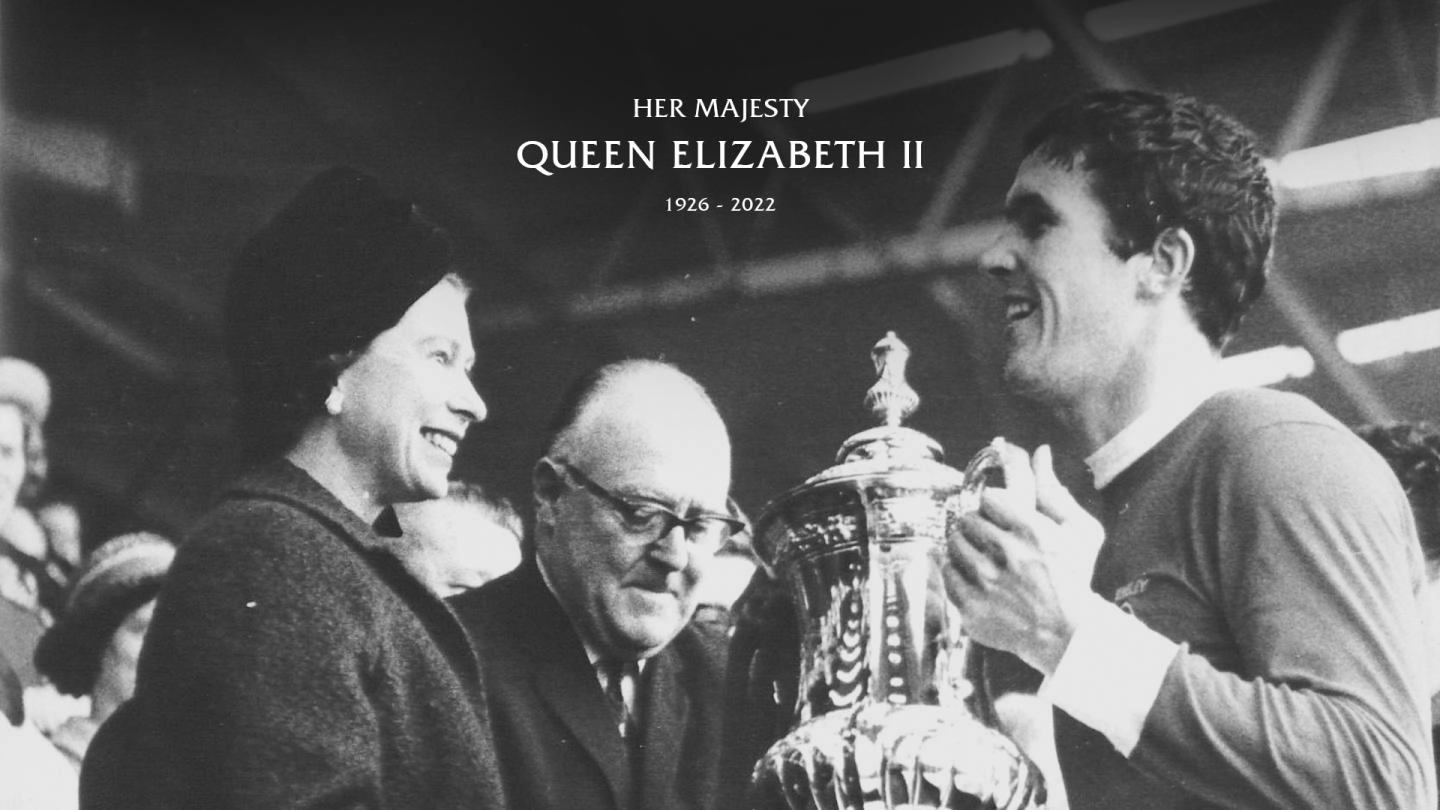
And the FA Cup Final was played at the old Wembley Stadium in London. Liverpool FC beat Leeds United AFC, 2-1. The Mersey Reds, under manager Bill Shankly, win the FA Cup for the 1st time. The game was scoreless after regulation, but Liverpool's Roger Hunt and Leeds' Billy Bremner traded goals in extra time, before Ian St. John wons it in the 113th minute. Liverpool captain Ron Yeats accepted the Cup from Queen Elizabeth II
Leeds thus did a "Runner-Up Double," finishing 2nd in the League and losing the FA Cup Final in the same year. While they do win some trophies in the 1960s and '70s, their pattern of being the era's "nearly men" has been set.

Leeds did, however, produce a notable first: Albert Johanneson, a left winger (in position, possibly also in politics) from South Africa, was the 1st black man to play in an FA Cup Final. By 1974, Bremner, as captain of both Leeds and Scotland, would seem to forget this, race-baiting the Zaire players at the World Cup.

Saturday, April 9, 2022

April 9, 1932: Conn Smythe's Triumph

April 9, 1932: Conn Smythe sees his ambition fulfilled, as his Toronto Maple Leafs win the Stanley Cup.

With a name like Constantine Falkland Cary Smythe, he would be expected to be ambitious. He was born on February 1, 1895, 5 days before baseball legend Babe Ruth, in Toronto, the capital of Ontario, the largest Province in Canada, and the largest city in Canada. His father was from Ireland, but a Protestant and a Unionist. And so, as we would say today, Conn Smythe identified as British, not Irish. His mother was an alcoholic, which inspired his later teetotalism and moralism.

At Jarvis Collegiate Institute, he led the hockey and basketball teams to city high school championships, and also played rugby. He led the hockey team at the University of Toronto to the Ontario Hockey Association junior championship in 1915, beating the Berlin Union Jacks, coached by Frank Selke. He also played football there.

A week after winning that title, he and 8 of his teammates enlisted in the Canadian Army, to fight for the British Empire in World War I. His commanding officer was killed at the Battle of the Somme, and he was given command. Lieutenant Smythe was awarded the Military Cross for heroism in March 1917, but in October, having transferred to the Royal Flying Corps -- the Royal Canadian Air Force was founded in 1924 -- he was shot down, and held in a German prisoner-of-war camp for over a year, until the Armistice. Twice, he tried and failed to escape, and ended up in solitary confinement for a time.

Returning from the war, he married Irene Sands, and started a sand and gravel business, his trucks painted blue with white lettering. He hired former opponent Frank Selke. Together, they coached the University of Toronto team, and they frequently traveled to the Boston area for games.

Their wins there got the attention of Boston Bruins owner Charles Adams. In 1926, Adams recommended him to another WWI veteran, Colonel John S. Hammond, who was running the new New York Rangers franchise for Tex Rickard and the Madison Square Garden Corporation. Smythe was hired to put the team together, but was fired before ever coaching a game. Hammond wanted to sign 2-time NHL scoring Champion Cecil "Babe" Dye, but Smythe refused, saying Dye was not a team player, and let him get away to one of the other new NHL teams, the Chicago Black Hawks.

(Smythe may have had a point: Dye scored 25 goals that season, but only another 12 for the rest of his career. Ironically, his last season was in 1930-31, with Smythe.)

That made Smythe available. One of the NHL's founding teams in 1917 was the Toronto Arenas, winners of the 1918 Stanley Cup. In 1922, with Dye, they won the Cup again, this time as the Toronto St. Patricks, their team name and green uniforms reflecting Toronto's large Irish community.

On February 14, 1927, Smythe put together a group that bought the St. Patricks, including with $10,000 of his own money. Ever the patriot, and ignoring his own Irish heritage, Smythe changed the team's name to the Toronto Maple Leafs, and the colors to blue and white, saying blue for the Canadian sky and white for snow. Those in the know knew about his trucks. Smythe talked the group into making him the team's "governor," which is the NHL's term for the operator of a team. He named himself head coach and general manager, and ran the team like a dictator.

Knowing that the Mutual Street Arena was selling out, and that new arenas had recently been built in New York, Boston, Montreal, Detroit and Chicago, Smythe wanted a bigger building for his Maple Leafs, and got backing from Sun Life insurance company. Maple Leaf Gardens opened on November 12, 1931, and, although the Leafs lost to the Black Hawks, 2-1, the new arena was a smashing success. Maple Leaf Gardens, Ltd. (MLGL) was founded as the company running the arena and the team.
Smythe had stepped back from coaching, letting Dick Irvin Sr. do that, so he could run the building of the team and the building of the arena, and the team he built was worthy of the arena. In goal was Lorne Chabot, from the Ranger team that won the 1928 Stanley Cup. On defense were Frank "King" Clancy from the Ottawa Senators' 4 Cup winners of the 1920s, Reginald "Red" Horner (a noted tough guy who nonetheless scored the 1st goal at the Gardens), Alex Levinsky, and team Captain Clarence "Hap" Day (short for "Happy Day").

The offense was led by the "Kid Line." Right wing Charlie Conacher, younger brother of multi-sport star Lionel Conacher, was just 22 at the time of the 1932 Stanley Cup Playoffs. He was known as the 1st great hockey player to wear uniform Number 9, presaging such legends as Maurice Richard, Gordie Howe and Bobby Hull. At left wing was Harvey "Busher" Jackson, just 21. At center, and a comparative veteran at 26, was "Gentleman Joe" Primeau. 
The Kid Line. Left to right: Charlie Conacher,
Joe Primeau and Harvey Jackson.

Also in attack were Irvine "Ace" Bailey, and Frank Finnigan, who was with Clancy on the Senators' 1927 Cup winners. All of these players, except for Chabot and Finnigan, went on to be elected to the Hockey Hall of Fame, as would Smythe and Irvin.

Smythe had the team, and he had the arena. Now, he needed the title to go along with it. The Leafs finished the regular season 2nd in the NHL's Canadian Division, to the 2-time defending Champion Montreal Canadiens. They beat the Black Hawks in the Quarterfinals, and the Montreal Maroons in the Semifinals.

The Finals would be against the Rangers, and a best-3-out-of-5. That turned out not to be necessary, as the Leafs won in 3 straight: 6-4, 6-2 and 6-4, the scores resembling a tennis tournament's final more than a hockey series. Jackson scored 5 goals, including a hat trick in Game 1 in New York; Conacher, 3; Clancy and Andy Blair, 2 each; Day, Horner, Finnigan, Bob Gracie and Harold "Baldy" Cotton, 1 each.

Smythe's 11-year-old son, Stafford Smythe, was a team mascot, and he became the youngest person ever to have his name engraved on the Stanley Cup. He later served as president of the Maple Leafs from 1958 to 1970.

Under Smythe's rule, and Day's coaching, the Leafs won the Cup again in 1942, 1945, 1947, 1948, 1949 and 1951. Stars of this dynasty included Sylvanus "Syl" Apps, Ted "Teeder" Kennedy, and goaltender Walter "Turk" Broda. During World War II, Smythe enlisted again, rising to the rank of Major, and was badly wounded in a German bombing of an ammunition depot in France, causing him health issues for the rest of his life.

He was a tyrant. He sent players down to the minor leagues for being part of the organization of the NHL's first players' union. He sent 2 players down to the minors for getting married without his permission -- during the off-season.

In 1961, he sold the Maple Leafs to a group known as the Silver Seven, all rich men who had been "born with a silver spoon in his mouth." The Seven included his son, Stafford. But it also included Harold Ballard. Although the Leafs, under coach and GM George "Punch" Imlach, won 4 Stanley Cups in 6 years from 1962 to 1967, the seeds of the franchise's long decline had been sown before the title team was even put together.

Smythe remained a patriot. In 1964, when Canada's Parliament approved replacing the Red Ensign, under which Smythe had fought 2 World Wars, with the new Maple Leaf Flag, Smythe ended his 40-year friendship with Prime Minister Lester Pearson, and ordered that the old flag continue to fly at the Gardens. But he was no longer in position to give such an order, and was told that calls were 3 to 1 in favor of the new flag.

In 1966, Smythe sold his remaining shares in MLGL, and resigned from the board of directors, after a Heavyweight Championship fight between Muhammad Ali and Canaadian champion George Chuvalo was set for the Gardens. Ali had already said that, were he to be drafted into the U.S. Army, he would refuse induction. (That did happen, the following year.) Smythe said that the owners had "put cash ahead of class."

He supervised the construction of the original Hockey Hall of Fame Building in 1961, at Exhibition Place in Toronto. He served as the Hall's chairman, but resigned in 1971 when Busher Jackson was posthumously elected into the Hall. Smythe said that it made him "sick" to think of Jackson alongside such Leafs as "Apps, Primeau, Conacher, Clancy and Kennedy. If the standards are going to be lowered, I'll get out as chairman of the board." Jackson was notorious for his off-ice lifestyle of drinking and broken marriages, and his boozing killed him in 1966, at age 55. Frank Selke, head of the selection committee, defended the selection on the belief that a man should not be shut out "because of the amount of beer he drank."

Smythe never removed the large portrait of Canada's head of state, Queen Elizabeth II, from one end of the Gardens, to put in more seats. Ballard did that. When asked about it, Ballard mentioned his taxes: "She doesn't pay me. I pay her. Besides, what the hell position can a queen play?"

As it turned out, he didn't pay her, or the Pearson government in Ottawa -- not enough, anyway. In 1969, Ballard and Stafford Smythe were charged with tax evasion, and accused of using MLG Ltd. to pay for their personal expenses. Ballard bought the last of the Smythe family's shares, but spent time in prison for tax evasion. Stafford might have, as well, had he not died of cancer in 1971. The last time he saw his father, he said, "See, Dad? They were never going to get me."

Always mindful of the well-being of his fellow veterans, in 1945, he helped establish and was a founding director of the Canadian Paraplegic Association, now known as Spinal Cord Injury Ontario. In 1965, following his wife's death from cancer, he founded the Irene Eleanor Smythe Pain Clinic at Toronto General Hospital. Late in life, he became heavily involved in the Ontario Society for Crippled Children and the Ontario Community Centre for the Deaf.

Conn Smythe died on November 18, 1980, in Toronto, at the age of 85. His son Hugh had become one of Canada's most renowned doctors. Stafford's son Thomas Smythe took up running the Conn Smythe Charitable Foundation, and his son, named Hugh Smythe for his uncle, runs it now.

In 1965, the NHL established the Conn Smythe Trophy, to be awarded to the Most Valuable Player of the Stanley Cup Playoffs. It was renamed the Conn Smythe Memorial Trophy after his death, but people tend to call it simply "The Conn Smythe."

It features a brass model of Maple Leaf Gardens, topped with a large maple leaf. The names of past winners are inscribed on maple leaves on the trophy's base. With some irony, the 1st winner was the Captain of the Leafs' arch-rivals, the Montreal Canadiens: Jean Béliveau. With the Leafs not having even reached the Finals since their 1967 Cup win, only 1 of their players has ever won it: Dave Keon, in that 1967 season.
Dave Keon

In 1974, the NHL expanded, and realigned its divisions, naming them for legendary NHL "builders": Lester Patrick of the New York Rangers, Charles Adams of the Boston Bruins, James Norris of the Detroit Red Wings, and Conn Smythe of the Toronto Maple Leafs. The division containing the westernmost teams, which had the least amount of history -- only the Chicago Black Hawks preceded the 1967 expansion -- had to be named after somebody, and it was named the Smythe Division.

This wasn't completely odd, though: During World War II, Smythe had commanded a unit defending Vancouver Island from a Japanese attack that was expected, but never came. Following the expansions of the early 1990s, another realignment in 1993 retired the Patrick, Adams, Norris and Smythe Division names.

In 1998, Maple Leaf Gardens, Ltd. was rebranded as Maple Leaf Sports & Entertainment (MLSE). It owns the Scotiabank Arena, which replaced the Gardens in 1999, and the teams that play there, the NHL's Toronto Maple Leafs and the NBA's Toronto Raptors; BMO Field, and the teams that play there, the Canadian Football League's Toronto Argonauts and Major League Soccer's Toronto FC, plus TFC's top farm team, Toronto FC II; the Leafs' top farm team, the Toronto Marlies, formerly the Toronto Marlboroughs, and their arena, the Coca-Cola Coliseum; the Raptors' top farm team, Raptors 905 of the NBA G League; the Ford Performance Centre, the practice facility for the Leafs and the Marlies; the OVO Athletic Centre, the practice facility for the Raptors; and Lamport Stadium, home of the Canada national rugby team, and the Argonauts' practice facility.

In 1998, The Hockey News released their list of the 100 Greatest Hockey Players. Conacher was ranked 36th, Clancy 52nd, Jackson 55th and Primeau 92nd. In 2017, Conacher and Clancy were named to the NHL's 100th Anniversary 100 Greatest Players.


*

April 9, 1932 was a Saturday. Carl Perkins, the guitarist whose song "Blue Suede Shoes" made him one of the founding fathers of rock and roll, was born.

This was also the day the original version of the film Scarface premiered. I have a separate entry for that event.

Baseball was in Spring Training. Football was out of season. And the NBA hadn't been founded yet. So there were no other scores in North American major league sports.

In English soccer, Liverpool hosted North London team Arsenal at Anfield, and won, 2-1.

Sunday, February 13, 2022

February 13, 1999: Maple Leaf Gardens Closes

February 13, 1999: The last National Hockey League game is played at Maple Leaf Gardens in Toronto, after 67 seasons. The host Toronto Maple Leafs lose to the Chicago Blackhawks, 6-2.

The Hawks had also been the opponent, and a victorious one, in the Gardens' 1st game, on November 12, 1931, 2-1. The Leafs' Charlie Conacher scored the 1st goal, but it wasn't enough.

For the 1999 finale, a member of each team that played in that 1st game was on hand for a ceremonial puck drop: George "Red" Horner of the Leafs, and Harold "Mush" March of the Hawks. (March died in 2002, Horner in 2005.) Derek King scored the Leafs' last goal, while Bob Probert, better known for his fighting and his drug abuse, scored the last goal overall.

The Maple Leafs won the Stanley Cup while playing at the Gardens in 1932, 1942, 1945, 1947, 1948, 1949, 1951, 1962, 1963, 1964 and 1967 -- clinching on home ice in '32, '42, '47, '49, '51, '63, '64 and '67. In addition, the New York Rangers clinched the Cup by beating the Leafs at the Gardens in 1933 and 1940, the Detroit Red Wings in 1937, and the Montreal Canadiens in 1959 and 1960.

Leafs player Irvine "Ace" Bailey had been injured by Eddie Shore of the Boston Bruins in a game in Boston in 1933, and never played again. On February 12, 1934, the Gardens hosted a benefit game for him: The Leafs against a team of players from all the other teams in the League. When Shore skated over to the Leafs' bench, where Bailey was in street clothes, and shook hands with him, the Gardens erupted in cheers. The Leafs won the game. In 1947, the Leafs beat an All-Star team from the rest of the League again in the 1st official NHL All-Star Game.

The Gardens became known as "The Shrine of Hockey," with CBC, the Canadian Broadcasting Corporation, broadcasting Hockey Night in Canada from the building on most Saturday nights, first on radio, and then, starting in 1952, on television. It helped to make the Gardens -- even more than Parliament Hill in Ottawa or the Montreal Forum -- the most famous building in Canada.

On November 1, 1946, the Gardens hosted the 1st game in the league that would become the National Basketball Association. But the Toronto Huskies lost it to the New York Knicks, and only lasted that 1 season before folding. Pro basketball would return, briefly: From 1971 to 1975, the Buffalo Braves (the team now known as the Los Angeles Clippers) played 16 "home games" there, and the Toronto Raptors played 6 home games there in 1997, '98 and '99 when the SkyDome (now the Rogers Centre) was unavailable.

Also due to a scheduling conflict, the Rangers played their 1950 Stanley Cup Finals games at Maple Leaf Gardens, possibly costing them the Cup, as they lost to the Red Wings. In the World Hockey Association, the Ottawa Nationals had to move their 1973 Playoff games there, and the Toronto Toros played the 1974-75 and 1975-76 seasons there, before being forced to a smaller arena by the onerous rent charged by Leafs owner Harold Ballard, who, because of his presiding over the declines of both the Leafs and the CFL's Toronto Argonauts, became the most hated man in Canada.

Ballard was cheap, he was evil, and he was crooked. Smythe wasn't flat-out evil, but he was imperious, and he was certainly cheap. At one end of the Gardens was a large portrait of Canada's head of state, the British monarch. From 1931 to 1936, this was King George V. For much of 1936, it was King Edward VIII. Then, until 1952, it was King George VI. Finally, it was Queen Elizabeth II.

In 1968, the seating capacity at the Gardens was raised from 13,718 to 16,316. This was done through installing narrower seats, and removing the Queen's portrait so that more seats could be installed. Smythe, who had sold the team to a consortium including his son Stafford Smythe and Ballard, said of the new seats, "Only a young man could sit in them, and only a fat old rich man could afford them."
As for the removal of the portrait of the woman to whom Canadian citizens still paid a share of their taxes (and still do, to this day), Ballard pointed out that, in spite of a visit to the building in 1951, before she became Queen, she didn't pay admission to games: "She doesn't pay me. I pay her. Besides, what the hell position can a queen play?"

Maple Leaf Gardens hosted Game 2 of the 1972 "Summit Series" between Canada and the Soviet Union, a 4-1 win for Canada. It also hosted minor-league hockey: The Toronto Lions of the Ontario Hockey Association, 1931-39; the Toronto Marlboros (or "Marlies") of the OHA and its successor, the Ontario Hockey League, 1931-89; the Toronto Young Rangers of the OHA and the OHL, 1937 to 1948; the Toronto Knob Hill Farms of the Metro Junior A League, in the 1962-63 season; and the Toronto St. Michael's Majors (or "St. Mike's") of the OHL, 1997-2000.

Lacrosse is not considered a major sport in America. In Canada, where it was invented, it is considerably bigger. Canada's National Lacrosse League had the Toronto Tomahawks playing at the Gardens in 1974, and the Toronto Rock in the 1999-2000 season. The Gardens also hosted professional indoor soccer, the "pinball" version of "the beautiful game": The Toronto Blizzard in the 1980-81 and 1981-82 seasons, and the Toronto Shooting Stars in 1996-97.

The Gardens was 1 of 16 buildings to have hosted both Elvis Presley and The Beatles. Because Elvis' manager, Colonel Tom Parker, was an illegal immigrant from the Netherlands, a fact not known during Elvis' lifetime, Elvis could only leave the North American continent to fulfill his U.S. Army obligation from 1958 to 1960. He sang at the Gardens on April 2, 1957. It was the only building to host The Beatles on all 3 of their North American tours: September 7, 1964; August 17, 1965; and August 17, 1966.

It also hosted boxing and "professional wrestling," with Killer Kowalski making that "sport" popular in his native Canada. On March 29, 1966, Muhammad Ali defended the Heavyweight Championship of the World there, defeating Canada's heavyweight champion, George Chuvalo.

Conn Smythe, who had served in the Canadian Army during both World Wars, and enjoyed being called "Major Smythe," resigned from the Gardens' board of directors over the decision to host a fight featuring a man who had already been making statements about how he would refuse to accept being drafted to fight in the Vietnam War. Smythe said of the owners, including his son, that they had "put cash ahead of class."

They could do that because the Leafs were a gold mine. From 1946, when the boys came back from World War II, until 1999, the Leafs never played to an unsold seat. This was in spite of the fact that, after the closing of the dynasty coached and managed by George "Punch" Imlach on May 2, 1967, the Leafs never appeared in another Stanley Cup Finals game at the Gardens -- and still haven't. The building, whose address was 60 Carlton Street, became known as the Carlton Street Cashbox.

The Gardens outlasted the somewhat enlightened despot Smythe, and the tyrant Ballard. It outlasted the Great Depression, World War II, and the high tide of the conflict between the Canadian federal government and Quebec nationalists. It outlasted the League of Nations, the Third Reich, the British Empire and the Warsaw Pact.

It outlasted 20 Mayors of Toronto, 12 Premiers of Ontario (equivalent to the Governor of a State), 10 Prime Ministers of Canada, and 1 Flag of Canada. (The current Maple Leaf Flag replaced the old "Red Ensign" in 1965.) It outlasted Maple Leaf Stadium (home of the minor-league baseball team that gave the NHL Maple Leafs their name), the Mutual Street Arena, the original Varsity Stadium, and Exhibition Stadium.

It outlasted the Montreal Maroons, the New York Americans, the California Golden Seals, the Cleveland Barons, the Atlanta Flames (now the Calgary Flames), the Kansas City Scouts and the Colorado Rockies that they became (now the New Jersey Devils), the Minnesota North Stars (now the Dallas Stars), the Quebec Nordiques (now the Colorado Avalanche), the original version of the Winnipeg Jets (now the Arizona Coyotes), the Hartford Whalers (now the Carolina Hurricanes), and the entire World Hockey Association.

It outlasted the NHL's other "Original Six" arenas, some by plenty: New York replaced "the old Madison Square Garden" with "the new Madison Square Garden" in 1968, Detroit replaced the Olympia Stadium with the Joe Louis Arena in 1979, Chicago replaced the Chicago Stadium with the United Center in 1994, Boston replaced the Boston Garden with the FleetCenter (now the TD Garden) in 1995, and Montreal replaced the Montreal Forum with the Molson Centre (now the Bell Centre) in 1996.

While not home to "Original Six" teams, the Buffalo Memorial Auditorium and the St. Louis Arena were contemporaries, and they were also replaced before 1999. Considerably newer arenas were replaced in Philadelphia, Pittsburgh, Minnesota, Vancouver, Atlanta, Ottawa, Tampa and the San Francisco Bay Area. (And the ones in Minnesota and Atlanta were demolished before the Gardens closed.)

But nothing lasts forever. The ownership group for the NBA's Raptors didn't like playing in the huge SkyDome, and wanted to build their own arena, the Air Canada Centre, next to Toronto's Union Station. Maple Leaf Sports & Entertainment, owners of the Leafs and the Gardens, knew that there was only so much that could be done to modernize the Gardens, and increasing seating capacity, including adding more luxury boxes, was operationally impossible.

So they bought the Raptors, giving their owners shares in MLSE, and had the plans for the ACC to be altered so that it could host hockey as well. Both teams moved in a few days after their last game at the Gardens in February 1999. (In 2018, the ACC was renamed the Scotiabank Arena.)

The Gardens didn't close immediately. It still hosted amateur hockey and professional lacrosse, and the British rock band Oasis gave a concert there in 2000. The last "sporting event" there came in 2004, a re-creation of prizefights of eventual Heavyweight Champion James Braddock for the film Cinderella Man, taking advantage of the Gardens' old-time appearance.

But MLSE didn't want to own a dormant building, and they also didn't want to sell the old arena to anyone who would use it as a competing arena. (There has long been talk of putting a 2nd NHL team in Toronto, and the Maple Leafs have thus far managed to shoot it down.) In 2000, after a massive renovation, the Montreal Forum reopened as a mall, with stores, a movie theater, and other entertainments. It was suggested that the same be done with the Gardens. But a feasibility study showed that it couldn't be done: If the bowls of seating were removed, the exterior walls would collapse.

In 2004, Loblaw Companies, Canada's largest food retailer, bought the Gardens for $12 million. In 2009, they made a deal with Toronto's Ryerson University to renovate the building, to make the playing area a rink with 2,796 seats, while the rest of the building would host retail space.
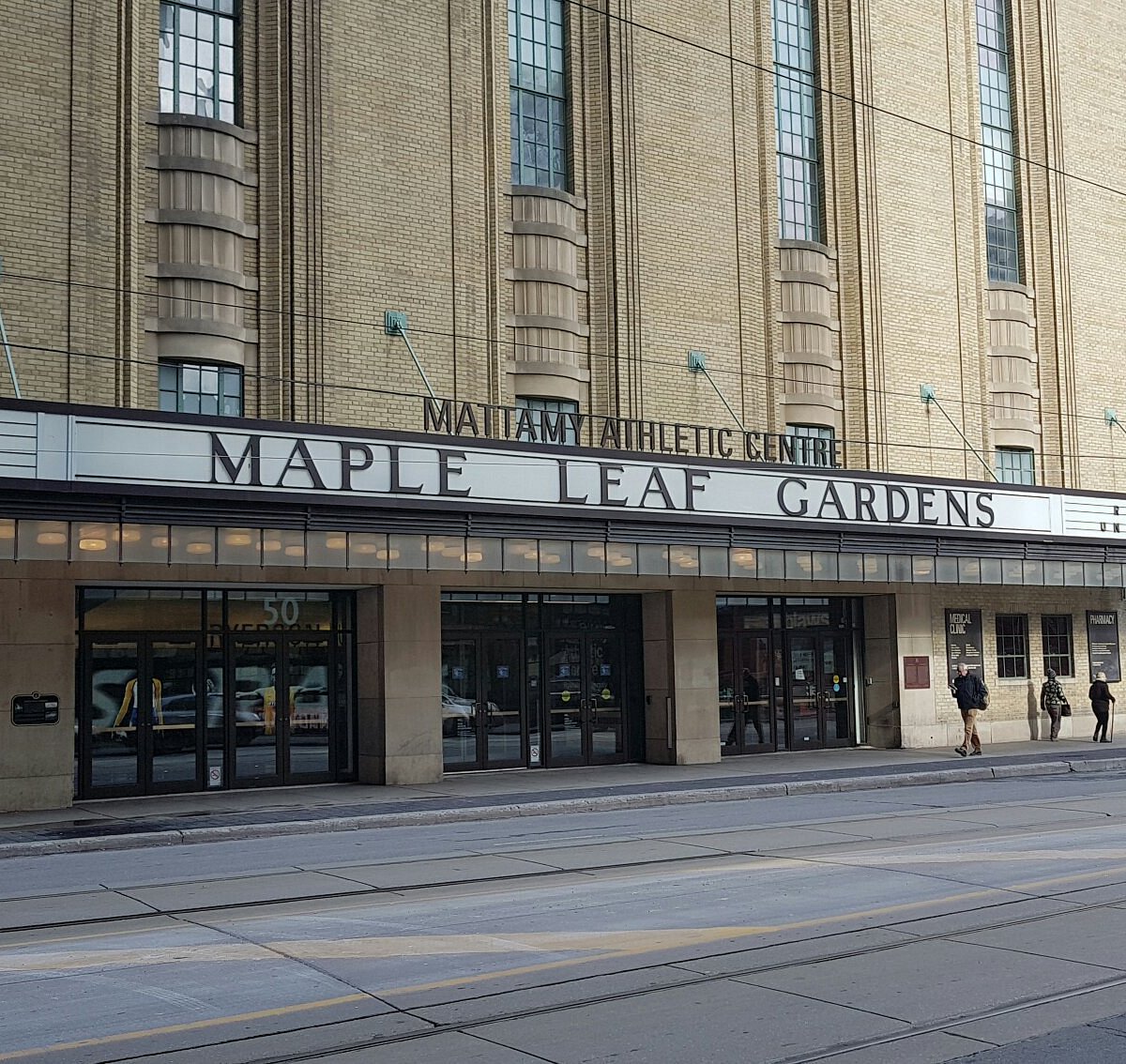
The famed marquee, following the renovation

In 2011, the new Loblaw's store finally opened, with a red dot on the floor marking the original location of centre ice. In 2012, the Mattamy Athletic Centre at the Gardens opened, and has been home to Rynearson's hockey team ever since. From 2013 to 2017, it also hosted the Toronto Predators of the Greater Metro Junior A Hockey League.

*

February 13, 1999 was a Saturday. And, yes, the Gardens finale was broadcast on Hockey Night In Canada. There were 10 other games played in the NHL that day:

* The New Jersey Devils beat the Carolina Hurricanes, 6-4 at the Brendan Byrne Arena (then named the Continental Airlines Arena) at the Meadowlands. The Devils pulled off a rare feat, with 6 different players scoring: Scott Niedermayer, Krzysztof Oliwa, Brendan Morrison, Petr Sykora, Jay Pandolfo and Randy McKay.

* The New York Islanders played the Buffalo Sabres to a tie, 2-2 at the HSBC Arena in Buffalo. (It's now named the KeyBank Center).

* The Montreal Canadiens beat the Florida Panthers, 4-0 at the Molson Centre in Montreal. (It's now named the Bell Centre.)

* The Ottawa Senators beat the Washington Capitals, 2-1 at the Corel Centre in the Ottawa suburb of Kanata, Ontario. (It's now the Canadian Tire Centre. The town was absorbed into Ottawa proper in 2001.)

* The San Jose Sharks beat the Tampa Bay Lightning, 3-1 at the Ice Palace in Tampa. (It's now named the Benchmark International Arena.)

* The Pittsburgh Penguins beat the Nashville Predators, 3-2 at the Nashville Arena. (It's now named the Bridgestone Arena.) Kip Miller scored the winning goal with 1:21 left in overtime.

* The Edmonton Oilers beat the St. Louis Blues, 3-2 at the Kiel Center in St. Louis. (It's now named the Enterprise Center.)

* The Phoenix Coyotes beat the Colorado Avalanche, 4-1 at the McNichols Arena in Denver.

* The Dallas Stars beat the Los Angeles Kings, 3-2 at The Forum outside Los Angeles in Inglewood, California.

* And the Vancouver Canucks beat the Boston Bruins, 3-1 at General Motors Place in Vancouver. (It's now named the Rogers Arena.)

There were also 2 NBA games played that day. The Phoenix Suns beat the Los Angeles Clippers, 107-104 in overtime at the America West Arena in Phoenix. (It's now named the Mortgage Matchup Center.) And the Seattle SuperSonics beat the Denver Nuggets, 105-92 at the KeyArena in Seattle.

Also, Arsenal beat Sheffield United, 2-1 at Highbury in North London. This was in the 5th Round of the FA Cup. This was a controversial game: United player Lee Morris went down with an injury in the 76th minute, but, unaware of the injury, and thus not bound by sportsmanship to kick the ball out of play, the Arsenal players did what athletes are always told to do: Play to the whistle. And Marc Overmars scored.

United and their fans cried foul, and Arsenal manager Arsène Wenger offered them a replay. A replay offer had never happened in the history of the FA Cup, going back to the 1871-72 season, and it hasn't happened since. The game was replayed, at Highbury on February 23, and, again, Arsenal won 2-1 with Overmars scoring one of the goals. 

December 31, 1999 & January 1, 2000: The Millennium

December 31, 1999:  The Millennium arrives. The people of planet Earth survived. At a terrible cost. But we hadn't destroyed ourselves. ...