Showing posts with label el tri. Show all posts

Monday, August 15, 2022

August 15, 2012: U.S. Soccer's 1st Win at the Azteca

Left to right: Graham Zusi, Terrence Boyd, Michael Orozco.
The result was a lot better than the uniform.

August 15, 2012: For the 1st time, the U.S. national soccer team defeats Mexico on Mexican soil.

Starting on September 12, 1937, with a 7-2 loss at Parque Asturias in Mexico City, they were 0-19 before getting so much as a draw, until November 2, 1997, a 0-0 draw in a 1998 World Cup Qualifier. The U.S. was 0-23-1, including 0-10 at Mexico's national stadium, the Estadio Azteca in Mexico City.

Part of this was due to Mexico's better organization. But the elements were also a factor: the country's largest cities are in areas that are both desert and mountain, and the heat and the elevation tend to work in their favor. It is no coincidence that Mexico's 2 best performances in the World Cup have come as hosts, reaching the Quarterfinals in 1970 and 1986.

But it's not as though the U.S.' record against Mexico in other countries was much better. The 1st game between the teams was on May 24, 1934, in a play-in game for the World Cup in Rome, a 4-2 U.S. win. After that, we didn't beat Mexico at all until November 23, 1980, 2-1 at Lockhart Stadium in Fort Lauderdale, in a 1982 World Cup Qualifier. That raised our all-time record against them to 2-21-3.

There were 6 wins, 2 losses and 5 draws in Los Angeles and environs, 3 wins in Columbus, and 2 wins at the Meadowlands. There were wins in San Diego, in Denver, in the Phoenix area, in Chicago, a win and a draw in Washington, and a win and a loss in Dallas. Most famously, there was the "Dos A Cero" win in the 2002 World Cup in Jeonju, South Korea. There was a draw in Foxboro, 2 draws in Houston, a draw in Philadelphia, a loss in a tournament in Uruguay, and a loss in pre-Castro Cuba.

All told, when the U.S. and Mexico took the pitch in front of over 105,000 fans at the Azteca for an exhibition game, or "friendly," on August 15, 2012, Mexico had won 32 games, the U.S. 15, with 12 draws.

And in the 1st half, it appeared that nothing would change. Mexico controlled the flow of play most of the way. The only real chance for the Americans ended when Herculez Gomez was knocked down, and, not surprising given the opponent and the location, was denied the penalty he thought he had earned. Nevertheless, the U.S. defense held its own, and the teams went into the locker room at 0-0.

In the 2nd half, there were nearly a goal from Javier Hernández, known as "Chicharito" (meaning "Little Pea," because his father, also named Javier Hernández, was "Chicharo" or "Pea"), and as "Cheaterito" for the unrepentant diving that made him fit in so well at Manchester United, but he missed a sitter. 

But the defense, led by goalkeeper Tim Howard and centerback Geoff Cameron, held, and it looked like the U.S. might hold on for a hard-earned 0-0 draw, and most American soccer fans would have been okay with that.

U.S. manager Jürgen Klinsmann, who seemed to specialize in big away wins in friendlies while losing big competitive matches, was not okay with a draw. He made substitutions, and they worked. Shortly after the hour, Kyle Beckerman just cleared the bar. In the 80th minute, forward Brek Shea looked like he was about to shoot, but hit a left-footed cross over to forward Terrence Boyd. Boyd tried to backheel the ball into the net. Centerback Michael Orozco got to it first, and poked it in with his left foot. Shea, Boyd and Orozco were all subs.

Fourteen minutes, and 2 great saves by Howard, later, it was over: U.S. 1, Mexico 0 -- or, in standard soccer terminology, with the home team listed at the left, Mexico 0-1 USA. After 25 tries over 75 years, the Americans -- with men of Mexican descent in their lineup, of course -- had defeated Mexico in Mexico. And not just in Mexico, and not just in Mexico City, but in Estadio Azteca, which had been an unassailable fortress until then.

As of March 24, 2022, the most recent game between the teams (a scoreless draw in a World Cup Qualifier at the Azteca), the count stands at Mexico 36, U.S. 22, 16 draws; on Mexican soil, Mexico 23, U.S. 1, 4 draws; and, at the Azteca, Mexico 9, U.S. 1, 4 draws. But, from August 15, 2012, it's been U.S. 7, Mexico Mexico 4, 4 draws; and in Mexico, all at the Azteca, U.S. 1, Mexico none, and 3 draws.

*

August 15, 2012 was a Wednesday. These Major League Baseball games were played that day:

* The New York Yankees beat the Texas Rangers, 3-2 at the new Yankee Stadium. Eric Chavez went 3-for-3 with a walk and an RBI, to make a winning pitcher out of Freddy Garcia.

* The New York Mets lost to the Cincinnati Reds, 6-1 at Great American Ball Park in Cincinnati.

* The Baltimore Orioles beat the Boston Red Sox, 5-3 at Camden Yards in Baltimore.

* The Atlanta Braves beat the San Diego Padres, 6-1 at Turner Field (now Center Parc Stadium) in Atlanta.

* The Miami Marlins beat the Philadelphia Phillies, 9-2 at Marlins Park (now LoanDepot Park) in Miami.

* The Chicago White Sox beat the Toronto Blue Jays, 9-5 at the Rogers Centre in Toronto.

* The Los Angeles Dodgers beat the Pittsburgh Pirates, 9-3 at PNC Park in Pittsburgh.

* The Chicago Cubs beat the Houston Astros, 7-2 at Wrigley Field in Chicago.

* The St. Louis Cardinals beat the Arizona Diamondbacks, 5-2 at Busch Stadium in St. Louis.

* The Kansas City Royals beat the Oakland Athletics, 3-2 at Kauffman Stadium in Kansas City.

* The Detroit Tigers beat the Minnesota Twins, 5-1 at Target Field in Minneapolis.

* The Colorado Rockies beat the Milwaukee Brewers, 7-6 at Coors Field in Denver.

* The Los Angeles Angels beat the Cleveland Indians, 8-4 at Angel Stadium of Anaheim.

* The Washington Nationals beat the San Francisco Giants at AT&T Park (now Oracle Park) in San Francisco.

* And the Seattle Mariners beat the Tampa Bay Rays, 1-0 at Safeco Field (now T-Mobile Park) in Seattle. Félix Hernández went the distance for the shutout, allowing 4 hits and no walks, striking out 12.

Friday, June 17, 2022

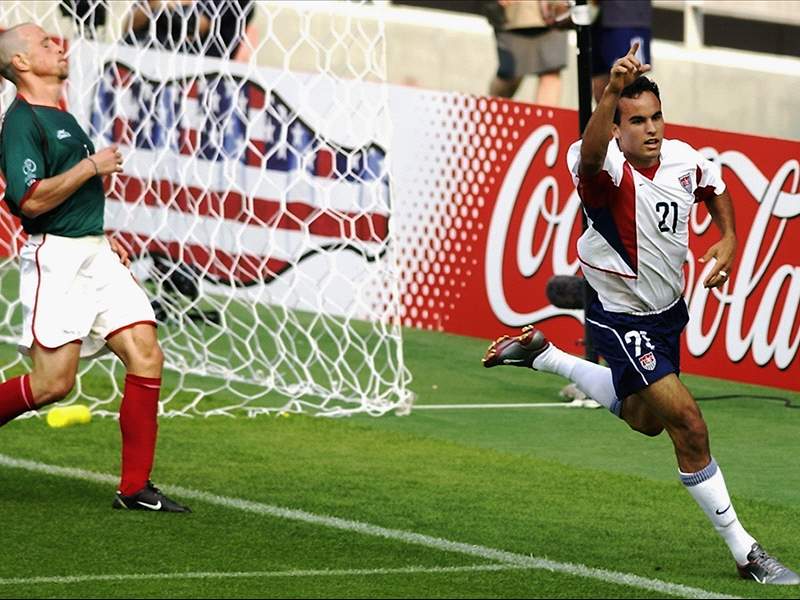
June 17, 2002: U.S. vs. Mexico, "Dos a Cero"

June 17, 2002: The World Cup, the 1st ever held in 2 separate nations, moves on to the Round of 16. At Kobe, Japan, Brazil beat Belgium, 2-0. And the U.S. team has its most famous victory -- yes, more famous than the 1-0 win over England at the 1950 World Cup. At Jeonju, Korea, it's "Dos a Cero."

The United States of America and the United States of Mexico -- Mexicans call their country "Mexico," and ours "Los Estados Unidos," or "El Norte" (The North) -- have a rough rivalry in soccer. Mexican fans have been known to throw things at American players and fans, and use homophobic slurs.

Competitively, the rivalry is one-sided. The 1st match between the teams was a play-in game for the 1934 World Cup, and the U.S. won it. Mexico won the next 10 games, between 1937 and 1957; and went on a 21-0 run with 3 draws before the U.S. finally beat them again, in 1980, in a qualifier for the 1982 World Cup, at Lockhart Stadium in Fort Lauderdale, Florida. Over the next 22 years, the rivalry evened out a bit, 7-7 with 6 draws, but that included Mexico beating the U.S. in the 1991 and 1998 CONCACAF Gold Cup Finals.

The U.S. team went into the 2002 World Cup with some hope, with a young team that had succeeded the one that had rebuilt the program and gotten them into the 1990 World Cup (then considered a huge accomplishment) but playing poorly in it, and into the Knockout Stage of the 1994 World Cup on home soil, before flopping in the 1998 World Cup.

But Mexico have never done well at the World Cup. Only twice have they ever reached the Quarterfinal, in 1970 and 1986 -- the 2 times they've hosted it. A Scot recently wrote a book about soccer, saying in the introduction that, if success in the World Cup were based on the most frustrated fans, the Final would be between Scotland and Mexico. The Mexican team -- known as El Tricolor, for their 3-colored (green, white & red) flag, or El Tri for short -- could have as their motto, "We ain't much, but at least we're better than the Americans."

But in the 2002 World Cup, they won Group G. Playing on the Japan side of the tournament, they beat Croatia, 1-0 in Niigata; beat Ecuador, 2-1 at Miyagi; and drew with Italy, 1-1 at Ōita.

The U.S. were put on the Korea side of the tournament, in a tough Group D: Hosts South Korea, plus European mainstays Portugal and Poland. But they beat Portugal, 3-2 at Suwon. At the time, it was considered a major upset. At Daegu, they played South Korea to a 1-1 draw, securing advancement to the Knockout Stage. They played their Group Stage finale against Poland as if it was meaningless, losing 3-1.

It was meaningless: Poland finished last in the Group, and the U.S. would still have needed to win by 2 goals to beat South Korea for 1st place in the Group. And then the Round of 16 would have been the U.S. vs. Italy, and South Korea vs. Mexico.

If that had happened, the tournament would have lost its 2 best-remembered games. South Korea trailed Italy 1-0 in the 88th minute, but scored, and then won it 2-1 in extra time. The Italian fans immediately believed, and still do, that the officials were fixing the game in favor of the hosts. This was probably because they'd seen so many games in their league, Serie A, fixed for Turin team Juventus. But the Koreans were the better team on the night, and Francesco Totti was rightly sent off for a dive in extra time.

And so, on June 17, 2002, before a crowd of 36,380 at Jeonju World Cup Stadium, home of one of the more successful teams in South Korea's K League, Jeonbuk Hyundai Motors, the U.S. and Mexico kicked off at 3:30 PM local time -- 1:30 AM, U.S. Eastern Time, making it 10:30 PM, June 16, U.S. Pacific Time.
Jeonju World Cup Stadium

(Time zones are an issue with the World Cup, and that's why it usually gets awarded to countries in Europe or the Americas. This was the 1st one in Asia, and it wasn't sent to Asia again until Qatar for 2022, and that's only a 2-hour difference with most of Europe and an 8-hour difference with U.S. Eastern.)

Mexico wore green, their usual home color. That enabled the U.S. to wear their usual home kit as well, white with red and blue trim. Bruce Arena, then 50 years old, who previously coached one of the great U.S. soccer programs at the University of Virginia, sent the U.S. out on the pitch with this lineup, in a 3-5-2 formation:

* GK 1 Brad Friedel, 31, from the Cleveland area, then playing in England with Blackburn Rovers.
* RB 22 Tony Sanneh, 31, from the Twin Cities of Minnesota, playing in Germany with 1. FC Nürnberg.
* CB 23 Eddie Pope, 28, from High Point, North Carolina, and D.C. United.
* LB 3 Gregg Berhalter, 28, from outside New York in Tenafly, New Jersey, and London's Crystal Palace.
* RM 10 Claudio Reyna, 28, team Captain, from outside New York in Springfield, New Jersey, a teammate of Berhalter's at St. Benedict's Prep in Newark, and England's Sunderland.
* CM 4 Pablo Mastroeni, 25, born in Argentina but raised in Phoenix, with the Colorado Rapids.
* CM 21 Landon Donovan, 20, from outside Los Angeles, and German team Bayer Leverkusen.
* CM 5 John O'Brien, 24, from outside Los Angeles, and Dutch team Ajax Amsterdam. Donovan called him "the best soccer player in the U.S.A."
* LM 7 Eddie Lewis, 28, from the San Francisco Bay Area, and London's Fulham.
* CF 15 Josh Wolff, 25, from the Atlanta area, and the Chicago Fire.
* CF 20 Brian McBride, 29, from the Chicago area, and the Columbus Crew.

So, 4 players then in Major League Soccer, 4 in England's Premier League, 2 in Germany's Bundesliga, and 1 in the Netherlands' Eredivisie.

Mexico also played a 3-5-2. It didn't matter: McBride stunned the Western Hemisphere by scoring in only the 8th minute of the game. That woke the Mexicans up, and they unleashed a furious attack. But there was nothing they could do, as Friedel made save after save, some of them spectacular.

In the 59th minute, with the score still one-nil to the Stars & Stripes, Arena took Wolff off, and switched to a 3-6-1, putting in Number 8, midfielder Earnie Stewart, age 33. Born and raised in the Netherlands as the son of a U.S. Air Force airman, under the rules he still qualified for the U.S. team. At the time, he was playing his club football in the Eredivisie, for NAC Breda.

In the 65th, minute, Donovan signaled that this was a new era for American soccer, putting a header past Óscar Pérez, the legendary goalkeeper for Mexico City team Cruz Azul (Blue Cross), known for his quickness as El Conejo (The Rabbit). This time, he wasn't quick enough, and it was 2-0. Two-nil. Two to nothing. Two to zero. In Spanish, "dos a cero."

Donovan went on to become perhaps the greatest soccer player America has yet seen, and he scored a lot of goals, including the one that sent America to the Knockout Stage of the 2010 World Cup. But he never scored a bigger goal than this one.

It was no longer enough for El Tri to catch a lucky break to tie it, and then hope for another, or to hold the line and win on penalties. They needed 2 goals just to send it to extra time. From Donovan's goal onward, the referee, Vitor Melo Pereira of Portugal, assigned 5 cards to Mexico, and only 1 to the U.S. -- oddly, to Friedel in the 81st.

In the 79th minute, Arena made another substitution, for defensive purposes. He took off McBride, and was now playing a 3-7-0. The new player was Number 13, midfielder Cobi Jones, born in Detroit but grew up in Los Angeles, and playing for his hometown team, the LA Galaxy.

In the 88th minute, the Mexican Captain, Rafael "Rafa" Márquez, went too far. The midfielder saw Jones leap for an airborne ball, and jumped himself. He literally kicked Jones's ass, head-butted him, and threw his shoulder into him, American football style, all in one move. Pereira saw no choice but to issue a straight red card, and Mexico were down to 10 men. (FC Barcelona must have liked what they saw from Márquez, and figured he'd fit in perfectly with their system of cheating, because they bought him from AS Monaco a year later.) 

During the break in the action, Arena made his last allowable substitution. He took Mastroeni off for a defender, Carlos Llamosa, 32, born in Colombia but raised in Queens, and working at the World Trade Center at the time of the 1st terrorist attack there, in 1993, now playing with MLS' Boston team, the New England Revolution. So now, the U.S. was playing a 4-6-0, and Mexico a 2-4-3.

Given the Mexican shenanigans, there was a lot of stoppage time. Given the 2-goal lead, it didn't matter much. The game ended, 2-0 to the U.S.

On The Tonight Show, host Jay Leno made a lot of jokes about the World Cup, mostly about how it was boring. He said, "It's all nothing-nothing! It's like the Spice Girls on Jeopardy!" Then he mentioned the Dos a Cero game, citing the English-Spanish split in the show's home State, and America's level of interest in the sport: "Half the State of California went into mourning! And the other half said, 'There was a game?'"

But that game did wonders for America's level of interest in the sport. Not just because we had decisively beaten our arch-rivals, but because it was the 1st time the U.S. had ever won a Knockout Stage game at the World Cup.

Yes, we had advanced to the Semifinals of the 1st World Cup, in 1930, but that was by topping our Group. That time, there were no knockout rounds before the Semifinals. Yes, we had beaten England in 1950. But we didn't advance out of our Group that time. Nor did we advance out of our Group in 1990 or 1998. We lost in the Round of 16 in 1934 and 1994. And we didn't even qualify in 1938, 1954, 1958, 1962, 1966, 1970, 1974, 1974, 1978, 1982 and 1986. And, of course, the 1942 edition was canceled due to World War II, and the 1946 edition was canceled because too many European nations were still rebuilding.

The joy from beating Mexico didn't last. The Quarterfinal was on June 21, at Ulsan, Korea, against Germany. A valiant effort was not enough, as Michael Ballack scored in the 39th minute, and that was enough to give Germany the 1-0 win.

But, ever since, American fans have taunted Mexico with a chant of "Dos a Cero! (Clap, clap, clap-clap-clap!)" The U.S. has the edge since then, at 12-8 with 7 ties. Those wins include "Dos a Cero II," a World Cup Qualifier in Columbus in 2005; "Dos a Cero III," a friendly outside Phoenix in 2007; "Dos a Cero IV," a World Cup Qualifier in Columbus in 2009; "Dos a Cero V," a World Cup Qualifier in Columbus in 2013; "Dos a Cero VI," a friendly in San Antonio in 2015; and "Dos a Cero VII," a World Cup Qualifier in, yes, Ohio, but, no, not Columbus, rather, in Cincinnati, in 2021.

The run also includes a 2-1 win in the 2007 CONCACAF Gold Cup Final at Soldier Field in Chicago; and a 1-0 win in a friendly at the Estadio Azteca in 2012, the U.S.' 1st win on Mexican soil after 23 losses and 1 draw; and a 1-0 win in the 2021 CONCACAF Gold Cup Final, at Allegiant Stadium outside Las Vegas.

But it also includes Mexico's 5-0 humiliation of the U.S. in the 2009 CONCACAF Gold Cup Final at Giants Stadium in the Meadowlands, their 4-2 win in the 2011 CONCACAF Gold Cup Final at the Rose Bowl, their 1-0 win in the 2019 CONCACAF Gold Cup Final at Soldier Field.

As of June 17, 2022, Mexico have won 36 games, the U.S. 22, with 16 draws.

Gregg Berhalter, who played in the original Dos a Cero game, will manage the U.S. team at the 2022 World Cup.

UPDATE: The U.S. went out of the 2022 World Cup in the Round of 16, losing to the Netherlands. The 2026 World Cup was a joint hosting of the U.S., Canada and Mexico. This time, the U.S., managed by Mauricio Pochettino, reached the Round of 16, but lost to Belgium; and Mexico reached the same round, but lost to England. The U.S. and Mexico could only have met in the Final, which was won by Spain over Argentina.

As of the conclusion of that tournament, the head-to-head rivalry is Mexico 38, U.S. 24, with 17 draws.

Jeonju World Cup Stadium, a.k.a. Fort Jeonju, remains the home of Jeonbuk Hyundai Motors, the most successful team in the country: 10 K League titles, 6 Korea Cups, and 2 AFC Champions League titles.

*

June 17, 2002 was a Monday. One other Round of 16 match was played in the World Cup that day: Brazil beat Belgium 2-0 at Kobe Wing Stadium in Kobe, Japan. Rivaldo and Ronaldo -- the real Ronaldo, not Cristiano the hair-gelled diver -- scored the goals. Brazil went on to beat Germany in the Final.

American-style football was out of season. Hockey season had ended 4 days earlier, when the Detroit Red Wings won Game 5 of the Stanley Cup Finals against the Carolina Hurricanes. Basketball season ended the day before that, when the Los Angeles Lakers completed an NBA Finals sweep over the New Jersey Nets.

And only 1 game was played in Major League Baseball: The Milwaukee Brewers beat the Houston Astros, 5-2 at Miller Park (now American Family Field) in Milwaukee. Lance Berkman and Richard Hidalgo hit home runs for the Astros, but they were solo homers. Jose Hernandez homered for the Brewers. In a twist of fate, Houston was partly beaten by a Milwaukee player named Tyler Houston, who went 3-for-4. Jose Cabrera was the winning pitcher, Roy Oswalt the losing pitcher.

Oddly, these are the 2 teams that have switched Leagues. The Brewers moved to the National League in 1998, and the Astros would move to the American League in 2014.

Sunday, May 29, 2022

May 29, 1966: Estadio Azteca Opens

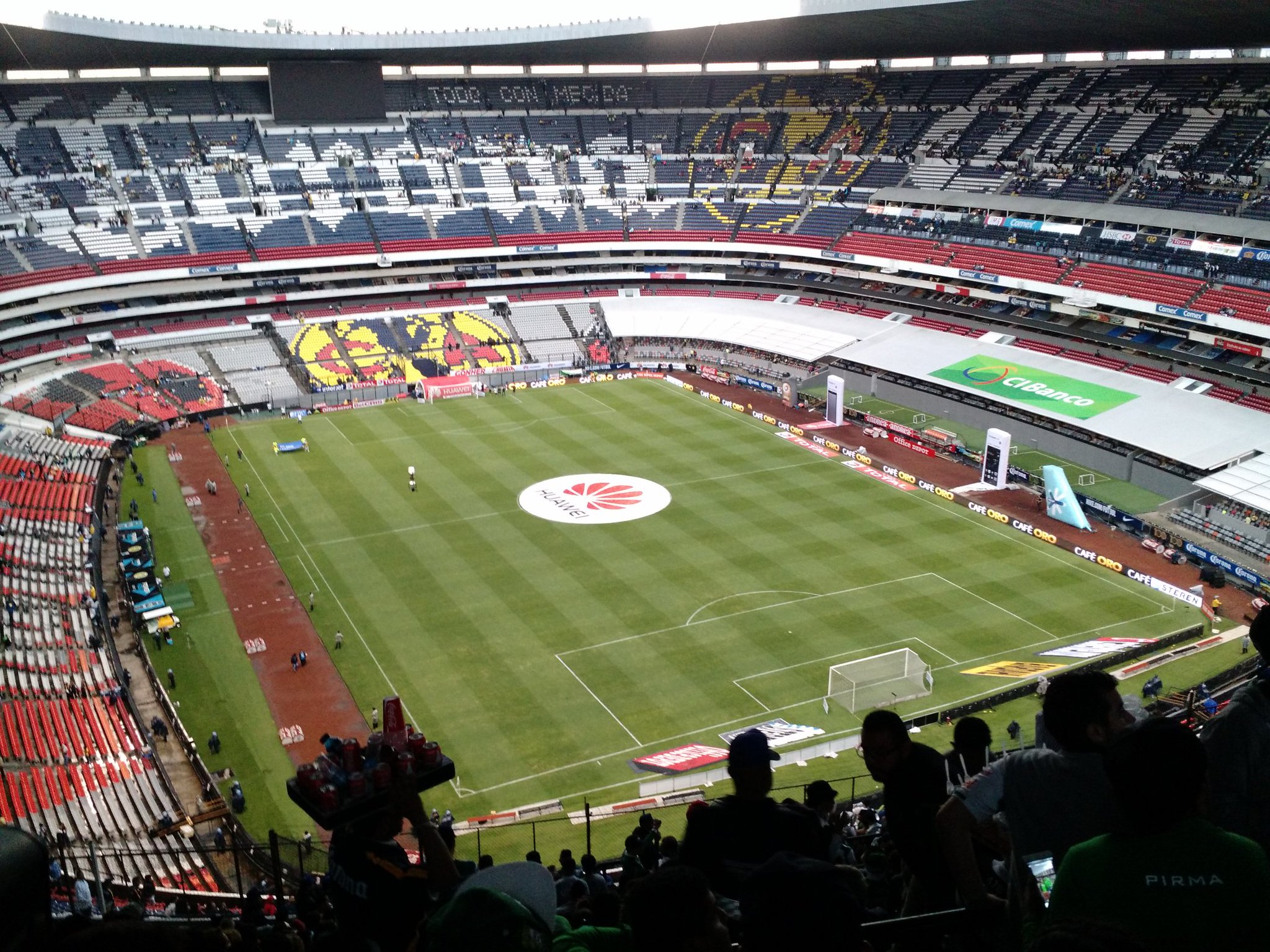
May 29, 1966: Estadio Azteca opens in Mexico City, about 9 miles south of downtown. Club América takes a 2-0 lead over Italian team Torino F.C., but Torino plays back to a 2-2 draw. President Gustavo Díaz Ordaz of Mexico made the ceremonial first kick, and FIFA President Sir Stanley Rous attended.

The Azteca is the most famous building not just in Mexico, but in all of Central America. Named for the ancient empire that ruled Mexico, it remains the home of the national team and of Club de Fútbol América S.A. de C.V., or simply Club América, the most-loved -- and, like the New York Yankees, the most-hated -- sports team in the country. 

It is older than every Major League Soccer stadium except Providence Park in Portland; every NFL stadium except Lambeau Field in Green Bay; every MLB stadium except Fenway Park in Boston, Wrigley Field in Chicago, and the 2 Los Angeles area ballparks, Dodger Stadium and Angel Stadium; every NBA arena; and every NHL arena.

From a peak of 119,853 fans at a 1968 game, renovations have reduced the soccer seating capacity to an official 87,523, which still makes it larger than all but a few stadiums in the world, including most of those in the U.S. The field is a hybrid of natural grass and artificial fibers, and runs north-to-south.
Known as "El Coloso de Santa Úrsula," the Colossus of Saint Ursula (for the neighborhood it's in), along with the Maracanã in Brazil, it is 1 of 2 stadiums to have hosted 2 World Cup Finals: 1970, in which Brazil beat Italy; and 1986, in which Argentina beat West Germany.

It also hosted the 1970 Semifinal between Italy and Germany that became known as "The Game of the Century"; and the 1986 Quarterfinal between Argentina and England in which Diego Maradona scored what became known as "The Goal of the Century," only 4 minutes after his handball goal that he called "The Hand of God," the most famous cheat in the history of sports on planet Earth.

In addtion to Club América, the Azteca has been the home field for Club Necaxa, who played there from 1966 to 1970, and again from 1982 to 2003 before going back to the city of Aguascalientes; Atlante, who played there off and on from 1966 to 2007, before returning permanently to their home base in CancúnClub de Fútbol Universidad Nacional A.C., a.k.a. Pumas de la UNAM, Pumas or UNAM from 1967 to 1969; Atlético Español from 1970 until they went out of business in 1982; and Cruz Azul (Blue Cross) from 1971 to 1996.

It's also hosted soccer for the 1968 Olympics, the 1975 Pan American Games, the 1993 and 2003 CONCACAF Gold Cups, the 1999 Confederations Cup, and the 2011 Under-17 World Cup. (Estadio Olímpico Universitario was the main stadium for the 1968 Olympics, and preceded the Azteca as the national team's stadium.)

It's hosted our football 8 times. The 1st was on August 15, 1994, in a preseason game in which the Houston Oilers beat the Dallas Cowboys 6-0, in front of the largest crowd in NFL history, 112,376. It's hosted 4 regular-season games, with a 5th set for the 2022 season.

On February 20, 1993, the stadium's all-time attendance record was set, as 132,247 people saw Mexico's greatest-ever boxer, Julio César Chávez, knock Greg Haugen out to retain the Light Welterweight Championship of the World. The stadium has also hosted concerts, including by Paul McCartney, Michael Jackson and U2; and religious convocations, including the funeral of Chesperito, a legendary Mexican comedian who was a Club América fan.

Mexico City's combination of desert and mountains -- its elevation is higher than that of Denver, "the Mile High City" -- makes for a climate difficult for visiting teams, especially from outside Mexico. It took the U.S. national team 12 tries, until 2012, to get their 1st win over Mexico at the Azteca, and that was in a friendly: As of May 29, 2022, they're still looking for their 1st competitive win there.

*

May 29, 1966 was a Sunday. These Major League Baseball games were played that day:

* The New York Yankees lost to the Chicago White Sox, 2-0 at Yankee Stadium. Future Yankee Tommy John outpitched Bob Friend, allowing only 3 hits, all singles, to Mickey Mantle, Elston Howard and Joe Pepitone.

* The New York Mets beat the Los Angeles Dodgers, 7-6 at Dodger Stadium in Los Angeles. The Dodgers thought they had the game won with 3 runs in the bottom of the 8th inning, including an inside-the-park home run by Jim Lefebvre. But the Mets scored 3 in the top of the 9th, with Roy McMillan singling Robert "Hawk" Taylor home with the winning run.

* The Washington Senators beat the Boston Red Sox, 3-2 at District of Columbia Stadium in Washington. (It was renamed Robert F. Kennedy Memorial Stadium in 1969.) Carl Yastrzemski went 0-for-4.

* The Minnesota Twins swept a doubleheader from the Cleveland Indians, 5-1 and 1-0 at Cleveland Municipal Stadium. Harmon Killebrew went 1-for-5 with 2 walks over the 2 games. Jim "Mudcat" Grant pitched a 4-hit shutout, outpitching Luis Tiant.

* The California Angels beat the Detroit Tigers, 2-1 at Tiger Stadium in Detroit. Al Kaline went 0-for-4.

* The Chicago Cubs beat the Atlanta Braves, 3-2 at Wrigley Field in Chicago. Ron Santo won it with a home run in the bottom of the 10th inning. Ernie Banks did not play. Hank Aaron went 1-for-4. Eddie Mathews hit his 470th career home run.

* The St. Louis Cardinals beat the Cincinnati Reds, 3-2 at the brand-new Busch Memorial Stadium in St. Louis. In the bottom of the 10th inning, Ted Davidson issued a leadoff walk to Bobby Tolan. Curt Flood bunted, grounding back to Davidson, who threw the ball away, and Tolan came all the way around to score the winning run. Pete Rose went 0-for-5.

* The Kansas City Athletics beat the Baltimore Orioles, 6-3 at Kansas City Municipal Stadium. Brooks Robinson went 0-for-4. Jim "Catfish" Hunter outpitched Jim Palmer. Both Jims were only 20 years old, but both were on their way to the Hall of Fame.

* The Houston Astros beat the Pittsburgh Pirates, 3-2 at the Astrodome in Houston. Jim Gentile won it with a home run in the bottom of the 11th inning. Roberto Clemente and Willie Stargell each went 1-for-5, with Clemente adding an RBI.

* And the San Francisco Giants beat the Philadelphia Phillies, 6-5 at Candlestick Park in San Francisco. Ollie Brown singled Jim Ray Hart home with the winning run in the bottom of the 10th inning. Hart and Willie Mays hit home runs.

Tuesday, May 24, 2022

May 24, 1934: U.S. Soccer's 1st Game (and Win) vs. Mexico

May 24, 1934: The national soccer teams of the United States of America and the United Mexican States play each other for the 1st time -- not in either country, and not with the result most people would have expected then, or now.

It was in Rome, Italy, and it was for the 16th and last qualifying spot in the FIFA World Cup, which had only been contested once before, in 1930, with Uruguay winning on home soil, beating Argentina in the Final. In that tournament, the U.S. beat Belgium and Paraguay, before losing to Argentina in the Semifinal. It remains the U.S.' best World Cup performance ever.

For 1934, the U.S. squad consisted of the following, many of them immigrants, who nonetheless qualified for this team under the rules of that time:

* Goalkeepers: Julius Hjulian of Sweden and Chicago.

* Defenders: George Moorhouse of Liverpool and New York, Ed Czerkiewicz and Joe Martinelli of Rhode Island, Al Harker of Philadelphia, and Herman Rapp of Stuttgart and Philadelphia.

* Midfielders: Tom Amrhein of Baltimore, Bill Fiedler of Philadelphia, Jimmy Gallagher of Scotland and Cleveland, William Lehman of St. Louis, Tom Lynch of Brooklyn, Tom Florie of Harrison (New Jersey), Peter Pietras of Trenton (New Jersey), and Bill Gonsalves of Fall River (Massachusetts).

* Forwards: Aldo "Buff" Donelli of Pittsburgh, Walter Dick of Scotland and Niagara Falls, Willie McLean of Scotland and Chicago, Werner Nilsen of Norway and St. Louis, and Francis Ryan of Philadelphia.

Donelli also played gridiron football, and later coached in his hometown, both at Duquesne University and with the Pittsburgh Steelers. Moorhouse, Florie, Gallagher and Gonsalves had played for the U.S. team in 1930.

Since the British "Home Nations" of England, Wales, Scotland and Northern Ireland did not participate in the World Cup until 1950, due to a dispute with FIFA, Moorhouse was the 1st native of England to play in the World Cup. Probably because he was trained to play in England, then considered the world's soccer capital, he was named Captain of this team.
George Moorhouse

The game against Mexico was played at the Stadio Nazionale in Rome, which would also host the World Cup Final. Since 1931, it had been the home of soccer team S.S. Lazio. In 1940, it would become the home of Lazio's arch-rivals, A.S. Roma. The Americans won, 4-2, with Donelli scoring all 4 goals.
Aldo "Buff" Donelli

The state of American soccer in 1934 was such that it was operating on what would now be considered a minor-league level. There were plenty of teams in the Northeast, in the Midwest, and on the West Coast, many of them ethnically based: Irish, Scottish, German, Italian, Spanish, Portuguese, Polish, Hungarian, Ukrainian, Jewish.

Given that it was the Great Depression, there was room for the national team to become national heroes, if they could follow up a win over neighboring Mexico with a good performance at the World Cup. That year, the St. Louis Cardinals and the Detroit Tigers both electrified the nation with their play, culminating in an epic World Series that the Cardinals won in Game 7. The Chicago Bears had become heroes of professional football. The Boston Bruins, the New York Rangers and the Chicago Black Hawks had already gotten Americans to cheer hockey. And boxers galore had excited people. If the U.S. soccer team could do well at the World Cup...
Stadio Nazionale

They didn't. Their 1st Round game was against the hosts, and Italy beat them, 7-1. Donelli scored the only U.S. goal. Angelo Schiavio of Bologna F.C. scored 3 goals. The last Italy goal was scored by Giuseppe Meazza of Internazionale Milano, the greatest Italian player of his generation, a man so loved that the home ground of both "Inter" and their rivals A.C. Milan, the greatest sporting venue in the country, known for its neighborhood as the San Siro, is officially named Stadio Giuseppe Meazza.

So there would be no follow-up heroics for the U.S. team. They didn't even qualify for the 1938 World Cup in France. Their next game against Mexico didn't come until 1937, at Parque Asturias in Mexico City, and they lost, 7-2.

It would take until April 28, 1957 for the U.S. to play a home game against Mexico, a Qualifier for the 1958 World Cup, at Veterans Memorial Stadium in Long Beach, California, a 7-2 loss. The next U.S. win wouldn't happen until November 23, 1980, a Qualifier for the 1982 World Cup, at Lockhart Stadium in Fort Lauderdale, Florida, a 2-1 U.S. win. And the U.S. wouldn't beat Mexico in Mexico until August 15, 2012, a 1-0 win in a friendly at the Estadio Azteca in Mexico City. 

In 1953, Roma and Lazio both moved into the Stadio Olimpico, which became the main stadium for the 1960 Olympics. After the move, the Stadio Nazionale, site of the 1934 U.S.-Mexico game, was demolished, and replaced with the Stadio Flaminio in 1959. It was used for the soccer games of the 1960 Olympics, and as the home of both Roma and Lazio in the 1989-90 season, while the Olimpico was demolished and rebuilt for the 1990 World Cup. The Flaminio is now home to Capitolina, a professional rugby team.
Stadio Flaminio

Buff Donelli died in 1994. The last survivor of the 1934 U.S. World Cup team was Al Harker, who lived until 2006.

*

May 24, 1934 was a Thursday. Football, basketball and hockey were out of season. These baseball games were played that day:

* The New York Yankees beat the Chicago White Sox, 2-1 at Comiskey Park in Chicago. Hall-of-Famer Lefty Gomez outpitched former Yankee Milt Gaston. Babe Ruth, in his last season as a Yankee, went 0-for-3, before being replaced in the field by Sammy Byrd, who was already known as "Babe Ruth's Legs." Lou Gehrig went 1-for-3 with a walk.

* The New York Giants beat the Chicago Cubs, 7-1 at the Polo Grounds. Carl Hubbell went the distance for the win. Gus Mancuso hit a home run, Mel Ott went 1-for-3 with 2 walks and an RBI, and 1st baseman-manager Bill Terry had a double in 4 at-bats.

* The Brooklyn Dodgers lost to the St. Louis Cardinals, 7-3 at Ebbets Field. Frankie Frisch and Joe Medwick each had 2 hits for the eventual World Champions. They are remembered as "the Gashouse Gang," although they didn't get that nickname until the following season.

* The Pittsburgh Pirates beat the Boston Braves, 7-3 at Braves Field in Boston.

* The Philadelphia Phillies beat the Cincinnati Reds, 5-0 at Baker Bowl in Philadelphia. Curt Davis pitched a 3-hit shutout.

* The Detroit Tigers beat the Philadelphia Athletics, 6-3 at Navin Field in Detroit. (It was renamed Briggs Stadium in 1938 and Tiger Stadium in 1961.) For the Tigers, Hank Greenberg went 2-for-4. For the A's, Jimmie Foxx went 0-for-5, but got on RBI on a groundout.

* The St. Louis Browns beat the Washington Nationals, 6-5 at Sportsman's Park in St. Louis.

* And the Cleveland Indians were supposed to play the Boston Red Sox at Fenway Park, but the game was rained out. It was made up as part of a doubleheader on July 22, and the Indians swept, 4-2 and 6-5.

December 31, 1999 & January 1, 2000: The Millennium

December 31, 1999:  The Millennium arrives. The people of planet Earth survived. At a terrible cost. But we hadn't destroyed ourselves. ...