Showing posts with label 1951. Show all posts

Monday, December 26, 2022

December 26, 1951: "The African Queen" Premieres

Katharine Hepburn and Humphrey Bogart

December 26, 1951: The African Queen premieres, based on the 1935 novel by C.S. Forester, and directed by John Huston. It stars Humphrey Bogart and Katharine Hepburn.

The film is set in August 1914, in German East Africa (now the nations of Burundi, Rwanda and Tanzania). Samuel Sayer (Robert Morley) and his sister Rose (Hepburn) are British missionaries. They are occasionally supplied by the steamboat African Queen, piloted by Charlie Allnut, not exactly a missionary's kind of guy. (He was a Cockney in the book, but Bogart didn't think he could do the accent, so the character was rewritten as a Canadian, so he was still a citizen of the British Empire.)

Charlie tells them that war has broken out (the one that would later be known as World War I), and that they should get out of German territory. They refuse, but German colonial troops burn down the village, and Samuel is killed. Charlie helps Rose bury him, and takes her upriver.

Charlie says the British are unable to attack the Germans because of the presence of a large gunboat, the Königin Luise (Queen Louise, named for the wife of King Frederick William III of Prussia), patrolling a large lake downriver. Rose comes up with a plan to convert the African Queen into a torpedo boat, and sink the Königin Luise. After first thinking that she's nuts, Charlie goes along with the plan.

The Königin Luise returns, and Charlie and Rose steam the African Queen out onto the lake in darkness, intending to set her on a collision course. A strong storm strikes, causing water to pour into the African Queen through the torpedo holes. Eventually the boat capsizes, throwing Charlie and Rose into the water. Charlie loses sight of Rose in the storm.

Charlie is captured and taken aboard the Königin Luise, where he is interrogated by German officers. Believing that Rose has drowned, he makes no attempt to defend himself against accusations of spying, and the German captain sentences him to death by hanging. Rose is brought aboard the ship just after Charlie's sentence is pronounced. The captain questions her, and Rose proudly confesses the plot to sink the Königin Luise, deciding that they have nothing to lose. The captain sentences her to be executed with Charlie, both as British spies.

Charlie asks the German captain to marry them before they are executed, as is allowed by the law of most countries. The captain agrees, and after conducting the briefest of marriage ceremonies, is about to carry out the execution when the Königin Luise is rocked by a series of explosions, quickly capsizing. The ship has struck the overturned submerged hull of the African Queen and detonated the torpedoes. The newly married couple is able to escape the sinking ship and swim to safety together.

Much of the film was shot on location in Uganda and the Belgian Congo (now the Democratic Republic of the Congo). This was unusual for that era, especially for a color film that used large, cumbersome "Three-Strip" cameras. The cast and crew endured sickness and spartan living conditions during their time on location, and Huston used his off-time to do a lot of hunting. This led to Clint Eastwood directing and starring in the thinly-disguised 1990 film White Hunter Black Heart.

Hepburn got sick. Bogart later said that he and Huston were the only members of the cast and crew who didn't, because they were drinking whiskey, not the local water. Given Bogie's well-known proclivities, I believe him.

The film was nominated for 4 Academy Awards: Bogart for Best Actor, Hepburn for Best Actress, Huston for Best Director, and Huston and James Agee for Best Screenplay. Only Bogart won. It was his only win.

The small steamboat used to depict the African Queen was contemporary to the time, built in 1912 in Britain, for service in Africa. At one time it was owned by actor Fess Parker, best known for playing Davy Crockett. The boat was restored, and is now on display in another location connected with Bogart: Key Largo, Florida.

In 1977, CBS aired a TV-movie with the same title, but as a sequel to the original film, with Warren Oates as Charlie and Mariette Hartley as Rose. The film was meant as the pilot for a series, but it was not picked up.

In 1999, Shakespeare in Love won the Academy Award for Best Picture. In that film, Judi Dench played Queen Elizabeth I. The ceremony was hosted by Whoopi Goldberg, who came out in costume as Elizabeth I, complete with whiteface makeup, and said, "I am the African Queen!"

*

December 26, 1951 was a Wednesday. Baseball was out of season. Football was in midweek. There were 3 games played in the NBA:

* The New York Knicks lost to the Milwaukee Hawks, 78-76 at the Baltimore Coliseum. This was the 1st half of a doubleheader. The Knicks had reached the NBA Finals the previous year, and would again, while the Hawks were a lousy team, and moved to St. Louis in 1955, and then to Atlanta in 1968. Nevertheless, the Hawks won this game.

* In the nightcap, the Baltimore Bullets beat the Philadelphia Warriors, 103-99 in triple overtime. So fans could pay for 48 minutes of basketball, and ended up getting 111 minutes.

* And the Fort Wayne Pistons beat the Boston Celtics, 94-86 at North Side High School in Fort Wayne, Indiana. As late as 1952, an NBA team was playing its home games in a high school gymnasium.

There were 2 games played in the NHL. The New York Rangers beat the Detroit Red Wings, 1-0 at the old Madison Square Garden. And the Montreal Canadiens beat the Toronto Maple Leafs, 3-2 at Maple Leaf Gardens in Toronto. The Boston Bruins and the Chicago Black Hawks were not scheduled.

And in English soccer, at a time when teams played back-to-back, home-and-home games on Christmas Day and Boxing Day, North London team Arsenal had beaten Hampshire team Portsmouth 4-1 the day before, but Portsmouth gained a 1-1 draw on this day, at Fratton Park.

Sunday, December 25, 2022

December 25, 1951: A Bloody Christmas for Civil Rights

Harriette (left) and Harry Moore

December 25, 1951: A bomb explodes at the home of Harry T. Moore, President of the Florida branch of the NAACP, in Mims, Florida, not far from Cape Canaveral.
Moore was born on February 18, 1905, in Houston, on the Florida Panhandle, about halfway between Tallahassee and Jacksonville. By the early 1930s, he was secretary for the Florida chapter of the NAACP. He worked on housing and education, investigated lynchings, and registered black voters. By 1950, 31 percent of eligible black people in Florida were registered to vote, more than in any other Southern State.
But on the night of December 25, 1951, a bomb exploded at his house in Mims. The local hospital in Titusville would not treat black people, Moore was taken to the nearest one that would, 30 miles away in Sanford, and he died en route. He was 46 years old. His wife, teacher Harriette Moore, died from her injuries 9 days later, on January 3, 1952, at the Sanford hospital. She was 49.
The FBI investigated the murder, but not with any enthusiasm, and no one was ever prosecuted for it. In 2006, a State investigation suggested the perpetrators were 4 members of the Ku Klux Klan, all of them dead by that point, so there was nothing that could be done.
Moore was the 1st NAACP member to be assassinated for civil rights activism, and he and Harriette were the only husband and wife killed for it. They are considered the first martyrs of the Civil Rights Movement. Much of the community of Mims is now part of Harry T. and Harriette V. Moore Memorial Park.
Also on this day, Los Angeles policemen attack 5 Mexican-American and 2 white young men, leading to their hospitalization. Although they all survived, it became known as "Bloody Christmas." While 8 police officers were indicted, none were imprisoned. The event would be fictionalized in the 1990 novel and 1997 film L.A. Confidential.
*
December 25, 1951 was a Tuesday. Four games were played in the NBA, including a doubleheader at Madison Square Garden. In the opener, the Syracuse Nationals beat the Milwaukee Hawks, 70-65. In the nightcap, the New York Knicks beat the Fort Wayne Pistons, 72-65.
Also, the Rochester Royals beat the Indianapolis Olympians, 87-78 at the Edgerton Park Arena. And the Minneapolis Lakers beat the Boston Celtics, 100-93 at the Minneapolis Auditorium.
Two games were played in the NHL. The New York Rangers lost to the Detroit Red Wings, 2-1 at the Olympia Stadium. And the Chicago Black Hawks beat the Boston Bruins, 6-2 at the Boston Garden.
And in English soccer, Arsenal F.C. hosted Hampshire team Portsmouth at Highbury in North London, and won 4-1 on goals by Lewis, Logie, Freddie Cox and Peter Goring.

Saturday, December 24, 2022

December 24, 1951: The 1st Hallmark Christmas Movie

When was the 1st "Hallmark Christmas Movie"? It seems like a recent phenomenon. Indeed, the Hallmark Channel has made the sappy, holiday-themed romance films a regular feature of its October, November and December programming since 2009.

But before there was a Hallmark Channel, there was the anthology TV series Hallmark Hall of Fame. And the 1st one of those goes back a lot further than that. It's not a sappy romance story. And it's not an original story, either. Unless you mean a variation on the original Christmas story.

December 24, 1951: Amahl and the Night Visitors is broadcast on NBC, live from Studio 8H at 30 Rockefeller Plaza in New York. It is the 1st program in the Hallmark Hall of Fame series, sponsored by the Hallmark greeting-card company.

It is an opera, the 1st ever composed specifically for television, by Gian Carlo Menotti. He was born in 1911, in Cadegliano-Viconago, in Lombardy near the Italian border with Switzerland. In the booklet for the original cast recording, Menotti wrote:

This is an opera for children because it tries to recapture my own childhood. You see, when I was a child I lived in Italy, and in Italy we have no Santa Claus. I suppose that Santa Claus is much too busy with American children to be able to handle Italian children as well. Our gifts were brought to us by the Three Kings, instead.

I actually never met the Three Kings -- it didn't matter how hard my little brother and I tried to keep awake at night to catch a glimpse of the Three Royal Visitors, we would always fall asleep just before they arrived. But I do remember hearing them. I remember the weird cadence of their song in the dark distance; I remember the brittle sound of the camel's hooves crushing the frozen snow; and I remember the mysterious tinkling of their silver bridles.

(In fact, Italy does have a version of Santa Claus, although he's closer to St. Nicholas, the original bishop form of the character, known as Father Christmas in Britain, Père Noël in France, and, in Italy, Babbo Natale.)

The lead character is Amahl, a boy who, like Tiny Tim in Charles Dickens' A Christmas Carol, can walk only with a crutch. He compensates for his disability by telling tall tales. His mother does not believe him when he tells her there is an amazing star "as big as a window" outside over the roof of their house in Bethlehem.

After bedtime, there is a knock at the door and the mother tells Amahl to go see who it is. He is amazed when he sees three splendidly dressed kings, the Magi. (The Bible does not specifically call them kings. Nor does it specify the number of "wise men.") At first, the mother does not believe Amahl, but when she goes to the door to see for herself, she is stunned.

The Three Kings tell the mother and Amahl they are on a long journey, to give gifts to a wondrous Child, and they would like to rest at their house, to which the mother agrees, saying that all she can offer is "a cold fireplace and a bed of straw." The mother goes to fetch firewood, and Amahl seizes the opportunity to speak with the kings.

King Balthazar answers Amahl's questions about his life as a king, and asks what Amahl does. Amahl responds that he was once a shepherd, but his mother had to sell his sheep. Now, he and his mother will have to go begging.

Amahl then talks with King Kaspar, who is childlike, eccentric, and a bit deaf. Kaspar shows Amahl his box of magic stones, beads, and licorice, and offers Amahl some of the candy. The mother returns. He defends himself, saying "They kept asking me questions," when of course it has in fact been Amahl asking the kings questions. Amahl is told to go fetch the neighbors, so the kings may be fed and entertained properly.

After the neighbors have left and the kings are resting, the mother attempts to steal for her son some of the kings' gold that was meant for the Christ Child. She is thwarted by the kings' page. When Amahl wakes to find the page grabbing his mother, he attacks him. Seeing Amahl's defense of his mother and understanding the motives for the attempted theft, King Melchior says she may keep the gold, as the Holy Child will not need earthly power or wealth to build his kingdom.

The mother says she has waited all her life for such a king and asks the kings to take back the gold. She wishes to send a gift but has nothing to send. Amahl, too, has nothing to give the Child except his crutch. When he offers it to the kings, his leg is miraculously healed. With permission from his mother, he leaves with the kings to see the Child, and give his crutch in thanks for being healed.

Thomas Schippers conducted the orchestra. Chet Allen, then 12 years old, played Amahl. Rosemary Kuhlmann played the Mother, Andrew McKinley played King Kaspar, David Aiken played King Melchior, Leon Lishner played King Balthazar, and Francis Monachino played the page. Melissa Hayden, Glen Tetley and Nicholas Magallanes played "Dancing Shepherds."

Amahl and the Night Visitors was the 1st network television Christmas special to become an annual tradition. Until 1963, Amahl was nearly always presented with many of the same singers and production staff. From 1951 until 1966 it was presented every year on NBC on or around Christmas Eve. A 1978 production of Amahl also premiered on NBC, before it went to cable television in the early 1980s. A British film version was made in 1996.

Nicholas Magallanes and later Thomas Schippers died in 1977. Chet Allen became depressed over his failing career, and died by suicide in 1984. Leon Lishner died in 1995, Andrew McKinley in 1996, Francis Monachino in 2003, Melissa Hayden in 2006, Glen Tetley and later Gian Carlo Menotti in 2007, David Aiken in 2011, and Rosemary Kuhlmann was the last survivor of the cast, living until 2019.

Studio 8H has been the home of NBC's Saturday Night Live since 1975. Most of Menotti's work is forgotten. Arturo Toscanini, NBC's Italian-born main conductor, knew it when he heard the rehearsal for Amahl, telling him, "This is the best you've ever done."

*

December 24, 1951 was a Monday. Baseball was out of season. No games were scheduled in the NBA or the NHL And the NFL Championship Game was played the previous day, with the Los Angeles Rams beating the Cleveland Browns, 24-17 at the Los Angeles Memorial Coliseum. So there were no scores on this historic day.

Friday, December 23, 2022

December 23, 1951: The 1st Title for Los Angeles

"Crazy Legs" (left) and "Deacon Dan"

December 23, 1951: The City of Los Angeles, and all of the State of California, gets its 1st World Championship in a major league sport.

It wasn't won by the Dodgers: They were 6 years away. It wasn't the Lakers, either: They were 9 years away.

In 1945, the Cleveland Rams won the NFL Championship. But they barely drew enough fans to fill the Cleveland Indians' 22,000-seat League Park. They got to host the NFL Championship Game, and they put it in the 86,000-seat Cleveland Municipal Stadium. But it was the coldest Championship Game in American football history, 8 degrees above zero Fahrenheit -- the 1967 "Ice Bowl" was an NFL Championship Game, but not a world championship -- and only 32,178 fans paid their way into the big stadium on the shore of Lake Erie.

Dan Reeves -- no relation to the later football coach of the same name -- lost $64,000 owning the Rams in the 1945 season. And, with the war over, a new league was being formed, the All-America Football Conference. And they would have a Cleveland team, soon to be named the Browns. Reeves knew that it would be folly to stay in Cleveland.

So he went to the previously untapped market of Los Angeles, and moved the Rams there. It worked: With quarterback Bob Waterfield winning games, the minds of male fans, and the hearts of female fans -- he was married to actress Jane Russell -- and an offense that included the 1st black players in the NFL in 12 years, Kenny Washington and Woody Strode, the Rams averaged 42,475 fans per game at the Los Angeles Memorial Coliseum.

It took the Rams until 1949 to reach the Championship Game again. In a rare Southern California rainstorm, they lost to the Philadelphia Eagles at the Coliseum. They got back to the title game in 1950, but had to go back where they came from, playing their replacements, the Cleveland Browns, at a once-again-frigid Municipal Stadium, and lost on a last-minute field goal by Lou Groza.

Washington bowed out due to injury, and Strode was making more money as an actor. But, under head coach Joe Stydahar, one of the Chicago Bears' 1940s "Monsters of the Midway," the Rams got better. They got a 2nd great quarterback, Norm Van Brocklin. Their running backs included 2 black stars, Paul "Tank" Younger and "Deacon" Dan Towler, a Heisman Trophy winner in Glenn Davis, and Verda Thomas Smith, known as "V.T." or "Vitamin" Smith. And in Tom Fears and Elroy "Crazy Legs" Hirsch, Waterfield and Van Brocklin had the 2 best receivers in the NFL.

They went 8-4. They scored 52 and 48 points in their 2 games against the New York Yanks (that's correct: Not "Yankees," and the team folded after the season), hung 45 on the Chicago Cardinals, 42 on the Bears, and another 42 on the Green Bay Packers. But a not-so-good defense meant that they lost regular-season games to the Browns, the Washington Redskins, the Detroit Lions, and the team that was now firmly established as their regional arch-rivals, the San Francisco 49ers.

But it was enough to win the NFL Western Division, by half a game over the 49ers and the Lions, both of whom went 7-4-1; and a full game over the Bears, who went 7-5. And, since it was an odd-numbered year, it was the Western Division Champion's turn to host the NFL Championship Game. It was their 3rd straight season making the Game, and, this time, the weather would not be a problem: It was a beautiful Sunday afternoon at the Coliseum, and 59,475 fans came out, the most that had yet seen an NFL Championship Game.

It should have been more: While it was the 1st one broadcast coast-to-coast, on the DuMont Network, it was blacked out in Southern California: If you lived there at the time, and you didn't buy a ticket, you had to listen on the radio.
The Los Angeles Memorial Coliseum, 1957.
That dark spot over the North stands is a Goodyear blimp.

It was a rematch with the Browns. Paul Brown's even more powerful offense, led by quarterback Otto Graham, had lost their season opener to the 49ers, but had won the next 11 straight, and were favored going in, even on the road.

But Groza missed a field goal on their opening drive, and Waterfield led the Rams down the field, resulting in a 1-yard touchdown run by Dick Hoerner early in the 2nd quarter. Groza kicked a 52-yard field goal, at the time the longest in NFL Championship Game history, and Waterfield threw 2 interceptions. Though leading, 7-3, Stydahar, replaced Waterfield with Van Brocklin. Before halftime, Graham threw a 17-yard touchdown pass to Dub Jones, and the Browns took a 10-7 lead.

In the 3rd quarter, Larry Brink hit Graham and forced a fumble. Andy Robustelli, later a Hall of Fame defensive end for the New York Giants, picked it up on the Browns' 24, and returned it to their 2 before being stopped. Towler ran the ball in, and it was 14-10 Los Angeles.

It was Graham's turn to throw 2 interceptions, and Waterfield kicked a field goal to make it 17-10. But Graham recovered, and led a 70-yard drive ending with Ken Carpenter's 5-yard touchdown run, tying the game at 17-17.

But the Rams struck right back, with Van Brocklin finding Fears, who hauled a pass in for a 73-yard touchdown. The Rams won, 24-17, and had their 1st title in Los Angeles. While the Los Angeles Angels and the Hollywood Stars had won Pennants, that was in the Pacific Coast League. Despite the PCL's pretensions, it was not major league. By this point, there was no longer any question that the NFL was, and the Rams were Champions.

The Browns returned to the NFL Championship Game in 1952, losing to the Lions; 1953, losing to the Lions; 1954, beating the Lions; and 1955, beating the Rams. Despite having some good teams over the years, the Rams didn't reach another NFL championship game, under any name, until the 1979 season, when they lost Super Bowl XIV to the Pittsburgh Steelers.

They moved to St. Louis for the 1995 season, and selfish choice by team ownership, and won Super Bowl XXXIV, beating the Tennessee Titans, in 2000; and lost Super Bowl XXXVI to the New England Patriots in 2002. Once the novelty of "The Greatest Show On Turf" wore off, and the team began to be broken up, they stopped drawing fans in St. Louis. A new owner moved them back to Los Angeles for the 2016 season.

UPDATE: The Rams reached Super Bowl LIII, losing to the Patriots; and Super Bowl LVI, beating the Cincinnati Bengals. That game the Rams 4 NFL Championships: 2 in Los Angeles, 1 in Cleveland, and 1 in St. Louis.

The Rams do not have a team Hall of Fame, but they have several members of the Pro Football Hall of Fame:

* From their 1951 NFL Champions: Founding owner Dan Reeves (no relation to the later Denver and Atlanta coach), head coach Joe Stydahar (elected mainly on the basis of his playing with the Chicago Bears), quarterback-defensive back-kicker Bob Waterfield, quarterback Norm Van Brocklin, receiver Elroy "Crazy Legs" Hirsch, and end Tom Fears.

* From later in the 1950s and in the 1960s: Reeves, head coach George Allen, running back Ollie Matson, defensive end David "Deacon" Jones, defensive tackle Merlin Olsen, and linebacker Les Richter. Jones, Olsen, defensive tackle Roosevelt "Rosey" Grier and defensive end Lamar Lundy formed the line known as "The Fearsome Foursome."

* From their 1979 NFC Championship: Guard Tom Mack, defensive end Jack Youngblood, and offensive tackle Jackie Slater.

* From their appearance in the 1985 NFC Championship Game: Slater, running back Eric Dickerson, and linebacker Kevin Greene. Slater and Greene would also play for the Rams in the 1989 NFC Championship Game.

* So far, no players from their Super Bowl LIII defeat have been honored -- and any players from their Super Bowl LVI win wouldn't be eligible yet, anyway.

The Rams have retired 8 uniform numbers: Waterfield's 7, Dickerson's 29, Olsen's 74, Jones' 75, Slater's 78, Youngblood's 85; and 2 players from their St. Louis era, the 28 of running back Marshall Faulk and the 80 of receiver Isaac Bruce.

*

December 23, 1951 was a Sunday. Baseball was out of season. There were 3 games played in the NBA:

* The New York Knicks beat the Syracuse Nationals, 75-72 at the Onondaga War Memorial (now the Upstate Medical University Arena) in Syracuse, New York.

* The Boston Celtics beat the Indianapolis Olympians, 91-88 in overtime at the Boston Garden.

* And the Fort Wayne Pistons beat the Minneapolis Lakers, 81-79 in the gymnasium at North Side High School in Fort Wayne, Indiana. Clearly, calling the NBA "major league" at this point was still a little premature.

Not so for the NHL, and its entire "Original Six" was in action:

* The New York Rangers beat the Chicago Black Hawks, 3-2 at the old Madison Square Garden.

* The Boston Bruins beat the Toronto Maple Leafs, 4-2 at the Boston Garden. Yes, it hosted the NBA and the NHL on the same day.

* And the Detroit Red Wings beat the Montreal Canadiens, 4-0 at the Olympia Stadium in Detroit.

Friday, December 16, 2022

December 16, 1951: "Dragnet" Premieres

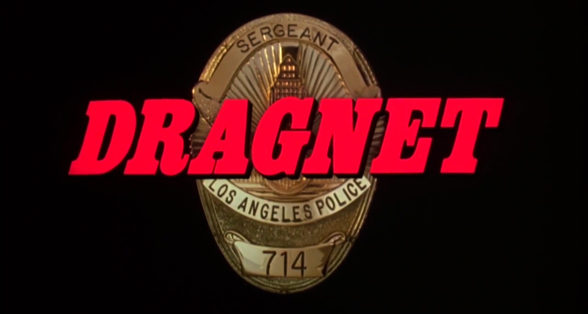
December 16, 1951: Dragnet premieres on NBC-TV, after some success on their radio network since 1949. It set the standard for all police dramas to follow.

A "dragnet" is any system of coordinated measures for apprehending criminals or suspects; including road barricades and traffic stops, widespread DNA tests (not yet possible when the series aired), and general increased police alertness. The term derives from a fishing technique of dragging a fishing net across the sea bottom, or through a promising area of open water.

Jack Webb created the series, produced it through his Mark VII Productions, wrote some episodes, and starred as Detective Sergeant Joe Friday. The show would begin with Walter Schumann's composition, which became perhaps the most famous TV theme song of all time, with a photograph of Friday's badge, featuring the image of Los Angeles City Hall, and the number 714.

The common explanation for Friday's badge number is that Webb was a fan of baseball legend Babe Ruth, who hit 714 home runs. That had nothing to do with it. Another story was that Webb wanted 777, because 7 is considered a lucky number; but, for some reason or another, the LAPD wouldn't authorize that, but that they let him have 714, which was fine with Webb, since 14 is a multiple of 7. The real story is that there was a Sergeant Dan Cooke who helped Webb with material for the show, and he wore badge 714.

George Fenneman would begin each episode with this narration: "The story you are about to hear is true. The names have been changed, to protect the innocent." And Webb would begin to narrate, over a sweeping overhead shot of downtown: "This is the city: Los Angeles, California." He would set up the case with some mild exposition, and then say, "I was working the (day/night) shift out of (whatever the division was, which was unusual, as most detectives stay in one division). My partner is Frank Smith. My name's Friday. I carry a badge." And then the story would begin.

Friday's 1st partner, carried over from radio, was Sergeant Ben Romero, played by Barton Yarborough. But he died of a heart attack just 3 days after the pilot episode aired, and had completed only 1 other episode. For the rest of the 1951-52 TV season, Friday's partner was Sergeant Ed Jacobs, played by Barney Smith. Thereafter, Friday's partner was Sergeant Frank Smith, played first by Herb Ellis, then, for most of the show, by Ben Alexander.

Starting in Season 2, Olan Soule played Ray Pinker, the show's forensic scientist, a precursor to such roles on shows like Quincy and the CSI and NCIS franchises. Soule would go on to voice Batman in the 1970s Super Friends cartoons.

At the end of each show, "mug shots" would be shown, explaining the crimes with which the arrestees were charged, the verdicts in their trials, and, if convicted, their sentences. Their names were changed from the real stories, "to protect the innocent" -- not just the defendants, in case they were wrongly convicted, but their loved ones, who did not deserve to have viewers seek them out in anger.

The show ran 8 seasons, until August 23, 1959. It was the 1st police drama that real cops thought bore any resemblance to actual police work. There weren’t a lot of sensational car chases, and Webb had a rule that each cop could fire his gun a maximum of once per episode. Most of it was actual detective work: Interviewing complainants, suspects, and witnesses, and tracking down leads, before making the case. Friday frequently asked for "the facts," sometimes, "just the facts." He never once used the exact words so often attributed to him: "Just the facts, ma'am."

A Dragnet feature film, the first installment of the franchise in color, was released in 1954. In 1967, Webb, Mark VII and NBC relaunched the series in color. Alexander was on another police series on ABC, Felony Squad, and thus unavailable. So Harry Morgan, a veteran of the sitcoms December Bride and Pete and Gladys, and later the commanding officer Colonel Sherman T. Potter on M*A*S*H, became Friday's new partner, Bill Gannon.
The show took advantage of advances in technology, and took on the social issues of the late 1960s, including gangs, drugs, and teenage runaways coming to the Pacific Coast for the "Summer of Love" atmosphere. It ran for 3 seasons.

In 1968, Webb appeared on The Tonight Show Starring Johnny Carson, and parodied his show, telling of a theft at the Acme School Bell Company, whose boss Carson played. It became known as "The Copper Clapper Caper," and the ability of Webb and Carson to keep straight faces with all the alliteration made it one of the funniest bits in Tonight Show history. It is one of the few bits from Carson's New York years (1962-72) that has been preserved in color.

Webb died in 1982. The LAPD subsequently retired badge number 714. The badge and ID that Webb used as Friday were real LAPD equipment, and are on display at the city's police academy.

In 1987, a Dragnet film was released, with Dan Cooke as a technical advisor, but it was a comedy, almost a parody of the series. Morgan returned as Gannon, now a Captain. Dan Aykroyd played Sgt. Joe Friday, the nephew and namesake of the original. (The original Friday was famously a bachelor, the kind of man who was "married to his work," unlike Frank Smith, who frequently mentioned his own wife.) Tom Hanks played his unwanted new partner, Pep Streebeck, a slob -- an "Oscar Madison" to Joe's "Felix Unger." This dynamic would be reversed 2 years later, as Hanks played a neat-freak cop who had to take on a lovable but ill-behaved, messy dog in Turner & Hooch.

In 1989, The New Dragnet ran in syndication, but with entirely new characters. You might say the names had been changed, to protect the legendary. It didn't catch on, and was canceled less than a year after the pilot. In 2003, ABC paired with Dick Wolf, the producer of the Law & Order franchise, to create L.A. Dragnet, with Ed O'Neill as Joe Friday and Ethan Embry as Frank Smith. This didn't work, either, and after 22 episodes, albeit spread over almost 2 full years, it was canceled.

*

December 16, 1951 was a Sunday. Baseball was out of season. The NFL was in the final week of its regular season, and these games were played:

* The New York Giants beat the New York Yanks (not "Yankees"), 27-17 at Yankee Stadium.

* The Cleveland Browns beat the Philadelphia Eagles, 24-9 at Shibe Park in Philadelphia.

* The Pittsburgh Steelers beat the Washington Redskins, 20-10 at Griffith Stadium in Washington.

* The Chicago Cardinals beat their arch-rivals, the Chicago Bears, 24-14 at Comiskey Park in Chicago.

* The Los Angeles Rams beat the Green Bay Packers, 42-14 at the Los Angeles Memorial Coliseum.

* And the San Francisco 49ers beat the Detroit Lions, 21-17 at Kezar Stadium in San Francisco.

The following week, the Rams beat the Browns in the NFL Championship Game at the L.A. Coliseum, avenging their loss to the Browns in the previous year's title game.

There were 5 games played in the NBA that day:

* The New York Knicks beat the Fort Wayne Pistons, 80-71 at North Side High School in Fort Wayne, Indiana. Yes: Until the Allen County War Memorial Coliseum opened the following September 28, an NBA team was playing home games in a high school gymnasium. This was a long time ago.

* The Boston Celtics beat the Philadelphia Warriors, 92-90 in overtime at the Boston Garden.

* The Indianapolis Olympians beat the Syracuse Nationals, 96-92 at the Onondaga County War Memorial (now the Upstate Medical University Arena) in Syracuse, New York.

* The Rochester Royals beat the Baltimore Bullets, 99-95 at the Edgerton Park Arena in Rochester, New York.

* And the Minneapolis Lakers beat the Milwaukee Hawks, 99-52 at the Minneapolis Auditorium.

And the NHL's entire "Original Six" were in action:

* The New York Rangers lost to the Detroit Red Wings, 3-1 at the old Madison Square Garden.

* The Montreal Canadiens beat the Boston Bruins, 4-2 at the Boston Garden.

* And the Chicago Black Hawks beat the Toronto Maple Leafs, 4-3 at the Chicago Stadium.

Wednesday, November 30, 2022

November 30, 1951: The New Jersey Turnpike Opens

November 30, 1951: The New Jersey Turnpike opens, mostly. For the moment, it runs from Exit 1 in Penns Grove, near the newly-opened Delaware Memorial Bridge, to Exit 11 in Woodbridge, an interchange with U.S. Route 1, U.S. Route 9, State Route 440, and, by 1956, the Garden State Parkway. (On that road, that interchange will be Exit 129.)

Like the later Garden State Parkway, the Turnpike was the brainchild of Governor Alfred E. Driscoll. He set a November 30, 1951 deadline, and there were delays that suggested they wouldn't make it. They did.

The Turnpike was extended to its full 117-mile length the next year, connecting with New York City via the Lincoln Tunnel (Exit 16) and the George Washington Bridge (Exit 18). One notable problem was the Pulaski Skyway, which has carried Routes 1 and 9 from Newark to Jersey City since 1932. If they built the Turnpike under the Skyway, there might not be enough room for trucks to fit. If they built the Turnpike over the Skyway, there would be room, but construction would take a lot more time and money. They decided to build under, and no truck has ever gotten stuck under it. Just in case, a few years ago, a big construction project was undertaken, and it lowered the roadway.

In 1956, the Newark Bay Extension opened at Exit 14, near Newark International Airport. This includes the Newark Bay Bridge, and 3 new exits in Jersey City: Exit 14A for Bayonne, Exit 14B for downtown, and Exit 14C for the Holland Tunnel into New York.

That same year, an extension was built from Exit 6 to the new Delaware River-Turnpike Toll Bridge, connecting the New Jersey Turnpike with the Pennsylvania Turnpike. It is named the Pearl Harbor Memorial Turnpike Extension. From here on north, the New Jersey Turnpike is bannered as part of Interstate 95.

In 1970, the Western Spur was opened, designed to aid travelers going around New York City to New England (taking the Tappan Zee, now Mario Cuomo, Bridge to the New England Thruway). It was also meant to access the planned Meadowlands Sports Complex in East Rutherford. The new exits were labeled 15W, 16W and 18W; while the former Exits 15, 16 and 18 were relabeled 15E, 16E and 18E. In 2005, the newest exit opened: Exit 15X, for the Secaucus Junction Rail Station.

The Turnpike has become not just a great method for getting people from one point in New Jersey to another, or from New York to points south and west (or vice versa) without having to go through Philadelphia, but it's become a cultural icon. Chuck Berry, The Mamas & the Papas, Paul Simon and Bruce Springsteen have all written songs mentioning it. And the opening montage of The Sopranos showed James Gandolfini as Tony Soprano, driving out of the Lincoln Tunnel and down the Turnpike.

Of course, for a lot of people not from New Jersey, the Turnpike is all they see of the State: Things like the Meadowlands' stadiums and swamps, the Skyway, the Airport, the big oil refinery in Linden, and vast swaths of not much of anything taking up the space south of Trenton. These people never see the nice parts of New Jersey, and never understand why it's called "The Garden State."

The Turnpike's exit numbers are sequential, not by milepost as the Parkway's will be. As a result, when new exits need to be built, they require letters. Between Exit 7 in Bordentown Township and Exit 8 in East Windsor is Exit 7A in Robbinsville; and between Exit 8 and Exit 9 in East Brunswick is Exit 8A in Monroe.

If the exits were by mileposts, they would be, as follows: 

* Exit 1, Penns Grove, Salem County, connecting with Interstate 295, U.S. Routes 40 and 130, New Jersey Route 49 and the Delaware Memorial Bridge: Exit 0, or Exit 1.

* Exit 2, Woolwich, Gloucester County, U.S. Route 322 and the Commodore Barry Bridge: Exit 13.

* Exit 3, Runnemede, Camden County, N.J. Route 168 and, by extension, the Atlantic City Expressway and the Walt Whitman Bridge to Philadelphia: Exit 26. Oddly, despite the access to the Expressway, this exit, unlike Exits 7A and 11, is not labeled "Shore Points."

* Exit 4, Mount Laurel, Burlington County, N.J. Route 73 and, by extension, the Ben Franklin Bridge to Philadelphia: Exit 34.

* Exit 5, Westampton, Burlington County, County Route 541: Exit 44.

* Exit 6, Mansfield, Burlington County, Interstate 95 and, by extension, Interstate 276 and the Pennsylvania Turnpike: Exit 51.

* Exit 7, Bordentown Township (surrounding Bordentown City), Burlington County, U.S. Route 206: Exit 53.

* Exit 7A, Robbinsville, Mercer County, Interstate 195: Exit 60. This exit can be used for both the State capital of Trenton and the Six Flags Great Adventure theme park. For drivers going north on the Turnpike, this exit is labeled "Shore Points," due to the access to I-195.

* Exit 8, East Windsor, Mercer County, N.J. Routes 33 and 133: Exit 67.

* Exit 8A, Monroe, Middlesex County, N.J. Route 32 for access to U.S. Route 130 and County Route 535: Exit 74. For me, growing up in East Brunswick in the 1970s and '80s, this was the exit we used for southbound points like Philadelphia, Washington and Virginia.

* Exit 9, East Brunswick, Middlesex County, N.J. Route 18 for access to U.S. Route 1: Exit 83. This was the exit we used for North Jersey and New York City. East Brunswick's main bus terminal was here, and, from 1991 to 2020, I lived 1 mile away, for relatively easy access to The City.

* Exit 10, Edison, Middlesex County, Interstate 287 and N.J. Route 440, and, by extension, the Outerbridge Crossing into Staten Island, New York City: Exit 88.

* Exit 11, Woodbridge, Middlesex County, the Garden State Parkway, U.S. Routes 1 and 9: Exit 91. For drivers going south on the Turnpike, this exit is labeled "Shore Points," due to the Parkway access.

* Exit 12, Carteret, Middlesex County, County Route 602: Exit 96.

* Exit 13, Elizabeth, Union County, Interstate 278 and the Goethals Bridge into Staten Island: Exit 99.

* Exit 13A, Elizabeth, Union County, N.J. Route 81 and, by extension, Newark Liberty International Airport and Elizabeth Seaport: Exit 101. It also provides access to the Jersey Gardens Mall and that big IKEA store visible from the road.

* Exit 14, Newark, Essex County, Interstate 78, U.S. Routes 1, 9 and 22, with access to the Airport and the Newark Bay Extension: Exit 104.

* Exit 15E, Newark, Essex County, U.S. Routes 1 and 9, and thus the Pulaski Skyway toward Jersey City: Exit 107.

* Exit 15W, Kearny, Hudson County, Interstate 280: Exit 108. Theoretically, any of Exits 14, 15E or 15W can be used for downtown Newark and the Prudential Center arena. For Red Bull Arena, Exit 15W is the most convenient.

* Exit 15X, Secaucus, Hudson County, the Secaucus Junction Rail Station: Exit 110.

* Exit 16E, Secaucus, Hudson County, N.J. Routes 3 and 495, accessing the Lincoln Tunnel into Manhattan: Exit 112.

* Exit 16W, East Rutherford, Bergen County, N.J. Route 3 and the Meadowlands Sports Complex: Exit 112.

* Exit 18E and Exit 18W, Carlstadt, Bergen County, Interstates 80 and 95, U.S. Routes 1, 9 and 46: Exit 114.

*

November 30, 1951 was a Friday. Baseball was out of season. There were 3 college football games played that night:

* The University of Richmond beat George Washington University, 20-19 at Griffith Stadium in Washington.

* The University of Miami beat Nebraska, 19-7 at Burdine Stadium (later renamed the Orange Bowl) in Miami. This would happen a few more times in the decades to come.

* And the University of Houston beat North Texas State University (now the University of North Texas), 20-14 at Eagle Field in Denton, Texas.

There was only 1 game played in the NHL that night, at the Montreal Forum, and the Montreal Canadiens and the Toronto Maple Leafs played to a 0-0 tie. There were 3 games played in the NBA that night:

* In a rematch and a reverse of the previous season's NBA Finals, the New York Knicks beat the Rochester Royals, 79-74 at the old Madison Square Garden.

* The Philadelphia Warriors beat the Syracuse Nationals, 81-78 at the Philadelphia Arena. When the Warriors moved to San Francisco in 1962, the Nationals replaced them a year later, as the Philadelphia 76ers.

* And the Washington Capitols beat the Boston Celtics, 85-81 at the Boston Garden. Ironically, the Celtics had just hired a former Capitols coach, who quit because he didn't have the team owner's backing to acquire what he thought were the necessary players. With Walter Brown, owner of the Garden, the Celtics and the Bruins, and making more money on the Ice Capades than on the rest of it combined, paid for the players his new coach wanted.

That new coach was a native of Brooklyn, but went to George Washington University, and seemed at first to be a natural to coach the Caps. And, for the rest of his life, despite being involved with the Celtics in one capacity or another, he kept his home in Washington. He was Arnold Jacob "Red" Auerbach.

Friday, November 25, 2022

November 25, 1951: The San Francisco Dons' Noble Farewell

November 25, 1951: The football team of the University of San Francisco defeats Loyola University of Los Angeles, 20-2 at the Rose Bowl in the Los Angeles suburb of Pasadena, California, in an unusual Sunday college football game. This completes an undefeated season.

It turns out to be the last football game that USF ever played. There could have been one more, but they took a noble stand, and refused to play it.

USF was founded in 1855, as a private Catholic (Jesuit) school. Its founder, Father Anthony Maraschi, made it a sporting school from the beginning, organizing baseball games for its first students. In 1907, they organized their earliest intercollegiate teams, and developed rivalries with nearby Catholic schools: Santa Clara University, outside San Jose; and Saint Mary's College of California, in Moraga, in the East Bay.

Their teams were called the Dons. California was founded by the Spanish, in whose language "Don" refers to a wealthy landowner, equivalent to the English term "Lord." The feminine version is Doña.

The San Francisco Dons had done well in some sports, but not football. But in 1951, they came out of nowhere. Under head coach Joe Kuharich, several players blossomed: Running back Ollie Matson, offensive tackles Bob St. Clair and Louis "Red" Stephens, defensive end Gino Marchetti, and linebacker Burl Toler.

They opened the season on September 21, at Kezar Stadium in San Francisco's Golden Gate Park, a facility they shared with the NFL's San Francisco 49ers. They beat San Jose State, 39-2. They went to Boise, and beat the University of Idaho, 28-7. They beat the Marines team from Camp Pendleton, outside San Diego, 26-0 at Kezar. They went down the Peninsula, and beat San Jose State, 42-7. They were 4-0, but not yet getting noticed outside California.
Kezar Stadium

That would change on October 20. At Triborough Stadium (later Downing Stadium) on Randalls Island in New York's East River, they beat Fordham University, 32-26. That got the attention of the New York media, and now, they were getting noticed coast-to-coast. By October 26, they were ranked Number 20 in the country.

They beat the team from the San Diego Naval Base, 26-7. They beat Santa Clara by the same score. They went to Stockton and beat the University of the Pacific, 47-14. Finally, on November 25, they went to the Rose Bowl, and beat Loyola University of Los Angeles, the school now known as Loyola Marymount, 20-2. The Dons were 9-0, and ranked Number 13 in the country.

The Orange Bowl Committee invited them to play in the Orange Bowl game, at what was then named Burdine Stadium, but was renamed the Orange Bowl in 1960. But there was a problem: The game was in Miami. In Florida. A Southern State. A segregated State. The Dons could only accept the bid if they left their black players at home.

They refused: They would play with their black players, like Matson and Toler, or not at all. And so, there was no bowl game for the undefeated Number 13 team in the country.

It got worse: Two days after their last game, on November 27, the University disbanded the football program, due to a lack of funding. There was a brief revival at the NCAA Division II level from the early 1960s to the early 1970s, but, as far as major-college football was concerned, it was all over for the University of San Francisco.

The 1952 Orange Bowl was played on New Year's Day, January 1, between 2 teams from segregated Southern States. Georgia Tech, of Atlanta, beat Baylor, of Waco, Texas, 17-14.

Ollie Matson went on to a Hall of Fame career, mostly with the Chicago Cardinals. Bob St. Clair played his pro career with the San Francisco 49ers, meaning that, for his entire football career -- high school, college and professional -- he played his home games at Kezar Stadium. He was also elected to the Pro Football Hall of Fame. So was Gino Marchetti, Captain of the Baltimore Colts teams that won the 1958 and '59 NFL Championships.

Red Stephens played 6 seasons with the Washington Redskins, who had hired USF's Joe Kuharich as head coach, and later served as an assistant coach under Kuharich, who was hired to succeed Frank Leahy at the University of Notre Dame.

Kuharich coached the Philadelphia Eagles from 1964 to 1968, and it was a disaster: He was a prude, and traded his team's hard-partying quarterback, Sonny Jurgensen, to the Redskins for the straight-arrow Norm Snead. Jurgensen went to the Hall of Fame, having thrown more touchdown passes than any quarterback in the 1960s; Snead threw more interceptions than any in the decade.

Fans wore "JOE MUST GO" buttons to Eagle games, and, at the infamous '68 season finale, when the Eagle fans booed a man in a Santa Claus suit during a halftime Christmas pageant, a fan hired a plane to fly over Franklin Field, trailing a banner reading, "JOE MUST GO."

Kuharich died in 1981, little lamented even in San Francisco. Stephens followed in 2003, Matson in 2011, St. Clair in 2015, Marchetti in 2019.

USF has had some athletic success since 1951. Their basketball team, coached by Phil Woolpert and led by Bill Russell, won the National Championship in 1955 and '56, launching a 60-game winning streak, then the longest streak in college basketball history. The soccer program has also been very successful, winning 5 National Championships in the 1930s, and 4 more from 1966 to 1980.

*

November 25, 1951 was a Sunday. Baseball was out of season. These NFL games were played that day:

There were 4 games played in the NBA:

* The New York Knicks lost to the Boston Celtics, 70-68 at the old Madison Square Garden.

* The Baltimore Bullets beat the Philadelphia Warriors, 81-74 at the Baltimore Coliseum.

* The Rochester Royals beat the Fort Wayne Pistons, 74-63 at the Edgerton Park Arena in Rochester, New York.

* And the Minneapolis Lakers beat the Milwaukee Hawks, 72-59 at the Milwaukee Arena. In 1974, it was renamed the Milwaukee Exposition, Convention Center and Arena, or "The MECCA." Since 2014, it has been named the UW-Panther Arena.

And the NHL's entire "Original Six" were in action:

* The New York Rangers beat the Montreal Canadiens, 2-1 at the Old Madison Square Garden. Yes, The Garden hosted both the Knicks and the Rangers on the same day.

* The Toronto Maple Leafs beat the Boston Bruins, 4-1 at the Boston Garden.

* And the Detroit Red Wings beat the Chicago Black Hawks, 5-2 at the Chicago Stadium.

Thursday, November 3, 2022

November 3, 1951: The 1st "Crossover" Hit Song

November 3, 1951: Tony Bennett succeeds himself at Number 1 on Billboard magazine's popular music singles chart, the leading survey of the era, as his recording of "Because of You" gives way to his recording of "Cold, Cold Heart."

It was the first exposure outside the South for the latter song's writer, Hank Williams. Hank called Tony and asked, "Tony, why did you ruin my song?" Hank had to assure him he was only joking: He loved it.

Born in Queens on August 3, 1926, Anthony Benedetto served in the U.S. Army, and saw combat near the end of World War II. "Because of You" was his 1st big hit. It was written in 1940 by Arthur Hammerstein (son of composer Oscar Hammerstein I and nephew of composer Oscar Hammerstein II) and Dudley Wilkinson. It was not a hit then, but it became one in 1951 because of its use in the film I Was an American Spy.

After "Cold, Cold Heart," Bennett hit Number 1 again in 1953 with "Rags to Riches," and kept singing standards in the "Big Band" style, even as rock and roll took over, becoming a regular on The Ed Sullivan Show.

In 1962, he recorded George Cory and Douglass Cross' song "I Left My Heart In San Francisco," and while it only reached Number 19 on Billboard's Hot 100 chart (which replaced its former chart in 1958), it became one of the most beloved songs of the 1960s, and his signature song.

In 1970, upon the advice of Columbia Records' Clive Davis, he recorded Tony Sings the Great Hits of Today! It flopped. He spent the 1970s going around record companies, and developed a cocaine addiction. His son Danny realized that they had opposite problems: Tony could sing, but couldn't handle the business side of things; while Danny had a head for business, but had no luck performing with his rock band. So Danny became Tony's manager, and got him clean. By 1986, Tony was back with Columbia and recording successful albums.

Tony began the trend of older singers recording standards in "Great American Songbook" albums, including one of songs associated with Frank Sinatra in 1992, titled Perfectly Frank. Sinatra returned the compliment by calling Tony his favorite singer. In 2008, Billy Joel invited him to the stage at the last concert at Queens' Shea Stadium, and he sang "New York State of Mind."

Tony began recording with up-to-date performers like Flavor Flav of Public Enemy, Red Hot Chili Peppers, and, in his final records, Lady Gaga. He and Gaga, both New Yorkers of Italian descent, born 60 years apart, adored each other.
He never intended to retire, but had to in 2021, at the age of 95, as he had become frail and had begun decline into dementia, having trouble remembering lyrics as he was recording them. (UPDATE: He died on July 21, 2023, shortly before what would have been his 97th birthday.)

*

November 3, 1951 was a Saturday. Among the college football games played on this day were these:

* Number 1 Tennessee beat North Carolina, 27-0 at Kenan Stadium in Chapel Hill, North Carolina. Tennessee went undefeated in the regular season.

* Number 2 Michigan State had the week off. They finished the season undefeated, and claimed the National Championship. However, they were not yet members of the Big Ten Conference, and thus were not invited to any of the bowl games.

* Number 3 Illinois beat Number 15 Michigan, 7-0 at Memorial Stadium in Champaign, Illinois.

* Number 4 Maryland beat Missouri, 35-0 at Byrd Stadium (now SECU Stadium) in the Washington suburb of College Park, Maryland. Maryland went undefeated in the regular season, and beat previously undefeated Tennessee in the Sugar Bowl. Both Tennessee and Maryland were awarded the National Championship by some of the deciders at the time, but, with Tennessee having lost the Sugar Bowl to Maryland, their claim is bogus.

* Number 5 Georgia Tech were held to a tie by Duke, 14-14 at Grant Field in Atlanta. It would be the only blot on Tech's record that season.

* Number 6 Princeton beat Brown, 12-0 at Palmer Stadium in Princeton. Led by two-way back Dick Kazmaier, who was awarded the Heisman Trophy, Princeton finished the season undefeated, but this was beyond the years when Ivy League schools accepted bowl bids. 

* Number 7 University of Southern California, USC, beat Army, 28-6 at Yankee Stadium.

* Number 8 Baylor were upset by Texas Christian University (TCU), 20-7 at Baylor Stadium in Waco, Texas. Baylor were invited to the Orange Bowl, where they lost to Georgia Tech, who claimed the National Championship. But, having a tie on their record, anyone recognizing them as such would have to contend with the perfect records of Maryland and Michigan State.

* Number 9 University of California are upset by the University of California at Los Angeles, UCLA, 21-7 at the Los Angeles Memorial Coliseum.

* Number 10 Wisconsin beat Indiana, 6-0 at Camp Randall Stadium in Madison, Wisconsin.

* Number 11 Stanford beat Number 16 Washington State, 21-13 at the original Stanford Stadium in the San Francisco suburb of Palo Alto, California. Stanford went to the Rose Bowl, where they lost to Illinois.

* Number 13 Notre Dame beat Navy, 19-0 at Municipal Stadium in Baltimore. Municipal Stadium was in the process of being converted into Memorial Stadium, as which it was dedicated when the Orioles debuted there on April 15, 1954.

* Number 14 Kentucky beat Number 19 Miami, 32-0 at McLean Stadium in Lexington, Kentucky. Kentucky went on to beat TCU in the Cotton Bowl.

* In a cross-State rivalry, Utah beat Utah State, 28-20 at Romney Stadium in Logan, Utah.

* And Rutgers beat Fordham, 13-7 at the old Rutgers Stadium in Piscataway, New Jersey.

Baseball was out of season. There were 4 games in the NBA:

* The New York Knicks beat the Milwaukee Hawks, 68-66 at the Milwaukee Exposition and Convention Center Arena. (Later nicknamed "The MECCA," it is now named the UW-Milwaukee Panther Arena).

* The Philadelphia Warriors beat the Fort Wayne Pistons, 70-69 at the Philadelphia Arena.

* The Indianapolis Olympians beat the Baltimore Bullets, 90-86 at the Baltimore Coliseum. The Olympians folded in 1953. The Bullets folded the next year, and the Baltimore Bullets that began play in 1963, now the Washington Wizards, have no connection to them.

* And the Minneapolis Lakers beat the Rochester Royals, 93-74 at the Edgerton Park Arena in Rochester, New York.

There were 2 games in the NHL. The New York Rangers beat the Toronto Maple Leafs, 2-1 at Maple Leaf Gardens in Toronto. And the Detroit Red Wings beat the Montreal Canadiens, 3-2 at the Montreal Forum. The Boston Bruins and the Chicago Black Hawks were not scheduled.

And in English soccer, Arsenal, the North London team I would eventually support, traveled to Yorkshire, and beat Middlesbrough, 3-0 at Ayresome Park in Middlesbrough.

Wednesday, October 26, 2022

October 26, 1951: Joe Louis' Last Stand

October 26, 1951: Desperate for money to pay a mounting tax bill, Joe Louis, who stood as Heavyweight Champion of the World longer than anyone (12 years, 1937-49) and defended the title more than anyone (25 times), climbs into the ring at the old Madison Square Garden for a purse of $300,000 – about $3.4 million in 2022 money.
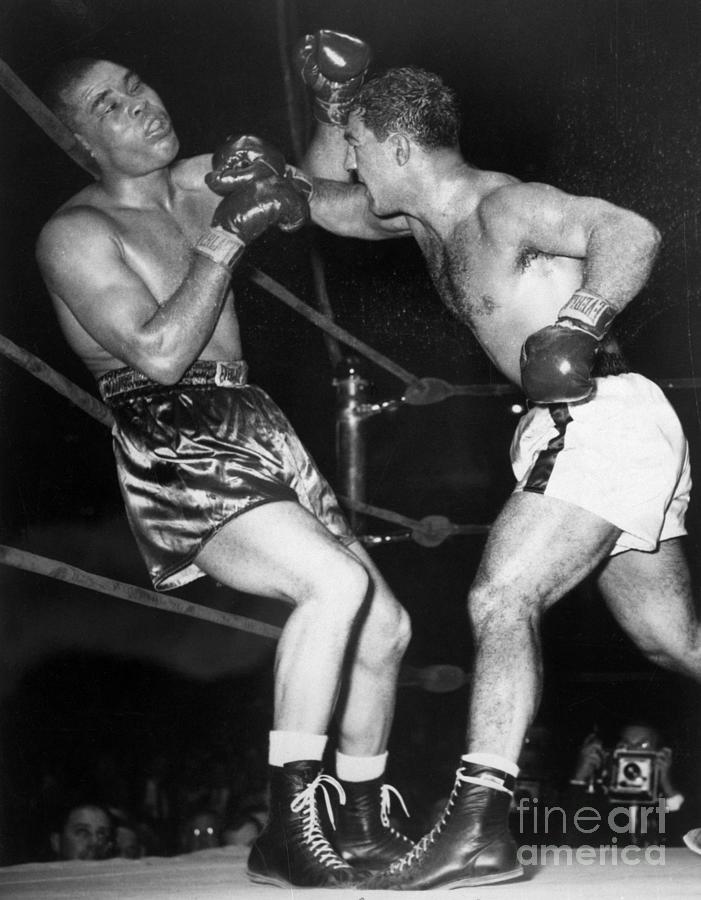
He fights Rocky Marciano, then a rising contender who comes into the fight at 37-0. He idolized Louis: telling the press, "This is the last guy I want to fight." It had nothing to do with his own ability, or whatever Louis had left.
It is a mismatch: Marciano is 28, is in superb shape, and has a sledgehammer for a right hand; Louis is 37, struggles with his weight, and his arms and legs, once the fastest in the fight game despite his being a heavyweight, have terribly slowed. Marciano actually knocks Louis out of the ring in the 8th round. Ruby Goldstein, maybe the best referee in the business and himself a former lightweight contender, wisely stopped the fight at that point.
Marciano went back to his dressing room, and cried over what he had done to his greatest hero, and even went over to see him, and said, "I'm sorry, Joe." Sugar Ray Robinson, then Middleweight Champion, was in Louis' dressing room to console him, and was also crying.
Eleven months later, Marciano knocked Jersey Joe Walcott out to become the Heavyweight Champion. He held the title for 3 years, then retired undefeated at 49-0. Louis, still needing money, humiliated himself as a professional wrestler, and not a very good one.
Both men's lives ended badly: Marciano's in a plane crash in Iowa in 1969, just before his 46th birthday; Louis' in a wheelchair, unable to pay his medical bills, with Frank Sinatra hosting a benefit concert for him in Las Vegas in 1978, which kept Louis afloat until he finally passed away in 1981, at 67.
As a Sergeant in the U.S. Army in World War II, he was laid to rest at Arlington National Cemetery, on the order of President Ronald Reagan, and with Sinatra delivering the eulogy. Marciano was interred in a crypt at Forest Lawn Memorial Cemetery in Fort Lauderdale, Florida.
*
October 26, 1951 was a Friday. William "Bootsy" Collins, bass guitarist for George Clinton's P-Funk Empire, was born on this day.

The baseball season was over. Football was in midweek. The NBA season wouldn't start for another 6 days. The NHL season had started, but no games were scheduled. So there were no scores on this historic day.

Thursday, October 20, 2022

October 20, 1951: The Johnny Bright Incident

October 20, 1951: Drake University of Des Moines, Iowa plays football against Oklahoma A&M – the name will be changed to Oklahoma State in 1958 – at Lewis Field in Stillwater, Oklahoma.
Lewis Field, as it would have appeared in 1951

Drake quarterback Johnny Bright, one of the 1st black players to receive serious consideration for the Heisman Trophy, is assaulted by white A&M defensive tackle Wilbanks Smith. "Unnecessary roughness"? Smith knocked Bright unconscious 3 times in the 1st 7 minutes of the game, the last time breaking his jaw.

A&M won the game, 27-14. It was Drake's 1st loss of the season. Photographs of what becomes known as "the Johnny Bright Incident," by Don Ultang and John Robinson, were featured on the front page of the next day’s Des Moines Register, and won the Pulitzer Prize.
Neither his school nor the Missouri Valley Conference disciplined Smith, nor did the Conference discipline the school or any of its coaches, in any way. As a result, Drake left the league in protest. So did Bradley University of Peoria, Illinois, also integrated by that point. The NCAA issued new rules about blocking and tackling, and mandated better head protection, including facemasks for helmets. The NFL followed suit in 1954.

Drake returned to the MVC for sports other than football in 1956, and for football in 1971. In 1978, along with the entire MVC, Drake dropped its program to NCAA Division I-AA, then to NCAA Division III in 1987, and back to I-AA (now the Football Championship Subdivision, or FCS) in 1991, where they remain. Today, aside from this incident, Drake's athletics department is best known for the Drake Relays, 2nd only to the Penn Relays as America's leading track & field meet.

Bright recovered from his injuries, played one last game at the college level, and finished 5th in the 1951 Heisman Trophy balloting, which was won by Dick Kazmaier of Princeton, who will likely remain the last Ivy Leaguer to win it. (Ed Marinaro of Cornell finished 2nd in 1971, and remains the last one to even come close. He later played a cop on the TV drama Hill Street Blues.)

Drafted by the Philadelphia Eagles, Bright didn't want to play there -- not because he thought Philadelphia was a racist city (long before Dick Allen and Curt Flood thought so, and Jackie Robinson had been already notoriously subjected to racist abuse there), but because he knew there were a lot of Southern players in the NFL. He would play in Canada, and receive many honors (or, as they would spell it, "honours") there, including 3 straight Grey Cups with the Edmonton Eskimos.
When he retired in 1964, he was the CFL's all-time leading rusher, with 10,909 yards, a total then surpassed in the NFL only by Jim Brown, but Brown's amazing 5.2 yards per carry, often cited as a reason why he's the game's greatest ever player, never mind running back, is actually surpassed by Bright, with 5.5, making him North America's all-time leader in that stat at the time. Only 2 CFL players have passed him in rushing yardage since.

He is a member of the team's Wall of Honour and the College Football and Canadian Football Halls of Fame. Drake retired his Number 43 (he wore 24 with the Esks) and named the field at Drake Stadium after him. After serving as a teacher and principal at an Edmonton high school, he died in 1983 from complications from surgery. Ernie Davis of Syracuse became the 1st black Heisman winner in 1961.
Drake Stadium and Drake Fieldhouse

With some irony, the name of his pro team was cited as racist, insensitive to Native North Americans. In 2020, the name was dropped. With the CFL having canceled its entire season due to COVID restrictions, they didn't have to play a season as "The Edmonton Football Team." In 2021, they became the Edmonton Elks, allowing them to keep their familiar "EE" helmet logo, and projecting a favorable image: Western Canada has lots of elks, a strong animal with good speed for its size.

Built in 1920, Lewis Field was expanded significantly after 1951, and in 2002 was renamed for an oil baron who graduated from Oklahoma State and had contributed heavily to the school: Boone Pickens Stadium.
OSU offered Drake a formal apology for the actions of Wilbanks Smith -- in 2005, 54 years later, and 22 years after Bright's death.

In 2012, Smith gave an interview. He said that, when the Drake Bulldogs and the Oklahoma A&M Cowboys played each other in 1950, a Drake player had purposely hit an A&M player, and injured him, and he wanted revenge. He pointed out that he had hit the returning offending Drake player, who was white, in the same game the same way he had hit Bright. He did not play pro football, and worked as an engineer for Exxon. He died in 2020, at the age of 90.

*

October 20, 1951 was a Saturday. It was also the date of the suspensions being handed out in the basketball point-shaving scandal. I have an entry for that as well.

The biggest game of the day came at California Memorial Stadium in Berkeley, where Number 11 USC upset Number 1 California, 21-14. Number 2 Tennessee beat Alabama, 27-13 at Legion Field in Birmingham. (The Vols winning this traditional 3rd Saturday in October game wasn't so rare back then.) Tennessee would remain undefeated until blowing the National Championship by losing to Maryland in the Sugar Bowl.

Number 3 Michigan State beat Penn State, 32-21 at old Beaver Field in State College, Pennsylvania. Number 4 Texas was shocked by Arkansas, 16-14 at Razorback Stadium in Fayetteville.

Notre Dame beat the University of Pittsburgh, 33-0 at Pitt Stadium. Harvard beat Army, 22-21 at Harvard Stadium in Boston. The University of San Francisco, putting together an undefeated season that would nonetheless see them end with a ranking of only Number 14, beat fellow Catholic school Fordham, 32-26 at Randall's Island Stadium (later Downing Stadium) in the East River.

New York University lost to Holy Cross, 53-6 at Fitton Field in Worcester, Massachusetts. NYU played one more season of football, winning just 2 more games, and dropped their program. Columbia lost to Penn, 28-13 at Franklin Field in Philadelphia.

Princeton, with the aforementioned Heisman winner Kazmaier, went undefeated, finishing as the Number 5 team in the country. On October 20, they beat Lafayette, 60-7 at Palmer Stadium. And Rutgers lost to Lehigh, 21-6 at Rutgers Stadium in Piscataway, New Jersey.

The baseball season had ended 10 days earlier, with the New York Yankees beating the New York Giants in Game 6 of the World Series. The NBA season didn't begin until November 1. Only 2 NHL games were played:

* The New York Rangers beat the Toronto Maple Leafs, 3-2 at Maple Leaf Gardens in Toronto. Nick Mickoski scored the winner for the Broadway Blueshirts with 3:15 left, to beat the defending Stanley Cup Champions.

* And the Detroit Red Wings beat the Montreal Canadiens, 3-0 at the Olympia Stadium in Detroit. This would be repeated in that season's Stanley Cup Finals, as the Wings swept the Habs.

Also, Arsenal beat Charlton Athletic, 3-1 at The Valley in Southeast London. Also in English soccer, Claudio Ranieri, the Italian manager who led Leicester City to the 2016 Premier League title, was born.

This was also the day that CBS, the Columbia Broadcasting System, debuted its "Eye" logo, with the idea being that a TV camera was an "eye."
The 1970s version

December 31, 1999 & January 1, 2000: The Millennium

December 31, 1999:  The Millennium arrives. The people of planet Earth survived. At a terrible cost. But we hadn't destroyed ourselves. ...