January 30, 1873: Jules Verne publishes his novel Around the World In Eighty Days, one of the greatest adventure stories ever written.
Verne was born on February 8, 1828 in Nantes, France. At age 6, he was sent to a boarding school in that city. The teacher was the wife of a naval captain who had disappeared at sea about 30 years before. She told the students that he was not dead, but that he was a shipwrecked castaway, and, like Daniel Defoe's character Robinson Crusoe, would one day make it off his desert island and back to civilization. If he ever did, he never returned to her. But the idea of such adventure, and similar adventures, was put in young Jules' mind.
While attending law school in Paris, he met a woman who returned his affections, but her family didn't like him, and married her off to another man. This was to become another recurring theme in Verne's work: Women married against their will, including Aouda in Around the World In Eighty Days.
In 1849, he met Alexandre Dumas, already the author of The Count of Monte Cristo and The Three Musketeers, and became a close friend of his son, Alexandre Dumas fils, already the author of The Lady of the Camellias, which would be adapted into the opera La Traviata and the Greta Garbo film Camille. Verne helped Dumas fils write a play, The Broken Straws, which played to some success in 1850.
Verne abandoned his legal career for a literary one, spending the 1850s writing short stories and comic operas. In 1857, he married Honorine Morel, a widow with 2 small children. His only natural child, Michel Verne, was born in 1861.
The term "science fiction" was coined in 1926 by Hugo Gernsback. In the 1st issue of his magazine, Amazing Stories, he wrote, "By 'scientifiction' I mean the Jules Verne, H.G. Wells and Edgar Allan Poe type of story -- a charming romance intermingled with scientific fact and prophetic vision."
Verne himself used the terms "Roman de la Science" (novel of science) and "Voyages extraordinaires" (extraordinary voyages). These began with Five Weeks in a Balloon in 1863, and would also include Journey to the Center of the Earth in 1864, and From the Earth to the Moon in 1865.
Not only did From the Earth to the Moon inspire the 1st science fiction film, A Trip to the Moon in 1902, but it correctly predicted both that America would be the 1st nation to put people on the Moon, and it came very close to predicting the time the trip would take: He said 97 hours and 20 minutes, a little over 4 full days; from liftoff to Neil Armstrong's message of, "Houston, Tranquility Base here. The Eagle has landed," Apollo 11 took 102 hours and 45 minutes. Telling his tale 104 years before it could become reality, Verne under-estimated the time by only 5 hours and 25 minutes.
In 1870, Verne published Twenty Thousand Leagues Under the Sea, creating the character of Captain Nemo, and predicting the production of submarines. In 1871, he published A Floating City. And he was just getting warmed up.
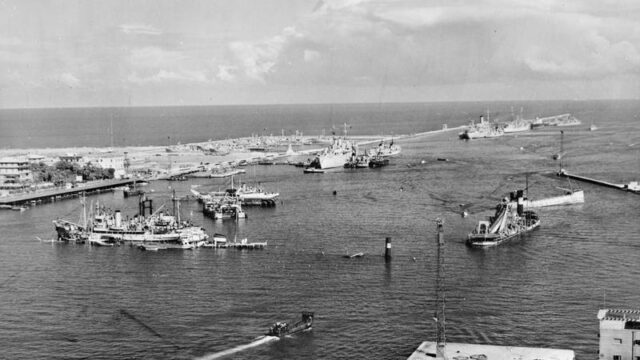
In 1869, the Suez Canal was built across the Isthmus of Suez in Egypt, connecting the Mediterranean Sea with the Red Sea, and thus with the Indian Ocean. No longer would ships from Europe have to travel all the way around Africa to reach the Middle East, India, the Far East, and Australia. That same year, the transcontinental railroad opened in America. No longer would travelers have to board ships steaming all the way around South America to get from America's Atlantic Coast to its Pacific Coast. In 1870, a rail line connected the Indian cities of Bombay and Calcutta (now known as Mumbai and Kolkata, the names officially changed in 1995 and 2001, respectively).
A magazine article suggested that, with these 3 advances, it would now be possible to go around the world in 80 days -- less than 3 months, also less than 12 weeks. The existing record was much longer: 394 days, by James Iredell Waddell, from October 8, 1864 to November 6, 1865. It was the end of the Age of Exploration, and the beginning of an era when, given enough money and enough time, anyone could travel pretty much anywhere they wanted.
Verne imagined Phileas Fogg, a Londoner of some means (how he made his money is never told in the original novel), who mentions the 80-day possibility to his fellow members of the Reform Club. They bet him that he can't do it. The wager is £20,000 -- in today's money, about £2.5 million; or, with the current exchange rate, a little over $3 million.
Fogg was very well off, but £20,000 was half his fortune, and he withdrew the other half from the bank to cover his expenses: If he lost the wager, he would be "ruined." But, as a "gentleman," having been challenged by his fellow "gentlemen," if he refused the challenge, he would be considered a "coward." And worse than the ruin of his finances would be the ruin of his reputation: Were he to be bankrupt, his friends would still consider him a man of honor, and help him out. But he could not refuse, in spite of the many dangers abroad.
He leaves the Reform Club at 8:45 PM on October 2, 1872, with a deadline of the same time of night on December 21. He is accompanied by his French valet, Jean Passepartout, who, as originally written, is a virtual copy of Conseil, the Flemish (Belgian) servant of Professor Pierre Aronnax, the natural scientist who narrated Twenty Thousand Leagues Under the Sea.
Fogg's original itinerary:
* Days 1 to 7: London to Dover by rail; ferry across the English Channel to Calais, France; rail to Brindisi, Italy; steamer across the Mediterranean to Suez.
* Days 8 to 20: Steamer across the Red Sea and the Indian Ocean to Bombay.
* Days 21 to 23: Rail to Calcutta.
* Days 24 to 36: Steamer to Hong Kong.
* Days 37 to 42: Steamer to Yokohama, Japan.
* Days 43 to 64: Steamer to San Francisco.
* Days 65 to 71: Rail to Jersey City, New Jersey, and ferry to New York.
* Days 72 to 80: Steamer to Liverpool, and then rail to London.
Spoiler alert for a novel almost a century and a half old, which has been adapted in movie form several times, most notably in a 1956 film, winning the Academy Award for Best Picture, starring David Niven as Fogg: There is another traveler, a London detective named Fix, who believes Fogg matches the physical description of an unidentified bank robber, and pursues him. He's got to get Fogg, either in Egypt, India or Hong Kong, each then under British rule. If he can't do that, then he's got to get on the same conveyances (ship to Yokohama, ship across the Pacific, train across America, ship across the Atlantic), before they are both, once again, on British soil in Liverpool.
Fix promises the captain of the Egypt-to-India steamer a reward if he can reach Bombay early. He does, by 2 days. But Fogg and Passepartout get away. Good for them. Bad for them is that there is still a part of the railway unfinished. They hire an elephant driver, and, along the way, save a widow named Aouda from the ritual suicide designed, against her will, from joining her husband. All the time they have gained has been lost, but Fogg doesn't care, as he and Aouda fall in love.
Fogg and Passepartout become separated in Hong Kong, and each (Fogg with Aouda) makes his separate way to Yokohama, where they meet up, and, as does Fix, get on the ship to San Francisco. The train ride across America is interrupted by a herd of bison crossing the tracks and a Native American attack.
Upon disembarking in Liverpool, on Day 80, Fix tells Fogg, "I arrest you in the Queen's name!" (Queen Victoria.) But when he telegraphs London to tell Scotland Yard, he receives a wire back, telling him the real robber had been arrested in Edinburgh 3 days earlier. Like Lieutenant Philip Gerard with Dr. Richard Kimble on the TV show The Fugitive, 95 years hence, he now knows that the man he has been long chasing is innocent. He has to let Fogg go. Fogg comes out of St. Pancras Station in London, and discovers it is 5 minutes past his deadline.
Fogg tells Aouda that he wants to marry her, but is willing to let her go if she doesn't want to live in poverty. She agrees to marry him anyway. He sends Passepartout to find a minister who will marry them tomorrow. He returns and says the minister can't marry them tomorrow, because tomorrow is Sunday. Fogg tells him that tomorrow is Monday. Passepartout explains that they had crossed the International Date Line on the Pacific Ocean, so they gained a day: To the members of the Reform Club, today is December 21, Day 80.
Fogg rushes to the Club, and, 5 seconds before 8:45 PM, he says, "Here I am, gentlemen." He collects his winnings, and splits them with Passepartout and Fix, who had helped him (for his own reason), and marries Aouda.
The novel was a smashing success. In 1889, American journalist Nellie Bly told her editor, Joseph Pulitzer of the New York World, that she could beat the fictional record. Pulitzer forwarded her the money necessary to try. In Amiens, France, she met Verne, who doubted she could do it, but wished her luck. She did it in 72 days and 6 hours, her launching point and destination being Hoboken Terminal in New Jersey.
Verne continued to write his scientific novels, including The Mysterious Island in 1875, The Green Ray (predicting lasers) in 1882, Robur the Conqueror (with his armed airship) in 1886, The Purchase of the North Pole in 1889 (20 years before Robert Peary claimed to be the 1st person to reach the real thing), An Antarctic Mystery in 1897 (14 years before Roald Amundsen became the 1st person to reach the South Pole), The Village in the Treetops in 1901, and the Robur sequel Master of the World in 1904.
He died in 1905, in Amiens, at age 77. His son Michel, also a writer, lived until 1925. At least one great-great-grandson of Jules Verne is believed to still be alive.
In 1928, Palle Huld, a 15-year-old boy scout from Denmark, sponsored by a Danish newspaper, tried to set a new around-the-world record in commemoration of the 100th Anniversary of Verne's birth. Instead of going by India, he crossed the Soviet Union on the Trans-Siberian Railway, which had been completed in 1904. It took him 44 days, and he published an account titled A Boy Scout Around the World. Once done, he made another trip, to Amiens, where he laid flowers at Verne's grave. Believed to be the inspiration for the character Tintin by Hergé (Georges Prosper Remi), he lived until 2010, age 98.
In 1988, attempting to follow Fogg's route and modes as closely as possible, including starting and ending at the real-life Reform Club in London, Michael Palin of the Monty Python comedy troupe did it in 79 days and 7 hours, recording his journey for the documentary Around the World in 80 Days with Michael Palin. The following year, another Python member, Eric Idle, played Passepartout to Pierce Brosnan's Fogg in a film version of the novel, airing on CBS. It ends with Fogg walking into the Club and nonchalantly saying, "Gentlemen, it is precisely nine o'clock. Anyone for a game of whist?" (An early form of the card game bridge.)
The current record, perhaps appropriately, is held by a pair of Frenchmen: Michel Dupont and Claude Hetru, who piloted an Air France Concorde on August 15 and 16, 1995, doing it in 31 hours, 27 minutes and 49 seconds. That's 2 hours faster than it took Charles Lindbergh to fly only across the Atlantic in 1927.
*
January 30, 1873 was a Thursday. Baseball was in the off-season. Basketball didn't yet exist. Nor did organized hockey, and American football was still basically soccer. Even England's FA Cup, in only its 2nd season, was between rounds. So there were no scores on this historic day.
However, on the date that Fogg fictionally completed his trip, December 21, 1872, there was an FA Cup match. Maidenhead F.C., of Berkshire, a team now named Maidenhead United, defeated nearby Windsor Home Park (now Windsor F.C.), 1-0 in Windsor.