Showing posts with label nba draft. Show all posts

Tuesday, June 28, 2022

June 28, 2007: The Tragedy of Greg Oden

June 28, 2007: The NBA Draft is held at the WaMu Theater at Madison Square Garden. Washington Mutual then had the rights to the venue's name. Best known as the Felt Forum, it is now simply "The Theater at Madison Square Garden."

Among the players chosen in the 1st Round: Kevin Durant by the Seattle SuperSonics (soon to become the Oklahoma City Thunder), Al Horford by the Atlanta Hawks, Mike Conley by the Memphis Grizzlies, Corey Brewer by the Minnesota Timberwolves, and Joakim Noah by the Chicago Bulls.

The Portland Trail Blazers had the 1st pick. They could have used it on any of these men. Instead, they made a historic mistake -- the kind that made Karl Marx say, "History repeats itself, first as tragedy, then as farce."

Gregory Wayne Oden Jr. was born on January 22, 1988 in Buffalo, New York. In 2007, the 7-feet-even, 250-pound center led Ohio State to the Big Ten Championship and the Final of the NCAA Tournament. The Blazers chose him as the Number 1 pick in the NBA Draft.

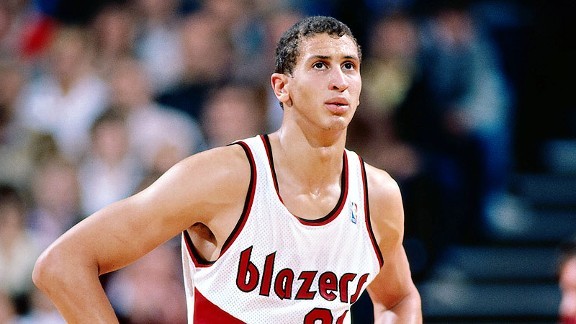
But, like previous Blazer big men Bill Walton and Sam Bowie, he was plagued by injury, worse than either of them was. He missed the entirety of what would have been his rookie season. An NBA regular season is 82 games. He played 82 games for the Blazers over 2 seasons, plus 6 more in the Playoffs. He then missed 3 seasons due to injury – and then miraculously played 23 games for the Miami Heat in 2013-14, including 3 in the Playoffs, earning him an NBA Championship ring.

But the injuries came back, and after playing in China in 2015-16, he gave up. He went back to Ohio State, and got his bachelor's degree in sport industry in 2019. In 2022, became an assistant coach under Thad Matta at Butler University. His playing career was a tragedy, but there may yet be a second act.

UPDATE: He left the Butler coaching staff in 2024, to rejoin Edyoucore Sports & Entertainment as the director of player development. He had previously worked for them from 2019 to 2022.

*

June 28, 2007 was a Thursday. Baseball was the only sport in season at the time, and these games were played:

* The New York Yankees were leading the Baltimore Orioles, 8-6 in the top of the 8th inning at Camden Yards in Baltimore, when the game was suspended due to rain. It was resumed on July 27, and the Yankees held on to win, 8-7. Andy Phillips hit a home run, Derek Jeter went 2-for-5 with 2 RBIs, and Alex Rodriguez went 0-for-4 but had an RBI on a sacrifice fly. Chien-Ming Wang started, and Mike Myers was the winning pitcher in relief.

* The Philadelphia Phillies beat the Cincinnati Reds, 8-7 at Citizens Bank Park in Philadelphia. Jimmy Rollins singled Jayson Werth home with the winning run in the bottom of the 10th inning.

* The Chicago White Sox beat the Tampa Bay Devil Rays, 5-1 at Tropicana Field in St. Petersburg, Florida.

* The Florida Marlins beat the Pittsburgh Pirates, 9-7 at Dolphin Stadium (now Hard Rock Stadium) in Miami Gardens, Florida.

* The Cleveland Indians beat the Oakland Athletics, 4-3 at Jacobs Field (now Progressive Field) in Cleveland.

* The Detroit Tigers beat the Texas Rangers, 5-2 at Comerica Park in Detroit.

* The Minnesota Twins beat the Toronto Blue Jays, 8-5 at the Metrodome in Minneapolis.

* The Houston Astros beat the Colorado Rockies, 8-5 at Minute Maid Park in Houston. Carlos Lee hit a home run in the bottom of the 11th inning.

* And the Los Angeles Dodgers beat the Arizona Diamondbacks, 9-5 at Chase Field in Phoenix.

Sunday, June 19, 2022

June 19, 1984: The Portland Trail Blazers Draft Sam Bowie -- Not Michael Jordan

June 19, 1984: The NBA Draft is held, at the Felt Forum at Madison Square Garden in New York. The Houston Rockets had the 1st pick, and they took University of Houston center Hakeem Olajuwon. It worked out pretty well for them, as he helped them reach 3 NBA Finals and win 2 NBA Championships.

The Portland Trail Blazers had the 2nd pick, and they took University of Kentucky center Sam Bowie. Bowie has built a nice career for himself in Kentucky's other major sports industry, breeding racehorses. But due to recurring injuries, through no fault of his own, and through no fault of the Blazers', his pro basketball career was a failure.

The Chicago Bulls had the 3rd pick, and they took University of North Carolina guard Michael Jordan. He led the Bulls to 6 NBA Championships, including in 1992 over the Blazers, and is called by more people than any other the greatest basketball player of all time.

Meanwhile, the Blazers haven't won an NBA Championship since 1977, or reached the Finals since 1992.

How dumb were the Blazers? With nearly 40 years' worth of hindsight, maybe not as dumb as they look. From 2005 to 2007, ESPN did a series titled Top 5 Reasons You Can’t Blame…, and one of their episodes looked at the '84 Draft. Here were their Top 5 reasons the Blazers shouldn't be blamed for choosing Bowie instead of Jordan:

5. "The Draft is a crapshoot." It sure is: Some teams make mistakes seemingly every year. As someone who used to root for the New Jersey Nets, and continues to observe them locally as the Brooklyn Nets, I write from painful experience.

4. Sam Bowie: At the time, he seemed like a good pick, having just led Kentucky to the Final Four of the NCAA Tournament.

3. Bill Walton: Had he stayed healthy after leading the Blazers to that 1977 title, they still would have had that big, great center that they hoped Bowie would become. In other words, they wouldn't have drafted Bowie, because they wouldn't have had to.
Bill Walton (left), by then with the Los Angeles Clippers, and Bowie

2. Michael Jordan -- as he was at the time: You may remember the old joke: "Who's the only man who can hold Michael Jordan to under 20 points? Dean Smith." The Tar Heel coach's "Four Corners" offense was team-oriented, and held down Jordan's scoring, while still winning. It was clear he would be a great player, but nobody, not even Dean or Nike, thought he would become the sports, advertising and pop-culture colossus that he became.

1. Clyde Drexler: The Blazers already had an All-Pro guard in Clyde the Glide. From a strategic standpoint, getting the 1984 version of Michael Jordan didn't make sense. And the Blazers did go on to win Western Conference Titles in 1990 and '92, although they didn’t win the NBA Championship either time.

It's also worth pointing out that the Rockets also passed on Jordan, and the only Championships they won during Jordan's career were in 1994 and 1995, during his "hiatus." Would they have beaten the Bulls in the '94 and '95 Finals? Robert Horry, who played on those Rocket teams, is convinced that they would have, calling Olajuwon the one player Jordan feared.
We'll never know for sure. But what we do know is that nobody says the Rockets were dumb for choosing Olajuwon over Jordan.

But at least the Blazers are still in Portland, and drawing well, unlike their fellow Pacific Northwest teams, the Seattle SuperSonics and, later, the Vancouver Grizzlies.

*

June 19, 1984 was a Tuesday. Actor Paul Dano was born.

The NBA Championship was won a week earlier, when the Boston Celtics beat the Los Angeles Lakers in Game 7 of the Finals. The Stanley Cup was won a month earlier, when the Edmonton Oilers beat the New York Islanders, ending one dynasty and starting another. The United States Football League was in its 2nd season, but no games were played on this day.

These Major League Baseball games were:

* The New York Yankees lost to the Detroit Tigers, 7-6 at Tiger Stadium in Detroit. Ron Guidry ran out of gas in the bottom of the 8th inning, and the Tigers scored 4 runs. The Yankees only got 2 back in the top of the 9th. Lance Parrish hit a home run for the Tigers. Don Mattingly went 2-for-4 with a home run and 2 RBIs. Dave Winfield went 3-for-4 with a walk.

* The New York Mets lost to the Philadelphia Phillies, 6-4 at Shea Stadium. Former Met Jerry Koosman outpitched Ed Lynch. Mike Schmidt hit his 404th career home run. Ron Gardenhire and Hubie Brooks homered for the Mets.

* The Montreal Expos beat the St. Louis Cardinals, 5-3 at the Olympic Stadium in Montreal. Pete Rose, during his brief time north of the border, went 1-for-4.

* The Baltimore Orioles beat the Boston Red Sox, 9-7 at Fenway Park in Boston. The O's scored 4 runs in the 8th and 4 more in the 9th to win it. Eddie Murray went 2-for-5 with a home run and 6 RBIs. Cal Ripken went 2-for-4 with a walk and an RBI.

* The Atlanta Braves beat the San Francisco Giants, 11-6 at Atlanta-Fulton County Stadium.

* The Milwaukee Brewers beat the Toronto Blue Jays, 6-5 at Exhibition Stadium in Toronto. Robin Yount went 3-for-4 with a walk and an RBI. Paul Molitor was injured and did not play.

* The Chicago Cubs beat the Pittsburgh Pirates, 4-3 at Three Rivers Stadium in Pittsburgh.

* The Cincinnati Reds beat the Los Angeles Dodgers, 10-4 at Riverfront Stadium in Cincinnati.

* The Cleveland Indians beat the Minnesota Twins, 7-4 at the Metrodome in Minneapolis.

* The San Diego Padres beat the Houston Astros, 2-0 at the Astrodome in Houston. Eric Show pitched a 2-hit shutout. Tony Gwynn went 3-for-3.

* The Texas Rangers beat the California Angels, 4-2 at Anaheim Stadium (now Angel Stadium of Anaheim). Reggie Jackson hit his 489th career home run. Rod Carew went 0-for-1 with 2 walks before being removed from the game.

* The Kansas City Royals beat the Oakland Athletics, 6-2 at the Oakland Coliseum. George Brett went 2-for-4 with an RBI. Jorge Orta went 3-for-5 with a home run and 4 RBIs. Rickey Henderson went 2-for-4 with a home run, a stolen base and 2 RBIs.

* And the Seattle Mariners beat the Chicago White Sox, 8-2 at the Kingdome in Seattle.

Thursday, May 12, 2022

May 12, 1985: The Fixed NBA Draft Lottery for Patrick Ewing

Left to right: David Stern, Patrick Ewing, Dave DeBusschere

May 12, 1985: The NBA holds its 1st-ever Draft Lottery, at the Felt Forum, a sub-arena of Madison Square Garden in New York. It was designed to stop teams having a bad season from "going into the tank" or "tanking": Losing games on purpose so that they could finish with the league's worst record, thus guaranteeing them the 1st pick in the NBA Draft.

David Stern, in his 1st full season as Commissioner, drew envelopes containing the logos of the 7 teams, out of the 23 then in the NBA, that didn't make the Playoffs. The theory was that each non-Playoff team had an equal chance to obtain the first pick. The rest of the first-round picks were determined in reverse order of their won–loss record.

It was no secret that the player most likely to be taken with the 1st overall pick would be Patrick Ewing, a center who had led Georgetown University to the previous year's National Championship, and the NCAA Tournament Final in 3 of his 4 years. Some observers were calling the lottery the Ewing Bowl, as if it were a football contest.

The general managers of the 7 teams patiently waited for Stern to draw the envelopes. The 1st one drawn, and thus the team that got the 7th pick, was the Golden State Warriors. The Warriors and the Indiana Pacers had tied for the worst record in the NBA, 22-60. Under the old system, those two teams would face a coin flip: The winner would get the 1st pick, the loser the 2nd pick. The Warriors were thus the 1st team who looked like a loser in the lottery.

The 6th pick went to the Sacramento Kings, the 5th to the Atlanta Hawks, the 4th to the Seattle SuperSonics, and the 3rd to the Los Angeles Clippers. It came down to the Pacers, represented by GM Robert Salyers; and the New York Knicks, represented by their GM, one of their all-time greatest players, Dave DeBusschere.

When Stern opened the next envelope, and pulled out the card, it contained the Pacers' logo. That meant they would pick 2nd, and the Knicks 1st. DeBusschere pumped his fist, and the New Yorkers inside the Felt Forum roared with delight. They knew exactly who DeBusschere, who had been a defensive and rebounding specialist as a player, would pick when the actual draft was held on June 18: The similarly-controlling Ewing.

When DeBusschere got up to shake hands with Stern, he reached into the pocket of his sportscoat, and pulled out a Knicks jersey with Number 33 on it. It wasn't in honor of his teammate on the 1970 NBA Champion Knicks, University of Michigan Hall-of-Famer Cazzie Russell. DeBusschere turned the jersey around, and revealed the name on the back: "EWING."

Ever since, people outside the New York Tri-State Area -- and some inside it, who had no problem with the idea -- have suggested that the fix was in: Stern wanted the best collegiate player of his generation to play for the New York team, because the New York team winning titles would be good for the league, TV-wise, therefore money-wise.

The question became not if Ewing would lead the Knicks to a World Championship, but how many. Of course, that same question would be asked for Eric Lindros and the Philadelphia Flyers in 1992. And if you had suggested at the times of their acquisitions that, in each case, the number would turn out to be zero, you would have been laughed out of the room.

But no one foresaw that the Boston Celtics would still dominate the Eastern Conference through 1987; that the Detroit Pistons would then do so through 1990; and that the Chicago Bulls, led by Michael Jordan, would then do so through 1998. With Ewing, the Knicks would reach the NBA Finals in 1994. Without him -- he was injured earlier in the Playoffs -- they reached the Finals in 1999.

It got to the point where, like Joe Namath of the 1969 New York Jets and Mark Messier of the 1994 New York Rangers, Ewing began predicting that the Knicks would win the Championship. He did become the franchise's all-time leading scorer. But the franchise still hasn't won a title since 1973, with DeBusschere, Willis Reed, Walt Frazier, Bill Bradley, Earl Monroe and Jerry Lucas, Hall-of-Famers all.

So if there was a fix, it didn't work. Even so, Jordan and the Bulls did everything for the league that Stern had hoped that Ewing and the Knicks would do.

The Pacers chose Wayman Tisdale, who turned out to be a good player, but not a great one. The Clippers chose Benoit Benjamin, also a good one. The Sonics chose Xavier McDaniel, a very good player. The Hawks chose Jon Koncak, and the Kings Joe Kleine, who both turned out to be decent players.

The 7th pick that the Warriors got stuck with? They chose Chris Mullin, who, like Ewing and Jordan, would make the Hall of Fame and play on the 1992 Olympic "Dream Team." He would later play for the Pacers, and they got more out of him than they got out of Tisdale. So while the Warriors got robbed, they got more out of their pick than anybody but the Knicks got out of theirs.

There were other interesting picks. The Dallas Mavericks got Detlef Schrempf, a German star who did well for them, and later for the Pacers; Uwe Blab, also German, but not as good as Schrempf, and neither was as good for them as later German player Dirk Nowitzki; and Bill Wennington, who did little for them, but became a reserve for the Bulls' dynasty.

The Cleveland Cavaliers drafted Charles Oakley. He didn't do much for them, but he was later traded to the Knicks, and teamed with Ewing to produce the 2nd-best team in the East in the 1990s. They also drafted John "Hot Rod" Williams, who did well for them.

The Utah Jazz drafted Karl Malone, who would pair with John Stockton to form one of the greatest NBA duos. The Pistons drafted Joe Dumars, who became the defensive leader of the "Motor City Bad Boys," and later served as the general manager who built their next great team. The Pistons have reached the NBA Finals 5 times: 3 with Dumars as a player, winning 2; and 2 with Dumars as GM, winning 1.

The Los Angeles Lakers took A.C. Green, who helped them win 3 titles and set the NBA's consecutive games played record. The Portland Trail Blazers drafted Terry Porter, who helped them reach 2 NBA Finals. The Washington Bullets drafted 7-foot-6 shot-blocking specialist Manute Bol.

So the team that did the best in this draft was Detroit -- and they weren't in the Lottery. So much for the old slogan of the New York State Lottery: "You gotta be in it to win it."

Under the current rules, only the top four picks are decided by the lottery, and are chosen from the 14 teams (out of 30) that do not make the playoffs. The team with the worst record, or the team that holds the draft rights of the team with the worst record, has the best chance to obtain a higher draft pick. After the top four positions are selected (from the lottery slotting system), the remainder of the first-round draft order is in inverse order of the win–loss record for the remaining teams, or the teams who originally held the rights if they were traded. The lottery does not determine the draft order in the subsequent rounds of the draft.

Since the 2019 draft, the NBA changed the lottery odds (the bottom three teams will all have an equal 14 percent chance of winning the top pick), and increased the number of teams selected in the lottery from three to four.

*

May 12, 1985 was a Sunday. There was 1 game played in the NBA, and it was the league's best rivalry: The Boston Celtics beat the Philadelphia 76ers, 108-93 at the Boston Garden.

These Major League Baseball games were played:

* The New York Yankees lost to the Kansas City Royals, 6-5 at Royals Stadium (now Kauffman Stadium) in Kansas City. Rickey Henderson went 3-for-5 with an RBI. But Pat Sheridan hit 2 home runs. George Brett went 1-for-5. The Yankees led 4-2 in the 4th inning, and blew it, with Jim Sundberg singling home the winning run in the bottom of the 9th.

* The New York Mets beat the Philadelphia Phillies, 3-2 at Shea Stadium. Keith Hernandez hit a home run in support of Ron Darling. Mike Schimdt went 1-for-4 with an RBI.

* The Montreal Expos beat the Atlanta Braves, 4-0 at the Olympic Stadium in Montreal. David Palmer pitched 8 innings of 5-hit ball, and Jeff Reardon finished the 6-hit shutout.

* The Oakland Athletics beat the Boston Red Sox, 5-3 at Fenway Park in Boston.

* The Minnesota Twins beat the Baltimore Orioles, 7-3 at Memorial Stadium in Baltimore. Eddie Murray went 0-for-3 with a walk. Cal Ripken went 1-for-4.

* The Toronto Blue Jays beat the Seattle Mariners, 9-5 at Exhibition Stadium in Toronto.

* The Houston Astros beat the Cincinnati Reds, 10-5 at Riverfront Stadium in Cincinnati. Bill Doran went 3-for-6 with 2 home runs and 2 RBIs. Reds manager Pete Rose put himself into the game as a pinch-hitter, and did not reach base.

* The Chicago White Sox beat the Detroit Tigers, 4-0 at Comiskey Park in Chicago. Floyd Bannister pitched a 7-hit shutout, outpitching Jack Morris.

* The Milwaukee Brewers beat the California Angels, 7-4 at Milwaukee County Stadium. Robin Yount went 1-for-4 with an RBI. Paul Molitor went 2-for-4 with a walk. Reggie Jackson went 2-for-4. Rod Carew, in his final season, only appeared as a pinch-hitter, and did not reach base.

* The Cleveland Indians beat the Texas Rangers, 6-0 at Arlington Stadium in the Dallas suburb of Arlington, Texas. Bert Blyleven pitched a 6-hit shutout.

* The San Diego Padres beat the Chicago Cubs, 5-3 at Jack Murphy Stadium in San Diego. Tony Gwynn went 1-for-3 with a walk.

* The Los Angeles Dodgers beat the Pittsburgh Pirates, 2-0 at Dodger Stadium, in Los Angeles. Bobby Castillo (6 2/3rds innings) and Tom Niedenfuer combined on a 5-hit shutout.

* And the San Francisco Giants beat the St. Louis Cardinals, 5-4 at Candlestick Park in San Francisco. The Giants led 4-2 after 7 innings, but blew it. Nevertheless, David Green singled home the winning run in the bottom of the 10th inning.

There were 4 games played in the United States Football League:

* The New Jersey Generals beat the Baltimore Stars, 10-3 at Giants Stadium in the Meadowlands.

* The Tampa Bay Bandits beat the Jacksonville Bulls, 21-10 at the Gator Bowl in Jacksonville.

* The Memphis Showboats beat the Houston Gamblers, 17-15 at the Liberty Bowl (now Simmons Bank Liberty Stadium) in Memphis.

* And the Denver Gold beat the Arizona Outlaws, 42-28 at Sun Devil Stadium in the Phoenix suburb of Tempe, Arizona.

There were 2 games in the Stanley Cup Playoffs. The Quebec Nordiques beat the Philadelphia Flyers, 5-3 at The Spectrum in Philadelphia. Chicago Black Hawks beat the Edmonton Oilers, 8-6 at the Chicago Stadium. However, both of these losing teams went on to win their series. The Oilers beat the Flyers in the Stanley Cup Finals.

Friday, May 6, 2022

May 6, 1965: The Van Arsdale Twins Are Drafted

Dick (left) and Tom

May 6, 1965: The Van Arsdale Twins are selected in the NBA Draft, by different teams. This will put them on separate teams for the first time.

Richard Albert Van Arsdale and Thomas Arthur Van Arsdale were born on February 22, 1943 in Indianapolis. Until the hockey-playing Sedins came along, they were the greatest pair of twins in the history of sports. (And I don’t want to hear about no DeBoers in soccer.) Tom and Dick played basketball together at Emmerich Manual High School in Indianapolis and at Indiana University. But they couldn't play together forever, and they would be split up in the 1965 NBA Draft, which was held at the Plaza Hotel in New York.

There were 3 "territorial picks," for the last time: The 1966 Draft would be the 1st without them. The New York Knicks chose Bill Bradley of Princeton, and the Los Angeles Lakers chose Gail Goodrich of UCLA, and both would make the Basketball Hall of Fame. The Detroit Pistons chose Bill Buntin, of the Michigan team that beat Princeton in the Semifinal of the NCAA Tournament, and then lost to UCLA in the Final.

The top 2 picks were Fred Hetzel of Davidson and Rick Barry of the University of Miami, both chosen by the San Francisco Warriors, picks gained through trades. Hetzel's pro career was undistinguished, although, like Barry, he helped the Warriors win the 1967 Western Conference title. Barry became a Hall-of-Famer.

The Knicks chose Dave Stallworth, a role player on their 1970 NBA Champions. The Baltimore Bullets chose Jerry Sloan, who became a star with the Chicago Bulls, and was elected to the Hall of Fame for his coaching of the Utah Jazz. The Philadelphia 76ers chose Billy Cunningham, and they've never won an NBA Championship without him: As a player in 1967, and as their head coach in 1983.

The St. Louis Hawks chose Jim Washington, a journeyman. The Cincinnati Royals chose Nate Bowman, another 1970 Knick. The Boston Celtics chose Ollie Johnson, but he never played in the NBA. The 2nd Round then started, and the Warriors chose Wilbert Frazier, no relation to Walt of the Knicks, and he barely played in the NBA, playing in the ABA and in minor leagues.

Then, with the 10th pick, the Knicks chose Dick Van Arsdale. With the 11th pick, the Pistons chose Tom Van Arsdale. The Royals went on to choose Flynn Robinson, and he won a title, for the Lakers in 1972.

Dick played 3 seasons for the Knicks, before being lost to the Phoenix Suns in the 1968 expansion draft, preventing him from playing with the Knicks in the 1970, '72 and '73 NBA Finals. He was selected for the NBA All-Star Game in 1969, '70 and '71, and helped the Suns reach their 1st NBA Finals, in 1976, where they lost to the Celtics.

In 1968, Tom was traded to the Cincinnati Royals, moving with them in 1972, as they became the Kansas City Kings. He was also selected for 3 All-Star Games, in 1970, '71 and '72. This made the '70 and '71 Games the 1st and 2nd to have twin brothers in it, but they were still split up: Tom's Royals were in the Eastern Division, and Dick's Suns were in the Western Division.

Tom went to the Philadelphia 76ers in 1973 and the Atlanta Hawks in 1974, before being reunited with Dick on the Suns, as they played their last season, 1976-77, together.

Statistically, they were close, as Dick averaged 16.4 points per game, Tom 15.3; and Tom had 4.2 rebounds per game, Dick 4.1. But Dick played in a Finals, whereas Tom holds the record for most games played in the NBA without having reached the Finals: 929.

In 1978, they appeared together in a commercial for Miller Lite beer, with Dick taking the "Less Filling" side, Tom the "Tastes Great" side. Dick briefly coached the Suns in 1987. They retired his Number 5. (Tom also wore 5 through most of his career, and switched to 4 with the Suns.) Since their retirements from basketball, they have remained in the Phoenix area, and have become artists. They also run the annual "Docs vs. Jocks vs. Drugs" game back in Indianapolis, where their original lockers have been preserved in the display case in the lobby of the Emmerich Manual High School gymnasium..

UPDATE: Dick died on December 16, 2024, at the age of 81.

*

May 6, 1965 was a Thursday. Actress Leslie Hope was born. This was also the day that the Symphony of the New World made its debut performance. I have a separate entry for that event.

The NBA season had ended 11 days earlier, when the Celtics beat the Lakers in the Finals. The NHL season had ended 5 days before this date, with the Montreal Canadiens winning the Stanley Cup over the Chicago Black Hawks. Football was out of season.

There were 4 games played in Major League Baseball:

* The Los Angeles Dodgers beat the Cincinnati Reds, 4-3 at Crosley Field in Cincinnati. Johnny Podres was the winning pitcher. Derrell Griffith and Ron Fairly hit home runs for the Dodgers. Frank Robinson homered for the Reds. Pete Rose went 0-for-4 with a walk.

* The Chicago Cubs beat the Pittsburgh Pirates, 5-3 at Wrigley Field in Chicago. Larry Jackson was the winning pitcher, and aided his own cause by going 3-for-3 with a home run and 3 RBIs. Ernie Banks went 1-for-3 with a walk and an RBI. Willie Stargell hit 2 home runs for the Pirates, and Jim Pagliaroni added 1. Roberto Clemente appeared as a pinch-hitter, and did not reach base.

* The Baltimore Orioles beat the Minnesota Twins, 5-1 at Metropolitan Stadium in the Minneapolis suburb of Bloomington, Minnesota. Brooks Robinson hit a home run off Jim Kaat, and Harmon Killebrew hit a home run off Robin Roberts.

* And the California Angels beat the Kansas City Athletics, 5-4 at Dodger Stadium in Los Angeles, where the Halos were groundsharing with the Dodgers while waiting for their stadium to be finished in Anaheim. Bobby Knoop went 2-for-3 with a home run and 4 RBIs.

Saturday, April 30, 2022

April 30, 1956: The Boston Celtics Trade for Bill Russell

April 30, 1956: The NBA Draft is held in New York. With the 1st pick, the Boston Celtics -- having just completed their 1st 10 seasons, and not yet having appeared in an NBA Finals -- selected Tommy Heinsohn, forward from the nearby College of the Holy Cross.
With the 2nd pick, the Rochester Royals selected Sihugo Green, a guard from Duquesne University in Pittsburgh. "Si" Green was a decent player, but hardly the kind of star you would expect to go as the 2nd pick overall.
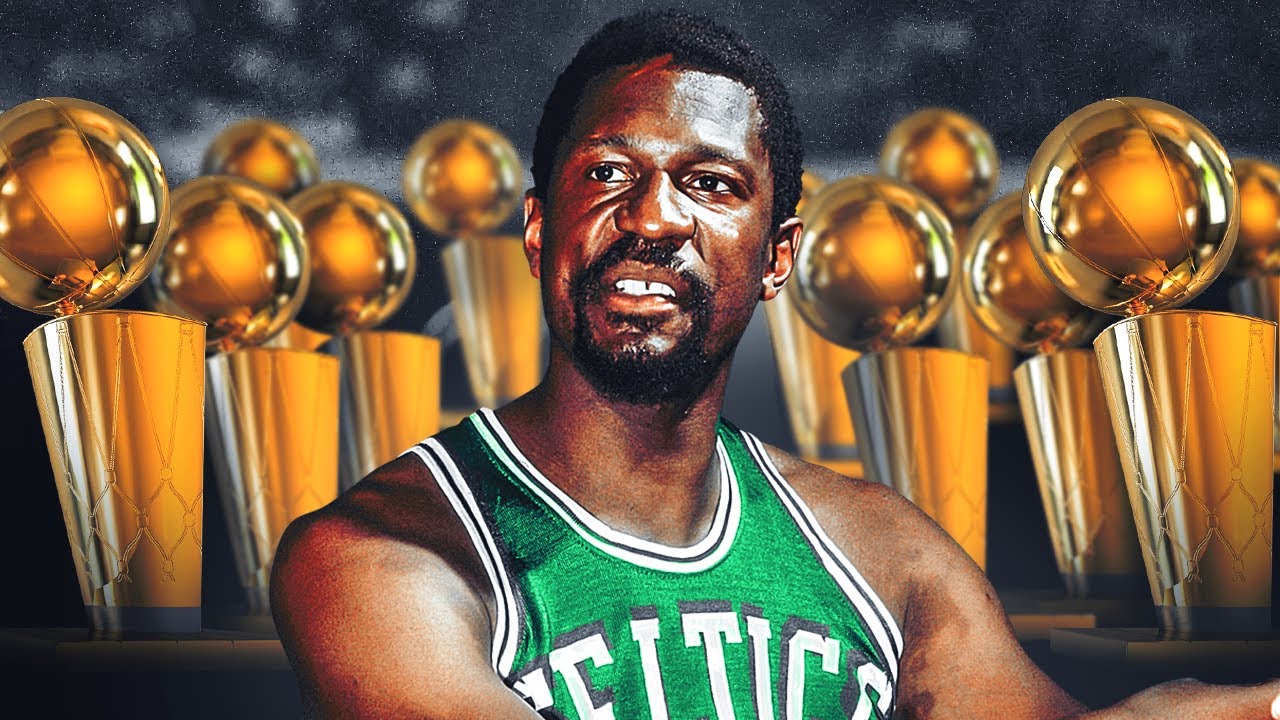
With the 3rd pick, the St. Louis Hawks drafted Bill Russell, a center who had led the University of San Francisco to back-to-back National Championships. It looked like the Hawks had gotten the best player.
But later that day, the Hawks traded the rights to the as-yet-unsigned Russell to the Celtics, for center Ed Macauley and forward Cliff Hagan.
Result: Over the next 13 seasons, Russell would lead the Celtics to 12 NBA Finals, and 11 NBA Championships. The Celtics became the most dominant team in North American sports history -- not winning as many World Championships as Major League Baseball's New York Yankees or the National Hockey League's Montreal Canadiens, but winning more titles in a shorter period of time. 
Meanwhile, the Hawks won just 1 title, and were forced to move out of St. Louis, to Atlanta, where they have been a perennial letdown.
It is the biggest transactional blunder in the NBA's history. How could the Hawks have been so dumb? Well, maybe, they were not as dumb as we've been led to believe. As the biggest star coming out of college basketball, Russell was already believed to be ready to demand big money, which most NBA team owners didn't have. Hawks owner Ben Kerner didn't have it. Celtics owner Walter Brown did, because he also owned his arena, the Boston Garden, and the other team that played there, the NHL's Boston Bruins.
What's more, Brown owned the Ice Capades. At the time, it was a bigger moneymaker than the NBA or the NHL. So was the Ringling Brothers and Barnum & Bailey Circus. It came to New York every April, and so the Madison Square Garden Corporation gave them choicer dates. This forced the Rangers in 1950, and the Knicks in 1951, to play Finals games on the road, possibly costing them titles.
The Royals had a chance to select Russell, but passed on him. Why? Because Brown made a deal with Royals owner Les Harrison: Select somebody other than Russell, and I'll add Rochester to the Ice Capades' tour. It was an offer Harrison couldn't refuse. (And no heads -- human, horse, or otherwise -- were hurt in the process.)
It was a short-term fix for the Royals. But that's the way the NBA had to operate at the time. A year later, Harrison moved the Royals to Cincinnati. They won the NBA Championship in 1951. Through the 2021-22 season, 71 years later, this franchise, now known as the Sacramento Kings, has never been back to the NBA Finals. But Harrison did what he had to do to stay in business, and that meant giving up a chance at a man who could have become one of the NBA's greatest players ever, and did.
But he might not have. Until Michael Jordan led the Chicago Bulls to 6 NBA Championships -- 3 with Bill Cartwright at center, and 3 with Luc Longley -- it was generally believed that you had to have a really good center, a big man in the middle, to win an NBA Championship.
But until Russell, Mikan was the only big man who was able to lead a team to an NBA title. Until Russell, the NBA's best players had been smaller guys who were good outside shooters, guys like Joe Fulks (1947 Philadelphia Warriors), Buddy Jeannette (1948 Baltimore Bullets), Bob Davies (1951 Rochester Royals), Dolph Schayes (1955 Syracuse Nationals) and Paul Arizin and Tom Gola (1956 Philadelphia Warriors).
Before Russell, there were 3 truly great "big men" in college basketball. Mikan, from DePaul University in Chicago, was one. Another was Bob Kurland of Oklahoma A&M (now Oklahoma State). He never played pro ball, instead taking a job with Phillips Petroleum, with a great benefits package, including playing for their "semipro" team.
And the other was Clyde Lovellette of the University of Kansas. He had a good pro career, winning titles as Mikan's backup on the Lakers, and later as Russell's backup on the Celtics. But he was never a pro star: He's in the Basketball Hall of Fame, but mainly for what he did in college.
But there was, as yet, no model for what kind of college stars would become pro stars. Like I said, the NBA was only 10 years old at this point. In hindsight, Mikan was the model. Russell admitted that Mikan was his idol. Mikan enjoyed being thought of the progenitor of the NBA's big men.
But at the time, he was seen as a freak of nature, a happy accident that the Lakers had gotten their hands on. Big men were considered to be slow. Mikan was a good shooter and a strong rebounder, but he wasn't fast. Bill Mazer, the great New York sportscaster, compared him to a stampeding elephant. Bob Ryan of The Boston Globe, in a 1996 ESPN appearance celebrating the NBA's 50th Anniversary, said that, in the modern game, he would be "a good backup center. Deserved every accolade he got at the time, but he's Greg Kite with a hook shot." 
In 2021, at the NBA's 75th Anniversary; in 1996, at the 50th; in 1971, at the 25th... Russell seemed like the obvious player to both select and hang onto. In 1956, he wasn't the obvious pick to do that. Maybe he should have been, but he wasn't.
Then there's St. Louis to consider. It's not just that the Hawks were far behind baseball's Cardinals in terms of popularity in the city. It's that St. Louis was a racially segregated city, in Missouri, a racially segregated State. Cardinal stars like Bob Gibson and Curt Flood would chafe under the policies that segregation forced, until federal law broke it.
Russell -- who would eventually, very accurately, title his autobiography Memoirs of an Opinionated Man -- might not have adjusted so well, having been a boy in segregated Louisiana, and grown up in noticeably (but not completely) more racially liberal Oakland. He eventually had problems with race relations in Boston. In St. Louis, it might have been worse. As a result, he might not have won all those titles with the Hawks.
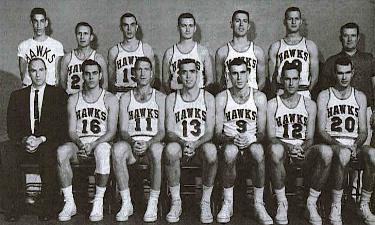
Anyway, it's not as if the Hawks blew it completely. In 1957, the Celtics and Hawks each made the NBA Finals for the 1st time. It went to double overtime of Game 7 before the Celtics won it. In 1958, both teams made it back, and Russell hurt his ankle in Game 3, and was out the rest of the way. The Hawks, led by the men traded for the rights to Russell, Hagan and St. Louis native Macauley, as well as Hall-of-Fame forward Bob Pettit, won the title in 6 games.
The 1958 NBA Champions.
Hagan is Number 16, Pettit 9, and Macauley 20.
In 1959, the Minneapolis Lakers won the Western Conference, and lost to the Celtics in the Finals. In 1960 and '61, the Hawks returned to the Finals, and lost to the Celtics both times. Still, at that point, the players the Hawks got for Russell had gotten them into 4 Finals, winning 1. It could have been better, but it was still better than anybody else except the Celtics were doing.
Still, it was a dumb trade.
*
April 30, 1956 was a Monday. There was only one score on this historic day, and it was in baseball: The St. Louis Cardinals beat the Milwaukee Braves, 2-0 at Milwaukee County Stadium. Warren Spahn allowed only 3 hits over 8 innings for the Braves, but 

Saturday, March 19, 2022

March 19, 1969: The Kareem Coin Flip

March 19, 1969: For much of its early history, the National Basketball Association didn't exactly do things in a major league way. Why would you decide the top pick in your league's draft with a coin flip?

The Milwaukee Bucks and the Phoenix Suns had both come into the NBA as expansion teams for the 1968-69 season. Like most expansion teams, both of them struggled: The Bucks finished last in the Eastern Division with a record of 27 wins and 55 losses, while the Suns finished with the worst record in the entire league, at 16-66. By all rights, they should have had the top pick in the 1969 NBA Draft.

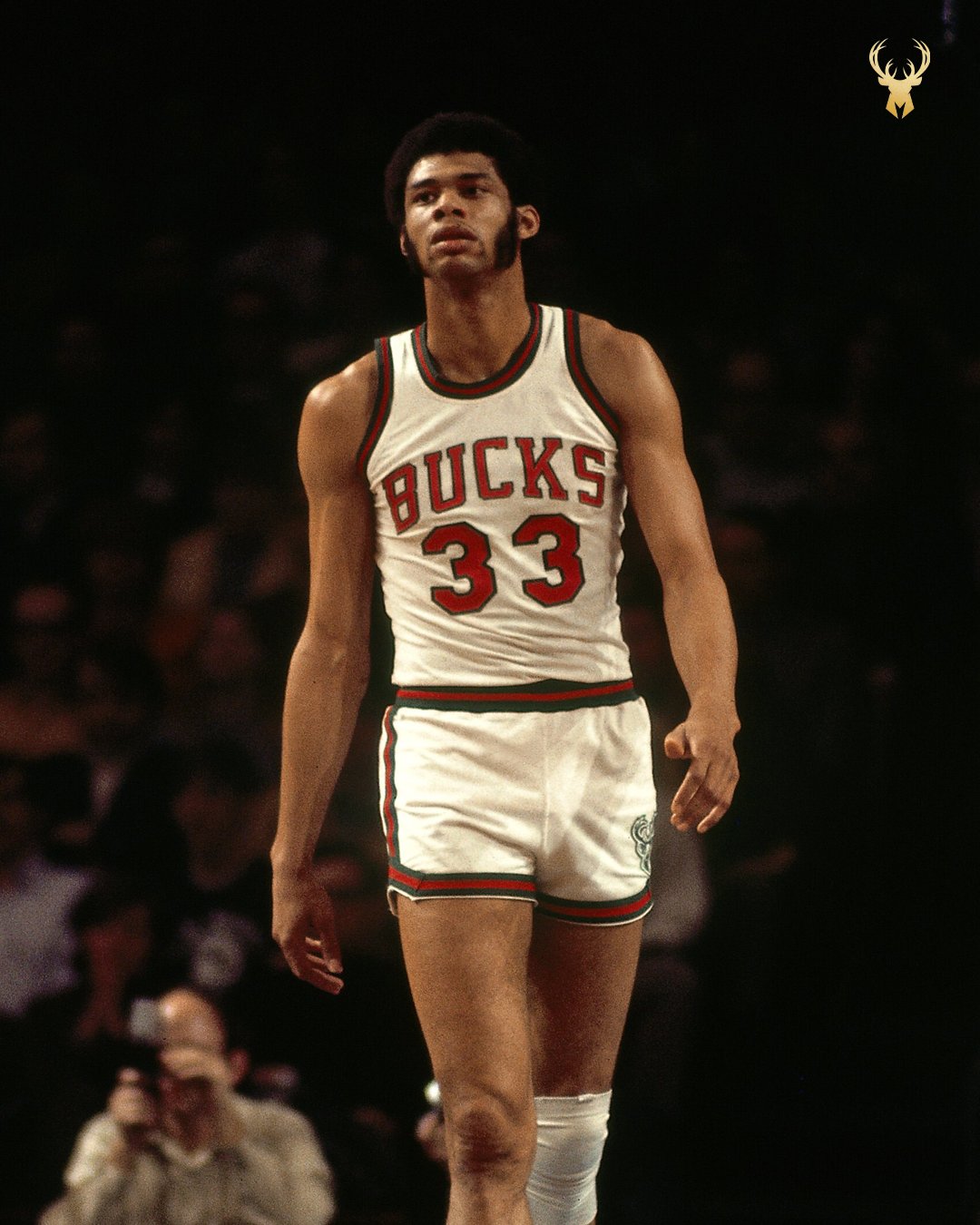
And everyone knew who that top draft pick was going to be: Lew Alcindor. The center had led UCLA to a record of 88-2, and winning the National Championship all 3 seasons (freshmen were not eligible until the 1972-73 season), and winning the Most Outstanding Player of the NCAA Tournament all 3 times. He was 7-foot-2, his "skyhook" was an unstoppable shot, and the NCAA had outlawed the dunk solely because of him. It would be reinstated a few years later. He was, and remains, the greatest player in the history of college basketball.

From 1956 through 1965, NBA teams could use a "territorial pick," in which they forfeited their 1st Round selection in order to choose a player from their immediate area. The player presumably had a strong local following to boost fan interest. Territorial picks were eliminated in 1966, replaced by a coin flip for the rights to the 1st overall pick. The idea was that a team trying to lose in order to get the top pick might end up losing it to the team with the 2nd-worst record.

And so, on March 16, 1969, with the Bucks and the Suns having the 2 worst records, Commissioner J. Walter Kennedy picked up the telephone, and held a conference call with the general managers. The Suns' GM was Jerry Colangelo, who was only 29 years old, but was now with his 2nd expansion team: In 1966, he became the 1st marketing director of the Chicago Bulls. The Bucks' GM was Ray Patterson, and he was older, having played professional basketball in the 1940s.

Kennedy had the coin ready. He flipped it. Colangelo called, "Heads!" It came up "Tails." The Bucks would get the 1st pick, the Suns the 2nd. Naturally, the Bucks picked Alcindor. The Suns picked another center, Neal Walk of the University of Florida.

Younger fans might not be familiar with either name. Alcindor had already converted to Islam, and, after the 1971-72 season, he announced that he had changed his name to Kareem Abdul-Jabbar. Walk's name would be unfamiliar because he didn't have much of a pro career, playing 5 seasons in Phoenix, becoming an original member of the New Orleans Jazz (now the Utah Jazz) in 1974, and playing 1 more season with the New York Knicks, before playing a season in Italy and, being Jewish, playing 3 seasons in Israel's league.

Lew/Kareem immediately turned the Bucks from a 27-55 team into a 56-26 team, and a Division Champion. In the 1970 off-season, the Bucks made a trade with the Seattle SuperSonics, acquiring guard Lucius Allen, Kareem's UCLA teammate, whom the Sonics had made the 3rd pick in the '69 Draft. Now, the Bucks had 2 of the top 3 picks. And they acquired Cincinnati Royals star Oscar Robertson, perhaps the best all-around player the game had ever seen. They went 66-16, and won the NBA Championship, in only their 3rd season, beating the Baltimore Bullets in the Finals. They returned to the Finals in 1974, losing to the Boston Celtics.

In 1975, thinking that Milwaukee had become too small for him, or perhaps that he was too big for it, Kareem demanded a trade.  For most athletes, this would be considered a very arrogant thing, but he had proved that he was now too big for them. And so, he was traded to the Los Angeles Lakers, where he would win 5 more Championships, and become the NBA's all-time leading scorer.

The thing is, while the Suns missed out on Kareem, they didn't suffer much. They made the Playoffs in 1970, anyway. The NBA then had a realignment, and despite winning 48 games in 1971 and 49 in 1972, they didn't make the Playoffs either time. They had 3 losing seasons, and the loss of the coin flip was looking like the kind of moment people could point to, years later, and say, "This team is cursed, and that was where it started."

And yet, in 1976, the Bucks' 1st season without Kareem, the Suns made the NBA Finals for the 1st time. Into the late 1970s, and through the 1980s and 1990s, and up until 2001, when the Suns won 51 games and the Bucks reached the Eastern Conference Finals, both teams were usually good enough to make the Playoffs. And yet, another trip to the Finals by the Suns in 1993, losing to the Bulls, was the only Finals berth for either team after 1974.

It would take until 2021 for the Bucks to win another Championship, and who did they beat in the Finals? The Suns. To this day, the Suns have never won an NBA Championship. They've usually been a good team, but they haven't gone all the way.

Colangelo briefly served as the Suns' head coach, and, in 1987, he led a group that bought the Suns. In 1995, he was awarded another expansion team, for baseball: The Arizona Diamondbacks. Their stadium was built 2 blocks from the Suns' new downtown arena, and in 2001, they did something the Suns hadn't done: They won a World Championship. He sold both teams in 2004.

Kennedy died in 1977, Patterson in 2011, Walk in 2015. As of March 19, 2022, Abdul-Jabbar, Robertson, Allen and Colangelo are still alive.

UPDATE: In 2023, LeBron James surpassed Kareem on the NBA's all-time points scored list. 

The Suns have a Ring of Honor. It includes Colangelo, Dick Van Arsdale, Connie Hawkins, Alvan Adams, Paul Westphal, Walter Davis, Kevin Johnson, Dan Majerle, Tom Chambers, Charles Barkley, Steve Nash, Shawn Marion and Amar'e Stoudemire; head coaches Cottom Fitzsimmons, John MacLeod and Westphal; team trainer Joe Proski; and broadcaster Al McCoy.

The Suns have retired the uniform numbers of Van Arsdale, 5; Davis, 6; Johnson, 7; Majerle, 9; Nash, 13; Chambers, 24; Marion, 31; Stoudemire, 32; Adams, 33; Barkley, 34; Hawkins, 42; and Westphal, 44. And Van Arsdale, Adams, Colangelo, McCoy, Barkley, Fitzsimmons, MacLeod, Majerle, Chambers and Westphal have been elected to the Arizona Sports Hall of Fame.

The Bucks do not have a team Hall of Fame. They have retired numbers 1 for Oscar Robertson, 2 for Junior Bridgeman, 4 for Sidney Moncrief, 8 for Marques Johnson, 10 for Bob Dandridge, 14 for Jon McGlocklin, 16 for Bob Lanier, 32 for Brian Winters, and 33 for Kareem. Robertson, Bridgeman, Moncrief, Johnson, McGlocklin and former owner and U.S. Senator Herb Kohl have been elected to the Wisconsin Athletic Hall of Fame. Kareem has not.

*

March 19, 1969 was a Wednesday. 

Baseball was in Spring Training. Football was out of season. There were 4 games played in the NBA:

* The Baltimore Bullets beat the Seattle SuperSonics, 130-120 at the Baltimore Civic Center (now the CFG Bank Arena) in Baltimore.

* The Los Angeles Lakers beat the Chicago Bulls, 93-92 at the Chicago Stadium.

* The San Diego Rockets beat the Milwaukee Bucks, 128-108 at the San Diego Sports Arena (now the Pechanga Arena).

* And the Atlanta Hawks beat the San Francisco Warriors, 128-115 at the Cow Palace outside San Francisco in Daly City, California.

There were 3 games in the American Basketball Association:

* The New York Nets lost to the Indiana Pacers, 143-114 at the Indiana State Fair Coliseum (now the Indiana Farmers Coliseum) in Indianapolis. Mel Daniels scored 56 points and had 31 rebounds. In case you're wondering, the ABA record for points in a game turned out to be 67, by Larry Miller of the Carolina Cougars, against the Memphis Pros on March 18, 1972.

* The Denver Rockets beat the Miami Floridians, 123-119 at the West Palm Beach Auditorium in West Palm Beach, Florida.

* And the Dallas Chaparrals beat the Oakland Oaks, 117-112 at the Moody Coliseum in Dallas.

And there were 5 games in the NHL:

* The New York Rangers beat the Minnesota North Stars, 4-2 at the Metropolitan Sports Center in the Minneapolis suburb of Bloomington, Minnesota.

* The Boston Bruins beat the Pittsburgh Penguins, 3-2 at the Civic Arena in Pittsburgh.

* The Chicago Black Hawks beat the Montreal Canadiens, 7-5 at the Chicago Stadium.

* The Toronto Maple Leafs and the St. Louis Blues played to a tie, 1-1 at the St. Louis Arena.

* The Detroit Red Wings and the Oakland Seals played to a tie, 4-4 at the Oakland Coliseum Arena.

* And the Philadelphia Flyers and the Los Angeles Kings were not scheduled.

December 31, 1999 & January 1, 2000: The Millennium

December 31, 1999:  The Millennium arrives. The people of planet Earth survived. At a terrible cost. But we hadn't destroyed ourselves. ...