Showing posts with label henry kissinger. Show all posts

Monday, November 7, 2022

November 7, 1972: President Richard Nixon Is Re-Elected

November 7, 1972: President Richard Nixon is re-elected in one of the biggest landslides ever. He wins 60.7 percent of the vote to the 37.5, a record low for Democratic nominees in 2-horse races, of Senator George McGovern of South Dakota. Nixon wins 49 States for 520 Electoral Votes, McGovern just 17, winning only Massachusetts and the District of Columbia.

If McGovern had taken every State in which he had at least 47 percent, he still would have lost 520-17. Counting every State where he won at least 45 percent would add only Rhode Island, Minnesota and South Dakota, making it 502-35.

But it was a personal landslide: The Republicans only gained 12 seats in the House of Representatives, and 2 in the Senate, not nearly enough to challenge the Democrats for control of either. Among the new Senators elected were Democrats Joe Biden of Delaware and Sam Nunn of Georgia; and Republicans William L. Scott of Virginia (a far-right fanatic who quickly gained a reputation as the dumbest U.S. Senator, and was defeated after 1 term) and Jesse Helms of North Carolina (a far-right fanatic who quickly gained a reputation as the most racist U.S. Senator, and was elected to 5 terms).  

McGovern ran a great campaign in the primaries, but was a disaster in the general election, making all kinds of mistakes. When Nixon's campaign announced a peace deal in Vietnam 3 weeks before the election, it removed the biggest argument in McGovern's favor. Watergate? The Washington Post was investigating it, but most people didn't yet realize how big that would become.

In 1971, Time magazine named Nixon its Man of the Year. For 1972, it split the distinction -- not an award, just a recognition that this was the person, or these were the people, who had most affected the news during the calendar year -- between Nixon and Henry Kissinger, his National Security Adviser, who was doing America's negotiating at the peace talks in Paris. Nixon had been practically bypassing his Secretary of State, William P. Rogers. The next year, Rogers had had enough, and resigned, and Nixon had Kissinger officially doing both jobs.

Comedian Mort Sahl, who had been at this for over 20 years, before Nixon had even been Vice President, said, "Nixon's the kind of guy that, if you were drowning 50 feet offshore, he'd throw you a 30-foot rope. Then Kissinger would go on TV the next night, and say that the President had met you more than halfway."

On October 26, 12 days before the election. Kissinger had announced, "Peace is at hand." On December 18, 41 days after the election, Nixon began "Operation Linebacker II," which the media dubbed "The Christmas Bombing." Peace was not at hand. Not yet.

On January 23, 1973, Nixon announced that peace had happened -- 3 days after he was inaugurated for a 2nd term, when his winning of a 1st term implied that he was obligated to end the war during that 1st term; and 1 day after the death of his predecessor, Lyndon Johnson, who bet his legacy on getting a peace deal in Vietnam, and failed -- or was sabotaged by Nixon aides.

On August 9, 1974, just 21 months after being re-elected, Nixon resigned due to his role in Watergate. Someone took a poll, asking how people would have voted in 1972, had they known then what they know now. McGovern got 56 percent in that poll. Begging the question, What were the other 44 percent waiting for?

UPDATE: It took me until 2024 to think of this, but the 1970s were Schrödinger's Decade. There was too much Republican competence, and too much crimefighting; and, at the same time, not enough of it.

*

November 7, 1972, like all modern U.S. Election Days, was a Tuesday. The baseball season was over. Football was in midweek. There were 3 games played in the NBA that day:

* The Golden State Warriors beat the Buffalo Braves, 105-91 at the Buffalo Memorial Auditorium.

* The Atlanta Hawks beat the Baltimore Bullets, 109-107 in overtime at The Omni in Atlanta.

* And the Los Angeles Lakers beat the Houston Rockets, 122-109 at The Forum outside Los Angeles in Inglewood, California.

There were 2 games played in the American Basketball Association:

* The New York Nets lost to the San Diego Conquistadors, 116-108 at the San Diego Sports Arena. (It's now named the Pechanga Arena.)

* And the Indiana Pacers beat the Memphis Tams, 124-116 at the Mid-South Coliseum. This team was founded as the New Orleans Buccaneers in 1967, and moved to become the Memphis Pros in 1970. Charlie Finley, owner of MLB's Oakland Athletics and the NHL's California Golden Seals, bought them in 1972, outfitted them in the same green and gold color scheme, and renamed them the Memphis Tams, in honor of the 3 States in the Memphis metropolitan area: Tennessee, Arkansas and Mississippi. He sold them in 1974, and they became the Memphis Sounds. They moved in 1975, becoming the Baltimore Claws, but folded before playing a game.

Only 1 game was played in the NHL: The Los Angeles Kings beat the St. Louis Blues, 3-2 at the St. Louis Arena. There were 2 played in the newly-launched World Hockey Association. The New York Raiders lost to the Alberta Oilers, 4-2 at the Edmonton Gardens. And the Houston Aeros beat the Chicago Cougars, 3-2 at the International Amphitheatre in Chicago.

Thursday, October 6, 2022

October 6, 1973: The Yom Kippur War Begins

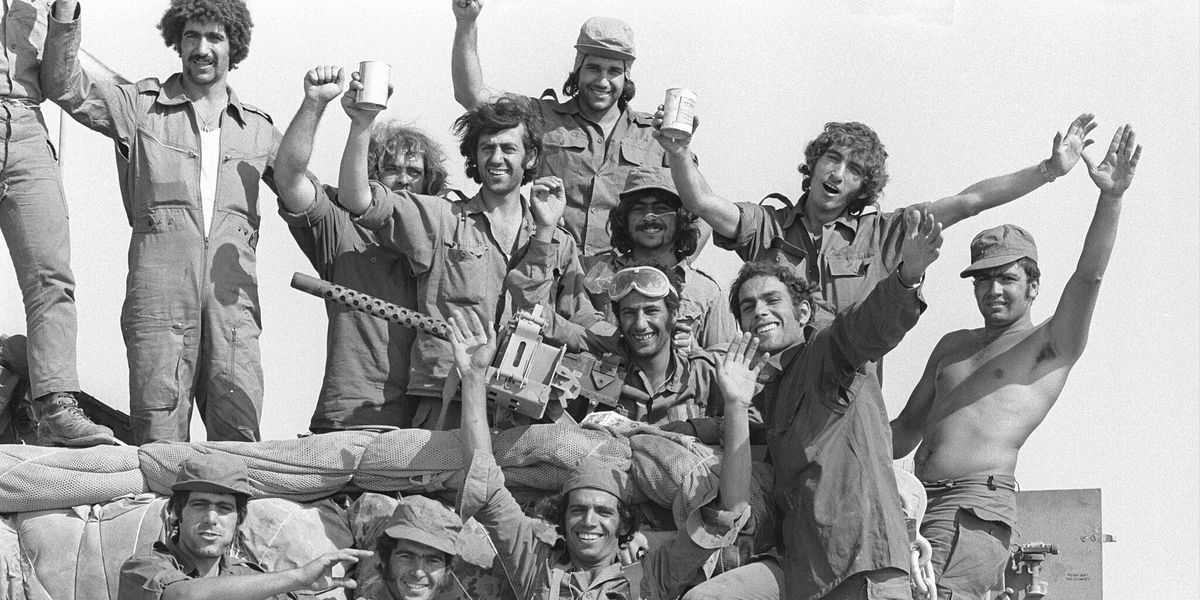
October 6, 1973: The Yom Kippur War begins. Egypt and Syria, 2 of the Arab neighbors that Israel had defeated in the Six-Day War of June 1967, sought revenge. The 3rd of the 1967 opponents, Jordan, sat this one out, not wanting to get clobbered again.

The coalition launched a surprise attack on Israel during Yom Kippur, the holiest day on the Jewish calendar, figuring they could take the Jewish state by surprise. Egyptian and Syrian forces crossed their respective ceasefire lines with Israel, advancing into the Sinai Peninsula and the Golan Heights, respectively.

After 3 days, Israel halted the Egyptian advance and pushed most of the Syrians back to the Purple Line. Israel then launched a counteroffensive into Syria, shelling the outskirts of their capital of Damascus.

Both sides' leading supports kicked in support: The United States for Israel, and the Soviet Union for the Arabs. This heightened tensions between the two superpowers, who had gotten closer following the signing of the SALT I Treaty the year before.

Complicating things further was the political crisis in America: Not only was President Richard Nixon fighting to stay in office as a result of the Watergate scandal, but his Vice President, Spiro Agnew, resigned as part of a plea-bargain on October 10. This meant that, if something happened to Nixon, a Republican, the next man in line was the Speaker of the House of Representatives, Carl Albert, a Democrat. And the event that became known as "The Saturday Night Massacre," further inflaming the public against Nixon, came on October 20, with the war still ongoing.

Egyptian forces attempted to push further into Sinai, but were repulsed, and Israeli forces crossed the Suez Canal, advancing toward Ismailia City on October 18. Israeli forces were then defeated in the Battle of Ismailia, and accepted a United Nations-brokered ceasefire. On October 22, the ceasefire broke down. Israeli forces then advanced on Suez City, but were successfully repulsed in the ensuing battle amid stiff Egyptian resistance.

Nixon sent Henry Kissinger, now both his Secretary of State and his National Security Adviser, back and forth between Prime Minister Golda Meir in Tel Aviv, President Anwar Sadat in Cairo, and President Hafez al-Assad in Damascus, in what became known as "shuttle diplomacy." A second ceasefire was imposed on October 25, officially ending the war.

The Arab world, humiliated by the 1967 defeat, felt psychologically vindicated by its early and late successes in 1973. Meanwhile, Israel, despite battlefield achievements, recognized that future military dominance was uncertain.

Nevertheless, any victory Egypt had was a morale victory (if not a "moral victory") at best, and Sadat, Vice President under Gamal Abdel Nasser in 1967, did not want a 3rd defeat. He began moving Egypt out of the Soviet sphere of influence. When Menachem Begin became Prime Minister of Israel in 1977, Sadat reached out to him. With President Jimmy Carter acting as moderator, Sadat and Begin signed the Camp David Accords in 1978.

In 1994, despite not having fired a shot at Israel since 1967, Jordan signed a peace treaty with Israel. As of October 6, 2022, Israel's peace treaties with Egypt and Jordan remain in effect. Syria, however, would remain an enemy of Israel under Assad, and later his son, Bashar al-Assad. They aided terrorist groups in their attacks on Israel, assisting both Iran and the Palestine Liberation Organization.

*

October 6, 1973 was a Saturday. Both baseball leagues' League Championship Series began that day. In the American League, the Baltimore Orioles beat the Oakland Athletics, 6-0 at Memorial Stadium in Baltimore. Jim Palmer pitched a 5-hit shutout, beating Vida Blue. However, the A's won the series in 5 games.

In the National League, the Cincinnati Reds beat the New York Mets, 2-1 at Riverfront Stadium in Cincinnati. Pete Rose and Johnny Bench hit home runs, enabling Pedro Borbón to outpitch Tom Seaver. However, the Mets won the series in 5 games.

Among the college football games played that day were these:

In a regular-season Big Ten/Pac-8 matchup, Number 1 Ohio State beat Washington State, 27-3 at Ohio Stadium in Columbus. Ohio State won the Big Ten Conference title.

* Number 2 Nebraska beat Minnesota, 48-7 at Memorial Stadium in Minneapolis. Nebraska blew the Big 8 title with a loss to Missouri the next week, and another loss to Oklahoma later on. They were still invited to the Cotton Bowl.

* Number 3 Alabama beat Georgia, 28-14 at Denny Stadium (later renamed Bryant-Denny Stadium) in Tuscaloosa, Alabama. 'Bama won the Southeastern Conference Championship, and went undefeated in the regular-season, setting up a de facto National Championship game in the Sugar Bowl.

* Number 4 University of Southern California beat Oregon State, 21-7 at Parker Stadium (now Reser Stadium) in Corvallis, Oregon. USC won the Pacific-8 Conference title, then lost the Rose Bowl to Ohio State.

In another regular-season Big Ten/Pac-8 matchup, Number 5 Michigan beat Oregon, 24-0 at Michigan Stadium in Ann Arbor. Michigan and Ohio State went into their annual showdown tied for the Big Ten title, and finished in a tie. So it was up to the Conference's university presidents to decide which team went to the Rose Bowl, and by a 6-4 vote, they picked Ohio State. And they had a rule that said the only bowl they could send teams to was the Rose Bowl. That infuriated Michigan fans, and the rule was changed for the 1975 season.

* Number 6 Oklahoma beat Number 17 Miami, 24-20 at Owen Field in Norman, Oklahoma. Oklahoma had tied USC the week before, won the Big 8 Conference title, and finished undefeated at 10-0-1. But they were on probation, and thus ineligible for a bowl game, and only minor polls proclaimed them National Champions. So, like Michigan, Oklahoma were 10-0-1, but not chosen as National Champions. The difference being that Michigan got screwed, while Oklahoma screwed themselves.

* Number 7 Penn State beat Air Force, 19-9 at Falcon Stadium in Colorado Springs, Colorado. With Heisman Trophy-winning running back John Cappelletti, Penn State went undefeated in the regular season.

* Number 8 Notre Dame beat Michigan State, 14-10 at Notre Dame Stadium in South Bend, Indiana. Losses by USC and Nebraska, and the Ohio State-Michigan and USC-Oklahoma ties, opened the door for Notre Dame to rise to Number 2 and face Number 1 Alabama in the Sugar Bowl. Notre Dame won, 24-23.

When the final polls were announced, the Associated Press (AP), the sportswriters, had undefeated-and-untied Notre Dame at Number 1, undefeated-but-tied Ohio State at Number 2, undefeated-but-tied-and-on-probation Oklahoma at Number 3, 1-loss Alabama at Number 4, undefeated-and-untied Penn State at Number 5, and undefeated-but-tied-and-bowlless Michigan at Number 6.

United Press International (UPI), the coaches, selected Alabama at Number 1 in spite of their bowl defeat, Oklahoma at Number 2, Ohio State at Number 3, Notre Dame at Number 4 in spite of their perfect season and their defeat of the outgoing Number 1; Penn State at Number 5 in spite of their perfect season; and Michigan at Number 6 in spite of their undefeated season.

For the 3rd time in 6 seasons, Penn State had finished a season with no losses and no National Championship. Their fans felt it was unfair. They had a case. So did Michigan fans, who were cheated once and it felt like twice. Notre Dame fans felt it was unfair that a team they beat at a not-so-neutral site -- Alabama was used to playing in the Sugar Bowl -- was selected ahead of them by the coaches. And Ohio State fans knew they were undefeated (though not untied), and were the only team to win a major bowl game in a blowout. They may not have deserved the National Championship as much as Notre Dame or Penn State, but they deserved it more than the other 3.

So 4 of the final top 6 had a case to feel at least partially robbed. If any college football season prior to the institution of the Bowl Championship Series 

* Number 9 Tennessee beat Kansas, 28-27 at Neyland Stadium in Knoxville, Tennessee.

* Number 10 Louisiana State University beat Florida, 24-3 at Tiger Stadium in Baton Rouge, Louisiana. LSU started out 9-0, rising to Number 7 but lost their last 3: To then-Number 2 Alabama, costing them the SEC title; to arch-rival Tulane; and then the Orange Bowl to Penn State.

* Number 11 Oklahoma State were upset by Texas Tech, 20-7 at Lewis Field (now Boone Pickens Stadium) in Stillwater, Oklahoma.

* Number 13 Texas beat Wake Forest, 41-0 at Memorial Stadium in Austin, Texas. Texas won the Southwest Conference title, but lost the Cotton Bowl to Nebraska.

* Number 15 Missouri beat Number 19 Southern Methodist University (SMU), 17-7 at Texas Stadium in the Dallas suburb of Irving, Texas.

* Number 20 West Virginia were upset by Indiana, 28-14 at the old Mountaineer Field in Morgantown, West Virginia.

* In another regular-season Big Ten/Pac-8 matchup, Stanford beat Illinois, 24-0 at Memorial Stadium in Champaign, Illinois.

* Army lost to Georgia Tech, 14-10 at Grant Field in Atlanta.

* Navy lost to Boston College, 44-7 at Alumni Stadium in the Boston suburb of Chestnut Hill, Massachusetts.

* Among New Jersey's schools, Rutgers lost to the University of Massachusetts, 25-22 at Rutgers Stadium in Piscataway; and Princeton lost to Columbia, 14-13 at Baker Field in Upper Manhattan.

The NBA season opened 3 days later; the ABA and the NHL, 4 days later. The World Hockey Association opened their season on this day, and the New York Golden Blades, formerly the New York Raiders, and soon to move to the Philadelphia suburb of Cherry Hill and become the Jersey Knights, played the Cleveland Crusaders to a tie, 2-2 at the Cleveland Arena.

Due to the large Jewish community in my hometown of East Brunswick, New Jersey, observing Yom Kippur, the football game between East Brunswick High School and Cedar Ridge High School of Madison Township (which was renamed Old Bridge in 1975), scheduled for Saturday afternoon, October 6, was moved to Friday night, October 5.

This was possible because, along with Memorial Stadium in New Brunswick, Vince Lombardi Field at what was then Madison Township High School had lights, and Cedar Ridge groundshared with them, because they didn't have their own stadium.

For the 1st time in 5 games with E.B., Cedar Ridge won, 21-0, and went on to an undefeated season, winning the Middlesex County Athletic Conference and Central Jersey Group IV Championships, their only football titles. Opened in 1968, in 1994 they were consolidated with the school later renamed Madison Central, to form Old Bridge High School.

And in English soccer, the team I would one day support, Arsenal F.C., beat West Midlands team Birmingham City, 1-0 at the Arsenal Stadium, a.k.a. Highbury, in North London.

Saturday, March 26, 2022

March 26, 1981: Carol Burnett Beats The National Enquirer

March 26, 1981: Carol Burnett kicks The National Enquirer's ass -- with help from a jury.

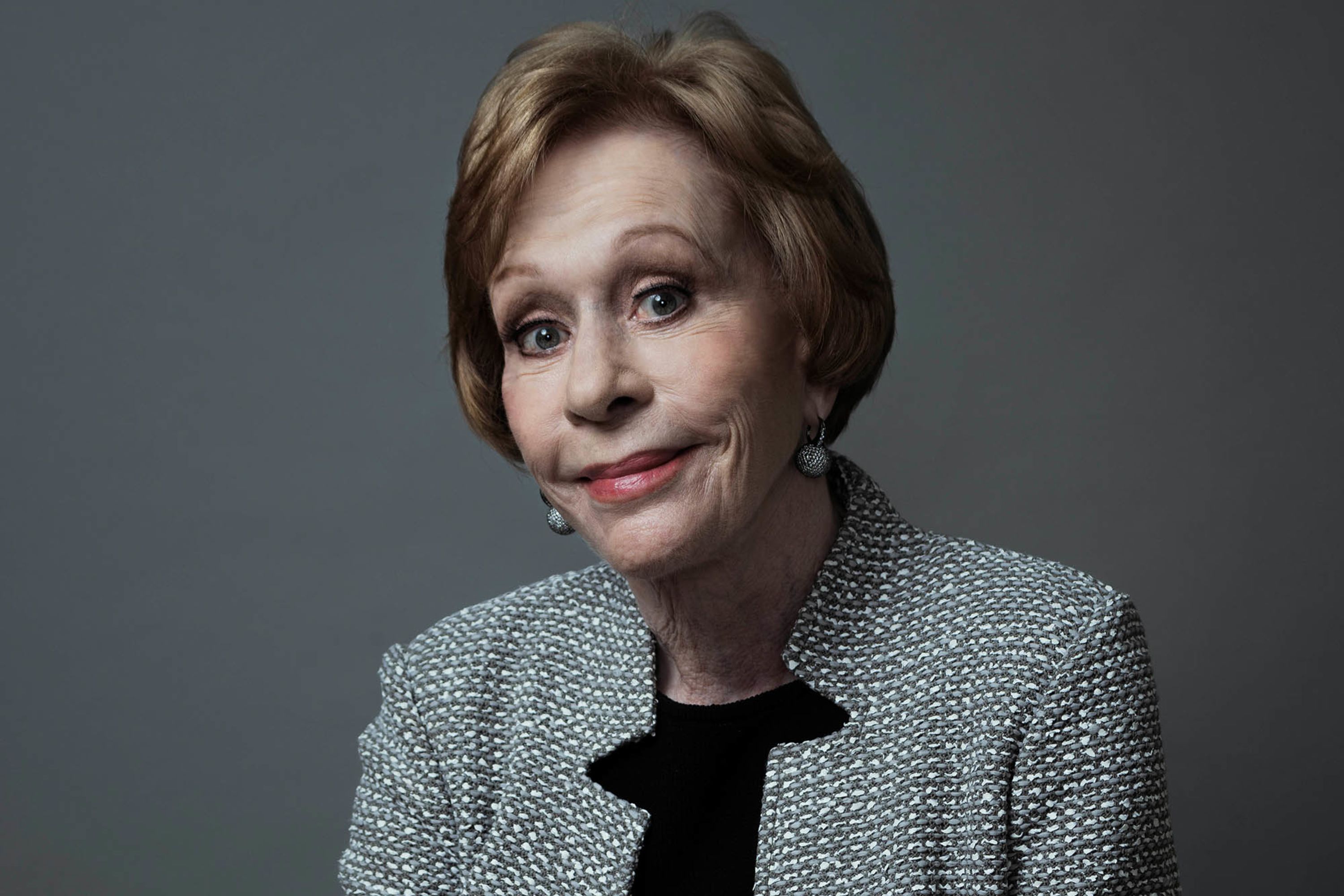
In January 1976, the already-legendary comedienne, whose TV variety show, The Carol Burnett Show, was still airing on CBS, went out for a quiet dinner in the tony Georgetown neighborhood of Washington, D.C. She shared a few glasses of wine with her husband, singer turned TV producer Joe Hamilton, and some friends. On her way out, she was briefly introduced to the United States Secretary of State, Henry Kissinger. They exchanged a few polite words, parted ways, and went home. And everyone figured that was the end of it. It wouldn't be worth reporting.

But a few weeks later, The National Enquirer, American's trashiest national tabloid "newspaper," published a story about the dinner. It said that Burnett was drunk and disruptive, had argued with Kissinger, spilled wine on another guest, and laughed it off.

Because of his work with Presidents Richard Nixon and Gerald Ford, Kissinger was one of the most admired men in America, but also one of the most hated, by staunch liberals and arch-conservatives alike. So a story that a Hollywood-based celebrity had argued with Kissinger was very believable. But most people had never heard about Carol Burnett getting drunk in public -- because she didn't do that, and hadn't done so on this occasion.

What the Enquirer's readers didn't know was that the paper's source had explicitly said she wasn't drunk. The tabloid ran the story, anyway.

Burnett saw the article, and was outraged. Both of her parents had been alcoholics, and she had long spoken openly about it, in the hope that it might help others. Now, a false story had publicly tied her to something she had spent years addressing with honesty and care. And things quickly changed. People began treating her differently. They began to assume that she had also become an alcoholic.

Her lawyers warned her that suing the Enquirer would be costly, difficult, and likely unsuccessful. She sued, anyway, and the paper's case was taken apart. After hours of deliberation, the jury reached its conclusion: The tabloid had acted with reckless disregard for the truth. She was awarded damages of $1.6 million. After appeals, it was reduced to $200,000, but the money didn't matter: She got her good name back, and the Enquirer was forever branded as irresponsible and dishonest.

As historian James Fell put it: "For many, it signaled something important, that even public figures have a right to defend the truth about themselves. Burnett later made it clear that the case was never about money. What mattered to her was something more lasting: how her story would be remembered. Because once something is printed, it doesn’t just disappear. It lingers, in records, in archives, in memory. She wasn’t just challenging a lie in the present. She was protecting the truth for the future."

Unfortunately, the fight took its toll on her family. Her daughters, Carrie and Erin Hamilton, both fell victim to drug and alcohol addiction. Although Carrie beat it, and established an acting career of her own, she died of unrelated cancer in 2002, only 38 years old. As of March 26, 2022, Erin is still alive, but has continued to struggle. Carol and Joe also had a son, Jody Hamilton, who followed his father into TV production.

Joe was Carol's 2nd husband, and they were married from 1963 until their divorce in 1984. Since 2001, Carol has been married to Brian Miller, a much-younger drummer.

*

March 26, 1981 was a Thursday. Baseball was in Spring Training. Football was out of season. There were 3 games in the NBA:

* The Indiana Pacers beat the Atlanta Hawks, 115-107 at The Omni in Atlanta. James Edwards scored 31 points for the Pacers. Eddie Johnson scored 36 points in defeat.

* The Milwaukee Bucks beat the Cleveland Cavaliers, 137-109 at the Milwaukee Exposition and Convention Center Arena, a.k.a. The MECCA (now the UW-Milwaukee Panther Arena).

* And the San Antonio Spurs beat the Utah Jazz, 98-97 at the Salt Palace in Salt Lake City, Utah.

And there were 3 games in the NHL:

* The Montreal Canadiens beat the Calgary Flames, 8-2 at the Montreal Forum. Pierre Larouche had 3 goals and an assist. Mark Napier had a goal and 3 assists.

* In an "Original Six" matchup, the Toronto Maple Leafs beat the Boston Bruins, 3-2 at the Boston Garden.

* And the Washington Capitals beat the Detroit Red Wings, 2-0 at the Joe Louis Arena in Detroit.

December 31, 1999 & January 1, 2000: The Millennium

December 31, 1999:  The Millennium arrives. The people of planet Earth survived. At a terrible cost. But we hadn't destroyed ourselves. ...