Showing posts with label mash. Show all posts

Sunday, September 18, 2022

September 18, 1927: CBS Is Founded

September 18, 1927: CBS, the Columbia Broadcasting System, is founded by William S Paley. He was still in charge in 1990, when he died at the age of 89.

CBS followed NBC as the 2nd major radio network in America, and the 2nd major television network in 1947. In both, it became known for its news division, led in the 1940s and '50s by Edward R. Murrow. His See It Now program showed America all kinds of things it wanted to see, and many things it needed to see, such as, on its March 9, 1954 telecast, the excesses of Red-baiting Senator Joseph McCarthy of Wisconsin.

From 1962 to 1981, The CBS Evening News was anchored by Walter Cronkite. "Uncle Walter" became known as "the most trusted man in America": When he signed off by saying, "And that's the way it is," you knew that it was, because he always put the truth, no matter how uncomfortable, ahead of any agenda.

"The Tiffany Network" debuted its "Eye logo" in 1951. It produced great Westerns in the 1950s, like Gunsmoke and Have Gun -- Will Travel. It produced great comedies in the 1950s, like I Love Lucy and The Honeymooners, moving on in the 1960s with The Andy Griffith Show and The Dick Van Dyke Show. And, on Sunday nights, it would feature The Jack Benny Program (always a "program," now a "show"), The Ed Sullivan Show, and a movie of the week.

It was the 1st network to show such Christmas specials as Rudolph, the Red-Nosed Reindeer and A Charlie Brown Christmas, and it gave kids such legendary cartoons as Yogi Bear and Scooby-Doo, Where Are You? 

It got edgier in the 1970s, with The Mary Tyler Moore Show in 1970, All In the Family in 1971, and M*A*S*H and The Sonny & Cher Comedy Hour in 1972. The decade also saw CBS take its role as America's best football network and make it even bigger, with the studio show The NFL Today. And it revived a pair of game shows that had been big on other networks, The Price Is Right and Match Game, and made them bigger than ever.

In the last 20 years, CBS has been the home of the NCIS franchise, and has now added the FBI franchise.

UPDATE: As part of a major restructuring, CBS ended its radio news service on March 21, 2026.

*

September 18, 1927 was a Sunday. These baseball games were played that day:

* The New York Yankees swept a doubleheader from the Chicago White Sox, 2-1 and 5-2 at Yankee Stadium. George Pipgras outpitched Tommy Thomas in the opener, and Waite Hoyt outpitched his fellow future Hall-of-Famer Ted Lyons in the nightcap. Between the 2 games, Babe Ruth went 2-for-7 with a walk, his 54th home run of the season, and 3 RBIs; while Lou Gehrig went 2-for-8 with an RBI.

* A doubleheader was split at Redland Field (later renamed Crosley Field) in Cincinnati. The Cincinnati Reds won the 1st game, 7-0. Red Lucas pitched a 3-hit shutout. The New York Giants won the 2nd game, 4-2. Over the 2 games, Rogers Hornsby went 1-for-5 with a walk, Bill Terry went 1-for-7 with an RBI, and Mel Ott only appeared as a pinch-hitter in the 1st game, not reaching base.

* The Cleveland Indians beat the Washington Senators, 6-4 at Griffith Stadium in Washington. George Burns (not the entertainer who was just beginning his long career as a star) doubled home the winning run in the top of the 10th inning. Tris Speaker, long with Cleveland, appeared as a pinch-hitter with Washington, and did not reach base.

* The Boston Braves beat the Chicago Cubs, 11-7 at Wrigley Field in Chicago.

* The St. Louis Cardinals swept a doubleheader from the Philadelphia Phillies, 7-3 and 8-3 at Sportsman's Park in St. Louis.

* The Boston Red Sox, the Philadelphia Athletics and the Pittsburgh Pirates were not scheduled, since professional sports on Sunday were still not legal in Massachusetts or Pennsylvania. Because of this, the Detroit Tigers, the St. Louis Browns, and the Brooklyn Robins (as the Dodgers were known under the managing of Wilbert Robinson from 1914 to 1931) were also not scheduled.

Saturday, September 17, 2022

September 17, 1972: "M*A*S*H" Premieres

Clockwise from top: William Christopher, Jamie Farr,
David Ogden Stiers, Loretta Swit, Alan Alda,
Harry Morgan and Mike Farrell.

September 17, 1972: M*A*S*H premieres on CBS, based on a 1970 film, which was based on a 1968 novel by Dr. Richard Hornberger, who really was a surgeon from Maine who served at a Mobile Army Surgical Hospital in the Korean War, and wrote the book under the name Richard Hooker. However, in real life, he was very little like Captain Benjamin Franklin "Hawkeye" Pierce, the brilliant but womanizing, hard-drinking and practical-joking Chief Surgeon from the (fictional) little coastal town of Crabapple Cove, portrayed on the show by Alan Alda.

Only one actor from the movie was kept in the same role on the show: Gary Burghoff as the company clerk, Corporal Walter "Radar" O'Reilly, the naive but generous teenager from a farm outside Ottumwa, Iowa, who got his nickname from being able to predict things, such as known that helicopters -- "choppers," they were always called on the show -- were coming in with wounded soldiers.

The other surgeons: Lieutenant Colonel Henry Blake (McLean Stevenson), the commanding officer, from Bloomington, Illinois, a good doctor and a decent guy, but every bit as much a womanizer (despite being married) and a boozer as Hawkeye, and totally unsuited to running a military unit; Captain John "Trapper" McIntire (Wayne Rogers), from Boston, also a womanizer (and married) and a hard drinker, but nearly as good a surgeon as Hawkeye; and Major Frank Burns (Larry Linville), a paranoid right-winger from Fort Wayne, Indiana who was a lousy surgeon, talked the Christian talk but broke as many commandments as he could.

Including cheating on his wife with the camp's blonde bombshell Head Nurse, Major Margaret Houlihan, known as "Hot Lips." She was a career officer and the daughter of a career officer, so she had no real hometown. And she was a dictator with her nurses. But she was also a great nurse herself, and never asked them to work any harder than she did, which was hard.

In the film, where she was played by Sally Kellerman, Frank (played there by the great Robert Duvall) gave her the nickname when he mentioned her lips to her, unaware that their tryst was being caught on a microphone that Hawkeye and Trapper had hidden. But on the show, where she was played by Loretta Swit, a visiting General mentioned the nickname in the pilot, and Hawkeye and Trapper acted as though they'd never heard it before.

One of the show's original surgeons was quickly dropped: Captain Oliver Jones, a black neurosurgeon played by 2 football players: Fred "the Hammer" Williamson in the movie, and Timothy Brown (usually listed as "Timmy" while he played) on TV. Unfortunately, the character had the racist nickname "Spearchucker."

The urban legend that the character was dropped because the Army had no black surgeons during the Korean War turned out to be incorrect: The writers simply realized that they wouldn't have enough stories for a neurosurgeon: While he could assist the other surgeons, Jones had trouble taking the lead on an operation, admitting, "Anything outside the skull, I'm dead."

Also dropped after the 1st season was Captain John Black, an anesthesiologist on loan from the Australian Army, nicknamed "Ugly John." He was played by John Orchard, who later returned for 1 episode as an Australian Military Policeman.

Initially minor characters, but eventually part of the main cast, were Lieutenant Francis Mulcahy (George Morgan in the pilot, William Christopher thereafter), a priest from Philadelphia who serves as the camp's chaplain, a CYO boxing coach but a kindhearted soul who never calls the men out on their adultery; and Corporal Max Klinger (Jamie Farr), a street kid from Toledo, Ohio, was given a choice of jail or the Army, chose the Army, and then ran whatever scam he could to get out, from dressing in women's clothes to faking deaths in the family to things crazy enough to get a psychiatric discharge, a "Section 8."

When the show began, the Vietnam War was still going on. But, set in the Korean War, 20 years earlier, it became an allegory for Vietnam, a satire on how the U.S. Army did not live up to his self-proclaimed efficiency, had ridiculous regulations, and provided the soldiers with horrible food.

Take all of that, throw in all the wounded soldiers, whom the surgeons somehow (even with Frank's bungling) managed to save 98 percent of, and the occasional enemy shelling (they were only 3 miles from the front, and occasionally had to "bug out" and activate the "Mobile" part of their name because the front had come to them), and Hawkeye's inability to stay serious, shown as a defense mechanism, becomes easy to understand: "Making a joke is the only way I can open my mouth without screaming."

The Season 5 episode "The General Practitioner" had this exchange, after Frank misquoted Civil War General William Tecumseh Sherman:

Frank: Well, everybody knows thar war is Hell.
B.J.: Remember: You heard it here last.
Hawkeye: War isn’t Hell. War is war, and Hell is Hell. And of the two, war is a lot worse.
Father Mulcahy, certainly qualified to ask: How do you figure that, Hawkeye?
Hawkeye: Easy, Father. Tell me: Who goes to Hell?
Father Mulcahy: Um, sinners, I believe.
Hawkeye: Exactly. There are no innocent bystanders in Hell. But war is chock full of them: Little kids, cripples, old ladies. In fact, except for a few of the brass, almost everybody involved is an innocent bystander.

In a Season 2 episode, Hawkeye mentioned in a letter to his father, also a surgeon that he was making $413.50 a month. In 2022 money, that works out to about $4,738.61, or about $57,000 a year.

After 3 seasons, Stevenson had had enough, and left. So a script was written where Henry had gotten all his retention points, and he was discharged. But his plane to go home was shot down by a North Korean jet, and he was killed. That Season 3 finale, "Abysinnia, Henry" (a play on "I'll be seeing you" that Henry had used before), on March 18, 1975, was the 1st time a TV show had actually said that a main character had died when his portrayer hadn't. Previously, when an actor died, either the character was played by someone else, or written out and not mentioned again. The same thing was done when an actor simply left the show.

Rogers also left the show, but at least Trapper got to go home alive. He was replaced by Captain B.J. Hunnicutt (Mike Farrell), a native of Mill Valley in the San Francisco Bay Area, married with a baby girl that he had barely seen when he went over to Korea.

And Blake was replaced by Colonel Sherman T. Potter (Harry Morgan), an older man from Hannibal, Missouri, who was "regular Army" (most of them were Army Reserve), and had served in both World Wars (his service in the cavalry in World War I was mentioned many times), but was far better suited to commanding a military hospital.

Frank and Margaret often bullied Henry and went over his head. Potter showed them that they would no longer get away with this. He soon figured out how much rope to give Hawkeye, B.J., and Klinger, too, before pulling them back.

Like many actors who played despicable characters, Linville was actually a good guy, beloved by his castmates. But in 1977, after Season 5, Linville got tired of playing "Ferret Face" Frank. who he called "a cartoon." He was the one character who never really grew. Margaret had, softening a bit, even getting married to another Army officer. The last time viewers saw Frank, he was looking up at the helicopter taking Margaret and her husband to their honeymoon, and softly saying, "Goodbye, Margaret." He had married his wife Louise for her family's money; he truly loved Margaret. (Her marriage was a disaster, and they got divorced within a few months, within the show's continuity.)

Through convoluted circumstances, Frank was transferred Stateside in the Season 6 premiere, and his replacement was Major Charles Emerson Winchester III (David Ogden Stiers), a Boston Brahmin who was every bit as conservative as Frank, but was a lot smarter (he was a Harvard graduate), he was considerably more refined (he frequently listened to classic music on his record player, and drank cognac instead of the "bathtub gin" from the distillery in the surgeons' tent, "The Swamp"), and was on Hawkeye's and B.J.'s level as a surgeon, so there was some reason for him to be pompous and egotistical. And he was both.

Early in Season 8, Burghoff left, and Radar was sent home on a hardship discharge: His father had died when he was really young, so his mother and his Uncle Ed were running the family farm. Now, Uncle Ed was dead, and Radar was sent home so his mother have to run the farm all alone.

That meant that Klinger was now the company clerk, and his added responsibility gave a little weight to the character. The crazy outfits and the schemes soon dwindled away, and while he was under-educated, he used some serious street-smarts to get the camp things it needed. As the man with the big nose and the bigger heart said, "I may be pathetic and inept, but I ain't dumb!" In the Season 10 episode "Promotion Commotion," he was promoted to Sergeant. Mulcahy had been promoted to Captain, in the Season 8 episode "Captains Outrageous."

Given the length of the show, some other turnover was to be expected. In Season 8, Staff Sergeant Zelmo Zale (Johnny Haymer), the dimwitted Brooklyn-born supply sergeant with whom Klinger frequently argued and sometimes physically fought, was phased out, and phased in was Staff Sergeant Luther Rizzo (G.W. Bailey), a shifty native of the Louisiana bayou who ran the motor pool. And yet, Private Igor Straminsky (Jeff Maxwell), who served the lousy chow, somehow got through the entire series without being dropped.

M*A*S*H tried to be realistic, getting historians, including medical historians, to help them get things right. But they got some things wrong. Certainly, at a real army base, the doctors would not have gotten away with so much tomfoolery (to use one of Potter's words). And if they drank that much, they wouldn't be fit to operate -- as Hawkeye pointed out when Alan's father, Broadway legend Robert Alda, played a visiting surgeon in the Season 3 episode "The Consultant."

For another thing, the continuity was all messed up. We were told in the Season 4 premiere, "Welcome to Korea," that Potter took command on September 19, 1952, that B.J. had arrived one week earlier, and that Frank and Radar were still there. But in Season 9, we're told that, by December 31, 1950, B.J., Potter and Charles were already there, and that Frank, Radar, Trapper and Henry Blake were all gone.

You could count that 1980 episode, "A War for All Seasons," covering all of 1951, as an outlier and non-canon. But in the series finale, "Goodbye, Farewell and Amen," Margaret says she's known Charles for 2 years -- so even if she's rounding up, we're talking the Summer of 1951, meaning there's no way B.J., Henry or Frank should still have been there by then.

Throw in the fact that Hawkeye went from living in Vermont, having a sister, and having his mother still being alive to living in Maine, being an only child, and having his mother die when he was 10. Henry's wife was Mildred, then Lorraine. The name Mildred was brought back for Potter's wife. On multiple occasions, Potter mentioned as having a son, who had a nose as big as Klinger's. On a later episode, he said he had a daughter. Later still, he said it was one daughter and no son.

In Season 4, Klinger said his blood type was B+. In Season 7, he said he, Charles and Father Mulcahy had the same blood type. But in Season 8, Charles said his type was the very rare AB-. Also, if Klinger (like his portrayer, whose real name is Jameel Farah) has Lebanese ancestry, are all his Lebanese relatives on his mother's side? Because Klinger isn't an Arabic name.

Poor Nurse Kelly. Or Kelley. Or Kellye. (Played by Kellye Nakahara.) We know her rank was Lieutenant throughout. But her name was never fully mentioned, or even definitively spelled. Early on, a couple of times, she was "Nurse Charlie," and another actress was called "Nurse Kelly."

After that, Nakahara's character was always referred to as "Nurse Kelly," suggesting that Kelly (however it was supposed to be spelled) was her last name. Funny, she didn't look Irish. Certainly, she didn't interact much with the very Irish characters of Trapper and Father Mulcahy. (Then again, Hawaii Five-O -- also on CBS, both the 1968-80 classic version and the 2010-20 reboot -- had a character named Chin Ho Kelly.)

But, twice, including in the next-to-last episode, "As Time Goes By," Margaret called her "Lieutenant Nakahara," suggesting that the actress' name was also the character's name. She said a few times that she was from Hawaii. In the real-time Season 8 episode "Life Time," she said she was (ethnically) half-Chinese and half-Hawaiian. But Nakahara is a Japanese name. And in the Season 10 episode "Communication Breakdown," she spoke fluent Japanese. Despite her previously-stated ancestry, and many chances to speak to wounded Chinese soldiers, at no time is she shown speaking Chinese.

Nor is Kellye ever shown speaking Korean, the language of the country they're actually in. Ironically, the only main character who shows any facility with Korean is Radar, who has some difficulty with English!

Indeed, it would have made sense (for any organization but this fictional version of the 1950s U.S. Army) to have a translator there. That could have been a good role for Kellye, and it would have given Nakahara much more screen time, instead of what she usually did: Stand in the background, assist the surgeons, or respond to requests: "Yes, Doctor," or (to Margaret), "Yes, Major."

Despite the "New Wave of Feminism" being underway by the time the show debuted in 1972, the nurse characters, aside from Margaret, really got short shrift, an issue addressed in the final season (Fall 1982), in an episode titled "Who Knew?" when one of the nurses dies in an accident, and no one seems to have learned much about her, not even Hawkeye, with whom she was on a date right before she died.

We know there were nurses named Able, Baker and Charlie (a reference to the "military alphabet"). A black nurse named Lieutenant Ginger Bayless (Odessa Cleveland) was a constant in Season 1. A nurse named Lieutenant Peggy Bigelow was frequently mentioned and shown, usually played by Enid Kent.

But the actresses playing these specific characters tended to change. This made no freakin' sense. The only nurse who tended to get significant screen time (if only to be in the background or to interact with Margaret and the doctors) was Kellye. And she was so underused, we might as well have called her "Uhura." (While Uhura is a Swahili name, like Obama, maybe, like Obama, it could sound Japanese.)

There's a few anachronisms as well. At one point, Hawkeye, hearing a lot of letters of Army acronyms spoken, mockingly sings, "M-O-U-S-E." The Mickey Mouse Club didn't start airing until 1955, 2 years after the war ended. In another episode, he references the assassination of Albert Anastasia, king of the New York Mob, which happened in 1957. And while Indochina is referenced in an episode, in the finale, it's called "Vietnam," and I'm not sure how widespread that name was in 1953.

The biggest anachronisms are the hairstyles. This was the Army. This was the 1950s. No way would Hawkeye, B.J. and Klinger have had that much hair. And I don't think the Fifties Army would have allowed B.J. to grow a mustache. Granted, Major Sidney Freedman, the Brooklynite psychiatrist played by Allan Arbus in one episode every season, had a mustache, but, being older and higher-ranking, they might have given him some leeway.

Another problem is the ages of the characters. When the show began, Burghoff was 29 playing 19, and mainly got away with it because he was short and had a high voice; when he left, he was 36 and balding, playing 21 or so. How old was Klinger? We're led to believe he was a street kid, who might've been soon out of high school, but he sometimes called Radar "Kid." Farr was 38 at the show's start. When the show ended, he was 49, and now playing a character possibly less than half his age!

Once, Charles specifically mentioned that he was "Harvard, Class of '43." This would make him 30 or so when he arrived. Granted, being bald and overweight didn't help, but did Stiers look only 30 to you? He was 35; when the show ended, if we believe his '43 reference, he was 41 playing about 32.

And none of the characters, except Potter, are mentioned as having served in World War II, which ended 5 years before the Korean War began. Not even Margaret, who, because of her father, has lived on Army bases her entire life. Clearly, she's qualified to be a U.S. Army Major, so she's probably at least 30. Which means she was at least 25 when "The Big One" ended. That doesn't mean she was already a combat nurse, but it does mean she was no kid. Certainly, midway through the series, there was a reference to her needing to color her hair to remain blonde.

So, no mention of World War II service for the doctors. Does this mean the doctors (Henry and Potter excepted) had student deferments? This would be understandable, if it meant medical school that could make them military doctors, especially since no one knew until 1945 that the war would end anytime soon.

That makes them at least 30 when the Korean War began, but look at the gray hair that Alan Alda and Mike Farrell had at the end: Alda was 47, Farrell 44. I'm 52 as of this writing, and I don't look nearly as old as any of the doctors, except Wayne Rogers, who played Trapper and always looked good for his age.

Larry Linville was just 4 years older than Gary Burghoff. There's no way that Frank, married with kids and a receding hairline, was just 4 years older than Radar. Though Burghoff usually wore a hat to hide his even more encroaching baldness.

Potter mentioned lying about his age to get into the Army for World War I, but in a later episode, he tells Sidney he's 62, meaning he was 27 when the U.S. got into "Dubya Dubya One," and possibly already a fully-qualified doctor.

The show, about a war that lasted 3 years, ran 11 years, and some of the actors, especially Alda, seemed to have aged even more than that. To again paraphrase General Sherman, fictional war is Hell.

Finally, there's the way the Army is portrayed. A U.S. Army that incompetent wouldn't have won World War II. And there's no way Hawkeye, Trapper and B.J. would've gotten away with half the things they got away with just because they were great surgeons, no matter how many favors Henry and Potter could call in to keep them out of the stockade.

As for Frank, and the even crazier occasional guest star Colonel Flagg, played by Edward Winter, they would have been removed much sooner than they were. Maybe Hawkeye and B.J. wouldn't have been willing to ruin Margaret's career over the truth of her affair with the married Frank later on -- notably, Charles wasn't willing to lie to ruin it and get himself transferred back to his dream job at Tokyo General Hospital -- but early, when she was frequently as bitchy as she wanted to be, oh yeah, Hawkeye and Trapper would have eagerly ruined her and Frank. In the Season 2 episode "The Trial of Henry Blake," they threatened to expose Frank and Margaret if they didn't back off, big-time.

That's the only way Frank, in temporary command after Henry's discharge, could have allowed Hawkeye the 5-day R&R he had in the Season 4 premiere, forcing him to miss Trapper's goodbye. No way Frank agrees to that otherwise.

A prominent feature of the camp was the signpost, with arrows names of cities, and their distances from the camp. The signs, from top to bottom, are: Boston (Trapper and Charles), Seoul (the South Korean capital), Coney Island (could represent Sidney or Zale), San Francisco (B.J. took that arrow home in the finale), Burbank (no character on the original show was said to have come from the Los Angeles area), Death Valley (ditto, and I'm not sure why they would choose one of the few places on the planet more desolate than that section of central Korea to be on the signpost), Toledo (Klinger), and Decatur (not sure if it's the one in Illinois or the one in Georgia, at any rate no character was from either).

In the early seasons, before Klinger was promoted from secondary to primary character (and, in Season 10, from Corporal to Sergeant), there was an Indianapolis sign (no character was said to come from there, although Frank was from Fort Wayne, Indiana), but it was replaced by a Toledo sign. Also, early on, there was a second Seoul sign underneath the Decatur sign, and underneath that there was a Honolulu sign (which could be for Kellye). But why weren't there signs for all the primary characters? At least, for the nearest cities: Portland (Maine, not Oregon) for Hawkeye, Chicago for Henry, St. Louis for Potter, Des Moines (Iowa's capital) for Radar, and Philadelphia for Mulcahy.

But for all the problems with M*A*S*H, it might be the greatest show in the history of television. In its 11 seasons, it won 14 Emmy Awards, including 7 for acting: 3 for Alda, 2 for Swit, and 1 each for Morgan and Burghoff. Alda also won an Emmy for directing, and another for writing.

The 1970 film version was the 1st major studio film to use the word "fuck," or any variant thereof, in its dialogue. The word is spoken during the football game near the end of the film by Captain Walt Waldowski, the camp dentist known as "The Painless Pole," when he says to an opposing football player, "All right, Bud, your fucking head is coming right off!" The actor, John Schuck, said in an interview that Andy Sidaris, who directed the football scene for Robert Altman, encouraged Schuck to "say something that'll annoy him."

The statement made it into the film without a second thought. Previously, under the Hays Code, such a word would have been forbidden, but the Motion Picture Association of America allowed it -- with an R rating.

Likewise, the TV show may have been the 1st to use the phrase, "You son of a bitch!" It was used 3 times: Twice by Hawkeye, to a Korean Colonel, and in the finale to Sidney Freedman for making him un-repress a horrifying memory; and once to him, by a General whose son Hawkeye was unable to save.

Three times on M*A*S*H, one of the antagonistic Majors borrowed the "I'm a doctor, not a… " line of DeForest Kelley's Leonard "Bones" McCoy on Star Trek. In the Season 5 episode "End Run," Frank sees a soldier with a wounded leg, and says, "Yuck!" Hawkeye says, "Frank, have you ever heard of 'patient morale'?" Frank says, "I'm a doctor, not an entertainer!" Hawkeye says, "You could've fooled me!"

In the Season 8 episode "The Yalu Brick Road," most of the camp is stricken with salmonella, and Margaret demands that Charles help her wash sheets. Charles, a chauvinist on top of everything else, says, "Margaret, I'm a doctor, not a woman!" In the Season 9 episode "The Foresight Saga," Charles objects to letting a teenage Korean boy whose village had been bombed stay in the Swamp's spare bunk: "I'm a doctor, not a social worker!"

In the Season 6 episode "The M*A*S*H Olympics," Charles offered a variation: When Potter saw him, Hawkeye, B.J., Margaret, Klinger and Mulcahy unable, between them, to push an overturned ambulance into an upright position, but 4 MPs could, he reminded them, "You people are in sorry shape! This is a mobile hospital! If we ever have to bug out, you people won't be able to lift a tent pole!" Charles said, "I'm a surgeon! I'm not a circus roustabout!" And in the Season 10 episode "A Holy Mess," when Margaret asked him how she was supposed to soft-boil an egg if water won't boil, he said, "I'm a surgeon, not a Hindu philosopher."

The last episode, running 2 1/2 hours, aired on February 28, 1983. Over 105 million viewers watched, making it the most-watched scripted episode in the history of American television, breaking the record set a little over 2 years earlier in the episode of Dallas where they finally answered the question of who shot J.R. Ewing (Larry Hagman).

The record looks safe for all time, given the fragmentation of TV since (there were still only 3 major networks when the episode aired), and the fact that several much-hyped finales since then haven't come close: Cheers got 80 million in 1993, Seinfeld got 76 million in 1998, and, combined, The Sopranos in 2007, Breaking Bad in 2013 and Game of Thrones in 2019 got "only" 36 million.

Indeed, among all U.S.-based TV single-network broadcasts (not counting coverage of live news events), only 8 have ever gotten more viewers than the M*A*S*H finale. All of them have been Super Bowls: XLIV, XLV, XLVI, XLVII, XLVIII, XLIX (on February 1, 2015, New England Patriots over Seattle Seahawks, the record holder at 114 million), 50 and LI.

Incidentally, the most-watched Major League Baseball game ever was Game 7 of the 1986 World Series, New York Mets over Boston Red Sox, 60 million; the most-watched basketball game ever was Game 6 of the 1998 NBA Finals, Michael Jordan in his then-presumed last game, Chicago Bulls over Utah Jazz, 29 million; and the most-watched hockey game ever was the 1980 Winter Olympic Gold Medal Game, U.S. over Finland, 33 million. In other words, the 3 most-watched games in the other "Big Four" North American sports, combined, had 112 million viewers, 2 million fewer than the most-watched Super Bowl.

Over the course of the show, the following characters appeared in this many episodes: Hawkeye, 251 (the only one to appear in all of them); Margaret, 236; Klinger, 216; Mulcahy, 213; Radar, 181; Potter, 180; B.J., 179; Kellye 167, more than 4 "regulars"; Charles, 131; Frank, 121; Trapper, 72; Henry, 72; Igor, 48; Ginger, 22; Zale, 20; Rizzo, 13; Sidney, 12; Ugly John, 11; Brigadier General Crandall Clayton, the official commanding officer of all 5 MASH units in Seasons 1 and 2, played by Herb Voland, 7; Flagg, 7; Spearchucker, 6.

And the characters had their names, or at least their nicknames, used in the titles of this many episodes: Hawkeye, 9; Margaret, 6; 4 each for Henry and Radar; Charles, 2; and 1 each for B.J., Potter and Mulcahy.

Herb Voland died in 1981, Johnny Haymer in 1989, Keye Luke (a veteran Asian actor who played 3 different roles in the series) in 1991, John Orchard in 1995, McLean Stevenson in 1996, Richard Hornberger in 1997, Larry Linville in 2000, Edward Winter in 2001, producer Larry Gelbart in 2009, Harry Morgan in 2011, Allan Arbus in 2013, Wayne Rogers in 2015, and William Christopher in 2016.

David Ogden Stiers, Soon-Tek Oh (who played 5 different roles in the series), John Fujioka (who played 3 different roles) and Beeson Carroll (who played Margaret's brief husband, Lieutenant Colonel Donald Penobscott, in his debut appearance) died in 2018. Kellye Nakahara, producer Gene Reynolds, and theme song composer Johnny Mandel died in 2020. Mike Henry (who played Penobscott in the character's 2nd and last on-screen appearance) died in 2021, and producer Burt Metcalfe in 2022.

As of September 17, 2022, the 50th Anniversary of the pilot, Alan Alda, Loretta Swit, Gary Burghoff, Jamie Farr, Mike Farrell, Odessa Cleveland, Enid Kent, Jeff Maxwell, G.W. Bailey, Eileen Saki (bar owner Rosie) and Rosalind Chao (Soon-Lee, the Korean refugee that Klinger marries in the series finale) are still alive.

UPDATE: Eileen Saki died in 2023. Loretta Swit died in 2025.

It took me until 2024 to think of this, but the 1970s were Schrödinger's Decade. There was too much influence by television, and, at the same time, not enough of it. A lot of TV went too far, but there was also a lot of bad TV, and some of the good TV didn't go as far enough in doing good that it could have.

*

September 17, 1972 was a Sunday. It was also the day that ABC's police drama The Streets of San Francisco premiered, starring Karl Malden and Michael Douglas. Also debuting, interestingly enough, was an American celebrity of Korean descent: Comedian Bobby Lee, best known as a member of the cast of the sketch comedy series MADtv.

There was another debut that day: The Harry S Truman Sports Complex in Kansas City, Missouri. The new home of the NFL's Kansas City Chiefs, Arrowhead Stadium, opened. Unfortunately for the Chiefs, like their last game at Kansas City Municipal Stadium, a Playoff game the preceding Christmas Day, they lost to the Miami Dolphins, in this case 20-10. Nobody knew it yet, but the Dolphins had begun what remains, through the 2021 season, the only undefeated-and-untied Championship season in NFL history.

The following April, adjacent to Arrowhead, Royals Stadium opened. It was renamed Kauffman Stadium in 1993. Both the Chiefs and the Royals still play at the Complex.

Other NFL games played that day:

* The New York Jets beat the Buffalo Bills, 41-24 at War Memorial Stadium in Buffalo. Joe Namath completed only 5 of 14 passes, 1 for a touchdown. But the Bills couldn't stop the Jets' ground game, as John Riggins rushed for 125 yards and a touchdown, and Emerson Boozer rushed for 50 yards and 2 touchdowns.

The Jets' defense held O.J. Simpson to only 41 rushing yards. He actually had more passing yards, 46, going 2-for-2 with an option pass to J.D. Hill for a 21-yard touchdown in the 3rd quarter.

* The New York Giants lost to the Detroit Lions, 30-16 at Tiger Stadium in Detroit.

* The Cincinnati Bengals beat the New England Patriots, 31-7 at Schaefer Stadium (later Sullivan Stadium and Foxboro Stadium) in the Boston suburb of Foxborough, Massachusetts.

* The St. Louis Cardinals beat the Baltimore Colts, 10-3 at Memorial Stadium in Baltimore. Johnny Unitas, starting what turned out to be his last season for the Colts, went 22-for-36 for 257 yards, but had no touchdown passes and 2 interceptions.

* The Pittsburgh Steelers beat the Oakland Raiders, 34-28 at Three Rivers Stadium in Pittsburgh.

* The Green Bay Packers beat the Cleveland Browns, 26-10 at Cleveland Municipal Stadium.

* The Atlanta Falcons beat the Chicago Bears, 37-21 at Soldier Field in Chicago.

* The Dallas Cowboys beat the Philadelphia Eagles, 28-6 at Texas Stadium in the Dallas suburb of Irving, Texas.

* The Denver Broncos beat the Houston Oilers, 30-17 at Mile High Stadium in Denver.

* The Los Angeles Rams beat the New Orleans Saints, 34-14 at the Los Angeles Memorial Coliseum.

* The San Francisco 49ers beat the San Diego Chargers, 34-3 at Candlestick Park in San Francisco.

* The next night, on ABC Monday Night Football, the Washington Redskins beat the Minnesota Vikings, 24-21 at Metropolitan Stadium in the Minneapolis suburb of Bloomington, Minnesota.

And these games were played in Major League Baseball:

* The New York Yankees beat the Baltimore Orioles, 2-1 at Yankee Stadium. Fritz Peterson outpitched Dave McNally. Felipe Alou hit a home run for the Pinstripes. Brooks Robinson went O's-for-4.

* The New York Mets lost to the Chicago Cubs, 6-4 at Wrigley Field in Chicago. Willie Mays was available for the Mets in this game, but did not play. For unlisted reasons, Met starter Jim McAndrew left after only 2 innings, having allowed 2 runs. He made his last 3 starts of the season, although he didn't pitch well in any of them, so it might not have been due to injury. Maybe it was just a precaution.

* The Cleveland Indians beat the Boston Red Sox, 9-2 at Fenway Park in Boston. Buddy Bell hit a home run in support of Gaylord Perry. Carl Yastrzemski went 0-for-4.

* The Philadelphia Phillies beat the Montreal Expos, 3-2 at Veterans Stadium in Philadelphia. Mike Schmidt, who'd made his major league debut 6 days earlier, went 1-for-3. (In that debut, he got a hit off McAndrew. The day before this, he hit the 1st of his 548 career home runs, off Balor Moore.)

* The Atlanta Braves beat the San Francisco Giants, 7-4 at Atlanta Stadium (later Atlanta-Fulton County Stadium). Hank Aaron hit the 670th home run of his career.

* The San Diego Padres beat the Cincinnati Reds, 10-7 at Riverfront Stadium in Cincinnati. Pete Rose went 1-for-5. Johnny Bench went 3-for-5 with 2 RBIs.

* The Detroit Tigers beat the Milwaukee Brewers, 6-2 at Milwaukee County Stadium. Al Kaline went 1-for-4.

* The Kansas City Royals beat the Minnesota Twins, 10-6 at Metropolitan Stadium. (The Vikings played there the next night, so there was time to convert it for football use.) Harmon Killebrew went 0-for-2 before leaving the game due to an injury. Rod Carew only appeared as a pinch-hitter and, uncharacteristically, struck out. The Royals led 6-0 going into the bottom of the 8th inning, but the Angels sent it to extra innings, and then the Royals scored 4 runs in the top of the 10th inning to win it.

* The St. Louis Cardinals beat the Pittsburgh Pirates, 5-4 at Busch Memorial Stadium in St. Louis. Lou Brock went 2-for-3 with a walk. Joe Torre had an unusual day: He came to the plate 4 times, but was only charged with 1 at-bat: He had a sacrifice fly for an RBI, was hit with a pitch, and drew a walk, none of which is an official at-bat according to the rules, before flying out. For the Pirates, Roberto Clemente went 3-for-5. Willie Stargell went 1-for-5.

* The Houston Astros beat the Los Angeles Dodgers, 15-11 at the Astrodome in Houston. Yes, that's a baseball game, not football. Lee May of the Astros and Willie Davis of the Dodgers hit home runs. May and César Cedeño each had 5 RBIs. May went 4-for-6, and Jimmy Wynn went 4-for-5 with 3 RBIs.

Frank Robinson, in his only season with the Dodgers, went 0-for-4, but did draw a walk. Bobby Valentine -- yes, that Bobby V -- went 4-for-5 with 2 RBIs. He was a decent player until injuries took their toll.

* The California Angels beat the Chicago White Sox, 3-1 at Anaheim Stadium (now Angel Stadium of Anaheim).

* And the Oakland Athletics beat the Texas Rangers, 4-1 at the Oakland Coliseum. Jim "Catfish" Hunter went the distance for his 20th win of the season, and Reggie Jackson went 2-for-2 with 2 walks.

Also on this day, as a warmup for the Moscow half of the "Summit Series," Team Canada played the 2nd of back-to-back exhibition games against Sweden. After winning the night before, 4-1, they played to a 4-4 draw. Both games were played at Johanneshovs Isstadion, a.k.a. "Hovet," in the national capital of Stockholm.

Thursday, September 15, 2022

September 15, 1950: The Incheon Landing

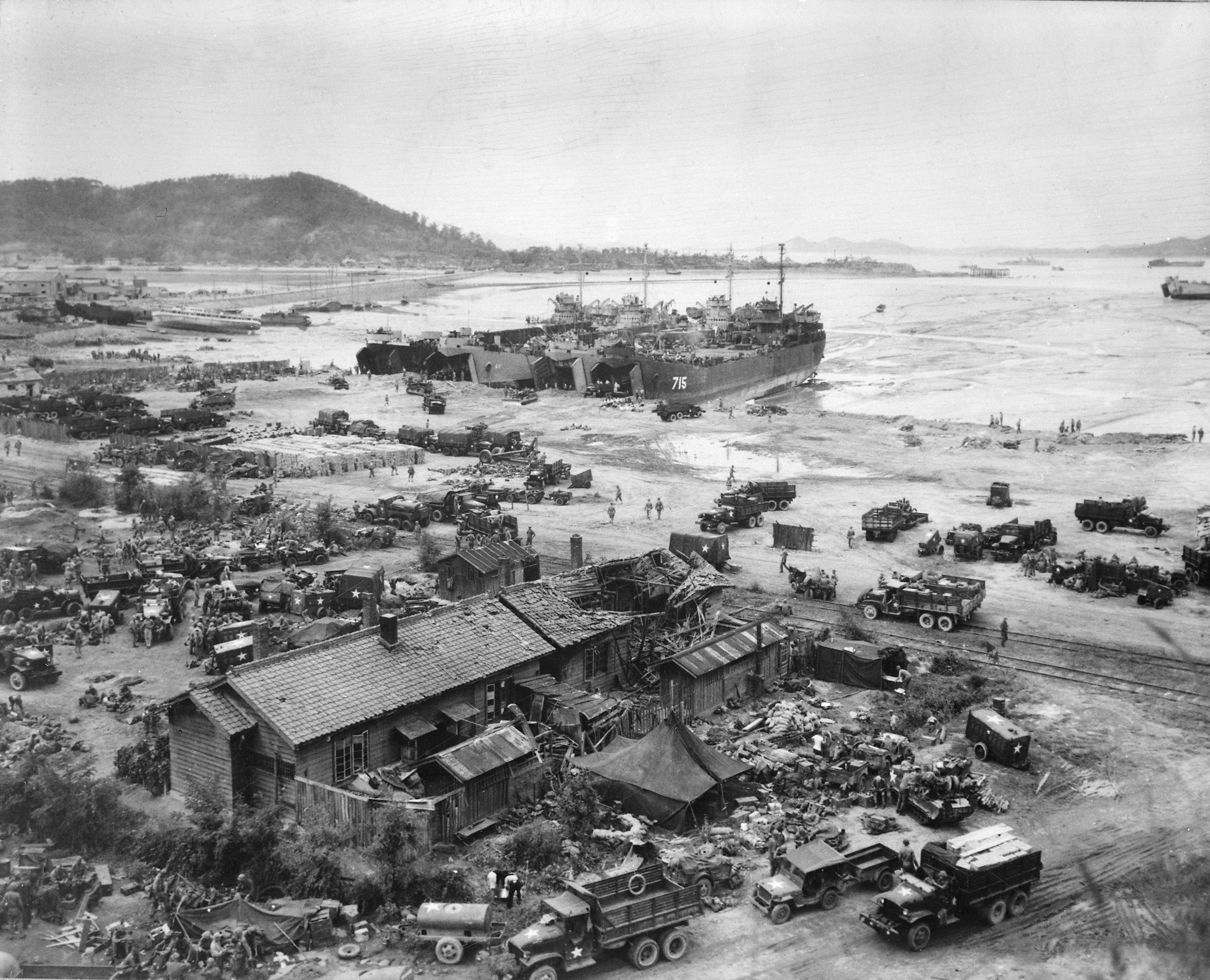
September 15, 1950: General of the Army Douglas MacArthur, supreme commander of United Nations forces, launches what amounts to the Korean War's "D-Day," an amphibious landing of 40,000 infantry from 230 ships.

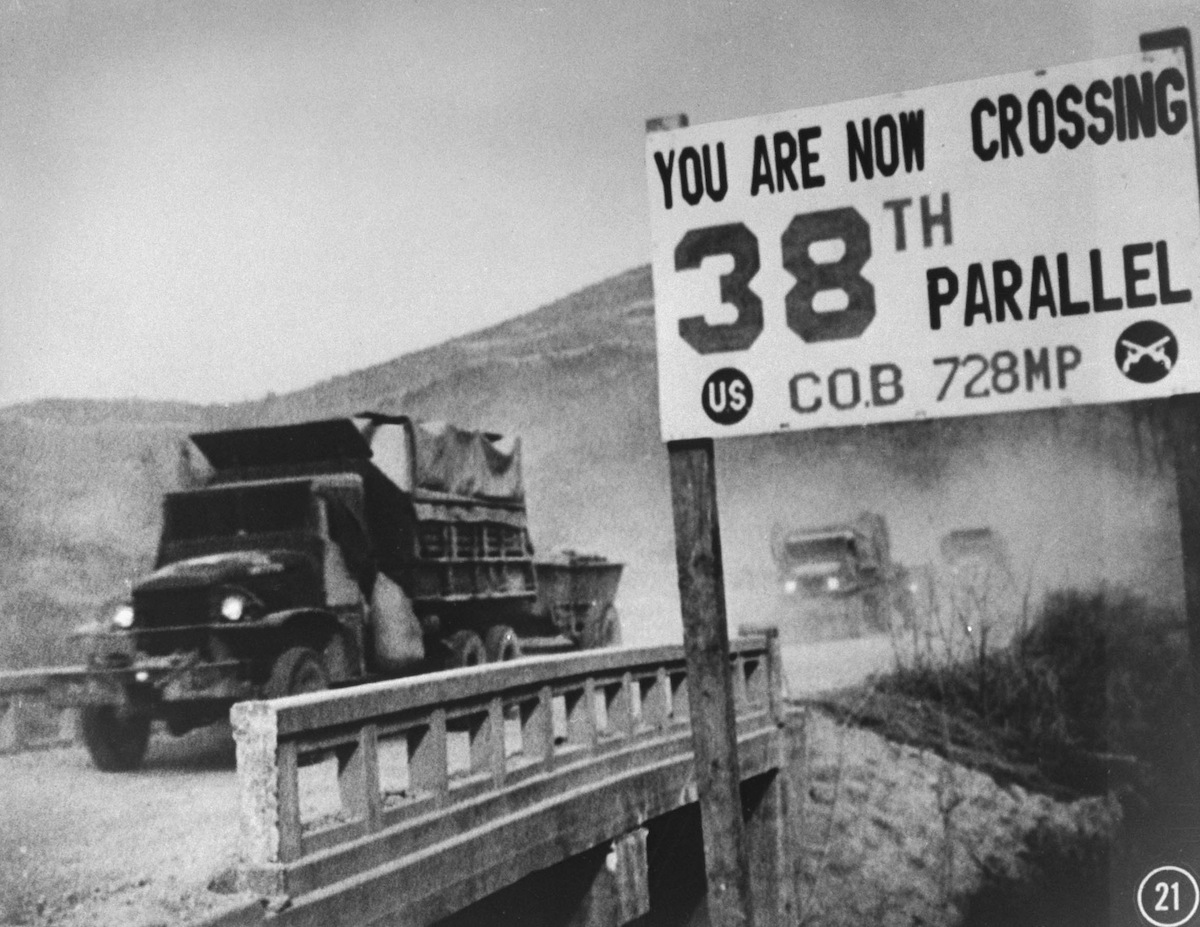
On June 25, troops of the Democratic People's Republic of Korea (a.k.a. North Korea), a Communist nation, and by no means democratic or a republic -- crossed the parallel of 38th degrees north latitude, and invaded the Republic of Korea (a.k.a. South Korea), which was capitalist, but hardly free.

Two days later, President Harry S Truman announced that American and other NATO forces would come to the aid of South Korea. The next day, North Korean troops took the South Korean capital of Seoul. But it was not just NATO troops, but 15 United Nations countries that came to the South's aid.

At first, it looked like that aid might be too late. On August 5, North Korea had South Korean troops backed up into the southeastern corner of the peninsula, centered on the city of Pusan (now usually written in English as "Busan"). They held what became known as the Pusan Perimeter. It was a siege, but the ROK troops were holding on.

There would be no evacuation, the way the Nationalist Chinese had gone to Taiwan the previous year; the American troops had done in the Philippines in 1942, by escaping to Australia; or the British troops had done at Dunkirk in 1940 by retreating to their home island.

It wasn't just a matter of pride: The South Koreans had no place to go. American troops could have evacuated them to the nearest friendly country, but that would be Japan, where "friendly" was a bit of a stretch: That nation had occupied them from 1910 (and had effectively ruled them from 1876) until the end of World War II in 1945 -- just 5 years earlier. And Japan was still in the rebuilding process: Taking on millions of Korean refugees was not part of the plan of their military governor.

That was MacArthur, the 70-year-old 5-star General who had been commander of Allied forces in the Pacific. In spite of his age, there was no one more qualified to lead the mission than "Big Mac." As with D-Day, the invasion of Normandy in France in 1944, the U.S. had a deception operation underway, to convince the enemy that the invasion would be elsewhere -- in this case, at Kunsan, 105 miles to the south. The Communist spy network bought it.

After 5 days of bombing to provide air support, MacArthur, invading with his troops as he had at Leyte Gulf in the Philippines in 1944, gave the green light on September 15. The invasion began at 6:30 AM, local time. As with Normandy, there were invasion points given different code names: Green Beach, Red Beach and Blue Beach. The U.N. lost 224 troops; the North Koreans, 1,350.
MacArthur famously didn't like the photo
of him wading ashore in the Philippines in 1944.
I'm thinking he liked this one much more.

Within 2 days, U.S. forces were able to take Kimpo, Seoul's international airport. Within 2 more, they were able to use it to bring more troops in. By September 22, they had over 53,000 men on the ground. By September 25, Red troops had abandoned the Pusan Perimeter, and were attempting to defend their ill-gotten gains at Seoul. On September 28, they had to abandon that.

In a span of 2 weeks, MacArthur had led, for all intents and purposes, the liberation of South Korea. He wanted more: He wanted to kick the Commies completely off the peninsula. He nearly did it: By November 26, 10 weeks after the Incheon landing, he had them backed up to the Yalu River, which separates the Korean peninsula from mainland China (and, technically, makes Korea not a peninsula but an island).

China then intervened on behalf of its Communist "little brother." Again, U.N. troops were pushed below the 38th parallel. By April 1951, they had gained back most of South Korea's territory, and a line cutting southwest-to-northeast across the peninsula became like the trench warfare of World War I, 35 years earlier.

At the end of the calendar year 1950, Time magazine named its first collective "Men of the Year": "The American Fighting Man." In 2000, on the 50th Anniversary of the war, it published a special issue on the year, calling it "the fulcrum point of the 20th Century," not just the midpoint.

MacArthur wanted to use tactical nuclear weapons against China. Truman told him no, because that would get the Soviet Union involved, and it would be World War III. MacArthur let his objections be known to the Republican leader of the House of Representatives, Joe Martin of Massachusetts. Martin leaked this to the press. Truman found out, and fired MacArthur for subordination, replacing him with 4-star General Matthew Ridgeway, and later replacing him with 4-star General Mark Clark.

The war became a stalemate, lasting 3 years. About 327,000 Americans served in the conflict, and 36,574 were killed, with another 103,000 wounded but surviving.

It's not clear how many of those wounded, but surviving, were treated at Mobile Army Surgical Hospitals, or MASHes, which, due to the 1972-83 CBS TV series M*A*S*H, became popular culture's most familiar story of the Korean War. But, by being close to the front, they were able to save soldiers who surely would have died in the conditions of World War II. But that, and the addition of antibiotics and sulfa in World War II, saved a lot of lives that would have been lost in the conditions of World War I.

Today, Incheon is home to just under 3 million people, making it the 3rd-largest city in South Korea, behind Seoul, with 9.4 million; and Busan, with 3.3 million. Pyongyang, the North Korean capital, has 3.1 million.

*

September 15, 1950 was a Friday. These baseball games were played:

* The New York Yankees lost to the Detroit Tigers, 9-7 at Briggs Stadium (later Tiger Stadium) in Detroit. Johnny Mize hit 3 home runs and had 6 RBIs, but it wasn't enough. Tommy Byrne got knocked out of the box in the 2nd inning, and Allie Reynolds ended up the losing pitcher in relief. The winning pitcher, in relief? Hank Borowy, a former Yankee, from nearby Bloomfield, New Jersey. (Not to be confused with the Detroit suburb of Bloomfield Hills, Michigan.)

* The New York Giants lost to the Chicago Cubs, 4-3 at the Polo Grounds. Hal Jeffcoat singled home Johnny Klippstein with the winning run in the top of the 10th inning.

* The Brooklyn Dodgers lost to the St. Louis Cardinals, 6-2 at Ebbets Field. At first, it looked like the Dodgers had caught a break: Cloyd Boyer, older brother of Ken and Clete, was scheduled to start, but took the mound, and left during his warmups. But George "Red" Munger stepped in, and went the distance. Duke Snider hit a home run for the Dodgers, and Don Newcombe went the distance, singling in his own cause. Jackie Robinson did not play. But Stan Musial went 1-for-4 with a walk, and Albert "Red" Schoendienst went 3-for-5 with 2 RBIs.

* The Boston Braves beat the Pittsburgh Pirates, 7-4 at Braves Field in Boston. Ralph Kiner went 1-for-3 with 2 walks.

* The Philadelphia Phillies swept a doubleheader from the Cincinnati Reds, 2-1 and 8-7 at Shibe Park in Philadelphia. The 2nd game saw the Phils trailing 5-0 after 5 innings, but a double by Granville "Granny" Hamner sent the game to extra innings. And I do mean "extra": They played what amounted to another game, and then some.

The Reds scored 2 runs in the top of the 18th inning, The Phils tied it, with a double by Del Ennis, a single by Dick Sisler, a sacrifice fly by Hamner, and a triple by Stan Lopata. Then they won it in the bottom of the 19th: Eddie Watkus and Richie Ashburn singled, Willie "Puddin' Head" Jones walked to load the bases with nobody out, and Ennis singled Waitkus home. So fans got to have 28 innings for the price of 9, and, if they were root, root, rooting for the home team, won 2 games.

The Phils, known as the "Whiz Kids" for being mostly a young team, were now 7 1/2 games ahead of the Dodgers with 17 games to play. And yet, they had to go to extra innings of the last game of the season to clinch the Pennant, on a 10th-inning home run by Sisler off Newcombe.

* A doubleheader was split at Cleveland Municipal Stadium. The Cleveland Indians won the opener, 4-2. Luke Easter hit a 2-run home run in the bottom of the 9th to win it. The Washington Senators won the nightcap, 4-1.

* The Philadelphia Athletics beat the Chicago White Sox, 4-1 at Comiskey Park in Chicago.

* And the Boston Red Sox beat the St. Louis Browns, 12-9 at Sportsman's Park in St. Louis. Just another day at the office -- or, rather, business trip -- for Ted Williams: The Splendid Splinter went 4-for-6 with a home run and 3 RBIs.

Saturday, June 25, 2022

June 25, 1950: The Korean War Begins

June 25, 1950: Troops of the Democratic People's Republic of Korea -- a.k.a. North Korea, a Communist nation, and by no means was it democratic or a republic -- cross the parallel of 38th degrees north latitude, and invade the Republic of Korea -- a.k.a. South Korea, which is capitalist, but hardly free.

Two days later, President Harry S Truman announced that American and other NATO forces would come to the aid of South Korea. The next day, North Korean troops took the South Korean capital of Seoul. A total of 15 United Nations countries came to the South's aid: America, Canada, Britain, France, Belgium, the Netherlands, Luxembourg, Greece, Turkey, Colombia, Ethiopia, South Africa, the Philippines, Thailand, Australia and New Zealand.

On September 15, Korea had its "D-Day," as General of the Army Douglas MacArthur, despite being 70 years old, personally led an amphibious landing at Inchon. Within weeks, not only was Seoul liberated, but the North's troops were backed up to the Yalu River, separating the Korean peninsula from the People's Republic of China.

That country then intervened on behalf of its Communist "little brother." The war became a stalemate, lasting 3 years. Truman ended up relieving MacArthur of duty in April 1951, for disobeying orders, replacing him with Matthew Ridgeway. He commanded UN troops in Korea until May 1952, when he was transferred to command U.S. troops in Europe. He was replaced as UN commander by Mark Clark, who held that role until the Armistice was signed on July 27, 1953.

About 327,000 Americans served in the conflict, and 36,574 were killed, with another 103,000 wounded but surviving.

Kim Il-Sung, the founder of the DPRK, remained in power until his death in 1994. His son, Kim Jong-Il, was then in charge until his own death in 2011. And his son, Kim Jong-Un, is now in charge, and is every bit as bad as his father and his grandfather. The military is well-supplied, but the civilians are poor, and many are starving.

Not that Syngman Rhee, the founder of the ROK, was a saint. South Korea may have been capitalist, but it was hardly democratic. He remained in power until being deposed in 1960, and died in 1965. South Korea's path to democracy has been difficult, including the assassination of President Park Chung-hee over fears he was bringing dictatorship back in 1979; and the impeachment and removal of his daughter, President Park Geun-hye, on corruption charges in 2017.

MacArthur died in 1964, Eisenhower in 1969, Truman in 1972, Clark in 1984, and Ridgeway in 1993. South Korea's leading General, Chung Il-kwon, served as Prime Minister from 1964 to 1970, and lived until 1994. Kim Il-Sung operated as his own commanding General.

Coming between the epic of World War II and the more recent national trauma of the Vietnam War, Korea became "the forgotten war." Even the TV series M*A*S*H, running on CBS from 1972 to 1983, didn't help much, as details were frequently gotten wrong.

A memorial to the American troops of the Korean War opened in 1995 on the National Mall in Washington, across from a counterpart to the Vietnam War, between the Washington Monument and the Lincoln Memorial. Surviving veterans are now age 87 and up.
The Korean War Veterans Memorial, Washington

U.S. forces remain on South Korean soil. These included an engineering unit to which my father was assigned in 1967 and 1968.

*

June 25, 1950 was a Sunday. It was the off-season for the NFL, the NBA and the NHL. But, being a Sunday, not only was a full slate of Major League Baseball games played, but there were some doubleheaders:

* The New York Yankees split a doubleheader with the Detroit Tigers at Briggs Stadium in Detroit, which was renamed Tiger Stadium in 1961. In the opener, Joe DiMaggio and Hank Bauer supported Eddie Lopat with home runs, allowing him to beat Hal Newhouser, and the Yankees won, 8-2. In the nightcap, Tommy Henrich hit a home run, but Vic Raschi allowed a 3-run homer by Hoot Evers in the 8th inning, and the Tigers won, 6-3.

* The New York Giants got swept by the Cincinnati Reds in a doubleheader at the Polo Grounds. The Reds won the 1st game 6-3, and the 2nd game 6-4.

* The Brooklyn Dodgers played only 1 game, and, apparently, it was a football game. They lost to the Pittsburgh Pirates, 16-11 at Ebbets Field. Don Newcombe didn't get out of the 3rd inning for the Brooks, and Vernon Law, winner of the Cy Young Award and the World Series 10 years later, only went 4. Gil Hodges hit a home run for Dem Bums, but Ralph Kiner hit 2 and Ted Beard 1 for the Buccos.

* The Boston Braves beat the St. Louis Cardinals, 4-0 at Braves Field. Vern Bickford pitched a 5-hit shutout.

* A doubleheader was split at Shibe Park in Philadelphia. The Chicago Cubs won the 1st game 11-8, and the Philadelphia Phillies won the 2nd game 2-1.

* A doubleheader was split at Cleveland Municipal Stadium. The Cleveland Indians won the 1st game 7-6, and the Washington Senators won the 2nd game 5-3.

* A doubleheader was split at Comiskey Park in Chicago. The Chicago White Sox won the 1st game 7-6, and the Philadelphia Athletics won the 2nd game 13-4.

* And the Boston Red Sox swept a doubleheader from the St. Louis Browns at Sportsman's Park in St. Louis. The Sox won the 1st game 11-5, and the 2nd game 8-2.

This invasion took place during the World Cup in Brazil. In Group Stage games:

* America lost to Spain, 3-1 at Estádio Vila Capanema in Curitiba.

* England beat Chile, 2-0 at Estádio Maracanã in Rio de Janeiro. 

* Sweden beat Italy, 3-2 at Estádio do Pacaembu in São Paulo.

* And Yugoslavia beat Switerland, 3-0 at Estádio Independência in Belo Horizonte.

Friday, March 18, 2022

March 18, 1975: "M*A*S*H" Kills Off Henry Blake

March 18, 1975: The TV show M*A*S*H closes its 3rd season -- meaning it had now run for as long as the Korean War, which it depicted, had.

Early in an episode titled "Abysinnia, Henry," U.S. Army Lieutenant Colonel Henry Blake, M.D., commanding officer of the 4077th Mobile Army Surgical Hospital, played by McLean Stevenson, finds out that he has been discharged. (Henry had been known to say goodbye by saying, "Abysinnia," the former name of the African nation of Ethiopia, as a corruption of "I'll be seeing you.")

But at the end of the episode, during a surgery session, the camp's company clerk, Corporal Walter "Radar" O'Reilly (Gary Burghoff) came in, and said, needing to pause due to the weight of the words, "I have a message: Lieutenant Colonel... Henry Blake's plane... was shot down... over the Sea of Japan... It spun in... There weren't no survivors."

Radar took it harder than anyone else. Having lost his father before he was old enough to remember him, he looked up to Henry, who became like a father to him. But even the show's meanest characters, Major Margaret "Hot Lips" Houlihan, the head nurse (Loretta Swit), and Major Frank Burns, the "Do as I say, not as I do" second-in-command and now temporary C.O., were broken up over it.

This was the 1st time that an American TV show had actually said that a main character had died. Previously, when an actor died, either the character was played by someone else, or written out of the series and not mentioned again. The same thing was done when an actor simply left the show.

But when Stevenson left M*A*S*H after 3 seasons, wanting to do other things, the producers and writers killed Henry off. They had the announcement right there in the script.

Americans had seen on their TVs that a President, and other beloved figures, had been murdered; that the scenes of wounded soldiers they were seeing in Vietnam were real; that there really were riots by protestors, and beatings, even shootings, by police and national guardsmen at political demonstrations; that a President had committed crimes, and that he was resigning rather than face impeachment over it.

But they had never been told that a TV character that they liked, played by a person who, then, was very much alive, was dead -- and just as he was going home from a war, too.

This was:

* A year and a half before a dispute with the showrunners led to John Amos being fired from Good Times, and his character, James Evans Sr., being written out as dead in a car crash.

* 11 years before Officer Joe Coffey (Ed Marinaro) was gunned down on Hill Street Blues. 

* 12 years before Valerie Harper was fired from Valerie over a salary dispute, resulting in the title character being killed off and the show being retooled as The Hogan Family. 

* 16 years before Gary Shepherd (Peter Horton) was killed off on thirtysomething.

* 23 years before the death from a bad heart of Detective Bobby Simone (Jimmy Smits) on NYPD Blue.

* 26 years before an offscreen car crash killed Dolores Landingham (Kathryn Joosten) on The West Wing.

* And 36 years before Game of Thrones showed that no character was safe by killing off what appeared to be its lead character, Lord Eddard Stark (Sean Bean).

With every such death, once the initial shock wears off, the surprise becomes less. Nothing will ever top the surprise of Radar saying of Henry's plane, "There weren't no survivors."

Whatever happened between Stevenson and the showrunners, this was unjust. People still complain about it, nearly half a century later.

The thing is, Henry wasn't the main character of M*A*S*H. Nor was his replacement as C.O., Colonel Sherman Potter (Harry Morgan). Nor was the Chief Surgeon, Captain Benjamin Franklin "Hawkeye" Pierce (Alan Alda). The show's main character was war. Not even the Korean War per se, but war itself.

And, as one of America's greatest generals, William Tecumseh Sherman, taught us, "War is cruelty, and you cannot refine it." Or, as he told the graduating class of a military academy, "There is many a boy here today who looks on war as all glory, but, boys, it is all hell." There's a reason the writers showed the cast in the operating room at least once an episode.

Two seasons, our time, and, I suppose, a few months, their time, after Henry's death, in an episode titled "The General's Practitioner," premiering on February 15, 1977, Hawkeye put it in even starker terms:

Frank: Everybody knows that war is Hell.

Captain B.J. Hunnicutt (Mike Farrell): Remember: You heard it here last.

Hawkeye: War isn't Hell. War is war, and Hell is Hell, and, of the two, war is a lot worse.

Father Francis Mulcahy, the camp chaplain (William Christopher): How do you figure that, Hawkeye?

Hawkeye: Easy, Father. Tell me: Who goes to Hell?

Mulcahy: Sinners, I believe.

Hawkeye: Exactly. There are no innocent bystanders in Hell. But war is chock-full of them. Little kids, cripples, old ladies. In fact, except for a few of the brass, almost everybody involved is an innocent bystander.

What better way to show that war is Hell, or worse, than by having it kill a beloved character?

*

March 18, 1975 was a Tuesday. Actress Sutton Foster, who went from Broadway star to the lead in the sitcom Younger, was born.

Baseball was in Spring Training. Football was out of season. There were 8 games played in the NBA:

* The New York Knicks beat the Los Angeles Lakers, 109-100 at The Forum outside Los Angeles in Inglewood, California.

* The Cleveland Cavaliers beat the Washington Bullets, 112-98 at The Coliseum in the Cleveland suburb of Richfield, Ohio.

* The Boston Celtics beat the Detroit Pistons, 116-90 at Cobo Hall in Detroit. (It's now named Huntington Place.)

* The Chicago Bulls beat the Philadelphia 76ers, 111-96 at the Chicago Stadium.

* The Kansas City-Omaha Kings beat the Atlanta Hawks, 105-101 at the Kemper Arena in Kansas City. (It's now named the Hy-Vee Arena.) Nate "Tiny" Archibald scored 36 for the Kings.

* The Houston Rockets beat the Buffalo Braves, 122-115 at the Hofheinz Pavilion in Houston. Bob McAdoo scored 51 points and had 20 rebounds for the Braves, but it wasn't enough, as the Rockets got 34 points from Rudy Tomjanovich and 30 from Calvin Murphy.

* The Golden State Warriors beat the Phoenix Suns, 133-103 at the Oakland Coliseum Arena.

* And the Portland Trail Blazers beat the Milwaukee Bucks, 95-89 at the Veterans Memorial Coliseum in Portland.

There were 4 games played in the NHL:

* The New York Islanders played the Vancouver Canucks to a tie, 4-4 at the Nassau Coliseum.

* The Philadelphia Flyers beat the Washington Capitals, 7-2 at the Capital Centre in the Washington suburb of Landover, Maryland.

* The St. Louis Blues beat the Pittsburgh Penguins, 5-2 at the St. Louis Arena.

* And the Los Angeles Kings beat the Minnesota North Stars, 5-3 at the Metropolitan Sports Center in the Minneapolis suburb of Bloomington, Minnesota.

There were no games played in the American Basketball Association, but 3 were played in the World Hockey Association:

* The Phoenix Roadrunners beat the Chicago Cougars, 7-3 at the International Amphitheatre in Chicago.

* The Edmonton Oilers beat the Quebec Nordiques, 8-5 at the Northlands Coliseum in Edmonton.

* And the Minnesota Fighting Saints beat the Vancouver Blazers, 5-3 at the Pacific Coliseum in Vancouver.

Monday, February 28, 2022

February 28, 1983: The "M*A*S*H" Finale

February 28, 1983: The final episode of M*A*S*H airs on CBS, after 11 seasons, even though the Korean War, which it depicted, lasted 3 years.

In its 1st season, 1972-73, M*A*S*H aired on Sundays at 8:00; 2nd season, Saturdays at 8:30; 3rd, Tuesdays at 8:30; 4th, 5th and 6th, Tuesday at 9:00; and then, late in the 6th season, 1978, to the end, Mondays at 9:00. The finale aired a little earlier, at 8:30 PM on a Monday night, and ran for two and a half hours.

The episode is titled "Goodbye, Farewell and Amen." It was directed by Alan Alda, who played Captain Benjamin Franklin Pierce, M.D., U.S. Army Reserve, a.k.a. Hawkeye. He also wrote it, with several other writers for the series: Longtime producer Burt Metcalfe, John Rappaport, Dan Wilcox, Thad Mumford, Elias Davis, David Pollock and Karen Hall.

The episode got 106 million viewers, making it the most-watched TV show in American history, breaking the record set a little over 2 years earlier, when Dallas revealed "Who shot J.R.?" Since then, a few Super Bowl broadcasts have surpassed it, but no regular TV series episode has.

Synopsis: The war finally comes to an end, but not before Hawkeye, who so often had walked a fine line between genius and madness, finally cracks, and needs treatment from Army psychiatrist Major Sidney Freedman (Allan Arbus). Another surgeon, Major Charles Emerson Winchester III (David Ogden Stiers), sees his love of classical music shattered upon seeing the deaths of North Korean prisoners of war, who happened to be musicians.

The camp's chaplain, Captain Francis Mulcahy (William Christopher), loses his hearing after an explosion. And the formerly cross-dressing, formerly psychiatric-discharge-seeking company clerk, Sergeant Max Klinger (Jamie Farr), falls in love with a Korean woman named Soon-Lee (Rosalind Chao), marries her -- with Mulcahy barely able to conduct the ceremony -- and decides to help her look for her family among the refugees: "I can't believe I'm saying this, but I'm staying in Korea!"

The final scene shows a (mostly?) recovered Hawkeye taking off in the last helicopter to leave the now-packed-up 4077th Mobile Army Surgical Hospital, while his bunkmate and fellow surgeon, Captain B.J. Hunnicutt (Mike Farrell), gets ready to leave on a motorcycle he'd recovered. B.J. yells, "I left you a note!" Hawkeye gets the last word, the last word spoken in the series: Unable to hear B.J. over the chopper's rotor, he yells, "What?" As the chopper takes off, he sees that B.J. has spelled out "GOODBYE" in the rocks that had helped weigh down the tents.

*

February 28, 1983 was a Monday. Baseball and football were out of season. And there were no games scheduled in the NBA.

There were 2 games played in the NHL. The New York Rangers beat the Pittsburgh Penguins, 9-3 at Madison Square Garden. The Broadway Blueshirts got 2 goals from Mike Rogers. And, in an "Original Six" matchup, the Boston Bruins beat the Toronto Maple Leafs, 6-3 at the Boston Garden.

Tuesday, January 25, 2022

January 25, 1970: The Film Version of "M*A*S*H" Has Hollywood's 1st F-Word

Left to right: Donald Sutherland, Sally Kellerman, Elliott Gould

January 25, 1970: The film M*A*S*H premieres, directed by Robert Altman, on a screenplay by Ring Lardner Jr., based on the novel by Richard Hooker. It was the pen name of Richard Hornberger, who really was a surgeon from Maine, and was basically a thinly-veiled memoir of his time at a real Mobile Army Surgical Hospital in the Korean War.

The only actors who played the same characters in the 1972-73 TV show were Gary Burghoff as the company clerk, Corporal Walter "Radar" O'Reilly; and George Wood (for some reason, billed as "G. Wood") as General Charlie Hammond. Corey Fischer and former NFL player Timmy Brown (credited as an actor as "Timothy Brown") were in both, but as different characters. Also in it from the ranks of pro football were Ben Davidson and Fred "the Hammer" Williamson.

There were a lot of differences, and not just having Donald Sutherland as Captain Benjamin Franklin "Hawkeye" Pierce, Elliott Gould as Captain "Trapper" John McIntyre, Robert Duvall as Major Frank Burns, and, perhaps most shocking of all, René Auberjonois (yes, Clayton from Benson and Odo from Star Trek: Deep Space Nine) as Father Mulcahy.

For one thing, the movie opens with the famous theme song, complete with sung lyrics: "Suicide Is Painless." For another, for the TV show, the character of Captain Duke Forrest (Tom Skerritt) was dropped. For another, "Dish" was the nickname of Lieutenant Maria Schneider (Jo Ann Pflug), whereas on the show, the character was renamed Lt. Maggie Dish (and, as played by Karen Philipp, was quickly dropped).

For yet another, while fooling around with Frank, the head nurse, Major Margaret Houlihan, inadvertently gives herself the nickname "Hot Lips." On the show, she already had the nickname when she got there. Sally Kellerman (movie) and Loretta Swit (TV show) are the same age, and they didn't look much alike then, but they did once they got older. Roger Bowen played the bedraggled commanding officer, Lieutenant Colonel Henry Blake.

Bobby Troup, who wrote the song "Route 66" and played Dr. Joe Early on Emergency!, played Sgt. Gorman. Sylvester Stallone, although not credited, played a soldier. And John Schuck, as dentist Walter "the Painless Pole" Waldowski, utters the first F-word in a major Hollywood release. It came during the football game near the end of the film. Screenwriter Andy Sidaris told Schuck to look at the player across from him, and, "Say something that'll annoy him." He said, "All right, Bud, your fucking head is coming right off!" 

The new film rating system had officially replaced the puritanical Hays Code on November 1, 1968, just a little over a year earlier. The line was allowed into the film, which got an "R" rating. The rules would later be rewritten so that the word could appear in a film once, and it could keep a "PG" rating; but a 2nd use meant an "R."

The TV show took a few liberties with language. The episode "The Interview," intended to mimic a 1950s TV documentary, had the reporter/narrator, Clete Roberts, say, "Some of their saltier comments have been deleted." As Hawkeye, Alan Alda said, "I don't really give a shit what happens," and said that he'd written President Harry S Truman, himself a practitioner of earthy language, and said, "The least he could do was call me a son of a bitch." And as Blake's successor, Colonel Sherman Potter, Harry Morgan used the term "Bullshit." All three examples were bleeped. Only Potter apologized to Roberts (and, by extension, to the documentary's viewers).

M*A*S*H the TV show, running from 1972 to 1983, used the words "hell" and "damn" more than any TV show before it, to the point where Radar told Blake following a brush with death, his language would contain "no more hells, damns, and especially not the big one!" And there were 3 uses, 2 by Hawkeye, of "You son of a bitch!"

But no F-word. There was a scene at the end of a Season 1 episode, "Sometimes You Hear the Bullet," where this sequence occurred:

Hawkeye: Henry, I know why I'm crying. Tommy was my friend, and now, he's dead, and I'm crying. I've watched guys die in there every day. Why didn't I ever cry over them?
Henry: Because you're a doctor.
Hawkeye: What the hell does that mean?
Henry: I don't know. If I knew that, I'd be at the Mayo Clinic. Does this place look like the Mayo Clinic?

In hindsight, I have to think that, were M*A*S*H to be rebooted as "prestige TV," that episode would have been made exactly as before, with the addition of an F-word in that sequence: "Does this fucking place... " or "Does this place look like the fucking Mayo Clinic?"

At any rate: From the M*A*S*H film, Roger Bowen died in 1996 (by a weird coincidence, just 1 day after Henry's TV portrayer, McLean Stevenson), Richard Hornberger (Hooker) in 1997, Bobby Troup in 1999, George Wood and Ring Lardner Jr. (the last survivor of the Hollywood Ten) in 2000, Robert Altman in 2006, Ben Davidson in 2012, René Auberjonois in 2019, and Timothy Brown in 2020.

As of January 25, 2022, Elliott Gould, Donald Sutherland, Tom Skerritt, Robert Duvall, Sally Kellerman, Gary Burghoff, John Schuck, Fred Williamson and Jo Ann Pflug are still alive. (UPDATE: Kellerman died in 2022, just a few days after this post; Sutherland in 2024, Duvall in 2026.)

*

January 25, 1970 was a Sunday -- an unusual day of the week to release a film, in any era. Baseball was out of season. Football season ended 2 weeks earlier, with the Kansas City Chiefs winning Super Bowl IV over the Minnesota Vikings.

There were 6 games in the NBA:

* The New York Knicks beat the Boston Celtics, 102-96 at the Boston Garden.

* The Philadelphia 76ers beat the San Diego Rockets, 159-131 at The Spectrum in Philadelphia. Archie Clark scored 36 points for the Sixers.

* The Milwaukee Bucks beat the Atlanta Hawks, 131-116 at the Alexander Memorial Coliseum (now the Hank McCamish Pavilion) in Atlanta. Flynn Robinson scored 33 for the Bucks.

* The Cincinnati Royals beat the Baltimore Bullets, 129-122 at the Cincinnati Gardens. Oscar Robertson scored 41 points.

* The Chicago Bulls beat the Detroit Pistons, 120-111 at the Chicago Stadium.

* And the Los Angeles Lakers beat the Phoenix Suns, 118-106 at The Forum outside Los Angeles in Inglewood, California. Jerry West scored 38. Wilt Chamberlain did not play.

There were 4 games in the American Basketball Association:

* The New York Nets beat the Indiana Pacers, 96-83 at the Island Garden in West Hempstead, Long Island, New York.

* The Pittsburgh Pipers beat the Carolina Cougars, 108-101 at the Civic Arena in Pittsburgh.

* The Washington Capitols beat the Miami Floridians, 113-106 in the gymnasium at North Dade Junior College North in Miami.

* And the Denver Rockets, the team that would become the Denver Nuggets, beat the Dallas Chaparrals, the team that would become the San Antonio Spurs, 127-118 at the Denver Auditorium Arena.

And there were 6 games in the NHL:

* The New York Rangers beat the Los Angeles Kings, 3-2 at Madison Square Garden.

* The Boston Bruins beat the Pittsburgh Penguins, 3-1 at the Boston Garden. Yes, it hosted the Celtics and the Bruins on the same day.

* The Philadelphia Flyers beat the St. Louis Blues, 2-0 at The Spectrum in Philadelphia.

* The Montreal Canadiens beat the Detroit Red Wings, 4-1 at the Olympia Stadium in Detroit.

* The Toronto Maple Leafs beat the Chicago Black Hawks, 3-2 at the Chicago Stadium.

* And the Oakland Seals beat the Minnesota North Stars, 4-1 at the Metropolitan Sports Center in the Minneapolis suburb of Bloomington, Minnesota.

December 31, 1999 & January 1, 2000: The Millennium

December 31, 1999:  The Millennium arrives. The people of planet Earth survived. At a terrible cost. But we hadn't destroyed ourselves. ...