
The incumbent Republican President, Herbert Hoover, gets blamed for it, when it was his Republican predecessors, Warren Harding and Calvin Coolidge, who set the table for it. Hoover shouldn't be blamed for the Depression. And he shouldn't be blamed for doing nothing: He tried a few things. What he should be blamed for is giving up. Some of the things he tried worked a little, but not enough, and he abandoned his efforts. And in 1932, he lost in a landslide, to the Democratic Governor of New York, Franklin Delano Roosevelt.
Emptied pockets, to show that you had no money, became known as Hoover flags. Newspapers used as cover by homeless people became known as Hoover blankets. Shanty towns became Hoovervilles. And hitching a horse up to your car, because you couldn't afford gasoline but you didn't dare sell your car, earned the vehicles the nickname Hoover wagons. In Canada, where Richard Bennett rode the Depression to become Prime Minister in 1930, but was turned out in 1935 because he governed more like Hoover than Roosevelt, they were known as Bennett buggies.

The happy, peppy songs of the Roaring Twenties -- including a song recorded just before, but released just after, the crash, which was saved by FDR making it his campaign theme song, "Happy Days Are Here Again" -- were gone. Songs of the Depression either spoke of hardship, like "Brother, Can You Spare a Dime?" (evoking both now-fallen industry and World War I), "Boulevard of Broken Dreams" (not the Green Day song of 2005), "Gloomy Sunday," and "Remember My Forgotten Man"; or tried to defy it, like "We're In the Money" and "Life Is Just a Bowl of Cherries."
Movies also reflected this. Monster movies abounded, with Dracula and Frankenstein both released in 1931, and King Kong and The Invisible Man in 1933, each inspiring many imitators. Gangster movies peaked then, with James Cagney's The Public Enemy, Edward G. Robinson's Little Caesar, and the original version of Scarface, starring Paul Muni, all made in 1931, the latter not released until 1932.
At the height of the stock boom in early September 1929, America's unemployment rate was 3.2 percent. By the end of 1930, it was 8.7. 1931, 15.9. At the 1932 election, 23.6. At the depth, on March 4, 1933, when FDR was inaugurated and the banking crisis was critical, the rate was 24.9 percent. Fully 1 out of 4 Americans who wanted to work couldn't get work. Some people have suggested the rate was considerably higher than that, as much as 31 percent, or nearly 1 in 3.
FDR ended up building on some of what worked under Hoover, and in New York State under his leadership there, and put it in overdrive. Banking reforms stopped the financial bleeding, securities reforms prevented much of the abuses that had been done (stopped it, that is, until deregulation in the 1980s), and his public works and other construction programs created millions of jobs.
His New Deal had worked very well, but the problems remained vast. When he was sworn in for a 2nd term on January 20, 1937, having gotten the unemployment rate down to 14 percent (either cut by a third or a half, depending on whose figures you believe), FDR said the work was far from done: "I see one-third of a nation ill-housed, ill-clad, ill-nourished." And it may have been more like two-fifths, or 40 percent, because that included what we would now call "the working poor."
That year, FDR did what conservatives have always suggested for economic hardship: Cut spending. It backfired, and unemployment went from a Depression-low of 14.3 percent to 19.0 percent by the time of the 1938 elections, resulting in the Republicans' best performance between 1928 and 1946, although not enough to gain control of either house.
But 1937 was the year Social Security began handing out checks, and 1938 was the year the 1st federal minimum wage took effect. By 1941, unemployment was back under 10 percent. It still didn't get back to tolerable levels until the U.S. entered World War II, and a lot of unemployed men went into the armed forces, and a lot of employed men did as well, their stateside jobs becoming available to unemployed men -- and women.
From the dawn of the American Civil War in 1860 to 1928, the Republican Party had gone 14-4 in Presidential elections. (Okay, they may have stolen those of 1876, 1880 and 1888.) And in the 4 that the Democratic Party won -- 1884, 1892, 1912 and 1916 -- they still didn't get a majority of the popular vote in any of them, not even with the 1912 split in the Republicans that led to an Electoral Vote landslide for Woodrow Wilson. The GOP also held both houses of Congress for most of a 70-year stretch from 1860 to 1930.
But when the Great Depression began, and turned out to be worse than previous depressions -- 1837-43, 1857-59, 1873-78, 1893-98, 1920-22 -- people took their anger out on the Republicans. Herbert Hoover went from winning 21.4 million votes in 1928 to 15.7 million in 1932. He went from a popular vote percentage of 58.2 percent in 1928 to 39.6 in 1932. He went from winning 40 States to 6, and only in Maine and Vermont did he get more than 51 percent. In the Electoral Vote, he went from 444 to 59. This was not so much an embrace of FDR and his as-yet vague New Deal as it was a firing of Hoover and the Republicans.
The Democrats won 7 of the next 9 elections. The 2 the Republicans won, 1952 and 1956, were by Dwight D. Eisenhower, and "Ike" basically won them because he was the commanding General of World War II. America was embracing him, not Republican principles. Even when Richard Nixon won in 1968, it was a 3-way race, in which he got 48 percent of the vote. Aside from Ike, no Republican got at least 50 percent between Hoover in 1928 and Nixon himself in 1972.
Furthermore, in Congressional elections, the Republicans lost the House of Representatives in 1930, and held it only in 1947-48 and 1953-54, until 1994. They lost the Senate in 1932, and held it only in 1947-48, 1953-54, and 1981-86, until 1994.
Among the effects the Depression had on sports: Connie Mack lost everything he had aside from his stock in the Philadelphia Athletics, forcing him, by the end of the 1932 season, to break up his dynasty. The American Basketball League lost several teams, thus delaying pro basketball's rise to major league status until after World War II. And several NFL teams went under, putting the League's future in jeopardy.
In addition, when cartoonist Willard Mullin went to Ebbets Field , and heard a fan call his beloved Brooklyn Dodgers "you bums," he drew a bum, with a five o'clock shadow, just one tooth, and patches all over his clothes, and everyone in New York could identify with it, because they had all been seriously affected by poverty, or knew someone who had been.
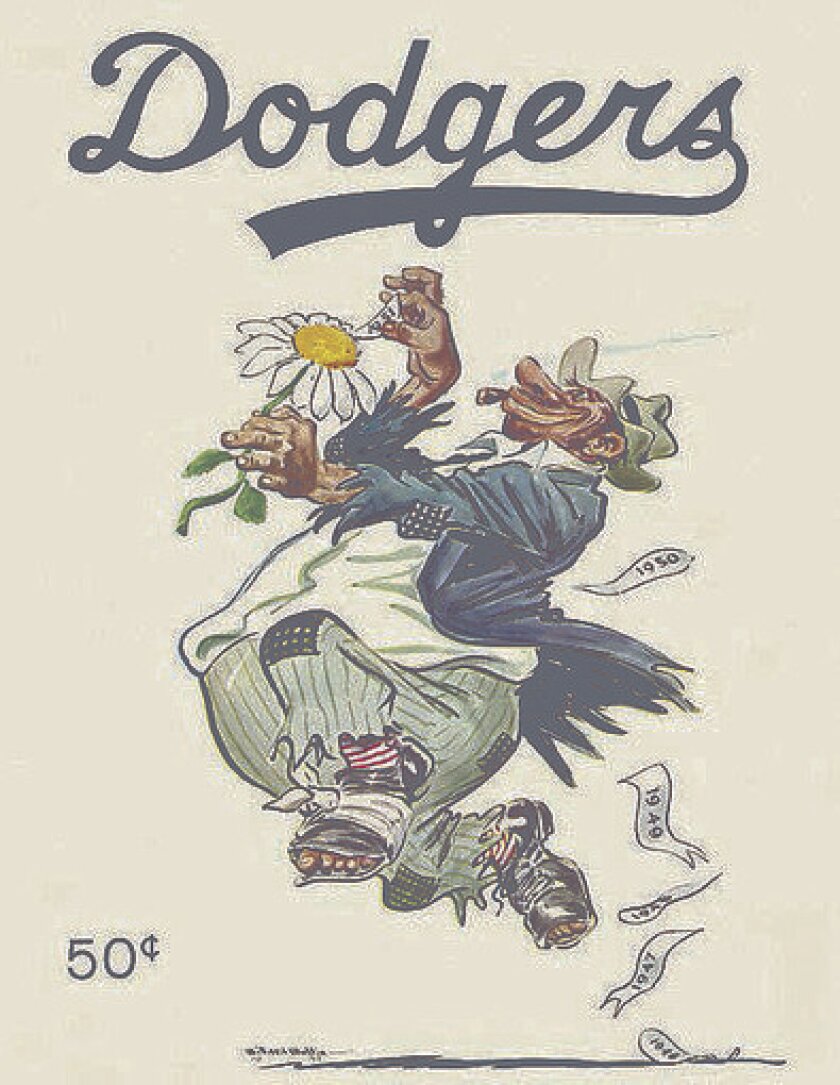 The Dodgers were "Dem Bums" from then on, even including Mullin's drawing on the covers of their yearbooks, until Walter O'Malley moved them to Los Angeles after the 1957 season. As late as 1975, the Houston Astros had cartoon representations of the other National League teams on the cover of their yearbook, and the Dodgers, in their 18th season in Los Angeles, were still represented by a bum.
But the Great Depression of which the Crash of 1929 was the chief cause (but not the only cause, as is commonly believed) also led Americans to search for heroes wherever they could find them. As they so often do, they turned to sports. Babe Ruth, still a star up to his 1935 retirement, became even more popular. So did Lou Gehrig. Dizzy Dean, Hank Greenberg, Joe DiMaggio and Bob Feller would debut within the next 7 years, and would become legends. So would football stars Bronko Nagurski, Don Hutson and Slingin' Sammy Baugh, and the Heisman Trophy would be established.
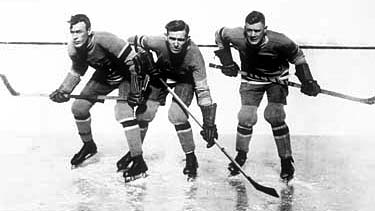
The New York Rangers' forward line of Frank Boucher and the brothers Bill and Frederick "Bun" Cook, previously known as the A Line for the Subway line that went to Madison Square Garden (the 50th Street stop used for the old Garden is now used by the C and the E, and is bypassed by the A), became known as the Bread Line.
Desperate for any paying customers, sports promoters would try anything, from the college basketball doubleheaders that began at the old Garden in 1934 to night games for outdoor events, which began in baseball's minor leagues and Negro Leagues in 1930, and in the majors in 1935.
The Depression also led, in 1933, to the repeal of Prohibition, which led to the booze industry being able to create jobs, as well as people once again legally being able to enjoy its products; and the repeal of Pennsylvania's "blue laws" prohibiting certain activities on Sunday, including sports.
That allowed for crowds that couldn't be gotten on any other day of the week, except Saturday, since there were no lighted stadiums in the big cities, which would also change soon. That may have kept the Athletics and the Philadelphia Phillies in business, and made the NFL's Philadelphia Eagles and Pittsburgh Pirates (changing their name to the Steelers in 1940), both founded in 1933, economically viable.
The Great Depression left scars on people that never went away. My grandmother grew up in Queens in that era, and knew how important it was to save money. She grew up in the Depression, so, due to her pinching pennies as an adult, my mother also "grew up in the Depression." And because of that, I "grew up in the Depression." Am I saying that I'm cheap? Yes, I am cheap, but not by choice.
In 1992, during another bad recession, I stayed with my grandmother over Thanksgiving Weekend. On the Saturday, I helped her with grocery shopping. We walked out of the car, and, crossing the parking lot, I saw a penny on the ground. I knew she was superstitious, and that a penny, heads-up, was good luck, but tails-up was not. This penny was tails-up, so I left it alone.
She saw it, stopped, pointed, and said, "Aren't you going to pick that up?"
I said, "It's tails-up, it's not good luck." I figured she would accept this answer.
I was wrong. After nearly 40 years of living in New Jersey, her N'Yawk accent kicked back in, and she said, "Whaaaat? It's money!"
I picked it up.
She died in 2006. Now, every time I see a coin on the ground, I presume that she left it there for me, pick it up, and say, "Thanks, Grandma."
But, as Mom pointed out, Grandma and her contemporaries never had a "Depression survivors group," the way war veterans have social clubs, and survivors of other forms of trauma have support groups. And there is no memorial specifically for them on the National Mall in Washington, although the FDR Memorial includes a tribute to them. They had their songs, and their movies, rather than tangible tributes.

Emptied pockets, to show that you had no money, became known as Hoover flags. Newspapers used as cover by homeless people became known as Hoover blankets. Shanty towns became Hoovervilles. And hitching a horse up to your car, because you couldn't afford gasoline but you didn't dare sell your car, earned the vehicles the nickname Hoover wagons. In Canada, where Richard Bennett rode the Depression to become Prime Minister in 1930, but was turned out in 1935 because he governed more like Hoover than Roosevelt, they were known as Bennett buggies.
Did you think I was making it up?
The happy, peppy songs of the Roaring Twenties -- including a song recorded just before, but released just after, the crash, which was saved by FDR making it his campaign theme song, "Happy Days Are Here Again" -- were gone. Songs of the Depression either spoke of hardship, like "Brother, Can You Spare a Dime?" (evoking both now-fallen industry and World War I), "Boulevard of Broken Dreams" (not the Green Day song of 2005), "Gloomy Sunday," and "Remember My Forgotten Man"; or tried to defy it, like "We're In the Money" and "Life Is Just a Bowl of Cherries."
Movies also reflected this. Monster movies abounded, with Dracula and Frankenstein both released in 1931, and King Kong and The Invisible Man in 1933, each inspiring many imitators. Gangster movies peaked then, with James Cagney's The Public Enemy, Edward G. Robinson's Little Caesar, and the original version of Scarface, starring Paul Muni, all made in 1931, the latter not released until 1932.
At the height of the stock boom in early September 1929, America's unemployment rate was 3.2 percent. By the end of 1930, it was 8.7. 1931, 15.9. At the 1932 election, 23.6. At the depth, on March 4, 1933, when FDR was inaugurated and the banking crisis was critical, the rate was 24.9 percent. Fully 1 out of 4 Americans who wanted to work couldn't get work. Some people have suggested the rate was considerably higher than that, as much as 31 percent, or nearly 1 in 3.
FDR ended up building on some of what worked under Hoover, and in New York State under his leadership there, and put it in overdrive. Banking reforms stopped the financial bleeding, securities reforms prevented much of the abuses that had been done (stopped it, that is, until deregulation in the 1980s), and his public works and other construction programs created millions of jobs.
His New Deal had worked very well, but the problems remained vast. When he was sworn in for a 2nd term on January 20, 1937, having gotten the unemployment rate down to 14 percent (either cut by a third or a half, depending on whose figures you believe), FDR said the work was far from done: "I see one-third of a nation ill-housed, ill-clad, ill-nourished." And it may have been more like two-fifths, or 40 percent, because that included what we would now call "the working poor."
That year, FDR did what conservatives have always suggested for economic hardship: Cut spending. It backfired, and unemployment went from a Depression-low of 14.3 percent to 19.0 percent by the time of the 1938 elections, resulting in the Republicans' best performance between 1928 and 1946, although not enough to gain control of either house.
But 1937 was the year Social Security began handing out checks, and 1938 was the year the 1st federal minimum wage took effect. By 1941, unemployment was back under 10 percent. It still didn't get back to tolerable levels until the U.S. entered World War II, and a lot of unemployed men went into the armed forces, and a lot of employed men did as well, their stateside jobs becoming available to unemployed men -- and women.
From the dawn of the American Civil War in 1860 to 1928, the Republican Party had gone 14-4 in Presidential elections. (Okay, they may have stolen those of 1876, 1880 and 1888.) And in the 4 that the Democratic Party won -- 1884, 1892, 1912 and 1916 -- they still didn't get a majority of the popular vote in any of them, not even with the 1912 split in the Republicans that led to an Electoral Vote landslide for Woodrow Wilson. The GOP also held both houses of Congress for most of a 70-year stretch from 1860 to 1930.
But when the Great Depression began, and turned out to be worse than previous depressions -- 1837-43, 1857-59, 1873-78, 1893-98, 1920-22 -- people took their anger out on the Republicans. Herbert Hoover went from winning 21.4 million votes in 1928 to 15.7 million in 1932. He went from a popular vote percentage of 58.2 percent in 1928 to 39.6 in 1932. He went from winning 40 States to 6, and only in Maine and Vermont did he get more than 51 percent. In the Electoral Vote, he went from 444 to 59. This was not so much an embrace of FDR and his as-yet vague New Deal as it was a firing of Hoover and the Republicans.
The Democrats won 7 of the next 9 elections. The 2 the Republicans won, 1952 and 1956, were by Dwight D. Eisenhower, and "Ike" basically won them because he was the commanding General of World War II. America was embracing him, not Republican principles. Even when Richard Nixon won in 1968, it was a 3-way race, in which he got 48 percent of the vote. Aside from Ike, no Republican got at least 50 percent between Hoover in 1928 and Nixon himself in 1972.
Furthermore, in Congressional elections, the Republicans lost the House of Representatives in 1930, and held it only in 1947-48 and 1953-54, until 1994. They lost the Senate in 1932, and held it only in 1947-48, 1953-54, and 1981-86, until 1994.
Among the effects the Depression had on sports: Connie Mack lost everything he had aside from his stock in the Philadelphia Athletics, forcing him, by the end of the 1932 season, to break up his dynasty. The American Basketball League lost several teams, thus delaying pro basketball's rise to major league status until after World War II. And several NFL teams went under, putting the League's future in jeopardy.
In addition, when cartoonist Willard Mullin went to Ebbets Field , and heard a fan call his beloved Brooklyn Dodgers "you bums," he drew a bum, with a five o'clock shadow, just one tooth, and patches all over his clothes, and everyone in New York could identify with it, because they had all been seriously affected by poverty, or knew someone who had been.
But the Great Depression of which the Crash of 1929 was the chief cause (but not the only cause, as is commonly believed) also led Americans to search for heroes wherever they could find them. As they so often do, they turned to sports. Babe Ruth, still a star up to his 1935 retirement, became even more popular. So did Lou Gehrig. Dizzy Dean, Hank Greenberg, Joe DiMaggio and Bob Feller would debut within the next 7 years, and would become legends. So would football stars Bronko Nagurski, Don Hutson and Slingin' Sammy Baugh, and the Heisman Trophy would be established.
The New York Rangers' forward line of Frank Boucher and the brothers Bill and Frederick "Bun" Cook, previously known as the A Line for the Subway line that went to Madison Square Garden (the 50th Street stop used for the old Garden is now used by the C and the E, and is bypassed by the A), became known as the Bread Line.
Left to right: Bill Cook, Frank Boucher, Bun Cook
Desperate for any paying customers, sports promoters would try anything, from the college basketball doubleheaders that began at the old Garden in 1934 to night games for outdoor events, which began in baseball's minor leagues and Negro Leagues in 1930, and in the majors in 1935.
The Depression also led, in 1933, to the repeal of Prohibition, which led to the booze industry being able to create jobs, as well as people once again legally being able to enjoy its products; and the repeal of Pennsylvania's "blue laws" prohibiting certain activities on Sunday, including sports.
That allowed for crowds that couldn't be gotten on any other day of the week, except Saturday, since there were no lighted stadiums in the big cities, which would also change soon. That may have kept the Athletics and the Philadelphia Phillies in business, and made the NFL's Philadelphia Eagles and Pittsburgh Pirates (changing their name to the Steelers in 1940), both founded in 1933, economically viable.
The Great Depression left scars on people that never went away. My grandmother grew up in Queens in that era, and knew how important it was to save money. She grew up in the Depression, so, due to her pinching pennies as an adult, my mother also "grew up in the Depression." And because of that, I "grew up in the Depression." Am I saying that I'm cheap? Yes, I am cheap, but not by choice.
In 1992, during another bad recession, I stayed with my grandmother over Thanksgiving Weekend. On the Saturday, I helped her with grocery shopping. We walked out of the car, and, crossing the parking lot, I saw a penny on the ground. I knew she was superstitious, and that a penny, heads-up, was good luck, but tails-up was not. This penny was tails-up, so I left it alone.
She saw it, stopped, pointed, and said, "Aren't you going to pick that up?"
I said, "It's tails-up, it's not good luck." I figured she would accept this answer.
I was wrong. After nearly 40 years of living in New Jersey, her N'Yawk accent kicked back in, and she said, "Whaaaat? It's money!"
I picked it up.
She died in 2006. Now, every time I see a coin on the ground, I presume that she left it there for me, pick it up, and say, "Thanks, Grandma."
But, as Mom pointed out, Grandma and her contemporaries never had a "Depression survivors group," the way war veterans have social clubs, and survivors of other forms of trauma have support groups. And there is no memorial specifically for them on the National Mall in Washington, although the FDR Memorial includes a tribute to them. They had their songs, and their movies, rather than tangible tributes.
We dare not forget them now. We have had hard recessions in 1973-76, 1980-83, 1990-93, 2001-03, 2007-10 and 2020-21. But not another Depression, because of the safeguards we put into place in the 1930s. If we fail to support these safeguards, then everything those people suffered through, and everything those who worked to help them did to do so, will have been in vain.
*
October 29, 1929 was, as stated, a Tuesday. Baseball season was over. The NBA hadn't yet been founded. And the NHL season didn't start until November 14. So there were no scores on this historic day.
But there was one score on this historic day, and it was in the NFL: The Boston Bulldogs beat the Orange Tornadoes, 6-0. Instead of at either team's home field, this game was played at Minersville Park in Minersville, Pennsylvania, home of the Pottsville Maroons, the perhaps unfairly-denied Champions of 1925.
The Depression doomed the Bulldogs, and they did not play the 1930 season. The Tornadoes, originally the Orange Athletic Club of Orange, Essex County, New Jersey, played home games at Knights of Columbus Stadium in East Orange. In 1930, they moved to nearby Newark City Schools Stadium, becoming the Newark Tornadoes. But they had to drop out of the NFL. They continued as a minor-league team until 1965, then, like aging New Yorkers and New Jerseyans tend to do, moved to Florida, and played as the Orlando Panthers from 1966 to 1970, before finally going out of business.


