Showing posts with label thailand. Show all posts

Monday, December 26, 2022

December 26, 2004: The Boxing Day Earthquake and Tsunami

December 26, 2004: An earthquake, measured at 9.2 on the Richter scale, occurs under the Indian Ocean, near the island of Sumatra in Indonesia.

The result is one of the largest tsunamis ever observed, which flowed east to west, with waves up to 30 feet high crashing into the coastal regions of the surrounding nations of Indonesia, Malaysia, Thailand, Myanmar, Bangladesh, India, Sri Lanka and the Maldives.

It remains the deadliest natural disaster of the 21st Century, and the worst on Earth since the 1976 Tangsun Earthquake in China. Its death toll is estimated at 227,898. More than half, 167,540, occurred in Indonesia. There were 35,000 deaths in Sri Lanka, 1,000 of them in a single train wreck caused by the tsunami. It is believed that 1.75 million people, roughly the population of Philadelphia, were left  homeless.

Among the notable people killed in the disaster were Jane Attenborough, British arts activist and a member of the show-business Attenborough family; Troy Broadbridge, an Australian Rules Football star who was on his honeymoon, though his wife survived; Poom Jensen, a grandson of the then-reigning King of Thailand; and Sujeewa Kamalasuriya, a Sri Lankan cricket star. 

The earthquake became known as the Sumatra-Andaman Earthquake. Another name, given that some of these nations were once part of the British Empire, and still retain some British traditions, including celebrating the day after Christmas as "Boxing Day," is the Boxing Day Tsunami.

Aid came in from all over the world: $820 million from nearby Australia, $660 million from Germany, $500 million from Japan, $350 million from the United States, $343 million from Canada, $250 million from the World Bank, $183 million each from Norway and the Netherlands, and $113 million from Italy.

*

December 26, 2004 was a Sunday. Pro Football Hall-of-Famer Reggie White and longtime New York Yankees organist Eddie Layton died that day.

Baseball was out of season. And the NHL team owners had locked the players out. These games were played in the NFL:

* The New York Giants lost to the Cincinnati Bengals, 23-22 at Paul Brown Stadium (now Paycor Stadium) in Cincinnati.

* The New York Jets lost to their arch-rivals, the New England Patriots, 23-7 at Giants Stadium in the Meadowlands.

* The Houston Texans beat the Jacksonville Jaguars, 21-0 at Alltel Stadium (now EverBank Stadium) in Jacksonville. The Texans and the Jags are in the same Division, the AFC South, as the Tennessee Titans. The irony of this is that the Titans used to be the previous Houston team, the Houston Oilers; and, before moving to Nashville, threatened to move to Jacksonville if they didn't get the lease concessions they wanted in Houston. They got them, but later decided it wasn't enough, and moved, anyway.

* The Carolina Panthers bear the Tampa Bay Buccaneers, 37-20 at Raymond James Stadium in Tampa.

* The Miami Dolphins beat the Cleveland Browns, 10-7 at Pro Player Stadium (now Hard Rock Stadium) in Miami Gardens, Florida.

* The New Orleans Saints beat their arch-rivals, the Atlanta Falcons, 26-13 at the Superdome in New Orleans.

* The Dallas Cowboys beat their arch-rivals, the Washington Redskins, 13-10 at Texas Stadium in the Dallas suburb of Irving, Texas.

* The Pittsburgh Steelers beat the Baltimore Ravens, 20-7 at Heinz Field (now Acrisure Stadium) in Pittsburgh.

* The Detroit Lions beat the Chicago Bears, 19-13 at Ford Field in Detroit.

* The Indianapolis Colts beat the San Diego Chargers, 34-31 at the RCA Dome (formerly the Hoosier Dome) in Indianapolis.

* The Buffalo Bills beat the San Francisco 49ers, 41-7 at Candlestick  Park (then named Monster Park) in San Francisco.

* The Seattle Seahawks beat the Arizona Cardinals, 24-21 at Qwest Field (now Lumen Field) in Seattle.

* The day before, Saturday, Christmas Day, The Kansas City Chiefs beat their arch-rivals, the Oakland Raiders, 31-30 at Arrowhead Stadium in Kansas City.

* Also on Christmas Day, the Denver Broncos beat the Tennessee Titans, 37-16 at The Coliseum (later renamed Nissan Stadium) in Nashville.

* The day before that, Friday, Christmas Eve, the Green Bay Packers beat the Minnesota Vikings, 34-31 at the Metrodome in Minneapolis.

* And the night after, on ABC Monday Night Football, the St. Louis Rams beat the Philadelphia Eagles, 20-7 at the Edward Jones Dome (now The Dome at America's Center) in St. Louis.

There were no college football bowl games. There were no games in the NHL: The team owners locked the players out for the entire season. There were 9 games in the NBA:

* The New York Knicks beat the expansion Charlotte Bobcats (later to reclaim the Hornets name), 91-82 at Madison Square Garden.

* The Houston Rockets beat the Los Angeles Clippers, 96-79 at the Toyota Center in Houston.

* The Cleveland Cavaliers beat the New Orleans Hornets (later to be renamed the Pelicans), 100-91 at the Gund Arena (now the Rocket Arena) in Cleveland.

* The Milwaukee Bucks beat the Chicago Bulls, 99-92 at the Bradley Center in Milwaukee. Michael Redd scored 39 points.

* The Minnesota Timberwolves beat the Washington Wizards, 109-74 at the Target Center in Minneapolis.

* The Dallas Mavericks beat the Denver Nuggets, 102-88 at the Pepsi Center (now the Ball Arena) in Denver. Dirk Nowitzki scored 36 points.

* The San Antonio Spurs beat the Boston Celtics, 107-90 at the SBC Center (now the Frost Bank Arena) in San Antonio.

* The Phoenix Suns beat the Toronto Raptors, 106-94 at the America West Arena (now the Mortgage Matchup Center) in Phoenix.

* And the Golden State Warriors beat the Sacramento Kings, 98-94 at the ARCO Arena in Sacrmamento.

And in English soccer, North London team Arsenal beat West London team Fulham, 2-0 at the Arsenal Stadium, a.k.a. Highbury.

Sunday, October 2, 2022

October 2, 1957: "The Bridge on the River Kwai" Premieres

October 2, 1957: The film The Bridge On the River Kwai premieres, directed by David Lean, and based on the 1952 novel by Pierre Boulle. Boulle went on to write Planet of the Apes in 1963.

The film is set in 1943, at a Japanese prison camp in Thailand. William Holden plays one of the prisoners, U.S. Navy Commander Shears. (No first names are used in the film.) A group of British prisoners arrive, commanded by Lieutenant Colonel Nicholson, played by Alec Guinness. They arrive whistling "The Colonel Bogey March," a British song from World War I. The song, previously unfamiliar in America, because legendary because of this scene.

The camp is commanded by Colonel Saito, played by Sessue Hayakawa, who had been the 1st actor of Asian ancestry to make it big in Hollywood. Saito tells the prisoners that they -- including the officers -- will work to build a railway bridge over the River Kwai, to connect Bangkok, the capital of Thailand, with Rangoon, the capital of Burma. (The country's name is now Myanmar, and the city's name is now Yangon.)

Nicholson reminds Saito that the Geneva Convention exempts officers from manual labor. After the enlisted men are marched to the bridge site, Saito threatens to have the officers shot, until Major Clipton, the British medical officer, warns Saito there are too many witnesses for him to get away with murder. Saito leaves the officers standing all day in the intense heat. That evening, the officers are placed in a punishment hut, while Nicholson is beaten and locked in an iron box. Shears escapes, eventually reaching the British colony of Ceylon (now the nation of Sri Lanka).

Work on the bridge proceeds badly, due to both the faulty Japanese engineering plans and the prisoners' slow pace and deliberate sabotage. Saito is expected to commit ritual suicide if he fails to meet the rapidly approaching deadline. Desperate, he uses the anniversary of Japan's 1905 victory in the Russo-Japanese War as an excuse to save face: He announces a general amnesty, releasing Nicholson and his officers, and exempting them from manual labor.

Nicholson is shocked by the poor job being done by his men, and orders the building of a proper bridge, intending it to stand as a tribute to the British Army's ingenuity for centuries to come. Clipton objects, believing this to be collaboration with the enemy. Nicholson's obsession with the bridge eventually drives him to allow his officers to volunteer to engage in manual labor.

Shears is enjoying his hospital stay in Ceylon, unwittingly within a commando school of Britain's Special Operations Executive (SOE). Major Warden (played by Jack Hawkins) of SOE invites him to join a commando mission to destroy the bridge just as it is completed.

Warden, Shears, and two other commandos, Chapman and Joyce, parachute into Thailand. Chapman dies after falling into a tree, and Warden is wounded in an encounter with a Japanese patrol and must be carried on a litter. Under cover of darkness, Shears and Joyce plant explosives on the bridge towers. A train carrying important dignitaries and soldiers is scheduled to be the first to cross the bridge the following day, and Warden wants to destroy both.

By dawn, however, the river level has dropped, exposing part of the wire connecting the explosives to the detonator. Nicholson spots the wire, and brings it to Saito's attention. As the train approaches, they hurry down to the riverbank to investigate. Joyce, manning the detonator, breaks cover and stabs Saito to death. Nicholson yells for help, while attempting to stop Joyce from reaching the detonator. Japanese gunfire wounds Joyce. Shears swims across the river, but is himself shot. Recognizing Shears, Nicholson exclaims, "What have I done?"

Warden fires a mortar, killing Shears and Joyce and fatally wounding Nicholson. Dying, Nicholson stumbles toward the detonator and falls on the plunger, blowing up the bridge. The explosion sends the train hurtling into the river.

This was not the first film "based on a true story" to be full of baloney. While the Japanese did force prisoners of war to build a railroad bridge to connect Bangkok and Rangoon, the conditions under which it was built were too harsh to be allowed onscreen by American film's Hays Code.

Julie Summers, in her book The Colonel of Tamarkan, writes that Boulle, who had been a prisoner of war in Thailand, created the fictional Nicholson character as an amalgam of his memories of collaborating French officers. And on the BBC show Timewatch, a former prisoner at the camp states that it is unlikely that a man like the fictional Nicholson could have risen to the rank of Lieutenant Colonel; and, if he had, due to his collaboration, he would have been "quietly eliminated" by the other prisoners.

As for the real bridge, it was bombed by Allied planes, and rebuilt after the war. It is still in use, 79 miles west of Bangkok, and 467 miles southeast of Yangon. Thailand now calls the river the Khwae Yai.
The Bridge On the River Kwai was the highest-grossing film released in 1957, a year that also included Peyton Place, Old Yeller, Pal Joey, Gunfight at the O.K. Corral, and 2 Elvis Presley films, Loving You and Jailhouse Rock. It was nominated for 8 Academy Awards, winning 7, including Best Picture, Best Director for Lean, and Best Actor for Guinness.

Hayakawa and Hawkins died in 1973, Holden in 1981, Lean in 1991, Boulle in 1994, and Guinness in 2000.

*

October 2, 1957 was a Wednesday. There was only one score on this historic day, and it came in Game 1 of the World Series. The New York Yankees beat the Milwaukee Braves, 3-1 at Yankee Stadium. A pair of future Hall-of-Fame lefthanders started the game, and Whitey Ford outpitched Warren Spahn. Mickey Mantle went 2-for-4.

Hank Aaron, the Braves' star young right fielder, went 1-for-4. Years later, he said the Braves weren't intimidated by the Yankees, the defending World Champions, who were seeking their 18th World Series win; it was Yankee Stadium that intimidated them. Well, they must have overcame it: They ended up beating the Yankees in the Series, clinching 5-0 in Game 7 at Yankee Stadium.

Tuesday, March 29, 2022

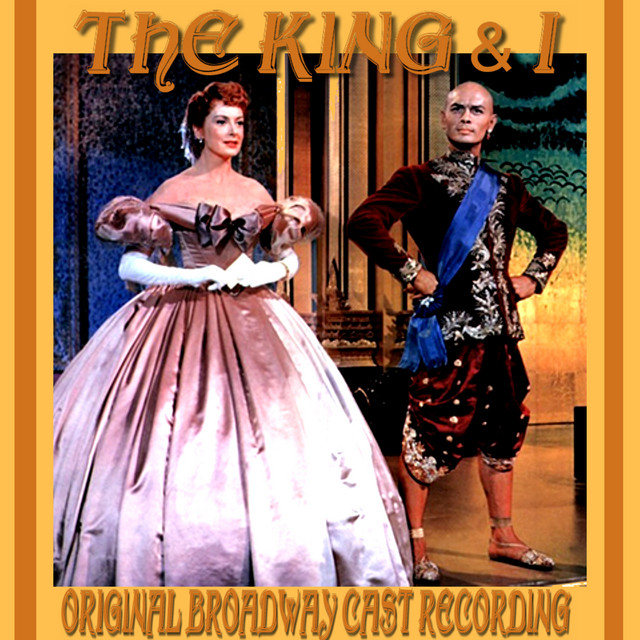
March 29, 1951: “The King and I” Premieres On Broadway

March 29, 1951: The King and I premieres at the St. James Theatre in New York, based on the 1944 novel Anna and the King of Siam by Margaret Landon. That novel was filmed in 1946, with Rex Harrison as King Mongkut and Irene Dunne as Anna Leonowens.

Both the novel and the musical are full of baloney. But then, the real Anna was something of a con artist herself. Born in 1831 in India, to an English father serving in the army there and a mother who may have been mixed-race, she made up a backstory for herself to hide her true background. She became a teacher, married, had 4 children, and was widowed. She spent some time teaching in Australia and Singapore before being hired by the royal court of Siam in 1862. (The country's name was changed to Thailand in 1939.)

Mongkut was born in 1804, and became King, under the regnal name Rama IV, in 1851. He wanted to give his 39 wives, his concubines, and his 82 children a modern Western education on scientific secular lines, which earlier missionaries' wives had not provided.

Leonowens served at court until 1867, nearly 6 years, first as a teacher, and later as language secretary for the King. Although her position carried great respect, and even a degree of political influence, she did not find the terms and condition her employment to her satisfaction. And, despite her position at the king's court, she was never invited into the social circle of the British merchants and traders of the area. She and the King were never romantically involved. She left not long before his death in 1868. In later life, she was a lecturer of Indology and a suffragist. She died in Montreal in 1915.

Richard Rodgers and Oscar Hammerstein wrote the musical, and Jerome Robbins choreographed it. It starred Yul Brynner and Gertrude Lawrence. Both would be touched by tragedy with the play: Lawrence already had cancer, and died on September 6, 1952; while Brynner, a lifelong smoker, began playing the role again in 1977, and did so almost continuously despite his own cancer diagnosis in 1983. In spite of the pain, he never let up, doing the full "Shall We Dance?" number with Mary Beth Peil. He died on October 10, 1985, having played Mongkut for the 4,625th and last time on June 30.

Brynner also starred in the 1956 film version, with Deborah Kerr as Anna. As with Natalie Wood in the film version of West Side Story and Audrey Hepburn in My Fair Lady, Kerr's singing was dubbed by Marni Nixon. Sadly, these would not remain the most famous recordings by someone named Nixon.

The St. James Theatre still stands, at 246 West 44th Street. Among its other original productions: A theatrical version of Richard Wright's Native Son in 1941, Rodgers & Hammerstein's Oklahoma! in 1943, Where's Charley? in 1948, The Pajama Game in 1954, Flower Drum Song in 1958, Becket (not a musical) in 1960, Hello, Dolly! in 1964, Barnum in 1980, and the 1st rock opera to be turned into a Broadway play, The Who's Tommy, in 1993. When COVID shut Broadway down, it was hosting a live musical version of Disney's Frozen. It had been running for 2 years, but they had to let it go.

*

March 29, 1951 was a Thursday. Nick Ut, the Vietnamese photographer who took the photo of Kim Phuc running through her napalm-bombed village, was born on this day. This was also the day that José Ferrer became the 1st Hispanic actor to receive an Academy Award. I have a separate entry for that event.

Baseball was in Spring Training. Football was out of season. There were 2 games in the NBA. The New York Knicks lost to the Syracuse Nationals, 102-80 at the State Fair Coliseum in Syracuse, New York. And the Minneapolis Lakers beat the Rochester Royals, 76-73 at the Minneapolis Auditorium.

There was a Stanley Cup Playoff game that night: The Montreal Canadiens beat the Detroit Red Wings, 1-0 at the Olympia Stadium in Detroit. It took until 2:20 of the 3rd overtime before a goal could be found, and Maurice "the Rocket" Richard of the Canadiens found it.

Sunday, January 16, 2022

January 17, 1874: "The Original Siamese Twins" Die

January 17, 1874: Chang and Eng Bunker, “the Original Siamese Twins,” die within hours of each other in Mount Airy, North Carolina. They were 62, and would be the longest-lived conjoined twins until 2012.

Chang Bunker and Eng Bunker were born on May 11, 1811 in Meklong, in Samut Songkhram Province, in what was then the Kingdom of Siam. The country's name was changed to Thailand in 1939. Their father was Chinese, and their Thai mother said their birth was no more difficult than those of her previous children.

The brothers were fully-formed, nearly fully-separated, but joined by a band of flesh at the chest. Most physicians who met the twins recommended against surgery for separation, as, with medical technology at the time, it would have been a fatal procedure. Contemporary medical literature strongly suggests that the twins could have been easily separated today.

They were brought to the United States in 1829. Physicians inspected them as they became known to American and European audiences in "freak shows." Ever since, conjoined twins have been known as "Siamese Twins," and Chang and Eng are known as "The Original Siamese Twins." The phenomenon had already been known, but they were the first pair to be widely known.

Newspapers and the public were initially sympathetic to them, and within 3 years, they left the control of their managers, who they thought were cheating them, and toured on their own. In early exhibitions, they were exoticized and displayed their athleticism; they later held conversations in English in a more dignified parlor setting.

In 1839, after a decade of financial success, the twins quit touring, and settled near Mount Airy, North Carolina. It is hard to believe, but Chang and Eng Bunker lived in the same town that would later produce entertainer Andy Griffith.

They became American citizens, and, on April 13, 1843, married a pair of local sisters Chang married Adelaide Yates, and Eng married Sarah Yates. Chang (on the left in most pictures) became the father of 10 children; Eng, 11. Chang and Eng's respective families lived in separate houses, where the twins took alternating three-day stays -- meaning, I suppose, that one brother had to watch while the other had sex.

On the 10th Anniversary of their marriages, and approaching their 42nd birthdays, a newspaper, the Raleigh Register, published a profile of them, claiming:

They have lost every vestige of their native tongue. In fact, they speak English fluently, and almost without foreign accent. A few words seem to be impracticable, but they are chatty and communicative, and hence their perfection in our language. They are altogether American in feeling.

Sadly, the twins, as rich people in the South, became slaveholders. After the American Civil War, the emancipation of their slaves left them financially ruined. They chose to resume touring, taking their wives and children, now old enough, with them. As former slaveholders, they were not well-received in the North. They were better-received in Europe, which was unaffected by the American conflict. However, in 1870, the boarded a ship for home to avoid the coming Franco-Prussian War. Aboard the ship, Chang suffered a stroke, and was paralyzed on the right side, ending any further chance of touring.

In January 1874, with the brothers being 62 years old, Chang developed bronchitis. On January 15, the brothers traveled through cold weather to Eng's house. On Chang's urging, the brothers slept sitting upright on a chair, in front of a fireplace. Eng was healthy physically, yet weary from spending the past week with a seriously ill Chang, so he asked to move to their bed after hours of drifting in and out of sleep.

Early in the morning of January 17, one of Eng's sons checked on the sleeping twins. "Uncle Chang is dead," the boy reportedly said to Eng, who responded, "Then I am going!" The family doctor was quickly sent for, but Eng soon died, reportedly just over 2 hours after his brother's death.

The bodies were preserved for two weeks by the cold weather, and then an express train delivered them to the College of Physicians of Philadelphia, where the autopsy was performed. It was determined that Chang had most likely died of a cerebral blood clot. The cause of Eng's death was left unclear. However, it was determined that the connecting band connected their livers, and Eng was no longer receiving blood through it. Still, popular imagination says that Eng "died of fright" upon seeing his dead brother.

Sarah, Mrs. Eng Bunker, lived on until 1892; Adelaide, Mrs. Chang Bunker, until 1917. As of 2006, descendants of Chang and Eng's 21 children numbered about 1,500, including 11 sets of twins -- none of them conjoined. Much of the extended family still lives in western North Carolina, and the family has hosted annual get-togethers since the 1980s, usually on the last Saturday of June.

Chang's descendants include grandson Major General Caleb V. Haynes of the U.S. Air Force, and his son, archaeologist Vance Haynes; great-granddaughter Alex Sink, former Chief Financial Officer of Florida and the 2010 Democratic nominee for Governor; and great-great-granddaughter Caroline Shaw, a composer who won the 2013 Pulitzer Prize for music. Eng's descendants include grandson George F. Ashby, president of the Union Pacific Railroad in the 1940s.

The Bunkers had the longest known lifespan of any conjoined twins in history until 2014, when their record was surpassed by Ronnie and Donnie Galyon of Dayton, Ohio. Born in 1951, and joined at the abdomen and sharing a single body from there on down including just 2 legs, they died at the same time in 2020, not from COVID but from congestive heart failure.

*

January 17, 1874 was a Friday. There were no scores on this historic day: Baseball and football were out of season, and basketball and hockey hadn't been invented yet. 

December 31, 1999 & January 1, 2000: The Millennium

December 31, 1999:  The Millennium arrives. The people of planet Earth survived. At a terrible cost. But we hadn't destroyed ourselves. ...