May 18, 1884: John Singer Sargent's Portrait of Madame X goes on display at the annual Paris Salon. It is considered scandalous.
Sargent was born on January 12, 1856 in Florence, Italy. His father was an eye doctor from Philadelphia, but when Dr. Sargent's wife became physically ill and mentally exhausted after the death of a daughter, he took her abroad to recover her health, and they never returned to America. John and a younger sister were born in Florence, a city renowned for its Renaissance art.
Sargent was already noted for his drawing skill by age 13, and attended the École des Beaux-Arts in Paris, by this point considered the family's home even though the father's wealth allowed them frequent travel. He painted mostly landscapes before producing his first portrait at age 21, of a childhood friend, a woman named Fanny Watts. It was his 1st painting to be accepted into the Paris Salon, and he became a regular subject there.

Virginie Amélie Avegno Gautreau was an expatriate New Orleans belle whose father had been killed with the Confederate Army at the Battle of Shiloh, and the wife of a prominent Paris banker and shipping magnate.
In 1883, when she was 24 years old, Sargent met her and became quite taken with her. He wrote to a friend, "I have a great desire to paint her portrait and have reason to think she would allow it and is waiting for someone to propose this homage to her beauty."

Sargent had previously only done portraits by request. This time, he asked his proposed subject. She agreed, but it took him over a year to produce the final product. The original version of the painting showed her with white-powdered skin, a cocked head, and a dress with a plunging neckline and the right strap down from her shoulder. For the sake of propriety, he called the painting Portrait of Madame X, with the letter X already being known as a symbol for the unknown.
The reaction of visitors to the Salon was furious. One French critic wrote that if one stood before the portrait during its exhibition in the Salon, one "would hear every curseword in the French language." It was not that a woman of Virginie's station in society would not pose as a model: She later posed for other painters, with no accompanying furor.
The scandal hurt Sargent considerably more: He was seen as having openly defied convention by flaunting the subject's apparent immoral lifestyle. The reaction was so bad, Sargent repainted it to show the right shoulder-strap in an upright position. That didn't work, or perhaps it was too late: He received no more commissions from anywhere in France, and found it necessary to move to London, and wrote to a friend that he might have to give up painting for music, or -- horrors -- business. But it wasn't all bad: French poet Judith Gautier wrote:
Sargent did not give up painting, and the British upper classes had no problems with commissioning him to produce portraits. They were bought all over the Western world, including this one, of President Theodore Roosevelt at the White House in 1903, which is now the White House's official portrait of the 26th President.

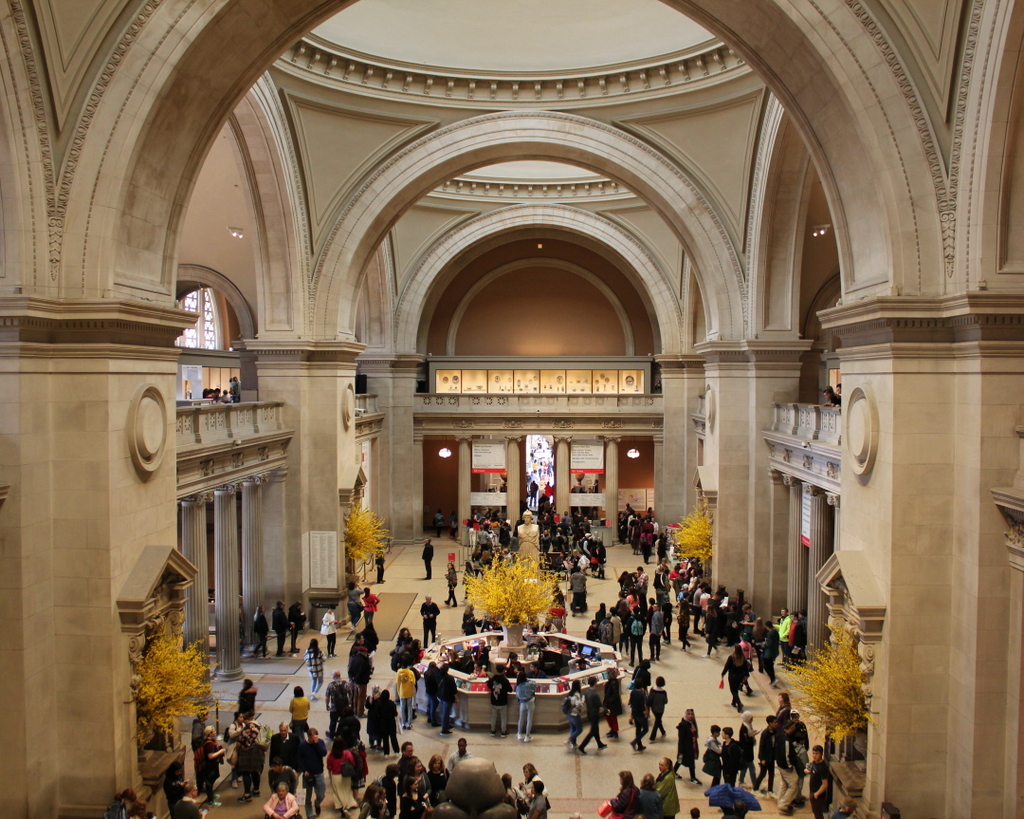
Madame Gautreau died at the age of 56, in 1915. That year, Sargent said of her portrait, "I suppose it is the best thing I have ever done." Certainly, it is his best-remembered. Sargent died on April 14, 1925, of heart disease, in London, at 69. The original Portrait of Madame X is now at the Metropolitan Museum of Art in New York.
*
May 18, 1884 was a Sunday. It was a year of 3 major leagues in baseball, although the National League still refused to play on Sundays, and State law forbid it in Massachusetts and Pennsylvania regardless of league decisions. These games were played:
* In the Union Association, the St. Louis Maroons beat the Baltimore Monumentals, 6-3 at Union Base Ball Park in St. Louis. In the 19th Century, the sport was usually printed as 2 words: "Base ball." Since the Maroons were owned by the league's founder, Henry V. Lucas, he directed as many good players as he could to his team, and the Maroons ran away with the Pennant, going 94-15, 21 games ahead of 2nd-place Cincinnati. Nearly half the teams, 5 out of 12, didn't finish the season.
* The Cincinnati Outlaw Reds, so named because they were defying the more popular Reds of the AA, beat the Philadelphia Keystones, 7-5 at the Bank Street Grounds in Cincinnati.
* The Chicago Browns beat the Washington Nationals, 2-0 at the original South Side Park in Chicago. The Browns failed, and were sold and moved in mid-season, becoming the Pittsburgh Stogies. A later stadium named South Side Park would be the original home of the American League's Chicago White Sox and the Negro League's Chicago American Giants.
* In the American Association, the Columbus Buckeyes beat the Louisville Eclipse, 8-5 at Recreation Park in Columbus, Ohio.
* And the Cincinnati Reds, the only one of these teams to make it into the 20th Century, let alone the 21st, beat the Indianapolis Hoosiers, 5-1 at Seventh Street Park in Indianapolis.