Showing posts with label nfl draft. Show all posts

Monday, April 18, 2022

April 18, 1998: Manning Or Leaf?

April 18, 1998: The NFL Draft is held at The Theatre at Madison Square Garden (formerly known as the Felt Forum) in New York. The Indianapolis Colts had the 1st pick and San Diego Chargers had the 2nd pick.

Ryan Leaf was an All-American quarterback at Washington State University, and was projected to be 1 of the 1st 2 picks. The other man projected to be 1 of those picks was Peyton Manning, the quarterback at the University of Tennessee.

The Colts chose Manning. Still needing a quarterback, the Chargers chose Leaf. At the time, most observers thought both teams had found a winner.

Manning played 13 seasons for the Colts. The 1st was rough, 3-13. But after that, he got them to the Playoffs 11 times, winning 8 Division titles, 2 AFC Championships, and Super Bowl XLI. Their new stadium, Lucas Oil Stadium, could be called The House That Peyton Built. He closed his career with the Denver Broncos, again winning a Super Bowl and losing another, and he was elected to the Pro Football Hall of Fame in his 1st year of eligibility.
The Chargers' 1st season after drafting Leaf wasn't as bad as the Colts' 1st after drafting Manning: 5-11. Bad, but hardly a disaster, given that the quarterback was a rookie, and plenty of quarterbacks who went on to have good careers, including Manning, had worse rookie seasons, at least in terms of wins and losses.

In the 24 full seasons since drafting Leaf, the Chargers have made the Playoffs 7 times, winning their Division 5 times. Doesn't sound so bad. But look more closely: After that 1998 Draft, the Chargers didn't make the Playoffs in any of the next 6 seasons. They've only made 1 AFC Championship Game, losing it.

In 2004, they drafted Eli Manning, Peyton's brother. But he refused to play for the Chargers, so a deal was arranged with the New York Giants: The rights to Eli were traded to New York, for the Giants' pick, Philip Rivers. Rivers was the quarterback who got them to those Playoff berths, but he couldn't get them into the Super Bowl.

Like the Colts, the Chargers decided they needed a new stadium. Unlike the Colts, their city wouldn't give it to them, and, after the 2016 season, they left San Diego for Los Angeles.

So what happened? Ryan Leaf happened. He made a lot of mistakes, but blamed his teammates. He developed a bad work ethic. He preferred to play golf instead of studying game film. He got into an argument with a sportswriter, and it was caught on camera. He was 22 years old, going on 12.

Rodney Harrison, a safety not yet in the Pro Football Hall of Fame, but regarded well enough to be voted by fans into the 50th Anniversary Teams of both the Chargers and the New England Patriots, called the 1998 season with Leaf as quarterback of the Chargers, "A nightmare you can't even imagine." He also said, "If I had to go through another year like that, I'd probably quit playing."

Just 20 minutes into the Chargers' 1st training camp of the 1999 season, Leaf got hurt, and had to miss the entire season. Former Heisman Trophy winner Doug Flutie, about to turn 37, was signed as the starter. Later in the season, the injured Leaf got into a shouting match with general manager Bobby Beathard.

Leaf got off to a bad start in 2000, missed half the season due to injury, lied about a new injury to get out of practice. was caught playing golf later that day, and played poorly the rest of the season.
The Chargers released him. The Tampa Bay Buccaneers signed him. They ended up not being impressed by him, and was told he would be the 4th string quarterback, and would have to accept a lower salary. He refused, and was released. He was signed by the Dallas Cowboys. He failed his 1st physical, and was released before the 1st game. When Quincy Carter was injured, Leaf was brought back. He played 4 games in 2001, and was awful in all 4. The Cowboys released him again.

The Seattle Seahawks signed him for 2002, and it was thought that head coach Mike Holmgren, himself a former quarterback who had helped develop Joe Montana and Steve Young as a San Francisco assistant, and Brett Favre as head coach in Green Bay, could help him. After all, he was only 26: A few quarterbacks didn't come into their own until after that. Y.A. Tittle, George Blanda, Jim Plunkett and Vinny Testaverde come to mind.

But just before the start of training camp, Leaf retired. He gave no explanation. He never tried again: Not in the NFL, not in the CFL, not in Arena Football. Career statistics. 4-17 as a starting quarterback, 48.4 percent completion percentage, 3,666 yards, 14 touchdowns, 36 interceptions.

Rodney Harrison again: "He took the money and ran... Normally, in this game, you get back what you put into it. And he pretty much got back what he put into it."

It is true that Leaf had injuries. Some college football stars get hurt before they can become NFL stars, and are regarded as "busts," but shouldn't be: Blair Thomas, Steve Emtman, Ki-Jana Carter, Courtney Brown. Even Brian Bosworth, the patron sinner for bad attitudes among football players until Leaf came along, had his career ended by injury rather than personality: When he could play, he played well, and he did help the Seattle Seahawks win a Division title.

Timm Rosenbach, one of Leaf's predecessors as Washington State quarterback, was another guy whose career is regarded as a bust, but shouldn't be, due to a nasty injury, in his case a broken leg that limited him to spot duty in his 1st season, a mediocre 2nd season, and barely playing after that.

But it wasn't just injuries that hurt Leaf's career. He did it to himself.

And the Chargers did it to themselves, too. They look like idiots for drafting him. Why did they do it? Surely, there must have been reasons why, at the time, drafting Leaf made sense. There must have been, right?

Well, in 1990, the NFL changed their rule, and allowed redshirt juniors, players who had been in a college's football program for 4 years but had played only 3, to enter the Draft. Maybe if this rule hadn't been in place, the extra year in school would have done Leaf a lot of good. He might have matured a little. He might have been more ready to enter the NFL in 1999 than he was in 1998.

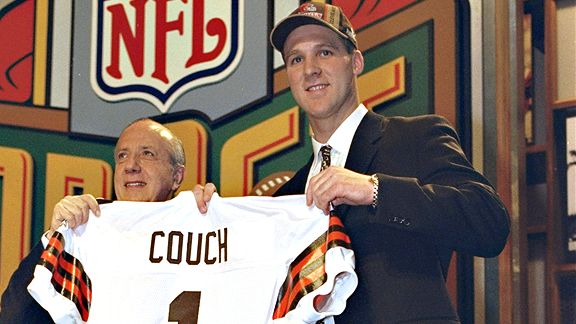
In 1999, the 1st pick belonged to the Cleveland Browns. They took Tim Couch, quarterback of Kentucky. He was a bust, based on performance alone, not on attitude. Actually, 7 quarterbacks were taken in the 1st 3 rounds that year, and, of those, only Donovan McNabb (of Syracuse, the 2nd pick, by the Philadelphia Eagles) could even remotely be called a success. Maybe Leaf would still have been a bust. But maybe not. Maybe he would have been a good fit in Cleveland.

In 1997, the Buffalo Bills beat the Colts 37-35 in Orchard Park, and 9-6 in Indianapolis. Had the Colts won either of those games, the Chargers would have had the top pick, and would have been able to draft Peyton Manning.

Once again, a Bills kicker changed history: While Steve Christie made the field goal that won that legendary 1992-93 Playoff game with the Houston Oilers, had he not missed field goals in either of the '97 Bills-Colts games, the Colts would have had the 2nd pick in the draft, and would have had to choose between Ryan Leaf and the field.

Maybe Leaf would have fit in better with the Colts, and then had a good career. After all, the Atlanta Falcons drafted Brett Favre, and he was a terrible fit for them, but they traded him after just 1 season, and he was a great fit for the Green Bay Packers. Maybe if the Chargers had traded him after that 1st year...

But he and the Colts never got that chance to see what they could do together. He and the Chargers did, and it was a disaster. One more Indianapolis score in either of 2 games against Buffalo could have made a tremendous difference.

The Colts did seriously consider drafting Leaf, before taking Manning. If they had taken Leaf, maybe they would have gone nowhere -- and then gone somewhere, not getting the new stadium. With the arrival of the Ravens, they couldn't have gone back to Baltimore. But maybe they, rather than the Chargers, would be the team now playing in a 25,000-seat soccer stadium in the Los Angeles suburbs, waiting for the new Hollywood Park stadium to open so they could share it with the Rams.

There are 5 men in the Pro Football Hall of Fame who were elected on the basis of being team executives, without also being head coaches: Gil Brandt, Jim Finks, Bill Polian, Ron Wolf and Bobby Beathard.

Beathard's record is amazing. As a scout for the Kansas City Chiefs, he helped build a team that reached Super Bowl I and won Super Bowl IV. As director of player personnel for the Miami Dolphins, he helped build a team that won Super Bowls VII and VIII. As general manager of the Washington Redskins, he helped build a team that won Super Bowls XVII, XXII and XXVI, and reached Super Bowl XVIII. As general manager of the Chargers, he had already built a team that reached Super Bowl XXIX. That's 9 Super Bowls, winning 6.

He was a man who usually knew what he was doing. If Bobby Beathard thinks a player is going to have a good pro football career, then it's usually good to believe him. This time, he was wrong.

At the time, Leaf looked like a good choice. In 2 1/2 seasons as Washington State's starting quarterback, he passed for 7,433 yards, 59 touchdowns and 24 interceptions, a good ratio. He also rushed for 14 touchdowns. In 1997, he led the Cougars to their 1st Pacific-10 (now Pacific-12) Conference Championship. They lost the Rose Bowl, but he hardly disgraced himself in it, getting "Wazzu" to within 21-16 against Michigan, which shared the National Championship with Nebraska.

The NFL now invests more in psychological evaluations of players. Maybe the Chargers wouldn't have drafted Leaf if they'd been able to check him out this way. But, based on what they saw in college, he didn't look like a bad choice.

Washington State University had a history of producing good quarterbacks. Jack Thompson in the late 1970s. Timm Rosenbach in the late 1980s. Drew Bledsoe in the early 1990s. Drafting a Wazzu quarterback looked like a good idea. As it turned out, drafting that one wasn't.

Then there was the Chargers' previous quarterback. Stan Humphries led the Chargers to the 1992 AFC Western Division title, and then the 1994 AFC Championship. It certainly wasn't his fault the Chargers lost Super Bowl XXIX to the 49ers.

But after the 1997 season, he retired due to having sustained concussions. It was for the best: We've seen what happens to players who hang on too long. And, for all we know, he still did: He's 57, and may yet show symptoms of damage.

But he was 32 when he quit. If he had sustained 1 fewer concussion, he might have felt more able to play, and the Chargers wouldn't have needed to draft a quarterback in 1998. Maybe they would have ended up drafting McNabb in 1999. Maybe they would have drafted Tom Brady in 2000 -- who, although on the bench, was on the other side of the field from Leaf in that 1998 Rose Bowl.

Or maybe Humphries would still have been able to play through the 2000 season. And then the Chargers could have drafted the guy they did draft in 2001: Drew Brees. If Leaf had "worked out," would the Chargers have been appreciably better than they were with Brees? Maybe not: In his 4th season as the starter, 2004, Brees got the Bolts to 12-4 and the AFC West title.

But then they drafted Philip Rivers in 2005, after trying and failing to get Eli Manning. Now, you could argue that drafting Rivers, and thus undermining Brees, and thus leading him to refuse offers of a new contract after the one he had with the Chargers ran out, allowing him to become a legend and a Super Bowl winner with the New Orleans Saints, was an even bigger mistake than drafting Leaf. But that's a whole other debate.

The reason that Leaf turned out to be a bust, his immaturity, was not immediately apparent when he was drafted. And there were reasons why a player with his skills and record deserved a chance to become an NFL quarterback. Blame Leaf for being a bad choice, not the Chargers for choosing him. They didn't know. Nobody knew.

Postscript: At first, Leaf looked like he was, well, turning over a new leaf. He went back to WSU, got his degree, and become a collegiate assistant coach. But that didn't work out. He became a financial consultant, based on his degree. But, in dealing with the residual effects from his injuries, he became addicted to painkillers, and it led to a brief prison term.

He is approaching his 46th birthday, is about to get married for the 2nd time, hosts a radio show, works with rehab centers, and runs a foundation to aid high school and college students in avoiding the pitfalls that lead to addiction, and to help those who did not to get clean.

*

April 18, 1998 was a Saturday. These Major League Baseball games were played:

* The New York Yankees beat the Detroit Tigers, 8-3 at Tiger Stadium in Detroit. David Cone was the winning pitcher. Derek Jeter went 3-for-5 with an RBI.

* The New York Mets beat the Cincinnati Reds, 5-4 at Cinergy Field (formerly Riverfront Stadium) in Cincinnati. In the top of the 10th inning, Jim Tatum hit a grounder to 3rd, where Willie Greene threw the ball away, allowing Rich Becker to score the winning run. Bret Boone went 4-for-4 with an RBI for the Reds.

* The Cleveland Indians beat the Boston Red Sox, 7-4 at Fenway Park in Boston.

* The Toronto Blue Jays beat the Chicago White Sox, 9-4 at the SkyDome (now the Rogers Centre) in Toronto.

* The San Diego Padres beat the Pittsburgh Pirates, 7-5 at Three Rivers Stadium in Pittsburgh. In the top of the 10th inning, in a play similar to the one that described the Mets-Reds game, Quilvio Veras grounded to 3rd, but Doug Strange threw the ball away, allowing allowing Greg Vaughn and Ed Giovanola to score.

* The Chicago Cubs beat the Los Angeles Dodgers, 8-1 at Wrigley Field in Chicago. Sammy Sosa went 0-for-3 with a walk. It would be June before he went from "good player" to "superstar" -- with steroids, of course.

* The Milwaukee Brewers beat the San Francisco Giants, 3-1 at Milwaukee County Stadium. Barry Bonds went 0-for-4.

* The St. Louis Cardinals beat the Philadelphia Phillies, 6-5 at Busch Memorial Stadium in St. Louis. Mark McGwire went 0-for-3 with a walk.

* The Seattle Mariners beat the Minnesota Twins, 5-3 at the Metrodome in Minneapolis. Ken Griffey Jr. went 2-for-4. Alex Rodriguez went 4-for-4 with a solo home run.

* The Baltimore Orioles beat the Texas Rangers, 10-8 at The Ballpark (now Choctaw Stadium) in the Dallas suburb of Arlington, Texas. Cal Ripken went 3-for-5 with an RBI.

* The Houston Astros beat the Montreal Expos, 4-3 at the Astrodome in Houston.

* The Atlanta Braves beat the Colorado Rockies, 11-4 at Coors Field in Denver.

* The Arizona Diamondbacks beat the Florida Marlins, 7-5 at Bank One Ballpark (now Chase Field) in Phoenix.

* The Tampa Bay Devil Rays beat the Anaheim Angels, 8-1 at Edison International Field of Anaheim (now Angel Stadium of Anaheim).

* And the Oakland Athletics beat the Kansas City Royals, 3-2 at the Oakland Coliseum (then named the Network Associates Coliseum). Rickey Henderson went 0-for-3 with a walk.

There were 6 games played in the NBA:

* The New York Knicks lost to the Chicago Bulls, 111-109 at the United Center in Chicago. Michael Jordan scored 44 points.

* The Washington Wizards beat the Boston Celtics, 112-95 at the MCI Center (now the Capital One Arena) in Washington.

* The Cleveland Cavaliers beat the Indiana Pacers, 96-92 at the Gund Arena (now the Rocket Arena) in Cleveland.

* The Minnesota Timberwolves beat the Milwaukee Bucks, 111-109 at the Bradley Center in Milwaukee. Ray Allen scored 40 in defeat for the Bucks.

* The Los Angeles Clippers beat the Sacramento Kings, 83-77 at the Los Angeles Memorial Sports Arena.

* And the Golden State Warriors beat the Vancouver Grizzlies, 112-100 at the Oakland Coliseum Arena (then named The Arena in Oakland).

There were 12 games in the NHL:

* The New York Rangers beat the Philadelphia Flyers, 2-1 at the First Union Center (now the Xfinity Mobile Arena) in Philadelphia.

* The New York Islanders beat the New Jersey Devils, 2-1 at the Continental Airlines Arena at the Meadowlands.

* The Montreal Canadiens and the Buffalo Sabres played to a tie, 3-3 at the Montreal Forum.

* The Washington Capitals beat the Carolina Hurricanes, 4-3 at the Greensboro Coliseum in Greensboro, North Carolina.

* The Tampa Bay Lightning and the Florida Panthers, arch-rivals, played to a 2-2 tie at the Ice Palace (now the Benchmark International Arena) in Tampa.

* The Pittsburgh Penguins beat the Boston Bruins, 5-2 at the Civic Arena in Pittsburgh.

* The Dallas Stars beat the Chicago Blackhawks, 3-1 at the Reunion Arena in Dallas.

* The Colorado Avalanche beat the Detroit Red Wings, 4-3 at the McNichols Arena in Denver.

* The St. Louis Blues beat the Phoenix Coyotes, 5-4 at the America West Arena in Phoenix.

*The Edmonton Oilers beat the Toronto Maple Leafs, 4-3 at the Skyreach Centre (as the Northlands Coliseum was then known) in Edmonton.

* The Mighty Ducks of Anaheim beat their arch-rivals, the Los Angeles Kings, 4-1 at The Forum outside Los Angeles in Inglewood, California.

* The San Jose Sharks beat the Calgary Flames, 4-1 at the San Jose Arena (now the SAP Center).

* And the Vancouver Canucks and the Ottawa Senators were not scheduled.

And in English soccer, Arsenal F.C. beat Wimbledon F.C., 5-0 at the Arsenal Stadium, a.k.a. Highbury, in North London.

Sunday, April 17, 2022

April 17, 1999: The Strangest NFL Draft

April 17, 1999: The NFL Draft is held in New York, at The Theater at Madison Square Garden -- formerly known as the Felt Forum, and now as the Hulu Theater.

The Draft has had some sour moments. New York Jets fans, especially when the Draft is held in New York, tend to go, and their reactions to their team's 1st round pick is usually vociferous. Like the nursery rhyme about the girl with the curl in the middle of her forehead, when it's good, it's very, very good; but when it's bad, it's horrid.

But Jet fans have nothing on fans of the Philadelphia Eagles. As NFL Films co-founder, producer and writer Steve Sabol (a Philadelphia area native) put it, to be read by John Facenda, the local news anchor who was the voice of NFL Films from 1967 until his death in 1984, put it, "In Philadelphia, a fan learns to boo before he can walk."

In 1998, the Heisman Trophy was won by Ricky Williams of the University of Texas, who had broken the NCAA's career record for rushing yardage. That record lasted for just 1 year, broken by Ron Dayne of Wisconsin, who would play for the New York Giants.

Williams seemed to push all the right buttons. He was big. He was strong. He was very fast. He was from one of college football's marquee schools. He had excelled in one of college football's toughest leagues, the Big 12 Conference. He had come through in high-profile games. He seemed nice. He seemed smart. He was respectful of the game's history: When Doak Walker, often regarded as the greatest Texas-born player, was dying, Ricky visited him in the hospital, and, for one game, switched from his usual Number 34 to Walker's legendary 37. And, at the time, there were no red flags.
He should have been the top pick in the NFL Draft. Except that 1999 was the year the restored Cleveland Browns were beginning play, and they had the top pick. They made it known that they would be picking a quarterback. That turned out to be Tim Couch of the University of Kentucky. He turned out to be a bust, partly because he wasn't that good, partly because the Browns handled him badly. But that's a story for another time.
The 2nd pick belonged to the Eagles, 3-13 the season before. Their quarterbacks were Rodney Peete (decent but injury-prone), Bobby Hoying (a reasonable backup, but shouldn't have been a starter) and Koy Detmer (not even the best quarterback in his own family, and his brother Ty wasn't so hot as a pro, either).

Drafting a seemingly good quarterback is not a cure-all, especially for his rookie year. In the previous year's Draft, the Indianapolis Colts had the 1st pick, the San Diego Chargers the 2nd. The top 2 picks were going to be Peyton Manning of Tennessee and Ryan Leaf of Washington State, and pretty much everybody was thinking that you couldn't go wrong with either one. The Colts picked Manning, and he had a rough rookie year, but became a Hall-of-Famer. The Chargers picked Leaf, and it was a disaster even beyond his rookie year.

But the Eagles also needed to boost their running game. Their 2 best running backs were Duce Staley (good, but not great) and Charlie Garner (occasionally good, at best). Furthermore, given that they were 3-13, the Eagles could have gone with the cliché of drafting "the best available athlete." At the time, it wasn't hard to believe that this was Ricky Williams.

Angelo Cataldi, then as now the morning show host for all-sports radio station WIP (then 610 AM, now 94.1 FM), knowing that the Browns were likely drafting Couch, promoted the idea of the Eagles drafting Williams. He arranged for a group of Eagles fans to attend the Draft at The Garden. Some of them even wore Eagle jerseys with Williams' name and Number 34 on them, presumably paid for out of their own pockets, not out of WIP's bank account. (UPDATE: Cataldi retired in 2023.)

At the Draft, NFL Commissioner Paul Tagliabue announced, "With the 2nd pick, the Philadelphia Eagles select... Donovan McNabb... " The rest of his words could not be heard, as the Eagle fans in attendance overwhelmed it with boos.

They had been betrayed by team management, and not for the 1st time. Or so they believed. And they booed their lungs out. Why?

Well, from previous bad drafts and bad free agent signings, to the financial difficulties of former owner Leonard Tose and the cheapness of former owner Norman Braman, Eagle fans were used to the organization not doing right by them. New owner Jeffrey Lurie had promised better. So far, he hadn't delivered. Drafting McNabb instead of Williams seemed like another crack in the promise.

The team that can run the ball the best controls the clock. The team that controls the clock usually wins the game. And, as former Eagle cornerback Herman Edwards, then an assistant coach with the Tampa Bay Buccaneers, would later say as head coach of the New York Jets, "You play to win the game!"

And, as I said, the Eagles needed to boost their running game, possibly more than they needed a good quarterback. This was largely due to the fact that, from 1995 to 1997, they had put their faith in a different Ricky W: Ricky Watters had helped the San Francisco 49ers win a Super Bowl, and the Eagles signed him as a free agent, but he didn't work out for them, appearing to take a nonchalant attitude, which is anathema to Philadelphia fans. And, as I also said, Williams seemed like "the best available athlete."

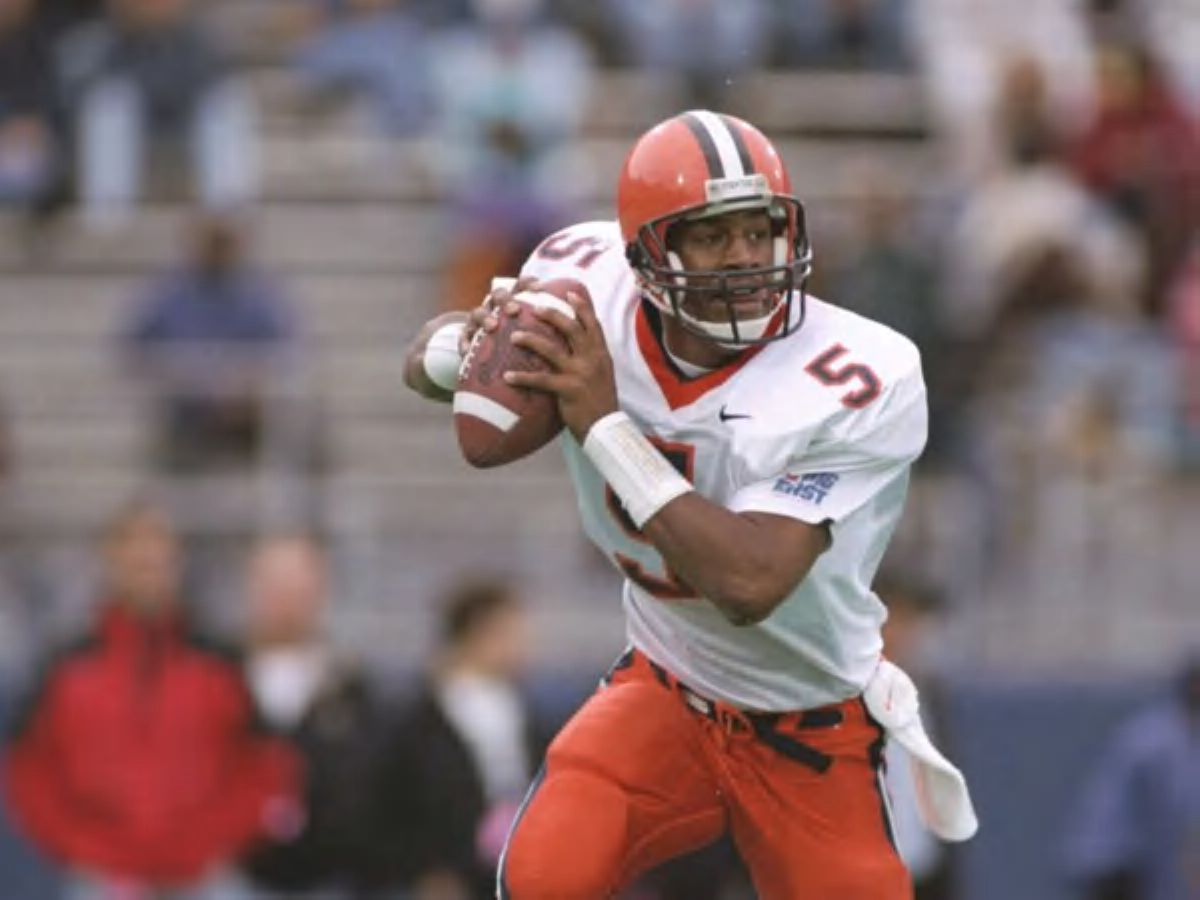
McNabb came out of Syracuse University. In 1997, he got them to 9-4. Their wins included these over opponents that were then nationally ranked in the Top 25: The Kickoff Classic at the Meadowlands against Number 24 Wisconsin, and home to Number 17 West Virginia. But he also lost at home to North Carolina State, and away to Oklahoma and Number 22 Virginia Tech.

In 1998, he got them to 8-4. They won away to Number 13 Michigan, and home to Number 16 Virginia Tech (with Michael Vick as a senior). However, they again lost to North Carolina State and West Virginia, this time away in both cases; and lost at home to Number 10 Tennessee.

In both seasons, he led the Orangemen to the Championship of the Big East Conference. But the Big East was never seen as an elite football league. In basketball, yes; in football, no. In both seasons, he got them to a major bowl game: The 1997 Fiesta Bowl against Number 10 Kansas State (actually played on New Year's Eve that season) and the 1999 Orange Bowl against Number 7 Florida (played on New Year's Day). However, they lost both games. In both seasons, he got them to a Top 25 ranking: 20th in 1997 and 24th in 1998.
In other words, he looked like a good college quarterback. But there were other choices, aside from the already-drafted Couch. With the 3rd pick, the Cincinnati Bengals drafted Akili Smith, who had led Oregon to an 8-4 season. With the 11th pick, the Minnesota Vikings drafted Daunte Culpeper, who had led Central Florida to 9-2. With the 12th pick, the Chicago Bears drafted Cade McNown, who had led UCLA to 10-2, the Pac-10 title, and victory in the Rose Bowl. In the 2nd round, the Tampa Bay Buccaneers drafted Shaun King, who had led Tulane to an undefeated 12-0 season and the Number 7 ranking in the country (albeit against, at best, what college basketball fans would call a mid-major schedule).

In other words, McNabb had a good college football career, but was he clearly the best quarterback in that Draft? The best, maybe. Clearly the best, no.

And, as I said, Williams seemed to have all the prerequisites: Good guy, great player, filled a need for the Eagles. And he was available. But they didn't take him. And their fans booed.

They shouldn't have. The Eagles needed a quarterback. When the Detroit Lions chose Rodney Peete in the 6th round out of USC in 1989, there was nothing wrong with wanting a healthy Peete on your team. But he got hurt in his 1st preseason, and this began a string of injuries. By the time the Eagles got him in 1995, having a healthy Peete was pretty much a lost cause. And, as I said, neither Bobby Hoying nor Koy Detmer was going to be the answer.

The best college running backs often turn out to be pro busts -- figuratively or, through injury, literally. Eagles fans found that out when they won 2 games late in the 1968 season, costing them the chance to draft the eventually felonious O.J. Simpson, and instead got Leroy Keyes, who fell well short of expectations.

The Eagles had won their last NFL Championship in 1960. Just between then and 1998, and just among Heisman Trophy winners: Ernie Davis never played a pro down due to a fatal illness, Steve Owens lasted just 5 seasons and rushed for less than 2,500 yards, John Cappelletti lasted 10 years and rushed for less than 3,000, Archie Griffin lasted 7 years and rushed for less than 3,000, Charles White lasted 9 years and rushed for just over 3,000, and Rashaan Salaam lasted 4 years and rushed for less than 1,800. Since then, the aforementioned Ron Dayne lasted for 8 years and rushed for less than 4,000.

In addition to those, Billy Sims and Bo Jackson, both Heisman winners, looked like they were headed for the Hall of Fame. But Sims wrecked his knee in his 5th season, and Jackson hurt his hip in his 4th, and neither ever played again. Ki-Jana Carter was the 1st pick in the 1995 NFL Draft, but wrecked his knee in a preseason game in his rookie year. played in just 59 games over a span of 10 seasons, and rushed for just 1,144 yards.

So drafting a running back in the 1st round, even a great college running back like Ricky Williams, wasn't necessarily a great idea.

And what about other teams? They made this Draft even stranger. The Browns didn't draft Williams, either. Once they drafted Couch, and the Eagles drafted McNabb, the Bengals could have drafted Williams. Here's where it gets really strange: The New Orleans Saints offered the Bengals 9 draft picks for their pick, so they could draft Williams. Nine of them. The Bengals turned them down, and drafted Akili Smith.

The 4th pick belonged to the Colts. The Saints tried to make a deal with them, too, but they wouldn't budge. But they also didn't pick Williams. They drafted a different running back, Edgerrin James of the University of Miami. And while Couch and Smith were both busts, James was not: He went to the Hall of Fame.

Finally, the Saints got the Washington Redskins to agree to a deal: The 5th pick in that Draft, in exchange for the Saints' entire 1999 Draft except for the 2nd round, and their 1st and 3rd round picks for 2000. As the next team up, the team "on the clock," the Saints drafted Williams. The Redskins did some more maneuvering, and packaged 3 of the picks they got from the Saints to send to the Bears for a pick they ended up using on University of Georgia cornerback Champ Bailey, who made the Hall of Fame.

Incidentally, the Saints' general manager at the time was Bill Kuharich, son of Joe Kuharich, who, as Eagles head coach and general manager in 1964, made what is generally regarded as the worst trade in Eagles history: Sending Sonny Jurgensen to the Washington Redskins for Norm Snead.

Jurgensen was a carouser, and the moralistic Joe Kuharich hated that. Snead was a straight arrow. With the Redskins, Jurgensen continued his Hall of Fame career, throwing the most touchdown passes of any quarterback in the 1960s. The quarterback with the most interceptions in that decade? You may have guessed: Snead.

Anyway, what all this means is that 5 teams passed on drafting Ricky Williams: First the Browns, then the Eagles, then the Bengals, then the Colts, and lastly the Redskins. As we will soon see, the Browns and Bengals might have been better off if they'd taken him. Between what we will soon see, and what we have already seen, the Eagles and Colts might not have been.

Bears legend Mike Ditka was the Saints' head coach at the time, and they went just 3-13 in 1999. Williams rushed for 884 yards. Ditka was fired, and replaced with Jim Haslett. It was a huge improvement, as they went 10-6, and, each for the 1st time in franchise history, won their Division (at the time, the NFC West) and won a Playoff game. Williams rushed for 1,000 yards even, despite missing half the season due to injury. And then they slid back down to 7-9 in 2001, despite Williams rushing for 1,245 yards. He was getting personal success, but not much team success.

He didn't fit in. His Saints teammate Joe Horn said, "Ricky's just a different guy. People he wanted to deal with, he did. And people he wanted to have nothing to do with, he didn't. No one could understand that. I don't think guys in the locker room could grasp that he wanted to be himself. You know, quiet."

He was traded to the Miami Dolphins for 4 draft picks, and 2002 turned out to be his best NFL season. He rushed for a League-leading 1,853 yards. He rushed for another 1,372 yards in 2003. In those seasons, the Dolphins went 9-7 and 10-6, but didn't make the Playoffs either time. Still, it looked like the Saints had blown it, both in getting him and in getting rid of him.
And then, in the run-up to the 2004 season, he was suspended for testing positive for marijuana. On August 2, he announced his retirement.

It's become a meme in the years since: ESPN's Stephen A. Smith telling NFL players to "Stay off the weed!" Or, as he pronounces it, "the weeeeeeee-duh!" Physically speaking, Ricky Williams was as gifted as any running back in NFL history. Emotionally speaking, he was at the other extreme, eventually being diagnosed with clinical depression and social anxiety disorder. He chose smoking pot over playing football -- including the money that could be made from it, but also the risks of playing it, and the sacrifices he would have to make to do so.

The Dolphins seemed to prove his point, that they needed him more than he needed them, going 4-12 in 2004. Williams patched things up with them, served his mandatory 4-game drug-test suspension, and rushed for 743 yards in 12 games. The Dolphins went 9-7 in 2005, and just missed the Playoffs again. And then, in early 2006, Williams was suspended for the entire upcoming season, for violating the NFL's drug policy for a 2nd time.

The Canadian Football League had a less stringent drug policy, and Williams signed with the Toronto Argonauts. But his season with the Argos was stricken with injuries: A broken bone in his arm and a damaged Achilles tendon limited him to 11 games and 526 yards. The CFL instituted what's become known as "The Ricky Williams Rule": No longer would a player under suspension by the NFL be eligible to be signed by a CFL team, although a "grandfather clause" meant that Williams himself could stay.

He didn't: After claiming that yoga had helped him to stop using marijuana, he entered into negotiations with Commissioner Tagliabue, and was granted reinstatement. He returned on November 26, 2007, playing for the Dolphins against the Pittsburgh Steelers on Monday Night Football. But it would be the only game he played that season, as he suffered a shoulder injury in the game.

He played all 16 games of the 2008 season, rushing for 659 yards, and helping the Dolphins win the AFC East. He played all 16 games of the 2009 season, rushing for 1,121 yards, making him only the 7th player in NFL history to rush for at least 1,000 at age 32 or later, but the Dolphins only went 7-9. In 2010, he rushed for 673 yards, and the Dolphins went 10-6, but missed the Playoffs.

His contract with the Dolphins had run out, and he signed with the Baltimore Ravens for 2011. He played in every game, rushed for 444 yards, and on January 1, 2012, he joined the 10,000 Yards Club. The Ravens went 12-4, won the AFC North, and advanced to the AFC Championship Game.

But, a month later, Williams announced his retirement, for good this time. He was not quite 35, with 10,009 rushing yards, 342 receptions for 2,606 yards, and 74 touchdowns.

He has since become a certified yoga instructor, and an advocate for medical marijuana. Apparently, the former hasn't actually turned him off from the latter; but, together, they have helped him deal with his mental health difficulties.

He is in the College Football Hall of Fame, but not the Pro Football Hall of Fame, for which he has been eligible since 2017. Through the 2021 season, there are 31 players with at least 10,000 rushing yards. The only ones eligible but not yet in are Fred Taylor, Steven Jackson, Corey Dillon, Warrick Dunn, Ricky Watters, Jamal Lewis, Thomas Jones, Tiki Barber, Eddie George, Ottis Anderson... and Ricky Williams.

Two of those players, Williams and Lewis, have had drug issues. The rest haven't. Based on statistics, it appears that 12,000 yards -- or, more precisely, 12,074 -- is the actual threshold: Every player with at least that many is in, except for the not-yet-eligible Frank Gore and Adrian Peterson. So maybe it's not the drug issue that's holding Williams back, since there are never-suspended players with more rushing yards who aren't in Canton.

Nevertheless, Williams was a headache for 2 different NFL franchises, New Orleans and Miami. Neither team has elected him to their team hall of fame. If you ask the average Dolphin fan to name his all-time team, his running backs are going to be those on the 1972-73 Super Bowl teams, Larry Csonka and either Jim Kiick or Mercury Morris. (A little ironic, since Morris had to overcome a more severe drug problem than Williams, and did.)

Even in the 22 years since Williams arrived in the NFL, or in the 17 years since he was first suspended, America's understanding of mental health issues has improved. It is entirely possible that the same issues would have reared their heads had he been drafted by the Eagles instead of the Saints.

And that would have been very bad for his mental health. Can you imagine Eagle fans reacting to Ricky Williams' drug and psych issues? They would have tried to destroy him. And, away from the more laid-back atmospheres in Louisiana and South Florida, it would have been much worse for him. Instead of accepting him, Eagle fans would have compounded the problem.

Now, imagine that the Eagles drafted the top quarterback available the next year. Because they still would have needed one. Who would that have been? There were 12 quarterbacks drafted. The 1st was Chad Pennington, who had a decent career with Miami and the Jets. Of the 11 after him, the best was... Tom Brady, taken in the 6th round by the New England Patriots. And we'll never know for sure if he would have won even one single solitary NFL game without being the perpetrator, or at least the beneficiary, of cheating.

And, given how close the Eagles were to winning the Super Bowl with McNabb but without Williams, would they have been any better the other way around? With Pennington as quarterback and Williams in the backfield? It's unlikely.

Because the quarterback they did draft turned out to be pretty good. Suppose you rooted for a struggling NFL team. And suppose I told you that they were going to draft a quarterback who gave his college back-to-back seasons of a Conference Championship and a bid to a New Year's Day bowl game. And that he would lead your team to the Playoffs in only his 2nd season, and that this would be the 1st of 8 trips to the Playoffs -- without any guarantee as to how any of those berths would turn out. Would you like your chances? Would you take this? I think most fans would.

Certainly, McNabb's pro career could have been better. He was 10-8 in Playoff games, 1-4 in NFC Championship Games including 2 losses at home, and 0-1 in Super Bowls. And, so far, voters for the Pro Football Hall of Fame have not seen fit to elect him.

But Donovan McNabb turned out to be, if not the greatest, then the most statistically successful quarterback in Eagles history, at least through the 2021 season. He joined Fran Tarkenton, John Elway and Steve Young as only the 4th quarterback in NFL history to have 30,000 passing yards, 200 touchdown passes, 3,000 rushing yards and 20 touchdown runs. He made 6 Pro Bowls. He won 5 NFC East titles.
In 2004, he set a record (since broken) with 24 consecutive pass attempts completed. That same year, he became the 1st quarterback ever to finish a season with at least 30 touchdown passes and fewer than 10 interceptions.

As I said, he went 10-8 in Playoff games with the Eagles. But look at it another way: In 11 seasons with Donovan McNabb as their starting quarterback, the Eagles won 10 postseason games; in 78 seasons with all other starting quarterbacks (1933 to 1998, and 2010 to 2021), they have won just 13. In fact, until Nick Foles came along, it was 9 postseason wins in 73 years without McNabb.

The Eagles reached 5 NFC Championship Games with him. They only reached 1 Super Bowl, and lost it -- but that was to the Patriots, so how do we know it was on the up-and-up? We don't. With the Pats, we presume they're guilty until they're proven innocent.

You can say that other Eagles quarterbacks -- Norm Van Brocklin, Sonny Jurgensen, Ron Jaworski, Randall Cunningham, Nick Foles and Carson Wentz -- were better than Donovan McNabb. Certainly, some of those were more talented. But results matter. Van Brocklin was only in Philadelphia for 3 seasons; Foles, 2. Long-term, McNabb is the Eagles' best quarterback ever.

So the people booing his selection at the 1999 NFL Draft owe him an apology. Yes, Ricky Williams looked like the better pick at the time. But he wasn't. McNabb was.

*

April 17, 1999 was a Saturday. Football was in the off-season. These Major League Baseball games were played:

* The New York Yankees lost to the Detroit Tigers, 3-1 at Tiger Stadium in Detroit. Andy Pettitte had a 5-hit shutout going after 6 innings. But Don Zimmer, filling in as manager while Joe Torre was treated for cancer, replaced him with Jeff Nelson, who blew it in the 7th inning. Derek Jeter went 1-for-3 with 2 walks.

* The New York Mets beat the Montreal Expos, 3-2 at Shea Stadium. Roger Cedeño went 3-for-4. Rickey Henderson was with the Mets that season, but did not get into this game.

* The Boston Red Sox beat the Tampa Bay Devil Rays, 8-5 at Fenway Park in Boston.

* The Philadelphia Phillies beat the Florida Marlins, 2-1 at Veterans Stadium in Philadelphia.

* The Toronto Blue Jays beat the Baltimore Orioles, 7-4 at the SkyDome (now the Rogers Centre) in Toronto. Cal Ripken went 1-for-5 with an RBI.

* A doubleheader was split at Jacobs Field (now Progressive Field) in Cleveland. The Cleveland Indians won the opener, 5-1. The Minnesota Twins won the nightcap, 13-8, as the Indians' relief pitcher collapsed in the 11th inning. His name was Michael Jackson. In that inning, he was bad, and he was dangerous, and the Twins didn't stop 'til they got enough.

* The Pittsburgh Pirates beat the Cincinnati Reds, 7-6 at Cinergy Field (formerly known as Riverfront Stadium) in Cincinnati. Warren Morris singled Abraham Núñez home with the winning run in the top of the 10th inning.

* The Milwaukee Brewers beat the Chicago Cubs, 5-4 at Milwaukee County Stadium.

* The Chicago White Sox beat the Kansas City Royals, 6-5 at Kauffman Stadium in Kansas City.

* The St. Louis Cardinals beat the Houston Astros, 8-5 at the Astrodome in Houston. Mark McGwire went 0-for-3 with 2 walks.

* The Colorado Rockies beat the Atlanta Braves, 5-4 at Coors Field in Denver.

* The San Francisco Giants beat the Arizona Diamondbacks, 8-5 at Bank One Ballpark (now Chase Field) in Phoenix. Barry Bonds went 1-for-5.

* The Los Angeles Dodgers beat the San Diego Padres, 7-3 at Qualcomm Stadium (formerly San Diego Stadium and Jack Murphy Stadium). Tony Gwynn went 1-for-4 with an RBI.

* The Seattle Mariners beat the team then known as the Anaheim Angels, 4-3 at Edison International Field of Anaheim (now Angel Stadium of Anaheim). David Segui hit a home run in the top of the 10th inning. Ken Griffey Jr. also homered, going 1-for-1 with 2 RBIs... and 4 walks.

* And the Oakland Athletics beat the Texas Rangers, 11-3 at the Oakland Coliseum (then named the Network Associates Coliseum).

There were 5 games in the NBA:

* The New York Knicks lost to the Toronto Raptors, 93-90 at Madison Square Garden.

* The Charlotte Hornets beat the Cleveland Cavaliers, 90-82 at the Gund Arena (now the Rocket Arena) in Cleveland.

* The Portland Trail Blazers beat the Dallas Mavericks, 102-94 at the Reunion Arena in Dallas.

* The Utah Jazz beat the Los Angeles Lakers, 109-93 at the Delta Center in Salt Lake City.

* And the Sacramento Kings beat the Denver Nuggets, 119-97 at the ARCO Arena in Sacramento.

And there were 10 games in the NHL:

* The New York Islanders beat the Pittsburgh Penguins, 7-2 at the Civic Arena in Pittsburgh.

* The New Jersey Devils beat the Nashville Predators, 4-1 at the Nashville Arena (now the Bridgestone Arena).

* In an "Original Six" matchup, the Montreal Canadiens beat their arch-rivals, the Toronto Maple Leafs, 3-2 at the Molson Centre (now the Bell Centre) in Montreal.

* The Boston Bruins beat the Buffalo Sabres, 2-1 at the FleetCenter (now the TD Garden) in Boston. Hal Gill scored the winning goal with 14 seconds left in overtime. (No shootouts until 2005-06, so this would have been a tie if he hadn't scored.)

* The Ottawa Senators and the Carolina Hurricanes played to a tie, 1-1 at the Greensboro Coliseum.

* The Florida Panthers beat their arch-rivals, the Tampa Bay Lightning, 6-2 at the National Car Rental Center (now the Amerant Bank Arena) in the Miami suburb of Sunrise, Florida.

* In another "Original Six" matchup, the Chicago Blackhawks beat their arch-rivals, the Detroit Red Wings, 3-2 at the United Center in Chicago.

* The Phoenix Coyotes beat the Dallas Stars, 2-0 at the AmericaWest Arena (now the Footprint Center) in Phoenix.

* The Edmonton Oilers beat their arch-rivals, the Calgary Flames, 3-2 at the Skyreach Center (as the Northlands Coliseum was then known) in Edmonton.

* The Mighty Ducks of Anaheim and the San Jose Sharks played to a tie, 3-3 at the San Jose Arena (now the SAP Center).

* And the New York Rangers, the Philadelphia Flyers, the St. Louis Blues, the Los Angeles Kings, the Vancouver Canucks, the Washington Capitals, the Colorado Avalanche and the Atlanta Thrashers were not scheduled.

Tuesday, February 8, 2022

February 8, 1936: The 1st NFL Draft

Jay Berwanger

February 8, 1936: The National Football League holds its 1st draft, at the Ritz-Carlton Hotel in Philadelphia.

The draft was instituted in an effort to end bidding wars among the league's teams by the arbitrary assignment of negotiating rights to amateur players. It was decided that the last-place team from the previous season would get the 1st selection, and the process would continue in reverse order of the standings. Under this structure, the 1st pick went to the Philadelphia Eagles, who had gone 2-9 in 1935.

This 1st draft had 9 rounds. The number of rounds was changed to 10 in 1937, 12 in 1938, 22 in 1939, 32 in 1943, 25 in 1949, 30 in 1950, 20 in 1960, 17 in the 1st combined NFL/AFL Draft of 1967, 12 in 1978, 8 in 1993, and has been 7 since 1994.

With the 1st pick, the Eagles made what must have looked at the time to be, as Charles Darwin would have put it, the natural selection: Jay Berwanger, a sensational back on both offense and defense, who had starred at the University of Chicago, and was, just a few weeks earlier, awarded the 1st-ever edition of what would become known as the Heisman Memorial Trophy.

But the Eagles also made the 1st-ever puzzling Draft Day move: Team owners Bert Bell (later to be the Commissioner of the NFL) and Lud Wray had heard that Berwanger was going to demand $1,000 per game (NFL contracts were per game back then, not per season), and they didn't think they could afford that, so they traded Berwanger's rights to the Chicago Bears, in exchange for tackle Art Buss. Buss played 2 seasons for the Eagles, having already played 2 for the Bears, and this is the most interesting thing about him.

But at least the Eagles got something for Berwanger's rights. The Bears got nothing. At first, Berwanger, a native of Dubuque, Iowa, chose not to sign for the Bears, or any team for that matter, because he wanted to maintain his amateur status, so that he could compete in the decathlon at the 1936 Olympics in Berlin. Certainly, a worthy goal, and one that Bears owner, general manager and head coach George Halas could respect. The Olympics would be in early August, and the Bears' 1st game wouldn't be until September 20. Halas could afford to bide his time.

But Berwanger didn't make the Olympic team, and the Gold Medal in the decathlon went to another American, Glenn Morris, who had also played football, at Colorado A&M University (which became Colorado State in 1957). So Berwanger went to Halas, and asked for $15,000 for the season -- which worked out to $1,250 a game, more than the Eagles thought he would demand.

Halas was known for his cheapness: One of his later star players, and the last head coach he would ever hire, Mike Ditka, loved him, but also said, "George Halas throws nickels around like manhole covers." Halas was willing to go as high as $13,500. Berwanger declined, and got a job with a Chicago-based rubber company, and also coached at the University of Chicago until it dropped its football program in 1940. He never played a down of professional football, and lived until 2002, having told an interviewer that he regretted not having accepted Halas' offer.

The Boston Redskins picked 2nd, and chose Riley Smith, a quarterback from the University of Alabama. Technically, this made him the 1st NFL Draft pick to play in the NFL: He played 3 seasons for the Redskins, including their last in Boston and their 1st 2 in Washington, which included their 1937 NFL Championship.

With the 3rd pick, the Pittsburgh Pirates drafted William Shakespeare. Yes, you read that right. The Pirates, named for the city's baseball team, would become the Steelers in 1940. And Notre Dame back Shakespeare, apparently a distant relative of the playwright, and nicknamed both "The Bard" and "The Merchant of Menace," also took a higher-paying job with a rubber company (albeit one based in Cincinnati, not the Chicago-based one that hired Berwanger), and was awarded a Bronze Star in World War II.

With the 6th pick, the Bears took West Virginia tackle Joe Stydahar. In the 9th round, the Bears took Colgate guard Dan Fortmann. Both men became mainstays of the team that won 4 NFL Championships in the 1940s, and were elected to the Pro Football Hall of Fame in Canton, Ohio. So it's hard to argue that the Bears would have been appreciably better if Berwanger had played a full career for them. Stydahar also coached the Los Angeles Rams to the 1951 NFL Championship.

In the 2nd round, the New York Giants took Alphonse "Tuffy" Leemans. He starred on their 1938 NFL Championship team. In the 8th round, the Redskins chose Notre Dame end Wayne Millner, who would be the leading receiver for the 1st great NFL quarterback, Sammy Baugh, helping them win NFL Championships in 1937 and 1942. Leemans and Miller would also go to Canton.

In the 3rd round, the Redskins chose New York University back Ed Smith, who made money on the side as a male model -- and was the model for the Heisman Trophy. He played for the Redskins in 1936 and the Green Bay Packers in 1937.

In the 4th round, the NFL version of the Brooklyn Dodgers chose Alabama end Paul "Bear" Bryant. He never played pro ball, but went on to become one of the greatest college coaches ever. In the 6th round, the Eagles chose back Al Barabas, one of the stars of Columbia's 1934 Rose Bowl upset over Stanford. But he never played in the pros.

The NFL Draft has become a televised spectacle. Sometimes, it seems as though there are fans who pay more attention to the Draft than to actual results.

*

February 8, 1936 was a Saturday. Football was out of season. So was baseball. The NFL hadn't been founded yet. There were 2 games played in the NHL. The Montreal Maroons beat the Montreal Canadiens, 7-2 at the Montreal Forum, in what was officially a home game for the Maroons. And the Toronto Maple Leafs beat the New York Americans, 3-0 at Maple Leaf Gardens in Toronto.

And in English soccer, North London team Arsenal traveled to Lancashire, and beat Blackburn Rovers, 1-0 at Ewood Park in Blackburn. Jack Crayston scored the goal.

Saturday, January 29, 2022

January 29, 1974: The Pittsburgh Steelers and the Greatest NFL Draft

January 29, 1974: The NFL Draft is usually now held in April, but no team has ever had a Draft as good as the Pittsburgh Steelers did on this day. It allowed the Steelers, who had made the Playoffs the 2 previous seasons after years of being a doormat franchise, to go to the Super Bowl 4 times, winning them all, over the next 6 seasons.  
And, as Michael Wilbon correctly said on ESPN's Pardon the Interruption, they did it with scouting. Not with an NFL Scouting Combine. Not with analytics. Not with a Wonderlic Test. They did it the old-fashioned way, and in so doing, they may have built the greatest team in NFL history.

Not too old-fashioned: In 1969, the team's owner and founder, Art Rooney, was approached by his sons, Dan and Art Jr. They told him that, as much as he loved football, he didn't know the game as well as he thought, and the proof of this was that, in 37 seasons, the Steelers had never made the Playoffs. They suggested that he let them make the personnel decisions. He figured he had little to lose, and so he did. And they hired Chuck Noll as head coach, and built a great scouting system around themselves.

They had the 1st pick in the 1969 Draft: North Texas State defensive tackle Joe Greene. They had the 1st pick in the 1970 Draft: Louisiana Tech quarterback Terry Bradshaw. In the 3rd round in 1969, they chose Oklahoma State offensive tackle Jon Kolb. In the 3rd round in 1970, they chose Southern University cornerback Mel Blount.

In 1971: In the 2nd round, they chose Penn State linebacker Jack Ham; in the 4th round, East Texas State defensive end Dwight White; in the 5th round, Kansas tight end Larry Brown, whom they moved to offensive tackle. In 1972: In the 1st round, they chose Penn State running back Franco Harris; and in the 5th round, they chose University of Rhode Island defensive end Steve Furness. The 1973 Draft would be relatively unimpressive for them. But they were just getting warmed up for 1974.

Ironically, it would be the Dallas Cowboys who had the top pick in that Draft, having acquired it in a trade with the Houston Oilers. They chose defensive end Ed Jones of Tennessee State, whose 6-foot-9 height earned him the nickname "Too Tall." He became a star, but not a Hall-of-Famer. In fact, none of the 1st 20 picks in this Draft made the Pro Football Hall of Fame.

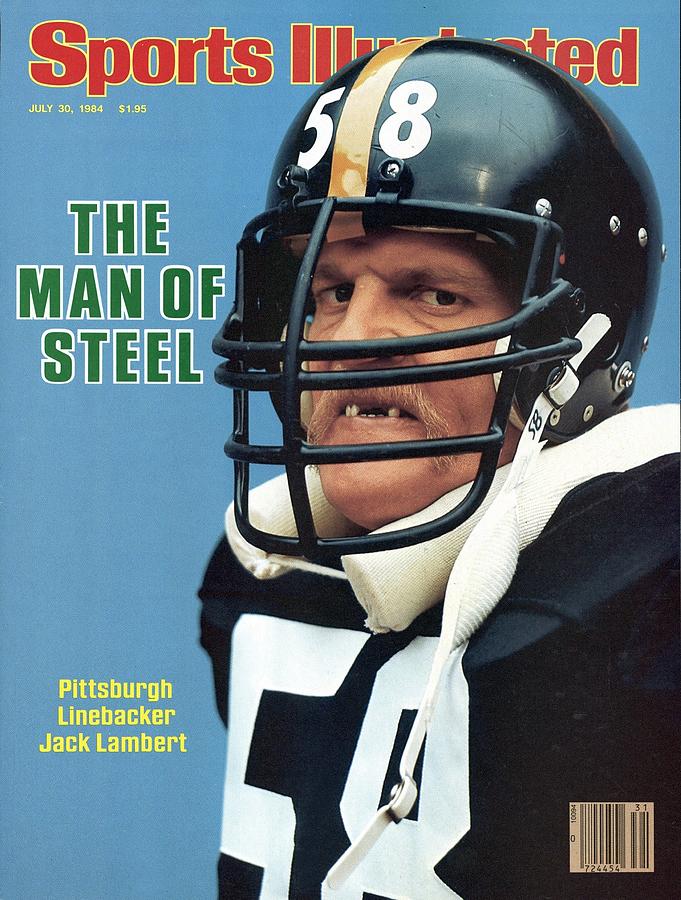
The 21st pick was the Steelers' pick: USC wide receiver Lynn Swann. In the 2nd round, they chose Kent State linebacker Jack Lambert. They had traded their 3rd round pick. In the 4th round, they chose Alabama A&M receiver John Stallworth. In the 5th round, they chose Wisconsin center Mike Webster.

In the 1st 5 rounds, they had 4 picks, and all of them made the Hall of Fame. After the Draft, they signed South Carolina State safety Donnie Shell. He made the Hall, too. The only non-Steeler in this Draft to make the Hall of Fame was Dave Casper of the Oakland Raiders. (UPDATE: That changed in 2024, when the 14th pick was elected: Ohio State linebacker Randy Gradishar, by the Denver Broncos.)

Choosing Swann was easy, as he had helped USC win the 1972 National Championship. Giving Bradshaw another good receiver was a good idea, since they already had good running backs in Franco Harris and Rocky Bleier. But hardly anybody had looked at Stallworth.

They were not afraid to look at players from historically black colleges, including Greene, Blount, White, Stallworth and Shell. (As had Jones, chosen by the Cowboys' scouting genius, Gil Brandt.) Nor were they afraid to look for big fish in small ponds. Louisiana Tech was no power when Bradshaw was there. Furness was from URI, in the Yankee Conference.

And Lambert was from a Mid-American Conference school, and seemed undersized to be an NFL linebacker. But he was fast. And he was mean. Greene had become the NFL's top defensive tackle, and he was called "Mean Joe Greene," because it rhymed with his name. But, off the field, he was a nice guy. Greene said Lambert was much meaner than he was: "He's so mean, he don't even like himself."

The 1970s Steelers had 10 players make the Pro Football Hall of Fame: Greene, Bradshaw, Blount, Ham, Harris, Swann, Lambert, Stallworth, Webster and Shell. Noll, would also be elected, as would Art Rooney Sr. and Dan Rooney.

*

January 29, 1974 was a Tuesday. Baseball and football were out of season. There were 5 games played in the NBA:

* The New York Knicks beat the Boston Celtics, 104-83 at Madison Square Garden.

* The Golden State Warriors beat the Buffalo Braves, 128-121 at the Buffalo Memorial Auditorium.

* The Cleveland Cavaliers beat the Atlanta Hawks, 118-111 at the Cleveland Arena. Pete Maravich scored 33 points in defeat for the Hawks.

* The Seattle SuperSonics beat the Houston Rockets, 115-107 at the Hofheinz Pavilion (now the Fertitta Center) in Houston.

* And the Milwaukee Bucks beat the Portland Trail Blazers, 126-106 at the Portland Memorial Coliseum.

There were no games scheduled in the NHL, and none in the American Basketball Association. In the World Hockey Association, the Jersey Knights beat the Toronto Toros, 6-1 at the Cherry Hill Arena in the Philadelphia suburb of Cherry Hill, New Jersey. And the Quebec Nordiques beat the Los Angeles Sharks, 5-0 at the Colisée de Québec. 

December 31, 1999 & January 1, 2000: The Millennium

December 31, 1999:  The Millennium arrives. The people of planet Earth survived. At a terrible cost. But we hadn't destroyed ourselves. ...