Showing posts with label lou boudreau. Show all posts

Tuesday, October 11, 2022

October 11, 1948: The Cleveland Indians Win the World Series

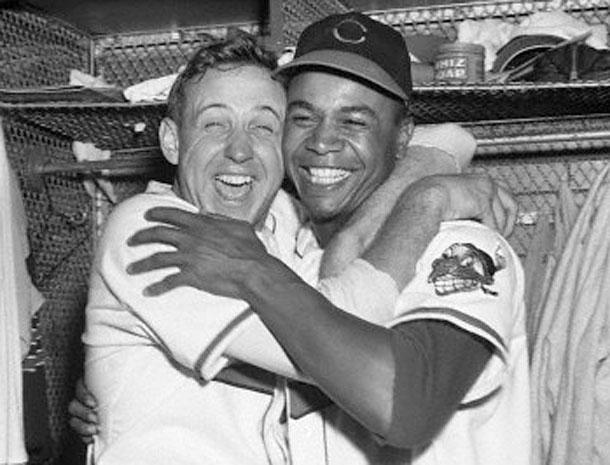
Steve Gromek (left) and Larry Doby

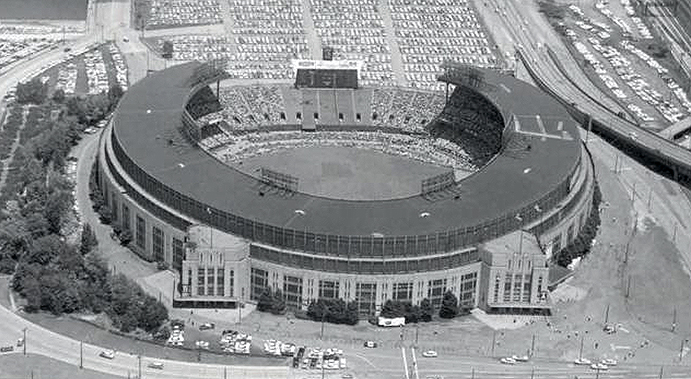
October 11, 1948: The Cleveland Indians defeat the Boston Braves behind "rookie" 30-year-old knuckleballer Gene Bearden, 4-3 at Braves Field, and take Game 6 and win the World Series. It is their 2nd title, the 1st coming in 1920.

Team owner Bill Veeck had built this team. Larry Doby and Satchel Paige thus become the 1st black players to play on a World Series winner. Doby became the 1st black player to hit a home run in a World Series game. And Lou Boudreau, age 31, both shortstop and manager, becomes the last player-manager to win a World Series, or even a Pennant. Bob Feller would join Veeck, Doby, Paige and Boudreau in the Baseball Hall of Fame, although he ended up as the losing pitcher in both games the Indians lost in the Series: Game 1, to Johnny Sain; and Game 5, to another Hall-of-Famer, Warren Spahn.

A photograph of Doby being hugged by a white teammate, pitcher Steve Gromek, circulated, and was considered another step forward in black and white players working together.

The team has never won another World Series. They have had some close calls, some of them truly agonizing. And they're not even called the Indians anymore: In 2021, after years of complaints about their Native American name and its racist implications, they announced that, for the following season and thereafter, they would be named the Cleveland Guardians.

But at least they're still in Cleveland, despite a number of fears of having to move in the 1960s, '70s and '80s. In contrast, despite all their success in the 19th Century and winning Pennants in 1914 and 1948, that 1948 World Series Game 6 was the last late-season meaningful game the Boston franchise of the National League would ever play. The Braves would be in Milwaukee by the next time they reached the Series, in 1957.

The Indians' Eddie Robinson was the last surviving player from the 1948 World Series, living until 2021, age 100, 73 years later. Clint Conatser was the last survivor of the '48 Braves, living until 2019, at 98.

UPDATE: The Guardians have a team Hall of Fame. From the 1948 World Champion Indians, they have honored Lou Boudreau, Bob Feller, Satchel Paige, Bob Lemon, Early Wynn, Mike Garcia, Joe Gordon, Larry Doby, Al Rosen, Ken Keltner, Jim Hegan, team owner Bill Veeck, scout Cy Slapnicka, and broadcasters Jack Graney and Jimmy Dudley. Feller and Hegan have also been elected to the Greater Cleveland Sports Hall of Fame.

*

October 11, 1948 was a Monday. This was also the day Thomas Merton publishes his memoir The Seven Storey Mountain. I have a separate entry for that event.

The baseball season had ended that day. Football was in midweek. And it was too soon for the NBA and NHL seasons. So there were no other scores on this historic day.

Tuesday, October 4, 2022

October 4, 1948: The Gene Bearden Game


Gene Bearden

October 4, 1948: A Playoff for the American League Pennant is played at Fenway Park in Boston. The Boston Red Sox and the Cleveland Indians had both finished 1 game ahead of the New York Yankees in the AL race.

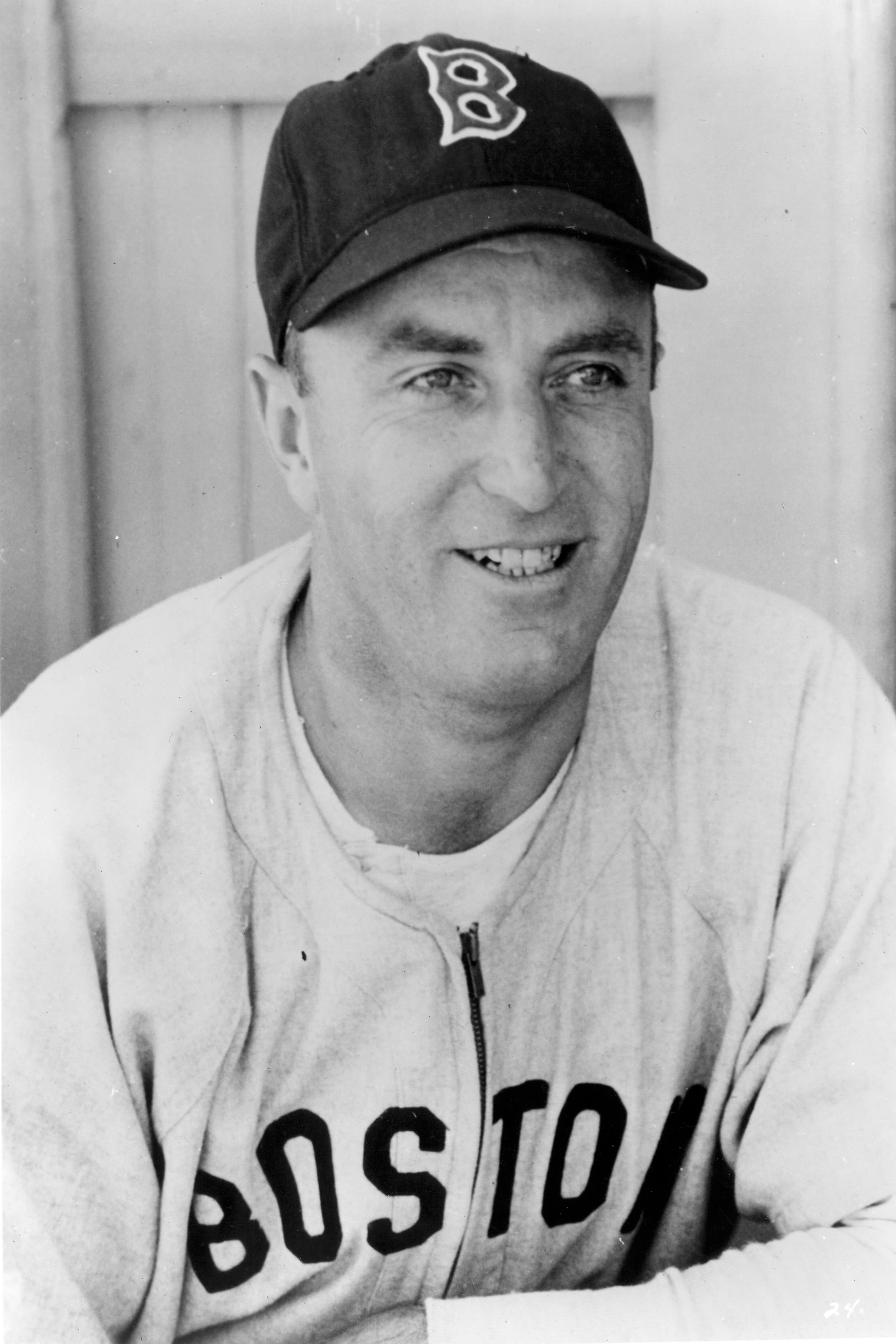
The Red Sox were managed by Joe McCarthy. Although he'd never played in the major leagues, he had led the Chicago Cubs to the 1929 National League Pennant. Fired after not repeating in 1930, the Yankees immediately hired him. He won the 1932 World Series, then missed 3 straight years, then won the American League Pennant in 7 of the next 8: 1936, '37, '38, '39, '41, '42 and '43, winning the World Series on each of those occasions but '42. Those 7 World Series wins remain a record, matched by Casey Stengel, but never surpassed.

He left the Yankees in the middle of the 1946 season, because he did not like the new owners, Dan Topping, Del Webb and Larry MacPhail. When Joe Cronin retired as Red Sox manager, team owner Tom Yawkey hired McCarthy, who seemed to still be the best manager in baseball.

The Indians were managed by Lou Boudreau. A former pro basketball player (in the Midwest-based National Basketball League, before there was an NBA), he had been their regular shortstop since 1940. After the 1941 season, they needed a new manager. Having been Captain of the basketball team at Bradley University in Peoria, Illinois, he suggested himself.

But he was only 24 years old. Aside from Roger Peckinpaugh, who had been interim manager for the last 15 games of the 1914 Yankees' season at age 23, he would, by far, be the youngest manager in baseball history. (Ironically, he would be replacing Peckinpaugh, now 50, in Cleveland.)

He was named manager by team owner Alva Bradley. It didn't matter much during World War II. But when the veterans came back in 1946, one of them was Bill Veeck, who bought the team from Bradley. Veeck had been an executive with the Chicago Cubs, and had built the minor-league version of the Milwaukee Brewers into a Pennant winner. He believed Boudreau was the best shortstop in baseball, but didn't care for him as a manager. Boudreau fought to keep his job, and won. At 31, he had gotten the Indians closer to a Pennant than they'd ever been, except for their 1920 World Series win.

McCarthy picked Denny Galehouse as his starting pitcher. It's true that he was 36 years old, and left the game with an 8-8 record, an ERA of an even 4.00, and a WHIP of 1.445, and only pitched 2 more games in the major leagues.

But his ERA+ for the 1948 season was 110. For those of you unfamiliar with the stat, ERA-plus is earned run average in relation to the rest of the league. Meaning that an ERA+ of 100 means that a pitcher is exactly at the league average when it comes to preventing earned runs. An ERA+ of 110 meant that Galehouse was 10 percent better at preventing earned runs than the average American League pitcher in 1948, even after the game in question.
Denny Galehouse

In other words, Galehouse was not a bad pitcher. He was 109-118 lifetime, but most of that was for weak Indians and St. Louis Browns teams. And while he was only 9-10 for the Browns in 1944, his ERA of 3.12, and his ERA+ of 117, helped them win the Pennant that year, the only one they ever won.

Furthermore, Galehouse had pitched for the Indians, so he knew the tendencies of some of their players. Sometimes, a mental edge can make all the difference.

This time, it didn't. He got the 1st 2 outs in the top of the 1st inning. But Boudreau was the next hitter, and he hit a home run. 1-0 Cleveland.

Boudreau picked Gene Bearden as his starting pitcher. If anything, Boudreau gambled more than McCarthy did. Yes, Bearden was already 19-7 that season, and, at age 28, was in his prime. But he was a rookie, having faced just 4 batters in the major leagues prior to May 8 of that season. And he was a lefthander, pitching in Fenway. And he was a knuckleballer, adding the threat of passed balls, even for a very good-fielding catcher like Jim Hegan.

And, arm-easier knuckler or no, he was pitching on just 1 day's rest, having pitched a complete game victory just 2 days earlier. In fact, from September 6 to October 4, less than 1 full month, he pitched 71 innings. This included, counting the Playoff, 4 complete games in 10 days. Even by the standards of the Fighting Forties, that was insane.

He allowed a tying run. The score remained 1-1 through the end of the 3rd inning. In the top of the 4th, Boudreau and former Yankee 2nd baseman Joe Gordon singled, and 3rd baseman Ken Keltner hit a home run, making the score 4-1, and chasing Galehouse. McCarthy brought in Ellis Kinder, who allowed another run. Boudreau hit another homer in the 5th, to make it 6-1.

The Red Sox closed to within 6-3 on a 6th-inning home run by Bobby Doerr, but a dropped fly ball by the great Ted Williams in left field led to an 8-3 Indians lead. That was the final score, as Bearden went the distance.

The Boston Braves, playing just 1 mile to the west at Braves Field, had won the National League Pennant. This was the closest baseball ever got to an All-Boston World Series. Instead, the Indians stayed in Boston to play Games 1 and 2 of the World Series, and came back to clinch at Braves Field in Game 6.

Despite Pennants in 1954, 1995, 1997 and 2016, the Indians have never won another World Series. Their drought of 74 years is not only the current longest in Major League Baseball, it is now longer than the Red Sox' drought was when they blew the Series in 1986, and longer than the Cubs' drought was when they blew the National League Championship Series in 1984.

Which makes the Indians' heroes of 1948 all the larger: Bearden, Gordon, Keltner, and Hall-of-Famers Boudreau, Bob Feller, Larry Doby and Satchel Paige, the latter 2 having starred in the Negro Leagues.

Earlier in the year, on August 12, the Indians got hits from 14 different players, a record that still stands, as they beat the St. Louis Browns, 26-3 at Sportsman’s Park in St. Louis.

Hits: Gene Bearden (the starting pitcher!) and Hal Peck, 4; Lou Boudreau, Joe Gordon, Dale Mitchell and Jim Hegan, 3; Eddie Robinson, 2; Larry Doby, Wally Judnich, Thurman Tucker, Ken Keltner, Allie Clark, Joe Tipton and Bob Kennedy, 1. This included home runs by Bearden, Doby, Hegan and Judnich. RBIs: Bearden and Boudreau, 4; Peck, 3; Doby, Mitchell, Robinson and Keltner, 2; Gordon, Hegan, Judnich, Clark and Tipton, 1. Bob Feller closed the game out, but did not come to bat. 

The Red Sox recovered from their Playoff defeat, and took the Yankees down to the wire in 1949. Again, McCarthy made a fateful pitching change: With the last game of the regular season deciding the Pennant, the Yankees led 1-0 in the bottom of the 8th, and McCarthy took Kinder out for a pinch-hitter. It didn't work, and the bullpen was awful, and the Yankees won the game 5-3. Ever since, he has been ripped for both decisions: Starting Galehouse in '48, and relieving Kinder in '49.

He managed the 1950 season, fell short, and retired. Ironically, his successor as Red Sox manager was Lou Boudreau: Veeck had sold the Indians after the 1949 season, and new owner Ellis Ryan had fired Boudreau. 

The way Red Sox fans talked about McCarthy, you'd never know he had won 9 Pennants. Until his death in 1978, they never forgave him. Did they give him a bum rap? Maybe: After all, as I said, Galehouse was a decent pitcher, and Bearden was a big gamble for Boudreau.

In addition, Fenway Park's left-field wall, recently nicknamed The Green Monster, was listed as being 315 feet from home plate. Most people thought it was closer. It was eventually relabeled 310. Then as now, it was a tempting target for righthanded hitters. 

And Mel Parnell, usually cited as the best other option for Boston in this game, was a lefthanded pitcher. Add the fact that he would have been pitching on 3 days' rest, and he wasn't that much better a choice to start the Playoff than Denny Galehouse.

What were McCarthy's other options? The day before, Joe Dobson had pitched 4 innings, Earl Johnson 2, and Dave "Boo" Ferriss 3. They would have been too tired to pitch. The day before, Jack Kramer, Galehouse's '44 Browns teammate (and no relation to the tennis star of the same name, who was then at the peak of his game), had gone the distance, so he wasn't ready for this game.

The day before that was a day off. The day before that, Parnell had gone into the 7th inning, and, as I said, would have been on 3 days' rest. The day before that, Kinder had pitched a complete-game victory, had won his last 5 decisions, and hadn't been the losing pitcher since August 4 -- 2 months.

Except McCarthy did bring Kinder into this game, to pitch in relief of Galehouse, allowing 4 runs, 3 of them earned, on 4 hits and 2 walks. Stretch that over 9 innings, and it becomes 6 runs, 6 hits and 3 walks. He was not appreciably more effective than Galehouse. Would he have been, had he started the game? We can't know for sure. What we do know is that, counting only the runs scored while he was the Sox pitcher, it was Indians 4, Red Sox 2. That's closer than Indians 8, Red Sox 3, but it's still a loss.

Bearden then pitched in 2 games of the World Series, throwing 10 2/3rds innings without allowing a run. He was never so effective again, going just 25-31 in a career that ended only 5 seasons later. But he came through for his manager on this day.
Lou Boudreau

Not only did Boudreau's roll of the dice come up seven, but he was the game's hitting star, too. He went 4-for-4, hitting a solo home run off Galehouse in the 1st inning, and another off Kinder in the 5th. He also fielded 8 chances without an error: 3 putouts, 5 assists. He was named the AL's Most Valuable Player for the season.

At 31, the former "boy manager" had led his team to a Pennant. He remains the last player-manager to do so. And, in so doing, he outmanaged Joe McCarthy, the man then considered the best manager in baseball. Boudreau ended up in the Hall of Fame, although that was more for his playing than his managing.

Boudreau managed the Red Sox from 1952 to 1954, the Kansas City Athletics from 1955 to 1957, and the Chicago Cubs for most of 1960. He had broadcast for the Cubs in 1958 and '59, and did so again from 1961 to 1987. He died in 2001. His daughter Sharyn married Detroit Tigers pitcher Denny McLain.

Bearden returned to his native Arkansas, managed a radio station, owned a restaurant and an auto dealership, and coached youth baseball. He died in 2004, at 83. Eddie Robinson, who pinch-hit, and then took over at 1st base, for Allie Clark, turned out to be the last survivor of this game, living until 2021, 100 years old.

*

October 4, 1948 was a Monday. There were no other baseball games that day. It was too early for the NBA and NHL seasons. Football was underway, but there would be no Monday Night Football until 1970. So there were no other scores on this historic day.
Sunday, July 17, 2022

July 17, 1941: Joe DiMaggio's Hitting Streak Is Stopped

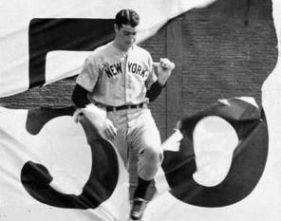
July 17, 1941: The New York Yankees play the Cleveland Indians in front of 67,468 fans at Cleveland Municipal Stadium. The Yankees' center fielder, Joe DiMaggio, comes into the game with a 56-game hitting streak. Before this, the longest streak ever was 44 games. Since this, the longest streak has also been 44 games. This record has never even been seriously approached.

What's more, with the streak, DiMaggio put the Yankees on his back, and carried them to glory. On Game 3 of the streak, on May 17, the Yankees were 7 1/2 games out of 1st place in the American League. Now, in Game 57, exactly 2 months later, they are in 1st place by 7 games, a 14 1/2-game swing.

Don't tell me Ted Williams was the most valuable player, capitalized or otherwise, in the AL that season. His .406 batting average didn't help his team come anywhere near a Pennant. The latest in the season that the Boston Red Sox were in 1st place was April 22. After June 25, they were never within 3 games of 1st place. From July 13 onward, they were never within 10. From August 9 onward, they were never within 14. On September 4, they bottomed out at 20 1/2 back. And when the regular season ended on September 28, they were 84-70, not a bad record, but and in 2nd place, not a bad finish -- but 17 games behind the Yankees.

Williams batted .406, with an on-base percentage of .553, a slugging percentage of .735, a 235 OPS+, and hit 37 home runs, all of which led both major leagues. He had 120 RBIs. In comparison, DiMaggio's "slash line" for the season was .357/.440/.643, his OPS+ was 185, and he hit 30 homers, but led both Leagues with 125 RBIs.

But the Yankees went 41-13, with a game tied when called due to darkness and another tied when called due to rain, over those 56 games, including winning streaks of 14 and 8. Of those 56, 4 went to extra innings, but DiMaggio got his 1st hit within the 1st 9 each time; and 4 were shortened due to rain, making it even more impressive that DiMaggio got at least 1 hit in each.

Shortly after the streak ended, the Yankees started a 10-game winning streak. They went on to clinch the Pennant on September 3. It remains the earlier 1st-place clinching in AL history, even in the Divisional Play era. 

But on this day, DiMaggio was stopped. In the top of the 1st inning, batting against pitcher Al Smith, Red Rolfe singled, and Tommy Henrich doubled, to give the Yankees a 1-0 lead. DiMaggio then came up, and hit a sharp grounder to 3rd base, where Ken Keltner made a great play to throw him out. In the 4th, DiMaggio drew a walk against Smith, but that didn't count as a hit.

In the bottom of the 4th, Gerald "Gee" Walker hit a home run off Yankee pitcher Lefty Gomez, to tie the game. The game remained tied until the top of the 7th. With Smith still pitching for Cleveland, DiMaggio came up, but was again robbed by a great play by Keltner. Right after this, Joe Gordon hit a home run, giving the Yankees a 2-1 lead.

Charlie Keller led off the top of the 8th with a triple. Rookie shortstop Phil Rizzuto grounded to 3rd, and Keltner held Keller, then, threw Rizzuto out. But Gomez, a notoriously bad hitter even for a pitcher, singled Keller home. It was 1 of only 58 RBIs in a 14-season career that would see Gomez go 189-102 and make the Baseball Hall of Fame.

This was followed by Johnny Sturm singling, and Rolfe doubling him home. Henrich walked, and with DiMaggio due up next, that was enough for Roger Peckinpaugh, the former Yankee and Washington Senator shortstop, who had also managed both of those teams, and was now managing the Indians: He replaced Smith with Jim Bagby Jr., whose father had pitched for the Indians' World Series winners of 1920.

Still needing a hit, DiMaggio hit a grounder to short. Boudreau got it, and threw to Ray Mack (no relation to Connie) at 2nd to eliminate Henrich. Mack threw to Oscar Grimes at 1st, to eliminate DiMaggio, who wouldn't have been credited with a hit even if he'd beaten it out, as it would have been officially called a fielder's choice.

The Yankees did not score in the 9th, and there was no chance of DiMaggio coming up again. Even if there had been a 10th inning, he would have been the 4th man up. The Indians did threaten, scoring 2 runs. Yankee manager Joe McCarthy took Gomez out, and replaced him with Johnny Murphy, who slammed the door.

Yankees 4, Indians 3. The win was secure. But all the talk was of how the streak was over. The Yankee Clipper, for once, was at anchor.

*

July 17, 1941 was a Thursday. It was the off-season for the NFL and the NHL, and the NBA hadn't been founded yet. But there were 5 other Major League Baseball games played that day:

* The New York Giants lost to the Cincinnati Reds, 5-4 at the Polo Grounds.

* The Chicago Cubs and the Philadelphia Phillies were tied 2-2 after 6 innings, when the game was called due to rain.

* The Detroit Tigers beat the Washington Senators, 7-1 at Briggs Stadium in Detroit. (It was renamed Tiger Stadium in 1961.)

* The Boston Red Sox beat the Chicago White Sox, 7-4 at Comiskey Park, in Chicago. Ted Williams did not play.

* The St. Louis Browns beat the Philadelphia Athletics, 4-3 at Sportsman's Park in St. Louis.

* And the Brooklyn Dodgers, the Boston Braves, the Pittsburgh Pirates and the St. Lois Cardinals were not scheduled. 

Thursday, April 14, 2022

April 14, 1942: Major League Baseball's Youngest Non-Interim Manager

April 14, 1942: The Cleveland Indians beat the Detroit Tigers, 5-2 at Briggs Stadium in Detroit. (The ballpark will be renamed Tiger Stadium in 1961.) It is the Indians' 1st game with their new manager, who is also their shortstop, perhaps the best shortstop in the game: Lou Boudreau.

Boudreau was named the Tribe's manager on November 25, 1941. He was an All-Star shortstop, well-respected by his teammates, and had been Captain of the basketball team at Bradley University in his native Peoria, Illinois. Sounds like it was a sensible decision, right?

He was only 24 years old. Roger Peckinpaugh, also a shortstop, was named interim manager of the Yankees at the end of the 1914 season, at age 23. Boudreau was, and remains, the youngest regular manager in Major League Baseball history.

Ironically, the Indians manager that Boudreau replaced was Peckinpaugh, who had previously managed the Indians from 1928 to 1933, and again in 1941 -- at the ages of 37 to 42, and 50. He had also been a shortstop, and helped the Washington Senators to win the 1924 World Series. They, too, had a "boy manager," 2nd baseman Bucky Harris, who was 27. He held the record for youngest regular manager until Boudreau broke it.

As time went on, Boudreau was still considered a great player, but his managing skill was in doubt, until 1948, at age 31, when he managed the Indians to victory in the World Series, and was named the American League's Most Valuable Player.

He last managed in 1960, with the Chicago Cubs, and became a broadcaster for them. He was elected to the Baseball Hall of Fame, the Indians retired his Number 5, and he was beloved in both Illinois and Ohio until his death in 2001.

*

April 14, 1942 was a Tuesday. Valery Brumel, the Soviet competitor who once held the world record in the high jump, was born on this day.

These other baseball games were played that day:

* The New York Yankees beat the Washington Senators, 7-0 at Griffith Stadium in Washington. President Franklin D. Roosevelt had thrown out the ceremonial first ball at Griffith Stadium in each of his 1st 9 years as President. But, just as Woodrow Wilson stepped aside from the ceremony at the start of World War I, FDR did so now that America was in World War II. Vice President Henry Wallace did the honors instead.

Charles "Red" Ruffing pitched a 3-hit shutout, and went 2-for-4 with 2 RBIs. (He was a very good hitter for a pitcher, with a .269 lifetime batting average, 36 home runs, and 273 RBIs.) Joe DiMaggio went 1-for-5 with an RBI.

* The Brooklyn Dodgers beat their arch-rivals, the New York Giants, 7-5 at the Polo Grounds. Curt Davis was the winning pitcher, while Hall-of-Famer Carl Hubbell couldn't get out of the 4th inning. Pee Wee Reese hit a home run for the Dodgers, while Johnny Mize hit one for the Giants.

* The Boston Red Sox beat the Philadelphia Athletics, 8-3 at Fenway Park in Boston. Ted Williams went 3-for-5 with a home run and 5 RBIs, starting a season in which he would win the American League's Triple Crown.

* The Boston Braves beat the Philadelphia Phillies, 2-1 at Shibe Park in Philadelphia.

* The Pittsburgh Pirates beat the Cincinnati Reds, 4-2 at Crosley Field in Cincinnati.

* The St. Louis Browns beat the Chicago White Sox, 3-0 at Comiskey Park in Chicago. Bob Muncrief pitched a 3-hit shutout.

* And the Chicago Cubs beat their arch-rivals, the St. Louis Cardinals, 5-4 at Sportsman's Park in St. Louis. Rookie Stan Musial went 2-for-5.

December 31, 1999 & January 1, 2000: The Millennium

December 31, 1999:  The Millennium arrives. The people of planet Earth survived. At a terrible cost. But we hadn't destroyed ourselves. ...