Showing posts with label batman and robin. Show all posts

Tuesday, October 18, 2022

October 18, 1988: "Batman: A Death in the Family"

The graphic novel, collecting all 4 issues

October 18, 1988: DC Comics publishes Batman: A Death in the Family, a sharp turn in the story of the Caped Crusader.

Batman had been introduced in Detective Comics #27 in 1939. Robin had been introduced in Detective Comics #38 in 1940, to give Batman a sidekick and to increase his appeal to children, as "the Boy Wonder."

The original Robin was Dick Grayson. His origin story has remained the same: A child acrobat, he and his parents were a circus act, The Flying Graysons. When the owner of the circus wouldn't pay protection money to Anthony Zucco, a Gotham City mobster, Zucco had his boys sabotage the act, so that his parents, who performed without a safety net, fell to their deaths. (The 1995 film Batman Forever matched this story, but made Two-Face the mobster who did it, made Dick considerably older, and added an older brother to the doomed family act.)

Gotham millionaire (eventually, adjusted to be a billionaire) Bruce Wayne saw the fatal fall, and found Dick, whose age at the time has varied, depending on who's telling the story. Usually, he's 12, although sometimes as young as 8, about the age that Bruce was when his parents were shot and killed in front of him. (Chris O'Donnell was 24 when he played Dick in Batman Forever.)

Bruce seeks Dick out, and learns that Dick wants to go to the police. Bruce tells him that he can't do that, since Zucco has some cops on his payroll, and tells him there's another way. Bruce reveals his identity as Batman, and trains Dick to use his acrobatic abilities in fighting crime, teaching him everything he knows. Soon, Dick is ready to go out fighting crime with Batman, as Robin, and, together, they take Zucco down.

Robin became a key part of the Batman mythos, with Burt Ward playing him alongside Adam West in the 1966-68 Batman TV series. (Ward was 20 when the show began, not very convincing as a 15-year-old. We know he was 15 because, during the course of the show, he turned 16 and got his driver's license.) By the 1970s, though, Dick began to be drawn as fully grown, and was being called not the Boy Wonder, but the Teen Wonder.

He went off to college, and founded the Teen Titans, with other heroes' sidekicks: Wonder Girl (Donna Troy), Kid Flash (Wally West), Aqualad (Prince Garth of Shayeris) and Green Arrow's Speedy (Roy Harper), before some original, never-sidekick characters were added, including Cyborg (Victor Stone), Raven (Rachel Roth), Beast Boy (Garfield Logan) and Starfire (Princess Koriand'r of Tamaran, who uses the identity of Kory Anders on Earth, and, along with Batgirl, has been a love interest of Grayson's).

Leading the Titans made Dick unavailable to Batman, so the decision was made to create a new Robin. In 1983, Dick put aside the Robin name and costume, and became Nightwing; while Jason Todd was introduced as the 2nd Robin. His origin was the same as Dick's: The son of murdered circus acrobats, taken in by Bruce and trained as Robin.

After Crisis On Infinite Earths in 1985-86, among the changes were why Dick left Bruce and formed the Titans, and Jason's origin. In this new version, Dick had been shot by the Joker, Batman's arch-enemy, leading the Joker to think he'd killed Robin, delighting him. Dick survived, but the incident created a rift between him and Bruce, and so Dick left Gotham City behind: He formed the Titans as Nightwing, and was never Robin with them.

Every year, on June 26, the anniversary of his parents' murder, Batman lays flowers at the location, known before as Park Row, and ever since as Crime Alley. In Batman #408, in 1987, he returns from this ritual to find the Batmobile's tires stolen. Somebody's got guts.

That somebody turns out to be 12-year-old Jason. His mother is out of the picture, and his father is missing, believed murdered by the supervillain for whom he was a henchman: Harvey Dent, the former District Attorney who got half his face burned by acid, becoming Two-Face. Bruce trains Jason to become the new Robin, and they capture Dent. (Of course, none of Batman's villains stay in Blackgate Prison, or Arkham Asylum, for long.)

Comic readers didn't like Jason, possibly out of loyalty to Dick. So, in 1988, the writers came up with the story "A Death in the Family," a 4-issue series. In Batman #426, after his rebellious nature results in a mistake, Bruce suspends Jason from costumed duty. After this, Jason finds his birth certificate, and discovers his mother's identity. She's Dr. Sheila Haywood, working with a Doctors Without Borders-like organization in the Middle East, and Jason goes there.

In Batman #427, Bruce tracks him down, and, too late, discovers that Sheila is mixed up with the Joker. The Joker finds Jason, in his Robin costume. (At the time, it was presumed that the Joker did not know Batman's true identity. He has since found out.) He savagely beats Jason with a crowbar, and leaves him and his mother to die in a building he has set to blow up. Batman gets there too late: The explosion occurs.

The last page read, "Robin will die because the Joker wants revenge. But you can prevent it with a phone call." Two 1-900 numbers were shown, one to vote that Jason lives, one to vote that Jason dies. That's right: DC was willing to let its readers decide, with both versions of the story ready to go to print. For 35 hours, on September 15 and 16, 1988, voters could call 1-900-720-2660 to let Jason live, or 1-900-720-2666 to let Jason die. Presumably, if they had voted to let Jason live, the "death in the family" would have been his mother.
The vote was incredibly close, a margin of 72 votes: 5,343 to 5,271. But there was a majority, 50.3 percent, voting to let Jason die. And so, early in Batman #428, Batman found Sheila, heard her implicate the Joker with her dying words, and then found Jason: "I'm too late. He's already cold to the touch. He's gone."

It got worse. When Batman returned to America, he was met by Superman, who told him that Iran had appointed a new Ambassador to the United Nations. It was the Joker, who now had diplomatic immunity, and thus couldn't be prosecuted for Jason's murder.

And this led to the climax, in Batman #429: The Joker addressed the United Nations General Assembly, with Bruce in attendance, the Batsuit under his suit, and Superman watching to act in case he tried something. He did, releasing a gas containing his "Joker venom" (called "Smilex" in the next year's Batman film) into the hall. Superman, invulnerable as always, used his super-breath to inhale all the gas, and Batman used the confusion to change into his costume without anyone seeing.

The Joker tried to escape in a helicopter, but Batman jumped onto it as well. One of the henchmen opened fire, missing Batman, but shooting the Joker and the pilot. Batman jumped into the East River, and the copter crashed into it. As Superman fished him out, Batman yelled, "Find his body!" And the text closed with him saying, "But I know they won't. That's how things always end with the Joker and me: Unresolved." (Sure enough, while it took him a while to recover from the shooting, the Joker did come back.)

Noteworthy in the story is the scene of Jason's funeral: The only guests were Bruce, his butler Alfred Pennyworth, Gotham City Police Commissioner Jim Gordon -- whether he knows that Bruce is Batman is often debated, but not confirmed in canon -- and Gordon's daughter Barbara. Barbara had been Batgirl, and knew the secret identities of Bruce, Dick and Jason, and had even dated Dick.

But in March 1988, DC had published a graphic novel, Batman: The Killing Joke, written by Alan Moore, creator of the landmark graphic novels V for Vendetta and Watchmen. Not only does it provide a detailed origin story for the Joker, an expansion of one that had been told before, but it shows the Joker shooting Barbara, paralyzing her -- not because he knows she's Batgirl and that's his way of getting to Batman (he doesn't know), but because that's his way of getting to the Commissioner, Batman's best-known public ally, and that's his way of getting to Batman. And Barbara is in a wheelchair at Jason's funeral.

Over the next year, the next multi-part Batman adventure was A Lonely Place of Dying, which shows teenager Tim Drake, who saw the deaths of the Flying Graysons when he was a boy, deduced everybody's secret identities, turned to Dick to help him intervene with Bruce, and convince him that Batman needs a Robin, to temper his rages and make him a better crimefighter. Reluctantly, Bruce sees the light, and Tim becomes the 3rd Robin. Also that year, Barbara became Oracle, a computer wizard who aided the Bat-Family, and sometimes also the Justice League.

As time went on, and the DC Universe was re-written, readers saw a 4th Robin, Stephanie Brown, formerly a vigilante named Spoiler, who became Tim's girlfriend, then was fired by Bruce, then was presumed dead, but turned out not to be. And there was a 5th Robin, Damian Wayne: Bruce's previously-unknown son with Talia al-Ghul, daughter of supervillain Ra's al-Ghul.

Then came Jason's resurrection as a result of the Infinite Crisis story, and his adoption of the Joker's former identity of the Red Hood, becoming first the kind of crime boss he used to fight, then a vigilante; and the restoration of Barbara's ability to walk, and the resumption of her career as Batgirl, even though there was already another Batgirl, Cassandra Cain, daughter of mercenary and occasional Batman adversary Lady Shiva; and a Batwoman, Kate Kane, Bruce's cousin. And Stephanie also became a Batgirl.

Confused? Well, this kind of confusion is one of the reasons I stopped reading comic books: Not that I had grown up (though I was in my late 20s when I gave it up), but too many changes to the continuity I thought I knew. It was just too hard for me to keep track of it anymore.

*

October 18, 1988 was a Tuesday. This was also the day the sitcom Roseanne premiered. I have a separate entry for that event.

Game 3 of the World Series was played at the Oakland Coliseum, and the Oakland Athletics beat the Los Angeles Dodgers, 2-1. Mark McGwire won it with a home run in the bottom of the 9th.

Three nights earlier, Kirk Gibson of the Dodgers had won Game 1 with a bottom-of-the-9th home run off Dennis Eckersley, who then coined the term "walkoff home run." McGwire's blast made the 1988 World Series the 1st, and it remains the only World Series to have 2 games end with a walkoff home run. But Game 3 would be the only game the A's would win: The next night, the Dodgers won Game 4; and the night after that, they won Game 5 to take the Series.

Football was in midweek. The NBA season started 17 days later. There were 3 games played in the NHL:

* The New York Islanders beat the Vancouver Canucks, 3-2 at the Nassau Coliseum.

* The Pittsburgh Penguins beat their arch-rivals, the Philadelphia Flyers, 4-2 at the Civic Arena in Pittsburgh.

* And, in an "Original Six" matchup, the Detroit Red Wings beat their arch-rivals, the Chicago Blackhawks, 4-3 at the Joe Louis Arena in Detroit. Steve Yzerman scored the winning goal with 1 second left in overtime. Had he been just 1 second later with his shot, the game would have gone into the books as a tie, as the NHL did not institute the shootout until 2005.

Thursday, September 8, 2022

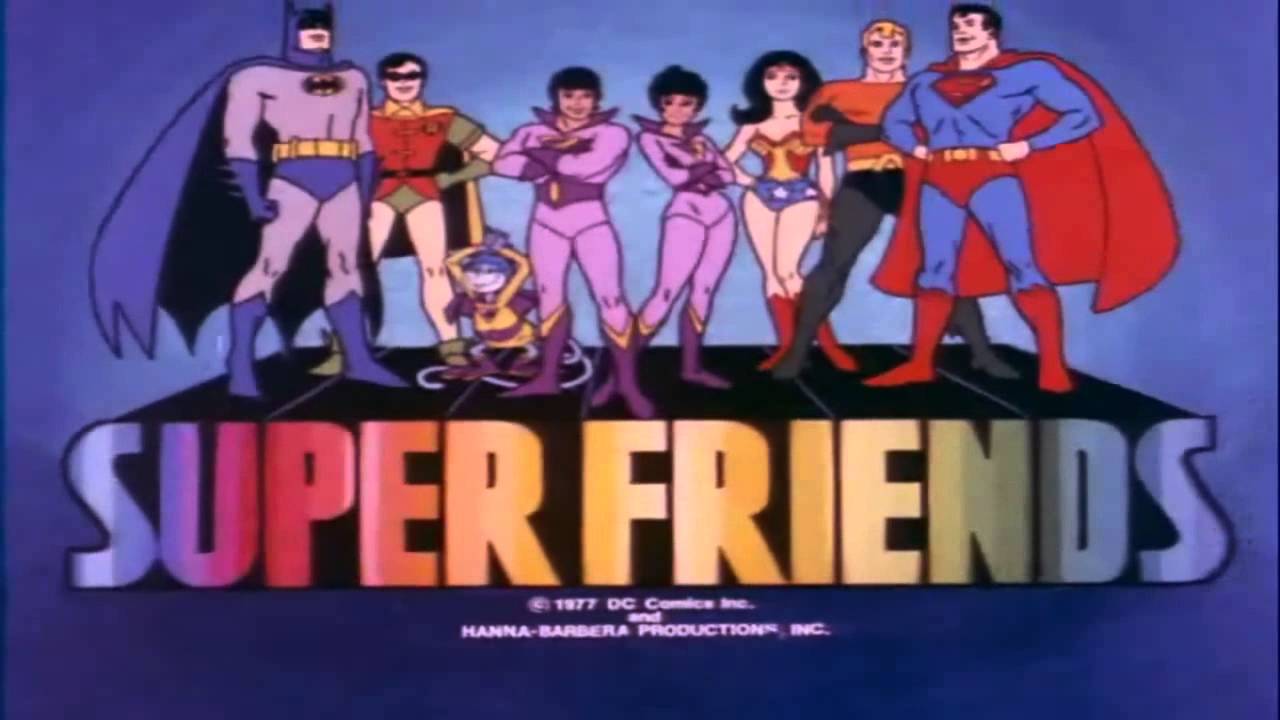
September 8, 1973: "Super Friends" Premieres

Left to right: Wonder Dog, Aquaman, Robin, Batman,
Superman, Wonder Woman, Wendy and Marvin.
Note the early '70s bell-bottom pants on both teenagers.

September 8, 1973: Super Friends premieres on ABC, based on the superheroes of DC Comics. Produced by Hanna-Barbera Productions, it runs in one form or another until 1986. The animation was crude by today's standards, but, as a kid, I didn't care.

The original series, narrated by Ted Knight, a.k.a. Ted Baxter of The Mary Tyler Moore Show -- "Later, at the Hall of Justice... " -- was kid-centric. Wendy Harris (voiced by Sherry Alberoni) and Marvin White (Frank Welker) were ordinary teenagers, who had no powers, but considered themselves superheroes, or at least detectives, in training.

They had a dog named Wonder Dog (also voiced by Welker, who specialized in voicing cartoon dogs), whose only special abilities were a higher intelligence than most dogs and, sort of, the ability to talk. They were taken in by the Super Friends, who can be recognized as a subset of the Justice League.

It's understandable that the show used Superman (Danny Dark), Batman (Olan Soule), Robin (Casey Kasem) and Wonder Woman (Shannon Farnon). After all, Kal-El/Clark Kent, Bruce Wayne and Princess Diana of Themiscyra/Diana Prince are what are now called "the DC Trinity"; and, as the original Robin, Dick Grayson was Batman's sidekick. It had only been 5 years since the Adam West Batman series had gone off the air, and this version of the Dynamic Duo was more like West and Burt Ward than like later "Dark Knights" and their "Boy Wonders."

Less obvious as a choice to round out the main superhero cast was Aquaman (Norman Alden). For those of you who only know later versions, showing him with long hair and looking more like Marvel Comics' Thor -- or in the darker-skinned, dark-haired, long-haired, tattooed version played by Jason Momoa in the DC Extended Universe movies -- his appearance as a very pale white man with short but curly hair might make him seem like an anachronism.

There were occasional visits from other superheroes. Knight also voiced The Flash. Alden also voiced Green Arrow and Plastic Man. But each of these characters appeared in only one episode. In flashback sequences, we saw Superman's Kryptonian parents, Jor-El (Kasem) and Lara (Farnon); and his earthly parents, Jonathan Kent (Soule) and Martha Kent (Farnon again).

In later versions, Dark would also play Batman's ally, Gotham City Police Commissioner James Gordon. Farnon would also play Wonder Woman's mother, Queen Hippolyta; Superman's girlfriend and Daily Planet co-worker, Lois Lane; and, from Greek mythology, goddess of love Aphrodite and monster Medusa.

Super Friends taught me to read closing credits. I noticed that Robin sounded an awful lot like Shaggy from Scooby-Doo, Where Are You? So I looked at the credits of both shows, and wrote them down, and found two names in common: Kasem and Welker. When I found out from other shows that Welker was also the voices of Fred from Scooby, Astro from The Jetsons, Dynomutt the Dog Wonder (with Laugh-In's Gary Owens as the Batman-like Blue Falcon) and the title character in Jabberjaw, that narrowed him down to Marvin and Wonder Dog, and showed me that Kasem was Robin.

In the 1976-77 TV season, ABC's The Krofft Supershow had a segment titled Electra Woman and Dyna Girl, played by soap opera star Deidre Hall and car pitchwoman (as "Mean Mary Jean") Judy Strangis, respectively. This show copied Wonder Woman by having female superheroes, copied Batman by having an older hero and a younger sidekick with a corny catchphrase ("Electra-Wow!"), and copied Superman by making them reporters in civilian life. And Alden, the voice of Aquaman, played Frank Heflin, who was less their version of Batman and Robin's butler/all-around tech whiz Alfred than he was Oscar Goldman to their Six Million Dollar Man and Bionic Woman.

Only one season of 16 episodes of Super Friends was made, although they continued to be shown in reruns. But the ABC success of Lynda Carter's Wonder Woman series and Electra Woman and Dyna Girl, and The Shazam/Isis Hour on CBS, gave ABC and Hanna-Barbera the idea to try again.

In 1977, they brought us The All-New Super Friends Hour. Noting that the core audience was a little older, Wendy, Marvin and Wonder Dog were phased out. Phased in were the Wonder Twins. They were teenagers, from the planet Exor, and they were obviously geared toward not just older kids and teenagers, but Trekkies, because they looked like Vulcans: Vaguely Asian faces, the same hairstyles, and pointed ears.
Left to right: Batman, Robin, Gleek, Zan,
Jayna, Wonder Woman, Aquaman, Superman

Unlike Wendy, Marvin and Wonder Dog, Zan (Michael Bell) and Jayna (Liberty Williams) had powers. Not a mind-meld or a nerve pinch like Vulcans. When they touched their hands, and said, "Wonder Twin powers, activate!" Jayna could say, "Shape of... " any animal, and transform into that animal. Zan could say, "Form of... " any version of water, from ice to boiling water to fog to a solid wall of liquid water.

Suddenly, Aquaman's sea-based powers didn't seem so silly: Zan was mainly comic relief. But if that wasn't enough, they had a pet monkey named Gleek (also voiced by Bell), with a rubber tail that could be used as a weapon and, if he spun it in the air like a helicopter's rotor, he could use to fly.

It still wasn't a full Justice League of America, but there were, again, cameos from other heroes, usually one guest appearance per episode. Barney Phillips took over as The Flash (the Barry Allen version). Michael Rye voiced Green Lantern (the Hal Jordan version). Jack Angel voiced Hawkman, and Farnon voiced Hawkgirl (never "Hawkwoman"). Wally Burr voiced The Atom.

Then there were the heroes created just for this series, having never before appeared in comic books. This was an attempt to appear diverse, or, as we would now say, multicultural. But the characters, all too often, seemed like stereotypes anyway.

While there were black superheroes before this, including DC's electric-powered Black Lightning and the John Stewart version of Green Lantern, they didn't use any of them for Super Friends. They wanted to use Black Lightning, but there was a legal wrinkle that prevented them from doing so. So, they created Black Vulcan (Buster Jones). No, it wasn't a black version of Star Trek's Mr. Spock: Basically, he was Black Lightning, with electric powers and a somewhat different black-and-gold costume. That and the name allowed them to meet the legal requirements. (The original Vulcan was the Roman name for the god of fire, known as Hephaestus to the ancient Greeks.)

The Asian hero was Samurai (also Jack Angel), who had wind-based powers, similar to the DC character Red Tornado. And there was a Native American hero, Apache Chief (also Michael Rye). He could grow to enormous size, which also gave him super strength and near-invulnerability. But their costumes were little better than how John Wayne would have imagined their peoples.
Clockwise from top: Superman, Hawkman, Samurai, Green Lantern,
Robin, Batman, Wonder Woman, Aquaman, Flash,
Jayna, Zan, Gleek, Black Vulcan and Apache Chief.
The Hall of Justice was based on Union Terminal in Cincinnati,
hometown of the owners of Hanna-Barbera Productions,
Taft Broadcasting (and related to President William Howard Taft).

For the 1978-79 season, Challenge of the Superfriends (one word) was made. Now, the denizens of the Hall of Justice are a full 11-member Justice League of America (JLA): Superman, Batman, Robin, Wonder Woman, Aquaman, Flash, Green Lantern, Hawkman, Black Vulcan, Samurai and Apache Chief. (But no Green Arrow, Plastic Man, Hawkgirl or Wonder Twins. By this point, Plastic Man had gotten his own show.)

And now, they had regular enemies, with a headquarters looking like Star Wars character Darth Vader's helmet (come on, let's call a spade a spade) rising out of a swamp: The Legion of Doom. Its members:

* Lex Luthor (Stanley Jones), arch-enemy of Superman. (In this series, Jones also did the voices of Superman's fathers, Jor-El and Jonathan Kent. What Sigmund Freud would have thought of that, I have no idea.)

* Bizarro (Bill Callaway), imperfect duplicate of Superman.

* Brainiac (Ted Cassidy, formerly Lurch on The Addams Family and the narrator of the opening sequence to CBS' The Incredible Hulk), robotic enemy of Superman. (Cassidy died of heart trouble during the season, only 46 years old.)

* Mr. Mxyzptlk (another Frank Welker role), magical enemy of Superman.

* Solomon Grundy (Jimmy Weldon), an incredibly strong and durable zombielike creature that debuted in the 1940s an enemy of the "Golden Age" Green Lantern, Alan Scott, but later became an enemy of Superman and, occasionally, other heroes.

* The Toyman (another Frank Welker role), enemy of Superman, but hardly on the same level as the preceding.

* The Riddler (Michael Bell, also Zan and Gleek), enemy of Batman. (The Riddler was chosen because they couldn't get the legal rights to use the Joker or the Penguin. It's just as well: The Riddler is smarter than either one.)

* The Scarecrow (Don Messick), enemy of Batman. (Messick was also the original voice of Scooby-Doo.)

* The Cheetah (Marlene Aragon), catlike arch-enemy of Wonder Woman.

* Black Manta (also Ted Cassidy), arch-enemy of Aquaman.

* Sinestro (also Don Messick), arch-enemy of Green Lantern.

* Gorilla Grodd (Stanley Ralph Ross), a member of The Flash's "Rogues Gallery." (Ross had been a writer on the 1966-68 Batman series, and a co-creator of the 1975-79 Wonder Woman series.)

* Captain Cold (Dick Ryal), also a Flash enemy. (Cold's sometimes partner, at the other extreme of temperature, Heat Wave, never appeared. Nor did the Flash's true nemesis, Professor Zoom, a.k.a. the Reverse-Flash. In a flashback sequence, Ryal also voiced Abin Sur, the dying Green Lantern who gave his power ring to Hal Jordan.)

* The Pied Piper (Bob Hastings), also a Flash enemy.

* Giganta (Ruth Forman), a giantess created for the series. Being a woman, she would seem to be an opponent for Wonder Woman. However, an episode explained that she got her powers at the same time, and from the same source, that Apache Chief got his, making for a dual origin story.

New versions of the series would continue until 1986, by which point I was too old to watch. But there would be live-action versions to come, with Superman getting 4 movies and 2 TV shows (Superboy and Lois & Clark: The New Adventures of Superman, plus a Supergirl movie), Batman getting 4 movies, and The Flash getting a single-season TV series on CBS. There would be the NBC special Legends of the Superheroes in 1979, which had the first live-action versions of The Flash, Green Lantern, The Atom and Hawkman. However, a typically small TV special-effects budget rendered it ridiculous.

Superman: The Movie came out in late 1978, and when Lois Lane (Margot Kidder) meets Superman (Christopher Reeve) for the first time, she asks him, "Who are you?" Not yet having been named Superman (in this version, it was Lois who gave him the name in her article), he says simply, "A friend." It may not have been intentional, but, in hindsight, it seems like an "Easter Egg" for Super Friends fans like me.

In 1992, Batman: The Animated Series would launch "The DC Animated Universe," which ran until 2006. Among the other series included in it were Superman: The Animated SeriesThe New Batman AdventuresBatman Beyond (set in a future with an elderly Bruce Wayne training a teenager, Terry McGinnis, to be a new, updated Batman, rather than the latest in a long line of Robins), Justice League and Justice League Unlimited. These shows were definitely meant for older kids, who would understand the dark themes of the Batman mythos, not little kids.

A 1997 Justice League of America movie would have only second-tier heroes, including the first live-action version of J'onn J'onzz, the Martian Manhunter, because getting the legal rights to use Superman, Batman and Wonder Woman would have been prohibitively expensive. Between 2005 and 2010, The CW's Superman prequel series Smallville would feature the first live-action versions of Aquaman, Green Arrow, and the Wonder Twins, plus new versions of some other heroes.

And, in 2020, in the last episode of The CW's Crisis On Infinite Earths, a Justice League consisting of Superman (Tyler Hoechlin), Supergirl (Melissa Benoist), Batwoman (Ruby Rose), The Flash (Grant Gustin), the White Canary (Caity Lotz), the Martian Manhunter (Dorian Harewood) and Black Lightning (Cress Williams) gathered for the first time, with an empty seat at the table in memory of Green Arrow (Stephen Amell), who had sacrificed his life to restart the multiverse.

Their building looked like the Hall of Justice. And at the end, while the old Super Friends theme played, the camera panned up to an open cage marked "GLEEK." I have to say, despite having just turned 50, I got a kick out of that.

*

September 8, 1973 was a Saturday. These games were played in Major League Baseball:

* The New York Yankees beat the Milwaukee Brewers, 15-1 at the original Yankee Stadium, in its last month before closing for a 2-season renovation. George "Doc" Medich went the distance for the win. Graig Nettles hit a home run (not a big surprise), as did Fred "Chicken" Stanley (a huge surprise).

* The New York Mets lost to the Montreal Expos, 3-1 at Jarry Park in Montreal. Steve Rogers -- no, not Captain America -- outpitched Tom Seaver.

* The Detroit Tigers beat the Boston Red Sox, 6-1 at Fenway Park in Boston. Al Kaline did not play. He was better off than Carl Yastrzemski, who went 0-for-5.

* The Pittsburgh Pirates beat the Philadelphia Phillies, 5-3 at Veterans Stadium in Philadelphia. Willie Stargell went 3-for-3 with an RBI. Rookie Mike Schmidt went 2-for-3 with a walk and an RBI.

* The Atlanta Braves beat the Cincinnati Reds, 3-2 at Atlanta Stadium (later Atlanta-Fulton County Stadium). Hank Aaron hit the 709th home run of his career. Dusty Baker and Davey Johnson, both now better known for being managers, also homered for the Braves. For the Reds, Joe Morgan hit a home run, but Pete Rose and Johnny Bench each went 0-for-3 with a walk.

* The Baltimore Orioles beat the Cleveland Indians, 6-1 at Cleveland Municipal Stadium. Brooks Robinson went 3-for-4 with a solo homer. Jim Palmer went the distance for the win.

* The Chicago Cubs beat the St. Louis Cardinals, 3-1 at Wrigley Field in Chicago. Ron Santo homered for the Cubs. Lou Brock went 1-for-3 with a walk and 2 stolen bases.

* The Minnesota Twins beat the Chicago White Sox, 6-2 at Metropolitan Stadium in the Minneapolis suburb of Bloomington, Minnesota. Neither Harmon Killebrew nor Rod Carew played for the Twins in this game.

* The California Angels swept a doubleheader from the Kansas City Royals at Royals Stadium (now Kauffman Stadium) in Kansas City, 9-6 and 4-3. Frank Robinson went 1-for-10 with an RBI for the Angels. George Brett, who had made his major league debut a month earlier, did not appear in the opener, and only appeared in the nightcap as a pinch-runner and a defensive replacement, never coming to bat.

* The Texas Rangers beat the Oakland Athletics, 4-3 at Arlington Stadium in the Dallas suburb of Arlington, Texas. Reggie Jackson went 0-for-1, then left the game due to an injury.

* The San Diego Padres beat their arch-rivals, the Los Angeles Dodgers, 9-6 at Dodger Stadium in Los Angeles. Jerry Morales doubled home the winning run in the top of the 11th inning.

* And the Houston Astros beat the San Francisco Giants, 9-7 at Candlestick Park in San Francisco.

Since it was Saturday, there was college football. However, most teams, including Number 1 USC, Number 2 Ohio State, Number 3 Texas, Number 5 Michigan, Number 6 Alabama, Number 7 Penn State and unranked Navy, opened the next week. Number 8 Notre Dame, unranked Army, and, locally, Rutgers opened the week after that; and Princeton and Columbia the week after that.

The only game this week involving a Top 5 team also happened to involve another Top 10 team: Number 4 Nebraska beat Number 10 UCLA, 40-13 at Memorial Stadium in Lincoln, Nebraska. It was the Cornhuskers' 1st game under head coach Tom Osborne.

Also, Arsenal lost 2-0 at home at Highbury to Leicester City. 

Saturday, July 16, 2022

July 16, 1943: The 1st Live-Action Batman Film

July 16, 1943: The Columbia Pictures film serial Batman premieres, directed by Lambert Hillyer. It is the 1st of 15 installments.

Lewis Wilson, then only 23 years old, played wealthy playboy Bruce Wayne and his costumed alter ego, Batman. Robin was played by 17-year-old Douglas Croft. He played the child version of Lou Gehrig in The Pride of the YankeesThe same year Croft played the Iron Horse (Iron Colt? Iron Foal?), he played young George M. Cohan in Yankee Doodle Dandy.

Oddly, this serial doesn't feature any of the traditional Batman villains. Rather, this being the middle of World War II, the Caped Crusaders take on Japanese saboteurs. Some now-familiar Bat-villains were available: The Joker and Catwoman first appeared in the comics in 1940, the Penguin in 1941, Two-Face in 1942. The Riddler, however, didn't debut in the comics until 1948, and the Mad Hatter came right thereafter; Mr. Freeze didn't appear until 1959; Poison Ivy, not until 1966; Ra's al Ghul, not until 1971.

At the time Batman was released in theaters, the butler Alfred Pennyworth (whose surname was never mentioned until 1969, in the comics), was drawn as a portly gentleman in the comics. Subsequent issues suddenly depicted Alfred as slim and sporting a thin moustache, following actor William Austin's appearance.

Commissioner James Gordon does not appear: In this film, Batman's liaison to government is Captain Arnold of the Gotham City police (Charles C. Wilson, no relation to Lewis, but he had already been typecast playing cops).

It was this serial, rather than the comic books, that introduced the idea of the Batcave, Batman's lair underneath Wayne Manor. But, retroactively flying in the face of the 1986 epic The Dark Knight Returns, this version of Batman and Robin are active U.S. government agents.

In the serial, Bruce's girlfriend Linda Page (Shirley Patterson) asks for his help in finding her uncle, Martin Warren (Gus Glassmire), who was abducted by the Japanese spy ring after he was released from prison. J. Carrol Naish, a native New Yorker in "yellowface," plays the ring's leader, Dr. Tito Daka. He plans to steal the city's radium supply to power his invention, a hand-held ray gun that can dissolve anything hit by its powerful beam. Batman discovers the plot, and eventually routs the gang after a terrific battle.

Traps and counter-traps follow in the succeeding chapters, as the Dynamic Duo continue to thwart the plans of the Japanese agent and his henchmen. When Dr. Daka attempts to steal America's Victory Plans, the Batman and Robin finally prevail. They oversee the capture of Daka's men, and finally the death of the Japanese agent, as he tries to escape and falls through his own hidden trapdoor into a pit full of hungry alligators. (Shades of later James Bond villains.)

Croft died in 1963, only 37 years old, from the effects of alcoholism. Glassmire died in 1946, Charles C. Wilson in 1948, Hillyer in 1969, Naish in 1973, Austin in 1975, Patterson in 1995. Lewis Wilson, the 1st man to play Batman, lived all the way until 2000, so he could have seen the ABC Batman TV show, the later Super Friends cartoons, both Tim Burton movies, and both Joel Schumacher movies. Sadly, both he and Robert Lowery, who starred in the 1949 serial Batman and Robin, were largely forgotten by the time the TV show came along.

*

July 16, 1943 was a Friday. These baseball games were played that day:

* The New York Yankees beat the Philadelphia Athletics, 6-3 at  Yankee Stadium. Nick Etten hit a home run. Marius Russo was the winning pitcher, in relief of Charles Wensloff.

* The Brooklyn Dodgers lost to the Boston Braves, 3-2 at Braves Field in Boston.

* The Boston Red Sox beat the Washington Senators, 4-1 at Griffith Stadium in Washington.

* The Pittsburgh Pirates beat the St. Louis Cardinals, 9-5 at Forbes Field in Pittsburgh. In spite of the Cards' defeat, Stan Musial went 3-for-5 with an RBI.

* The St. Louis Browns beat the Cleveland Indians, 4-3 at Sportsman's Park in St. Louis.

* And the New York Giants, the Chicago Cubs, the Cincinnati Reds, the Philadelphia Phillies, the Chicago White Sox and the Detroit Tigers were not scheduled.

Wednesday, March 30, 2022

March 30, 1939: Batman Debuts

March 30, 1939: Detective Comics #27, with a cover date of May 1939, is published by National Periodical Publications. Eventually, the company will adopt the name Detective Comics, or DC for short. This issue introduces a new superhero: The Bat-Man, created by writer Bob Kane and artist Bill Finger. Eventually, the hyphen is dropped, and he becomes simply "Batman."

(Note: Batman is one of the few superheroes where the definite article "The... " is optional. Some practically require it, like "The Flash" and "The Hulk." Most don't: Nobody says, "The Superman," "The Wonder Woman," or "The Spider-Man." Some people say, "The Batman," others just, "Batman." The 1943 film serial and the 1966 and 1989 films were titled simply Batman, while the most recent film, the 2022 release, was titled The Batman.)

This issue tells the story "The Case of the Chemical Syndicate." Commissioner Gordon, police boss of an as-yet-unnamed city (soon to be named "Gotham City"), tells his friend, millionaire industrialist Bruce Wayne, about a murder case. Four men are partners in a chemical company. One is murdered, and his son is arrested, his motive being the money.

Another of the partners reveals that he and the murdered man had both received death threats. That 2nd partner is also killed, leaving 2. The Bat-Man manages to save the 3rd from the 4th, and -- contrary to the later establishment of his "no-kill code" -- throws the killer into a chemical pit, killing him.

The story ends with Gordon telling Wayne about the Bat-Man, and Wayne telling Gordon he doesn't believe it -- and then, after Gordon leaves, Wayne reveals himself to the reader as the Bat-Man.

The Bat-Man proved popular enough to become the main feature of Detective Comics. In 1940, he got his own series, as Batman #1 was printed. That same year, several new characters were introduced, including, along with Commissioner James Gordon, Batman's 2 main allies: Dick Grayson, who becomes Batman's sidekick, Robin the Boy Wonder; and Alfred Pennyworth, the butler of Batman's home, Wayne Manor.

The year 1940 also introduced Selina Kyle, a jewel thief known as Catwoman, a character that eventually plays both sides of the law, and eventually becomes Batman's main love interest; the 1st version of the villain Clayface, originally a master of disguise; Professor Hugo Strange, an evil scientist; and Batman's arch-nemesis, the Clown Prince of Crime, the Joker.

Batman has perhaps the greatest "rogues gallery" in comics history: The Penguin and the Scarecrow were introduced in 1941, Two-Face in 1942, the Riddler in 1948, Mr. Freeze (originally Mr. Zero) in 1959, Poison Ivy in 1966, Ra's al Ghul in 1971, Killer Croc in 1983, the Joker's sidekick/girlfriend Harley Quinn in 1992, and Bane in 1993.

In Detective Comics #27, Batman drives an ordinary red car. Soon, it would be navy blue like his cape and cowl, although things meant to be black in comics were usually drawn as navy blue. By 1941, the car had what looked like a bat's head on the grill, a bat's wing on the trunk, and the name "Batmobile."

Batman first appeared in film in a 1943 film serial, played by Lewis Wilson, with Douglas Croft as Robin. This serial imagined Batman's base of operations as a cave underneath Wayne Manor, and the Batcave was soon introduced in the comics. The serial Batman and Robin appeared in 1949, with Robert Lowery as the Caped Crusader and Johnny Duncan as the Boy Wonder.

In 1966, ABC began airing a Batman TV series. Because it was designed to appeal more to children, it wasn't nearly as dark as the comics. This Batman, played by Adam West, and Robin, played by Burt Ward, seemed to operate in daylight as much as at night. Their Batmobile had a futuristic design, and was considerably more souped-up, with James Bond-style gadgets, apparently installed by Alan Napier's Alfred.
Adam West

And Gotham City, instead of appearing as a New York-like city gone wrong, appeared nice and clean, with establishing shots of Midtown Manhattan making it look wonderful, although most shots of the Dynamic Duo in the Batmobile showed mountains in the background, a reminder that the show was shot in and around Los Angeles.

And instead of portraying Gordon as running the Police Department in an uphill battle against its corruption, Neil Hamilton's Gordon and his Chief, Miles O'Hara, a stereotypical old Irish big-city cop played by Stafford Repp, led a department of incorruptible men who, beset by villains such as Burgess Meredith's Penguin, Frank Gorshin's Riddler and Julie Newmar's Catwoman, needed help from Batman and Robin.

The villains were a bit campier, too, including some that were created just for the show, including Vincent Price as Egghead and Victor Buono as King Tut. Cesar Romero played the Joker less as an insane killer and more as a goofy prankster. Batgirl had recently been introduced in the comics, as Barbara Gordon, a librarian and the Commissioner's daughter. Yvonne Craig was introduced as the character in the 3rd season. The show proved really popular, but expensive to produce, and was canceled in 1968 after 3 seasons.

Batman and Robin appeared in the 1973-86 Super Friends cartoon, voiced by Olan Soule and Casey Kasem, respectively. Michael Keaton played Batman in the 1989 film Batman and the 1992 film Batman Returns, both of them directed by Tim Burton.
Michael Keaton: "I'm Batman."

Val Kilmer played the Caped Crusader in Batman Forever in 1995, and George Clooney in Batman and Robin in 1997, with Chris O'Donnell as Robin in both of those films. The latter two films were directed by Joel Schumacher, although there is debate among Batfans whether the "Burtonverse" and the "Schumacherverse" should both be counted as a single "Burtonverse," as some, but not all, actors carry over as their characters.

As much as the 1970s comics tried to make Batman and his supporting characters more "grounded" than they'd been in the 1966-68 TV show, the Burton-directed Batmovies made Gotham City look, as the name suggests, Gothic, dark and foreboding, rather than as a nicer-looking New York.

Dennis O'Neil, who had a longer career at DC, writing for both Superman and Batman, came up with a great way of comparing their hometowns: "Metropolis is Manhattan between 14th and 100th Streets on the brightest, sunniest day of the year. Gotham City is Manhattan below 14th Street at 11 minutes past midnight on the coldest night in November." (I'm surprised he didn't mention a light rain.)

The implication is that, above 14th Street, Manhattan has gleaming modern skyscrapers; while, below 14th Street, that's the older part of Manhattan, with more Gothic architecture, although historical research has shown that the names "Goth"/"Gothic" and "Gotham" have nothing to do with each other. 

In contrast, the Schumacher-directed films harkened back to the TV show in some ways, going overboard on color, especially neon, and raising the humor level.

Pretty much every Batshow and Batfilm since has gone with the "Dark Knight" and "Gothic Gotham" ideas. Kevin Conroy voiced Batman in the DC Animated Universe. Christian Bale played him in Christopher Nolan's film trilogy: Batman Begins in 2005, The Dark Knight in 2008, and The Dark Knight Rises in 2012. Ben Affleck has played him in the DC Extended Universe since the 2016 film Batman v. Superman: Dawn of Justice.
Christian Bale

Because of legal issues with the films, TV shows have been unable to really show Batman. The 2002 WB series Birds of Prey, the 2019-21 CW series Batwoman, and the 2018-present HBO Max series Titans have showed a post-Batman Gotham. So will the upcoming CW series Gotham Knights. The 2014-19 CW series Gotham showed a pre-Batman Gotham.

In a 2012 episode of the YouTube series Epic Rap Battles of History, "Nice" Peter Shukoff played the Christian Bale version of Batman, with "Epic" Lloyd Ahlquist, incongruously, as the Burt Ward version of Robin, against rapper-comedian Zach Sherwin as Sherlock Holmes, and Saturday Night Live castmember Kyle Mooney as Dr. John Watson.

A 2019 episode featured Nice Peter as the Joker, and Epic Lloyd as Pennywise, the monster from Stephen King's horror novel It.

*

March 30, 1939 was a Thursday. Baseball was in Spring Training. Football was out of season. The NBA hadn't been founded yet. Two Stanley Cup Playoff games were played that day. The New York Rangers beat the Boston Bruins, 2-1 at the Boston Garden. Clint Smith scored the winning goal, with 2:41 left in the 1st overtime. The Bruins won the series anyway.

And the Detroit Red Wings beat the Toronto Maple Leafs, 3-1 at the Olympia Stadium in Detroit. The Leafs won the series anyway, but the Bruins beat them in the Stanley Cup Finals.

December 31, 1999 & January 1, 2000: The Millennium

December 31, 1999:  The Millennium arrives. The people of planet Earth survived. At a terrible cost. But we hadn't destroyed ourselves. ...