Showing posts with label u.s. house of representatives. Show all posts

Monday, December 19, 2022

December 19, 1998: President Bill Clinton Is Impeached

December 19, 1998: President Bill Clinton is impeached by the U.S. House of Representatives. He will go on trial before the U.S. Senate.

There were 4 Articles of Impeachment drawn up by the House's Committee on the Judiciary, and 2 of them passed the full House:

* Perjury before a grand jury: 228 Yea, 206 Nay. All but 5 Republicans voted for it: Amo Houghton and Peter King of New York, Connie Morella of Maryland, Chris Shays of Connecticut, and Mark Souder of Indiana. All but 5 Democrats voted against it: Ralph Hall and Charles Stenholm of Texas, Virgil Goode of Virginia, Paul McHale of Pennsylvania, and Gene Taylor of Mississippi.

* Obstruction of Justice: 221 Yea, 212 Nay. The same 5 Democrats voted for it. The same 5 Republicans voted against it, and so did Sherwood Boehlert of New York, Mike Castle of Delaware, Phil English and John McHugh of Pennsylvania, Nancy Johnson of Connecticut, Jay Kim of California, Jim Leach of Iowa, and Ralph Regula of Ohio.

* Perjury before a deposition: 229 Nay, 205 Yea, so this one failed.

* Abuse of Power: 285 Nay, 148 Yea. Taylor was the only Democrat to vote for this one, and 81 Republicans voted against it, so this one never had a chance.

The case was based on Clinton's attempt to hide the fact that he had an extramarital relationship with Monica Lewinsky, a former White House intern. It had nothing to do with using the power of his office to commit election fraud, as was the case with Richard Nixon, who resigned in 1974 before the full House could vote on Articles of Impeachment; and with Donald Trump, who was impeached in 2019 and acquitted early the next year.

On February 12, 1999, with 2/3rds of the Senate, 67 out of 100, required to vote "Guilty" in order to remove him from office, Clinton was acquitted. The vote was 55-45 "Not Guilty" on perjury, and a 50-50 split on obstruction of justice.

The evidence against Clinton was so ridiculous, the Republicans, who held the majority, could not get a majority, 51 votes, to say that he had done it. Surely, there were some Senators who knew he was innocent, but voted "Guilty" anyway, because, like the leaders of the impeachment movement in the House, they hated him so much.

UPDATE: Lindsey Graham of South Carolina, who voted to impeach Clinton in the House and, as a newly-elected Senator, voted to convict him in the Senate, died on July 11, 2026. As of that date, of the 228 Congressmen who voted to impeach Clinton on at least 1 count, 5 are still serving in the House, 28 years later: Robert Aderholt of Alabama, Ken Calvert of California, Hal Rogers of Kentucky, Chris Smith of New Jersey, and Frank Lucas of Oklahoma. And 3 of them now serve in the U.S. Senate: John Thune of South Dakota, Jerry Moran of Kansas and Mike Crapo of Idaho. (That's pronounced CRAY-poh, although I wouldn't blame you if you thought it was CRAP-oh.)

They all stand by their votes to impeach Clinton, and not to do the same for Trump. The hypocrites.

*

December 19, 1998 was a Saturday. It was the off-season for baseball. There were no games played in the NBA, as the team owners had locked out the players, and they continued to do so until a new Collective Bargaining Agreement was accepted on January 20, 1999.

But there were 2 NFL games played, and one involved one of the New York teams. The New York Jets beat the Buffalo Bills, 17-10 at what was then named Ralph Wilson Stadium in the Buffalo suburb of Orchard Park, New York. (UPDATE: As of March 29, 2021, it is named Highmark Stadium.) The Jets thus clinched the AFC Eastern Division Championship, for the 1st time since the Division began play in 1970.

In the other game, the team then known as the Washington Redskins beat the Tampa Bay Buccaneers, 20-16 at Jack Kent Cooke Stadium in the Washington suburb of Landover, Maryland. (The stadium would soon be renamed FedEx Field.)

There was also a college football bowl game played that day, the Las Vegas Bowl, at Sam Boyd Stadium, home field of UNLV. North Carolina beat San Diego State, 20-13.

There were 10 NHL games played that day: 

* The New Jersey Devils played he Montreal Canadiens to a tie, 1-1 at the Molson Centre in Montreal. (It's now the Bell Centre.)

* The New York Rangers lost to the Toronto Maple Leafs, 7-4 in one of the last games played at Maple Leaf Gardens in Toronto. (The last would be on February 13, 1999, the day after Clinton's acquittal.)

* The Philadelphia Flyers beat the Chicago Blackhawks, 3-1 at the First Union Center in Philadelphia. (It's now the Xfinity Mobile Arena.)

* The Boston Bruins beat the Detroit Red Wings, 4-1 at the FleetCenter in Boston. (It's now the TD Garden.)

* The Carolina Hurricanes beat the Buffalo Sabres, 3-2 at the Marine Midland Arena in Buffalo. (It's now the KeyBank Center.)

* The Pittsburgh Penguins beat the Washington Capitals, 3-0 at the Civic Arena in Pittsburgh.

* The Florida Panthers beat the Edmonton Oilers, 3-1 at the National Car Rental Center in the Miami suburb of Sunrise, Florida. (It's now the Amerant Bank Center.)

* The St. Louis Blues beat the Los Angeles Kings, 5-2 at the Kiel Center in St. Louis. (It's now the Enterprise Center.)

* The San Jose Sharks beat the Colorado Avalanche, 2-1 at the San Jose Arena. (It's now the SAP Center.)

* And the Nashville Predators beat the Vancouver Canucks, 6-4 at General Motors Place in Vancouver. (It's now the Rogers Arena.)

Sunday, December 18, 2022

December 18, 2019: Donald Trump Is Impeached -- the 1st Time

December 18, 2019: It was my 50th Birthday, and I got my favorite birthday present of all time: Donald Trump was finally held to some form of account for his crimes.

It wasn't for any of the crimes he committed before becoming President, including that of stealing the 2016 election. They were 2 specific charges:

* Abuse of Power: Trump tried to intimidate President Volodymyr Zelenskyy of Ukraine into giving him damaging political information on former Vice President Joe Biden, then believed to be the front-runner for the Democratic Party's nomination for President the next year; and into saying that it was Ukraine, not their threatening neighbor Russia, who had interfered in the 2016 American Presidential election.

The damaging information on Biden was supposedly connected to a business deal made in Ukraine by a company that employed Biden's son, Hunter. Zelenskyy refused to go along with this, in spite of Trump's known ties to President Vladimir Putin of Russia. Zelenskyy knew that none of Trump's accusations were true.

* Obstruction of Congress. Trump did everything he could to prevent Congress from investigating his abuse of power.

One of the lessons of Watergate, the scandal that forced Richard Nixon to resign the Presidency under the threat of impeachment in 1974, was, "It's not the crime that gets you, it's the cover-up." The biggest lesson that should have been learned is "Don't do things like this."

But, as Ronald Reagan proved in Iran-Contra, as George W. Bush proved in the Iraq War, and as Trump proved in all his scandals, the main lessons the Republican Party seem to have learned are "Don't get caught," "Deny everything," "Destroy the evidence," and "Point out that the Democrats have done worse things" -- even though they haven't.

On December 13, the Committee on the Judiciary of the U.S. House of Representatives voted along party lines, with 23 Democrats voting for and 1 not voting at all, and all 17 Republicans voting against, approving the 2 Articles of Impeachment.

On December 18, the Article alleging abuse of power passed by a vote of 230-197, with the 218th vote being tallied at 8:22 PM. There was 1 Democrat, Tulsi Gabbard of Hawaii, voting "Present"; and not voting were 1 Democrat (Jose Serrano of New York, who was ill) and 2 Republicans (Duncan Hunter of California, who soon had to resign due to his own scandal; and John Shimkus of Illinois, who was visiting his son overseas and could not return in time).

All 229 Democrats voted Yea. So did Justin Amash of Michigan, formerly a Republican, by this point an Independent. There were 195 Republicans voting Nay. None switched sides to vote Yea. There were 2 Democrats voting Nay: Collin Peterson of Minnesota and Jeff Van Drew of New Jersey.

The Article alleging obstruction of Congress passed 229-198. The only member to change his vote for this Article was Jared Golden, a Democrat from Maine, who switched from Yea to Nay.

Trump joined Andrew Johnson in 1868 and Bill Clinton in 1998 as the only Presidents ever to be impeached by the House. Nixon would have been, but he resigned before that could happen.

The next day, Van Drew announced that he was switching parties, becoming a Republican, devoted not to the Party's principles, but to Trump. Gabbard ran for the Democratic nomination for President in 2020, got nowhere, and left the Party to become an Independent.

There wasn't really a trial in the Senate. Republican Leader Mitch McConnell of Kentucky saw to it that no member of his caucus would support anything the Democratic "Impeachment Managers" wanted to do. A 2/3rds majority, or 67 out of 100 Senators, was needed to convict. That meant that as few as 34 Senators could sustain Trump. McConnell was never going to allow any member of his caucus to stray.

On February 5, 2020, Trump was found "Not Guilty" on abuse of power, 52-48. Mitt Romney of Utah, the 2012 Republican nominee for President, joined all 45 Democrats and 2 Independents (Angus King of Maine and Bernie Sanders of Vermont) in voting Yea. On obstruction of Congress, Romney stuck with his party, for a 53-47 vote.

Trump, of course, claimed complete vindication and exoneration. Of course, as his old friend O.J. Simpson found out, being found "Not Guilty" didn't mean the public thought you were innocent. Indeed, many of Trump's supporters knew he was guilty; some continue to support him in spite of this, while others approved of his actions, anything to keep the Democrats out of power.

It didn't work: After an early Primary threat from Sanders, who didn't even belong in the Democratic Primaries, Biden won the South Carolina Primary, and most of the other Democratic candidates dropped out to support him, showing Sanders that he could never, ever win the Democratic nomination for President.

As it turned out, Trump was right to fear Biden's candidacy. In a year dominated by the COVID-19 epidemic, Trump's heartless response to it, and Trump's other inhumanities, an opposition leader who was a compassionate human being as well as being thoroughly qualified for the post was exactly what the American people needed -- and, ultimately, decided they wanted. The election was close, but Biden won majorities in both the popular vote and the Electoral Vote.

Trump didn't handle this well, and that led to his becoming the 1st President ever to face a 2nd impeachment.

Let the record show: In every legal case against him, every witness willing to testify has been a Republican, and has testified that Trump is guilty of some crime or other.

In contrast: Everyone saying that Trump is innocent, or that he shouldn't be prosecuted at all, has not been willing to testify under oath.

*

December 18, 2019 was a Wednesday. Baseball was out of season. Football was in midweek. There were 9 games played in the NBA that night:

* The Miami Heat beat the Philadelphia 76ers, 108-104 at the Wells Fargo Center (now the Xfinity Mobile Arena) in Philadelphia.

* The Chicago Bulls beat the Washington Wizards, 110-109 in overtime at the Capital One Arena in Washington.

* The Cleveland Cavaliers beat the Charlotte Hornets, 100-98 at the Rocket Mortgage FieldHouse (now the Rocket Arena) in Cleveland. In a losing effort for the Hornets, Terry Rozier led all NBA players on the night with 35 points.

* The Toronto Raptors beat the Detroit Pistons, 112-99 at the Little Caesars Arena in Detroit.

* The New Orleans Pelicans beat the Minnesota Timberwolves, 107-99 at the Target Center in Minneapolis.

* The Oklahoma City Thunder beat the Memphis Grizzlies, 126-122 at what's now named the Paycom Center in Oklahoma City.

* The Boston Celtics beat the Dallas Mavericks, 109-103 at the American Airlines Arena in Dallas.

* The Denver Nuggets beat the Orlando Magic, 113-104 at the Ball Arena in Denver.

* And the Portland Trail Blazers beat the Golden State Warriors, 122-112 at the Moda Center in Portland.

There were 3 games played in the NHL that night, including my home-State team giving me another birthday present:

* The New Jersey Devils beat the Anaheim Ducks, 3-1 at the Prudential Center in Newark. Former Devil Adam Henrique opened the scoring, but the Devils got goals from Nico Hischier, Kyle Palmieri and Sami Vatanen.

* The Colorado Avalanche beat the Chicago Blackhawks, 4-1 at the United Center in Chicago.

* And the St. Louis Blues beat the Edmonton Oilers, 2-1 at the Enterprise Center in St. Louis.

Wednesday, November 16, 2022

November 16, 1995: The Gingrich Tantrum

November 16, 1995: President Bill Clinton's victory in the federal government shutdown is sealed when the New York Daily News prints a front-page cartoon, showing the Speaker of the House, and the leader of the Republican Party's move to make drastic cuts in the federal budget, as a "cry baby."

After the failure of his health care initiative in 1994, Clinton saw his Democratic Party battered in the midterm elections, with the Republicans taking both houses of Congress. Bob Dole, from Russell, Kansas, regained the office of Senate Majority Leader that he had held in 1985 and 1986, having been the Minority Leader from 1987 to 1994.

And Gingrich, a Pennsylvania native who moved to the Atlanta suburb of Marietta, Georgia to teach at a college, and was first elected to Congress in 1978 and used fiery rhetoric to get into the Republican Party's leadership in the U.S. House of Representatives in 1989, became the Speaker of the House.
Dole was considered mean, a reputation he got in his 1976 Vice Presidential debate with Walter Mondale, and deepened in his 1988 Presidential run. But, politically speaking, he was still a center-right candidate, willing to compromise for the greater good of the country. Gingrich was not: He was frequently called a "firebrand" and a "bombthrower."

Like most politicians, especially Republicans, he wanted to balance the federal budget. But his plan severely cut social services -- and also seriously cut taxes, especially on the wealthy. This didn't work when Ronald Reagan was President in the 1980s, and actually created the harsh economic conditions that led to Clinton's election in 1992. As we have since seen, it didn't work in 2001, and it didn't work in 2017. It would not have worked in 1995.

Every year, the federal budget takes effect on October 1. To put it another way: "Fiscal Year 1996" ran from October 1, 1995 to September 30, 1996. If no deal between Congress and the President is in place by October 1, they can pass a "continuing resolution," or "CR": For the length of the resolution, the proportions of the previous fiscal year continue.

But Clinton and the Republicans controlling Congress couldn't reach a deal by September 30. So they passed a CR that ran until November 13. But the Republicans refused to pass a new budget or a new CR by November 14. So, at 12:00 Midnight on November 13, the federal government shut down, because it was not legally permitted to spend any more money. People were still working for it, but without pay.

And the Republicans went before the media and said it was Clinton's fault. Except Clinton also went before the media, and pointed out that he was still willing to make a deal, and the Republicans weren't. Finally, he called Dole and Gingrich into the Oval Office. So often willing to compromise on things, seemingly desperate to get re-elected, not wanting to be a one-term President like 3 of the last 4 (Gerald Ford, Jimmy Carter, and George H.W. Bush), but angering many in his own party, Clinton stiffened his spine, and told them, "I don't care if I go down to 5 percent in the polls. If you want that budget signed into law, you're going to have to get somebody else behind this desk."

For once, Clinton held his ground. And polls showed that more people supported his stance than the Republicans' stance. Once the Daily News printed that front page, and blow-ups of it were displayed on the floor of the very House of which Gingrich was Speaker -- by a Representative from Brooklyn, later to be Senate Majority Leader, Chuck Schumer -- their approval rating plummeted. It has never again reached its 1995 height.

Clinton had invited Dole and Gingrich to go with him to the funeral of the assassinated Prime Minister of Israel, Yitzhak Rabin -- certainly, a gesture of respect, if not reconciliation. But the article accompanying the cartoon alleged that, on the flight back, Gingrich wanted to talk about the budget impasse, Clinton didn't, and Clinton made Gingrich get off Air Force One at the back entrance, and Gingrich got upset about these developments.

As comedian Dick Gregory told Clinton at an NAACP convention the following year, "He got upset because you made him a Negro!" Everybody in the audience laughed at the reference to black people being segregated to the backs of buses up until 1955. Clinton couldn't have made that joke himself, but Gregory could.

Did Clinton "make" Gingrich get off at the back of the plane? Was it true? Only Clinton and Gingrich know for sure. The problem was, given Gingrich's own actions over the 17 years he'd served in Congress to that point, the story was completely believable. He had lived by the persona of a guy who tapped into people's emotions, and now, politically, he was dying by them.

Leading an opposition and leading a majority are two very different things, and while some skills cross over, some do not. Gingrich's tantrums had worked pretty well when he was in the opposition to House Democrats like his predecessors as Speaker, Jim Wright of Texas and Tom Foley of Washington State. They did not work when he had a position of power, and they certainly didn't work against a political talent like Clinton. It was like, "Welcome to the major leagues, Newt."
That front page became the Daily News' 2nd-best-known ever, trailing only the October 30, 1975 front page concerning another budget mess, that of New York City, when President Gerald Ford refused to use federal money to bail the City out. The News' front page read, "FORD TO CITY: DROP DEAD." That headline probably cost Ford the State of New York in the 1976 election, and thus the election itself. Having brought down a President, now, 20 years later, the News was bringing down a Speaker. Not yet, though: Time magazine would name Gingrich its Man of the Year for 1995.

Finally, on November 19, the Republicans caved. And when the general election campaign got underway, the Democrats aired commercials showing Dole and Gingrich together so many times, it began to look like Gingrich was Dole's running mate, instead of his actual choice, Jack Kemp, former pro quarterback and Congressman from New York.

Once the Democrats had their convention, Clinton and his running mate, Vice President Al Gore, solidified their lead, and Dole and Kemp never really challenged them. Dole didn't run a bad campaign, but once Clinton won the battle over the budget, Dole never had a chance, unless there was a new "Clinton scandal" bigger than anything that had happened to that point.

What no one yet knew was that the government shutdown, at the same time that it was securing Clinton's win, was also setting the stage for such a scandal: Among the volunteers working in the White House during the government shutdown was a young woman named Monica Lewinsky.

But the public's backlash against the Republicans' effort to impeach Clinton led to the Democrats gaining seats in the 1998 Congressional elections. Gingrich's marital infidelities had been at least as notorious as Clinton's, and the Republicans didn't care. But now, they cared: To the conservative movement, everything is acceptable except losing, and Gingrich was forced to step down, not just from the Speakership but from Congress.

*

November 16, 1995 was a Thursday. The baseball season was over. Football was in midweek. There were 5 games played in the NBA that night:

* The New York Knicks beat the Golden State Warriors, 120-97 at the Oakland Coliseum Arena.

* The Orlando Magic beat the Indiana Pacers, 89-80 at the Orlando Arena.

* The Houston Rockets beat the Milwaukee Bucks, 115-87 at the Bradley Center in Milwaukee. Robert Horry led all NBA players on the night, with 40 points.

* The Los Angeles Clippers beat the expansion Vancouver Grizzlies, 103-98 at the Los Angeles Memorial Sports Arena. (The Grizzlies moved to Memphis in 2001.)

* And the Sacramento Kings beat the Portland Trail Blazers, 105-102 at the Rose Garden in Portland. (It's now named the Moda Center.)

There were 7 games played in the NHL, and all 3 of the New York Tri-State Area teams were in action:

* The New Jersey Devils, the Stanley Cup holders, played the Boston Bruins to a tie, 2-2 at the new FleetCenter in Boston. (It's now named the TD Garden.) The Meadowlands Marauders came from 2-0 down in the 3rd period, to salvage a point thanks to goals from Ricard Persson and Valeri Zelepukin.

* The New York Rangers weren't so lucky: They lost to the Chicago Blackhawks, 3-1 at the United Center in Chicago.

* The New York Islanders weren't even that lucky: They lost to the Los Angeles Kings, 9-2 at The Forum outside Los Angeles in Inglewood, California. Wayne Gretzky only got 1 of the Kings' goals.

* The Philadelphia Flyers beat the Ottawa Senators, 5-3 at The Spectrum in Philadelphia.

* The Toronto Maple Leafs beat the Tampa Bay Lightning, 5-4 at the ThunderDome in St. Petersburg, Florida. (It's now named Tropicana Field. The following season, the Lightning moved into what's now named the Amalie Arena.) Former Islander Benoit Hogue scored the winner, just 32 seconds into overtime.

* The Florida Panthers and the Vancouver Canucks played to a tie, 2-2 at the Miami Arena.

* And the St. Louis Blues beat the San Jose Sharks, 3-1 at the Kiel Center in St. Louis. (It's now named the Enterprise Center.) 

Tuesday, November 8, 2022

November 8, 1994: The Gingrich Revolution

November 8, 1994: Election Day is a repudiation of the Democratic Party, in particular of President Bill Clinton, his now-withdrawn health care reform plan, and his Assault Weapons Ban. The Republican Party gains 52 seats in the U.S. House of Representatives, giving them control of that body for the 1st time in 40 years, and making Newt Gingrich of Georgia the Speaker. It also gains 9 seats in the U.S. Senate, giving them control of that body for the 1st time in 8 years, returning Bob Dole of Kansas to the office of Senate Majority Leader.

In New York State, Mario Cuomo is defeated for a 4th term as Governor by Peekskill Mayor George Pataki. In Texas, George W. Bush, son of the most recent Republican President, is elected Governor, defeating the State's 1st female Governor, Ann Richards. Bush's brother, John Ellis "Jeb" Bush, narrowly loses to Governor Lawton Chiles of Florida. I suspect that, had it not been for the Savings & Loan Scandal, another brother, Neil Bush, would have run for Governor of Colorado.

Among the new Republicans elected to the Senate: Bill Frist of Tennessee, later the Senate Majority Leader; Rick Santorum of Pennsylvania, who ran for President in 2012 and 2016; Mike DeWine of Ohio, later elected Governor; and Representative Olympia Snowe of Maine, who was married to John "Jock" McKernan, then wrapping up his 2nd and last term as Governor.

In addition, Senators Richard Shelby of Alabama and Ben Nighthorse Campbell of Colorado switched parties to become Republicans. Shelby had previously called himself "the most conservative member of the Senate"; and Campbell, then the only Native American in either house of Congress (a member of the Cheyenne tribe), was more of a Western libertarian than a traditional conservative, but favored gun rights. So neither switch was a big surprise, although they didn't exactly show courage by jumping ship after the election.

Gingrich knew that it wasn't enough to be against Clinton, or against Democrats in general: You had to give the voters something to vote for. He had a 10-point "Contract With America," which includes some reforms of Congress itself, including some items that Democrats were willing to work with them to pass, if with some minor adjustments. But some were drastic, and opposed by most Americans.
The backlash that hit him even before he could take office as Speaker led to him, with Christmas coming up, to being compared with two of the villains of pop-culture Christmas: Time compared him to Ebenezer Scrooge of Charles Dickens' A Christmas Carol, while Newsweek compared him to the title character of How the Grinch Stole Christmas.
As promised, all 10 items passed the House in the 1st 100 days of Republican control. And 9 of them passed the Senate. But some of these, including a radical reform of the nation's welfare laws, and a significant tax cut for the wealthiest 1 percent of Americans, were vetoed by Clinton.

The 1 item that passed the Senate, but not by enough, was an Amendment to the Constitution requiring that the federal budget be balanced. On its face, this seemed like a good idea. The devil was in the details: Because Republican Presidents Ronald Reagan and George H.W. Bush had run the federal budget deficit so high in their 12 consecutive years in the White House, balancing the budget would have required significant spending cuts to Social Security, Medicare, Medicaid, educational spending, and environmental spending. The Republicans were fine with all of that. But they weren't willing to cut spending on new military projects, and Clinton and the Democrats called them out on that.

In the end, requiring a 2/3rds "supermajority" of both houses on Congress -- 290 votes in the House, and 67 in the Senate, instead of a simple majority of 218 and 51, respectively -- the Amendment fell 1 vote short in the Senate.

One Republican voted against it: Mark Hatfield of Oregon. As a former Governor of a State whose budget was already constitutionally required to be balanced -- a lot easier, since States have far lesser, and lesser-ranging, expenses than the country at large, but by no means easy -- Hatfield understood that the Amendment would have been dangerous. It would have cast millions of people into poverty, made things worse for those already poor, and might even have killed people.

And so, the battle was on: Gingrich would lead a Congressional campaign for 1996 on a revised Contract with America, while Senate Majority Leader Bob Dole of Kansas would be the Republican nominee for President, supporting it; and Clinton would run for re-election, calling the Republican proposal "the Contract On America," and making the increasingly unpopular Gingrich "Dole's running mate," no matter who Dole ultimately selected to be his Vice Presidential nominee. Gingrich's successes in early 1995 led Time magazine to name him its Man of the Year.
(Dole chose Jack Kemp, former pro quarterback, an 18-year Congressman where he became one of the champions of tax-cutters, an unsuccessful Presidential candidate in 1988, and President Bush's Secretary of Housing and Urban Development.)

In the end, Clinton was re-elected solidly over Dole, but the Democrats were unable to take back either house of Congress. Over the course of his 2nd term, even as the Republicans tried to impeach Clinton over things that were none of their, or the American people's, concern, failing to get conviction and removal, they were forced to work with him. In 1997, the federal budget was balanced. Clinton, Gingrich, Dole, and Dole's successor as Senate Majority Leader, Trent Lott of Mississippi, could all legitimately claim some credit for that.

But the Republicans' effort to remove Clinton from office angered many Americans, and, incredibly unusual for a party in its 6th straight year of holding the White House, the Democrats actually gained seats in the 1998 Congressional election. Gingrich resigned later that week, pressured into it not because of his own personal and legal failings, in each case worse than Clinton's, but because he had failed as a leader. The conservative movement will accept anything except failure.

The evangelical takeover of the Republican Party became complete with the election of George W. Bush, son of the former President, in 2000. Like Richard Nixon before him, Gingrich bided his time, mended some fences, supported Republican candidates wherever he could, and built a new constituency. In 2008, Barack Obama was elected President, and Gingrich ran for the Republican nomination to beat him for re-election in 2012. He won some Primaries, but his personal scandals came back to haunt him, and he lost too many Primaries to continue.

At the age of 79, he is now seen as an elder statesman in the Party, but, as long as Donald Trump is its emotional leader, the last true "ideas man" in the Republican Party has no place in directing its course.

UPDATE: As of the 2024 election, no Republican freshman elected to the House in 1994 is still in it. But 2 Democrats elected then are: Zoe Lofgren of California and Lloyd Doggett of Texas. Roger Wicker was elected as a Republican from Mississippi, and was elected to the Senate in 2008, and still serves, making him the last remaining "Newtoid."

*

November 8, 1994 was a Tuesday. The baseball players were on strike, and the season would have been over by this point, anyway. The NHL players were locked out, meaning that 2 of the "Big Four" sports in North America were stopped cold due to management's unfairness to the players. And football was in midweek. But there were 5 games in the NBA:

* The New York Knicks beat the Los Angeles Lakers, 117-113 at Madison Square Garden.

* The Houston Rockets beat the Cleveland Cavaliers, 100-98 at the Gund Arena (now the Rocket Mortgage FieldHouse) in Cleveland.

* The Detroit Pistons beat the Minnesota Timberwolves, 126-112 at The Palace in the Detroit suburb of Auburn Hills, Michigan. Joe Dumars scored 40 points.

* The Denver Nuggets beat the Dallas Mavericks, 115-107 at the Reunion Arena in Dallas. Jim Jackson scored 37 points for the Mavs, but the Nugs won thanks it part to 28 points from Rodney Rogers.

* And the Golden State Warriors beat the Miami Heat, 121-114 at the Oakland Coliseum Arena.

Saturday, November 5, 2022

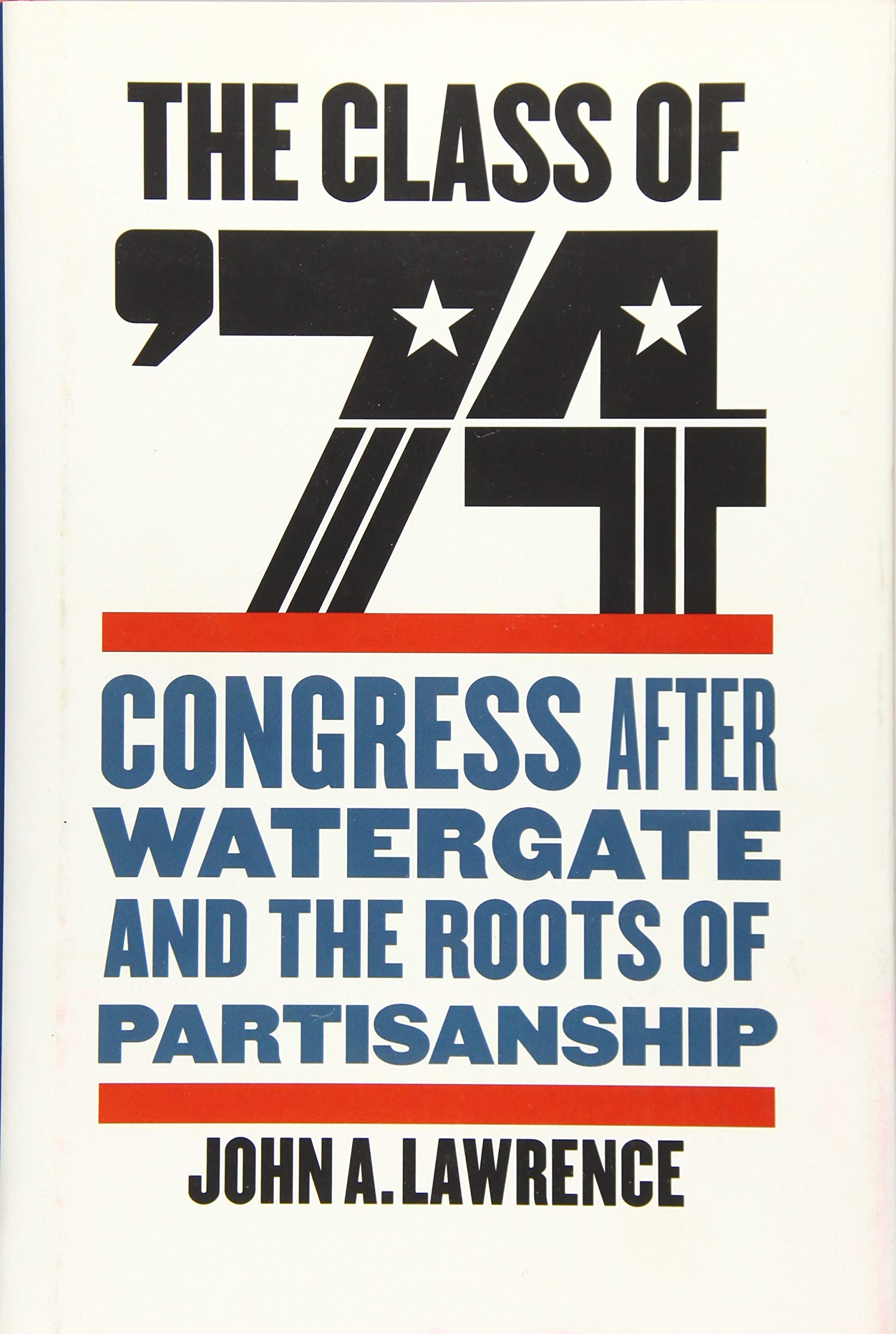
November 5, 1974: The "Watergate Babies"

November 5, 1974: Elections for the Congress of the United States are held, the 1st major election after the resignation of President Richard Nixon as a result of the Watergate scandal, and his pardon by the new President, Gerald Ford.

Voters punished the Republican Party of Nixon and Ford: The Democratic Party picked up 5 Senate seats and 49 seats in the House of Representatives – a House pickup it has never again managed.

Among the new Representatives:

* George Miller of California, who served 40 years, eventually Chairman of the Natural Resources Committee and the Education and Labor Committee.

* Norman Mineta of California, who served 21 years, eventually Chairman of the Transportation Committee, and later Secretary of Transportation. The airport in San Jose, of which he had been Mayor, was named for him.

* Henry Waxman of California, who served 40 years, eventually the Chairman of the Energy Committee, but most famous for his 1990s hearings that helped break the tobacco lobby's hold on Congress.

* Tim Wirth of Colorado, who served 12 years, then won a term in the Senate.

* Chris Dodd of Connecticut, who served 6 years, then won 5 terms in the Senate. His father, Tom Dodd, also served the State in both houses of Congress.

* Larry McDonald of Georgia, who served 8 years, becoming perhaps the most conservative of these Democrats, before being one of the victims of the shooting down of Korean Air Lines Flight 007 by the Soviet Union in 1983.

* Paul Simon of Illinois, who served 10 years, then won 2 terms in the Senate. He ran for President in 1988, but only won his home State's Primary, getting him 74 of his 115 Delegates. He released those Delegates before the Democratic Convention.

* Tom Harkin of Iowa, who served 10 years, then won 5 terms in the Senate. He ran for President in 1992, winning 49 Delegates in the Iowa Caucuses, because nobody wanted to challenge him in his home State, but won only 6 more the rest of the way.

* Paul Tsongas of Massachusetts, who served 4 years, then won a term in the Senate. He ran for President in 1992, winning 209 Delegates, including the Primaries in New Hampshire, Maryland, Massachusetts and Rhode Island, and finishing 3rd at the Democratic Convention.

* James Blanchard of Michigan, who served 8 years, then won 2 terms as Governor, and served as U.S. Ambassador to Canada.

* Jim Oberstar of Minnesota, who served 36 years, becoming the longest-serving Congressman in his State's history, eventually chairing the Transportation and Infrastructure Committee.

* Max Baucus of Montana, who served 4 years, before winning 6 terms in the Senate, and serving as U.S. Ambassador to China.

* Jim Florio of New Jersey, who served 15 years, before being elected Governor.

* William J. Hughes of New Jersey, who served 20 years.

* Helen Stevenson Meyner of New Jersey, who served 6 years. She was the wife of former Governor Robert Meyner, and a cousin of Democratic Party icon Adlai Stevenson.

* Stephen Neal of North Carolina, who served 20 years. He won his 1st term by defeating a Republican incumbent, Wilmer "Vinegar Bend" Mizell, a former major league pitcher.

* John Jenrette of South Carolina, who served 6 years, before being defeated due to his involvement in the ABSCAM scandal, serving a year in prison.

* Harold Ford of Tennessee, who served 22 years, becoming the 1st black person elected to Congress from his home State.

* Bob Krueger of Texas, who served 4 years, later briefly serving as a U.S. Senator, the last Democrat to do so as of the 2022 election. He later served as U.S. Ambassador to the African nations of Burundi and Botswana.

There were 13 Republican freshmen who bucked the trend and were elected, either through defeating a Democratic incumbent or winning an open seat. One was Henry Hyde of Illinois, who became famous for the Hyde Amendment is a legislative provision barring the use of federal funds to pay for abortion, except to save the life of the woman, or if the pregnancy arises from incest or rape. He later chaired the Judiciary Committee, and, despite having been himself exposed as an adulterer and a homewrecker, led the House's effort to impeach President Bill Clinton in 1998-99.

The Republican freshmen also included Chuck Grassley of Iowa, who served 6 years, before being elected to the Senate, where, as of the 2022 election, he still serves; Millicent Fenwick of New Jersey, who served 8 years, and served as the basis for the character of Lacey Davenport in the comic strip Doonesbury; Larry Pressler of South Dakota, who served 4 years, before winning 3 terms in the Senate; and Bob Kasten of Wisconsin, who served 4 years, before winning 2 terms in the Senate.

And then there was Jim Jeffords of Vermont. He 14 years in the House and 18 years in the Senate. In 2001, angry at his Party, he left the Republicans and became an independent, caucusing with the Democrats, throwing control in the Senate to them.

Speaking of Bill Clinton: He also made his 1st run for public office in 1974, for the House, but losing, was Bill Clinton, challenging John Paul Hammerschmidt in the 3rd District of Arkansas. Two years later, Clinton was elected the State's Attorney General; 2 years after that, Governor.

There were 11 new Senators elected. The 8 Democrats were Dale Bumpers of Arkansas, Gary Hart of Colorado, Richard Stone of Florida, John Culver of Iowa, Wendell Ford of Kentucky, Robert Morgan of North Carolina, John Glenn of Ohio, and Patrick Leahy of Vermont. The 3 Republicans were Paul Laxalt of Nevada, Louis Wyman of New Hampshire, and Jake Garn of Utah.

Glenn was the 1st American to orbit the earth. Garn became the 1st sitting Senator to fly in space -- and Glenn became the 2nd. Glenn and Hart ran for President in 1984, and Hart tried again in 1988.

Many of the freshman Congressmen were young, and rode the issue of Watergate scandal to victory. So the media dubbed them the "Watergate Babies."

Some of the new House members made challenges to Chairmen of the various Committees, who held those posts due to seniority. Some of them had grown stale and/or conservative in office, and deserved something of a shake-up.

But those Chairmen had the loyalty of many of their colleagues, and that led to many of the insurgents blowing their chances at gaining favor with those established members.

But the writing was on the wall: Those Chairmen began to retire and/or die in office. Those Class of '74 Congressmen who survived the Republican-heavy elections of 1978 and 1980 went on to become leaders of Congress themselves. The last remainder of them was Senator Patrick Leahy of Vermont, the President Pro Tempore of the Senate, retiring for the election of 2022.
Patrick Leahy

Several States also elected Governors in 1974. With Ronald Reagan, elected in 1966 by defeating incumbent Edmund G. "Pat" Brown, not running for a 3rd term, California elected Pat's son, Edmund G. "Jerry" Brown.
Jerry Brown

He was re-elected in 1978, but hurt his reputation with some left-leaning stances, and a personality that led Tonight Show host Johnny Carson, operating out of the Los Angeles suburb of Burbank, to nickname him "Governor Moonbeam."

Brown didn't help himself at home with his ill-advised, ill-fated runs for President in 1976 and 1980. As a result, the Republicans won 4 straight gubernatorial elections, including a defeat of his sister, State Treasurer Kathleen Brown, by incumbent Pete Wilson in 1994.

But Jerry made a comeback. With California enacting term limits, limiting State officials to 2 terms, he was twice elected Mayor of Oakland, was twice elected State Attorney General, and was returned to the Governorship in 2010 and 2014. Having previously been the youngest Governor in California history, he had become the oldest.

Also elected in 1974 was Congresswoman Ella Grasso, as the new Governor of Connecticut. She was the 1st woman elected Governor of any State without having ascended to the job on the death of the previous Governor, or having been the wife of a Governor.
She was instrumental in building (and, after a roof collapse, the restoring) the Hartford Civic Center (now the XL Center) and in bringing the Boston-based New England Whalers to Hartford, and would be re-elected in 1978, but developed cancer, and died in 1981.

*

November 5, 1974 was, like all modern Election Days in America, a Tuesday. Baseball season was over. Football was in midweek. There were 2 games in the NBA. The New York Knicks beat the Houston Rockets, 106-93 at the Hofheinz Pavilion (now the Fertitta Center) in Houston. And the Kansas City-Omaha Kings, playing 1 of their 3 "home games" a year at the Omaha Civic Auditorium in Nebraska, beat the expansion New Orleans Jazz, 115-97.

There was 1 game in the American Basketball Association: The Denver Nuggets beat the Utah Stars, 145-101 at the Denver Auditorium Arena.

There were 5 games in the NHL:

* The New York Rangers lost to the Vancouver Canucks, 2-1 at the Pacific Coliseum in Vancouver.

* The New York Islanders and the Philadelphia Flyers played to a tie, 4-4 at the Nassau Coliseum.

* The Boston Bruins and the Buffalo Sabres played to a tie, 2-2 at the Boston Garden.

* The Los Angeles Kings beat the St. Louis Blues, 4-3 at the St. Louis Arena.

* And the Pittsburgh Penguins beat the Kansas City Scouts, 5-3 at the Kemper Arena (now the Hy-Vee Arena) in Kansas City.

And there were 5 games in the World Hockey Association:

* The Toronto Toros beat the Michigan Stags, 5-2 at Cobo Hall (now Huntington Place) in Detroit.

* The Phoenix Roadrunners beat the Indianapolis Racers, 3-0 at the Market Square Arena in Indianapolis.

* The Vancouver Blazers beat the Chicago Cougars, 5-4 at the International Amphitheatre in Chicago.

* The Winnipeg Jets beat the Minnesota Fighting Saints, 6-4 at the Winnipeg Arena.

* And the Houston Aeros beat the San Diego Mariners, 9-3 at the Sam Houston Coliseum in Houston.

Friday, November 4, 2022

November 4, 1958: The Anti-Ike Landslide?

November 4, 1958: Election Day. The Democratic Party, already in control of both houses of Congress, gain 49 seats in the House of Representatives, a total they have matched only once since, with the "Watergate Babies" Class of '74. They gain 12 seats in the Senate, a total they have matched only once since, in 1986.

Among the new Senators elected were some names that would get bigger as the years went by. They included these Democrats: Eugene McCarthy of Minnesota, Edmund Muskie of Maine, Robert Byrd of West Virginia, Thomas Dodd of Connecticut, Philip Hart of Michigan, and Harrison Williams of New Jersey. On the Republican side: Barry Goldwater of Arizona, Hugh Scott of Pennsylvania, and Ken Keating of New York.

Muskie had been his State's Governor, while most of the others were "promoted" from the House. Byrd died in 2010, making him not only the last 1958 winner still serving, but the longest-serving Senator in history.

Among the new Democratic Governors elected: Edmund G. "Pat" Brown of California, J. Millard Tawes of Maryland, Michael DiSalle of Ohio, David L. Lawrence of Pennsylvania, Ernest "Fritz" Hollings of South Carolina, and Gaylord Nelson of Wisconsin. On the Republican side, Nelson Rockefeller was elected in New York, defeating Democratic incumbent Averell Harriman; and Mark Hatfield in Oregon. Hollins, Nelson and Hatfield would later be elected to the Senate.

Another Democratic Governor elected was John Patterson of Alabama, who essentially won by winning the Primary over George Wallace, by running an outright racist campaign. Wallace swore he would never be "out-(N-word)ed again." Since the State Constitution then forbid Governors from succeeding themselves, Patterson didn't run again in 1962, and Wallace did, and, for want of a better choice of words, kept his word, and won.

This election is a hard one to figure out. President Dwight D. Eisenhower, a Republican, was personally popular, but his Party was not. There was a recession, but it had ended earlier in the year, and it wasn't as severe as those that would follow in 1973-76, 1981-83, 1990-93, 2001-02, 2007-10 and 2020-21.

Some people blamed U.S.-Soviet tensions, but 1958 wasn't an especially "cold" year in the Cold War. And the 2 biggest scandals to come out of the Eisenhower Administration -- the one surrounding his White House Chief of Staff, Sherman Adams, and the U-2 "spy plane" incident -- were both yet to come. Both of those may have helped the Democrats win the Presidency in 1960, but the Republicans actually gained Congressional seats at the same time.

During the recession, the unemployment rate rose from 3.7 percent in March 1957 to a peak of 7.5 percent in July 1958. In addition, industrial production declined by approximately 14 percent, and real Gross Domestic Project contracted by 3.7 percent. As a result, the stock market experienced significant losses, with the Standard & Poor 500 index falling by more than 20 percent.

The government extended unemployment benefits to those who lost their jobs during the recession. In September 1958, Congress passed the Temporary Unemployment Compensation Act, providing additional financial assistance to unemployed workers for 13 weeks.

Since Congress was already controlled by the Democrats, maybe the 1958 election wasn't so much a punishment of "Ike" as it was a reward to the Democrats.

The "Baby Boom" can't be credited, or blamed: The voting age was still 21, so the youngest voters would have been born in 1937, during the Depression. So maybe this election was the result of a "Baby Bust," as fewer children who would have grown up to vote Republican were born.

Who knows: Maybe the people were just sick of a Republican President playing so much golf.

*

November 4, 1958 was, like all modern American Election Days, a Tuesday. Baseball season was over. Football was in midweek. There were no games scheduled in the NBA.

There was 1 game played in the NHL: The Chicago Black Hawks beat the New York Rangers, 4-2 at the Chicago Stadium.

Thursday, November 3, 2022

November 3, 1998: The Voters Tell the Republicans to Leave President Clinton Alone

November 3, 1998: The Republican Party was counting on this Election Day, to send a message to the leader of the Democratic Party, President Bill Clinton: Resign, because the people are against you. If you don't, we will impeach you in the U.S. House of Representatives, and convict you in a trial in the U.S. Senate.

There was reason to believe it would work out that way. Clinton had fallen into an ugly scandal, due to how he covered up his extramarital affair with former White House intern Monica Lewinsky. They had spent almost the entire calendar year telling the country how the President was "immoral," while they, the Republicans -- the Party of Watergate and Iran-Contra -- stood for the Constitution of the United States and "the rule of law."

In addition, this was Year 6 of Clinton's Presidency. Off-year Congressional elections are usually bad for the Party in the White House, and Year 6 elections have, historically, been even worse than Year 2 elections. In the 20th Century, Year 6 elections were bad for Franklin D. Roosevelt in 1938, for the Administration of FDR and Harry Truman in 1946 if you count FDR's 3rd election in 1940 as a restart, For Truman in 1950, for Dwight D. Eisenhower in 1958, for the Administration of John F. Kennedy and Lyndon B. Johnson in 1966, for the Administration of Richard Nixon and Gerald Ford in 1974, and for Ronald Reagan in 1986.

So the idea that the Republicans, already in control of both houses of Congress, would increase their numbers at such a level to make it overwhelming for Clinton was strong.

Instead, the voters heard Clinton's self-defense -- claiming that it was a private matter, that no laws were broken, and that it was nobody's business but his and his family's -- and saw that Clinton was actually doing a very good job as President, and bucked the Year 6 trend. The Democrats actually gained 5 seats in the House, and broke even in the Senate.

Among the new Senators elected were Democrats Chuck Schumer of New York (a "promoted" Congressman who beat 3-term incumbent "Senator Pothole" Al D'Amato), Evan Bayh of Indiana (the outgoing Governor and the son of former Senator Birch Bayh) and John Edwards of North Carolina; and Republicans Jim Bunning of Kentucky (a promoted Congressman and a pitcher in the Baseball Hall of Fame) and George Voinovich of Ohio (a former Governor and Mayor of Cleveland).

This was a stunning result, and it sent a message not to the Democrats in general, or to Clinton in particular, but to the Republicans: The President is doing a great job, and his private life is just that, private, so leave him alone.

Did the Republicans listen? No: They doubled down, and impeached him, anyway. But they didn't come close to convicting him in the Senate, and he served out his term.

One other note: In Wisconsin, Republican Paul Ryan became the 1st person born after I was elected to Congress. The Republicans nominated him for Vice President under Mitt Romney in 2012, and in no way can Romney's loss be blamed on Ryan. He was Speaker of the House in the 2015-16 and 2017-18 terms, before resigning.

*

November 3, 1998 was, like all modern American Election Days, a Tuesday. Baseball was out of season. Football was in midweek. And the NBA team owners had locked the players out, so the new season was not able to start on time.

There were 4 games in the NHL:

* The New Jersey Devils beat their arch-rivals, the New York Rangers, 3-1 at the Continental Airlines Arena at the Meadowlands.

* The Buffalo Sabres beat the Boston Bruins, 4-2 at the Marine Midland Arena (now the KeyBank Center) in Buffalo.

* The Philadelphia Flyers and the Pittsburgh Penguins, intra-State rivals, played to a tie, 4-4 at the Civic Arena in Pittsburgh.

* And the Calgary Flames beat the Detroit Red Wings, 5-2 at the Joe Louis Arena in Detroit.

Monday, October 3, 2022

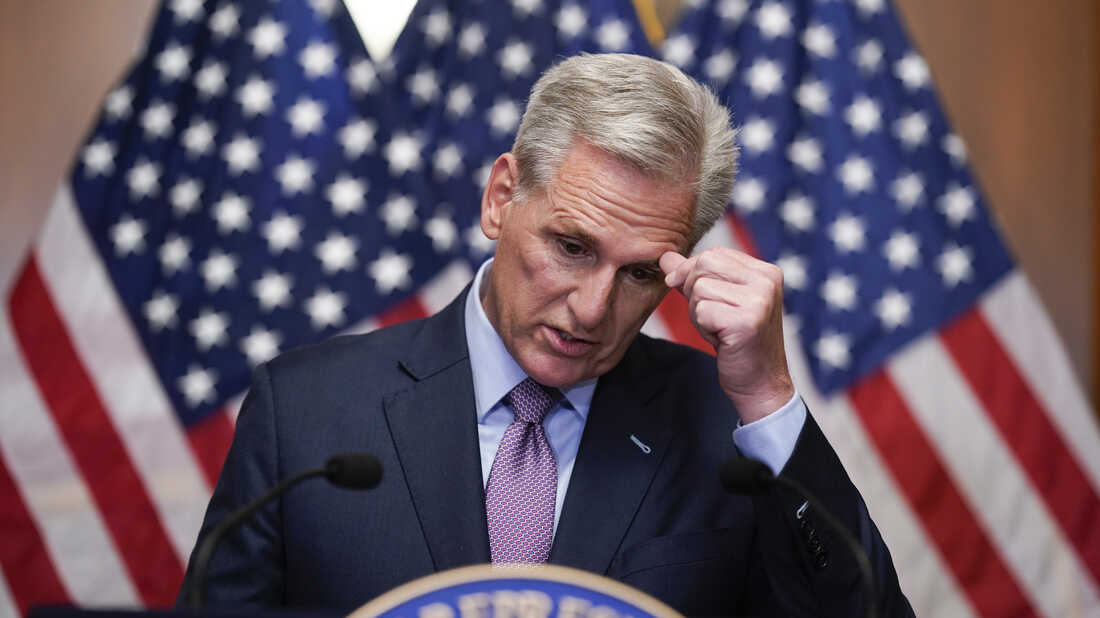
October 3, 2023: The Ousting of Speaker Kevin McCarthy

October 3, 2023: Kevin McCarthy, a Republican representing the 20th District of California, including his hometown of Bakersfield, is removed from the office of the Speaker of the U.S. House of Representatives. It is the 1st time a Speaker had ever been removed by his own caucus, and only the 3rd time it had ever been attempted.

NOTE: While these entries are dated 2022, I decided to backdate the posting dates of events from 2023 onward to the same date in 2022.

The Republicans had gained a slim majority in the Congressional elections of 2022, seemingly elevating McCarthy to his dream job. First elected to Congress in 2006, and joining the Republicans' House Leadership after the 2010 elections, and was in line for the office.

But there were 19 Republicans in the House, all of them beholden to rejected former President Donald Trump and deniers of the 2020 Presidential election result, who had said they would never vote for McCarthy for Speaker under any circumstances. Not that they would cross over and vote for the Democratic Party's new Leader, Hakeem Jeffries, a black man from Brooklyn; but that they would try to elect one of their own.

Since they didn't have the numbers to do that, they decided to extract concessions from McCarthy: Choice places on House Committees, promises to do witch-hunt investigations of President Joe Biden and other Democrats, and so on.

And so, on January 3, 2023, when the House gathered to elect its Speaker, all the Democrats voted for Jeffries, and not all the Republicans voted for McCarthy. Jeffries finished 1st, but not with a majority. McCarthy finished 1st among Republicans, but not with a majority. A 2nd ballot was conducted that day, with the same result.

Many observers, including myself, remembered an episode of the NBC drama The West Wing, set at a deadlocked Democratic Convention, with political operative Leo McGarry (played by John Spencer) telling the campaign managers of the 3 remaining Presidential candidates, none of whose bosses could get a majority of delegates but none would give in, "One night of this is great theater. Two, and we look like idiots."

The ballots kept coming, and McCarthy still couldn't get a majority. So he began "giving away the store." He made concession after concession to the "Never Kevins," including the scrapping of the rule that said that it would take 5 Representatives to file a motion to remove the Speaker: Now, it would take only 1. In other words, any single member of the House, including some of the craziest right-wingers ever to sit in it, had the chance to extort McCarthy.

On the 13th ballot, he was still 5 votes short. McCarthy went over to talk to 1 of the last 5, Matt Gaetz of Florida, a man under criminal investigation for child trafficking -- no joke -- and Gaetz just pointed his finger at McCarthy, as if to lecture him.
Matt Gaetz

At this point, Mike Rogers of Alabama couldn't take it any longer, and walked over toward Gaetz, and was physically restrained by Richard Hudson of North Carolina. A 14th ballot was taken, and still, Gaetz wouldn't give in. Meanwhile, every time a ballot began, and a Democrat nominated Jeffries, a chant of "Ha-keem! Ha-keem! Ha-keem!" went up.

Finally, shortly after Midnight on January 7, a 15th ballot was held. Gaetz and the last 5 holdouts voted "Present," rather than for any particular challenger. That meant that McCarthy only had to get a majority of those who actually voted for a candidate, and he now had it, 215-214, instead of the 218 he thought he would need.

No Speaker has ever had so little leverage. Ali Vitali of MSNBC said that, now, every single Republican member can hold whatever McCarthy wants to do hostage for their own purposes. One Facebook poster I saw wrote, "Kevin McCarthy sold his soul and only got a t-shirt that says I'VE BEEN TO MAR-A-LAGO." (Trump's Palm Beach, Florida estate.)

And then, January 10, the House Republicans, "led" by McCarthy, voted to gut the Office of Congressional Ethics. Now, who's trying to "defund the police"?

The Republicans had campaigned on reducing inflation, reducing crime, and increasing border protection. They didn't produce bills to do any of those things. They spent the entire year running investigations of Hunter Biden, the President's son, who -- unlike Donald Trump Jr., Eric Trump, Ivanka Trump and her husband, Jared Kushner -- did not work in his father's Administration, and had nothing to do with his father's policies.

Meanwhile, a budget for Fiscal Year 2024 had to pass by September 30. There was nearly a government shutdown. But McCarthy worked with Biden and Senate Majority Leader Chuck Schumer of New York, and averted it. Somehow, McCarthy got enough Republicans to join with the Democrats that Jeffries put together to add up to 218 votes. The price, though, was no new funding for Ukraine in its war of defense against Russia, which the Republicans, still the party of Trump, still owned by Russia, wouldn't have voted for under any circumstances.

It was too much for Gaetz, who wanted absolutely no deals with Biden and the Democrats. On October 3, he filed a motion to vacate the Speaker's office, and it passed. There were some suggestions that the Democrats try to "save McCarthy," for the fear that the next Republican Speaker would be even worse. Instead, the Democrats rolled the dice, thinking that McCarthy didn't deserve to be saved, and that, maybe, just maybe, enough Republicans who weren't beholden to Trump might cross over and vote for Jeffries as the next Speaker. None voted to sustain McCarthy.

The joke was too easy, and came quickly: "If you turn up your base too loud, it can destroy your speaker."

McCarthy was Speaker for just under 9 months -- almost the average length of a human pregnancy. And yet, these Republicans, who proudly declare themselves to be "pro-life," gave the McCarthy Speakership a "late-term abortion."

Patrick McHenry of North Carolina was appointed Speaker Pro Tempore, to serve until a Speaker could be elected for the rest of the term, until January 3, 2025. His first action was to kick Speaker Emerita Nancy Pelosi of California out of the office that McCarthy had left for her -- while Pelosi was all the way across the country, attending the funeral of her fellow San Franciscan, Senator Dianne Feinstein. It was an incredibly petty move, the kind that Trump probably loved.

It took 22 days for the Republicans to agree on a new Speaker. Steve Scalise of Louisiana, who voted to de-certify the 2020 Presidential election, couldn't get 217 votes. Nor could Jim Jordan of Ohio, one of the leaders of the January 6, 2021 Insurrection, and a former wrestling coach at Ohio State University who looked the other way on evidence of abuse in his program. Nor could Tom Emmer of Minnesota, who, during the 2022 Congressional election, posted a video on Twitter that showed him firing a fully automatic machine gun with the caption "#FIREPELOSI."

Finally, on October 25, they elected James Michael "Mike" Johnson of Louisiana, 51. He also supported overturning the 2020 Presidential election, and had a record as a "Christian nationalist," making him an extremist on issues relating to women, gay people and racial minorities. In other words, by refusing to "save" McCarthy, the Democrats allowed the next Speaker to be somebody noticeably worse. As the old saying goes, the Democratic Party never misses an opportunity to miss an opportunity.

Nevertheless, in 2024, Johnson did work with Biden and Schumer to get some things done to help the country. This angered some of the Republican hardliners, including Marjorie Taylor Greene of Georgia, who filed a motion to vacate the Speaker's chair. This time, however, Johnson, perhaps smarter than McCarthy, found enough common ground with Jeffries that Jeffries was willing to "save him." After all, it's not like Jeffries himself was going to become Speaker -- not without another full Congressional election, anyway.

*

October 3, 2023 was a Tuesday. Football was in midweek. The NBA and NHL seasons hadn't started yet. But the Major League Baseball Playoffs got underway, with all 4 Wild Card Series starting:

* In the American League, the Minnesota Twins beat the Toronto Blue Jays, 3-1 at Target Field in Minneapolis. This was the 1st postseason game won by the Twins in 19 years. The next day, they won again, taking the best-2-out-of-3 series, their 1st postseason series win in 21 years.

* The Texas Rangers beat the Tampa Bay Rays, 4-0 at Tropicana Field in St. Petersburg, Florida. Attendance: 19,704. It was the lowest attendance for an MLB postseason game in 104 years, since Game 7 of the 1919 World Series.

Rays fans didn't show up in their stupid little stadium, but they did show up online, claiming that it was in the middle of a workday. Well, so was the Twins' game, and they were in cold Minnesota, and their attendance was 38,450, a full house and double the Rays' attendance. The next day, the Rangers completed the sweep, and the Rays got 20,198 fans.

* In the National League, the Philadelphia Phillies beat the Miami Marlins, 4-1 at Citizens Bank Park in Philadlephia.

* And the Arizona Diamondbacks beat the Milwaukee Brewers, 6-3 at American Family Field in Milwaukee.

December 31, 1999 & January 1, 2000: The Millennium

December 31, 1999:  The Millennium arrives. The people of planet Earth survived. At a terrible cost. But we hadn't destroyed ourselves. ...