Showing posts with label watergate. Show all posts

Thursday, November 17, 2022

November 17, 1973: President Richard Nixon Says, "I Am Not a Crook"

November 17, 1973: President Richard Nixon gives a press conference at the hotel where he's staying on vacation, the Walt Disney World Contemporary Resort, outside the famous theme park, near Orlando, Florida.

He was trying to get away from the troubles of the Watergate scandal, and it wasn't working. On October 20, he had taken the desperate act of firing Archibald Cox, the Special Prosecutor investigating the scandal, making him look like he had something he really, really wanted to hide. In the process, his Attorney General, Elliot Richardson, refused to do it, and resigned; and his Deputy Attorney General, William Ruckelshaus, also refused to do it, and Nixon fired him. So the next man down, the Solicitor General, Robert Bork, did it. It became known as "the Saturday Night Massacre."

Calls for Nixon's impeachment and removal were getting louder and more frequent. And now, the unthinkable was possible: The next President would have been of the other party. Because Nixon's Vice President, Spiro Agnew, had to resign the office on October 10, due to a conviction for a tax issue. (That's the thing that always gets me: Nixon's Veep had to resign, and it had nothing to do with Watergate.)

With the Vice Presidency vacant, the next man in line was the Speaker of the House of Representatives, Carl Albert of Oklahoma, a Democrat. Nixon's choice to be the new Vice President, fellow Republican Gerald Ford, longtime Representative from Michigan, had yet to be confirmed by either house of Congress. So if Nixon got impeached and removed, or resigned, or died, Albert would have been President. (Albert was enough of a statesman to refuse to let that happen, and expedited Ford's confirmation through Congress. He was sworn in on December 6.)

And Watergate wasn't Nixon's only scandal. As with Agnew, there were questions about his income taxes. And there was a scandal involving campaign contributions from Robert Vesco, who got them to the President through his nephew, Donald Nixon. Then there was Nixon's apparent intervention in the Department of Justice's approval of the merger between ITT Corporation and Hartford Insurance.

All of this reminded people of 1952, when Nixon, then a U.S. Senator from California, was nominated for Vice President at the Republican Convention, and became the subject of a scandal over a "slush fund" that skirted the campaign finance laws of the time. It led to a half-hour TV ad bought by the Republican National Committee in which Nixon defended his financial status, admitting a gift of a dog the family named Checkers.

The speech probably saved his place on the ticket, and General Dwight D. Eisenhower stuck by him. Eisenhower would have won, anyway, but it kept Nixon as a rising star, leading to his losing a close election for President in 1960, winning a close election in 1968, and his landslide re-election in 1972.

These 1973 scandals were a lot more serious than what was alleged in 1952, and, as he had 21 years earlier, Nixon seemed to be angrier at accusations about his personal integrity than those about his conduct of the Presidency. He said:

Let me just say this, and I want to say this to the television audience: I made my mistakes, but in all of my years of public life, I have never profited, never profited from public service. I have earned every cent. And in all of my years of public life, I have never obstructed justice.

And I think, too, that I could say that in my years of public life, that I welcome this kind of examination! Because people have got to know whether or not their President is a crook! Well, I am not a crook. I've earned everything I've got!

On the video, it sounds like he's saying, "I'm not a crook!" But "I am not a crook" is how the line becomes remembered.

And, technically speaking, he wasn't a "crook." There was never enough evidence to charge him with anything in either the ITT scandal or Vesco's misdeeds. Nixon's crimes ended up being, as stated in the Articles of Impeachment that the House of Representatives drew up on July 27, 1974, "Obstruction of Justice," "Abuse of Power" and "Contempt of Congress."

No, Nixon was not a "crook," in the traditional sense of that word. He was an arch-criminal. Agnew, forced out over charges of bribery and tax evasion? He met the definition of a crook.

Nixon resigned the Presidency on August 9, 1974, because he'd been told by the Republican leaders of Congress that he could not avoid impeachment by the House and removal by the Senate. Vice President Ford became President, and pardoned Nixon for any crimes he may have committed while President.

*

November 17, 1973 was a Saturday. It was a day for college football:

* Number 1 Ohio State beat Iowa, 55-13 at Ohio Stadium in Columbus.

* Number 2 Alabama beat the University of Miami, 43-13 at Denny Stadium (now named Bryant-Denny Stadium) in Tuscaloosa, Alabama.

* Number 3 Oklahoma beat Number 18 Kansas, 48-20 at Memorial Stadium in Norman, Oklahoma. Oklahoma finished 1st in the Big Eight Conference, but were on probation, and were thus ineligible for the Conference and National Championships, and for any bowl bids.

* Number 4 Michigan beat Purdue, 34-9 at Ross-Ade Stadium in West Lafayette, Indiana. Ohio State and Michigan played each other to a tie the next Saturday, thus forging an unbreakable tie for the Big Ten title. The Conference awarded Ohio State their Rose Bowl bid, which produced a tremendous controversy.

* Number 5 Notre Dame did not play on the day. They rose to Number 3 before the bowls, due to Ohio State's tie. They beat Alabama in the Sugar Bowl, and were awarded the National Championship.

* Number 6 Penn State beat Ohio University -- definitely not Ohio State -- 49-10 at Beaver Stadium in State College, Pennsylvania. They beat Number 13 Louisiana State in the Orange Bowl, and ended the season ranked Number 5, despite having gone 12-0 and featuring the Heisman Trophy winner as the top college football player of the year, running back John Cappelletti.

It didn't help that they had a weak schedule, including all 3 service academies. Air Force finished 6-4 (including beating Arizona on November 17), but Army went 0-10 (losing to the University of Pittsburgh) and Navy went 4-7 (losing to Georgia Tech). Throw in non-conference games against MAC team Ohio, 0-10 Iowa, and 2-9 Syracuse, and it was difficult to take Joe Paterno's Nittany Lions seriously as potential National Champions.

* Number 9 USC beat Washington, 42-19 at Husky Stadium in Seattle. USC won the Pacific-Eight title, but lost to Ohio State in the Rose Bowl.

* Number 10 Nebraska beat Kansas State, 50-21 at KSU Stadium (now Snyder Family Memorial Stadium) in Manhattan, Kansas.

* Number 11 Texas beat Texas Christian, 52-7 at Memorial Stadium in Austin, Texas. Texas won the Southwest Conference title, but lost to Nebraska in the Cotton Bowl.

* In New York City, Columbia lost to Penn, 42-8 at Baker Field.

* In New Jersey, Rutgers beat Holy Cross, 27-7 at Fitton Field in Worcester, Massachusetts.

* And Princeton lost to Yale, 30-13 at Palmer Stadium in Princeton.

There were 7 games played in the NBA that day:

* The New York Knicks beat the Milwaukee Bucks, 100-93 at Madison Square Garden. Kareem Abdul-Jabbar scored 24 points for the Bucks, but Dave DeBusschere scored 26 for the Knicks.

* The Detroit Pistons beat the Buffalo Braves, 98-94 at the Buffalo Memorial Auditorium.

* The Capital Bullets beat the Atlanta Hawks, 115-109 at The Omni in Atlanta. Elvin Hayes scored 43 points. (This was the former Baltimore Bullets' 1st season in the D.C. area, and they renamed themselves the Washington Bullets for the 1974-75 season, and then the Washington Wizards for 1997-98.)

* The Boston Celtics beat the Kansas City-Omaha Kings, 123-110 at the Kansas City Municipal Auditorium.

* The Portland Trail Blazers beat the Houston Rockets, 96-87 at the Hofheinz Pavilion (now the Fertitta Center) in Houston.

* The Los Angeles Lakers beat the Phoenix Suns, 130-110 at the Arizona Veterans Memorial Coliseum in Phoenix.

* And the Philadelphia 76ers beat the Golden State Warriors, 109-106 at the Oakland Coliseum Arena.

There were 5 games played in the ABA:

* The New York Nets beat the Virginia Squires, 115-97 at the Scope in Norfolk.

* The Carolina Cougars beat the Utah Stars, 125-97 at the Greensboro Coliseum.

* The Kentucky Colonels beat the Indiana Pacers, 100-96 at Freedom Hall in Louisville.

* The San Antonio Spurs beat the San Diego Conquistadors, 118-96 at the HemisFair Arena in San Antonio.

* And the Denver Rockets beat the Memphis Tams, 112-102 at the Auditorium Arena in Denver. The Rockets renamed themselves the Denver Nuggets the following season.

There were 7 games played in the NHL:

* The New York Rangers beat the Minnesota North Stars, 6-3 at the Metropolitan Sports Center in the Minneapolis suburb of Bloomington, Minnesota.

* The New York Islanders lost to the St. Louis Blues, 4-0 at the Checkerdome (as the St. Louis Arena was known from 1973 to 1980).

* The Montreal Canadiens beat the Buffalo Sabres, 8-5 at the Montreal Forum.

* The Boston Bruins beat the Detroit Red Wings, 8-0 at the Boston Garden.

* The Chicago Black Hawks beat the Pittsburgh Penguins, 4-1 at the Civic Arena in Pittsburgh.

* The Toronto Maple Leafs beat the Los Angeles Kings, 4-3 at The Forum outside Los Angeles in Inglewood, California.

* And the Philadelphia Flyers and the Vancouver Canucks played to a tie, 2-2 at the Pacific Coliseum in Vancouver.

And there were 3 games played in the World Hockey Association:

* The Jersey Knights lost to the Houston Aeros, 3-2 at the Cherry Hill Arena in South Jersey.

* The Quebec Nordiques beat the New England Whalers, 10-4 at the Boston Garden.

* And the Chicago Cougars beat the Toronto Toros, 5-2 at the International Amphitheatre in Chicago.

Also, the football team at what would become my high school, East Brunswick in Middlesex County, New Jersey, closed their season by beating Sayreville, 37-0 at Jay Doyle Field in East Brunswick.

Arsenal, the English soccer team I would one day start supporting, weren't so lucky: They could only manage a 0-0 draw against Chelsea at Highbury in North London.

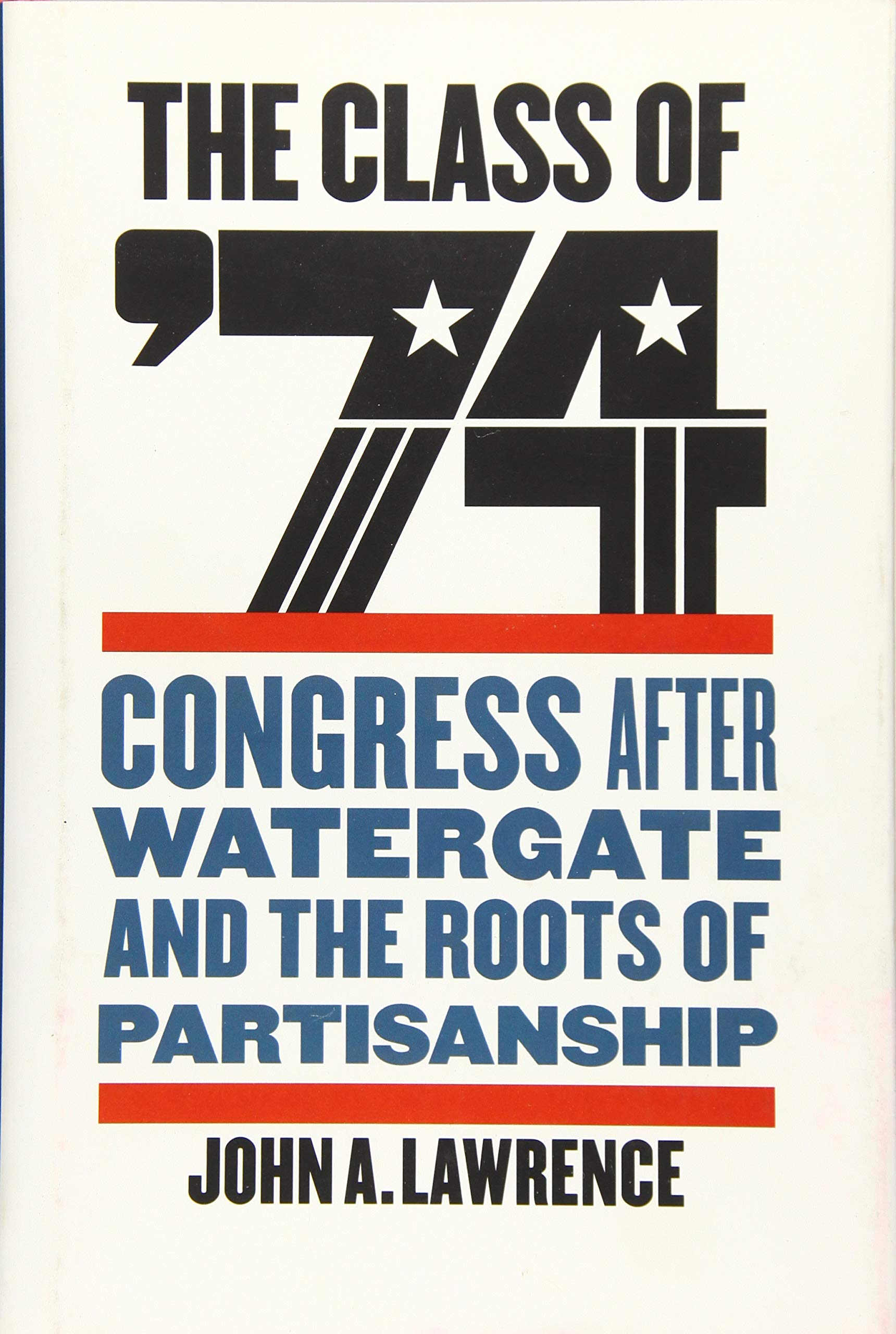
Saturday, November 5, 2022

November 5, 1974: The "Watergate Babies"

November 5, 1974: Elections for the Congress of the United States are held, the 1st major election after the resignation of President Richard Nixon as a result of the Watergate scandal, and his pardon by the new President, Gerald Ford.

Voters punished the Republican Party of Nixon and Ford: The Democratic Party picked up 5 Senate seats and 49 seats in the House of Representatives – a House pickup it has never again managed.

Among the new Representatives:

* George Miller of California, who served 40 years, eventually Chairman of the Natural Resources Committee and the Education and Labor Committee.

* Norman Mineta of California, who served 21 years, eventually Chairman of the Transportation Committee, and later Secretary of Transportation. The airport in San Jose, of which he had been Mayor, was named for him.

* Henry Waxman of California, who served 40 years, eventually the Chairman of the Energy Committee, but most famous for his 1990s hearings that helped break the tobacco lobby's hold on Congress.

* Tim Wirth of Colorado, who served 12 years, then won a term in the Senate.

* Chris Dodd of Connecticut, who served 6 years, then won 5 terms in the Senate. His father, Tom Dodd, also served the State in both houses of Congress.

* Larry McDonald of Georgia, who served 8 years, becoming perhaps the most conservative of these Democrats, before being one of the victims of the shooting down of Korean Air Lines Flight 007 by the Soviet Union in 1983.

* Paul Simon of Illinois, who served 10 years, then won 2 terms in the Senate. He ran for President in 1988, but only won his home State's Primary, getting him 74 of his 115 Delegates. He released those Delegates before the Democratic Convention.

* Tom Harkin of Iowa, who served 10 years, then won 5 terms in the Senate. He ran for President in 1992, winning 49 Delegates in the Iowa Caucuses, because nobody wanted to challenge him in his home State, but won only 6 more the rest of the way.

* Paul Tsongas of Massachusetts, who served 4 years, then won a term in the Senate. He ran for President in 1992, winning 209 Delegates, including the Primaries in New Hampshire, Maryland, Massachusetts and Rhode Island, and finishing 3rd at the Democratic Convention.

* James Blanchard of Michigan, who served 8 years, then won 2 terms as Governor, and served as U.S. Ambassador to Canada.

* Jim Oberstar of Minnesota, who served 36 years, becoming the longest-serving Congressman in his State's history, eventually chairing the Transportation and Infrastructure Committee.

* Max Baucus of Montana, who served 4 years, before winning 6 terms in the Senate, and serving as U.S. Ambassador to China.

* Jim Florio of New Jersey, who served 15 years, before being elected Governor.

* William J. Hughes of New Jersey, who served 20 years.

* Helen Stevenson Meyner of New Jersey, who served 6 years. She was the wife of former Governor Robert Meyner, and a cousin of Democratic Party icon Adlai Stevenson.

* Stephen Neal of North Carolina, who served 20 years. He won his 1st term by defeating a Republican incumbent, Wilmer "Vinegar Bend" Mizell, a former major league pitcher.

* John Jenrette of South Carolina, who served 6 years, before being defeated due to his involvement in the ABSCAM scandal, serving a year in prison.

* Harold Ford of Tennessee, who served 22 years, becoming the 1st black person elected to Congress from his home State.

* Bob Krueger of Texas, who served 4 years, later briefly serving as a U.S. Senator, the last Democrat to do so as of the 2022 election. He later served as U.S. Ambassador to the African nations of Burundi and Botswana.

There were 13 Republican freshmen who bucked the trend and were elected, either through defeating a Democratic incumbent or winning an open seat. One was Henry Hyde of Illinois, who became famous for the Hyde Amendment is a legislative provision barring the use of federal funds to pay for abortion, except to save the life of the woman, or if the pregnancy arises from incest or rape. He later chaired the Judiciary Committee, and, despite having been himself exposed as an adulterer and a homewrecker, led the House's effort to impeach President Bill Clinton in 1998-99.

The Republican freshmen also included Chuck Grassley of Iowa, who served 6 years, before being elected to the Senate, where, as of the 2022 election, he still serves; Millicent Fenwick of New Jersey, who served 8 years, and served as the basis for the character of Lacey Davenport in the comic strip Doonesbury; Larry Pressler of South Dakota, who served 4 years, before winning 3 terms in the Senate; and Bob Kasten of Wisconsin, who served 4 years, before winning 2 terms in the Senate.

And then there was Jim Jeffords of Vermont. He 14 years in the House and 18 years in the Senate. In 2001, angry at his Party, he left the Republicans and became an independent, caucusing with the Democrats, throwing control in the Senate to them.

Speaking of Bill Clinton: He also made his 1st run for public office in 1974, for the House, but losing, was Bill Clinton, challenging John Paul Hammerschmidt in the 3rd District of Arkansas. Two years later, Clinton was elected the State's Attorney General; 2 years after that, Governor.

There were 11 new Senators elected. The 8 Democrats were Dale Bumpers of Arkansas, Gary Hart of Colorado, Richard Stone of Florida, John Culver of Iowa, Wendell Ford of Kentucky, Robert Morgan of North Carolina, John Glenn of Ohio, and Patrick Leahy of Vermont. The 3 Republicans were Paul Laxalt of Nevada, Louis Wyman of New Hampshire, and Jake Garn of Utah.

Glenn was the 1st American to orbit the earth. Garn became the 1st sitting Senator to fly in space -- and Glenn became the 2nd. Glenn and Hart ran for President in 1984, and Hart tried again in 1988.

Many of the freshman Congressmen were young, and rode the issue of Watergate scandal to victory. So the media dubbed them the "Watergate Babies."

Some of the new House members made challenges to Chairmen of the various Committees, who held those posts due to seniority. Some of them had grown stale and/or conservative in office, and deserved something of a shake-up.

But those Chairmen had the loyalty of many of their colleagues, and that led to many of the insurgents blowing their chances at gaining favor with those established members.

But the writing was on the wall: Those Chairmen began to retire and/or die in office. Those Class of '74 Congressmen who survived the Republican-heavy elections of 1978 and 1980 went on to become leaders of Congress themselves. The last remainder of them was Senator Patrick Leahy of Vermont, the President Pro Tempore of the Senate, retiring for the election of 2022.
Patrick Leahy

Several States also elected Governors in 1974. With Ronald Reagan, elected in 1966 by defeating incumbent Edmund G. "Pat" Brown, not running for a 3rd term, California elected Pat's son, Edmund G. "Jerry" Brown.
Jerry Brown

He was re-elected in 1978, but hurt his reputation with some left-leaning stances, and a personality that led Tonight Show host Johnny Carson, operating out of the Los Angeles suburb of Burbank, to nickname him "Governor Moonbeam."

Brown didn't help himself at home with his ill-advised, ill-fated runs for President in 1976 and 1980. As a result, the Republicans won 4 straight gubernatorial elections, including a defeat of his sister, State Treasurer Kathleen Brown, by incumbent Pete Wilson in 1994.

But Jerry made a comeback. With California enacting term limits, limiting State officials to 2 terms, he was twice elected Mayor of Oakland, was twice elected State Attorney General, and was returned to the Governorship in 2010 and 2014. Having previously been the youngest Governor in California history, he had become the oldest.

Also elected in 1974 was Congresswoman Ella Grasso, as the new Governor of Connecticut. She was the 1st woman elected Governor of any State without having ascended to the job on the death of the previous Governor, or having been the wife of a Governor.
She was instrumental in building (and, after a roof collapse, the restoring) the Hartford Civic Center (now the XL Center) and in bringing the Boston-based New England Whalers to Hartford, and would be re-elected in 1978, but developed cancer, and died in 1981.

*

November 5, 1974 was, like all modern Election Days in America, a Tuesday. Baseball season was over. Football was in midweek. There were 2 games in the NBA. The New York Knicks beat the Houston Rockets, 106-93 at the Hofheinz Pavilion (now the Fertitta Center) in Houston. And the Kansas City-Omaha Kings, playing 1 of their 3 "home games" a year at the Omaha Civic Auditorium in Nebraska, beat the expansion New Orleans Jazz, 115-97.

There was 1 game in the American Basketball Association: The Denver Nuggets beat the Utah Stars, 145-101 at the Denver Auditorium Arena.

There were 5 games in the NHL:

* The New York Rangers lost to the Vancouver Canucks, 2-1 at the Pacific Coliseum in Vancouver.

* The New York Islanders and the Philadelphia Flyers played to a tie, 4-4 at the Nassau Coliseum.

* The Boston Bruins and the Buffalo Sabres played to a tie, 2-2 at the Boston Garden.

* The Los Angeles Kings beat the St. Louis Blues, 4-3 at the St. Louis Arena.

* And the Pittsburgh Penguins beat the Kansas City Scouts, 5-3 at the Kemper Arena (now the Hy-Vee Arena) in Kansas City.

And there were 5 games in the World Hockey Association:

* The Toronto Toros beat the Michigan Stags, 5-2 at Cobo Hall (now Huntington Place) in Detroit.

* The Phoenix Roadrunners beat the Indianapolis Racers, 3-0 at the Market Square Arena in Indianapolis.

* The Vancouver Blazers beat the Chicago Cougars, 5-4 at the International Amphitheatre in Chicago.

* The Winnipeg Jets beat the Minnesota Fighting Saints, 6-4 at the Winnipeg Arena.

* And the Houston Aeros beat the San Diego Mariners, 9-3 at the Sam Houston Coliseum in Houston.

November 5, 1968: Richard Nixon Is Elected President

November 5, 1968: Eight years after losing one of the closest Presidential elections, former Vice President Richard Nixon wins one that's nearly as close. The Republican nominee wins 301 Electoral Votes, with 43.4 percent of the popular vote. With the incumbent, President Lyndon Johnson, having dropped out of the race, the Democratic Party nominated Vice President Hubert Humphrey, a former Senator from Minnesota, who won 191 Electoral Votes, with 42.7 percent of the vote.

Former Governor George Wallace of Alabama ran a 3rd-party candidacy based on racism, crime and anti-Communism, and won 5 States (Alabama, Arkansas, Georgia, Louisiana and Mississippi, plus 1 Electoral Vote in South Carolina) for 46 Electoral Votes, with 13.5 percent of the vote.

Nixon's popular vote advantage, not that it mattered, was just 512,000 votes. (He lost to John F. Kennedy by 118,000 votes in 1960.) Wallace did not win the following States, but almost certainly threw them from Humphrey to Nixon: Alaska, California, Delaware, Florida, Illinois, Kentucky, Missouri, New Jersey, North Carolina, Ohio, South Carolina, Tennessee and Wisconsin. That's 197 Electoral Votes. If Humphrey had gotten even 40 percent of those, 79, he would have won, 270-222-46.

The Republicans also gained 5 seats in the Senate -- but only 5 in the House. Among the new Senators elected were Republicans Bob Packwood of Oregon; and Democrats Thomas Eagleton of Missouri and Alan Cranston of California. Barry Goldwater of Arizona, who had lost his seat after being nominated for President and losing in 1964, won an open seat this time, and returned.

Despite rising to fame as an anti-Communist crusader in the late 1940s, Nixon was not the Republican nominee that the conservative movement wanted. Nor did he become the President that the movement wanted. They would have to wait.

But he certainly wasn't the President that some liberal activists, who thought of Humphrey as having sold them out with Johnson, and thus stayed home, helping to elect Nixon, wanted, either.

Johnson had stopped the bombing of North Vietnam on October 31. But the Paris Peace Talks stalled anyway. Nixon had a 30-point poll lead on Humphrey after the Conventions in August. In the last week, the polls showed a statistical dead heat. Someone wrote at the time that, if the election had been the next day, November 6, Humphrey would have won.

Think about what that would have meant. We don't know when he would have ended the Vietnam War, or how, but he wouldn't have kept it going for 4 more years, just so he could use it as an election issue again in 1972, like Nixon did. Certainly, there would have been no Cambodian Incursion in 1970, meaning no Kent State Massacre, and no "Killing Fields."

Humphrey certainly wouldn't have been as paranoid as Nixon, and wouldn't have had the war to be paranoid over. When the "Pentagon Papers" were published in 1971, Nixon started his "Plumbers" unit, to "stop leaks." That led directly to what was originally known as "the Watergate matter." Humphrey and his people wouldn't have committed any of the crimes that eventually fell under the umbrella term "Watergate."

The good things Nixon did? In 1970, he heavily increased spending on health care, and signed into law the creations of the Environmental Protection Agency (and the accompanying Clean Air Act and Clean Water Act), and the Occupational Safety & Health Administration (OSHA) -- both ideas proposed by Democratic Senators who ended up running for President in 1972 (Henry Jackson of Washington and George McGovern of South Dakota, respectively), but Nixon signed them into law, thus taking those accomplishments away. It was both good policy and good politics on his part. Surely, Humphrey would have had no trouble signing them into law as well.

Would Humphrey have made overtures to Red China, as Nixon did? I doubt it: "Only Nixon can go to China" has become a phrase meaning that only someone who was once so incredibly opposed to an issue could seriously tackle it. Nixon also "triangulated" China and the Soviet Union against each other, and got the Soviet Premier, Leonid Brezhnev, to sign the SALT treaty in 1972. Humphrey could have gotten an agreement with Brezhnev, but not with Mao Zedong. (Mao's fatal illness would also have been an obstacle to this: He died in 1976, in what would have been the last 4 months of Humphrey's 2nd term.)

Would Humphrey have been re-elected in 1972? His health hadn't yet become an issue, although he developed cancer in 1976, and chose not to make a 4th run for the Presidency, and died in 1978.

But a Humphrey Administration might have given Ronald Reagan, then Governor of California, an additional 4 years following his half-hearted attempt at the Republican nomination in 1968, to become the leader of the conservative movement (as actually happened after 1972, once Nixon couldn't run again). With California, much of the rest of the West, and the South (which had hated Humphrey since his 1948 election to the Senate because of his support of civil rights) in his pocket, and with the Democrats possibly "growing stale in power" after 12 years, maybe the slogan, already old when Reagan was elected in 1980, "It's time for a change," might well have worked in this alternate 1972.

But the problems Nixon faced in 1973 and 1974 before his forced resignation over Watergate were hard enough for an intelligent man like him. For Reagan, who was, to put it politely, not as smart as Nixon? (Or Humphrey, or LBJ, or RFK.) He would have botched the recession that began in late 1973.

And the Yom Kippur War? That was one of the moments between the 1962 Cuban Missile Crisis and the 1989 fall of the Berlin Wall that could have brought us into World War III. Nixon had Henry Kissinger as Secretary of State, with his "shuttle diplomacy." Reagan would have had... Who? Alexander Haig? That wouldn't have been good. George Schultz? That might have worked.

Presuming a Reagan elected in 1972 didn't get us into World War III, then, with his own scandals (just as he had in the 1980s), particularly with the recession raging, he wouldn't have been able to thread the needle, and he would have lost in 1976, especially if Jimmy Carter ran as a moral leader as he did in real life. Only this time, with the conservative movement completely discredited, Carter might have won in 1980 even with the Iran Hostage Crisis -- or, at the least, would not have lost nearly as badly.

Republican Presidents since might have included George H.W. Bush, but not George W., who went out of his way to be more like Reagan than his father. Bob Dole? John McCain? Mitt Romney? Maybe. Donald Trump? Not a chance: The American people would not have elected a celebrity again, especially one so dumb, he made Reagan look like Albert Einstein.

Democratic Presidents after Carter? Probably not Ted Kennedy. Bill Clinton? Maybe. Barack Obama? Maybe. Somebody else? Who knows.

The President in 2022? It would not be a Trump type. It would not be a paranoiac, alternately blustery and insecure, causing problems with both. But it wouldn't have been Joe Biden, either. The political setting that Trump built was probably a unique situation for Biden: As Marvel Comics' Dr. Strange might put it, the only scenario in which he wins.

The Nixon victory is where it all began. Donald Trump is not the betrayal of the Republican Party ideals set forth by Ronald Reagan in the late 1970s He is the culmination of the Republican Party ideals set forth by Richard Nixon in the late 1960s. Trump is not the cause, he is the effect.

Nixon won in 1968 because liberals, saddened over the assassination of Senator Robert F. Kennedy, disillusioned by the candidacy of Senator Eugene McCarthy, and angry over Humphrey's refusal to oppose LBJ on the Vietnam War sooner than his September 30 speech in Salt Lake City, mainly stayed home.

Humphrey remains the person born in South Dakota, ahead of George McGovern, and the person representing Minnesota in politics, ahead of Walter Mondale, who has come the closest to becoming President. A terminal at Minneapolis-Saint Paul International Airport, the Department of Health and Human Services Building in Washington, and a bridge in Florida are named for him.

So was the Hubert H. Humphrey Metrodome, the stadium in Minneapolis that served as home for MLB's Minnesota Twins, the NFL's Minnesota Vikings, and the football team at the University of Minnesota. Many baseball players complained about the white roof, which made a white baseball harder to see. Billy Martin, who managed the Twins, among other teams, and became a friend of Humphrey's may have been channeling his former teammate and coach Yogi Berra when he said, "It's a shame a great guy like HHH had to be named after it."

The University of Minnesota is also home to the Hubert H. Humphrey School of Public Affairs, but that's not the same thing as a Presidential Library.

This was the 1st time the left's refusal to vote for the most liberal candidate in the race doomed the Democratic Party, ending up with the candidate least like the President they'd hoped for. They have since done it once every generation. They didn't get Ted Kennedy or Jerry Brown in 1980, so they didn't vote for Jimmy Carter, and they got Ronald Reagan. They voted for Ralph Nader instead of Al Gore in 2000, and they got George W. Bush. They didn't get Bernie Sanders in 2016, so they didn't vote for Hillary Clinton, and they got Donald Trump. When will they ever learn? Hopefully, in 2020, they did, and will keep that knowledge in 2024.

The 1968 Presidential election is proof that every vote counts. As are those of 1980, 2000, 2016 and 2020. But 1968 is where the Trump phenomenon began, even if we didn't know it for years, even decades, to come. 1968: Remember, remember, that 5th of November.

*

November 5, 1968, like all modern U.S. Election Days, was a Tuesday. Actor Sam Rockwell was born.

The baseball season was over. Football was in midweek. And there were no games scheduled in the NHL. There were 3 pro basketball games played:

* The New York Knicks lost to the San Diego Rockets, 113-109 at the San Diego Sports Arena. Despite getting 26 points from Cazzie Russell, and scoring 39 points in the 4th quarter, the Knickerbockers couldn't overcome 28 points from Don Kojis. Future Knick, Laker and Heat coach Pat Riley scored 22 for the Rockets, who moved to Houston in 1971. The Arena still stands, under the name is now named the Pechanga Arena.

* The Los Angeles Lakers beat the Chicago Bulls, 112-109 in overtime at the Chicago Stadium. Elgin Baylor scored 31, and Wilt Chamberlain 24 with 21 rebounds.

* And in the ABA, the Oakland Oaks beat the Dallas Chaparrals, 135-116 at the Oakland Coliseum Arena. Rick Barry scored 30 for the Oaks, who went on to win the ABA Championship -- and then moved to become the Washington Capitals, and again in 1970 to become the Virginia Squires, and then folded with the ABA in 1976. The Chaps became the San Antonio Spurs in 1973, and entered the NBA when the ABA folded.

Thursday, October 20, 2022

October 20, 1973: The Saturday Night Massacre

October 20, 1973: The Sydney Opera House, Australia's most famous structure, opens. The Rolling Stones hit Number 1 on the U.S. singles charts with "Angie." The Six Million Dollar Man premieres on ABC, starring Lee Majors as astronaut-turned-bionic-federal-agent Steve Austin. (Definitely not to be confused with the Stone Cold "professional wrestler" using the same name.)

But the big story of the day is political, in the growing scandal known as Watergate, which began on June 17, 1972, with a break-in at the offices of the Democratic National Committee in Washington, perpetrated by 5 men working for the committee working to re-elect President Richard Nixon.

Whether Nixon knew about the break-in beforehand and authorized it has never been established, but he worked like crazy to cover it up. On July 16, 1973, it was revealed that there was a tape-recording system in the Oval Office at the White House, and that these tapes could prove Nixon guilty -- or, perhaps, prove him innocent; or, at least, provide enough reasonable doubt as to get him acquitted of any criminal charges.

On August 29, John Sirica, the Chief Judge of the United States District Court for the District of Columbia, ordered Nixon to turn the tapes over. Time magazine would name Sirica its Man of the Year for 1973.
On October 19, in an effort to get away with whatever he did that was recorded on those tapes, Nixon offered Congress a compromise: He would allow Senator John Stennis to review the tapes, and present Special Prosecutor Archibald Cox with summaries.

On this day, Cox publicly refuses to accept this compromise. He knows that Stennis is not only a conservative from Mississippi and a supporter of Nixon's -- he's a conservative Southern Democrat, a.k.a. a "Dixiecrat," and no friend of mainstream Democrats -- but also 72 years old and hard of hearing. If those tapes reveal that Nixon committed an impeachable offense, Stennis might not hear it properly. And even if he does, he might refuse to admit it to Cox, and claim his poor hearing caused him to miss it. Cox isn't buying it, and has enough guts to press onward.

Nixon decides that, in order to survive as President, he has to fire Cox -- whom he had never fully trusted, as Cox had been Solicitor General under President John F. Kennedy and an old friend of JFK's, and thus a partisan Democrat.

So he instructs his Attorney General, Elliot Richardson (in the photo on the right on that Daily News front page), the man who had hired Cox and had the power to fire him, to fire him. Richardson refuses, because he thinks it will spark a Constitutional crisis. Nixon says do it or you're fired. Richardson does the honorable thing, and resigns his post.

So Nixon goes to the next man in line, Richardson's Deputy Attorney General, William Ruckelshaus.  He tells Ruckelshaus to fire Cox. He refuses. Nixon says do it or you're fired. Ruckelshaus still refuses, but does not resign. Nixon fires him.

So with the top 2 men in the U.S. Department of Justice now gone, Nixon goes to the Number 3 man, the Solicitor General, and tells him to fire Cox. He does, because he values Nixon more than he values the Constitution.

Word quickly gets out, and the Washington press corps quickly dubs these events "The Saturday Night Massacre." People wake up the next morning to bold headlines in their Sunday papers. The Sunday morning news shows, NBC's Meet the Press, CBS' Face the Nation, and ABC's Issues and Answers (the predecessor program to This Week), can talk about nothing else.

The pressure on Congress to begin impeachment proceedings against Nixon vastly increases. And, with the Vice Presidency vacant, as Spiro Agnew has resigned and Gerald Ford has not yet been confirmed by either house of Congress as the new VP, the next man in line is the Speaker of the House of Representatives, Carl Albert -- a Democrat, and, while from a Southern State, Oklahoma, considerably more liberal than Stennis.
Carl Albert

If Nixon had died, were impeached by the House and removed by the Senate, or were pressured into resigning, or had the 25th Amendment invoked by his Cabinet and removed that way, and Albert were still next in line at the time, it would have been a political earthquake, much bigger than the end of Nixon's Presidency actually turned out to be.

Within days, Nixon realizes what a blunder he has committed, and tells the Acting Attorney General to appoint a new Special Prosecutor. That man would be Leon Jaworski. By December 6, Ford would be confirmed by both houses and sworn in as Vice President, and the danger of Nixon being impeached and removed, and replaced by a President of the other party, was gone, and things calmed down in Watergate -- for a while.

There would be ramifications, of course -- some lasting much longer than the Nixon Administration itself. In 1987, President Ronald Reagan appointed that same former Acting Attorney General to the U.S. Supreme Court, as his judicial views fit the archconservative vision that Reagan had for the country. But his role in the Saturday Night Massacre was held against him -- although it's possible that he might have been rejected by the Senate anyway. His name was Robert Bork. (That's him, in the photo on the left.)

On April 26, 1974, the Yankees traded 4 pitchers to the Cleveland Indians: Fritz Peterson, Fred Beene, Steve Kline and Tom Buskey. Essentially sending away half their pitching staff, this became known as the Friday Night Massacre.

But the trade was necessary: It got rid of 4 pitchers who didn't take the game as seriously as they did their social lives, and it brought in 2 players who would be essential in the Yankees' 1976, '77 and '78 Pennants: 1st baseman Chris Chambliss and pitcher Dick Tidrow. (They also got pitcher Cecil Upshaw, but he was injured, turned out to be a nonfactor, and was traded after the season.)

And on November 2, 1975, Ford, trailing in the polls for the '76 election to both Reagan in the race for the Republican nomination and to a generic Democrat in the general election, "reshuffled" his Cabinet, letting some men go, and moving others to new posts. Among these, he asked Henry Kissinger, who had been both Secretary of State and National Security Advisor for 2 years, to stay at State but resign as NSA. It was 2 days after Halloween, and the media dubbed this the Halloween Massacre.

UPDATE: After campaigning to return to the Presidency in 2024, partly on the lie that the Administration of President Joe Biden had "weaponized the Department of Justice," Donald Trump weaponized it, ordering Attorney General Pam Bondi to go after his political opponents, while giving special treatment to those public figures who went along with him.

He ordered the Acting U.S. Attorney for the Southern District of New York (which includes Manhattan, The Bronx, and the Counties of Westchester, Putnam, Dutchess, Rockland, Orange and Sullivan), Danielle Sassoon, to drop the office's corruption case against Mayor Eric Adams of New York. This was done because Adams, despite being black and a Democrat, had agreed to work with Trump on the "migrant crisis." It was a blatant quid pro quo that, in the past, would have forced both men to resign their offices.

Sassoon, a conservative who had clerked for the late Supreme Court Justice Antonin Scalia, followed the path of Elliot Richardson, and chose to resign rather than carry out Trump's order. She said, in a letter to Bondi, "It is a breathtaking and dangerous precedent to reward Adams's opportunistic and shifting commitments on immigration and other policy matters with dismissal of a criminal indictment." 

Also resigning was the lead prosecutor on the case, Hagan Scotten, who wrote to Emil Bove, the Acting Deputy Attorney General, Bove, saying of the motion to dismiss the charges against Adams, "I expect you will eventually find someone who is enough of a fool, or enough of a coward, to file your motion. But it was never going to me."

*

As Nixon himself would have said, I have made it perfectly clear: October 20, 1973 was a Saturday. Among the major college football games played that day were these:

* Number 1 Ohio State beat Indiana, 37-7 at Memorial Stadium in Bloomington, Indiana.

* Rivalry: Number 2 Alabama beat Number 10 Tennessee, 42-21 at Legion Field in Birmingham.

* Number 3 Oklahoma beat Number 16 Colorado, 34-7 at Owen Field in Norman, Oklahoma.

* Number 4 Michigan beat Wisconsin, 35-6 at Michigan Stadium in Ann Arbor.

* Number 5 Penn State beat Syracuse, 49-6 at Archbold Stadium in Syracuse, New York.

* Number 6 University of Southern California (USC) beat Oregon, 31-10 at the Los Angeles Memorial Coliseum.

* Number 7 Missouri beat Oklahoma State, 13-9 at Faurot Field in Columbia, Missouri.

* Number 8 Notre Dame beat Army, 62-3 at Michie Stadium in West Point, New York.

* Number 9 Louisiana State University (LSU) beat Kentucky, 28-21 at Tiger Stadium in Baton Rouge, Louisiana.

* Number 11 Nebraska beat Number 18 Kansas, 10-9 at Memorial Stadium in Lincoln, Nebraska.

* One ranked team lost to an unranked team: Number 19 Arizona lost to Texas Tech, 31-17 at Arizona Stadium in Tucson.

* Rivalry: Virginia Tech beat Virginia, 27-15 at Lane Stadium in Blacksburg, Virginia.

* Rivalry: Minnesota beat Iowa, 31-23 at Kinnick Stadium in Iowa City.

* Rivalry: Texas beat Arkansas, 34-6 at Razorback Stadium in Fayetteville, Arkansas.

* Navy beat Air Force, 42-6 at Navy-Marine Corps Memorial Stadium in Annapolis, Maryland.

* Yale beat Columbia, 29-0 at Baker Field in Upper Manhattan.

* Rutgers beat Delaware, 24-7 at Rutgers Stadium in Piscataway, New Jersey.

* Princeton beat Colgate, 37-21 at Palmer Stadium in Princeton, New Jersey.

There were no NFL games played that day. But a very big baseball game was played at the Oakland Coliseum: Game 6 of the World Series.

The New York Mets just need to win 1 of the last 2 games against the Oakland Athletics in Oakland, and they will have their 2nd World Championship in 5 seasons -- it has been 11 years since the Yankees went all the way. And Tom Seaver, "The Franchise," is on the mound. What can go wrong?

This can go wrong: Met manager Yogi Berra has sent Seaver out on just 3 days' rest, hoping that "Tom Terrific" can close out the defending World Champions on their own patch, so that no Game 7 will be necessary.

But Reggie Jackson, not yet a New York baseball legend, hits 2 doubles, scores 1 run and knocks in 2. Jim "Catfish" Hunter, also a future Hall-of-Famer and a future New York baseball legend, pitches brilliantly. The A's beat the Mets 3-1. So there will be a Game 7 tomorrow.

To this day, many Met fans are angry at Yogi for starting Seaver on short rest. I'm sure some of them thought of Yogi as a Yankee and hated him for that reason alone. They shouldn't: There are only 5 human beings who have managed the Mets to a Pennant: Yogi, Gil Hodges, Davey Johnson, Bobby Valentine and Terry Collins. And only Johnson, Valentine and Collins are still alive.

There are 8 National Basketball Association games played on this day:

* The New York Knicks do not play like defending World Champions, losing to the Chicago Bulls, 85-69 at Madison Square Garden. Indeed, in the other 7 NBA games played that day, only 1 other team scored fewer than the Bulls' 85, but that 85 was enough to win this game.

* The Capital Bullets play their 1st home game after 10 years in Baltimore, at the Cole Field House on the campus of the University of Maryland, in College Park, just inside the Capital Beltway. At this point, the Bullets are one of the better teams in the NBA, and they prove it, beating the Boston Celtics 96-87. Phil Chenier leads all scorers with 26 points.

It will take until December 2 for their new arena, the Capital Centre in Landover, on the other side of the Beltway, to be ready for the Bullets to play there. They then changed their name to the Washington Bullets. The following season, it also became home to an NHL expansion team, the Washington Capitals. In 1997, both teams would move into a new arena in the District of Columbia, now known as the Capital One Arena, and the Bullets would change their name to the Washington Wizards.

* The Buffalo Braves beat the Philadelphia 76ers, 116-100 at The Spectrum in Philadelphia.

* The Phoenix Suns beat the Atlanta Hawks, 118-108 at The Omni in Atlanta.

* The Milwaukee Bucks beat the Cleveland Cavaliers, 101-88 at the Cleveland Arena.

* The Golden State Warriors beat the Kansas City Kings, 100-81 at the Oakland Coliseum Arena (now the Oracle Arena).

* The Detroit Pistons beat the Houston Rockets, 107-104 at the Hofheinz Pavilion (now the Fertitta Center) in Houston.

* And the Portland Trail Blazers beat their regional rivals, the Seattle SuperSonics, 123-108 at the Veterans Memorial Coliseum in Portland.

There were 3 games played in the American Basketball Association:

The Virginia Squires beat the Utah Stars, 106-95 at The Scope in Norfolk.

* The Carolina Cougars beat the Kentucky Colonels, 105-102 at Freedom Hall in Louisville.

* And the San Antonio Spurs beat the Indiana Pacers, 92-66 at the HemisFair Arena in San Antonio.

There were 6 games played in the National Hockey League:

* The New York Rangers lost to the Toronto Maple Leafs, 3-2 at Maple Leaf Gardens in Toronto.

* The New York Islanders lost to the Buffalo Sabres, 2-1 at the Nassau Coliseum.

* The Atlanta Flames beat the Montreal Canadiens, 4-2 at the Montreal Forum.

* The Pittsburgh Penguins beat the California Golden Seals, 5-3 at the Civic Arena in Pittsburgh.

* The St. Louis Blues and the Minnesota North Stars played to a 4-4 tie, at the Metropolitan Sports Center in the Minneapolis suburb of Bloomington, Minnesota.

* And the Los Angeles Kings beat the Philadelphia Flyers, 3-0 at The Forum in the Los Angeles suburb of Inglewood, California.

There were 3 games played in the World Hockey Association:

* The New York Golden Blades lost to the Quebec Nordiques, 8-1 at Le Colisee de Quebec.

* The Cleveland Crusaders beat the Toronto Toros, 6-4 at the Cleveland Arena, which also hosted a Cavs game that day.

* And the Vancouver Blazers beat the Chicago Cougars, 4-3 at the Pacific Coliseum in Vancouver.

In notable college football games played that day:

* Number 1 Ohio State beat Indiana, 37-7 at Memorial Stadium in Bloomington, Indiana.

* In their traditional 3rd Saturday in October meeting, Number 2 Alabama beat Number 10 Tennessee, 42-21 at Legion Field in Birmingham.

* Number 3 Oklahoma also beat a ranked opponent, Number 16 Colorado, 34-7 at Owen Field in Norman, Oklahoma.

* Number 4 Michigan beat Wisconsin, 35-6 at Michigan Stadium in the Detroit suburb of Ann Arbor.

* Number 5 Penn State beat Syracuse, 49-6 at Archbold Stadium in Syracuse.

* Number 11 Notre Dame beat Army, 62-3 at Michie Stadium in West Point, New York. Army hadn't beaten Notre Dame since 1958, and still hasn't, losing 15 games over those 63 years.

* In New Jersey, Rutgers beat the University of Delaware, 24-7 at the old Rutgers Stadium in Piscataway.

* Princeton beat Colgate, 37-21 at Palmer Stadium in Princeton, New Jersey.

* And New York City's only major team of the time, Columbia University, lost to Yale, 29-0 at Baker Field.

Also, what would become my high school, East Brunswick in Middlesex County, New Jersey, beat New Brunswick, 41-0 at Memorial Stadium in New Brunswick.

And Arsenal drew 1-1 with Ipswich Town at Highbury.

Thursday, September 8, 2022

September 8, 1974: President Ford Pardons Former President Nixon

September 8, 1974: President Gerald R. Ford issues a pardon to his predecessor, former President Richard M. Nixon. Here is the complete text:

Richard Nixon became the thirty-seventh President of the United States on January 20, 1969 and was reelected in 1972 for a second term by the electors of forty-nine of the fifty states. His term in office continued until his resignation on August 9, 1974.

Pursuant to resolutions of the House of Representatives, its Committee on the Judiciary conducted an inquiry and investigation on the impeachment of the President extending over more than eight months. The hearings of the Committee and its deliberations, which received wide national publicity over television, radio, and in printed media, resulted in votes adverse to Richard Nixon on recommended Articles of Impeachment.

As a result of certain acts or omissions occurring before his resignation from the Office of President, Richard Nixon has become liable to possible indictment and trial for offenses against the United States. Whether or not he shall be so prosecuted depends on findings of the appropriate grand jury and on the discretion of the authorized prosecutor. Should an indictment ensue, the accused shall then be entitled to a fair trial by an impartial jury, as guaranteed to every individual by the Constitution.

It is believed that a trial of Richard Nixon, if it became necessary, could not fairly begin until a year or more has elapsed. In the meantime, the tranquility to which this nation has been restored by the events of recent weeks could be irreparably lost by the prospects of bringing to trial a former President of the United States. The prospects of such trial will cause prolonged and divisive debate over the propriety of exposing to further punishment and degradation a man who has already paid the unprecedented penalty of relinquishing the highest elective office of the United States.

Now, THEREFORE, I, GERALD R. FORD, President of the United States, pursuant to the pardon power conferred upon me by Article II, Section 2, of the Constitution, have granted and by these presents do grant a full, free, and absolute pardon unto Richard Nixon for all offenses against the United States which he, Richard Nixon, has committed or may have committed or taken part in during the period from January 20, 1969 through August 9,1974.

IN WITNESS WHEREOF, I have hereunto set my hand this eighth day of September, in the year of our Lord nineteen hundred and seventy-four, and of the Independence of the United States of America the one hundred and ninety-ninth.

Despite several major figures in his Administration -- including his Chief of Staff, H.R. Haldeman; his White House Council, John Dean; and the 1st 2 of his 4 Attorneys General, John Mitchell and Richard Kleindienst -- being convicted of felonies and sentenced to federal prison for their various offenses that fell under the umbrella term "Watergate," Nixon would not be charged with any crimes. Whatever he did, whether publicly known now or not, he got away with it.

The backlash against Ford was immediate, and fierce. He had near-universal respect in his 1st month on the job, and was seen as a healing figure. He thought that this pardon would help with the healing process. Instead, some people thought he should have let the legal system take its course with Nixon. Others thought he was in on it, having accepted the Presidency in return for the promise of a pardon. He lost the trust of millions of people, and that pardon was clearly one of the reasons that he was defeated in his bid for a term of his own in 1976.

The Constitution gives the President the power, and the right, to pardon people for violating federal law. The President can do it for any reason. Or for no reason. And if he has a reason, he doesn't have to publicly reveal it. But Ford did have a reason, and it was a justifiable one: Friendship. 

Ford and Nixon had served together in the U.S. House of Representatives in 1949 and 1950. Ford had been House Minority Leader from 1965 to 1973, when Nixon rewarded his loyalty by appointing him Vice President, and, professionally, they remained allies until August 9, 1974. They had helped each other. Their families were friends. Ford didn't want to see his friend suffer any further.

There was also the Nixon family to consider. Whatever Tricky Dick did, there was no reason to make his wife Pat, their daughters Tricia and Julie, and the rest suffer through a criminal trial.

In his first speech after taking office, Ford said, "My fellow Americans, our long national nightmare is over." He knew that extending the Watergate story would place an even greater strain on the country. He wanted it over. Which is totally understandable.

On top of that, accepting the pardon was, by definition, a confirmation of guilt. Nixon could have refused the pardon, thus maintaining his stance that he was innocent of any legal wrongdoing, and taken his chance as a private citizen with the criminal justice system. Instead, within an hour of its issuance, he publicly announced that he had accepted it. By doing so, Nixon essentially pled guilty.
He never served a minute in prison. But, through September 8, 2022, he is the only President ever officially remembered as a criminal. Not a "crook," the word he used to defend himself on November 17, 1973. (His 1st Vice President, Spiro Agnew, was a crook.) As an actual criminal.

I used to think that the pardon was the right thing to do. I no longer think that. I still understand and respect Ford's reasoning. But the actions of Donald Trump, from the 2016 election with its interference from Russia through his actions after leaving office, show him to have been an even worse criminal than Nixon.

And, in between Nixon and Trump, there was Ronald Reagan with a whole slew of crimes, including the Iran-Contra Affair; the allegations about Bill Clinton, from Whitewater to his relationship with Monica Lewinsky; and George W. Bush, whose Administration was the shadiest one to that point.

If Nixon had faced prosecution, and had been convicted, and had served time -- even if it was just "house arrest," being confined to his house in San Clemente, California, with only occasional visits from family, and no one else, for a few years -- the message would have been sent to every President, and every would-be President, thereafter: Do not do things like this, because you will get caught, and you will be punished.

Ford's pardon of Nixon sent the opposite message: As President, you are above the law. Or, as Nixon told David Frost in his 1977 interview, "Well, when the President does it, that means it is not illegal."

Yes. It is.

UPDATE: On May 31, 2024, Trump was convicted in federal court in New York, of 34 felony counts relating to fraud. On July 1, 2024, in a case literally titled Donald J. Trump v. the United States, the Justices of the Supreme Court of the United States, in a 6 to 3 party-line vote, ruled that the President of the United States has immunity for any criminal acts he commits in office. In other words, the highest court in the land sided not just with Donald Trump, but with Richard Nixon.

*

September 8, 1974 was a Sunday. This was also the day that Evel Knievel tried to jump the Snake River Canyon in a "sky-cycle." I have a separate entry for that event.

These Major League Baseball games were played that day:

* The New York Yankees lost to the Detroit Tigers, 11-3 at Shea Stadium, where they were played while the original Yankee Stadium was being renovated. Al Kaline, in his last few weeks as an active player, went 2-for-3 with a walk and 3 RBIs. He collected his 3,000th career hit 16 days later.

* The New York Mets beat the St. Louis Cardinals, 5-3 at Busch Memorial Stadium in St. Louis. Tom Seaver went the distance for the win. Lou Brock went 0-for-3, but was hit by a pitch and grounded into a force play, and stole 2nd base both times. That gave him 103 stolen bases for the season, 1 short of what was then the major league record set by Maury Willis in 1962. He would raise the record to 118.

* The Boston Red Sox beat the Milwaukee Brewers, 8-6 at Fenway Park in Boston. Carl Yastrzemski went 1-for-4. Rookie Robin Yount only appeared as a late defensive replacement.

* The Atlanta Braves beat the San Francisco Giants, 5-3 at Atlanta Stadium. (It was renamed Atlanta-Fulton County Stadium the next season.) Hank Aaron went 1-for-3 with a walk and an RBI.

* The Pittsburgh Pirates beat the Montreal Expos, 8-2 at Three Rivers Stadium in Pittsburgh. Willie Stargell went 2-for-4.

* The Cleveland Indians beat the Baltimore Orioles, 7-4 at Cleveland Municipal Stadium. Brooks Robinson went 0-for-4.

* The Los Angeles Dodgers beat the Cincinnati Reds, 7-4 at Riverfront Stadium in Cincinnati. Pete Rose, Tony Pérez and Dan Driessen hit home runs for the Reds, but it wasn't enough. Johnny Bench went 0-for-4.

* The Philadelphia Phillies beat the Chicago Cubs, 11-10 at Wrigley Field in Chicago. Willie Montañez went 3-for-5 with 4 RBIs. Mike Schmidt went 2-for-4 with a walk and 2 RBIs. Bob Boone went 2-for-5 with 3 RBIs. For the Cubs, Jerry Morales hit a grand slam.

* The Minnesota Twins beat the Kansas City Royals, 8-4 at Royals Stadium (later Kauffman Stadium) in Kansas City. Harmon Killebrew did not play. Rod Carew went 1-for-5. George Brett went 2-for-5 with an RBI.

* The Houston Astros beat the San Diego Padres, 3-2 at the Astrodome in Houston.

* The Chicago White Sox beat the California Angels, 1-0 at Anaheim Stadium (now Angel Stadium of Anaheim). Jim Kaat (6 2/3rds innings) and Terry Forster combined on a 7-hit shutout. Frank Robinson appeared as a pinch-hitter for the Angels, but did not reach base. Four days later, he was traded to Cleveland. After the season, he was named their player-manager, the 1st black manager in Major League Baseball.

* The Texas Rangers beat the Oakland Athletics, 5-1 at the Oakland Coliseum. Reggie Jackson went 1-for-4.

The NFL opened its season the following Sunday. One college football game was played: Notre Dame, then ranked Number 3 in the country, beat Georgia Tech, 31-7 at Grant Field in Atlanta.

Tuesday, August 9, 2022

August 9, 1974: President Richard Nixon Resigns

August 9, 1974: Richard Nixon resigns as President of the United States, due to the crimes he committed that fell under the umbrella term "Watergate."

We may never know for sure if Nixon authorized the break-in of the offices of the Democratic National Committee at the Watergate hotel and office complex on the Potomac River in Washington, D.C. on June 17, 1972. What we do know, thanks to the audiotaping system he had in the Oval Office at the White House, is that, on June 23, 6 days after the break-in, he told his White House Chief of Staff, H.R. "Bob" Haldeman, to tell the FBI to back off on their investigation of the break-in.

That was obstruction of justice. On July 27, 1974, the Committee on the Judiciary of the U.S. House of Representatives approved an Article of Impeachment against Nixon, on the charge of obstruction of justice. On July 29, they approved another, on the charge of abuse of power. On July 30, they approved a third, for contempt of congress.

On August 5, in United States v. Nixon, the U.S. Supreme Court ruled unanimously that Nixon had to turn over all the tapes. This 8-0 vote included 3 of the 4 Justices that Nixon himself had appointed: Chief Justice Warren Burger, Harry Blackmun and Lewis Powell. Nixon had also appointed William Rehnquist, who recused himself, because he had worked in the U.S. Department of Justice for the 1st 3 years of the Nixon Administration.

And the tape of the June 23, 1972 order from Nixon to Haldeman was made public. It became known as "the Smoking Gun Tape." On August 7, Republican Congressional leaders visited Nixon at the White House, and told him they didn't have the votes to save from from being impeached by the House, or convicted in a trial by the Senate. He would be removed from office, unless he did it by himself, by resigning.

On August 8, at 9:01 PM Eastern Time, he addressed the nation in prime time, and spoke for 16 minutes, telling the nation what it was more than ready to hear:

I have never been a quitter. To leave office before my term is completed is abhorrent to every instinct in my body. But as President, I must put the interest of America first.
America needs a full-time President and a full-time Congress, particularly at this time with problems we face, at home and abroad.
To continue to fight through the months ahead for my personal vindication would almost totally absorb the time and attention of both the President and the Congress in a period when our entire focus should be on the great issues of peace abroad and prosperity without inflation at home.
Therefore, I shall resign the Presidency effective at noon tomorrow. Vice President Ford will be sworn in as President at that hour in this office.
The next day, at 9:00 AM Eastern, Nixon gave a tearful Farewell Address to his staff in the East Room of the White House. After it, the President and First Lady Pat Nixon were escorted to a waiting helicopter, Marine One, by Vice President Ford and his wife Betty. Mrs. Nixon got in. Mr. Nixon got to the top step, gave a wave to his staff, and did one more "V for Victory" salute before boarding.

At 11:35 AM, a letter arrived at the office of U.S. Secretary of State Henry Kissinger, reading, in its entirety: "Dear Mr. Secretary: I hereby resign the office of President of the United States. Sincerely, Richard Nixon." As soon as Nixon received it, officially, Nixon was no longer in office, and Vice President Gerald Ford was now the President, regardless of whether there was an actual swearing-in.

At 12:05 PM, in the East Room, Gerald Rudolph Ford Jr. was sworn in as the 38th President of the United States by Chief Justice Warren Burger. He told the nation, "My fellow Americans, our long national nightmare is over. Our Constitution works. Our great republic is a government of laws, and not of men. Here, the people rule."

Nixon had been nominated at 5 different Republican Conventions: In 1952 and 1956 for Vice President; and in 1960, 1968 and 1972 for President. After 1972, he could never attend another. It would take until 2004, and Governor Arnold Schwarzenegger of California, for a speaker at a Republican Convention, to even mention him again, so toxic was his name considered to be, even in his own Party.

By 2004, of course, the Republicans had lurched so far to the right that, not only was it possible for Nixon's name to be both spoken aloud and cheered at a Republican Convention, but for people in the Republican Party to come to a consensus that Nixon did nothing wrong, except get caught.

UPDATE: It took me until 2024 to think of this, but the 1970s were Schrödinger's Decade. There was too much Republican competence, and too much crimefighting; and, at the same time, not enough of either of those things.

Nixon's Presidential Library was built adjacent to his birthplace in Yorba Linda, California, 30 miles southeast of downtown Los Angeles. Yorba Linda also has a Richard M. Nixon Parkway and a Richard M. Nixon Elementary School.

The Nixon Library opened on July 19, 1990, and its opening was attended by the 5 men then living who had been President: Nixon, Ford, Jimmy Carter, Ronald Reagan, and the incumbent, George H.W. Bush. Nixon died on April 22, 1994. Four days later, he was laid to rest at the Library, and his funeral was attended by the 5 men then living who had been President: Ford, Jimmy Carter, Ronald Reagan, George H.W. Bush, and the incumbent, Bill Clinton; and also their wives. Both of Nixon's Vice Presidents, Ford and Spiro Agnew, attended. It was Agnew's last public appearance.

Comedians David Frye and Rich Little became famous for their impersonations of Nixon, among other political figures. Frye leaned on the phrase, "Let me just say this," while Little preferred, "Let me make this perfectly clear." Dan Aykroyd played Nixon as a bitter former President on Saturday Night Live, although he refused to shave the mustache he had at the time.

There appear to be only 2 statues of Nixon in the entire world. One is in the "Presidential City" display in Rapid City, South Dakota. The other is in Wakefield, on the Australian island of Tasmania, ordered by a local fan of his.
Rapid City

Nixon frequently features in time-travel and alternate-history pieces. These include Robert Wisdom as an alternate-history 5th-term Nixon in 1985 in the superhero film Watchmen in 2009, Stuart Milligan on Doctor Who in 2011, John H. Tobin in Transformers: Dark of the Moon the same year, Mark Camacho in X-Men: Days of Future Past in 2014, and Paul Ganus on DC's Legends of Tomorrow in 2019. Two films have been made about Nixon's 1970 meeting with Elvis Presley: He was played by Bob Gunton in Elvis Meets Nixon in 1997, and Kevin Spacey in Elvis & Nixon in 2016.

Among the other actors to play Nixon have been Rip Torn in Blind Ambition (based on the memoir of John Dean) in 1979, Philip Baker Hall in Secret Honor in 1984, Lane Smith in The Final Days in 1989, Anthony Hopkins in Oliver Stone's film Nixon in 1995,  Dan Hedaya in the comedy Dick in 1999, Frank Langella reprising his Tony Award-winning Broadway role in Frost/Nixon in 2008, and John Cusack in The Butler in 2013.

Ford is the only President whose Presidential Library and Presidential Museum are in 2 different locations: The former opened on April 27, 1981 at his Alma Mater, the University of Michigan; while the latter is in his hometown, Grand Rapids, Michigan, opening on September 18, 1981. He has a statue in the Capitol Rotunda in Washington, and a House of Representatives Office Building is named for him, due to his service as House Minority Leader.
Ford Statue, U.S. Capitol Building

Ford was born in Nebraska, but represented Michigan. He remains the only President with a significant connection to either of those States.

Despite looking and sounding nothing like Ford, Chevy Chase played him on Saturday Night Live. He was also played by Dick Crockett in The Pink Panther Strikes Again in 1976, Josef Sommer in The Betty Ford Story in 1987, Larry Lindsay in Hot Shots! Part Deux in 1993, Drew Snyder in Dark Skies in 1997, Jeffrey Ventimilia in That '70s Show in 1998, Corbin Bernsen in The Commission in 2003, and Bill Camp in Vice (about Ford's former Chief of Staff, Dick Cheney) in 2018.

The State where he was born, Nebraska, and the State where he grew up, Michigan, both have a Gerald R. Ford Freeway, and Interstate 70 in Eagle County in Colorado is the Gerald Ford Memorial Highway. In 2017, the USS Gerald R. Ford, a nuclear-powered aircraft carrier, CVN-78, was launched, and is the largest warship ever built.

So far, despite also having served in the Navy during World War II, Nixon doesn't have a ship named for him. Maybe he'll get a pirate ship.

As of August 9, 2022, Kissinger is the last surviving member of Nixon's Cabinet. (UPDATE: He lived until November 29, 2023, age 100.)

*

August 9, 1974 was a Friday. These Major League Baseball games were played on this historic day:

* The New York Yankees lost to the California Angels, 7-1 at Anaheim Stadium in the Los Angeles suburb of Anaheim, California. The ballpark is now named Angel Stadium of Anaheim. George "Doc" Medich was knocked out of the box in the 3rd inning, and Frank Tanana shut the Yankees down, other than Elliott Maddox and Lou Piniella, who each had 2 hits.

* The New York Mets beat the Cincinnati Reds, 4-1 at Shea Stadium. Bob Apodaca outpitched Fred Norman. Don Hahn hit a home run for the Mets. For the Reds, Pete Rose went 0-for-3 with a walk, and Johnny Bench went 1-for-4, his hit a homer for the Reds' only run.

* The Atlanta Braves beat the Philadelphia Phillies, 3-2 at Veterans Stadium. Darrell Evans drove in the winning run with a sacrifice fly in the top of the 11th inning. Hank Aaron did not start the game, but appeared as a pinch-hitter and drew a walk. Mike Schmidt went 2-for-5 with an RBI.

* The Pittsburgh Pirates beat the San Diego Padres, 7-3 at Three Rivers Stadium in Pittsburgh. Willie Stargell went 2-for-5. Rennie Stennett hit a home run. Dave Winfield went 2-for-4 for the Padres.

* The Chicago White Sox beat the Cleveland Indians 5-3 at Cleveland Municipal Stadium. Dick Allen, Pat Kelly and Jorge Orta homered for the South Siders, and Stan Bahnsen outpitched Gaylord Perry.

* The San Francisco Giants beat the Chicago Cubs, 3-0 at Wrigley Field in Chicago. Jim Barr pitched a 6-hit shutout, and was backed by home runs from Gary Mathews Sr. and Dave Kingman.

* The Minnesota Twins beat the Baltimore Orioles, 6-2 at Metropolitan Stadium in the Minneapolis suburb of Bloomington, Minnesota. Harmon Killebrew went 1-for-4 with an RBI, and Rod Carew went 2-for-4. Brooks Robinson went 0-for-3, but did draw a walk.

* The St. Louis Cardinals beat the Los Angeles Dodgers, 5-3 at Busch Memorial Stadium in St. Louis.

* The Kansas City Royals beat the Milwaukee Brewers, 13-3 at Royals Stadium in Kansas City. It was renamed Kauffman Stadium in 1993.

* The Montreal Expos beat the Houston Astros, 4-3 at the Astrodome in Houston.

* The Texas Rangers beat the Detroit Tigers, 4-3 at Arlington Stadium in the Dallas suburb of Arlington, Texas. Mike Hargrove singled home the winning run in the bottom of the 14th inning.

* And the Boston Red Sox beat Oakland Athletics, 6-2 at the Oakland Coliseum. Carl Yastrzemski went 0-for-4, but Rico Petrocelli hit a home run. Joe Rudi hit a home run, and Reggie Jackson went 2-for-4. But Bill Lee outpitched Ken Holtzman.

And basketball star Derek Fisher was born.

December 31, 1999 & January 1, 2000: The Millennium

December 31, 1999:  The Millennium arrives. The people of planet Earth survived. At a terrible cost. But we hadn't destroyed ourselves. ...