Showing posts with label berry gordy. Show all posts

Wednesday, August 10, 2022

August 10, 1963: The Youngest Singer to Hit Number 1

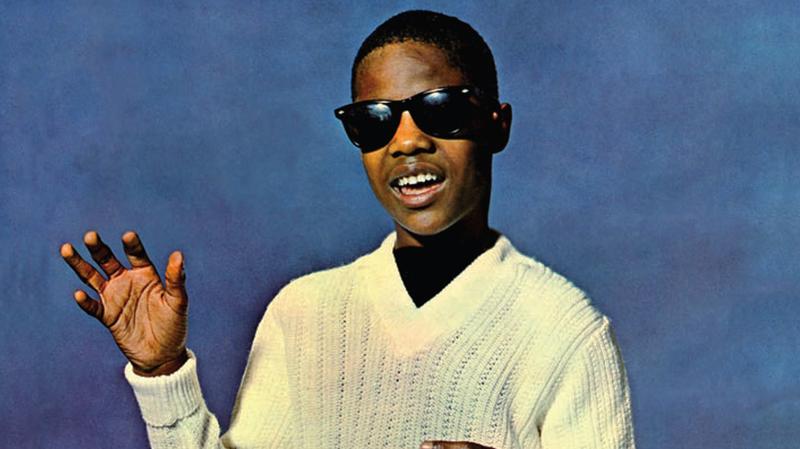
August 10, 1963: Little Stevie Wonder, as he was billed at the time, hits Number 1 on Billboard magazine's Hot 100 chart with "Fingertips -- Part 2," making him, at 13, the youngest performer ever to top that chart.

Performers that young making it big on the charts were rare, and remain so. The most notable examples other than Stevie have been Frankie Lymon, who was 13 when he and his vocal group, The Teenagers, hit Number 6 with "Why Do Fools Fall In Love" in 1956; and Geraldine Pasquale, who, under the name Dodie Stevens, was the same age in 1959 when she hit Number 3 with "Pink Shoe Laces."

Stevland Hardaway Judkins was born on May 13, 1950 in Sagniaw, Michigan, a city of 40,000 people, about 100 miles northwest of Detroit. "Saginaw, Michigan" would be a hit country song by Bill Anderson in 1964.

Stevie -- it seems odd to refer to him by his stage name's surname, "Wonder" -- was born 6 weeks premature, a condition that, along with the oxygen-rich atmosphere in the hospital incubator, resulted in retinopathy of prematurity, a disease that aborts eye growth and often causes the retinas to detach, which left him blind. So, unlike the man who would, naturally, become his hero, Ray Charles, who lost his sight at age 7, Stevie was blind from birth.

When he was 4 years old, his mother divorced his father and moved to Detroit. He began playing instruments at an early age, including piano, harmonica, and drums. He was signed by Detroit's Motown Records in 1961, and his surname was legally changed to Morris, which, according to his mother, was an old family name. Motown founder and chairman Berry Gordy Jr. was responsible for creating the stage name of "Little Stevie Wonder."

In September 1962, his 1st album was released, titled The Jazz Soul of Little Stevie. It's 9 songs, all instrumentals, 1 written by Gordy, the others co-written by Motown producer Clarence Paul. Of those 8, 1, "Soul Bongo," on which Stevie played bongos, was written with Paul by the drummer on the album: Marvin Gaye, who would be a close friend of Stevie for the rest of Marvin's life. (Marvin had already played drums on the 1st Motown song to hit Number 1: "Please Mr. Postman" by The Marvelettes, in 1961.)

Stevie himself was listed as co-writer with Paul on 2 songs: "Wondering" and "Session Number 112." On the other 5, Paul's co-writer was listed as Henry Cosby, a saxophone player who recruited several of Motown's "Funk Brothers" musicians, including bass guitarist James Jamerson and drummer Benny Benjamin. Cosby -- no relation to comedian Bill -- would also be credited as the co-writer on 2 later Motown songs to hit Number 1: "Love Child" by Diana Ross & The Supremes, and "The Tears of a Clown" by Smokey Robinson & The Miracles.

One of the Cosby-Paul compositions was "Fingertips." It's basically an instrumental, but when it was released as a single, it was split into halves, of a recording of a Motortown Revue show at the Regal Theatre in Chicago in June 1962. Stevie played bongos and harmonica, Jamerson played bass, Gaye played drums, and Johnny Allen arranged the horns.

Because of where Part 2 begins, and the fact that the word "Fingertips" is not mentioned anywhere in the song, many people, before they could buy the single, thought the song was titled "Everybody Say Yeah!"

Stevie walked off at the end of the song, but when the master of ceremonies, Bill Murray (not the later white comedian), told the crowd to give him a hand, Stevie misunderstood, and returned to his seat for an encore. The next band, setting up for the next singer, Mary Wells, didn't know what to do. Her bass singer, Joe Swift, yelled out, "What key? What key?"

The live version was included on the album Recorded Live: The 12 Year Old Genius, released on May 21, 1963. The single hit Number 1 on August 10. It had been just 3 months since Little Peggy March hit Number 1 with "I Will Follow Him." At 13 and 15, respectively, Little Stevie and Little Peggy remain the youngest male singer and the youngest female singer ever to hit Number 1 on the Hot 100.

Peggy March only had a few more minor hits. Stevie Wonder would have several more Top 10 hits in the 1960s, but didn't hit Number 1 again until 1973, with "Superstition." It took until 1970, and a team-up with Marvin Gaye, for him to challenge Berry Gordy to let him record more topical material, and to really stretch his songwriting skills.

By 1986, when he was only 36 years old, he was a part of 10 Number 1 hits, 8 of them as the headliner. He hasn't had many hits since. But he has won 25 Grammy Awards, 8 of them after 1987. His 1974 album Innervisions won the Grammy for Album of the Year. Fulfillingness' First Finale won it for 1975. In 1976, Paul Simon won it for Still Crazy After All These Years. At the time, Stevie was known to be working on the album that would become Songs In the Key of Life, and, in his acceptance speech, Paul said, "I'd also like to thank Stevie Wonder, for not releasing an album this year." Sure enough, Songs In the Key of Life won Album of the Year, too.
Stevie also threw himself into activism, including the fight to end apartheid in South Africa, and police brutality at home. His 1980 song "Happy Birthday" is credited with launching the successful campaign to make Dr. Martin Luther King Jr.'s birthday a national holiday to commemorate civil rights.

At times, it was rumored that he would run for Mayor of Detroit or Mayor of Los Angeles -- he maintains homes in both cities -- but he has never run for office. To put it politely, both his health (not just his blindness, but he has also had a kidney transplant) and his personal life (3 marriages, 2 divorces, 9 children with 5 women, and his practice of Transcendental Meditation) would be hurdles for a candidate to overcome.

Nevertheless, he remains one of the most honored musical figures of all time. He was elected to the Rock and Roll Hall of Fame in 1989, his 1st year of eligibility.

UPDATE: The oldest singer ever to hit Number 1, due to the revamping of Billboard's charts to including music streaming, is Brenda Lee, who did so at age 79 in 2023, with her recording of "Rockin' Around the Christmas Tree." But she was only 13 when she recorded it, the same age that Stevie was, give or take a few months, when "Fingertips -- Par 2" was released. She is just 5 1/2 years older than Stevie, despite the fact that they currently hold the opposite poles of this particular record.

*

August 10, 1963 was a Saturday. British-American political scientist Andrew Sullivan was born. Senator Estes Kefauver of Tennessee, the 1956 Democratic nominee for Vice President, died. This was also the day that George Plimpton ran a series at quarterback in a practice session at the Detroit Lions' preseason training camp, forming the basis of one of the most famous books ever written about football: Paper Lion. I have a separate entry for that event.

Football, as I said, was in preseason. The NBA and the NHL were in their off-seasons. These baseball games were played:

* The New York Yankees beat the Los Angeles Angels, 2-1 at Dodger Stadium in Los Angeles, where the Angels were groundsharing with the Dodgers while waiting for their stadium in Anaheim to be built. Whitey Ford outpitched Dean Chance. Bobby Richardson drove in the Yankee runs with a single in the top of the 9th inning. Mickey Mantle appeared as a pinch-hitter, and drew a walk.

* The New York Mets lost to the Chicago Cubs, 4-0 at the Polo Grounds. Larry Jackson pitched a 7-hit shutout. Ron Hunt got 3 of those hits. Ernie Banks did not play for the Cubs, but Ellis Burton hit a home run for them.

* The San Francisco Giants beat the Philadelphia Phillies, 7-6 at Connie Mack Stadium in Philadelphia. Willie Mays went 2-for-5. Harvey Kuenn, Orlando Cepeda and Felipe Alou each got 3 hits. 

* The Washington Senators beat the Baltimore Orioles, 6-5 at District of Columbia Stadium (later renamed Robert F. Kennedy Stadium) in Washington. Brooks Robinson appeared as a pinch-hitter, and did not reach base. Despite being so close, and in the same League, neither the Senators nor the Orioles ever considered the other a rival, although they might have if there had ever been a serious Pennant race between them.

* The Pittsburgh Pirates beat the Houston Colt .45's, 3-2 at Forbes Field in Pittsburgh. Roberto Clemente went 1-for-4 with an RBI. The Colts became the Houston Astros in 1965.

* The Kansas City Athletics beat the Cleveland Indians, 6-3 at Cleveland Municipal Stadium.

* The Los Angeles Dodgers beat the Cincinnati Reds, 10-3 at Crosley Field in Cincinnati. Don Drysdale went the distance for the win, striking out 13 and walking none. Frank Robinson went 1-for-4. Pete Rose, soon to be named National League Rookie of the Year, went 2-for-4.

* The Chicago White Sox beat the Detroit Tigers, 5-1 at Comiskey Park in Chicago. Al Kaline went 2-for-4 with an RBI.

* The St. Louis Cardinals beat the Milwaukee Braves, 6-5 at Milwaukee County Stadium. Stan Musial, in his last season as a player, had an RBI on a pinch-hit single. Hank Aaron went 3-for-5 with 2 RBIs.

* And the Minnesota Twins beat the Boston Red Sox, 5-3 at Metropolitan Stadium in the Minneapolis suburb of Bloomington, Minnesota. Harmon Killebrew went 0-for-3, but had an RBI on a sacrifice fly. For the Red Sox, Dick Stuart hit 2 home runs, and even played errorless ball at 1st base; but Carl Yastrzemski went 0-for-4.

Saturday, May 21, 2022

May 21, 1971: Marvin Gaye Releases "What's Going On"

May 21, 1971: Marvin Gaye releases his album What's Going On, on Tamla Records, a subsidiary of Motown Records. For many years, Rolling Stone magazine rated it was one of the Top 10 albums of all time, with Sgt. Pepper's Lonely Hearts Club Band by The Beatles at Number 1. At the time, and certainly in hindsight, it seemed to be a Sgt. Pepper of soul music. In 2020, Rolling Stone released a revised list of the 500 Greatest Albums of All Time, and ranked What's Going On at Number 1.

Marvin Pentz Gay Jr. was born on April 2, 1939, in Washington, D.C., the son of a Pentecostal minister who beat him and the other children. His love of music developed early, and he formed one doo-wop singing group, then another, before his father kicked him out of the house. He found the U.S. Air Force no better than an abusive father, and faked mental illness, getting a general discharge.

He returned to Washington, and formed The Marquees. Harvey Fuqua, lead singer of The Moonglows, heard them, took them to Chicago, and hired them for Chess Records, renaming them the New Moonglows, singing backup on Chuck Berry's "Back in the U.S.A." and "Almost Grown."

In 1960, Fuqua took Gaye to Detroit, and introduced him to Berry Gordy Jr., who had just founded Motown Records. At the time, "gay" still usually meant "lightly happy" rather than "homosexual," but this was changing. But there were other reasons to change his name: He wanted to distance himself from his father's name, and it was a tribute to someone else who had put an E on the end of his name: Sam Cooke.

Starting in late 1962, he was one of the acts on the Motortown Revue, which toured all over the country, and even allowed its performers on ABC-TV's American Bandstand. By 1965, Motown was more than keeping up with rock and roll's "British Invasion," and Marvin's contributions that year included "I'll Be Doggone" and "Ain't That Peculiar."

And he recorded a series of hit duets with Supremes lead singer Diana Ross, Kim Weston, and especially Tammi Terrell. Tammi was married, but the musical chemistry between them was such that rumors of an affair between them persist to this day. No evidence of them being anything more than close friends has ever been discovered.

In 1968, the Detroit Tigers won the American League Pennant. Their broadcaster, Ernie Harwell, was asked to select the National Anthem singers for the World Series games in Detroit. For Game 4, he selected Marvin, a representative of the city's musical giant Motown Records, who sang it straight, and got a nice hand. For Game 5, Harwell selected José Feliciano, and that's a story for another time.

The world was changing, and Marvin thought his music should change with it. But Berry Gordy was a control freak, and he thought having black singers address social ills would hurt Motown's profile and profits. He began to relent in 1968, letting The Supremes sing "Love Child" (which hit Number 1) and "Living In Shame."

But Marvin wasn't allowed to sing about social ills. At the end of the turbulent year of 1968, he had the Number 1 song in the country, and it was a spectacular recording, but it was "I Heard It Through the Grapevine," a traditional love song. In 1969, he had a hit with "Too Busy Thinking About My Baby." This was a decent song, and, with its line of, "I ain't got time to do no studying once I get out of class," it would have been a fine start for an 18-year-old rookie singer at Motown. At the time, though, Marvin Gaye was 30 years old.

The year 1970 would prove to be a turning point. Tammi Terrell died from a brain tumor, and Marvin couldn't handle it. And his brother Frankie Gaye -- he, too, became a singer and added the E -- returned from serving in Vietnam, and told Marvin of the awful things he had experienced there. Marvin knew that Berry had complete creative control. But he also knew that something had to be done.

Even more important, he now had an ally: Stevie Wonder, now 20, was also ready to move on to topical material. He had already recorded Bob Dylan's "Blowin' in the Wind" and The Beatles' "We Can Work It Out." But he wanted to write his own songs that would match those.

Together, Marvin and Stevie went on strike, and Berry relented. He let Stevie record "Higher Ground," and that was the start of a bunch of great songs about issues, including "Superstition" and "Living for the City."  

And Berry let Marvin record "What's Going On," which became the title track to a landmark album that also included "Inner City Blues" and the environmental-themed song "Mercy Mercy Me." All 3 became Top 10 hits. There was an anti-drug song, "Flyin' High (In the Friendly Sky)," and songs titled "Save the Children" and "God Is Love."

The title track included Lem Barney and Mel Farr of the NFL's Detroit Lions singing backup. Marvin had been so disillusioned by his career, and perhaps inspired by Paper Lion, the film based on writer George Plimpton's book about trying out for the Lions, that he asked them for a tryout. They turned him down, fearing that injuries could hurt his music career. But when "What's Going On" the single hit Number 2 and sold over 1 million copies, everyone who played or sang on it, including Barney and Farr, received gold records.

Berry Gordy listened to the request in the chorus of Marvin's song: "Talk to me, so you can see what's going on." He saw that he was wrong, and Marvin and Stevie were right. He began to move Motown from Detroit to Los Angeles, which had become the center of the recording industry on planet Earth. But Marvin and Anna split up, and he began seeing Janis Hunter, who became the mother of his daughter Nona, who became a singer and actress, and his son Frankie, named for his brother.

Berry wasn't the only one who saw the light: The album sold over 2 million copies within a year of its release. In Rolling Stone, reviewer Vince Aletti wrote, "There are very few performers who could carry a project like this off. I've always admired Marvin Gaye, but I didn't expect that he would be one of them. Guess I seriously underestimated him. It won't happen again." Billboard magazine called it "a cross between Curtis Mayfield and that old Motown spell and outdoes anything Gaye's ever done." Even staid old Time magazine hailed it as a "vast, melodically deft symphonic pop suite."

Did I say, "staid" and "old"? How about the BBC? Their David Katz described the album as "one of the greatest albums of all time, and nothing short of a masterpiece." He compared it to Miles Davis' jazz landmark Kind of Blue by saying, "Its non-standard musical arrangements, which heralded a new sound at the time, gives it a chilling edge that ultimately underscores its gravity, with subtle orchestral enhancements offset by percolating congas, expertly layered above James Jamerson's bubbling bass."

What's Going On is often rated as one of the Top 10 rock and roll albums of all time.  Even my father, a fan of classical, folk and country music, admitted (years after Marvin's shocking death) that this album made him a fan of Marvin's.

Having gotten that out of his system, on August 28, 1973, Marvin released Let's Get It On, another concept album, one about... getting it out of your system. The title track became his 2nd Number 1 hit. He had a 3rd in 1977, "Got to Give It Up." This song inspired many other performers, from Michael Jackson, whose 1st solo Number 1, "Don't Stop 'Til You Get Enough," was very close in lyrics and style; to Robin Thicke, Pharrell Williams and T.I., whose 2013 chart-topper "Blurred Lines" was so close to it that, 2 years later, a court awarded $7.4 million in royalties/damages to Marvin's children.

In spite of this success, Marvin had become, to borrow the title of David Ritz's posthumous biography of him, a divided soul. He turned to cocaine, and moved to Europe, where he was already popular, and lived and toured there.

In 1982, having kicked drugs for the moment, a deal was made to release Marvin from his Motown contract. He signed with CBS Records, and recorded the album Midnight Love, including the single "Sexual Healing." It was a smash, and he was back in the spotlight, winning his 1st 2 Grammy Awards, and being invited to sing the National Anthem before the NBA All-Star Game at The Forum outside Los Angeles. He made it sound like a gospel song. It had been 15 years since he sang it straight at the World Series, and José Feliciano hadn't. Times had changed, and everyone loved Marvin's new version.

But the comeback was all too brief, as he fell back on cocaine, and suffered bouts of paranoia. He had bought his parents a house in the Hancock Park area of Los Angeles. But his father had never really changed, and was always arguing with everyone else in the family, including Marvin and his mother Alberta. On April 1, 1984, at that house, an argument between Marvin Gay Sr. and Marvin Gaye Jr. turned into a shoving match, and Marvin Jr. got the upper hand, beating his father severely. In revenge, Marvin Sr. shot Marvin Jr., killing him. The next day would have been Marvin Jr.'s 45th birthday.

In 1993, singer-songwriter Linda Perry led the band 4 Non Blondes to record a song titled "What's Up?" But those words are not anywhere in the song. Instead, the chorus asks, "What's going on?" The song is about pain, possibly mental illness, and the narrator admits, "Oh, my God, do I pray, every day, for a revolution!"

It is widely presumed that the reason the song isn't titled "What's Going On?" is so that it won't be confused with Marvin Gaye's song. Nevertheless, it was nearly as big a hit, and remains Perry's biggest hit as a singer, although she's written Number 1 hits for others.

*

May 21, 1971 was a Friday. Football was in its off-season. The NHL season had ended 3 days earlier, with the Montreal Canadiens winning the Stanley Cup, beating the Chicago Black Hawks in the Finals in 7 games. The NBA season had ended 3 weeks earlier, with the Milwaukee Bucks beating the Baltimore Bullets in a 4-game sweep. These Major League Baseball games were played that day:

* The New York Yankees lost to the Cleveland Indians, 8-7 at Cleveland Municipal Stadium. Danny Cater singled home 2 runs in the top of the 9th to give the Yankees a 7-6 lead, but Lindy McDaniel couldn't hold it, and gave up a game-tying single to Eddie Leon and a game-winning single to Gomer Hodge. According to Baseball-Reference.com, with 2 outs in the top of the 9th, the Indians had a 97 percent chance of winning, and a 13 percent chance when the bottom of the 9th began, but won, anyway.

McDaniel had once been a really good reliever, but it was games like this that led the Yankees to trade Carter and Mario Guerrero to Boston for Sparky Lyle before the next season, and to then trade McDaniel to Kansas City for Lou Piniella after 1973, 2 of the trades that helped build the next Yankee dynasty.

* The New York Mets beat the Atlanta Braves, 6-2 at Shea Stadium. Nolan Ryan outpitched Pat Jarvis. Ed Kranepool went 3-for-4, and Ken Boswell, Bob Aspromonte and Jerry Grote each had 2 RBIs. Hank Aaron went 3-for-4, including his 651st career home run.

* The Pittsburgh Pirates beat the Montreal Expos, 6-2 at Jarry Park in Montreal. Bob Robertson and Willie Stargell hit home runs for the Pirates, and Roberto Clemente went 3-for-5. Stargell's home run won the game in the top of the 13th inning.

* The Cincinnati Reds beat the Philadelphia Phillies, 7-3 at Veterans Stadium in Philadelphia. Pete Rose went 0-for-2 with 2 walks. Johnny Bench went 1-for-2 with 3 walks and an RBI. Dave Concepcion hit a home run.

* The Boston Red Sox beat the Baltimore Orioles, 8-4 at Memorial Stadium in Baltimore. Carl Yastrzemski hit a home run. So did Brooks Robinson. Frank Robinson went 1-for-5. The Orioles tied the game in the bottom of the 9th, but the Red Sox scored 4 runs in the top of the 10th to win it.

* The Detroit Tigers beat the Washington Senators, 1-0 at Tiger Stadium in Detroit. Dean Chance pitched 7 2/3rds innings of 3-hit ball, and Fred Scherman finished the 3-hit shutout. Ed Brinkman doubled home the only run in the 5th inning. Al Kaline did not play.

* The Los Angeles Dodgers beat the Chicago Cubs, 8-1 at Wrigley Field in Chicago. Ernie Banks, in his last season, only appeared as a pinch-hitter, and did not reach base.

* The St. Louis Cardinals beat the San Diego Padres, 15-8 at Busch Memorial Stadium. José Cardenal, Joe Torre and Julián Javier hit home runs.

* The Houston Astros beat the San Francisco Giants, 4-1 at the Astrodome in Houston. Willie Mays went 0-for-4.

* The Chicago White Sox beat the California Angels, 3-0 at Anaheim Stadium (now Angel Stadium of Anaheim). Tom Bradley pitched a 5-hit shutout.

* The Minnesota Twins beat the Oakland Athletics, 10-1 at the Oakland Coliseum. Bert Blyleven outpitched John "Blue Moon" Odom. George Mitterwald hit 2 home runs, and Steve Braun 1. Harmon Killebrew went 0-for-4, but had an RBI on a sacrifice fly. Rod Carew went 1-for-5. Reggie Jackson went 2-for-4.

* And the Kansas City Royals and the Milwaukee Brewers were rained out at Kansas City Municipal Stadium. It was made up as part of a doubleheader on September 6. The Royals swept, 4-3 and 6-4.

Friday, April 29, 2022

April 29, 1972: Diahann Carroll's Party for Shirley Chisholm

April 29, 1972: Singer and actress Diahann Carroll hosts a party for Representative Shirley Chisholm of New York, a candidate for the Democratic nomination for President.

Shirley Anita St. Hill was born on November 30, 1924, in Brooklyn, New York City. Her father was from British Guiana, now the South American nation of Guyana. Her mother was from the Caribbean island of Barbados. Both countries received their independence from Great Britain in 1966. Her parents met in Barbados before coming to America, and moved back there, with Shirley living there from ages 5 to 9, before the family returned to Brooklyn.

Shirley earned a Bachelor of Arts degree from Brooklyn College, and a Master of Arts degree from Columbia University, both in New York City. In 1949, she married Conrad Chisholm, a Jamaican immigrant who was working as a private investigator. The marriage produced no children, and lasted until a divorce in 1977.

Shirley worked in child care, and in 1953, she worked on the successful campaign to elect Lewis Flagg Jr. as the 1st black Judge in Brooklyn. She joined the Brooklyn Democratic Club and the League of Women Voters. In 1964, she was elected to the New York Assembly. In 1968, with the campaign slogan, "Unbought and Unbossed," she became the 1st black woman elected to the U.S. House of Representatives. In 1971, she became a founding member of the Congressional Black Caucus and the National Women's Political Caucus.

Chisholm announced her candidacy for the Democratic nomination for President on January 25, 1972. She was the 1st woman, and the 1st black person, to enter a major party's Primaries. Senator Margaret Chase Smith of Maine had her name placed in nomination for President at the 1964 Republican Convention, and she received 27 Delegates, making her the 1st woman to receive such an honor from either major party; but she did not enter any Primaries.

In her announcement speech in Brooklyn, Chisholm declared, "I am not the candidate of Black America, although I am Black and proud. I am not the candidate of the women's movement of this country, although I am a woman, and I am equally proud of that."
She didn't enter the New Hampshire Primary. She thought she could do well in Florida, which had a lot of black voters and a lot of ex-New Yorkers. She got 3 percent of the vote there. She also got 3 percent in Massachusetts. She didn’t top that until May, after several candidates had dropped out.

Enter Diahann Carroll. The Bronx native had starred alongside Dorothy Dandridge and Harry Belafonte in Carmen Jones, the all-black film version of Georges Bizet's opera Carmen; and with Dandridge, Sidney Poitier (with whom Carroll was then having an affair), Sammy Davis Jr. and Pearl Bailey in the 1959 film version of George Gershwin's Porgy and Bess.

In 1962, for starring in No Strings, she became the 1st black woman to win the Tony Award for Best Actress in a musical. From 1968 to 1971, she starred as the titular nurse in the NBC sitcom Julia. She was a black woman and a star, and a widowed single mother, but not a slave or a servant. This was huge. And she'd had hit songs, and had sung them on The Ed Sullivan Show. So she had some pull in show business.

As political analyst Juanita Tolliver put it, in an article for Ms. Magazine to promote her book A More Perfect Party: The Night Shirley Chisholm and Diahann Carroll Reshaped Politics:

She knew what it meant to be a Black woman driving substantive, positive change that resisted social norms and stereotypes. Having carved through the steel of discrimination and structural limitations in the entertainment industry, Carroll saw clear parallels between her career and Chisholm’s political goals.

So she threw the fundraising party for Chisholm at her estate in the Hollywood Hills. But this would be no ordinary party. The usual Los Angeles business lords, including studio executives, were going to have to mix with people of her choosing, including actors like Paul Newman and Goldie Hawn; David Frost, the edgy British journalist who was Carroll's current boyfriend; Berry Gordy Jr., who had just moved the company he founded, Motown Records, from his hometown of Detroit to the new media center of L.A.; and Black Panther Party co-founder Huey P. Newton. As Tolliver put it:

Carroll leveraged her social capital to create an audience of heavy hitters for Chisholm, and Chisholm had them all enthralled as only she could. She knew that by engaging these figures with Carroll’s support, her reach could expand to their fans across music, film, television and media.

Did the fundraising party help? Not much. Chisholm got just 7 percent of the vote in North Carolina. She won the New Jersey Primary on June 6, but only one other candidate entered it, as most remaining candidates chose to focus on California, whose Primary was held on the same day. There, she got 4 percent. It was Senator George McGovern of South Dakota who was building a coalition of old liberals and young activists -- a coalition that would fall apart as the younger ones acted up at the Democratic Convention in Miami Beach.

Later in life, Chisholm said she got more backlash from being a woman running for President than from being a black person who had run. She continued to be re-elected until retiring in 1982, and died in 2005, at age 80. Carroll built a career as a nightclub singer, married singer Vic Damone and toured with him, and died in 2019.

*

April 29, 1972 was a Saturday. These baseball games were played:

* The New York Yankees lost to the Minnesota Twins, 2-0 at Yankee Stadium. Jim Kaat allowed 4 hits over 6 innings, and Dave LaRoche finished the 4-hit shutout, outpitching Fritz Peterson. Harmon Killebrew went 2-for-3 with a walk and 2 RBIs. Rod Carew went 1-for-4. Rusty Torres had 2 of the Yankees' 4 hits, with Bobby Murcer and Gene Michael getting the others.

* The New York Mets lost to the Los Angeles Dodgers, 11-1 at Dodger Stadium in Los Angeles. Tommy John went the distance for the win, while Jerry Koosman couldn't get out of the 1st inning. In his lone season with the Dodgers, Frank Robinson went 3-for-4 with a solo home run.

* The Baltimore Orioles beat the California Angels, 6-1 at Memorial Stadium in Baltimore. Mike Cuellar outpitched Andy Messersmith. Brooks Robinson went 2-for-4 with a walk and 3 RBIs. Don Baylor went 3-for-3 with a home run, a walk and 3 RBIs.

* The Atlanta Braves beat the Pittsburgh Pirates, 9-5 at Three Rivers Stadium in Pittsburgh. Hank Aaron went 1-for-5 with a walk and an RBI. Roberto Clemente went 1-for-4 with a walk. Willie Stargell went 2-for-5 with a home run and 2 RBIs.

* The Detroit Tigers beat the Chicago White Sox, 6-1 at Tiger Stadium in Detroit. Mickey Lolich went the distance for the win, while knuckleballer Wilbur Wood didn't get out of the 3rd inning. Al Kaline went 0-for-2, but had a walk and an RBI on a sacrifice fly. Mickey Stanley and Bill Freehan hit home runs.

* The Cincinnati Reds beat the Chicago Cubs, 3-2 at Wrigley Field in Chicago. The normally sure-handed Cub shortstop Don Kessinger mishandled Ted Uhlaender's ground ball in the top of the 9th inning, allowing Cesar Gerónimo to score the winning run. Pete Rose went 0-for-4. Johnny Bench went 2-for-4.

* The Oakland Athletics beat the Milwaukee Brewers, 2-1 at Milwaukee County Stadium. Jim "Catfish" Hunter was the winning pitcher. Reggie Jackson went 1-for-5.

* The Cleveland Indians beat the Kansas City Royals, 3-1 at Kansas City Municipal Stadium.

* The Texas Rangers beat the Boston Red Sox, 7-6 at Arlington Stadium in the Dallas suburb of Arlington, Texas. Ken Suarez singled Dave Nelson home with the winning run in the bottom of the 9th inning.

* The St. Louis Cardinals beat the Houston Astros, 4-2 at the Astrodome in Houston. Pitcher Ken Forsch mishandled a bunt by Joe Hague, allowing Luis Meléndez to score the winning run in the top of the 11th inning. Lou Brock went 0-for-4, but drew a walk and stole a base. Joe Torre went 3-for-5 with a home run and 2 RBIs.

* The San Diego Padres beat the Philadelphia Phillies, 4-0 at San Diego Stadium (later Jack Murphy Stadium and Qualcomm Stadium). Steve Arlin pitched a 5-hit shutout, outpitching Steve Carlton. That season, the Phillies losing was the usual, but Carlton losing wasn't: He went 27-10. He also got 2 of the Phils' 5 hits that day.

* And the Montreal Expos beat the San Francisco Giants, 2-1 at Candlestick Park in San Francisco. Mike Torrez outpitched Steve Stone. Willie Mays went 0-for-3 with a walk. Willie McCovey did not play.

Football was out of season. The NBA Finals were between Games 1 and 2, and the Los Angeles Lakers would beat the New York Knicks in 5 games. The American Basketball Association Playoffs were in progress, and 1 game was played: The Virginia Squires beat the New York Nets, 116-107 at the Hampton Coliseum outside Norfolk in Hampton, Virginia. Ray Scott led the Squires with 26 points, while Rick Barry scored 34 for the Nets.

The Stanley Cup Playoffs were between the Semifinals and the Finals. The Boston Bruins would beat the New York Rangers in 6 games.

December 31, 1999 & January 1, 2000: The Millennium

December 31, 1999:  The Millennium arrives. The people of planet Earth survived. At a terrible cost. But we hadn't destroyed ourselves. ...