Showing posts with label lambeau field. Show all posts

Saturday, December 31, 2022

December 31, 1967: The Ice Bowl

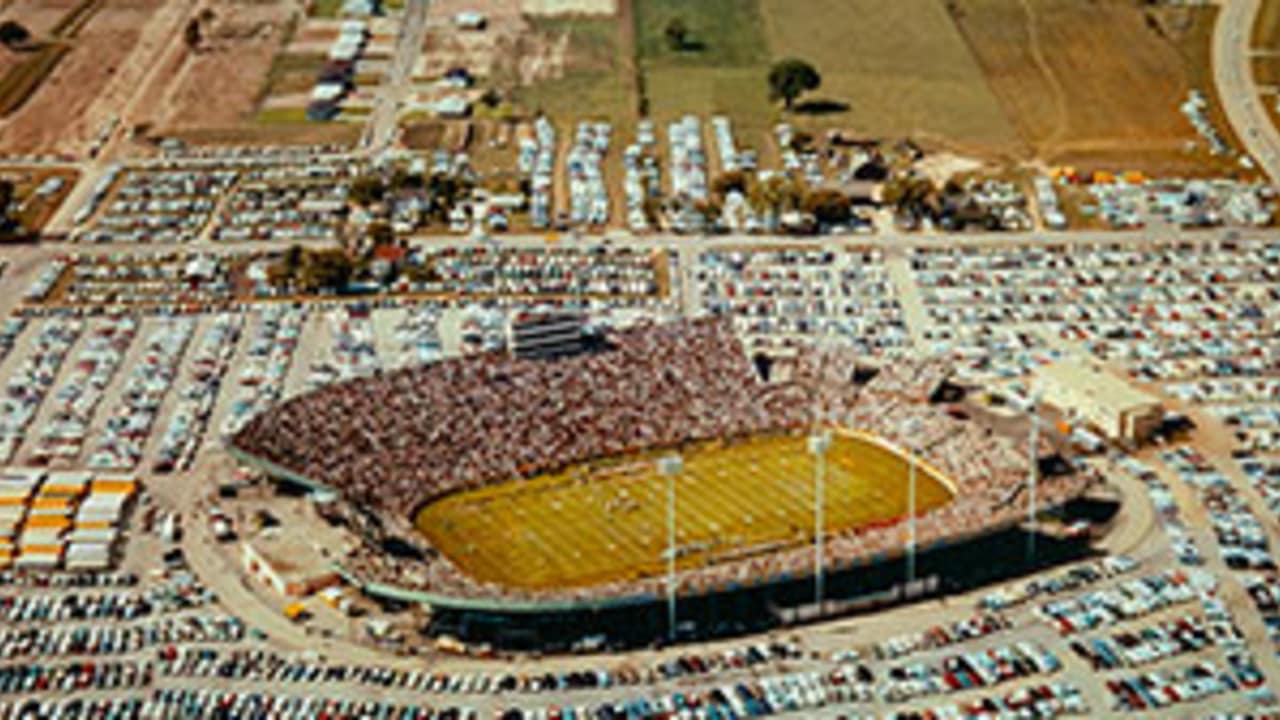
Lambeau Field as it appeared in 1967.
Note the shadow cast by the scoreboard
at the south end. This will matter later on.

December 31, 1967: As the narrator for a 1987 NFL Films production put it, "On a day savage enough to make a Saint Bernard whimper, they played the 1967 NFL Championship Game." Or, as it has become known in football lore, The Ice Bowl.

I don't know who the narrator was -- the Internet has failed me in this regard -- but the film was made in 1987, so it wasn't John Facenda, the voice of NFL Films from 1966 until his death in 1984. Let the record show that Facenda never actually spoke the words "the frozen tundra of Lambeau Field." ESPN's Chris Berman, imitating Facenda, made that up.

The Ice Bowl isn't even the coldest game in NFL history anymore. The 1981 AFC Championship Game, played at Riverfront Stadium in Cincinnati on January 10, 1982, was 9 degrees below zero without the wind chill factor, and 37 below with it. The San Diego Chargers, used to warm weather, had played one of the hottest games in NFL history just 8 days earlier, against the Miami Dolphins at the Orange Bowl, and were totally unused to this kind of cold. The Bengals won, 27-7. This one is known as the Freezer Bowl.

Many NFL Championship Games, nearly all played in December to that point, had been plagued by cold weather. Vince Lombardi had been born and raised in Brooklyn, and had coached the Green Bay Packers since 1959, so he could handle cold weather.

But from having coached in the title games of 1956, 1958 (these 2 as an assistant coach with the New York Giants), 1961, 1962 and 1965, he knew that cold weather could be a problem for football. Fortunately, since the Packers' unusual ownership structure, and his role as both head coach and general manager, left him a virtual dictator, he had the field torn up, and heating coils placed under the field. When resodded, the idea was that the coils would keep the field from freezing. It became known as "Lombardi's Electric Blanket."

Lombardi had been offensive coordinator to Giants head coach Jim Lee Howell. The defensive coordinator was Tom Landry, who became the 1st head coach of the Dallas Cowboys, the team the Packers had defeated to win the 1966 NFL Championship, and whom they would have to beat again to win for 1967. Lombardi and Landry were opposites: Landry was a great stone face, never showing emotion during the game; while Lombardi was, in the words of his Hall of Fame guard Jerry Kramer, "a raving Italian lunatic!"

But the teams were the other way around: The Cowboys -- not yet the dominant team that they would become -- were braggarts, having earned very little right to do so thus far; while the Packers let their performance do the talking for them. The exception was Hall of Fame running back Paul Hornung, but he was retired by this point. The Packers were going for their 5th NFL Championship in 7 years, which included ending the previous season by winning "The AFL-NFL World Championship Game," retroactively named "Super Bowl I."

The day before the game, NFL Commissioner Pete Rozelle made some phone calls, and was told that the game-time temperature would be about 5 degrees above zero. (All temperatures mentioned in this post will be in degrees Fahrenheit.)

Rozelle didn't like that, and began to consider postponing the game to the next day, Monday, New Year's Day 1968, despite the fact that it would compete for TV ratings with the college bowl games. But he was told that the oncoming cold front would make it even colder on Monday. So, already in Green Bay, he called Lombardi at his house, and Landry at his hotel, and told them the game would go on as scheduled.

But the cold front arrived sooner, and was worse than expected. As Cowboy receiver Rentzel reported, he was told that it was 15 degrees below zero. The official NFL Films record of the game shows a rotating bank clock backing that up, reading "-15°."
I couldn't find a photo online.
I had to photograph it off my computer screen.
Yes, that's me and my phone in the reflection.

When Lombardi got to Lambeau Field, he discovered that it was so cold (This was before comedians began doing things like, "How cold was it?"), the mechanism for the heating coils broke. With the machine inoperable, the field was frozen. To make matters worse, when the tarp was taken off the field, it had left moisture on it, which froze. The field was an ice rink.

At the time, Lambeau Field held 50,861 people. That was the official attendance: In spite of the cold, there was not an empty seat in the house -- until an elderly spectator died from exposure. Yes, only one fan died from the cold. Among those in attendance was a 12-year-old boy from Appleton, Wisconsin, who went on to become a renowned actor: Willem Dafoe. In 2017, NFL Films released a 50th Anniversary documentary on the Ice Bowl, with Dafoe narrating. 

The marching band of the University of Wisconsin-La Crosse was scheduled to perform the pregame and halftime shows. But during -- pardon the choice of words -- the warmups, the spit inside their woodwind instruments froze, rendering them impossible to play. The mouthpieces of brass instruments stuck to their players' lips. Seven members of the band were taken to the hospital for hypothermia.

The officials' whistles also had the spit freeze inside, and, during the pregame midfield meeting with the team captains, they said that play would be stopped by the officials putting their hands on the backs of players who, due to concentrating on the ballcarrier, couldn't otherwise see that play had stopped.

Frank Gifford, the Hall of Fame running back for the Giants who was serving as one of the CBS announcers for the game, said, on the air, "I'm going to take a bite of my coffee."
The game was played anyway. When it kicked off at 1:00 PM Central Standard Time -- 2:00 Eastern -- it was 13 below, with a wind-chill factor, on the since-changed current scale, of -36.
Note the ticket price: $10. That's about $83 in 2022 money.
For the Championship Game. Today, a regular-season game
would almost certainly cost you much more.

The game did affect the Cowboys more than the Packers. The film shows Hall of Fame linebacker Ray Nitschke running onto the field in short sleeves, with no gloves. He was from Chicago. He could handle it. But Meredith's face froze, to the point where he couldn't make his words understood in the huddle unless he pressed on his cheeks. Bob Hayes, the Olympic sprinting champion who'd hauled in so many of Meredith's passes, had to run with his hands tucked in a hole cut in his jersey.

The Packers opened the game with a 9-minute drive that ended with a touchdown pass from Bart Starr to Boyd Dowler. Starr connected with Dowler again in the 2nd quarter, giving the Packers a 14-0 lead. It would then have been very easy to guess that the Texas-based team were done in by the cold, and were finished.

They weren't. They showed a tremendous amount of courage, and came back. They didn't get a single 1st down in the 2nd quarter, but fumbles by Starr and of a punt return by Wood led to Cowboy scores, making it 14-10 Green Bay at the half.

In the 3rd quarter, the Packers stopped a Cowboy drive with a fumble, and ended another that resulted in a missed field goal by Danny Villanueva. At the start of the 4th quarter, Landry gambled, and called an option pass for Dan Reeves -- later to coach the Denver Broncos, the Giants and the Atlanta Falcons -- to Rentzel. It went for 50 yards and a touchdown.

Despite seemingly everything going against them, the Cowboys led 17-14. The Packers' Don Chandler missed a field goal, and it looked like the Packers would be dethroned.

With 4 minutes and 50 seconds left, the Packers took over on their own 32-yard line. Since the goalposts would be on the goal line until the 1974 season, but Chandler had already missed a 40-yard attempt, this meant that they probably needed to get the ball to the Dallas 30-yard line for a field goal -- but that would only have tied it, and sent this already-miserable experience to overtime.

Starr advanced the Packers with short passes to Dowler and Donny Anderson. But a hit knocked Dowler down, and his head hit the frozen turf. Even with the protection of a football helmet, he was knocked unconscious. As with the Super Bowl nearly a year earlier, Max McGee came in to replace him. Unlike that Super Bowl, McGee would not turn out to be the hero this time.

Lombardi's most famous play was the "power sweep": Both guards, Kramer and Fred "Fuzzy" Thurston, would pull out of the line at the snap, and run in the same direction (either left or right), and Starr would pitch to a running back, who would then run behind the guards. This had worked so many times with Hornung and Jim Taylor, and now with Anderson and Elijah Pitts.

This time, Lombardi had a trick up his sleeve, a play known in the Packer playbook as "54-Give." He called it the "sucker play": It was a fake power sweep, with Gale Gillingham, having replaced Thurston, pulling to the right. This caught the attention of the Cowboys' Hall of Fame defensive tackle, Bob Lilly, and he followed. This left a hole up the middle, and running back Chuck Mercein got to the 3-yard line.

The Packers then needed to get to the 1-yard line for a 1st down, and did. Some of the Cowboys thought Anderson had scored. Had there been a rule at the time, allowing a coach to challenge a call via instant replay, what happened next might not have happened, and Anderson would have been the big hero of the game. But the officials didn't see the ball cross the plane of the goal line, and so it was 1st and goal on the 1.

It was getting late. Lambeau Field did have lights, so darkness was not going to be an issue. But a lack of sunlight was. To make matters worse, the action was now at the south end of the field, where the shadow of the scoreboard loomed, making it even colder. I've seen sources say that, with the wind chill factor (on the old scale), it was as low as 48, or even 55, degrees below zero.

There was less than a minute left. On 1st down, Starr handed off to Anderson, but he slipped on the icy field. On 2nd down, Anderson slipped even before Starr could get the ball to him. Now, it was 3rd and goal on the 1. The Packers called their last timeout. There were 16 seconds left.

On the film, Lilly can be shown kicking the field, and he kicks up specks of frost. The Cowboys actually considered getting a drill, and drilling holes in the field, to get a better footing. I don't know if that was legal at the time, or if they would have had time for it, even if they took all their remaining timeouts.

The Packers' dilemma was equally tricky. Run the ball and fail, and they wouldn't be able to stop the clock in time to kick the tying field goal. Pass the ball, and it could fall incomplete, leaving 4th down with the clock stopped with a few seconds left, and you could still kick the field goal -- but it could also be intercepted, as Tom Brown did with Meredith's desperation pass with just under a minute to play, which clinched the Packer victory in the Championship Game the year before, in Dallas. Kick the field goal now, on 3rd down, and Chandler could miss again; and, even if he makes it, the game is still only tied.

Starr wasn't as good a passer as his contemporaries Johnny Unitas, Sonny Jurgensen and Joe Namath, but he was smarter than any of them. He recommended a play called "31-Wedge," telling Lombardi, "Coach, the linemen can get their footing on the wedge, but the backs are slipping. I'm right there. I can just shuffle my feet and lunge in."

At this point, Lombardi, who had famously said, "Fatigue makes cowards of us all," was as cold and as tired as anyone, and was not looking forward to overtime, so he told Starr, "Run it, and let's get the hell out of here!"

Starr called the play. It required guard Kramer and center Ken Bowman to double-team the Cowboys' other tackle, Jethro Pugh. Bowman snapped the ball, Starr took it, lowered his head, and followed the block.

Touchdown. On the film, Mercein can be shown raising his hands. He's not signaling, "Touchdown!" He's showing the referee that he's not illegally helping Starr. To this day, Cowboy fans insist that Kramer was offside. As if the Cowboys wouldn't win a whole slew of games due to cheating and favorable officials' calls in the years to come. Besides, Anderson might have broken the plane of the goal line 3 plays earlier, and the refs missed that.
Starr (15) over the goal line. Mercein (30) with his hands up.
Kramer (64) having blocked Pugh (75).
This is Walter Iooss Jr.'s photo for Sports Illustrated.
The most familiar shot of the touchdown is in black & white,
and I wanted a color photo.

In his 1981 book Pro Football's 10 Greatest Games, in which he included both this game and the previous season's NFL Championship Game between the Packers and the Cowboys, sports historian (usually specializing in baseball) John Thorn wrote, "It is the most famous touchdown in football history."

He published that book before the 1982 Dwight Clark "The Catch," but put Starr's Sneak ahead of the 1958 Alan Ameche overtime score (he included that title game in the book), and the 1974 Clarence Davis "Sea of Hands" catch (he included that game, too), and apparently ahead of the 1972 Franco Harris "Immaculate Reception" (he did not include that game).

Chandler kicked the extra point to make it 21-17. There were still 13 seconds left. The Packers kicked off, and the Cowboys let it go into the end zone. Meredith threw 2 incompletions, and, at 3:44 PM Central Time (4:44 Eastern), the game was over.
How anybody still had any desire to remain outside
long enough to tear down the goalposts, I'll never know.

The Packers went Super Bowl II, in considerably friendlier weather at the Orange Bowl in Miami, and beat the AFL Champion Oakland Raiders, 33-14. Lombardi retired as head coach after that game, but stayed on as general manager. As with the 1964-65 Yankees, the team seemed to get old all at once, and the dynasty collapsed. The team wouldn't reach the title game again for 29 years, winning Super Bowl XXXI in the 1996-97 season.

After the 1968 season, Lombardi accepted Edward Bennett Williams' offer to be head coach and general manager of the Washington Redskins, and began to rebuild them in 1969. But he developed colon cancer -- much more easily treatable now, but fatal then. He died on September 3, 1970, only 57 years old. The Redskins hired George Allen away from the Los Angeles Rams, and reached Super Bowl VII 3 seasons later.

The Cowboys got tagged as a team that "can't win the big one." They reached Super Bowl V, but lost to the Baltimore Colts. Finally, they came to dominate the NFC in the 1970s, reaching 5 Super Bowls, winning Super Bowls VI and XII. They began calling themselves "America's Team." They were featured on TV so much that people joked that CBS stood for "Cowboys Broadcasting System." Landry remained head coach until 1989, and died in 2000.

The Ice Bowl lives on in sports memory. It still gives chills, even to people like me who weren't even born yet. In 2019, a poll ranked this game 3rd on a list of the 100 Greatest Games of the NFL's 1st 100 years.

*

December 31, 1967 was a Sunday. The 1967 AFL Championship Game was played the same day. The Oakland Raiders beat the Houston Oilers, 40-7 at the Oakland Coliseum. While that stadium has been known for chilly conditions, there was no issue with the weather there on that day.

There were 2 games played in the NBA. The Los Angeles Lakers beat the expansion San Diego Rockets, 147-118. It was the 1st game the Lakers played at their new arena, The Forum, outside Los Angeles in Inglewood, California.

And the San Francisco Warriors beat the other expansion team, the Seattle SuperSonics, 126-124 at the Seattle Center Coliseum. For the Warriors, Nate Thurmond had 34 points and 25 rebounds.

There was 1 game played in the American Basketball Association, which was in its 1st season: The Pittsburgh Pipers beat the Indiana Pacers, 121-106 at the Civic Arena in Pittsburgh. The Pipers would go on to win the 1st ABA Championship. But before the 1972-73 season, they were out of business. The Pacers would win the ABA title in 1970, '72 and '73, and were 1 of the 4 teams absorbed from the ABA into the NBA in 1976.

There were 4 games played in the NHL that day:

* The New York Rangers beat the Toronto Maple Leafs, 4-0, in one of the last events at the old Madison Square Garden.

* The Philadelphia Flyers beat the Los Angeles Kings, 9-1 at The Spectrum in Philadelphia.

* The Detroit Red Wings beat the Boston Bruins, 6-4 at the Olympia Stadium in Detroit.

* The Chicago Blackhawks beat the Oakland Seals, 3-0 at the Chicago Stadium.

* The Montreal Canadiens, the Pittsburgh Penguins, the St. Louis Blues and the Minnesota North Stars were not scheduled.

December 31, 1961: Those Who Stayed Were Champions

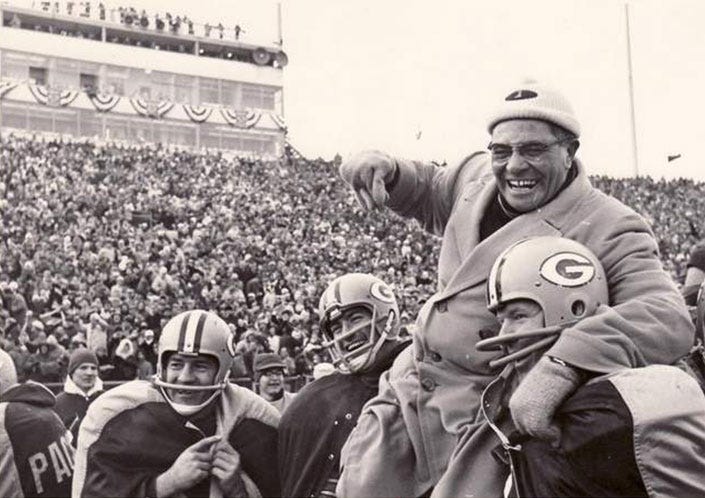
December 31, 1961: The NFL Championship Game is played at the 2nd City Stadium in Green Bay, Wisconsin. In 1965, it will be renamed Lambeau Field.

In spite of the previous success of the Green Bay Packers, this is the 1st time the game is played in Green Bay. The previous City Stadium had never hosted it. The Packers had finished 1st in the NFL in 1929, 1930 and 1931; and 2nd behind a team that would have been in the Eastern Division in 1927. But there was no NFL Championship Game for them to host, or for which to be the visiting team, until 1933.

Once that was established, the way the old system worked out, the Championship Game was hosted by the Eastern Division winners in even-numbered years, and the Western Division winners in odd-numbered years. The Packers won the West in 1936, 1938, 1944 and 1960, and played the Championship Game on the road. Their only previous time hosting was in 1939, and with a seating capacity of just 25,000, City Stadium was considered too small, so they moved it to Wisconsin State Fair Park in the Milwaukee suburb of West Allis. They won, beating the New York Giants, 27-0.

In 1956, the NFL gave the Packers an ultimatum: Build a bigger stadium, or move. They built what became Lambeau Field in 1957, and seating capacity was 32,500. By 1961, it was 38,669. (By the time of the 1967 title game, the Ice Bowl, it was 50,861. It reached 56,263 in 1970, 60,890 in 1990, 72,515 in 2003, and 81,441 by 2013.) Now, all they had to do was qualify for the title game, by winning the Western Division.

The 1961 season was also the one in which the teams involved adopted their familiar helmet logos: The Packers, football-shaped "G" monogram, for Green Bay (they've never used a "GB," although Lombardi had practice caps made with such a logo); the Giants, the lower-case "ny," for "New York."

The Giants won the NFL Championship in 1956, with head coach Jim Lee Howell. What we would now call his offensive coordinator was Vince Lombardi, and his defensive coordinator was Tom Landry. Lombardi left to become the head coach of the Packers in 1959. Landry left to become the head coach of the expansion Dallas Cowboys in 1960. It would take them a few years to get their act together.

Meanwhile, the Giants again reached the Championship Game in 1958 and 1959, losing to the Baltimore Colts both times. In 1961, Allie Sherman replaced Howell as Giants head coach, and Y.A. Tittle replaced Charley Conerly as quarterback. But running back Frank Gifford came out of retirement, and Sam Huff still led the best defense in the NFL.

The Giants lost their opener, home to the St. Louis Cardinals, then won 5 straight -- the 1st 4 on the road, as the New York Yankees kept using Yankee Stadium all the way to the World Series -- then lost at home to the Dallas Cowboys, won 4 straight, lost to the Packers in Green Bay, beat the defending Champion Philadelphia Eagles away, and finished with a home tie with the Cleveland Browns. At 10-3-1, they won the Eastern Division.

Back to Lombardi: When he arrived, the Packers were coming off a 1-10-1 season. He told his players, "We may not win, but we won't be losing with the same people." With that in mind, he cut the man then regarded as the team's best player, end Billy Howton, because he didn't think Howton was serious enough.

But he kept the actual best player, Paul Hornung: While Hornung was the life of the party off the field, he was completely dedicated on it. And that summed up what Lombardi meant when he gave the Packers their slogan: "Those who stay will be champions."

Sure enough, in just 1 season, having gotten rid of the unserious, and having promoted the dedicated, he took the Packers to to 7-5. In 1960, they went 8-4, and won the Western Division, but lost the NFL Championship Game to the Philadelphia Eagles. It would be the only postseason game Lombardi ever lost.

In 1961, they lost their opener to the Detroit Lions in Milwaukee, then won 6 straight, lost to away to the Baltimore Colts, won their next 4, lost away to the San Francisco 49ers, and closed with a win away to the Los Angeles Rams, finishing 11-3.

With Bart Starr quarterbacking an offense with Hornung and Jim Taylor running, Boyd Dowler receiving, and one of the great offensive lines of all time, including Hall-of-Famers Jim Ringo at center, Jerry Kramer at guard and Forrest Gregg at tackle -- Lombardi called Gregg "the finest player I ever coached," and he later coached the Cincinnati Bengals into their 1st Super Bowl -- the Pack dropped 49 points on the Browns, 45 on the Colts, and 35 on the Rams.

The defense was fearsome, with end Willie Davis, tackle Henry Jordan, linebacker Ray Nitschke, cornerback Herb Adderley, and safeties Willie Wood, and former Giant Emlen Tunnell all going to the Hall of Fame. They shut out the Chicago Bears, held the Colts and the Minnesota Vikings to just 7 points each, held the Lions to 9 in their rematch, and held the 49ers in their earlier win and the Vikings in their other game to 10.

This was the 1st title game played in Green Bay, which would become famous for its cold weather, especially after the 1967 NFL Championship Game, which became known as the Ice Bowl. Green Bay wasn't the furthest-north city in the NFL anymore -- the expansion Vikings now were -- but they were further north than 2 of the Canadian Football League's 9 teams, the Toronto Argonauts and the Hamilton Tiger-Cats.

For the 3rd time, the Giants faced a frozen field for an NFL Championship Game. For the 3rd time, they decided to try sneakers rather than cleats, to get better traction. (This would eventually be outlawed.) In 1934 and 1956, both times against the Bears, it worked. This time, it didn't.

The game kicked off at 1:00 PM Central Time (2:00 Eastern). The 1st quarter ended with the game scoreless, and that would be the highlight of the day for the Giants. It was all Packers: Hornung scored on a 6-yard run, Starr threw a 13-yard pass to Dowler, Starr threw a 14-yard pass to Ron Kramer, and Hornung kicked a 17-yard field goal -- all in the 2nd quarter. Green Bay led, 24-0.

In the 3rd quarter, Hornung kicked a 22-yard field goal, and Starr threw a 13-yard touchdown pass to Kramer. Hornung added a 19-yard field goal. Meanwhile, the Packer defense completely shut Big Blue down. Packers 37, Giants 0. It was only the 5th shutout in an NFL Championship Game -- and, after 4 more NFL Championship Games and 56 Super Bowls, it remains the last. (The 1939 game was also a Packer shutout of the Giants, 27-0.

The Packers beat the Giants again in the 1962 NFL Championship Game, 16-7 at Yankee Stadium. The Giants made one more Championship Game in 1963, losing to the Chicago Bears, then collapsed, not reaching the Playoffs again until 1981.

The Packers fell short in 1963 and 1964, then became the only team ever to win 3 straight NFL Championship Games: 1965, 1966 and 1967. This included the 1st 2 Super Bowls, before Lombardi retired. After coaching the Washington Redskins to a big improvement in 1969, Lombardi developed colon cancer, and died the next year.

Nevertheless, he was right about his Packers: In 7 seasons, 5 times, those who stayed were champions.

UPDATE: The Packers have the largest team Hall of Fame in North American sports. Through the 2025 NFL season, the inductees from the Lombardi Era, 1959 to 1968, are:

* Offense: Quarterbacks Bart Starr and Zeke Bratkowski; running backs Paul Hornung, Jim Taylor, Elijah Pitts, Donny Anderson and Travis Williams; wide receivers Gary Knafelc, Ron Kramer, Max McGee and Boyd Dowler; tight ends Marv Fleming and Carroll Dale; centeres Jim Ringo and Ken Bowman; guards Jerry Kramer, Fred "Fuzzy" Thurston and Gale Gillingham; tackles Forrest Gregg, and Bob Skoronski; and kicker-punter Don Chandler.

* Defense: Ends Willie Davis, Dave Hanner and Lionel Aldridge; tackles Henry Jordan and Ron Kostelnik; linebackers Ray Nitschke, Bill Forester, Dan Currie, Dave Robinson and Lee Roy Caffey; cornerbacks Herb Adderley and Jesse Whittenton; and safeties Willie Wood and Bob Jeter.

* Management: Head coach and general manager Vince Lombardi, assistant coaches Red Cochran and Phil Bengtson; scout Jack Vainisi; longtime executives Fred Leicht, Frederick Trowbridge, Jerry Atkinson, Dominic Olejniczak and Tom Miller; trainer Bud Jorgensen and team physician E.S. Brusky; team historian Lee Remmel; team photographer Vernon Biever; band director Wilner Burke; video director Al Treml; broadcaster Ray Scott; journalist Art Daley; the Hall of Fame's founder, William Brault; and longtime Packer fan Al Schneider.

Lombardi, Starr, Hornung, Taylor, Kramer, Thurston, Davis and Nitschke have also been inducted into the Wisconsin Athletic Hall of Fame.

After Lombardi left, it would be a long time before there was another title. Elected to the Packers Hall of Fame from the 1970s: Linebacker Fred Carr, cornerbacks Ken Ellis and Willie Buchanon, running back John Brockington, and placekicker Chester Marcol.

Elected from the 1980s: Quarterbacks Lynn Dickey and Don Majkowski; running back Gerry Ellis; receivers James Lofton and Sterling Sharpe; tight end Paul Coffman; center Larry McCarren; tackle Greg Koch; defensive end Ezra Johnson; linebackers Mike Douglass, John Anderson, Tim Harris and Johnny Holland; cornerback Mark Lee; safeties Johnny Gray and Mark Murphy (not to be confused with the Mark Murphy who was Packer team president from 2007 to 2025); placekicker Jan Stenerud; and executive Robert Parins.

*

December 31, 1961 was a Sunday. The AFL Championship had been played a week earlier, with the Houston Oilers beating the San Diego Chargers, 10-3 at Balboa Stadium in San Diego. There had been 2 college bowl games the day before the NFL Championship Game, and the 4 major bowls were played the next day, New Year's Day. This included the Sugar Bowl, at Tulane Stadium in New Orleans, in which Number 1-ranked Alabama clinched the National Championship, beating Arkansas, 10-3.

Baseball was out of season. The NBA scheduled no games for the day. The NHL scheduled 2. The New York Rangers lost to the Boston Bruins, 7-4 at the old Madison Square Garden. And the Detroit Red Wings beat the Toronto Maple Leafs, 4-2 at the Olympia Stadium in Detroit. The Montreal Canadiens and the Chicago Black Hawks were not scheduled.

Wednesday, December 28, 2022

December 28, 2008: The NFL's 1st 0-16 Season

December 28, 2008: The Detroit Lions lose to the Green Bay Packers. It completes the NFL's 1st 0-16 season.

Having been moved from Ohio, as the Portsmouth Spartans, in 1934, the Lions were wearing commemorative patches in honor of their 75th Season, even though the next season was their 75th Anniversary. Their 75th season would be their worst.

They had won the NFL Championship in 1935, 1952, 1953 and 1957. Then they got stuck behind the Vince Lombardi dynasty in Green Bay, finishing 2nd in the NFL Western Division in 1960, 1961 and 1962. On Thanksgiving Day 1962, they dealt the Packers their only loss of the season, but it wasn't enough.

They made the NFC Playoffs in 1970, then not again until the strike-shortened season of 1982. They won the NFC Central Division in 1983, 1991 and 1993; and made the Playoffs as a Wild Card in 1994, 1995, 1997 and 1999, and just missed in 2000.

But the team fell apart. They finished 2-14 in 2001, their last season playing home games at the Silverdome in suburban Pontiac, Michigan. They went 3-13 in 2002, their 1st season in the new Ford Field in Detroit in 2002. On December 23, 2007, they beat the Kansas City Chiefs at home, 25-20, then closed out the season by losing to the Packers, 34-13 at Lambeau Field in Green Bay, Wisconsin.

No one knew it yet, but that win over the Chiefs would be their last win for a long time -- and not just because the NFL's off-season runs from early February to early September. The Lions won all 4 of their 2008 exhibition games, but those didn't count. They started the season in Atlanta, losing to the Falcons, 34-21. They lost to the Packers at home, 48-25. And they lost away to the San Francisco 49ers. Then they had a bye week. If they thought that would help, it didn't: Their next game was a 34-7 home loss to the Chicago Bears.

After this game, general manager Matt Millen, once a good linebacker and a good broadcaster, was fired. Head coach Rod Marinelli, however, was kept. Their next few games were more hopeful: They lost 12-10 away to the Minnesota Vikings, 28-21 away to the Houston Texans, 25-17 home to the Washington Redskins, and 27-23 away to the Bears. They were 3 touchdowns (with 1 two-point conversion) and a field goal away from being 4-4.

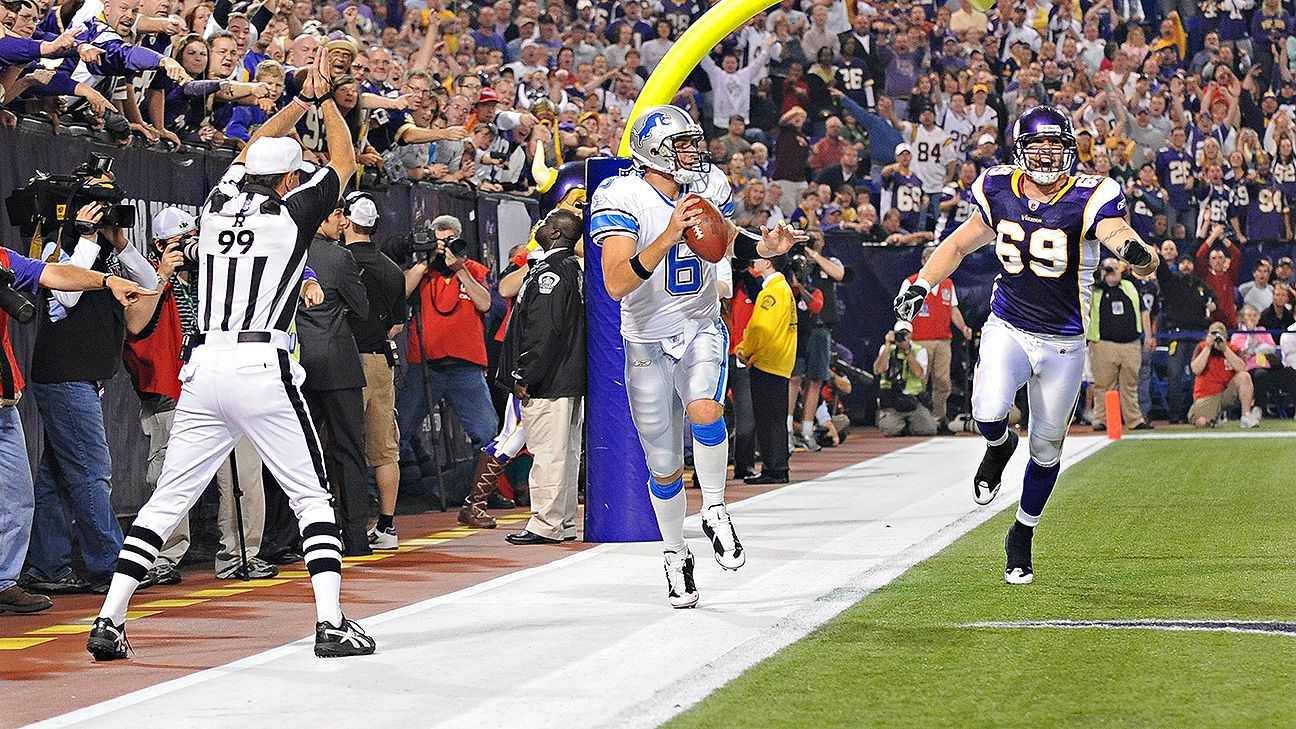
Except that loss to the Vikings, on October 12, included a play where Lions quarterback Dan Orlovsky, standing in his own end zone with the ball on the Lions' 1-yard line, took the snap, saw defensive end Jared Allen coming at him, and stepped back, not realizing that he was now out of his end zone. That's a safety, and that's 2 points, and that made the difference in the game. Ever since, mistakenly running the ball out of your own end zone has been known as "pulling a Dan Orlovsky."
Referee Tony Corrente signals, Orlovsky goofs, Allen celebrates

But they couldn't get that first W. They lost 38-14 home to the Jacksonville Jaguars. They lost 31-22 away to the Carolina Panthers, 38-20 home to the Tampa Bay Buccaneers, and 47-10 home to the Tennessee Titans. They were 0-12.

They came close on December 7, at home to the Vikings. They led 6-3 at the half, and closed to within 17-16 with 5:44 to go. But Ryan Longwell kicked a 50-yard field goal with 22 seconds left, and the Vikings won, 20-16. That seemed to be it: They lost 31-21 away to the Indianapolis Colts, and 42-7 to the New Orleans Saints in their home finale.
There was little hope going into Lambeau Field for the season finale. The Packers took a 14-0 lead in the 1st quarter. In the 3rd quarter, the Lions managed to tie it, 14-14, thanks to 2 touchdown passes from Dan Orlovsky to Calvin Johnson. With 7:32 left in the 4th quarter, Kevin Smith scored a touchdown, and the Lions were within 24-21. But on the Packers' 1st play from scrimmage after the kickoff, Aaron Rodgers threw a 71-yard touchdown pass to Donald Driver. That made it 31-21 Packers, and the score held to the end. The Lions had finished 0-16.

The Columbus Panhandles had gone 0-8 in 1922. The Columbus Tigers went 0-9 in 1925. An NFL team named the Cincinnati Reds were 0-8 in the middle of the 1934 season, before folding. The Lions themselves went 0-11 in 1942. The Chicago Cardinals went 0-10 in 1943, then merged with the Pittsburgh Steelers for 1944, and went 0-10 again. If that '44 season is counted, they had a 29-game losing streak, the longest in NFL history. Also in 1944, the Brooklyn Tigers went 0-10.

In their 1st season, 1960, the Dallas Cowboys went 0-11-1. In their 1st season, 1976, the Tampa Bay Buccaneers went 0-14, and stretched that streak to 0-26, the longest real losing streak in NFL history, before winning in 1977. The Baltimore Colts went 0-8-1 in the strike-shortened 1982 season.

But the 2008 Lions had the 1st 0-16 season in NFL history, and they didn't even have the excuse of being an expansion team or a wartime manpower drain. The Cleveland Browns would match them in 2017: A 4-0 preseason, and an 0-16 regular season.

New general manager Martin Mayhew fired Marinelli, and hired Jim Schwartz as the new head coach. At first, it didn't seem to work: They lost 45-27 away to the Saints, and 27-13 at home to the Vikings. But on September 27, 2009, they took a 19-game losing streak into Ford Field, and beat the Washignton Redskins, 19-14. They finished 2-14. By 2011, they had made the Playoffs again.

*

December 28, 2008 was a Sunday. These other NFL games were played that day -- and note that there was no Thursday night game, which would have been on Christmas Day, and there was also no Monday night game:

* The New York Giants lost to the Minnesota Vikings, 20-19 at the Metrodome in Minneapolis. The aforementioned Ryan Longwell kicked a 50-yard field goal on the last play to win it.

* The New York Jets lost to the Miami Dolphins, 24-17 at Giants Stadium in the Meadowlands.

* The Philadelphia Eagles beat the Dallas Cowboys, 44-6 at Lincoln Financial Field in Philadelphia.

* The Baltimore Ravens beat the Jacksonville Jaguars, 27-7 at M&T Bank Stadium in Baltimore.

* The Atlanta Falcons beat the St. Louis Rams, 31-27 at the Georgia Dome in Atlanta.

* The Oakland Raiders beat the Tampa Bay Buccaneers, 31-24 at Raymond James Stadium in Tampa.

* The Carolina Panthers beat the New Orleans Saints, 33-31 at the Superdome in New Orleans. John Kasay kicked a 42-yard field goal with 1 second left to win it.

* The Houston Texans beat the Chicago Bears, 31-24 at Reliant Stadium (now NRG Stadium) in Houston.

* The New England Patriots beat the Buffalo Bills, 13-0 at Ralph Wilson Stadium (formerly Rich Stadium) in the Buffalo suburb of Orchard Park, New York.

* The Pittsburgh Steelers beat their arch-rivals, the Cleveland Browns, 31-0 at Heinz Field (now Acrisure Stadium) in Pittsburgh.

* The Cincinnati Bengals beat the Kansas City Chiefs, 16-6 at Paul Brown Stadium (now Paycor Stadium) in Cincinnati.

* The Indianapolis Colts beat the Tennessee Titans, 23-0 at Lucas Oil Stadium in Indianapolis.

* The Arizona Cardinals beat the Seattle Seahawks, 34-21 at the University of Phoenix Stadium (now State Farm Stadium) in the Phoenix suburb of Tempe, Arizona.

* The San Diego Chargers beat the Denver Broncos, 52-21 at Qualcomm Stadium (formerly San Diego Stadium and Jack Murphy Stadium).

* And the San Francisco 49ers beat the Washington Redskins, 27-24 at Candlestick Park in San Francisco.

There was 1 college football game that day: Louisiana Tech beat Northern Illinois, 17-10, in the Independence Bowl, at Independence Stadium in Shreveport, Louisiana.

There were 6 games played in the NBA:

* The New York Knicks lost to the Denver Nuggets, 117-110 at Madison Square Garden. Future Knick Carmelo Anthony scored 32 points for the Nuggets.

* The Cleveland Cavaliers beat the Miami Heat, 93-86 at the Quicken Loans Arena (now the Rocket Arena) in Cleveland. LeBron James scored 33 points.

* The New Orleans Hornets beat the Indiana Pacers, 105-103 at the Conseco Fieldhouse (now the Gainbridge Fieldhouse) in Indianapolis.

* There was a doubleheader at the Staples Center (now the Crypto.com Arena) in Los Angeles. First, the Los Angeles Clippers lost to the Dallas Mavericks, 98-76. Then, the Los Angeles Lakers beat the Golden State Warriors, 130-113. Kobe Bryant scored 31 points.

* And the Boston Celtics beat the Sacramento Kings, 108-63 at the ARCO Arena in Sacramento. No, that is not a typo: One hundred and eight to sixty-three. The Celtics were the defending NBA Champions, and raised their record for the 2008-09 season to 28-4. The Kings fell to 7-24.

There were  6 games played in the NHL:

* The Washington Capitals beat the Toronto Maple Leafs, 4-1 at the Verizon Center (now the Capital One Arena) in Washington.

* The Boston Bruins beat the Atlanta Thrashers, 2-1 at the Philips Arena (now the State Farm Arena) in Atlanta.

* The Chicago Blackhawks beat the Minnesota Wild, 4-1 at the Xcel Energy Center in St. Paul, Minnesota.

* The Anaheim Ducks beat the St. Louis Blues, 4-3 at the Scottrade Center (now the Enterprise Center) in St. Louis.

* The Edmonton Oilers beat the Nashville Predators, 5-2 at Rexall Place (as the Northlands Coliseum was then known).

* And the Vancouver Canucks beat the Ottawa Senators, 3-0 at General Motors Place (now Rogers Arena) in Vancouver.

And in English soccer, Arsenal beat Hampshire team Portsmouth, 1-0 at the Emirates Stadium in North London.

Thursday, September 29, 2022

September 29, 1957: A Harlem Farewell, and Hellos In Green Bay and Cleveland


September 29, 1957: The New York Giants baseball team play their last game at the Polo Grounds, their owner Horace Stoneham having already announced that they're moving to San Francisco. Unlike the Brooklyn Dodgers, who played their last home game at Ebbets Field 5 days earlier, they have a farewell ceremony, including Blanche McGraw, widow of longtime manager John, who said that the move would have broken his heart.

Since moving to the site in 1890, including replacing the original stadium that burned down in 1911, the Giants had won 15 National League Pennants, and won the World Series 5 times: In 1905, 1921, 1922, 1933 and 1954.

The Pittsburgh Pirates, unable to even score off the Dodgers on Tuesday night, beat the Giants on Sunday afternoon, 9-1. The crowd is a pathetically small 11,606, and storms the field after the game. At one point, they gather at the center field blockhouse that included both teams' locker rooms, chanting for Mays, "We want Willie!" And, to the tune of "Good Night, Ladies," they sing, "We want Stoneham! We want Stoneham! We want Stoneham, with a rope around his neck!"
Stoneham had already said that the fans had no one to blame but themselves, as they hadn't shown up in sufficient numbers, borne out by the small crowd at the finale: "I feel bad for the kids, but I haven't seen too many of their fathers lately."

As for the Dodgers: Their last game as a Brooklyn team is also on this day, and it is a 2-1 loss to the Philadelphia Phillies at Connie Mack Stadium. Ed Bouchee homers for the Phils, and Seth Morehead outpitches Roger Craig.

The last active Brooklyn Dodger was Bob Aspromonte, who played until 1971. The last active New York Giant was Willie Mays, who played until 1973.

The last pitch by a Brooklyn Dodger is thrown by an erratic (so far) reliever from Brooklyn, Sandy Koufax. The last Brooklyn play is left fielder Bob Kennedy flying to center fielder Richie Ashburn. It is also, though no one foresees the Winter's tragedy, the last game for Roy Campanella, and his last at-bat is also a fly to Ashburn. With both teams well out of the race, only 9,886 attend the Brooklyn Dodgers' semi-official funeral.

*

That is not the case at the 1st game at the new City Stadium in Green Bay, Wisconsin, as the Packers move out of the old one, which was too small, and 32,132 see them beat their arch-rivals, the Chicago Bears, 21-17.
Actual color photo from the 1st game

The stadium was renamed Lambeau Field after team founder Earl "Curly" Lambeau died in 1965. By that point, capacity was be 50,861. That's how many people attended the 1967 NFL Championship Game on New Year's Eve, known as the Ice Bowl: Despite a gametime temperature of -15 degrees Fahrenheit, without the wind chill factor, there wasn't an empty seat in the house. The capacity became 55,000 by 1970, 58,000 by 1990, 60,000 by 1995, 70,000 by 2005, and is now 81,411.

Since moving to Lambeau Field in 1957, the Packers have made the Playoffs 27 times, won 14 Division titles, reached the NFL (1957-69) or NFC (1970-2016) Championship Game 13 times, won 8, reached 5 Super Bowls, and won 4 of them: I, II, XXXI and XLV -- meaning they have been World Champions for the seasons of 1961, 1962, 1965, 1966, 1967, 1996 and 2010.

Lambeau Field is the oldest active stadium in the NFL. The Bears' Soldier Field went up in 2002, replacing the same of the same name on the same site that went up in 1924, although the Bears have only played on the site since 1970.

Its debut was also the NFL debut of Jim Brown, who ran for 86 yards, and caught a pass for 6 yards. This helped the Cleveland Browns beat the New York Giants, 6-3 at Cleveland Municipal Stadium.
Brown would go on to become the NFL's all-time leading rusher. In 1999, The Sporting News put him on top of their list of the 100 Greatest Football Players.

*

September 29, 1957 was a Sunday. On this day, Mark L. Attanasio is born in The Bronx, and grows up just across the Hudson River, in Tenafly, Bergen County, New Jersey. Since 2005, he has been the owner of the Milwaukee Brewers. This was also the day of the Kyshtym Disaster, a nuclear plant explosion and leak in Russia. I have a separate entry for that event.

In addition to the Giants' and Dodgers' losses, these baseball games were played:

* The New York Yankees lost to the Boston Red Sox, 3-2 at Fenway Park in Boston. Ted Williams went 2-for-2 with an RBI, before being replaced for defensive purposes by Jimmy Piersall. Jerry Coleman hit a home run. Mickey Mantle did not play.

* The Baltimore Orioles beat the Washington Senators, 7-3 at Griffith Stadium in Washington. The Senators' bullpen collapsed in the top of the 10th inning, with the winning run scoring on an RBI double by Brooks Robinson.

* The Detroit Tigers beat the Kansas City Athletics, 7-4 at Briggs Stadium (later Tiger Stadium) in Detroit. Al Kaline went 2-for-5.

* The Cleveland Indians beat the Chicago White Sox, 5-3 at Comiskey Park in Chicago.

* The Milwaukee Braves beat the Cincinnati Redlegs, 4-3 at Milwaukee County Stadium. (The Reds called themselves the Redlegs from 1953 to 1959, because of the Red Scare.) Hank Aaron went 0-for-3. Frank Robinson went 1-for-4.

* The Chicago Cubs beat their arch-rivals, the St. Louis Cardinals, 8-3 at Busch Stadium (formerly Sportsman's Park) in St. Louis. Ernie Banks went 5-for-5 with an RBI. Stan Musial did not play.

And, in addition to the Lambeau and Jim Brown debuts, these NFL games were played:

* The Baltimore Colts beat the Detroit Lions, 34-14 at Memorial Stadium in Baltimore.

* The Pittsburgh Steelers beat the Washington Redskins, 28-7 at Forbes Field in Pittsburgh.

* The Los Angeles Rams beat the Philadelphia Eagles, 17-13 at the Los Angeles Memorial Coliseum.

* And the Chicago Cardinals beat the San Francisco 49ers, 20-10 at Kezar Stadium in San Francisco.

Wednesday, September 14, 2022

September 14, 1919: The Debut of the Green Bay Packers

Curly Lambeau

September 14, 1919: The football team of the Indian Packing Company of Green Bay, Wisconsin, coached and captained by local hero and former University of Notre Dame quarterback Earl "Curly" Lambeau, a Green Bay native, defeats the Menominee North End Athletic Club, 53-0 at Hagemeister Park.
Thus debuted the team that would come to be known as the Green Bay Packers, the most successful team in the history of professional football, with 13 NFL Championships.

Because they were made up of co-workers, the Packers were a "company team," or what the British would call a "works side." This would also be true of the team that would become their arch-rivals, the Chicago Bears, who began the following season as the Decatur Staleys, representing the A.E. Staley Starch Company of Decatur, Illinois.

The Staleys/Bears, run by George Halas, were a founding team of the NFL in 1920. The Packers were not, but joined in 1921. The Packers won the NFL Championship in the single-division, no-playoff era, 3 straight times: 1929, 1930 and 1931. They won the NFL Championship Game in 1936, 1939, 1944, 1961, 1962, 1965, 1966 and 1967, meaning they won 3 straight NFL Championships for a 2nd time. No other franchise has done this. Vince Lombardi coached them to those last 5 titles. They also lost NFL Championship Games in 1938 and 1960.

Those last 2 titles, 1966 and 1967, were won by defeating the Dallas Cowboys, the former on New Year's Day 1967 at the Cotton Bowl in Dallas, the latter on New Year's Eve 1967, in frigid conditions that got the game nicknamed "The Ice Bowl."

That game was played at their new stadium, built in 1957, which, like its predecessor, was named Green Bay City Stadium. Curly Lambeau, who played for them from 1919 to 1929, coached them from 1920 to 1949, and later coached the Chicago Cardinals and the Washington Redskins, died before the 1965 season. In his memory, the 2nd City Stadium was then renamed Lambeau Field.
Statue of Lambeau outside the stadium

Those last 2 NFL titles sent the Packers to the games that would retroactively be named the 1st 2 Super Bowls, and they won both. After a long down period, they won Super Bowl XXXI in 1997, and lost Super Bowl XXXII in 1998, both under head coach Mike Holmgren. They have usually been at least competitive since. In 2011, they won Super Bowl XLV, under head coach Mike McCarthy.

Because Green Bay is a small city -- population 62,888, according to a sign shown in a 1967 NFL Films documentary, and 107,395 according to the 2020 Census -- the Packers often played regular-season games in Milwaukee, including the 1939 NFL Championship Game at the State Fair stadium in suburban West Allis, now a racetrack known as the Milwaukee Mile; and at Milwaukee County Stadium, home of baseball's Braves and later the Brewers.

They stopped doing this in 1994, as Lambeau Field had been expanded to be bigger than County Stadium, and it had become more costly to move everything from one "home field" to another and back than it did to stage the games in the much bigger city.

Green Bay is the only one of the NFL's early small cities to survive -- R.I.P. Providence, Rhode Island; Hartford, Connecticut; Rochester, New York; Pottsville, Pennsylvania; Canton, Massillon and Dayton, Ohio; Muncie and Hammond, Indiana; Decatur and Rock Island, Illinois; Racine, Wisconsin; and Duluth, Minnesota.

How? Halas, despite his rivalry with Lambeau, stepped in to use his influence to keep the Packers in the League. And the NFL's TV revenue-sharing agreement means that the Packers can compete on an even level with big cities like New York, Chicago and Los Angeles. Without that, most likely, the Packers would have begun "groundsharing" with the Brewers at the Milwaukee domed stadium now named American Family Field.

Since the team now known as the Arizona Cardinals, despite claiming an official connection to a Chicago athletic club that began playing professional football in 1898, hasn't played continuously since then, the Packers are officially the NFL's oldest franchise, older than the NFL itself. And their rivalry with the Bears is the NFL's oldest, and probably its best, helping to give first the NFC Central Division (1970-2001), then the NFC North Division, the nickname "The Black and Blue Division."

Interestingly, while the Packers named their stadium for Lambeau, and dedicated a statue of him outside (along with one of Lombardi), they have never retired his Number 20.

*

September 14, 1919 was a Sunday. Because the Commonwealths of Massachusetts and Pennsylvania still prohibited professional sports on Sunday, it was difficult for pro football leagues to gain traction, prior to the NFL's founding the next season. And some baseball teams were forced to take the day off. But these baseball games were played that day:

* The New York Yankees beat the St. Louis Browns, 8-1 at the Polo Grounds. The newly-acquired Carl Mays went the distance for the win. Wally Pipp hit a home run. George Sisler went 0-for-4 for the Browns.

* The New York Giants lost to the St. Louis Cardinals, 3-1 at Robison Field in St. Louis. Rogers Hornsby went 1-for-4. The Giants got only 4 hits, 2 by Art Fletcher.

* The Detroit Tigers beat the Washington Senators, 9-4 at National Park (later renamed Griffith Stadium) in Washington. Ty Cobb went 2-for-3 with 2 walks, a stolen base, and 2 RBIs. Harry Heilmann went 4-for-5 with 2 RBIs.

* The Cincinnati Reds beat the Boston Braves, 1-0 at Redland Field (later renamed Crosley Field) in Cincinnati. Ray Fisher pitched a 6-hit shutout. Edd Roush, the Hall of Fame center fielder about to lead the Reds to a World Series win over the Chicago White Sox -- and he insisted until his death that the Reds would have won even if the White Sox had played on the level -- went 4-for-4.

* And the Chicago Cubs beat the Philadelphia Phillies, 4-0 at Weeghman Park -- later renamed Cubs Park and Wrigley Field -- in Chicago. Elwood "Speed" Martin allowed the Phils 10 hits, but kept the shutout.

Wednesday, January 26, 2022

January 26, 1997: Green Bay Is Restored as "Titletown"

Desmond Howard's return

January 26, 1997: The Green Bay Packers beat the New England Patriots, at the Superdome in New Orleans, and win their record 12th NFL Championship -- but their 1st in 31 years.

After Vince Lombardi left the Packers in 1968, they struggled to regain their winning ways. They won the NFC Central Division in 1972, reached a Wild Card Playoff berth in 1982, and just missed a Division title and a Playoff berth in 1989.

But Mike Holmgren, a former quarterback and an assistant to Bill Walsh on the Super Bowl-winning San Francisco 49ers, was brought in as head coach in 1992. He showed faith in new quarterback Brett Favre, and made him, for a few years, the best quarterback in the NFL.

That season, safety Leroy Butler intercepted a pass, scored a touchdown, and ran through the end zone. He said he would have gotten hurt if he'd slammed into the wall, so, instinctively, he jumped over the wall and into the crowd at Lambeau Field in Green Bay, Wisconsin. The fans he landed on slapped him on the back, the shoulders, and the helmet in appreciation. Thus was born "the Lambeau Leap," which became a trademark of the 1990s Packers.

After the 1992 season, Norman Braman, the owner of the Philadelphia Eagles and known for his cheapness, decided he would not offer a new contract to Reggie White, the best defensive end of his generation. White, an ordained minister, said he would go "where God wants me to go." Holmgren called him, and left a message on his answering machine: "Reggie, this is God. Come to Green Bay." Reggie wasn't dumb enough to fall for the ruse, because he knew Holmgren's voice. But he did take it as a sign, and signed with the Packers.

His impact on the team's defense was immediate. The Packers won the next 3 Division titles. In 1995, they got to the NFC Championship Game, their 1st "final four" berth in 28 years, but lost to the Dallas Cowboys.

In 1996, they went 13-3, losing only to Minnesota, Kansas City and Dallas, all on the road; and clinching home-field advantage all the way through the Playoffs. They beat the 49ers in the Divisional Playoffs, 35-14; and then beat the surprising 2nd-year expansion team, the Carolina Panthers, 30-13, to reach the Super Bowl for the 1st time in 29 years.

Their opponents were the New England Patriots, coached by Bill Parcells, who had led the New York Giants to the title in Super Bowls XXI and XXV, in 1987 and 1991. He had taken the Pats from the absolute depths, and danger from being moved -- Baltimore and St. Louis had been seriously considered, as well as a move to Hartford, Connecticut that would have allowed them to keep the name "New England Patriots" -- before a deal was made to keep them in the Boston suburb of Foxborough, Massachusetts.

Super Bowl XXXI was played at the Superdome in New Orleans. The Packers were favored by 14 points. On the Packers' 1st drive, Favre threw a 54-yard touchdown pass to Andre Rison. On their next drive, Chris Jacke kicked a 37-yard field goal, to give them a 10-0 lead. Before the 1st quarter was out, though, the Patriots had scored 2 touchdowns to take a 14-10 lead.

In the 2nd quarter, Favre threw 81 yards to Antonio Freeman for a touchdown, Jacke kicked a 31-yard field goal, and Favre dove in on a quarterback sneak. At halftime, the Pack led, 27-14.

In the 3rd quarter, Curtis Martin ran the ball in from 18 yards, to close the Pats to within 27-21. The ensuing kickoff went to Desmond Howard, who had won the 1991 Heisman Trophy at the University of Michigan. He caught the ball at the 1-yard line, and nobody caught him, as he took it to the house. It was a big reason why he was named the game's Most Valuable Player.

Seeing his team's lead go to 12 points, Holmgren ordered the 2-point conversion attempt, and it was successful. The score was Packers 35, Patriots 21, and that's how it ended, as there was no scoring in the 4th quarter. That messed things up for the gamblers, as the Packers had covered the spread exactly.

But it restored the Packers as World Champions. Green Bay began calling itself "Titletown," as this was the 12th NFL title for the Packers, more than any other team. Their arch-rivals, the Chicago Bears, had 9. It was a reminder that there were NFL Championships before there was a Super Bowl, and that, contrary to what fans of other teams -- the Cowboys, the Pittsburgh Steelers, and, after they started winning them in 2002, the Patriots -- might want you to think, they all count. The Packers won a 13th in 2011.

UPDATE: The Packers have the largest team Hall of Fame in North American sports. Through the 2025 NFL season, the inductees from the Holmgren era, 1992 to 1998, are: 

* Offense: Quarterback Brett Favre; running backs, Edgar Bennett, Dorsey Levens and William Henderson; receivers Robert Brooks and Antonio Freeman; tight end Mark Chmura; center Frank Winters; guard Marco Rivera; tackle Ken Ruettgers; and placekickers Chris Jacke and Ryan Longwell.

* Defense: End Reggie White, tackle Gilbert Brown, and safety Leroy Butler.

* Management: Head coach Mike Holmgren; general manager Ron Wolf; team president Bob Harlan; team historian Lee Remmel; team photographer Vernon Biever; team video director Al Treml; broadcaster Jim Irwin; and journalist Art Daley.

Favre, White and Wolf have also been inducted into the Wisconsin Athletic Hall of Fame.

It would be a while between Super Bowl wins, although not as long a while as the last time: 1997 to 2011. Elected to the Packers Hall of Fame from between, but not on either, of those title teams: Running back Ahman Green, and defensive ends Kabeer Gbaja-Biamila and Aaron Kampman.

The Patriots also have a team Hall of Fame. From their 1996 AFC Champions, they have inducted head coach Bill Parcells, assistant coach Dante Scarnecchia, quarterback Drew Bledsoe, receiver Troy Brown, tight end Ben Coates, tackle Bruce Armstrong, linebackers Willie McGinest and Tedy Bruschi, cornerback Ty Law, cheerleading director Tracy Sormanti, and broadcasters Gino Cappelletti and Gil Santos.

*

January 26, 1997 was, like all Super Bowl days, a Sunday. Baseball was out of season. There were 3 games in the NBA:

* The New York Knicks beat the Miami Heat, 95-89 at Madison Square Garden.

* The Milwaukee Bucks beat the San Antonio Spurs, 94-76 at the Bradley Center in Milwaukee.

* And the Los Angeles Lakers beat the Seattle SuperSonics, 104-103 at the KeyArena in Seattle.

And there were 2 games in the NHL. The Pittsburgh Penguins beat the Montreal Canadiens, 5-2 at the Molson Centre (now the Bell Centre) in Montreal. And the Edmonton Oilers beat the Washington Capitals, 3-1 at the USAir Arena (formerly the Capital Centre) in the Washington suburb of Landover, Maryland.

Sunday, January 2, 2022

January 2, 1966: Packers 9, Bears 8 & Jim Brown's Last Game

As the British comedy duo Flanders & Swann, popular at the time,
would have sung, "Mud, mud, glorious mud!"

January 2, 1966: For the 1st time, the National Football League season extends beyond the end of the calendar year. This was due to the fact that a Playoff was needed to decide the Western Division title. The Green Bay Packers won it, in overtime over the Baltimore Colts, earning the right, under the system then in place, as Western Champion, to host the NFL Championship Game. (Yes, Baltimore was placed in the Western Division. I'm not saying it made sense.)

Coached by Vince Lombardi, the Packers had previously lost the title game in 1960, then won it in 1961 and 1962. Lombardi had retooled a bit, and was ready for another title.

Their opponents would be the defending Champions, the Eastern Division winners, the Cleveland Browns, coached by Blanton Collier, with Frank Ryan at quarterback, and with Jim Brown, widely regarded as the best player in the game, running the ball.

Green Bay, and its new City Stadium, recently renamed Lambeau Field in memory of Packer co-founder and coach Earl "Curly" Lambeau, had faced bad Winter weather before. On the night of New Year's Day, there was a snowstorm. The stadium was sold out, anyway, with 50,852 seats. The snow was cleared, but the game-time (1:10 PM Central Time, 2:10 Eastern) temperature was 26 degrees, a 12 mile-per-hour wind blew in, rain fell during the game, and it turned to snow. For most of the game, the field was a muddy mess.

Lombardi, once again, proved to be a master tactician, assigning middle linebacker Ray Nitschke to shadow Jim Brown all day. Brown carried the ball 12 times, for 50 yards. This forced Cleveland's other players to step up and try to win the game. The strategy worked, as the Packers gained twice as many yards from scrimmage as the Browns.

Bart Starr threw a 47-yard touchdown pass to Carroll Dale, giving the Packers a 7-0 lead. Ryan threw a 17-yard touchdown pass to Gary Collins, but Lou Groza, about to turn 42 and then the all-time leading points scorer in NFL history, missed the extra point. He later kicked a 24-yard field goal, and the Browns ended the 1st quarter up, 9-7.

The 2nd quarter saw only field goals: Two by Don Chandler of the Packers, 15 and 23 yards; and one by Groza, 28 yards. It was 13-12 Green Bay at the half. In the 3rd quarter, Paul Hornung scored on a 13-yard touchdown run, putting the Packers up 20-12. In the 4th quarter, Chandler kicked a 29-yard field goal, and the final score was Packers 23, Browns 12.

This was the Packers' 9th NFL Championship. Two years earlier, the Chicago Bears, the Packers' arch-rivals, won the title, their 8th. This 9th title put the Packers ahead. They have been the winningest team in NFL history ever since, increasing their total to 13 NFL Championships. This included winning the NFL title the next 2 seasons, and then winning the 1st 2 Super Bowls. They have now won 4 Super Bowls: I, II, XXXI and XLV.

The Bears won Super Bowl XX, but that's been it: Through Super Bowl LV in 2021, the NFL Championship count stands as follows: Green Bay Packers 13, Chicago Bears 9, New York Giants 8, Pittsburgh Steelers 6, New England Patriots 6, Washington Redskins/Commanders 5, San Francisco 49ers 5, Dallas Cowboys 5, Detroit Lions 4, Cleveland Browns 4, Baltimore/Indianapolis Colts 4, Philadelphia Eagles 4, Cleveland/St. Louis/Los Angeles Rams 4, Oakland/Los Angeles/Las Vegas Raiders 3, Denver Broncos 3, Chicago/St. Louis/Arizona Cardinals 2, Miami Dolphins 2, Baltimore Ravens 2, Kansas City Chiefs 2, Tampa Bay Buccaneers 2, New York Jets 1, New Orleans Saints 1, Seattle Seahawks 1.

And for those of you who say that titles won before the Super Bowl began with the 1966 season don't count, you're morons: They do.

The Browns would lose the NFL Championship Game in 1968 and 1969; and the AFC Championship Game in the seasons of 1986, 1987 and 1989. They have not won the title since 1964.

No one knew it at the time, but this turned out to be Brown's last game. He was now trying his hand as an actor. The following Summer, he was in London, filming the World War II movie The Dirty Dozen. He was enjoying himself, feeling freer than he ever had.

But preseason training camps were underway, and Browns owner Art Modell told him to leave and come back to join his teammates in Berea, Ohio. Brown refused, telling Modell, already a noted cheapskate, that he could make more money and sustain fewer injuries as an actor than as a football player. Brown retired from football, taking away the one power that Modell had over him, which was to have an undue effect on his football career, but giving up that football career. The 1964 NFL Championship would be his only title.

*

January 2, 1966 was a Sunday. The American Football League Championship Game had been played a week earlier, on December 26, 1965. The Buffalo Bills beat the San Diego Chargers, 23-0 at Balboa Stadium in San Diego.

This was the last season in which the AFL Champion didn't get to play the NFL Champion in a World Championship Game. Through Super Bowl LV in 2021, the Bills have never won a Super Bowl, losing 4 of them. The Chargers, AFL Champions in 1963, haven't won one, either, losing 1 in San Diego before returning to Los Angeles. At least those teams have been there: The Browns still haven't. 

Baseball was out of season. There were 4 games played in the NBA:

* The New York Knicks lost to the Philadelphia 76ers, 133-122 at the Philadelphia Civic Center. It was just another day at the office for the Sixers' Wilt Chamberlain: 50 points and 23 rebounds.

* The Cincinnati Royals beat the Baltimore Bullets, 138-107 at the Cincinnati Gardens.

* The San Francisco Warriors beat the Detroit Pistons, 136-113 at Cobo Hall (now Huntington Place) in Detroit. Rick Barry scored 43 points.

* And the Boston Celtics beat the Los Angeles Lakers, 124-113 at the Los Angeles Memorial Sports Arena. This was a rematch of the previous season's NBA Finals, and a setup of the current season's, with the Celtics winning both.

And the NHL's entire "Original Six" were in action:

* The New York Rangers lost to the Montreal Canadiens, 6-3 at the old Madison Square Garden.

* The Detroit Red Wings beat the Toronto Maple Leafs, 4-0 at the Olympia Stadium in Detroit.

* And the Chicago Black Hawks beat the Boston Bruins, 3-1 at the Chicago Stadium.

December 31, 1999 & January 1, 2000: The Millennium

December 31, 1999:  The Millennium arrives. The people of planet Earth survived. At a terrible cost. But we hadn't destroyed ourselves. ...