Showing posts with label san diego chargers. Show all posts

Monday, December 26, 2022

December 26, 1965: The Tom Matte Game

December 26, 1965: The Green Bay Packers play the Baltimore Colts in a Playoff to decide the Championship of the NFL's Western Conference, at Lambeau Field in Green Bay, Wisconsin. Like its predecessor, the facility had been named City Stadium, but had recently been renamed, in memory of Earl "Curly" Lambeau, the Packers' co-founder and original head coach, who guided them to 6 NFL Championships.

Both teams finished the season 10-3-1. The Packers had won both games between them that season, but head-to-head was not a tiebreaker: Won-lost record was the only one, and so a Playoff was mandated. 

In this win-or-go-home game, both teams would have to rely on backup quarterbacks. For the Packers, Edmund "Zeke" Bratkowski, a career backup now 34 years old -- he was born on October 20, 1931, the same day as baseball legend Mickey Mantle -- had to substitute for the injured Bart Starr early in the game.

The Packers were thus taken by surprise. The Colts were not, but they were down to their 4th string quarterback. They were 9-1-1 when Johnny Unitas, then considered the best quarterback in the game, was injured in a 13-0 loss to the Baltimore Colts. Gary Cuozzo stepped in, but he was injured in the next game, a 42-27 loss to the Packers.

The only player the Colts had left on their roster who had ever played quarterback was running back Tom Matte, who had played quarterback at Ohio State, under coach Woody Hayes. But, given Hayes' disdain for the passing game -- he famously said, "There are three things that can happen when you throw the football, and two of them are bad," meaning an incompletion and an interception -- that meant that he hardly ever threw the ball. So he wasn't considered a long-term option.

For their season finale, the Colts signed a free agent, Ed Brown, who was also a good punter. He guided them to a 20-17 win over the Los Angeles Rams. The problem was, he was signed too late in the season to be eligible for any postseason games. So the Colts were stuck with Matte as quarterback. And it would be in Green Bay, and it would be "Packer Weather": No snow, but just 22 degrees, with the wind-chill factor making it 12. Baltimore can get cold in the Winter, but that kind of cold was unusual for Colt games at Memorial Stadium.

At first, it seemed to work. Matte threw 12 passes, completing 5, ran for 57 yards, and was sacked only once. Don Shinnick picked up a fumble by the Packers' Donny Anderson, and returned it 25 yards for a touchdown, just 21 seconds into the game. Starr was the last man between the huge Shinnick and the end zone, and hurt his ribs in his failure to make the tackle, resulting in Bratkowski having to take over.

Lou Michaels kicked the extra point. In the 2nd quarter, Matte drove the Colts downfield, and Michaels kicked a 15-yard field goal, and the Colts went into the locker room leading, 10-0.

In the 3rd quarter, Paul Hornung, who was a Heisman Trophy-winning quarterback at Notre Dame before becoming a running back with the Packers, ran the ball in from the 1-yard line to score a touchdown. Don Chandler kicked the extra point.

With 1:58 left to play in regulation, Chandler attempted a tying field goal from 22 yards out. The ball appeared to be wide of the right upright, and Chandler's reaction suggested that he thought he'd missed it. But referee Jim Tunney ruled that it was good, and it was 10-10. Overtime.

Bratkowski led the Packers downfield, and, with 1:21 left in the 1st overtime, Chandler attempted a 25-yard field goal. There was no doubt about this one: It was good, and the Packers would host the NFL Championship Game, against the Cleveland Browns. 

Baltimore football fans have complained ever since that Chandler's 4th quarter field goal was no good. Before the 1966 season, the NFL made 2 changes in response to these complaints: Goalposts were extended from to 10 feet high to 20 feet, and an official would be placed directly under each upright on field goal attempts.

In 1981, John Thorn left his comfort zone, baseball, and published Pro Football's 10 Greatest Games. He included this game as one of them.

The Packers beat the Browns, 23-12. They won the next 2 NFL Championships, and the subsequent games, too, which were retroactively renamed Super Bowl I and Super Bowl II. With Matte as running back, and Earl Morrall filling in for an injured Unitas, the Colts won the 1968 NFL Championship, but lost Super Bowl III to the New York Jets. Unitas led them to win the 1970 NFC Championship, but got hurt in Super Bowl V, and Morrall had to come to the rescue, and the Colts beat the Dallas Cowboys. Matte, and all the other Colts who had lost Super Bowl III, got their redemptions and their rings.

Bratkowski died in 2019, Matte in 2021.

*

December 26, 1965 was a Sunday. The American Football League held its Championship Game that day, and the Buffalo Bills beat the San Diego Chargers, 23-0 at Balboa Stadium in San Diego. The Bills had now won 2 straight AFL Championships. They have not won a league championship since.

Baseball was out of season. There were 3 games played in the NBA:

* The Boston Celtics beat the Baltimore Bullets, 120-99 at the Boston Garden. Sam Jones scored 34 points.

* The Philadelphia 76ers beat the San Francisco Warriors, 121-107 at the Philadelphia Civic Center. Wilt Chamberlain had 33 points and 30 rebounds.

* And the Cincinnati Royals beat the St. Louis Hawks, 117-115 at the Kiel Auditorium in St. Louis. Oscar Robertson led all scorers on the day with 37 points.

And the NHL's entire "Original Six" were in action:

* The New York Rangers beat the Boston Bruins, 6-4 at the old Madison Square Garden. Bob Nevin had a hat trick.

* The Toronto Maple Leafs and the Chicago Black Hawks played to a tie, 1-1 at the Chicago Stadium.

* And the Detroit Red Wings beat the Montreal Canadiens, 1-0 at the Olympia Stadium in Detroit. This turned out to be a preview of the Stanley Cup Finals, but the Canadiens beat the Wings.

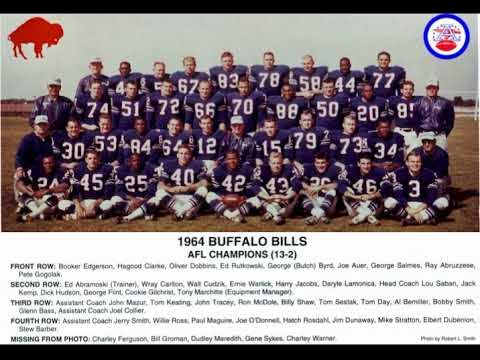
December 26, 1964: The Buffalo Bills Triumphant

December 26, 1964: The American Football League Championship Game is played for the 1964 season.

The season before, the San Diego Chargers, coached by Sid Gillman, had won the title, showing football fans that the AFL wasn't just a pass-happy "basketball league": It could feature good defense, too. The Buffalo Bills, coached by Lou Saban, followed the same path, with a defense led by end Ron McDole, tackle Tom Sestak, and linebacker Mike Stratton.

The Chargers would regret letting quarterback Jack Kemp go, as the Bills had acquired him to run their offense. Protected by a future Hall-of-Famer, guard Billy Shaw, he could hand off to running back Carlton Chester "Cookie" Gilchrist, or pass to receiver Elbert Dubenion.

There was once a common trivia question: Name the men wearing Number 32 who won the Most Valuable Player awards in the American League, the National League, the NFL and the AFL in 1963. But the question was no good: Elston Howard, Sandy Koufax, Jim Brown and Gilchrist won their respective awards, but, while the other 3 players wore 32, Gilchrist wore 34.

The Bills went 12-2 in 1964. They dropped 48 points on the Houston Oilers, and scored at least 30 points in 6 other games. Their only losses were on November 15, 36-28 at home to the Boston Patriots; and on December 6, 16-13 away to the Oakland Raiders.

As it was an even-numbered year, it was the Eastern Division winners' turn to host the AFL Championship Game, and the Bills welcomed the defending Champion Chargers into War Memorial Stadium. Built in 1938, it was already dilapidated, known as "The Old Rockpile." Buffalo native Brock Yates, a screenwriter who created the race upon which the Cannonball Run movies were based, said that it "looks as if whatever war it was a memorial to had been fought within its confines." And it was small: At 40,242 seats, its capacity would prove too small when the AFL and the NFL merged in 1970, so the Bills had to build a larger stadium.
In the 1st quarter, Tobin Rote threw a 26-yard touchdown pass to Dave Kocourek, to put the Chargers up, 7-0. But they never scored again. The Bills' defense was symbolized by Stratton hitting Keith Lincoln midway through the 1st quarter, breaking a rib and knocking him out of the game. It was the most famous defensive play in AFL history.
Pete Gogolak and his brother Charley, natives of Hungary, became pro football's 1st "soccer-style kickers," approaching the placement from the side and hitting the ball with the instep of the foot, rather than the traditional straight-on, hit-with-the-toes style. Pete kicked a field goal late in the 1st quarter, and another in the 2nd. In between, Kemp guided the Bills down to where Wray Carlton could score on a 4-yard run. In the 4th quarter, Kemp scored on a quarterback sneak. The Bills won, 20-7.
The Bills won the AFL Championship again in 1965, again beating the Chargers; then lost the 1966 AFL Championship Game to the Kansas City Chiefs. Saban would leave, then return as head coach, and lead the Bills to the AFC Wild Card Playoff berth in 1974.
Like basketball coach Larry Brown, Saban was known, somewhat unfairly, for never staying in the same place for very long, also serving as head coach for the Boston Patriots, the Denver Broncos, and several college teams. He died in 2009. His son, Nick Saban, in junior high school at the time of the Bills' AFL titles, would win 7 National Championships in the college ranks. Unlike many father & son coaching pairs, they never coached together. Indeed, while Lou was head coach at Army in 1979, Nick was an assistant coach at Navy in 1982.
The Bills had won the last 2 AFL Championships before the AFL Champion was allowed to play the NFL Champion for a World Championship, and had lost the game that would have put them in Super Bowl I. It would take until the 1990 season before they finally got into a Super Bowl. And they got into 4 in a row, something no other franchise has done. And yet, they lost all 4, and only the 1st one was all that close (although they were leading the 4th at the half).
The Bills have become to the NFL what the Chicago Cubs once were to baseball, the sport's "lovable losers" with a history of close calls breaking the hearts of some of the most passionate fans in the sport. From 1964 onward, they have been 1 of the last 2 teams standing 6 times, something only 7 other teams have done.
But the fact that the Bills' titles came before the advent of the Super Bowl means that they get discounted: Even before the distance of time became what it is now, NFL fans had come to regard any title won before the Super Bowl, NFL or AFL, as not a "real" championship.
As it stands, through Christmas 2022, no team based in, or near, Buffalo has ever won a major league sports championship. The NHL's Sabres are 0-for-2 in Stanley Cup Finals, and the NBA's Braves, like the Sabres a 1970 expansion team, moved in 1978. Due to Canadian COVID restrictions, the Toronto Blue Jays had to play some "home games" at Buffalo's Sahlen Field in 2020 and '21. Before that, there hadn't been a Major League Baseball team in Buffalo since the 1914-15 Blues of the Federal League; before that, the Bisons of the National League, who folded after the 1885 season. And none of those teams won a Pennant.
Unless you count soccer as a major league sport in North America, with the 1971 Rochester Lancers and the 2016 Western New York Flash, then the last World Championship won by a team that can be considered "Western New York" remains the 1955 NBA Champion Syracuse Nationals. If you don't count Syracuse as "Western," then it's the 1951 NBA Champion Rochester Royals.
In 1998, Vincent Gallo, a Buffalo native, wrote, directed and starred in the film Buffalo '66.. Despite the title, while there are flashbacks, the film took place mostly in the present day. He played Billy Brown, whose mother was going to go to the 1966 AFL Championship Game at War Memorial Stadium, but went into labor, and she has blamed the son's birth for her missing the game, and her missing the game for the Bills' inability to win a title ever since.

The son grew up to become a compulsive gambler, and when Scott Norwood missed his field goal attempt on the last play of Super Bowl XXV, causing the Bills to lose the game, still the closest they've come since 1965, Billy lost a $10,000 bet. Unable to pay up, his bookmaker forced him to clear his debt by confessing to a crime he did not commit, resulting in 5 years in prison.

When he gets out, he decides he wants to get revenge -- not on the bookie, but on Norwood (known as “Scott Wood” in the film), whom he's convinced took a payoff to miss the kick on purpose, a la the Chicago White Sox throwing the 1919 World Series. Have you ever wanted to kill someone who ruined a sporting event for you? Maybe. Would you ever actually attempt it? No. Billy sets out to attempt it. For the record, nobody has ever credibly accused Norwood of missing that kick on purpose.

UPDATE: The Bills have a Wall of Fame, with these members:
* From the 1960s: Quarterback Jack Kemp, running back Chester "Cookie" Gilchrist, receiver Elbert Dubenion, guards Billy Shaw and Bob Kalsu, defensive tackle Tom Sestak, linebacker Mike Stratton, cornerback Booker Edgerson, safety George Saimes; plus founding owner Ralph Wilson, team executive Pat McGroder, head coach Lou Saban, longtime broadcaster Van Miller and trainer Edward Abramoski. Kalsu only played one season before being drafted, and was the only active NFL player killed in action in the Vietnam War. 
* From the 1970s: Quarterback Joe Ferguson, guard Joe DeLamielleure, cornerback Robert James, and running back O.J. Simpson, whose name has never been removed despite his post-playing infamy; plus Wilson, McGroder, Saban, Miller and Abramoski.
* From the 1980s: Quarterback Jim Kelly, receivers Andre Reed and Steve Tasker, center Kent Hull, guard Jim Ritcher, defensive end Bruce Smith, defensive tackle Fred Smerlas, and linebacker Darryl Talley; plus Wilson, Miller and Abramoski.
* From the 1990s: Kelly, Reed, Tasker, Hull, Ritcher, Smith, running back Thurman Thomas and defensive end Phil Hansen; plus Wilson, Miller, Abramoski, head coach Marv Levy and general manager Bill Polian. The Bils have not yet honored whose main contribution was afterward.
In addition, Bills fans have been honored with induction, as "The 12th Man."
And the Greater Buffalo Sports Hall of Fame has honored Kemp, Gilchrist, Dubenion, Saimes, Sestak, Ferguson, DeLamielleure, Simpson, Smerlas, Kelly, Hull, Ritcher, Reed, Smith, Talley, Tasker, Thomas, Wilson, Levy, Saban, Polian, 1960s linebacker and later NBC broadcaster Paul Maguire, 1970s guard Reggie McKenzie, 1990s linebacker Shane Conlan, 1970s defensive tackle Jeff Yeates, 1990s kicker Steve Christie, and 2000s and 2010s defensive tackler Kyle Williams. Yeates and Williams were honored less for what they did with the Bills, and more because they were Buffalo area native who played in the NFL.
*
December 26, 1964 was a Saturday. The game was scheduled for that day, so as not to conflict with the NFL Championship Game being played the next day. One college bowl game was played: Georgia beat Texas Tech, 7-0 at the Sun Bowl, in the stadium of the same name, in El Paso, Texas.
Baseball was out of season. There were 4 games played in the NBA:

* The New York Knicks beat the Baltimore Bullets, 118-116 at the Baltimore Civic Center (now the CFG Bank Arena).

* The Cincinnati Royals beat the Philadelphia 76ers, 135-125 at the Philadelphia Civic Center. Oscar Robertson scored 38 points.

* The Boston Celtics beat the St. Louis Hawks, 97-84 at the Kiel Auditorium in St. Louis.

* And the Los Angeles Lakers beat the San Francisco Warriors, 129-122 at the Los Angeles Memorial Sports Arena. Jerry West scored 44 points.

The NHL's entire "Original Six" were in action:

* The New York Rangers lost to the Boston Bruins, 2-0 at the old Madison Square Garden.

* The Montreal Canadiens beat the Detroit Red Wings, 6-3 at the Montreal Forum.

* And the Chicago Black Hawks beat the Toronto Maple Leafs, 5-3 at Maple Leaf Gardens in Toronto.

And in English soccer, on this day after Christmas, Boxing Day, Arsenal beat Staffordshire team Stoke City, 3-2 at the Arsenal Stadium, a.k.a. "Highbury," in North London.

Friday, December 23, 2022

December 23, 1995: Snowballs at the Meadowlands

December 23, 1995: The New York Giants close their season in ignominious fashion -- and the result is far from the worst of it.

They were playing the San Diego Chargers, at Giants Stadium in the Meadowlands. It's important to note that the Giants have no rivalry with the Chargers. This was only the 7th time the 1925-established NFL mainstays and the 1960-established original AFL team had played each other in the regular season. The Giants had won at Yankee Stadium in 1971, at Shea Stadium in 1975, at Giants Stadium in 1986, and at Jack Murphy Stadium in San Diego in 1989. The Chargers had won at The Murph in 1980 and at Giants Stadium in 1983.

None of those games had been particularly contentious. Indeed, even this game had no incidents between the Giant players and the Charger players.

For the Giants, it was a bad season, by any measure. They started out 0-3, closed to within 3-5, fell to 3-9, got up to 5-9, and went into this game 5-10. The Chargers had started 4-7, but had won 4 straight, and had a chance to make the Playoffs if they beat the Giants and other games went their way.

There had been significant snowfall the day before, and only 50,243 fans, out of a possible 78,000+, showed up. While the seats at Giants Stadium had been cleared of snow, there was still a lot of it lying around, waiting for angry -- or, at least mischievous -- fans to turn them into snowballs. At least in the 1st half, they only threw them at each other, because they were pleased with the product on the field: The Giants went into the locker room up 17-3.

This score was understandable: There was snow all around, and the temperature was 34 degrees, 24 with the wind chill. The New York-based team was used to this kind of weather. The San Diego-based team was not.

But a funny thing happened on the way to the Giants giving their fans a Merry Christmas: They ended up giving their fans a big lump of coal instead. The Chargers scored a touchdown, but it was still 17-10 Giants after 3 quarters.

By this point, the snowballs were flying from the stands, then onto the field. Bob Sheppard, who had been the Yankees' public address announcer since 1951 and the Giants' since 1956, put his best "Voice of God" to work on the crowd, telling them that the game could be forfeited if the barrage continued.

On the 1st play of the 4th quarter, referee Ron Blum called time-out. He went over to the Charger sideline to call up to the booth, and ask for a repeat of the threat. A fan threw a snowball in his direction. Except it wasn't a snowball: It was an iceball, much harder. And it didn't hit Blum: It hit Sid Brooks, the Chargers' equipment manager, right in the face, knocking him out.

The game should have been forfeited right there. Maybe it would have been, if Charger head coach Bobby Ross had spoken up at that moment. But he didn't, and it wasn't.

The Chargers completed their drive with a touchdown, and the game was tied. On their next drive, Junior Seau hit Giant quarterback Dave Brown, whose throw had been intended for the end zone. Instead, Shaun Gayle -- now with the Chargers, he had been an All-American sprinter in college and a member of the Chicago Bears' 1985-86 "Super Bowl Shuffle" team -- intercepted it, and returned it 99 yards for a touchdown. Well before he reached the end zone, fans sitting there began throwing snowballs at him. Many got as far as him, but none hit him.

The Giants fumbled on their next possession, and John Carney kicked a field goal for the final score: Chargers 27, Giants 17. It was one thing for the Giants to humiliate their fans, which had happened before. It was another thing for the fans to humiliate each other, and the players.

Giants management announced that any snowball-thrower who could be identified would be banned from the Meadowlands Sports Complex for life, even if that meant revoking his season ticket. Six such spectators were identified, including one who ended up on the back page of the New York Daily News. Giants management also bought a full-page ad in the next day's San Diego Union-Tribune -- the Sunday edition -- apologizing to the people of San Diego for the incident.

By a quirk in the NFL schedule, the New York Jets were scheduled to play at Giants Stadium the very next day. The New Jersey Sports and Exposition Authority, operator of the stadium, went into overdrive to get all the snow removed from the stadium before kickoff. Given that the Jets were going in 3-12 under the already-much-maligned head coach Rich Kotite, a 2nd angry fanbase was possible. But the snow was cleared, there were no incidents, and the Jets lost to the New Orleans Saints, 12-0.

The Chargers did end up making the Playoffs. Since then, they've played the Giants 6 times. The Giants won in San Diego in 1998. The Chargers won in San Diego in 2005 and 2013, at the Meadowlands in 2009 and 2017, and, following their move back to Los Angeles, at SoFi Stadium in Inglewood, California 11 days ago.

None of those games had any incidents, either. Only the one on Christmas weekend 1995.

*

December 23, 1995 was a Saturday. There were 2 other NFL games played that day, instead of the next day, Sunday, Christmas Eve:

* The Detroit Lions beat the Tampa Bay Buccaneers, 37-10 at Tampa Stadium. No danger of snowballs in Florida.

* And the Indianapolis Colts beat the New England Patriots, 10-7 at the RCA Dome in Indianapolis. No danger of snowballs in a dome.

There were 12 games played in the NBA:

* The New York Knicks beat the expansion Toronto Raptors, 103-91 at Madison Square Garden.

* The New Jersey Nets beat the Philadelphia 76ers, 98-85 at The Spectrum in Philadelphia.

* The Charlotte Hornets beat the Miami Heat, 87-75 at the Charlotte Coliseum.

* The Cleveland Cavaliers beat the Indiana Pacers, 97-97 at the Gund Arena (now the Rocket Arena) in Cleveland.

* The Orlando Magic beat the Detroit Pistons, 94-79 at The Palace in the Detroit suburb of Auburn Hills, Michigan.

* The Chicago Bulls beat the Utah Jazz, 100-86 at the United Center in Chicago.

* The Milwaukee Bucks beat the Atlanta Hawks, 115-111 at the Bradley Center in Milwaukee.

* The Minnesota Timberwolves beat the Dallas Mavericks, 111-98 at the Target Center in Minneapolis.

* The San Antonio Spurs beat the Houston Rockets, 110-95 at the Alamodome in San Antonio.

* The Los Angeles Clippers beat the Denver Nuggets, 107-92 at the McNichols Arena in Denver.

* The Los Angeles Lakers beat the Portland Trail Blazers, 102-99 at the Rose Garden (now the Moda Center) in Portland.

* And the Seattle SuperSonics beat the Washington Bullets, 118-100 at the KeyArena in Seattle.

There were 11 games played in the NHL:

* The New Jersey Devils lost to the Florida Panthers, 2-1 at the Miami Arena.

* The New York Islanders beat the Washington Capitals, 3-1 at the Nassau Coliseum.

* The Montreal Canadiens beat the Pittsburgh Penguins, 1-0 in one of the last games played at the Montreal Forum.

* The Boston Bruins beat the Tampa Bay Lightning, 7-5 at the Fleet Center (now the TD Garden).

* The Philadelphia Flyers played the Hartford Whalers to a tie, 3-3 at the Hartford Civic Center (now the PeoplesBank Arena).

* The Buffalo Sabres beat the Ottawa Senators, 4-2 at the Ottawa Civic Centre (now the TD Place Arena).

* The Toronto Maple Leafs beat the Edmonton Oilers, 6-1 at Maple Leaf Gardens in Toronto.

* The Chicago Blackhawks beat the Dallas Stars, 2-0 at the Reunion Arena in Dallas.

* The Winnipeg Jets beat the St. Louis Blues, 2-1 at the Winnipeg Arena.

* The Colorado Avalanche played the Los Angeles Kings to a tie, 2-2 at The Forum outside Los Angeles in Inglewood, California.

* And the Detroit Red Wings beat the Vancouver Canucks, 1-0 at General Motors Place in Vancouver (now the Rogers Arena).

Also, Arsenal went to Anfield, and lost to Liverpool, 3-1. 

Tuesday, November 15, 2022

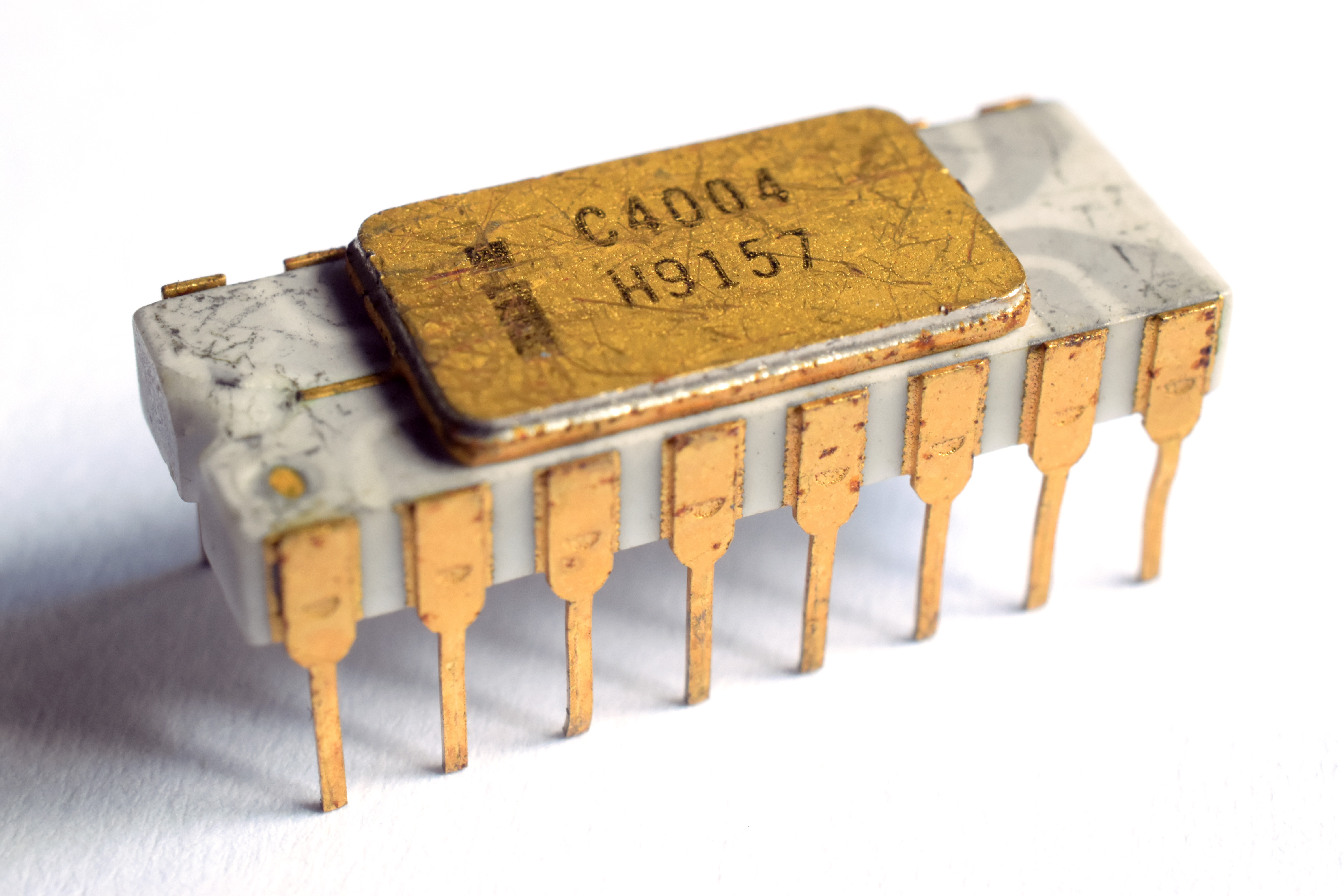
November 15, 1971: Intel Releases the World's 1st Microprocessor

November 15, 1971: The computer revolution gets 3 major boosts, although the wider world won't know about any of them for years to come. Intel releases the world's 1st microprocessor, the 4004.

My mother worked in a bank in downtown Newark in 1965. She said they had a computer that took up an entire wall of a building. But computers began to shrink, and after 1971, they would get smaller. By 1977, there would be desktop computers.

It was also around this time, although I can't find an exact date for either, that Ray Tomlinson, in Cambridge, Massachusetts, sent the 1st email (he preferred the unhyphenated spelling over "e-mail"); and that IBM introduced the floppy disk, then 8 inches square.

In 1997, for his work as Chairman of Intel, and guiding it to a leading place in the tech boom, Andrew Grove was named Time magazine's Man of the Year.

*

November 15, 1971 was a Monday. Baseball was out of season. No games were scheduled for either the NBA, the ABA, or the NHL. On ABC Monday Night Football, the San Diego Chargers beat the football version of the St. Louis Cardinals, 20-17 at San Diego Stadium, which would later be renamed Jack Murphy Stadium and Qualcomm Stadium.

Friday, November 4, 2022

November 4, 2007: Adrian Peterson Rushes for 296 Yards

November 4, 2007: The Minnesota Vikings beat the San Diego Chargers, 35-17 at the Metrodome in Minneapolis. Adrian Peterson rushed 30 times for 296 yards, a new NFL record. Included were 3 touchdowns.

In the same game, Antonio Cromartie of the Chargers returned a missed field goal 109 yards. It set a record for the longest play in NFL history. It is a record that can be tied, but never broken.

In 1947, Orban "Spec" Sanders of the New York Yankees rushed for 250 yards in a game. But that was in the All-America Football Conference, and the NFL didn't recognize that as a record. At that point, the NFL record for rushing yards in a game was 215, by Cliff Battles with the Boston Redskins in 1933.

The NFL record rose from 218 yards by Gene Roberts of the New York Giants in 1950, to 223 by Tommy Wilson of the Los Angeles Rams in 1956, to 237 by Jim Brown of the Cleveland Browns in 1957, and Brown did 237 again in 1961. In 1963, Carlton "Cookie" Gilchrist of the Buffalo Bills rushed for 243 in an AFL game. In 1970, after the AFL-NFL merger, the NFL decided to retroactively count AFL records as NFL records. But the actual NFL record was still Brown's 237.

It was raised to 247 by Willie Ellison of the Los Angeles Rams in 1971, to 273 by O.J. Simpson of the Bills in 1976, to 275 by Walter Payton of the Chicago Bears in 1977, to 278 by Corey Dillon of the Cincinnati Bengals in 2000, to 295 by Jamal Lewis of the Baltimore Ravens in 2003, and then came this game, when Peterson raised it to 296, which still stands.

In 2012, Peterson rushed for 2,097 yards on the season, just 8 yards short of the record of 2,105 set by Eric Dickerson with the Rams in 1984. Peterson has not played in the 2022 season, but has not officially announced his retirement. He currently has 14,918 rushing yards, placing him 5th on the all-time list, behind Emmitt Smith (the all-time leader with 18,355), Walter Payton, Frank Gore and Barry Sanders.

*

November 4, 2007 was a Sunday. These other games were played in the NFL that day:

* The New York Jets lost to the Washington Redskins, 23-20 at Giants Stadium in the Meadowlands. Shaun Suisham kicked a 46-yard field goal with 7:43 left in overtime.

* The Dallas Cowboys beat the Philadelphia Eagles, 38-17 at Lincoln Financial Field in Philadelphia.

* The Atlanta Falcons beat the San Francisco 49ers, 20-16 at the Georgia Dome in Atlanta.

* The Tampa Bay Buccaneers beat the Arizona Cardinals, 17-10 at Raymond James Stadium in Tampa.

* The Tennessee Titans beat the Carolina Panthers, 20-7 at LP Field (now Nissan Stadium) in Nashville.

* The New Orleans Saints beat the Jacksonville Jaguars, 41-24 at the Superdome in New Orleans.

* The Buffalo Bills beat the Cincinnati Bengals, 33-21 at Ralph Wilson Stadium (formerly Rich Stadium) in the Buffalo suburb of Orchard Park, New York.

* The Cleveland Browns beat the Seattle Seahawks, 33-30 at Cleveland Browns Stadium (now named Huntington Bank Field). Phil Dawson kicked a 25-yard field goal with 9:19 left in overtime to win it.

* The Detroit Lions beat the Denver Broncos, 44-7 at Ford Field in Detroit.

* The New England Patriots beat the Indianapolis Colts, 24-20 at the RCA Dome in Indianapolis.

* The Green Bay Packers beat the Kansas City Chiefs, 33-2 at Arrowhead Stadium in Kansas City.

* The Houston Texans beat the Oakland Raiders, 24-17 at the Oakland Coliseum.

* The next night, on Monday Night Football, the Pittsburgh Steelers beat the Baltimore Ravens, 38-7 at Heinz Field (now Acrisure Stadium) in Pittsburgh.

* And the New York Giants, the Chicago Bears, the Miami Dolphins and the St. Louis Rams had a bye week.

There were 8 games in the NBA that day:

* The New York Knicks beat the Minnesota Timberwolves, 97-93 at Madison Square Garden.

* The Charlotte Bobcats beat the Miami Heat, 90-88 at the American Airlines Arena (now the Kaseya Center) in Miami.

* The Boston Red Sox beat the Toronto Raptors, 98-95 in overtime at the Air Canada Centre (now the Scotiabank Arena) in Toronto.

* The Detroit Pistons beat the Atlanta Hawks, 92-91 at The Palace in the Detroit suburb of Auburn Hills, Michigan.

* The New Orleans Hornets beat the Denver Nuggets, 93-88 at the Pepsi Center (now the Ball Arena) in Denver.

* The Phoenix Suns beat the Cleveland Cavaliers, 103-92 at the US Airways Center (now the Mortgage Matchup Center) in Phoenix.

* In a doubleheader at the Staples Center (now the Crypto.com Arena) in Los Angeles, the Los Angeles Lakers beat the Utah Jazz, 119-109; and the Los Angeles Clippers beat the Seattle SuperSonics, 115-101.

And there were 3 games in the NHL:

* The Ottawa Senators beat the Boston Bruins, 2-1 in a shootout at the TD Banknorth Garden (now the TD Garden) in Boston.

* The Columbus Blue Jackets beat the St. Louis Blues, 3-0 at the Nationwide Arena in Columbus.

* And the Nashville Predators beat the Chicago Blackhawks, 5-2 at the United Center in Chicago.

Saturday, September 10, 2022

September 10, 1978: The Holy Roller Play

September 10, 1978: The San Diego Chargers host their arch-rivals, the Oakland Raiders, at San Diego Stadium. (Built in 1967, it was renamed Jack Murphy Stadium in 1981, Qualcomm Stadium in 1997, and SDCCU Stadium in 2017, before being demolished in 2020).

Coached by John Madden, the Raiders had won the Super Bowl 2 years earlier, and were still considered one of the best teams in the NFL. But the Chargers were a team on the rise, with head coach Don Coryell putting his "Air Coryell" attack into place, as quarterback Dan Fouts threw to receivers Charlie Joiner and John Jefferson, and tight end Kellen Winslow.

The Chargers led 20-14 as the clock wound down, and the Raiders launched a last drive. With 10 seconds left, they had the ball at the Chargers' 14-yard line. Raider quarterback Ken Stabler faded back, but was sacked by Woodrow Lowe. He fumbled the ball.

In so doing, the ball moved forward. Running back Pete Banaszak tried to pick the ball up on the 12, but fell. In so doing, he moved the ball further forward. Tight end Dave Casper also tried to grab the ball. He couldn't. He kicked the ball into the end zone. Finally, he fell on it, in the end zone. The play was ruled a touchdown for the Raiders.

On the film, Ted Giannoulas, in the original version of his San Diego Chicken costume, can be seen fainting at the seemingly unfair touchdown call. Madden ran onto the field, and asked Jerry Markbreit, one of the better referees in NFL history, if the touchdown was going to count. Markbreit said it did. Tie game. When Errol Mann kicked the extra point, the Raiders had won, 21-20.

The Chargers were shocked, and insisted that the call be overturned, because the Raiders had batted the ball forward. Except, at the time, there was no rule against that. One would be put in place the following season, making it illegal for the offensive team to advance a fumble, to prevent this from ever happening again. But that did the Chargers no good. It became known as "the Holy Roller Play."

The Chargers finished the season 9-7, and missed the Playoffs. Had they won the game, they would have been 10-6, and made the Playoffs.

Looking back on it for an NFL Films interview, Markbreit said, "To me, it was just a fumble that turned into a touchdown."

In 2008, in an NFL Films interview for the 30th Anniversary of the play, Stabler finally came clean, admitting that he threw the ball forward. Therefore, the correct ruling should have been an incomplete pass. The clock would have stopped, and there would have been time for one more play. Of course, with their luck, the Raiders would have scored a touchdown on that play.

Things like this, and the Jack Tatum hit on Darryl Stingley a month earlier, are why people hated the Raiders, back when they were good enough to be hated. Things like those are why nobody has any sympathy for the Raiders and their fans when they whine about the Immaculate Reception (for which they have absolutely no case) and the Tuck Rule Game (for which they have a damn good case).

*

September 10, 1978 was a Sunday. These other NFL games were played that day:

* The New York Giants lost to the Dallas Cowboys, 34-24 at Giants Stadium in the Meadowlands.

* The New York Jets beat the Buffalo Bills, 21-20 at Rich Stadium (later Ralph Wilson Stadium) in the Buffalo suburb of Orchard Park, New York.

* The Miami Dolphins beat the Baltimore Colts, 42-0 at Memorial Stadium in Baltimore.

* The Washington Redskins beat the Philadelphia Eagles, 35-30 at Robert F. Kennedy Stadium in Washington.

* The Detroit Lions beat the Tampa Bay Buccaneers, 15-7 at Tampa Stadium.

* The Pittsburgh Steelers beat the Seattle Seahawks, 21-10 at Three Rivers Stadium in Pittsburgh.

* The Cleveland Browns beat their in-State rivals, the Cincinnati Bengals, 13-10 at Cleveland Municipal Stadium. Don Cockroft kicked a 27-yard field goal to win it in overtime.

* The Green Bay Packers beat the New Orleans Saints, 28-17 at Milwaukee County Stadium.

* The New England Patriots beat the football version of the St. Louis Cardinals, 16-6 at Busch Memorial Stadium in St. Louis.

* The Houston Oilers beat the Kansas City Chiefs, 20-17 at Arrowhead Stadium in Kansas City.

* The Los Angeles Rams beat the Atlanta Falcons, 10-0 at the Los Angeles Memorial Coliseum.

* The Chicago Bears beat the San Francisco 49ers, 16-13 at Candlestick Park in San Francisco.

* And the next night, on ABC Monday Night Football, the Minnesota Vikings beat the Denver Broncos, 12-9 at Metropolitan Stadium in the Minneapolis suburb of Bloomington, Minnesota. Rick Danmeier kicked 4 field goals, including a 44-yarder for the win in overtime.

These games were played in Major League Baseball:

* The New York Yankees beat the Boston Red Sox, 7-4 at Fenway Park in Boston. This was the final game of the 4-game sweep known as "The Boston Massacre," as the Bronx Bombers outscored the BoSox 42-9. I have separate entries for all 4 of those games. After being 14 games behind the Red Sox on July 20, the Yankees had now tied them for 1st place in the American League Eastern Division.

The Yankees knocked Bobby Sprowl out of the box in the 1st inning. Ed Figueroa pitched well, and Goose Gossage stopped a Sox rally in the 9th. Reggie Jackson went 2-for-5 with 2 RBIs. Carl Yastrzemski, who had long been one of the great clutch hitters in baseball history, went 0-for-3 with a walk.

* The New York Mets beat the Pittsburgh Pirates, 11-9, completing a 4-game sweep at Shea Stadium. Dwight Bernard was the winning pitcher, in relief of Jerry Koosman. Willie Stargell had an RBI single as a pinch-hitter.

* The Chicago Cubs beat the Montreal Expos, 6-3 at the Olympic Stadium in Montreal.

* The St. Louis Cardinals beat the Philadelphia Phillies, 8-6 at Veterans Stadium in Philadelphia. Mike Schmidt went 1-for-4 with a walk. Ken Reitz tripled home the winning run in the top of the 10th inning.

* The Los Angeles Dodgers beat the Atlanta Braves, 11-5 at Atlanta-Fulton County Stadium.

* The Cincinnati Reds beat the San Francisco Giants, 8-1 at Riverfront Stadium in Cincinnati. Johnny Bench hit a home run. Pete Rose went 1-for-4.

* The Cleveland Indians beat the Detroit Tigers, 7-4 at Tiger Stadium in Detroit.

* The Chicago White Sox beat the Seattle Mariners, 2-1 at Comiskey Park in Chicago.

* The Minnesota Twins beat the Milwaukee Brewers, 3-1 at Metropolitan Stadium in the Minneapolis suburb of Bloomington, Minnesota. The Twins won in spite of Rod Carew going 0-for-4. They got a home run from Glenn Borgmann. Paul Molitor went 0-for-5. Robin Yount did not play.

* The California Angels beat the Kansas City Royals, 13-3 at Anaheim Stadium (now Angel Stadium of Anaheim). Carney Lansford went 4-for-5. Don Baylor went 2-for-5 with 5 RBIs, including a grand slam. Nolan Ryan went the distance, striking out 12. George Brett went 2-for-3.

* The Houston Astros beat the San Diego Padres, 3-2 at the Astrodome in Houston. Dave Winfield went 1-for-3 with a walk and an RBI.

* A doubleheader, forced by the previous day's rainout, was split at the Oakland Coliseum. The Texas Rangers won the opener, 8-3. The Oakland Athletics won the nightcap, 2-1.

* And the Baltimore Orioles and the Toronto Blue Jays were rained out at Exhibition Stadium in Toronto. The game was never made up.

Saturday, September 3, 2022

September 3, 1995: The Raiders Return to Oakland -- But…

September 3, 1995: The Oakland Raiders, playing their 1st game back in their former city after 13 seasons in Los Angeles, beat the San Diego Chargers, 17-7 at the Oakland-Alameda County Coliseum.

At first, it looks like the righting of a great wrong. But it turns out to be a temporary return, and those who drank a toast to it would discover that, metaphorically, they were drinking from a poisoned chalice. Sports fans in the East Bay region of Northern California would have been better off if the Raiders hadn't gone back.

Team owner Al Davis originally left after the 1981 season because he wanted improvements to the Coliseum, including luxury boxes. When he was told he wouldn't get them, he decided to move to Los Angeles, as the Rams had left the Los Angeles Memorial Coliseum to play in Anaheim.

But he wasn't happy in L.A., either. He wanted improvements to the L.A. Coliseum. He didn't get them. He threatened to move the team to Irwindale, 20 miles east of downtown L.A., where the City Council was ready to build a stadium for him.

But Oakland decided to renovate their Coliseum, including building the bleacher section that would be nicknamed "Mount Davis," ruining the nice view of the foothills as seen from the infield seats. So, for the 1995 season, the Raiders moved back.

The construction carried over into the start of the 1996 Major League Baseball regular season, forcing the Oakland Athletics to move their 1st 6 home games. As it turned out, they moved to Cashman Field, the 9,300-seat home of the Class AAA team in Las Vegas, Nevada. It turned out to be foreshadowing.

The Oakland Coliseum, once considered a good home for baseball in spite of his vast infield foul territory, and with the East Bay hills giving it one of the nicest views of any MLB stadium, now felt like just another multipurpose sports stadium. The County of Alameda couldn't keep up the maintenance, and by the 2010s, it was in bad shape. Both the A's and the Raiders wanted out, and looked at various options.

And neither team saw much success. The A's won 3 straight Pennants, including the 1989 World Series, but never won a Pennant after 1990. That same year, in Los Angeles, the Raiders reached the AFC Championship Game. But after returning to Oakland, in 25 seasons, they made the Playoffs only 4 times, reaching Super Bowl XXXVII in the 2002 season, and making 1 other AFC Championship Game, for 2000. Davis' slogan of "Just win, baby" became hopeless; while his other slogan, "Commitment to Excellence," became a joke.

With the Rams also vacating the L.A. area for 1995, and other big cities without NFL teams jockeying for position, there was always the threat that Davis would move the Raiders out of Oakland again, possibly back to Los Angeles. He never did, dying in 2011. But his son Mark Davis moved the team to Las Vegas in 2020. With the Warriors having moved back to San Francisco in 2019, and the A's threatening to leave for Las Vegas themselves, Oakland's day in the Sun was coming to a close.

UPDATE: The A's, too, decided to move to a new stadium in Las Vegas, which wouldn't be ready until the 2028 season at the earliest. In the interim, they will be playing at the Class AAA ballpark for the team representing the California State capital of Sacramento.

*

September 3, 1995 was a Sunday. This day also marked the regular-season debut of 2 new expansion teams. The Jacksonville Jaguars lost to the Houston Oilers, 10-3 at Jacksonville Municipal Stadium (now EverBank Field). And the Carolina Panthers lost to the Atlanta Falcons, 23-20 in overtime at the Georgia Dome in Atlanta. I have a separate entry for those events.

It was also the St. Louis Rams' 1st game representing St. Louis, after 48 seasons representing Los Angeles. They beat the Green Bay Packers, 17-14 at Lambeau Field in Green Bay, Wisconsin.

These other NFL games were played:

* The New York Jets lost to the Miami Dolphins, 52-14 at Joe Robbie Stadium (now Hard Rock Stadium) in Miami Gardens, Florida.

* The New England Patriots beat the Cleveland Browns, 17-14 at Foxboro Stadium in the Boston suburb of Foxborough, Massachusetts.

* The Tampa Bay Buccaneers beat the Philadelphia Eagles, 21-6 at Veterans Stadium in Philadelphia.

* The Washington Redskins beat the Arizona Cardinals, 27-7 at Robert F. Kennedy Stadium in Washington.

* The Pittsburgh Steelers beat the Detroit Lions, 23-20 at Three Rivers Stadium in Pittsburgh.

* The Cincinnati Bengals beat the Indianapolis Colts, 24-21 at the RCA Dome (formerly the Hoosier Dome) in Indianapolis.

* The Chicago Bears beat the Minnesota Vikings, 31-14 at Soldier Field in Chicago.

* The San Francisco 49ers beat the New Orleans Saints, 24-22 at the Superdome in New Orleans.

* The Denver Broncos beat the Buffalo Bills, 22-7 at Mile High Stadium in Denver.

* The Kansas City Chiefs beat the Seattle Seahawks, 34-10 at the Kingdome in Seattle.

* And the next night, on ABC Monday Night Football, the Dallas Cowboys beat the New York Giants, 35-0 at Giants Stadium in the Meadowlands.

These games were played in Major League Baseball:

* The New York Yankees lost to the Oakland Athletics, 10-9 at Yankee Stadium. So both outdoor Oakland teams won on this day. Rickey Henderson went 2-for-6 with the game-winning home run in the top of the 10th inning, a stolen base, and 2 RBIs. David Cone started for the Yankees, but John Wetteland gave up the homer. Tony Fernández went 4-for-5 with a home run and 3 RBIs for the Yankees. Don Mattingly went 3-for-6.

* The New York Mets beat the San Francisco Giants, 11-6 at Candlestick Park in San Francisco. Carl Everett went 3-for-5 with 3 RBIs for the Mets. Barry Bonds and Deion Sanders each hit home runs for the Giants.

* The Boston Red Sox beat the California Angels, 8-1 at Fenway Park in Boston.

* The Seattle Mariners beat the Baltimore Orioles, 9-6 at Camden Yards in Baltimore. Ken Griffey Jr. only appeared as a late defensive replacement, and did not come to bat. Alex Rodriguez, then a rookie, did not appear at all. Cal Ripken Jr. went 2-for-5 with 2 RBIs.

* The Atlanta Braves beat the Chicago Cubs, 2-0 at Atlanta-Fulton County Stadium. Jason Schmidt pitched 8 innings of 6-hit shutout ball, and Mark Wohlers completed the 6-hit shutout.

* The Pittsburgh Pirates beat the Cincinnati Reds, 7-3 at Riverfront Stadium in Cincinnati.

* The Cleveland Indians beat the Detroit Tigers, 9-8 at Tiger Stadium in Detroit. Omar Vizquel singled Wayne Kirby home with the winning run in the top of the 10th inning.

* The Chicago White Sox beat the Toronto Blue Jays, 6-5 at the new Comiskey Park (now Rate Field) in Chicago.

* The Milwaukee Brewers beat the Minnesota Twins, 7-6 at the Metrodome in Minneapolis.

* The Colorado Rockies beat the St. Louis Cardinals, 5-4 at Busch Memorial Stadium in St. Louis. Joe Girardi singled Andrés Galarraga home with the winning run in the top of the 11th inning.

* The Kansas City Royals beat the Texas Rangers, 8-5 at The Ballpark (now Choctaw Stadium) in the Dallas suburb of Arlington, Texas.

* The Florida Marlins beat the Houston Astros, 8-7 at the Astrodome in Houston. The Marlins scored 2 runs in the top of the 11th, and the Astros only 1 in the bottom of the 11th.

* The Philadelphia Phillies beat the San Diego Padres, 3-2 at Jack Murphy Stadium in San Diego. Tony Gwynn went 3-for-4 with an RBI.

* And the Los Angeles Dodgers beat the Montreal Expos, 6-3 at Dodger Stadium in Los Angeles.

Thursday, September 1, 2022

September 1, 2016: Colin Kaepernick Takes a Knee

September 1, 2016: The San Francisco 49ers beat the San Diego Chargers, 31-21 at Qualcomm Stadium in San Diego, in their last preseason game. Like any preseason game, the result doesn't matter. This time, it mattered less than ever.

Instead of standing while the National Anthem, "The Star-Spangled Banner," was played before the game, 49er quarterback Colin Kaepernick got down on one knee for the duration of the song.

He did this in protest of the many recent cases of police brutality. This earned him a bit of praise, and also a lot of nasty blowback from racists, who said he was "disgracing the Anthem" and "disgracing the American flag."

These people were not idiots: They were liars. It didn't have a damned thing to do with the flag. It has to do with white cops murdering unarmed black suspects who have been convicted of nothing, and knowing they will get away with it, because the men in power let them get away with it.

But they managed to redefine his protest, so that people didn't get the message that police brutality was a problem.

As a result, nothing changed. That was my only problem with the gesture: It didn't work. But he kept on doing it long after it became obvious that racist cops were still going to beat, and sometimes even murder, unarmed black people.

The people who attacked Kaepernick for his protest were not only disrespecting the 1st Amendment, one of the biggest things for which the flag stands. If they didn't respect his right, then the flag they claimed to love so much means nothing. By attacking Kaepernick for his protest, they were endorsing the cold-blooded murder of unarmed black people by white cops.

See? That's an extreme way to put it, but such a thing works both ways. If Kap is "un-American," then those people were racist. Or, they could have simply admitted that Kap has a point, and try to take that point away from him, by taking steps to solve the problem. That way, everybody would have won. Except the actual racists.

The 49ers went on to have a horrible season, 2-14. Statistically, Kaepernick wasn't much below what he had previously done, including taking the 49ers to Super Bowl XLVII in the 2012 season. In 2016, he completed 59.2 percent of his passes, for 2,241 yards, 16 touchdowns and only 4 interceptions. He also rushed for 468 yards. The position of quarterback was not the 49ers' problem.

Their defense was the problem: Following a 28-0 win over the Los Angeles Rams in their regular-season opener, they allowed the 6-10 Carolina Panthers to score 46, the 7-9 Buffalo Bills to score 45, the 7-9 New Orleans Saints and the Atlanta Falcons to each score 41, the Seattle Seahawks to score 37, the Tampa Bay Buccaneers to score 34, the Arizona Cardinals to score 33, the Miami Dolphins to score 31, and the New England Patriots to score 30.

Their only other win came near the end of the season, also over the 4-12 Rams, on Christmas Eve. Of their 14 losses, only 5 were within 7 points, so even if they'd won all of those, they still would have been 7-9 and missed the Playoffs. Head coach Chip Kelly and general manager Trent Baalke were both fired.

On New Year's Day, January 1, 2017, with Donald Trump, who called Kapernick "that son of a bitch" in a public speech, having ridden a wave of bigotry -- and Russian meddling -- to become President-elect, the 49ers lost their season finale to the Seahawks, 25-23. Kaepernick completed 17 out of 22 passes, for 215 yards, throwing a touchdown pass, and no interceptions. He was 29 years old, hardly old for a quarterback.

He has never thrown another professional pass, in any league on Earth. You see, in the NFL, you can do anything you want, as long as you don't embarrass your team or the League. Once you do that, they are done with you. And Kaepernick had embarrassed the National Football League. Other leagues, such as the Canadian Football League, didn't want him to do the same to theirs, so they didn't sign him, either.

He wasn't banned, he was -- pardon the choice of word, which originally had nothing to do with race -- blackballed. As Mike Lupica insinuated in his column in the New York Daily News, every single team organization in the NFL, some of whom desperately needed improvement at the position of quarterback, was sending a message: "We would rather go 0-16 for what would have been the rest of Colin Kapernick's career than have him play for our team."

A corollary to that message could have been, "We would rather have bigots pay for tickets, parking, food, souvenirs, etc. than take the money of Kaepernick's supporters." But even that didn't really enter into it. Every bigot is an asshole, but not every asshole is a bigot. For the team owners, this wasn't about money. If there is one thing that a rich person values more than money, it is control. And the NFL team owners could not control Colin Kaepernick.

UPDATE: On February 2, 2020, with Jimmy Garappolo as quarterback, the 49ers played in Super Bowl LIV, losing to the Kansas City Chiefs, 31-20. On January 20, 2023, the 49ers were in the NFC Championship Game, playing the Philadelphia Eagles at Lincoln Financial Field in Philadelphia. In the 2022 season opener, Trey Lance was their starting quarterback, but he got hurt on September 18. From then until December 4, it was Jimmy Garoppolo, but he was injured. From then onward, it was Brock Purdy, but he was injured early in that Championship Game. They had signed a previous quarterback, Josh Johnson, as an emergency backup after the December 4 game, and he stepped in for the NFC Championship, but left the game with a concussion in the 3rd quarter. Purdy was pressed back in for emergency duty, and threw 4 passes, completing them all, but for a total of 23 yards. The Niners lost, 31-7.

Colin Kaepernick was 35 years old. He should still have been their starter. If he had been, they might have won a 6th Super Bowl, and even a 7th.

*

September 1, 2016 was a Thursday. As I said, the NFL was still in preseason, so their scores on this historic day mean nothing. But there were 4 games played in Major League Baseball:

* The New York Mets lost to the Miami Marlins, 6-4 at Citi Field. The winning pitcher was José Miguel Ureña. The losing pitcher was Jacob deGrom, who gave up 3 runs on 6 hits and 4 walks in only 5 innings. Jay Bruce and Asdrúbal Cabrera hit home runs for the Metropolitans, but Christian Yelich went 3-for-4 with a home run and 4 RBIs for the Fish.

* The Atlanta Braves beat the San Diego Padres, 9-6 at Turner Field (now Center Parc Stadium) in Atlanta.

* The Chicago Cubs beat the San Francisco Giants, 5-4 at Wrigley Field in Chicago.

* And the Minnesota Twins beat the Chicago White Sox, 8-5 at Target Field in Minneapolis.

Sunday, August 14, 2022

August 14, 1959: The American Football League Is Founded

AFL Founder Lamar Hunt

August 14, 1959: The founding meeting of what was soon named the American Football League is held in Chicago. That city would not have a team in this league, the 4th to assume the name. (Previous AFLs operated in 1926, 1936-37 and 1940-41.)

The 8 founding teams that would begin play in September 1960 were, in alphabetical order:

* The Boston Patriots, founded by Billy Sullivan. With their move to suburban Foxborough, Massachusetts in 1971, they were renamed the New England Patriots.
* The Buffalo Bills, founded by Ralph Wilson. A team with that name had played in the All-America Football Conference from 1946 to 1949.
* The Dallas Texans. They were moved and renamed the Kansas City Chiefs in 1963. The team was owned by the League's founder, Lamar Hunt. Today, the AFC Championship trophy is named for him.
* The Denver Broncos, founded by Bob Howsam.
* The Houston Oilers, founded by Bud Adams. They were moved to Memphis and renamed the Tennessee Oilers in 1997, moved to Nashville in 1998, and renamed the Tennessee Titans in 1999.
* The Los Angeles Chargers, founded by Barron Hilton. They were moved to San Diego in 1961, and back to the Los Angeles market in 2016.
* The New York Titans, founded by Harry Wismer, before being taken over by Sonny Werblin and Leon Hess. They were renamed the New York Jets in 1963.
* The Oakland Raiders, founded by Wayne Valley, before being taken over by Al Davis. They were moved to Los Angeles in 1982, moved back to Oakland in 1995, and moved to Las Vegas for the 2020 season.

In 1966, the AFL would add the Miami Dolphins. In 1968, it would add the Cincinnati Bengals. From 1966 to 1970, having made peace in their wild war with the established National Football League, the process of merging the 2 leagues into the modern NFL was undertaken.

The 1960s AFL was the most successful "rebel league" in U.S. sports history. You could argue that the NHL was, but it was an all-Canadian league at the start. In baseball, the National League wasn't really a "rebel league." The American League did get to make peace with the National League in 1902.

But people didn't really think of "Major League Baseball" as a single entity at that time. It can be argued that MLB didn't become such an entity until the establishment of the Office of the Commissioner of Baseball in 1920, or even until 2000, when the AL and the NL were rendered team groupings only, with a single baseball and a single set of umpires for both Leagues.

Compare the number of teams that were absorbed into the established league:

* 1926 AFL: None.
* 1936-37 AFL: 1, the Cleveland (later Los Angeles) Rams.
* 1940-41 AFL: None.
* 1946-49 AAFC: 3, the Cleveland Browns, the San Francisco 49ers, and the original Baltimore Colts, who soon failed.
* 1960-69 AFL: 10, all of them.
* 1961-62 American Basketball League: None. It had 8 teams, including in 6 cities that didn't then have NBA teams. Cleveland, the San Francisco Bay Area and Washington would get NBA teams; Kansas City had one, but lost it.
* 1967-76 American Basketball Association: 4, the New York (now Brooklyn) Nets, the Denver Nuggets, the Indiana Pacers and the San Antonio Spurs. It had 12 franchises in all. Of these cities in which those teams played, the following now have NBA teams, in addition to the preceding: Charlotte, Dallas, Houston, Memphis, Miami, Minneapolis, New Orleans, Salt Lake City and Washington. Kansas City and San Diego got teams, but lost them.
* 1972-79 World Hockey Association: 4, the Edmonton Oilers, the original Winnipeg Jets (now the Arizona Coyotes), the Quebec Nordiques (now the Colorado Avalanche) and the Hartford Whalers (now the Carolina Hurricanes). Besides the preceding, the NHL would also put teams in Calgary, Cleveland (failed), the Miami area, New Jersey, Ottawa and Phoenix.
* 1974-75 World Football League: None. It had teams in 8 cities that did not then have NFL teams. Only 2 of those cities now have them: Charlotte and Jacksonville.
* 1983-85 United States Football League: None. It had teams in 10 cities that did not then have NFL teams. 3 of those cities would get NFL teams long-term: Baltimore, Jacksonville and Phoenix; 2 others would get them temporarily: Memphis and Oakland.
* 2001 XFL: None.
* 2019 Alliance of American Football: None.

Despite being the son of oil baron H.L. Hunt and the brother of Nelson Bunker Hunt and William Herbert Hunt, some real pieces of work, Lamar Hunt was universally admired. He was also a key figure in American soccer, having attended the 1966 World Cup in England. He helped to found the North American Soccer League in 1967, trying and failing to save it in 1985, helping to found Major League Soccer in 1996, and using his clout to save MLS in 2001. He was also a minority owner of the NBA’s Chicago Bulls from their 1966 founding until his death.

The American Football Conference’s championship trophy and the U.S. Open Cup, America's answer to England’s FA Cup, are named for him. He died in 2006, having been elected to the Pro Football, National Soccer and International Tennis Halls of Fame.

*

August 14, 1959 was a Friday. Basketball legend Earvin "Magic" Johnson and actress Marcia Gay Harden were born. And these baseball games were played:

* The New York Yankees lost to the Boston Red Sox, 11-6 at Yankee Stadium. The Yankees led 6-0 after 3 innings, but the Sox scored 9 runs in the top of the 8th, off Whitey Ford and then Ryne Duren. Vic Wertz and Gary Geiger hit home runs, while Ted Williams went 0-for-3 with 2 walks. Mickey Mantle went 0-for-2 with 2 walks.

This was the one season in his career that Williams did not bad at least .316, finishing at .254; and the one season between 1947 and 1964 in which the Yankees were out of the American League Pennant race before the 2nd week of September.

* The Cincinnati Reds swept a doubleheader from the Philadelphia Phillies, 15-13 and 5-4 at Connie Mack Stadium in Philadelphia. Over the 2 games, Frank Robinson went 6-for-10 with a home run and 4 RBIs.

* The Washington Senators beat the Baltimore Orioles, 7-3 at Memorial Stadium in Baltimore. Harmon Killebrew went 3-for-4 with a home run and 3 RBIs. Brooks Robinson went 1-for-2 with 2 walks.

* The Pittsburgh Pirates beat the Milwaukee Braves, 2-1 at Forbes Field in Pittsburgh. Roberto Clemente and Hank Aaron both went 1-for-4, and Clemente also had an RBI.

* The Detroit Tigers beat the Cleveland Indians, 11-1 at Briggs Stadium (renamed Tiger Stadium in 1961) in Detroit. Al Kaline went 1-for-4 with a walk and an RBI. Harvey Kuenn went 3-for-5 with a home run and 2 RBIs. For the Indians, Tito Francona hit a home run, and Rocky Colavito went 1-for-4. Just before the next season started, Kuenn and Colavito would be traded for each other.

* The Chicago Cubs beat the San Francisco Giants, 7-5 at Wrigley Field in Chicago. Ernie Banks, Walt "Moose" Moryn and Dale Long hit home runs for the Cubs. For the Giants, Willie Mays went 2-for-5, and Willie McCovey went 3-for-4 with a home run and 3 RBIs.

* The Chicago White Sox beat the Kansas City Athletics, 5-1 at Kansas City Municipal Stadium.

* And the St. Louis Cardinals beat the Los Angeles Dodgers, 2-1 at the 1st Busch Stadium (formerly the last Sportsman's Park) in St. Louis. Alex Grammas singled Bill White home with the winning run in the bottom of the 11th inning. This made a winning pitcher of Lindy McDaniel, in a game where the starting pitchers were Bob Gibson for the Cards and Don Drysdale for the Bums. Neither of them hit a batter. Stan Musial appeared only as a pinch-hitter, and did not reach base. Duke Snider went 3-for-4, including a home run.

Monday, April 18, 2022

April 18, 1998: Manning Or Leaf?

April 18, 1998: The NFL Draft is held at The Theatre at Madison Square Garden (formerly known as the Felt Forum) in New York. The Indianapolis Colts had the 1st pick and San Diego Chargers had the 2nd pick.

Ryan Leaf was an All-American quarterback at Washington State University, and was projected to be 1 of the 1st 2 picks. The other man projected to be 1 of those picks was Peyton Manning, the quarterback at the University of Tennessee.

The Colts chose Manning. Still needing a quarterback, the Chargers chose Leaf. At the time, most observers thought both teams had found a winner.

Manning played 13 seasons for the Colts. The 1st was rough, 3-13. But after that, he got them to the Playoffs 11 times, winning 8 Division titles, 2 AFC Championships, and Super Bowl XLI. Their new stadium, Lucas Oil Stadium, could be called The House That Peyton Built. He closed his career with the Denver Broncos, again winning a Super Bowl and losing another, and he was elected to the Pro Football Hall of Fame in his 1st year of eligibility.
The Chargers' 1st season after drafting Leaf wasn't as bad as the Colts' 1st after drafting Manning: 5-11. Bad, but hardly a disaster, given that the quarterback was a rookie, and plenty of quarterbacks who went on to have good careers, including Manning, had worse rookie seasons, at least in terms of wins and losses.

In the 24 full seasons since drafting Leaf, the Chargers have made the Playoffs 7 times, winning their Division 5 times. Doesn't sound so bad. But look more closely: After that 1998 Draft, the Chargers didn't make the Playoffs in any of the next 6 seasons. They've only made 1 AFC Championship Game, losing it.

In 2004, they drafted Eli Manning, Peyton's brother. But he refused to play for the Chargers, so a deal was arranged with the New York Giants: The rights to Eli were traded to New York, for the Giants' pick, Philip Rivers. Rivers was the quarterback who got them to those Playoff berths, but he couldn't get them into the Super Bowl.

Like the Colts, the Chargers decided they needed a new stadium. Unlike the Colts, their city wouldn't give it to them, and, after the 2016 season, they left San Diego for Los Angeles.

So what happened? Ryan Leaf happened. He made a lot of mistakes, but blamed his teammates. He developed a bad work ethic. He preferred to play golf instead of studying game film. He got into an argument with a sportswriter, and it was caught on camera. He was 22 years old, going on 12.

Rodney Harrison, a safety not yet in the Pro Football Hall of Fame, but regarded well enough to be voted by fans into the 50th Anniversary Teams of both the Chargers and the New England Patriots, called the 1998 season with Leaf as quarterback of the Chargers, "A nightmare you can't even imagine." He also said, "If I had to go through another year like that, I'd probably quit playing."

Just 20 minutes into the Chargers' 1st training camp of the 1999 season, Leaf got hurt, and had to miss the entire season. Former Heisman Trophy winner Doug Flutie, about to turn 37, was signed as the starter. Later in the season, the injured Leaf got into a shouting match with general manager Bobby Beathard.

Leaf got off to a bad start in 2000, missed half the season due to injury, lied about a new injury to get out of practice. was caught playing golf later that day, and played poorly the rest of the season.
The Chargers released him. The Tampa Bay Buccaneers signed him. They ended up not being impressed by him, and was told he would be the 4th string quarterback, and would have to accept a lower salary. He refused, and was released. He was signed by the Dallas Cowboys. He failed his 1st physical, and was released before the 1st game. When Quincy Carter was injured, Leaf was brought back. He played 4 games in 2001, and was awful in all 4. The Cowboys released him again.

The Seattle Seahawks signed him for 2002, and it was thought that head coach Mike Holmgren, himself a former quarterback who had helped develop Joe Montana and Steve Young as a San Francisco assistant, and Brett Favre as head coach in Green Bay, could help him. After all, he was only 26: A few quarterbacks didn't come into their own until after that. Y.A. Tittle, George Blanda, Jim Plunkett and Vinny Testaverde come to mind.

But just before the start of training camp, Leaf retired. He gave no explanation. He never tried again: Not in the NFL, not in the CFL, not in Arena Football. Career statistics. 4-17 as a starting quarterback, 48.4 percent completion percentage, 3,666 yards, 14 touchdowns, 36 interceptions.

Rodney Harrison again: "He took the money and ran... Normally, in this game, you get back what you put into it. And he pretty much got back what he put into it."

It is true that Leaf had injuries. Some college football stars get hurt before they can become NFL stars, and are regarded as "busts," but shouldn't be: Blair Thomas, Steve Emtman, Ki-Jana Carter, Courtney Brown. Even Brian Bosworth, the patron sinner for bad attitudes among football players until Leaf came along, had his career ended by injury rather than personality: When he could play, he played well, and he did help the Seattle Seahawks win a Division title.

Timm Rosenbach, one of Leaf's predecessors as Washington State quarterback, was another guy whose career is regarded as a bust, but shouldn't be, due to a nasty injury, in his case a broken leg that limited him to spot duty in his 1st season, a mediocre 2nd season, and barely playing after that.

But it wasn't just injuries that hurt Leaf's career. He did it to himself.

And the Chargers did it to themselves, too. They look like idiots for drafting him. Why did they do it? Surely, there must have been reasons why, at the time, drafting Leaf made sense. There must have been, right?

Well, in 1990, the NFL changed their rule, and allowed redshirt juniors, players who had been in a college's football program for 4 years but had played only 3, to enter the Draft. Maybe if this rule hadn't been in place, the extra year in school would have done Leaf a lot of good. He might have matured a little. He might have been more ready to enter the NFL in 1999 than he was in 1998.

In 1999, the 1st pick belonged to the Cleveland Browns. They took Tim Couch, quarterback of Kentucky. He was a bust, based on performance alone, not on attitude. Actually, 7 quarterbacks were taken in the 1st 3 rounds that year, and, of those, only Donovan McNabb (of Syracuse, the 2nd pick, by the Philadelphia Eagles) could even remotely be called a success. Maybe Leaf would still have been a bust. But maybe not. Maybe he would have been a good fit in Cleveland.

In 1997, the Buffalo Bills beat the Colts 37-35 in Orchard Park, and 9-6 in Indianapolis. Had the Colts won either of those games, the Chargers would have had the top pick, and would have been able to draft Peyton Manning.

Once again, a Bills kicker changed history: While Steve Christie made the field goal that won that legendary 1992-93 Playoff game with the Houston Oilers, had he not missed field goals in either of the '97 Bills-Colts games, the Colts would have had the 2nd pick in the draft, and would have had to choose between Ryan Leaf and the field.

Maybe Leaf would have fit in better with the Colts, and then had a good career. After all, the Atlanta Falcons drafted Brett Favre, and he was a terrible fit for them, but they traded him after just 1 season, and he was a great fit for the Green Bay Packers. Maybe if the Chargers had traded him after that 1st year...

But he and the Colts never got that chance to see what they could do together. He and the Chargers did, and it was a disaster. One more Indianapolis score in either of 2 games against Buffalo could have made a tremendous difference.

The Colts did seriously consider drafting Leaf, before taking Manning. If they had taken Leaf, maybe they would have gone nowhere -- and then gone somewhere, not getting the new stadium. With the arrival of the Ravens, they couldn't have gone back to Baltimore. But maybe they, rather than the Chargers, would be the team now playing in a 25,000-seat soccer stadium in the Los Angeles suburbs, waiting for the new Hollywood Park stadium to open so they could share it with the Rams.

There are 5 men in the Pro Football Hall of Fame who were elected on the basis of being team executives, without also being head coaches: Gil Brandt, Jim Finks, Bill Polian, Ron Wolf and Bobby Beathard.

Beathard's record is amazing. As a scout for the Kansas City Chiefs, he helped build a team that reached Super Bowl I and won Super Bowl IV. As director of player personnel for the Miami Dolphins, he helped build a team that won Super Bowls VII and VIII. As general manager of the Washington Redskins, he helped build a team that won Super Bowls XVII, XXII and XXVI, and reached Super Bowl XVIII. As general manager of the Chargers, he had already built a team that reached Super Bowl XXIX. That's 9 Super Bowls, winning 6.

He was a man who usually knew what he was doing. If Bobby Beathard thinks a player is going to have a good pro football career, then it's usually good to believe him. This time, he was wrong.

At the time, Leaf looked like a good choice. In 2 1/2 seasons as Washington State's starting quarterback, he passed for 7,433 yards, 59 touchdowns and 24 interceptions, a good ratio. He also rushed for 14 touchdowns. In 1997, he led the Cougars to their 1st Pacific-10 (now Pacific-12) Conference Championship. They lost the Rose Bowl, but he hardly disgraced himself in it, getting "Wazzu" to within 21-16 against Michigan, which shared the National Championship with Nebraska.

The NFL now invests more in psychological evaluations of players. Maybe the Chargers wouldn't have drafted Leaf if they'd been able to check him out this way. But, based on what they saw in college, he didn't look like a bad choice.

Washington State University had a history of producing good quarterbacks. Jack Thompson in the late 1970s. Timm Rosenbach in the late 1980s. Drew Bledsoe in the early 1990s. Drafting a Wazzu quarterback looked like a good idea. As it turned out, drafting that one wasn't.

Then there was the Chargers' previous quarterback. Stan Humphries led the Chargers to the 1992 AFC Western Division title, and then the 1994 AFC Championship. It certainly wasn't his fault the Chargers lost Super Bowl XXIX to the 49ers.

But after the 1997 season, he retired due to having sustained concussions. It was for the best: We've seen what happens to players who hang on too long. And, for all we know, he still did: He's 57, and may yet show symptoms of damage.

But he was 32 when he quit. If he had sustained 1 fewer concussion, he might have felt more able to play, and the Chargers wouldn't have needed to draft a quarterback in 1998. Maybe they would have ended up drafting McNabb in 1999. Maybe they would have drafted Tom Brady in 2000 -- who, although on the bench, was on the other side of the field from Leaf in that 1998 Rose Bowl.

Or maybe Humphries would still have been able to play through the 2000 season. And then the Chargers could have drafted the guy they did draft in 2001: Drew Brees. If Leaf had "worked out," would the Chargers have been appreciably better than they were with Brees? Maybe not: In his 4th season as the starter, 2004, Brees got the Bolts to 12-4 and the AFC West title.

But then they drafted Philip Rivers in 2005, after trying and failing to get Eli Manning. Now, you could argue that drafting Rivers, and thus undermining Brees, and thus leading him to refuse offers of a new contract after the one he had with the Chargers ran out, allowing him to become a legend and a Super Bowl winner with the New Orleans Saints, was an even bigger mistake than drafting Leaf. But that's a whole other debate.

The reason that Leaf turned out to be a bust, his immaturity, was not immediately apparent when he was drafted. And there were reasons why a player with his skills and record deserved a chance to become an NFL quarterback. Blame Leaf for being a bad choice, not the Chargers for choosing him. They didn't know. Nobody knew.

Postscript: At first, Leaf looked like he was, well, turning over a new leaf. He went back to WSU, got his degree, and become a collegiate assistant coach. But that didn't work out. He became a financial consultant, based on his degree. But, in dealing with the residual effects from his injuries, he became addicted to painkillers, and it led to a brief prison term.

He is approaching his 46th birthday, is about to get married for the 2nd time, hosts a radio show, works with rehab centers, and runs a foundation to aid high school and college students in avoiding the pitfalls that lead to addiction, and to help those who did not to get clean.

*

April 18, 1998 was a Saturday. These Major League Baseball games were played:

* The New York Yankees beat the Detroit Tigers, 8-3 at Tiger Stadium in Detroit. David Cone was the winning pitcher. Derek Jeter went 3-for-5 with an RBI.

* The New York Mets beat the Cincinnati Reds, 5-4 at Cinergy Field (formerly Riverfront Stadium) in Cincinnati. In the top of the 10th inning, Jim Tatum hit a grounder to 3rd, where Willie Greene threw the ball away, allowing Rich Becker to score the winning run. Bret Boone went 4-for-4 with an RBI for the Reds.

* The Cleveland Indians beat the Boston Red Sox, 7-4 at Fenway Park in Boston.

* The Toronto Blue Jays beat the Chicago White Sox, 9-4 at the SkyDome (now the Rogers Centre) in Toronto.

* The San Diego Padres beat the Pittsburgh Pirates, 7-5 at Three Rivers Stadium in Pittsburgh. In the top of the 10th inning, in a play similar to the one that described the Mets-Reds game, Quilvio Veras grounded to 3rd, but Doug Strange threw the ball away, allowing allowing Greg Vaughn and Ed Giovanola to score.

* The Chicago Cubs beat the Los Angeles Dodgers, 8-1 at Wrigley Field in Chicago. Sammy Sosa went 0-for-3 with a walk. It would be June before he went from "good player" to "superstar" -- with steroids, of course.

* The Milwaukee Brewers beat the San Francisco Giants, 3-1 at Milwaukee County Stadium. Barry Bonds went 0-for-4.

* The St. Louis Cardinals beat the Philadelphia Phillies, 6-5 at Busch Memorial Stadium in St. Louis. Mark McGwire went 0-for-3 with a walk.

* The Seattle Mariners beat the Minnesota Twins, 5-3 at the Metrodome in Minneapolis. Ken Griffey Jr. went 2-for-4. Alex Rodriguez went 4-for-4 with a solo home run.

* The Baltimore Orioles beat the Texas Rangers, 10-8 at The Ballpark (now Choctaw Stadium) in the Dallas suburb of Arlington, Texas. Cal Ripken went 3-for-5 with an RBI.

* The Houston Astros beat the Montreal Expos, 4-3 at the Astrodome in Houston.

* The Atlanta Braves beat the Colorado Rockies, 11-4 at Coors Field in Denver.

* The Arizona Diamondbacks beat the Florida Marlins, 7-5 at Bank One Ballpark (now Chase Field) in Phoenix.

* The Tampa Bay Devil Rays beat the Anaheim Angels, 8-1 at Edison International Field of Anaheim (now Angel Stadium of Anaheim).

* And the Oakland Athletics beat the Kansas City Royals, 3-2 at the Oakland Coliseum (then named the Network Associates Coliseum). Rickey Henderson went 0-for-3 with a walk.

There were 6 games played in the NBA:

* The New York Knicks lost to the Chicago Bulls, 111-109 at the United Center in Chicago. Michael Jordan scored 44 points.

* The Washington Wizards beat the Boston Celtics, 112-95 at the MCI Center (now the Capital One Arena) in Washington.

* The Cleveland Cavaliers beat the Indiana Pacers, 96-92 at the Gund Arena (now the Rocket Arena) in Cleveland.

* The Minnesota Timberwolves beat the Milwaukee Bucks, 111-109 at the Bradley Center in Milwaukee. Ray Allen scored 40 in defeat for the Bucks.

* The Los Angeles Clippers beat the Sacramento Kings, 83-77 at the Los Angeles Memorial Sports Arena.

* And the Golden State Warriors beat the Vancouver Grizzlies, 112-100 at the Oakland Coliseum Arena (then named The Arena in Oakland).

There were 12 games in the NHL:

* The New York Rangers beat the Philadelphia Flyers, 2-1 at the First Union Center (now the Xfinity Mobile Arena) in Philadelphia.

* The New York Islanders beat the New Jersey Devils, 2-1 at the Continental Airlines Arena at the Meadowlands.

* The Montreal Canadiens and the Buffalo Sabres played to a tie, 3-3 at the Montreal Forum.

* The Washington Capitals beat the Carolina Hurricanes, 4-3 at the Greensboro Coliseum in Greensboro, North Carolina.

* The Tampa Bay Lightning and the Florida Panthers, arch-rivals, played to a 2-2 tie at the Ice Palace (now the Benchmark International Arena) in Tampa.

* The Pittsburgh Penguins beat the Boston Bruins, 5-2 at the Civic Arena in Pittsburgh.

* The Dallas Stars beat the Chicago Blackhawks, 3-1 at the Reunion Arena in Dallas.

* The Colorado Avalanche beat the Detroit Red Wings, 4-3 at the McNichols Arena in Denver.

* The St. Louis Blues beat the Phoenix Coyotes, 5-4 at the America West Arena in Phoenix.

*The Edmonton Oilers beat the Toronto Maple Leafs, 4-3 at the Skyreach Centre (as the Northlands Coliseum was then known) in Edmonton.

* The Mighty Ducks of Anaheim beat their arch-rivals, the Los Angeles Kings, 4-1 at The Forum outside Los Angeles in Inglewood, California.

* The San Jose Sharks beat the Calgary Flames, 4-1 at the San Jose Arena (now the SAP Center).

* And the Vancouver Canucks and the Ottawa Senators were not scheduled.

And in English soccer, Arsenal F.C. beat Wimbledon F.C., 5-0 at the Arsenal Stadium, a.k.a. Highbury, in North London.

December 31, 1999 & January 1, 2000: The Millennium

December 31, 1999:  The Millennium arrives. The people of planet Earth survived. At a terrible cost. But we hadn't destroyed ourselves. ...