Showing posts with label bill russell. Show all posts

Thursday, November 24, 2022

November 24, 1960: Wilt Chamberlain Grabs 55 Rebounds In a Game

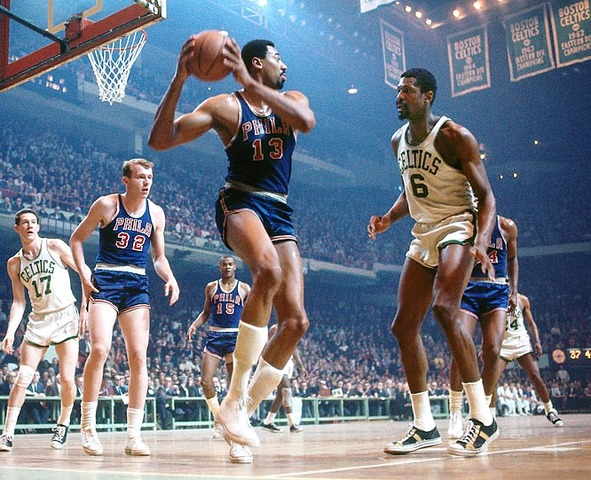
November 24, 1960: Wilt Chamberlain of the Philadelphia Warriors grabs 55 rebounds, setting an NBA record that still stands. He also scored 34 points. And it wasn't against a "slow white guy" or a "plumber," as LeBron James' worshipers say of Wilt's competition today: It was against Bill Russell of the Boston Celtics, the other serious contender for the title of the best player in the sport at the time. The entire Celtic team had 59 rebounds. Russell had 19 of them, which would be a great total by today's standards.

But the Celtics won, 132-129, at the Philadelphia Civic Center. Wilt set lots of records, but Russell (almost) always had the better team. That's why Wilt was prouder of this record than the 100 points he scored against the New York Knicks in a 1962 game: Because it was against the Celtics, particularly with Russell guarding him.

Kareem Abdul-Jabbar surpassed Wilt's record for career points of 31,419 in 1984, but Wilt's record of 23,924 career rebounds has never been seriously challenged. And it won't be: The days of great rebounders ended with Wilt's career in 1973. Russell is 2nd with 21,620. The only player active in the 2021-22 season who was in the Top 10, and even that at 10th place, was Dwight Howard with 14,627.

*

November 24, 1960 was a Thursday, a Thanksgiving Day. There were 2 other NBA games played. The Los Angeles Lakers beat the Cincinnati Royals, 108-100 at the Cincinnati Gardens. Elgin Baylor had 33 points and 19 rebounds for the Lakers. Jack Twyman scored 35 and Oscar Robertson 30 for the Royals.

And the St. Louis Hawks beat the Syracuse Nationals, 132-97 at the Kiel Auditorium in St. Louis. Bob Pettit had  31 points and 19 rebounds for the Hawks.

Baseball was out of season. In the NFL, the Detroit Lions beat the Green Bay Packers, 23-10 at Briggs Stadium in Detroit. The ballpark was renamed Tiger Stadium the next year.

In the brand-new American Football League, which embraced a pass-happy, high-scoring approach, the New York Titans beat the Dallas Texans, 41-35 at the Polo Grounds. In 1963, both teams changed their names: The Titans became the New York Jets, and the Texans moved, becoming the Kansas City Chiefs. In 1999, the original AFL team that had been the Houston Oilers, now playing in Tennessee, became the Tennessee Titans.

These college football games were played:

* The University of Pennsylvania beat Cornell, 18-7 at Franklin Field in Philadelphia.

* The University of Richmond beat the College of William & Mary, 19-0 at City Stadium in Richmond, Virginia.

* Virginia Tech beat the Virginia Military Institute, 13-12 at Victory Stadium in Roanoke, Virginia.

* Wichita State beat West Texas State (now named West Texas A&M), 31-14 at Veterans Field in Wichita, Kansas.

* Texas beat Texas A&M, 21-14 at Memorial Stadium in Austin, Texas.

* And the University of Denver beat Colorado State, 21-12 at DU Stadium in Denver.

The NHL was then based in Canada, where Thanksgiving is celebrated on the 2nd Monday in October, not the 4th Thursday in November. But the entire "Original Six" was in action that day:

* The New York Rangers beat the Boston Bruins, 5-3 at the Boston Garden.

* The Detroit Red Wings, despite playing on the same day as the Detroit Lions, sold out the Olympia Stadium, and beat the Montreal Canadiens, 3-1.

* And the Chicago Black Hawks beat the Toronto Maple Leafs, 2-1 at the Chicago Stadium.

Wednesday, November 16, 2022

November 16, 1957: Notre Dame Ends Oklahoma's 47-Game Winning Streak

November 16, 1957: The University of Oklahoma football team takes a 47-game winning streak into a home game with the University of Notre Dame, the last team to have beaten them.

Notre Dame had beaten Oklahoma on September 26, 1953, at Oklahoma Memorial Stadium (a.k.a. Owen Field, now Gaylord Family Memorial Stadium) in Norman, Oklahoma, en route to a National Championship. The following week, Oklahoma were held to a tie by the University of Pittsburgh. The week after that, they beat arch-rival Texas, and it was off to the races from there. Coach Charles "Bud" Wilkinson's Sooners ran the table, finishing 9-1-1.

They won all 10 games in 1954, but finished behind both Ohio State and UCLA in the last national poll. They won all 11 games in 1955, and this time, they were rewarded with the National Championship. They won all 10 games in 1956, and were again awarded the National Championship. Running back Tommy McDonald was the star of these teams, before going on to a Hall of Fame career as a flanker with the Philadelphia Eagles. In 1956, McDonald finished 2nd to Paul Hornung of the Notre Dame for the Heisman Trophy, and, in a rare height for an offensive lineman, Oklahoma center Jerry Tubbs finished 3rd.

The Sooners kept going in 1957, winning away to Number 8 Pitt, then beating Iowa State at home, Texas in the Cotton Bowl, Kansas and Colorado at home, then Kansas State and Number 19 Missouri on the road. That made them 7-0, with a 47-game winning streak, and a 48-game unbeaten streak, both all-time records in college football.

Notre Dame began the 1957 season by winning their 1st 4 games, over Purdue, Indiana, then-Number 10 Army and Pittsburgh. But they lost their next 2, home to Number 16 Navy and away to Number 2 Michigan State. They entered the game unranked, but perhaps harshly so.

Still, Oklahoma were a 19-point favorite and the Number 2-ranked team in the nation going in, so anyone predicting that Notre Dame would beat Oklahoma was just guessing. Sports Illustrated, founded 3 years earlier, was not guessing: They put the Sooners on the cover, with the headline, "WHY OKLAHOMA IS UNBEATABLE."

Notre Dame didn't get the memo. Their defense proved every bit as tough as Oklahoma's. Midway through the 4th quarter, the game was still scoreless. The Fighting Irish launched an 80-yard drive, and, on the drive's 20th play, on 4th and goal from the 3-yard-line, quarterback Bob Williams pitched the ball to running back Dick Lynch, later an All-Pro for the New York Giants, and put Notre Dame on top, 7-0.

Oklahoma had one last chance, but, with less than 1 minute left, Williams intercepted a pass, and the 7-0 score held to the final gun, and most people in the crowd of 63,170 were stunned.

Oklahoma shook the loss off, beating Nebraska and Oklahoma State, winning the Big Seven Conference title, and they beat Duke in the Orange Bowl. They finished the season ranked Number 4. Notre Dame weren't as lucky: The win over Oklahoma raised them to Number 9, but they lost their next game, home to Iowa. They beat USC at home, and then beat SMU in the Cotton Bowl (the stadium, not the game), and finished Number 9.

In a weird twist of events, the longest winning streak in the history of men's college basketball is 88 games, set by UCLA from 1971 to 1974. The last team to beat them before the streak began, and the team that beat them to end it? In each case, it was Notre Dame. Unlike Oklahoma football, however, both UCLA losses to Notre Dame were on the Notre Dame campus in South Bend, Indiana.

*

November 16, 1957 was a Saturday. Among the other college football games played that day were these:

* Oklahoma may have had the most shocking defeat of the day, or even of the decade, but they weren't even the highest-ranked team to lose that day. Texas A&M went in ranked Number 1, but were upset by Number 20 Rice, 7-6 at Rice Stadium in Houston. Rice went on to win the Southwest Conference title.

* Number 3 Auburn beat Georgia, 6-0 at Memorial Stadium in Columbus, Georgia.

* Number 4 Michigan State beat Minnesota, 42-13 at Spartan Stadium in East Lansing, Michigan.

* Number 5 Iowa were slightly upset by Number 6 Ohio State, 17-13 at Ohio Stadium in Columbus. Ohio State won the Big Ten Conference title.

* Number 7 Tennessee were slightly upset by Number 8 Mississippi, 14-7 at Crump Stadium in Memphis. "Ole Miss" went on to win the Southeastern Conference title, and beat Texas in the Sugar Bowl.

* Number 9 Navy beat George Washington University, 52-0 at Memorial Stadium in Baltimore. Navy beat Rice in the Cotton Bowl, in large part due to running back Pete Dawkins, who won the Heisman Trophy the next season.

* Number 10 Army beat Tulane, 20-14 at Michie Stadium in West Point, New York.

* Number 11 Duke beat Number 14 Clemson, 7-6 at Duke Stadium (now Wallace Wade Stadium) in Durham, North Carolina.

* Number 15 Illinois were upset by Wisconsin, 24-13 at Camp Randall Stadium in Madison, Wisconsin.

* Number 16 Oregon beat Southern California (USC), 16-7 at the Los Angeles Memorial Coliseum. Oregon won the Pacific Coast Conference title. But the Ohio State beat Oregon in the Rose Bowl, and were awarded the National Championship by UPI.

* In New York City, Columbia lost to the University of Pennsylvania, 28-6 at Baker Field in Manhattan.

* And in New Jersey, Rutgers lost to William & Mary, 38-7 at Cary Field in Williamsburg, Virginia; and Princeton lost to Yale, 20-13 at Palmer Stadium in Princeton.

There were 3 games played in the NBA:

* The New York Knicks lost to the Detroit Pistons, 109-105 at the old Madison Square Garden.

* The Boston Celtics beat the Philadelphia Warriors, 111-89 at the Boston Garden. Bill Russell scored 28 points and set a new NBA record with 49 rebounds. Three years later, with the Warriors, Wilt Chamberlain said a record which has never seriously been approached, against Russell and the Celtics, with 55 rebounds. But the Celtics won the game.

* And the St. Louis Hawks beat the Syracuse Nationals, 118-101 at the Kiel Auditorium in St. Louis.

And the NHL's entire "Original Six" were in action:

* The New York Rangers beat the Montreal Canadiens, 4-2 at the Montreal Forum.

* The Boston Bruins beat the Toronto Maple Leafs, 4-2 at Maple Leaf Gardens in Toronto.

* And the Detroit Red Wings beat the Chicago Black Hawks, 1-0 at the Chicago Stadium.

And in English soccer, Arsenal beat Hampshire team Portsmouth, 3-2 at Highbury in North London.

Saturday, October 15, 2022

October 15, 1966: Bill Russell Becomes the NBA's 1st Black Head Coach

October 15, 1966: The Boston Celtics open the NBA season by defeating the San Francisco Warriors, 121-113 at the Boston Garden. Rick Barry scores 41 points for the Warriors, but, as usual, the Celtics have a more balanced team, led by 29 points from Sam Jones.

Bill Russell scores only 8 points, but he had other things on his mind. Namely, he was now a player-coach, the 1st black coach in NBA history, and, unless you count Fritz Polland of the 1st NFL Champions, the 1920 Akron Pros (and the NFL was hardly a major league at that point), the 1st black coach in the history of North American major league sports. That this happens on the birthday of Willie O'Ree, and in the building he also called home with the Bruins, is interesting, but not especially relevant to Russell's story.

The Celtics would fall to the Philadelphia 76ers in the Eastern Conference Finals this season, but Russell would lead them to the NBA title in 1968 and 1969 -- making him the most recent player-coach to lead a team to a World Championship.

Alas, while Bill Russell is still one of the Top 10 players in NBA history, he didn't do so well as a coach when he didn't have Bill Russell as a player: With himself playing, his coaching record is 162-83, for a winning percentage of .661; otherwise, with the 1974-77 Seattle SuperSonics and the 1987-88 Sacramento Kings, he's 100-122, .450; overall, 341-290, for a winning percentage of .540.

*

October 15, 1966 was a Saturday. Among the other NBA games played that day was the Chicago Bulls making their debut. Guy Rodgers scored 36 points, and they beat the St. Louis Hawks, 104-97 at the Kiel Auditorium. For most of their history, the Bulls will be at least good, and, at times, historically good.

* Also, the New York Knicks lost to the Philadelphia 76ers, 128-112 at the Philadelphia Civic Center. Wilt Chamberlain scored 28 points and had 21 rebounds.

* The Los Angeles Lakers beat the Baltimore Bullets, 126-115 at Baltimore Civic Center (now the CFG Bank Arena). Elgin Baylor of the Lakers and Gus Johnson of the Bullets each scored 36 points.

* And the Cincinnati Royals beat the Detroit Pistons, 103-99 at the Cincinnati Gardens. Oscar Robertson scored 37 points.

This was one of the rare seasons in which the NBA started before the NHL, which didn't begin for another 4 days. The baseball seasons ended 6 days earlier, when the Baltimore Orioles swept the Los Angeles Dodgers in the World Series. But there was college football on this day, including the following games:

* Number 1 Michigan State beat Ohio State, 11-8 at Ohio Stadium in Columbus.

* Number 2 Notre Dame beat North Carolina, 32-0 at Notre Dame Stadium in South Bend, Indiana. Notre Dame and Michigan State were on a collision course, and played to a 10-10 tie, and the National Championship voters awarded it to Notre Dame. Michigan State were robbed.

* Number 3 Alabama beat Tennessee, 11-10 at Neyland Stadium in Knoxville, Tennessee. Alabama would finish undefeated and, unlike Michigan State and Notre Dame, also untied. If you don't think Michigan State were robbed, certainly, Alabama were.

* Number 4 UCLA beat Penn State, 49-11 at the Los Angeles Memorial Coliseum.

* Number 5 Southern California beat Stanford, 21-7 at the old Stanford Stadium in the San Francisco suburb of Palo Alto, California. USC won the title in the Athletic Association of Western Universities, a precursor to the league now named the Pacific-Twelve Conference.

* Number 6 Nebraska beat Kansas State, 21-10 at Memorial Stadium in Lincoln, Nebraska. Nebraska won the Big Eight Championship, but lost to Alabama in the Sugar Bowl.

* Number 7 Georgia Tech beat Auburn, 17-3 at Cliff Hare Stadium (now Jordan-Hare Stadium) in Auburn, Alabama.

* Number 8 Florida, led by quarterback Steve Spurrier, who went on to win the Heisman Trophy, beat North Carolina State, 17-10 at Carter Stadium in Raleigh, North Carolina. That stadium had opened just the week before, as N.C. State lost to South Carolina. It was renamed Carter-Finley Stadium in 1979. Florida went on to beat Georgia Tech in the Orange Bowl.

* Number 9 Purdue beat Michigan, 22-21 at Michigan Stadium in Ann Arbor, Michigan. Because the Big Ten Conference still had that stupid rule that a team couldn't go to the Rose Bowl in back-to-back years, Champions Michigan State were ineligible, so 2nd-place Purdue went. Led by quarterback Bob Griese, the beat USC. It was Purdue's 1st bowl game ever, and remains their only Rose Bowl win.

* Army beat Rutgers, 14-9 at Rutgers Stadium in Piscataway, New Jersey.

* Navy beat Pittsburgh, 24-7 at Pitt Stadium in Pittsburgh.

* And Princeton lost to Colgate, 7-0 at Palmer Stadium in Princeton.

Also on this day, Bob McNab makes his debut for Arsenal. The left back doesn't make much of a difference, as the Gunners lose 3-1 to a strong Leeds United team at Highbury. But McNab will go on to help Arsenal win the 1970 Inter-Cities Fairs Cup, and both the Football League and the FA Cup, "the Double," in 1971.

Friday, October 14, 2022

October 14, 1978: Reggie Jackson's "Sacrifice Thigh"

October 14, 1978: It's Game 4 of the World Series at Yankee Stadium, and there's another allegation of interference, 3 years to the day after the Ed Armbrister Game.
The New York Yankees trail the Los Angeles Dodgers, 3-1 with 1 out in the bottom of the 6th. The Dodgers are 11 outs away from taking a 3-games-to-1 lead in the Series. But Reggie Jackson singles home a run, and Thurman Munson takes 2nd base on the play. Then Lou Piniella comes to bat. Sweet Lou hits a low line drive toward shortstop Bill Russell.
The ball was very low. If it had been any higher, the umpires would probably have invoked the infield-fly rule, which would automatically have declared the batter, Piniella, out for the 2nd out of the inning, and forced Munson to stay at 2nd and Jackson at 1st. But there is no time for the IFR to be called, and Russell… drops the ball. Thurman sees this and heads for 3rd. Russell recovers the ball, and steps on 2nd to force out Reggie, who's stuck just off of 1st, seemingly frozen. Russell throws to 1st, and…
And the ball hits Reggie on the leg and caroms away into foul territory. Lou gets to 1st safely. Thurman rounds 3rd and scores. The Yanks now trail 3-2, with Lou on 1st and 2 outs.
Dodger manager Tommy Lasorda storms out of the dugout, and furiously argues with the umpires' crew chief, AL ump Marty Springstead, that Lou should be called out due to Reggie's "intentional interference."
Springstead decides that he cannot determine Reggie's intent, and he lets the result of the play stand. Lasorda would later say he was impressed with Reggie's presence of mind to attempt the "tactic," which becomes known as "the Sacrifice Thigh," but he still thought it was an illegal play.
The Yankees tie the game in the 8th when Munson doubles home Paul Blair. The score remains tied until the bottom of the 10th, when Piniella singles home Roy White with the winning run, tying the Series at 2 games apiece.
This game still ticks off Dodger fans, but so what? They're rooting for a team that belongs in Brooklyn.
Dodger fans claim they can see Reggie sticking his hip out to deflect the ball on the replay. They need to get their vision checked. Umpires from both Leagues determined that there was no intentional interference. So we can also rule out AL bias.
Russell dropped the ball. If he'd caught it, he could have stepped on 2nd and thrown Piniella out at 1st, and the inning would have been over before anybody had realized what happened.
The Dodgers were still winning. After the run scored, it was Dodgers 3, Yankees 2. What's more, the Dodgers were up 2 games to 1. The Dodger bullpen could have held that lead, and they would then have had 3 chances to get 1 win. Even after losing the game, the Series was still tied. They had 3 chances to get 2 wins, with Game 6 and, if necessary, Game 7 at Dodger Stadium. Instead, they blew a 2-0 lead in games. The Dodgers flat-out choked, and the Yankees happily took advantage of this.
You could also blame Lasorda for losing the Series, for losing his cool. I don't blame him for arguing the call, because a manager needs to stand up for his team when he believes they're being wronged. But, as they say in English soccer, he lost the plot, and his team followed his lead.
He wasn't the 1st manager to do this in a postseason game, and he certainly hasn't been the last: Witness Whitey Herzog of the St. Louis Cardinals in the 1985 World Series, Davey Johnson of the Baltimore Orioles in the 1996 AL Championship Series (also against the Yankees), and Mike Scioscia (a Lasorda disciple) of the Los Angeles Angels in the 2005 ALCS. And those are just examples from baseball in the last 40 years.
On top of everything else, the Yankees were simply better. They were the defending World Champions, having beaten the Dodgers the year before. They had won 100 games to the Dodgers' 97, and in a tougher Division, too. They had a better lineup, a better defense, a better starting rotation, a better bullpen, and a calmer manager in Bob Lemon.
Even if Reggie had been called out, and the inning ended, there's no guarantee that the Yankees still wouldn't have come from behind to win. This was a team that did what it had to do to win. The Dodgers wouldn't do that until 1981.
*
October 14, 1978 was a Saturday. Singer Usher Raymond IV, who uses only his first name, was born.
Among the college football games played that day were these:
* Number 1 Oklahoma beat Kansas, 17-16 at Memorial Stadium in Lawrence, Kansas.
* Number 2 Southern California were upset by Arizona State, 20-7 at Sun Devil Stadium in the Phoenix suburb of Tempe, Arizona. USC would still win the Pacific-10 Conference title, but this loss would cost them the National Championship.
* Number 3 Arkansas had the week off, but lost their next 2 games, away to Texas and away to Houston.
* Number 4 Penn State had the week off. They finished the regular season undefeated and ranked Number 1.
* Number 5 Michigan were upset by in-State rivals Michigan State, 24-15 at Michigan Stadium in Ann Arbor. Among the heroes for Michigan State that day was a receiver who would make his mark playing pro ball in Michigan -- not for the Lions, but the Tigers: Kirk Gibson.
The 2 schools finished in a tie for the Big Ten title. With the head-to-head tiebreaker, Michigan State should have gone to the Rose Bowl. However, they were on probation, so the bid went to Michigan, who lost to USC, on future Heisman Trophy winner Charles White's "phantom touchdown." (He fumbled the ball as he went over the goal line. This may have stuck in some poll voters' minds as a reason why they should vote for Alabama over USC.)
* Number 6 Texas A&M were upset by Number 17 Houston, 33-0 at the Astrodome in Houston. UH went on to win the Southwest Conference title.
* Number 7 Alabama beat Florida, 23-12 at Bryant-Denny Stadium in Tuscaloosa, Alabama. 'Bama rebounded from an earlier non-conference loss to USC, and went on to win the Southeastern Conference title. The Sugar Bowl would be a true National Championship game, as Number 2 Alabama beat Number 1 Penn State. That was the 1st college football game I can ever remember seeing on television.
* Number 8 Nebraska beat Kansas State, 48-14 at Memorial Stadium in Lincoln, Nebraska. Nebraska later beat Oklahoma, knocking them out of the Number 1 ranking. But Nebraska then lost to Missouri, forging a tie for the Big Eight Conference title. The head-to-head tiebreaker should have given the title, and the accompanying bid to the Orange Bowl, to Nebraska. But the Orange Bowl committee decided to invite both teams, setting up the 1st-ever bowl rematch of a regular-season game, and Oklahoma won it.
* Number 9 Pittsburgh were upset by Notre Dame, 26-17 at Notre Dame Stadium in South Bend, Indiana. With Joe Montana at quarterback, Notre Dame accepted a bid to the Cotton Bowl, and Montana led the first of his famed comebacks to beat Houston.
* Number 10 Maryland beat Syracuse, 24-9 at Archbold Stadium in Syracuse, New York.
* Number 11 Louisiana State were upset by Georgia, 24-17 at Tiger Stadium in Baton Rouge, Louisiana. 
* Number 13 Colorado were upset by Oklahoma State, 24-20 at Lewis Field (now Boone Pickens Stadium) in Stillwater, Oklahoma.
* Number 15 Florida State were upset by Mississippi State, 55-27 at Scott Field (now Davis-Wade Stadium) in Starkville, Mississippi.
* Number 16 Ohio State were upset by Purdue, 27-16 at Ross-Ade Stadium in West Lafayette, Indiana. Ohio State ended up going to the Gator Bowl, where they lost to Atlantic Coast Conference Champion Clemson, and head coach Woody Hayes punched a Clemson player, costing him his job after 28 seasons in Columbus.
* Number 18 Stanford were upset by Washington, 34-31 at the old Stanford Stadium in the San Francisco suburb of Palo Alto, California.
* Number 19 Missouri beat Number 20 Iowa State, 26-13 at Faurot Field in Columbia, Missouri. Missouri ended up beating LSU in the Liberty Bowl.
* Navy were the only service academy to win, beating Duke, 31-8 at Navy-Marine Corps Memorial Stadium in Annapolis, Maryland. Army lost to Holy Cross, 31-0 at Michie Stadium in West Point, New York. And Air Force lost to Colorado State, 31-13 at Falcon Stadium in Colorado Springs.
* As for New Jersey's teams, Rutgers beat Connecticut, 10-0 at Rutgers Stadium in Piscataway, New Jersey; while Princeton lost to Columbia, 14-10 at Baker Field in Manhattan.
There were 5 games played in the NBA:
* The New Jersey Nets beat the Los Angeles Lakers, 102-100 at the Rutgers Athletic Center (now the Jersey Mike's Arena) in Piscataway, New Jersey.
* The Houston Rockets beat the Boston Celtics, 114-108 at the Boston Garden. Calvin Murphy scored 35 points.
* The Atlanta Hawks beat the Detroit Pistons, 122-114 at The Omni in Atlanta.
* The San Antonio Spurs beat the Milwaukee Bucks, 153-111 at the HemisFair Arena in San Antonio. George Gervin led all scorers on the night with 37.
* And the Golden State Warriors beat the San Diego Clippers, 117-89 at the Oakland Coliseum Arena.
There were 7 games played in the NHL:
* The New York Islanders lost to the Toronto Maple Leafs, 10-7 at Maple Leaf Gardens in Toronto. Although a defenseman, Isles Captain Denis Potvin scored 3 goals, while Mike Bossy scored 2. For the Leafs, Darryl Sittler had a hat trick, and Dave "Tiger" Williams scored 2.
* The Montreal Canadiens beat the Colorado Rockies, 5-2 at the Montreal Forum.
* The Atlanta Flames beat the Washington Capitals, 6-3 at the Capital Centre in the Washington suburb of Landover, Maryland.
* The Boston Bruins and the Pittsburgh Penguins played to a tie, 4-4 at the Civic Arena in Pittsburgh.
* The Philadelphia Flyers beat the Detroit Red Wings, 3-1 at the Olympia Stadium in Detroit.
* The Buffalo Sabres beat the Minnesota North Stars, 5-2 at the Metropolitan Sports Center in the Minneapolis suburb of Bloomington, Minnesota.
* The Los Angeles Kings beat the St. Louis Blues, 6-2 at The Forum outside Los Angeles in Inglewood, California.
* And the New York Rangers, the Chicago Black Hawks and the Vancouver Canucks were not scheduled.
There was 1 game played in the World Hockey Association: The Winnipeg Jets beat the Indianapolis Racers 6-3 at the Market Square Arena in Indianapolis.
In New Jersey high school football, the school that would become my Alma Mater, East Brunswick, beat Woodbridge, 14-6 at Nicholas A. Priscoe Stadium in Woodbridge.
And in English soccer, Birmingham-area team Wolverhampton Wanderers, a.k.a. Wolves, beat North London's Arsenal, 1-0 at Molineux Stadium in Wolverhampton.

Thursday, August 11, 2022

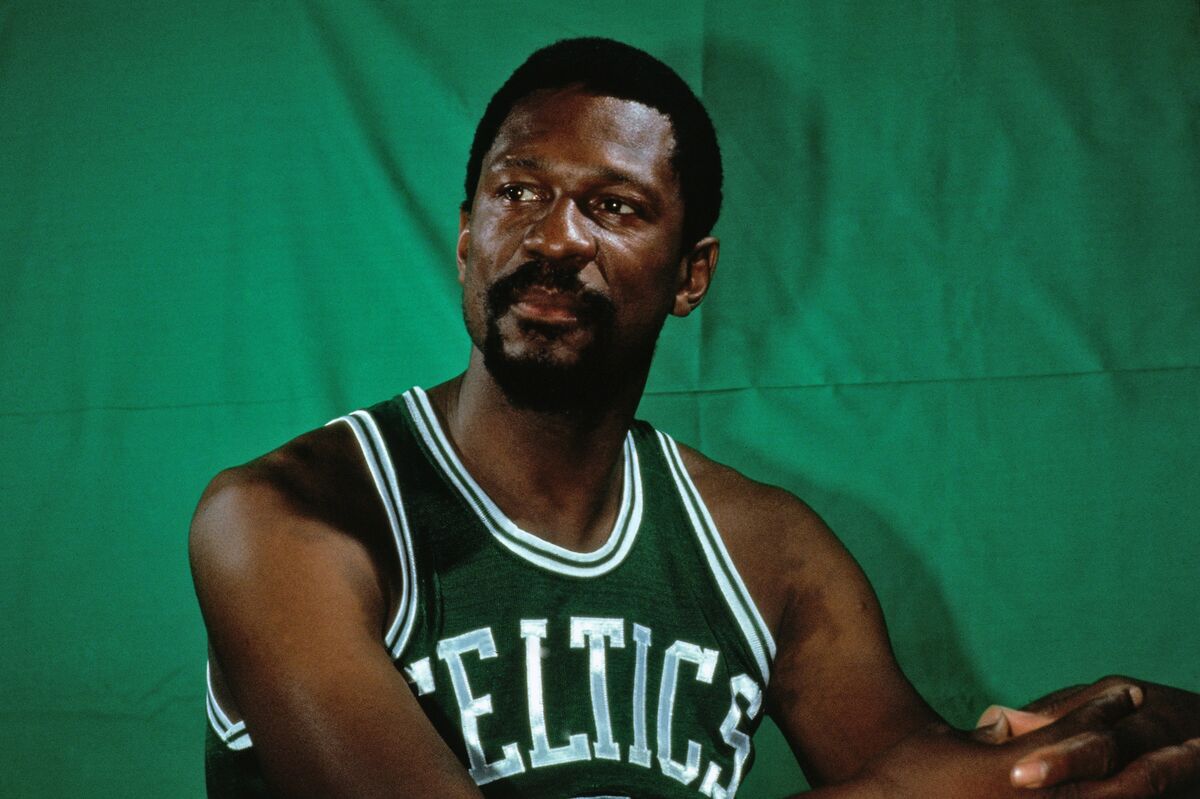
August 11, 2022: Bill Russell's Number 6 Is Retired for All NBA Teams

August 11, 2022: NBA Commissioner Adam Silver announces that the league has retired uniform Number 6 for all teams, in memory of Bill Russell, who died 11 days earlier, at the age of 88.

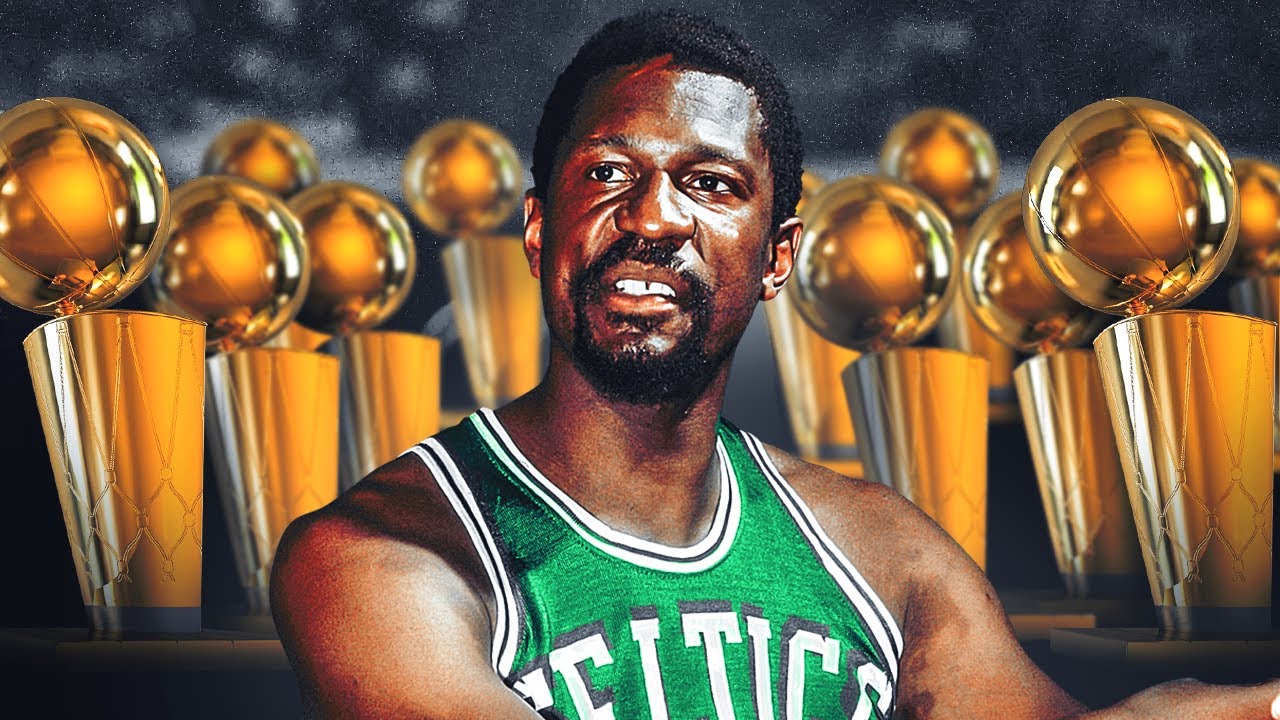
Russell had led the University of San Francisco to the National Championship in 1955 and 1956; the U.S. Olympic Team to the Gold Medal in Melbourne, Australia in 1956; and the Boston Celtics to the NBA Championship in 1957, 1959, 1960, 1961, 1962, 1963, 1964, 1965, 1966, 1968 and 1969.

That was 11 titles in 13 seasons, a total matched in all of North American major league sports only by Henri Richard of the NHL's Montreal Canadiens. Yogi Berra leads Major League Baseball with 10 World Series wins. Tom Brady has won 7 Super Bowls, but he cheats, so the real record is 6, shared by Fuzzy Thurston, Forrest Gregg and Herb Adderley.

In addition, Russell was player-coach for his last 3 seasons, 1966 to 1969. That made him the NBA's 1st black head coach, and the 1st black head coach to win a league title.

He was named to the NBA's 25th, 50th and 75th Anniversary Teams. The Celtics had retired his Number 6, and the City of Boston dedicated a statue of him outside City Hall.

Since most NBA players wear numbers ending with 0, 1, 2, 3, 4 or 5, retiring 6 league-wide was not a problem. The Orlando Magic and the Sacramento Kings had each retired the number for their fans, as their "Sixth Man." It had also been retired by the Philadelphia 76ers, for Julius "Dr. J" Erving; the Phoenix Suns, for Walter Davis; and the San Antonio Spurs, for Avery Johnson.

Russell joined Jackie Robinson, whose Number 42 was retired for all of professional baseball; and Wayne Gretzky, whose Number 99 was retired for all of professional hockey. No other NHL players were wearing 99, anyway. But, as with 42 in baseball, all players who were already wearing 6 at the time of the announcement were allowed to continue wearing it for the rest of their careers.

*

August 11, 2022 was a Thursday. The only sport in season was baseball, and these games were played:

* The Boston Red Sox beat the Baltimore Orioles, 4-3 at Fenway Park in Boston.

* The Miami Marlins beat the Philadelphia Phillies, 3-0 at Citizens Bank Park in Philadelphia. How many Marlin pitchers does it take to pitch a 7-hit shutout? Apparently, 4: Edward Cabrera (5 2/3rds innings), Steve Okert (1 1/3rd), Dylan Floro (2/3rds) and Tanner Scot (1 1/3rd).

* The Chicago Cubs beat the Cincinnati Reds, 4-2 at Great American Ball Park in Cincinnati.

* The Cleveland Guardians beat the Detroit Tigers, 4-3 at Comerica Park in Detroit. Oscar Gonzalez singled home the winning run in the top of the 10th inning.

* The Kansas City Royals beat the Chicago White Sox, 5-3 at Kauffman Stadium in Kansas City.

* The Houston Astros beat their cross-State rivals, the Texas Rangers, 7-3 at Minute Maid Park (now Daikin Park) in Houston.

* The Colorado Rockies beat the St. Louis Cardinals, 8-6 at Coors Field in Denver.

* The Arizona Diamondbacks beat the Pittsburgh Pirates, 9-3 at Chase Field in Phoenix.

Thursday, May 5, 2022

May 5, 1969: Bill Russell's Last Game & Last Title

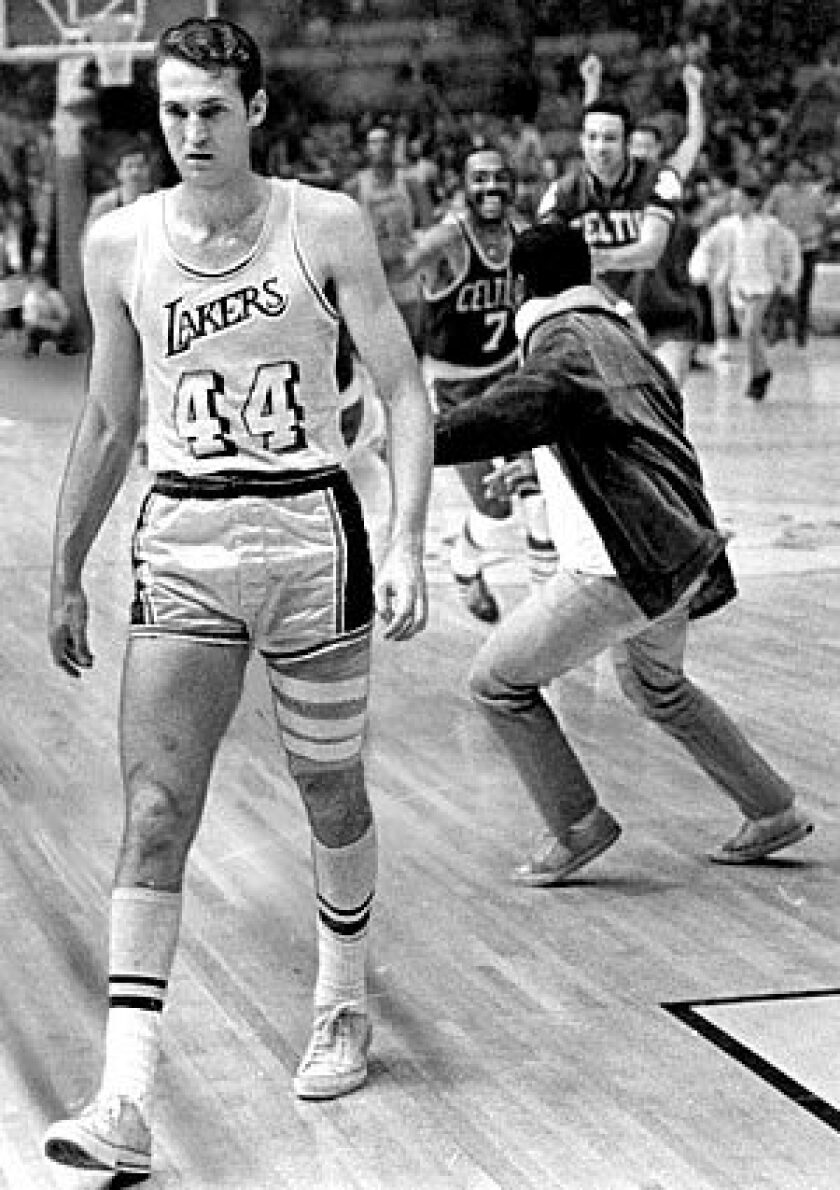
May 5, 1969: Game 7 of the NBA Finals is played at The Forum, outside Los Angeles in Inglewood, California. Jack Kent Cooke, builder of The Forum, and owner of its teams, the NBA's Los Angeles Lakers and the NHL's Los Angeles Kings, has prepared the building for the Lakers' 1st World Championship since moving to Los Angeles in 1960. (They had previously won titles in Minneapolis in 1949, '50, '52, '53 and '54.) Balloons are suspended from the ceiling, in anticipation of the celebration.

There was good reason for this anticipation. The Lakers had 4 men on their roster who went on to the Basketball Hall of Fame: Guards Jerry West and Gail Goodrich, forward Elgin Baylor, and, acquired the previous off-season, center Wilt Chamberlain. Goodrich was an excellent passer. West was that, and the best shooter the game had ever seen, and a great defensive player. Baylor was the flashiest player in the league, with offensive moves no one had ever seen before.

And Chamberlain was the greatest basketball player who ever lived. The year before, with the Philadelphia 76ers, he had led the league in assists, the only time a center has ever done that. The year before that, he had led the Sixers to the NBA Championship. In each of the 7 seasons before that, he had led the NBA in scoring, including in 1961-62, when he averaged 50.4 points per game. He would be the NBA's all-time leading scorer until 1984. He is still its all-time leading rebounder. Blocked shots were not kept as an official statistic at that time; if they were, he would still be the all-time leader in that, too.

And now, he had been added to the Lakers. Before the 2003-04 Lakers, before the 2007-08 Boston Celtics, before the early 2010s Miami Heat, before the late 2010s Golden State Warriors, and before the 2020 Lakers, this was the NBA's 1st planned superteam, although that term wasn't used at the time.

The Lakers went 55-27, easily winning the regular-season title in the Western Division. In the Playoffs, they beat the San Francisco Warriors in 6 games, and then the Atlanta Hawks in 5.

Standing in their way, as they always seemed to be, were the Boston Celtics. The Celtics had won their 1st NBA Championship in 1957. In 1959 (the Lakers' last Finals appearance in Minneapolis), '62, '63, '65, '66 and '68, they had beaten the Lakers in the Finals. They had also beaten the St. Louis Hawks in the Finals in 1957, '60 and '61, losing to them in '58; and the Warriors in the Finals in '64.

Red Auerbach had coached the Celtics until the 1966 title, then stepped aside, remaining general manager. He handed the head coaching reins to the man who had been his best player since his arrival in 1956: Bill Russell. He was the 2nd-best player the game had ever seen to this point, behind Chamberlain.

But where Chamberlain was the best player, Russell was the best team player, because Auerbach built a great team around him, and Russell made them all better. He led them to another Championship in 1968, and Sports Illustrated named him their Sportsman of the Year. By 1969, that team included fellow future Hall-of-Famers Sam Jones, John Havlicek, Tom "Satch" Sanders, Bailey Howell, and, though it would be as a coach that he would be elected, Don Nelson.

Age, and the pressure of also coaching the Celtics, was catching up with Russell. The Celtics went 48-34, only finishing 4th in the Eastern Division. But it was enough to make the Playoffs, in which the Celtics beat the 76ers in 5 games, and the New York Knicks in 6.

Russell had announced he would retire as a player. Due to the aging of the Celtics -- he was 35, to Baylor's 34, Chamberlain's 32 and West's 30 -- for the 1st time, they went into an NBA Finals as an underdog. And, sure enough, the Lakers took the 1st 2 games in Inglewood, 120-118 and 118-112.

No one was really surprised when the Celtics took the next 2 at the Boston Garden, 111-105 and 89-88. Or when the Lakers won Game 5 at home, 117-104. (Due to the league having expanded to 5 additional teams over the last 3 seasons, this was the 1st NBA game ever played in the month of May.) Or when the Celtics won Game 6 at home, 99-90. There was no way Bill Russell was going to lose his last game at the Boston Garden.

But no home team had ever lost an NBA Finals Game 7. At that point, home teams were 8-0: The Rochester Royals won in 1951; the Lakers did so in 1952 and '54; the Syracuse Nationals in 1955; and the Celtics in 1957, '60, '62 and '66.

And so, for Game 7, with every good reason to believe that it would happen, Cooke ordered the balloons, yellow with "World Champion Lakers" written in purple on them, suspended from the rafters of The Forum. In every seat, and all 17,568 were filled, a flyer was placed, stating, "When, not if, the Lakers win the title, balloons will be released from the rafters, the USC marching band will play 'Happy Days Are Here Again' and broadcaster Chick Hearn will interview Elgin Baylor, Jerry West and Wilt Chamberlain in that order."

Cooke was counting his chickens before they hatched. West, trying to get through a hamstring pull in Game 5, went out for a pre-game shoot-around, and saw the balloons, and, thinking them a jinx, yelled at Cooke. Russell saw them, and walked over to West, and said, "Those fucking balloons are staying up there."

Russell told his players to take advantage of West's injury by running the fast break every chance they got. After 1 quarter, it was Celtics 24, Lakers 12. At halftime, the Lakers had cut it to 59-56. The Celtics extended their lead to 91-76 after 3.

For all his achievements, Chamberlain would later say that he was most proud of the fact that he had never fouled out of a game in his career. But early in the 4th quarter, he was assessed his 5th foul. With only 1 more to give, he had to take it easy on defense. With 5 minutes left, and the Celtics leading 103-94, he injured his knee, and walked to the bench.

Laker coach Butch van Breda Kolff, who had coached a Princeton University team featuring later New York Knicks star Bill Bradley to the NCAA Final Four in 1965, sent backup center Mel Counts in -- and with 2 minutes left, it was Boston 103, Los Angeles 102.

Chamberlain told van Breda Kolff he was ready to go back in. VBK said, "We're doing fine without you."

They were not doing fine without him: They were still behind. And so, in the most important two minutes of his coaching career, down by one point, Butch van Breda Kolff left the greatest player of all time on the bench. It remains the greatest coaching blunder in the history of the NBA.

With 1:33 left, it was still 103-102 Boston, when Havlicek, famous for a key steal at the end of Game 7 of the 1965 Eastern Conference Finals, against a 76ers team with Chamberlain, had the ball knocked away from him by Keith Erickson. This looked like a big break for the Lakers. Instead, it went to Nelson, who beat the 24-second shot clock with a shot from 18 feet out, to make it 105-102 Celtics.

The Lakers would follow this with turnovers that might not have happened if Chamberlain had been put back in. The game ended Celtics 108, Lakers 106. Two points made the difference between the Lakers finally winning their 1st NBA Championship in Los Angeles, and letting the balloons come down, and the most humiliating defeat in NBA history.

For the Celtics, Russell used only 7 players, all game long: Havlicek scored 26, Jones 24, Em Bryant 20, Nelson 16, Howell 9, Larry Siegfried 7, and Russell himself 6 plus 21 rebounds.

The Lakers also used only 7 players: West scored 42, with 13 rebounds and 12 assists, making him the 1st player with a triple-double in an NBA Finals Game 7 (through the 2021 Finals, he has been followed only by James Worthy in 1988 and LeBron James in 2016); Baylor 20, with 15 rebounds; Chamberlain 18, with 27 rebounds, despite missing the last 5 minutes; Counts and Johnny Egan each scored 9, Erickson 6, and Tom Hawkins 2.

For the 1st time, a Most Valuable Player award was presented for the Finals. It was given to West. He remains the only player from a losing team ever to receive it. In 2009, the award was renamed the Bill Russell Award, honoring a man who never had it available to him, but had played 13 seasons in the NBA, made 12 Finals, and won 11 Championships.
Jerry West

Cooke correctly identified the scapegoat, and fired van Breda Kolff almost immediately. VBK went on to coach in the NBA with Detroit, Phoenix and New Orleans (the Jazz, not the Hornets/Pelicans franchise); in the ABA with Memphis; and in college with the University of New Orleans, Lafayette and Hofstra. He never got close to winning again. Chamberlain (and West) had carried him, so maybe he should have given Chamberlain the benefit of the doubt.

Russell went on to coach 4 seasons with the Seattle SuperSonics, and 1 for the Sacramento Kings. Like many player-coaches, he found it a lot harder to coach when he couldn't call on himself to play. Without himself (and Auerbach to build teams for him), he coached 5 seasons, losing in the 1st round of the Playoffs twice, missing twice, and being fired before he could complete his season in Sacramento.

The Lakers got back to the Finals in 1970, and lost to the Knicks, and they remain the only team ever to lose 3 straight NBA Finals. Early in the 1971-72 season, Baylor retired. In their next game, the Lakers began a 33-game winning streak, still a record for North American major league sports. They set a new record with 69 regular-season wins, breaking the record of 68 by the 1967 76ers, who also had Chamberlain. They beat the Knicks in the Finals, breaking a 13-year, 0-8 Finals drought. That Finals was won in Game 5, at The Forum. There were no balloons. The Lakers faced the Knicks in the Finals again the next year, and lost. Chamberlain retired after that, and West after 1 more year.

The Celtics rebuilt, and won titles in 1974 and 1976. Both teams rebuilt, and the Celtics, with Russell not involved by Auerbach, who was still team president, won titles in 1981, '84 (beating the Lakers in the Finals) and '86; while the Lakers, with Cooke having sold the team and the arena to Jerry Buss, and West as general manager, won them in 1980, '82, '85 (beating the Celtics in the Finals), '87 (beating the Celtics again) and '88.

Both teams rebuilt again, but the Celtics couldn't get it done, while watching the Lakers, under West's building and Phil Jackson's coaching, win again in 2000, '01 and '02. Another rebuilding job led the Celtics to win the Finals over the Lakers in 2008, but the Lakers won in 2009, and beat the Celtics in 2010. The Lakers have since won again, in 2020, while the Celtics are still looking for their 1st title since 2008. 

The 2 franchises share the record: Each team has won 17 NBA Championships. But if you only count what they've won in their respective current cities (and you should), it's Boston 17, Los Angeles 12.

Going into the 2021-22 Playoffs, home teams are now 15-4 in NBA Finals Game 7s. Since the 1969 Lakers, the only losers have been the 1974 Milwaukee Bucks to the Celtics, the 1978 Seattle SuperSonics to the Washington Bullets, and the 2016 Golden State Warriors to the Cleveland Cavaliers.

(UPDATE: The Celtics won again in 2024, making the count Celtics 18, Lakers 17.)

*

May 5, 1969 was a Monday. That same night, Game 4 of the American Basketball Association Finals was played, and the Oakland Oaks beat the Indiana Pacers, 144-117 at the Indiana State Fair Coliseum (now the Corteva Coliseum) in Indianapolis. The Oaks wrapped up the title 2 nights later at the Oakland Coliseum Arena, winning 135-131.

The NHL season had ended the night before, as the Montreal Canadiens completed a 4-game sweep of the St. Louis Blues, 2-1 at the St. Louis Arena, to win their 2nd straight Stanley Cup, their 4th Cup in the last 5 years, and their 8th in the last 14.

Football was out of season. These Major League Baseball games were played:

* The New York Yankees lost to the Oakland Athletics, 3-2 at the Oakland Coliseum. Chuck Dobson outpitched Mel Stottlemyre, future Yankee Danny Cater hit a home run, and Reggie Jackson, not quite 23 years old and in his 2nd full MLB season, went 2-for-3 with a walk.

* The Cincinnati Reds beat the Montreal Expos, 8-5 at Jarry Park in Montreal, in a game shortened to 7 innings due to rain. Lee May and Bobby Tolan hit home runs for the Reds, Pete Rose went 2-for-3 with a walk and scored 3 runs, while Johnny Bench went 0-for-2 with 2 walks.

* The Kansas City Royals beat the Baltimore Orioles, 4-2 at Memorial Stadium in Baltimore. Frank Robinson went 2-for-3, but Brooks Robinson went 0-for-3, and Dick Hall blew a save in the 9th inning.

* The Los Angeles Dodgers beat the Pittsburgh Pirates, 13-3 at Forbes Field in Pittsburgh. Andy Kosco hit 2 home runs for the Dodgers, while Willie Stargell went 1-for-3 for the Pirates, and Roberto Clemente did not play.

* The Minnesota Twins beat the Detroit Tigers, 6-2 at Tiger Stadium in Detroit. For the Twins, Harmon Killebrew hit a home run, and Rod Carew had an RBI single. For the Tigers, Jim Northrup hit a home run, and Al Kaline went 1-for-3.

* The San Francisco Giants beat the Chicago Cubs, 11-1 at Wrigley Field in Chicago. They did this without Willie Mays entering the game. Ernie Banks only appeared as an unsuccessful pinch-hitter.

* The St. Louis Cardinals beat the San Diego Padres, 7-6 at Busch Memorial Stadium in St. Louis.

* The Boston Red Sox beat the California Angels, 7-2 at Anaheim Stadium (now Angel Stadium of Anaheim.)

* And the Seattle Pilots beat the Washington Senators, 2-0 at Sick's Stadium in Seattle. Rich Rollins singled home a run in the 1st inning, and Steve Whitaker did the same in the 4th.

In Ball Four, his memoir of that season, Pilots pitcher Jim Bouton wrote:

The meeting before the game was marvelous. When we went over the hitters, Gary Bell had the same comment on each one: "Smoke him inside" (fastball inside). Frank Howard, (Ken) McMullen, (Ed) Brinkman, (Mike) Epstein -- every hitter. "Smoke him inside," said Bell. It got to be funny as hell after a while, because not only did he get no opposition, but he was taken seriously. According to the gospel of Gary Bell you pitch to the entire Washington team by smoking them inside.

Marshall, an intellectual, and thus one of Bouton's favorite teammates, pitched a 2-hit shutout against that dangerous lineup managed by former Red Sox legend Ted Williams, the man who, literally, wrote the book on hitting: The Science of Hitting, like Ball Four, was published the following year. Bouton wrote, "I guess Mike Marshall smoked them on the inside."

* And the New York Mets and the Atlanta Braves, and the Chicago White Sox and the Cleveland Indians, were not scheduled to play.

And Hideki Irabu, the Japanese pitcher who briefly shone for the Yankees, was born.
Saturday, April 30, 2022

April 30, 1956: The Boston Celtics Trade for Bill Russell

April 30, 1956: The NBA Draft is held in New York. With the 1st pick, the Boston Celtics -- having just completed their 1st 10 seasons, and not yet having appeared in an NBA Finals -- selected Tommy Heinsohn, forward from the nearby College of the Holy Cross.
With the 2nd pick, the Rochester Royals selected Sihugo Green, a guard from Duquesne University in Pittsburgh. "Si" Green was a decent player, but hardly the kind of star you would expect to go as the 2nd pick overall.
With the 3rd pick, the St. Louis Hawks drafted Bill Russell, a center who had led the University of San Francisco to back-to-back National Championships. It looked like the Hawks had gotten the best player.
But later that day, the Hawks traded the rights to the as-yet-unsigned Russell to the Celtics, for center Ed Macauley and forward Cliff Hagan.
Result: Over the next 13 seasons, Russell would lead the Celtics to 12 NBA Finals, and 11 NBA Championships. The Celtics became the most dominant team in North American sports history -- not winning as many World Championships as Major League Baseball's New York Yankees or the National Hockey League's Montreal Canadiens, but winning more titles in a shorter period of time. 
Meanwhile, the Hawks won just 1 title, and were forced to move out of St. Louis, to Atlanta, where they have been a perennial letdown.
It is the biggest transactional blunder in the NBA's history. How could the Hawks have been so dumb? Well, maybe, they were not as dumb as we've been led to believe. As the biggest star coming out of college basketball, Russell was already believed to be ready to demand big money, which most NBA team owners didn't have. Hawks owner Ben Kerner didn't have it. Celtics owner Walter Brown did, because he also owned his arena, the Boston Garden, and the other team that played there, the NHL's Boston Bruins.
What's more, Brown owned the Ice Capades. At the time, it was a bigger moneymaker than the NBA or the NHL. So was the Ringling Brothers and Barnum & Bailey Circus. It came to New York every April, and so the Madison Square Garden Corporation gave them choicer dates. This forced the Rangers in 1950, and the Knicks in 1951, to play Finals games on the road, possibly costing them titles.
The Royals had a chance to select Russell, but passed on him. Why? Because Brown made a deal with Royals owner Les Harrison: Select somebody other than Russell, and I'll add Rochester to the Ice Capades' tour. It was an offer Harrison couldn't refuse. (And no heads -- human, horse, or otherwise -- were hurt in the process.)
It was a short-term fix for the Royals. But that's the way the NBA had to operate at the time. A year later, Harrison moved the Royals to Cincinnati. They won the NBA Championship in 1951. Through the 2021-22 season, 71 years later, this franchise, now known as the Sacramento Kings, has never been back to the NBA Finals. But Harrison did what he had to do to stay in business, and that meant giving up a chance at a man who could have become one of the NBA's greatest players ever, and did.
But he might not have. Until Michael Jordan led the Chicago Bulls to 6 NBA Championships -- 3 with Bill Cartwright at center, and 3 with Luc Longley -- it was generally believed that you had to have a really good center, a big man in the middle, to win an NBA Championship.
But until Russell, Mikan was the only big man who was able to lead a team to an NBA title. Until Russell, the NBA's best players had been smaller guys who were good outside shooters, guys like Joe Fulks (1947 Philadelphia Warriors), Buddy Jeannette (1948 Baltimore Bullets), Bob Davies (1951 Rochester Royals), Dolph Schayes (1955 Syracuse Nationals) and Paul Arizin and Tom Gola (1956 Philadelphia Warriors).
Before Russell, there were 3 truly great "big men" in college basketball. Mikan, from DePaul University in Chicago, was one. Another was Bob Kurland of Oklahoma A&M (now Oklahoma State). He never played pro ball, instead taking a job with Phillips Petroleum, with a great benefits package, including playing for their "semipro" team.
And the other was Clyde Lovellette of the University of Kansas. He had a good pro career, winning titles as Mikan's backup on the Lakers, and later as Russell's backup on the Celtics. But he was never a pro star: He's in the Basketball Hall of Fame, but mainly for what he did in college.
But there was, as yet, no model for what kind of college stars would become pro stars. Like I said, the NBA was only 10 years old at this point. In hindsight, Mikan was the model. Russell admitted that Mikan was his idol. Mikan enjoyed being thought of the progenitor of the NBA's big men.
But at the time, he was seen as a freak of nature, a happy accident that the Lakers had gotten their hands on. Big men were considered to be slow. Mikan was a good shooter and a strong rebounder, but he wasn't fast. Bill Mazer, the great New York sportscaster, compared him to a stampeding elephant. Bob Ryan of The Boston Globe, in a 1996 ESPN appearance celebrating the NBA's 50th Anniversary, said that, in the modern game, he would be "a good backup center. Deserved every accolade he got at the time, but he's Greg Kite with a hook shot." 
In 2021, at the NBA's 75th Anniversary; in 1996, at the 50th; in 1971, at the 25th... Russell seemed like the obvious player to both select and hang onto. In 1956, he wasn't the obvious pick to do that. Maybe he should have been, but he wasn't.
Then there's St. Louis to consider. It's not just that the Hawks were far behind baseball's Cardinals in terms of popularity in the city. It's that St. Louis was a racially segregated city, in Missouri, a racially segregated State. Cardinal stars like Bob Gibson and Curt Flood would chafe under the policies that segregation forced, until federal law broke it.
Russell -- who would eventually, very accurately, title his autobiography Memoirs of an Opinionated Man -- might not have adjusted so well, having been a boy in segregated Louisiana, and grown up in noticeably (but not completely) more racially liberal Oakland. He eventually had problems with race relations in Boston. In St. Louis, it might have been worse. As a result, he might not have won all those titles with the Hawks.
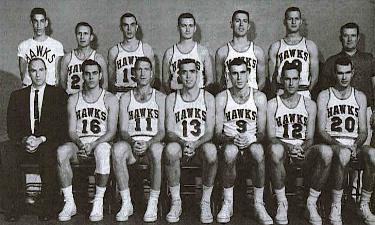
Anyway, it's not as if the Hawks blew it completely. In 1957, the Celtics and Hawks each made the NBA Finals for the 1st time. It went to double overtime of Game 7 before the Celtics won it. In 1958, both teams made it back, and Russell hurt his ankle in Game 3, and was out the rest of the way. The Hawks, led by the men traded for the rights to Russell, Hagan and St. Louis native Macauley, as well as Hall-of-Fame forward Bob Pettit, won the title in 6 games.
The 1958 NBA Champions.
Hagan is Number 16, Pettit 9, and Macauley 20.
In 1959, the Minneapolis Lakers won the Western Conference, and lost to the Celtics in the Finals. In 1960 and '61, the Hawks returned to the Finals, and lost to the Celtics both times. Still, at that point, the players the Hawks got for Russell had gotten them into 4 Finals, winning 1. It could have been better, but it was still better than anybody else except the Celtics were doing.
Still, it was a dumb trade.
*
April 30, 1956 was a Monday. There was only one score on this historic day, and it was in baseball: The St. Louis Cardinals beat the Milwaukee Braves, 2-0 at Milwaukee County Stadium. Warren Spahn allowed only 3 hits over 8 innings for the Braves, but 

Thursday, April 28, 2022

April 28, 1966: Eight Straight NBA Championships

Russell is already smelling Auerbach's victory cigar.

April 28, 1966: Game 7 of the NBA Finals is played at the Boston Garden. The Boston Celtics beat the Los Angeles Lakers, 95-93. It was their 9th NBA Championship, and their 8th in a row. This is easily a record for North American major league sports.

Bill Russell scored 25 points, and had 32 rebounds. Sam Jones scored 22, and John Havlicek 16. For the Lakers, Jerry West scored 36, but nobody else scored more than Elgin Baylor's 18.

The '66 Celtics included 7 eventual members of the Basketball Hall of Fame: Russell, Havlicek, Sam Jones, K.C. Jones (no relation), Tom "Satch" Sanders, and 2 men whose main contributions would come later, as coaches: Don Nelson and John Thompson. Head coach and general manager Arnold "Red" Auerbach would also be elected.

This would be Auerbach's last title as head coach: He resigned to concentrate on the front office, and named Russell as the NBA's 1st black head coach. If you don't count the early NFL as being truly "major league," a legitimate argument, thus eliminating Fritz Pollard of the 1921 Akron Pros, then Russell was the 1st black head coach in North American major league sports.

The New York Yankees won 5 straight World Series from 1949 to 1953, but no team has won 6. The Montreal Canadiens won 5 straight Stanley Cups from 1956 to 1960, but no team has won 6. The Green Bay Packers won 3 straight NFL Championships, from 1929 to 1931, and again from 1965 to 1967, but no team has won 4.

Does this make the 1959-66 Celtics the greatest dynasty in North American sports? Not really: While some of the greatest basketball players ever were then active -- including Russell, Havlicek, West, Baylor, Wilt Chamberlain and Oscar Robertson -- the NBA wasn't getting as big a share of great athletes as it could have.

The era's top 2 pitchers, Sandy Koufax and Bob Gibson, had both gone to college on basketball scholarships. And it's not hard to imagine baseball stars Willie Mays and Lou Brock as point guards, or fearsome defensive ends Gino Marchetti and Willie Davis as power forwards. Indeed, the Celtic team that won 3 out of 6 titles in the 1980s was probably better, top-to-bottom, than the team that won 8 straight titles.

The Celtics and Lakers have both won 17 NBA Championships, tied for the most of any team. However, the Lakers won 5 of those while they were in Minneapolis, from 1947 to 1960, so, in a way, the Celtics are still on top. And Auerbach was general manager for the 1st 15 of those Championships, giving up that title in 1984; and team president for the 1st 16 Championships, giving up that title in 1997. He died in 2006.

They've won the Finals over the Lakers in 1959, 1962, 1963, 1965, 1966, 1968, 1969, 1984 and 2008; the St. Louis Hawks (now the Atlanta Hawks) in 1957, 1960 and 1961; the San Francisco Warriors (now the Golden State Warriors) in 1964; the Milwaukee Bucks in 1974; the Phoenix Suns in 1976; and the Houston Rockets in 1981 and 1986.

They've also lost the Finals to the Hawks in 1958; the Lakers in 1985, 1987, and 2010; and the Warriors in 2022.

UPDATE: The Celtics won an 18th title in 2024, beating the Dallas Mavericks.

*

April 28, 1966 was a Thursday. This was the end of the NBA season. Game 3 of the Stanley Cup Finals was played at the Olympia Stadium in Detroit. The Montreal Canadiens beat the Detroit Red Wings, 4-2. The Wings had won the 1st 2 games of the series, but this game started Les Habitantes on a streak of 4 straight, to win the Cup.

Football was out of season. These baseball games were played that day:

* The Cleveland Indians beat the California Angels, 2-1 at Cleveland Municipal Stadium. The Indians were now 10-0 on the season. And still, they were only in 1st place by 1 game, because the Baltimore Orioles started out 9-1 -- extending that to 12-1. The Indians went 71-81 the rest of the way, and finished 17 games out of 1st place.

* The Detroit Tigers beat the Kansas City Athletics, 13-5 at Tiger Stadium in Detroit. Mickey Lolich outpitched a young Jim "Catfish" Hunter. Al Kaline went 2-for-4 with a home run, a walk and 3 RBIs. Jerry Lumpe and Don Wert each had 4 RBIs, in each case including a home run.

* The Pittsburgh Pirates beat the Chicago Cubs, 9-6 at Wrigley Field in Chicago. The Pirates tied the game with a run in the 9th inning, then scored 4 in the 10th, and the Cubs could only come back with 1 in their half. Roberto Clemente went 1-for-4 with a walk and 2 RBIs. Willie Stargell went 2-for-5 with a walk and an RBI. Ernie Banks did not play for the Cubs, but Ron Santo hit 2 home runs.

* The Houston Astros beat the St. Louis Cardinals, 4-2 at the Astrodome in Houston. Lou Brock went 0-for-4.

* The Los Angeles Dodgers beat the Atlanta Braves, 8-2 at Dodger Stadium in Los Angeles. Hank Aaron hit a home run off Don Drysdale, but "Big D" still went the distance, allowing 5 other hits, striking out 10 and walking none.

* The San Francisco Giants beat the Cincinnati Reds, 3-0 at Candlestick Park in San Francisco. Juan Marichal pitched a 4-hit shutout. Willie Mays did not play. Pete Rose went 1-for-4.

* The New York Yankees and the Washington Senators were rained out at Yankee Stadium. The game was made up as part of a doubleheader on July 8. The Senators won the opener, 7-6, tagging Mel Stottlemyre for 5 runs before the Yankees even came to bat. The Yankees won the nightcap, 7-5. Fritz Peterson went the distance for the win. Mickey Mantle hit a home run in each game.

* The Boston Red Sox and the Chicago White Sox were rained out at Fenway Park in Boston. The game was made up as part of a doubleheader on July 8. The Red Sox swept, 3-1 and 5-1. Carl Yastrzemski went 2-for-7 with a walk and 2 RBIs.

* The Baltimore Orioles and the Minnesota Twins were rained out at Memorial Stadium in Baltimore. The game was made up as part of a doubleheader on September 30. By that point, the O's had dethroned the Twins as American League Champions, so the games were meaningless, except to see if Frank Robinson could win the Triple Crown. The Twins swept, 10-7 and 8-2. Frank went 2-for-4 with a walk and an RBI in the 1st game. Brooks Robinson did the exact same. Both men sat out the 2nd game. Harmon Killebrew went 3-for-6 with a home run in each game, 4 walks and 3 RBIs. Frank did win the Triple Crown.

* And the New York Mets and the Philadelphia Phillies were not scheduled.

Wednesday, April 13, 2022

April 13, 1957: The Birth of the Boston Celtic Dynasty

April 13, 1957: The greatest dynasty in the history of basketball begins.

The Boston Celtics were a charter franchise in the Basketball Association of America. But their 1st decade of play gave little indication of what was to come. In the 1946-47 season, the Celtics missed the Playoffs. The lost in the 1st Round in 1948. They missed the Playoffs again in 1949 and 1950.

In 1949, the Washington Capitols reached the Finals, losing to the Minneapolis Lakers. Then the BAA merged with the National Basketball League, and the Caps' coach knew he needed reinforcements. Team owner Mike Uline refused his requests, and the coach resigned.

The Capitols folded in 1951. The NBA would not return to Washington until 1973. Titles won since 1951: Boston 17, Washington 1. Mike Uline's punishment has been to be forgotten. It should have been to be ridiculed, as the dumbest sports team owner in D.C. area history, even more than Daniel Snyder.

The coach that Uline fired was a native of Brooklyn, who had played in D.C. at George Washington University. In spite of this resignation, and all the success he had later elsewhere, he lived in D.C. for the rest of his life. His name was Arnold Jacob Auerbach. For what little hair he had left, he was called Red.

He coached the 1949-50 season with the Tri-Cities Blackhawks, and missed the Playoffs. And team owner Ben Kerner not only refused to add to his talent, but traded away John Mahnken, Auerbach's favorite player. Auerbach resigned again.

Walter Brown owned the Boston Garden, and thus was the owner of the Celtics, and the NHL's Boston Bruins. He also owned the Ice Capades. As the President of the Boston Athletic Association, he was in charge of the Boston Marathon. He knew sports in general.

But in preparation for the 1950-51 season, he admitted to a gathering of Boston sportswriters, "Boys, I don't know anything about basketball. Who would you recommend I hire as coach?" Auerbach was available, and was immediately recommended. Auerbach demanded total control over player movement -- in other words, he wanted to be the general manager as well as the head coach. Brown gave it to him.

Auerbach drafted Chuck Cooper of Duquesne University, making him the 1st black player drafted by an NBA team. The way things worked out, Nat "Sweetwater" Clifton became the 1st black player signed to an NBA contract, by the New York Knicks; and Earl Lloyd of the Capitols became the 1st black player to actually get into a game, a night before Cooper and Clifton did so.

Cooper's influence was much more off the court than on: He played just 4 seasons with the Celtics, and 6 in the NBA; but his presence on the Celtics meant that Auerbach and Brown were willing to sign anyone that they thought could help them win, regardless of race.

In 1951, the Celtics made the Playoffs, but lost in the Division Finals to a stronger Knicks team. The same thing happened in 1952. In 1953, they beat the Syracuse Nationals in the 1st round, but lost the Division Finals to the Knicks. In 1954, they lost the Division Finals to the Nationals. In 1955, for the 1st time, they beat the Knicks in the Playoffs, but lost the Division Finals to the Nationals. And in 1956, they lost the Division Semifinals to the Nationals. In other words, the Celtics were a good team, but not quite good enough.

On April 30, 1956, the NBA Draft was held in New York. With the 1st pick, the Celtics selected Tommy Heinsohn, forward from the nearby College of the Holy Cross. The team's biggest star, guard Bob Cousy, was also a Holy Cross graduate, having helped them win the 1947 NCAA Tournament.

With the 2nd pick, the Rochester Royals selected Sihugo Green, a guard from Duquesne. Green was a decent player, but hardly the kind of star you would expect to go as the 2nd pick overall.

With the 3rd pick, the St. Louis Hawks -- formerly the Tri-Cities Blackhawks -- drafted Bill Russell, a center who had led the University of San Francisco to back-to-back National Championships. It looked like the Hawks had gotten the better player.

But later that day, the Hawks traded the rights to Russell to the Celtics, for 2 All-Stars, center Ed Macauley and forward Cliff Hagan. Ben Kerner was still their owner, and was still cheap, and didn't want to pay the money he was sure that Russell would demand. (He may have had a point: After Wilt Chamberlain became the 1st NBA player to receive a contract for $100,000 a year, Russell asked Auerbach for $100,001 -- and got it.)

That explains why the Hawks traded the rights to Russell. But why didn't the Royals draft him? Walter Brown pulled a dirty trick: Knowing that Royals owner Lester Harrison needed money for the new arena he'd just opened (it's still there, under the name of the Blue Cross Arena, though the Royals moved away in 1957), Brown told Harrison that if you pass on Russell, I'll send the Ice Capades to Rochester. Thinking of the revenue that this would generate, Harrison took one of the oddest trades in NBA history.

Due to being set in the Southern Hemisphere, in Melbourne, Australia, the 1956 "Summer" Olympics were held from November 22 to December 8. Bill Russell and his USF teammate K.C. Jones led the U.S. team to the Gold Medal.

Therefore, they couldn't make their NBA debut until December 22, 1956. As things turned out, it was against the Hawks, at the Boston Garden. Russell scored only 6 points, but Heinsohn scored 19, and Cousy and Jack Nichols (not to be confused with Jack Nicholson) each scored 16, and the Celtics won, 95-93.

The Celtics finished the regular season 44-28, winning the Eastern Division, and a bye to the Eastern Division Finals, where they swept the Nationals in 3 straight. With Mikan retired, the Lakers were no match for the Hawks, who swept them. Each franchise was now in a league final for the 1st time.

Game 1 was played on March 30, at the Boston Garden. Bob Pettit, the best forward in the game at the time, scored 37 points for the Hawks. Bill Sharman, the best shooter in the game at the time, scored 36 for the Celtics. Heinsohn hit a shot to force overtime, and Cousy one to force double overtime, but the luck for which the Celtics would later become known ran out, and the Hawks won, 125-123. A classic NBA Finals was underway.

The Celtics ran away with Game 2, 119-99. The series moved west, and the Hawks held firm at the Kiel Auditorium, winning 100-98. Pettit hit the game-winning shot with 44 seconds left. But the Celtics overcame 33 from Pettit, including with 31 from Cousy, and took back the home-court advantage by winning Game 4, 123-118.

The series went back to Boston, and the Celtics won Game 5, 124-109. It went back to St. Louis, and the Hawks won Game 6, 96-94, on a buzzer-beater by Hagan. It would be decided on a Saturday afternoon at the Boston Garden, April 13, 1957, in front of a crowd officially listed as 13,909, due to Boston fire laws, but there might have been as many as 20,000 in the building.

The Hawks led 28-26 after 1 quarter, and 53-51 at the half. The Celtics jumped ahead in the 3rd quarter, taking an 83-79 lead. But Pettit hit a pair of free throws with 7 seconds left, and at the end of regulation, it was Hawks 103, Celtics 103. With 9 seconds left in overtime, the Hawks' Jack Coleman sank a shot to send the game to a 2nd overtime.

In the end, the Hawks had 39 points from Pettit, 24 from Hagan, and 23 from Slater Martin (a key figure in the early 1950s Minneapolis Laker dynasty). Only 1 Celtic scored more than Russell's 19, but that was Heinsohn with 37. After 58 minutes of play, including 2 overtimes, it was Celtics 125, Hawks 123. It remains the only NBA Finals Game 7 to go to a 2nd overtime.

The teams would play each other in 4 Finals in 5 seasons. In Game 3 of the 1958 Finals, Russell injured his ankle, and the Hawks won the franchise's only title. In 1960 and 1961, the Celtics beat the Hawks. The Hawks have not been back to the Finals since, and moved to Atlanta in 1968. The Kiel Auditorium was demolished, and the Kiel Center, the new home of the NHL's St. Louis Blues, opened on the site in 1994. It is now named the Enterprise Center.

Russell would play 13 seasons for the Celtics, make the Finals 12 times, and win 11 NBA Championships. He and Henri Richard of the Montreal Canadiens are the only people in North American major league sports with more championship rings than they have fingers to put them on.

Auerbach retired as head coach after the 1966 season, and named Russell the 1st black coach in modern major league sports. He led them to the title in 1968 and 1969, then retired as a player. Auerbach remained in charge of personnel decisions with the Celtics until 1997, winning a total of 16 NBA Championships. The Celtics (and the Bruins) moved from the Boston Garden to the next-door arena now known as the TD Garden in 1995.

Auerbach died in 2006. Russell and Cousy are the last 2 surviving players from the 1957 NBA Champions.

*

April 13, 1957 was a Saturday. Comedian Gary Kroeger, best known for being a castmember of Saturday Night Live in the 1980s, was born.

The Major League Baseball season was about to begin, and the NFL was out of season. The Stanley Cup Finals were underway. The Montreal Canadiens led the Boston Bruins, 3 games to none. On April 14, the Bruins won Game 4, 2-0 at the Boston Garden. But on April 16, at the Montreal Forum, the Canadiens won, 5-1, and finished the Bruins off.

This was the 1st time that the same arena had hosted the NBA Finals and the Stanley Cup Finals in the same year. The Boston Garden would host both again in 1958 and 1974. It would be done by Madison Square Garden in New York in 1972 and 1994 (the latter being the closest any building has ever come to winning both), The Spectrum in Philadelphia in 1976 and 1980, the Chicago Stadium in 1992, and the Meadowlands Arena in 2003.

Also on April 13, 1957, Arsenal travel to the North-East of England, and lose 1-0 to Sunderland at Roker Park.

December 31, 1999 & January 1, 2000: The Millennium

December 31, 1999:  The Millennium arrives. The people of planet Earth survived. At a terrible cost. But we hadn't destroyed ourselves. ...