Showing posts with label robert wise. Show all posts

Tuesday, October 18, 2022

October 18, 1961: The Film Version of "West Side Story" Premieres

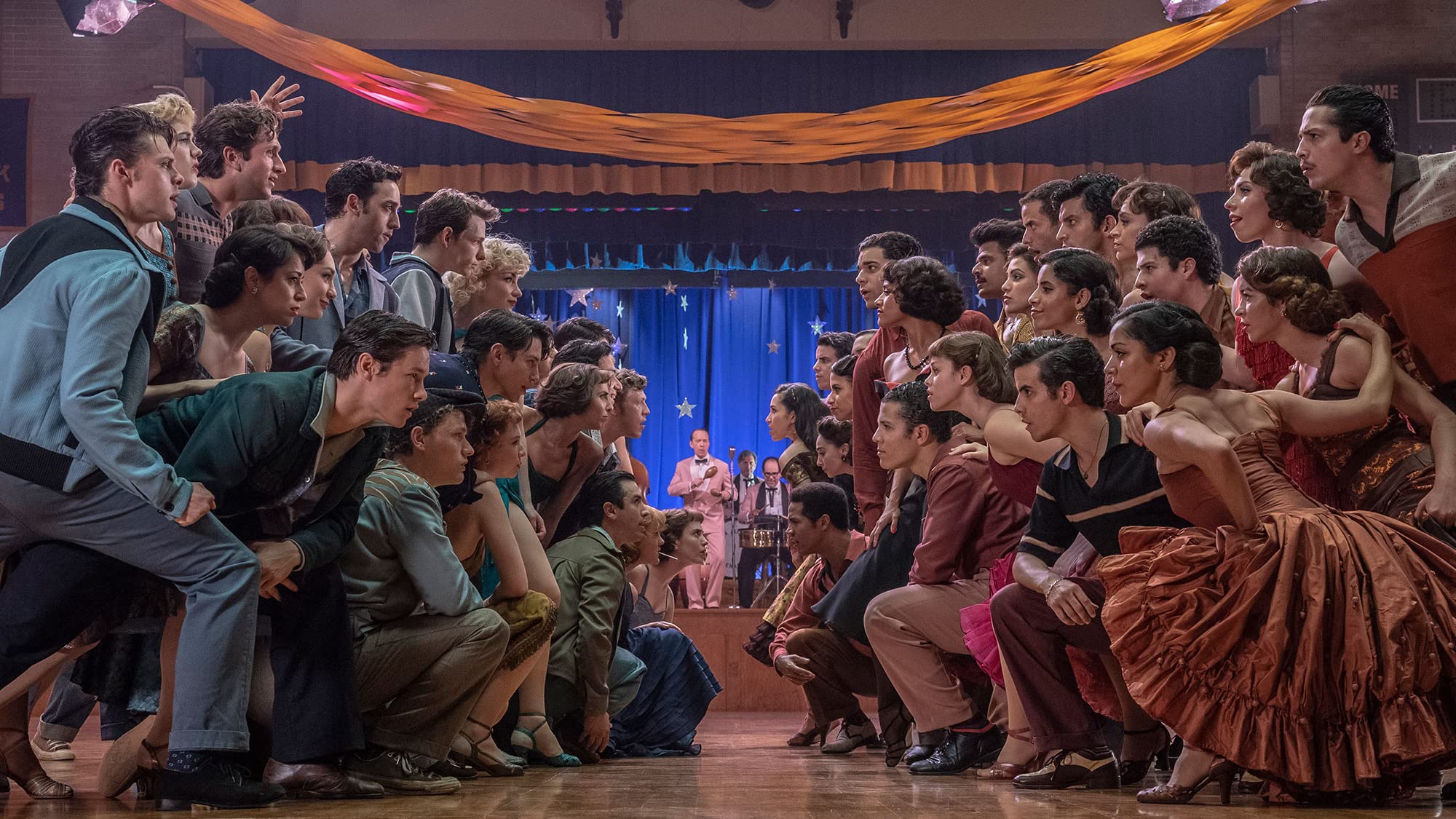
Left: Jets. Right: Sharks.

October 18, 1961: The film version of the 1957 musical West Side Story premieres. It's a modern retelling of William Shakespeare's Romeo and Juliet. In some cases, I'm doing entries for the original stage versions of shows. In some, I'm doing it for the films. West Side Story is the only one truly influential enough to deserve an entry for each version.
In this corner, of various white extractions including Irish, Italian and Polish -- and one kid known by a name that would never fly today, "A-rab" -- is a gang named the Jets: Richard Beymer as Tony (replacing Larry Kert from the original Broadway production, Jimmy Bryant did his singing), Russ Tamblyn as Riff (Michael Callan), and several other guys and girls. Elaine Joyce, already a Broadway performer, made her film debut, as Hotsie, girlfriend of Tiger, one of the Jets, several years before she became a regular panelist on game shows.
And in this corner, the Puerto Ricans, calling their gang the Sharks: Natalie Wood as Maria (with her songs sung by Marni Nixon, replacing Carol Lawrence from Broadway), George Chakiris as Bernardo (replacing Ken LeRoy -- ironically, Chakiris played Riff when the musical first took the British stage in 1958), Jose DeVega as Chino, and Rita Moreno as Anita, Maria's best friend and Bernardo's girlfriend (replacing Chita Rivera). 
The Jets and the Sharks only seem to agree on 3 things: That they're all Catholic, that you gotta be tough to survive in Hell's Kitchen -- Manhattan's West Side, 8th Avenue to the Hudson River, 41st to 59th Streets -- and that they hate the police, who hate them back. William Bramley plays Sergeant Krupke, a.k.a. Officer Krupke. Bramley was the only notable actor from the original show reprising his role.
The film was nominated for 11 Academy Awards (Oscars), winning 10 of them, including Best Picture, Best Director for Wise, Best Supporting Actor for Chakiris, and Best Supporting Actress for Moreno. Oddly, Beymer wasn't nominated for Best Actor. (Maximilian Schell won for Judgment at Nuremberg.) Natalie Wood was nominated for Best Actress, but for Splendor in the Grass rather than for West Side Story. (Sophia Loren won for Two Women, the 1st Oscar for a role in a language other than English.)
In the Spring of 2017, I was babysitting my niece Mackenzie, not yet a full year old. And West Side Story came on TV, with its creditless opening montage showing New York from above, including the pre-renovation original Yankee Stadium in living color. When the camera finally panned down to the finger-snapping Jets, and they started dancing to Jerome Robbins' choreography and Leonard Bernstein's score, Mackenzie was transfixed, going, "Ooh, ooh, ooh." This baby could not take her eyes off a movie that premiered nearly 55 years before she was born.
Steven Spielberg directed a remake in 2021, this time with the characters played by actors of the appropriate ethnicities. Tony was played by Ansel Elgort. Rachel Zegler, Polish on her father's side but Colombian on her mother's, played Maria. David Alvarez, a Montreal-born Cuban, played Bernardo.
It was nominated for 7 Oscars, including Best Picture, making it the 2nd remake of a Best Picture nominee to also be so honored, after the 1935 and 1962 versions of Mutiny on the Bounty. But it only won 1: Ariana DuBose, taking over as Anita from Moreno, who cameoed in the film as the mentor character Valentina. No other actor was nominated, although Spielberg was nominated as Best Director for a record 11th time.
(He's won twice, for Schindler's List and Saving Private Ryan. I guess he's better doing movies set in 1944 than he is with 1957. He shouldn't make a movie about Sputnik, the move of the Brooklyn Dodgers, or the assassination of Albert Anastasia. He wouldn't make those, but he might make a movie about the Little Rock Nine.)
*
October 18, 1961 was a Wednesday. It was a big day in music for another reason: Jazz trumpeter Wynton Marsalis was born.
Baseball season ended 9 days earlier, when the New York Yankees beat the Cincinnati Reds in the World Series. Football was in midweek. The new NBA season started the next day. There was 1 game played in the NHL: The Montreal Canadiens beat the New York Rangers, 5-2 at the old Madison Square Garden.

Sunday, September 18, 2022

September 18, 1951: "The Day the Earth Stood Still" Premieres

September 18, 1951: The Day the Earth Stood Still premieres. Directed by Robert Wise, it becomes a classic of science fiction.

A flying saucer lands on the Ellipse in Washington, D.C. Out steps a regular-sized human-looking man named Klaatu (played by Michael Rennie) and a considerably taller robot named Gort (Lock Martin). The U.S. Army have surrounded the saucer, and they shoot Klaatu. Still alive, he orders Gort not to interfere. Klaatu is taken to Walter Reed Army Medical Center, but escapes, and quickly heals.

He takes on a human identity, and blends in among people to learn how they really think and feel. This is considerably easier than it would soon become, since most Americans do not yet have television sets, and haven't seen him before. Not liking what he sees, Klaatu returns to his ship. At 12:00 Noon, U.S. Eastern Time, the next day, he uses the controls on his ship to stop all electrical equipment on Earth for 30 minutes, except for essential services, such as hospitals, and aircraft already in flight.

This gets the world's attention. He tells the world that an interplanetary organization has created a police force of invincible robots like Gort. He says, "In matters of aggression, we have given them absolute power over us. Your choice is simple: Join us and live in peace, or pursue your present course and face obliteration. We shall be waiting for your answer." Then they leave Earth.

In real life, at this point, Earth had developed nuclear weapons, but rocketry was still in the beginning stages: The defined barrier between "Earth" and "space" had been breached, but nothing had yet been placed into Earth orbit. And the Cold War was at a hot point: The Korean War had been going for a little more than a year. The film tapped into Cold War fears, and suggested that turning away from such aggression was a better idea.

A remake was released in 2008, starring Keanu Reeves, but was not well-received.

*

September 18, 1951 was a Tuesday. Dee Dee Ramone, bass guitarist for The Ramones, was born on this day. So was Ben Carson, the neurosurgeon who ran for the Republican nomination for President in 2016, and was then appointed by Donald Trump to be Secretary of... Housing & Urban Development.

These baseball games were played:

* The New York Yankees lost to the Chicago White Sox, 7-1 at Yankee Stadium. Billy Pierce outpitched Vic Raschi. Bud Stewart hit a home run for the White Sox. Joe DiMaggio (in his last season), Yogi Berra (in his 1st Most Valuable Player season) and Mickey Mantle (in his rookie season) each went 1-for-4.

* The New York Giants beat the Cincinnati Reds, 6-5 at Crosley Field in Cincinnati. Monte Irvin hit a home run, and rookie Willie Mays went 2-for-5 with 2 RBIs. Dave Koslo was the winning pitcher.

* The Brooklyn Dodgers lost to the St. Louis Cardinals, 7-1 at Sportsman's Park in St. Louis. Stan Musial went 0-for-4, but the Cardinals didn't need him, knocking Ralph Branca out of the box in the 6th inning. Jackie Robinson went 2-for-4. The Dodgers had led the National League by 13 1/2 games over the Giants on August 11. The lead was now 3 games.

* The Cleveland Indians beat the Boston Red Sox, 6-4 at Fenway Park in Boston. Ted Williams went 2-for-4 with an RBI. The results of the day's games meant that the Indians had tied the Yankees for 1st place in the American League, with the Red Sox 2 1/2 games back. The Indians had 7 games left, the Yankees 11, the Red Sox 12.

* The Detroit Tigers beat the Philadelphia Athletics, 8-6 at Shibe Park in Philadelphia.

* The St. Louis Browns swept a doubleheader from the Washington Senators, 8-0 and 3-2 at Griffith Stadium in Washington. Tommy Byrne pitched a 3-hit shutout in the opener. In the nightcap, Byrne -- a 1950 All-Star, a 4-time World Series winner with the Yankees, and a good hitter for a pitcher, with a .238 lifetime batting average, 14 home runs and 98 RBIs -- was used as a pinch-hitter in the top of the 10th inning, and singled home Fred Marsh with the winning run.

* The Pittsburgh Pirates beat the Boston Braves, 6-5 at Forbes Field in Pittsburgh. Ralph Kiner hit a home run.

* And the Chicago Cubs beat the Philadelphia Phillies, 7-4 at Wrigley Field in Chicago.

Sunday, May 1, 2022

May 1, 1941: "Citizen Kane" Premieres

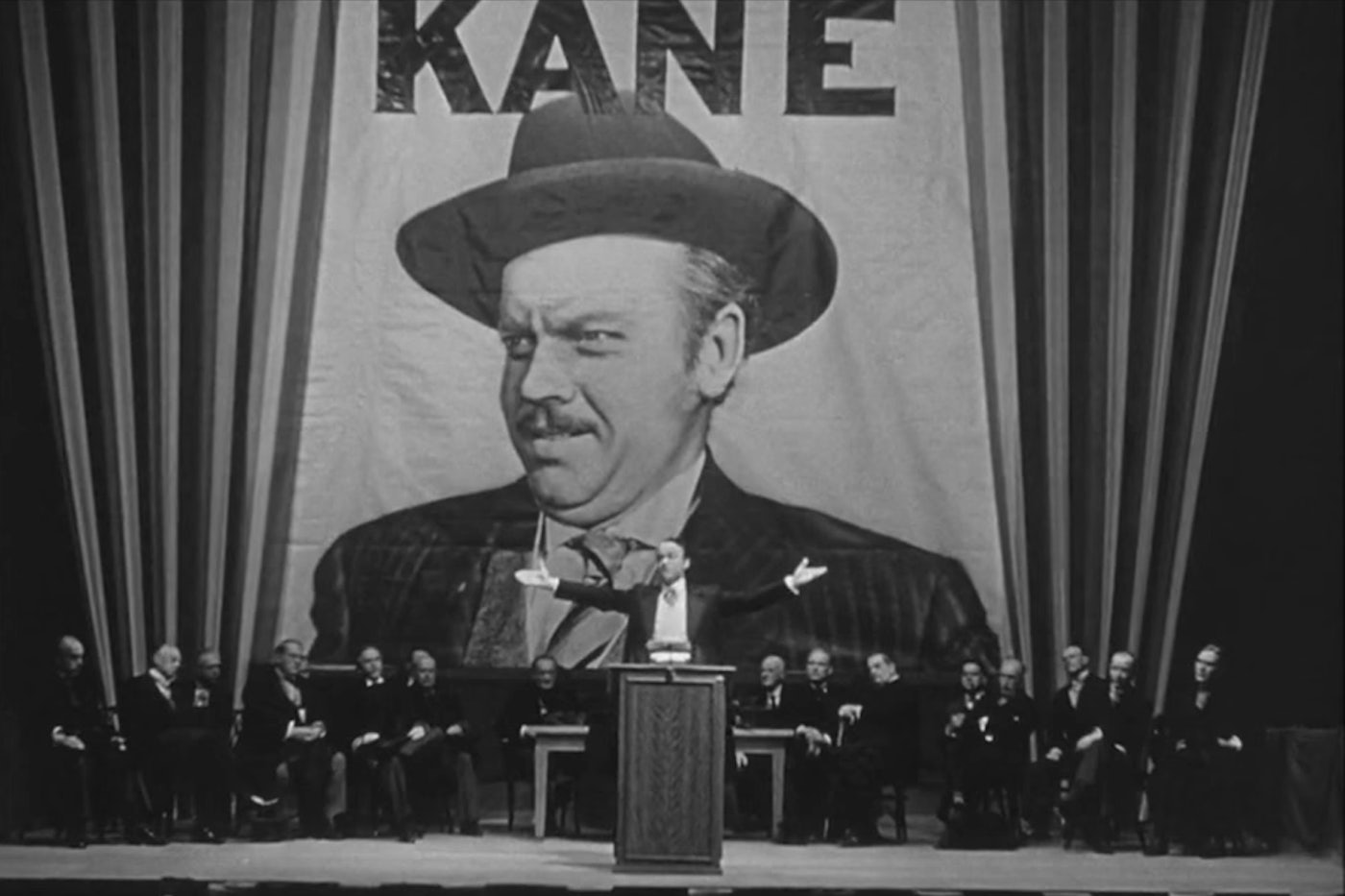
Welles, 25, as Kane, 53, in 1916

May 1, 1941: The film Citizen Kane premieres in New York, at the Palace Theatre at 1564 Broadway at 47th Street. Orson Welles, a few days short of his 26th birthday, and 2 1/2 years past his famous War of the Worlds national broadcast over CBS radio, is the film's star, its director, its producer, and co-writer of its screenplay along with Herman Mankiewicz. Bernard Herrmann wrote and conducted the music for it.

Welles plays Charles Foster Kane, a newspaper magnate who starts his career as a liberal crusader, but is corrupted, piece by piece, until he loses everything he cares about, except his fame. You might say that Kane spends the movie breaking bad.

Actually -- Spoiler Alert for an 81-year-old movie -- Kane begins the movie by dying, saying one word: "Rosebud." A newsreel gives the details of Kane's life, starting in Colorado in 1863, where he inherited a gold mine that makes him fabulously wealthy. He gets full title to it as he grows up, and buys a newspaper.

The man who acted as his legal guardian, and now manages his finances, doesn't like how Kane is using the newspaper, and tells him that he lost a million dollars last year (1893 -- about $31 million in today's money). Kane says, "At the rate I'm going, I'm going to have to close this paper down in about 60 years."
Welles, 25, as Kane, 30, in 1893,
delivering that classic line

He starts out with good intentions; a good friend, Jedediah Leland, played by Joseph Cotten; a good business manager for his paper, Mr. Bernstein, played by Everett Sloane; and a good wife, Emily, niece of a President, played by Ruth Warrick. It was Warrick's 1st film, but Cotten and Sloane had previously worked with Welles on radio with his Mercury Theatre of the Air.

But his desire to sell more newspapers, even after his New York Inquirer becomes the biggest-selling paper in the country, is insatiable. He uses his paper to start the Spanish-American War in 1898, which in turns helps him sell more papers than ever, and he doesn't seem to care about the cost.

Kane runs for Governor of New York in 1916, promising to crack down on the corrupt Tammany Hall political machine -- meaning the Democratic Party, meaning Kane is running as a Republican. In real life, Woodrow Wilson was re-elected President that year, but by a very slim margin, with no "coattails," and the Governor, a Republican named Charles S. Whitman, was re-elected. But Kane loses, because his affair with a showgirl is exposed. He never runs for office again.

He divorces Emily, and marries the showgirl, Susan Alexander, played by Dorothy Comingore. She ends up hating him as much as Emily did. He loses a big chunk of his fortune in the stock market crash of 1929. Soon, he's all alone in his castle on his estate in Florida, with all the expensive stuff he's collected over the years.
Welles, 25, as Kane, 70, in 1933

As Mr. Bernstein told the reporter investigating Kane's last word, "Mr. Kane was a man who lost everything he had. Perhaps 'Rosebud' was something he lost." He proves to have come closer than anybody else to getting it right: In the film's last scene, after the reporter has given up, workmen are seen tossing some things into a furnace. One is the sled he had as a child, with the name "ROSEBUD" on it. That sled represented the life had before he got rich and things got complicated.

*

Citizen Kane is regarded as one of the greatest movies ever made. The camera tricks and editing tricks that Welles and editor Robert Wise used were groundbreaking -- sometimes literally, as holes were cut in the soundstage floor to get some shots.

But it wasn't regarded as a great film at first. In fact, it tanked. Why? Because William Randolph Hearst, a real-life media baron, thought it hit too close to home. Kane used three names, was wealthy through his family's mining fortune, bought a struggling newspaper, turned it into a media empire, used it to egg the federal government on into starting the Spanish-American War, became an isolationist in the run-ups to World Wars I and II, built a castle full of his weird art collections and even had a zoo on the property, ended up deeply in debt, and ended his first marriage with an affair with an actress -- the joke, never proven, was that Hearst called a certain part of Marion Davies' anatomy "Rosebud."

There were, of course, significant differences. The Hearst family was already rich when he was born, he started across the country in San Francisco before moving east to New York (with the Journal), he actually won an election (3, in fact, for the U.S. House of Representatives, but never got closer to the Presidency than that), his castle was in California instead of Florida; and, of course, Hearst was still alive, if mortgaged up to his eyeballs in order to preserve his wealth.

And he used that wealth and influence to stop Citizen Kane. He told the theater chain he owned not to screen it. He told the newspapers and radio stations he owned to give it bad reviews. His wishes were carried out.

When the 1942 Academy Award nominations when out, Citizen Kane got 9 of them. But when the Awards were announced, it got only one "Oscar," to Welles and Mankiewicz, for Best Screenplay. Best Picture went to How Green Was My Valley. A dumb choice: The other nominees included Here Comes Mr. Jordan, Hold Back the Dawn, The Little Foxes, The Maltese Falcon, Sergeant York and Suspicion, so there were plenty of good choices, and Citizen Kane never had a chance.

For Best Actor, Welles was up against Cary Grant for Penny Serenade, Walter Huston for All That Money Can Buy, Robert Montgomery for Here Comes Mr. Jordan, and Gary Cooper, who won for playing Sergeant York. Also a tough category, and I can't blame the Academy for picking someone other than Welles.

Welles, directing a film for the 1st time, was also up against some heavyweights for Best Director: Alexander Hall for Here Comes Mr. Jordan, William Wyler for The Little Foxes, Howard Hawks for Sergeant York, and John Ford, who ended up winning, for How Green Was My Valley. Ford was worthy of several considerations for Best Director, but this was not one of them. Here, Welles got robbed, and if you think Hearst had nothing to do with influencing the Academy's vote, I've got bridges in both New York and San Francisco to sell you.

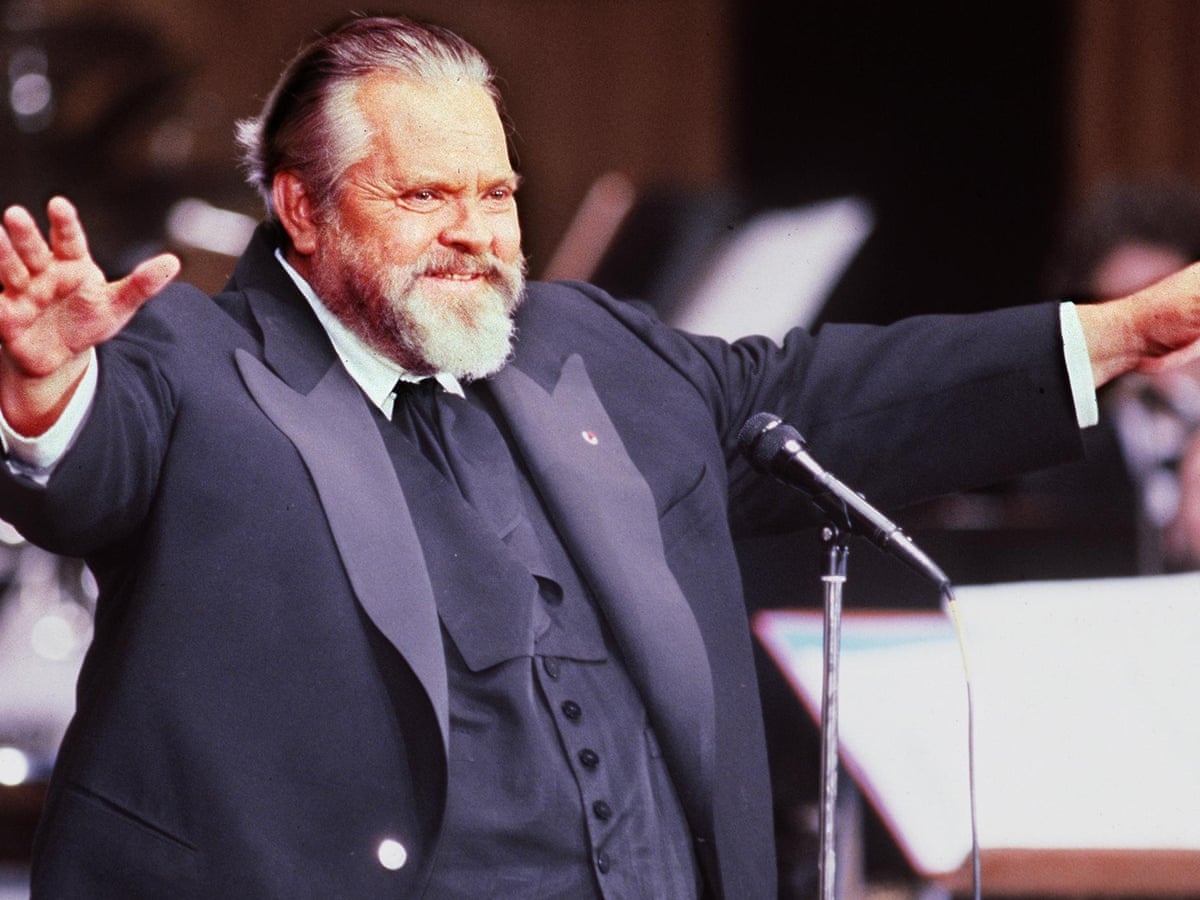
Hearst died in 1951. By that point, Welles was thoroughly discredited, and began putting on so much weight, he was heavier than he appeared to be when playing the older Kane. He kept acting, because he needed the money, but rarely directed again.
By 1974, when the name Hearst was more associated with William Randolph's troubled granddaughter Patty, Welles was better known for appearing on late-night talk shows, chatting about Hollywood with the hosts, performing magic tricks with them, and doing commercials for Paul Masson wine. However, he was now recognized as the genius behind Citizen Kane.

He died in 1985, age 70, by which point, for those people who knew the name William Randolph Hearst at all, they knew him as the fraud behind "yellow journalism" and the Spanish-America War, whose ego was so fragile he tried to destroy "the greatest movie ever made."

*

May 1, 1941 was a Thursday. It was also the day that General Mills introduced the cereal Cheerios.

It was the off-season for the NFL. The NHL season had ended the month before. The NBA hadn't been founded yet. But there were Major League Baseball games played on the day:

* The New York Yankees beat the St. Louis Browns, 14-5 at Sportsman's Park in St. Louis. Charlie "King Kong" Keller hit a home run in support of pitcher Ernie "Tiny" Bonham. Joe DiMaggio got a hit. The Yankees were struggling, in 4th place. Two weeks later, DiMaggio's 56-game hitting streak began, and the Yankees were on their way to running away with the Pennant.

* The Brooklyn Dodgers lost to the Cincinnati Reds, 2-1 at Ebbets Field. The defending World Champion Reds won in the 11th inning on a single by Eddie Joost. In spite of this loss, the Dodgers would dethrone them as National League Champions, before losing to the Yankees in the World Series.

* The New York Giants lost to the St. Louis Cardinals, 5-0 at the Polo Grounds. Lon Warneke, "the Arkansas Hummingbird," allowed 9 hits, but still pitched a shutout to defeat "King" Carl Hubbell.

* The Pittsburgh Pirates beat the Philadelphia Phillies, 15-2 at Shibe Park in Philadelphia.

* The Cleveland Indians beat the Philadelphia Athletics, 13-9 at League Park in Cleveland.

* The Boston Red Sox beat the Detroit Tigers, 15-9 at Briggs Stadium in Detroit. (It would be renamed Tiger Stadium in 1961.) 

* The Washington Senators beat the Chicago White Sox, 7-0 at Comiskey Park in Chicago. Dutch Leonard allowed 8 hits, but pitched a shutout.

* And a game at Braves Field in Boston was rained out, and rescheduled for June 8. The Chicago Cubs beat the Boston Braves, 5-1. 
Wednesday, March 2, 2022

March 2, 1965: The Film Version of "The Sound of Music" Premieres

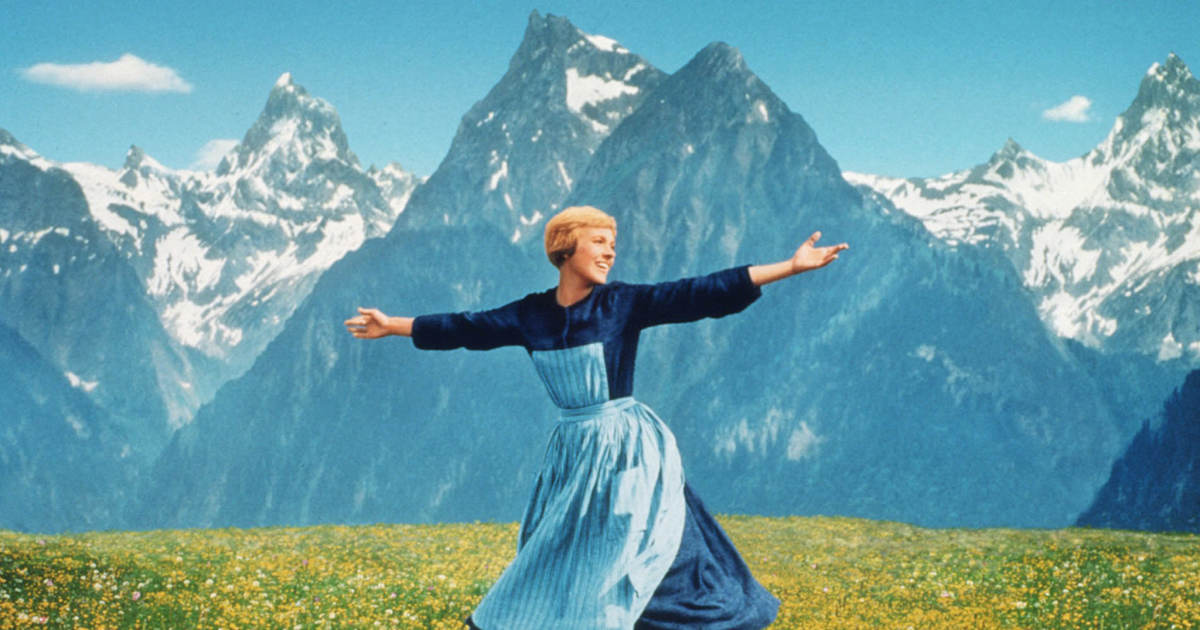
March 2, 1965: The film version of the 1959 musical The Sound of Music premieres, starring Julie Andrews and Christopher Plummer. It proves to be more significant than the musical on which it was based.

The musical was written by Richard Rodgers and Oscar Hammerstein II, and based on The Story of the Trapp Family Singers, published in 1949 by Maria von Trapp. It premiered on November 16, 1959, at the Lunt-Fontanne Theatre. It starred Mary Martin -- already a Broadway legend, and her son Larry Hagman had already begun his acting career) as the woman who begins the story as Sister Maria Rainer and ends it was Mrs. von Trapp; and Theodore Bikel as Captain Georg von Trapp. It ran for 3 1/2 years, and won the Tony Award for Best Musical, with Martin winning the Tony for Best Actress.

Multiple directors were chosen for the film adaptation, before Robert Wise, who had done the film version of West Side Story, was chosen. His only choice to play Maria was Julie Andrews, who had originated the Broadway roles of Eliza Doolittle in My Fair Lady and Queen Guinevere in Camelot. She had been rejected for the film version of My Fair Lady, in favor of Audrey Hepburn, because she'd never been in a movie before. Result? In her 1st movie, Mary Poppins, she beat Hepburn for the Academy Award for Best Actress.

Wise had to talk Broadway veteran Christopher Plummer into playing Captain von Trapp. He ended up hating the film for the rest of his life, but he was great in it. Some of the filming was done in Salzburg, Austria, hometown of the Captain -- and of Wolfgang Amadeus Mozart.

The story begins in 1938, just before Austria was annexed by Nazi Germany in the Anschluss. The nuns at an abbey are wondering about a free-spirited novice: The song is titled "How Do You Solve a Problem Like Maria?" (Definitely not to be confused with the "Maria" song from West Side Story.) She is loaned out to be the governess of the 7 children of the widowed retired naval officer, Captain Georg von Trapp. The children have chased several governesses away, but Maria wins them over.

She even wins over the hard-hearted, strict Captain, who had been engaged to be married to a Baroness, but, seeing that he has feelings for Maria, she breaks the engagement. Maria gets permission from the convent to leave the order and marry Georg. She has been instructing the children in music, and they enter the Salzburg Festival.

But the Anschluss comes first, and Georg is ordered to report to the Kriegsmarine, the Nazi Navy. Georg despises the Nazis, but an agreement is reached: The family will be allowed to compete in the festival, and after it, he will be escorted to the naval base. They sing, and win, but the nuns aid them in escaping. The final scene shows them escaping over the border into Switzerland: The song is "Climb Ev'ry Mountain."

Other songs include the title tract, "Sixteen Going on Seventeen," "The Lonely Goatherd," "Do-Re-Mi," "Edelweiss," "So Long, Farewell," and "My Favorite Things." This last song had been considered one of the most saccharine ever written in its Broadway period, but jazz saxophonist John Coltrane had turned it into a long instrumental masterpiece.

The film was nominated for 10 Oscars, winning 5, including Best Picture, and Best Director for Wise. Andrews was nominated, but lost to Julie Christie for Darling. Plummer was not nominated. These other heavyweights were: Richard Burton for The Spy Who Came In from the Cold, Laurence Olivier for Othello, Rod Steiger for The Pawnbroker, Oskar Werner for Ship of Fools, and the winner, Lee Marvin, for Cat Ballou.

How accurate was the story? Many details were correct, but the names of the children were changed, to protect their real-life privacy. Maria's surname in the movie was Rainer (perhaps a tip of the hat to Oscar-winning German actress Luise Rainer), when, in real life, it was the much harsher Kutschera. And she married Georg not in 1938, but all the way back in 1927. It's been reported that Georg wasn't that strict in real life, that this was exaggerated for dramatic effect. Likewise, the real Maria was, apparently, not very nice. But it was, by all accounts, a loving marriage.

The musical suggests that "Edelweiss," named for a white flower that grows in the Alps, was a traditional Austrian folk song. In fact, it was written for the musical, and was unknown in Austria until after the film was released. It was the last song written by Hammerstein, who died in 1960. Rodgers lived on until 1979.

And the Von Trapps did not try to escape Austria by going over the mountains -- because that would have taken them right into not just Germany, but Berchtesgaden, almost literally into Hitler's backyard. Indeed, their "escape" was not dramatic at all. The family simply walked to the Salzburg Hauptbahnhof and boarded a train to Italy. They were entitled to Italian citizenship since Georg had been born in Zadar, now in Croatia, but then part of the Austro-Hungarian Empire, and had been annexed by Italy after World War I. They were able to emigrate to the United States, via the United Kingdom, on their Italian passports.

The family moved to Stowe, Vermont, where they ran a hotel and ski lodge. Georg died in 1947. Maria never remarried, and lived until 1987. Of the real-life versions of the children: Martina died in 1953 (only 32 years old), Hedwig in 1972, Rupert in 1992, Johanna in 1994, Werner in 2007, Agathe in 2010, Maria Franziska in 2014; and, of the children Georg and Maria had together, Eleonore died in 2021, while Rosemarie and Johannes are still alive. (UPDATE: Rosemarie died on May 13, 2022, age 93.) Various descendants of the various children now make up the touring Trapp Family Singers, while others run the lodge.

Mary Martin died in 1990, Robert Wise in 2005, Theodore Bikel in 2015, and Christopher Plummer in 2021. As of March 2, 2022, Julie Andrews is still alive.

*

March 2, 1965 was a Tuesday. Baseball was in Spring Training. Football was out of season. No NHL games were scheduled. There were 3 games in the NBA:

* The New York Knicks lost to the St. Louis Hawks, 99-98 at the old Madison Square Garden.

* The Cincinnati Royals beat the San Francisco Warriors, 121-105 at the Cincinnati Gardens.

* And the Los Angeles Lakers beat the Philadelphia 76ers, 126-117 at the Los Angeles Memorial Sports Arena. Jerry West scored 34 points.

December 31, 1999 & January 1, 2000: The Millennium

December 31, 1999:  The Millennium arrives. The people of planet Earth survived. At a terrible cost. But we hadn't destroyed ourselves. ...