Showing posts with label gene wilder. Show all posts

Saturday, August 13, 2022

August 13, 1967: “Bonnie and Clyde” Premieres

Faye Dunaway (left) and Warren Beatty

August 13, 1967: Bonnie and Clyde premieres, directed by Arthur Penn, and starring Faye Dunaway and Warren Beatty. Also starring Gene Hackman, Michael J. Pollard, Estelle Parsons, and, in his 1st film, Gene Wilder.

Unlike the 1920s, and every other decade in the 20th Century from the 1940s onward, there was never really a "nostalgia wave" for the 1930s, because of the Great Depression. The TV version of The Untouchables was more of a "Roaring Twenties" thing, and They Shoot Horses, Don't They?, which came out in 1969, was not exactly a romanticization of the period.

Even the Godfather movies, released a few years later, ignored the 1930s, when, according to Mario Puzo's novel, the Corleone family really became powerful, looking rather at their 1920s origins and their 1940s and '50s difficulties. Nor did Chinatown, released in 1974 but taking place in 1934, try to make the era look glamorous.

Indeed, Bonnie and Clyde might be "the exception that proves the rule": While it understated the reality of the actions of the real Bonnie Parker and Clyde Barrow, and overdid the romance angle -- it was still Hollywood, after all -- Penn refused to shy away from how hard life was, for both the victims and the perpetrators, including the ending.

This film was one of the most violent ever released to that point, and was a direct challenge to the longstanding Hays Code. Within a year, the Code was gone, and the MPAA rating system (G, PG, R, X) was put into place.

And the film opened the door to things like "revisionist Westerns" and "anti-heroes." Without Bonnie and Clyde, it would have been a lot harder to make the aforementioned Godfather films (with James Caan's Sonny Corleone taking as many bullets in his ambush as Bonnie and Clyde combined took in theirs), the aforementioned Chinatown, Butch Cassidy and the Sundance Kid, Easy Rider, Martin Scorcese's Mean Streets and Taxi Driver, vigilante films like Death Wish and Walking Tall, and "blaxploitation films" like Shaft and Coffy, and even comedies like Silver Streak and Smokey and the Bandit.

Bonnie and Clyde was nominated for 9 Academy Awards: Best Picture and Best Actor for Beatty, since he was also the producer, and that's who Best Picture goes to, the winning film's producer (or producers); Best Director for Penn; Best Actress for Dunaway; Best Supporting Actor for Hackman and Pollard; Best Supporting Actress for Parsons; Best Original Screenplay for David Newman and Robert Benton; Best Cinematography for Burnett Guffey; and Best Costume Design, as prominent period pieces usually get nominated for, for Theadora Van Runkle. But only Parsons and Guffey won.

How many people did the real Barrow Gang kill? It's not clear, but at least 9 police officers died as a result of their actions, before the FBI finally ambushed them in Louisiana in 1934.

It was because of his clothes, including fedoras that made them think of Beatty in this film, that made his New York Knick teammates call Walt Frazier "Clyde."

Arthur Penn, and starring Faye Dunaway and Warren Beatty. Also starring Gene Hackman, Michael J. Pollard, Estelle Parsons, and, in his 1st film, Gene Wilder.

Penn died in 2010, Wilder in 2016, Pollard in 2019. As of August 13, 2022, Dunaway, Beatty, Hackman and Parsons are still alive. (UPDATE: Hackman died in 2025.)

*

August 13, 1967 was a Sunday. These baseball games were played:

* The New York Yankees beat the Cleveland Indians, 15-11 at Cleveland Municipal Stadium. Yes, that's a baseball score, not a football score. Fred Talbot only lasted 4 innings, while Sam McDowell lasted under 6. Fritz Peterson ended up as the winning pitcher.

Bob Tillman hit the only Yankee home run, going 2-for-5 with 6 RBIs. Horace Clarke went 4-for-6 with 2 RBIs. Rubén Amaro went 4-for-4 with 2 walks and 2 RBIs. These are not names normally associated with the Yankees. Mickey Mantle, who is, went 1-for-2 with 4 walks. Max Alvis hit 2 homers for the Tribe.

* The New York Mets swept a doubleheader from the Pittsburgh Pirates, 3-0 and 11-9. In the opener, rookie Tom Seaver pitched a 4-hit shutout. Roberto Clemente went 1-for-4 in the opener, and drew a walk as a pinch-hitter in the nightcap. Over the 2 games, Willie Stargell went 3-for-8 with a home run, a walk, and 2 RBIs.

* The Atlanta Braves beat the Houston Astros, 8-4 at Atlanta Stadium (later Atlanta-Fulton County Stadium). Hank Aaron hit his 471st career home run.

* The Cincinnati Reds beat the Los Angeles Dodgers, 3-0 at Crosley Field in Cincinnati. Sammy Ellis pitched a 3-hit shutout, outpitching Don Drysdale. Pete Rose went 2-for-4.

* The Detroit Tigers beat the Baltimore Orioles, 3-2 at Tiger Stadium in Detroit. Al Kaline went 1-for-3 with a walk. Brooks Robinson and Frank Robinson both went 0-for-4.

* The Chicago Cubs swept a doubleheader from the Philadelphia Phillies, 6-2 and 1-0 at Wrigley Field in Chicago. Fergie Jenkins pitched a 4-hit shutout int he 2nd game, outpitching Rick Wise. Over the 2 games, Ernie Banks went 1-for-7.

* The Minnesota Twins beat the Chicago White Sox, 3-2 at Metropolitan Stadium in the Minneapolis suburb of Bloomington, Minnesota. Harmon Killebrew went 0-for-3 with a walk. Rookie Rod Carew did not play.

* The St. Louis Cardinals beat the San Francisco Giants, 2-1 at Busch Memorial Stadium in St. Louis. Willie Mays went 1-for-4.

* The Washington Senators beat the Kansas City Athletics, 2-0 at Kansas City Municipal Stadium. Frank Bertaina pitched a 5-hit shutout.

* And the California Angels beat the Boston Red Sox, 3-2 at Anaheim Stadium (now Angel Stadium of Anaheim). Carl Yastrzemski went 2-for-4.

Thursday, June 30, 2022

June 30, 1971: “Willy Wonka & the Chocolate Factory” Premieres

June 30, 1971: Willy Wonka & the Chocolate Factory premieres, based on Roald Dahl's novel Charlie and the Chocolate Factory. Gene Wilder plays Willy.

The film tells the story of a poor child named Charlie Bucket (Peter Ostrum), who, upon finding a Golden Ticket in a chocolate bar, wins the chance to visit Willy Wonka's chocolate factory along with four other children from around the world, and his Grandpa Joe (Jack Albertson).

After events that led to the other kids being disqualified, and led to phrases like "Golden Ticket," "Oompa Loompa" and "Everlasting Gobstopper" being introduced to the English lexicon, the tour ends, and Willy dismisses Charlie and Grandpa Joe, retreating to his office.

When Grandpa Joe asks him about Charlie's promised lifetime supply of chocolate, Willy tells them that they have forfeited it, on the grounds that they violated the contract stealing the Fizzy Lifting Drinks: "You get nothing! You lose! Good day, sir!" Grandpa Joe wishes to give the Gobstopper to Slugworth out of spite, but Charlie returns it to Willy.

Seeing this act of selflessness, Willy declares Charlie the winner of the contest, and reveals that "Slugworth" was actually one of his employees, Mr. Wilkinson, and that the offer was a test of character for the kids. He explains that he created the contest to find an honest child to succeed him as the factory's owner. Charlie, having fulfilled that, is invited along with his family to come and live in the factory.

The music was composed by British actor-songwriter Anthony Newley, with lyrics by Leslie Bricusse. The songs included "Pure Imagination," and "The Candy Man," which became a Number 1 hit for Sammy Davis Jr. in 1972.

Werner Heyking (Mr. Jopeck) died in 1974, Jack Albertson in 1981, Peter Capell (The Tinker) in 1986, Roy Kinnear (Henry Salt) in 1988, Günter Meisner (Arthur Slugworth/Mr. Wilkinson) in 1994, Ursula Reit (Mrs. Gloop) in 1998, Anthony Newley in 1999, David Battley (Mr. Turkentine) in 2003, Nora "Dodo" Denney (Mrs. Teevee) in 2005, Leonard Stone (Sam Beauregarde) in 2011, Aubrey Woods (Bill) in 2013, Gene Wilder in 2016, Diana Sowle (Charlie's mother) in 2018, Denise Nickerson (Violet Beauregarde) in 2019, and Leslie Bricusse in 2021. As of June 30, 2022, Peter Ostrum, Julie Dawn Cole (Veruca Salt), Paris Themmen (Mike Teevee), Michael Böllner (Augustus Gloop) and Peter Stuart (Winkelmann) are still alive.

At the time of filming, Ostrum was 12 years old. He left acting to become a veterinarian. Nickerson became part of The Short Circus, the kid band on PBS' The Electric Company.

The film was remade in 2005 as Charlie and the Chocolate Factory, with Johnny Depp as Willy. But we don't talk about that.

UPDATE: In 2023, Timothée Chalamet starred in the origin-story film Wonka. This film also shows that a popular theory, that Willy Wonka is actually a retired version of The Doctor from Doctor Who, is not true.

*

June 30, 1971 was a Wednesday. Actress Monica Potter was born.

And these Major League Baseball games were played:

* The New York Yankees lost to the Washington Senators, 2-1 at Robert F. Kennedy Stadium in Washington. All the scoring came in the 9th inning. Roy White hit a home run for the Yankees, then the Senators got a double from Lenny Randle, and 3 straight singles from Frank Howard, Bernie Allen and Larry Biittner.

Denny McLain outpitched Mel Stottlemyre. At the conclusion of this game, McLain was 27 years old and had 122 career wins, and Stottlemyre was 29 and had 120. After it, McLain won 9 and Stottlemyre won 44. Both men's careers ended early due to torn rotator cuffs.

* The New York Mets beat the Pittsburgh Pirates, 4-0 at Shea Stadium. Ed Kranepool went 3-for-4 with a solo home run. Willie Stargell went 0-for-4. Roberto Clemente did not play.

Nolan Ryan pitched 7 innings of 6-hit shutout ball, and Danny Frisella completed the 7-hit shutout, outpitching Steve Blass. But when the year was over, Blass had pitched a complete-game victory in Game 7 of the World Series, and Ryan had been traded, a move that would haunt the Mets.

* The Atlanta Braves beat the Montreal Expos, 6-5 at Jarry Park in Montreal. Hank Aaron went 2-for-4 with a walk and an RBI. He did not hit a home run for the Braves, but Mike Lum and Earl Williams did. Charles Frederick "Boots" Day went 2-for-4 with a home run and 2 RBIs for the Expos.

* The Philadelphia Phillies beat the Cincinnati Reds, 7-4 at Veterans Stadium in Philadelphia. The Phils scored 4 runs in the bottom of the 8th to win it, including a home run by Willie Montañez. Pete Rose and Johnny Bench each went 1-for-3 with a walk.

* A doubleheader was split at at Cleveland Municipal Stadium. The Cleveland Indians beat the Baltimore Orioles in the opener, 5-4. Roy Foster drove in the winning run in the bottom of the 9th, with a sacrifice fly that scored Fred Stanley. Phil Hennigan was the winning pitcher, in relief of Steve Dunning. Pete Richert was the losing pitcher, in relief of Mike Cuellar. Frank Robinson went 1-for-3 with a walk, and Brooks Robinson went 0-for-4.

The Orioles won the nightcap, 4-3. Grant Jackson outpitched Steve Hargan. Frank Robinson did not play, and Brooks Robinson got a hit as a pinch-hitter. Among Indians who would be Yankees, Graig Nettles hit a home run in the 1st game, and Chris Chambliss hit one in the 2nd game. Over the 2 games, for the Birds, for the Tribe, Jack Heidemann went 5-for-8, and Roy Foster went 3-for-7 with a walk and an RBI.

* The Boston Red Sox beat the Detroit Tigers, 6-4 at Tiger Stadium in Detroit. Carl Yastrzemski went 3-for-5 with a home run and 3 RBIs. Al Kaline went 0-for-3 with 2 walks.

* The Chicago Cubs beat the Los Angeles Dodgers, 10-5 at Wrigley Field in Chicago. Ken Holtzman outpitched Claude Osteen, and went 1-for-3 with an RBI in his own cause. Billy Williams, Joe Pepitone and Paul Popovich hit home runs for the Cubs. Ernie Banks, in his last season as a player, did not play in this game.

* The Chicago White Sox swept a doubleheader from the Milwaukee Brewers, 8-5 and 8-3 at Milwaukee County Stadium.

* The San Diego Padres beat the San Francisco Giants, 2-1 at San Diego Stadium (later Jack Murphy Stadium and Qualcomm Stadium). Steve Arlin outpitched Gaylord Perry. Nate Colbert went 2-for-4 with a home run and 2 RBIs. Willie Mays went 0-for-4. Willie McCovey did not play.

* The California Angels beat the Kansas City Royals, 4-3 at Anaheim Stadium (now Angel Stadium of Anaheim).

* The Minnesota Twins beat the Oakland Athletics, 10-4 at the Oakland Coliseum. Jim Perry, Gaylord's brother, outpitched Jim "Catfish" Hunter. Rod Carew went 3-for-5 with 3 RBIs. Rich Reese went 1-for-4 with 4 RBIs. Harmon Killebrew did not play. Sal Bando went 3-for-4 with an RBI. Reggie Jackson went 1-for-5.

* And the Houston Astros and the St. Louis Cardinals were not scheduled.

Monday, February 7, 2022

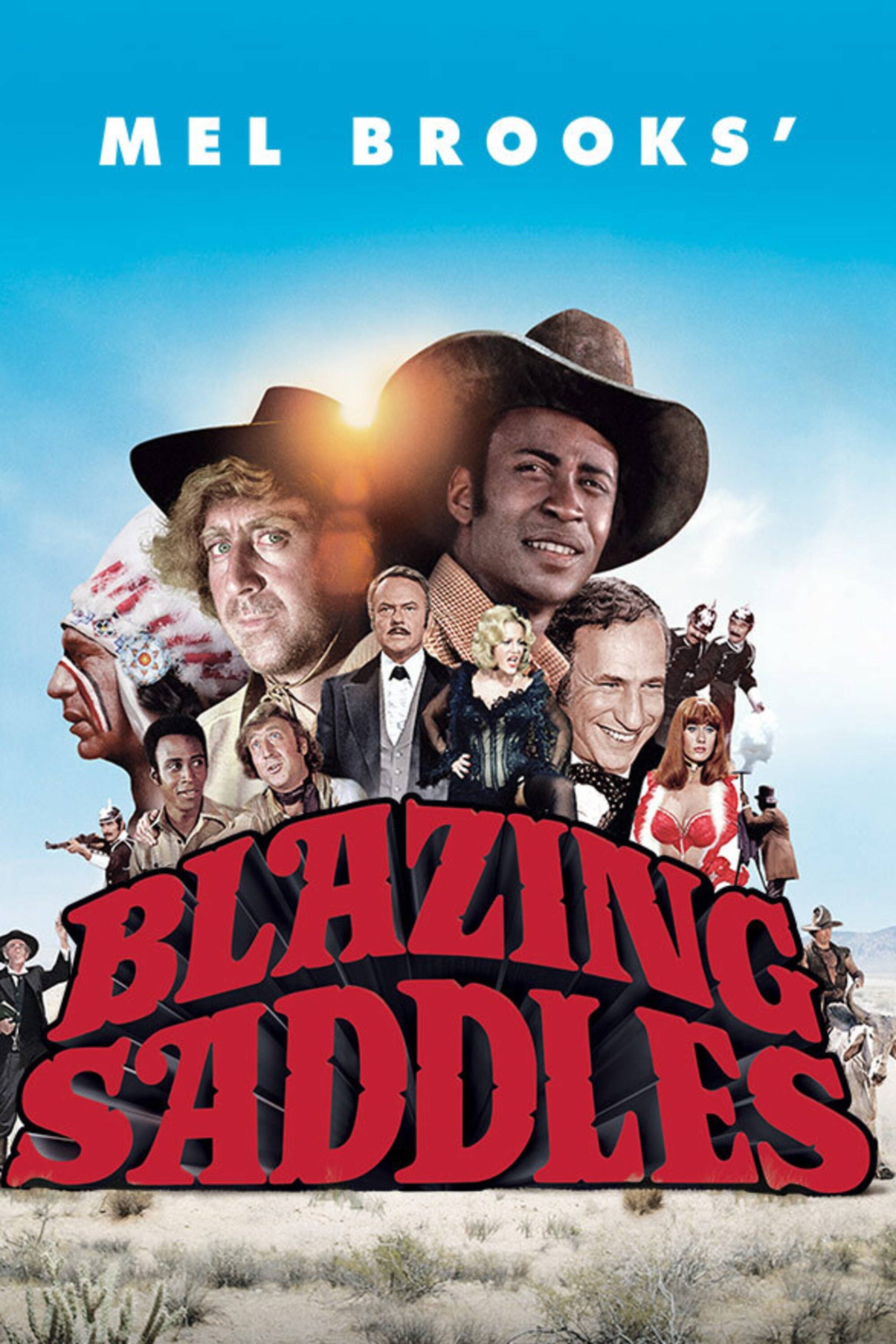
February 7, 1974: "Blazing Saddles" Premieres

February 7, 1974: Blazing Saddles premieres, director Mel Brooks' tribute to, and parody of, classic Western movies.

Hedley Lamarr (played by Harvey Korman) is a railroad executive, and the Attorney General of an unidentified Western territory of the United States. His name always gets turned into that of Hedy Lamarr, a popular actress of the 1930s and '40s. The Territorial Governor, William J. Le Petomane (Brooks), tells him, "This is 1874: You can sue her!" Hedley wants to build his railroad through the town of Rock Ridge, but the residents (who all seemed to have the surname Johnson) won't leave.

So Lamarr sends his flunky Taggart (Slim Pickens) and his goons there, to, as Taggart, says, "go ridin' into town, whompin' and a-whompin'," until the terrified citizens leave. But the move backfires: They are willing to fight for their town, and demand that Governor Le Petomane appoint a Sheriff to protect them.

Lamarr figures out a way around this: Since Le Petomane is an idiot, and Lamarr is clearly the power behind the throne, he convinces Le Petomane to appoint a Sheriff that the people of Rock Ridge will never accept: A black man. This turns out to be a railroad worker named Bart (Cleavon Little). The character's last name is never mentioned. Brooks gave him a badge, but not a surname. I wonder if that was an intentional commentary on racism.

Sure enough, at first, the Rock Ridgers are repulsed, treating Bart badly, and calling him "the N-word." As Jim (Gene Wilder), a former hired gun known as the Waco Kid, who has become his deputy, explains: "You've got to remember that these are just simple farmers. These are people of the land. The common clay of the new West. You know: Morons." The ending was an ad-lib by Wilder. Little cracked up, and Brooks left it in, because it was funny. As Brooks has said, "The only true sin is not being funny.")

In a flashback, where Bart tells Jim his backstory, he mentions his family being the only black family in a wagon train, and thus at the back of it, as if it was a segregation-era bus. When they're attacked by Indians, the chief, also played by Brooks, tells his braves to give them a break: "They're even darker than we are!"

Jim helps Bart win the town over. So Lamarr sends in his version of a "doomsday weapon": Mongo (former football star Alex Karras), a gigantic man of limited intelligence and words. Lamarr figures Bart wouldn't be able to handle him. As Jim says, when Bart suggests shooting him, "Don't do that. It'll only make him mad!" Well, not only does Bart find a way to handle Mongo, but Mongo defects to Bart's side, respecting him as the only man ever to stand up to him.

Sending Mongo in not having worked, Lamarr sends in another secret weapon: Lili von Shtupp, an overtly sexy German singer (Madeline Kahn, in an obvious homage to Marlene Dietrich), who is meant to seduce Bart. But Bart is a lover as well as a fighter, so she defects to his side, too.

So Lamarr decides he needs total war, telling Taggart, "I want you to round up every vicious criminal and gunslinger in the west. Take this down. I want rustlers, cutthroats, murderers, bounty hunters, desperados! Mugs, pugs, thugs! Nitwits, halfwits, dimwits! Vipers, snipers! Con men, Indian agents, Mexican bandits! Muggers, buggerers! Bushwhackers, hornswogglers, horse thieves, bull dykes! Train robbers, bank robbers! Asskickers, shitkickers! And Methodists!"

The final brawl breaks the fourth wall. Well, it breaks a wall, as the fighting Wild Westerners crash through the set of a movie musical in the 1930s style of director Busby Berkeley, directed here by Buddy Bizarre (Dom DeLuise). Then it breaks into the commissary at Warner Brothers' studio, resulting in a food fight, a parody of pie fights in old-time slapstick movies. (Blazing Saddles is now older than most of what it was parodying.) Finally, it spills out onto the streets of Hollywood, where Bart shoots Lamarr in front of the famous Chinese Theatre. In perhaps the most meta moment in movie history, Bart and Jim then go inside to watch the rest of the movie that's telling their story.

Back in 1874, the townspeople thank Bart for his service, and he and Jim start to ride off into the sunset, as Western heroes tend to do. (Although neither gets the girl: Lili stays in Rock Ridge.) Then they get off their horses and into a limousine, and are driven off into the desert -- possibly to Las Vegas.

Brooks wrote the screenplay with black comedy legend Richard Pryor, who was supposed to play Sheriff Bart. But Pryor's cocaine habit was out of control at the time, and he became unreliable: The insurance company for the film wouldn't insure him. So it became a starmaking role for Little.

Brooks also wrote the songs for the film, including the title song. Thinking of Frankie Laine's singing of the theme to the TV show Rawhide, and his big Western-themed hit song "Mule Train," both having the sound effect of a cracking whip, Brooks placed an ad in the trade paper Variety, calling for "a Frankie Laine type." Laine himself answered the ad. Brooks didn't tell him the film was a comedy, and he sang it absolutely straight, and it's a great performance.

(There was precedent for this: Ten years earlier, Stanley Kubrick directed Dr. Strangelove, and told half the cast that the film was a comedy, and the other half that it was a drama, with equally stunning results.)

The studio had a lot of problems with the film. There was a lot of usage of "The N-word." In a 2012 interview, Brooks said, "If they did a remake of Blazing Saddles today, they would leave out the N-word. And then, you've got no movie." The purpose was to satirize racism, to show how rotten it is, and how stupid it is. And Brooks got support on it from both Pryor and Little.

There were also objections to Karras punching a horse. And to the beans scene. Brooks pointed out that, in pretty much every movie with cowboys in it, they're eating beans, but nobody hears the sounds that result. But Brooks' contract gave him final content control, and he refused to make any substantive changes.

Times change. When the film is shown on TV today, the N-word is blanked out. And there's a scene near the beginning where Taggart accuses some of the rail workers of "jumping around like a bunch of Kansas City faggots!" That word is often called the gay version of the N-word, but the TV version could have used a better rewrite than "a bunch of Kansas City dummies!"

And Kahn's German singer? Her name is Lili von Shtupp. "Schtup" is, basically, "fuck" in Yiddish. So the TV version blanks it out, so it sounds like her name is "Lili von Sh." And yet, her name can be seen on the poster for the concert. But they left in the Indian chief's reaction upon seeing Bart's family, the single word "Schwarzes!" (German, or in Brooks' case, Yiddish, for "Blacks!" In the 1979 vampire parody Love at First Bite, George Hamilton's Dracula said it, but, for the TV version, it was replaced with, "Good evening!")

Wilder, who had previously worked with Brooks in The Producers, agreed to be in Blazing Saddles on one condition: He had a special project he wanted to do, and he asked Brooks to direct it. So they made that movie next: Young Frankenstein. Brooks has said that Blazing Saddles is his funniest movie, but Young Frankenstein is his best.

In 1995, I had a terrible cold, a cough that lasted for weeks, and kept me up nights. One night, I saw that Blazing Saddles was going to be on TV. I'd never seen it before, so I figured, it's a classic that's still being talked about, so, what the heck. Big mistake: Every time I laughed, I started coughing again. I began to wonder who would die first, me or Hedley Lamarr. (I didn't see Young Frankenstein until 2021. At least I didn't have a cold at the time. Shame on me for waiting until then to get over the hump.)

Slim Pickens died in 1983, Jack Starrett (Gabby Johnson, a parody of Western actor Gabby Hayes) in 1989, Cleavon Little in 1992, Madeline Kahn in 1999, Richard Pryor in 2005, Frankie Laine in 2007, Harvey Korman in 2008, Dom DeLuise in 2009, Alex Karras in 2012, Gene Wilder and David Huddleston (Olson Johnson) in 2016, and John Hillerman (Howard Johnson) in 2017.

Amazingly, as of February 7, 2022, Mel Brooks is still alive, at age 95. Also of note in the film and still alive on that date are Robyn Hilton, who played Miss Stein, the Governor's top-heavy secretary; and Rodney Allen Rippy, the former hamburger spokeskid who played young Bart, who grew up and left acting for a successful career in marketing.

*

February 7, 1974 was a Thursday. Basketball Hall-of-Famer Steve Nash was born.

Baseball and football were out of season. There was only 1 game played in the NBA that night: The Detroit Pistons beat the Golden State Warriors, 110-86 at the Oakland Coliseum Arena. But there were 3 games played in the American Basketball Association:

* The Virginia Squires beat the Carolina Cougars, 120-97 at the Greensboro Coliseum.

* The Utah Stars beat the San Antonio Spurs, 86-83 at the HemisFair Arena in San Antonio.

* And the Denver Rockets beat the Memphis Tams, 105-94 at the Denver Auditorium Arena. The Tams were not among the ABA teams brought into the NBA. Correctly anticipating that they would be, and that there was already a Houston Rockets, the Denver team changed its name to the Nuggets after this season.

There were 2 games in the NHL. The Boston Bruins beat the St. Louis Blues, 5-3 at the Boston Garden. And the Philadelphia Flyers beat the Pittsburgh Penguins, 5-4 at The Spectrum in Philadelphia. And there was 1 game in the World Hockey Association: The Jersey Knights, based in the Philadelphia suburb of Cherry Hill, New Jersey, beat the Los Angeles Sharks, 7-4 at the Los Angeles Memorial Sports Arena.

December 31, 1999 & January 1, 2000: The Millennium

December 31, 1999:  The Millennium arrives. The people of planet Earth survived. At a terrible cost. But we hadn't destroyed ourselves. ...