Showing posts with label leningrad. Show all posts

Monday, November 7, 2022

November 7, 1917: The Bolshevik Revolution

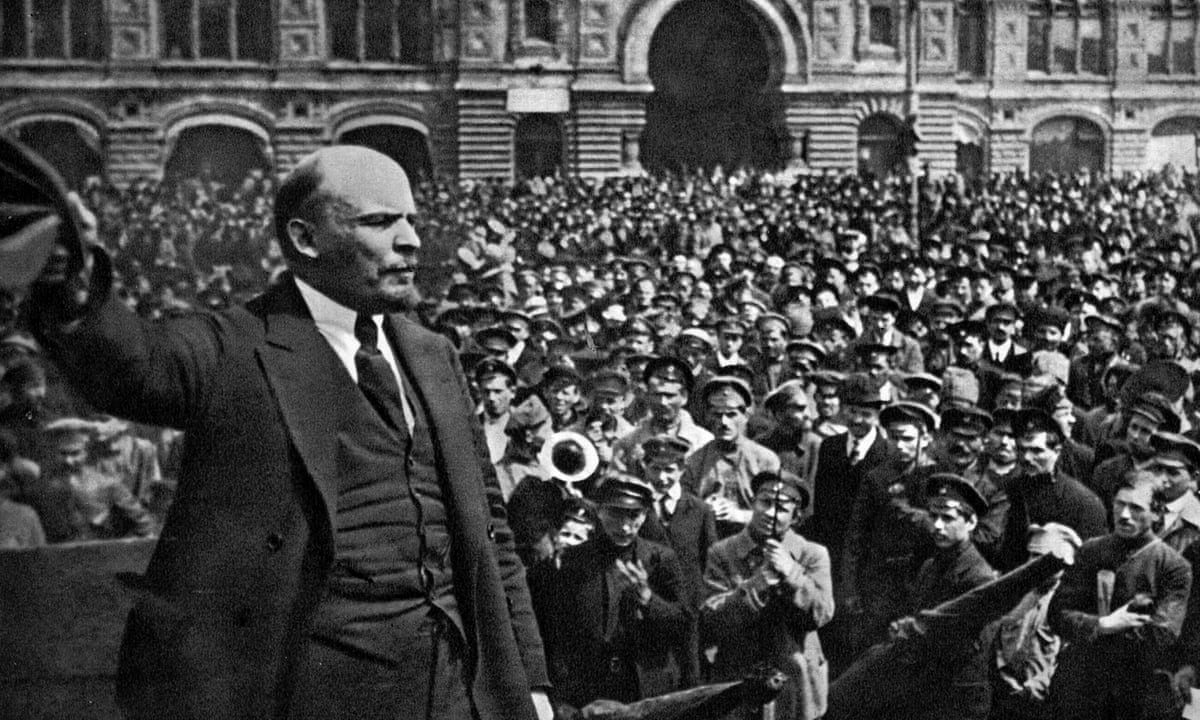
November 7, 1917: The Winter Palace in Petrograd is stormed by Bolshevik troops, and the Bolshevik Revolution is complete. It is also known as the October Revolution, since Russia was still using the Julian Calendar, and they thought it was October 25. The new national leader, Vladimir Lenin, switches the vast country to the Gregorian Calendar.

Lenin also moved the capital to Moscow, and after his death in 1924, Petrograd was renamed Leningrad. After the end of the Soviet Union in 1991, that city's name was restored to what it was before the failed Russian Revolution of 1905: St. Petersburg. As was said at the time, "Better to name it for a saint than for a monster."

In March, there was (again, because of the discrepancy of the calendars) the February Revolution, forcing Czar Nicholas II to abdicate his imperial throne. But the provisional government, led by Alexander Kerensky, could not feed the country, get it out of World War I, or free the farmers from the owners of their land. Lenin promised them "Peace, land and bread." It is a bit ironic to say of the most successful exponent that Communism has ever had, "They bought what he was selling." But they did.

On July 14, 1918, the Bolsheviks had the Czar, his wife, their 4 children, and as many living members of the House of Romanov as they could find executed, to remove the focal point for any opposition Lenin might have.

Kerensky died in exile in 1940. He outlived the Czar and his family, Lenin (1924), Leon Trotsky (1940), and Joseph Stalin (1953).

We may never know how sports in Russia would have developed had either the Czars or the provisional government under Kerensky had lasted. Some dictators understand how sports can be used to spread propaganda for their government at home and for their country abroad. The fascist dictators of the 1930s did: Adolf Hitler of Germany, Benito Mussolini of Italy, and Francisco Franco of Spain.

Lenin and Stalin did not use sports to their advantage. Lenin was too busy trying to keep his country from flying apart to care. Stalin is only known to have attended 1 sporting event in his life, a soccer demonstration on Moscow's Red Square itself.

But Nikita Khrushchev certainly used the Olympics to spread Red propaganda, and Leonid Brezhnev used the 1980 Olympics in Moscow to do so. Vladimir Putin is a former judo champion, although he's not nearly as good at hockey as he's been allowed to think he is -- much like Fidel Castro and his pitching. Putin used the 2014 Winter Olympics in Sochi and the 2018 World Cup to spread the Russian image.

One thing is for sure: If the Bolsheviks had failed, the 1972 Summer Olympic basketball tournament, the 1972 "Summit Series" between Canada and the Soviets, and the 1980 Winter Olympic hockey tournament, while still exciting, would have had far less controversy. Also, movies such as WarGames, Red Dawn and Rocky IV might still have been made, but would have had a very different enemy.

*

November 7, 1917 was a Wednesday. Baseball season was over. Football was in midweek. There was hardly any professional basketball. And, at the time, hockey season began in December, and the 1917-18 season would begin with a new league, the National Hockey League. But there were no scores on this historic day.

Thursday, January 27, 2022

January 27, 1944: The Siege of Leningrad Is Lifted

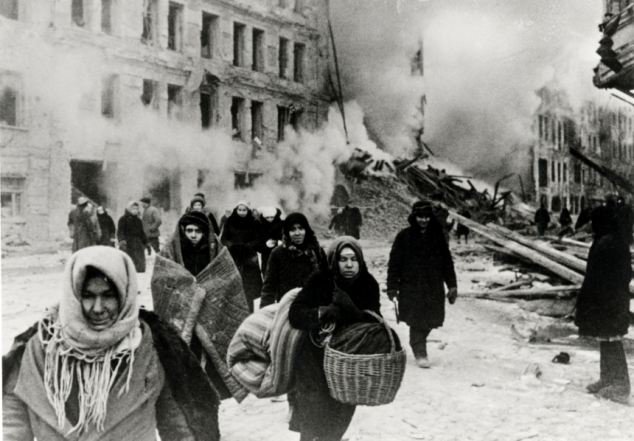
January 27, 1944: The Siege of Leningrad is lifted, after having been in place since September 8, 1941. The Nazis retreat, having failed to take the Soviet Union's 2nd-largest city.

The siege began when the Wehrmacht severed the last road to the city. Although Soviet forces managed to open a narrow land corridor to the city on January 18, 1943, it took the Red Army 872 days to lift the Siege. The city was helped by the fact that the Soviets had managed to keep the Nazis out of the national capital and largest city, Moscow, and had held them off at Volgograd and Kursk, while the Western Allies were keeping them occupied in North Africa and Italy.

The blockade became one of the longest and most destructive sieges in history, and it was possibly the costliest siege in history, due to the number of casualties which were suffered throughout its duration. An estimated 1.5 million people died as a result of the siege. At the time, it was not classified as a war crime.

But, in the 21st Century, some historians have classified it as a genocide, due to the intentional destruction of the city, and the systematic starvation of its civilian population, to the point where animals in the zoo were killed for food, and people even resorted to cannibalizing the dead. The dead couldn't be buried, because Russian Winter meant the ground was frozen, so the bodies -- people and animals -- were left out. So, yes, it was a genocide. Also, the aggressors were the Nazis: Genocide was kind of their thing.

St. Petersburg, named for the Apostle who became the 1st Pope, was the capital of Russia from 1712 until the Bolshevik Revolution in 1918. In 1905, its name was changed to the less-German-sounding, more-Russian-sounding Petrograd. Vladimir Lenin moved the capital to Moscow, and after his death in 1924, Petrograd was renamed Leningrad. After the end of the Soviet Union in 1991, the city's name was restored to St. Petersburg. As was said at the time, "Better to name it for a saint than for a monster."

*

January 27, 1944 was a Thursday. Nick Mason, the drummer for British rock band Pink Floyd, was born.

Baseball and football were out of season. The NBA hadn't been founded yet. There were 2 games played in the NHL. The New York Rangers lost to the Chicago Black Hawks, 6-4 at the Chicago Stadium. And the Montreal Canadiens and the Toronto Maple Leafs played to a tie, 2-2 at the Montreal Forum. The Boston Bruins and the Detroit Red Wings were not scheduled.

December 31, 1999 & January 1, 2000: The Millennium

December 31, 1999:  The Millennium arrives. The people of planet Earth survived. At a terrible cost. But we hadn't destroyed ourselves. ...