Showing posts with label terry bradshaw. Show all posts

Friday, December 23, 2022

December 23, 1972: The Immaculate Reception

December 23, 1972: The Pittsburgh Steelers play their 1st Playoff game, in their 40th season. And for most of the game, it wasn't looking good.

They began play in 1933, with Art Rooney having founded them. But Art's love of football far exceeded his knowledge of it. In 1947, they finished in a 1st place tie in the NFL Eastern Division with the Philadelphia Eagles, and lost a playoff. To this day, the NFL does not recognize this as an official Playoff game.

Finally, after a 1-13 season in 1969, Art's sons, Dan and Art Jr., told dear old Dad to let them run the team from now on. And in just 3 seasons, they had built the team into AFC Central Division Champions.

The 1972 season wasn't just the one in which the Steelers came of age competitively. It was also the year they became a cultural phenomenon in Western Pennsylvania. A group of employees at an Italian restaurant in Pittsburgh quickly took to Franco Harris, the team's half-black, half-Italian rookie running back out of Penn State and the Philadelphia suburb of Mount Holly, New Jersey. They went into the stands at Three Rivers Stadium in Pittsburgh, wearing Army-style helmets, and sitting behind a banner reading, "FRANCO'S ITALIAN ARMY."

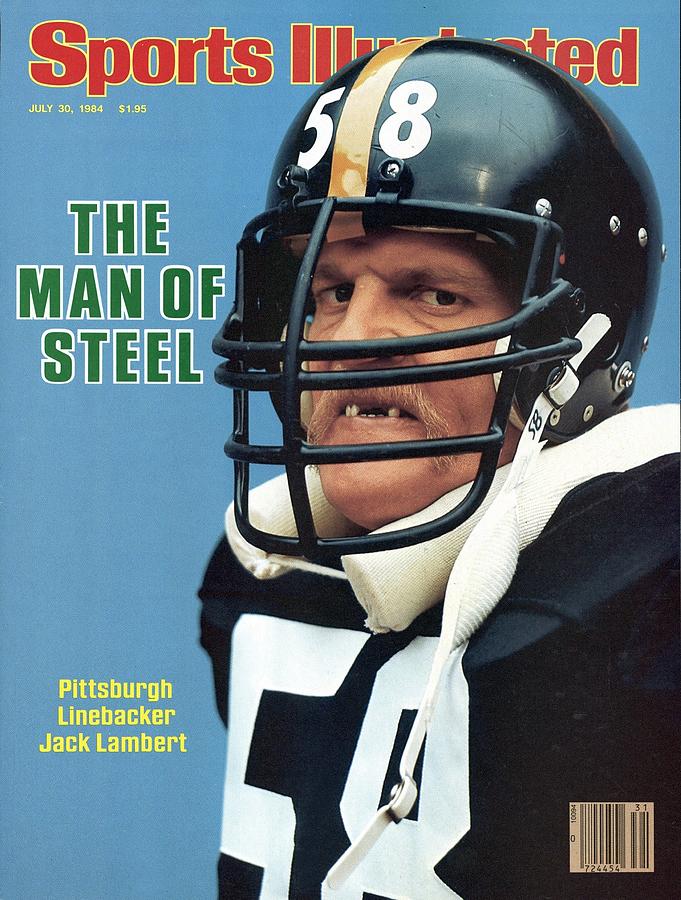
Similar groups copied them. A group of Polish fans honored linebacker Jack Ham with "JACK HAM DOBRE SHUNKA FAN CLUB." "Dobre shunka" is Polish for "Good ham." Running back John "Frenchy" Fuqua had Frenchy's Foreign Legion. Kicker Roy Gerela had Gerela's Gorillas. Drafted in 1974, linebacker Jack Lambert, one of the most intense players of the era, had Lambert's Lunatics.

Al Davis ran the Oakland Raiders, and had built them into AFL Champions in 1967. But they lost Super Bowl II, then lost the 1968 AFC Championship Game to the New York Jets. By 1972, they were dominating the AFC Western Division, but hadn't won a Super Bowl yet.

And so, on Saturday afternoon, December 23, 1972, Davis' Silver and Black marched into Three Rivers Stadium in Pittsburgh to face the Rooneys' Black and Gold. For a game with such an epic ending, it was not good theater most of the way. The 1st half ended scoreless. Roy Gerela kicked a field goal early in the 2nd half, but it remained 3-0 at the end of the 3rd quarter. Gerela kicked another field goal early in the 4th quarter, but the Steelers couldn't put the ball in the end zone, so it remained 6-0 as the clock wound down.

Daryle Lamonica, known as the Mad Bomber, struggled in the 1st half, and coach John Madden replaced him with Ken Stabler, the Alabama lefthander known as the Snake. With 1:17 to go, Stabler ran for 30 yards to get into the end zone. George Blanda, the Raiders' ageless backup quarterback and regular kicker, nailed the extra point, and the Raiders had a 7-6 lead.

The Steelers did not yet have a reputation as the kind of team that could win this kind of game. And Pittsburgh fans, who had seen the Pirates win the World Series the year before, were not used to glory from their football team. The 50,327 fans inside Three Rivers figured the game was lost.

Among them was Art Rooney. "The Chief" left his suite and got into an elevator, to go down to the locker room to congratulate the Raiders and console his team. So he never saw the play that changed the course of his team's history.

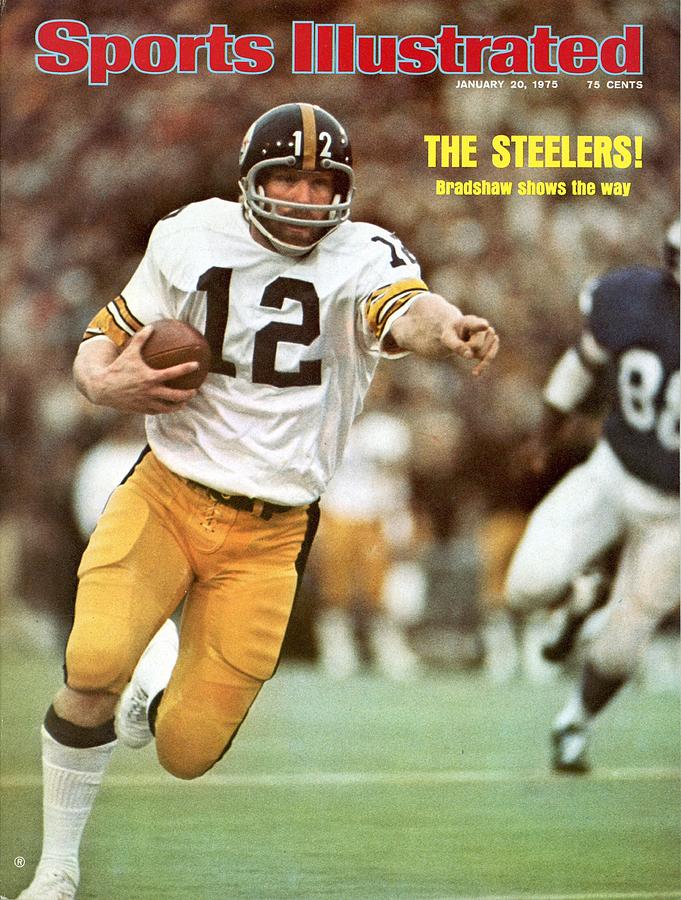
Quarterback Terry Bradshaw, who had been the top pick in the 1970 NFL Draft, had a difficult relationship, not just with head coach Chuck Noll, but with the Pittsburgh fans. He hadn't yet lived up to their hopes. Now, he had gotten the Steelers to their own 40 yard line. But it was 4th and 10, and there were only 22 seconds left, and the Steelers had no time-outs left.

Noll's intended play was "66 Circle Option," intended for Barry Pearson, a rookie who had been on the Steelers' bench all season long without being sent into a game. Now, he was -- his 1st professional play.

But just as no battle plan survives the first shot, Noll's play didn't last. Raiders Tony Cline and Horace Jones bore down on Bradshaw, and "the Blonde Bomber" from Louisiana had to scramble. He just got a throw off before getting clobbered by Cline and knocked to Three Rivers' artificial turf.

The ball got to the Raiders' 33-yard line, and it looked like Steeler running back John "Frenchy" Fuqua was going to catch it. But Raider safety Jack Tatum did what he so often did to potential receivers: He leveled Fuqua.

Big mistake: As with so many dirty soccer players, Tatum should have gone for the ball, not the opposing player. He could have intercepted it. Instead, the ball bounced off him, and went backwards to the Raider 43. And it almost hit the ground.

And for 50 years, the Raiders and their fans have insisted that the ball hit Fuqua first, which, under the rules of the time, would have made every Pittsburgh player an ineligible receiver after that. And they have insisted that the ball did hit the ground.

It didn't. Harris saved it, and took off down the left sideline, and scored. It was 3:29 PM -- don't bet any Steeler fan old enough to remember.

Steeler radio announcer Jack Fleming said, with only slight exaggeration, "From out of nowhere came Franco Harris, riding a white stallion, heading up Franco's Italian Army, galloping into the sunset!"

Like Rooney, Bradshaw didn't see the play. He remembered being down on the ground, and hearing a tremendous roar going up: "I knew that this was a good sound. This was the sound of something good happening."

Fans came pouring onto the field, and had to be cleared, because there was still an extra point to kick, which Gerela did, and 5 seconds to play. The Raiders could do nothing with the ensuing kickoff, and the Steelers had won, 13-7.

The surviving '72 Raiders still insist they were robbed. It would take until the 1976 season for them to win a Super Bowl. But the Steelers didn't win immediately, either: This was the season in which the Miami Dolphins went undefeated. Eight days later, they came into Three Rivers -- at the time, home-field advantage for Conference Championships was on a rotating basis, not decided by record -- and beat the Steelers, on their way to winning Super Bowl VII.

But the Steelers would win Super Bowls IX, X, XIII and XIV. Harris was named the Most Valuable Player for IX, receiver Lynn Swann for X, and Bradshaw for XIII and XIV. The Raiders would win Super Bowls XI, XV and, during their Los Angeles sojourn, XVIII. (Their MVPs, respectively: Fred Biletnikoff, Jim Plunkett and Marcus Allen.)

The catch became known as "The Immaculate Reception." What Art Rooney, a devout Irish Catholic, thought about that, only he knew. Others, noting that it was 2 days to Christmas, called it a Christmas Miracle.

But, along with Alan Ameche's overtime plunge to win the 1958 NFL Championship Game for the Baltimore Colts, Bart Starr's quarterback sneak to win the 1967 Championship Game (the Ice Bowl), and Dwight Clark's "The Catch" from Joe Montana to win the 1981 NFC Championship Game, it ranks as perhaps the greatest play in NFL history.

Franco Harris died on December 21, 2022, at the age of 72, 2 days before the 50th Anniversary of the play. On December 24, he was scheduled to be honored at halftime of the Steelers' Sunday night home game against the now-Las Vegas Raiders, with the retirement of his Number 32. At least he knew it was going to be retired.

In 2019, a poll ranked this game 13th on a list of the 100 Greatest Games of the NFL's 1st 100 years.

*

December 23, 1972 was a Saturday. This was also the day of the earthquake in Managua, Nicaragua, for which Roberto Clemente's doomed flight 8 days later was intended to help provide relief. I have a separate entry for that event.

Another NFL Playoff game was played that day, with the Dallas Cowboys beating the San Francisco 49ers in another classic, 30-28 at Candlestick Park in San Francisco.

The next day, Christmas Eve, the Washington Redskins beat the Green Bay Packers, 16-3 at Robert F. Kennedy Stadium in Washington. And the Miami Dolphins beat the Cleveland Browns, 20-14 at the Orange Bowl in Miami. The following week, New Year's Eve, saw the Conference Championships: Dolphins 21, Steelers 17 at Three Rivers; and Redskins 26, Cowboys 3 at RFK Stadium. On January 14, 1973, at the Los Angeles Memorial Coliseum, the Dolphins completed their undefeated season, beating the Redskins, 14-7 in Super Bowl VII.

There were 4 games played in the NBA on December 23, 1972:

* The Baltimore Bullets beat the Detroit Pistons, 104-97 at the Baltimore Civic Center. While the arena still stands, now known as the CFG Bank Arena, this would be the Bullets' last season in Baltimore, as they moved to the Washington area, and are now named the Washington Wizards.

* The Atlanta Hawks beat the Philadelphia 76ers, 124-112 at The Omni in Atlanta. Pistol Pete Maravich scored 42 points, Super Lou Hudson scored 31, and Bob Christian scored 13 and had 25 rebounds.

* The Milwaukee Bucks beat the Boston Celtics, 104-98 at the Milwaukee Arena. In 1974, it was renamed the Milwaukee Exposition, Convention Center and Arena, or "The MECCA." Since 2014, it has been named the UW-Panther Arena.

* And the Golden State Warriors beat the Chicago Bulls, 127-109 at the Oakland Coliseum Arena.

There were 4 games played in the American Basketball Association:

* The New York Nets lost to the Memphis Tams, 105-103 at the Mid-South Coliseum in Memphis.

* The Virginia Squires beat the Dallas Chaparrals, 112-107 at The Scope in Norfolk. Julius "Dr. J" Erving scored 41 points.

* The Carolina Cougars beat the Utah Stars, 123-117 at the Greensboro Coliseum. Billy Cunningham scored 34 points and grabbed 15 rebounds.

* And the Kentucky Colonels beat the San Diego Conquistadors, 116-105 at Freedom Hall in Louisville.

These games were played in the NHL:

* The expansion New York Islanders beat the Minnesota North Stars, 4-2 at the Nassau Coliseum.

* The Montreal Canadiens beat the Pittsburgh Penguins, 6-3 at the Montreal Forum.

* The Boston Bruins beat the expansion Atlanta Flames, 3-1 at the Boston Garden.

* The Detroit Red Wings beat the Vancouver Canucks, 5-1 at the Olympia Stadium in Detroit.

* The Toronto Maple Leafs beat the Chicago Black Hawks, 5-3 at Maple Leaf Gardens in Toronto.

* The St. Louis Blues beat the Philadelphia Flyers, 6-1 at the St. Louis Arena.

* The Los Angeles Kings beat the Buffalo Sabres, 2-0 at The Forum outside Los Angeles in Inglewood, California.

* The New York Rangers and the California Golden Seals were not scheduled.

And these games were played in the inaugural-season World Hockey Association:

* The Quebec Nordiques beat the Los Angeles Sharks, 2-1 at the Colisee de Quebec.

* The Cleveland Crusaders beat the Minnesota Fighting Saints, 3-1 at the Cleveland Arena.

* The Chicago Cougars beat the Alberta Oilers (as the Edmonton Oilers were named in that inaugural season alone), 3-2 at the International Amphitheatre in Chicago.

* And the Houston Aeros beat the Philadelphia Blazers, 7-3 at the Sam Houston Coliseum in Houston.

Also: Arsenal played Birmingham City to a 1-1 draw at St. Andrews Stadium in Birmingham.

Saturday, December 10, 2022

December 10, 1983: Farewell to Bradshaw, and to the NFL In New York City

December 10, 1983: For the last time, so far, a National Football League game is played within the Five Boroughs of the City of New York. It does not go well for the home team.

The New York Jets had been playing home games at Shea Stadium in Flushing Meadow-Corona Park in Queens since it opened in 1964. But the City's Department of Parks, which owned it (and also owned Yankee Stadium in the South Bronx), gave scheduling priority in September, the month when the NFL regular season begins, to the Major League Baseball team for whom it was really built, the New York Mets.

As a result, the Jets often had too many away games at the start of the season. Not only did this mean they often got off to bad starts, but it meant more home games later in the season. This was not as much of an advantage as you think: Shea was a wind tunnel, and could get very cold.

What's more, once the baseball season ended, the City tended to cut down on maintenance, leaving things messier, and various things to break down more often and stay broken down longer. Worst of all, from the Jets organization's point of view, lease at Shea was bad.

Team owner Leon Hess was an oil company boss, and could afford it. But that wasn't the point: The lease terms the Mets and the Yankees had with the City; the terms the New York Giants, the New Jersey Nets and the New Jersey Devils had with the State of New Jersey at the Meadowlands Sports Complex; and the terms the New York Islanders had with the County of Nassau at the Nassau Coliseum were all better. Throw in the fact that the Madison Square Garden Corporation owned the New York Knicks and the New York Rangers, so those teams had no lease at all at The Garden, and the Jets had easily the worst lease in the New York Tri-State Area.

So Hess made a deal with the New Jersey Sports and Exposition Authority, operator of the Meadowlands Complex. Starting in 1984, the Jets would play home games at Giants Stadium. This led to other problems, but it was still better than at Shea, not least because Giants Stadium then had 16,000 more seats than Shea did in its football configuration.

In this last game at Shea, the Jets hosted the Pittsburgh Steelers. Most of the stars of the Steeler teams that won 4 Super Bowls in 6 seasons from 1974 to 1979 had retired, or were now too far along in their careers, or too injured, to be significant contributors.

One such player was their quarterback, Terry Bradshaw. He had missed the 1st 14 weeks of the season with a bad elbow. But he said he was ready to come back for the season's last 2 games, and hopefully one more Playoff run.

The weather wasn't especially bad: 45 degrees at kickoff, with the wind at 12 miles per hour. A crowd of 53,996, about 6,000 short of a sellout, came out to watch the end of 2 eras, even though they only knew for sure about 1. At one point, the scoreboard operator had some fun, turning "N.Y. JETS" into "N.J. JETS."

At first, it looked like Bradshaw had turned back the clock. In the 1st quarter, he threw a 17-yard touchdown pass to Gregg Garrity. In the 2nd quarter, he threw a 10-yard touchdown pass to Calvin Sweeney. That made it 14-0 Steelers.

But on that pass to Sweeney, he felt something pop in his elbow. He had reaggravated the injury. He walked off the field, and never played another down.

Cliff Stoudt took over at quarterback, and put together 2 drives that ended in field goals by Gary Anderson, making it 20-0 Steelers at the half. He threw a touchdown pass to Bennie Cunningham in the 3rd quarter, and it was 27-0.

Finally, late in the 3rd quarter, Pat Ryan threw a 27-yard touchdown pass to Johnny "Lam" Jones, and the Jets were on the board. But in the 4th quarter, Stoudt threw to Sweeney, and it was another touchdown. Final score: Steelers 34, Jets 7.

Thousands of fans stormed the field, tore down the goalposts, ripped up the field, and took other souvenirs. The grounds crew had 4 months to get the field ready for the Mets.

The win clinched the AFC Central Division title and a Playoff berth for the Steelers, who went on to lose to the Los Angeles Raiders in the Divisional Round. The Jets finished 7-9, 5th and last in the AFC Eastern Division, out of the Playoffs.

In 2004, a stadium was proposed for the West Side of Manhattan, between Pennsylvania Plaza (including Penn Station and Madison Square Garden) and the Hudson River. It was to seat 85,000, and be a new home for the Yankees and the Jets, bringing the NFL back to New York City proper, the NFL back to Manhattan for the 1st time since the Giants left the Polo Grounds in 1955 (the Jets had played at the Polo Grounds from 1960 to 1963, in the AFL), and the Yankees back to Manhattan for the 1st time since they left the Polo Grounds in 1922.

It would have a retractable roof, allowing it to host Super Bowls, a college football bowl game called the Big Apple Bowl, and the NCAA Final Four. What's more, it would be the centerpiece of New York's bid to host the 2012 Olympics.

City officials, especially Mayor Mike Bloomberg, wanted it badly. Nobody else seemed to want it. The Yankees turned it down, preferring to build a new Yankee Stadium across 161st Street from the old one. The Mets didn't want it, either, preferring to build Citi Field next-door to Shea Stadium. The baseball teams seemed to want to keep their respective identities in The Bronx and Queens, respectively.

The real killer for the stadium was the realization of Woody Johnson, the pharmaceutical executive who had bought the Jets from Leon Hess' heirs, that the Jets would still be second-class citizens in this stadium. So he negotiated a deal with the Giants and the New Jersey Sports & Exposition Authority to build what became MetLife Stadium, next-door to Giants Stadium.

It would be owned 50-50 by the 2 New York NFL teams, and they would share the maintenance costs, and, not having to worry about whether a baseball team in the same stadium might make the Playoffs and mess up the schedule, would agree on open dates before each season started.

On June 6, 2005, the New York State Public Authorities Control Board voted West Side Stadium down. A month later, the International Olympic Committee voted on a site for the 2012 Olympics. New York finished 4th, behind London, Paris and Madrid, but ahead of Moscow. London ended up hosting the games, with the stadium eventually hosting soccer team West Ham United, and Major League Baseball's London Series, starting in 2019, with the Yankees playing the Boston Red Sox.

In 2010, the New Meadowlands Stadium, later renamed MetLife Stadium, opened. It pretty much guaranteed that no NFL game would be played within the City of New York for the majority of the 21st Century.

*

December 10, 1983 was a Saturday. One other NFL game was played that day, before all of the rest, except the Monday night game, were played the next day: The Miami Dolphins beat the Atlanta Falcons, 31-24 at the Orange Bowl in Miami.

It was a little early for college football bowl games, but one was played: The Independence Bowl, at Independence Stadium in Shreveport, Louisiana. The U.S. Air Force Academy, ranked Number 16 in the nation, beat the University of Mississippi, a.k.a. Ole Miss, 9-3.

There were 7 games played in the NBA:

* The Boston Celtics beat the Atlanta Hawks, 104-87 at The Omni in Atlanta.

* The Cleveland Cavaliers beat the Chicago Bulls, 101-95 at the Chicago Stadium.

* The Kansas City Kings beat the Indiana Pacers, 119-103 at the Kemper Arena (now the Hy-Vee Arena) in Kansas City.

* The Utah Jazz beat the Houston Rockets, 128-121 at The Summit in Houston. (The arena has since been converted into the Central Campus of the Lakewood Church, Dr. Joel Osteen's "megachurch.")

* The San Antonio Spurs beat the Washington Bullets, 125-120 at the HemisFair Arena in San Antonio.

* The Phoenix Suns beat the San Diego Clippers, 109-93 at the Arizona Veterans Memorial Coliseum in Phoenix.

* And the Dallas Mavericks beat the Golden State Warriors, 126-123 in overtime at the Oakland Coliseum Arena. Mark Aguirre scored 40 points for the Mavs.

And there were 9 games played in the NHL that day:

* The New Jersey Devils lost to the Philadelphia Flyers, 8-2 at the Brendan Byrne Arena.

* The New York Islanders beat the Minnesota North Stars, 4-2 at the Metropolitan Sports Center in the Minneapolis suburb of Bloomington, Minnesota.

* The Buffalo Sabres beat the Boston Bruins, 4-2 at the Boston Garden.

* The Hartford Whalers played the Winnipeg Jets to a tie, 5-5 at the Hartford Civic Center (now the PeoplesBank Arena).

* The Washington Capitals beat the Montreal Canadiens, 2-0 at the Capital Centre in the Washington suburb of Landover, Maryland.

* The Toronto Maple Leafs played the Calgary Flames to a tie, 3-3 at Maple Leaf Gardens in Toronto.

* The St. Louis Blues beat the Detroit Red Wings, 8-3 at the St. Louis Arena.

* The Quebec Nordiques beat the Los Angeles Kings, 6-4 at The Forum outside Los Angeles in Inglewood, California.

* And the Vancouver Canucks beat the Edmonton Oilers, 3-2 at the Pacific Coliseum in Vancouver. 

Saturday, January 29, 2022

January 29, 1974: The Pittsburgh Steelers and the Greatest NFL Draft

January 29, 1974: The NFL Draft is usually now held in April, but no team has ever had a Draft as good as the Pittsburgh Steelers did on this day. It allowed the Steelers, who had made the Playoffs the 2 previous seasons after years of being a doormat franchise, to go to the Super Bowl 4 times, winning them all, over the next 6 seasons.  
And, as Michael Wilbon correctly said on ESPN's Pardon the Interruption, they did it with scouting. Not with an NFL Scouting Combine. Not with analytics. Not with a Wonderlic Test. They did it the old-fashioned way, and in so doing, they may have built the greatest team in NFL history.

Not too old-fashioned: In 1969, the team's owner and founder, Art Rooney, was approached by his sons, Dan and Art Jr. They told him that, as much as he loved football, he didn't know the game as well as he thought, and the proof of this was that, in 37 seasons, the Steelers had never made the Playoffs. They suggested that he let them make the personnel decisions. He figured he had little to lose, and so he did. And they hired Chuck Noll as head coach, and built a great scouting system around themselves.

They had the 1st pick in the 1969 Draft: North Texas State defensive tackle Joe Greene. They had the 1st pick in the 1970 Draft: Louisiana Tech quarterback Terry Bradshaw. In the 3rd round in 1969, they chose Oklahoma State offensive tackle Jon Kolb. In the 3rd round in 1970, they chose Southern University cornerback Mel Blount.

In 1971: In the 2nd round, they chose Penn State linebacker Jack Ham; in the 4th round, East Texas State defensive end Dwight White; in the 5th round, Kansas tight end Larry Brown, whom they moved to offensive tackle. In 1972: In the 1st round, they chose Penn State running back Franco Harris; and in the 5th round, they chose University of Rhode Island defensive end Steve Furness. The 1973 Draft would be relatively unimpressive for them. But they were just getting warmed up for 1974.

Ironically, it would be the Dallas Cowboys who had the top pick in that Draft, having acquired it in a trade with the Houston Oilers. They chose defensive end Ed Jones of Tennessee State, whose 6-foot-9 height earned him the nickname "Too Tall." He became a star, but not a Hall-of-Famer. In fact, none of the 1st 20 picks in this Draft made the Pro Football Hall of Fame.

The 21st pick was the Steelers' pick: USC wide receiver Lynn Swann. In the 2nd round, they chose Kent State linebacker Jack Lambert. They had traded their 3rd round pick. In the 4th round, they chose Alabama A&M receiver John Stallworth. In the 5th round, they chose Wisconsin center Mike Webster.

In the 1st 5 rounds, they had 4 picks, and all of them made the Hall of Fame. After the Draft, they signed South Carolina State safety Donnie Shell. He made the Hall, too. The only non-Steeler in this Draft to make the Hall of Fame was Dave Casper of the Oakland Raiders. (UPDATE: That changed in 2024, when the 14th pick was elected: Ohio State linebacker Randy Gradishar, by the Denver Broncos.)

Choosing Swann was easy, as he had helped USC win the 1972 National Championship. Giving Bradshaw another good receiver was a good idea, since they already had good running backs in Franco Harris and Rocky Bleier. But hardly anybody had looked at Stallworth.

They were not afraid to look at players from historically black colleges, including Greene, Blount, White, Stallworth and Shell. (As had Jones, chosen by the Cowboys' scouting genius, Gil Brandt.) Nor were they afraid to look for big fish in small ponds. Louisiana Tech was no power when Bradshaw was there. Furness was from URI, in the Yankee Conference.

And Lambert was from a Mid-American Conference school, and seemed undersized to be an NFL linebacker. But he was fast. And he was mean. Greene had become the NFL's top defensive tackle, and he was called "Mean Joe Greene," because it rhymed with his name. But, off the field, he was a nice guy. Greene said Lambert was much meaner than he was: "He's so mean, he don't even like himself."

The 1970s Steelers had 10 players make the Pro Football Hall of Fame: Greene, Bradshaw, Blount, Ham, Harris, Swann, Lambert, Stallworth, Webster and Shell. Noll, would also be elected, as would Art Rooney Sr. and Dan Rooney.

*

January 29, 1974 was a Tuesday. Baseball and football were out of season. There were 5 games played in the NBA:

* The New York Knicks beat the Boston Celtics, 104-83 at Madison Square Garden.

* The Golden State Warriors beat the Buffalo Braves, 128-121 at the Buffalo Memorial Auditorium.

* The Cleveland Cavaliers beat the Atlanta Hawks, 118-111 at the Cleveland Arena. Pete Maravich scored 33 points in defeat for the Hawks.

* The Seattle SuperSonics beat the Houston Rockets, 115-107 at the Hofheinz Pavilion (now the Fertitta Center) in Houston.

* And the Milwaukee Bucks beat the Portland Trail Blazers, 126-106 at the Portland Memorial Coliseum.

There were no games scheduled in the NHL, and none in the American Basketball Association. In the World Hockey Association, the Jersey Knights beat the Toronto Toros, 6-1 at the Cherry Hill Arena in the Philadelphia suburb of Cherry Hill, New Jersey. And the Quebec Nordiques beat the Los Angeles Sharks, 5-0 at the Colisée de Québec. 

Friday, January 21, 2022

January 21, 1979: A Super Bowl Shows the Shift In American Culture

January 21, 1979: Super Bowl XIII is played at the Orange Bowl in Miami. The Dallas Cowboys, NFC Champions and winners of Super Bowls VI and XII, faced the Pittsburgh Steelers, AFC Champions and winners of Super Bowls IX and X -- and beat the Cowboys themselves in Super Bowl X.

In 2011, Chad Millman and Shawn Coyne published The Ones Who Hit the Hardest: The Steelers, the Cowboys, the '70s, and the Battle for America's Soul. It does a terrific job of telling the cultural histories of both Pittsburgh and Dallas, and the teams that played in those cities, including their meeting in Super Bowl X in 1976, up until their meeting in Super Bowl XIII in 1979. The problem is, the book ends with the postgame of that Super Bowl, and doesn't really explain who won "the battle for America's soul."

Indeed, while the Seventies Steelers are now regarded as one of the greatest football teams of all time, and the Seventies Cowboys are a level below them, looking at America from the Eighties onward, we, as a country, have become much more like Dallas and the Cowboys than we have like Pittsburgh and the Steelers:

* Pittsburgh: Hard-working, patient, team-oriented, letting your performance do the talking, magnanimous in victory, appreciative of the people who got us there.

* Dallas: Materialistic, glitzy, self-indulgent, instant-gratification-seeking, trash-talking, drug-ridden, yet sanctimonious about religion.

It was a good book, but the lack of a true epilogue stops it from being a great book. But it is as good a look at the building of the Steeler dynasty, and as good a look at the 1st 20 years of the Cowboys, that we are likely to get anytime soon.

And while no Super Bowl has yet been called the "Game of Century," the way several college football games have been, it has been called "the ultimate game." Asked about playing in it before Super Bowl VI, Cowboys running back Duane Thomas said, "If it's the ultimate, how come they're playing it again the next year?"

The Cowboys did go into Super Bowl XIII as defending World Champions, and some of them were holdovers from their Super Bowl VI winners. (Thomas was retired by this point.) But the Steelers had also won 2 titles, and had won them more recently. They had gotten more experienced, and yet younger, as some of the veterans from Super Bowls IX and X had been replaced by younger, better players. They were 14-2 in 1978, their best season ever.

The Steelers' quarterback was Terry Bradshaw, who had really struggled before leading them to the title in the 1974 season. As a country boy from Louisiana, he had a reputation for not being very bright, even though he'd already quarterbacked a team to 2 titles.

And Cowboy All-Pro linebacker Thomas "Hollywood" Henderson told the media, "He couldn't spell 'Cat' if you spotted him the 'c' and the 'a.'" Henderson also predicted the Cowboys would win, 31-0.

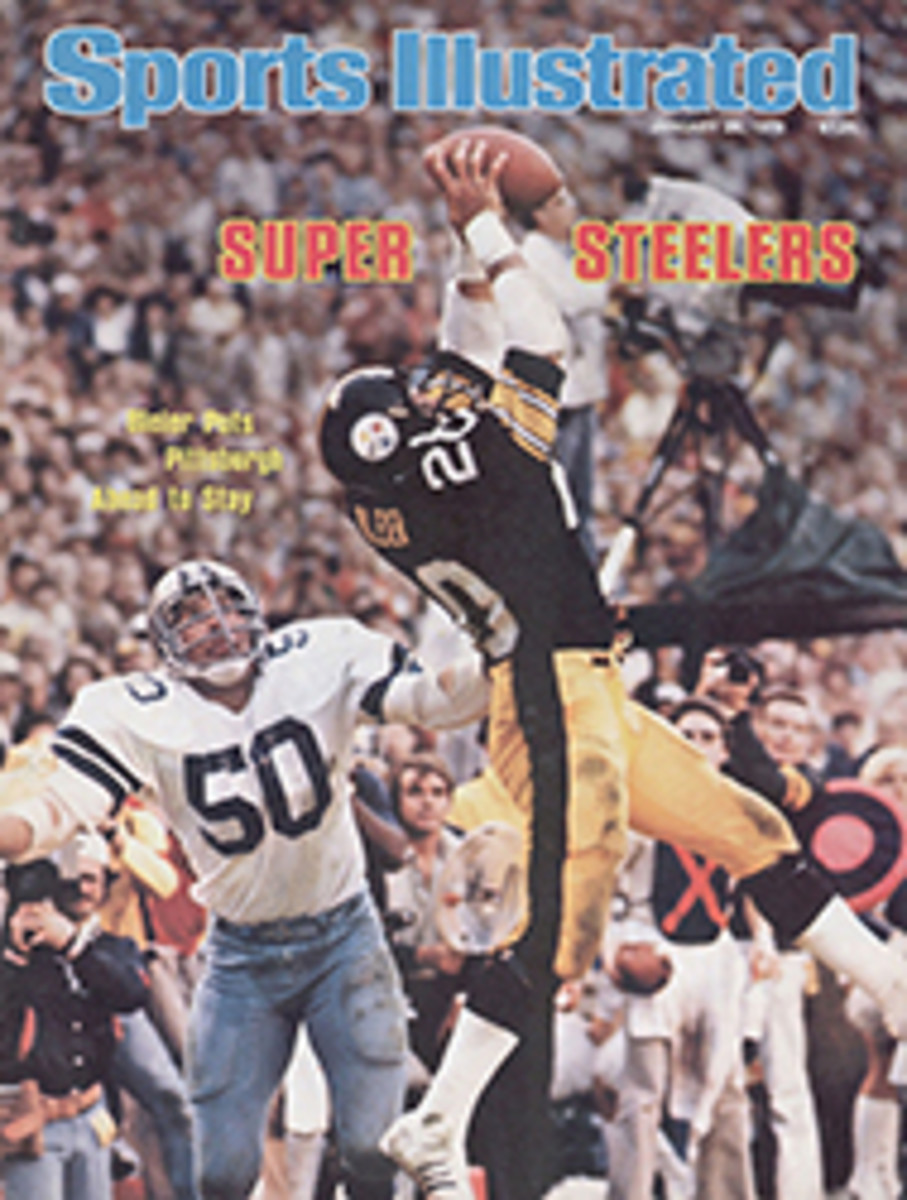
The Steelers began the game as 3 1/2-point favorites. Their offense had Bradshaw, running back Franco Harris, receivers Lynn Swann and John Stallworth, and center Mike Webster. Their "Steel Curtain" defense had tackle Mean Joe Greene, linebackers Jack Lambert and Jack Ham, cornerback Mel Blount, and center Donnie Shell. That's 10 players who ended up in the Pro Football Hall of Fame. And that's not counting All-Pros like running back Rocky Bleier (on the SI cover above), offensive tackle Larry Brown, defensive ends L.C. Greenwood and Dwight "Mad Dog" White, and safety Mike Wagner.

Throw in team owner Art Rooney, administrator and owner-heir-apparent Dan Rooney, scout Bill Nunn and head coach Chuck Noll, and the fact that safety Tony Dungy was later elected as a coach, and that's 15 Hall-of-Famers.

Henderson has not been elected to the Hall of Fame. Nor has safety Charlie Waters. Who among the Cowboys has been? Quarterback Roger Staubach, running back Tony Dorsett, receiver Drew Pearson (though it took a long time to elect him), tight end Jackie Smith, defensive tackle Rayfield Wright, and linebacker Randy White. That's 6. Also, team administrators Tex Schramm and Gil Brandt, head coach Tom Landry, assistant coaches Mike Ditka (from the Pittsburgh area) and Ernie Stautner (elected for his playing for the Steelers in the 1950s). So, 11.

The Cowboys had the 1st drive, but fumbled the ball away. The Steelers took advantage, leading to a 28-yard touchdown pass from Bradshaw to Stallworth. 7-0 Pittsburgh. After a trade of turnovers, Staubach threw a 39-yard touchdown pass to Tony Hill. It was the time all season the Steelers had given up a touchdown in the 1st quarter of a game, and it tied the game at 7-7.

The script continued to go the Cowboys' way, as linebackers Henderson and Mike Hegman blitzed Bradshaw, causing him to do the kind of dumb thing Henderson suggested he was capable of: He collided with Harris, and fumbled. He picked the ball up, but was sacked by Henderson, and Hegman ripped the ball out of his hands, taking it 37 yards for a touchdown. It was 14-7 Dallas.

Bradshaw wasn't fazed. He threw a pass that Stallworth turned into a 75-yard game-tying touchdown. The Steelers forced the Cowboys to punt, but only got a missed field goal out of it. On the Cowboys' next drive, Blount intercepted Staubach. His return and a personal foul by Cowboy tight end Billy Joe DuPree gave the Steelers great field position. With 26 seconds left in the half, Bradshaw threw a 7-yard pass to Bleier, and it was 21-14 Pittsburgh.

That remained the score until, with 2:46 left in the 3rd quarter, the Cowboys had a 3rd and 3 on the Steeler 10, and Staubach faded back to pass. He saw Jackie Smith wide open in the end zone. Smith had played 15 seasons for the St. Louis Cardinals -- the football team that now plays in Arizona, not the baseball team of the same name -- and made 5 Pro Bowls. He had retired after the 1977 season, but accepted an offer from the Cowboys, who were dealing with injuries at his position. He didn't catch a pass all season long, but was praised for his blocking.

In a Playoff game against the Atlanta Falcons, he did catch a touchdown pass from Danny White, who was filling in for an injured Staubach. Although the Cardinals had gone 9-5 in 1963 (his rookie season), 9-3-2 in 1964, 9-4-1 in 1968, 10-4 to win the NFC Eastern Division in 1974, and 11-3 to win the NFC East, that game against the Falcons was the 1st winning postseason game in which he'd ever played.

Now, with less than 18 minutes in regulation to play in a game for the World Championship, and with his team down by 7 points, Jackie Smith was wide open in the end zone, and the target of a pass by one of the greatest quarterbacks who had ever played.

He dropped it. It looked like he slipped, his legs collapsing underneath him, and the pass popped out of his hands. Verne Lundquist, then the Cowboys' main radio announcer, said, "Aw, bless his heart, he's got to be the sickest man in America!"

Had he caught the pass, the Cowboys would have been a successful extra-point attempt from tying the game. Instead, the Cowboys had to settle for a 27-yard field goal by Rafael Septién. The Cowboys were trailing 21-17, the same score by which the Steelers beat them in Super Bowl X.

They could not build momentum on this. Franco Harris added to the Pittsburgh lead with a touchdown run halfway through the 4th quarter. On the ensuing kickoff, Roy Gerela slipped, causing him to squib the kick. This should have been a lucky break for the Cowboys.

Instead, Randy White tried to pick it up at the 24-yard line, but was wearing a cast to protect his broken left hand, and fumbled it. Dennis Winston recovered it, and the Steelers had the ball at the Dallas 18. On the very next play, Bradshaw threw to Swann, and he didn't drop it. That made it 35-17 Pittsburgh with less than 7 minutes to go.

The Cowboys didn't give up. Staubach threw a touchdown pass to DuPree with 2:27 left. They recovered an onside kick, and with 22 seconds on the clock, Staubach threw another touchdown pass, to Butch Johnson.

It was 35-31. Had they gotten the Smith touchdown instead of the Septién field goal, presuming Septién had made all the extra points, it would have been 35-35. But they couldn't recover the last onside kick, and the Steelers had won.

It was Jackie Smith's last game, and the last pass he was ever thrown. He caught 480 passes for 7,980 yards, the latter a record for tight ends that stood until 1990. He still holds the record of most yards per catch for any tight end, 16.1. But it took 11 tries after becoming eligible for the Pro Football Hall of Fame for him to be elected. It certainly looked as though the voters held it against him.

Henderson got the 31 points for the Cowboys right, as the Steel Curtain did not hold. But neither did the Cowboys' "Doomsday Defense." For most of the game, Bradshaw had it his own way. He was named the game's Most Valuable Player. He told the press, "Ask Hollywood how dumb I am now."

It would have been an even better question a year later, as the Steelers trailed the Los Angeles Rams early in the 4th quarter of Super Bowl XIV, and Bradshaw led them back to win, and he was named the MVP again. That made it 4 World Championships in 6 seasons.

It also linked up with the Pittsburgh Pirates' win in the 1979 World Series, in between the Steelers' back-to-back titles. Bradshaw and Pirates Captain Willie Stargell were named Sportsmen of the Year for 1979 by Sports Illustrated.

Henderson's drug problem drove him out of football, just as an elbow injury and clinical depression ended Bradshaw's career. Both men recovered, and can laugh about it all now.

Much like Liverpool Football Club in England, the Steelers had great success in the 1970s, in a city hit hard by industrial decline, where the "football" team meant everything. As with the 1965 Los Angeles Dodgers and the 1968 Detroit Tigers with their World Series wins following race riots, a community in another kind of trouble rallied around a great team, to lift them up, to show a country that had been looking down on them that they were still entitled to some pride.

But by this point, the TV show Dallas had already premiered. Just 2 months after the Steelers beat the Rams in Super Bowl XIV, the show skyrocketed in popularity thanks to the shooting of protagonist J.R. Ewing (played by Larry Hagman). The show seemed to celebrate excess, glamor, and naughty behavior. These were behaviors the Cowboys and their fans seemed to embrace, and it was anti-matter to the Steelers and their fans.

Both teams were on TV all the time, to the point where some people said that CBS stood for "Cowboys Broadcasting System." As a result, both teams developed national followings, including in places where the local team simply wasn't getting the job done in the 1970s, cities like New York (where the Jets crashed after Joe Namath's guaranteed Super Bowl win, and the Giants were mediocre and boring), Philadelphia (to the dismay of hardcore Eagle fans), Chicago (until Ditka returned as their head coach and rebuilt them), and all across the South (aside from the Cowboys and the Miami Dolphins, no team from a former Confederate State played in a Super Bowl until 1999).

The 1980s would not be good to either team, as both got old, and rebuilt to the point where they were good, but not good enough. The Cowboys reached the Conference Championship Game for the seasons of 1980, '81 and '82; the Steelers, that of '84. By the end of the decade, both had completely collapsed. But they rebuilt in the 1990s, and the Cowboys won 3 Super Bowls, finally beating the Steelers in the last of these, Super Bowl XXX, in 1996.

The Cowboys haven't been to a Super Bowl since, and the fact that they've usually been a Playoff team since then has made it more frustrating. The Steelers are also usually a Playoff team, and won Super Bowls XL and XLIII, before losing XLV.

But 10 months after the Steelers completed their Super Bowl run, America voted the Cowboy way, as President Jimmy Carter, an honest, hardworking man with a good attitude, someone who would have been welcome in any Steeler gathering, was soundly rejected at the polls in favor of Ronald Reagan, a former Governor of California known for starring in Westerns.

The Steelers won the game. But it was Dallas, not Pittsburgh, who won the culture war.

In 2019, a poll ranked this game 17th on a list of the 100 Greatest Games of the NFL's 1st 100 years.

*

January 21, 1979 was a Sunday. Obviously, there were no other football games that day. Baseball was out of season. There were 5 games played in the NBA:

* The New York Knicks lost to the Milwaukee Bucks, 138-114 at the Milwaukee Exposition, Convention Center and Arena, or "The MECCA." Since 2014, it has been named the UW-Panther Arena.

* The Philadelphia 76ers beat their arch-rivals, the Boston Celtics, 91-87 at the Boston Garden.

* The Cleveland Cavaliers beat the Chicago Bulls, 94-93 at The Coliseum in the Cleveland suburb of Richfield, Ohio.

* The New Orleans Jazz beat the Atlanta Hawks, 108-87 at the Superdome in New Orleans.

* The Los Angeles Lakers beat the Golden State Warriors, 113-107 at The Forum outside Los Angeles in Inglewood, California. In a losing effort, Robert Parish scored 33 points and had 16 rebounds against a Laker defense led by Kareem Abdul-Jabbar. Celtics boss Red Auerbach may nave taken notice.

Only 1 game was played in the NHL that day, a 5-5 tie between the New York Rangers and the Philadelphia Flyers at Madison Square Garden. The Rangers led 5-2 with 12 minutes left to play, but allowed 3 goals in 3 1/2 minutes to blow it.

There were 2 games played in the World Hockey Association, which turned out to be in its last season. The Birmingham Bulls beat the Edmonton Oilers, 4-3 at the Northlands Coliseum. And the Winnipeg Jets beat the Quebec Nordiques, 3-1 at the Winnipeg Arena.

Wednesday, January 12, 2022

January 12, 1975: A Win for Pittsburgh

January 12, 1975: Western Pennsylvania, and Pittsburgh in particular, has long been known as a source of football talent and football fandom. But up to this day, it had never won a professional football championship.

Art Rooney founded the NFL's Pittsburgh Steelers on May 19, 1933. He and his wife, the former Kathleen "Kass" McNulty, lived in the Troy Hill section of the North Side of Pittsburgh, and raised 5 sons. They were Dan, Art Jr., Tim, Patrick and John. They would have 32 grandchildren and 75 great-grandchildren.

Art Jr. said that Art Sr., known to all of Western Pennsylvania as "The Chief," always told his sons, "Treat everybody the way you'd like to be treated. Give them the benefit of the doubt. But never let anyone mistake kindness for weakness." Or, as Art Jr. put it, "He took the Golden Rule, and put a little bit of the North Side in it."

The Steelers were founded when they were because 1933 was the year the Commonwealth of Pennsylvania finally repealed the "blue law" prohibiting professional sports on Sunday. This also enabled the Philadelphia Eagles to be founded on July 8, 1933.

Both teams struggled for years. Indeed, the manpower drain of World War II led them to merge the teams for the 1943 season, and the team was nicknamed the "Steagles." In 1947, at last, the Steelers finished 1st in the NFL's Eastern Division. Well, in a tie for it. With the Eagles. And the Eagles won a Playoff at Pittsburgh's Forbes Field.

That was the closest the Steelers would get to an NFL Championship Game for another quarter of a century. In 1955, Dan and Art Jr. seemed to be the only people at Steeler training camp to notice a young Pittsburgh native who was trying to make the team as a quarterback. But Art Sr. deferred to his head coach, a run-centric old-schooler named Walt Kiesling.

Kiesling is not well-remembered today. The young quarterback is: He was picked up by the Baltimore Colts, and he made that team, and himself, legend. He was Johnny Unitas.

If Art Sr. had died shortly after the Jets won Super Bowl III on January 12, 1969, it would have been said that the best thing he did for his team was to die, so that his son could run the team. Instead, his sons held what we would now call an "intervention," telling him that they should take over the operations of the team. He agreed -- and lived another 20 years, in which the sons turned the Steelers from a joke franchise into an iconic team of American sports.

Pretty much the first thing that Dan Rooney did was offer the Steelers' head coaching job to the head coach at nearby Penn State, Joe Paterno. Paterno turned him down. So Dan offered it to the defensive coordinator of the team the Jets had just beaten in the Super Bowl, who had been on the staff of the San Diego Chargers team that won the 1963 AFL Championship, and a lineman who had won 2 NFL Championships with the Cleveland Browns: Chuck Noll.


Dan put his brother Art Jr. in charge of the team's drafts. His drafts included:

* 1969: Defensive tackle Joe Greene, offensive tackle Jon Kolb and defensive end L.C. Greenwood.

* 1970: Quarterback Terry Bradshaw and cornerback Mel Blount.

* 1971: Linebacker Jack Ham, guard Gerry Mullins, defensive tackles Dwight White and Ernie Holmes, tight end Larry Brown, and safety Mike Wagner.

* 1972: Running back Franco Harris and defensive tackle Steve Furness.

* And in 1974, in perhaps the greatest single draft in NFL history, he selected receivers Lynn Swann and John Stallworth, linebacker Jack Lambert, and center Mike Webster -- 4 Hall-of-Famers in one draft. And that's not counting safety Donnie Shell, who wasn't drafted in 1974, but was signed anyway, and is in the Hall.

Counting Greene, Bradshaw, Blount, Ham and Harris, that was 10 Hall-of-Famers in 6 drafts. Counting Noll, 11 -- all based on the decisions of Dan Rooney and Art Rooney Jr. To put that in perspective: The team had 5 players from 1933 to 1968 who ended up making the Hall.

It took a while to build a winner, especially because Noll and Bradshaw had a contentious relationship. Moving from 1925-built Pitt Stadium into the new Three Rivers Stadium in 1970 helped. In 1972, the Steelers went 11-3, won the AFC Central Division Championship, and reached the AFC Championship Game, thanks to a pass Bradshaw threw that deflected off Oakland Raider safety Jack Tatum and ended up being caught and taken in for a Divisional Playoff-winning touchdown by Harris, known as "the Immaculate Reception." 

They made the Playoffs again in 1973, going 10-4. But they didn't make the Super Bowl either time. In 1974, they went 10-3-1, and won the AFC Central Division again. In the Divisional Playoff, they beat the Buffalo Bills, 32-14 at Three Rivers. This would be the only Playoff game of O.J. Simpson's career: Although he caught a touchdown pass, he couldn't help the Bills win, and he never got to another.

They had to go to the Oakland Coliseum to win the AFC Championship -- this would be the last season that a rotation chose the site of the Conference Championship games, rather than which team had the better record -- and beat the Raiders, 24-13. They would play Super Bowl IX at Tulane Stadium in New Orleans, site of the annual Sugar Bowl, against the Minnesota Vikings.

Both teams had named defenses. Reminiscent of the Iron Curtain across Europe, the Steelers' front seven was known as the Steel Curtain: Tackles Greene and White, ends Greenwood and Holmes, and linebackers Lambert, Ham and the veteran Andy Russell. The Vikings, due to their jersey color reminding people of Sheb Wooley's novelty song that hit Number 1 in 1958, had a defense known as the Purple People Eaters. So it's not surprising that Super Bowl IX was one of the lowest-scoring championship games in NFL history.

Western Pennsylvania had been hit hard over the last 10 years. The coal and steel industries had severely declined. The industries that would replace them and get Pittsburgh, if not the small towns nearby, back on its feet -- computers and health care -- had not yet arrived. Labor unions were losing power.

"White flight" increased the population of the suburbs, but dropped that of the city itself. The city's population peaked at 676,806 in the 1950 Census, but was down to 520,117 in 1970. This decline continues, having reached 302,971 in 2020. The metropolitan area dropped from 2.8 million in 1960 to 2.3 million in 2010, but has gained a little back since then.

The city's sports teams had always been a rallying point, but were also inconsistent. Like the nursery rhyme about the little girl with the curl in the middle of her forehead, when they were good, they were very, very good; but when they were bad, they were horrid.

The city had a team in the NBA during its inaugural season of 1946-47, the Pittsburgh Ironmen, but they failed after that season. The Pittsburgh Condors won the title in the 1st season of the American Basketball Association, 1967-68. But when their biggest star, Connie Hawkins, had his ban from the NBA (due to an overreaction to his role in a point-shaving scandal) lifted in 1969, he went to the Phoenix Suns, and the Pipers were doomed. A rebranding to the Pittsburgh Condors in 1970 didn't help, and they folded in 1972.

The NHL granted the Steel City an expansion team in 1967, the Pittsburgh Penguins. They made the Playoffs in 1970 and '72, and would again in '75, but, at the time, they were nothing special. By far the most successful team in town was the baseball team, the Pirates. They had won the National League Eastern Division title in 1970, '71, '72, '73 and '74, and would again in '75. But aside from 1971, they couldn't win a Pennant. They won the World Series that year, but the death of Roberto Clemente in a plane crash after the 1972 season cast a pall over them that left them unable to return to the Fall Classic.

But football was the sport in Pittsburgh, and in all of Western Pennsylvania. It was especially known for producing great quarterbacks, such as Unitas (from Bloomfield on the city's East Side), Johnny Lujack (Connellsville, 50 miles southeast of downtown), George Blanda (Youngwood, 36 miles southeast), and Joe Namath (Beaver Falls, 30 miles northwest). Later would come Joe Montana (New Eagle, 23 miles south), Dan Marino (South Oakland, on the East Side) and Jim Kelly (East Brady, 57 miles northeast).

Still, the city was looking for its 1st pro football championship. It hadn't happened in the NFL. And the city didn't have teams in any of the AFLs, or the AAFC. Now, it looked to Coach Noll, the Steel Curtain, and Bradshaw, "the Blond Bomber" from Shreveport, Louisiana, to get that 1st title.

A full house of 80,997 fans filed into Tulane Stadium. Despite the Vikings having been to the Super Bowl the year before (losing to the Miami Dolphins), and 4 years before that (losing to the Kansas City Chiefs), the Steelers were favored by 3 points. The weather was bad: 46 degrees, with the artificial turf field a bit slick due to rain the previous day. (The game was supposed to be played indoors at the Superdome, but construction delays forced that stadium's opening to the following August.)

Talk about low-scoring: Not only did the 1st quarter end 0-0 (the Steelers' Roy Gerela missed 2 field goal attempts, and the Vikings only got 20 total yards), but the only score of the 1st half was the 1st safety in Super Bowl history.

Fred Cox missed a field goal for the Vikings. On their next possession, Viking quarterback Fran Tarkenton pitched the ball behind him to Dave Osborn. That may have been his name, and he may have been in the Super Bowl, but unlike the daredevil character created by comedian Bob Einstein, this Dave Osborn was not super: He never had control of the ball, and Tarkenton, known as a "scrambler," ran to the ball and fell on it. White just had to touch him, and it was 2-0 Steelers.

The Steelers got a drive going in the 3rd quarter, and Franco Harris ran the ball in for a touchdown and a 9-0 Pittsburgh lead. And that would be all the scoring in the game's 1st 45 minutes. The Steelers forced a fumble in the 4th quarter, but had the tables turned when the Vikings blocked one of their punts, and Terry Brown recovered the ball in the end zone. But Cox missed the extra point. With 10:33 to go, the Vikings trailed only 9-6. Through the 2021 season, that remains the closest the Vikings have ever come to becoming World Champions.

So often derided as dumb, Bradshaw proved he was a smart quarterback. He launched an 11-play, 66-yard drive, ending with a 4-yard pass to Brown. The touchdown put the Steelers up 16-6 with 3:31 left. Tarkenton threw a pass that was intercepted by Wagner, and the Steelers ran the clock down as much as they could. With 38 seconds left, there was nothing the Vikings could do.

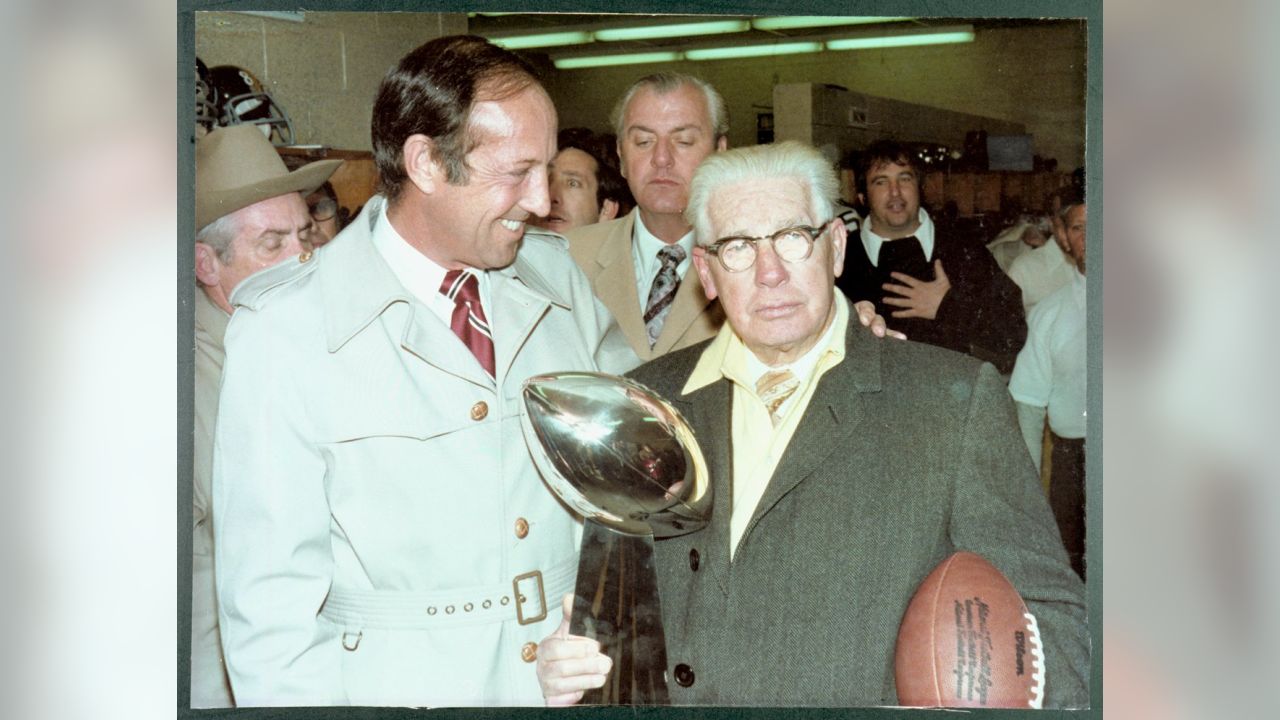
The Pittsburgh Steelers were World Champions. Harris was named the game's Most Valuable Player. At the time, Noll was the youngest man ever to coach a team to victory in the Super Bowl: He had just turned 42. Pete Rozelle said his happiest moment in his 29 seasons as Commissioner of the NFL was handing the Vince Lombardi Trophy to Art Rooney Sr. -- but it was because of the building done by Dan and Art Jr.
Art Sr. wanted it. The organization as a whole, and even Western Pennsylvania as a whole, needed it. The Steelers would reach 4 Super Bowls (IX, X, XIII and XIV), winning all of them, in a span of 6 years.

All tolled, under Dan Rooney's operation, 48 seasons, they reached the Playoffs 29 times, won 22 Division titles (15 in the old AFC Central, 7 in the AFC North following the 2002 realignment), reached 16 AFC Championship Games, won 8 AFC Championships, and won 6 Super Bowls, the most NFL Championships in the Super Bowl era. He also built Heinz Field (now Acrisure Stadium), the Steelers' new home, for the 2001 season, and it is one of the best stadiums in the NFL.

The Steelers became a cultural phenomenon, with their black and gold uniforms, their helmets with the "Steelmark" logo on only the right side with the left side remaining blank, their multi-ethnic working-class fan base, and their bright yellow Terrible Towels being waved in the stands (first at Three Rivers Stadium, then at Heinz Field).

Much like Liverpool Football Club in England, the Steelers had great success in the 1970s, in a city hit hard by industrial decline, where the "football" team meant everything. As with the 1965 Los Angeles Dodgers and the 1968 Detroit Tigers with their World Series wins following race riots, a community in another kind of trouble rallied around a great team, to lift them up, to show a country that had been looking down on them that they were still entitled to some pride.

The fact that the Steelers stood up, usually successfully, to the Dallas Cowboys and the Oakland Raiders, 2 of the most hated NFL teams nationwide, also helped boost their national image. Along with the Cowboys, the Raiders, the Green Bay Packers (due to their similar cultural stamp in the 1960s) and the Chicago Bears (ditto for the 1980s), the Steelers are one of the few NFL teams to have a nationwide fan base. In New York and New Jersey, 400 miles from Pittsburgh, you can see Steeler bumper stickers and window stickers on cars every day.

Art Rooney Sr. died in 1988, and Dan became majority owner, replacing Noll with Bill Cowher in 1992. By that point, Art Jr. had reduced his involvement in the team. The Steelers won the 1995 AFC Championship, but history was turned on its head, and the Steelers lost Super Bowl XXX to the Cowboys.

In 2003, Dan followed in his father's footsteps, and handed over day-to-day operations to his son, Art Rooney II (grandson of the founder and nephew of Art Jr.). It was Art II who oversaw the building of the teams that won Super Bowls XL and XLIII and lost Super Bowl XLV, and in 2007 replaced the retiring Cowher with his assistant, Mike Tomlin, the team's 1st black head coach. Dan died in 2017.

UPDATE: The Steelers have a team hall of fame, calling it the Pittsburgh Steelers Hall of Honor. From their 4 Super Bowl winners, they have inducted founding owner Art Rooney, his sons Dan Rooney and Art Rooney Jr. (both executives under him), head coach Chuck Noll, assistant coach Dick Hoak, scout Bill Nunn, broadcaster Myron Cope; quarterback Terry Bradshaw, running backs Rocky Bleier and Franco Harris, receivers Lynn Swann and John Stallworth, centers Ray Mansfield (retired after 1976) and Mike Webster, guards Sam Davis and Gerry Mullins, offensive tackles Jon Kolb and Larry Brown; defensive tackle "Mean" Joe Greene, defensive ends L.C. Greenwood and Dwight "Mad Dog" White; linebackers Andy Russell (retired after 1976), Jack Ham and Jack Lambert; cornerback Mel Blount, and safeties Mike Wagner and Donnie Shell.

From the 1980s, they've inducted offensive tackle Tunch Ilkin and receiver Louis Lipps.

*

January 12, 1975 was a Sunday. Obviously, it was the only game played in the NFL that day. And baseball was out of season.

There were 3 games played in the NBA: 

* The Buffalo Braves beat the Boston Bruins, 114-101 at the Buffalo Memorial Auditorium. (Yes. The Aud sometimes hosted basketball and hockey on the same day. Bob McAdoo scored 41 points.

* The Milwaukee Bucks beat the Philadelphia 76ers, 99-88 at the Milwaukee Exposition, Convention Center and Arena, or "The MECCA." Since 2014, it has been named the UW-Panther Arena.

* And the Chicago Bulls beat the Seattle SuperSonics, 127-123at the Key Arena in the Northwest.

* There was 1 game in the WHA. The San Diego Clippers beat the Memphis Sounds, 110-107 at the Mid-South Coliseum in Memphis.
There were 6 games played in the NHL that day:

* In an "Original Six" matchup, the New York Rangers lost to the Chicago Blackhawks, 4-2 at the Chicago Stadium.

* The New York Islanders lost to the Toronto Maple Leafs, 4-3 Maple Leaf Gardens in Toronto.

* The Philadelphia Flyers beat the California Golden Seals, 2-1 at The Spectrum in Philadelphia.

* The Montreal Canadiens beat the Washington Capitals, 7-2 at the Capital Centre in the Washington suburb of Landover, Maryland.

* The Buffalo Sabres beat the Vancouver Canucks, 5-1 at the Buffalo Memorial Auditorium. Yes, it hosted an NBA game and an NHL game the same day.

* And the St. Louis Blues beat the Detroit Red Wings, 2-1 at the Olympia Stadium in Detroit.

December 31, 1999 & January 1, 2000: The Millennium

December 31, 1999:  The Millennium arrives. The people of planet Earth survived. At a terrible cost. But we hadn't destroyed ourselves. ...