Showing posts with label louisville cardinals. Show all posts

Tuesday, November 29, 2022

November 29, 2012: Rutgers' Football Team Blows Their Biggest Chance

November 29, 2012: To paraphrase Boromir in J.R.R. Tolkien's Lord of the Rings: One does not simply blow an 11-point 2nd-half lead at home and lose, on national television, and still call oneself Conference Co-Champions. It is folly. With fifty thousand men, you could not do this.

Rutgers University had played the 1st college football game in 1869, and won it -- and they hadn't done a damn thing since. That was an exaggeration, but not much of one. They had undefeated seasons in 1961 and 1976, but both came as independents, not as members of a conference.

And, in so doing, they played what was, before such a classification became official, a schedule full of NCAA Division I-AA (now Football Championship Subdivision, or FCS) teams. It was only in the wake of not getting a bowl big despite going undefeated in 1976 that they decided on what was then called "bigger-time football," scheduling whatever Division I-A (now Football Bowl Subdivision, of FBS) team was willing to take them.

They joined the Big East Conference in 1991, and never came close to winning it until 2006: They beat the University of Louisville, then ranked Number 3 in the country, at home at Rutgers Stadium. They should have won the Conference Championship. But late-season losses to the University of Cincinnati and West Virginia University cost them the title.

In 2012, with their home now renamed High Point Solutions Stadium (since 2019, it's been SHI Stadium), Rutgers began the season 7-0. They won away to Tulane and home to Howard; away to South Florida, a Big East game; away to Arkansas; then home to Connecticut and Syracuse and away to Temple, all Big East games. They were ranked Number 18 in the country.

Then, embarrassingly, they lost at home to FCS team Kent State. Fortunately, it wasn't a Big East game. Nor was their next game, a home win over Army. On November 17, they traveled to Cincinnati, and beat the Bearcats, 10-3. The Scarlet Knights had clinched no worse than a tie for the Big East title.

All they had to do to win the title outright, and possibly gain a berth in a New Year's Day bowl game, was beat either the University of Pittsburgh away or Louisville at home. But they lost to Pitt, 27-6. And so, in a Thursday night game televised nationally on ESPN, they had to defend their home "On the Banks of the Old Raritan" to take the title.

Rutgers wore all-black uniforms for this game, including silver helmets instead of their usual scarlet red, but looked from a distance like they were black. They scored first, when Gary Nova threw an 85-yard touchdown pass to Brandon Coleman. Louisville kicked a field goal to make it 7-3. Early in the 2nd quarter, Mark Harrison caught a pass from Nova, and broke a tackle to make it a 68-yard touchdown reception. 14-3 Rutgers. That lead held into the 3rd quarter.

But in the last minute of the 3rd quarter, Louisville scored a touchdown to make it 14-10. And then, in true RU fashion, the ensuing kickoff was fumbled, and Louisville recovered, leading to 2 touchdowns in 15 seconds of game-clock time. 17-14 Cardinals.

With less than 8 minutes left in regulation, the Knights tied it with a field goal. And, with 4 minutes left, Rutgers were driving for the go-ahead score. But Nova threw an interception, and, with 1:41 to go, John Wallace kicked a 29-yard field goal to give Louisville back the lead. With 1:06 to go, Nova threw one last interception, and Louisville had it won, 20-17.

The season ended with Rutgers, Louisville, Cincinnati and Syracuse all 5-2 in Big East play. The title was shared. Louisville emerged as the highest-ranked team, so they got the Big East's major bowl bid, and upset Number 4 Florida in the Sugar Bowl, 33-23.

Rutgers were invited to the Russell Athletic Bowl in Orlando -- formerly known as the Tangerine Bowl and the Florida Citrus Bowl -- on December 28, against former Big East team Virginia Tech, now in the Atlantic Coast Conference, and lost in overtime, 13-10. After starting the season 7-0, they ended it 9-4. 

That was RU's last season in the Big East, which was breaking up. Most of its teams ended up in the Atlantic Coast Conference. Rutgers didn't: They spent a stopgap year in The American Conference, and then, in 2014, joined the Big Ten Conference, which made no sense, either geographically (it's a Midwest-based league) or competitively (going into this weekend, their record in Big 10 games is 12-56).

Either way, they are now in a league with national powers Penn State (their arch-rivals), Ohio State, Michigan and Nebraska; and perennial contenders Michigan State, Wisconsin and Iowa. They are not winning the Big Ten title anytime soon.

A few years ago, Greg Schiano said, "It's time." But as Keith Sargent wrote in the local newspaper, the Home News Tribune, after a similarly missed opportunity in 2011, "For Rutgers, the future never seems to come."

That 2012 game against Louisville was supposed to be the night that Rutgers won a Conference Championship outright, without sharing it with another team (and they'd never even done that), and get invited to one of the traditional New Year's Day bowl games. This was supposed to be Rutgers' "We have overcome" night.

Instead, it was their Bill Buckner Game. The one that will have those of us who are Scarlet Knights fans muttering in our beds late at night for the rest of our lives.

Why does Rutgers always have to do this? Why can't they come through and be a true champion? To paraphrase Tevye in the Broadway musical Fiddler On the Roof: Would it spoil some vast eternal plan?

*

November 29, 2012 was a Thursday. This was the only college football game played that night. There was 1 NFL game: The Atlanta Falcons beat their arch-rivals, the New Orleans, Saints, 23-13 at the Georgia Dome in Atlanta.

Baseball was out of season. And the NHL team owners had locked the players out, so the season didn't begin until January 19, 2013. But there were 2 NBA games played. The Miami Heat beat the San Antonio Spurs, 105-100 at the American Airlines Arena (now the Kaseya Center) in Miami. And the Golden State Warriors beat the Denver Nuggets, 106-105 at the Oracle Arena in Oakland.

Thursday, November 24, 2022

November 24, 1983: "Sesame Street" Says Goodbye to Mr. Hooper

November 24, 1983: Sesame Street airs its best-remembered episode, perhaps its most important, and certainly its saddest.

William Lee (no middle name) was born on August 6, 1908 in Brooklyn. He was a member of the Group Theatre and then the Federal Theatre in New York in the 1930s, and was later blacklisted as a result of being an unfriendly witness before the House Un-American Activities Committee. He recovered from this, and in 1956, began appearing on the soap opera As the World Turns, as Grandpa Hughes -- already playing a grandfather at the age of 48.

He taught at the American Theatre Wing, and then, in 1969, at the age of 61, he got the part of Mr. Hooper on Sesame Street. Show co-creator Joan Ganz Cooney said, "He gave millions of children the message that the old and the young have a lot to say to each other." He said of the role:

I was delighted to take the role of Mr. Hooper, the gruff grocer with the warm heart. It's a big part, and it allows a lot of latitude. But the show has something extra, that sense you sometimes get from great theater, the feeling that its influence never stops.

Mr. Hooper operated Hooper's Store, across from 123 Sesame, the signature building on the show's set. In a 1974 episode, "Mr. Hooper" (everybody called him that, except Big Bird -- more on that in a moment) was, like his portrayer, canonically revealed to be Jewish, when his phone rang, and he began speaking Yiddish. In a 1977 episode, he told Big Bird, "I grew up in a neighborhood where that was the only language a lot of people spoke."

In the 1978 special Christmas Eve On Sesame StreetMr. Hooper came through to provide a happy ending. Muppet roommates Bert and Ernie unwittingly recreated the O. Henry story The Gift of the Magi: Neither one of them had enough money to buy the other a Christmas present, so Ernie traded his beloved rubber duckie to Mr. Hooper for a cigar box, so Bert would have a good place to store his beloved paper clip collection; and Bert traded that collection to Mr. Hooper for a soap dish, so the rubber duckie wouldn't keep slipping off the edge and into the bathtub.

In one of the rare appearances by one of the show's human characters in Bert and Ernie's apartment, Mr. Hooper gave Ernie a present. He unwrapped it, and it was his rubber duckie. And he gave Bert a present. He unwrapped it, and it was a box containing his paper clip collection. The boys realized what had happened. Then they felt guilty that they hadn't gotten Mr. Hooper anything. He said, "I got the best Christmas present ever: I got to see that everybody got exactly what they wanted!"

A quirk in Big Bird's character was that he always mispronounced Mr. Hooper's name, usually coming out "Mister Looper." I remember a "Mr. Dooper" and a "Mr. Stooper" -- that last one really annoyed Mr. Hooper. When Mr. Hooper got his GED, we finally learned his first name, when he was introduced at the ceremony -- by a grownup -- as "Harold Cooper."

On November 24, 1982, at the age of 74, Will Lee taped an episode of Sesame Street -- as it turned out, for the last time. He didn't feel well that day, and barely spoke to the cast. The next day, he appeared live on national television as part of Sesame Street's float in the Macy's Thanksgiving Day Parade. There was no indication at that time that he was ill. But, just 12 days later, on December 7, 1982, he died of a heart attack. 

The Children's Television Workshop, producers of Sesame Streethad a dilemma. They based their whole show on the fact that kids were smart enough to learn things. So they knew that kids would notice if Mr. Hooper were played by a different actor, or if he stopped appearing altogether, and would need an explanation. They considered saying that the character had retired and moved away. In the end, they decided to tell the truth -- or, rather, to write the actor's truth into the character's story.

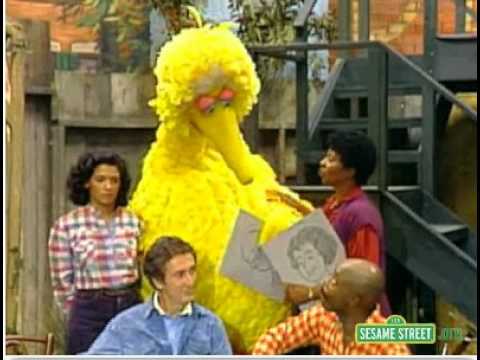
On November 24, 1983, one year to the day after his last taping -- Thanksgiving Day, a day when families were together, to help explain anything that the show might not have properly covered to the kids watching -- it was revealed that Mr. Hooper had died some time earlier (no cause was given), but that Big Bird still didn't grasp what this meant. He had to be told that it means, "Mr. Hooper's not coming back."

Bob McGrath, who played music teacher Bob Johnson, said of the human cast, "We barely got through that show." Carroll Spinney, who both wore the Big Bird costume and operated the Oscar the Grouch Muppet, said, "The best episode we ever did was Mr. Hooper's death. Those were real tears. Will was the sweetest man."
Big Bird, played by Carroll Spinney, surrounded by, left to right:
Maria (Sonia Manzano), Bob (Bob McGrath),
Susan (Loretta Long) and Gordon (Roscoe Orman)

For a few years by that point, Northern Calloway had played David (his last name was never mentioned), a young black man who had been Mr. Hooper's assistant. David inherited Hooper's Store. After that, David hired Gina Jefferson, a teenage girl played by Alison Bartlett-O'Reilly. But Calloway fell victim to mental illness, left the show in 1989, and died a year later.

The store was then bought by Mr. Handford, a black retired firefighter played by Leonard Jackson for one season, then by David L. Smyrl. Jackson played Mr. Handford as a grumpy old man, while Smyrl found the same balance between grumpy old man and kindly old gentleman that Lee had. (David's disappearance was explained as the character simply moving away, while the change in actor for Mr. Handford was less drastic, since the character wasn't original and beloved, as Mr. Hooper and, to a lesser extent, David were.)

In 1998, Smyrl left the show, and it was explained that Mr. Handford had sold the store to Alan (whose last name has never been revealed). Alan is played by Japanese-American actor Alan Muraoka, and has run the store ever since -- his 24 years in charge nearly twice as long as the 13 years we saw Mr. Hooper run it, although we have no way of knowing how long it was open before 1969.

But, to this day, the drawing of Mr. Hooper that Big Bird made, and showed in the farewell episode, rests adjacent to Big Bird's nest, as a reminder of Mr. Hooper, and of Will Lee.
Carroll Spinney, in his 80s, began to pull back, allowing Eric Jacobson to take over as Oscar in 2015, and Matt Vogel to replace him as Big Bird 2018. Spinney died the following year. But, like Oscar, Bert and Ernie, Grover, Cookie Monster, The Count, and all the rest, Big Bird lives. Which means he'll never see Mr. Hooper again -- barring the invention of a Star Trek-style holodeck or the intervention of an artificial intelligence setup that can simulate the character. 

*

November 24, 1983 was Thanksgiving Day, a Thursday. The NFL's usual suspects for the day both won. In the opener, on NBC, the Detroit Lions beat the Pittsburgh Steelers, 45-3 at the Silverdome in the Detroit suburb of Pontiac, Michigan. In the nightcap, on CBS, the Dallas Cowboys beat the football version of the St. Louis Cardinals, 35-17 at Texas Stadium in the Dallas suburb of Irving, Texas.

There was 1 college football game: Memphis State University (now the University of Memphis) beat the University of Louisville, 45-7 at Cardinal Stadium in Louisville.

At the time, I was in the 9th grade at Hammarskjold Junior High School in East Brunswick, Middlesex County, New Jersey. In East Brunswick, the High School is limited to 10th, 11th and 12th grades. EBHS played that day, away to Colonia High School in Woodbridge, the school's longest regular roadtrip, so I couldn't have gone even if I'd been aware of it at the time. EBHS won it, 21-7.

As usual, the NBA did not play on Thanksgiving. But the NHL did. The Quebec Nordiques beat the Boston Bruins, 6-3 at the Boston Garden. And the Winnipeg Jets and the Calgary Flames played to a 4-4 tie at the Saddledome in Calgary.

This was a little unusual, since 3 of the 4 teams that played on the day were in Canada. Canada does celebrate a Thanksgiving Day, on the 2nd Monday in October, when America celebrates Columbus Day.

And they do celebrate it with football: A nationally-televised doubleheader known as the Thanksgiving Day Classic. There's a game in the East, usually hosted by the Montreal Alouettes; and a game in the West, where the host varies. This year, the Alouettes beat the Ottawa Redblacks, 20-16 at Molson Stadium in Montreal; and, while Ontario is not exactly in Western Canada, the Toronto Argonauts beat the Hamilton Tiger-Cats, 24-23 at Tim Hortons Field in Hamilton.

Wednesday, November 9, 2022

November 9, 2006: Rutgers Football Grows Up

November 9, 2006: The football team at Rutgers University has what is -- after 1869, anyway -- its signature moment.

Under head coach Greg Schiano, and his aggressive recruiting of New Jersey, New York State, Connecticut, Eastern Pennsylvania, and even Florida, where he'd been an assistant at the University of Miami, collectively calling all of those places "The State of Rutgers," the Scarlet Knights were having their best season since 1976, when they went undefeated against a considerably lesser schedule.

They began the season by beating North Carolina in Chapel Hill, 21-16. They hosted Illinois at Rutgers Stadium -- the 41,500-seat horseshoe in Piscataway, Middlesex County, New Jersey has since been expanded into a 52,454-seat bowl -- and won, 33-0. They hosted Ohio University (not Ohio State), and won, 24-7.

That got them into the Top 25, with a ranking of Number 23. Their next game wasn't going to help them: It was a home game against Howard University, a historically black FCS school, and RU won, 56-7. The next game should have helped them: It was away to South Florida in Tampa, and they won, 22-20. Still, they dropped to Number 24.

After a week off, they went to Annapolis, Maryland, and beat Navy, 34-0. Now, they had risen to Number 19. They played away to the University of Pittsburgh. They never beat Pitt away. This time, they did, 20-10. They rose to Number 16. They hosted Connecticut, and won, 24-13.

Now, the Scarlet Knights were 8-0 -- but still so little respected that they were only ranked Number 15 in the country. On a Thursday night, November 9, they would have a nationally-telecast (ESPN) prime-time game against Number 3 Louisville. The winner of this game would have the inside track to winning the Big East Conference.

A crowd of 44,111 fans crammed into the Piscataway horseshoe. (It's now a 52,000-seat bowl.) At that point, only 7 times had a Rutgers "home game" had more fans, all of them at Giants Stadium at the Meadowlands: Against Florida in 1986; and against Penn State in 1977, 1983, 1985, 1989, 1992 and 1995. (The October 3, 1992 game against Penn State remains a record crowd for a Rutgers home game: 72,203. Rutgers lost, 38-24.)

Louisville scored first. At the end of the 1st quarter, Rutgers scored a touchdown to tie it, but Louisville returned the ensuing kickoff for a touchdown. And they scored a 2-point conversion. It was Cardinals 15, Scarlet Knights 7.

In the 2nd quarter, Louisville added a touchdown and a field goal, to make it 25-7. But Ray Rice, later to be a figure of terrible controversy, scored a touchdown to make it 25-14 at the half. He scored another touchdown in the 3rd quarter, to get RU within 25-20. But placekicker Jeremy Ito missed the extra point.

With 10:13 left in regulation, Ito kicked a 46-yard field goal, to tie the game at 25. RU's defense held until the final minute. Quarterback Mike Teel drove them down the field, and with 13 seconds to go, Ito attempted a 28-yard field goal. It was perfect. Rutgers led 28-25.

Fans stormed the field. And, as a Rutgers fan for nearly 30 years at that point, used to seeing them blowing it, I was worried that they wouldn't be able to clear the field, thus rendering the field unplayable, and forfeiting the game. But they did clear the field, and Louisville were unable to do anything on their last 2 plays.

Rutgers had beaten the Number 3 team in the country, and the entire country -- or, at least, all of that part of the country that cared about college football -- saw it. The Scarlet Knights had grown up. It was a truly magical moment for the country's 1st college football program.
Just 9 days later, they blew it. Now ranked Number 7, they went to Cincinnati, and lost to the University of Cincinnati, 30-11. They came home and beat Syracuse on Thanksgiving Saturday, 38-7. But the following week, they went to Morgantown and lost to West Virginia, 41-39 in overtime. Despite having been beaten by Rutgers, Louisville won the Big East Championship anyway.

Rutgers closed its season in Houston, beating Kansas State in the Texas Bowl, 37-10. They finished at 11-2, ranked Number 12 in the country.

Teel was drafted by the Seattle Seahawks in 2009, and was on the roster for that entire season, but never entered a regular-season game, and was released. In the 2010 preseason, he was signed and released, first by the New England Patriots, then by the Chicago Bears. He has since gone into coaching.

Ito was signed and released by the New Orleans Saints in 2008. In 2009, he played for the Hamilton Tiger-Cats of the Canadian Football League, and was released. 

*

November 9, 2006 was a Thursday. So there were no other college football games played. There were no NFL games played. The baseball season was over. There were 3 games played in the NBA that night:

* The Cleveland Cavaliers beat the Chicago Bulls, 113-94 at the Quicken Loans Arena in Cleveland. (It's now named the Rocket Arena.)

* The Dallas Mavericks beat the Phoenix Suns, 119-112 at the US Airways Center in Phoenix. (It's now named the Mortgage Matchup Center.) Dirk Nowitzki scored 35.

* And the Golden State Warriors beat the New Orleans/Oklahoma City Hornets, 121-116 at the Oakland Coliseum Arena (then named the Oracle Arena). Baron Davis scored 36 points.

There were 8 games played in the NHL:

* The New Jersey Devils beat the Chicago Blackhawks, 2-1 in a shootout at the Brendan Byrne Arena at the Meadowlands. (Okay, it was officially named the Continental Airlines Arena at that point.) Yes, the Devils won in a shootout. Back then, it wasn't that big a deal. Today, it would be.

* The New York Islanders beat the Philadelphia Flyers, 3-1 at the Wachovia Center (now the Xfinity Mobile Arena) in Philadelphia.

* In an "Original Six" matchup, the Toronto Maple Leafs beat the Boston Bruins, 6-4 at the TD Garden in Boston.

* The Carolina Hurricanes beat the Washington Capitals, 5-0 at the RBC Center in Raleigh. (It's now the Lenovo Center.)

* The Columbus Blue Jackets beat the St. Louis Blues, 4-2 at the Scottrade Center in St. Louis. (It's now the Enterprise Center.)

* The Dallas Stars beat the Phoenix Coyotes, 1-0 at the Jobing.com Arena in the Phoenix suburb of Glendale, Arizona. (It's now the Desert Diamond Arena.)

* The San Jose Sharks beat the Los Angeles Kings, 7-3 at the Staples Center in Los Angeles.

* And the Anaheim Ducks beat the Vancouver Canucks, 6-0 at General Motors Place in Vancouver. (It's now named the Rogers Arena.) 

Friday, April 8, 2022

April 8, 2013: Rick Pitino's Corrupt Second Act

In 1932, F. Scott Fitzgerald wrote an essay, "My Lost City," saying, "I once thought that there were not second acts in American lives, but there was certainly to be a second act to New York's boom days." The quote has been misinterpreted -- indeed, contradicted -- as, "There are no second acts in American lives."

Many people have proven that to be untrue. And some have done so unfairly.

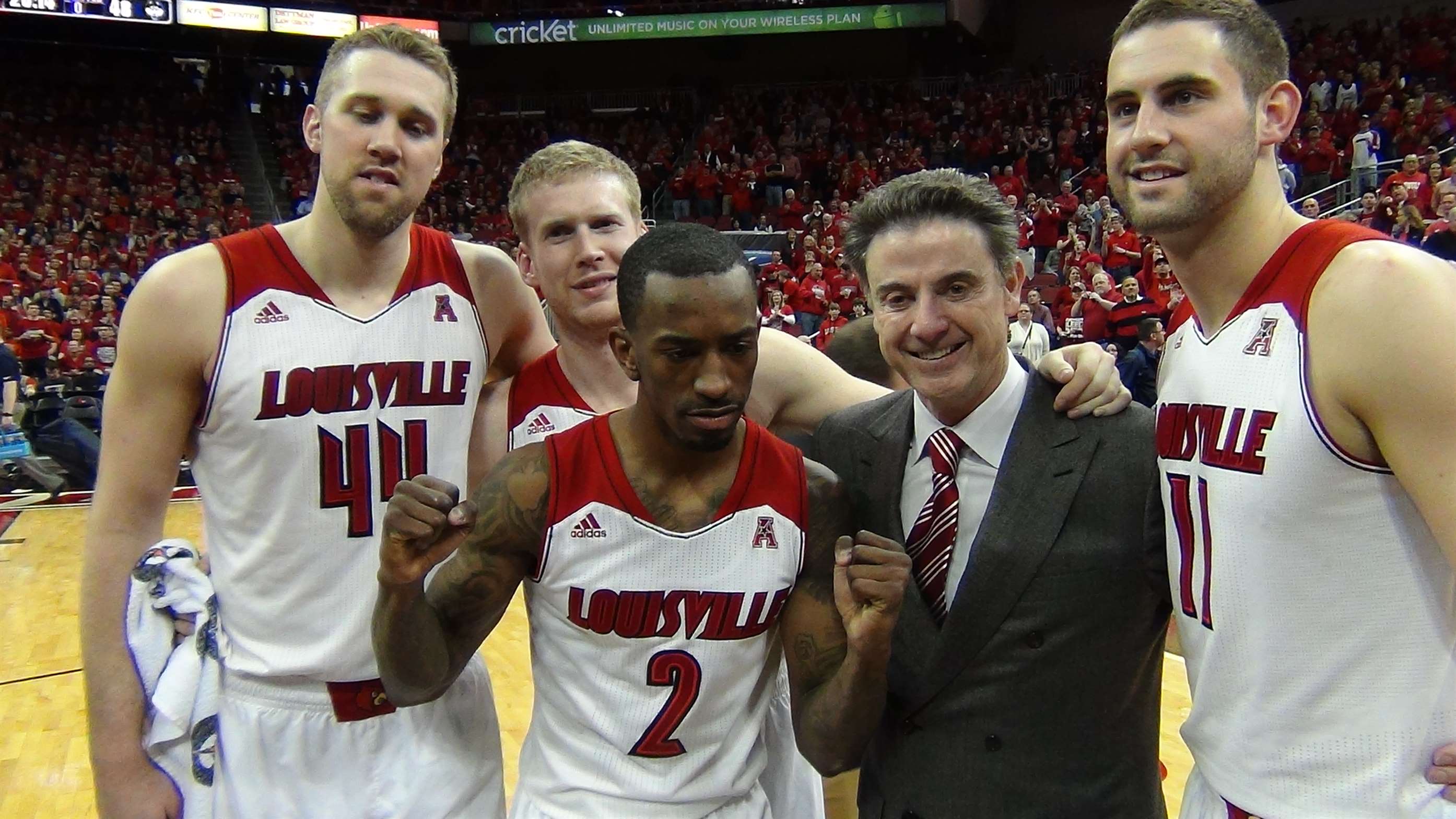
April 8, 2013: The University of Louisville wins college basketball's National Championship. It was their 3rd title, and the 2nd title for their coach, Rick Pitino.

The union of UL and Pitino seemed to be a match made in Heaven. It turned out to be a deal with the Devil.

Pitino was born on September 18, 1952 in Manhattan. He was a point guard at the University of Massachusetts. Not good enough to be drafted by a team in either the NBA or the ABA, he went into coaching.

He was head coach at Hawaii in 1976, an assistant to Jim Boeheim at Syracuse, head coach at Boston University from 1978 to 1983, an assistant to Hubie Brown on the New York Knicks in the 1983-84 and 1984-85 seasons, then was named head coach at Providence College, which he took to the Final Four in 1987. He was immediately hired to coach the Knicks, but left after 2 seasons, in 1989, because couldn't resist the chance to rebuild the scandal-ridden program at the University of Kentucky. He led them to the National Championship in 1996, and back to the NCAA Tournament Final the next year.

Then he got another offer he couldn't refuse, coaching the NBA's most successful franchise, the Boston Celtics. But he failed there, because management wouldn't bring better players there. Fans complained, and he said, "Larry Bird's not walking through that door," and naming some other team legends that weren't walking through the door. He was fired in 2001.

But Louisville offered him a lifeline, and the chance to be the head coach of Kentucky's arch-rivals was yet another offer he couldn't refuse. He got them to the Final Four in 2005, his 4th season there. He got them to the Elite Eight in 2008 and '09. In 2010, their new downtown arena, the KFC Yum! Center, opened, replacing the aging Freedom Hall, and giving them an arena more modern and up-to-date than UK's Rupp Arena in Lexngton.

In 2012, he got them to the Final Four, at the Superdome in New Orleans. But they lost to Kentucky in the Semifinal, 69-61. Kentucky then beat Kansas in the Final. It was the biggest disgrace in UL basketball history. Little did they know that worse was yet to come.

In 2012-13, Pitino guided Louisville to a 26-5 regular season, with All-American Russ Smith, Big East Conference Scholar-Athlete of the Year Peyton Siva, and Big East Defensive Player of the Year Gorgui Dieng. They lost to Number 5 Duke by 5 in an early-season tournament in the Bahamas; then 3 straight in January, by 2 at home to Number 6 Syracuse, by 9 to Villanova in Philadelphia, and by 2 to Georgetown in Washington; and finally by 3 in overtime, away to Notre Dame.

They breezed through the Big East Conference Tournament at Madison Square Garden in New York, avenging their defeats to Villanova, Notre Dame and Syracuse. They marched through the NCAA Tournament, beating North Carolina A&T and Colorado State, on Kentucky's floor at Rupp Arena, no less; then beat Number 25 Oregon and avenged their defeat to Duke, now Number 6, in Indianapolis to reach the Final Four, at the Georgia Dome in Atlanta. Cinderella-minded Wichita State gave them a scare in the Semifinal, but the Cardinals won, 72-68.

That set up a Final against Number 10 Michigan, a team with 2 sons of NBA stars, Tim Hardaway Jr. and Glenn Robinson III. Trey Burke of Michigan scored the game's 1st 7 points, but then picked up 2 fouls and had to sit some time out, to preserve his eligibility. Louisville closed to within 38-37 at the half. Luke Hancock came off the bench to score 22 points, including 5 3-pointers, to become the only non-starter ever to be named the Final Four's Most Outstanding Player. Louisville went on to win, 82-76.

This gave Louisville a 3-0 record in NCAA Tournament Finals, and Michigan a record of 1-5, and that 1 win coming in overtime. For the Cardinals, and for Pitino, it was a very sweet moment: The man that Tony Kornheiser of The Washington Post and ESPN's Pardon the Interruption had dubbed a "preening schmo" became the 1st man to coach college basketball National Champions at two different schools. Each other's arch-rivals, no less.

He became America's answer to Brian Clough, the manager who won English Football League titles with both Derby County and their arch-rivals, Nottingham Forest, in the 1970s. Minus the drinking (as far as we know), and plus a lot of hair-care products and a bit more ego. Clough, himself possessor of a considerable ego, had he ever met Pitino, would have said he isn't the most egotistical man he's ever met, but he's "in the top one."

Over the next few years, for Louisville and Pitino, the sweet moment soured. In 2015, Katina Powell published a book titled Breaking Cardinal Rules, in which she described how she was used as a prostitute to encourage high school stars to come to UL from 2010 to 2014. This reminded people of Pitino's own sex scandal, in which a woman he'd fooled around with in 2003, and paid for an abortion for her, was convicted in 2010 of trying to extort him.

The University tried in inoculate itself from serious penalties from the NCAA, by willingly withdrawing from consideration for the 2016 NCAA Tournament. But further allegations came out, and UL had to fire Pitino in 2017. It wasn't enough: On June 25 of that year, the NCAA vacated all of Louisville's wins in the 2011-12, 2012-13 and 2013-14 seasons, including both Final Four berths and the 2013 National Championship. Officially, there is no National Champion for 2012-13: They did not award it to defeated Michigan.

Many college sports scandals have resulted in the stripping of titles, but the 2012-13 University of Louisville basketball team remains the only team ever to be stripped of an NCAA Division I Men's Basketball Tournament Championship.

Louisville have not won a Conference title, either regular-season or Tournament, or reached the Sweet Sixteen since. In 2018, Pitino was hired by Panathinaikos of Athens, Greece, one of the top sport clubs in Europe, known for its soccer and basketball teams. He led them to 2 titles in Greece's basketball league. In 2020, he was hired as head coach at Iona University, a Catholic school in New Rochelle, New York.

In 2012, his son, Richard Pitino, got his 1st head coaching job, at Florida International University. After 1 year there, he went to the University of Minnesota, winning the 2014 NIT. In 2021, he was hired at the University of New Mexico.

UPDATE: In 2023, Rick Pitino was hired at another Catholic school, St. John's University of Queens. He led them to the Big East Conference title in 2025 and '26. In 2025, Richard Pitino left New Mexico to become the head coach at yet another Catholic school, Xavier University in Cincinnati.

*

April 9, 2013, as the day of the NCAA Tournament Final tends to be, was a Monday. These games were played in Major League Baseball:

* The New York Yankees beat the Cleveland Indians, 11-6 at Progressive Field in Cleveland. Hiroki Kuroda was the winning pitcher. The Yankees got 2 home runs from Robinson Canó, and 1 from former Cleveland star Travis Hafner.

* The New York Mets beat the Philadelphia Phillies, 7-2 at Citizens Bank Park in Philadelphia. Matt Harvey outpitched Roy Halladay. John Buck hit a home run.

* The Boston Red Sox beat the Baltimore Orioles, 3-1 at Fenway Park in Boston. David Ortiz did not play. I guess his steroid delivery didn't come in that day.

* The Atlanta Braves beat the Miami Marlins, 2-0 at Marlins Park (now LoanDepot Park) in Miami. How many Brave pitchers does it take to pitch a 2-hit shutout? This time, 2: Paul Maholm (1 hit and 3 walks over 7 innings), Eric O'Flaherty (a perfect 8th) and Craig Kimbrel (a hit and a walk in the 9th).

* The Milwaukee Brewers beat their arch-rivals, the Chicago Cubs, 7-4 at Wrigley Field in Chicago.

* The Cincinnati Reds beat the St. Louis Cardinals, 13-4 at Busch Stadium in St. Louis.

* The Kansas City Royals beat the Minnesota Twins, 3-1 at Kauffman Stadium in Kansas City.

* The Texas Rangers beat the Tampa Bay Rays, 5-4 at Rangers Ballpark in the Dallas suburb of Arlington, Texas.

* The Pittsburgh Pirates beat the Arizona Diamondbacks, 5-3 at Chase Field in Phoenix.

* The San Francisco Giants beat the Colorado Rockies, 4-2 at AT&T Park (now Oracle Park) in San Francisco.

* The Seattle Mariners beat the Houston Astros, 3-0 at Safeco Field (now T-Mobile Park) in Seattle. How many Mariner pitchers does it take to pitch a 7-hit shutout? This time, 4: Joe Saunders (6 hits over 6 1/3rd innings), Carter Capps (1 over 1 1/3rd), Charlie Furbush (1 batter, a strikeout) and Tom Wilhelmsen (a perfect 9th).

* And the Chicago White Sox, the Detroit Tigers, the Los Angeles Angels, the Los Angeles Dodgers, the Oakland Athletics, the San Diego Padres, the Toronto Blue Jays and the Washington Nationals were not scheduled.

Football was out of season. No games were scheduled for the NBA. There were 9 games played in the NHL:

* The New York Islanders beat the Philadelphia Flyers, 4-1 at the Nassau Coliseum.

* The Washington Capitals beat the Montreal Canadiens, 3-2 at the Bell Centre in Montreal.

* The Pittsburgh Penguins beat the Carolina Hurricanes, 5-3 at the PNC Arena (now the Lenovo Center) in Raleigh, North Carolina.

* The Tampa Bay Lightning beat the Ottawa Senators, 3-2 at the Tampa Bay Times Forum (now the Benchmark International Arena) in Tampa.

* The St. Louis Blues beat the Nashville Predators, 1-0 at the Bridgestone Arena in Nashville.

* The Columbus Blue Jackets beat the San Jose Sharks, 4-0 at the Nationwide Arena in Columbus.

* The Dallas Stars beat the Los Angeles Kings, 5-1 at the American Airlines Arena in Dallas.

* The Chicago Blackhawks beat the Minnesota Wild, 1-0 at the Xcel Energy Center (now the Grand Casino Arena) in St. Paul, Minnesota.

* And the Winnipeg Jets beat the Buffalo Sabres, 4-1 at the MTS Centre (now the Canada Life Centre) in Winnipeg.

Thursday, March 24, 2022

March 24, 1980: The Assassination of Óscar Romero

March 24, 1980: Óscar Romero, the Archbishop of San Salvador, the capital of El Salvador, is assassinated at the conclusion of a sermon denouncing the country’s right-wing government. He was 62 years old.

Óscar Arnulfo Romero y Galdámez was born on August 15, 1917 in Ciudad Barrios San Miguel, El Salvador. He was ordained as a priest in 1942, and was appointed Archbishop in 1977. Initially seen as a social conservative at the time of his appointment as archbishop, he was deeply affected by the murder of his friend and fellow priest Rutilio Grande, and thereafter became an outspoken critic of the military government that had governed the country since 1931.

The military regime ended on October 15, 1979, when young military officers overthrew President Carlos Humberto Romero, and established the Revolutionary Government Junta, a joint civilian-military government. This marked the beginning of the twelve-year-long Salvadoran Civil War, which lasted until 1992.

On March 23, 1980, Romero delivered a sermon in which he called on Salvadoran soldiers, as Christians, to obey God's higher order and to stop carrying out the government's repression and violations of basic human rights. The next day, he delivered a sermon at a hospital chapel, and just as he finished, a man walked into the chapel, and shot Romero in the heart. The shooter ran back to his car, and his driver sped away.

Things got worse: During Romero's funeral, smoke bombs exploded on the streets near the cathedral and subsequently, there were rifle shots that came from surrounding buildings, including the National Palace. Many people were killed by gunfire and in the stampede of people running away from the explosions and gunfire. Official sources reported 31 overall casualties, while journalists claimed that between 30 and 50 died.

Roberto D'Aubuisson, a politician known as "Blowtorch Bob," gave the order to assassinate Romero. He died in 1992 at 49, not by execution, as he was never arrested, but from cancer, which means that he suffered prolonged pain, while Romero died instantly.

Romero, like fellow victims of assassination Martin Luther King and Anwar Sadat, knew it was possible, but he wasn't going to let it stop him from doing what he thought he must. He was played by Raúl Juliá in the 1989 film Romero. He was canonized as a Saint in 2018.

*

March 24, 1980 was a Monday. The NCAA men's basketball Tournament Final was held at the Market Square Arena in Indianapolis. The University of Louisville beat UCLA, 59-54. I have a separate entry for this event.

Baseball was in Spring Training. Football was out of season. The NBA scheduled no games for the day. There were 2 games in the NHL. The St. Louis Blues beat the Hartford Whalers, 7-5 at the Hartford Civic Center (now the PeoplesBank Arena). And the Toronto Maple Leafs beat the Washington Capitals, 6-1 at Maple Leaf Gardens in Toronto.

March 24, 1980: Louisville's Doctors of Dunk

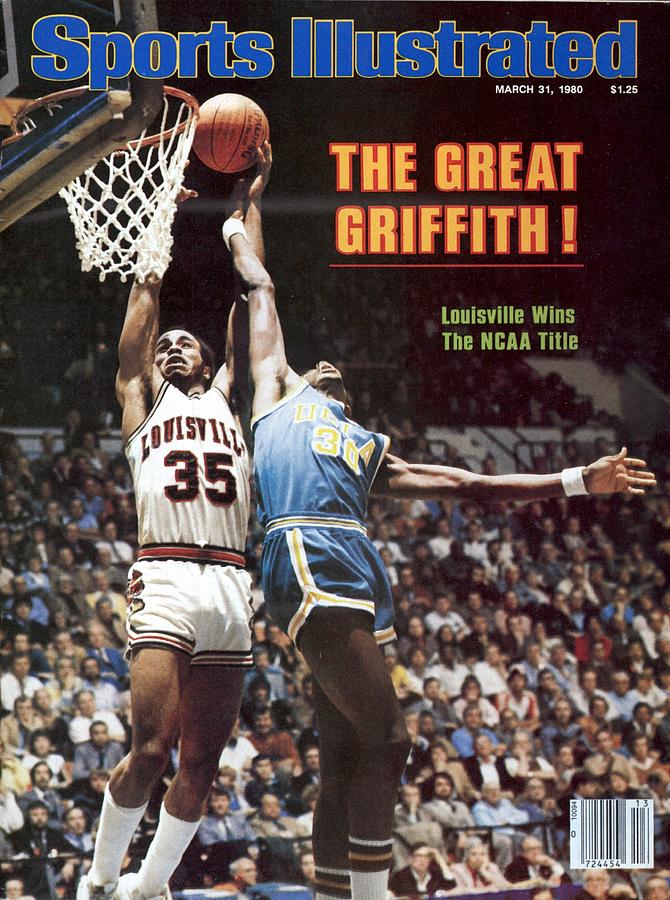
March 24, 1980: The Final of the NCAA Division I Men's Basketball Tournament is held at the Market Square Arena in Indianapolis. The University of Louisville won its 1st National Championship, as Denny Crum's Cardinals beat UCLA, 59-54. The Cardinals were known as the Doctors of Dunk, and their star, Darrell Griffith, was known as Dr. Dunkenstein.

Crum had been a player under John Wooden at UCLA in the late 1950s, and then an assistant coach under him, helping him lead the Bruins to the National Championship in 1969, '70 and '71. He was then hired at Louisville, and got them to the Final Four in his 1st season, 1972, and again in 1975.
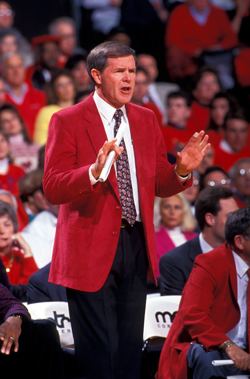
Denny Crum

Led by guards Griffith and Jerry Eaves, forwards Derek Smith and Wiley Brown, and center Rodney McCray, the Cardinals went into the 1980 Final at 32-3, having lost only by 2 points away to Utah, by 12 to Illinois in a holiday tournament in Hawaii, and by 17 to Iona at Madison Square Garden. They went undefeated in the Metro Conference, and won its Tournament, and beat Kansas State, Texas A&M, Louisiana State and Iowa in the NCAA Tournament.

UCLA were coached by Larry Brown, early in a great coaching career. They came in at 22-9, led by forward Kiki Vandeweghe, son of former NBA star Ernie Vandeweghe. They had close losses away to Notre Dame (which had previously done that to UCLA teams in 1971 and 1974), at home to DePaul, and at home to Arizona State and Washington. Their other losses were not as close. They failed to win the regular-season title of the Pacific-10 Conference, which, at the time, did not have a tournament. In the NCAA Tournament, they beat Old Dominion, DePaul, Ohio State, Clemson and Purdue.

UCLA had previously lost in the Semifinal in 1962, 1974 and 1976. But they had never lost a Final before: They were 10-0. In this Final, UCLA led at the half, 28-26. But Louisville rode Griffith's game-high 23 points to win, 59-54. After watching their arch-rivals, the University of Kentucky, win 5 National Championships, Louisville fans finally had one of their own.

UCLA would later be forced to vacate all 5 of their wins in the Tournament, and their loss in the Final, after players representing the school were declared ineligible by the NCAA. They were placed on two years' probation, which included a one-year NCAA tournament ban.

How much responsibility Larry Brown bears for that is uncertain, but he remained as UCLA coach for 1 more season, then left to take a much higher-paying pro job, holding it for 2 years, before returning to the college ranks at Kansas. So it couldn't have been so bad that no college would hire him again.

He got them to the Final Four in 1986, and won the title in 1988. In 2004, he led the Detroit Pistons to the NBA title. As of the 2020-21 season, he remains the only coach to win both the NCAA and the NBA title.

Crum led Louisville to the Final Four again in 1982 and 1983, and to a 2nd National Championship in 1986. He retired after the 2001 season, with a 675-295 record, 15 regular-season Conference Championships, 11 Conference Tournament wins, 6 Final Four appearances and 2 National Championships. Crum was elected to the Basketball Hall of Fame in 1994; Brown, in 2002.

Griffith went on to star with the Utah Jazz, becoming the 1981 NBA Rookie of the Year. Both UL and the Jazz retired Number 35 for him. UL has named him a "university ambassador" -- basically, a schmoozer for potential donors. Eaves played 5 years in the NBA, and went into coaching, and has been the head coach at historically-black schools North Carolina A&T and Simmons College.

Rodney McCray played 10 seasons in the NBA, reaching the Finals with the 1986 Houston Rockets, making the All-Defensive First Team in 1988, and winning the title with the 1993 Chicago Bulls. Wiley Brown only played pro basketball at the minor-league level, but also played football at Louisville, and was a defensive end for the Philadelphia Eagles for 2 years. In 2022, he is the head basketball coach at Indiana University Southeast in New Albany.

Derek Smith played 9 seasons in the NBA. In 1996, he was an assistant coach for the Washington Bullets, and was on a cruise for season ticket holders for the Bullets and the NHL's Washington Capitals, both then owned by Abe Pollin, when he suffered a heart attack and died. He was only 34 year old. In 2010, his son, Nolan Smith, won a National Championship at Duke. The Smiths are 1 of 4 father-son pairs to win National Championships, along with Marques and Kris Johnson, Henry and Mike Bibby, and Scott and Sean May.

UPDATE: Later in 2022, Nolan Smith joined the coaching staff at the University of Louisville. Denny Crum died the next year. In 2025, Nolan Smith was named the head coach at Tennessee State.

*

March 24, 1980, as NCAA Tournament Finals usually are, was a Monday. This was also the day that Ã“scar Romero, the Archbishop of San Salvador, the capital of El Salvador, was assassinated. I have a separate entry for that event.

Baseball was in Spring Training. Football was out of season. The NBA scheduled no games for the day. There were 2 games in the NHL. The St. Louis Blues beat the Hartford Whalers, 7-5 at the Hartford Civic Center (now the PeoplesBank Arena). And the Toronto Maple Leafs beat the Washington Capitals, 6-1 at Maple Leaf Gardens in Toronto.

December 31, 1999 & January 1, 2000: The Millennium

December 31, 1999:  The Millennium arrives. The people of planet Earth survived. At a terrible cost. But we hadn't destroyed ourselves. ...