Showing posts with label calvin coolidge. Show all posts

Tuesday, December 27, 2022

December 27, 1927: "Show Boat" Premieres

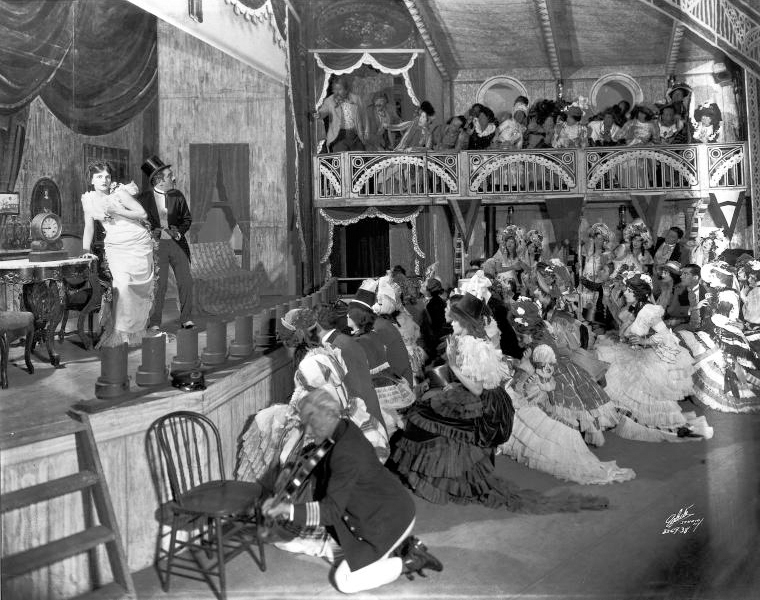
Photo from the original 1927-28 production

December 27, 1927: Show Boat premieres at the Ziegfeld Theatre in New York. It changes American musical theater forever.

Jerome Kern wrote the music. Oscar Hammerstein II wrote the lyrics, and also wrote the book based on Edna Ferber's novel of the same name, published the year before. Florenz Ziegfeld, for whom the theater and its main attraction, the Ziegfeld Follies, were named, produced it.

As the title suggests, the play takes place on a boat that produces stage shows, going up and down the Mississippi River, from 1887 to 1927. While most Broadway shows up until then were full of fluff, light stories with light music, and if they were lucky had one song that anyone would remember in the years to come, Show Boat tackled serious themes: Tragic love and race relations, including Broadway's 1st interracial marriage.

In the original production, Captain Andy Hawks was played by Charles Winninger, his daughter Magnolia by Norma Terris, her husband Gaylord Ravenal by Howard Marsh, the acting troupe's leading couple Steve Baker and Julie La Verne by Charles Ellis and Helen Morgan, and black dockworker Joe by Jules Bledsoe.

The part of Joe had been written for Paul Robeson, the top black stage actor of the day, who had the deep bass voice necessary to properly sing the show's signature number, "Ol' Man River." But Robeson, once an All-American football player at Rutgers, was in another show when Show Boat was being put together, and thus was unavailable.

But he was able to play the role when the show went to London's West End in 1928, for its first Broadway revival in 1932, and for the first film version in 1936. Notably, the original production's use of the N-word -- the show's first line is "(N-word)s all work on the Mississippi, (N-word)s all work while the white folks play" -- was dropped for the 1936 film, replaced with "darkies," which isn't much of an improvement. Later versions used the term "colored folk." From the 1971 London production onward, most versions use the words "Here we all work on the Mississippi, here we all work while the white folks play."

The 1936 film was directed by James Whale, who also directed the 1931 version of Frankenstein. In addition to Robeson playing Joe, Winninger reprised his role as "Cap'n Andy," Irene Dunne played Magnolia, Allan Jones (father of 1960s singing star Jack Jones) played Gaylord, Donald Cook played Steve, and Helen Morgan again played Julie.

Show Boat was filmed again in 1951, directed by George Sidney. The first version filmed in color, it remains the most successful version of the show, and was the 2nd-biggest box office draw of the year. Cap'n Andy was played by Joe E. Brown, Magnolia by Kathryn Grayson, Gaylord by Howard Keel, Steve by Robert Sterling, Julie by Ava Gardner (but her singing was dubbed by Annette Warren), and Joe by William Warfield, who resembled Robeson both physically and vocally. Robeson was 53 years old, and would still have made a believable Joe, but, by this point, had been blacklisted as a Communist sympathizer, and could only make money by acting in Britain and Europe.

Since the character of Julie is revealed within the course of the play to be mixed-race, and passing for white, later versions of the show have tended to cast light-skinned black actresses. The first was Lonette McKee, who won a Tony Award for the role in the 1983 revival. (The Tonys were not established until 1947, and so did not exist when the show was first staged.) She also played Julie in the 1994 revival, and was replaced in it by Marilyn McCoo, the lead singer of The 5th Dimension.

Robeson and "Ol' Man River" became forever connected. In the official versions of the show, the bridge and 3rd verse go:

You and me
we sweat and strain
body all achin'
and wracked with pain.
Tote that barge
lift that bale
you gets a little drunk
and you lands in jail...

I gets weary
and sick of tryin'.
I'm tired of livin'
and scared of dyin'.
And Ol' Man River
he just keeps rollin' along!
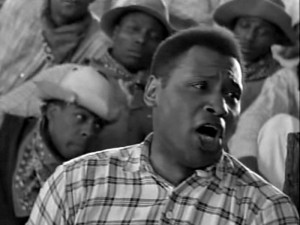
Paul Robeson, in the 1936 film

But Robeson was a civil rights activist long before that was cool. In concert, he would make it a song of defiance:

Tote that barge
lift that bale
you show a little grit
and you lands in jail...

But I keeps laughin'
instead of cryin'.
I must keep fightin'
until I'm dyin'.
And Ol' Man River
he'll just keep rollin' along!

The Ziegfeld Theatre was at 1341 6th Avenue, at 54th Street. It was new in 1927, and also hosted the original production of Brigadoon in 1947. It also hosted a revival of George Gershwin's Porgy and Bess in 1952, starring the aforementioned William Warfield and his wife, the opera singer Leontyne Price. But it only kept rolling along until 1966. A boring skyscraper, the 625-foot Alliance-Bernstein Building, is on the site today.

*

December 27, 1927 was a Tuesday. Baseball was in the off-season. Football season had just ended. There was no NBA yet. But there were 3 NHL games played that night, and both New York teams then in the League were in action:

* The New York Rangers lost to the Boston Bruins, 2-0 at the Boston Arena. Now the Matthews Arena, home of Boston University, it was built in 1909, and is the oldest multi-purpose sports building in use, anywhere in the world. The Boston Garden opened the next year.

* The New York Americans and the Detroit Cougars played to a tie, 4-4 at the old (but then new) Madison Square Garden. The Americans folded in 1942, and the Cougars became the Falcons in 1930 and the Red Wings in 1932.

* And the Montreal Canadiens and the Ottawa Senators played to a tie, 0-0 at the Ottawa Auditorium.

Saturday, December 24, 2022

December 24, 1924: The Babbs Switch Fire

December 24, 1924: A fire kills 36 people in a one-room school house at Babbs Switch, Oklahoma, about 125 miles southwest of Oklahoma City.

The death toll wasn't high due to kids still being in school on Christmas Eve. Rather, the fire started during a Christmas party attended by over 200 people. A Christmas tree decorated with lighted candles stood at the front of the room, and presents were placed on the tree to be distributed to the children in attendance at the end of the program.

The fire began when a teenage student dressed as Santa Claus was removing presents from the tree to give to the children. The flames ignited paper decorations, tinsel, and dry needles and spread quickly to the tree, stage, and the greater structure of the building.

People rushed to the building's single door, which opened inward, and was soon jammed with people. Escape through the windows was blocked because they were covered with secure metal screens to prevent vandals from breaking into the school.

The day after the fire, 25 children from Muskogee, Oklahoma sent a box of their new Christmas toys to the children who survived the fire.

A month later, the National Fire Protection Association (NFPA) released a report, stating, "It is hardly conceivable that conditions could have been worse, even in so rudimentary a structure as this one-story building."

A new school was built on the site in 1925 but closed in 1943 when the Babbs Switch district was annexed into nearby districts. A stone monument, which bears a short description of the fire and a list of the dead, currently stands on the site of the former school.

Eleven years to the day earlier, the Italian Hall Disaster occurred on Michigan's Upper Peninsula. It was rumored that the death toll there was boosted because the exit doors opened inward, but this was not true.

*

December 24, 1924 was a Tuesday. Singer Lee Dorsey was born.

Baseball was out of season. Football season was over, except for some Christmas Day games and the Rose Bowl. The NBA hadn't been founded yet. And no games were scheduled for the NHL. So there were no games on this historic day.

Monday, December 19, 2022

December 20, 1926: The Hornsby-Frisch Trade

Rogers Hornsby

December 20, 1926: The New York Giants trade their 2nd baseman and Captain, Frankie Frisch, and Jimmy Ring to the St. Louis Cardinals for Rogers Hornsby.
Frisch had led the Giants to 4 straight National League Pennants from 1921 to 1924, including winning the 1921 and 1922 World Series. But on August 20, Giant manager John McGraw berated him in front of his teammates for missing a sign that cost the team a run in a game -- with retroactive irony, against the Cardinals. So he quit the team.
Frankie Frisch, the Fordham Flash
Giants management refused to step in and straighten things out between the manager and his best player. And since McGraw was also a part-owner of the Giants, and had the backing of main owner Charles Stoneham, he was not going to be the one to go. And Ring was a mediocre pitcher nearing the end of the line.
John McGraw
In exchange, the Giants got Hornsby, also a 2nd baseman, and the best hitter in the National League. From 1920 to 1925, Hornsby had won 6 straight NL batting titles, batting .370, .397, .401, .384, .424 (which remains the highest batting average since 1901, and the highest in the NL since 1887) and .403. In 1922 and 1925, he also led the NHL in home runs (with 42 and 39, respectively) and RBIs (152 and 143), becoming the 1st player to win the Triple Crown twice (an achievement since matched only by Ted Williams).
How good a hitter was he? Legend tells of the greatest umpire of that era, Bill Klem, calling a pitch that Hornsby took a ball; and, when the catcher objected, Klem told him, "Young man, when the pitcher throws a strike, Mr. Hornsby will show you." In other words, by hitting it.
Hornsby had also managed the Cardinals in 1925 and '26, and even owned some stock in them. Since he had to divest himself of that stock in order for the trade to go through, and majority owner Sam Breadon was offering less than Hornsby wanted, the trade was held up for a while. But it did go through.
At first, this blockbuster deal looked great for the Giants. The trade was great -- for the Cardinals. Hornsby's attitude was considerably worse than Frisch's, and McGraw had enough of him that 1st season, trading him afterward. The Giants didn't win another Pennant until 1933, after McGraw retired.
McGraw could be one ornery cuss, but Hornsby was nearly impossible to deal with. As would a later slugger, Dick Allen, he put up All-Star-worthy numbers 4 years in a row, for 4 different teams: He batted .317 with 11 home runs and 93 RBIs for the 1926 Cardinals; .361, 26 and 125 for the 1927 Giants; a League-leading .387, 21 and 94 for the 1928 Boston Braves; and .380, 39 and 149 for the 1929 Chicago Cubs.
He did help the Cubs win Pennants in 1929 and 1932, but was in decline by the latter year. The Cardinals took him back in 1933, but quickly traded him to their Sportsman's Park landlords, the woeful St. Louis Browns, and he served as a player-manager until 1937, when he retired as a player. He was elected to the Baseball Hall of Fame in 1942.
His .358 lifetime batting average ranks 2nd all-time behind Ty Cobb, and tops all National League hitters and all righthanded hitters. His 301 home runs included 298 in NL play, which topped all NL players at the time of his retirement in 1937. His 2,085 hits were the most in the 1920s. He fell short of 3,000 career hits, though, finishing at 2,930. 
Like later basketball star Bill Russell, he found it considerably harder to be a manager/head coach without himself as a contributing player. He was also a racist, and a compulsive gambler. Had the extent of his betting on horse racing been known at the time, he might have gotten banned from baseball.
But because he had lost so much money gambling, he had to stay employed in baseball, which wasn't easy. He was a player-manager for the Chattanooga Lookouts of the Southern Association in 1938, and the Baltimore Orioles of the International League in 1939. He went back to Texas, and got into the Texas League Playoffs managing the Oklahoma City Indians in 1940 and the Fort Worth Cats in 1942. Then the TL decided to suspend play for the duration of World War II.
He served as a Spring Training instructor for the Chicago White Sox and the Cleveland Indians. In 1949, he broadcast Cubs games on TV. In 1950, he went back to the Texas League, and led the Beaumont Roughnecks to the Pennant. In 1951, he won the Pacific Coast League Pennant with the Seattle Rainiers.
That got the majors' attention again. In 1952, Bill Veeck hired him to manage the Browns. It lasted 2 months, and when Veeck fired him, the Browns players gave him an engraved trophy to thank him. A few weeks later, the Cincinnati Reds hired him, but, frustrated, he resigned with 8 games left in the season. He coached for the Cubs.
In 1962, when no one else would hire him, his former Giant teammate Casey Stengel hired him as 3rd base coach for the expansion New York Mets. Rogers Hornsby coached that season, and was expecting to be brought back for the next season, when he died on January 5, 1963, in Chicago, of a heart attack. He was 66 years old.
Helped tremendously by a change of scenery, teammates and bosses, Frisch helped the Cardinals win Pennants in 1928, '30, '31 and, as player-manager of a team that became known as the Gashouse Gang, '34. So he was a member 8 Pennant winners, and 4 World Series winners.
He was elected to the Hall of Fame in 1947, and became a broadcaster, first for the Giants, then for CBS and its Game of the Week. He became known for moaning about walks: "Oh, those bases on balls!"
As a member of the Hall of Fame's Committee on Veterans, he was known for lobbying for the election of his former Giant and Cardinal teammates, which many later fans have suggested were undeserving. The term "The Frisch Five" was coined, although there is not consensus on who the 5 players are. From the Giants, they have included George "High Pockets" Kelly, Ross Youngs, Dave Bancroft, Travis Jackson and Freddie Lindstrom. From the Cardinals, they have included Jim Bottomley, Chick Hafey, Jesse Haines and Burleigh Grimes.
Frankie Frisch died on March 12, 1973, at the age of 75, at a hospital in Wilmington, Delaware, from injuries sustained in a car crash in nearby Elkton, Maryland.

In 1949, Ogden Nash, my grandmother's favorite poet, even though he was a Giant fan and she was a Brooklyn Dodger fan, wrote "Line-Up for Yesterday" for Sport magazine, an alphabetical list of star players. For the letter F, he wrote: 

F is for Fordham
And Frankie and Frisch;
I wish he were back
With the Giants, I wish.

And for H:

H is for Hornsby;
When pitching to Rog,
The pitcher would pitch,
Then the pitcher would dodge.

*
December 20, 1926 was a Monday. Baseball and football were out of season. The NBA hadn't yet been founded. One game was played in the NHL, and what would eventually be called "the old Madison Square Garden," but was then new: The New York Americans beat the Toronto Maple Leafs, 2-0.

Sunday, December 18, 2022

December 18, 1926: Philadelphia's 1st NFL Championship

Henry "Two-Bits" Homan

December 18, 1926: The Frankford Yellow Jackets can only manage a 0-0 tie against the Pottsville Maroons, despite being at home at Frankford Stadium in Northeast Philadelphia. But it's enough to win them the NFL Championship.

The Yellow Jackets were founded in 1899, as the Frankford Athletic Association. This was a community-based non-profit organization of local residents and businesses. In keeping with its charter, which stated that "all profits shall be donated to charity," all of the team's excess income was donated to local charitable institutions. The beneficiaries of this generosity included Frankford Hospital, the Frankford Day Nursery, the local Boy Scouts, and the local American Legion Post 211. The officers of the Association never received a salary or compensation for their work on behalf of the team.

In 1922, Frankford absorbed the Philadelphia City Champion team, the Union Quakers, and won the unofficial City Championship. Over the course of the 1922 and '23 seasons, they compiled a 6-2-1 record against teams from the National Football League. The NFL thus offered them a franchise for 1924, making them the 1st Pennsylvania-based team in the League.

They played at Frankford Stadium, a small stadium located at 6101 Frankford Avenue, also bordered by Devereaux Avenue, Hawthorne Street and Benner Street. It was 8 miles northeast of City Hall.
They were coached by Guy Chamberlin. The Nebraska native, just 32 years old, also played end on both offense and defense. He is the only man to play on 4 consecutive NFL Champions: The 1921 Chicago Staleys (who became the Bears the next season), the 1922 and '23 Canton Bulldogs, and the 1924 Cleveland Bulldogs. So the Jackets made it 5 in 6 years. And he was player-coach for all but the 1st of these.

His best player was his smallest: At 5-foot-5 and 150 pounds, quarterback and safety Henry Homan was known as "Two-Bits." He only played 6 seasons in the NFL, all for Frankford, but there are those who believe there is an unfair bias against the pioneer players of the NFL when it comes to voting for the Pro Football Hall of Fame, and that Homan should be among the players elected. If he ever is, he will be the smallest player in it.

They were immediately one of the NFL's better teams, going 11-2-1 in 1924, to finish 3rd; and 13-7 in 1925, to finish 6th. They began the 1926 season on September 25, with a 6-6 home tie against the Akron Indians. To get around Pennsylvania's "blue laws," they often scheduled back-to-back games: A home game on a Saturday, and an away game against the same team the next day, Sunday. They hosted the Hartford Blues, beating them 13-0; then went to Hartford, and beat them again, 10-0.

They beat the Buffalo Rangers, 30-0 at home, then swept a home-and-home with the New York Giants, winning each game by a 6-0 score. They beat the Canton Bulldogs, 17-0 at home. Then came a home loss to the Providence Steam Roller (no S on the end), 7-6, followed the next day, Halloween, by a 6-3 win in Providence.

The loss to Providence would prove to be the only one of the season. They beat the defending NFL Champions, the Chicago Cardinals, 33-7 at Frankford. They beat the Duluth Eskimos, 10-0 at home; then the Dayton Triangles, 35-0 at home. On November 25, Thanksgiving, they hosted the Green Bay Packers, and won, 20-14. Two days later, they beat the Detroit Panthers, 7-6 at home.

The demand for tickets was too much for Frankford Stadium, and so their December 4 game with the Chicago Bears was moved to Shibe Park, home of baseball's Philadelphia Athletics. (It was later home to the Phillies and the Eagles as well, and renamed Connie Mack Stadium.) The Jackets won, 7-6, and that game effectively decided the title.. They avenged their loss again by beating the Steam Roller, 24-0 at home, before closing the season with the tie with Pottsville.

The day after that game, the Bears and the Packers played to a 3-3 tie at Wrigley Field in Chicago, but it wouldn't have mattered: The Yellow Jackets were 14-1-2, while the Bears were 12-1-3, and a win would only have brought them to 13-1-2. Under the format that was put in place in 1933, the Jackets and the Bears would have met somewhere in Philadelphia in the NFL Championship Game. (This being an even-numbered year, the Eastern Division Champions would have hosted.) But the Championship Game hadn't been developed yet, and the NFL was still a single-division League, so the Jackets were the Champions. Philadelphia had its 1st NFL title.

Guy Chamberlin was offered more money by the Cardinals, and so he left for them for 1927. The Jackets fell to 6-9-3 in 1927. They bounced back, going 11-3-2 in 1928, to finish 2nd; and 10-4-5 (that's right, 5 ties) in 1929, to finish 3rd.

Then came the Great Depression. The Jackets were just 4-13-1 in 1930. On July 27, 1931, Frankford Stadium burned down. Retail shops are now on the site. For the 1931 season, the team played their 1st 2 home games at Municipal Stadium (later renamed John F. Kennedy Stadium), and their last 2 at the Phillies' Baker Bowl, and finished only 2-6-1. Their last home game was, appropriately, on Halloween, a 14-0 loss to the Portsmouth Spartans. Their farewell was on November 8, a 13-0 loss to the Giants at the Polo Grounds. The Frankford Athletic Association turned ownership of the team back over to the League.

Under the belief, confirmed in November 1933, that Pennsylvania would legalize professional sports on Sundays, former University of Pennsylvania teammates and assistant coaches Bert Bell and James Ludlow "Lud" Wray bought the rights to the NFL franchise in Philadelphia; while Art Rooney did so for Pittsburgh, which had not previously had one. Rooney named his team the Pirates, and renamed them the Steelers in 1940. Bell and Wray named their team the Eagles, for the "Blue Eagle" logo of the National Recovery Administration, and the original colors were blue and yellow, before switching to green and white in 1935.

Contrary to popular belief, although playing in the same city, and their 1st home being Baker Bowl, the Yellow Jackets' last home, the Eagles are not the same franchise as the Yellow Jackets: Bell and Wray had bought only the right to operate an NFL team in Philadelphia, not the team itself. They never approached the Frankford Athletic Association with an offer to buy the Yellow Jackets' name or any of the team's assets, and no player on the '33 Eagles had ever played for the Yellow Jackets. 

The Eagles won the NFL Championships for the seasons of 1948, 1949, 1960 and 2017, but they properly do not claim the Frankford title of 1926, any more than the Philadelphia Phillies claim the Pennants and World Series won by the Athletics, or the Philadelphia 76ers claim the 1947 and 1956 NBA titles won by the Philadelphia Warriors, or MLS' Philadelphia Union claim the 1973 NASL title won by the Philadelphia Atoms.

*

December 18, 1926 was a Saturday. There was 1 other football game, a college game: The University of Utah beat the University of Hawaii, 17-7 at Honolulu Stadium. That ballpark was brand-new, and UH would play there until the opening of Aloha Stadium in 1975, while the Pacific Coast League's Hawaii Islanders played there from 1961 to 1975, before also moving to the new stadium. It was demolished in 1976.

Baseball was out of season, and the NBA hadn't been founded yet. There were 4 games in the NHL:

* The New York Americans lost to the Chicago Black Hawks, 4-2 at the Chicago Coliseum.

* The Ottawa Senators and the Montreal Maroons played to a tie, 0-0 at the Montreal Forum.

* The Boston Bruins beat the Pittsburgh Pirates 3-0 at the Boston Arena (now the Matthews Arena, used by Northeastern University, the oldest remaining arena in the country).

* The Montreal Canadiens beat the Toronto Maple Leafs, 2-0 at the Mutual Street Arena in Toronto.

* And the New York Rangers and the Detroit Cougars -- forerunners of the Red Wings -- were not scheduled.

Thursday, December 15, 2022

December 15, 1925: New York's 1st NHL Team

"Bullet" Joe Simpson

December 15, 1925: For the 1st time, a National Hockey League game is played in New York City. But the home team is not the New York Rangers. A few hours before the new, later "Old," Madison Square Garden held its 1st boxing card, it hosted a matinee of a brand-new hockey team, the New York Americans. In their 5th game, they lost to the Montreal Canadiens, 3-1.

The NHL began to expand into America the season before, with the Boston Bruins. This expansion continued in 1925-26, with the Americans and the Pittsburgh Pirates, who would also end up failing; then, in 1926-27, with the New York Rangers, the Detroit Red Wings and the Chicago Black Hawks.

The Americans' 1st game was on December 2, against the Pirates, at the Duquesne Gardens in Pittsburgh, and they won, 2-1, with Charlie Langlois scoring the winner, 3:10 into overtime.

The Americans were owned by Bill Dwyer, a bootlegger who was making money during Prohibition, and the hockey team became the toy he spent his money on. If that seems odd, let the record show that another major league sports team debuted in New York City that season: The football version of the New York Giants, and they were founded and owned by Tim Mara, who was a bookmaker at a time when that was legal in New York City.
Bill Dwyer

George "Tex" Rickard, builder and owner of the new version of Madison Square Garden -- eventually to be known as "The Old Garden" -- made so much money on the Americans' rent and concessions that he wanted his own team. The media called them "Tex's Rangers," and they immediately became more successful than the Americans. The Rangers became known as the "classy" team, while the Amerks were the "blue-collar" or "working man's" team.

When Prohibition ended in 1933, Dwyer's hockey ownership was doomed. The League took over ownership of the franchise in 1936, and let its head coach, one of their former players, run it: Norman "Red" Dutton. It didn't change the image of either team: The Rangers were seen as the team of classy people, the Americans the team of the working class, struggling through the Great Depression.

The Americans made the Playoffs for the 1st time in 1929, but lost -- to the Rangers. They didn't make it again until 1936, beating Chicago before losing to the Toronto Maple Leafs in the Semifinals, coming within 5 wins of the Stanley Cup. In 1938, the Americans beat the Rangers in the Quarterfinals, with Lorne Carr scoring in overtime to win the deciding Game 3, before losing to Chicago in the Semifinals, again coming within 5 games of the Cup. They made the Playoffs again in 1939, losing to Toronto; and in 1940, losing to Detroit.

As New York teams would later tend to do, the Americans became a haven for great players looking for one last payday, including Boston Bruins legend Eddie Shore. But they had some Hockey Hall-of-Famers that they could call their own: Center Billy Burch; left wing David "Sweeney" Schriner; defensemen Bullet Joe Simpson and the aforementioned Red Dutton;, and, at 5-foot-3 the shortest player in NHL history, and thus nicknamed "Shrimp," but the winner of the Hart Memorial Trophy as league Most Valuable Player in 1929, and the Vezina Trophy as best goaltender in 1931, Roy Worters.
Roy "Shrimp" Worters

By the 1939-40 season, Canadian players were going off to fight for the British Empire in World War II. The Americans missed the Playoffs in 1941. In 1941-42, still bogged down by lingering debt from the Dwyer era, Dutton had to sell off his best players for cash.
Red Dutton

At his wit's end, Dutton changed the team's name to the Brooklyn Americans. He intended to move the team to Brooklyn, but there was no arena in that borough suitable enough even for temporary use. As result, they continued to play their home games at The Garden, while practicing in Brooklyn. They barely survived the season, finishing dead last for the second year in a row with a record of 16–29–3.

St. Patrick's Day, March 17, 1942, was no lucky day for the New York Americans. New York City's original National Hockey League team loses to the Boston Bruins, 8-3 at the Boston Garden. Since the Amerks did not qualify for the Playoffs, this was their last game of the season. Two days earlier, they had played their last home game, at the old Madison Square Garden, and won, beating the Maple Leafs, 6-3. Murph Chamberlain scored a hat trick.

The Amerks suspended operations for The War's duration. In 1945, a group emerged willing to build a new arena in Brooklyn, and Dutton was ready to resume operations. But in 1946, the year Bill Dwyer died, the NHL reneged on previous promises to reinstate the Amerks, and canceled the franchise.

Legend has it that Dutton blamed the Rangers for canceling the Americans' franchise, and placed a curse on them, saying they would never win the Stanley Cup again for as long as he lived. They had won it in 1928, 1933 and 1940. Dutton died in 1987, and the Rangers had not won the Cup again. But the New York Islanders, founded as an expansion team in 1972, had won 4 straight Cups, from 1980 to 1983.

The Rangers finally won the Cup again in 1994. The New Jersey Devils, founded when the Colorado Rockies moved to the Meadowlands in 1982, won the Cup in 1995, 2000 and 2003. Since the Americans were cut off in 1942, the won-loss records of the New York Tri-State Area's teams in the Stanley Cup Finals -- keeping in mind that it was only the Rangers from 1942 to 1972 -- are 1-4 for the Rangers, 4-1 for the Islanders, and 3-2 for the Devils.

The Americans' records and trademarks are still owned by the NHL. The Islanders have never worn "throwback uniforms" in their style. I don't know if they've ever even asked for permission to wear them.

*

December 15, 1925 was a Tuesday. This was also the day that Louis Mbarick Fall, the former Light Heavyweight Champion boxer known as Battling Siki, was murdered a few blocks downtown from Madison Square Garden. I have a separate entry for that event. And Hockey Hall of Fame executive Sam Pollock was born.

Baseball was out of season. The NBA hadn't been founded yet. The NFL season ended 3 days earlier, with the Chicago Cardinals claiming the title amid controversy.

There was 1 other game in the NHL: The Ottawa Senators beat the Boston Bruins, 2-1 at the Boston Arena, now named the Matthews Arena.

December 15, 1925: The Death of Battling Siki

December 15, 1925: The 1st fight card is held at the brand-new version of Madison Square Garden -- which will eventually become known as "The Old Garden," "The Mecca of Basketball," and "The Mecca of Boxing." This Garden would be replaced in 1968.

Battling Siki would never get to fight at this Garden. The same night, he was found shot and killed on 42nd Street, where the Port Authority Bus Terminal would later be built. He was 28, and may have been shot by a policeman for drunk and disorderly conduct.

He was born as Louis Mbarick Fall on September 16, 1897 in Saint-Louis, in Senegal, the West African land that had been a French colony since 1677, during the reign of King Louis XIV. He began boxing at the age of 14. When World War I broke out in 1914, he joined the French Army, serving in the 8th Colonial Infantry Regiment. He was decorated for bravery in battle with the Croix de Guerre and the Médaille Militaire.

After the war, he moved to Amsterdam, the Netherlands, and resumed his boxing career, under the name Battling Siki. He was romantically involved with a Dutch woman, Lijntje van Appelteer, who became his common-law wife, and, in 1921, the mother of his son, Louis Fall Jr.

From 1919 to 1922, he was 43 out of 46 fights, with 1 loss and 2 draws. He earned a fight against the Light Heavyweight Champion of the World, a white Frenchman named Georges Carpentier, a war hero who had famously lost a bout for the Heavyweight Championship to Jack Dempsey in 1921.

The fight was set for September 24, 1922, at the Stade Buffalo in Paris. The venue, normally a cycling track or "velodrome," was named for Buffalo Bill Cody, who had brought his Wild West Show to the site many years before. Ernest Hemingway, not yet world-famous but already known to the Paris literati, was in attendance.

Siki claimed that he had agreed to take a dive, but when Carpentier knocked him down, he was outraged: Although he had agreed to throw the fight, he did not intend to get beat up doing so. In the 6th round, Siki hit Carpentier with a powerful right uppercut that appeared to put him down and out for the count.

The referee, however, claimed Siki had tripped Carpentier, and awarded the bout to the unconscious champion on a foul. Fearing a riot from the aroused crowd, the three ringside judges overruled the referee, and Siki was declared the champion.

Like many boxers before and after, Siki let his newfound fame go to his head. He would walk down the Avenue des Champs-Élysées in Paris, wearing a tuxedo and top hat, and walking a pet lion. His carousing in postwar Paris knew no bounds, and his appetites for champagne and white women seemed endless. Had he acted like that in America, as had the 1st black Heavyweight Champion, Jack Johnson, his end might have come sooner.

He refused offers to come to America and fight boxers such as Dempsey and Harry Greb. He stayed in Europe, and lost his 1st title defense, to Mike McTigue, in Dublin, Ireland on March 17, 1923. He had been the champ for less than 6 months.

Later that year, he came to America, fighting at the soon-to-be-replaced Madison Square Garden at 26th Street and Madison Avenue, and also in Philadelphia, Buffalo, Memphis, New Orleans, Minneapolis, Rochester, Columbus, Syracuse and Baltimore. His partying had badly caught up with him: In 25 fights in America, he went 9-15-1.

He also married Lillian Werner, a white artist from Memphis who was 7 years older. His friends were under the impression that he was still married to Lijntje. With America under Prohibition, he would go into speakeasies, refuse to pay his tab, and fight his way out.

On December 15, 1925, a policeman saw him drunkenly staggering down 42nd Street. He told the cop he was on his way home, and walked off. That was the cop's story. Later that night, Siki was found dead, shot twice in the back at close range. No one was ever arrested for the crime.

He was buried in Flushing Cemetery in Queens. In 1993, his remains were repatriated to Senegal, which gained its independence from France in 1960.

*

December 15, 1925 was a Tuesday. Baseball was out of season. The NBA hadn't been founded yet. The NFL season ended 3 days earlier, with the Chicago Cardinals claiming the title amid controversy.

There were 2 games in the NHL. A few hours before the new, later "Old," Madison Square Garden held its 1st boxing card, it hosted a matinee of a brand-new hockey team, the New York Americans. In their 5th game, they lost to the Montreal Canadiens, 3-1. I have a separate entry for that event. And the Ottawa Senators beat the Boston Bruins, 2-1 at the Boston Arena, now named the Matthews Arena.

And Hockey Hall of Fame executive Sam Pollock was born.

Wednesday, December 14, 2022

December 14, 1926: Agatha Christie Is Found

December 14, 1926: Agatha Christie, the world's best-selling mystery novelist, is found, safe and sound, 11 days after disappearing. It was a story worthy of one of her own fictional detectives.

Born in Torquay, Devon, in England's West Country in 1890, she struggled as a writer until 1920, when The Mysterious Affair at Styles was published, introducing the world to Hercule Poirot, her Belgian private detective. More Poriot stories followed.

She had married Army officer Archie Christie in 1914, and both served in World War I: Archie in the Royal Flying Corps, Agatha as a nurse back in Torquay. He survived the war, and Agatha's only child, Rosalind, was born in 1919.

In April 1926, Agatha's mother, Clara Miller, died, leaving her in a deep depression. In August, Archie asked her for a divorce, because he'd fallen in love with another woman. She wouldn't grant it. On December 3, Archie announced he was going to spend the next weekend with friends, without Agatha. That night, she drove off from their house at Sunningdale, Berkshire, about 25 miles west of London.

The next day, her car, a Morris Cowley, was found at Newlands Corner, about 14 miles to the southeast. Inside were women's clothes and an expired driver's license. The search was on, with the police, civilians, and early airplanes searching the rural area. Sherlock Holmes' creator, Dr. Sir Arthur Conan Doyle, gave one of her gloves to a spirit medium, with no luck. The British press, always on the look for a sensational story, the more salacious the better for them, went wild. The rest of the world covered it as well, with The New York Times featuring an account of her disappearance on a front page.

On December 14, she was found, at the Swan Hydropathic Hotel in Harrogate, North Yorkshire, 184 miles north of her house. She was registered as Mrs. Tressa Neele, from Cape Town, South Africa. This was a dig at her husband: His mistress was named Nancy Neele, spelled exactly the same way.

The next day, her sister Margaret, a.k.a. Madge, took Agatha to her home in Cheadle, outside Manchester, and kept her "in guarded hall, gates locked, telephone cut off, and callers turned away." "Callers" meaning "visitors." She acted as though she had no memory of leaving Sunningdale, and 2 doctors diagnosed her memory loss as genuine. Perhaps she had a nervous breakdown, but the fact that she had signed her name as that of her husband's mistress led many to consider it a publicity stunt, perhaps to frame her husband for murder (despite the lack of a dead body), and turn on her.

A year later, the December 1927 issue of The Royal Magazine published The Tuesday Night Club, a Christie story that introduced a new consulting detective, an old lady whose vast experience enable her to solve current cases. The following year, Archie got the divorce he wanted, and married Nancy Neele. He died in 1962.

Also in 1928, Agatha first rode the Orient Express, the already-famous Paris-to-Istanbul train, and traveled to the Middle East, to indulge her love of archaeology. On a subsequent trip in 1930, she met archaeologist Max Mallowan, 13 years younger, and they married, and went on expeditions together. They were together until death did they part.

In 1934, she published Murder On the Orient Express, in which Poirot is on the eponymous train, and is called on to solve a murder on board. It became her most famous work, although it wasn't filmed until 1974, with Albert Finney playing Poirot. It was filmed again in in 2001, with Alfred Molina; 2010, with David Suchet, who is usually considered to be the role's definitive portrayer; and 2015, with Kenneth Branagh.

Agatha Christie was knighted in 1971, and died in 1976. Her daughter, Rosalind Hicks, married an Army officer just as her mother had, but he was killed in action in World War II. She remarried, and guarded her mother's estate and legacy until her own death in 2004. Her only child, Matthew Prichard, inherited the estate, which is now run by his son, James Prichard.

*

December 14, 1926 was a Tuesday. Baseball was out of season. Football was in midweek. The NBA hadn't yet been founded. There were 3 NHL games that night:

* The New York Americans lost to the Ottawa Senators, 2-0 at the new Madison Square Garden -- which, since 1968, has been known as the old Madison Square Garden. Cy Denneny scored both goals.

* The Montreal Maroons beat the Toronto St. Patricks, 3-0 at the Montreal Forum. The following season, under new ownership, the St. Patricks were renamed the Maple Leafs, and their dominant color from green to blue.

* And the Boston Bruins beat the Detroit Cougars, 7-2 at the Boston Arena (now the Matthews Arena). The Cougars became the Detroit Falcons in 1930, and the Detroit Red Wings in 1932.

Monday, December 12, 2022

December 12, 1925: The Cardinal-Maroon Controversy

December 12, 1925: The most controversial championship in the National Football League's history is awarded.

The Chicago Cardinals traced their founding to that of the Morgan Athletic Club, on the South Side of Chicago, in 1898. In 1920, they became charter members of the league that became the NFL. By 1925, head coach Norman Barry could call on some great talent: Backs John "Paddy" Driscoll (also one of the best placekickers of the era), Joseph "Red" Dunn, Bobby Koehler and Hal Erickson.
Paddy Driscoll, from his later tenure
with the Chicago Bears

They lost their opening game to the Hammond Pros, then rattled off 8 straight wins before a scoreless tie with the Chicago Bears, in the 1st NFL game played by Harold "Red" Grange. The Cardinals bounced back just 3 days later, beating the Rock Island Independents. But the following week, they lost 21-7 to the Pottsville Maroons.

Pottsville is about 100 miles northwest of Philadelphia, and around 50 miles northeast of Harrisburg. The Maroons were founded in 1920, and joined the NFL in 1925. At the time, their best player was end Charlie Berry, who also played 13 seasons in Major League Baseball, mostly as a catcher with the "nearby" Philadelphia Athletics.
They opened that season with a win over the Buffalo Bisons, lost 6-0 to the Providence Steam Roller, won 4 straight including a reversal of Providence, lost 20-0 to the Philadelphia-based Frankford Yellow Jackets, and then won 4 straight including a reversal of Frankford, before going to Comiskey Park and beating the Cardinals.

At that point, the Maroons were 10-2, the Cardinals 9-2-1. It was presumed that the NFL season was over, and that the Maroons' win over the Cardinals had clinched the Championship.

But scheduling was not fixed before the season -- one of the reasons why the early NFL was not exactly a "major league" operation. Teams could arrange additional games between them, and get them approved by the NFL office. Cardinals back Art Folz arranged a game with Ambrose McGuirk, owner the Milwaukee Badgers, who had finished 0-5, including an earlier 34-0 loss to the Cardinals. NFL President Joseph Carr approved the game for December 10, and the Cardinals won it, 58-0, lifting them to 10-2-1.

Then it got out that high school players had played for the Badgers under assumed names. McGuirk was ordered to sell the franchise, and it only lasted 1 more season. Folz was banned from the NFL for life. This ban was lifted after 1 year, but he chose not to return. Cardinals owner Chris O'Brien was fined $1,000. However, the game was allowed to remain in the official record. That was the wrong thing to do, but it was done.

Carr ordered both the Cardinals and the Maroons to play 1 more game. Just 2 days later, on December 12, the Cardinals played the only other team that had beaten them, the Hammond Pros -- Hammond is an industrial city in Indiana, just over the State Line from Chicago -- and beat them, 13-0 at Comiskey Park. Cardinals, 11-2-1.

On the same day, the Maroons played the Notre Dame All-Stars, a team of Notre Dame alumni (but not including any of the 1924 season's "Four Horsemen") at Shibe Park in Philadelphia. It was a sellout, and it made the Maroons, by the standards of the time, a lot of money. And they won, 9-7. Maroons, 11-2.

But Carr ruled that, since the All-Stars were not an NFL team, the game couldn't be counted in the NFL standings. Nor could their hastily-arranged game a week later, against the Atlantic City Roses at Bader Field, a field adjacent to the airport of the same name in Atlantic City. The Maroons won, 6-0, but it didn't count. So the final standings were:

1. Chicago Cardinals, 11-2-1
2. Pottsville Maroons, 10-2
3. Detroit Panthers, 8-2-2
4. New York Giants, 8-4 (Their 1st season in the league.)

Two other teams then in existence still are: The Bears finished 9-5-3, surprisingly only 3-3-1 after signing Grange; and the Green Bay Packers finished 8-5.

O'Brien never claimed the 1925 NFL Championship for the Cardinals. But in 1933, desperate for cash in the Great Depression, he sold the team to Charles Bidwill, who did claim it. 

For decades thereafter, the City of Pottsville sent representatives to NFL meetings to plead their case for being awarded the 1925 NFL Championship. They usually got the owners of the later Pennsylvania teams on their side: Art Rooney, and later his son Dan, owners of the Pittsburgh Steelers; and the owners of the Philadelphia Eagles. As recently as 2003, an appeal was made to NFL officials, and rejected.

Did the Cardinals win the title fairly? Yes: Like the Chicago Bears over the Buffalo All-Americans in "the Staley Swindle" of 1921, they didn't break the rules, they used the rules, as they stood at the time. The Maroons tried to use the rules, but it didn't work. Bob Carroll, a football historian, has summed it up properly: "The Cardinals didn't defy the league. Pottsville did. It was a great team, but the owner made a mistake."

The City of Pottsville, a coal-mining community, had a piece of anthracite coal carved into the shape of a football, turning it into a trophy, and labeled it, "POTTSVILLE MAROONS N.F.L. AND WORLD CHAMPIONS 1925." The Maroons folded after the 1929 season, victims of the Depression, and the trophy rested in City Hall until 1964. At that time, surviving members of the '25 Maroons donated it to the Pro Football Hall of Fame, where it remains on display.

The Cardinals never got close to the title again until 1947, when owner Charles Bidwill died. With his widow, Violet, becoming the NFL's 1st female owner, they faced the Eagles in back-to-back NFL Championships Games, winning in 1947 and losing in 1948.

In 1949, Violet married Walter Wolfner, a St. Louis-based businessman. In 1960, recognizing that they couldn't compete in Chicago with the Bears, they moved the Cardinals to St. Louis, even though there was already a baseball team named the St. Louis Cardinals.

Violet died in 1962, and her sons, Charles Jr. and Bill, cut their stepfather out of the operation of the team, resulting in Walter filing a lawsuit that turned nasty: He tried to have his adoption of them invalidated, which would turn control of Violet's team over to her husband, him. Except the court ruled that it didn't work that way: They were still her sons, and she left the team to them.

In 1972, Bill Bidwill bought his brother out. In 1974, 1975 and 1982, the Cardinals made the Playoffs, but didn't go far. In 1988, Bill moved them to the Phoenix area, renaming them the Phoenix Cardinals, and then the Arizona Cardinals in 1993. In 1998, they won a Playoff game for the 1st time in 51 years. In the 2008 season, they reached Super Bowl XLIII, but lost it to the Steelers. Bill died in 2019, and passed the team to his son Michael Bidwill. He still claims the 1925 NFL Championship for his team, 97 years after it was awarded, and 63 years after the team left the city where it was won.

Times change: As the Maroons, and the Chicago version of the Cardinals, faded from memory, and the Super Bowl took precedence, the fact that the Cardinals' titles came before the advent of the Super Bowl means that they get discounted: Even before the distance of time became what it is now, NFL fans have come to regard any title won before the Super Bowl -- in the NFL from 1920 to 1969, the AFL from 1960 to 1969, or the AAFC from 1946 to 1949 -- as not a "real" championship.

One final note: The Cardinals could have been named the Maroons. When the Morgan Athletic Club started its football team, they ordered used uniforms from the nearby University of Chicago, whose teams were named the Maroons. But when the uniforms arrived, they'd faded, and someone said the shade wasn't maroon, it was cardinal red. So the Cardinals they have been ever since.

*

December 12, 1925 was a Saturday. Theodore Samuel Kennedy was born in Port Colborne, Ontario, Canada. Despite having the same first and middle name as Ted Williams, he was not elected to the Baseball Hall of Fame. "Teeder" was, however, elected to the Hockey Hall of Fame, as a star for, and eventually Captain of, the Toronto Maple Leafs. And this Ted Kennedy's name really was Theodore, unlike Senator Edward Moore "Ted" Kennedy.

In addition to the Cardinals' win over Hammond and the Maroons' win over the Notre Dame All-Stars, 2 other games were played by NFL teams that day:

* The Chicago Bears lost to the Detroit Panthers, 21-0 at Navin Field in Detroit. This was the home of the Detroit Tigers, renamed Briggs Stadium in 1938 and Tiger Stadium in 1961. Red Grange had been injured against the Giants the week before, and did not play in this game.

* And the Cleveland Bulldogs beat the Frankford Yellow Jackets, 3-0 at Frankford Stadium in Northeast Philadelphia.

And there were 2 games played in the NHL that day:

* The Toronto St. Patricks beat the Montreal Canadiens, 4-0 at the Mutual Street Arena in Toronto. In 1927, the St. Patricks were renamed the Maple Leafs, and their color changed from green to blue.

* And the Montreal Maroons beat the Ottawa Senators, 5-2 at the Montreal Forum. By 1938, both of these teams would be defunct.

This was a big day in hockey history for another reason, although it would be many years before anyone knew: Toronto Maple Leafs Hall-of-Famer Ted "Teeder" Kennedy was born. Unlike the U.S. Senator known as Ted Kennedy, Teeder really was named Theodore, not Edward.

Saturday, December 10, 2022

December 11, 1927: The 1st MLB-NFL Double

Earl Potteiger

December 11, 1927: The New York Giants football team completes its season with a record of 11 wins, 1 loss and 1 tie. This is good for 1st place in the National Football League. In just their 3rd season, they are NFL Champions.

Since the New York Yankees had won the World Series the preceding October 8, this makes New York the 1st city to have World Champions in 2 different sports.

Giants head coach Earl Potteiger, also a halfback on the team, could count on 

future members of the Pro Football Hall of Fame: Fullback Joe Guyon, and tackles Steve Owen, Cal Hubbard and Pete Henry. Owen would coach the Giants to wins in the NFL Championship Game in 1934 and 1938; while losing it in 1933, 1935, 1939, 1941, 1944 and 1946. Hubbard would win 3 more titles with the Green Bay Packers, and be named to the NFL's 50th, 75th and 100th Anniversary All-time Teams. The '27 Giants also included tackle Century Milstead (so named because he was born on January 1, 1901), a member of the College Football Hall of Fame; and guard Al Nesser, probably the best of the 6 Nesser brothers (plus a brother-in-law, a son and a son-in-law) to play in the early NFL.

And Henry "Hinkey" Haines was an outfielder when the Yankees won the 1923 World Series, and a halfback with the 1927 Giants, making him, to this day, the only man to play for a World Series winner and an NFL Champion. (Deion Sanders came close, winning 2 Super Bowls but losing 2 World Series.)

The Giants started slowly: They won 8-0 away to the Providence Steam Roller (no S on the end), played the Cleveland Bulldogs to a 0-0 tie away, beat the Pottsville Maroons away 19-0, and losing to the Bulldogs 6-0 at the Polo Grounds. Part of that was having to open the season on the road, as the baseball Giants had priority at the ballpark.

But this meant that, after the game in Pottsville, all but 1 of their games would be in New York City. On back-to-back days, they beat the Frankford Yellow Jackets, first 13-0 in Philadelphia, then 27-0 at the Polo Grounds.

They beat the Maroons 16-0, the Duluth Eskimos 21-0, the Steam Roller 25-0, the Chicago Cardinals 28-7, the Chicago Bears 13-7, and closed with a home-and-home series against the baseball version of the New York Yankees, who would have featured the great running back Red Grange, but he injured his knee earlier in the season. The Giants won 14-0 at the Polo Grounds, and 13-0 at Yankee Stadium. After nearly going out of business after their inaugural season of 1925, saved by the huge crowd that the Chicago Bears, then with Grange, brought in, the Giants were "World Champions."

On 11 occasions, the same city has been home to the champions of Major League Baseball and the NFL at the same time. New York has done it 5 of those times:

1. December 11, 1927 to December 16, 1928, the New York Yankees and the New York Giants. From April 14 onward, this included a 3rd team, the New York Rangers.

2. December 15, 1935 to October 6, 1936, the Detroit Tigers and the Detroit Lions. From April 11 onward, this included a 3rd team, the Detroit Red Wings.

3. December 11, 1938 to December 10, 1939, the New York Yankees and the New York Giants.

4. December 30, 1956 to October 10, 1957, the New York Yankees and the New York Giants.

5. October 16, 1969 to January 11, 1970, the New York Jets and the New York Mets. This was the 1st time the football title was won before the baseball title. The New York Knicks won the NBA Championship on May 8, 1970, but that was after the Jets were succeeded as World Champions.

6. January 17 to October 17, 1971, the Baltimore Colts and the Baltimore Orioles. The Baltimore Bullets almost made it 3, but they lost the NBA Finals.

7. October 17, 1979 to October 21, 1980, the Pittsburgh Steelers and the Pittsburgh Pirates.

8. January 25 to October 25, 1987, the New York Mets and the New York Giants.

9. October 28, 1989 to October 20, 1990, the San Francisco 49ers and the Oakland Athletics.

10. October 27, 2004 to October 26, 2005, the New England Patriots and the Boston Red Sox. They almost had 3, but while the Red Sox won the 2007 World Series and the Boston Celtics the 2008 NBA Championship, the Patriots lost Super Bowl XLII to the Giants.

11. February 3 to October 30, 2019, the Boston Red Sox and the New England Patriots. This time, the Red Sox won the title first.

Why not the 1920 Akron Pros with the Cleveland Indians? After all, downtown Akron is closer to downtown Cleveland than Levi's Stadium in Santa Clara, current home of the San Francisco 49ers, is to downtown San Francisco. Well, at the time, the concept of "metropolitan areas" wasn't really a thing. This also rules out the 1928 Providence Steam Roller and the 1929 Boston Bruins as being a "double." Under today's circumstances, we would count both of these confluences. That distance is further than San Francisco and Santa Clara.

The Giants have now won 8 NFL Championships, more than any team except the Green Bay Packers (13) and the Chicago Bears (9). In addition to the single-division NFL of 1927, they won the NFL Championship Game in 1934, 1938 and 1956; Super Bowl XXI in 1987; Super Bowl XXV in 1991; Super Bowl XLII in 2008; and Super Bowl XLVI in 2012.

*

December 11, 1927 was a Sunday. Baseball was out of season. The NBA hadn't been founded yet. There were 2 games played in the NHL. The Montreal Canadiens beat the New York Rangers, 2-0 at the old Madison Square Garden, which was then new. And the Boston Bruins beat the Detroit Cougars, 2-1 in overtime at the brand-new Olympia Stadium in Detroit. The Cougars became the Falcons in 1930, and the Red Wings in 1932.

Thursday, December 8, 2022

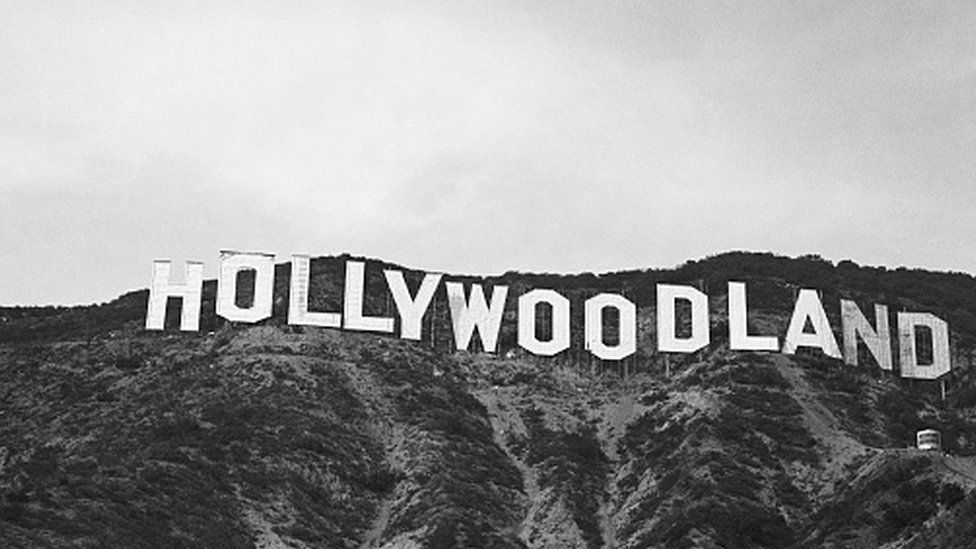
December 8, 1923: The HOLLYWOOD Sign

December 8, 1923: The HOLLYWOOD Sign begins operating. Or, as originally constructed, the HOLLYWOODLAND Sign.

It's become the most famous sign in the world. And it was only supposed to be temporary. As the saying today goes, it had one job.

That one job was to advertise "Hollywoodland." No, not "Hollywood," the section of Los Angeles where the film industry had already set up, due to the kind of climate that allowed studios to make movies all year long. (And which, like Bel Air, is part of the City of Los Angeles, not a separate city, as Beverly Hills is.) Rather, it was a new housing development, named Hollywoodland, set up at the bottom of Mount Lee, in Los Angeles' Griffith Park, not far from the famous Observatory.
Thomas Fisk Goff (1890-1984) set up 13 white letters, 30 feet wide and 50 feet high, facing south. The letters had 4,000 light bulbs, that would flash: First "HOLLY," then "WOOD," then "LAND," and back to "HOLLY," in sequence. The sign outlasted its need, because people liked it. The lighting was switched off in 1933, to save money during the Great Depression.

On September 16, 1932, Peg Entwistle, a Welsh actress who had come to America and starred on Broadway, but had seen her 1st film role, in Thirteen Women, severely cut, climbed to the top of the H in the sign, and jumped to her death. She was 24, and remains the sign's only suicide.
In 1944, high winds blew the H over, wrecking it, leaving the sign as "OLLYWOODLAND." In 1949, the Hollywood Chamber of Commerce made a deal with the City of Los Angeles, and rebuilt the sign, dropping the last 4 letters, so that it read "HOLLYWOOD." It has, ever since.

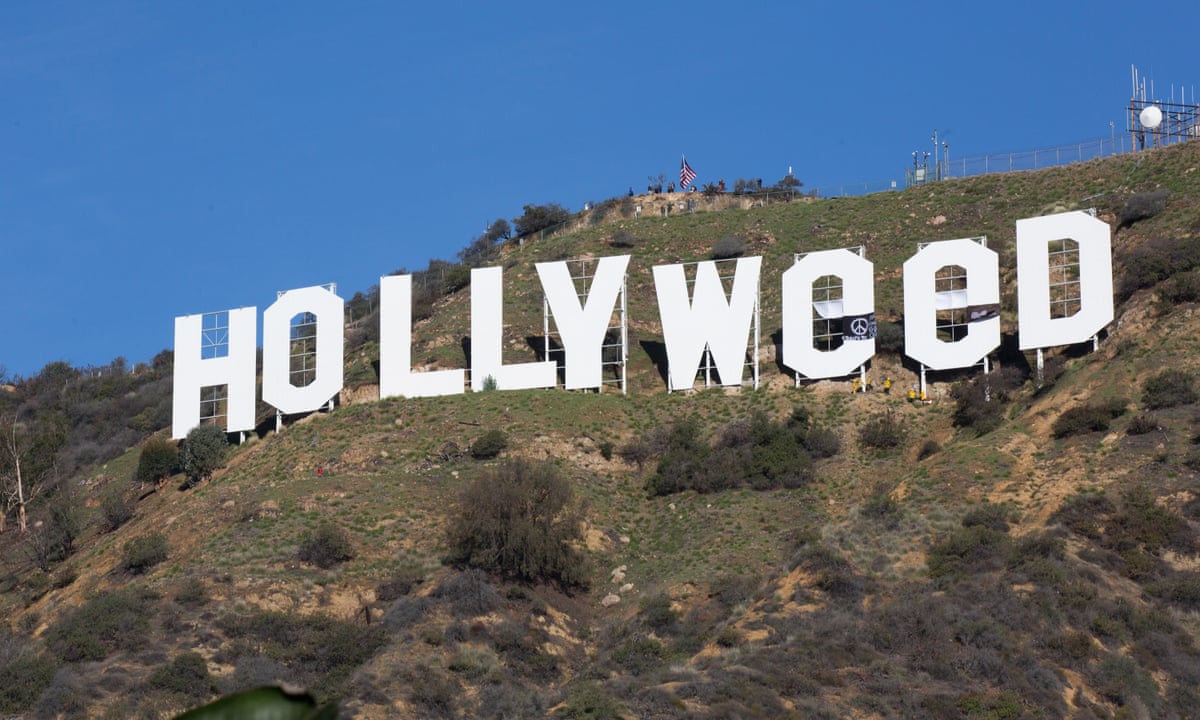
With some exceptions. Pranksters have occasionally altered it. Marijuana activists have placed black tape over the capital O's, turning them into lower-case e's. And, on at least one occasion, with the USC-UCLA football game coming up, USC students have altered the sign to read "BEAT UCLA." Other football fans, usually with their teams playing in the Rose Bowl, have altered the sign.
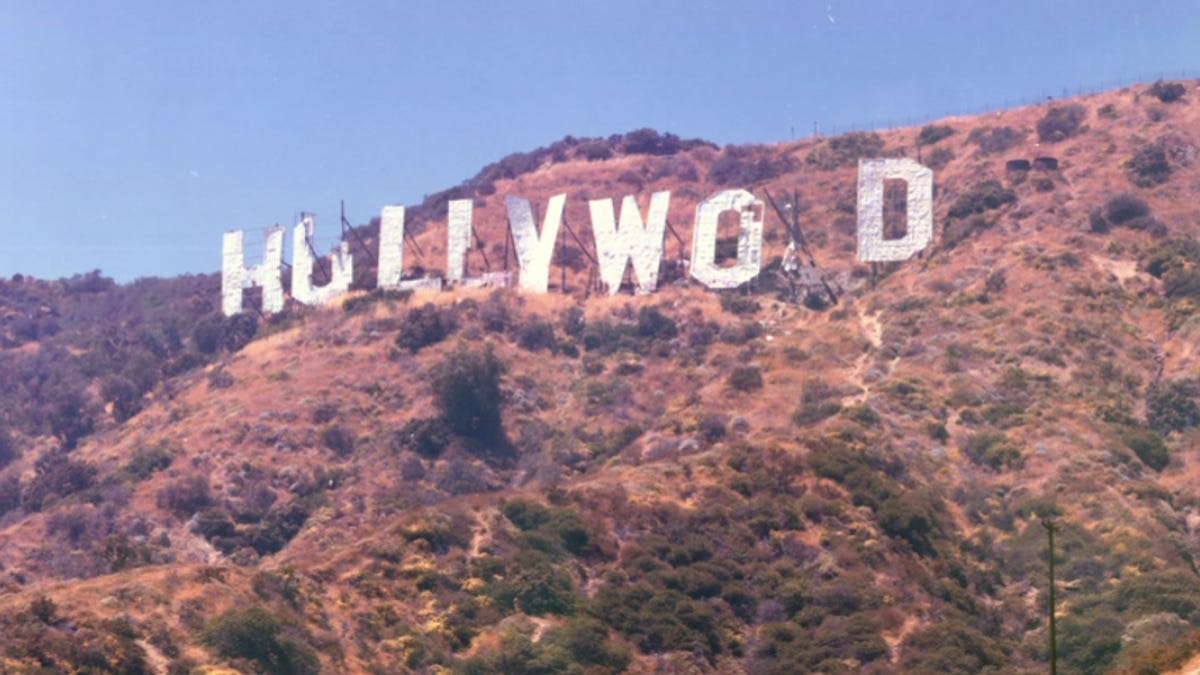
By the time the New York Yankees played the Los Angeles Dodgers in the 1977 World Series, the sign was in bad shape, as shown by stock footage of Los Angeles at the time that was included in ESPN's 2006 miniseries The Bronx Is Burning.
This led Playboy publisher Hugh Hefner to raise money for the sign's restoration. This included replacing the original wooden letters with metal ones, 44 feet high. It was restored again in 2005, and will be restored again in time for its 100th Anniversary in 2023.

*

December 8, 1923 was a Saturday. Baseball was out of season. The NBA hadn't been founded yet. There were no college football games. The NFL played the next day, concluding its season, with the Ohio-based Canton Bulldogs repeating as NFL Champions. And the NHL didn't open its season for another 7 days. So there were no scores on this historic day.

Tuesday, December 6, 2022

December 6, 1925: Red Grange Saves the NFL

December 6, 1925: The New York Giants football team, in its 1st season of play, is in deep financial trouble, in spite of a 10-3 record to this point -- 8-2 against NFL teams. Too few fans have come out to the Polo Grounds that team owners Tim and Jack Mara are afraid that their team will financially fail. And if the NFL's New York team fails, so will the League.

Red Grange to the rescue. Harold Edward Grange, "the Galloping Ghost" out of the University of Illinois, the most famous (or, at least, the most-hyped) player in the history of college football, comes in with his new teammates, the Chicago Bears.

A crowd of 68,000 people pays to get into the Polo Grounds, more than the Giants' last 3 home games combined. It's believed that another 8,000 crashed the gate, making the 74,000 crowd the biggest in the NFL's 6-season history to that point.

The Ghost lives up to the hype: He scores a touchdown on a 35-yard interception return, runs for 53 yards on 11 carries, catches a 23-yard pass, and completes 2 of 3 passes for 32 yards. And he is part of a defense that recorded a shutout. He could do everything except kick.

The Bears win, 19-0, but that's beside the point: The gate receipts from all the people coming out to see Grange mean that the Giants will be able to play the 1926 season. In 1927, they finish 1st, taking the 1st of what is now 8 NFL Championships, including 4 Super Bowls.

The Bears? They were a good team throughout the 1st decade of NFL play, winning the title in 1921, but won't win another title until 1932. By that point, Grange will be joined by Bronislau "Bronko" Nagurski, and they will win the title in 1933 as well.

Grange was the template for every speedy scatback who followed him: Steve Van Buren, Doak Walker, Frank Gifford, Lenny Moore, Paul Hornung, Gale Sayers, O.J. Simpson, Tony Dorsett, Marcus Allen, Walter Payton, Terrell Davis, Marshall Faulk, Chris Johnson, Joe Mixon.

Nagurski is the model for every big bruising fullback to come: Clarke Hinkle, Marion Motley, Tank Younger, Jim Taylor, Jim Brown, Larry Csonka, Franco Harris, John Riggins, Roger Craig, Emmitt Smith, Terrell Davis, Jerome Bettis, Adrian Peterson.

This -- not the 1958 NFL Championship Game that the Giants lost to the Baltimore Colts at Yankee Stadium -- is not only the biggest football game ever played in New York City; it is the most important game in the history of American professional football. If Grange had, for whatever reason, been unable to play in it, the Giants would have folded, and the NFL would probably have gone down the tubes during the Great Depression.

This might have opened the door for soccer, with its working-class roots and its ethnic appeal (most U.S. soccer teams at that point were ethnically based), to become America's Fall and Winter sport, possibly also hurting basketball and hockey. If you want to know why "football" made it in America, and "futbol" didn't until the 1970s, this, as much as America's natural distrust for "foreign" things, is the moment.

Even at the time, the 1920s, "The Roaring Twenties," was called "The Golden Age of Sports." It was Babe Ruth in baseball, Howie Morenz in hockey, Jack Dempsey in boxing, Paavo Nurmi in track, Bill Tilden in tennis, Bobby Jones in golf, and Man o' War in horse racing. In football, it was the Galloping Ghost, Red Grange.

Grange played until 1934, and became a broadcaster. He lived until 1991. He was ranked 80th on The Sporting News' 100 Greatest Football Players in 1999, named the greatest player in college football history by ESPN in 2008, had a statue of him dedicated outside Illinois' Memorial Stadium in 2009, was named to the NFL's 100 Greatest Players by the NFL Network in 2010 (ranked 48th, actually gaining 32 places in the intervening 11 years), and was named the Big Ten Conference's greatest sports icon by the Big Ten Network in 2011.

Keep in mind, most of those honoring him had never seen him play, as he played his last NFL game in 1934, and there is precious little surviving footage of him.


*

December 6, 1925 was a Sunday. These other NFL games were played that day:

* The Pottsville Maroons beat the Chicago Cardinals, 21-7 at Comiskey Park in Chicago. This led to the most controversial awarding of the NFL Championship in the League's history. 

* The Green Bay Packers beat the Providence Steam Rollers, 13-10 at the Cycledrome in Providence. The Steam Rollers debuted in 1916, joined the NFL for the 1925 season, won its Championship in 1928, and folded due to the Depression in 1933.

* The Cleveland Bulldogs beat the Canton Bulldogs, 6-0 at Dunn Field in Cleveland. (League Park used that name from 1921 to 1927.) Despite being just 60 miles apart, the cities' respective Bulldogs were separate teams.

* While baseball was in the off-season, and the NBA wasn't founded yet, there was also 1 NHL game played on this day. The Pittsburgh Pirates beat the Toronto St. Patricks, 6-3 at the Duquesne Gardens in Pittsburgh.

While the St. Patricks became the Toronto Maple Leafs in 1927, the Pirates -- as the NFL's Steelers were from their 1933 debut through 1939, named after the baseball team in town -- are not the forerunners of the Pittsburgh Penguins. In 1930, they moved across Pennsylvania, and became the Philadelphia Quakers. After one of the worst seasons in NHL history, both on the ice and at the Depression-addled box office, they folded.

December 31, 1999 & January 1, 2000: The Millennium

December 31, 1999:  The Millennium arrives. The people of planet Earth survived. At a terrible cost. But we hadn't destroyed ourselves. ...