Showing posts with label navin field. Show all posts

Friday, October 7, 2022

October 7, 1935: Detroit, City of Champions

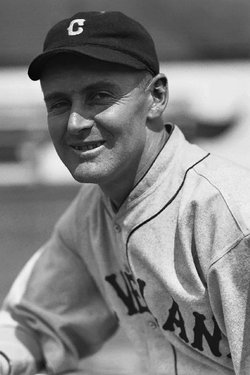
Mickey Cochrane (left) and Joe Louis

October 7, 1935: Game 6 of the World Series is played at Navin Field in Detroit. The National League Champion Chicago Cubs had won Games 1 and 5, while the Detroit Tigers, having won their 2nd straight American League Pennant, had won Games 2, 3 and 4.

Pete Fox doubled home a run in the bottom of the 1st inning, to put the Tigers ahead. Billy Herman singled home a run to tie it in the top of the 3rd. Tiger pitcher Tommy Bridges helped his own cause with an RBI groundout in the 4th. Herman hit a home run in the 5th, putting the Cubs up, 3-2. In the 6th, Billy Rogell doubled, and was singled home by Marv Owen, tying the game.

With the game still tied 3-3 going into the top of the 9th, Cub 3rd baseman Stan Hack led off with a triple. Bridges struck out Billy Jurges. Cub manager Charlie Grimm let pitcher Larry French, who was sitting on a complete game, bat for himself.

This might not have been a terrible decision: He had singled in the 5th, and scored on Herman's homer. Although he batted just .141 in the regular season, he did have 5 RBIs, and all he had to do was get the ball out of the infield. But he grounded back to Bridges, who held Hack at 3rd, and threw French out. To this day, no pitcher has driven in the winning run in the 9th inning of a postseason-clinching game.

Bridges then got Augie Galan to fly to left. The Cubs had 3 chances to score Hack from 3rd, 2 of them without a hit, and failed. In the Cubs' 108-year World Series drought, this failure is not one of the more well-remembered. It should be.

With 1 out in the bottom of the 9th, Mickey Cochrane, the Tigers' manager and catcher, beat out an infield single to 2nd base. Charlie Gehringer grounded to 1st, allowing Gehringer to advance. And Goose Goslin singled to right, scoring Cochrane, to win 4-3, giving Detroit its 1st World Championship in any sport.

Together, Gehringer, Goslin, and slugging 1st baseman Hank Greenberg were known as the "G-Men," in reference to their initials, and also to the "Government Men," as agents of the newly-prominent FBI called themselves.

The World Series win was a long time in coming for Frank Navin, the Tigers' owner. He had been appointed the team's bookkeeper in 1902. The following year, with money supposedly won in a card game, he bought $5,000 worth of stock in the team, and made himself, effectively, the general manager, building a team that won the Pennant in 1907, 1908 and 1909 -- but lost the World Series each time.

Main owner Samuel Angus got tired of losing money, and told Navin to find a buyer. He found William H. Yawkey, and, together, they bought the Tigers from Angus. Yawkey became a silent partner, and let Navin run the team, until Yawkey died in 1919. He left his vast lumber-company fortune to his adopted son, Tom Yawkey, who later bought the Boston Red Sox.

In 1927, Navin sold Yawkey's interest in the team to automaker Walter Briggs. Navin built the Tigers into Pennant winners again in 1934, losing the Series to the St. Louis Cardinals. Their 1935 win was especially sweet to him: Of the AL's charter franchises, only the Tigers and the St. Louis Browns had never won a World Series. The Browns wouldn't until 1966, after having been the Baltimore Orioles since 1954.

On November 13, 1935, just 37 days after winning the title, Navin was riding a horse at the Detroit Riding and Hunt Club, and fell. It's not clear whether he would have lived if he hadn't fallen from the horse. He was dead at age 64.

Briggs bought out Navin's heirs, expanded Navin Field, and renamed it Briggs Stadium. Under his tenure, they won the Pennant in 1940 and the World Series in 1945. He died in 1952. His son, Walter "Spike" Briggs Jr., sold them to John Fetzer in 1956. In 1961, Fetzer renamed the ballpark Tiger Stadium, and oversaw their 1968 World Series win.

Their 1935 World Series win was followed on December 15 by the Detroit Lions winning the 1935 NFL Championship. And that was followed on April 11, 1936, by the Detroit Red Wings winning the Stanley Cup. So, in a span of a little more than 6 months, Detroit won the titles of all 3 major league sports at once.

The addition of the NBA in 1946, making 4 major league sports, might have made winning 3 of the 4 more likely, but it's still an incredibly rare achievement. The only other time it's happened was in New York: The Yankees won the World Series in October 1927, the Giants won the NFL Championship in December, and the Rangers won the Stanley Cup in April 1928.

(The Jets won on January 12, 1969, and the Mets on October 16, 1969; but by the time the Knicks won on May 8, 1970, the Jets had already been succeeded as World Champions. Still, 3 titles in 16 months is an extraordinary achievement.)

Baltimore almost did it in 1971, with the Colts winning the Super Bowl while the Orioles were titleholders, but the Bullets lost the NBA Finals. Boston almost did it in 2008: The Celtics won while the Red Sox were titleholders, but the Patriots lost the Super Bowl. Tampa Bay almost did it in 2020-21, as the Buccaneers and Lightning won, but the Rays lost the World Series. 

Pittsburgh has never done it. The Pirates and Steelers both went all the way in 1979, but the Penguins didn't cooperate. The Steelers and the Penguins did it in 2009, but not the Pirates. Philadelphia has never done it: The city reached all 4 finals between May 1980 and January 1981, but only the Phillies won. Chicago has never done it: The Bears won the title in December 1933 and the Black Hawks in April 1934, but neither the Cubs nor the White Sox could win the Pennant.

Los Angeles has never done it: For all the titles the Lakers have won, only 3 have come in years when another L.A.-area team has won: The Dodgers in 1988 and 2020, and the Angels in 2002. The San Francisco Bay Area has never done it. The Oakland Athletics won in October 1974, and the Golden State Warriors in May 1975, but the Raiders lost the AFC Championship Game in January 1975. Both the 49ers and the A's won in 1989, but the Golden State Warriors could not oblige. The San Francisco Giants won in October 2014, and the Warriors in June 2015, but both area NFL teams flopped.

The Red Wings added another Stanley Cup in April 1937. Two months later, the Alabama-born, Detroit-raised boxer Joe Louis won the Heavyweight Championship of the World. So Detroit became known as "The City of Champions," long before that tag was given to Pittsburgh in the late 1970s and Boston in the 2000s.

The last survivor of the 1935 Tigers was Elden Auker, a submarine-style pitcher, who lived until 2006, enabling him to write the last baseball memoir of the period, Sleeper Cars and Flannel Uniforms; and to give interviews to Major League Baseball Productions that were used for the 1999 Major League Baseball All-Century Team broadcast, The Sporting News' 100 Greatest Baseball Players special the same year, the 2001 special honoring the 100th Anniversary of the American League, and various YES Network Yankeeography installments.

UPDATE: The Cubs have a team Hall of Fame. Inducted from their 1935 Pennant winners have been catcher Charles "Gabby" Hartnett, 1st baseman Phil Cavarretta, 2nd baseman Billy Herman, 3rd baseman Stan Hack, right fielder Hazen "Kiki" Cuyler, pitcher Charlie Root, manager Charlie Grimm, team owner Philip K. Wrigley, executive Margaret Donahue, and public address announcer Pat Pieper.

The Tigers do not have a team Hall of Fame, but they honor their Hall of Fame players on the outfield wall at Comerica Park. From the 1934 Pennant winners and the 1935 World Champions, they honor 1st baseman Hank Greenberg, 2nd baseman Charlie Gehringer, left fielder Leon "Goose" Goslin, and catcher-manager Gordon "Mickey" Cochrane.

Along with 3rd baseman Billy Rogell, pitchers Tommy Bridges and Lynwood "Schoolboy" Rowe, team owners Frank Navin and Walter Briggs, scout Wish Egan, and broadcaster Edwin "Ty" Tyson, they are also in the Michigan Sports Hall of Fame.

*

October 7, 1935 was a Monday. It was the 1st Monday in October, the beginning of the annual session of the Supreme Court of the United States. They had just moved into their present building. I have a separate entry for that event.

But the World Series clincher was the only score on this historic day. The NBA hadn't been founded yet, the NHL season's start was a few days away, and the NFL did not play. There would be no Monday Night Football for another 35 years.

Monday, July 18, 2022

July 18, 1921: The Home Run King

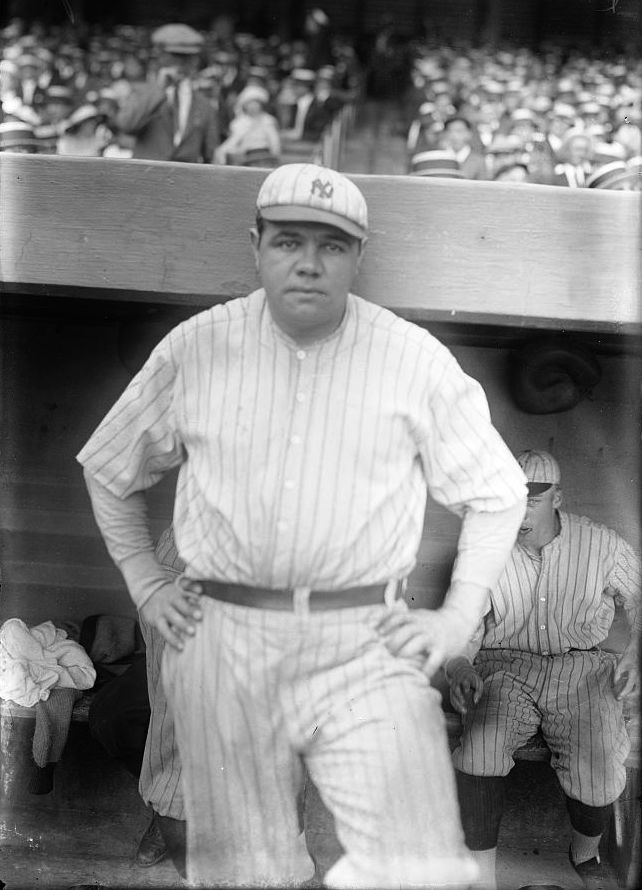
1921 was the only season that the Yankees
wore white caps while Babe Ruth was with them.

July 18, 1921: The New York Yankees beat the Detroit Tigers, 10-1 at Navin Field in Detroit. That ballpark would be renamed Briggs Stadium in 1938, and Tiger Stadium in 1961.

Most of the game is not especially noteworthy. Carl Mays went the distance for the win, outpitching Howard Ehmke. Ty Cobb, then in his 1st season as manager of the Tigers, only appeared as a pinch-hitter, and did not get a hit. Wally Pipp hit a home run off Ehmke in the 3rd inning. In the 8th, Babe Ruth hit a home run off Bert Cole.

It was Ruth's 36th home run of the season, making it more likely that he would break the single-season record of 54 that he set the year before. And he would, raising the record to 59, and again to 60 in 1927.

It was the 139th home run of Ruth's career. This made him the sport's all-time leader.

One hundred and thirty-nine. How quaint it now sounds. But until this point, home runs were rare. You've heard the expression "change the game"? Babe Ruth changed the game of baseball as much as any man after its pioneer era did.

Meet the previous record-holder, with 138. This is Roger Connor -- no middle name. He was born on July 1, 1857 in Waterbury, Connecticut, 30 miles southwest of Hartford, 130 miles southwest of Boston, and 90 miles northeast of Midtown Manhattan. Mostly a 1st baseman, he appeared in the major leagues from 1880 to 1897, including from 1883 to 1894 with the New York Giants.
Oddly, given his record status, he never led a League in home runs, topping out at 17 in 1887. But in 1885, he led the National League in batting average (.371), hits, total bases and slugging percentage. He led the NL in slugging percentage and doubles once each and triples twice. He topped 100 RBIs in a season 3 times, including a League-leading 130 in 1889. He helped the Giants win Pennants in 1888 and 1889.

His lifetime stats include a .316 batting average; 2,467 hits including 441 doubles, 233 triples, and the aforementioned 138 home runs; and a 153 OPS+. I don't have any way of saying he rose above the poor fielding equipment of his era, but he was a good baserunner, stealing 244 bases, topping off at 43 in 1887. So he wasn't a one-dimensional player.

Connor lived until January 4, 1931, age 73, having lived his entire off-season life in Waterbury. He would have been aware of Ruth's accomplishments to that point, but I can find no evidence that they ever met. In contrast, when Lou Gehrig hit home runs in 4 consecutive at-bats in a game in 1932, he was introduced to Bobby Lowe, the only man to do it previously, with the Boston Beaneaters (forerunners of the Braves) in 1894. (Lowe lived until 1951. In between him and Gehrig, Ed Delahanty had hit 4 home runs in a game, but not in succession, for the Philadelphia Phillies in 1896.)
Lou Gehrig (left), age 29; and Bobby Lowe, age 67

It took until 1976 for Connor to be elected to the Baseball Hall of Fame, by which point Ruth's record, eventually extended to 714, had been broken by Hank Aaron.

As for the pitcher who gave up the record-breaking round-tripper? Bert Cole was then 25, from San Francisco, and in his 1st season in the major leagues. He remained there until 1927, with a career record of 28-32, and returned to the Pacific Coast League. In his last season of professional baseball, 1935, with the San Francisco Seals, he was a teammate of Joe DiMaggio. He died in 1975.
Cole isn't remembered today. Despite being in the Hall of Fame, neither is Connor, really. Ruth, of course, is. So is Roger Maris, who raised the single-season home run record to 61 in 1961; Mark McGwire, who did so dubiously to 70 in 1998; Aaron, who raised the career record to 755; and Barry Bonds, who dubiously raised the single-season record to 73 in 2001 and the career record to 762.

As Art LaFleur said, playing the Babe's ghost in the film The Sandlot, "Heroes get remembered, but legends never die."

*

July 18, 1921 was a Monday. These other baseball games were played that day:

* The New York Giants beat the Pittsburgh Pirates, 12-1 at the Polo Grounds. Art Nehf went the distance for the win, supported by a home run by Johnny Rawlings. Casey Stengel went 0-for-1 as a defensive replacement.

* The Brooklyn Robins (as the Dodgers were known while Wilbert Robinson managed them from 1914 to 1931) lost to the Chicago Cubs, 8-1 at Ebbets Field. Zack Wheat went 1-for-4.

* The Boston Braves beat the St. Louis Cardinals, 14-8 at Braves Field in Boston. Rogers Hornsby hit a home run for the Cards.

* The Cincinnati Reds swept a doubleheader from the Philadelphia Phillies at Baker Bowl in Philadelphia. Both games ended 9-5.

* The Cleveland Indians beat the Washington Senators, 3-2 at League Park in Cleveland. Tris Speaker went 2-for-4.

* The Chicago White Sox swept a doubleheader from the Boston Red Sox, 5-4 and 4-3 at Comiskey Park in Chicago. Sad Sam Jones walked Hervey McClellan with the bases loaded in the bottom of the 10th inning, to decide the 1st game. Over the 2 games, Eddie Collins went 2-for-8 with a walk.

* And the St. Louis Browns beat the Philadelphia Athletics, 4-2 at Sportsman's Park in St. Louis. George Sisler went 0-for-4.

July 18, 1921: The Home Run King

1921 was the only season that the Yankees
wore white caps while Babe Ruth was with them.

July 18, 1921: The New York Yankees beat the Detroit Tigers, 10-1 at Navin Field in Detroit. That ballpark would be renamed Briggs Stadium in 1938, and Tiger Stadium in 1961.

Most of the game is not especially noteworthy. Carl Mays went the distance for the win, outpitching Howard Ehmke. Ty Cobb, then in his 1st season as manager of the Tigers, only appeared as a pinch-hitter, and did not get a hit. Wally Pipp hit a home run off Ehmke in the 3rd inning. In the 8th, Babe Ruth hit a home run off Bert Cole.

It was Ruth's 36th home run of the season, making it more likely that he would break the single-season record of 54 that he set the year before. And he would, raising the record to 59, and again to 60 in 1927.

It was the 139th home run of Ruth's career. This made him the sport's all-time leader.

One hundred and thirty-eight. How quaint it now sounds. But until this point, home runs were rare. You've heard the expression "change the game"? Babe Ruth changed the game of baseball as much as any man after its pioneer era did.

Meet the previous record-holder, with 138. This is Roger Connor -- no middle name. He was born on July 1, 1857 in Waterbury, Connecticut, 30 miles southwest of Hartford, 130 miles southwest of Boston, and 90 miles northeast of Midtown Manhattan. Mostly a 1st baseman, he appeared in the major leagues from 1880 to 1897, including from 1883 to 1894 with the New York Giants.
Oddly, given his record status, he never led a League in home runs, topping out at 17 in 1887. But in 1885, he led the National League in batting average (.371), hits, total bases and slugging percentage. He led the NL in slugging percentage and doubles once each and triples twice. He topped 100 RBIs in a season 3 times, including a League-leading 130 in 1889. He helped the Giants win Pennants in 1888 and 1889.

His lifetime stats include a .316 batting average; 2,467 hits including 441 doubles, 233 triples, and the aforementioned 138 home runs; and a 153 OPS+. I don't have any way of saying he rose above the poor fielding equipment of his era, but he was a good baserunner, stealing 244 bases, topping off at 43 in 1887. So he wasn't a one-dimensional player.

Connor lived until January 4, 1931, age 73, having lived his entire off-season life in Waterbury. He would have been aware of Ruth's accomplishments to that point, but I can find no evidence that they ever met. In contrast, when Lou Gehrig hit home runs in 4 consecutive at-bats in a game in 1932, he was introduced to Bobby Lowe, the only man to do it previously, with the Boston Beaneaters (forerunners of the Braves) in 1894. (Lowe lived until 1951. In between him and Gehrig, Ed Delahanty had hit 4 home runs in a game, but not in succession, for the Philadelphia Phillies in 1896.)
Lou Gehrig (left), age 29; and Bobby Lowe, age 67

It took until 1976 for Connor to be elected to the Baseball Hall of Fame, by which point Ruth's record, eventually extended to 714, had been broken by Hank Aaron.

As for the pitcher who gave up the record-breaking round-tripper? Bert Cole was then 25, from San Francisco, and in his 1st season in the major leagues. He remained there until 1927, with a career record of 28-32, and returned to the Pacific Coast League. In his last season of professional baseball, 1935, with the San Francisco Seals, he was a teammate of Joe DiMaggio. He died in 1975.
Cole isn't remembered today. Despite being in the Hall of Fame, neither is Connor, really. Ruth, of course, is. So is Roger Maris, who raised the single-season home run record to 61 in 1961; Mark McGwire, who did so dubiously to 70 in 1998; Aaron, who raised the career record to 755; and Barry Bonds, who dubiously raised the single-season record to 73 in 2001 and the career record to 762.

As Art LaFleur said, playing the Babe's ghost in the film The Sandlot, "Heroes get remembered, but legends never die."

*

July 18, 1921 was a Monday. These other baseball games were played:

* The New York Giants beat the Pittsburgh Pirates, 12-1 at the Polo Grounds.

* The Brooklyn Robins (as the Dodgers were known when Wilbert Robinson managed them, from 1914 to 1931) lost to the Chicago Cubs, 8-1 at Ebbets Field.

* The Boston Braves beat the St. Louis Cardinals, 14-8 at Braves Field in Boston. Rogers Hornsby hit a home run for the Cardinals.

* The Cincinnati Reds swept a doubleheader from the Philadelphia Phillies, at Baker Bowl in Philadelphia, with both games ending with a score of 9-5.

* The Cleveland Indians beat the Washington Senators, 3-2 at League Park in Cleveland. Indians player-manager Tris Speaker went 2-for-4.

* The Chicago White Sox swept a doubleheader from the Boston Red Sox, 5-4 and 4-3 at Comiskey Park in Chicago. In the opener, Hervey McClellan drew a bases-loaded walk on Sad Sam Jones in the bottom of the 10th inning, making a winning pitcher of Dickie Kerr. In the nightcap, Ernie Johnson singled home the winning run off Benn Karr, to make a winning pitcher of Clarence "Shovel" Hodge.

* And the St. Louis Browns beat the Philadelphia Athletics, 4-2 at Sportsman's Park in St. Louis. They did this despite their best player, George Sisler, going 0-for-4.

December 31, 1999 & January 1, 2000: The Millennium

December 31, 1999:  The Millennium arrives. The people of planet Earth survived. At a terrible cost. But we hadn't destroyed ourselves. ...