Showing posts with label jack benny. Show all posts

Thursday, December 15, 2022

December 15, 1944: "Hollywood Canteen" Premieres

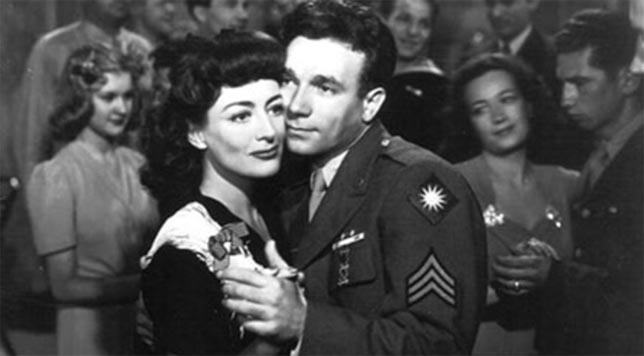
Joan Crawford and Dane Clark

December 15, 1944: Hollywood Canteen premieres, providing World War II-era audiences with more stars than General Patton could shake his riding crop at.

It was technically a companion film (if not a sequel) to the 1943 film Stage Door Canteen. The real-life Stage Door Canteen operated at the 44th Street Theatre at 216 West 44th Street in New York from March 2, 1942 to December 31, 1945, after which the building was demolished.

Its West Coast equivalent, the Hollywood Canteen, was at 1451 Cahuenga Boulevard, just south of Sunset Boulevard, in Los Angeles, running from October 3, 1942 to November 22, 1945 (Thanksgiving Day). The club offered food, dancing and entertainment for servicemen, usually on their way overseas. It was open to servicemen of allied countries, as well as women in all branches of service, and admission, and everything else, was free to those in uniform.

The driving forces behind its creation were actors Bette Davis and John Garfield, along with Jules Stein, President of Music Corporation of America. The movie, directed by Delmer Davis, was filmed on location, and starred Davis, Garfield, and, among others, these performers, all of whom had volunteered for the real thing, in alphabetical order: The Andrews Sisters, Jack Benny, Eddie Cantor, Kitty Carlisle, Joan Crawford, Jimmy Dorsey (but not his brother Tommy), Sydney Greenstreet, Peter Lorre, Ida Lupino, Dorothy Malone, Janis Paige, Barbara Stanwyck and Jane Wyman.

And, yes, in his role of Ralph Kramden on The Honeymooners, Jackie Gleason was right: Hollywood Canteen was produced by Warner Brothers, and it premiered the cowboy song "Don't Fence Me In," written by Cole Porter, and introduced by… Roy Rogers and the Sons of the Pioneers! They also sang their theme song, "Tumblin' Tumbleweeds." Roy even rode his famed horse Trigger onstage.

Oh, yes, there's an actual plot among the musical numbers. But, the place being Hollywood, and the time being World War II, its not a complicated plot: Robert Hutton plays Slim Green, the 1 millionth "GI" to be admitted, and he wins a date with actress Joan Leslie. He's on leave with his buddy, Sergeant Nolan, played by Dane Clark, who gets to dance with Crawford.

Speaking of whom: If you're looking for evidence of the feud between Crawford and Davis, you won't find any in this film.

A CNN studio and a parking lot are now on the site of the Hollywood Canteen.

*

December 15, 1944 was a Friday. It was also the day that the Battle of the Bulge began, Glenn Miller disappeared over the English Channel on the way to a series of holiday concerts in Paris, and the first five-star Generals were promoted. I have separate entries for those events.

Baseball was in the off-season. The NFL Championship Game was played 2 days later, with the Green Bay Packers beating the New York Giants, 14-7 at the Polo Grounds in New York. The NBA hadn't been founded yet. And, while the NHL was in-season, no games were scheduled for that day. So there are no scores on this historic day.

Monday, November 7, 2022

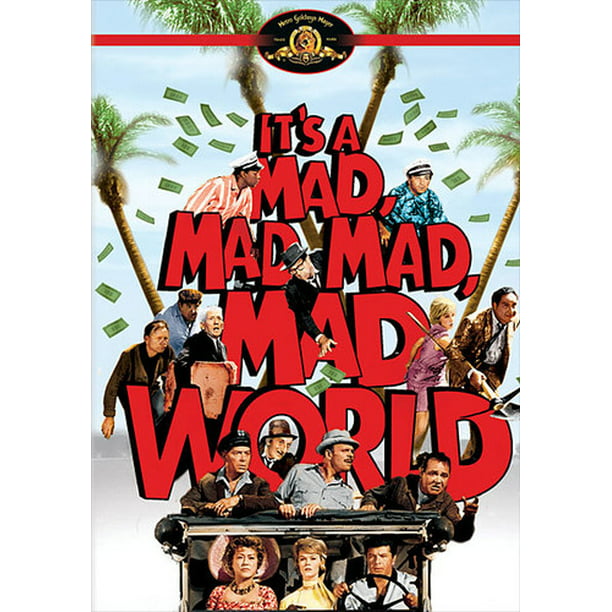
November 7, 1963: "It's a Mad, Mad, Mad, Mad World" Premieres

November 7, 1963:  It's a Mad, Mad, Mad, Mad World premieres, produced and directed by Stanley Kramer. It was a "cast of thousands" movie, and a caper film, with everyone in pursuit of $350,000 buried by a dying crook played by Jimmy Durante. (That's worth about $3.4 million in 2022 money.)

Aside from Durante, the main cast includes Spencer Tracy, Edie Adams, Milton Berle, Sid Caesar, Buddy Hackett, Ethel Merman, Dorothy Provine, Mickey Rooney, Dick Shawn, Phil Silvers, Terry-Thomas and Jonathan Winters. (Apparently, Tracy wanted top billing rather than alphabetical order, despite some other rather large egos involved.)

In supporting roles: Eddie "Rochester" Anderson, Jim Backus, William Demarest and Peter Falk. In cameos: Rochester's longtime "boss" Jack Benny, Joe E. Brown, Selma Diamond, Norman Fell, Stan Freberg, Leo Gorcey of the Bowery Boys, Sterling Holloway, Edward Everett Horton, silent film legend Buster Keaton, Don Knotts, Jerry Lewis, ZaSu Pitts, Madlyn Rhue, Arnold Stang, future "Maytag Repairman" Jesse White, and all of the last lineup of the Three Stooges: Moe Howard, Larry Fine, and Curly Joe DeRita.

Actress-dancer Barrie Chase, 89, is the last surviving member of the cast.

*

November 7, 1963 was a Thursday. English soccer star John Barnes was born.

Baseball season was over. Football was in midweek. One NBA game was played: The New York Knicks lost to the San Francisco Warriors, 110-88 at the Cow Palace outside San Francisco in Daly City, California. Wilt Chamberlain had a quiet night by his standards: 23 points and 16 rebounds.

The NHL's entire "Original Six" were in action:

* The New York Rangers lost to the Detroit Red Wings, 1-0 at the Olympia Stadium in Detroit.

* The Montreal Canadiens and the Chicago Black Hawks played to a tie, 2-2 at the Montreal Forum.

* And the Toronto Maple Leafs beat the Boston Bruins, 4-3 at the Boston Garden.

Sunday, July 24, 2022

July 24, 1915: The Eastland Sinks

July 24, 1915: The SS Eastland sinks in the Chicago River. A total of 844 people are killed, making it the greatest loss of life in a Great Lakes maritime disaster.

The Eastland was launched in 1903, and the Michigan Steamship Company used it for excursions across Lake Michigan, from Chicago, Illinois to South Haven, Michigan. The West Coast of Michigan remains one of the leading resort areas for the Midwest.

But, like the PS General Slocum in New York in the previous 2 decades, before it burned on Long Island Sound in 1904, the Eastland had problems well before its ultimate disaster. Less than 3 months after its launch, it hit a tugboat docked at the Lake Street Bridge in Chicago. Mere days after that, crewmen who hadn't been fed mutinied, and the captain ordered their arrest. Instead, the captain was fired and replaced.

On a voyage the next year, the Eastland nearly capsized with about 3,000 passengers. Its official capacity was reduced to 2,800. It was sold in 1909, and its new owners transferred it to a Lake Erie run, Cleveland to the resort town of Cedar Point, Ohio. But it listed on a 1912 voyage. In 1914, it was sold to the St. Joseph-Chicago Steamship Company, and began service between Chicago and another western Michigan resort town, St. Joseph.

The Western Electric Company chartered 5 steamers -- the Eastland, the Theodore Roosevelt, the Petoskey, the Racine and the Rochester -- to take their employees from their Hawthorne Works in Cicero, Illinois, up the Chicago River, and out to Lake Michigan, to a picnic in Michigan City, Indiana.

At a time when the American labor movement was really struggling -- the Triangle Shirtwaist Factory Fire was only 4 years earlier -- and Sunday was traditionally the only day off, this was a big deal. This was especially true because, like many of the General Slocum and Triangle victims, the people in question were mostly immigrants, in this case from the parts of the Austro-Hungarian Empire which, after World War I, would be used to form the nation of Czechoslovakia.

In the wake of the sinking of the RMS Titanic 3 years earlier, a federal Seamen's Act had been passed. The big transatlantic ship lost more people than were expected on its tragic maiden voyage because it didn't have enough lifeboats. Eastland was equipped with as many lifeboats as could fit -- and this may have caused the opposite problem: The weight of the lifeboats may have "helped" in the sinking.

At 7:10 AM on July 24, the passengers boarding the ship at its dock, on the south bank of the Chicago River between Clark Street and LaSalle Street, had already reached the legal capacity of 2,572. It began to list to port (left, away from the dock). Passengers made the mistake of rushing to that side, and at 7:28, it sank to the bottom of the river, 20 feet below the surface. Half the ship was still above the water line.

The steamship company did nothing to provide relief for the survivors of the victims. Western Electric provided $100,000 worth, about $2.8 million in 2022 money.

Eventually, an urban legend got around that Chicago native comedian Jack Benny was aboard the Eastland, and survived the disaster. It wasn't true: He had never been aboard it. 

A list of the lost was printed in the newspaper. One of those names was George Halas, age 20, a Chicago native, and a football player at the University of Illinois. One of the people who survived the disaster was Ralph Brizzolara, a fraternity brother of Halas', who escaped through a porthole. When he led a delegation of brothers to the Halas home, to give their condolences, they saw he was alive.

Halas would go on to found the team that became the Chicago Bears, and lived until 1983. Brizzolara would work in the team's front office until his death in 1972.

Marion Eichholz, the last known survivor of the Eastland disaster, died on November 24, 2014, at 102, just short of 100 years after.

*

July 24, 1915 was a Saturday. In the American League:

* The New York Yankees did not play, because they were scheduled to play the Chicago White Sox at Comiskey Park in Chicago. Out of respect to the victims, the ChiSox postponed that day's game, and the next.

The July 24 game was rescheduled as the 1st half of a doubleheader on August 21. The White Sox won it, 1-0. Ray Caldwell of the Yankees and Jim Scott of the Pale Hose both took shutouts into the 11th inning, before Hall-of-Famer Eddie Collins singled home Eddie Murphy. No, not that Eddie Murphy.

The Yankees won the 2nd half, 3-2. Ray Fisher outpitched Eddie Cicotte, who would later help the White Sox win the 1917 World Series -- and, still later, would help them reach, and then lose, the 1919 World Series.

* The Cleveland Indians swept a doubleheader from the Philadelphia Athletics, at League Park in Cleveland. The A's won the opener 4-3, and the nightcap 12-4.

* A doubleheader was split at Navin Field in Detroit, the ballpark that would become Briggs Stadium in 1938 and Tiger Stadium in 1961. The Detroit Tigers won the 1st game, 2-0. The Washington Senators won the 2nd game, 8-5. In the opener, Jean Dubuc pitched a shutout to beat Walter Johnson. Over both games, Ty Cobb went 1-for-5 with an RBI.

* A doubleheader was split at Sportsman's Park in St. Louis. The Boston Red Sox won the 1st game, 7-3. The St. Louis Browns won the 2nd game, 3-2.

In the National League:

* The New York Giants swept a doubleheader from the Pittsburgh Pirates at the Polo Grounds. They won the 1st game, 4-2, and the 2nd game, 8-4.

* The Brooklyn Robins swept a doubleheader from the St. Louis Cardinals at Ebbets Field. The once-and-future Dodgers won the 1st game, 6-5 in 10 innings. They won the 2nd game, 9-5.

* The Boston Braves beat the Chicago Cubs, 1-0 at Fenway Park in Boston, where they were playing until their new Braves Field was ready.

* The Philadelphia Phillies swept a doubleheader from the Cincinnati Reds at Baker Bowl in Philadelphia. The Phils won the 1st game, 4-0, as Grover Cleveland Alexander allowed 9 hits, but kept the shutout. They won the 2nd game, 13-1. The Phils went on to win their 1st Pennant that season.

And 1915 was the 2nd and last season of the Federal League:

* The St. Louis Terriers swept a doubleheader from the Brooklyn Tip-Tops, at Handlan's Park in St. Louis. The Terriers won the 1st game, 4-2; and the 2nd game, 3-1.

* A doubleheader was split at Exposition Park in Pittsburgh, where the Pirates played before Forbes Field opened. The Newark Peppers beat the Pittsburgh Rebels in the 1st game, 5-1. The 2nd game was tied 4-4 when it was called due to darkness. 

* The Buffalo Blues beat the Kansas City Packers, 3-2 in 11 innings, at Gordon and Koppel Field in Kansas City.

* And, in respect to the victims of the Eastland disaster, the Chicago Whales postponed their game with the Baltimore Terrapins at Weeghman Park, the ballpark that would become Wrigley Field. A doubleheader was played on July 26. The Whales won the 1st game, 11-3. The Terrapins won the 2nd game, 5-1.
Monday, May 2, 2022

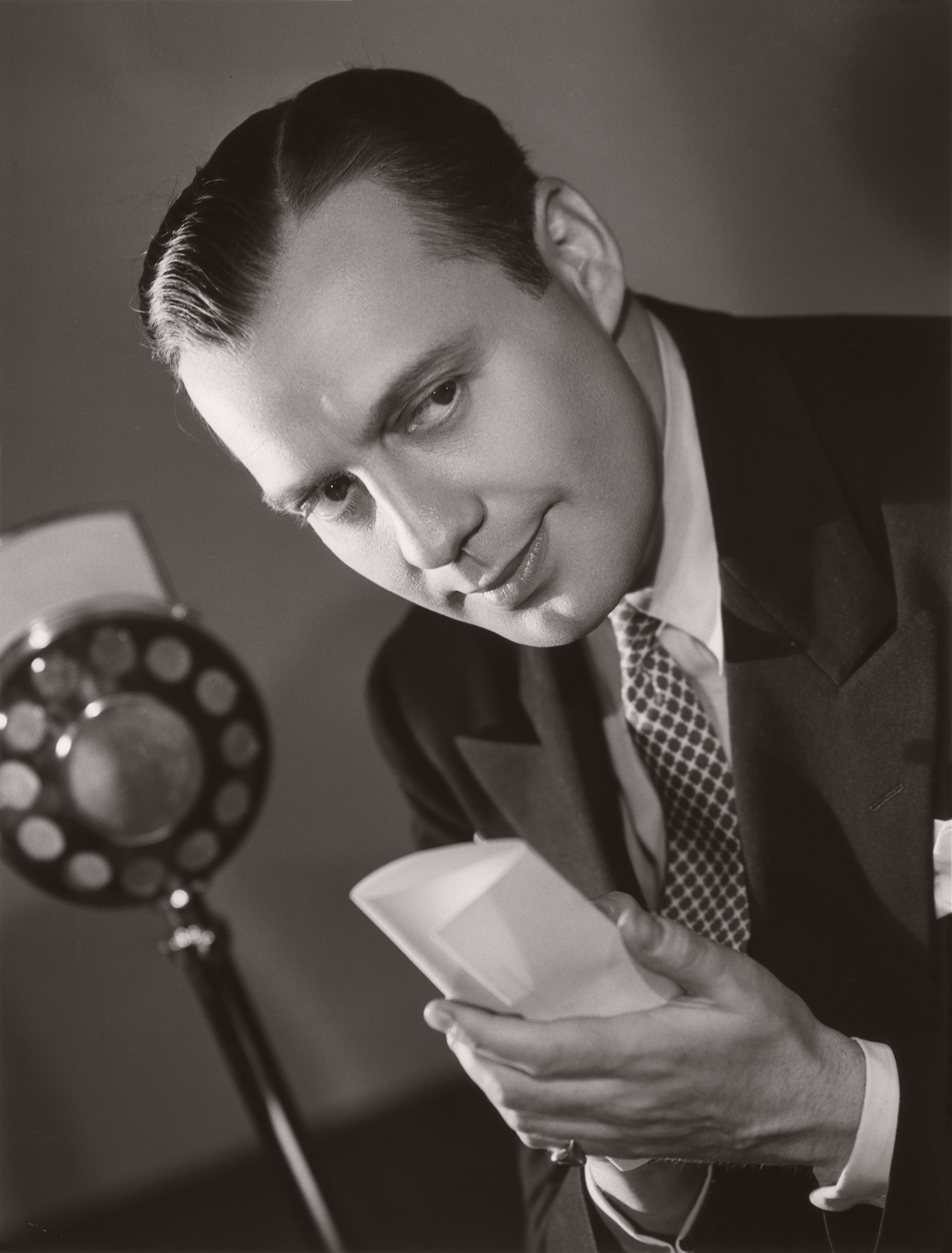
May 2, 1932: “The Jack Benny Program” Premieres

May 2, 1932: The Jack Benny Program -- always officially titled a "Program," not a "Show" -- first airs on NBC radio. It would remain on NBC until 1948, before switching to CBS and running until 1955. The television version ran on CBS from 1949 to 1965.

He was born on February 14, 1894, as Benjamin Kubelsky, in Chicago, and grew up in nearby Waukegan, Illinois. He learned to play the violin, and one of his teachers was Otto Graham Sr., father of future quarterbacking legend Otto Graham. At 17, he was playing his violin in Chicago's vaudeville theaters, where he met and became lifelong friends with the Marx Brothers.

As he became better-known, an established violinist with a similar name, Jan Kubelik, told him to change his name. He became Ben K. Benny, and then Jack Benny. In 1922, at a Passover seder in Vancouver, Zeppo Marx introduced her to Sadie Marks (no relation), and they were married in 1926. Sadie became an actress, taking the stage named Mary Livingstone.

Jack made his 1st film appearance in 1929. In 1932, he was a guest on a radio show hosted by the Broadway columnist for the New York Daily News, Ed Sullivan. He introduced himself by saying, "This is Jack Benny talking. There will be a slight pause while you say, 'Who cares?'" He was a hit, and NBC signed him to do a radio show, which eventually led to a television show.

In real life, Jack was very generous. In 1954, after Marilyn Monroe appeared on his show, and mentioned to him (offstage) that she wanted to get a new Cadillac convertible, he bought one for her. But, in character, Jack's defining feature was cheapness. He wouldn't pay for a new car for himself, continually making reference to his established car, a 1932 Maxwell. His most famous moment was when a mugger told him, "Your money or your life!" Dead silence for about 5 seconds. The mugger said, "Didn't you hear me? I said, 'Your money or your life!'" And Jack said, "I'm thinking it over!"

Indeed, 40 years before the TV show Seinfeld, Jack Benny played an alternate version of himself as a famous comedian, very alternate: Not just cheap, but vain (always claiming to be 39 years old, which he hadn't been since February 1934), arrogant (describing himself as "star of stage, screen and radio"), and mean. Despite being a celebrity within the world of the show, he was largely disliked by most of the other stars in Hollywood, notably his next-door neighbors, actors Ronald and Bonita Colman. He was easily annoyed, did not suffer fools gladly, and was unsuccessful with women: While Mary was married to him in real life, on the show, she was one of several girlfriends, but the only one that kept coming back to him. He played down his violin skills, often playing very badly on the air.

Aside from Mary and the Colemans, there were other regular guest stars. Bandleader Phil Harris was the music director for the show, and he, his wife, actress Alice Faye, and singer Dennis Day played friends of Jack's. Phil left the show in 1952, and was replaced as bandleader by Bob Crosby, Bing's brother.

Eddie Anderson, a black actor, played his butler, Rochester, who would call him "Boss" but could get away with saying things to him that most black men of the time could not get away with saying to a white man. (If Anderson ever got hate mail for this, it has never been publicly revealed.) As Jackie Gleason's Ralph Kramden would later do with Art Carney's Ed Norton on The Honeymooners, Jack sometimes involved Rochester in get-rich-quick schemes that always failed to comedic effect.

Frank Nelson, introduced to Jack by the Marx Brothers, was a frequent guest star. He never played the same character, but always the same type of character. Jack would need help with something at a store, or at a restaurant, and say, "Excuse me, buddy," and Frank would turn around and say, "Ee-yes?" dragging out the E and the S. And they would banter back and forth, sometimes about the price of an item. But Nelson's character would always be polite with every other character, further frustrating Jack.

Also a frequent guest star was Mel Blanc, proving himself a master of funny voices before he became known as the voice of cartoon character Bugs Bunny. Mel had gotten his start with Spike Jones & His City Slickers, and continued to work with Spike while working with Jack and playing Bugs. A familiar bit was Mel playing a Mexican, and answering, "Si." When Jack asked him his name, he said, "Sy." Sy? "Si." Do you have a girlfriend? "Si." What's her name? "Sue." Sue? "Si."

Jack tried to keep up with the times. He often had singers on his show, never rock-and-rollers, but he would have folksingers: He had The Smothers Brothers, and he had Peter, Paul & Mary, who sang "Blowin' in the Wind," which Jack recognized was "a very important song."

The program was cancelled in 1965, due to a dispute over money -- not between Jack and the network, but between Jack and the advertisers, as he charged twice as much as most programs.

Jack died in 1974, Eddie Anderson in 1977, Mary Livingstone in 1983, Frank Nelson in 1986, Dennis Day in 1988, Mel Blanc in 1989, Bob Crosby in 1993, Phil Harris in 1995, and Alice Faye in 1998.

Jack and Mary didn't have any natural children. In 1934, they adopted a newborn girl named Joanie. Joan Benny appeared on her parent's show a few times, but not as their daughter, as the Jack and Mary characters never got married. Joan became a panelist on TV game shows like I've Got a Secret and Password, wrote a biography of her father, and lived until 2021.

*

May 2, 1932 was a Monday. When the Program went to TV, it was famously on Sunday nights at 7:00, followed at 8:00 by The Ed Sullivan Show. Joan Benny titled her book about her father Sunday Nights at Seven.

These baseball games were played that day:

* The New York Yankees lost to the Washington Senators, 10-3 at Griffith Stadium in Washington. Carl Fisher outpitched Lefty Gomez. Joe Cronin hit a home run, and would become the Senators' manager the next season, taking them to the American League Pennant. All of the Yankees' runs came on a home run by Lou Gehrig. Babe Ruth went 0-for-3 with 2 walks.

* The Brooklyn Dodgers beat their arch-rivals, the New York Giants, 3-1 at the Polo Grounds. Dazzy Vance outpitched Carl Hubbell. Bill Terry went 1-for-4, and Mel Ott went 0-for-3 with a walk.

* The Philadelphia Athletics beat the Boston Red Sox, 3-2 at Fenway Park in Boston. Jimmie Foxx won the game with a home run in the top of the 11th inning. Lefty Grove pitched the last 2 innings to get the win.

* The Philadelphia Phillies beat the Boston Braves, 7-2 at Baker Bowl in Philadelphia.

* The Pittsburgh Pirates beat the Chicago Cubs, 2-0 at Forbes Field in Pittsburgh. Steve Swetonic pitched a 3-hit shutout. Paul Waner went 2-for-4, and Lloyd Waner went 1-for-4.

* The Cleveland Indians beat the St. Louis Browns, 6-5 at League Park in Cleveland.

* The Detroit Tigers beat the Chicago White Sox, 5-3 at Comiskey Park in Chicago.

* And the St. Louis Cardinals beat the Cincinnati Reds, 2-1 at Sportsman's Park in St. Louis.

December 31, 1999 & January 1, 2000: The Millennium

December 31, 1999:  The Millennium arrives. The people of planet Earth survived. At a terrible cost. But we hadn't destroyed ourselves. ...