Showing posts with label the who. Show all posts

Saturday, December 3, 2022

December 3, 1979: The Riverfront Coliseum Disaster

December 3, 1979: Disaster strikes a concert by The Who at the Riverfront Coliseum in Cincinnati.

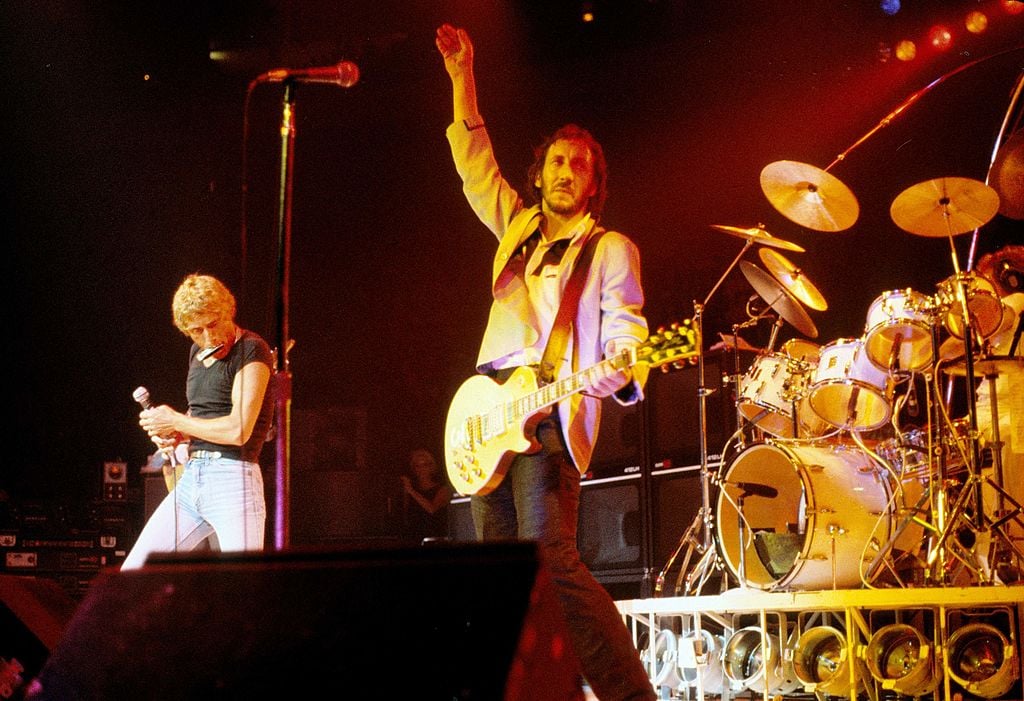
From 1964 to 1978, The Who were Roger Daltrey on lead vocals, Pete Townshend on lead guitar and doing most of the songwriting, John Entwistle on bass guitar, and Keith Moon on drums. On September 7, 1978, Moon's substance abuse reached its inevitable conclusion, and he died. He was replaced on drums by Kenney Jones, formerly of another renowned British rock band, The Faces.

Officially, The Who were recognized by The Guinness Book of World Records as the loudest musical act of all time. Unofficially, many people considered them the best rock band in the world, especially in the early 1970s, when Moon was still mostly functional and possibly the greatest drummer rock and roll has ever known, Townshend was writing some of his best work, The Beatles had broken up, The Rolling Stones were believing their hype a little too much, and Led Zeppelin were still a bit too far out there for mainstream American audiences.

The Who were among the first acts to destroy their instruments at the end of a performance, which sometimes looked like a riot onstage. But there had never been a riot at any of their shows.

They had played the Monterey Pop Festival outside San Francisco in 1967, and Woodstock outside New York City in 1969. They hadn't invented the concept of, well, the concept album. Nor had they invented the concept of the "rock opera." But they had written the 1st truly successful opera to incorporate rock and roll music, Tommy, in 1969. And they had played it at the Metropolitan Opera House at New York's Lincoln Center in 1970. So they were immensely talented and widely respected: They had beaten both rock's best and rock's haters at their respective own games.

Their 1979 tour was their 1st without Moon. Jones was healthier, smarter, and very good. But a lot of the camaraderie had been lost with Moon. Still, they were giving it their best, and had already had a sellout stand at Madison Square Garden.

The Riverfront Coliseum had been built in 1975, on the Ohio River, nearly adjacent to Riverfront Stadium, home of baseball's Cincinnati Reds and football's Cincinnati Bengals. The Cincinnati Stingers of the World Hockey Association had played at the Coliseum, but stopped when the league folded and they weren't invited into the National Hockey League. The Coliseum was hosting selected basketball games of the University of Cincinnati, and the Cincinnati Kids of the Major Indoor Soccer League. And it hosted rock concerts.
The Riverfront Coliseum, now named
the Heritage Bank Center

The Who were scheduled to play there on December 3, 1979. At 5:00 PM, a crowd had formed outside the gate for General Admission seating. At 7:15, 45 minutes before the curtain was due to go up, someone thought they'd heard The Who playing. It could have been a sound check. Or, it could have been a section of a documentary film about them that had recently been released, The Kids Are Alright. Whatever it was, some fans were sure that the band was already playing their show.

And the crowd outside the gate surged, and pushed toward the doors. This caused some people to get trampled. Many were crushed against each other and asphyxiated. It was a situation similar to the one that would happen at Hillsborough Stadium in Sheffield, England before an FA Cup soccer game 10 years later. There were 11 deaths, and 26 other injuries.

The promoters and the arena operators, desperate to keep the money they were going to make, decided not to tell the band members what had happened. Roger, Pete, John and Kenney played their regular show, not knowing. Only afterward were they told.

This was before the age of social media. News of the similar event that took place at the Astroworld complex in Houston in 2021 swept across the world in minutes. But in 1979, that kind of mechanism for delivering information through mass communication simply wasn't there. Many people didn't even read about it in the newspaper the next morning.

It was only when they saw the network evening news on December 4 that they realized the magnitude of what had happened. The band looked very bad for playing after the tragedy, but that wasn't their fault: They didn't know there was a tragedy. Indeed, of the 18,348 paying ticketholders on the night, most of them weren't in the crowd crush, and they didn't know until the next day, either.

The Who continued their tour. On December 4, at the Buffalo Memorial Auditorium, Daltrey told the crowd, "We lost a lot of family last night. This show's for them."

The families of the victims filed a class-action lawsuit against the band; the promoters, Electric Factory Concerts; and the City of Cincinnati, operators of the arena. The case was eventually settled out of court, with each of the families of the deceased receiving around $150,000 -- about $604,000 in 2022 money.

The City banned "unassigned festival seating" on December 27. This was reflected in an episode of the CBS sitcom WKRP in Cincinnati, set at a radio station that had, in that fictional version of the world, promoted the concert. The episode, "In Concert," aired on February 4, 1980.

The Who announced their farewell tour in 1982. But in 1989, they went back on tour, this time with Zak Starkey, son of Beatles drummer Ringo Starr, on drums. In 2001, with the lineup of Daltrey, Townshend, Entwistle and Starkey, the played The Concert for New York City at Madison Square Garden. It was Entwistle's last performance: He died in his hotel room in Las Vegas, just before their 1st show of a planned 2002 tour. Daltrey and Townshend are still alive, and have occasionally reunited with other musicians making up "The Who."

The Riverfront Coliseum still stands, although it's gone through some name changes. In 1997, it became The Crown; in 1999, the Firstar Center; in 2002, the U.S. Bank Arena; and in 2019, the Heritage Bank Center. It has hosted minor-league hockey, mostly the Cincinnati Cyclones of the ECHL; college and minor-league basketball, indoor soccer, arena football -- and, of course, concerts.

*

December 3, 1979 was a Monday. On ABC Monday Night Football, the Oakland Raiders beat the New Orleans Saints, 42-35 at the Superdome in New Orleans.

There was 1 game played in the NBA that night: The Milwaukee Bucks beat the Utah Jazz, 96-89 at the Salt Palace in Salt Lake City. This was the Jazz' 1st season in Utah, after 5 weak seasons in New Orleans, where their name made a lot more sense.

And there was 1 game played in the NHL, a rematch of the previous season's Stanley Cup Finals: The New York Rangers and the defending Champion Montreal Canadiens played to a 3-3 tie at Madison Square Garden. The Rangers took a 1-0 lead on a goal by Warren Miller, and a 2-1 lead on a goal by Phil Esposito. But Larry Robinson canceled out the Miller goal, and Guy Lafleur and Pierre Larouche gave the Habs a 3-2 lead. But Esposito scored again with 13:37 left in regulation, and it ended 3-3.

And actress Tiffany Haddish was born on this day.

December 3, 1965: The Greatest Day In British Rock

December 3, 1965: This might have been the greatest day in the history of British rock and roll.

The Beatles release their album Rubber Soul. Rock historian Dave Marsh said it proved they could have been stars even if they never released a single uptempo song.

John Lennon songs, listed in the order in which they appear on the album: "Norwegian Wood (This Bird Has Flown)," supposedly about an affair the married John had with British journalist Maureen Cleave, who soon did the interview in which John said, "We're more popular than Jesus now"; "Nowhere Man," which he later said was describing his own feelings of feeling "lost" at that point; "The Word"; "Girl," which upset some people with its reference to death; "In My Life," which might be my favorite Beatles song; "Wait"; and "Run for Your Life."

That last one starts by borrowing a line from an early Elvis Presley song, "Baby Let's Play House": "I'd rather see you dead, little girl, than to be with another man." John later regretted using that line, among the many things he came to regret, including his own history of domestic violence toward his 1st wife, Cynthia Twist, and some of the women he used to cheat on Cynthia.

Paul McCartney songs: "Drive My Car," inspiring many radio stations' traffic reports; "You Won't See Me"; "Michelle," which translates the words, "These are words that go together well" into French as "Sont des mots qui vont très bien ensemble"; and "I'm Looking Through You." This was much more a John album than a Paul album. Every remaining Beatle album, all 7 of them, would be more of a Paul albums, in some cases much more.

George Harrison songs: "Think for Yourself" and "If I Needed Someone." Having begun his study of Eastern music and philosophy, George also made "Norwegian Wood" the 1st recorded song outside India to have a sitar on it. Ringo Starr's obligatory one song on the album: "What Goes On," which he co-wrote with John and Paul.

On the exact same day, The Rolling Stones released December's Children (And Everybody's). It included the original Mick Jagger & Keith Richards-written "Get Off of My Cloud," which hit Number 1, and "As Tears Go By," which had already been a hit for Marianne Faithfull, soon to leave her husband and become Jagger's girlfriend.
It also included covers, of Sonny & Cher's "She Said Yeah," Chuck Berry's "Talkin' About You," Arthur Alexander's "You Better Move On," Muddy Waters' "Look What You've Done," Bobby Troup's "Route 66," and Hank Snow's "I'm Moving On."

And The Who released their debut album, My Generation. It included the title track, with its unforgettable line, "Hope I die before I get old." Songwriter and guitarist Pete Townshend explained that lead singer Roger Daltrey was stuttering because the character he was playing was high on amphetamines, the main drug of choice for English "mods." There was also the line, "Why don't you all just... f... f... f... fade away!" It was lost on American audiences: They only heard the stutter, because they were not yet familiar with the English expression, "Fuck off!"
The album also included "The Kids Are Alright," and covers of James Brown's "Please, Please, Please" and Bo Diddley's "I'm a Man."

While The Beatles were trying to move forward as songwriters and musicians, the Stones and The Who were embracing their roots as fans of American blues and rhythm & blues (R&B), or in the case of the Snow cover, country music -- exemplified by their album's cover photo being in black & white. The Who would come to call what they played "Maximum R&B," even though it sounded nothing like R&B as Americans understood the term.

Later British acts would follow in the footsteps of these 2 bands, with Led Zeppelin covering blues songs in such a way that they seemed to be among the inventors of what became known as "heavy metal."

John Mayall had formed a band known as the Bluesbreakers, whose members, at various times, included Eric Clapton and Jack Bruce of Cream; Mick Taylor, who would replace Brian Jones in the Stones, before being himself replaced by Faces guitarist Ron Wood; Peter Green, John McVie and Mick Fleetwood of Fleetwood Mac; and drummer Aynsley Dunbar of Frank Zappa's Mothers of Invention, Journey, and Jefferson Starship.

And there was a band named Bluesology, whose members included saxophonist Elton Dean, singer Long John Baldry, and a young pianist named Reginald Dwight, who took the names of each of the preceding, becoming Elton John.

*

December 3, 1965 was a Friday. Olympic figure skater Katarina Witt, arguably both the first and the last person from the nation known in the West as "East Germany" to be popular in the West, was born.

Baseball was out of season. Football was in midweek. And no games were scheduled for the NHL. There were 2 games in the NBA. The Philadelphia 76ers beat the Boston Celtics, 119-103 at the Boston Garden. Just another day at the office for Wilt Chamberlain: With Bill Russell guarding him, he scored 28 points and grabbed 30 rebounds. And the Cincinnati Royals beat the Los Angeles Lakers, 122-118 at the Los Angeles Memorial Sports Arena. Jerry West scored 51 points.

Saturday, September 17, 2022

September 17, 1967: Television Goes Psychedelic

The Doors on The Ed Sullivan Show, September 17, 1967.
Front: Jim Morrison. Behind him, left to right:
John Densmore, Robbie Krieger, Ray Manzarek
Note the actual doors suspended from the ceiling.

September 17, 1967: Television goes psychedelic, as CBS caps "the Summer of Love" with 2 explosive variety shows -- one figurative, one literal.

From 1948 to 1971, "The Tiffany Network" aired The Ed Sullivan Show on Sunday nights at 8:00 Eastern Time. Ed was progressive in some ways, willing to air rock and roll acts, and black performers of all kinds, when most variety-show hosts wouldn't.

But there were, occasionally, issues. In 1956, he said he wouldn't have the hot newcomer of the moment, Elvis Presley, on his show, until rival Steve Allen brought him to his show on NBC. Ed saw Allen's ratings, too the hint, and had Elvis on his show 3 times, the last time showing him only from the waist up, to hide his gyrations.

In 1963, Bob Dylan was scheduled for the show. He wanted to sing his song "Talking John Birch Paranoid Blues." The censors, afraid that he would look like a Communist, told him after the 1st rehearsal to drop it. He refused. Ed backed him up. And Ed usually got what he wanted. This time, they overruled him. Dylan never appeared on the show, but he kept Ed's respect.

In 1964, Ed booked The Beatles, and 73 million people watched. At the time, it was the biggest audience in U.S. TV history. That led to several other British bands being booked, one of them The Rolling Stones.

But on January 15, 1967, mere hours after Super Bowl I, the Stones wanted to sing their song "Let's Spend the Night Together." Trying to avoid a conflict with the censors, Ed's producer, and also his son-in-law, Bob Precht, suggested a slight change: "Let's Spend Some Time Together." The Stones did it that way, but their anger is obvious on the tape.

At that point, The Doors had just released their self-titled debut album, a groundbreaking opus that helped bring "psychedelic rock" into the mainstream, including the song "Light My Fire," which had hit Number 1. Ed booked them, but their biggest song contained the line, "Girl, we couldn't get much higher." You couldn't say the words "get high," or any variant, on prime-time U.S. TV in 1967, because it would be taken as a drug reference.

Ray Manzarek, the organist and spokesman for the group, told Precht, "We'll think of something." So they discussed it.

John Densmore, drummer: "What are we gonna do?"

Robbie Krieger, guitarist, who had written the lyrics: "It's my lyric, I don't care. Whatever you guys want to do, I'll do it."

Jim Morrison, lead singer, who usually wrote the lyrics, and sang them: "I'm not gonna change the lyric."

Manzarek: "Then let's not change the lyric." And, presuming they would get caught breaking the rules, they settled on their story.

Also on this show that day were comedians Jack Benny, Rodney Dangerfield and Flip Wilson; married singers Steve Lawrence and Eydie Gorme; the singing Kessler Sisters, Alice and Ellen; and actor Yul Brynner, who did a classical guitar routine. All of it live, coast-to-coast, from CBS Studio 50 at 1697 Broadway, between 53rd and 54th Street in Midtown Manhattan. The building had recently been renamed the Ed Sullivan Theater.

The Doors opened the show with a song from their 2nd album, "People Are Strange." When it was over, there was a pause, as Ed's usually straitlaced audience wasn't sure what to make of them. Even the teenagers, usually put in the balcony of the theater to scream at the rock bands, didn't applaud at first. The applause that followed was tepid.

At the end of the show, The Doors played "Light My Fire." Jim didn't change the lyric. (Unlike in the 1991 film The Doors, directed by Oliver Stone and starring Val Kilmer, Jim did not stick his face in the camera and make a point of it. He just sang it as if nothing out of the ordinary was going on.) They played a short version, similar (but not identical) to the single version, rather than the album version, which has gone down in music history as "The Long Version."

As the song ends, the camera shifts to Ed, who looks mad. To hide this, the director quickly fades to black and goes to commercial.

Afterward, Precht walked up to the band, and rips them for saying, "higher."

Manzarek presented the story the band agreed on: "Sir, it's The Ed Sullivan Show, we were nervous, and we just did the song the way we've done it a thousand times, we didn't think about it, and we're sorry!"

Precht told them, "We were gonna book you for 6 more shows. But now, you'll never do The Ed Sullivan Show again!"

The members thought they'd blown it. But Morrison said, "Hey, man, we just did The Ed Sullivan Show."

True to his word, Precht made sure The Doors were never on the show again. The show last aired on June 6, 1971. Within a month, Jim Morrison was dead. Three years later, so was Ed Sullivan.

However, Precht inherited control of the Ed Sullivan Show recordings, and had no qualms about lending the performance of "Light My Fire" back to CBS for TV specials commemorating the show. The nostalgia network Decades now airs the show, and the September 17, 1967 episode is in regular rotation. (UPDATE: In 2024, Decades was "rebranded" as Catchy Comedy.)

One more note: On Christmas Eve, December 24, 1967, a little more than 3 months later, George Carlin was a guest on The Ed Sullivan Show. He did his Al Sleet, the Hippy-Dippy Weatherman routine. Referring to a symbol on his weather map, he said, "This is a Canadian low, which is not to be confused with a Mexican high." It was his 4th appearance on the show. Since it was played for laughs, and Al Sleet was clearly not someone the average viewer would want to emulate, Carlin got away with it, eventually making 11 appearances.

*

The night was still young. On February 5, 1967, CBS debuted The Smothers Brothers Comedy Hour. Tom and Dick Smothers had been a big comedy act for a while, and had been a hit on Ed Sullivan. They went for a hipper-than-thou vibe. And, apparently, it was Ed who had a problem with The Doors, not CBS: They appeared on "the Smos Bros" on December 15, 1968, singing "Wild Child" and "Touch Me." (Come to think of it, George Carlin was on that episode.)

On September 17, 1967, at 9:00 Eastern Time, while Ed Sullivan and Bob Precht were still steaming over "Girl, we couldn't get much higher," the Smothers Brothers went on the air, albeit on tape rather than live. In addition to show regulars, comedian Pat Paulsen and singer Jennifer Warnes, the show featured acting legends Bette Davis and Mickey Rooney.

And British rock band The Who.

Ed Sullivan was just short of his 66th birthday, making him old enough to be the grandfather of the eldest Door, Manzarek, 28. In contrast, Tommy Smothers was 30 years old, Dick was 27. So they were only a few years older than The Who: lead singer Roger Daltrey was 23, bass guitarist John Entwistle was about to turn 23, guitarist and main songwriter Pete Townshend was 22, and drummer Keith Moon was 21. The Brothers could relate to their guests a lot more easily than Sullivan could, and while the bandmembers were a bit more far-out than the Brothers were, the Brothers did handle things better.

The Who were already known for destroying their instruments onstage, having done so 3 months earlier at the Monterey Pop Festival in California. They were also known for destroying other things, like hotel rooms, and even cars: Moon had drunkenly driven one into a hotel pool.

The Who played their signature song, "My Generation," with Daltrey stuttering the lyrics because, as Townshend explained, the character is so hopped up on amphetamines (the drug of choice for British "Mods," as The Who's members had been). The key lyric seemed to be, "Things, they do look awful c-c-cold, I hope I die before I get old."

At the end of the performance, the members did wreck their instruments. This included Moon setting off an explosion in his bass drum. Unfortunately, Townshend got too close to it, and it wrecked his hearing. Now, like Brian Wilson of the Beach Boys, he was practically deaf in one ear.
Died before they got old: Jim Morrison, 1971, from a drug-induced heart attack, age 27; Keith Moon, 1978, from a drug-and-booze combination, 32; and John Entwistle, 2002, from a drug-induced heart attack, 57.

Lived to be old: Ed Sullivan, 1974, from cancer, 73; Ray Manzarek, 2013, from cancer, 74; and the following, all still alive at this writing: Tom Smothers, 85; Dick Smothers, 83; Roger Daltrey, 78; Pete Townshend, 77; John Densmore, 77; and Robbie Krieger, 76. (UPDATE: Tom Smothers died on December 26, 2023, at 86.)

*

September 17, 1967 was a Sunday. This was also the day of the Kayseri Atatürk Stadium Disaster in Turkey. I have a separate entry for that event.

A full slate of Major League Baseball games was played:

* The New York Yankees lost to the Cleveland Indians, 4-2 at the old Yankee Stadium. Luis Tiant outpitched Mel Stottlemyre. Mickey Mantle went 0-for-2 with 2 walks.

* The Philadelphia Phillies beat the Los Angeles Dodgers, 6-1 at Connie Mack Stadium in Philadelphia.

* The Baltimore Orioles beat the Boston Red Sox, 5-2 at Fenway Park in Boston. This was a bit of a blow in the Sox' 4-way dogfight for the American League Pennant with Chicago, Detroit and Minnesota. The Birds got home runs from Boog Powell (not surprising), Paul Blair (a little surprising) and Andy Etchebarren (very surprising).

Both pitchers of record would pitch for the Seattle Pilots in 1969, and feature in fellow pitcher Jim Bouton's published diary Ball Four: The winning pitcher for the O's was Gene Brabender, and the losing pitcher for the Sox was Gary Bell.

* The Pittsburgh Pirates beat the San Francisco Giants, 5-4 at Forbes Field, in Pittsburgh. For the Pirates, Roberto Clemente went 3-for-5 with a solo home run. For the Giants, Jim Ray Hart hit a home run, but Willie Mays only appeared as a pinch-hitter, and didn't get a hit.

* The St. Louis Cardinals beat the Cincinnati Reds, 3-2 at Crosley Field in Cincinnati.

* The Washington Senators beat the Detroit Tigers, 5-0 at Tiger Stadium in Detroit.

* The Chicago White Sox beat the Minnesota Twins, 4-0 at Comiskey Park in Chicago. Gary Peters pitched a 4-hit shutout.

* The Chicago Cubs beat the Atlanta Braves, 5-3 at Atlanta Stadium. (It would be renamed Atlanta-Fulton County Stadium in 1974.) For the Cubs, Billy Williams hit a home run, and Ernie Banks went 2-for-4. For the Braves, the only home run was hit by Charlie Lau, the light-hitting catcher who would go on to become one of the sport's most admired hitting instructors; Hank Aaron went 1-for-4 with a double; and Joe Torre went 0-for-4.

* The New York Mets lost to the Houston Astros, 4-3 at the Astrodome in Houston.

* The California Angels beat the Kansas City Athletics, 3-2 at Anaheim Stadium in the Los Angeles suburb of Anaheim, California. (The ballpark is now named Angel Stadium of Anaheim.) This would be the last month for the A's as a Kansas City team: They moved to Oakland the next season.

And, being a Sunday, there was pro football, both the NFL and the AFL. For the senior league, it was the opening game of the season:

* The New York Giants beat the football version of the St. Louis Cardinals, 37-20 at Busch Memorial Stadium in St. Louis.

* The Philadelphia Eagles beat the Washington Redskins, 35-24 at Franklin Field in Philadelphia.

* The Baltimore Colts beat the Atlanta Falcons, 38-31 at Memorial Stadium in Baltimore.

* The Pittsburgh Steelers beat the Chicago Bears, 41-13 at Pitt Stadium in Pittsburgh.

* The Dallas Cowboys beat the Cleveland Browns, 21-14 at Cleveland Municipal Stadium.

* The Green Bay Packers and the Detroit Lions played to a tie, 17-17 at Lambeau Field in Green Bay.

* The San Francisco 49ers beat the Minnesota Vikings, 27-21 at Metropolitan Stadium in the Minneapolis suburb of Bloomington, Minnesota.

* The Los Angeles Rams beat the New Orleans Saints, 27-13 at Tulane Stadium in New Orleans. The Saints were an expansion team, and this was the 1st regular-season game they ever played. They lost their 1st 7 games before finally beating the Eagles on November 5 at Tulane.

And in the AFL:

* The Houston Oilers beat the Buffalo Bills, 20-3 at War Memorial Stadium in Buffalo.

* The Miami Dolphins beat the Denver Broncos, 35-21 at the Orange Bowl in Miami.

* The Oakland Raiders beat the Boston Patriots, 35-7 at the Oakland Coliseum.

* And the New York Jets, the Kansas City Chiefs and the San Diego Chargers all had a bye week. In 1966, the Dolphins were an AFL expansion team. Another, the Cincinnati Bengals, was added in 1968. So in 1966 and 1967, the AFL had 9 teams, and there was a bye every week to at least one team. 

Wednesday, August 17, 2022

August 17, 1969: Woodstock, Day 3

August 17, 1969: The Woodstock Music & Art Fair wraps up on Max Yasgur's dairy farm outside Bethel, Sullivan County, New York.

At 12:30 AM, Creedence Clearwater Revival took the stage. As Bruce Springsteen said when giving their induction speech for the Rock and Roll Hall of Fame, "They were never the coolest band in America, just the best."

Janis Joplin came on at 2:00, not with her original band, Big Brother & The Holding Company, but with The Kozmic Blues Band. Having become famous at the Monterey Pop Festival in California 2 years earlier, here, she cemented her legend for all time.

As did Sly & The Family Stone, who came on at 3:30, and played 50 minutes of psychedelic soul. It was footage of this performance that led jazz legend Miles Davis, already 43 years old, to shift gears, and incorporate rock and roll and psychedelic ideas into his music, giving him one of the great second acts in music history.

Billy Joel was at Woodstock -- not as a performer, but as a fan. A very dissatisfied fan:

I went to Woodstock, and I hated it. I think a lot of that "community spirit" was based on the fact that everybody was so wasted. Because everybody was stoned. Everybody was passing around pot and acid, and I wasn't into it.

There'd been a lot of rain, it was all muddy, and you couldn't go to the bathroom unless you stood up and went right where you were. I was there for a night and a day, and then I left just before The Who went on. I really wanted to see them, but it was very hard to, because everybody was hopping up and down and banging into you. So I walked out and hitched a ride home.

The Who came on at 5:00 in the morning, and gave one of the earliest live performances of songs from their "rock opera," Tommy. By this point, with The Beatles bringing their story to a close, The Rolling Stones were already getting people to call them "The World's Greatest Rock and Roll Band." The Who blew that idea over the Catskills.

According to their lead guitarist and main songwriter, Pete Townshend, at the end of the band's gig at 2 weeks later, at the 1969 Isle of Wight Festival, the field was covered in rubbish left by fans, which inspired the line "teenage wasteland" in their 1971 song "Baba O'Riley." In another interview, Townshend said the song was also inspired by "the absolute desolation of teenagers at Woodstock, where audience members were strung out on acid and 20 people had brain damage. The irony was that some listeners considered the song a teenage celebration: 'Teenage Wasteland, yes! We're all wasted!'

The Sun came up, and so did The Jefferson Airplane. In an interview with Rolling Stone magazine for the Festival's 20th Anniversary in 1989, lead singer Grace Slick said it was the worst performance of her career, and that, "The music was better at Altamont." A sacrilege? Maybe, but she was at both, and was in as good a position as anyone to know.

A break was taken. The show resumed at 2:00 PM, with Joe Cocker and The Grease Band. Among the songs Cocker sang was The Beatles' "With a Little Help From My Friends." They left at 3:25, and then, the rain came back. For 3 hours, no one wanted to take the risk of going on. There was nothing for people to do but endure the rain and the mud -- or, perhaps, play in it.

Country Joe & The Fish played from 6:30 to 8:00. By this point, the show should have been wrapping up, but several acts hadn't yet gone on, and wanted to. Ten Years After then played for an hour. The Band started at 10:00, and lasted 50 minutes.

Come Midnight, Monday, August 18, Johnny Winter, the albino Texas blues guitarist, went on, and played for over an hour, including 3 songs with his brother Edgar, also an albino, and a master of several instruments, as he would prove on his 1973 chart-topping instrumental "Frankenstein," on which he played guitar, keyboards and saxophone. At 1:30, Blood, Sweat & Tears came on, and played for an hour.

At 3:00, in only their 2nd performance together, came Crosby, Stills, Nash & Young: David Crosby from The Byrds (whose current lineup were invited to play, but turned it down), Graham Nash from The Hollies, and Stephen Stills and Neil Young from The Buffalo Springfield. They played an electric set, then Young left, and Crosby, Stills and Nash sang an acoustic set. In later years, when asked about their signature show, Crosby would call it "The W Word."

People began to drift off. The Paul Butterfield Blues Band started at 6:00, with the Sun coming up. At 7:30, a bunch of Columbia University students who loved doo-wop, calling themselves Sha Na Na, took the stage, and sang for half an hour. Nobody knew it yet, but Woodstock, the ultimate 1960s event, had just given birth to the 1950s nostalgia movement.

By 9:00 AM, there were maybe 200,000 people left, most of them there because they were still waiting for access roads to be open so they could get out. And Jimi Hendrix came on, and played the National Anthem, "The Star-Spangled Banner," like nobody had ever heard it before: A loud, screechy, even ugly performance, which sounded more like the bombing of Vietnam than an expression of American pride. At 11:10 AM, he, and the festival, were done.

The immediate reports on the mainstream news said the whole festival was a disaster, full of rain, mud, drugs, naughty behavior, and bad music. But in the middle of the final full day, the venue's host, dairy farmer Max Yasgur, a proud Republican small businessman, addressed the crowd, and said:

I'm a farmer. I don't know how to speak to twenty people at one time, let alone a crowd like this. But I think you people have proven something to the world. Not only to the Town of Bethel, or Sullivan County, or New York State. You've proven something to the world.

This is the largest group of people ever assembled in one place. We have had no idea that there would be this size group, and because of that you've had quite a few inconveniences as far as water, food, and so forth. Your producers have done a mammoth job to see that you're taken care of... They'd enjoy a vote of thanks.

But above that, the important thing that you've proven to the world is that a half a million kids — and I call you kids because I have children that are older than you are — a half million young people can get together and have three days of fun and music, and have nothing but fun and music, and I God bless you for it!

The legend was born. The reality was... better seen in the movie theaters the following Spring, and experienced on television, and now on the Internet, than live. The cover for the film's soundtrack became a classic. The names of the couple in the blanket were Bobbi Kelly and Nick Ercoline. They married shortly thereafter, and as of August 17, 2022, they are still together. (UPDATE: Bobbi died on March 18, 2023, at age 78.)
Seattle Pilots pitcher Jim Bouton did not mention the Festival in his diary of the 1969 season, published the next year as Ball Four. But in Dog Days: The New York Yankees' Fall from Grace and Return to Glory, 1964-1976, Philip Bashe wrote:

Woodstock forced mainstream America to swallow its antipathy and reexamine some of the counterculture's utopian ideals. Maybe, just maybe, these kids were on to something.

Interestingly, in the process of lauding the festival-goers' conduct, commentators drew frequent comparisons to spectators at sporting events, nothing that if you assembled an equal number of beery bleacherites under similar conditions, they'd probably dismantle the stage and cart off every square inch of turf as souvenirs -- once the brawls subsided, that is.

Though many professional ballplayers belonged to the same generation as the Woodstock crowd, the majority of major-leaguers no more identified with this group and its concerns than did your average middle-age Republican from Peoria. Anytime the Yankees team bus pulled up on a red light in some American League city and someone spied a longhair on the street corner, insults inevitably came hurling out the window.

And Bashe quoted Bouton himself as saying:

Many of the players were feeling the social earthquakes going on in the country. But like a lot of our leaders and politicians, they tended to blame things on these longhaired people with bare feet who didn't bathe and smoked pot.

They said, "That's what's wrong with this country. If it weren't for those hippies, Communists and agitators, the war would be going okay and we wouldn't have civil-rights problems." They saw those people as the problem.

A 10th Anniversary show was held in 1979. The times, they had a-changed too much: Only 1,000 people showed up. The whole world was getting more conservative: Israel elected Menachem Begin and his Likud Party in 1977, the first time a right-of-center party had won there. China, under new "paramount leader" Deng Xiaoping, began its move toward a free-market economy in 1978.

In 1979 alone, Iran had its Islamic Revolution, Britain elected Margaret Thatcher and her Conservatives, and Canada voted out Pierre Trudeau and Liberal Party and voted in Joe Clark, though Clark's Conservative Party government (as in Britain, nicknamed the Tories) quickly fell apart, and Trudeau was voted back in the following year. France elected François Mitterand and his Socialist Party in 1981, but West Germany elected Helmut Kohl and his Christian Democratic Union in 1982.

But, as they always do, the times changed again. The Woodstock organizers tried again in 1994, for the 25th Anniversary, but, ironically, couldn't get the original site. This time, 25 years after rejecting them, the Town of Saugerties said, "Yes," and 250,000 people saw a nice show, with a combination of Woodstock veterans, acts from that period that hadn't played the original show (including Bob Dylan), and more recent acts. By this point, people knew how to properly stage a concert of that size or larger, and there were no logistical issues. There was enough food, enough restroom facilities, enough medical facilities, and no rain.

That should have been the last attempt. Another was made in 1999, on the 30th Anniversary, with mostly current acts, and it was another mess, including several women claiming to have been assaulted. There was no attempt at a 40th Anniversary show in 2009, and an attempt at a 50th Anniversary show in 2019 was canceled in mid-preparation.

In 2006, on the site of Yasgur's Farm, a 15,000-seat outdoor amphitheater opened, the Bethel Woods Center for the Performing Arts. Next-door, the Museum at Bethel Woods tells the story of the area, including the Woodstock Festival. It is 103 miles northwest of Midtown Manhattan -- and 60 miles southwest of Woodstock, New York, the original intended site of the Festival.

In 1988, after a game, I came out of Yankee Stadium, and heard what sounded like the Hendrix version of "The Star-Spangled Banner." It was, and there was a guy on 157th Street, in front of the parking deck, dressed like Hendrix, and playing guitar lefthanded like Hendrix. He was playing it perfectly. But when the song got close to the end, it went back to the beginning. It was a looped tape, and he was faking. The busker still got some change tossed into his guitar case.

*

August 17, 1969 was a Sunday. It was also the day that Hurricane Camille crashed into America's Gulf Coast, and the day the New York football teams, the Giants and the Jets, played each other for the 1st time. I have separate entries for those events. Also, basketball star Christian Laettner and New Kids On The Block singer turned actor Donnie Wahlberg were born on this day.

And these Major League Baseball games played:

* New York Yankees 5, Chicago White Sox 2 at Comiskey Park in Chicago. Jimmie Hall hit a home run for the Bronx Bombers. Stan Bahnsen started, and Mike Kekich won it in relief.

* Another doubleheader at Shea Stadium: The New York Mets beat the San Diego Padres 3-2 in each game. Duffy Dyer hit a home run in support of Jerry Koosman in the opener, and Ed Kranepool and Bud Harrelson each got 2 hits in support of Don Cardwell in the nightcap.

* Houston Astros 3, Philadelphia Phillies 2 at Connie Mack Stadium in Philadelphia.

* Minnesota Twins 4, Washington Senators 3 at Robert F. Kennedy Stadium in Washington. Tony Oliva's RBI single won it in the top of the 13th inning.

* Los Angeles Dodgers 9, Montreal Expos 3 at Jarry Park in Montreal.

* St. Louis Cardinals 5, Atlanta Braves 3 at Atlanta Stadium (later Atlanta-Fulton County Stadium). Hank Aaron, Bob Tillman and Rico Carty hit home runs for the Braves, but all were solo blasts, and Steve Carlton was the winning pitcher for the Cards, as Lou Brock went 2-for-5, and Joe Torre went 1-for-4 with an RBI.

* Pittsburgh Pirates 8, Cincinnati Reds 5 at Crosley Field in Cincinnati. Gene Alley, Al Oliver and Willie Stargell hit home runs. Roberto Clemente went 2-for-5. The Reds got homers from Pete Rose, Bobby Tolan, Johnny Bench and Tony Perez, but it wasn't enough.

* Boston Red Sox 1, Kansas City Royals 0 at Kansas City Municipal Stadium. Carl Yastrzemski went 0-for-4, but Vicente Romo, Sparky Lyle and Sonny Siebert combined for a 4-hit shutout.

* California Angels 7, Cleveland Indians 6 at Anaheim (now Angel) Stadium.

* Detroit Tigers 9, Oakland Athletics 4 at the Oakland Coliseum. Catfish Hunter was knocked out of the box in the 4th inning, as the Tigers got 2 homers from Al Kaline, and 1 each from Jim Northrup, Don Wert, former Yankee Tom Tresh and Mickey Stanley. Denny McLain went the distance, despite giving up a home run to Reggie Jackson.

* Doubleheader at Candlestick Park in San Francisco. 1st game: San Francisco Giants 5, Chicago Cubs 3. 2nd game, Cubs 3, Giants 1. Over the 2 games, Willie Mays went 2-for-4 with a home run and 3 RBIs. Ernie Banks only appeared in this game as a pinch-hitter, and did not reach base.

* Baltimore Orioles 4, Seattle Pilots 1 at Sick's Stadium in Seattle. Dave May (filling in at right field for Frank Robinson, who got the day off), Don Buford and Brooks Robinson homered for the O's, while Don Mincher hit one for the Pilots. Tom Phoebus won it, Fred Talbot lost it. Jim Bouton did not get into the game. A sweep for the Birds over the Pilots.

As Pilot manager Joe Schultz no doubt said, "Ah, shitfuck. Let's get 'em tomorrow, and then go pound some Budweiser." If Jim Bouton and his book Ball Four are to be believed, Joe Schultz would not have fit in well at Woodstock.

Thursday, June 16, 2022

June 16, 17 & 18, 1967: The Monterey Pop Festival

June 16, 1967: The Monterey Pop Festival begins, at the Monterey County Fairgrounds in Monterey, California. The performances came to symbolize the San Francisco-based "Summer of Love," and turned some performers from little-known to superstars.

The next year, the documentary Monterey Pop made millions feel as though they had been there, and made the following year's Woodstock festival in New York's Catskill Mountains possible.

The performers on day one at Monterey: The Association, The Paupers, Lou Rawls, Beverly Kutner, Johnny Rivers, The Animals, and Paul Simon & Art Garfunkel.

Despite it being a Friday, there was not a full slate of Major League Baseball games played that day. The New York Yankees, the Chicago White Sox, the Detroit Tigers and the Kansas City Athletics were not scheduled.

* The New York Mets lost to the Chicago Cubs, 4-3 at Shea Stadium. John Boccabella drove in the winning run with a sacrifice fly of Don Shaw in the top of the 10th, making a winner of Joe Niekro.

* The Philadelphia Phillies beat the Pittsburgh Pirates, 5-3 at Connie Mack Stadium in Philadelphia.

* The California Angels swept a doubleheader from the Baltimore Orioles, at Memorial Stadium in Baltimore. The Halos won the 1st game 2-1, and the 2nd game 5-3.

* The Washington Senators swept a doubleheader from the Boston Red Sox, at District of Columbia Stadium in Washington (later Robert F. Kennedy Stadium). The Senators won the opener 1-0, and the nightcap 4-3.

* The Cleveland Indians beat the Minnesota Twins, 2-1 at Cleveland Municipal Stadium. Chuck Hinton's single won it in the bottom of the 10th. Luis Tiant went the distance for the Tribe.

* The Atlanta Braves beat the Houston Astros, 9-8 at the Astrodome. In the top of the 10th, Hank Aaron got aboard due to an error, and former Yankee Clete Boyer got him home on a groundout.

* The Cincinnati Reds beat the Los Angeles Dodgers, 3-2 at Dodger Stadium in Los Angeles.

* And the St. Louis Cardinals beat the San Francisco Giants, 5-3 at Candlestick Park in San Francisco. In Monterey, 109 miles to the south, few cared. Psychedelic music seemed like the path to the future, while baseball increasingly felt like a pastime that was for the past time.

And German soccer manager Jürgen Klopp was born that day.

*

On Saturday, June 17, the musical lineup was: Canned Heat, Big Brother and the Holding Company with Janis Joplin singing lead, Country Joe and the Fish, Al Kooper, The Butterfield Blues Band, Quicksilver Messenger Service, The Steve Miller Band, The Electric Flag, Moby Grape, Hugh Masekela, The Byrds, Layra Nyro, Jefferson Airplane, Booker T. & the M.G.'s, and Otis Redding.

Quicksilver Messenger Service, like The Grateful Dead and many of these others, were out of San Francisco. Sometimes, those two bands would be booked together, as "The Quick and the Dead."

MLB games for that Saturday:

* This time, the Yankees and the White Sox did play, against each other, at Comiskey Park, on the South Side of Chicago, birthplace of the electric blues that so many of the Monterey acts tried to copy, some with more success than others.

The ChiSox won, 1-0. The only run came in the bottom of the 8th, on a double off Fritz Peterson by Walt Williams, an outfielder known as "No Neck," who would later play for the Yankees. Joe Horlen pitched the 1st 8 innings for the Pale Hose, and Hall of Fame knuckleballer Hoyt Wilhelm pitched the 9th for the save.

* It was also New York vs. Chicago in the National League, and, again, the Mets lost to the Cubs at Shea, this time 9-1.

* The Pirates beat the Phillies, 6-5 in Philadelphia.

* The Orioles beat the Angels, 7-5 in Baltimore.

* The Red Sox beat the Senators, 5-1 in Washington.

* The Indians beat the Twins, 7-3 in Cleveland.

* The A's and the Tigers did not play the day before. They made up for it on this day, playing 3 games' worth of baseball at Tiger Stadium in Detroit. In the 1st game of a doubleheader, the Tigers won 7-6. The 2nd game went 19, before Dave Duncan, these days best known as the right-hand man on Tony La Russa's coaching staffs, hit a home run off Mike Marshall to give the A's a 6-5 win.

Believe it or not, 28 innings is not a record for most innings played in 1 day. In 1964, the Mets hosted the Giants in a doubleheader where the nightcap went 23 innings, for a total of 32.

* Another doubleheader was played at the Astrodome. In the opener, another Aaron hit and a wild pitch helped to give the Braves a 3-1 win in 10 innings. But the Astros won the 2nd game, 4-3.

* The Dodgers beat the Reds, 6-1 in Los Angeles.

* And the Giants beat the Cardinals, 3-2 in San Francisco.

*

On Sunday, June 18, these were the performers at Monterey: Ravi Shankar, The Blues Project, Big Brother and Janis Joplin again (because they wanted to be in the film, and their Saturday set wasn't filmed), The Group With No Name (not to be confused with The Band, who were not there), Buffalo Springfield, The Who, The Grateful Dead, The Jimi Hendrix Experience, and, closing the show, The Mama's & the Papa's, led by John Phillips, with guest vocalist Scott McKenzie.

Phillips had written, and McKenzie had recorded, a song they hoped would be the theme for the Summer of Love: "If you're going to San Francisco, be sure to wear some flowers in your hair."

But that's not what the festival would be most remembered for. First, The Who closed by playing "My Generation," and, as they so often did, destroying their instruments onstage. Then came the Dead, with their "Relax, man" vibe. Then came Hendrix, another really intense performer. It was the psychedelic rock equivalent of the Yankees' early 1950s pitching rotation of fastballer Allie Reynolds, followed by junkballer Eddie Lopat, followed by fastballer Vic Raschi.

But Hendrix went even further than The Who. He didn't just smash his guitar -- which caused somebody to tell Who leader Pete Townshend, "He's stealing your act," and Pete to say, "He's not stealing my act, he's doing my act" -- he put the remains on the ground, and, while bassist Noel Redding and drummer Mitch Mitchell kept playing, poured lighter fluid, struck a match, dropped to his knees, dropped the lit match it on the guitar, and knelt there, fanning the flames.

He had done this before, but this was the first time it had been widely reported. He went on to do it so many times, it's a wonder he lived another 3 years.

The MLB games for that Sunday:

* The Yankees got swept by the White Sox in Chicago. In the opener, despite a home run by Bill Robinson, Al Downing didn't get out of the 3rd inning, and the South Siders won 7-3. In the nightcap, a young man named Tommy John pitched a 6-hit shutout, winning 4-0. The Yankee pitchers were Fred Talbot and Dooley Womack, both immortalized in teammate Jim Bouton's later book Ball Four; and Steve Hamilton.

* The Mets split with the Cubs at Shea. In the 1st game, Tommie Reynolds hit a walkoff home run off Cal Koonce in the 10th, giving the Mets a 4-3 win. The Mets must've liked something they saw in Koonce, because they soon traded for him, and he would still be with them when they won the World Series in 1969. Jack Fisher was the winning pitcher, in relief of starter Bob Shaw.

The 2nd game would also be 4-3, but a Cubs win. In the top of the 8th, Lee Thomas hit a sacrifice fly to make a losing pitcher out of Tom Seaver. Seaver, of course, went on to become the NL Rookie of the Year, and the face of the Mets' 1st run of glory.

* The Pirates beat the Phillies, 5-3 in Philadelphia.

* The Angels beat the Orioles, 5-3 in Baltimore.

* The Senators beat the Red Sox, 3-2 in Washington. Hank Allen, brother of Dick Allen, singled home the winning run in the bottom of the 10th.

* The Twins beat the Indians, 4-2 in Cleveland.

* The A's beat the Tigers, 8-4 in Detroit, mercifully in only 9 innings.

* The Astros beat the Braves 2-0 in Houston. This time, Hank Aaron didn't get a hit. No Brave did: Don Wilson pitched a no-hitter for the Astros. It wasn't all that close to a perfect game: He walked Denis Menke in the 5th inning, Aaron in the 7th, and Menke again in the 8th. But it was a no-hitter against a dangerous-hitting team.

* The Dodgers beat the Reds, 5-3 in L.A.

* And the Cardinals beat the Giants, 4-1 in San Francisco. So, that weekend, if you were in Northern California, the place to be was definitely the Monterey County Fairgrounds, not Candlestick Park.

Wednesday, May 18, 2022

May 18, 1964: Mods vs. Rockers In Brighton

May 18, 1964: Great Britain's 2 leading youth cultures square off, and it is a mess.

National Service for men aged 18 to 20 ended gradually from 1957. Britain has had an all-volunteer military ever since, just as America has had with the post-Vietnam ending of the draft in 1973. Both countries have found that having an armed forces staffed entirely by men and women who want to be there works far more effectively than having one with men who were forced to give up their lives to fight for a cause they didn't always understand.

But having so many more men ages 17 to 21 out on the streets, without an equivalent of America's G.I. Bill to send them to college, led to unintended consequences, including the creation of some subcultures that became nationally infamous, and then world-famous.

This was around the time that England's first rock and roll bands were being formed. It is no coincidence that 1957 was also the year that 17-year-old John Lennon met 15-year-old Paul McCartney in Liverpool; and that, early in 1958, they met 15-year-old George Harrison. By that point, 17-year-old Richard Starkey was already drumming in a band, and would begin calling himself "Ringo Starr" a year later.

After The War, young men in delinquent gangs who had adopted Edwardian-era fashion -- in the style of the years from 1901 to 1910, when the King was Edward VII, or "Good Old Teddy" -- were sometimes known as "Cosh Boys" or "Edwardians." On September 23, 1953, the national newspaper the Daily Express shortened "Edwardian Boy" to "Teddy Boy," and the name stuck.

By the early 1960s, that fad had ended the way most fads do: The originators grew out of it, and moved on. But 2 new subcultures took the Teddy Boys' place: The Mods and the Rockers. The Rockers were based on motorcycle culture, inspired by Marlon Brando in the 1953 film The Wild One. (Brando played a character named Johnny, which caught John Lennon's attention. And the film included a motorcycle gang named the Beetles. But The Beatles were named as a play on Buddy Holly's band, The Crickets.)
The Rockers wore leather jackets, leather pants or blue jeans, and leather boots, and generally made nuisances of themselves everywhere they went. Their choice of music was that of the early rockers who had toured Britain: Bill Haley, Chuck Berry, Little Richard, Buddy Holly, Eddie Cochran and Gene Vincent. (Cochran and Vincent had completed a tour of Britain in 1960, and were heading home to London's Heathrow Airport when their driver crashed, killing Cochran and badly injuring Vincent.)

The Rockers were leather-clad slobs. The Mods were different. They dressed up. The play The Odd Couple wasn't staged until 1965, and the movie and the TV show based on it came a few years after that; but if the Rockers were "Oscars," the Mods were "Felixes."

And instead of big motorcycles, like the kind produced in Britain and America, they preferred scooters, small and efficient enough for getting around streets in the countries that were producing them, Italy and France. If the scooters could work well in the streets of Rome and Paris, it was reasoned, they could work well in the streets of London. They would have multiple lights, or "lamps" in British parlance, on them. But, what was more, you could show up to work dressed like a Mod, and keep your job. It was "respectable."
Their musical tastes were different as well. They were originally called "mod" because they preferred "modern jazz," instead of "traditional jazz," whose fans became known as "trad." But they also embraced rock and roll, not the harder stuff of Elvis and Chuck Berry, but vocal groups with the black and Italian "doo-wop" sound. 

Pete Townshend, lead songwriter and guitarist for The Who, defined the Mods for Americans in an interview with Rolling Stone magazine for their September 28, 1968 issue:

It was a movement of young people, much bigger than the hippie thing, the underground and all these things. It was an army, a powerful, aggressive army of teenagers with transport. Man, with these scooters and with their own way of dressing.

It was acceptable, this was important; their way of dressing was hip, it was fashionable, it was clean and it was groovy. You could be a bank clerk, man, it was acceptable. You got them on your own ground. They thought, "Well, there's a smart young lad." And also you were hip, you didn't get people uptight. That was the good thing about it.

To be a mod, you had to have short hair, money enough to buy a real smart suit, good shoes, good shirts; you had to be able to dance like a madman. You had to be in possession of plenty of pills all the time and always be pilled up. You had to have a scooter covered in lamps. You had to have like an army anorak to wear on the scooter. And that was being a mod and that was the end of the story.

There was another difference in there, mentioned by Townshend: The pills, amphetamines, as opposed to the Rockers' drugs of choice, tobacco and alcohol. That's why Who lead singer Roger Daltrey purposely stuttered on their signature song, "My Generation," released in the U.S. on November 20, 1965: As Townshend explained, he's under the influence of the pills:

People try to put us... d-d-down
Just because we get around
Things they do look awful... c-c-cold
Hope I die before I get old
It's my generation
It's my generation, baby

Of course, in the 2nd verse, Americans didn't get the joke: They heard, "Why don't you all just... f-f-fade away?" They weren't yet familiar with the British expression "Fuck off."

The Mods seemed like the perfect counterweight to the Rockers and their predecessors, the Teddy Boys. They launched the 1960s culture that became known as "Swinging London." But, soon enough, it would be fists that would be swinging, between the Mods and the Rockers.

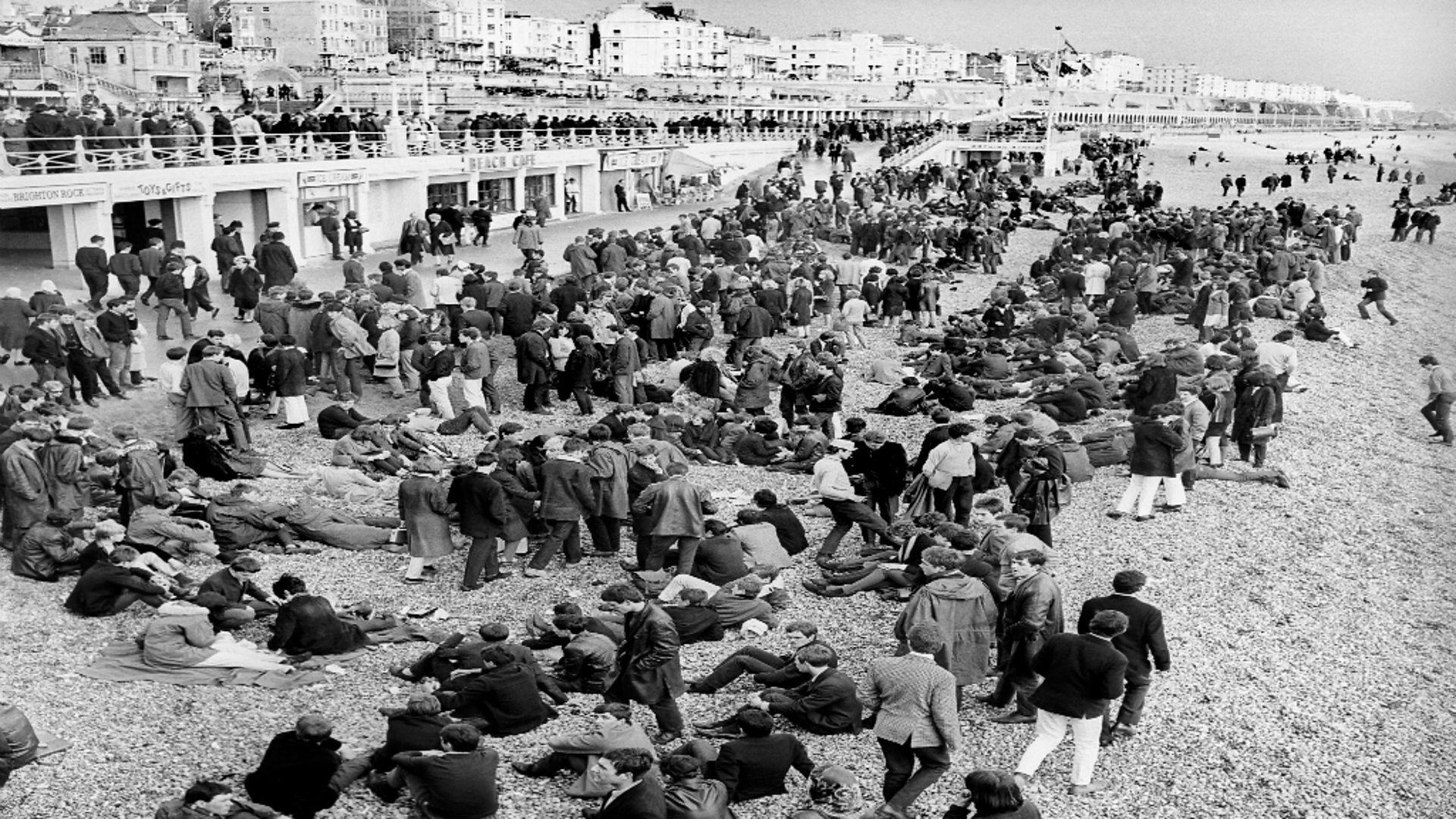
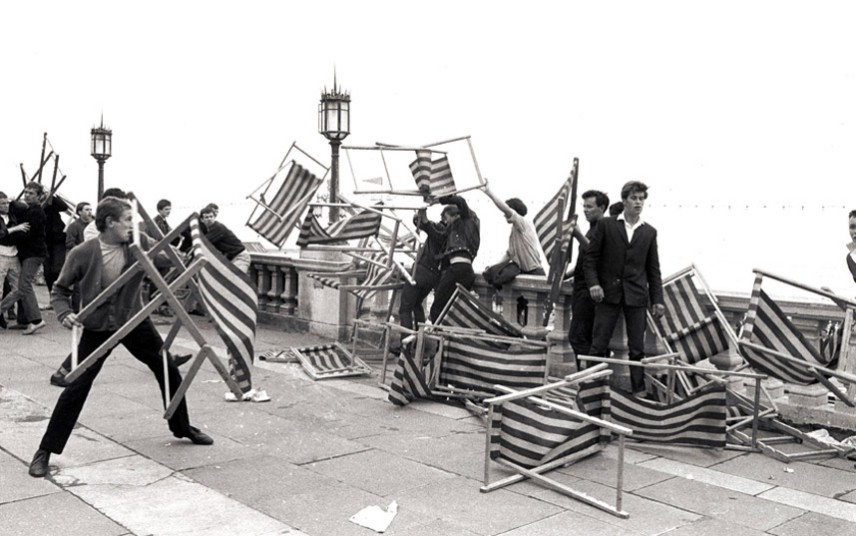
On May 18, 1964, the 1st warm weekend of the calendar year, it came to a head in several seaside communities in England. The worst of the Mod vs. Rocker violence was in Brighton in Sussex, where, as all surviving sources agree, the Mods started it, not the Rockers with what was then the more aggressive reputation. The fighting moved along the coast, to Hastings, which led to the media calling it "the Second Battle of Hastings."

There were also beach and beach-town battles in Margate, Kent; and Clacton, Essex. Newspapers called the groups "vermin" and "louts." The Birmingham Post warned that Mods and Rockers were "internal enemies" who would "bring about disintegration of a nation's character." The members of The Who -- Daltrey, Townshend, bass guitarist John Entwistle and drummer Keith Moon -- were not directly involved in the fighting. But Townsend would write the rock opera Quadrophenia about the events, releasing it in 1973. It became a film in 1979.

The Beatles' film A Hard Day's Night was filmed in March and April 1964, a few weeks before the Brighton violence, but not released until after: July 6 in Britain, and August 11 in America. If Americans had heard about the violence in Brighton at all, they had quickly forgotten about it. In the film, a female reporter asked Ringo, "Are you a Mod or a Rocker?" And with the "cheeky humour" for which the group was then known, he answered, "I'm a Mocker!"

Every so often, as with other fads, the British youth subcultures come back. The Teddy Boys had a revival in the Glam Rock period of the early 1970s. The subsequent rise of punk rock in 1976 brought the Rocker subculture back. The "Northern Soul" movement of the 1980s, centered around Manchester, revived interest in the Mods. And The Stray Cats, an American retro-rock band of the early 1980s, proved more popular in Britain, and, wittingly or not, was another revival of the Rockers.

*

May 18, 1964 was a Monday. Football, basketball and hockey were out of season. And only 4 games were played in major league baseball:

* The New York Mets beat the San Francisco Giants, 4-2 at Candlestick Park in San Francisco. Galen Cisco was supported by a home run from George Altman. Willie Mays came into the game as a defensive replacement, and went 0-for-1.

* The Detroit Tigers beat the Washington Senators, 7-6 at District of Columbia Stadium (later Robert F. Kennedy Stadium) in Washington. Al Kaline went 0-for-5, but Norm Cash and Bill Freehan hit home runs.

* The Philadelphia Phillies beat the Houston Colt .45s, 4-0 at Colt Stadium in Houston. The Colts became the Astros the next season. Jim Bunning allowed only 2 baserunners: He hit Nellie Fox with a pitch in the 1st inning, and gave up a single to Jimmy Wynn in the 5th. He had previously pitched a no-hitter for the Detroit Tigers. A month later, he pitched a perfect game against the Mets, making him only the 2nd pitcher, after Cy Young, to pitch no-hitters in both Leagues.

* And the Pittsburgh Pirates beat the Los Angeles Dodgers, 4-2 at Dodger Stadium in Los Angeles. Steve Blass outpitched Don Drysdale. Roberto Clemente went 3-for-5.

Monday, April 18, 2022

April 18, 1957: Britain Ends National Service, With Unintended Consequences

"Teddy Boys"

April 18, 1957: The United Kingdom of Great Britain and Northern Ireland ends compulsory "national service" for men aged 18 to 21. This involved serving in the armed forces, or in other "vital" positions, such as on farms, in factories, in mines, in forests, in service roles in hospitals.

Britain did not completely "demobilise" as World War II ended in 1945: Those already in the armed forces were given a release class determined by length of service and age. In practice, releases began in June 1945, and the last of the wartime conscripts had been released by 1949. However, urgently needed men, particularly those in the building trades, were released in 1945, although some restrictions on their immediate employment were supposed to be enforced. All women were released at the end of the war.

The National Service Act 1948 streamlined the process of young men serving: From January 1, 1949, healthy males 17 to 21 years old were required to serve in the armed forces for 18 months, and remain on the reserve list for four years. They could be recalled to their units for up to 20 days for no more than three occasions during these four years. Men were exempt from National Service if they worked in one of the three "essential services": Coal mining, farming, and the merchant navy for a period of eight years. If they quit early, they were subject to being called up. Exemption continued for conscientious objectors, with the same tribunal system and categories.

National Service ended gradually from 1957. It was decided that those born on or after October 1, 1939 (thus turning 18) would not be required, but conscription continued for those born earlier whose call-up had been delayed for any reason. In November 1960, the last conscripted men entered service, as call-ups formally ended on December 31, 1960, and the last conscripted servicemen left the armed forces in May 1963.

Britain has had an all-volunteer military ever since, just as America has had with the post-Vietnam ending of the draft in 1973. Both countries have found that having an armed forces staffed entirely by men and women who want to be there works far more effectively.

But having so many more men ages 17 to 21 out on the streets, without an equivalent of America's G.I. Bill to send them to college, led to unintended consequences, including the creation of some subcultures that became nationally infamous, and then world-famous.

This was around the time that England's first rock and roll bands were being formed. It is no coincidence that 1957 was also the year that 17-year-old John Lennon met 15-year-old Paul McCartney in Liverpool; and that, early in 1958, they met 15-year-old George Harrison. By that point, 17-year-old Richard Starkey was already drumming in a band, and would begin calling himself "Ringo Starr" a year earlier.

After The War, young men in delinquent gangs who had adopted Edwardian-era fashion -- in the style of the years from 1901 to 1910, when the King was Edward VII, or "Good Old Teddy" -- were sometimes known as "Cosh Boys" or "Edwardians." On September 23, 1953, the national newspaper the Daily Express shortened "Edwardian Boy" to "Teddy Boy," and the name stuck.

Long coats, high "drainpipe" trousers, bolo ties and suede shoes -- with retroactive irony, sometimes called "beetle crushers" -- became a rebellion against postwar austerity, and, just as American teenagers had begun to be able to afford to indulge in the postwar prosperity by 1955, it became possible in Britain as well, especially after national service ended in 1957. There were also "Teddy Girls," a.k.a. "Judies" (even though King Edward's Queen was named Alexandra), who wore drape jackets, pencil skirts or rolled-up jeans, straw boater hats and espadrille shoes.

On August 24, 1958, white Teddy Boys, angry that black immigrants from Britain's Caribbean territories were taking the jobs their no-longer-draftable selves thought they were entitled to, began assaulting black teenagers in West London, beginning 2 weeks of "the Notting Hill Riots." There were 140 arrests, but no deaths.

By the early 1960s, the fad had ended the way most fads do: The originators grew out of it, and moved on. But 2 new subcultures took the Teddy Boys' place: The Mods and the Rockers. The Rockers were based on motorcycle culture, inspired by Marlon Brando in the 1953 film The Wild One. (Brando played a character named Johnny, which caught John Lennon's attention. And the film included a motorcycle gang named the Beetles. But the Beatles were named as a play on Buddy Holly's band, The Crickets.)
The Rockers wore leather jackets, leather pants or blue jeans, and leather boots, and generally made nuisances of themselves everywhere they went. Their choice of music was that of the early rockers who had toured Britain: Bill Haley, Chuck Berry, Little Richard, Buddy Holly, Eddie Cochran and Gene Vincent. (Cochrane and Vincent had completed a tour of Britain in 1960, and were heading home to London's Heathrow Airport when their driver crashed, killing Cochran and badly injuring Vincent.)

The Rockers were leather-clad slobs. The Mods were different. They dressed up. And instead of big motorcycles like the kind produced in Britain and America, they preferred scooters, small and efficient enough for getting around streets in the countries that were producing them, Italy and France. If they could work in Rome and Paris, it was reasoned, they could work in London. But, what was more, you could show up to work dressed like a Mod, and keep your job. It was "respectable."
Their musical tastes were different as well. They were originally called "mod" because they preferred "modern jazz," instead of "traditional jazz," whose fans became known as "trad." But they also embraced rock and roll, not the harder stuff of Elvis and Chuck Berry, but vocal groups with the black and Italian "doo-wop" sound. 

Pete Townshend, lead songwriter and guitarist for The Who, defined the Mods for Americans in an interview with Rolling Stone magazine for their September 28, 1968 issue:

It was a movement of young people, much bigger than the hippie thing, the underground and all these things. It was an army, a powerful, aggressive army of teenagers with transport. Man, with these scooters and with their own way of dressing.

It was acceptable, this was important; their way of dressing was hip, it was fashionable, it was clean and it was groovy. You could be a bank clerk, man, it was acceptable. You got them on your own ground. They thought, "Well, there's a smart young lad." And also you were hip, you didn't get people uptight. That was the good thing about it.

To be a mod, you had to have short hair, money enough to buy a real smart suit, good shoes, good shirts; you had to be able to dance like a madman. You had to be in possession of plenty of pills all the time and always be pilled up. You had to have a scooter covered in lamps. You had to have like an army anorak to wear on the scooter. And that was being a mod and that was the end of the story.

The Mods seemed like the perfect counterweight to the Rockers and their predecessors, the Teddy Boys. They launched the 1960s culture that became known as "Swinging London." But, soon enough, it would be fists that would be swinging, between the Mods and the Rockers.

On May 18, 1964, the 1st warm weekend of the calendar year, it came to a head in several seaside communities in England. The worst of the Mod vs. Rocker violence was in Brighton in Sussex, where, as all surviving sources agree, the Mods started it, not the Rockers with what was then the more aggressive reputation. The fighting moved along the coast, to Hastings, which led to the media calling it "the Second Battle of Hastings."
There were also beach and beach-town battles in Margate, Kent and Clacton, Essex. Newspapers called the groups "vermin" and "louts." The Birmingham Post warned that Mods and Rockers were "internal enemies" who would "bring about disintegration of a nation's character." The Who were not directly involved, but Townsend would write the rock opera Quadrophenia about the events, releasing it in 1973. It became a film in 1979.

The Beatles' film A Hard Day's Night was filmed in March and April 1964, a few weeks before the Brighton violence, but not released until after: July 6 in Britain, and August 11 in America. If Americans had heard about Brighton at all, they had quickly forgotten about it. In the film, a female reporter asked Ringo, "Are you a Mod or a Rocker?" And with the "cheeky humour" for which the group was then known, he answered, "I'm a Mocker!"

Every so often, as with other fads, the British youth subcultures come back. Teddy Boys had a revival in the Glam Rock period of the 1970s. The subsequent rise of punk rock in 1976 brought the Rocker subculture back. The "Northern Soul" movement of the 1980s, centered around Manchester, revived interest in the Mods. And The Stray Cats, an American retro-rock band, proved more popular in Britain, and, wittingly or not, was another revival of the Rockers.

But the lack of a military draft sometimes combines with a lack of jobs, or a lack of satisfying ones, that has left young people, in Britain as in any other country, with little to do. Punk band The Sex Pistols sang, "No future for you!" in their 1977 song "God Save the Queen."

Soon, right-wing groups like the National Front and the English Defence League, espousing the very bigoted ideals that the last large group of British draftees fought, began recruiting young men, particularly at football matches, knowing that the "hooligan firms" that had begun to form in the late 1968, and seemed to be peaking in the late 1970s, were easy pickings for their rhetoric of camaraderie in Englishness, whiteness, and "Christian"-ness. This helped to make the 1980s the nastiest era in the history of English soccer.

In light of these events, some people have occasionally asked for a return to national service for Britain. In 2009, actor Sir Michael Caine, a British Army veteran of the Korean War, said, "I'm just saying, put them in the Army for six months. You're there to learn how to defend your country. You belong to the country. Then, when you come out, you have a sense of belonging, rather than a sense of violence." In 2015, Prince Harry, an Army veteran of the Afghan phase of the War On Terror, made a call to bring back conscription. 

*

April 18, 1957 was a Thursday. Football was out of season. The NBA season had ended 5 days earlier. The Stanley Cup had been awarded 2 days earlier. These baseball games were played that day:

* The New York Yankees beat the Boston Red Sox, 3-2 at Fenway Park in Boston. It was tied 1-1 going into the 9th. Cliché Alert: Walks can kill you, especially the leadoff variety. Mickey Mantle drew a walk. After 2 outs, Gil McDougald tripled him home, and Elston Howard singled him home. The Sox scored a run in the bottom of the 9th, but Bob Grim shut them down, getting the win in relief of Johnny Kucks. Ted Williams went 2-for-4.

* The New York Giants beat the Philadelphia Phillies, 6-2 at the Polo Grounds. Ruben Gomez outpitched Curt Simmons. Willie Mays went 1-for-3 with a walk.

* The Brooklyn Dodgers beat the Pittsburgh Pirates, 6-1 at Ebbets Field. Sal Maglie, the former Giant ace who never looked right in a Dodger uniform, went the distance for the win. Gil Hodges and Duke Snider hit home runs. Roberto Clemente did not play.

* The Washington Senators beat the Baltimore Orioles, 6-4 at Griffith Stadium in Washington. Brooks Robinson went 0-for-2.

* The Cleveland Indians beat the Detroit Tigers, 8-3 at Briggs Stadium in Detroit. (The ballpark was renamed Tiger Stadium in 1961.) The Tigers' bullpen collapsed in the top of the 11th inning, including allowing the 1st major league home run of an Indians rookie named Roger Maris. Al Kaline went 0-for-5.

* The Chicago White Sox beat the Kansas City Athletics, 6-2 at Comiskey Park in Chicago.

* The Milwaukee Braves beat the Cincinnati Redlegs, 1-0 at Milwaukee County Stadium. (The Reds were called the Redlegs from 1954 to 1958.) Lew Burdette pitched a 6-hit shutout. Hank Aaron hit a home run. Frank Robinson went 1-for-4.

* And the Chicago Cubs beat their arch-rivals, the St. Louis Cardinals, 10-2 at the original Busch Stadium, formerly the last Sportsman's Park. Ernie Banks went 2-for-5 with a walk. Stan Musial went 0-for-3 with a walk.

December 31, 1999 & January 1, 2000: The Millennium

December 31, 1999:  The Millennium arrives. The people of planet Earth survived. At a terrible cost. But we hadn't destroyed ourselves. ...