Showing posts with label romania. Show all posts

Sunday, December 25, 2022

December 25, 1989: Romania Overthrows the Ceaușescus

December 25, 1989: The last domino to fall in this year of revolution in Eastern Europe is Romania. Unlike every other country that overthrew its Communist regime, however, it was not peaceful, and it certainly was not a "bloodless coup." It was closer to the French Revolution of 100 years earlier than to what had happened earlier in the year in Poland, Hungary, Czechoslovakia and East Germany.

Nicolae Ceaușescu was born on January 26, 1918 in Scornicești, Romania, a country then in World War I on the side of the Allies, since it was allied with Russia, which had recently fallen to the Bolsheviks, but had not yet dropped out of the war. It remained a monarchy until World War II, when the right-leaning government allied with the Nazis against the Communist Soviet Union. The Soviets invaded on September 12, 1944, and a "Republic" was proclaimed on December 30, 1947.

Ceaușescu served in the war, and had been a prisoner of the Nazis. In the Republic, he was elected to the Great National Assembly, and became a full member of the Politburo in 1954. He was an ally of Gheorghe Gheorghiu-Dej, who became General Secretary of the Communist Party in 1955, effectively the nation's dictator.

When Gheorghiu-Dej died on March 19, 1965, his successor was not obvious, but Ceaușescu used this to his advantage, since he was liked by Gheorghiu-Dej's other allies and not strenuously opposed by any of them. After 3 days, he emerged as the new leader.

Like Josip Broz Tito of Yugoslavia, both Gheorghiu-Dej and Ceaușescu were "Home Communists," espousing far-left policies domestically, but not actively influencing nearby countries. In 1968, he condemned the Soviet Union's invasion of Czechoslovakia. That caught the attention of Richard Nixon, soon to be elected President of the United States.

On August 2, 1969, Nixon visited Romania, the 1st visit by a President to a Communist country, other than Franklin Roosevelt's meeting with Winston Churchill and Joseph Stalin at the Yalta Conference in 1945. In 1973, Ceaușescu and his wife Elena returned the favor, by visiting America, and meeting with Nixon again.
Left to right: Nicolae and Elena Ceaușescu, Pat and Richard Nixon

But by that point, Ceaușescu had changed, and the West hadn't noticed. In 1971, he visited China, North Vietnam and North Korea. On July 6, 1971, he delivered a speech before the executive committee of the Romanian Communist Party. This quasi-Maoist speech became known as the July Theses, and he announced a crackdown on culture he considered anti-patriotic.

Slowly, but surely, the people began to resist. A coup failed in 1984, and another, which became known as the Brașov Rebellion, failed in 1987. On November 20, 1989, as the Communist Parties of Eastern Europe were falling all around him, Ceaușescu was re-elected, and made a speech denouncing these revolutions.

Revolution broke out in Timișoara, the largest city in the west of the country. Copying the freedom fighters of 1956 in neighboring Hungary, demonstrators cut the Communist symbols out of their national flags, and carried the "liberated" flags through the streets. They were fired upon, and many died, but it didn't stop them.

Ceaușescu left for a state visit to Iran on December 18. Hearing that things had gotten worse in his absence, he figured he'd better get back, or he might be thrown out of power before he could. He returned on the 20th, and, on the 21st, delivered a speech from the balcony of the former Royal Palace in Bucharest, at this time the headquarters of the Central Committee of the Communist Party.

He denounces the demonstrators of Timișoara as "fascist agitators." Just 8 minutes into the speech, many in the crowd of 100,000 began booing him, and chanting, "Timișoara!" His wife, Elena, herself now unpopular, yelled, "Quiet!" They booed her, too: She had become known as "The Ogeress." The first couple had to be taken back inside, for fear of something happening to them.

It did. Hearing on December 22 that Defense Minister Vasile Milea had committed suicide rather than be taken by revolutionaries, the Ceaușescus escaped by helicopter. The Army, which had abandoned him, forced the helicopter down in Târgoviște.

On Christmas Day, December 25, 1989, the Ceaușescus were tried before a court convened in a small room on orders of the National Salvation Front, Romania's provisional government. They faced charges including illegal gathering of wealth and genocide -- this following reports that, under Ceaușescu's orders, the Army had killed 46,000 people in the last week. He denied the court's authority to try him, but they were both found guilty and sentenced to death.

They demanded to be allowed to die together. The soldiers agreed to this, but not to their refusal to be tied up. A committed Communist to the end, Nicolae Ceaușescu's last words were a singing of "The Internationale." They were executed by a firing squad. Nicolae was 71 years old, Elena 73.

The Ceaușescus' dead bodies were displayed on national television, and the images were shown around the world. They had received the same level of mercy that they had given. At least their corpses were not hung upside-down in a public square like Benito Mussolini and his mistress Clara Petacci in Milan in 1945.
But Italy's leading newspaper, the Evening Courier,
had no problem putting the dictator's dead body
on its front page.

They had 3 children. Their elder son, Valentin, became a physicist. Their daughter, known to the country as "Comrade Zoia," became a mathematician. Neither was involved in politics. Their younger son, Nicu, was groomed as his father's heir apparent in government, and was already a county leader by 1987. He was known to be an alcoholic and a rapist -- a sadist like his friend, the heir apparent in Iraq, Uday Hussein -- and was imprisoned after the Revolution. He was released in 1992, for health reasons, and his drinking caught up with him in 1996. He was only 45.  

*

December 25, 1989 was a Monday. This was also the day that former baseball manager Billy Martin was killed in a truck crash. I have a separate entry for this event.

Baseball was out of season. There was 1 college football bowl game that day. Number 22 Michigan State beat Number 25 Hawaii, 33-13, in the Aloha Bowl, on Hawaii's home field, Aloha Stadium in Honolulu.

On ABC Monday Night Football, the Minnesota Vikings beat the Cincinnati Bengals, 29-21 at the Metrodome in Minneapolis.

The NHL does not schedule games for Christmas Day. The NBA does, and there was 1: The Atlanta Hawks beat the Cleveland Cavaliers, 115-104 at The Omni in Atlanta.

Monday, October 24, 2022

October 24, 1941: The Odessa Massacre

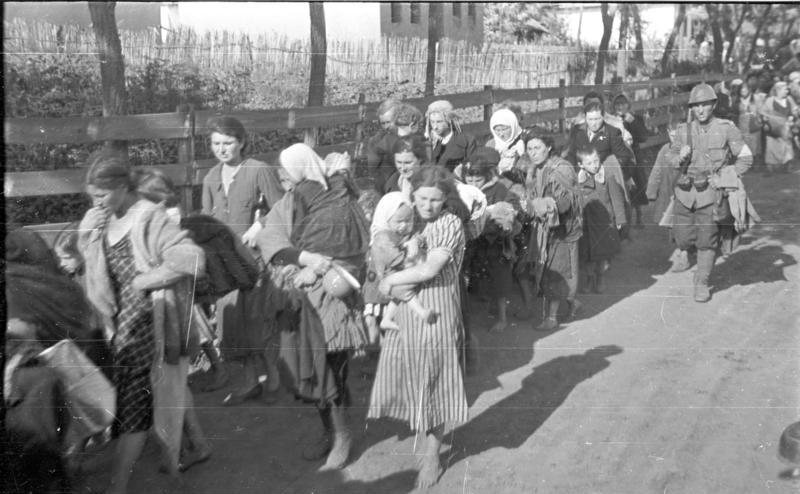
October 24, 1941: Romanian troops, overseen by the Nazis, kill between 25,000 and 34,000 Jews in Odessa, in the Ukraine. It was the biggest massacre of the Holocaust to that point.

Before World War II, Odessa had a large Jewish population of approximately 200,000, or 30 percent of the city's total population. By the time the Romanians had taken the city on October 16, following a 2-month seige, between 80,000 and 90,000 Jews remained, the rest having fled or been evacuated by the Soviets. As the massacres occurred, Jews from surrounding villages were interned in Odessa and Romanian concentration camps set up in the surrounding areas.

The order was given by Lieutenant Colonel Mihail Niculescu, of the Jandarmeria Română, Romania's national police force. (It is still called that today.)

I can find no record of what happened to Niculescu after World War II, whether he was punished for his crimes. But since Romania was taken over by Communists, it seems likely that he did not live long thereafter.

*

October 24, 1941 was a Friday. Baseball season ended with the New York Yankees winning the World Series over the Brooklyn Dodgers, 18 days earlier. Football was in midweek. The NBA hadn't been founded yet. And the NHL season started 8 days later. So there were no scores on this historic day.

Tuesday, July 19, 2022

July 19, 1976: Nadia Comăneci Is Perfect

July 19, 1976: For the 1st time, a gymnast scores a perfect 10 in Olympic competition. Her name was Nadia Comăneci, she was 14 years old, and she was from Onești, Romania.

For people who only follow gymnastics at Olympic time, this may have been a surprise. For people who follow the sport regularly, it was not. The previous year, at the World Championships in Skien, Norway, she had won 4 Gold Medals: In the All-Around competition, the uneven bars, the balance beam and the vault.

In March 1976, she competed in the American Cup at Madison Square Garden in New York. She achieved the 1st perfect 10s that any gymnast had ever received, in any sanctioned competition, for her vault in the preliminary stage and her floor exercise in the final, leading to her winning the all-around.

So when the Olympics were held in Montreal, Quebec, Canada, she was, despite her age, fully ready for the world stage. She scored 7 perfect 10s: 4 on the uneven bars, 3 on the balance beam. She ended up winning 3 Gold Medals: The All-Around, the uneven bars and the balance beam; a Silver Medal, for Romania in the Team competition; and a Bronze Medal, in the Floor Exercise. She had totally stolen the spotlight from the gymnastic heroine of the previous Olympics, Ukrainian star Olga Korbut, who nonetheless helped the Soviet team win the team Gold Medal.

For its Olympic coverage, ABC used an instrumental titled "Cotton's Dream" as background music for highlights of her performances. She never used it as performance music, but it became known as "Nadia's Theme." Ironically, the song was already being used as the theme song for a show on another network, CBS' soap opera The Young and the Restless. The composers, Barry De Vorzon and Perry Botkin Jr., released it under their own names, under the title of "Nadia's Theme," and it hit Number 8 on the U.S. charts.

Nadia became one of the biggest stars in the world, and a big propaganda tool for her home country and its Communist government. In 1980, she competed in the Olympics again, in Moscow, winning Golds in the balance beam and the floor exercise, and Silvers in the team and the all-around.

On a 1981 tour of the U.S. by Romanian gymnasts, she met American gymnast Bart Conner for the 3rd time -- but, now being 19, this was the 1st time she really noticed him. Her coaches, Béla and Márta Károlyi, defected from the tour. With typical Communist paranoia, the Romanian government kept her under tight control. While they did not join the Warsaw Pact boycott of the 1984 Olympics in Los Angeles, they only let her go as an observer, not a competitor. Conner was part of the U.S. team that won the men's Gold Medal.

On November 27, 1989, about a month before the revolution that finally toppled and executed dictator Nicolae Ceaușescu, Nadia was part of a group of Romanians that crossed the border at Cenad, into Hungary, made their way to Austria, and got on a plane to America. (Just 1 month later, on Christmas Day, rebels executed Ceaușescu and his wife, and Romania was free. But she has no regrets about her timing.)

She settled in Oklahoma, teaching at Conner's gymnastics school. In 1996, they went to Romania together for their wedding, and she was welcomed back as a national hero. Their son Dylan was born in 2006. As of July 19, 2022, they are still together.

*

July 19, 1976 was a Monday. After an achievement like Nadia's, any other sporting event held that day would have been a bit anticlimactic. But these Major League Baseball games were played that day:

* The New York Yankees beat the Chicago White Sox, 3-2 at Comiskey Park in Chicago. Thurman Munson led off the top of the 9th with a double, and when Chris Chambliss tried to bunt him over, 2nd baseman Jack Brohamer threw the ball away, and Munson scored the winning run. Ed Figueroa was the winning pitcher.

* The New York Mets lost to the Atlanta Braves, 4-2 at Shea Stadium.

* The Houston Astros beat the Montreal Expos, 3-1 at Jarry Park in Montreal.

* The Cincinnati Reds beat the Pittsburgh Pirates, 4-2 at Three Rivers Stadium in Pittsburgh. Pete Rose went 3-for-4, and Johnny Bench went 1-for-4 with an RBI. Bill Robinson hit 2 homers, and Willie Stargell went 0-for-4.

* A doubleheader was split at Cleveland Municipal Stadium. The Cleveland Indians won the opener, 3-2. The Oakland Athletics won the nightcap, 10-3. Frank Robinson, the Indians' manager and not yet retired as a player, did not put himself in either game.

* The California Angels swept a doubleheader from the Milwaukee Brewers at Milwaukee County Stadium, 4-2 and 6-1. Hank Aaron went 0-for-4 in the 1st game, and did not play in the 2nd game.

* The Minnesota Twins beat the Detroit Tigers, 6-5 at Metropolitan Stadium in the Minneapolis suburb of Bloomington, Minnesota. Rod Carew went 1-for-3 with a walk.

* The Baltimore Orioles beat the Kansas City Royals, 4-3 at Royals Stadium (now Kauffman Stadium). Reggie Jackson hit a home run. Brooks Robinson did not play. George Brett went 4-for-5 with an RBI.

* The Texas Rangers beat the Boston Red Sox, 4-3 at Arlington Stadium in the Dallas suburb of Arlington, Texas.  Carl Yastrzemski went 1-for-4. Toby Harrah singled home the winning run in the bottom of the 11th inning.

* The San Diego Padres beat the Chicago Cubs, 3-2 at San Diego Stadium (later renamed Jack Murphy Stadium and Qualcomm Stadium).

* The Philadelphia Phillies beat the Los Angeles Dodgers, 5-3 at Dodger Stadium in Los Angeles.

* And the San Francisco Giants beat the St. Louis Cardinals, 5-3 at Candlestick Park in San Francisco.

Also, English actor Benedict Cumberbatch was born. In the Marvel Cinematic Universe, he played Dr. Strange. Robert Downey Jr. played Iron Man. Each of them had played a version of Sherlock Holmes. I think the Marvel writers missed an opportunity: Neither actor had the chance in any Marvel film to say to the other, "No shit, Sherlock!"

Wednesday, June 22, 2022

June 22, 1941: The Nazis Invade the Soviet Union

June 22, 1941: Nazi Germany invades the Soviet Union, breaking the Molotov-Ribbentrop Pact, a non-aggression treaty that the countries had signed nearly 2 years earlier.

It was called Operation Barbarossa, named for Frederick I, the Holy Roman Emperor from 1155 until his death in 1190. He was called Kaiser Rotbart, German for "Emperor Red Beard" -- in Latin, then the dominant language of Europe, "Caesar Barbarossa." He seemed superhuman until his death in the Third Crusade.

The Holy Roman Empire of 800 to 1806, founded by Charlemagne (who was more French than German), was called the First Reich by modern Germans, and it lasted over 1,000 years. Following the unification of Germany in 1871, the Second Reich was proclaimed, but it only lasted until defeat in World War I in 1918, 47 years later.

When Adolf Hitler was awarded the title and powers of the Chancellor of Germany in 1933, he proclaimed a Third Reich, and called it "the Thousand-Year Reich," aiming for the same staying power as Charlemagne's empire.

It was said of Soviet Premier Joseph Stalin that he trusted one man in his life, and it was Hitler. It may have been the 2nd-greatest mistake any leader of any nation on planet Earth has ever made.

The 1st was Hitler breaking that trust. Had he not done so, he could have kept most of his troops on the Western Front, and repelled any Allied invasion of the European continent, and maintained his hold on it indefinitely.

Instead, with enough never being enough for him, Hitler opened up an Eastern Front, with the aim of not just conquering the Slavic peoples, whom he considered racially inferior, but taking the Soviet oil reserves in the Caucasus to fuel his empire.

Instead, the Soviets dug in, and fought like their country depended on it -- which it did. They managed to stall the Nazi advance on the doorstep of their capital of Moscow. With victory in the Battle of Stalingrad (a city now named Volgograd), lasting from August 23, 1942 to February 2, 1943, the tide of war began to turn.

Hitler made the same mistake that Napoleon Bonaparte made in 1812: Trying to conquer Russia, and still having your troops there in the Winter, is a bad idea. You know how, in the 21st Century, American right-wingers call liberals "snowflakes"? Well, you know what stopped fascists in the 1940s -- on both the Eastern Front and the Western Front (the Battle of the Bulge)? Snowflakes. Lots and lots of snowflakes.

Speaking of which: Just 6 months after this, America joined the war, on the side of the British Empire (including Canada and Australia) and the exiled troops of France and other conquered nations. The Allies pushed the Nazis out of North Africa and Italy. On June 6, 1944, Allied troops invaded France. In the Spring of 1945, the Allies closed in from the West, the Soviets from the East. Hitler killed himself on April 30, and the Nazis surrendered on May 8.

The Soviets' contribution to the war, something Americans did not want to admit during the subsequent "Cold War," was incalculable. One thing that was calculated was the number of lives lost to the Soviet Union, military and civilian combined: Around 27 million. It is no wonder that they call it not "World War II," but "The Great Patriotic War." That defense, reversal and conquest -- not their achievements in spaceflight -- was, to borrow the phrase of Britain's Prime Minister Winston Churchill, their finest hour.

Bernard Montgomery, who would become Britain's top military leader of World War II, would write, "Rule 1, on page 1 of The Book of War, is: 'Do not march on Moscow.' Various people have tried it, Napoleon and Hitler, and it is no good. That is the first rule. I do not know whether your Lordships will know Rule 2 of war. It is: 'Do not go fighting with your land armies in China.' It is a vast country, with no clearly defined objectives."

On the same day that the Nazis invaded, they began a rapid escalation of the Holocaust in Lithuania: By the end of the year, they would kill nearly 200,000 Jews in that formerly (and futurely) Soviet-controlled country, about 95 percent of its Jewish population. That population had once included maternal ancestors of mine.

And on June 28, the Nazis would begin the Iași pogrom, killing over 13,000 Jews in Romania, a nation from which a significant portion of Jews already in America had come. The comedian Zero Mostel once said, "Romanian-Jewish cooking has killed more Jews than the Nazis." Another comedian, Buddy Hackett, backed that up by visiting the infirmary on his first night in the U.S. Army, telling the doctor, "The fire's gone out!" It was his first time away from his mother's cooking: He said he didn't know what heartburn was until he didn't have it anymore.

*

June 22, 1941 was a Sunday. CBS News TV journalist Ed Bradley was born on this day.

It was the off-season for the NFL and the NHL, and the NBA wasn't founded until 1946. But, being a Sunday, there was a full slate of Major League Baseball games, including doubleheaders:

* The New York Yankees beat the Detroit Tigers, 5-4 at the old Yankee Stadium. This was the 35th game of Joe DiMaggio's hitting streak, which would reach a record that still stands: 56 games. He and Red Rolfe hit home runs in support of Red Ruffing.

Rolfe's home run in the bottom of the 9th tied the game. Bobo Newsom was rattled by this, and subsequently hit Tommy Henrich with a pitch, gave up a double to DiMaggio, walked Bill Dickey intentionally, and walked Joe Gordon unintentionally to force Henrich home with the winning run. Cliché Alert: Walks can kill you.

* The New York Giants swept a doubleheader from the St. Louis Cardinals at Sportsman's Park in St. Louis. The Jints won the 1st game 4-3, and the 2nd game 3-2.

* The Brooklyn Dodgers swept a doubleheader from the Cincinnati Reds at Crosley Field in Cincinnati. The 1st game went 16 innings. Pete Reiser led off the top of the 16th with a single, and reached 3rd base when Lew Riggs' bunt was mishandled. Reiser then scored on Dixie Walker's groundout, and the Brooks were 2-1 winners. Dem Bums took the 2nd game 3-2.

* A doubleheader was split at Fenway Park in Boston. The Boston Red Sox won the 1st game 7-5, and the St. Louis Browns won the 2nd game 12-3.

* A doubleheader was split at Shibe Park in Philadelphia. Owner-manager Connie Mack must have forgotten to tell his Philadelphia Athletics that you gotta come out of the clubhouse to play the ballgame, because they lost the 1st game to the Chicago White Sox, 14-0. Three runs in the 2nd inning and 7 in the 3rd put the game away. Ted Lyons pitched a 7-hit shutout. But the A's got serious in the 2nd game, and won it 3-0. Phil Marchildon pitched a 5-hit shutout.

* The Cleveland Indians beat the Washington Senators, 6-0 at Griffith Stadium in Washington. Bob Feller pitched a 7-hit shutout.

* A doubleheader was split at Forbes Field in Pittsburgh. The Pittsburgh Pirates scored 4 runs in both games. In the 1st game, it was enough, as they beat the Philadelphia Phillies 4-1. It was not enough in the 2nd game, as the Phils won 7-4.

* And the Boston Braves swept a doubleheader from the Chicago Cubs at Wrigley Field in Chicago. The Braves won the 1st game 6-5, and the 2nd game 3-2. 

Saturday, February 12, 2022

February 12, 1931: "Dracula" Premieres

February 12, 1931: Dracula premieres, based on the 1897 novel by Bram Stoker. Having already played the role of Count Dracula, the nobleman/vampire of the Transylvania region of Romania, on stage, Hungarian actor Bela Lugosi played him again, and became a legend. Directed by Tod Browning, the film tells the tale of Dracula coming to England in hopes of extending his dominion through the British Empire.

The film establishes several myths about vampires in the public consciousness: They can only come out at night, sleeping in a coffin in the daytime to protect them from sunlight, biting their victims on the neck (easier to get blood that way), shapeshifting (especially turning into a bat, although Dracula also turns into a wolf), great strength, hypnotism, and, especially deadly, being charming and hypnotic enough to fool women into desiring him. (In times to come, female vampires would have this effect on men -- and there would even be a subgenre of lesbian vampire films.)

The film also establishes some vampire weaknesses, in addition to the preceding mention of sunlight: Garlic, wolfsbane, crucifixes, being revealed through the fact that they have no reflection in a mirror, being unable to enter a house unless they are invited to do so, and, most of all, the ability to kill them by driving a wooden stake through the heart.

(In some versions of vampire lore, this is not enough: Staking them paralyzes them, but leaves them in a kind of "living death" even beyond their traditional "undead" status. In order to truly end them, their heads must be cut off. Some versions go even further than this: Their bodies must be cremated. Every once in a while, including in the 10 Hammer Films from 1958 to 1976 that starred Christopher Lee, even this turns out not to be enough, as they can still be reconstituted.)

During the Great Depression, as with gangster movies, monster movies preyed on people's fears and anxieties. Later in 1931, the Boris Karloff version of Frankenstein would premiere. Later in the 1930s, there would be The Mummy, King Kong, The Invisible Man, Bride of Frankenstein, Son of Frankenstein, and many more horror movies, including sequels to Dracula starring Lugosi, who, sadly, got typecast.

The name "Dracula" is taken from Vlad III, Voivode of Wallachia, who defended what is now Romania and Hungary from Muslim invaders in the mid-15th Century, and is modern Romania's greatest hero. This is in spite of what he did to his enemies, which led to his historical nickname, "Vlad the Impaler." His father, Vlad II, was known as Drakul, which can mean either "Devil" or "Dragon." So "Drakula" means "Son of the Devil" or "Son of the Dragon." George R.R. Martin, who mines medieval history for his A Song of Ice and Fire books, probably took this into consideration for House Targaryen and its association with dragons.
Vlad Drakula, "the Impaler"

However, aside from the name, and the fact that Vlad the Impaler killed thousands of people, there is no real connection between him and the fictional Count. There is no physical resemblance, and no military background for the Count was hinted at in either Stoker's novel or the film.

And Bran Castle, in the Transylvanian city of Brașov, has only been marketed as "Castle Dracula" since 1997, to aid in Romania's conversion from Communism to capitalism. It bears little resemblance to the castle described by Stoker, and it has only a minor connection to Vlad the Impaler. It has no more to do with Dracula (real or fictional) than cherry trees have to do with George Washington.

A 2019 episode of the YouTube series Epic Rap Battles of History featured "Nice" Peter Shukoff playing Dracula, with hair and makeup designed to make him look like the Christopher Lee version; and "Epic" Lloyd Ahlquist playing Vlad the Impaler.

*

February 12, 1931 was a Thursday. Baseball and football were out of season. The NBA hadn't been founded yet. But there were 2 games played in the NHL. The New York Rangers played the Detroit Falcons to a 1-1 tie at the Olympia Stadium in Detroit. The Falcons became the Red Wings for the 1932-33 season.

And the Chicago Black Hawks beat the Ottawa Senators, 3-2 at the Ottawa Auditorium. The Senators moved to become the St. Louis Eagles in 1934, and folded after 1 season.

Saturday, January 8, 2022

January 8, 1918: Woodrow Wilson's Fourteen Points

January 8, 1918: President Woodrow Wilson delivers his State of the Union Address. Nine months earlier, he had asked Congress for a Declaration of War on Imperial Germany. Now, in another Joint Session of Congress, he offers a plan for peace after the war.

He declared fourteen points, which he regarded as the only possible basis of an enduring peace:

I. Open covenants of peace, openly arrived at, after which there shall be no private international understandings of any kind but diplomacy shall proceed always frankly and in the public view. In other words, the nations of the world should not negotiate treaties in secret.

II. Absolute freedom of navigation upon the seas, outside territorial waters, alike in peace and in war, except as the seas may be closed in whole or in part by international action for the enforcement of international covenants. This one was done in reaction to German attacks on Allied ships, including the 1915 sinking of the RMS Lusitania.

III. The removal, so far as possible, of all economic barriers and the establishment of an equality of trade conditions among all the nations consenting to the peace and associating themselves for its maintenance. This, sort-of, predicted the European Common Market, which led to the European Union.

IV. Adequate guarantees given and taken that national armaments will be reduced to the lowest point consistent with domestic safety.

V. A free, open-minded, and absolutely impartial adjustment of all colonial claims, based upon a strict observance of the principle that in determining all such questions of sovereignty the interests of the populations concerned must have equal weight with the equitable government whose title is to be determined.

VI. The evacuation of all Russian territory and such a settlement of all questions affecting Russia as will secure the best and freest cooperation of the other nations of the world in obtaining for her an unhampered and unembarrassed opportunity for the independent determination of her own political development and national policy and assure her of a sincere welcome into the society of free nations under institutions of her own choosing; and, more than a welcome, assistance also of every kind that she may need and may herself desire. The treatment accorded Russia by her sister nations in the months to come will be the acid test of their good will, of their comprehension of her needs as distinguished from their own interests, and of their intelligent and unselfish sympathy.

VII. Belgium, the whole world will agree, must be evacuated and restored, without any attempt to limit the sovereignty which she enjoys in common with all other free nations. No other single act will serve as this will serve to restore confidence among the nations in the laws which they have themselves set and determined for the government of their relations with one another. Without this healing act the whole structure and validity of international law is forever impaired.

VIII. All French territory should be freed and the invaded portions restored, and the wrong done to France by Prussia in 1871 in the matter of Alsace-Lorraine, which has unsettled the peace of the world for nearly fifty years, should be righted, in order that peace may once more be made secure in the interest of all.

IX. A readjustment of the frontiers of Italy should be effected along clearly recognizable lines of nationality.

X. The people of Austria-Hungary, whose place among the nations we wish to see safeguarded and assured, should be accorded the freest opportunity to autonomous development.

XI. Romania, Serbia and Montenegro should be evacuated; occupied territories restored; Serbia accorded free and secure access to the sea; and the relations of the several Balkan states to one another determined by friendly counsel along historically established lines of allegiance and nationality; and international guarantees of the political and economic independence and territorial integrity of the several Balkan states should be entered into.

XII. The Turkish portion of the present Ottoman Empire should be assured a secure sovereignty, but the other nationalities which are now under Ottoman rule should be assured an undoubted security of life and an absolutely unmolested opportunity of autonomous development, and the Dardanelles should be permanently opened as a free passage to the ships and commerce of all nations under international guarantees.

XIII. An independent Polish state should be erected which should include the territories inhabited by indisputably Polish populations, which should be assured a free and secure access to the sea, and whose political and economic independence and territorial integrity should be guaranteed by international covenant. This "access to the sea" became "The Polish Corridor," with the former German port city of Danzig, which became the Polish port city of Gdańsk, which eventually became the flashpoint of Poland's struggle to free itself from Soviet control.

XIV. A general association of nations must be formed under specific covenants for the purpose of affording mutual guarantees of political independence and territorial integrity to great and small states alike. This became the League of Nations.

As a major public statement of war aims, it became the basis for the terms of the German surrender at the end of the war. After the speech, House worked to secure the acceptance of the Fourteen Points by Allied leaders. The report was made as negotiation points, and the Fourteen Points were later accepted by France and Italy on November 1, 1918.

But there were doubts about the Fourteen Points. Prime Minister Georges Clemenceau of France, who would lead France's part in the peace negotiations, said, "The good Lord had only ten!" meaning the Ten Commandments, and humanity had managed to make a mess of those.

*

January 8, 1918 was a Tuesday. Baseball and football were out of season. Professional basketball barely existed. This was the 1st season of the NHL, but no games were scheduled. So there were no scores on this historic day.

December 31, 1999 & January 1, 2000: The Millennium

December 31, 1999:  The Millennium arrives. The people of planet Earth survived. At a terrible cost. But we hadn't destroyed ourselves. ...