Showing posts with label chicago. Show all posts

Friday, December 30, 2022

December 30, 1903: The Iroquois Theatre Fire

December 30, 1903: The Iroquois Theatre, which had only opened on November 23, catches fire in Chicago's Loop. A total of 602 deaths are attributed to the disaster.

The 1,602-seat theater was hosting a production of the British musical Mr. Blue Beard, starring Eddie Foy, then second only to George M. Cohan among American musical stars. At about 3:15 PM shortly after the beginning of the 2nd act, 8 men and 8 women were performing the song "In the Pale Moonlight,", with the stage illuminated by blue-tinted spotlights to suggest a night scene. Sparks from an arc light ignited a muslin curtain, possibly as a result of an electrical short circuit, although the lamp operator, William McMullen, testified that the lamp was placed too close to the curtain but stage managers failed to offer a solution when he reported the problem.

The main entrance, at 24 West Randolph Street, was the only way into and out of the theater for patrons, a tremendous fire hazard in a city whose "Great Fire" was only 32 years earlier. It was later alleged that fire inspectors were bribed into looking the other way, with free tickets. There were doors for crew, but they were locked. Frank Houseman and Charlie Dexter, both of whom had played for the baseball team recently renamed the Chicago Cubs, forced the doors open, and probably saved some lives.

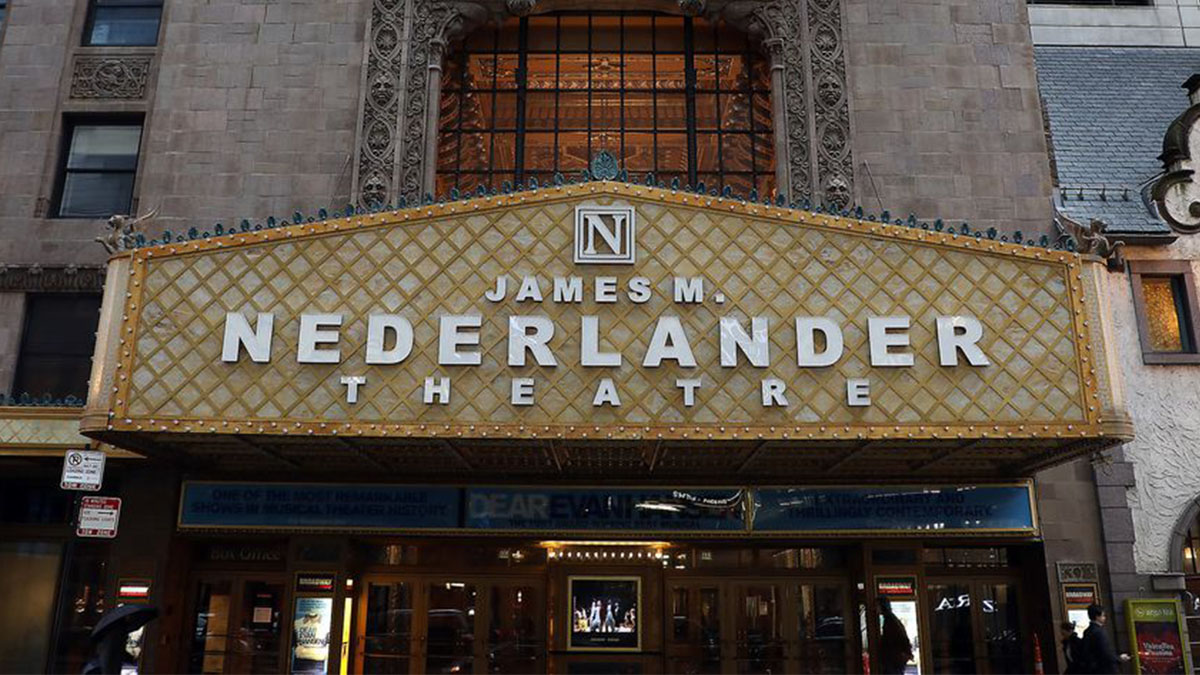
The building was saved, and reopened 9 months later, as Hyde & Behman's Music Hall. The building later reopened as the Colonial Theater, which was demolished in 1925 to make way for the Oriental Theatre, which was later renamed the James M. Nederlander Theatre, and still carries that name today.
The Iroquois Theatre Fire remained the deadliest single-building fire in American history, until the terrorist destruction of the original World Trade Center in 2001.

*

December 30, 1903 was a Wednesday. Baseball was out of season. No college football games were played. And basketball and hockey did not yet exist on a professional level. So there were no scores on this historic day.

Monday, December 26, 2022

December 26, 1944: "The Glass Menagerie" Premieres

December 26, 1944: The Glass Menagerie premieres at the Civic Opera House in Chicago, catapulting its author, Thomas "Tennessee" Williams to stardom.

Eddie Dowling played Tom Wingfield, the author's counterpart, who supports his family by working in a shoe warehouse in St. Louis. Julie Haydon played Laura, Tom's sister, a mentally fragile teenage girl with a limp, who is afraid to leave the house. Her collection of glass animals gives the play its title.

Laurette Taylor plays Amanda, their mother, a once-rich native of a Mississippi plantation who has come to hate her children as much as her poverty. And Anthony Ross plays Jim O'Connor, Laura's "gentleman caller," a high school classmate of Tom's who now works in the same warehouse, as his family has also hit hard times.

Tom begins the play by telling the audience that the events are based on his memory, so he is what would now be called "an unreliable narrator." Given that Williams, like William Faulkner, was a Southern fabulist, this is not surprising. The gay subtext of Williams' stories, especially this one and Cat On a Hot Tin Roof, add to this.

The play moved to Broadway, and opened on March 31, 1945. It's been filmed twice, with the respective roles as follows: In 1950, with a happier ending that Williams didn't like (Laura loses her limp following her date with Jim, and now has a positive outlook), with Arthur Kennedy, Jane Wyman, Gertrude Lawrence and Kirk Douglas; and in 1987, with John Malkovich, Karen Allen, Joanne Woodward (wife of its director, Paul Newman) and James Naughton.

It's also been done for television twice: In 1966 on CBS, with Hal Holbrook, Barbara Loden, Shirley Booth and Pat Hingle; and in 1973 on ABC, with Sam Waterston, Joanna Miles, Katharine Hepburn and Michael Moriarty.

Built in 1929, the Civic Opera House in Chicago still stands, and with 3,276 seats, it is the 2nd-largest theater in North America that regularly hosts operas, behind the Metropolitan in New York's Lincoln Center.

*

December 26, 1944 was a Tuesday. This was also the day the U.S. relief troops arrived, turning the tide of the Battle of the Bulge in World War II. And Weather Underground founder Bill Ayers was born.

Baseball was out of season. Football season was over, except for the college bowl games on New Year's Day. The NBA hadn't been founded yet. And the NFL had no games scheduled. Therefore, there were no scores on this historic day.

Sunday, December 25, 2022

December 25, 1940: Tommy Lawton's Christmas Doubleheader

Tommy Lawton

December 25, 1940: On this Christmas Day, a Wednesday, South Side Park burns down in Chicago. As far as anyone knows, the fire is not purposely set. It was the 1st home of the American League's Chicago White Sox (1901 to 1910), and of the Negro Leagues' Chicago American Giants (1910 to 1940). The American Giants won 7 Pennants while playing there, the White Sox 2.
There were 3 games played in the NHL. The New York Rangers played the Chicago Black Hawks to a tie, 3-3 at Madison Square Garden. The New York Americans lost to the Boston Bruins, 8-1 at the Boston Garden. And the Detroit Red Wings beat the Toronto Maple Leafs, 3-2 at the Olympia Stadium.
Also on this day, under the wartime conditions of depleted rosters, Tommy Lawton plays for Everton against Liverpool at Anfield in the morning. Liverpool win, 3-1. Then he is asked to play as a guest player for Merseyside club Tranmere Rovers at nearby Cheshire club Crewe Alexandra in the afternoon. As he recalled, "The Tranmere people came into the dressing room, and asked if anyone wanted to play, as they were two men short. I said, 'Go on, I'll help you out.' And I did."
He didn't help much: Crewe won the match, 2-1. Still, on Christmas Day 1940, Lawton played a full 90 minutes in the afternoon, after having already done so in the morning. Given the heavy leather balls and ragged pitches (especially in Winter) of the era, this may qualify as a Christmas miracle.
Just 4 days after Christmas, the Luftwaffe bombed the Rolls-Royce factory in Crewe, which had been making Spitfire planes for the Royal Air Force.
Also on this day, Arsenal lose 4-2 away to West Ham United. They finished 4th in the Southern Regional, the Hammers 2nd, and Crystal Palace of Southeast London won. 

Monday, December 12, 2022

December 12, 1920: The 1st NFL Champions

Fritz Pollard (left) and Paul Robeson

December 12, 1920: The Akron Pros and the Decatur Staleys play to a 0-0 tie at Cubs Park in Chicago. This was the last game of the season for each team. The Pros finished with a record of 8-0-3, while the Staleys finished 10-1-2. This made the Pros the Champions of the American Professional Football Association in its 1st season. In 1922, the APFA would be renamed the National Football League. So the Akron Pros were the 1st-ever NFL Champions.

The Pros also had the 1st black head coach in any major league sport -- if, that is, the APFA could be defined as "major league." It would be many years before the NFL could be taken seriously as such. Frederick Douglass "Fritz" Pollard coached the Pros, and was also their star end, making the 1st All-Pro team. Also making it from Akron were fullback Andrew "Rip" King, guards Alf Cobb and Brad Tomlin, and end Bob Nash.

The Pros, playing their home games at League Park in Akron, Ohio, didn't lose a game. The blemishes on their record were ties: Against the Cleveland Tigers, at the Cleveland Indians' League Park on November 7; against the Buffalo All-Americans, at Olympic Park in Buffalo on December 5; and this game against the Staleys.
League Park, Akron

Not on the Pros in this season, but joining them for 1921, was Paul Robeson. A star at Rutgers, he impressed Walter Camp, the former Yale coach who created the concept of the All-America team, to the point where Camp called him the best defensive end he'd ever seen. When Camp made his all-time All-America team in 1920, he named Robeson to it.

But Robeson had his mind on bigger things than professional sports. He played for the Pros in 1921, and moved with Pollard to the Milwaukee Badgers in 1922. Robeson then became a lawyer, a singer, an actor, and perhaps the biggest civil rights advocate of his time.

Camp called Pollard, a Chicago native who starred at Brown University in Providence, Rhode Island, "one of the greatest runners these eyes have ever seen," moved around football a bit, last playing in 1926 and last coaching in 1928. Without him, the Pros folded after the 1926 season. He died in 1986, and was elected to the Pro Football Hall of Fame in 2005.

The Staleys were a "company team" (what British soccer fans would call a "works side"), working for the A.E. Staley Starch Company of Decatur, Illinois. The team was also coached by one of its ends, who was also a co-owner: George Halas, who had played at the University of Illinois. Their membership on the 1st All-Pro team included Halas, end Guy Chamberlin, tackles High Blacklock and Bert Ingwerson, guard Ross Petty, center George Trafton, and halfback Ed Sternaman.

The 1st game for this historic sports franchise came on October 3, against the Moline Universal Tractors, a team that never entered the NFL, at Staley Field in Decatur. In front of an estimate 1,500 fans, most of whom had no idea that history was being made, the Staleys won, 20-0. The 1st game they played against an actual NFL team was on October 17, at Douglas Park in Rock Island, Illinois, one of the "Quad Cities" on the Mississippi River in Illinois and Iowa. They beat the Rock Island Independents, 7-0.

The Staleys returned to Rock Island on November 7, and played the Indys to a 0-0 tie. What cost them the title was a tight schedule, what English soccer fans would call "fixture congestion." On November 21, they had a relatively easy 28-7 win at Staley Field over the Hammond Pros, based in Hammond, Indiana, just over the State Line from Chicago.

Just 4 days later, on Thanksgiving Day, they played the Chicago Tigers, one of the new league's worst teams, at Cubs Park on the North Side, and only won, 6-0. Just 4 days after that, the Staleys returned to Chicago, to Normal Park on the South Side, and lost to the Chicago Cardinals, 7-6. They beat the Racine Cardinals the next week, but then closed the season with the tie with Akron.

Right behind these 2 teams were the Buffalo All-Americans. They went 9-1-1, having tied the Pros, and lost to the Canton Bulldogs, 3-0 at home on November 21. That cost them the APFA title. It was the 1st professional heartbreak for football in Buffalo. It would not be the last. Strangely, no All-Americans were selected for the All-Pro team.

In 1921, the Staleys would move to Chicago full-time. In 1922, in line with their landlords, the Chicago Cubs, they became the Chicago Bears, and Halas bought the Staley ownership out, becoming sole owner. He would play for the team until 1929, coach them on and off until 1968, and own them until his death in 1983. The Bears still wear his initials, GSH, on their sleeves. In 1963, he became the 1st man elected to the Pro Football Hall of Fame.

In 1926, Cubs Park was renamed Wrigley Field. The Bears remained there until 1970, moving to Soldier Field for 1971, because Wrigley was too small to meet the new NFL attendance requirements. The fact that Monday Night Football had been started, and Wrigley didn't have lights until 1988, had nothing to do with it.

The Bears' arch-rivals, the Green Bay Packers, began play in 1919, and joined the APFA/NFL in 1921. Like the Bears, they began as a company team, for the Indian Packing Company, a meatpacking company in Green Bay, Wisconsin. However, it would be many years before the Packers became established as the Bears' arch-rivals: From 1922 to 1933, the Bears would play the crosstown Cardinals on Thanksgiving; from 1934 to 1937, the Bears played the Detroit Lions on the day; and from 1951 to 1963, the Packers played the Lions on Thanksgiving.

*

December 12, 1920 was a Sunday. This was the only game played in the APFA that day. Baseball was out of season. The NBA hadn't been founded yet. And the NHL season didn't start for another 12 days. So this was the only score on this historic day.

Thursday, December 1, 2022

December 1, 1958: The Our Lady of the Angels Fire

December 1, 1958: A fire breaks out at Our Lady of the Angels School in the Humboldt Park section of the West Side of Chicago. Of the school’s 1,600 students, 92 die, as do 3 nuns. The cause has never been determined.

The elementary school was operated by the Archdiocese of Chicago. The fire originated in the basement near the foot of a stairway, shortly before classes were to be dismissed for the day. Smoke, heat, fire, and toxic gases cut off the normal means of egress through corridors and stairways. Many were injured when they jumped from second-floor windows which, because the building had a raised basement, were nearly as high above ground as a third floor would be on level ground, approximately 25 feet.

The severity of the fire shocked the nation and surprised educational administrators of both public and private schools. The disaster led to major improvements in standards for school design and fire safety codes.

*

December 1, 1958 was a Monday. Born that day were Dallas actress Charlene Tilton, Sex & the City creator Candace Bushnell, and Senator Gary Peters of Michigan.

Baseball was out of season. Football was in midweek: There would be no Monday Night Football for another 12 years. And no games were scheduled in the NBA or the NHL. So there were no scores on this historic day.

December 1, 1953: Playboy Magazine Debuts

December 1, 1953: The 1st issue of Playboy magazine hits newsstands. It sells over 50,000 copies.

It was founded by Hugh Hefner, a 27-year-old writer who was fired by Esquire magazine 2 years earlier, because he demanded a raise of $5 a week. In other words, for what would have amounted to an extra $56 a week in 2022 money, Esquire could have kept a man who, while not a literary genius, turned out to be an organizational one.

Esquire was already America's premiere "men's magazine," and it had pictures of scantily clad women. Hefner upped the ante, with centerfold photos of nude women. He bought some nude photos that Marilyn Monroe had posed for in 1949, right before becoming famous, included them, and included a photo of a dressed Marilyn on his 1st cover. There was nothing she could legally do. "Hef" and Marilyn never met, but he was obsessed with her until the end, eventually buying the crypt next to hers at Westwood Village Memorial Park in Los Angeles.

Hef believed that people should be liberated, every which way. He supported "the sexual revolution," and some people suggest he even started it. He supported gay rights. He supported civil rights for black people. He supported animal rescue. He was not, however, a supporter of feminism. And the way he treated the women he hired left a lot to be desired.
Among the women who accepted the big money that Hef was willing to spend for them to pose nude have been:

* Actresses: Jayne Mansfield in 1955, Ursula Andress in 1965, Linda Evans in 1971, Suzanne Somers in 1980 and 1984, Kim Basinger in 1983, Shannen Doherty in 1994 and 2003, Drew Barrymore in 1995, Farrah Fawcett in 1995 and 1997 (at ages 48 and 50), and Denise Richards in 2004.

* Singers: La Toya Jackson in 1989 and 1991, Nancy Sinatra in 1995 (at 55!), Joey Heatherton in 1997 (at 53, not quite topping Nancy), Belinda Carlisle of The Go-Go's in 2001 (at 43), Tiffany in 2002, Carnie Wilson of Wilson Phillips in 2003 (showing off her big, though temporary, weight loss), and Debbie Gibson in 2005.

* Athletes: Figure skater Katarina Witt in 1998, volleyball player Gabrielle Reece in 2001, and swimmer Amanda Beard in 2007.

The old joke was, "I only read it for the articles." Top 5 articles that Playboy was worth reading for:

1. Alex Haley's 1962 interview with jazz trumpeter Miles Davis. Davis' choices of words have been retroactively labeled "cringeworthy," but his views about race and American culture are still worth reading.

2. Haley's 1963 interview with Malcolm X, adapted after Malcolm's assassination into the book The Autobiography of Malcolm X.

3. Haley's 1965 interview with Dr. Martin Luther King. By this point, Malcolm X had been assassinated, and Dr. King had faced attempts on his own life. Presaging his last speech in 1968, just 1 night before his assassination, he said here, "If I were constantly worried about death, I couldn't function." As far as I know, Haley, later to be the author of Roots: The Saga of an American Family, is the only man to interview both Malcolm and Martin.

4. The interview by Robert Scheer, previously best known for the "New Left" magazine Ramparts, with Presidential candidate Jimmy Carter, late in the 1976 campaign, in which Carter spoke of "lust in my heart," nearly costing him the election.

5. David Sheff's interview with former Beatle John Lennon, mere days before Lennon's 1980 assassination. This interview would also be published in book form.

The magazine also had a long history of publishing short stories by notable novelists such as Ian Fleming (no surprise there), Vladimir Nabokov (ditto), Arthur C. Clarke, Saul Bellow, Chuck Palahniuk, P. G. Wodehouse, Haruki Murakami, and even the author of The Handmaid's Tale, Margaret Atwood.

Believe it or not, from 1970 to 2020, a Braille edition of Playboy was published, including all the written words in the regular version, but no pictorial representations.

In the 1959-60 and 1960-61 television seasons, Playboy's Penthouse was nationally syndicated, taped at the studio of Chicago station WBKB (now WLS), Channel 7. The show portrayed a "typical" party at Hefner's place, complete with Playboy Playmates and celebrities, who then chatted with Hefner and performed for the party. In the 1969-70 season, moving from Chicago and black & white to Los Angeles and color, Hef hosted a similar series, Playboy After Dark, also syndicated. Syndication offered him the chance to broadcast with fewer censors, since networks weren't involved; but while he showed women in skimpy outfits, even he wouldn't go so far as to show nudity on television in the 1960s.

In 1975, Hefner moved the company's operations from Chicago to Los Angeles, establishing the Playboy Mansion at 10236 Charing Cross Road, in the Holmby Hills section of West L.A. His hedonism reached a new level: Although his previous appearances on television showed him wearing a tuxedo, he now seemed to wear only pajamas and a red bathrobe, even conducting business dressed that way in the Mansion.

In 2006, an ex-girlfriend of Hef's published a book stating that the Mansion, and the furnishings inside, were in bad shape. As it turned out, the finances of the once fabulously wealthy Hef were also in bad shape. He had become a real-life version of Citizen Kane's Charles Foster Kane, a once-great publisher having taken his pleasures too far, now alone in a decaying mansion, a caricature of himself, outliving his legend and his fortune.

Hugh Hefner died on September 27, 2017, at the age of 91. The next day, I wrote on Facebook, "Say what you want about Hugh Hefner, and I wouldn't recommend his lifestyle to anybody. But he wanted everybody -- regardless of gender, race, religion, orientation or identity -- to have the same freedoms that he enjoyed. His obituary is definitely an article worth reading Playboy for."

He married 3 times, and had 4 children. His company is now publicly owned, and no member of his family has any control over it. The magazine went online-only in 2020. The Mansion is privately owned, and the City of Los Angeles has declared it a landmark.

UPDATE: In 2024, Hef's youngest child, son Cooper Hefner, a hedge fund manager who was decorated as a U.S. Air Force officer, bought Playboy Enterprises for $100 million, and relaunched the print edition in 2025. He is married to Scarlett Byrne, an actress who appeared in the Harry Potter films.

*

December 1, 1953 was a Tuesday. Baseball was out of season. Football was in midweek. No NHL games were scheduled. There were 3 games in the NBA:

* The Boston Celtics beat the Philadelphia Warriors, 89-86 in overtime at the Boston Garden.

* The Rochester Royals beat the Fort Wayne Pistons, 92-69 at the Edgerton Park Arena in Rochester, New York.

* And the Syracuse Nationals beat the Milwaukee Bucks, 76-69 in overtime, at the Milwaukee Arena. In 1974, it was renamed the Milwaukee Exposition, Convention Center and Arena, or "The MECCA." Since 2014, it has been named the UW-Panther Arena.

Wednesday, November 30, 2022

November 30, 1922: Chicago Football's Thanksgiving Brawl

Paddy Driscoll

November 30, 1922: It is Thanksgiving Day in Chicago. After 2 years under the name of the American Professional Football Association, this is the 1st season the league operates under the name of the National Football League. And, after playing in Decatur, Illinois as the Decatur Staleys in 1920, and as the Chicago Staleys in 1921, this is the 1st year that the NFL's flagship franchise uses its familiar name: The Chicago Bears.

Note: Until 1940, Thanksgiving Day was always celebrated on the last Thursday in November, regardless of whether that was the 4th Thursday or the 5th. Since then, it has been celebrated on the 4th Thursday in November, regardless of whether there was a 5th.

The Bears played their home games at Cubs Park, on the North Side. In 1926, it was renamed Wrigley Field. The other team in the city, the Chicago Cardinals, played on the South Side, previously at Normal Field. But, for this season, they moved into the much larger Comiskey Park, home of baseball's Chicago White Sox.

George Halas was 27 years old. He was the Bears' end on offense and defense. By the standards of the time, he was a very good player. He was also their head coach. He was their general manager. And he was their owner. When the Pro Football Hall of Fame was established in 1963, he was the first man elected. His line had 2 other future Hall-of-Famers, center George Trafton and tackle Ed Healey. The offense was led by quarterback Joey Sternaman and his brother, halfback Ed "Dutch" Sternaman.
The 1922 Bears. George Halas is 5th from the right.

The Cardinals were also coached by a man still at the height of his playing career, John "Paddy" Driscoll. The position of quarterback wasn't what it would become over the next 20 years, but he was a good passer. He was a good runner. And he was the best kicker in the game. Being good at all 3, he was called a "triple threat." He might have been the best player in the game. Also in the backfield were the brothers Arnold and Ralph Horween.

(While baseball has the concept of "the five-tool player," meaning one who can hit for average, hit for power, run, catch and throw; football has never gone beyond the term "triple threat." I suppose one who can do it all would run, throw, catch, block, tackle and kick, making him a "six-tool player." But since the early 1950s, when players began playing only on offense or only on defense, going from "single-platoon football" to "double-platoon football," it hasn't really been applicable.)

Halas was a graduate of the University of Illinois; Driscoll, of Northwestern University. Eventually, those schools would be thought of as arch-rivals, but, until 1940, the University of Chicago still had a football team, and usually a good one, so UC was Northwestern's big rival. Driscoll and Halas had been teammates on the Great Lakes Naval Training Station team out of the Chicago area, winning the 1919 Rose Bowl.

(Due to the manpower drain of World War I, military bases fielded sports teams that played college teams. This would be done again in World War II. The Great Lakes station had a baseball team led by pitcher Bob Feller, and was good enough to be called "the 17th Major League Team.")

The Cardinals won their 1st 6 games, with their defense allowing an average of only 2.7 points per game. Then they played back-to-back games against the league's best team, the Canton Bulldogs, and lost both. So they needed to prove themselves, and, as the saying goes, they were loaded for Bear. At that point, the Bears had also lost to the Bulldogs and to nobody else: The Bears were 8-1 going into the game; the Cardinals, 6-2.

The Cardinals had been averaging 6,000 fans per game at Charlie Comiskey's South Side ballpark. A crowd of 14,000 fans attended the Thanksgiving game against the Bears. This is an indication of where pro football was in its early years: Anybody calling the NFL "major league" was on shaky ground. But those 14,000 fans got plenty of bang for their buck.

As the unidentified reporter covering the game for Chicago Herald-Examiner wrote -- and I have not changed a word, or the spelling, or the grammar:

Chicago's Cardinals carved the Chicago turkey yesterday, gobbled all the white meat, stuffing and left the Bears the neck, wing, gizzard and a bunch of black eyes. The struggle between the post-grad teams of north and south sides…ended with the score of 6-0 in favor of the south siders, after a battle which included a half-riot, two fist-fights, and finished peacefully enough with the clanging pf patrol wagons bringing the reserves."

Halas himself, in his autobiography Halas on Halas, told the story:

What happened was this: Paddy Driscoll made a good run around end, reaching our 20. Joe Sternaman and I thought that must not be allowed to happen again. On the next play, Driscoll set off with the ball. Joey and I brought him down with all the force we could muster, which was considerable. Paddy was down but not out. He pulled himself to his feet, wobbled toward Joey and started pummeling him with both fists. That is when the thugs came out. So did reserve players. So did fans from both stands. The police came out, too, wielding sticks and blowing whistles and shouting. In time, in quite a time, order was restored.
George Halas, in his playing days.
Photo obviously colorized.

The referee threw Driscoll out of the game. Halas, recovering his sense of sportsmanship, asked the ref to reconsider. Hugh Fullerton of the Chicago Tribune wrote:
The Bears…offered to waive the rules and let Driscoll return to play. The officials declined, and during the argument another fight started suddenly with three of the Cardinals swinging at Halas, who was knocked flat with a burly Cardinal riding him.
On December 10, the teams would play each other again, also at Comiskey, which was larger than Cubs Park, and thus guaranteed more gate receipts. (In spite of the benefits of having the home field, Halas had his priorities.) The Cards won this one, too, 9-0.

Driscoll spent the last 28 years of his life with the Bears as an assistant coach (1941–55), head coach (1956–57), and later as the director of the Bears' research and planning unit (the position that would, today, be called their director of scouting, 1958-68).

The Cardinals won the NFL Championship in 1925, under controversial circumstances. But Halas built a much stronger team that dominated the early 1930s, and another that dominated the 1940s. The Cardinals won another Championship in 1947, and reached the NFL Championship Game again in 1948.

But as television became big, Halas cultivated the networks, and Cardinal owner Violet Bidwill Wolfner didn't. In 1960, the Cardinals gave up, and moved to St. Louis, leaving Chicago to the Bears, eventually moving to Arizona in 1988. While Bears vs. Cardinals was once a very rough rivalry, it no longer feels like one, even though the Phoenix area is often a target for retirees from the Midwest, effectively being to Chicago what South Florida is to New York.

*

November 30, 1922, like all Thanksgiving Days, was a Thursday. There were 4 other games played in the NFL that day, each of them, more or less, a local rivalry:

* The Buffalo All-Americans beat the Rochester Jeffersons, 21-0 at the Bay Street Ball Grounds in Rochester, New York.

* The Canton Bulldogs beat the Akron Pros, 14-0 at Lakeside Park in Canton, Ohio.

* The Oorang Indians beat the Columbus Panhandles, 18-6 at Neil Park in Columbus, Ohio. The Indians were owned by Walter Lingo, who owned the Oorang Kennel in LaRue, Ohio, outside Marion, the hometown of the man who was then the President of the United States, Warren G. Harding. It was a team staffed entirely of Native Americans, with Jim Thorpe as player-coach. His brother Jack Thorpe also played for them. But this game was an anomaly: Aside from the Thorpes, they weren't professional grade, going 3-6 in 1922 and 1-10 in 1923, before folding.

* And the Racine Legion beat the Milwaukee Badgers, 3-0 at Horlick Park in Racine, Wisconsin.

Not one of these teams played after 1929.

Among the college football games played that Thanksgiving Day were some games that are now thought of as familiar rivalries, and some others that aren't:

* Colgate beat Columbia, 59-6 at South Field in Upper Manhattan. Columbia were the only New York Tri-State Area team playing on the day. Most of the Area teams had finished their seasons the preceding Saturday.

* Cornell beat the University of Pennsylvania, 9-0 at a newly-rebuilt Franklin Field that still stands today.

* Washington & Lee beat Johns Hopkins, 14-0 at Homewood Field in Baltimore.

* North Carolina beat Virginia, 10-7 at Lambeth Field in Charlottesville, Virginia.

* The University of Richmond beat the College of William & Mary, 13-3 at the unimaginatively-named Stadium Field in Richmond, Virginia.

* Virginia Polytechnic Institute (the school usually called Virginia Tech) beat Virginia Military Institute -- VPI over VMI -- 7-3 at the Fair Grounds in Roanoke, Virginia.

* Maryland beat North Carolina State, 7-6 at Riddick Stadium in Raleigh, North Carolina.

* Georgia Tech beat Alabama Tech (renamed Auburn University in 1960), 14-6 at Grant Field in Atlanta.

* Tennessee beat Kentucky, 14-7 at Shields-Watkins Field (since expanded into the huge Neyland Stadium) in Knoxville, Tennessee.

* Alabama beat Mississippi State, 59-0 at Rickwood Field in Birmingham, Alabama.

* Oklahoma A&M College beat the University of Arkansas, 13-0 at Andrew's Field in Fort Smith, Arkansas -- but on the Oklahoma State Line, so it was kind of a "neutral site game." A&M became Oklahoma State University in 1957.

* Louisiana State University (LSU) beat Tulane, 25-14 at State Field in Baton Rouge, Louisiana.

* Texas A&M beat Texas, 14-7 at Clark Field in Austin, Texas.

* The University of Pittsburgh beat Penn State, 14-0 at Forbes Field in Pittsburgh.

* West Virginia beat Washington & Jefferson, 14-0 at WVU Athletic Field in Morgantown, West Virginia. WVU went undefeated, though tied by Washington & Lee (not to be confused with Washington & Jefferson). Though the Rose Bowl was the only "bowl game" played then that survives today, there were other warm-weather end-of-season invitational games. On Christmas Day, WVU beat Gonzaga, 21-13, in the San Diego East-West Christmas Classic, at Balboa Stadium, later to be the AFL home of the San Diego Chargers.

* Missouri beat Kansas, 9-7 at Rollins Field in Columbia, Missouri.

* Kansas State beat Texas Christian University (TCU), 45-0 at Memorial Stadium in Manhattan, Kansas.

* Nebraska beat Notre Dame, 14-6. This was the last game the Cornhuskers played at Nebraska Field in Lincoln. The next season, they moved into Memorial Stadium, where they still play, albeit in a vastly expanded form.

* The University of Wyoming beat Brigham Young University (BYU), 13-0 at the Campus Athletic Grounds in Laramie, Wyoming. It was the only game that Wyoming won all season, finishing 1-8. BYU finished 1-5, having beaten only Wyoming, on November 14. So each team's only win was against the other.

* Utah beat Utah State, 14-0 at Cummings Field in Salt Lake City, Utah.

* The University of Southern California beat Washington State, 41-3 at the newly-opened Rose Bowl stadium in the Los Angeles suburb of Pasadena, California. They returned on New Year's Day, and beat Penn State in the 1923 Rose Bowl.

* Oregon and Washington played to a 3-3 tie at Husky Stadium in Seattle.

Sunday, November 27, 2022

November 27, 1934: Baby Face Nelson Is Killed

November 27, 1934: Baby Face Nelson is killed, ending a bad year for America's criminal element that also saw the bloody ends of John Dillinger, Pretty Boy Floyd, and the team of Bonnie Parker and Clyde Barrow.

Lester Joseph Gillis was born on December 6, 1908 in Chicago. He got off to an early start: He was arrested on July 4, 1921, at the age of 12, after he accidentally shot a playmate in the jaw with a pistol that he had found. He served over a year in the State reformatory.

Using the name George Nelson, and, known as "Baby Face" for his appearance, he fell in with a group of young thieves, and as soon as he was old enough to drive, he drove trucks loaded with bootleg liquor. After robbing homes of rich people for their jewelry, he began robbing banks in 1930. The Great Depression was on, and, like other gangsters, the poor began seeing him as a hero for preying on the banks that were preying on the poor. But he was no hero: He was a murderer, and was sent to the State Prison at Joliet in 1931.

In 1932, he escaped during a prisoner transfer. By the Summer of 1933, having pulled a few more bank robberies, he formed his own gang. Witnesses reported that Nelson wildly sprayed sub-machine gun bullets at bystanders as he made his getaway from his robberies. He killed an agent at a resort lodge in Wisconsin. Early in 1934, he helped Dillinger escape from prison in 1934. They worked together, which may be way, after the FBI killed Dillinger, they made Nelson the new "Public Enemy No. 1."

On November 27, 1934, Nelson, his wife Helen Gillis (she called him "Les," short for "Lester"), and associate John Paul Chase headed south in a stolen V8 Ford towards Chicago on U.S. Route 14, in Barrington, Illinois. Nelson caught sight of a sedan driven in the opposite direction by agents Thomas McDade and William Ryan. Both parties simultaneously recognized each other, and a shootout resulted, which became known as the Battle of Barrington.

Nelson was hit in the lower abdomen, but kept firing, hitting an agent. Another agent shot Nelson in both legs, knocking him down. He managed to get up and find cover, and killed an agent, before Chase drove Nelson and his wife away. It was for naught: Nelson had been hit 9 times, and the initial abdominal wound was enough to kill him. Chase drove to a safe house in suburban Wilmette, where Nelson died, a few days short of his 26th birthday.

Helen Gillis surrendered 2 days later, on Thanksgiving, and served a year in prison for harboring a fugitive, namely her husband. She never remarried, remained close to her husband's family, and lived until 1987. Chase also served time in prison, including at Alcatraz. He died in 1973.

*

November 27, 1934 was a Tuesday. Baseball was out of season. Football was in midweek. The NBA hadn't been founded yet. There were 2 games played in the NHL. The New York Rangers lost to the Montreal Canadiens, 3-2 at the old Madison Square Garden. And the Chicago Black Hawks beat the Boston Bruins, 3-2 at the Boston Garden.

Saturday, November 26, 2022

November 26, 1943: The Death of Butch O'Hare

November 26, 1943: Lieutenant Commander Edward Henry "Butch" O’Hare, U.S. Navy, is shot down in his F6F Hellcat, near the Gilbert Islands, now part of the Republic of Kiribati. He was 29 years old.

He was born on March 13, 1914 in St. Louis. He moved with his father to Chicago, where his father, a lawyer, worked with Al Capone, before turning against him and helping the government convict him of tax evasion. He was appointed to the U.S. Naval Academy, and graduated in 1937.

He was the 1st U.S. Navy man in World War II to reach "flying ace" status, shooting down 5 enemy aircraft, and the first Navy man in that war to be awarded the Congressional Medal of Honor. He was also awarded the Navy Cross and 2 Distinguished Flying Crosses.

On September 19, 1949, the Chicago-area Orchard Field Airport was renamed O'Hare International Airport. (The "Orchard" name survives in its airport code, "ORD.") A model of the Grumman F4F-3 Wildcat he'd previously flown is on display in Terminal 2 of that airport. It surpassed Midway Airport as the most important in the city in the 1950s, because it could handle the new jet aircraft, and Midway couldn't. It remains the Midwest's most important airline hub.

*

November 26, 1943 was a Friday, the day after Thanksgiving. Television producer Bruce Paltrow was born. He created the TV shows The White Shadow and St. Elsewhere, and married actress Blythe Danner. Their daughter is actress Gwyneth Paltrow.

Baseball was out of season. Football was in midweek: The NFL didn't play for another 2 days, and, while there were college games the day before (Thanksgiving) and the day after. The NBA hadn't been founded yet. And the NHL had no games scheduled. So there were no scores on this historic day.


Friday, November 25, 2022

November 25, 1987: "Planes, Trains and Automobiles" Premieres

November 25, 1987: The film Planes, Trains and Automobiles premieres. It is the 1st "grownup" film directed by John Hughes, heretofore known as the director of teenage-themed films like The Breakfast Club and Ferris Bueller's Day Off. Emblematic of this is Kevin Bacon playing a character who is not only an adult, but established enough to have a job in Midtown Manhattan.

However, his is only a minor character, without having any lines, or even a name: He is listed in the credits only as "Taxi Racer." Ask yourself this: If you were in Midtown Manhattan at rush hour, what would you rather have: A line in a movie, a name, or a taxi? Bacon's character gets a taxi.

Steve Martin plays Neal Page, an advertising executive who lives in the Chicago suburbs. A business trip to New York proves to be a waste of time, so he's already annoyed when the movie begins. It's 2 days before Thanksgiving, and that day and the next are the 2 busiest travel days of the year. So he did what looked like the smart thing, and reserved a first class flight to Chicago months in advance.

He has trouble getting a taxi, and, when he thinks he's got one, it gets stolen from him. He finally gets to La Guardia Airport 2 minutes before his plane is scheduled to take off -- and it's delayed. And he comes face-to-face with the man who stole the cab: Del Griffith, a salesman of shower-curtain rings, also from Chicago. Del apologizes profusely, and wants to make it up to Neal, who just wants to be left alone.

But Neal gets bumped out of first class into coach, and has to sit next to Del, who makes a nuisance of himself. A blizzard closes down Chicago's O'Hare International Airport, and the plane gets diverted to Wichita, Kansas. The 1st thing Del does is call for a hotel room. The 1st thing Neal does is call his wife, to explain the situation. When he's done, there are no more hotel rooms to be had, so Del offers to share his.

A burglar breaks into their motel room in the middle of the night, but only steals their cash, not their credit cards. Del gets them a frigid ride to the nearest train station, 40 miles away, and a train is available. (Amtrak didn't want their name used. Nor did the freight company Conrail. So, for the movie, the train is labeled "Contrack.")

But the train breaks down outside Jefferson City, Missouri. Everyone -- including Del, who's lugging a big trunk, and Neal helps him with it -- has to walk a mile and a half into town and catch a bus. But because of holiday bookups, the furthest tickets available are into St. Louis.

Once there, Del makes some spare cash by conning some travelers into thinking his shower-curtain rings are expensive earrings that he's selling cheap, like a knockoff seller on a city street. He splits the profits with Neal. They have lunch, and Neal tells Del that he's missing his daughter's school Thanksgiving pageant. He says, "I've been spending too much time away from home." Del says, "I haven't been home in years." Neal asks him if he's serious, but Del tells him it's just an expression.

They still have to get to Chicago. Neal suggests that it would be easier if they split up. After all, one ticket or reservation for anything is easier to get than two.

Knowing that the planes are still backed up, and no train or bus seats are available, Neal rents a car at St. Louis' Lambert International Airport. But when the rental company's bus drops him off at the parking spot, there's no car there, just a set of skidmarks. And the bus leaves without him. He has to walk back to the terminal, across a runway. His exchange with the rental company's clerk, played by Edie McClurg, is the reason the film is rated R: The word "fuck" and its variations are used 18 times.

With no other apparent choice, Neal asks a taxi dispatcher to get him a cab to take him to Chicago. The dispatcher tries to be funny about it. Neal doesn't handle it well, and insults him, getting punched out. Del arrives and saves him, and offers him a ride the rest of the way -- in what's never said to be, but the viewer is led to believe is, the car that Neal had rented.

You see, their credit cards had gotten mixed up. Del didn't tell Neal that. He also didn't tell Neal, until it was too late, that he'd switched the cards back. Neal puts his wallet in the car's glove compartment. Del smokes, and tried to throw his cigarette out the window, but he hadn't opened the window wide enough, and the cigarette bounces into the back seat.

There's a close call with a pair of semi-tractor-trailers, resulting in Del's trunk, which he had tied to the back since it couldn't fit in the car's trunk, flying off and landing in the middle of Interstate 55, still 102 miles from Chicago according to a sign. After they retrieve the trunk, pull it over to the shoulder, and sit on it to rest, the car bursts into flames. Neal asks Del how he could have rented the car. Del tells him what happened, and Neal knows his wallet is burned and his cards are useless. He punches Del in the stomach.

They wait for the fire to go out, and somehow manage to get the car to the nearest motel. His cards useless, and the price $42.50, Neal gets a room by giving the desk clerk $17 and his "hell of a nice watch," and tells Del to get his own room. Del has only $2.00 left, and a cheap watch, which the clerk refuses. Del goes out to sleep in the burned-out hull of the car. It starts to snow. Neal remembers that, uptight as he is, he's not without a heart, and invites Del in. Their ordeal is still not over, but they're laughing about it already.

They start out the next morning, and the car's gauges are non-functional, so they don't know how fast they're going. They get pulled over by a State Trooper, who tells them they were going 78 miles per hour, and that the car is unsafe for highway travel and must be impounded. Now, they're down to the last few hours.

Del finds a truck driver who's delivering milk to Chicago, and gets himself and Neal a free ride. They finally get back to Chicago, and part company at an elevated station. Neal admits he's a little wiser for the experience. It's an old story about two people who needed each other: Neal needed to loosen up a little, and Del needed to grow up a little.

As Neal rides his train back to his suburb, he thinks about the trip, and thinks about his wife and his family. And then he remembers Del referencing his own wife. And then he remembers Del's line, "I haven't been home in years." And it occurs to him: Del went out of his way to get Neal home, but never said anything about getting himself home.

On a hunch, Neal gets off the train, switches sides, and heads back to the station where he first got on. Del is still there, and Neal asks him why he hasn't gone home. He admits the awful truth: "I don't have a home, Neal. Marie's been dead for eight years." Left unspoken, but implied, is the fact that Del could no longer live in their house alone, and has been on the road ever since, living out of motels. Since Del never mentioned any kids, or any other family members, he has no one to stay with, and no one to have Thanksgiving dinner with. He is all alone in the world.

So Neal does the decent thing, and takes Del home for Thanksgiving dinner with the Page family. The part that always gets me is seeing Neal and his wife Susan (played by Laila Robbins) reunited, while Del smiles, remembering Marie. He's taken off his right glove, but he's still wearing his left, covering up the wedding ring he couldn't bear to take off. But, on this Thanksgiving, he's with people who care about him, even if they'd just met.

John Candy died in 1994, John Hughes in 2009, both from heart attacks. As of November 25, 2022, Steve Martin is still alive. I suppose a sequel could be made, with one of Neal's kids (he had 2 sons and a daughter) growing up, getting married, and having a child named Del -- or Marie -- that he (or she) has to get home to, and having to get help from a character like Del.

*

November 25, 1987 was a Wednesday, the day before Thanksgiving. Baseball was out of season. Football was in midweek. There were 7 games played in the NBA:

* The New York Knicks beat the Cleveland Cavaliers, 104-101 at The Coliseum in the Cleveland suburb of Richfield, Ohio.

* The Boston Celtics beat the Atlanta Hawks, 117-102 at the Boston Garden.

* The Dallas Mavericks beat the Detroit Pistons, 113-107 at the Reunion Arena in Dallas. 

* The Indiana Pacers beat the San Antonio Spurs, 133-102 at the Market Square Arena in Indianapolis.

* The Chicago Bulls beat the Milwaukee Bucks, 103-101 at the Milwaukee Exposition, Convention Center and Arena, or "The MECCA." Since 2014, it has been named the UW-Panther Arena. Michael Jordan led all scorers on the night with 33 points.

* The Houston Rockets beat the Phoenix Suns, 109-103 at the Arizona Veterans Memorial Coliseum in Phoenix.

* And the Washington Bullets beat the Los Angeles Clippers, 101-96 at the Los Angeles Memorial Sports Arena.

And there were 10 games played in the NHL:

* In an "Original Six" matchup, the New York Rangers beat the Toronto Maple Leafs, 5-3 at Madison Square Garden.

* The New Jersey Devils beat the Edmonton Oilers, 8-7 at the Northlands Coliseum in Edmonton. Aaron Broten's 2nd goal of the game won it, just 13 seconds into overtime. He also had 3 assists. Doug Sulliman also had 2 goals for the Devils. Are we still "a Mickey Mouse organization," Wayne Gretzky? For the Oilers, Gretzky had a goal and 3 assists. So did Mark Messier.

* The New York Islanders were the only team in the League that was not scheduled.

* The Montreal Canadiens beat the Hartford Whalers, 6-5 at the Hartford Civic Center (now the PeoplesBank Arena).

* The Philadelphia Flyers beat the Buffalo Sabres, 5-2 at The Spectrum in Philadelphia.

* The Washington Capitals beat the Boston Bruins, 4-1 at the Capital Centre in the Washington suburb of Landover, Maryland.

* The Pittsburgh Penguins beat the Quebec Nordiques, 6-4 at the Civic Arena in Pittsburgh.

* The Detroit Red Wings beat the Winnipeg Jets, 10-8 at the Joe Louis Arena in Detroit. Petr Klima and Brent Ashton each had 2 goals for the Wings. Paul MacLean had 3 goals for the Jets.

* The St. Louis Blues beat the Minnesota North Stars, 4-3 at the Metropolitan Sports Center in the Minneapolis suburb of Bloomington, Minnesota. Rick Meagher won the game with a goal with 3:41 left in overtime.

* The Los Angeles Kings beat the Chicago Blackhawks, 6-4 at The Forum outside Los Angeles in Inglewood, California.

* And the Calgary Flames beat the Vancouver Canucks, 4-2 at the Pacific Coliseum in Vancouver.

Wednesday, November 16, 2022

November 16, 1990: “Home Alone” Premieres

November 16, 1990: Home Alone premieres, becoming the biggest Christmas movie ever, box-office-wise. I am convinced that the reason Rocky V didn't do so well isn't that it was a bad movie, but because it was released on the same day as Home Alone.

The film was written and produced by John Hughes. It was directed by Chris Columbus, who says he is not descended from Christopher Columbus. But the film's star, Macaulay Culkin, only 10 years old when the film was released, is the son of actor Kit Culkin, the niece of actress Bonnie Bedelia, and the brother of actors Kieran Culkin and Rory Culkin.

Macualay played Kevin McAllister, who is growing up in a large family in the northern suburb of Chicago. After all, John Hughes is involved. The McAllister house is in Winnetka, 2 miles northwest of the Page house in Planes, Trains and Automobiles, in Kenilworth; and 6 miles southeast of the Frye house in Ferris Bueller's Day Off, in Highland Park. The Bueller house is in Long Beach, California.

The family is preparing to spend Christmas in Paris, but a power outage causes them to miss their alarm on Christmas Eve, and, in their rush to get ready, a kid from next door comes over, causing Kevin's mother, Kate (Catherine O'Hara), to miscount, and think they have everybody before they leave for the airport.

After having been ridiculed for his immaturity his whole life, and having had a bad night the night before, Kevin realizes he has the house to himself, and can do whatever he wants, with no rules. Oddly, he gets bored with this rather quickly, and actually starts to miss his family.

Kate is in midair with the rest of the family, over the Atlantic Ocean, before she realizes Kevin isn't with them. As with Steve Martin's Neal Page in Planes, Trains and Automobiles, Kate has a hard time getting back to Chicago, due to it being a holiday and flights being booked up. And the phone lines are still down in Winnetka, so she can't even call. And, as with Neal, she ends up getting home with help from a character played by John Candy.

I wish Candy had lived. Given the tropes of his movies, and those of Tom Hanks' movies, surely, at some point, there would have been a movie where Candy would have gotten a stranded Hanks home.

Meanwhile, Harry and Marv (played by Joe Pesci and Daniel Stern, respectively), a pair of thieves known as the Wet Bandits, had been scouting out houses to rob over the holiday season. Realizing that Kevin is home alone, they target his house.

Afraid, Kevin goes to church, and prays to get his family back. He meets another neighbor, Old Man Marley (Blossom Roberts), rumored to have murdered his family. He assures Kevin that it's not true. He's there to watch his granddaughter in the choir, but he's never met her, because he and his son, the girl's father, are estranged. Wishing his own family were back, Kevin tells him he should try again to reconcile.

Kevin "breaks the fourth wall," saying, "It's my house. I have to defend it!" So he booby-traps the house, and the result is a lot of slapstick. But it only succeeds for so long, and it looks like the Bandits, now infuriated to the point where whatever loot they could take is secondary to revenge -- one of them is played by Joe Pesci, after all -- are actually going to kill Kevin. But Marley, having heard the ruckus, knocks them out with his shovel -- allegedly, the murder weapon from the rumor about him. The phone lines back up, the police arrive, and take the Bandits away.

The next day, Christmas Day, Kate makes it home. Shortly thereafter, because a direct flight had opened up, so does the rest of the family. Kevin doesn't tell them what happened, although it's reasonable to presume that the police soon did. The film ends with Kevin seeing Marley reconciling with his family.

On an episode of Seinfeld, George Costanza (Jason Alexander) admits to never having watched Home Alone, and watches it at Jerry's apartment. Jerry comes in just as the closing credits are rolling, and sees George crying. "You're crying over Home Alone?" he asks. George says, "The old man got to me!"

Given the similarities between their improvisations, and the basic immaturity of each, there is a fan theory that John McClane from Die Hard is Kevin McAllister from Home Alone, all grown up. But the technology levels of each film make this impossible. I think it's a desperation move, from people who want us to believe that Die Hard is a Christmas movie.

The film was so successful, it became a franchise. In 1992, Home Alone 2: Lost in New York was released. Much of it takes place at the Plaza Hotel, then owned by Donald Trump, who insisted on being in the movie in exchange for using the Plaza as a filming location. Therefore, the Wet Bandits are not the most evil people in the movie.

Home Alone 3 was released in 1997, but had none of the actors from the 1st 2 films, and there is no effort to pretend it's the same characters. While the kid is left home alone due to having chicken pox, the idea of booby-trapping the house to protect it from crooks is roughly the same. So, basically, Halloween 3. At least Speed 2: Cruise Control had Sandra Bullock.

Every film since has been made-for-TV. Home Alone 4 aired on ABC in 2002. Kevin is back, but Culkin isn't: The character is played by Mike Weinberg. Only one of the Wet Bandits is, Marv, and is now played by French Stewart. Not only have the Bandits separated, but so have Kevin's parents.

The ABC Family Channel (now known as Freeform) aired Home Alone: The Holiday Heist in 2012. As with HA 3, no effort was made to connect it with the Kevin character. A family moves from California to Maine, home State of Stephen King, and one of the kids believes the house is haunted. So, in a mash-up of Home Alone and Ghostbusters, he sets traps to catch the ghosts. He ends up catching thieves instead.

Disney+ aired Home Sweet Home Alone in 2021. It's basically a remake of the original film, but with different characters, the only returnee being Devin Ratray as Kevin's brother Buzz, now a police officer.

Speaking of "buzzes": In 2018, actor Ryan Reynolds smoked some marijuana, and his stoned-out haze gave him the idea to write Stoned Alone, a sequel where Kevin, now in college but a stoner, is so high he misses his flight for a ski vacation, and thinks thieves have broken in, and so the whole thing starts all over again. Nobody wanted the idea, and, as of November 16, 2022, it "remains in development hell."

Every so often, now 42, does a TV commercial that calls on him to copy his face-slapping yell from the original film. And Capital One has done a series of commercials where Catherine O'Hara has lost Kevin again, only this time it's actor Kevin Hart, who had already done a few commercials for the bank. Part of the joke is that Hart isn't much taller than Kevin McAllister was in 1990. (Hart is 5-foot-4. Fully grown, Culkin is 5-foot-7.)

*

November 16, 1990 was a Friday. Baseball was out of season. Football was in midweek. There were 8 games played in the NBA:

* The New Jersey Nets lost to the Detroit Pistons, 105-96 at the Brendan Byrne Arena at the Meadowlands.

* The Boston Celtics beat the Utah Jazz, 114-89 at the Boston Garden.

* The Philadelphia 76ers beat the Washington Bullets, 115-102 in overtime at The Spectrum in Philadelphia.

* The Charlotte Hornets beat the Atlanta Hawks, 119-109 at The Omni in Atlanta.

* The Dallas Mavericks beat the Los Angeles Lakers, 99-86 at the Reunion Arena in Dallas.

* The Cleveland Cavaliers beat the Milwaukee Bucks, 99-94 at The Coliseum in the Cleveland suburb of Richfield, Ohio.

* The Indiana Pacers beat the Miami Heat, 106-80 at the Market Square Arena in Indianapolis.

* And the Phoenix Suns beat the Los Angeles Clippers, 121-110 in overtime at the Arizona Veterans Memorial Coliseum.

There were 4 games played in the NHL:

* The New York Rangers beat the Winnipeg Jets, 6-4 at the Winnipeg Arena.

* The New York Islanders lost to the Vancouver Canucks, 3-2 at the Pacific Coliseum in Vancouver.

* The Chicago Blackhawks beat the Washington Capitals, 4-3 at the Capital Centre in the Washington suburb of Landover, Maryland.

* And the Edmonton Oilers beat the Buffalo Sabres, 4-2 at the Northlands Coliseum in Edmonton.

And in New Jersey high school football, my Alma Mater, East Brunswick, beat Sayreville, 20-8 at War Memorial Stadium in Sayreville, to wrap up the Greater Middlesex Conference Red Division title. We would lose in the Semifinal of the Central Jersey Group IV Playoffs.

December 31, 1999 & January 1, 2000: The Millennium

December 31, 1999:  The Millennium arrives. The people of planet Earth survived. At a terrible cost. But we hadn't destroyed ourselves. ...