Showing posts with label soul music. Show all posts

Thursday, December 29, 2022

December 29, 1964: "The T.A.M.I. Show"

December 29, 1964: The T.A.M.I. Show is released in movie theaters. It was filmed at the Santa Monica Civic Auditorium on October 28 and 29, 1964.

The Auditorium opened in 1958, and from 1961 to 1967 hosted the Academy Awards -- the Oscars. On May 27, 1972, George Carlin recorded his album Class Clown there, including his bit "Seven Words You Can Never Use On Television." It still stands.

"T.A.M.I." stood for "Teen Age Music International." The show was directed by Steve Binder, who later went on to direct Elvis Presley's 1968 "Comeback Special." It was hosted by Jan Berry and Dean Torrence. Jan & Dean had already had a few hits together.

The various acts were backed up by go-go dancers, including Teri Garr, who became a major actress; and Toni Basil, who become one of America's top choreographers, and had a Number 1 hit in 1982 with "Mickey." Film director John Landis claimed he attended the show with his classmate, future Partridge Family star David Cassidy.

Here's the set list, and the songs they sang at the show. It's one hell of a list, even if you only count what these performers had already done, not what they would later do. An asterisk (*) indicates the performer has been elected to the Rock and Roll Hall of Fame:

1. Jan and Dean, singing "(Here They Come From) All Over the World." The song incorrectly places The Rolling Stones in Liverpool, when they were from London and environs.

2. * Chuck Berry: "Johnny B. Goode," "Maybellene," "Sweet Little Sixteen" and "Nadine."

3. Gerry and the Pacemakers, who actually were from Liverpool: "Don't Let the Sun Catch You Crying," "It's Gonna Be Alright" and "I Like It."

4. * The Miracles, from Motown Records, led by Smokey Robinson: "That's What Love Is Made Of," "You've Really Got a Hold On Me" and "Mickey's Monkey."

5. * Marvin Gaye, from Motown Records: "Stubborn Kind of Fellow," "Pride and Joy," "Can I Get a Witness" and "Hitch Hike."

6. Lesley Gore: "Maybe I Know," "You Don't Own Me," "You Didn't Look Around," "Hey Now," "It's My Party" and its sequel "Judy's Turn to Cry."

A reprise of Jan and Dean: "The Little Old Lady from Pasadena" and "Sidewalk Surfin'" (the 1st hit song about skateboarding).

7. * The Beach Boys: "Surfin' U.S.A.," "I Get Around," "Surfer Girl" and "Dance, Dance, Dance."

8. Billy J. Kramer and The Dakotas: "Little Children," "Bad to Me," "I'll Keep You Satisfied" and "From a Window."

9. * The Supremes, from Motown Records, with Diana Ross singing lead: "When the Lovelight Starts Shining Through His Eyes," "Run, Run, Run," "Baby Love" and "Where Did Our Love Go."

10. The Barbarians, probably the only band ever to come out of Cape Cod. They never had a Top 40 single, not even the song they performed here, "Hey Little Bird."

11. * James Brown and The Famous Flames: "Out of Sight," "Prisoner of Love," "Please, Please, Please" and "Night Train." This performance is often credited with introducing The Godfather of Soul to white audiences. Within a year, his new audience had given him his 2 biggest hits: "Papa's Got a Brand New Bag" and "I Got You (I Feel Good)."

12. * The Rolling Stones: "Around and Around," "Off the Hook," "Time Is On My Side," "It's All Over Now," "I'm Alright" and "Let's Get Together." They were still a few months away from releasing "(I Can't Get No) Satisfaction."

*

December 29, 1964 was a Tuesday. Baseball was out of season. The NFL and the AFL had just wrapped up their seasons. No college football bowl games were played. There was 1 NBA game played that day: The St. Louis Hawks beat the San Francisco Warriors, 122-104 at the Kiel Auditorium in St. Louis. Wilt Chamberlain scored 35 points in a losing effort.

And there was 1 NHL game: The Chicago Black Hawks beat the New York Rangers, 4-2 at the old Madison Square Garden. The Rangers led 2-0 and blew it. Bobby Hull scored 2 goals for the Hawks. 

Sunday, December 11, 2022

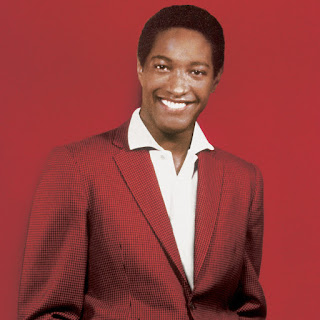
December 11, 1964: The Death of Sam Cooke

December 11, 1964: Sam Cooke dies under mysterious circumstances in Los Angeles.

Born on January 22, 1931 in Clarksdale, Mississippi, as Samuel Cook (no middle name), he was taken to Chicago by his family at age 2. He attended Wendell Phillips Academy, an all-black high school on the South Side, named for a well-known abolitionist. That school had already produced singers Nat "King" Cole and Dinah Washington, comedian George Kirby, Negro League star Ted "Double Duty" Radcliffe, and Pro Football Hall-of-Famer Buddy Young. Actress Marla Gibbs was a classmate of Sam's. The school would later produce jazz bandleader Herbie Hancock and football players Mike Pruitt and Chris Hinton.

In 1950, only 19 years old, Sam was good enough to be asked to replace R.H. Harris as lead singer of The Soul Stirrers, then the country's most popular black gospel group. He infuriated gospel fans by turning secular in 1957, adding an E to the end of his name, and had a Number 1 hit with "You Send Me."

The hits kept coming: "Only Sixteen" in 1959, "Wonderful World" and "Chain Gang" in 1960, "Cupid" in 1961, "Twistin' the Night Away" in 1962, "Another Saturday Night" in 1963, and "Good News" in 1964. Sam wrote, or co-wrote, all of these, some with his brother Charles Cook, with Robert "Bumps" Blackwell producing them. He also had hits with covers of the blues songs "Frankie and Johnny" and "Little Red Rooster."

His concerts became a sensation, including at the Copacabana in New York. Women threw themselves at him. He was married twice, raised his 1st wife's son, had 3 children with his 2nd wife, and is believed to have had 3 other children.

In 1963, he signed a contract with Allen Klein, who would later manage The Rolling Stones and mismanage The Beatles. Cooke had no problem with him, as he negotiated one of the best record-and-royalty deals any star, regardless of race, had ever gotten to that point.

That year, he heard Bob Dylan's song "Blowin' in the Wind," which had verses reflecting the civil rights and antiwar struggles. It stuck in his mind, and made him want to write a similar song. But he was afraid of losing the white fans he'd gained. So he compromised, recording "Blowin' in the Wind," and singing it at his shows. He didn't lose any fans.

On October 8, 1963, he made reservations for himself, his wife Barbara, his brother Charles, and his backing group at the Holiday Inn North in Shreveport, Louisiana, a segregated city. When they got there, the desk clerk, according to a contemporary report, "glanced nervously," and said there were no vacancies.

Sam had a fit. He demanded to see the manager, and refused to leave until he did. Barbara was scared, telling him, "They'll kill you!" He said, "They ain't gonna kill me, because I'm Sam Cooke." He must have forgotten that his fellow Phillips alumnus, Nat "King" Cole, an even bigger star, had been badly beaten onstage at a concert in Birmingham, Alabama in 1956. And that was with thousands of witnesses.

Finally, Sam was convinced to leave. He found a payphone, and called the all-black Castle Motel, and made a reservation there. The police had been tipped off: When the Cooke party got to the Castle, they were arrested for disturbing the peace. It took until 2019 for the City of Shreveport to offer an official apology to the Cooke family.

On January 30, 1964, Sam recorded a new song he'd written, "A Change Is Gonna Come." It had been 7 months since the assassination of Medgar Evers and the removal of George Wallace from the schoolhouse door, 5 months since the March On Washington that featured Martin Luther King's "I Have a Dream" speech, 4 months since the Birmingham church bombing, 3 months since the Shreveport arrest, 2 months since the assassination of John F. Kennedy, and 17 days since Dylan released his civil rights-heavy album The Times They Are A-Changin'. (It had also been 5 days since The Beatles hit Number 1 in America with "I Want to Hold Your Hand," but that had nothing to do with civil rights.)

Klein loved the song, and booked Sam on The Tonight Show Starring Johnny Carson for February 7. It was the 3rd time he'd appeared on the show. He sang "A Change Is Gonna Come." Johnny did not object. Nor did producer Fred de Cordova. Nor did NBC executives. Nor did NBC censors. Nor did NBC's sponsors. In fact, there was very little attention paid to it, mainly because this was the day The Beatles arrived in America, to perform on The Ed Sullivan Show 2 days later. (Sam had appeared on Sullivan, twice in 1957 after his initial burst of success, but hadn't done so since.)

On March 1, Sam's album Ain't That Good News was released, with "A Change Is Gonna Come" on it. But it wasn't yet released as a single. And he got nervous, not singing it in concert after The Tonight Show. On November 16, Sam recorded "Shake," a great dance number, and it was set to be released on December 22, with "A Change Is Gonna Come" as the B-side.

On December 10, 1964... We may never know the full facts. Sam was in Los Angeles, and had dinner with Al Schmitt and Schmitt's wife at Martoni's, an Italian restaurant popular with music industry people like Schmitt. They drank martinis, apparently to excess. They made plans to go to a nightclub named PJ's. The last time Schmitt saw Sam, he was at the bar at Martoni's, talking to a woman Schmitt didn't recognize.

Interviewed in 2020, Schmitt said that he and his wife went to PJ's, "But Sam never showed up. So I went home. I was told later he got there about 15 minutes later, just before closing time, and they wouldn't let him in. He was with this girl."

"This girl," apparently the same one Schmitt saw Sam talking to at the Martoni's bar, was Elisa Boyer, then 22. Sam took her to his cherry-red Ferrari, and drove her to South Central Los Angeles, to the Hacienda Motel, known to the Los Angeles Police Department as a hangout for men cheating on their wives. They checked in at 2:35 AM on December 11, signing the register as Mr. and Mrs. Sam Cooke.

Boyer told the police that Sam pinned her on the bed and began to tear off her clothes, intending to rape her. Then he went to the bathroom to take off his clothes. She then grabbed her clothes, and his as well. She found a phone booth and called the police, saying she'd been kidnapped.

The hotel's manager, Bertha Franklin, told the police that Sam, wearing the one piece of clothing he still had, a sport coat, came at her in a drunken rage, grabbed her, and asked, "Where's the girl?" She said she pushed Cooke away, grabbed a gun, and fired 3 shots. One missed, another went through Sam's heart, another through his lung. He yelled, "Lady, you shot me!" And he fell, dead, at age 33.

The LAPD, notorious for racism at the time (and for a long time after), ruled his death a justifiable homicide.

Nobody who knew Sam believed that. They knew he was a womanizer and, if not an out-and-out alcoholic, certainly a drinker. But he was not by nature a violent man. He was not known to go to "no-tell motels." His sister, Agnes Cooke-Hoskins, said, "My brother was first class all the way. He would not check into a $3-a-night motel. That wasn't his style."

And not only was the Hacienda a known hooker's hangout, but Franklin herself had a criminal record as a madam. The prevailing theory is that Boyer was a prostitute who decided to take Sam's money, and also his clothes so that he couldn't just run out after her.

What's more, at his funeral, singer Etta James noticed that he'd been beaten: "His hands were broken and crushed... They tried to cover it up with makeup, but I could see massive bruises on his head." These injuries were not mentioned in the autopsy report. Some people suspect that he was killed elsewhere, and dumped at the Hacienda, and that Boyer and Franklin were paid off to tell the story they told.

Sam had met Muhammad Ali, football star Jim Brown, and Nation of Islam spokesman Malcolm X at the Hampton House hotel in Miami after Ali won the Heavyweight Championship of the World 10 months earlier, beating Sonny Liston. Ali said, "If Cooke had been Frank Sinatra, the Beatles or Ricky Nelson, the FBI would be investigating."

His body was flown to his hometown in Chicago for one funeral, then back to Los Angeles for another. He was laid to rest at Forest Lawn Memorial Park Cemetery in the L.A. suburb of Glendale, California.

Bertha Franklin had to quit her job at the Hacienda. She died in 1966, at age 57, of a massive heart attack. The Hacienda still stands, under the name Polaris Motel, at 9137 South Figueroa Street, 4 miles (52 blocks) south of the Los Angeles Coliseum, and 7 miles (80 blocks) south of the Crypto.com Arena (formerly the Staples Center).

Sam's Ferrari from that night would figure in another rock star's death. Dennis Wilson, the drummer for the Beach Boys, bought it, and it was parked nearby when he drowned in Marina Del Rey in 1983, 19 years to the month later. In 2007, a Japanese collector bought the car.

On January 11, 1965, exactly 1 month after the murder, as "Shake" was becoming a Top 10 hit and "A Change Is Gonna Come" was struggling to reach the Top 40, Elisa Boyer was arrested for prostitution. Maybe somebody told her to "lay low," and she misunderstood. In 1979, she murdered her boyfriend, and was found guilty, and sentenced to 25 years to life in prison. As of December 11, 2022, at the age of 80, she is still incarcerated. Al Schmitt died in 2021.

In 1986, Sam Cooke was 1 of 10 charter acts inducted into the Rock and Roll Hall of Fame. Had he lived, he would have been 55. In 1989, The Soul Stirrers were elected to the Rock Hall in the "early influences" category, making Sam only the 2nd double inductee. (Clyde McPhatter had been elected as a soloist in 1987 and as one of The Drifters in 1988.)

Sam was played by Paul Mooney in The Buddy Holly Story in 1978, and Leslie Odom Jr. in One Night In Miami in 2020.

*

December 11, 1964 was a Friday. Baseball was out of season. Football was in midweek. And no NHL games were scheduled for that night.

But there were 2 games played in the NBA. The Boston Celtics beat the Philadelphia 76ers, 118-109 at the Philadelphia Civic Center's Convention Hall. And the Detroit Pistons beat the San Francisco Warriors, 104-100 at the Cow Palace, outside San Francisco in Daly City, California, despite 40 points from the Warriors' Wilt Chamberlain.

Monday, October 24, 2022

October 24, 1962: James Brown Plays His "Live at the Apollo" Concert

October 24, 1962: James Brown plays the Apollo Theater in New York. The concert is recorded for an album titled Live at the Apollo, released on May 1, 1963.

The album was recorded at the foremost African-American-oriented entertainment venue on Earth, during the Cuban Missile Crisis. But Brown and his backing band, the Famous Flames, performed as if there were no tomorrow.

The album lasts just 31 minutes and 31 seconds. And, of course, it doesn't include most of the songs associated with James, such as "I Got You (I Feel Good)," "Papa's Got a Brand New Bag," "It's a Man's Man's Man's Man's World," "Say It Loud (I'm Black and I'm Proud)," "Sex Machine" and "Living In America." All of those came later.

It does include his 1st hit, from 1956: "Please, Please, Please." And it includes his current hit, a reworking of "Night Train," Jimmy Forrest's 1952 rhythm & blues classic that gave football legend Dick Lane his nickname, and also became a mainstay of high school and college marching bands at football games.
In 2015, Rolling Stone magazine named this album the greatest live album of all time. In his 1995 book The Book of Rock Lists, music historian Dave Marsh said that making a great recording and making a great concert require different techniques that often contradict each other, and thus it was easier to name the worst live albums than the best ones. Nevertheless, he chose this as Number 1 on his best list, saying that it would be perfect if you could see Brown dancing.

The Apollo Theater, at 253 West 125th Street, opened in 1913, for white customers and performers only, even as the Harlem neighborhood around it was shifting from a German to a black neighborhood. In 1934, a new owner made it a venue for black customers and performers, and everyone from Duke Ellington to Lizzo has played it since.

*

October 24, 1962 was a Wednesday. This was also the day that the film The Manchurian Candidate premiered. I have a separate entry for that event. And Jay Novacek, the tight end on the Dallas Cowboys' 3 Super Bowl wins of the 1990s, was born on this day.

The baseball season had ended 8 days earlier, with the New York Yankees beating the San Francisco Giants in Game 7 of the World Series. Football was in midweek. The NHL season was underway, but no games were scheduled.

There were 2 games played in the NBA. The Chicago Zephyrs beat the Los Angeles Lakers, 118-107 at the Chicago Coliseum. Walt Bellamy scored 42 points. The next season, the Zephyrs became the Baltimore Bullets. In 1973, they moved to Washington. In 1997, they were renamed the Washington Wizards.

And the St. Louis Hawks beat the Cincinnati Royals, 121-114 at the Kiel Auditorium in St. Louis. Oscar Robertson scored 31 points. The Hawks moved to Atlanta in 1968. The Royals became the Kansas City Kings in 1972, and the Sacramento Kings in 1985.

Thursday, September 29, 2022

September 29, 1975: The Tragedy of Jackie Wilson

September 29, 1975: "Dick Clark's Good Ol' Rock and Roll Revue" is held at the Latin Casino, in the Philadelphia suburb of Cherry Hill, New Jersey. In the middle of the song that launched him to stardom in 1959, "Lonely Teardrops," Jackie Wilson sings the line, "My heart is crying, crying... " and collapses onstage.

Like Elvis Presley and James Brown, both of whom had copied him to an extent, Wilson was known for his onstage histrionics, earning him the nicknames "Mr. Excitement" and "The Guy With a Tear in His Eye." He was also known to take salt tablets before going onstage, because he thought women liked to see men sweating when they sang onstage. All this, and an all-around wild lifestyle, had given him a heart attack.

What's worse, his onstage reputation was such that, at first, nobody realized that this collapse wasn't part of the act. By the time the paramedics got to him, his brain had been deprived of enough oxygen to leave damage. He never recovered, spending the rest of his life in hospitals and nursing homes. One of the greatest R&B singers of all time, Jackie was forcibly retired at age 41, and died at 49, on January 21, 1984.

Later that year, singer Marvin Gaye was shot and killed by his father. Gaye had been one of the big stars of Motown Records, founded by Berry Gordy Jr., who got his start writing songs for Jackie Wilson. Another Motown group, The Commodores -- Lionel Richie had gotten his start as their lead singer, but had since gone solo -- recorded "Nightshift," a song that saluted both Gaye and Wilson. It hit Number 3 early in 1985.

It wasn't the 1st song to salute Wilson: In 1972, while he was still alive and performing, Irish singer Van Morrison had a hit song titled "Jackie Wilson Said (I'm In Heaven When You Smile)."

Also on this day, Casey Stengel died of cancer in his adopted hometown of Glendale, California, in the Los Angeles suburbs. "The Ol' Perfesser" was 85. He first wore a major league uniform in 1912, and last did so in 1965. In between, in those 54 seasons, as a player and a manager, he had been a part of 14 Pennant winners and 9 World Championships. He had last appeared in a major league ballpark on June 28, for the Mets' Old-Timers Day.
Jim Murray, the great sports columnist for the Los Angeles Times, wrote, "Well, God is certainly getting an earful tonight."

*

September 29, 1975 was a Monday. Baseball's regular season had ended the day before. The NBA, ABA, NHL and WHA seasons would start in the next few weeks. The only score on this day was a game on ABC Monday Night Football: The Denver Broncos beat the Green Bay Packers, 23-13 at Mile High Stadium in Denver.

Wednesday, September 28, 2022

September 28, 1976: Stevie Wonder Releases "Songs In the Key of Life"

September 28, 1976: Stevie Wonder releases Songs In the Key of Life, on the Motown subsidiary Tamla Records. It is usually considered his greatest album.

And that's saying something. Since releasing The Jazz Soul of Little Stevie, under the name "Little Stevie Wonder" at the age of 12 -- he was born in 1950 with the name Stevland Hardaway Judkins, but his legal name is Stevland Morris, for his mother's family -- with the Motown-billed nickname of "The 12-Year-Old Genius," he had a bunch of hit singles through the 1960s, and then moved on to making great albums, once he and Marvin Gaye were finally able to talk Motown boss Berry Gordy Jr. into letting them write and sing about social issues.

He released Where I'm Coming From in 1971, Music of My Mind and Talking Book in 1972, Innervisions (the title reflective of the fact that Stevie is blind) in 1973, and Fulfillingness' First Finale in 1974. The last 2 each won the Grammy Award for Album of the Year.

He wanted his next album to be a masterpiece, and he took his time to get it right. For 1975, the Grammy for Album of the Year went to Still Crazy After All These Years by Paul Simon. Accepting the award, Simon thanked a few people, adding, "I'd also like to thank Stevie Wonder, for not releasing an album this year." The line got more applause than laughter.

Through early 1976, Stevie would arrive in the recording studio wearing a T-shirt saying, "IT'S ALMOST FINISHED!" When Songs In the Key of Life was finished, it was everything he hoped it would be. The singles "I Wish" and "Sir Duke" hit Number 1 in early 1977. The latter was a tribute to jazz legends, name-checking, in order, Count Basie, Glenn Miller, Louis Armstrong (using his nickname, Satchmo), Duke Ellington ("the king of all, Sir Duke") and Ella Fitzgerald. It began with a line that could have been Stevie's motto: "Music is a world within itself, with a language we all understand."
On February 2, 1975, while the album was in progress, Stevie's 1st child was born, a daughter named Aisha Morris. Her mother was Yolanda Simmons, a secretary at Motown. Stevie said of Aisha, "She was the one thing that I needed in my life and in my music for a long time." For her, Stevie wrote "Isn't She Lovely?", put her baby voice on the recording, and put the song on the album, and it also became a hit single.

As Simon seemed to be predicting, Songs In the Key of Life, like its 2 immediate predecessors, won the Grammy for Album of the Year. In total, Stevie has won 22 Grammys. Stevie, Simon, Frank Sinatra and Taylor Swift are the only people to have won the Grammy for Album of the Year as lead artist 3 times, but Stevie is the only one to do it 3 albums in a row.

While he was one of the most productive performers of the 1960s, '70s and '80s, and continues to perform into the 2020s, his last 3 albums of new material have been the soundtrack to the film Jungle Fever in 1991, Conversation Peace in 1995, and A Time to Love in 2005.

It seems unfair to have expected Stevie Wonder to keep up the pace he set between the ages of 12 and 37 -- 23 albums in 25 years -- but, like his contemporary and fellow keyboard (and harmonica) player Billy Joel, he seems content with being just a touring act in the back half of his life. In 2014, President Barack Obama awarded him the Presidential Medal of Freedom.
His awards also include the Rock and Roll Hall of Fame, the Songwriters Hall of Fame, a star on the Hollywood Walk of Fame, the Michigan Walk of Fame in the State Capital of Lansing, a Messenger of Peace award from the United Nations, and an Academy Award for his 1984 Number 1 hit "I Just Called to Say I Love You," due to its inclusion in the film The Woman in Red, for which he wrote all the songs.

Stevie is currently married for the 3rd time, and has 9 children, with 5 different mothers. His daughter Aisha Morris has sung with him on recordings and tours, and his son Kailand Morris has drummed for him.

*

September 28, 1976 was a Tuesday. These Major League Baseball games were played on that day: 

* The New York Yankees lost to the Boston Red Sox, 7-5 at Fenway Park in Boston. Butch Hobson and Jim Rice hit home runs, and Carl Yastrzemski went 1-for-4 with an RBI.

Thurman Munson hit a home run, on his way to becoming the 1st (and still only) Yankee ever to win the American League's Rookie of the Year (in 1970) and its Most Valuable Player. The Yankees had clinched the AL Eastern Division title 4 days earlier. It was their 1st time finishing 1st since their 1964 Pennant.

* A doubleheader was split as Shea Stadium. The New York Mets won the opener, 5-4. Ed Kranepool went 3-for-5 with 2 RBIs, in support of Nino Espinosa. The Montreal Expos won the nightcap, 4-2. Met manager Joe Frazier (definitely not to be confused with the boxer of the same name) didn't even put Kranepool in that game, ignoring his hot hand. Frazier would be fired early the next year, replaced by Joe Torre, who didn't play in the 1st game here, but went 0-for-3 with a walk in the 2nd game.

* The Baltimore Orioles swept a doubleheader from the Milwaukee Brewers, 7-5 and 7-3 at Memorial Stadium in Baltimore. Bobby Grich won the opener with a home run in the bottom of the 11th inning. Wayne Garland pitched all 11 innings, advancing to 20-7 on the season. He then became a free agent, signing with the Cleveland Indians, but all the wear and tear on his shoulder ruined him.

Reggie Jackson, in his only season and last week with the Orioles, went 1-for-8 with a walk and 3 RBIs over the 2 games, including a homer in the nightcap. Brooks Robinson, 39 years old and in his last full season, went 1-for-5 in the opener, but didn't play in the nightcap. (He and Reggie have the same birthday: May 18.) For the Brewers, Robin Yount went 2-for-10 with an RBI. The soon-to-retire Hank Aaron did not enter either game.

* The San Francisco Giants beat the Atlanta Braves, 4-1 at Atlanta-Fulton County Stadium.

* The Pittsburgh Pirates beat the Chicago Cubs, 5-1 at Three Rivers Stadium in Pittsburgh. Willie Stargell only appeared as a pinch-hitter, and did not reach base.

* A doubleheader was split at Cleveland Municipal Stadium. The Detroit Tigers won the 1st game, 4-0. Mark Fidrych pitched a 5-hit shutout, extending his remarkable Rookie of the Year season to 18-9. The Cleveland Indians won the 2nd game, 6-1.

* The Texas Rangers beat the Minnesota Twins, 7-0 at Metropolitan Stadium in the Minneapolis suburb of Bloomington, Minnesota. Gaylord Perry pitched a 6-hit shutout. Rod Carew got 1 of those hits. No word on whether Carew thought Perry had thrown him, or any of his teammates, a spitball.

* The St. Louis Cardinals beat the Philadelphia Phillies, 5-3 at Busch Memorial Stadium. Lou Brock went 1-for-3 with an RBI. Mike Schmidt went 0-for-4. Former Cardinal catcher Tim McCarver, now playing for the Phillies, went 3-for-4.

McCarver was catching because he was the "personal catcher" of Steve Carlton. In 1972, Carlton won 27 games for a Phils team that otherwise won only 32 games. When he was set to start, he would tell his teammates, "It's Win Day." He won 241 games for the Phillies, 329 overall, but this was not one of them: He fell to 19-7 on the season, but did get a 20th win.

* The Cincinnati Reds beat the San Diego Padres, 5-4 at San Diego Stadium (later renamed Jack Murphy Stadium and Qualcomm Stadium). In a rare non-start for him, Pete Rose came into the game as a pinch-hitter, and went 1-for-2 with an RBI. Johnny Bench was put in left field, and went 0-for-4. Dave Winfield did not play for the Padres in this game.

The Reds went on to sweep the Phillies in the National League Championship Series and the Yankees in the World Series. Their 7-0 record remains the best in postseason history. Since the advent of the 3-tier Playoff setup in 1995, the best is the 11-1 of the 1999 Yankees.

* The Houston Astros beat the Los Angeles Dodgers, 1-0 at Dodger Stadium in Los Angeles. J.R. Richard pitched a 3-hit shutout.

* The Oakland Athletics beat the Kansas City Royals, 1-0 at the Oakland Coliseum. Mike Torrez pitched a 2-hit shutout. George Brett did not get either of those hits. Hal McRae did. Brett (.333) would edge McRae (.332) and Carew (.331) for the AL batting title, and the Royals dethroned the 5-time defending AL Western Division Champion A's, before losing the World Series to the Yankees.

* And in a rare rainout in Anaheim, the California Angels were unable to play the Chicago White Sox. The game was never made up.

Tuesday, September 27, 2022

September 27, 1960: Smokey Robinson: "America's Greatest Living Poet"

September 27, 1960: "Shop Around" by the Miracles, with Smokey Robinson writing and singing lead, is released on the Tamla label. Motown Records has its 1st major hit, as it rises to Number 2 on Billboard magazine's Hot 100 chart. Unfortunately, the song that keeps it out of Number 1 is rather lame: The instrumental "Calcutta," by the Lawrence Welk Orchestra.

William Robinson Jr. was born on February 19, 1940 in the North End of Detroit. His uncle Claude would take him to Western movies, and gave him a "cowboy nickname," Smokey Joe. By the time he was 12, the boy usually called "Bill" had dropped the "Joe," and began going by "Smokey." (That was also what Frank Sinatra and the rest of the Rat Pack called Sammy Davis Jr.)

He lived near Aretha Franklin, and the friendship lasted for the rest of her life. When he was 15, he formed his first vocal group, The Five Chimes, including Ronald White and Pete Moore. (There was also an all-Italian doo-wop group in The Bronx named The Chimes, but neither group knew about the other.) In 1957, they were renamed the Matadors, and took on siblings Barbara and Claudette Rogers. In 1958, they were renamed the Miracles, and added guitarist Marv Tarplin.

Their 1st release, on End Records, was an answer song to The Silhouettes' 1958 Number 1 hit "Get a Job": In "Got a Job," they showed that having one wasn't all it was cracked up to be. But hardly anybody remembers it, because Eddie Cochran had a similar idea, if not a similar sound, with "Summertime Blues."

Still, while not charting on Billboard's Hot 100, it did reach Number 5 on the magazine's rhythm & blues (R&B) chart, giving them a foothold in the business. And they'd already met Berry Gordy Jr., who was about to found Motown, and "Shop Around" was its 1st signature song.

"You've Really Got a Hold On Me" became their 1st Top 10 hit in 1962, reaching Number 8. The Beatles would cover it. In 1963, with The Monkey being a big dance, they recorded "Mickey's Monkey," which also reached Number 8. It was one of the few Miracles hits not written by Smokey: The team of Brian Holland, Lamont Dozier and Brian's brother Eddie Holland wrote it. In 1964, Mary Wells had a Number 1 hit with Smokey's "My Guy."

In 1965, they had no Top 10 hits, but 4 in the Top 20: "Ooo Baby Baby," later covered by Linda Ronstadt; "The Tracks of My Tears," which became a Number 3 hit for Johnny Rivers in 1967; "My Girl Has Gone"; and "Going to a Go-Go." The same year, The Temptations, who had surpassed The Miracles to become Motown's biggest male vocal group, recorded The Temptations Sing Smokey, which included their 1st Number 1 hit, "My Girl."

In 1967, with the group now officially labeled "Smokey Robinson & The Miracles," they hit Number 4 with "I Second That Emotion." In 1970, The Miracles hit Number 1 again, with "The Tears of a Clown," written by Smokey, Stevie Wonder and Henry Cosby (another prolific Motown songwriter, no relation to Bill).

This output led Bob Dylan, himself a contender for the title, to say, "Smokey Robinson is America's Greatest Living Poet."

Smokey split with The Miracles, and they had a Number 1 hit without him in 1975 with "Love Machine." Smokey had several solo hit singles, including "Cruisin'" in 1980 and "One Heartbeat" in 1987, but his biggest solo hit was "Being With You," hitting Number 2 in 1981.
As of September 27, 2022, Smokey is still alive, at age 80. His then-wife, Claudette Robinson, "The First Lady of Motown," is 78, born the exact same day as the Beach Boys' Brian Wilson, and 2 days after the Beatles' Paul McCartney. They are the only surviving original members of the Miracles. Ronnie White, who discovered Stevie Wonder and co-wrote "My Girl" with Smokey, died in 1995. Marv Tarplin died in 2011. Bobby Rogers, Claudette’s cousin, died in 2013. Pete Moore died in 2017.

*

September 27, 1960 was a Tuesday. The New York Yankees beat the Washington Senators, 5-1 at Griffith Stadium in Washington. Ryne Duren started for the Yankees, but Eli Grba turned out to be the winning pitcher. Bill "Moose" Skowron hit a home run. Mickey Mantle went 0-for-2 before leaving the game. Roger Maris went 1-for-2 with 2 walks and an RBI. Yogi Berra pinch-hit, and did not reach base. For the Senators, Harmon Killebrew went 0-for-4.

* The Baltimore Orioles beat the Boston Red Sox, 17-3 at Fenway Park in Boston. The O's got home runs from Gus Triandos, Jackie Brandt, Jerry Adair and Ron Hansen. Brooks Robinson went 1-for-5 with a walk. For the Sox, Ted Williams went 0-for-2 with a walk before leaving the game.

The next day would be Williams' last game, and he famously hit a home run in his last at-bat. Adair would be a part of the Red Sox' 1967 "Impossible Dream" Pennant, and Hansen would turn an unassisted triple play with the Seantors in 1968.

* The Philadelphia Phillies beat the Milwaukee Braves, 5-3 at Connie Mack Stadium in Philadelphia. Robin Roberts outpitched Joey Jay. Hank Aaron went 1-for-4 with an RBI. Eddie Mathews went 0-for-4.

* The Pittsburgh Pirates beat the Cincinnati Reds, 4-3 at Forbes Field in Pittsburgh. The game went 16 innings, before Dick Schofield singled Gino Cimoli home. Roberto Clemente went 1-for-7 with a walk. Frank Robinson went 1-for-4 with 3 walks.

* The Detroit Tigers beat the Chicago White Sox, 2-0 at Comiskey Park in Chicago. Jim Bunning outpitched Early Wynn. Al Kaline went 0-for-4. Luis Aparicio went 0-for-4.

* The Kansas City Athletics beat the Cleveland Indians, 5-4 at Kansas City Municipal Stadium.

* The Los Angeles Dodgers beat the St. Louis Cardinals, 5-1 at the Los Angeles Memorial Coliseum. Tommy Davis went 3-for-4 with a home run and 4 RBIs. Most of the Brooklyn "Boys of Summer" were gone. Gil Hodges pinch-hit and did not reach base, and Duke Snider, while available, did not play. Stan Musial went 1-for-4.

* And the Chicago Cubs beat the San Francisco Giants, 3-1 at Candlestick Park in San Francisco. Ernie Banks went 3-for-4. Willie Mays went 3-for-4 with an RBI. Willie McCovey pinch-hit, but did not reach base.

Saturday, August 20, 2022

August 20, 1972: The Wattstax Concert, the Black Woodstock

The Rev. Jesse Jackson (left) and Issac Hayes

August 20, 1972: Stax Records, based in Memphis, hosts a benefit concert at the Los Angeles Memorial Coliseum, to benefit the black community of Los Angeles, centered around the South Central neighborhood of Watts. It is publicized as "Wattstax."

All seats were reserved and priced at only $1.00 each, as Stax wanted to make it possible for anyone to attend. Pre-sales were quite successful, easing concerns about the financial viability of the concert. The crowd was estimated at over 112,000, counting on-field seating.

Dale Warren, the main arranger for Stax Records, began the show at 2:38 PM Pacific Time (5:38 U.S. Eastern), with a composition titled "Salvation Symphony." Kim Weston, formerly of Motown Records, sang "The Star-Spangled Banner."

The Rev. Jesse Jackson gave an invocation, and included a poem, written in 1950, by the Rev. William Holmes Borders, Sr. He paused to allow the crowd to chant, "I am... Somebody!" along with him. "I may be poor... young... on welfare... small... I may have made mistakes... My clothes... my face... my hair is different, but I am... Somebody! I am black, brown, or white. I speak a different language. But I must be respected, protected, never rejected. I am God’s child!"

Having sung the actual National Anthem, Weston then sang "Lift Every Voice and Sing," by James Weldon Johnson, known as "The Black National Anthem." The Staple Singers were the first act. Deborah Manning sang the hymn "Precious Lord, Take My Hand." A few other performers took the stage, leading up to Eddie Floyd singing his 1966 hit "Knock On Wood."

David Porter, who wrote several Stax classics with Isaac Hayes, sang "Reach Out and Touch (Somebody's Hand)," written by Nickolas Ashford and Valerie Simpson as the 1st solo hit for Diana Ross. The Bar-Kays, the reconstituted band of ill-fated Stax singer Otis Redding, played. Carla Thomas, daughter of disc jockey and soul singer Rufus Thomas, and duet partner of Redding's, sang. Blues guitarist Albert King followed her, and he was followed by Rufus Thomas. Luther Ingram sang his current hit "(If Loving You Is Wrong) I Don't Want to Be Right."

As darkness fell, Hayes came on to close the show. It was his 30th birthday. Stripped to the waist, but draped with chains, as he was when he performed the song at the Academy Awards, he performed the theme from the film Shaft. It was the highlight of the show. He followed it with "Soulsville," and "Never Can Say Goodbye," written by minister-actor Clifton Davis, already a hit for The Jackson 5, and later a disco hit for Gloria Gaynor.

Months after the festival, Stax released a double LP of the concert's highlights, Wattstax: The Living Word. The concert was filmed by David L. Wolper's film crew, and was made into the 1973 film titled Wattstax, directed by Mel Stuart. Between the show and the subsequent album and film, It was as close to a "black Woodstock" as the world was going to get.

Wolper would also stage the Opening and Closing Ceremonies of the 1984 Olympics at the Coliseum.

*

August 20, 1972 was a Sunday. These Major League Baseball games were played:

* The New York Yankees beat the Texas Rangers, 2-0 at Arlington Stadium in the Dallas suburb of Arlington, Texas. Bobby Murcer grounded into a fielder's choice in the top of the 10th inning, scoring relief pitcher Sparky Lyle with the winning run. Between them, Rob Gardner and Lyle allowed 6 hits over a 10-inning shutout.

* The New York Mets lost to the Cincinnati Reds, 8-1 at Shea Stadium. Pete Rose went 3-for-5 with a walk and 2 RBIs. Johnny Bench did not play. Willie Mays did, going 1-for-3.

* The Montreal Expos beat the Atlanta Braves, 1-0 at Jarry Park in Montreal. Bill Stoneman pitched a 2-hit shutout. Hank Aaron went 0-for-3 with a walk.

* The Houston Astros beat the Philadelphia Phillies, 3-1 at Veterans Stadium in Philadelphia.

* The Minnesota Twins beat the Baltimore Orioles, 4-1 at Memorial Stadium in Baltimore. Harmon Killebrew did not play. Rod Carew went 1-for-5. Brooks Robinson went 1-for-4.

* The Cleveland Indians beat the Oakland Athletics, 3-1 at Cleveland Municipal Stadium. Reggie Jackson did not play.

* The Detroit Tigers beat the California Angels, 11-9 at Tiger Stadium in Detroit. Al Kaline went 1-for-3 with a walk and an RBI.

* A doubleheader was split at Comiskey Park in Chicago. The Chicago White Sox won the opener, 9-7. The Boston Red Sox won the nightcap, 5-4. Carl Yastrzemski did not play in the opener, but went 1-for-4 with 3 RBIs in the nightcap.

* The Milwaukee Brewers beat the Kansas City Royals, 2-1 at Kansas City Municipal Stadium.

* The Pittsburgh Pirates swept a doubleheader from the San Diego Padres, 9-3 and 5-2 at San Diego Stadium (later Jack Murphy Stadium and Qualcomm Stadium). Roberto Clemente did not play in either game. Willie Stargell went 3-for-7 with a walk and 3 RBIs.

* The Chicago Cubs beat the Los Angeles Dodgers, 5-3 at Dodger Stadium in Los Angeles. In his only season with the Dodgers, Frank Robinson did not play.

* And the San Francisco Giants beat the St. Louis Cardinals, 5-3 at Candlestick Park in San Francisco.

Saturday, May 21, 2022

May 21, 1971: Marvin Gaye Releases "What's Going On"

May 21, 1971: Marvin Gaye releases his album What's Going On, on Tamla Records, a subsidiary of Motown Records. For many years, Rolling Stone magazine rated it was one of the Top 10 albums of all time, with Sgt. Pepper's Lonely Hearts Club Band by The Beatles at Number 1. At the time, and certainly in hindsight, it seemed to be a Sgt. Pepper of soul music. In 2020, Rolling Stone released a revised list of the 500 Greatest Albums of All Time, and ranked What's Going On at Number 1.

Marvin Pentz Gay Jr. was born on April 2, 1939, in Washington, D.C., the son of a Pentecostal minister who beat him and the other children. His love of music developed early, and he formed one doo-wop singing group, then another, before his father kicked him out of the house. He found the U.S. Air Force no better than an abusive father, and faked mental illness, getting a general discharge.

He returned to Washington, and formed The Marquees. Harvey Fuqua, lead singer of The Moonglows, heard them, took them to Chicago, and hired them for Chess Records, renaming them the New Moonglows, singing backup on Chuck Berry's "Back in the U.S.A." and "Almost Grown."

In 1960, Fuqua took Gaye to Detroit, and introduced him to Berry Gordy Jr., who had just founded Motown Records. At the time, "gay" still usually meant "lightly happy" rather than "homosexual," but this was changing. But there were other reasons to change his name: He wanted to distance himself from his father's name, and it was a tribute to someone else who had put an E on the end of his name: Sam Cooke.

Starting in late 1962, he was one of the acts on the Motortown Revue, which toured all over the country, and even allowed its performers on ABC-TV's American Bandstand. By 1965, Motown was more than keeping up with rock and roll's "British Invasion," and Marvin's contributions that year included "I'll Be Doggone" and "Ain't That Peculiar."

And he recorded a series of hit duets with Supremes lead singer Diana Ross, Kim Weston, and especially Tammi Terrell. Tammi was married, but the musical chemistry between them was such that rumors of an affair between them persist to this day. No evidence of them being anything more than close friends has ever been discovered.

In 1968, the Detroit Tigers won the American League Pennant. Their broadcaster, Ernie Harwell, was asked to select the National Anthem singers for the World Series games in Detroit. For Game 4, he selected Marvin, a representative of the city's musical giant Motown Records, who sang it straight, and got a nice hand. For Game 5, Harwell selected José Feliciano, and that's a story for another time.

The world was changing, and Marvin thought his music should change with it. But Berry Gordy was a control freak, and he thought having black singers address social ills would hurt Motown's profile and profits. He began to relent in 1968, letting The Supremes sing "Love Child" (which hit Number 1) and "Living In Shame."

But Marvin wasn't allowed to sing about social ills. At the end of the turbulent year of 1968, he had the Number 1 song in the country, and it was a spectacular recording, but it was "I Heard It Through the Grapevine," a traditional love song. In 1969, he had a hit with "Too Busy Thinking About My Baby." This was a decent song, and, with its line of, "I ain't got time to do no studying once I get out of class," it would have been a fine start for an 18-year-old rookie singer at Motown. At the time, though, Marvin Gaye was 30 years old.

The year 1970 would prove to be a turning point. Tammi Terrell died from a brain tumor, and Marvin couldn't handle it. And his brother Frankie Gaye -- he, too, became a singer and added the E -- returned from serving in Vietnam, and told Marvin of the awful things he had experienced there. Marvin knew that Berry had complete creative control. But he also knew that something had to be done.

Even more important, he now had an ally: Stevie Wonder, now 20, was also ready to move on to topical material. He had already recorded Bob Dylan's "Blowin' in the Wind" and The Beatles' "We Can Work It Out." But he wanted to write his own songs that would match those.

Together, Marvin and Stevie went on strike, and Berry relented. He let Stevie record "Higher Ground," and that was the start of a bunch of great songs about issues, including "Superstition" and "Living for the City."  

And Berry let Marvin record "What's Going On," which became the title track to a landmark album that also included "Inner City Blues" and the environmental-themed song "Mercy Mercy Me." All 3 became Top 10 hits. There was an anti-drug song, "Flyin' High (In the Friendly Sky)," and songs titled "Save the Children" and "God Is Love."

The title track included Lem Barney and Mel Farr of the NFL's Detroit Lions singing backup. Marvin had been so disillusioned by his career, and perhaps inspired by Paper Lion, the film based on writer George Plimpton's book about trying out for the Lions, that he asked them for a tryout. They turned him down, fearing that injuries could hurt his music career. But when "What's Going On" the single hit Number 2 and sold over 1 million copies, everyone who played or sang on it, including Barney and Farr, received gold records.

Berry Gordy listened to the request in the chorus of Marvin's song: "Talk to me, so you can see what's going on." He saw that he was wrong, and Marvin and Stevie were right. He began to move Motown from Detroit to Los Angeles, which had become the center of the recording industry on planet Earth. But Marvin and Anna split up, and he began seeing Janis Hunter, who became the mother of his daughter Nona, who became a singer and actress, and his son Frankie, named for his brother.

Berry wasn't the only one who saw the light: The album sold over 2 million copies within a year of its release. In Rolling Stone, reviewer Vince Aletti wrote, "There are very few performers who could carry a project like this off. I've always admired Marvin Gaye, but I didn't expect that he would be one of them. Guess I seriously underestimated him. It won't happen again." Billboard magazine called it "a cross between Curtis Mayfield and that old Motown spell and outdoes anything Gaye's ever done." Even staid old Time magazine hailed it as a "vast, melodically deft symphonic pop suite."

Did I say, "staid" and "old"? How about the BBC? Their David Katz described the album as "one of the greatest albums of all time, and nothing short of a masterpiece." He compared it to Miles Davis' jazz landmark Kind of Blue by saying, "Its non-standard musical arrangements, which heralded a new sound at the time, gives it a chilling edge that ultimately underscores its gravity, with subtle orchestral enhancements offset by percolating congas, expertly layered above James Jamerson's bubbling bass."

What's Going On is often rated as one of the Top 10 rock and roll albums of all time.  Even my father, a fan of classical, folk and country music, admitted (years after Marvin's shocking death) that this album made him a fan of Marvin's.

Having gotten that out of his system, on August 28, 1973, Marvin released Let's Get It On, another concept album, one about... getting it out of your system. The title track became his 2nd Number 1 hit. He had a 3rd in 1977, "Got to Give It Up." This song inspired many other performers, from Michael Jackson, whose 1st solo Number 1, "Don't Stop 'Til You Get Enough," was very close in lyrics and style; to Robin Thicke, Pharrell Williams and T.I., whose 2013 chart-topper "Blurred Lines" was so close to it that, 2 years later, a court awarded $7.4 million in royalties/damages to Marvin's children.

In spite of this success, Marvin had become, to borrow the title of David Ritz's posthumous biography of him, a divided soul. He turned to cocaine, and moved to Europe, where he was already popular, and lived and toured there.

In 1982, having kicked drugs for the moment, a deal was made to release Marvin from his Motown contract. He signed with CBS Records, and recorded the album Midnight Love, including the single "Sexual Healing." It was a smash, and he was back in the spotlight, winning his 1st 2 Grammy Awards, and being invited to sing the National Anthem before the NBA All-Star Game at The Forum outside Los Angeles. He made it sound like a gospel song. It had been 15 years since he sang it straight at the World Series, and José Feliciano hadn't. Times had changed, and everyone loved Marvin's new version.

But the comeback was all too brief, as he fell back on cocaine, and suffered bouts of paranoia. He had bought his parents a house in the Hancock Park area of Los Angeles. But his father had never really changed, and was always arguing with everyone else in the family, including Marvin and his mother Alberta. On April 1, 1984, at that house, an argument between Marvin Gay Sr. and Marvin Gaye Jr. turned into a shoving match, and Marvin Jr. got the upper hand, beating his father severely. In revenge, Marvin Sr. shot Marvin Jr., killing him. The next day would have been Marvin Jr.'s 45th birthday.

In 1993, singer-songwriter Linda Perry led the band 4 Non Blondes to record a song titled "What's Up?" But those words are not anywhere in the song. Instead, the chorus asks, "What's going on?" The song is about pain, possibly mental illness, and the narrator admits, "Oh, my God, do I pray, every day, for a revolution!"

It is widely presumed that the reason the song isn't titled "What's Going On?" is so that it won't be confused with Marvin Gaye's song. Nevertheless, it was nearly as big a hit, and remains Perry's biggest hit as a singer, although she's written Number 1 hits for others.

*

May 21, 1971 was a Friday. Football was in its off-season. The NHL season had ended 3 days earlier, with the Montreal Canadiens winning the Stanley Cup, beating the Chicago Black Hawks in the Finals in 7 games. The NBA season had ended 3 weeks earlier, with the Milwaukee Bucks beating the Baltimore Bullets in a 4-game sweep. These Major League Baseball games were played that day:

* The New York Yankees lost to the Cleveland Indians, 8-7 at Cleveland Municipal Stadium. Danny Cater singled home 2 runs in the top of the 9th to give the Yankees a 7-6 lead, but Lindy McDaniel couldn't hold it, and gave up a game-tying single to Eddie Leon and a game-winning single to Gomer Hodge. According to Baseball-Reference.com, with 2 outs in the top of the 9th, the Indians had a 97 percent chance of winning, and a 13 percent chance when the bottom of the 9th began, but won, anyway.

McDaniel had once been a really good reliever, but it was games like this that led the Yankees to trade Carter and Mario Guerrero to Boston for Sparky Lyle before the next season, and to then trade McDaniel to Kansas City for Lou Piniella after 1973, 2 of the trades that helped build the next Yankee dynasty.

* The New York Mets beat the Atlanta Braves, 6-2 at Shea Stadium. Nolan Ryan outpitched Pat Jarvis. Ed Kranepool went 3-for-4, and Ken Boswell, Bob Aspromonte and Jerry Grote each had 2 RBIs. Hank Aaron went 3-for-4, including his 651st career home run.

* The Pittsburgh Pirates beat the Montreal Expos, 6-2 at Jarry Park in Montreal. Bob Robertson and Willie Stargell hit home runs for the Pirates, and Roberto Clemente went 3-for-5. Stargell's home run won the game in the top of the 13th inning.

* The Cincinnati Reds beat the Philadelphia Phillies, 7-3 at Veterans Stadium in Philadelphia. Pete Rose went 0-for-2 with 2 walks. Johnny Bench went 1-for-2 with 3 walks and an RBI. Dave Concepcion hit a home run.

* The Boston Red Sox beat the Baltimore Orioles, 8-4 at Memorial Stadium in Baltimore. Carl Yastrzemski hit a home run. So did Brooks Robinson. Frank Robinson went 1-for-5. The Orioles tied the game in the bottom of the 9th, but the Red Sox scored 4 runs in the top of the 10th to win it.

* The Detroit Tigers beat the Washington Senators, 1-0 at Tiger Stadium in Detroit. Dean Chance pitched 7 2/3rds innings of 3-hit ball, and Fred Scherman finished the 3-hit shutout. Ed Brinkman doubled home the only run in the 5th inning. Al Kaline did not play.

* The Los Angeles Dodgers beat the Chicago Cubs, 8-1 at Wrigley Field in Chicago. Ernie Banks, in his last season, only appeared as a pinch-hitter, and did not reach base.

* The St. Louis Cardinals beat the San Diego Padres, 15-8 at Busch Memorial Stadium. José Cardenal, Joe Torre and Julián Javier hit home runs.

* The Houston Astros beat the San Francisco Giants, 4-1 at the Astrodome in Houston. Willie Mays went 0-for-4.

* The Chicago White Sox beat the California Angels, 3-0 at Anaheim Stadium (now Angel Stadium of Anaheim). Tom Bradley pitched a 5-hit shutout.

* The Minnesota Twins beat the Oakland Athletics, 10-1 at the Oakland Coliseum. Bert Blyleven outpitched John "Blue Moon" Odom. George Mitterwald hit 2 home runs, and Steve Braun 1. Harmon Killebrew went 0-for-4, but had an RBI on a sacrifice fly. Rod Carew went 1-for-5. Reggie Jackson went 2-for-4.

* And the Kansas City Royals and the Milwaukee Brewers were rained out at Kansas City Municipal Stadium. It was made up as part of a doubleheader on September 6. The Royals swept, 4-3 and 6-4.

Friday, April 1, 2022

April 1, 1984: The Death of Marvin Gaye

April 1, 1984: Singer Marvin Gaye is shot and killed -- by his father, of all people -- a day before what would have been his 45th birthday.

Marvin Pentz Gay Jr. was born on April 2, 1939, in Washington, D.C., the son of a Pentecostal minister who beat him and the other children. His love of music developed early, and he formed one doo-wop singing group, then another, before his father kicked him out of the house. He found the U.S. Air Force no better than an abusive father, and faked mental illness, getting a general discharge.

He returned to Washington, and formed The Marquees. Harvey Fuqua, lead singer of The Moonglows, heard them, took them to Chicago, and hired them for Chess Records, renaming them the New Moonglows, singing backup on Chuck Berry's "Back in the U.S.A." and "Almost Grown."

In 1960, Fuqua took Gaye to Detroit, and introduced him to Berry Gordy Jr., who had just founded Motown Records. At the time, "gay" still usually meant "lightly happy" rather than "homosexual," but this was changing. But there were other reasons to change his name: He wanted to distance himself from his father's name, and it was a tribute to someone else who had put an E on the end of his name: Sam Cooke.

While Marvin could sing and play piano, Gordy was impressed with his drumming, and put him on sessions with The Miracles (led by Smokey Robinson) and The Marvelettes. The Miracles' "Shop Around" very nearly became the 1st Motown song to hit Number 1. When The Marvelettes' "Please Mr. Postman" did, in December 1961, Marvin Gaye was the drummer on the recording.

In 1962, Marvin played drums on a song he co-wrote for The Marvelettes, "BEechwood 4-5789," a song that came out just before telephone numbers were converted to all-number. And he had his 1st hit as a singer, "Stubborn Kind of Fellow." In 1963, he broke into the Top 40 with "Hitch Hike," and then the Top 10 with "Pride and Joy" and "Can I Get a Witness."

Starting in late 1962, he was one of the acts on the Motortown Revue, which toured all over the country, and even allowed its performers on ABC-TV's American Bandstand. In 2002, the NBC 1960s tribute series American Dreams recreated one of these Bandstand performances, with Usher playing Marvin singing "Can I Get a Witness."

By this point, Marvin was married to Anna Gordy, Berry's sister, and his love songs like "Pride and Joy" had been written about her. But things were already complicated. According to official Motown releases, they had a son, named Marvin Pentz Gaye III (with the E on the end). But that was a half-truth: Marvin Jr. was the father, but the mother was Denise Gordy, Berry's and Anna's 16-year-old niece, and Marvin and Anna subsequently adopted the baby.

This wasn't a traditional infidelity: Anna couldn't have children, and everybody agreed to it beforehand. But Anna was still only 16. Had it been revealed at the time, it would have destroyed Marvin, much like the revelation of marriage to his 13-year-old cousin while still married to someone else derailed the career of Jerry Lee Lewis.

By 1965, Motown was more than keeping up with rock and roll's "British Invasion," and Marvin's contributions that year included "I'll Be Doggone" and "Ain't That Peculiar." And he recorded a series of hit duets with Supremes lead singer Diana Ross, Kim Weston, and especially Tammi Terrell. Tammi was married, but the musical chemistry between them was such that rumors of an affair between them persist to this day. No evidence of them being anything more than close friends has ever been discovered.

In 1968, the Detroit Tigers won the American League Pennant. Their broadcaster, Ernie Harwell, was asked to select the National Anthem singers for the World Series games in Detroit. For Game 3, he selected Margaret Whiting, a white Detroit native known for singing standards. For Game 4, he selected Marvin, who sang it straight, and got a nice hand. For Game 5, he selected José Feliciano, a blind Puerto Rican known as a great virtuoso on Spanish-style classical guitar.

So Harwell, a 50-year-old white man from the South, and a Marine who served in World War II, and an ordained minister and a published songwriter, selected 3 performers: 1 white, 1 black, 1 Hispanic. Feliciano sang the Anthem with a totally different arrangement, and the NBC switchboard was flooded with nasty calls, almost destroying Feliciano's career. Marvin's performance was forgotten.

But the world was changing, and Marvin thought his music should change with it. But Berry Gordy was a control freak, and he thought having black singers address social ills would hurt Motown's profile. He began to relent in 1968, letting The Supremes sing "Love Child" (which hit Number 1) and "Living In Shame."

But Marvin wasn't allowed to sing about social ills. At the end of the turbulent year of 1968, he had the Number 1 song in the country, and it was a spectacular recording, but it was "I Heard It Through the Grapevine," a traditional love song. In 1969, he had a hit with "Too Busy Thinking About My Baby." This was a decent song, and, with its line of, "I ain't got time to do no studying once I get out of class," it would have been a fine start for an 18-year-old rookie singer at Motown. Marvin Gaye was 30 years old.

The year 1970 would prove to be a turning point. Tammi Terrell died from a brain tumor, and Marvin couldn't handle it. And his brother Frankie Gaye -- he, too, became a singer and added the E -- returned from serving in Vietnam, and told Marvin of the awful things he had experienced there. Marvin knew that Berry had complete creative control. But he also knew that something had to be done.

Even more important, he now had an ally: Stevie Wonder, now 20, was also ready to move on to topical material. Together, Marvin and Stevie went on strike, and Berry relented. He let Stevie record "Higher Ground," and that was the start of a bunch of great songs about issues. And he let Marvin record "What's Going On," which became the title track to a landmark album that also included "Inner City Blues" and the environmental song "Mercy Mercy Me."

The title track included Lem Barney and Mel Farr of the NFL's Detroit Lions singing backup. Marvin had been so disillusioned by his career, and perhaps inspired by Paper Lion, the film based on writer George Plimpton's book about trying out for the Lions, that he asked them for a tryout. They turned him down, fearing that injuries could hurt his music career. But when "What's Going On" the single hit Number 2 and sold over 1 million copies, everyone who played or sang on it, including Barney and Farr, received gold records.

Berry Gordy saw that he was wrong, and Marvin and Stevie were right. He began to move Motown from Detroit to Los Angeles, which had become the center of the recording industry on planet Earth. But Marvin and Anna split up, and he began seeing Janis Hunter, who became the mother of his daughter Nona, who became a singer and actress, and his son Frankie, named for his brother.

Berry wasn't the only one who saw the light: What's Going On sold over 2 million copies within a year of its release. It is often rated as one of the Top 10 rock and roll albums of all time.  Even my father, a fan of classical, folk and country music, admitted (years after Marvin's shocking death) that this album made him a fan of Marvin's.

Having gotten that out of his system, on August 28, 1973, Marvin released Let's Get It On, another concept album, one about... getting it out of your system. The title track became his 2nd Number 1 hit. He had a 3rd in 1977, "Got to Give It Up." This song inspired many other performers, from Michael Jackson, whose 1st solo Number 1, "Don't Stop 'Til You Get Enough," was very close in lyrics and style; to Robin Thicke, Pharrell Williams and T.I., whose 2013 chart-topper "Blurred Lines" was so close to it that, 2 years later, a court awarded $7.4 million in royalties/damages to Marvin's children.

In spite of this success, Marvin had become, to borrow the title of David Ritz's posthumous biography of him, a divided soul. His divorce from Anna had cost him a lot of money, and so had his increasing cocaine habit. He moved to Europe, where he was already popular, and lived and toured there.

In 1982, having kicked drugs for the moment, a deal was made to release Marvin from his Motown contract. He signed with CBS Records, and recorded the album Midnight Love, including the single "Sexual Healing." It was a smash, and he was back in the spotlight, winning his 1st 2 Grammy Awards, and being invited to sing the National Anthem before the NBA All-Star Game at The Forum outside Los Angeles. He made it sound like a gospel song. It had been 15 years since he sang it straight at the World Series, and Jose Feliciano hadn't. Times had changed, and everyone loved Marvin's new version.

But the comeback was all too brief, as he fell back on cocaine, and suffered bouts of paranoia. He had bought his parents a house in the Hancock Park area of Los Angeles. But his father had never really changed, and was always arguing with everyone else in the family, including Marvin and his mother Alberta.

On April 1, 1984, at that house, an argument between Marvin Gay Sr. and Marvin Gaye Jr. turned into a shoving match, and Marvin Jr. got the upper hand, beating his father severely.

It was understood among Marvin Jr. and his siblings that if any of them ever tried to get revenge on their father for the abuse they'd suffered, the father would take it to the next level and kill them. After Alberta separated the Marvins, Marvin Sr. did just that: He went to get a gun, a .38 pistol that Marvin Jr. had bought him to protect the house from intruders, walked back into Marvin Jr.'s room, and, at 12:38 PM Pacific Time (3:38 in New York, their native Washington, and Detroit), calmly shot him in the chest.

Brother Frankie lived in a smaller house on the property, and he found Marvin, and heard his last words: "I got what I wanted. I couldn't do it myself, so I had him do it. It's good. I ran my race. There's no more left in me." At 1:01 PM, he was pronounced dead.

Since it happened on April 1, many people's reaction was that it couldn't be real, that it had to be the sickest April Fool's joke of all time. It wasn't.

Marvin Gay Sr. was examined, and found to have a brain tumor. It was small and benign, and removed. Given this, and the amount of drugs that Marvin Gaye Jr. had in his system at the time of the shooting, a deal was reached: Marvin Sr. pleaded no contest to voluntary manslaughter. He was given a 6-year suspended sentence and 5 years' probation.

Later in 1984, The Commodores paid tribute to Marvin, and to Jackie Wilson, who had worked with Berry Gordy Jr. before Motown was founded, with the song "Nightshift." And Diana Ross recorded "Missing You." Both hit the Top 10.

Alberta died in 1987, Marvin Sr. in 1998, Frankie in 2001, Anna Gordy Gaye in 2014. As of April 1, 2022, Berry Gordy Jr., Denise Gordy and Janis Hunter are still alive. Marvin Jr. has 2 grandchildren through Marvin III, including Marvin IV, and 3 through Nona. The younger Frankie Gaye is not known to have any children. (UPDATE: Janis died on December 3, 2022.)

*

April 1, 1984 was a Sunday. Baseball was in Spring Training. Football was out of season. There were 3 games played in the NBA:

* The Washington Bullets, founded long after Marvin Gaye left D.C., beat the Dallas Mavericks, 102-98 at the Capital Centre in the Washington suburb of Landover, Maryland. Despite the Mavs' defeat, Mark Aguirre led all scorers on the day with 35 points.

* The Denver Nuggets beat the San Diego Clippers, 129-103 at the McNichols Arena in Denver. After this season, the Clippers moved up the Coast to Los Angeles.

* And the Los Angeles Lakers beat the Golden State Warriors, 121-110 at The Forum in Inglewood, California.

There were 7 games played in the NHL, including all 3 teams in the New York Tri-State Area:

* The New York Rangers beat the Hartford Whalers, 2-0 at Madison Square Garden.

* The New York Islanders, 4-time defending Stanley Cup Champions about to start their "Drive for Five," beat the Pittsburgh Penguins, 2-1 at the Civic Arena in Pittsburgh.

* The New Jersey Devils lost to the Boston Bruins, 3-1 at the Brendan Byrne Arena at the Meadowlands.

* The Washington Capitals, also founded long after Marvin Gaye left D.C., beat the Philadelphia Flyers, 4-1 at The Spectrum in Philadelphia.

* The Buffalo Sabres beat the Toronto Maple Leafs, 4-2 at the Buffalo Memorial Auditorium.

* The Detroit Red Wings, who, unlike the Tigers, the Lions and the NBA's Pistons, had little connection to Motown Records, lost to their arch-rivals, the Chicago Black Hawks, 4-3 at the Chicago Stadium.

* And the Winnipeg Jets beat the Calgary Flames, 3-2 at the Winnipeg Arena.

Sunday, February 6, 2022

February 6, 1965: American Radio's Most-Played Song

Bobby Hatfield (left) and Bill Medley

February 6, 1965: "You've Lost That Lovin' Feelin'" hits Number 1 on Billboard magazine's Hot 100 chart. It was written by the husband & wife team of Barry Mann & Cynthia Weill, and sung by a Los Angeles-based duo known as The Righteous Brothers. According to BMI (Broadcast Music, Inc., which insures songwriters get their royalties), it is the most-played single recording in the history of American radio.

William Thomas Medley -- his real name, and a great name for a singer -- was born on September 19, 1940, in the Los Angeles suburb of Santa Ana, California. His parents were both members of a swing band, which got him interested in music, but it was early black rock and roll singers, especially Little Richard, that really inspired him.

Robert Lee Hatfield was born on August 10, 1940, in Beaver Dam, Wisconsin. When he was a boy, he moved with his family to another Los Angeles suburb, Anaheim, where he was a 3-sport athlete, including co-captain of the basketball team, at Anaheim High School. The Los Angeles Dodgers were interested in him, but he was already making more money singing than he would have playing minor-league baseball.

At the time, it was not unusual for band membership to be in flux, and some musicians were in more than one band. Barry Rillera played guitar in both Bill Medley's band, The Paramours, and Bobby Hatfield's band, The Variations. He introduced them to each other in 1962, and they clicked. The Variations broke up, and Bobby joined Bill in The Paramours. Their voices provided a great contrast, with Bill singing baritone, and Bobby singing tenor.

The band got its new name during a show in the military city of San Diego, when, at the end of a song, a black Marine shouted, "That was righteous, brothers!" They became the epitome of "blue-eyed soul": White singers who could sound like black singers, and appeal to fans of both races. Phil Spector, the leading record producer on the West Coast, saw them in San Francisco, and signed them on the spot.

Barry Mann was born Barry Imberman on February 9, 1939, in Brooklyn. In 1961, with Larry Kolber, he wrote "I Love How You Love Me," a hit for The Paris Sisters. And he had a hit under his own name, a tribute to rock and roll songwriters: "Who Put the Bomp (in the Bomp, Bomp, Bomp)."

That year, he married Cynthia Weil, born on October 18, 1940 in Manhattan. Together, working in the Brill Building on New York's Times Square -- with fellow songwriting couples Gerry Goffin & Carole King, and Jeff Barry & Ellie Greenwich -- they had several hits, including "Uptown" by The Crystals, which led to their connection with Spector; "On Broadway" by The Drifters, a song whose guitar part was actually played by Spector; and, later, "We Gotta Get Out of This Place" for The Animals, a song The Righteous Brothers, flush with the early success of "You've Lost That Lovin' Feelin'," actually turned down.
"You've Lost That Lovin' Feelin'" was recorded at Gold Star Studios in Los Angeles on September 26, 1964. Spector, demanding as usual, also got a writing credit. His only contribution was writing the line at the end of the chorus: "'Cause it's gone, gone, gone, whoa whoa whoa whoa." As a producer, he was a genius; as a songwriter and a guitarist, less so; as a human being, considerably less than that.
Harvey Philip Spector had been born on December 26, 1939 in The Bronx, and spent his teenage years in Los Angeles. So all 5 major participants were born within 2 years of each other.

With his "Wrecking Crew" band and orchestra behind it, "You've Lost That Lovin' Feelin'" is regarded as one of Spector's best "Wall of Sound" recordings, and one of the great recordings of the era, in any genre. It should be: Spector made them do 39 takes. At 3 minutes and 45 seconds, the length concerned Spector and his Philles Records partner, Lester Sill, who thought disc jockeys might not play a song if they knew it would be so long. (Many hit records had been split into "Part 1" and "Part 2," on opposite sides of a 45 RPM record.) So initial pressings falsified the length at 3:05 on the label, instead of 3:45.

(This is not the source of Billy Joel's line in "The Entertainer." Rather, his original "Piano Man" single had the 2nd half of the 2nd verse and the 1st half of the 3rd verse cut out, and that brought it from 4:30 down to 3:05.)

Medley sings the 1st 2 verses, and it's only on the bridge that Hatfield shows that he's more than a backup singer. This would be remedied on later hits for the duo: In what were essentially solo songs by Hatfield, they had big hits with covers of 1950s hits "Unchained Melody" in 1965 and "Ebb Tide" in 1966.

Cilla Black recorded "You've Lost That Lovin' Feelin'" for the British market later in the year. Dionne Warwick had a hit with it in 1969. That year, Elvis Presley began singing it in his Las Vegas concerts and national tours. Roberta Flack and Donny Hathaway had a hit with a duet of it in 1971. Long John Baldry and Kathi McDonald had a duet of it in 1979, where it was a hit in several British Commonwealth nations. It wasn't a hit in the U.S., but Medley told Baldry -- supposedly, the source for "John" in Elton John's stage name -- that he liked his version better than his own. And in 1980, Daryl Hall & John Oates had a hit with it.

The Righteous Brothers had a few more hits, including another Number 1 hit written by Mann & Weil, "(You're My) Soul and Inspiration," in 1966. In 1974, they had a comeback, hitting Number 3 with Alan O'Day's "Rock and Roll Heaven." In 1987, Medley and Jennifer Warnes hit Number 1 with "(I've Had) The Time of My Life," from the 1960s nostalgia film Dirty Dancing.

In 2003, still touring together, The Righteous Brothers were elected to the Rock and Roll Hall of Fame. On November 5 of that year, they were supposed to play a show in Kalamazoo, Michigan, but Hatfield didn't show up. Medley and their road manager, Dusty Hanvey, went to his room at the Radisson Hotel. He was found in bed, dead.

The autopsy showed that he had cocaine in his system. Medley was shocked, saying he'd never known Hatfield to use any kind of drugs, nor had he. But the autopsy also showed "there was already a significant amount of blockage in the coronary arteries." In other words, at age 63, Hatfield was "a heart attack waiting to happen."

Phil Spector's misdeeds would finally catch up with him, and he died in prison in 2021. As of February 7, 2022, Bill Medley, Barry Mann and Cynthia Weil are still alive. They had a daughter, Jennifer, who grew up to become a psychotherapist, known professionally as Dr. Jenn.

UPDATE: Weil died in 2023. Unlike the husband & wife teams of Gerry Goffin & Carole King, and Jeff Barry & Ellie Greenwich, they stayed together to the end. Barry Rillera, who introduced The Righteous Brothers to each other, died in 2022.

*

February 7, 1965 was a Saturday. Comedian Chris Rock was born.

Baseball and football were out of season. There were 4 games in the NBA:

* The New York Knicks beat the Detroit Pistons, 109-106 at the old Madison Square Garden.

* The Baltimore Bullets beat the Los Angeles Lakers, 116-112 at the Baltimore Civic Center (now the CFG Bank Arena). Walt Bellamy had 30 points and 30 rebounds. Jerry West scored 39, and Elgin Baylor 38, in defeat.

* In a game that featured, quite possibly, the 2 best players in basketball history -- and Michael Jordan was about to reach his 2nd birthday -- the Philadelphia 76ers beat the Cincinnati Royals, 127-122 at the Cincinnati Gardens. For the Sixers, Wilt Chamberlain scored 31 points and grabbed 14 rebounds -- by his standards, an ordinary game -- and Hal Greer had 30 points.

For the Royals, the team now known as the Sacramento Kings, Oscar Robertson scored 50 points, and, despite being 6-foot-5, 8 inches shorter than Chamberlain, grabbbed 13 rebounds.

* And the St. Louis Hawks beat the San Francisco Warriors, 108-101 at the Kiel Auditorium in St. Louis.

The NHL's entire "Original Six" were in action:

* The New York Rangers lost to the Boston Bruins, 3-2 at the Boston Garden.

* The Detroit Red Wings beat the Montreal Canadiens, 3-1 at the Montreal Forum.

* And the Chicago Black Hawks beat the Toronto Maple Leafs, 6-3 at Maple Leaf Gardens in Toronto.

And in English soccer, North London team Arsenal crossed to West London, and lost to Chelsea, 2-1 at Stamford Bridge.

December 31, 1999 & January 1, 2000: The Millennium

December 31, 1999:  The Millennium arrives. The people of planet Earth survived. At a terrible cost. But we hadn't destroyed ourselves. ...