Showing posts with label kinnick stadium. Show all posts

Wednesday, November 9, 2022

November 9, 1935: The Floyd of Rosedale Trophy

November 9, 1935: One of college football's greatest rivalry trophies has its origin.

Ask longtime fans of the University of Iowa, and they'll say the Hawkeyes' real arch-rival isn't Iowa State, or the University of Nebraska. It's the University of Minnesota. And ask longtime fans of the University of Minnesota, and they'll say the Golden Gophers' real arch-rival isn't the University of Wisconsin, or the University of Michigan. It's the University of Iowa.

The neighboring States' State universities had been playing each other since 1891, and in 1934, things turned nasty over the rough treatment of Ozzie Simmons, a black halfback for Iowa.

The rhetoric got really threatening for the 1935 game, and even the Governors got in on it, with Clyde Herring of Iowa saying the Iowa City crowd wouldn't stand for any rough stuff by the Minnesota players. He got accused of inciting a riot by Minnesota's Attorney General, Harry Peterson. Peterson's boss, Governor Floyd Olson, decided to lighten the mood, with what is, as far as I can tell, the first friendly bet between politicians representing opposing teams: A Minnesota "prize hog" against one from Iowa. Herring took the bet.

The game was played in Iowa City, at Iowa Stadium, renamed Kinnick Stadium in 1972, in memory of Nile Kinnick, Iowa's 1939 Heisman Trophy winner who was killed in a World War II flight training accident in 1943.

There was no incident at the game, either on the field or in the stands. Both teams played cleanly. Simmons walked off the field, receiving handshakes rather than injuries from the Minnesota players. Minnesota won, 13-6, and won their 3rd straight Big Ten Conference Championship, and their 2nd of 3 straight National Championships.

Herring contacted Rosedale Farms outside Fort Dodge, Iowa, and sent the pig to Olson, naming it Floyd of Rosedale, for Olson and the farm. (Had Iowa won, there could have been a trophy named Clyde of Minnetonka.) Olson then commissioned a trophy to be given annually to the winner of the game, because a 98-pound trophy is easier to move than a several-hundred-pound live pig.
Governor Clyde Herring of Iowa (left)
and Governor Floyd Olson of Minnesota,
with the original Floyd of Rosedale, 1935

Herring, a Democrat, was elected to the U.S. Senate in 1936, but lost in 1942, and died in 1945. Olson, a member of the Farmer-Labor Party, a kind of Socialist party that Hubert Humphrey later merged with the State Democratic Party, wasn't so lucky: He was already dying of cancer at the time of the bet, and passed away 9 months later.

Going into their meeting on November 19, 2022, Minnesota lead Iowa, 62-51-2, despite Iowa having won the last 7 games, and 17 of the last 21. Minnesota's lead is partly due to having won the 1st 12 games, from 1891 to 1916. Since the trophy (counting the original pig) was first awarded in 1935, Iowa lead, 43-42.

Iowa also play Iowa State for the Cy-Hawk Trophy (Cyclones vs. Hawkeyes), and Nebraska for the Heroes Trophy. Minnesota also play Wisconsin for Paul Bunyan's Axe, and Michigan for the Little Brown Jug. But both teams would rather win The Pig: Floyd of Rosedale.

*

November 9, 1935 was a Saturday. Among the other college football games played that day were these:

* A doubleheader was held at the Los Angeles Memorial Coliseum. Stanford beat Southern California, 3-0. And Southern Methodist beat UCLA. Stanford won the Pacific Coast Conference title, and SMU the Southwest Conference title. They were on a collision course, and Stanford upset heavily favored SMU in the Rose Bowl on New Year's Day 1936, 7-0. However, Minnesota were awarded the National Championship.

* Tennessee beat Mississippi, 14-13 at Crump Stadium in Memphis. Although the game was in Tennessee's State, the game was much closer to the campus of Ole Miss, 84 miles to 392. This didn't help Ole Miss, though, and the loss cost them the Southeastern Conference title. They did, however, get invited to the Orange Bowl.

* The Catholic University of America, based in Washington, D.C., beat West Virginia Wesleyan, 19-6 at Brookland Stadium in Washington. CUA then beat Ole Miss in the Orange Bowl on New Year's Day. CUA suspended its football program for World War II, and didn't restart it until 1977, at the NCAA Division III level. The 1936 Orange Bowl remains their sports program's greatest moment. West Virginia Wesleyan now compete in NCAA Division II.

* Louisiana State beat Mississippi State, 28-13 at Tiger Stadium in Baton Rouge, Louisiana. LSU won the Southeastern Conference title.

* The night before, Texas Christian University beat Loyola University, 14-0 at Loyola University Stadium in New Orleans. TCU, of Forth Worth, led by quarterback Sammy Baugh, were on a collision course with Dallas arch-rivals SMU for the Southwest Conference title. SMU won, the only loss inflicted upon TCU all season. TCU were invited to the Sugar Bowl, and beat LSU. (The Cotton Bowl didn't start until the next season.)

* Among the service academies, Navy beat Penn, 13-0 at Franklin Field in Philadelphia; but Army lost to the University of Pittsburgh, 29-6 at Pitt Stadium in Pittsburgh.

* New York University beat their arch-rivals, City College of New York, 45-0 at Yankee Stadium. NYU's team included running back Ed Smith, who made money on the side as a male model. He modeled for sculptor Frank Eliscu. It was only when a film crew, making a documentary about the Heisman Trophy for its 50th Anniversary, contacted him that Smith realized that he had been the model for the trophy. He thought he was just posing in his football uniform for a friend who happened to be an artist. The Downtown Athletic Club, caretakers of the Trophy, gave him a copy. He did play in the pros, for the Boston Redskins in 1936 and the Green Bay Packers in 1937.

* Across the Harlem River, at the Polo Grounds, a New York vs. California matchup took place. Fordham and St. Mary's, of Moraga in the East Bay region, played to a 7-7 tie. This game attracted 55,000 fans, while, at Yankee Stadium, NYU vs. CCNY attracted only 6,000.

* And among New Jersey teams, Rutgers beat Boston University, 12-6 at Fenway Park in Boston; and Princeton beat Harvard, 35-0 at Palmer Stadium in Princeton. Princeton went 9-0, but the days when a team in what had recently been unofficially dubbed "the Ivy League" could be awarded the National Championship were over. (It became an official league in 1954.)

Baseball season was over. And the NBA hadn't been founded yet. One NHL game were played that day: The New York Americans and the Toronto Maple Leafs played to a 5-5 tie at Maple Leaf Gardens in Toronto.

And in English soccer, Arsenal and East Midlands side Derby County played to a 1-1 draw at Highbury in North London.

Also, Bob Gibson, the Hall of Fame pitcher for the St. Louis Cardinals, was born on this day.

Friday, September 2, 2022

September 2, 2017: The 1st Kinnick Wave

September 2, 2017: The University of Iowa, a school with many notable traditions, develops a new one. ESPN called it "college football's coolest new tradition."

The University of Iowa Children's Hospital's new building, opening in 2017, overlooks the East stands of Kinnick Stadium. The new facility includes a top-floor lounge area known as the Press Box Cafe. It has a view of the entire field, allowing patients and their families to see all Iowa home games live, and also includes big-screen TVs to allow them to watch Hawkeyes road games.

A suggestion on a Hawkeyes Facebook fan page, by Iowan Krista Young, led to "The Wave" at Iowa home games. Following the 1st quarter, the crowd faces the hospital and waves at the patients and their families watching the game. The 1st game ended in a 24-3 victory for Iowa over the University of Wyoming.

For the Hawkeyes' 1st night home game of the 2017 season, against Penn State, the fan site where the idea of "The Wave" originated encouraged fans to turn on their cell phone flashlights while they waved to the patients. Penn State won that game, 21-19.

Ever since the humble beginnings of the “Kinnick Wave,” even players on both teams and the on-field game officials join in this heartwarming tradition now.

*

September 2, 2017 was a Saturday. These other notable college football games were played that day:

* Number 1 Alabama beat Number 3 Florida State, 24-7 in the 1st football game played at the new Mercedes-Benz Stadium in Atlanta.

* Number 4 University of Southern California (USC) beat Western Michigan, 49-31 at the Los Angeles Memorial Coliseum.

* Number 5 Clemson beat Kent State, 56-3 at Memorial Stadium in Clemson, South Carolina.

* Number 6 Penn State beat the University of Akron, 52-0 at Beaver Stadium in State College, Pennsylvania.

* Number 7 Oklahoma beat the University of Texas at El Paso (UTEP), 56-7 at Gaylord Family Memorial Stadium in Norman, Oklahoma.

* Number 11 Michigan beat Number 17 Florida at AT&T Stadium in the Dallas suburb of Austin, Texas.

* Number 23 Texas were upset by Maryland, 51-41 at Memorial Stadium in Austin, Texas.

* Notre Dame beat Temple, 49-16 at Notre Dame Stadium in South Bend, Indiana.

The day before, Number 8 Washington beat Rutgers, 30-14 at High Point Solutions Stadium (now SHI Stadium) in Piscataway, New Jersey; Number 9 Wisconsin beat Utah State, 59-10 Camp Randall Stadium in Madison, Wisconsin; Army beat Fordham, 64-6 at Michie Stadium in West Point, New York; and Navy beat Florida Atlantic, 42-19 at FAU Stadium in the Miami suburb of Boca Ration, Florida.

The day before that, Number 2 Ohio State beat Indiana, 49-21 at Memorial Stadium in Bloomington, Indiana; and Number 10 Oklahoma State beat the University of Tulsa, 59-24 at Boone Pickens Stadium in Stillwater, Oklahoma.

And these Major League Baseball games were played that day:

* The New York Yankees beat the Boston Red Sox, 5-1 at the new Yankee Stadium. Masahiro Tanaka was the winning pitcher. Chase Headley and Matt Holliday hit home runs. Aaron Judge went 0-for-4.

* The New York Mets lost to the Houston Astros, 12-8 at Minute Maid Park (now Daikin Park) in Houston.

* The Toronto Blue Jays beat the Baltimore Orioles, 7-2 at Camden Yards in Baltimore.

* The Miami Marlins beat the Philadelphia Phillies, 10-9 at Marlins Park (now LoanDepot Park) in Miami.

* The Pittsburgh Pirates beat the Cincinnati Reds, 5-0 at PNC Park in Pittsburgh. How many Pirate pitchers does it take to pitch a 5-hit shutout? This time, 4: Jameson Taillon (3 hits over 6 innings), A.J. Schugel (2 hits in the 7th), Daniel Hudson (a scoreless 8th) and Felipe Vázquez.

* The Cleveland Indians beat the Detroit Tigers, 5-2 at Comerica Park in Detroit.

* The Chicago White Sox beat the Tampa Bay Rays, 5-4 at Guaranteed Rate Field (now Rate Field) in Chicago.

* The Chicago Cubs beat the Atlanta Braves, 14-12 at Wrigley Field in Chicago. Yes, another football score. And, yes, both Chicago teams were at home on the same day.

* The Washington Nationals beat the Milwaukee Brewers, 3-2 at Miller Park (now American Family Field) in Milwaukee.

* The Minnesota Twins beat the Kansas City Royals, 17-0 at Target Field in Minneapolis. Yes, that's baseball, not football. The Twins scored 4 in the 1st inning, and 6 in the 2nd. They got a home run from Brian Dozier, and 2 of them from Eduardo Escobar, who had 6 RBIs. Joe Mauer went 4-for-4 with 2 RBIs.

* The Los Angeles Angels beat the Texas Rangers, 7-4 at Globe Life Park (now Choctaw Stadium) in the Dallas suburb of Arlington, Texas. Jose Leclerc walked the 1st 3 batters in the top of the 10th inning, and that led to the Angels' win.

* The Arizona Diamondbacks beat the Colorado Rockies, 6-2 at Coors Field in Denver.

* The San Diego Padres swept a doubleheader from their arch-rivals, the Los Angeles Dodgers, 6-5 and 7-2 at Petco Park in San Diego.

* The San Francisco Giants beat the St. Louis Cardinals, 2-1 at Oracle Park in San Francisco. Nick Hundley hit a home run to win it in the bottom of the 10th inning.

* And the Seattle Mariners beat the Oakland Athletics, 7-6 at Safeco Field (now T-Mobile Park) in Seattle.

Thursday, June 2, 2022

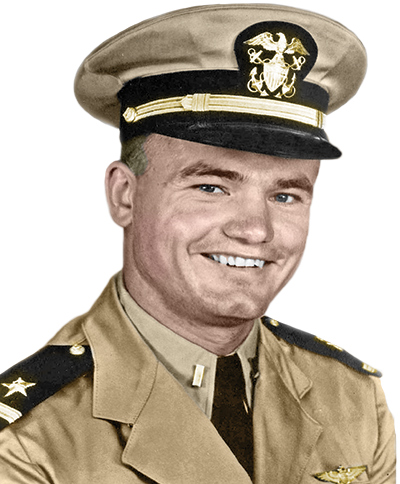
June 2, 1943: The Death of Nile Kinnick

June 2, 1943: Ensign Nile Kinnick is killed in a U.S. Navy training flight. He was a month short of his 25th birthday.

Nile Clarke Kinnick Jr. was born on July 9, 1918 in Adel, Iowa, the grandson of George Clarke, a Republican who served as Governor of Iowa from 1913 to 1917. His family were devout Christian Scientists, and, while Nile Jr. was already a sports star at Adel High School, Nile Sr. got a job in Omaha, Nebraska, and the family had to move. At Benson High School, he won a State Championship in baseball, and starred in basketball.

But his best sport was football, and he chose to attend the University of Iowa, supposedly because their program, then in a down period, would represent a better test for him than his other major option, the University of Minnesota, then one of the best programs in the country -- and Iowa's arch-rival.

Iowa still struggled, going just 1-7 in his sophomore year, 1937. (Freshmen were not eligible for varsity sports under NCAA rules until 1972, with occasional exceptions, such as during the upcoming World War II.) They went 1-6-1 in 1938. Head coach Irl Tubbs was fired, and Eddie Anderson was lured away from Holy Cross in Massachusetts.

He turned the team around in just 1 year: Iowa went 6-1-1, beating South Dakota and Indiana at home, losing away to Michigan, then winning away to Wisconsin and Purdue, beating then-Number 3 Notre Dame and then-Number 20 Minnesota at home, rising to Number 9 in the country, before closing the season with a tie away to Northwestern.

The loss to Michigan cost Iowa the Big Ten Conference title, throwing it to Ohio State, whom Iowa did not play. They did not receive an invitation to a bowl game. But the Notre Dame game became their signature win, and it was recognized as Kinnick's signature performance, scoring Iowa's only touchdown and pinning Notre Dame deep in their own end zone with a late punt, to secure a 7-6 win.

Kinnick was awarded the Heisman Trophy. In his acceptance speech, he said:, "I thank God I was warring on the gridirons of the Midwest, and not on the battlefields of Europe. I can speak confidently and positively that the players of this country would much more, much rather struggle and fight to win the Heisman award than the Croix de Guerre." Another writer cited a pair of famed speechmakers from classical times, saying that his remarks "tackled Demosthenes and threw Cicero for a 15-yard loss."

He was elected student body president, maintained a grade-point average of 3.4, and gave the commencement address for his Class of 1940. That Summer, he played for the College All-Stars in the Chicago College All-Star Game at Soldier Field, losing to the defending NFL Champion Chicago Bears, 45-28.

But he never played football again. The NFL version of the Brooklyn Dodgers drafted him, but he turned down a $10,000 salary to go to the University of Iowa College of Law. He also served as an assistant coach at Iowa in the 1940 and '41 seasons, as the team went 4-4 and 3-5, respectively.

He spoke before the Young Republicans, and introduced Wendell Willkie, the 1940 Republican nominee for President, at an Iowa campaign rally. An Iowa newspaper, the Marion Sentinel, endorsed him for the 1956 Presidential election, the 1st in which he would be eligible, having met the minimum age requirement of 35.

He enlisted in the U.S. Naval Reserve, and reported for induction -- 3 days before the Japanese attack on Pearl Harbor. He received leave to visit his family in Omaha in September 1942, and attended Iowa's season opener, at home at Iowa Stadium in Iowa City, a 26-7 win over Washington University of St. Louis.
On June 2, 1943, Ensign Nile Kinnick was stationed aboard the aircraft carrier USS Lexington, off the coast of Venezuela. He was on a routine training flight in a Grumman F4F Wildcat, when it developed an oil leak. Radio contact was made, determining that he was 4 miles from the carrier, and was forced to carry out an emergency landing in the water. Rescue boats arrived 8 minutes later, but they found only an oil slick.

His body was never recovered. It took until 1996 for the plane to be found but, given that he might have still been inside, it was decided not to disturb the site.

A legend developed that the deck of the Lexington was covered with planes preparing to take off, and that trying to land on it would have caused an explosion that would have killed many of his crewmates, so Kinnick sacrificed himself to save them. The Navy later determined that it wouldn't have mattered: He couldn't have reached the carrier anyway, so the choice was out of his hands.

With the award's establishment in 1935, he was the 1st winner of the Heisman Trophy to die. There wouldn't be another until 1963, when 1961 winner Ernie Davis of Syracuse died from leukemia.

For nearly 30 years, Nile Kinnick Sr., having outlived his son, refused all requests by the University of Iowa to honor his son, not wanting to single him out over all other students who died in World War II. Finally, in 1972, he consented to the renaming of Iowa Stadium, which opened in 1929, as Kinnick Stadium. It remains the only stadium in American college football named for a Heisman Trophy winner. A statue of Kinnick was placed outside in 2006. His Number 24 was retired. The school plays an excerpt from his Heisman Trophy acceptance speech at every home game, before playing the National Anthem.

The coin flipped at the start of every Big Ten football game bears his image. He was a charter inductee into the Iowa Sports Hall of Fame in 1951. That same year, he was elected to the College Football Hall of Fame. In 1999, Sports Illustrated named him Iowa's 3rd-greatest sports figure, behind only wrestler and wrestling coach Dan Gable, and Cleveland Indians pitcher Bob Feller, who had been on a youth baseball team with Kinnick.

Feller, also a U.S. Navy veteran, went to his grave believing that, had he lived, Kinnick would have been elected Governor of Iowa, and would have beaten John F. Kennedy in the 1960 Presidential election.

*

June 2, 1943 was a Wednesday. These baseball games were played that day:

* The New York Yankees lost to the Chicago White Sox, 2-1 at Yankee Stadium.

* The New York Giants lost to the Cincinnati Reds, 13-6 at Crosley Field in Cincinnati. Mel Ott went 1-for-4.

* The Brooklyn Dodgers beat the St. Louis Cardinals, 3-2 at Sportsman's Park in St. Louis. Stan Musial went 1-for-1 with 3 walks.

* A doubleheader was split at Fenway Park in Boston, and both games went to extra innings, not an easy feat given that Fenway didn't get lights until 1947. The St. Louis Browns won the opener, 7-4. Chet Laabs, Frankie Hayes and George McQuinn all singled home runs in the top of the 12th inning. The Boston Red Sox won the nightcap, 3-2. Jim Tabor tripled home the winning run in the bottom of the 10th.

* The Detroit Tigers beat the Philadelphia Athletics, 7-2 at Shibe Park in Philadelphia.

* The Washington Senators beat the Cleveland Indians, 13-1 at Griffith Stadium in Washington.

* The Pittsburgh Pirates beat the Boston Braves, 3-2 at Forbes Field in Pittsburgh.

* And the Philadelphia Phillies beat the Chicago Cubs, 6-5 at Wrigley Field in Chicago.

December 31, 1999 & January 1, 2000: The Millennium

December 31, 1999:  The Millennium arrives. The people of planet Earth survived. At a terrible cost. But we hadn't destroyed ourselves. ...