Showing posts with label asia. Show all posts

Friday, December 2, 2022

December 3, 1901: The "White Australia Policy"

"Australia for the Australians"

December 3, 1901: The new Parliament of Australia passes the Immigration Restriction Act 1901. It becomes the basis of what became known as "The White Australia Policy."

It was a set of racial policies that aimed to forbid people of non-European ethnic origins from immigrating to Australia, in order to create a "White/British" ideal, focused on Anglo-Celtic peoples, but not exclusively. The main focus of exclusion was on Asians, primarily Chinese, and Pacific Islanders, as these were, geographically, the people most likely to immigrate there.

Competition in the gold fields between European and Chinese miners, and labor union opposition to the importation of Pacific Islanders into the sugar plantations of Queensland, reinforced demands to eliminate or minimize low-wage immigration from Asia and the Pacific Islands.

Soon after Australia became a federation on January 1, 1901, the federal government of Prime Minister Edmund Barton passed the Restriction Act. It was drafted by Alfred Deakin, who went on to succeed Barton as Prime Minister.

The key feature of this legislation was the dictation test, which was used to bar non-White immigrants from entry. Subsequent acts further strengthened the policy. These policies effectively gave British migrants preference over all others through the first half of the 20th Century.

It also led to "the Stolen Generations," from 1905 to 1967, when the children of Australian Aboriginal and Torres Strait Islander descent were removed from their families by the Australian federal and State government agencies and church missions, under acts of their respective parliaments. Similar policies were enacted by the federal governments of America and Canada, toward their indigenous peoples.

During World War II, Prime Minister John Curtin reinforced the policy, saying, "This country shall remain forever the home of the descendants of those, people who came here in peace in order to establish in the South Seas an outpost of the British race."

Governments progressively dismantled such policies between 1949 and 1975, when the government of Prime Minister Edward Gough Whitlam removed the last racial elements of Australia's immigration laws.

*

December 3, 1901 was a Tuesday. This was also the day that King C. Gillette patented the safety razor. I have a separate entry for that event.

Baseball was out of season. Football was in midweek. And basketball and hockey were still all-amateur. So there were no scores on this historic day.

Sunday, October 30, 2022

October 30, 1973: The Bosphorus Bridge Opens

October 30, 1973: The Bosphorus Bridge opens in Istanbul, Turkey, connecting the city's European and Asian sections by road, where, previously, the connections had only been by ferry.

It was the 1st bridge to ever connect one continent with another. It is now 1 of 3 bridges over the Bosphorus Strait, followed by the Fatih Sultan Mehmet Bridge in 1988 (named for Sultan Mehmed II, a.k.a. Mehmed the Conqueror, who conquered the city, then named Constantinople, in 1453) and the Yavuz Sultan Selim Bridge in 2016.

Every year, on its anniversary, its operating authority hosts a "fun run." It also happens to have opened on the anniversary of Galatasaray Spor Kulübü (Sport Klub), founded on October 30, 1905. 

Part of the nasty rivalry between Turkey's 2 biggest sports clubs, especially its soccer teams, comes from the fact that they are on opposite sides of these 3 bridges: Fenerbahçe (FEN-er-BAH-chah, or "Fener") is in the Kadıköy district on the Asian side, while Galatasaray is in the Galata Palace area on the European side.


In the 2022-23 season, there are 6 Istanbul clubs in the Turkish Süper Lig, but Fener is the only one on the Asian side. Joining Gala on the European side are Beşiktaş, İstanbul Başakşehir, Kasımpaşa and Fatih Karagümrük.

*

October 30, 1973 was a Tuesday. Baseball season was over. Football was in midweek. There were 4 games played in the NBA:

* The Atlanta Hawks beat the Phoenix Suns, 122-101 at The Omni in Atlanta.

* The Buffalo Braves beat the Seattle SuperSonics, 105-103 at the Buffalo Memorial Auditorium.

* The Milwaukee Bucks beat the Kansas City-Omaha Kings, 112-78 at the Kansas City Municipal Auditorium.

* And the Portland Trail Blazers beat the Los Angeles Lakers, 114-112 at the Veterans Memorial Coliseum in Portland.

There were 2 games played in the American Basketball Association. The New York Nets lost to the San Antonio Spurs, 104-92 at the HemisFair Arena in San Antonio. And the Memphis Tams beat the Carolina Cougars, 110-99 at the Mid-South Coliseum in Memphis.

There were 3 games played in the NHL:

* The New York Rangers and the Vancouver Canucks played to a tie, 3-3 at the Pacific Coliseum in Vancouver.

* The Toronto Maple Leafs beat the Detroit Red Wings, 7-0 at Maple Leaf Gardens in Toronto.

* And the Los Angeles Kings beat the St. Louis Blues, 3-2 at the St. Louis Arena.

And there were 3 games played in the World Hockey Association:

* The Chicago Cougars beat the Winnipeg Jets, 4-1 at the International Amphitheatre in Chicago.

* The Houston Aeros beat the Minnesota Fighting Saints, 6-1 at the Sam Houston Coliseum.

* And the Quebec Nordiques beat the Los Angeles Sharks, 6-4 at the Los Angeles Memorial Sports Arena.

Thursday, June 30, 2022

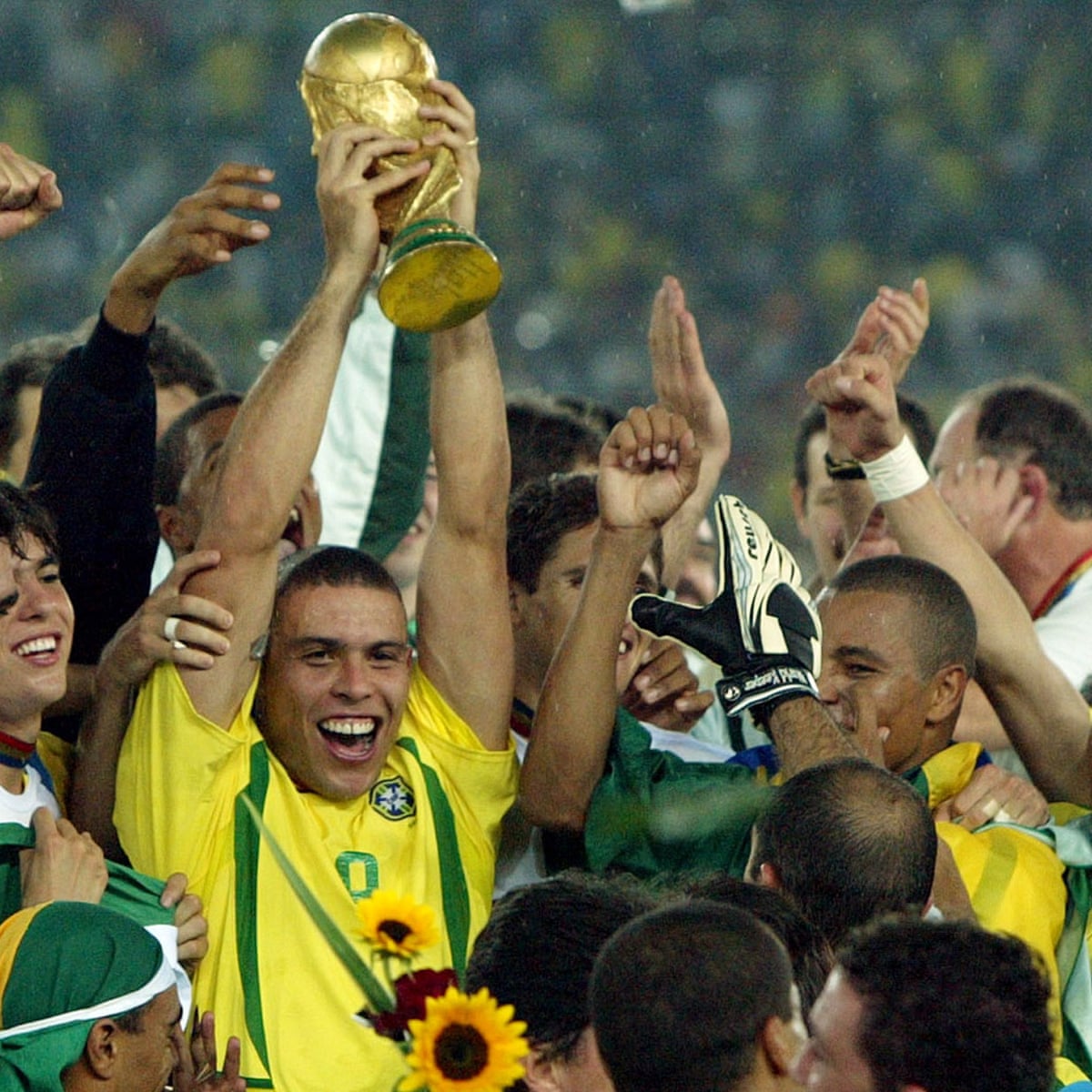
June 30, 2002: Redemption for Ronaldo

The man was redeemed. His hairstylist was not.

June 30, 2002: The World Cup Final is held at the International Stadium in Yokohama, Japan, about 50 miles south of the national capital of Tokyo. As with the rest of the tournament, with help from ESPN for some games, ABC broadcasts the Final in the U.S.

Brazil, having lost the last Final in 1998, were going for redemption, and a record 5th title. Germany were going for a 4th – or a 1st, if you only count since the country was reunified. There was little doubt that these were the 2 best teams in the world.

But there was some doubt as to how they got to the Final.

For the 1st time, the World Cup's hosting duties were split between 2 countries: Japan and neighboring South Korea. Korea would host Groups A, with Denmark, France, Senegal and Uruguay; B, with Paraguay, Slovenia, South Africa and Spain; C, with Brazil, China, Costa Rica and Turkey; and D, with Poland, Portugal, co-hosts South Korea, and the United States. Japan would host Groups E, with Cameroon, Germany, Ireland and Saudi Arabia; F, with Argentina, England, Nigeria and Sweden; G, with Croatia, Ecuador, Italy and Mexico; and H, with Belgium, co-hosts Japan, Russia and Tunisia. (In each case, the countries are listed alphabetically.)

Denmark won Group A, mainly because Zinedine Zidane, who had led France to victory in the previous tournament, had been injured in qualifying, and could only play in the last Group Stage game, leaving the defending Champions with just a draw with Uruguay and losses to Denmark and to their own former African colony, Senegal.

Brazil easily won Group C, beating Turkey in Ulsan, China in Seogwipo, and Costa Rica in Suwon. Germany won Group E, walloping Saudi Arabia 8-0 in Sapporo, being held to a draw by Ireland in Ibaraki, and beating Cameroon in Shizuoka. Ireland finished 2nd to Germany, despite team Captain Roy Keane, a Manchester United star, leaving their camp before the 1st game, following a dispute with team manager Mick McCarthy. Teammate Niall Quinn, a star for Sunderland, said, "He punished himself more than any of us by not coming back."

Despite neither country having the color in their national flags, both Italy and Japan wear blue shirts in soccer/football. Blue is the color of the House of Savoy, the royal house of Italy at the time of Unification in 1871, and they've kept it despite abolishing the monarchy in 1946. Japan wear blue because of superstition: Their 1st tournament was the 1930 Far Eastern Championship, they wore blue, and won it, and have worn it when receiving first choice of uniform ever since.

In Group F, England drew with Sweden in Saitama; then resumed their rivalry with Argentina by beating them 1-0 in Sapporo, thanks to a rightly-awarded penalty in the 44th minute, taken by David Beckham of Manchester United; and then, having guaranteed advancement, played a meaningless finale against former colony Nigeria in Osaka, and played to a turgid 0-0 draw. (The word "turgid" seems like it was designed to describe a dull 0-0 soccer game.)

Group D provided problems for me. Most fans usually want the host nation to do well, as long as they don't beat the fan's own national side. And most fans usually want their ancestral homeland to do well, as long as they don't beat the country where the fan was born, or at least raised.

But the U.S. had to play both co-host South Korea and my ancestors' home of Poland, as well as Portugal. Had I known then that Portuguese fans from Newark would feed my fandom at the next World Cup, it would have been even more problematic for me. I would have wanted all 4 nations to do well, and that's just not possible. And, after an awful performance in France in 1998, the U.S. needed all the points it could get.

South Korea beat Poland, 2-0 in Busan. The U.S. beat Portugal, 3-2 at Suwon, going 3-0 up in the 36th minute, and almost blowing it. The U.S. drew with South Korea, 1-1 at Daegu, blowing a 1-0 lead in the 78th, but guaranteeing them no worse than 2nd place, and thus advancement. Portugal wiped Poland out, 4-0 at Jeonju, preventing them from advancing. South Korea beat Portugal, 1-0 at Incheon, clinching the Group lead. And, in a meaningless finale, Poland beat the U.S., 3-1 at Daejeon.

*

The Round of 16 saw the U.S. beat arch-rival Mexico, 2-0 an Jeonju, in the famous "Dos a Cero" game; England beat Denmark, 3-0 at Niigata; Ireland fell to Spain, 3-2 on penalties after a 1-1 draw in Suwon; Germany beat Paraguay, 1-0 at Seogwipo; Senegal beat Sweden, 2-1 at Ōita, on a "golden goal" in the 104th minute by Henri Camara; Brazil beat Belgium, 2-0 at Kobe; and Turkey eliminated co-hosts Japan, 1-0 at Rifu.

But the other host nation, South Korea, beat Italy, 2-1 in extra time, to clinch advancement to the Quarterfinals and knock the Azzurri out. The Koreans trailed 1-0 for most of the game, but in the 88th minute, Seol Ki-Hyeon scored. In the 117th minute, Ahn Jung-Hwan scored. It is the greatest victory in the history of South Korean soccer. (Although the North will argue that the greatest victory in the history of Korean soccer is their 1966 win that knocked out… Italy.)

The Italians have argued ever since that the officials were trying to fix the game for the home team. I guess they'd seen too many games fixed in favor of Juventus to think that they could be beaten honestly.

The Quarterfinals saw the U.S. knocked out by Germany, 1-0 at Ulsan, on a 39th minute goal by Bayer Leverkusen (and later Bayern Munich and Chelsea) star Michael Ballack, ending the best American performance at a World Cup since the 1st one in 1930; Turkey beat Senegal, 1-0 in extra time in Osaka, on a golden goal in the 94th minute by İlhan Mansız; and South Korea further feeding Italians' conspiracy theories by playing Spain to a 0-0 drawin Guangju, and then beating them 5-3 on penalties.

At Fukuroi, England took a 1-0 lead over Brazil by a 23rd minute goal by Michael Owen of Liverpool. But Rivaldo scored on the stroke of halftime. And Ronaldinho scored a spectacular lob shot in the 50th minute, beating England and Arsenal goalkeeper David Seaman. A joke developed: A man called his penis "Ronaldinho, because it can lob Seaman from 40 yards."

The Semifinals both ended 1-0: Germany curtailed the conspiracy theories, beating South Korea at Seoul, with Ballack scoring in the 75th minute; and Brazil beat Turkey, 1-0 at Saitama, when Ronaldo scored in the 49th. For both South Korea and Turkey, this remains their best performance.

*

The Final was held in Yokohama, before a crowd of 69,029. It was 70 degrees, with 88 percent humidity, but there was no rain. Each team wore its usual first-choice kit: Brazil were in yellow shirts with blue shorts, Germany in white with black shorts. The referee was Pierluigi Collina, perhaps the best in the world, named world referee of the year 6 times, the one ref in Italy considered un-bribe-able.

This was the 1st time the tournament was ever held in Asia, after 8 times being held in Europe, 4 in South America, and 3 in North America.

Because of the Far East location of the tournament, starting times for the games were difficult for much of the world. For the Final, kickoff was at 8:00 PM Japan time, 12:00 Noon in Germany and most of Europe, 11:00 AM in Britain, 7:00 AM in Brazil, and 6:00 AM U.S. Eastern. "Breakfast at the World Cup."

(UPDATE: Through 2026, it's been 10 in Europe, 5 in South America, 3 in North America, 2 in Asia, 1 in Africa, and, unlike the World Cups of Cricket and Rugby, never yet in Oceania. By Hemisphere: 13 in the Eastern, 8 in the Western; 15 in the Northern, 6 in the Southern.)

From 1950 onward, every World Cup Final except 1978 had included either Brazil or Germany, but they had never previously played each other in any round of a World Cup. Oddly, the streak would end in the next World Cup, in 2006, hosted by Germany.

It was the ultimate clash of styles: The dour, defense-minded Die Mannschaft, with Captain and Bayern goalkeeper Oliver "King" Kahn," Liverpool midfielder Dietmar Hamman, and Kaiserslautern (later Bayern) forward Miroslav Klose; against the attacking Selecão, with Palmeiras goalie Marcos, Captain and AS Roma (and later AC Milan) right back Cafu, São Paulo FC (and later FC Barcelona) centerback Edmílson, Real Madrid left back Roberto Carlos, Arsenal "Double"-winning midfielder Gilberto Silva, Barcelona midfielder Rivaldo, Paris Saint-Germain forward Ronaldo de Assis Moreira (who had to be known as Ronaldinho, because they already had a "Ronaldo"), and, of course, Ronaldo.

Ballack was suspended for the Final, due to yellow card accumulation. Ronaldinho had been suspended for the Semifinal for the same reason, but was eligible to return for the Final. The big question was whether Ronaldo would come through, the way he hadn't in the 1998 Final, for reasons on which people still speculate.

Ronaldo Luís Nazário de Lima, then 25, and a native of Itaguaí, outside Rio de Janeiro but no suburb, was then the biggest star in the game. He had starred for Cruzeiro in Belo Horizonte, Brazil; PSV Eindhoven in the Netherlands; Barcelona in Spain; and Internazionale Milano.

Italy's Serie A, with its tradition of defense-first thinking, symbolized by the catenaccio of both Milan teams of the 1960s, was considered the most difficult European league in which to score, but Ronaldo had utterly conquered it. It was there that he received the nickname that would stick with him: Il Fenomeno (The Phenomenon, or, in his native Portuguese, O Fenômeno). AC Milan and Italy defender Paolo Maldini ranked him with Argentina's Diego Maradona as the 2 best attackers he had ever faced. Ronaldo had become beloved.

But while he'd gotten a winner's medal for the 1994 World Cup in the U.S., he hadn't played; and while he'd starred in 1998, his role in the Final was partly blamed for Brazil's defeat to host France.

He was injured early in the 1999-2000 season, and made it worse in his 1st game back toward the end of the season. Inter physiotherapist Nilton Petrone said, "His knee-cap actually exploded," and called it "the worst football injury I've ever seen." Ronaldo sat out the entire 2000-01 season. It was thought that the career of a genius of the sport might be prematurely over.

After 2 surgeries, he had still missed Brazil's entire World Cup qualifying campaign, which was beset with problems. He was selected for the final team, anyway. Tim Vickery, who covered South American soccer for BBC Sport, said, "Without Ronaldo, Brazil were a shambles, fortunate even to get to the tournament. With him, it was a different story." So every football fan and football journalist on the planet was focused on him.
Yokohama International Stadium

He had a one-on-one with Kahn in the 18th minute, but missed. Kahn saved a shot from him at the half-hour. Ronaldo missed another shot in 1st half stoppage time. By the 67th minute, Kahn had gotten through 6 and 3/4 games allowing just 1 goal.

But in that 67th minute, Ronaldo won the ball from Hamann in the German half of the pitch. He passed to Rivaldo, who struck a low shot towards goal. Kahn attempted to catch the shot, but he was unable to take it cleanly, and it rebounded into play. Ronaldo, who had followed Rivaldo's shot, put the rebound in the net, ending Khan's clean sheet streak at 427 minutes.

Ronaldo scored again in the 79th, his 8th goal of the tournament, winning him the Golden Boot as its leading scorer. Oliver Bierhoff of AS Monaco and Christian Ziege of Tottenham Hotspur had come on as substitutes for Germany. Bierhoff had a shot in the 83rd minute, and Ziege one in the 93rd, but Marcos saved both, and Brazil were 2-0 winners.

For both Brazil as a team and Ronaldo in particular, the game was a sweet redemption. For Germany, it turned out to be their best performance in a World Cup between 1990 and 2014, but not good enough.

Real Madrid soon signed Ronaldo to join his Brazil teammate Roberto Carlos, and such stars as Zinedine Zidane, Luis Figo, Iker Casillas, Raúl, Guti, Fernando Hierro, Fernando Morientes, Míchel Salgado and Claude Makélélé, and later English stars David Beckham and Steve McManaman, as part of their "Galácticos."

After 5 years with them, which included a disappointing performance by the entire Brazil team at the 2006 World Cup, he played the 2007-08 season with AC Milan. He had played for both Milan teams, and both "Spanish giants," Barcelona and Real Madrid. Somehow, despite having switched sides in 2 of the biggest rivalries in sports on planet Earth, he remains beloved by fans of all 4 teams. He returned to Brazil in 2009, spending 2 seasons with São Paulo team Corinthians, before admitting that his increasing weight had slowed him down too much, and retiring in 2011.

With the arrival of Portuguese star Cristiano Ronaldo, the Brazilian, whose hair has ranged from weirdly styled to completely shaved and several styles in between, became known as "Bald Ronaldo," "Fat Ronaldo," or simply, due to his usual uniform number, "R9," along with "O Fenômeno." He is a reminder to people calling Cristiano "The GOAT," meaning "The Greatest Of All Time," that he is not even the greatest Ronaldo to have played for Real Madrid in the 21st Century.

The 2002 World Cup would be the only one won by Ronaldo or Ronaldinho. Ronaldo won 5 league titles and 3 national cups, but never a continental title. Ronaldinho, never his club teammate (he arrived as AC Milan as Ronaldo left), won 6 league titles, a national cup, and the continental titles of both Europe (the Champions League with Barcelona in 2006) and South America (the Copa Lbertadores with Atlético Mineiro in 2013).

Brazil and Germany would face each other in the 2014 World Cup Semifinal, in Brazil. In one of the most shocking games in the sport's history, Germany won, 7-1. As basketball coach Rick Pitino would have said, Ronaldo wasn't walking through that door. Ronaldinho wasn't walking through that door. Pelé wasn't walking through that door. And if they had, it would have been as slow old men. (Ronaldinho was still playing, but he was 34 and far from his best.)

UPDATE: An article for ESPN.com, published after the 2026 World Cup, ranking all 23 tournaments, rated this one 13th.

*

June 30, 2002 was a Sunday. These Major League Baseball games were played, most of them Interleague:

* The New York Yankees beat the New York Mets, 8-0 at Yankee Stadium. I cared more about this game that I did about the World Cup Final. John Vander Wal and Alfonso Soriano hit home runs, while Derek Jeter went 2-for-4 with a walk. For the Mets, Mo Vaughn and Roberto Alomar, 2 of the franchise's many regrettable too-late acquisitions, both singled, and Vaughn added a double, but those would be the only 3 hits in an Andy Pettitte shutout, while Steve Trachsel didn't get out of the 4th inning.

* The Atlanta Braves, a former Boston team, beat the Boston Red Sox, 7-3 at Fenway Park in Boston. Boston's bullpen and defense completely collapsed in the top of the 10th inning, with 5 hits, an error and a passed ball.

* The Philadelphia Phillies beat the Baltimore Orioles, 8-5 at Camden Yards in Baltimore.

* The Tampa Bay Devil Rays beat Florida's original team, the Florida Marlins, 6-5 at Tropicana Field in St. Petersburg, Florida. The game went to extra innings, and each team scored a run in the 11th. Brent Abernathy singled Steve Cox home with the winning run in the bottom of the 12th.

* The Toronto Blue Jays beat Canada's original team, the Montreal Expos, 7-5 at the SkyDome (now the Rogers Centre) in Toronto.

* The Arizona Diamondbacks beat the Cleveland Indians, 5-2 at Jacobs Field (now Progressive Field) in Cleveland.

* The Pittsburgh Pirates beat the Detroit Tigers, 6-2 at Comerica Park (now Fifth Third Park) in Detroit.

* The Chicago Cubs beat the Chicago White Sox, 9-2 at the new Comiskey Park (now Rate Field) in Chicago.

* In what had been an American League matchup from 1970 to 1997, the Minnesota Twins beat the Milwaukee Brewers, 4-3 at the Metrodome in Minneapolis.

* In the one intraleague game, the Cincinnati Reds beat the St. Louis Cardinals, 12-8 at Busch Stadium in St. Louis. Ken Griffey Jr. was injured, and did not play. Albert Pujols went 1-for-4 with 2 RBIs. Former Yankee Tino Martinez hit a home run for the Cards.

* The Kansas City Royals beat the San Diego Padres, 13-1 at Kauffman Stadium in Kansas City.

* The Anaheim Angels beat their neighbors, the Los Angeles Dodgers, 5-1 at Edison International Field of Anaheim (now Angel Stadium of Anaheim).

* The Oakland Athletics beat their cross-Bay rivals, the San Francisco Giants, 7-0 at the Network Associates Coliseum (as the Oakland Coliseum was then known). Tim Hudson pitched a 5-hit shutout. The A's hit no home runs, but Scott Hatteberg went 3-for-5 with 3 RBIs. Barry Bonds went 0-for-2 with 2 intentional walks.

* The Colorado Rockies beat the Seattle Mariners, 4-3 at Safeco Field (now T-Mobile Park) in Seattle. Larry Walker went 4-for-5. Ichiro Suzuki went 1-for-3 with 2 walks and a stolen base.

* And the Texas Rangers and their cross-State rivals, the Houston Astros, were rained out at The Ballpark in the Dallas suburb of Arlington, Texas. Labor Day, September 2, was an off-day for both teams, so that's when the game was made up. The Rangers won, 7-2.

Wednesday, May 25, 2022

May 26, 1924: The Immigration Act of 1924

May 26, 1924: The Immigration Act of 1924 is signed into law by President Calvin Coolidge. It was intended to control the racial makeup of the United States by greatly restricting immigration.

People had long been coming to America from all over the world. In the late 1840s, the Irish Potato Famine brought in people from Ireland, to the point where, by the end of the 20th Century, there were more Irish people in America than in Ireland. The European Revolutions of 1848 also led millions of people, especially Germans, to flee. Most Americans don't realize it, but Germans are still the largest ethnic group in America -- ahead of African-Americans and Hispanics, let alone Irish and Italians.

The late 19th Century saw a great deal of immigrants from Southern Europe: Italy, Greece, and the Balkan countries in between that were then part of the Austro-Hungarian Empire. These people were, at the same time, joined by many Jews fleeing Eastern Europe, including Austria, Romania and the Russian Empire, including present-day Poland and Ukraine.

The Southern Europeans were white, but darker-skinned than people from Germany and the British Isles. And they were Catholic, in many cases Eastern Orthodox, which seemed, to many Americans, to be even more "foreign" than the Roman Catholicism practiced by the Irish. Many of the Eastern Europeans were also Catholic, some Eastern Orthodox. And the Jews weren't even Christian.

These immigrants included my mother's paternal grandparents from Vilnius in Lithuania, before 1901, when their 1st child was born in Manhattan; and my father's Catholic paternal grandparents from Borki Wielkie in northeastern Poland, sometime between 1891, when my great-grandfather was born there, and 1914, when my grandfather was born in Newark, New Jersey. It's only recently that I was able to narrow it down that far, much less any further. (As for maternal grandparents, my mother's were English and my father's were Dutch, and they were already here before the American Civil War of the 1860s, but that's all I know so far.)

All this foreignness led to a backlash, which got to be disgusting. In 1896, one national magazine actually printed these words: "Europe is vomiting."
This cartoon had the same idea.

But it didn't stop. In 1907, immigration to America peaked, with 1.1 million people coming in. April 17 of that year was the busiest day New York's Ellis Island immigration station ever had.

White Anglo-Saxon anger over immigration, including agitation from the Ku Klux Klan -- who, let's not forget, were Protestant, and thus as much anti-Catholic and anti-Semitic as anti-black -- was a big reason why Prohibition was passed -- and a big reason why it passed when it did. Anti-immigrant and anti-liquor activists knew that, after the reapportionment from the 1920 Census, they'd never have another chance, so they had to get it done before then, to strike the blow they wanted against the Germans with their beer, the Italians with their wine, the Irish with their whiskey, and the Eastern Europeans with their vodka.

The 18th Amendment was ratified in 1919, and took effect in 1920. Of course, ethnic gangs got better organized, and bootlegged and sold booze, and the American Mafia as we know it was born. Prohibition totally backfired, and the 21st Amendment repealed the 18th in 1933. By that point, organized crime had anticipated this, and had increased their involvement in their other fields, including gambling and prostitution. Drugs soon followed.

The activists did not learn their lesson, and tried harder to restrict immigration. The Immigration Act of 1924 was also known as the Johnson-Reed Act, for its sponsors, Representative Albert Johnson of Washington, and Senator David Reed of Pennsylvania, both Republicans.

Johnson was not merely a racist, he was a eugenicist. In 1927, he justified the Act as a bulwark against "a stream of alien blood, with all its inherited misconceptions respecting the relationships of the governing power to the governed." And Reed was an out-and-out fascist: On July 1, 1932, during the Bonus Army march on Washington, He took to the Senate floor, and said, "I do not often envy other countries and their governments, but I say that if this country ever needed a Mussolini, it needs one now."

The Act prevented immigration from Asia, and set quotas on the number of immigrants from the rest of the world: 165,000 per year, and 3 percent of any country from their 1910 population. It also authorized the creation of the country's first formal border control service, the U.S. Border Patrol, and established a "consular control system," which allowed entry only to those who first obtained a visa from a U.S. consulate abroad.

Albert Johnson was defeated in the Franklin Roosevelt landslide of 1932. He died in 1957, a proud racist and eugenicist to the end. David Reed was defeated in 1934, in another Democratic landslide. He died in 1953. His house in Washington, D.C. is, with some appropriateness, now the Embassy of a nation of nonwhite people: The Asian nation of Laos.

The 1924 Act would define U.S. immigration policy for nearly three decades, until being substantially revised by the Immigration and Nationality Act of 1952, and ultimately replaced by the Immigration and Nationality Act of 1965.

On November 6, 1986, President Ronald Reagan signed the Immigration Reform and Control Act of 1986. Its most significant effect was that it allowed immigrants who had entered the U.S. illegally before January 1, 1982 to apply for legal status, provided they paid fines and back taxes. This provision, which Reagan himself referred to as “amnesty,” allowed around 3 million immigrants to secure legal status after paying $185, demonstrating “good moral character” and learning to speak English.

Conservative activists since Reagan, who have demagogued the issue of illegal immigration since the 1990s and especially since the 9/11 attacks in 2001, find it hard to believe that their favorite President of all time could have done such a thing, but he did. Say what you want about him, and I have, but the man did believe that immigrants made America stronger, not weaker.

And every President after him agreed: Both George Bushes, Bill Clinton and Barack Obama -- until Donald Trump, who was so anti-immigrant, he made Calvin Coolidge look like a believer in open borders. 

*

May 26, 1924 was a  Monday. These baseball games were played that day:

* The New York Yankees beat the Detroit Tigers, 8-2 at Yankee Stadium. "Bullet Joe" Bush went the distance for the win. Babe Ruth hit a home run, and 2nd baseman Ernie Johnson went 4-for-4 with 2 home runs and 3 RBIs. Ty Cobb, by this point also the Tigers' manager, went 0-for-3 with a walk.

* The Boston Red Sox beat the Cleveland Indians, 10-9 at Fenway Park in Baltimore. Tris Speaker, by this point also the Indians' manager, went 2-for-5 with an RBI.

* The Philadelphia Athletics beat the St. Louis Browns, 2-1 at Shibe Park in Philadelphia. George Sisler, the Browns' greatest player ever, went 0-for-4.

* The Washington Senators beat the Chicago White Sox, 8-2 at Griffith Stadium in Washington.

* The St. Louis Cardinals beat the Cincinnati Reds, 4-3 at Sportsman's Park in St. Louis. None of the other National League teams were scheduled for the day.

Thursday, April 7, 2022

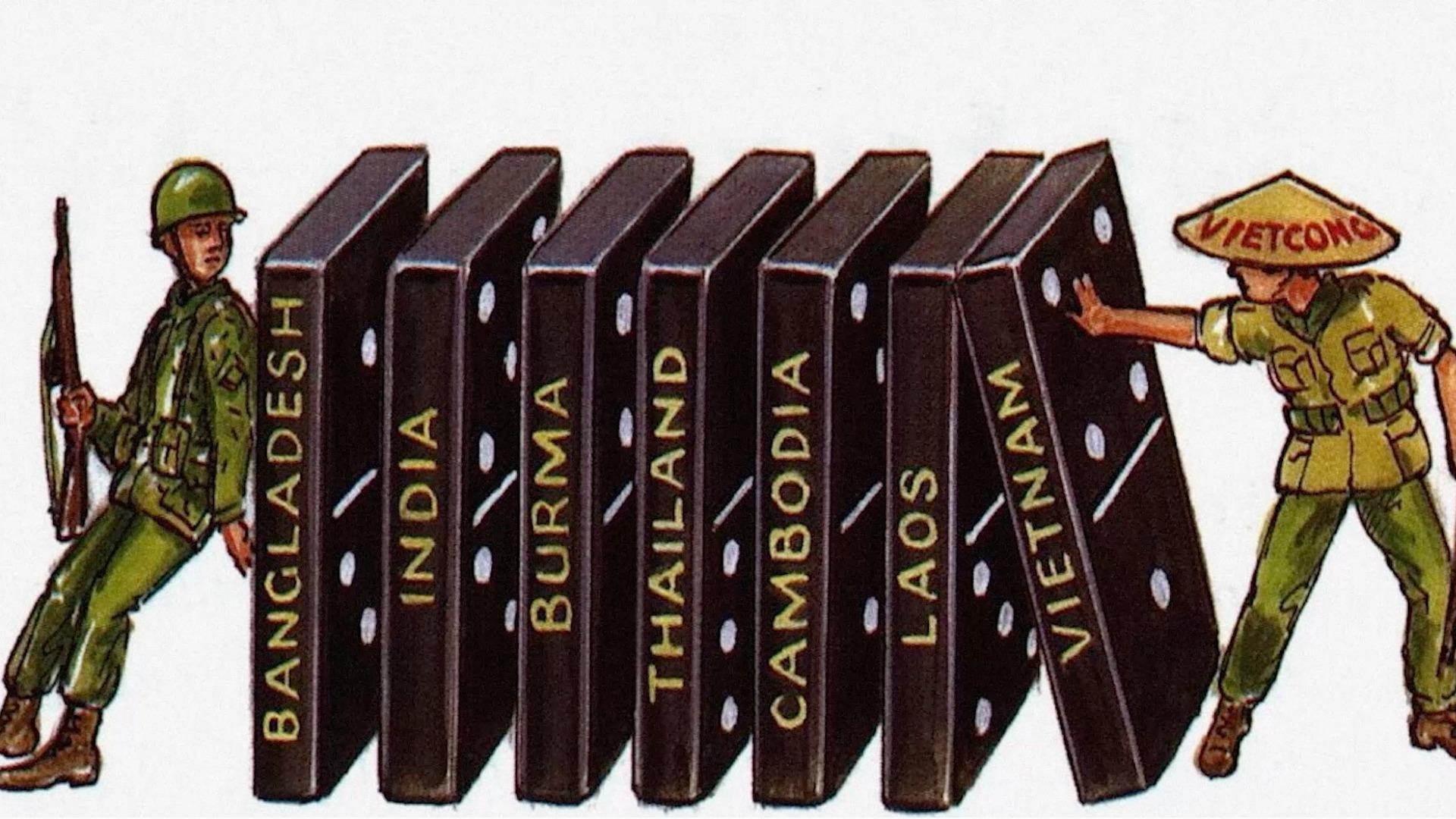
April 7, 1954: President Eisenhower Presents the "Domino Theory"

April 7, 1954: President Dwight D. Eisenhower calls a press conference, explaining why America was contributing to the fighting of Communism in the East Asian nation of Vietnam. It became known as the Domino Theo

You have broader considerations that might follow what you would call the "falling domino" principle. You have a row of dominoes set up, you knock over the first one, and what will happen to the last one is the certainty that it will go over very quickly. So you could have a beginning of a disintegration that would have the most profound influences.
This theory scared, and thus was kept in place by, not just "Ike," but by the next 2 Presidents, John F. Kennedy and Lyndon B. Johnson. But Ike turned out to be mostly wrong. I say "mostly" because, once his former Vice President, Richard Nixon, became President, on a promise to end the war, he extended the war to Cambodia, destabilizing that country. In the end, Cambodia was the only other "domino" to fall: Ho Chi Minh was a nationalist, an Asian version of Yugoslavia's Marshal Josip Broz Tito, looking to convert his own country to Communism, and no one else's.

*

April 7, 1954 was a Wednesday. Pro Football Hall-of-Famer Tony Dorsett and actor Jackie Chan were born.

There were no games on this historic day. Baseball was in Spring Training. Football was out of season. The NBA Finals and the Stanley Cup Finals were both underway, although this was a travel day for both. In the NBA, the Minneapolis Lakers went on to beat the Syracuse Nationals. In the NHL, the Detroit Red Wings went on to beat the Montreal Canadiens. Both series went to 7 games.

December 31, 1999 & January 1, 2000: The Millennium

December 31, 1999:  The Millennium arrives. The people of planet Earth survived. At a terrible cost. But we hadn't destroyed ourselves. ...