Showing posts with label korea. Show all posts

Sunday, November 13, 2022

November 13, 1982: The Tragedy of Kim Duk-koo

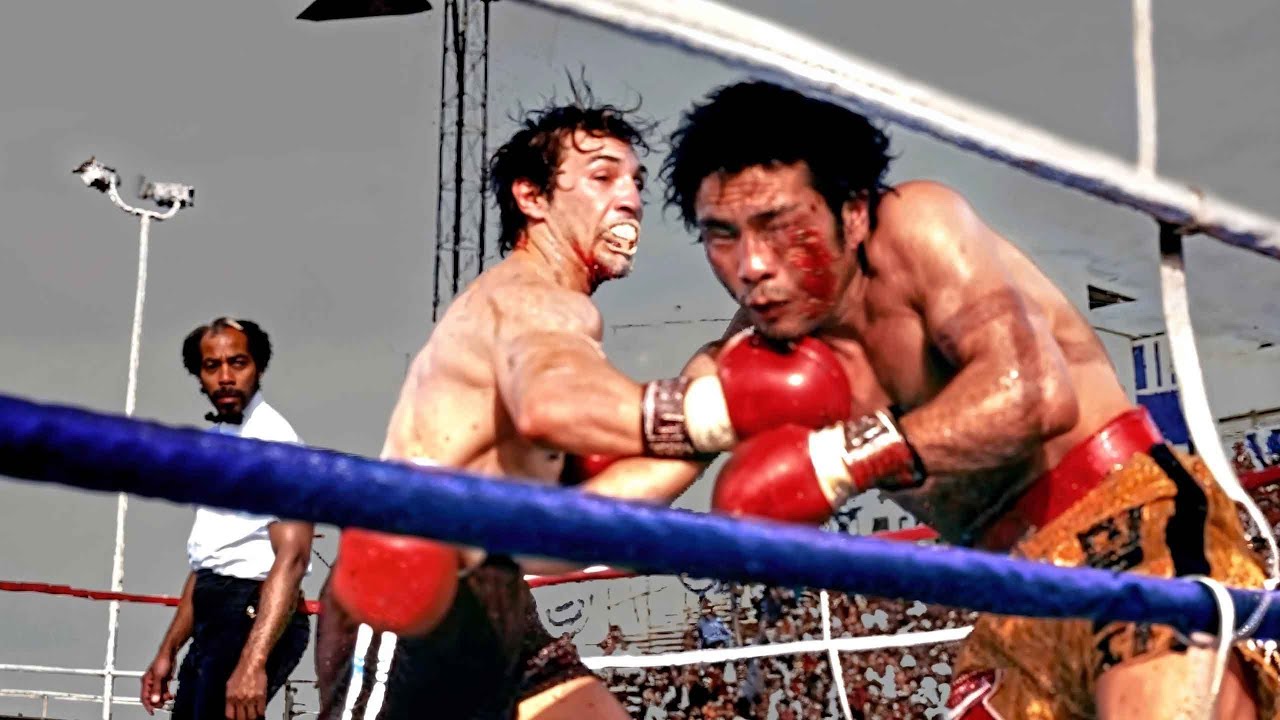
November 13, 1982: Boxer Ray Mancini, the WBA Lightweight Champion of the World, defends his title against Korean boxer Kim Duk-koo in the outdoor stadium at Caesar's Palace in the Las Vegas suburb of Paradise, Nevada. (Kim's name usually then listed as "Duk Koo Kim.")

Kim was 27, had a career record of 17-1-1, and was the Lightweight Champion of the Oriental and Pacific Boxing Federation (OPBF). But except for 1 fight in the Philippines, this would be his 1st time fighting outside Korea. Indeed, except for that, and 1 fight each in Pusan and Ilsan, he had only fought in the South Korean capital of Seoul.

In contrast, Mancini, a native of Youngstown, Ohio, and like his father Lenny nicknamed "Boom-Boom" for his hard punching, was only 21, but was 24-1 going into the fight. His only loss was the year before, to Alexis Argüello, who held the WBC Lightweight Championship. On May 8, 1982, Mancini beat Arturo Frias to win the WBA version of the lightweight title. On July 24, he successfully defended that title against Ernesto España, and was looking forward to a rematch and unification bout with Argüello. But, first, he had to fight Kim. And then, the night before Mancini vs. Kim, Argüello lost his piece of the title to Aaron Pryor.

Kim struggled to make the 135-pound weight limit. Before the fight, Kim was quoted as saying "Either he dies, or I die." He wrote the message "live or die" on his Las Vegas hotel lampshade only days before the bout -- which led to a mistaken translation of "kill or be killed" being reported in the media.

On November 26, in fight for the Heavyweight Championship of the World, broadcast in prime time on ABC, Larry Holmes won a unanimous 15-round decision over Randall "Tex" Cobb. The fight was brutal, and it made announcer Howard Cosell, known for his boxing broadcasts, swear never to broadcast another professional fight, a vow he kept until his death.

Between them, these 2 fights led to changes in boxing. The maximum of 15 rounds was reduced to 12. A standing eight-count for any knockdown was required. And any fighter knocked out automatically had his license suspended for 45 days, for his own safety.

Mancini went to Kim's funeral in Korea, and while boxing fans didn't seem to hold Kim's death against him, he fell into a deep depression. To make matters worse, Kim's mother died by suicide 3 months after the fight; and the bout's referee, Richard Green, did so 6 months after that.

Mancini never did fight Pryor, and never got a rematch against Argüello. Officially, he defended his title 4 times, plus won 2 non-title fights, raising his record to 29-1. On June 1, 1984, at the Buffalo Memorial Auditorium, he lost the title on a technical knockout against Livingstone Bramble, a fighter from the Caribbean nation of St. Kitts and Nevis, the only Rastafarian ever to win a boxing title. He sometimes fought under the name Ras-I Alujah Bramble.

Mancini got a rematch against Bramble, losing a very close, but unanimous, decision. He fought twice more, losing a split decision to former Lightweight Champion Héctor "Macho" Camacho in 1989, and a 7th-round TKO to former Lightweight Champion Greg Haugen in 1992. Mancini retired with a record of 29-5. He went on to become a film producer, and as of November 13, 2022, is still alive.

*

November 13, 1982 was a Saturday. 

Among the college football games played that day were these:

* Number 1 Georgia beat Auburn, 19-14 at Jordan-Hare Stadium in Auburn, Alabama. Georgia won the Southeastern Conference Championship.

* Number 2 Southern Methodist University beat Texas Tech, 34-27 at Jones Stadium in Lubbock, Texas. SMU won the Southwest Conference Championship.

* Number 3 Arizona State were upset by Number 7 Washington, 17-13 at Sun Devil Stadium (now Mountain America Stadium) in the Phoenix suburb of Tempe, Arizona.

* Number 4 Nebraska beat Iowa State, 48-10 at Cyclone Stadium (now Jack Trice Stadium) in Ames, Iowa. Nebraska won the Big 8 Conference Championship.

* Number 5 Penn State beat Number 13 Notre Dame, 24-14 at Notre Dame Stadium in South Bend, Indiana. An independent with no conference title available to them, Penn State rose to Number 2, and beat Number 1 Georgia in the Sugar Bowl, to win their 1st National Championship.

* Number 6 Louisiana State University were upset by Mississippi State, 27-24 at Scott Field (now Davis Wade Stadium) in Starkville, Mississippi. LSU were invited to the Orange Bowl, where they lost to Nebraska.

* Number 8 University of Pittsburgh beat Army 24-6 at Michie Stadium in West Point, New York. As for the other service academies, Navy lost to South Carolina, 17-14 at Williams-Brice Stadium in Columbia, South Carolina; while Air Force had the week off.

Pitt were invited to the Cotton Bowl, where they lost to SMU. With no losses but a tie, SMU claimed the National Championship ahead of 1-loss Penn State, but both the AP and the UPI had Penn State ahead of them in their polls.

* Number 9 Florida State beat Louisville, 49-14 at Doak Campbell Stadium in Tallahassee, Florida.

* Number 10 Arkansas beat Texas A&M, 35-0 at Razorback Stadium in Fayetteville, Arkansas.

* Number 11 Clemson beat Number 18 Maryland, 24-22 at Byrd Stadium (now SECU Stadium) in the Washington suburb of College Park, Maryland.

* Number 12 UCLA beat Stanford, 38-35 at the Rose Bowl in the Los Angeles suburb of Pasadena, California. UCLA won the Pac-10 Conference Championship.

* Number 13 Oklahoma beat Missouri, 41-14 at Memorial Stadium in Norman, Oklahoma. Oklahoma were invited to the Fiesta Bowl, where they lost to Arizona State, on ASU's home field.

* Number 14 Michigan beat Purdue, 52-21 at Michigan Stadium in Ann Arbor. Michigan won the Big 10 Conference Championship, but lost the Rose Bowl to UCLA.

* Number 17 Alabama were upset by Southern Mississippi, 38-29 at Bryant-Denny Stadium in Tuscaloosa, Alabama.

* As for New Jersey's teams, Princeton lost to Yale, 37-19 at the Yale Bowl in New Haven, Connecticut; while Rutgers played 2 nights earlier, losing to Number 19 West Virginia, 44-17 at Giants Stadium. RU played 3 "home games" at the Meadowlands that year, and all 3 crowds could have fit at Rutgers Stadium, provided they opened the grass hills in the corners.

And in New Jersey high school football, the school I would enter in the 10th grade 2 years later, East Brunswick, lost to Union of Union Township, Union County, 10-0 at Jay Doyle Field in East Brunswick.

Baseball was out of season. There were 7 games in the NBA:

* The New York Knicks beat the Detroit Pistons, 112-100 at Madison Square Garden. Kelly Tripucka, a native of Bloomfield, New Jersey who grew up as a Knicks fan, scored 35 points for the Pistons. Isiah Thomas added 30 points, perhaps the first time he drove Knick fans crazy, but by no means the last. Bernard King, as he so often did in those days, led the Knicks in scoring, with 27 points.

* The New Jersey Nets lost to the Philadelphia 76ers, 110-100 at the Brendan Byrne Arena at the Meadowlands.

* The Indiana Pacers beat the Chicago Bulls, 119-115 at the Market Square Arena in Indianapolis. At the time, the Bulls would have been considered at the time to be the Pacers' arch-rivals, at least geographically. They probably should still be, but are not generally thought of that way.

* The Denver Nuggets beat the Dallas Mavericks, 140-130 at the Reunion Arena in Dallas. Alex English scored 40 points for the Nuggets.

* The Seattle SuperSonics beat the San Antonio Spurs, 107-98 at the HemisFair Arena in San Antonio. David "Skywalker" Thompson scored 32 for the Sonics.

* The Kansas City Kings beat the San Diego Clippers, 112-111 at the San Diego Sports Arena (now the Pechanga Arena). Eddie Johnson, known as "the Man Who Put the J in 'Jump Shot,'" scored 35 for the Kings.

* The Golden State Warriors beat the Atlanta Hawks, 114-101 at the Oakland Coliseum Arena. Joe Barry Carroll scored 30 points and grabbed 18 rebounds. He did not always show that much effort, which earned him the uncomplimentary nickname "Joe Barely Cares."

There were 10 games in the NHL, with every team except the New York Rangers scheduled to play:

* The New York Islanders lost to the Washington Capitals, 3-1 at the Capital Centre in the Washington suburb of Landover, Maryland.

* The New Jersey Devils lost to the Quebec Nordiques, 7-2 at the Colisée de Québec.

* The Boston Bruins beat the Buffalo Sabres, 3-2 at the Boston Garden.

* The Hartford Whalers beat the St. Louis Blues, 5-2 at the Hartford Civic Center (now the PeoplesBank Arena).

* The Edmonton Oilers beat the Philadelphia Flyers, 4-3 at The Spectrum in Philadelphia.

* The Toronto Maple Leafs beat the Minnesota North Stars, 4-3 at Maple Leaf Gardens in Toronto.

* The Calgary Flames beat the Pittsburgh Penguins, 3-1 at the Civic Arena in Pittsburgh.

* In an "Original Six" matchup, the Chicago Black Hawks beat their arch-rivals, the Detroit Red Wings, 3-2 at the Joe Louis Arena in Detroit.

* The Winnipeg Jets beat the Vancouver Canucks, 3-2 at the Winnipeg Arena.

* The Los Angeles Kings beat the Montreal Canadiens, 2-1 at The Forum outside Los Angeles in Inglewood, California.

And in English soccer, Arsenal and Everton, the blue club in Liverpool, played to a draw, 1-1 at the Arsenal Stadium, a.k.a. Highbury, in North London. 

Wednesday, October 26, 2022

October 26, 1979: The Assassination of Park Chung Hee

October 26, 1979: President Park Chung Hee of the Republic of Korea (a.k.a. "South Korea") is assassinated, shot by Kim Jae-gyu, director of the KCIA, the country's intelligence service, after a banquet at an alleged safehouse in the capital of Seoul. He was a few days short of turning 62.

Kim claimed that Park was an obstacle to democracy, and that his act was one of patriotism. He had a point: Park had been President since 1962, and since the nation was established in 1948 under Syngman Rhee, it had, essentially, been a dictatorship. Nevertheless, for his crime, Kim was hanged 7 months later.

Within a few years, South Korea would be a thriving democracy. In 2013, Park's daughter, Park Geun-hye, was elected President, the 1st popularly elected head of state in East Asia. But she was impeached for corruption, and was removed from office on March 10, 2017.

*

October 26, 1979 was a Friday. Baseball season had ended 9 days earlier, when the Pittsburgh Pirates won the World Series over the Baltimore Orioles. Football was in midweek. There were 7 games played in the NBA:

* The New York Knicks lost to the Philadelphia 76ers, 127-116 at The Spectrum in Philadelphia.

* The New Jersey Nets lost to the Atlanta Hawks, 94-90 at the Rutgers Athletic Center (now the Jersey Mike's Arena) in Piscataway, New Jersey.

* The San Antonio Spurs beat the Detroit Pistons, 129-113 at the Silverdome in the Detroit suburb of Pontiac, Michigan. George Gervin scored 41 points.

* The Indiana Pacers beat the Washington Bullets, 118-108 at the Market Square Arena in Indianapolis.

* The Los Angeles Lakers beat the Kansas City Kings, 116-104 at The Forum outside Los Angeles in Inglewood, California. Otis Birdsong scored 35 in defeat for the Kings.

* The Portland Trail Blazers beat the Chicago Bulls, 95-93 at the Portland Memorial Coliseum.

* And the Phoenix Suns beat the Seattle SuperSonics, 92-86 at the Seattle Center Coliseum.

And there were 4 games played in the NHL:

* The New York Islanders beat the Hartford Whalers, 2-1 at the Springfield Civic Center (now the MassMutual Center) in Springfield, Massachusetts.

* The Atlanta Flames beat the Edmonton Oilers, 7-3 at The Omni in Atlanta.

* The Winnipeg Jets beat the Boston Bruins, 3-2 at the Winnipeg Arena.

* And the Toronto Maple Leafs and the Colorado Rockies played to a tie, 2-2 at the McNichols Arena in Denver.

Saturday, October 1, 2022

October 1, 1988: Steffi Graf Wins the Golden Slam

October 1, 1988: Steffi Graf, as I mentioned earlier, had already won the Grand Slam. She goes one better: In the first Olympics in which tennis was a medal sport, she wins the Gold Medal -- making what remains, for either men or women, the only "Golden Slam."

Going into 1988, the native of Mannheim, Germany was 18, and had one major to her name, the 1987 French Open. She won the Australian Open on January 23, beating veteran Chris Evert, 6-1, 7-6. On June 4, she repeated as French Open champion, not losing a game in the Final, against Soviet player Natalia Zvereva.

Wimbledon would be a harder nut to crack. She got to the Final, and was up against the best woman Wimbledon had yet seen, Martina Navratilova. Martina took the 1st set, 7-5. But Steffi came back strong, winning the next 2 sets, 6-2 and 6-1.

On September 10, she went into Flushing Meadow, and took the court for the Final of the U.S. Open, against Argentine star Gabriela Sabatini. Graf won the 1st set, 6-3. Sabatini won the 2nd set, 6-3. Suddenly, the Steffi Slam was in doubt. But she removed all down, beating Gabby, 6-1, and finishing the Slam. She matched Maureen Connolly in 1953 and Margaret Court in 1970.

But neither Connolly nor Court had a chance to achieve a "Golden Slam." Off to the Olympic Games in Seoul, Korea, where tennis was a competitive sport for the 1st time since 1924. As with the U.S. and Australian Opens, it was on a hard court, as opposed to the grass of Wimbledon and the clay of the French Open. Miloslav Mečíř of Czechoslovakia won the Gold Medal in men's singles, defeating American Tim Mayotte. Graf played Sabatini in the Final again, and won, 6-3, 6-3. The 1st Golden Slam was done.

Graf won 3 out of 4 majors 4 more times, missing in the French in 1989 and 1993, and the Australian in 1995 and 1996. When her career was over, she had won 22 majors: Wimbledon 7 times, the French Open 6 times, the U.S. Open 5 times, and the Australian Open 4 times.

She topped the Golden Slam in 1999, by joining with President Jed Bartlet to win a mixed doubles match against White House Communications Director Toby Ziegler and Press Secretary C.J. Cregg. Sadly, this match took place prior to the pilot episode of The West Wing, and was only alluded to early in the first season, so we never got to see it.

In 2001, she married Andre Agassi, winner of 4 Australian Opens, 2 U.S. Opens, Wimbledon in 1992, the French Open in 1999, and a 1996 Olympic Gold Medal, for a career Golden Slam. They have a son and a daughter, and live in the suburbs of Agassi's hometown of Las Vegas.

*

October 1, 1988 was a Saturday. I'm originally from Bloomfield, New Jersey, but the family moved before I could go to Bloomfield High School. That day, BHS broke a 40-game football winless streak, 39 losses and a tie going back 1983, beating Paramus Catholic, 7-0. I was there, my 1st game at Bloomfield's Foley Field. The night before, I saw my actual Alma Mater, East Brunswick High School, beat Edison, 29-18.

Among the major college football games played that day were these:

* Number 1 Miami beat Missouri, 55-0 at the Orange Bowl in Miami.

* Number 2 University of California at Los Angeles (UCLA) beat Number 16 University of Washington, 24-17 at Husky Stadium in Seattle.

* Number 3 University of Southern California beat Arizona, 38-15 at Arizona Stadium in Tucson, Arizona. USC won the Pacific-Ten Conference title.

* Number 4 Auburn beat North Carolina, 47-21 at Jordan-Hare Stadium in Auburn, Alabama. Auburn won the Southeastern Conference title.

* Number 5 Notre Dame beat Stanford, 42-14 at Notre Dame Stadium in South Bend, Indiana. Notre Dame went on to beat Miami in this season's "Game of the Century."

* Number 6 Florida State beat Tulane, 48-28 at the Superdome in New Orleans. Florida State were invited to the Sugar Bowl, and beat Auburn.

* Number 7 West Virginia beat Virginia Tech, 22-10 at Lane Stadium in Blacksburg, Virginia. There was no Big East Conference for football at this point, but West Virginia would have won it. They were invited to the Fiesta Bowl, to play what amounted to a National Championship decider against Notre Dame, but lost.

* Number 8 South Carolina beat Appalachian State, 35-9 at Williams-Brice Stadium in Columbia, South Carolina.

* Number 9 Nebraska beat the University of Nevada at Las Vegas (UNLV), 48-6 at Memorial Stadium in Lincoln, Nebraska. Nebraska won the Big Eight Conference title, but lost the Orange Bowl to Miami, for whom the Orange Bowl stadium was their home field. This was not the first time this happened to Nebraska.

* Number 10 Oklahoma beat Iowa State, 35-7 at Owen Field in Norman, Oklahoma.

* Number 17 Florida upset Number 14 Louisiana State University (LSU), 19-6 at Ben Hill Griffin Stadium in Gainesville, Florida.

* Number 19 Michigan beat Wisconsin, 62-14 at Camp Randall Stadium in Madison, Wisconsin. Michigan won the Big Ten Conference title, but lost the Rose Bowl to USC.

* Arkansas, not ranked at the time, beat Texas Christian University (TCU), 53-10 at Razorback Stadium in Fayetteville, Arkansas. Arkansas won the Southwest Conference title, but lost to UCLA in the Cotton Bowl.

* Among the service academies, Army beat Bucknell, 58-10 at Michie Stadium in West Point, New York; Navy beat Yale, 41-7 at Navy-Marine Corps Memorial Stadium in Annapolis, Maryland; and Air Force beat New Mexico, 63-14 at Falcon Stadium in Colorado Springs, Colorado.

* And Rutgers beat the University of Cincinnati, 38-9 at the original Rutgers Stadium in Piscataway, New Jersey.

The regular season of Major League Baseball was winding up. These games were played on the next-to-last day:

* The New York Yankees lost to the Detroit Tigers, 6-5 at Tiger Stadium in Detroit. Old warhorses Tommy John and Doyle Alexander started, neither of them making it through 6 innings. The Yankees got home runs from Claudell Washington, Randy Velarde and, yes, Ken Phelps. Don Mattingly went 1-for-5. Rickey Henderson went 3-for-5. Dave Winfield was injured. Chet Lemon's home run off Neil Allen in the bottom of the 8th made the difference.

* The New York Mets beat the St. Louis Cardinals, 6-3 at Shea Stadium. Lenny Dykstra hit a home run, in support of Sid Fernandez. The Mets had won the National League Eastern Division title, and were probably the most talented team in baseball. But they blew it in the NL Championship Series against the Los Angeles Dodgers.

* The Philadelphia Phillies beat the Montreal Expos, 5-4 at the Olympic Stadium in Montreal. Mike Schmidt, in what turned out to be his last full season, did not play.

* The Cleveland Indians beat the Boston Red Sox, 1-0 at Cleveland Municipal Stadium. John Farrell pitched 8 innings of 3-hit shutout ball, and Doug Jones pitched a perfect 9th. Sox starter Jeff Sellers allowed only 1 hit in 7 1/3rd innings, but it was a home run by Luis Medina in the bottom of the 8th.

The 1988 American League Eastern Division race was a wild ride. The Red Sox won the Division with a record of 89-73, the Detroit Tigers were 1 game back, the Milwaukee Brewers and the Toronto Blue Jays 2 each, and the Yankees 3 1/2. Five teams within three and a half games. Injuries and needing 1 more quality starting pitcher did the Yankees in. The Indians were 11 back, and the Baltimore Orioles, who got off to the worst start in MLB history, 21 straight losses to open the season, were 34 1/2 back, 54-107.

And yet, the Red Sox lost the AL Championship Series to the Oakland Athletics, getting swept in 4 straight.

* The Toronto Blue Jays beat the Baltimore Orioles, 7-3 at Exhibition Stadium. Cal Ripken went 1-for-3 with a walk.

* The Atlanta Braves beat the Cincinnati Reds, 4-2 at Riverfront Stadium in Cincinnati.

* The Chicago Cubs beat the Pittsburgh Pirates, 9-7 at Wrigley Field in Chicago. Barry Bonds did not play.

* The Minnesota Twins beat the California Angels, 10-5 at the Metrodome in Minneapolis.

* The Chicago White Sox beat the Kansas City Royals, 3-0 at Royals Stadium (now Kauffman Stadium) in Kansas City. Mélido Turpen Gross Pérez pitched a 2-hit shutout, no walks, 10 strikeouts, outpitching Mark Gubicza, who had won 20 games. Steve Lyons and Mike Diaz each got 3 hits. George Brett went 0-for-4.

* The San Diego Padres beat the Houston Astros, 6-3 at the Astrodome in Houston. Tony Gwynn went 2-for-3.

* The Los Angeles Dodgers beat their arch-rivals, the San Francisco Giants, 2-1 at Dodger Stadium in Los Angeles. The Dodgers went on to upset the Mets in the NLCS, and upset the Oakland Athletics in the World Series.

* The Milwaukee Brewers beat the Oakland Athletics, 8-3 at the Oakland Coliseum.

* And the Seattle Mariners beat the Texas Rangers, 4-3 at the Kingdome in Seattle. The M's blew a 3-0 lead after 7 innings, but won the game in the 11th, on a home run by Scott Bradley.

And in English soccer, Arsenal crossed from North London to East London, and beat West Ham United, 4-1 at Upton Park. Arsenal went on to win the Football League title the following May.

Tuesday, September 27, 2022

September 27, 1988: Ben Johnson Is Stripped of His Gold Medal

September 27, 1988: Ben Johnson is stripped of the Gold Medal he won in the 100 meters at the Olympic Games in Seoul, Korea 3 days earlier.

Born in Jamaica in 1961, and living in Canada since age 14, he was able to compete for the latter since he hadn't competed for the former. At the 1984 Olympics in Los Angeles, he won Bronze Medals in the 100 meters, and as part of the Canadian 4-by-100-meter relay team team. He won the Gold Medal in the 60 meters at the 1985 World Indoor Championships in Paris.

In 1986, he won Gold in the 100 meters at the Goodwill Games in Moscow, and the 100 and the 4-by-100 in the Commonwealth Games in Edinburgh, Scotland. And in 1987, he won the 100 at the outdoor World Championships in Rome and the 60 at the indoor World Championships in Indianapolis. So, along with the defending Gold Medalist, American Carl Lewis, he was one of the favorites to win Gold at the 1988 Olympics in Seoul, Korea.

On September 24, Johnson not only beat Lewis, but broke his own world record of 9.83, with a time of 9.79. He was the 1st Canadian to win Gold in the event since Percy Williams in Amsterdam in 1928.

Three days later, the Olympic Doping Control Center announced that Johnson's urine sample contained stanozolol, a banned steroid. He was disqualified, and stripped of both the Gold Medal and his world record. Lewis was awarded the Gold Medal.

Charlie Francis, Johnson's coach, didn't help matters: He said that Johnson couldn't have tested positive for stanozolol, because it made his body "feel tight," and he preferred another steroid, furazabol. When your alibi for robbing a bank is that you were robbing a jewelry store, that's not good.

Johnson was suspended for 3 years, and, upon his return, never won another major race. Meanwhile, Lewis won 2 more Gold Medals in Barcelona in 1992 and another in Atlanta in 1996, although he did not compete in the 100 meters either time.

*

September 27, 1988 was a Tuesday. These baseball games were played that day:

* The New York Yankees beat the Baltimore Orioles, 5-1 at Memorial Stadium in Baltimore. It was the 170th victory of Ron Guidry's career. It turned out to be the last. The losing pitcher was Curt Schilling. Don Mattingly took Schilling deep twice. Schilling has hated the Yankees ever since. Dave Winfield went 0-for-4. Rickey Henderson went 2-for-4 with a walk and 2 RBIs.

* The New York Mets lost to the Philadelphia Phillies, 5-4 at Shea Stadium. Tommy Barrett singled home the winning run in the bottom of the 9th. Mike Schmidt did not play. Mark Carreon hit a home run. Juan Samuel hit one for the Phillies, 2 years before the Mets would trade Len Dykstra for him. The Phillies got the best out of that trade.

* The Chicago Cubs beat the Montreal Expos, 5-3 at the Olympic Stadium in Montreal.

* The Toronto Blue Jays beat the Boston Red Sox, 15-9 at Fenway Park in Boston. Ernie Whitt hit 2 home runs, and had 6 RBIs. Wade Boggs went 4-for-5 with 3 RBIs.

* The Houston Astros beat the Atlanta Braves, 3-2 at Atlanta-Fulton County Stadium. Alex Trevino singled home the winning run in the top of the 10th inning.

* The Pittsburgh Penguins beat the St. Louis Cardinals, 3-2 at Three Rivers Stadium in Pittsburgh. Barry Bonds did not play.

* The Cleveland Indians beat the Detroit Tigers, 4-0 at Cleveland Municipal Stadium. Tom Candiotti threw his knuckleball for a 4-hit shutout.

* The Chicago White Sox beat the Texas Rangers, 3-2 at Comiskey Park in Chicago.

* The Milwaukee Brewers beat the California Angels, 6-5 at Milwaukee County Stadium. Robin Yount went 1-for-4. Paul Molitor went 2-for-4 with an RBI.

* The Minnesota Twins beat the Oakland Athletics, 5-0 at the Metrodome in Minneapolis. Allan Anderson pitched a 3-hit shutout. Mark McGwire went 0-for-4.

* The Seattle Mariners beat the Kansas City Royals, 10-3 at Royals Stadium (now Kauffman Stadium) in Kansas City. George Brett went 0-for-3.

* The San Diego Padres beat their arch-rivals, the Los Angeles Dodgers, 8-4 at Jack Murphy Stadium in San Diego. Tony Gwynn did not play.

* And the San Francisco Giants beat the Cincinnati Reds, 6-3.

Thursday, September 15, 2022

September 15, 1950: The Incheon Landing

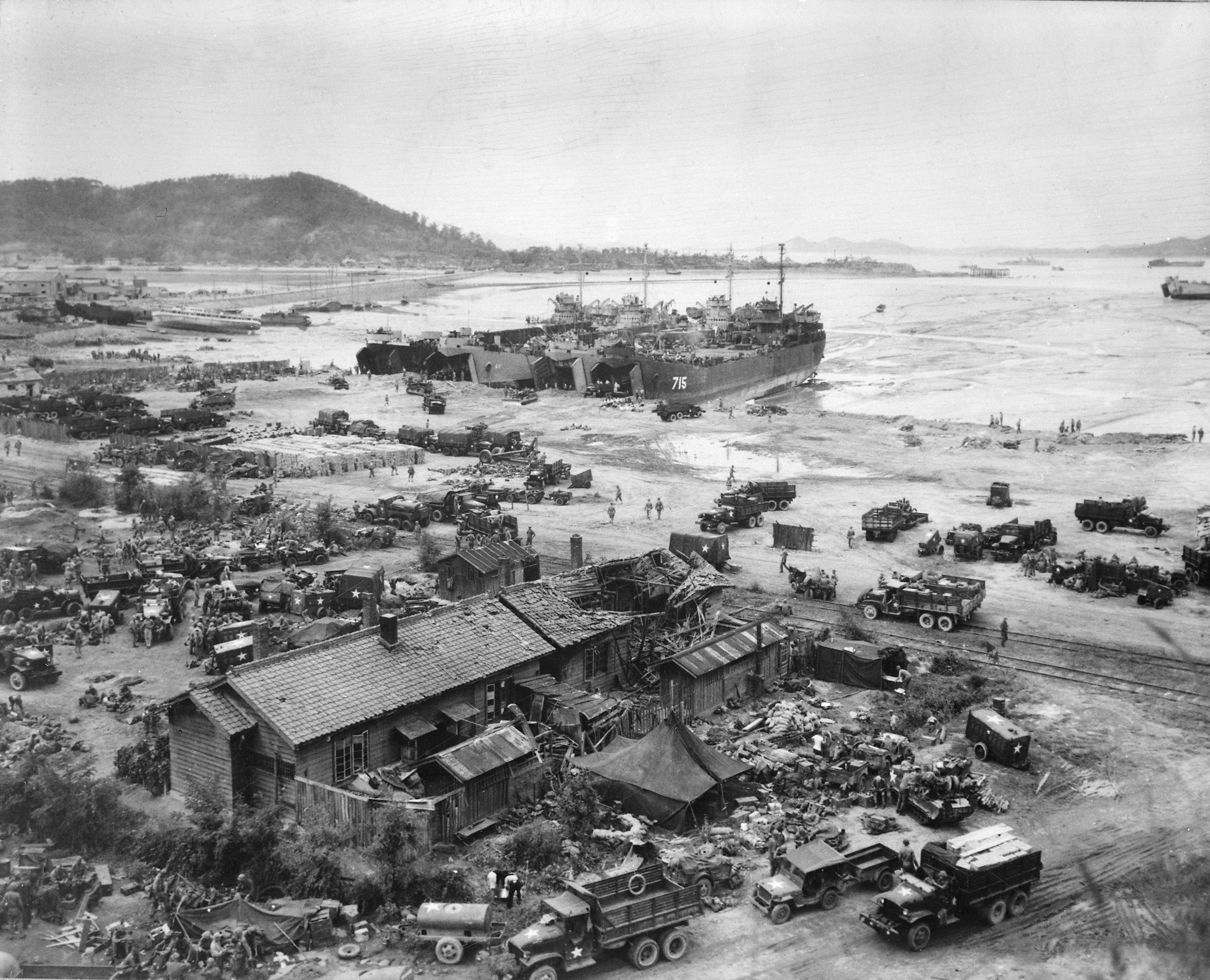
September 15, 1950: General of the Army Douglas MacArthur, supreme commander of United Nations forces, launches what amounts to the Korean War's "D-Day," an amphibious landing of 40,000 infantry from 230 ships.

On June 25, troops of the Democratic People's Republic of Korea (a.k.a. North Korea), a Communist nation, and by no means democratic or a republic -- crossed the parallel of 38th degrees north latitude, and invaded the Republic of Korea (a.k.a. South Korea), which was capitalist, but hardly free.

Two days later, President Harry S Truman announced that American and other NATO forces would come to the aid of South Korea. The next day, North Korean troops took the South Korean capital of Seoul. But it was not just NATO troops, but 15 United Nations countries that came to the South's aid.

At first, it looked like that aid might be too late. On August 5, North Korea had South Korean troops backed up into the southeastern corner of the peninsula, centered on the city of Pusan (now usually written in English as "Busan"). They held what became known as the Pusan Perimeter. It was a siege, but the ROK troops were holding on.

There would be no evacuation, the way the Nationalist Chinese had gone to Taiwan the previous year; the American troops had done in the Philippines in 1942, by escaping to Australia; or the British troops had done at Dunkirk in 1940 by retreating to their home island.

It wasn't just a matter of pride: The South Koreans had no place to go. American troops could have evacuated them to the nearest friendly country, but that would be Japan, where "friendly" was a bit of a stretch: That nation had occupied them from 1910 (and had effectively ruled them from 1876) until the end of World War II in 1945 -- just 5 years earlier. And Japan was still in the rebuilding process: Taking on millions of Korean refugees was not part of the plan of their military governor.

That was MacArthur, the 70-year-old 5-star General who had been commander of Allied forces in the Pacific. In spite of his age, there was no one more qualified to lead the mission than "Big Mac." As with D-Day, the invasion of Normandy in France in 1944, the U.S. had a deception operation underway, to convince the enemy that the invasion would be elsewhere -- in this case, at Kunsan, 105 miles to the south. The Communist spy network bought it.

After 5 days of bombing to provide air support, MacArthur, invading with his troops as he had at Leyte Gulf in the Philippines in 1944, gave the green light on September 15. The invasion began at 6:30 AM, local time. As with Normandy, there were invasion points given different code names: Green Beach, Red Beach and Blue Beach. The U.N. lost 224 troops; the North Koreans, 1,350.
MacArthur famously didn't like the photo
of him wading ashore in the Philippines in 1944.
I'm thinking he liked this one much more.

Within 2 days, U.S. forces were able to take Kimpo, Seoul's international airport. Within 2 more, they were able to use it to bring more troops in. By September 22, they had over 53,000 men on the ground. By September 25, Red troops had abandoned the Pusan Perimeter, and were attempting to defend their ill-gotten gains at Seoul. On September 28, they had to abandon that.

In a span of 2 weeks, MacArthur had led, for all intents and purposes, the liberation of South Korea. He wanted more: He wanted to kick the Commies completely off the peninsula. He nearly did it: By November 26, 10 weeks after the Incheon landing, he had them backed up to the Yalu River, which separates the Korean peninsula from mainland China (and, technically, makes Korea not a peninsula but an island).

China then intervened on behalf of its Communist "little brother." Again, U.N. troops were pushed below the 38th parallel. By April 1951, they had gained back most of South Korea's territory, and a line cutting southwest-to-northeast across the peninsula became like the trench warfare of World War I, 35 years earlier.

At the end of the calendar year 1950, Time magazine named its first collective "Men of the Year": "The American Fighting Man." In 2000, on the 50th Anniversary of the war, it published a special issue on the year, calling it "the fulcrum point of the 20th Century," not just the midpoint.

MacArthur wanted to use tactical nuclear weapons against China. Truman told him no, because that would get the Soviet Union involved, and it would be World War III. MacArthur let his objections be known to the Republican leader of the House of Representatives, Joe Martin of Massachusetts. Martin leaked this to the press. Truman found out, and fired MacArthur for subordination, replacing him with 4-star General Matthew Ridgeway, and later replacing him with 4-star General Mark Clark.

The war became a stalemate, lasting 3 years. About 327,000 Americans served in the conflict, and 36,574 were killed, with another 103,000 wounded but surviving.

It's not clear how many of those wounded, but surviving, were treated at Mobile Army Surgical Hospitals, or MASHes, which, due to the 1972-83 CBS TV series M*A*S*H, became popular culture's most familiar story of the Korean War. But, by being close to the front, they were able to save soldiers who surely would have died in the conditions of World War II. But that, and the addition of antibiotics and sulfa in World War II, saved a lot of lives that would have been lost in the conditions of World War I.

Today, Incheon is home to just under 3 million people, making it the 3rd-largest city in South Korea, behind Seoul, with 9.4 million; and Busan, with 3.3 million. Pyongyang, the North Korean capital, has 3.1 million.

*

September 15, 1950 was a Friday. These baseball games were played:

* The New York Yankees lost to the Detroit Tigers, 9-7 at Briggs Stadium (later Tiger Stadium) in Detroit. Johnny Mize hit 3 home runs and had 6 RBIs, but it wasn't enough. Tommy Byrne got knocked out of the box in the 2nd inning, and Allie Reynolds ended up the losing pitcher in relief. The winning pitcher, in relief? Hank Borowy, a former Yankee, from nearby Bloomfield, New Jersey. (Not to be confused with the Detroit suburb of Bloomfield Hills, Michigan.)

* The New York Giants lost to the Chicago Cubs, 4-3 at the Polo Grounds. Hal Jeffcoat singled home Johnny Klippstein with the winning run in the top of the 10th inning.

* The Brooklyn Dodgers lost to the St. Louis Cardinals, 6-2 at Ebbets Field. At first, it looked like the Dodgers had caught a break: Cloyd Boyer, older brother of Ken and Clete, was scheduled to start, but took the mound, and left during his warmups. But George "Red" Munger stepped in, and went the distance. Duke Snider hit a home run for the Dodgers, and Don Newcombe went the distance, singling in his own cause. Jackie Robinson did not play. But Stan Musial went 1-for-4 with a walk, and Albert "Red" Schoendienst went 3-for-5 with 2 RBIs.

* The Boston Braves beat the Pittsburgh Pirates, 7-4 at Braves Field in Boston. Ralph Kiner went 1-for-3 with 2 walks.

* The Philadelphia Phillies swept a doubleheader from the Cincinnati Reds, 2-1 and 8-7 at Shibe Park in Philadelphia. The 2nd game saw the Phils trailing 5-0 after 5 innings, but a double by Granville "Granny" Hamner sent the game to extra innings. And I do mean "extra": They played what amounted to another game, and then some.

The Reds scored 2 runs in the top of the 18th inning, The Phils tied it, with a double by Del Ennis, a single by Dick Sisler, a sacrifice fly by Hamner, and a triple by Stan Lopata. Then they won it in the bottom of the 19th: Eddie Watkus and Richie Ashburn singled, Willie "Puddin' Head" Jones walked to load the bases with nobody out, and Ennis singled Waitkus home. So fans got to have 28 innings for the price of 9, and, if they were root, root, rooting for the home team, won 2 games.

The Phils, known as the "Whiz Kids" for being mostly a young team, were now 7 1/2 games ahead of the Dodgers with 17 games to play. And yet, they had to go to extra innings of the last game of the season to clinch the Pennant, on a 10th-inning home run by Sisler off Newcombe.

* A doubleheader was split at Cleveland Municipal Stadium. The Cleveland Indians won the opener, 4-2. Luke Easter hit a 2-run home run in the bottom of the 9th to win it. The Washington Senators won the nightcap, 4-1.

* The Philadelphia Athletics beat the Chicago White Sox, 4-1 at Comiskey Park in Chicago.

* And the Boston Red Sox beat the St. Louis Browns, 12-9 at Sportsman's Park in St. Louis. Just another day at the office -- or, rather, business trip -- for Ted Williams: The Splendid Splinter went 4-for-6 with a home run and 3 RBIs.

Thursday, September 1, 2022

September 1, 1983: The Soviet Union Shoots Down Korean Air Lines Flight 007

The Boeing 737-230B that later served as KAL007,
at Zurich International Airport in Switzerland, 1980.

September 1, 1983: A particularly chilly moment in the Cold War. Korean Air Lines Flight 007 (or KAL007 for short), a Boeing 737-230B jet plane, having taken off from John F. Kennedy International Airport New York, and refueled in Anchorage, Alaska, is headed for the South Korean capital of Seoul.

It never gets there: It goes off course, crossing the Kamchatka Peninsula, part of the section of eastern Russia known as Siberia, which it was not authorized to do. This is noticed by the Soviet Union Air Defense Forces. It then crosses Sakhalin Island, the largest island under Soviet control. This is also unauthorized. Both crossings were almost certainly mistakes.

But tensions were already high. President Ronald Reagan had been building up America's nuclear missile presence, at home and abroad. Military exercises in the Pacific had gotten the Soviets' attention. They suspected that KAL007 might have been a spy plane. A commander ordered it shot down. A Soviet Su-15 interceptor did so. There were 269 people on board, including Representative Larry McDonald of Georgia. They all died.

The late Summer and the Autumn of 1983 was the most tense time in the Cold War since the Cuban Missile Crisis of October 1962. It also included a false alarm that nearly led the Soviets to launch nuclear missiles on September 26, the military exercise known as Able Archer 83 that fooled the Soviets into thinking NATO was preparing for a first strike in the 2nd week of November, and ABC's broadcast of the TV-movie The Day After on November 20.

Things calmed down after that. Soviet leader Yuri Andropov died in early 1984. His replacement, Konstantin Chernenko, died a year later. Reagan found it much easier to deal with the next leader, Mikhail Gorbachev. His reforms, liberation movements around Eastern Europe, and some of Reagan's policies led to the end of the Soviet Union and the Cold War in 1991.

Gimpo International Airport, frequently mentioned on the TV show M*A*S*H, was replaced as Seoul's main airport in 2001, by Incheon International Airport. Korean Air Lines retired flight number 007. They now use flight numbers 82, 85 and 250 in flights between JFK and Incheon, and technology is such that they no longer need to refuel at Anchorage.

Anatoly Kornukov, the General who ordered the shootdown, was never punished. Indeed, after the fall of the Soviet Union in 1991, he remained a senior figure in the Russian Air Force, serving as its Commander-in-Chief from 1998 until 2002. He died in 2014.
Major Gennadiy Osipovich, the pilot who fired the air-to-air missile that brought KAL007 down, was not told that the plane was a civilian one until 13 years later. As of September 1, 2022, he is still alive.

Country singer Lee Greenwood has said that he wrote the song "God Bless the U.S.A." in response to this incident. It was used so often during the Persian Gulf War of early 1991 that it's easy to forget that it's an older song.

President Reagan announced on September 16, 1983, that the Global Positioning System (GPS) would be made available for civilian use, free of charge, once completed in order to avert similar navigational errors in the future. Perhaps that would have happened eventually, but it was a step forward in the computer revolution.

*

There were baseball games played on this Thursday:

* The New York Yankees lost to the Oakland Athletics, 2-0 at the Oakland Coliseum. Dave Righetti allowed only 2 runs and 4 hits, striking out 10, but was outpitched by Chris Codiroli. Both men pitched complete games. Bill Almon's 2-run double in the 3rd inning made the difference.

Codrioli had a no-hitter going until Don Mattingly led off the 5th inning with a single. The only other Yankee hits were singles by Roy Smalley and Willie Randolph in the 8th. Ken Griffey Sr. drew a walk in that inning, loading the bases with 2 out, but Dave Winfield grounded out to end the threat. Randolph also walked in the 1st, and Graig Nettles did so in the 4th.

* A doubleheader was split at Fenway Park in Boston. The Minnesota Twins beat the Boston Red Sox in the 1st game, 11-0. The Red Sox won the 2nd game, 9-3.

* The Philadelphia Phillies beat the San Francisco Giants, 4-2 at Veterans Stadium in Philadelphia.

* The St. Louis Cardinals beat the Atlanta Braves, 8-3 at Atlanta-Fulton County Stadium.

* The Montreal Expos beat the Los Angeles Dodgers, 8-3 at the Olympic Stadium in Montreal.

* The Toronto Blue Jays beat the Baltimore Orioles, 5-3 at Exhibition Stadium in Toronto.

* The Chicago Cubs beat the Cincinnati Reds, 3-1 at Riverfront Stadium in Cincinnati.

* The Detroit Tigers beat the Texas Rangers, 5-0 at Tiger Stadium.

* The Chicago White Sox beat the Kansas City Royals, 12-0 at Comiskey Park in Chicago.

* The Houston Astros beat the Pittsburgh Pirates, 3-0 at the Astrodome.

* In the American League, the California Angels, the Cleveland Indians, the Milwaukee Brewers and the Seattle Mariners were not scheduled.

* In the National League, the New York Mets and the San Diego Padres were not scheduled.

Also on this day, Spanish soccer star José Antonio Reyes was born. 

Tuesday, August 9, 2022

August 9, 1945: The Nagasaki Bomb

August 9, 1945: For the 2nd time, and the 2nd time in 3 days, an atomic bomb is used in warfare.

It is World War II. Nazi Germany has already been defeated. The Empire of Japan, however, is holding out. American forces have reached Okinawa, just 400 miles from the Japanese home Islands. 

President Harry S Truman has demanded that Japan surrender. They have refused. On August 6, he authorized the dropping of a uranium bomb codenamed Little Boy on the port city of Hiroshima, a tactical choice that would not only kill as many people as possible, but hurt Japan's war effort. The bomb had roughly the force of 15,000 tons of TNT -- 15 kilotons. It is estimated that 66,000 people were killed instantly, and another 100,000 or so may have died of radiation poisoning within the next year. 

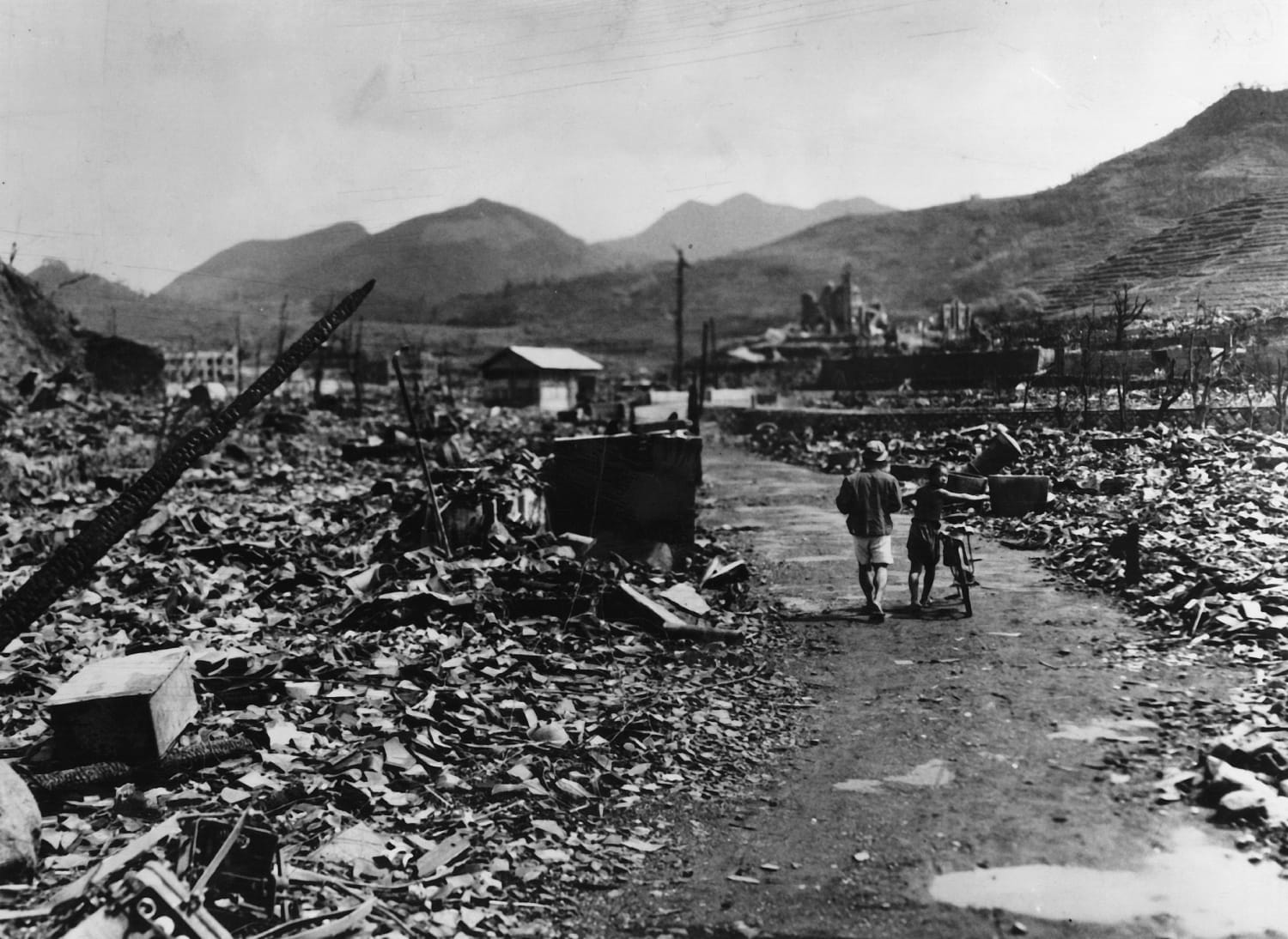
Despite this destruction, Japan still did not surrender. So a 2nd bomb, a 21-kiloton plutonium bomb codenamed Fat Man, was dropped on Nagasaki, on the home island of Kyushu, on August 9. As a smaller city to begin with, about 40,000 were killed at once, and at least that many through radiation sickness.

Also on August 9, the Soviet Union invaded Manchuria, a section of China occupied by Imperial Japan. It has been suggested that the real reason Japan finally surrendered on August 14 was less the atomic bombs, and more the fact that the Soviets had gotten into the Pacific Theater of the war.

But it has also been suggested that the reason a 2nd -- or even a 1st -- atomic bomb was dropped was to show the Soviets, "We have The Bomb, and you don't." That would remain true until 1949. But, for now, it showed the Communist world that they were not going to get their hands on Japan, the way they had already gotten some of China (and, eventually, all of it except for Taiwan) and some of Korea (eventually, about half of it).

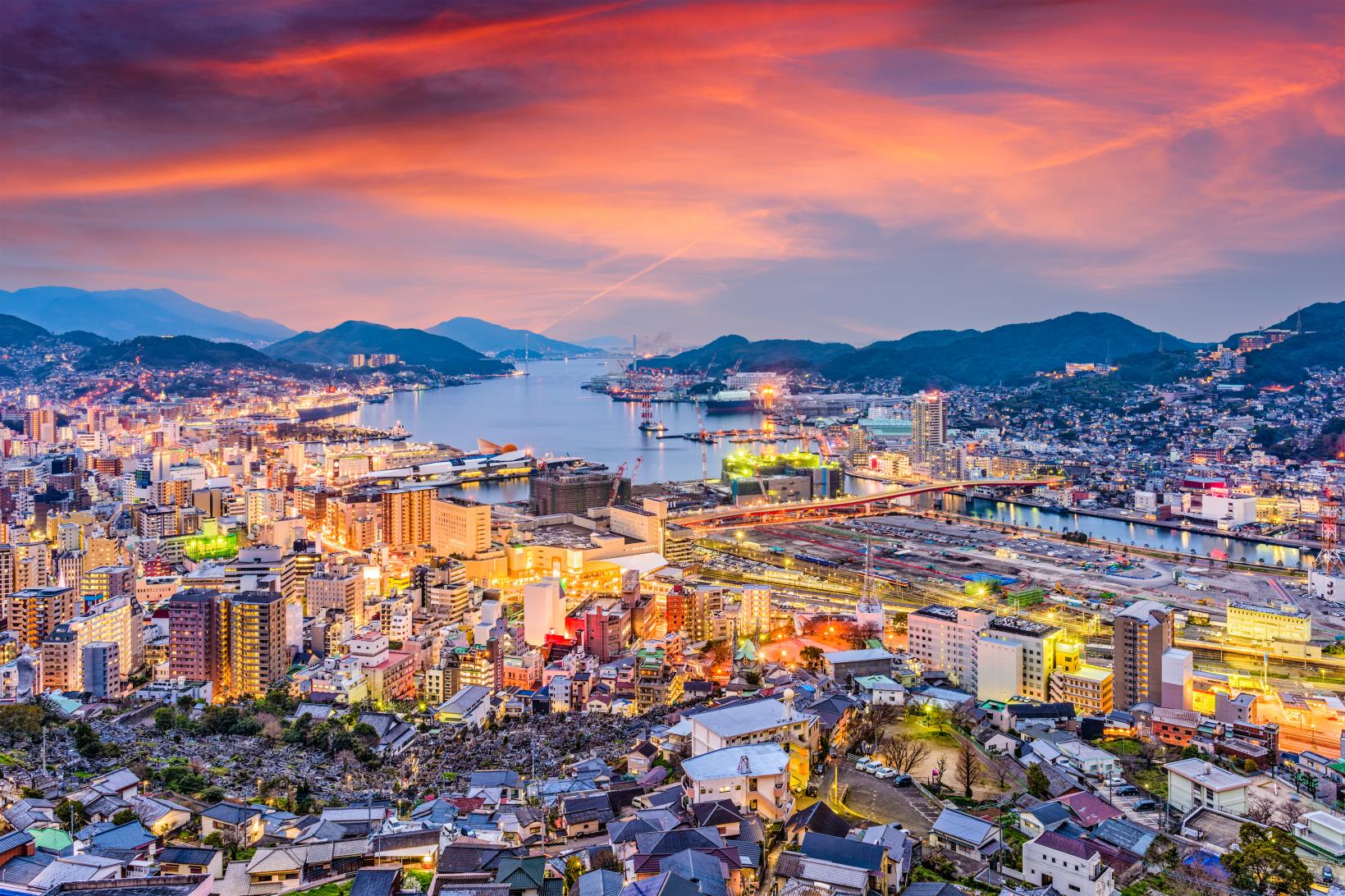
As part of the U.S. occupation of Japan, both cities were rebuilt. Today, Hiroshima is a thriving city of about 1.2 million. Nagasaki is now home to about 400,000.
Nagasaki today

In spite of a few close calls between America and the Soviet Union, atomic bombs have never been used in warfare again. May that remain so.

*

August 9, 1945 was a Thursday. These baseball games were played:

* The New York Yankees beat the Cleveland Indians, 3-2 at League Park in Cleveland. Bud Metheny hit a sacrifice fly to bring Don Savage home with the winning run in the top of the 9th inning.

* The New York Giants lost to the St. Louis Cardinals, 5-3 at the Polo Grounds. Giant player-manager Mel Ott went 1-for-4.

* The Brooklyn Dodgers swept a doubleheader from the Cincinnati Reds, 9-2 and 4-3 at Ebbets Field. In the nightcap, Babe Herman, returning to the major leagues after 8 years due to the wartime manpower drain, singled Frenchy Bordagaray home with the winning run in the bottom of the 12th inning.

* The Boston Braves beat the Chicago Cubs, 7-3 at Braves Field in Boston.

* The Pittsburgh Pirates beat the Philadelphia Phillies, 3-1 at Shibe Park in Philadelphia.

* The Detroit Tigers beat the Boston Red Sox, 11-5 at Briggs Stadium (later Tiger Stadium) in Detroit. Ted Williams had not yet come home from The War -- as my grandmother, a Brooklyn Dodger fan from Queens, who lived through it, taught us, always Capital T, Capital W -- and was unavailable to the Red Sox. But Hank Greenberg had come home, and was available to the Tigers, and went 3-for-4 with 2 RBIs. Rudy York hit 2 home runs.

* The Washington Senators beat the Chicago White Sox, 7-2 at Comiskey Park in Chicago.

* And the St. Louis Browns beat the Philadelphia Athletics, 1-0 at Sportsman's Park in St. Louis. Al Hollingsworth pitched a 3-hit shutout, outpitching Bobo Newsom.

August 9, 1936: His Name Was Sohn Kee-chung

August 9, 1936: The marathon race is held in the Olympics in Berlin, Nazi Germany. Officially, it was won by Kitei Son of Japan, a nation that would soon be an ally of the Nazis.

Unofficially, it was a much better story.

His real name was Sohn Kee-chung. He was born on August 29, 1912, in Sinŭiju, in what is now North Korea. Since 1910, however, Korea had been part of the Empire of Japan. And so, any athletes from Korea were forced to compete for Japan, under their flag, and with Japanese names.

Between 1933 and 1936, Sohn Kee-chung ran 12 marathons, finishing in the top 3 in each, and won 9. On November 3, 1935, in the Japanese capital of Tokyo, he set a world record with a time of 2 hours, 26 minutes and 42 seconds.

In the 1936 Olympics, Sohn tried to sign his name in its correct Korean form. But it was not his legal name, and so he was forced to write it in, and compete, as Kitei Son. Another Korean, Nam Sung-yong, entered the marathon, and had to compete under his legal Japanese name, Nan Shōryū. Sohn won the race in 2 hours, 29 minutes, 19.2 seconds, breaking the Olympic record. Nam finished 3rd, winning the Bronze Medal.

The International Olympic Committee, not recognizing Korea as a member, credited both medals to Japan's total. Sohn refused to acknowledge the Japanese national anthem while it was played at his award ceremony, and later told reporters that he was ashamed to run for Japan.

In 1945, Allied forces forced the surrender of Japan, and Korea was free. But, as part of the peace treaty, a line was drawn at the 38th parallel, and Communist forces had control over the northern part, including Sohn's hometown of Sinŭiju. The Korea War resulted, from 1950 to 1953, and the new border was a diagonal across the country, but roughly around the 38th parallel.

Sohn was named the team manager for Korea's national track & field team. In 1947, his trainee, Suh Yun-Bok, won the Boston Marathon, breaking the record that Sohn had set in Tokyo in 1935. For the Opening Ceremony for the 1948 Olympics in London, the entire Korean team chose Sohn to be their flag bearer. In 1950, another Sohn trainee, Ham Kee-Young, won the Boston Marathon.

In 1988, the Olympics were held in Seoul, the capital of the Republic of Korea (a.k.a. South Korea). The final runner in the Olympic torch relay, receiving perhaps the greatest ovation anyone has ever received in an Olympic ceremony, was 75-year-old Sohn Kee-chung. He attended the 1992 Olympics in Barcelona, Spain, and saw Hwang Young-Cho win the Olympic marathon.
Sohn died on November 15, 2002. Nam Sung-young, who had worked with him at the Korean Sporting Association, had died a year earlier. On December 9, 2011, the IOC recognized Korean nationality of Sohn and Nam, and all other Korean athletes under the Empire of Japan, in their official profiles.

*

August 9, 1936 was a Sunday. Legendary journalist Lincoln Steffens died.

And these baseball games were played that day:

* The New York Yankees swept a doubleheader from the Philadelphia Athletics, 7-6 and 3-0 at Yankee Stadium. In the opener, Jake Powell singled Bill Dickey home with the winning run in the bottom of the 10th inning. Dickey, Lou Gehrig and rookie Joe DiMaggio all hit home runs. Lefty Gomez started, and Johnny Murphy won in relief. In the nightcap, Gehrig's 3-run triple in the bottom of the 1st provided all the game's runs, and Monte Pearson pitched a 4-hit shutout.

Over the 2 games, Gehrig went 2-for-8 with a walk and 4 RBIs, DiMaggio went 3-for-9 with an RBI, and Dickey went 5-for-6 with 2 walks and an RBI.

* The New York Giants beat the Philadelphia Phillies, 6-2 at Baker Bowl in Philadelphia. Mel Ott went 2-for-3 with a walk and an RBI.

* The Brooklyn Dodgers swept a doubleheader from the Boston Bees, 4-0 ant 5-2 at National League Park in Boston. Fred Frankhouse, known as "Freddy Frankhouse with the roundhouse curve," pitched a 5-hit shutout in the 1st game.

This was the year after a 115-loss season that led the former Boston Braves to, as we would say today, "rebrand." It never caught on, and in 1941, the team went back to being the Boston Braves, and the ballpark went back to its former name of Braves Field.

* The Boston Red Sox beat the Washington Senators, 8-2 at Griffith Stadium in Washington. Jimmie Foxx went 2-for-4 with a walk and 3 RBIs.

* The Cleveland Indians swept a doubleheader from the Chicago White Sox, 9-1 and 5-2 at League Park in Cleveland.

* The St. Louis Browns beat the Detroit Tigers, 4-3 at Navin Field (later Briggs Stadium and Tiger Stadium) in Detroit.

* The Chicago Cubs swept a doubleheader from the Pittsburgh Pirates, 9-2 and 10-1 at Wrigley Field in Chicago. Over the 2 games, Billy Herman went 5-for-9 with a home run and 4 RBIs, Phil Cavarretta went 5-for-10 with an RBI, Ethan Allen went 5-for-8 with 2 walks and 3 RBIs, and Stan Hack went 4-for-8 with 2 walks and an RBI. For the Pirates, Paul Waner went 4-for-6 with a walk and an RBI, and Lloyd Waner went 2-for-9 with an RBI.

* And the Cincinnati Reds swept a doubleheader from the St. Louis Cardinals, 10-2 and 12-5 at Sportsman's Park in St. Louis.

Monday, August 8, 2022

August 8, 1952: Bob Neighbors Is Killed In Action


August 8, 1952: Major Robert Neighbors, U.S. Air Force, is shot down over North Korea. He is believed to be the only major league athlete to have been killed in action in the Korean War. He was 34 years old.

Robert Otis Neighbors was born on November 9, 1917 in Talihina, Oklahoma. After playing baseball for a season at Oklahoma Baptist University, he signed with the St. Louis Browns, who had a farm team in the area. He moved up through their system as a power-hitting shortstop, a rarity in those days.

On September 16, 1939, Bob Neighbors made his major league debut. He entered the game as a late-inning defensive replacement, and the Browns lost to the Washington Senators, 4-0 at Griffith Stadium in Washington. (By a twist of fate, his uniform number has been lost to history: Neither Baseball-Reference.com nor Baseball-Almanac.com nor Wikipedia have it recorded, and no surviving photographs reveal it.)

Neighbors played 7 of the Browns' last 17 games, 5 at shortstop and 2 as a pinch-runner. He fielded 12 chances, with 6 assists, 5 putouts, participating in 1 double play, and making only 1 error. He got 2 hits in 11 at-bats, one of them a home run off Denny Galehouse in a 6-2 Browns loss to the Boston Red Sox at Fenway Park. The Browns finished 43-111, the rock-bottom worst finish for the worst franchise in American League history.

(Galehouse would later help the Browns win their only Pennant in 1944, then go back to the Red Sox, and start and lose their 1948 Playoff for the Pennant with the Cleveland Indians. The Browns became the Baltimore Orioles in 1954, and found some success, but their 111 losses as the '39 Browns remained the worst in the franchise's history, until, in 2018, they lost 115. )

Neighbors never played another major league game. He played for the Toledo Mud Hens in the American Association in 1940. In 1941, he married Winifred Wilcox, and played for the San Antonio Missions in the Texas League. That Summer, while the Missions were on the road, "Winnie" was hit by a car and killed.

"It had a bad effect on Bob," his younger brother Morris said later. "Bob was on the road, and Winnie back home in San Antonio when it happened. He felt that if he had been there, if he had a job where he wasn't traveling, it wouldn't have happened." His hitting also seemed to die, as he fell to a .216 batting average. When Pearl Harbor was bombed at the end of the year, he felt he had enough reason to quit baseball, and joined what was then called the U.S. Army Air Corps.

While serving at Maxwell Field in Montgomery, Alabama, he met Katherine "Kitty" Burke, and she became his 2nd wife. He didn't quit baseball entirely, playing for base teams. But when World War II ended, he decided to keep the military as his career, including as player-manager for the Maxwell Field team. In 1947, the Army Air Corps was separated from the Army to become its own branch of the armed forces, the U.S. Air Force. In 1950, Bob became the father of Robert Cameron Neighbors. All seemed well.

Then North Korea invaded South Korea, and President Harry S Truman rallied the United Nations to South Korea's aid. Major Neighbors flew a Douglas Invader with the 13th Bomb Squadron of the 3rd Bomb Group.

On August 8, 1952, he and his crew, also including 1st Lieutenant William Holcom and Staff Sergeant Grady Weeks, flew a night mission over North Korea. They reported being hit by enemy fire, and said they were bailing out. There was no further contact, and they failed to return. They were reported as "Missing In Action" (MIA). After the Truce of Panmunjom ended the war, and all prisoners of war were repatriated, Neighbors, Holcom and Weeks were not among them. It became accepted that they had died in action.

The Browns moved to Baltimore after the 1953 season. The Orioles make no mention of Neighbors in their historical displays at Oriole Park at Camden Yards. Although the St. Louis Cardinals have honored Browns legend George Sisler with a statue outside the new Busch Stadium, and have some Browns memorabilia in their in-park Hall of Fame Museum, they make no mention of Neighbors, either.

By a macabre coincidence, like Neighbors, the only Major League Baseball Player who died in the Korean War, the 2 Major League Baseball players to die in combat in World War II also played very briefly, just in the 1939 season, for teams that no longer exist under the names they used at the time.

Elmer Gedeon, a multi-sport star athlete at the University of Michigan, played 5 games in the outfield for the Washington Senators, and was shot down over France in 1944. Harry O'Neill made 1 appearance as a catcher for the Philadelphia Athletics, and died on Iwo Jima in early 1945.

*

August 8, 1952 was a Friday. These baseball games were played that day:

* The New York Giants lost to the Boston Braves, 2-0 at Braves Field in Boston. Max Surkont pitched a 4-hit shutout, and Bob Thorpe went 3-for-4 with an RBI. Willie Mays was serving in the Korean War, and unavailable to the Giants.

* The Brooklyn Dodgers beat the Philadelphia Phillies, 6-3 at Shibe Park in Philadelphia. Andy Pafko went 2-for-5 with 5 RBIs, including a 3-run home run in the top of the 10th inning, to make a winning pitcher out of Preacher Roe. Jackie Robinson went 1-for-4. Richie Ashburn went 3-for-4 for the Phillies.

* The Pittsburgh Pirates beat the Chicago Cubs, 1-0 at Forbes Field in Pittsburgh. Murry Dickson went the distance and beyond for the Pirates, winning his own game with a single in the bottom of the 10th inning, allowing just 6 hits in his extra-inning shutout.

* The Cincinnati Reds beat the St. Louis Cardinals, 8-5 at Crosley Field in Cincinnati. Stan Musial went 1-for-4.

* The Chicago White Sox swept a doubleheader from the Detroit Tigers, 4-3 and 2-1 at Comiskey Park in Chicago.

* The Cleveland Indians beat the St. Louis Browns, 10-9 at Sportsman's Park in St. Louis. Bob Feller had the worst performance of his Hall of Fame career, getting knocked out of the box in the 1st inning, allowing 6 runs without getting an out. But the Indians came back from an 8-0 2nd inning deficit, as Bill Glynn won it with a home run leading off the top of the 12th inning, to make a winner in relief out of Early Wynn. That's the kind of franchise the Browns were.

* The New York Yankees and the Boston Red Sox were rained out at Yankee Stadium. The game was made up on August 11, and the Yankees won, 7-0. Allie Reynolds pitched a 2-hit shutout. Mickey Mantle hit 2 home runs. Ted Williams was serving in the Korean War, and unavailable to the Red Sox.

* And the Philadelphia Athletics and the Washington Senators were rained out at Griffith Stadium in Washington. The game was made up as part of a doubleheader on September 2, and the Senators swept, 3-2 and 5-0. Jackie Jensen won the opener with a bases-loaded walk in the bottom of the 10th. Mike Fornieles pitched a 1-hit shutout in the nightcap.

December 31, 1999 & January 1, 2000: The Millennium

December 31, 1999:  The Millennium arrives. The people of planet Earth survived. At a terrible cost. But we hadn't destroyed ourselves. ...