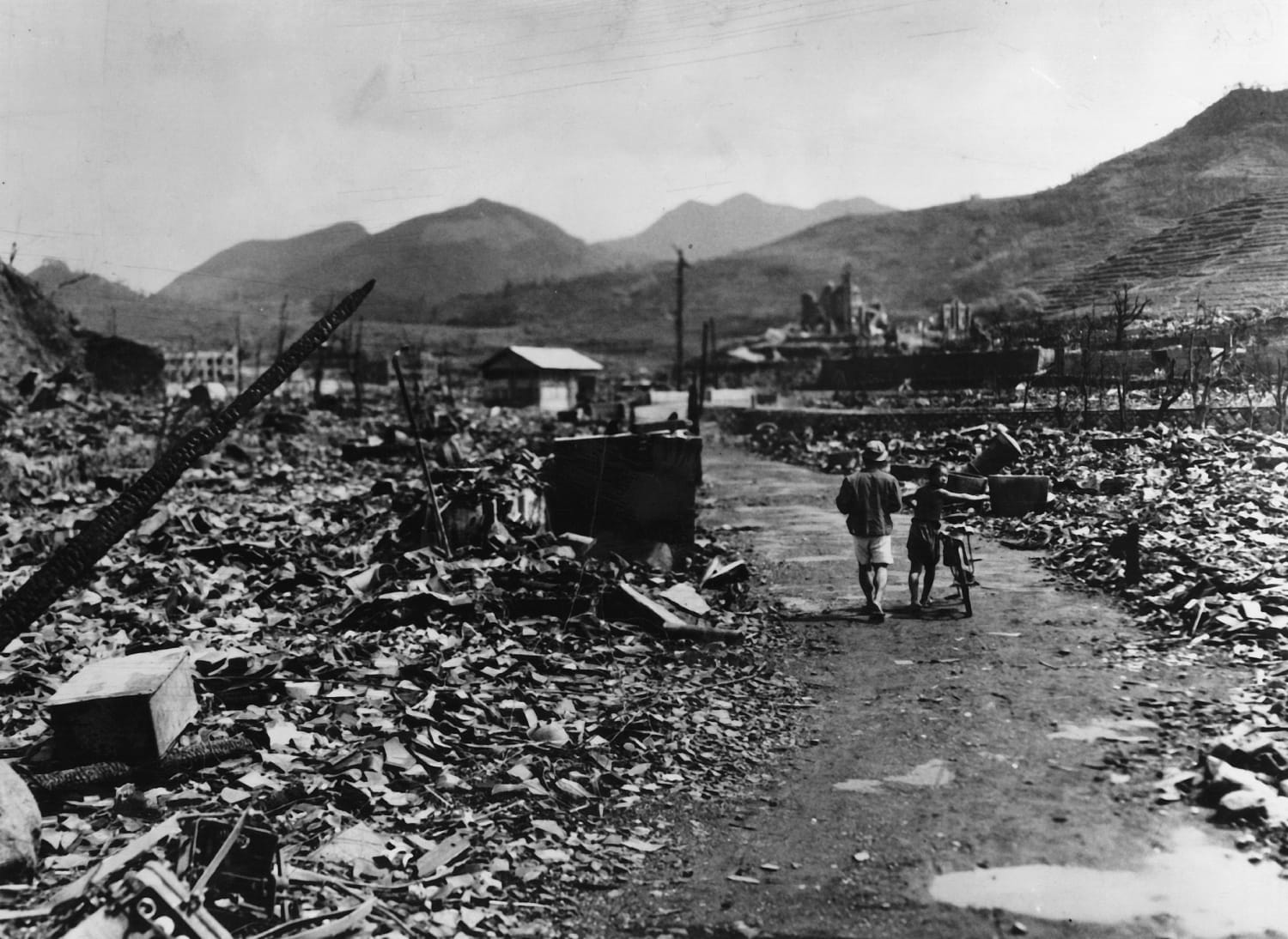
It is World War II. Nazi Germany has already been defeated. The Empire of Japan, however, is holding out. American forces have reached Okinawa, just 400 miles from the Japanese home Islands.
President Harry S Truman has demanded that Japan surrender. They have refused. On August 6, he authorized the dropping of a uranium bomb codenamed Little Boy on the port city of Hiroshima, a tactical choice that would not only kill as many people as possible, but hurt Japan's war effort. The bomb had roughly the force of 15,000 tons of TNT -- 15 kilotons. It is estimated that 66,000 people were killed instantly, and another 100,000 or so may have died of radiation poisoning within the next year.
Despite this destruction, Japan still did not surrender. So a 2nd bomb, a 21-kiloton plutonium bomb codenamed Fat Man, was dropped on Nagasaki, on the home island of Kyushu, on August 9. As a smaller city to begin with, about 40,000 were killed at once, and at least that many through radiation sickness.
Also on August 9, the Soviet Union invaded Manchuria, a section of China occupied by Imperial Japan. It has been suggested that the real reason Japan finally surrendered on August 14 was less the atomic bombs, and more the fact that the Soviets had gotten into the Pacific Theater of the war.
But it has also been suggested that the reason a 2nd -- or even a 1st -- atomic bomb was dropped was to show the Soviets, "We have The Bomb, and you don't." That would remain true until 1949. But, for now, it showed the Communist world that they were not going to get their hands on Japan, the way they had already gotten some of China (and, eventually, all of it except for Taiwan) and some of Korea (eventually, about half of it).
As part of the U.S. occupation of Japan, both cities were rebuilt. Today, Hiroshima is a thriving city of about 1.2 million. Nagasaki is now home to about 400,000.
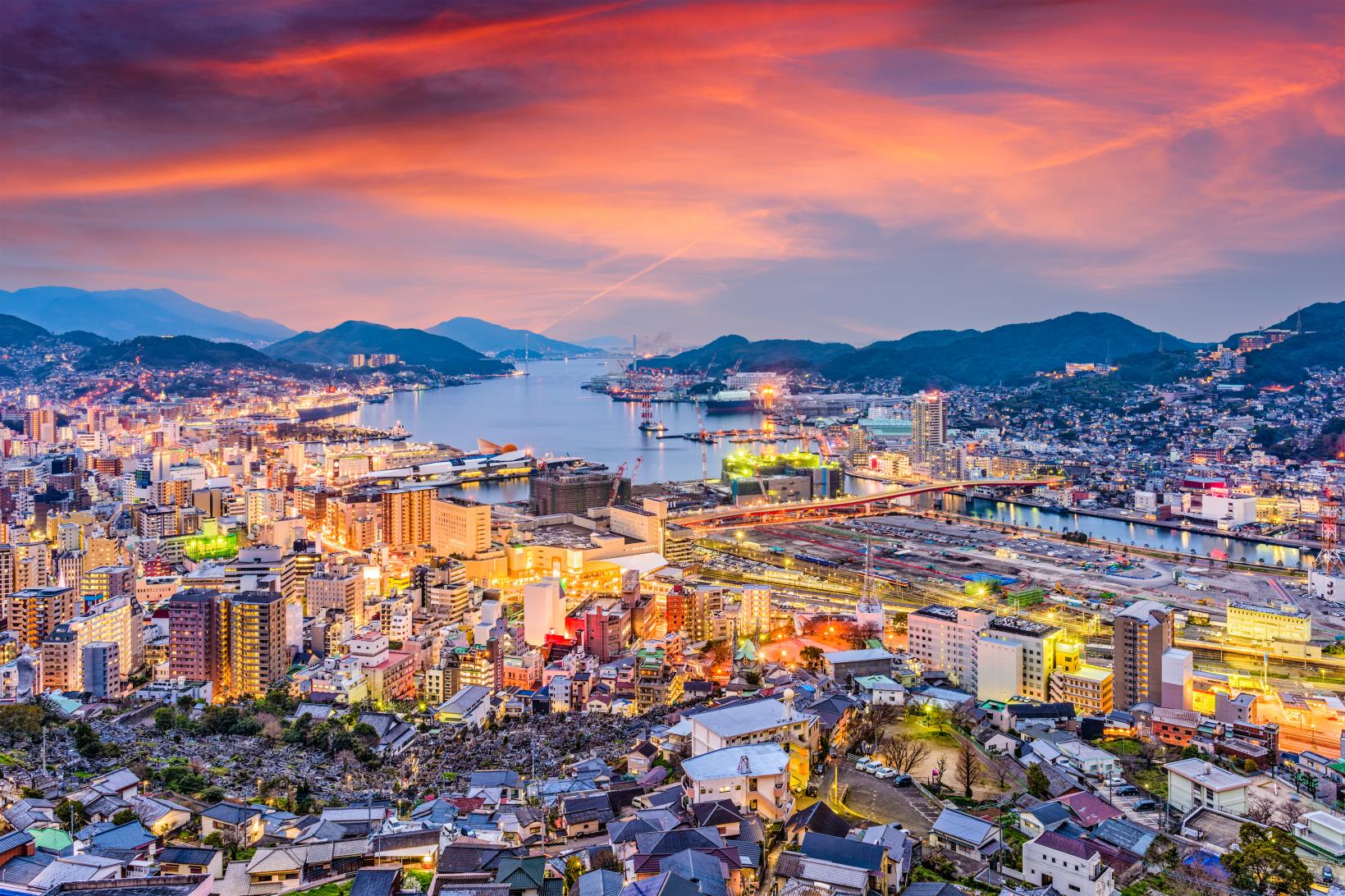
Nagasaki today
In spite of a few close calls between America and the Soviet Union, atomic bombs have never been used in warfare again. May that remain so.
*
August 9, 1945 was a Thursday. These baseball games were played:
* The New York Yankees beat the Cleveland Indians, 3-2 at League Park in Cleveland. Bud Metheny hit a sacrifice fly to bring Don Savage home with the winning run in the top of the 9th inning.
* The New York Giants lost to the St. Louis Cardinals, 5-3 at the Polo Grounds. Giant player-manager Mel Ott went 1-for-4.
* The Brooklyn Dodgers swept a doubleheader from the Cincinnati Reds, 9-2 and 4-3 at Ebbets Field. In the nightcap, Babe Herman, returning to the major leagues after 8 years due to the wartime manpower drain, singled Frenchy Bordagaray home with the winning run in the bottom of the 12th inning.
* The Boston Braves beat the Chicago Cubs, 7-3 at Braves Field in Boston.
* The Pittsburgh Pirates beat the Philadelphia Phillies, 3-1 at Shibe Park in Philadelphia.
* The Detroit Tigers beat the Boston Red Sox, 11-5 at Briggs Stadium (later Tiger Stadium) in Detroit. Ted Williams had not yet come home from The War -- as my grandmother, a Brooklyn Dodger fan from Queens, who lived through it, taught us, always Capital T, Capital W -- and was unavailable to the Red Sox. But Hank Greenberg had come home, and was available to the Tigers, and went 3-for-4 with 2 RBIs. Rudy York hit 2 home runs.
* The Washington Senators beat the Chicago White Sox, 7-2 at Comiskey Park in Chicago.
* And the St. Louis Browns beat the Philadelphia Athletics, 1-0 at Sportsman's Park in St. Louis. Al Hollingsworth pitched a 3-hit shutout, outpitching Bobo Newsom.


No comments:
Post a Comment