Showing posts with label trenton. Show all posts

Wednesday, November 30, 2022

December 1, 1898: The 1st Professional Basketball League

The 1900 Trenton Nationals

December 1, 1898: The 1st professional basketball league debuts. It is called the National Basketball League. The 1st game is played at Textile Hall, in the Kensington section of Philadelphia. The Trenton Nationals beat the Hancock Athletic Association, 21-19. Attendance was estimated at 900.

The 1898–99 season saw 6 teams in the league. Three were in Philadelphia: The aforementioned Hancock A.A., the Clover Wheelmen, and the Germantown Nationals. Three were in New Jersey: The aforementioned Nationals, the Camden Electrics, and the Millville Glass Blowers. Two of the Philly teams folded within days, but the other 4 teams finished the season.
Trenton went 18-2-1, to win the title. Their starting five averaged 5-foot-10, 161 pounds. Needless to say, there was no dunking. No one even took a jump shot or, God forbid, a skyhook. They hadn't been invented yet.
The following season was more stable for the new league. The season was divided into 2 halves. Teams in the first half were the Nationals, the Electrics, the New York Wanderers, the Pennsylvania Bicycle Club, the Bristol Pile Drivers, and the Chester Basketball Club of Chester, Pennsylvania. Chester dropped out, and were immediately replaced by the Millville Glass Blowers, who had originally elected not to participate that season. Trenton and Millville provided the best teams in the loop, with Trenton gaining a disputed championship, in which the team won both halves of the season.
The Masonic Temple, in downtown Trenton, converted its 3rd-floor banquet hall into a home court. The court was ringed by a 12-foot, chain-link "cage" separating players from fans. "The Trentons had conceived the idea that a cage would make the game faster by stopping all out-of-bounds delays," wrote Marvin Riley, the referee at that historic game. "That cage was an object of both interest and sarcasm for a long time. It was called 'Trenton's monkey cage.'"

By the 1920s, the cage had been phased out of the game. Still, headline writers fell in love with the word as a synonym for basketball, and players are sometimes still called "cagers."

When introduced, the cage made pro basketball a rough sport, as players engaged in hockey-style body checks against the wire. Frenzied fans would stick hatpins and lit cigars through the cage and into opposing players' flesh.
The NBL began the 1900–01 season with 7 teams and an expanded schedule of 32 games. The Nationals, the Glass Blowers, the Pile Drivers, the Wanderers and the Penn B.C. stayed. So did the Electrics, although they changed their name to the Camden Skeeters. Only the newest team, from Burlington, New Jersey, failed to complete the season. With the split season dropped, no playoffs were necessary, and the New York Wanderers captured the League title by 3 games.
The 1901–02 season may have been the most successful year of the NBL in terms of stability, with six strong franchises, namely the Bristol, New York, Trenton, Camden, Millville, and Philadelphia teams from the previous year. The schedule expanded once again, to 40 games. Every game save one was played as scheduled, no teams dropped out, and there was only one really weak team in the league. Camden finally became more than a .500 team, and lost the league crown to the Pile Drivers by only 3 games.
In 1902-03, the NBL went back to a split-season format. There were 8 1st-half teams: The Camden Electrics (back to the old name), the New York Wanderers, the Bristol Pile Drivers, the Philadelphia Phillies (named for the baseball team), the Trenton Potters (replacing the Nationals), Conshohocken, and the Burlington Shoe Pegs. The 2nd half of the season saw only 6 teams: Camden, Burlington, Trenton, New York, Conshohocken, and the Delaware-based Wilmington Peaches.
Burlington did so poorly that its owner-coach, Frank Reber, fired his entire team, purchased the Bristol franchise, and used Bristol's players to represent Burlington. Phillies manager and future member of the Basketball Hall of Fame, Frank Morgenweck, disbanded his Phillies team to purchase the Wilmington team. Camden, coached by Billy Morgenweck (Frank's brother), cruised to 36 wins against only 9 defeats, a winning percentage of .800.
Things did not go very well during the offseason in 1903. Only 5 teams elected to play that year. More importantly, New York, Burlington, and Wilmington, all with experienced owners and coaches, failed to return. The league began the season with only the Camden Electrics, the Trenton Potters, Conshohocken, the Millville Glass Blowers, and St. Bridget's Biddies.
Trenton dropped out on December 26, 1903, and Camden left on December 31. The National Basketball League was disbanded on January 4, 1904, not without controversy, and at least one lawsuit followed its demise. Billy Morgenweck was subsequently sued by investors in the Camden Electrics.
*

December 1, 1898 was a Thursday. If any games were played in the NBL other than the Trenton-Hancock lid-lifter, I can find no record of them. Baseball was out of season. Football was in midweek. And hockey was still all-amateur. So, as far as I can tell, Trenton 21, Hancock 19 was the only score on this historic day.

Thursday, January 13, 2022

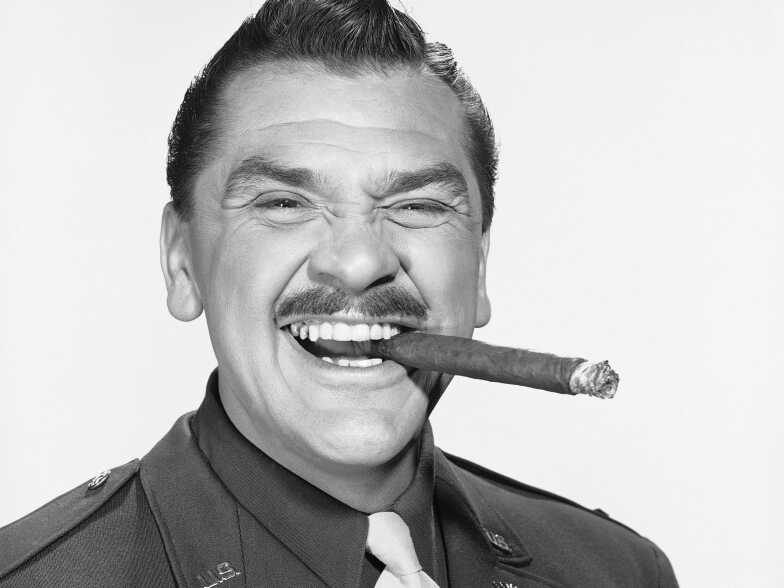
January 13, 1962: The Death of Ernie Kovacs

January 13, 1962: TV pioneer Ernie Kovacs was killed in a car crash in Los Angeles. He was a few days short of his 43rd birthday.

Ernest Edward Kovacs was born on January 23, 1919 in Trenton, Mercer County, New Jersey, the son of Hungarian immigrants. Thanks to Harold Van Kirk, his drama teacher at Trenton Central High School, he received an acting scholarship to the American Academy of Dramatic Arts in New York. He went to movie theaters and paid 10 cents to watch "Grade B" movies, which would later influence his comedy routines.

He returned to his hometown, and got jobs with a local radio station and as a columnist for The Trentonian newspaper. This led to early TV shows on WPTZ (now KYW)-Channel 3 in nearby Philadelphia. His Three to Get Ready (for the station's channel number) debuted in 1950, showed parent company NBC that an early morning entertainment show could work, and The Today Show premiered 2 years later.

At WPTZ, Kovacs began using the ad-libbed and experimental style that would become his reputation, including video effects, superimpositions, reverse polarities and scanning, and quick blackouts. He was also noted for abstraction, carefully timed non-sequitur gags, and for allowing the fourth wall to be breached.

Many of the characters that would appear on The Ernie Kovacs Show from 1952 to 1956 debuted on Three to Get Ready: Inept magician Matzoh Hepplewhite, the heavily accented German radio announcer Wolfgang von Sauerbraten, horror show host Auntie Gruesome, Frenchman Pierre Ragout, and sardonic Hungarian cooking-show host Miklos Molnar.

He also developed such routines as an all-gorilla version of the ballet Swan Lakea poker game set to Beethoven's Fifth Symphonyparodies of typical television commercials and movie genres, and various musical segments with everyday items (such as kitchen appliances or office equipment) moving in sync to music.

A popular recurring skit was The Nairobi Trio: Three derby-hatted apes (Kovacs, his wife, Edie Adams in gorilla suits; and frequently, the third ape was Kovacs' best friend Jack Lemmon) miming mechanically and rhythmically to the tune of Robert Maxwell's "Solfeggio."

He also had The Question Man: He would be given answers, and respond with what would have been a funny question designed to produce the answer he was given. This was later ripped off by Steve Allen as The Answer Man and Johnny Carson as Carnac the Magnificent.

His best-known character was Percy Dovetonsils, always introduced with a sweeping flourish of harp music as a "poet laureate," who appeared onscreen as a bizarrely effeminate "artiste" with weirdly slicked hair (including two carefully placed spit-curls on his forehead) and extraordinarily thick eyeglasses that appeared to have eyes painted on the backsides of the lenses.

He would appear seated in a chair wearing a zebra-patterned smoking jacket, and reading from an oversize book lying open in his lap. Percy would address the audience in a syrupy lisp, and read his poems out of the book while sipping from a martini glass (which often had a daisy for a swizzle stick) and/or smoking through a long cigarette holder.

The poems themselves were corny or silly, with titles like "Leslie the Mean Animal Trainer" and "Ode to a Housefly (Philosophical Ruminations on a Beastie in the Booze)." While clever, the real humor of the poems lay in the delivery, Percy's appearance and mannerisms, and his obvious self-satisfaction with his creations (as evidenced by a pursed-lip smile and a quiver of the head at the end of significant stanzas).
This was before TV writers and producers discovered cocaine.
They had to think such things up on nothing stronger than booze.

In hindsight, it seems likely that Jackie Gleason may have based his character Reginald Van Gleason III on Percy Dovetonsils. Kovacs himself said of Percy, "He's a beautiful soul who hasn't quite made it over the line into this rude, virile world."

His show was ahead of its time. Up until then, TV production was basically done with what Leonard Nimoy on Star Trek would have called "stone knives and bear skins." With his visual tricks, sight gags, and short clips, he has been credited as an influence by many individuals and shows, including Rowan & Martin's Laugh-In, Monty Python's Flying Circus, Saturday Night, Live, and various PBS programs.

In the early morning hours of January 13, 1962, Kovacs lost control of his Chevrolet Corvair station wagon while turning quickly and crashed into a power pole in West Los Angeles. He was thrown halfway out the vehicle's passenger side and died almost instantly from chest and head injuries. A photographer arrived soon after, and images of Kovacs' body, with an unlit cigar on the pavement near his outstretched hand, appeared in newspapers across the United States.

He left behind his 2nd wife, actress Edie Adams; a son and a daughter from his 1st marriage, and a daughter with Adams, Mia. Sadly, Mia would also die in a car crash, in 1982, only 22 years old. Adams lived on until 2008.

*

January 13, 1962 was a Saturday. Baseball star Kevin Mitchell was born on that day. And "The Twist" by Chubby Checker becomes the 1st rock and roll song to have hit Number 1 on Billboard's music chart, fallen off the chart completely, returned to it, and hit Number 1 again. I have a separate entry for that event.

Baseball and football were out of season. There were 4 games played in the NBA that day:

* The Philadelphia Warriors beat the Chicago Packers, 135-117 at the Philadelphia Civic Center. Wilt Chamberlain scored 73 points to set a new NBA single-game record. That record would last all of 48 days, before he scored 100. He also grabbed 36 rebounds on this night.

Yes, the Philadelphia Warriors. After the season, they moved to San Francisco. In 1971, they moved across the Bay to Oakland, and renamed themselves the Golden State Warriors. They moved back to the San Francisco side in 2019, but have kept the Golden State name.

Yes, the Chicago Packers. They were a 1st-year expansion team. But Chicago fans, used to booing a football team from Green Bay, Wisconsin, called the Packers, never took to them. For the 1962-63 season, they became the Chicago Zephyrs. It didn't work. For the 1963-64 season, they became the Baltimore Bullets. For the 1973-74 season, they moved to the suburbs of Washington, and became the Capital Bullets. For the 1974-75 season, they became the Washington Bullets. In the 1997-98 season, they moved into the District of Columbia proper, and became the Washington Wizards.

* The Syracuse Nationals beat the Boston Celtics, 127-117 at the Rochester War Memorial Arena (now the Blue Cross Arena) in Rochester, New York. For the 1963-64 season, the Nats took the Warriors' place, and became the Philadelphia 76ers.

* The Cincinnati Royals beat the Detroit Pistons, 119-112 at Cobo Hall (now Huntington Place) in Detroit. Oscar Robertson score 39 points for the Royals. They became the Kansas City Kings in 1972, and the Sacramento Kings in 1985.

* And the Los Angeles Lakers beat the St. Louis Hawks, 108-107 at the Kiel Auditorium in St. Louis. Jerry West scored 43 for the Lakers. The Hawks moved to Atlanta in 1968.

And all of the NHL's "Original Six" were in action that day:

* The New York Rangers lost to the Chicago Black Hawks, 4-2 at the Chicago Stadium.

* The Montreal Canadiens beat the Boston Celtics, 5-3 at the Montreal Forum.

* And the Toronto Maple Leafs beat the Detroit Red Wings, 4-3 at Maple Leaf Gardens in Toronto. 

December 31, 1999 & January 1, 2000: The Millennium

December 31, 1999:  The Millennium arrives. The people of planet Earth survived. At a terrible cost. But we hadn't destroyed ourselves. ...